

Protective effects of Akkermansia muciniphila on cognitive deficits and amyloid pathology in a mouse model of Alzheimer's disease
Open accessThe DOI matches its Crossref record; 47 of the 47 references it cites were found in a registry or an index.
Abstract
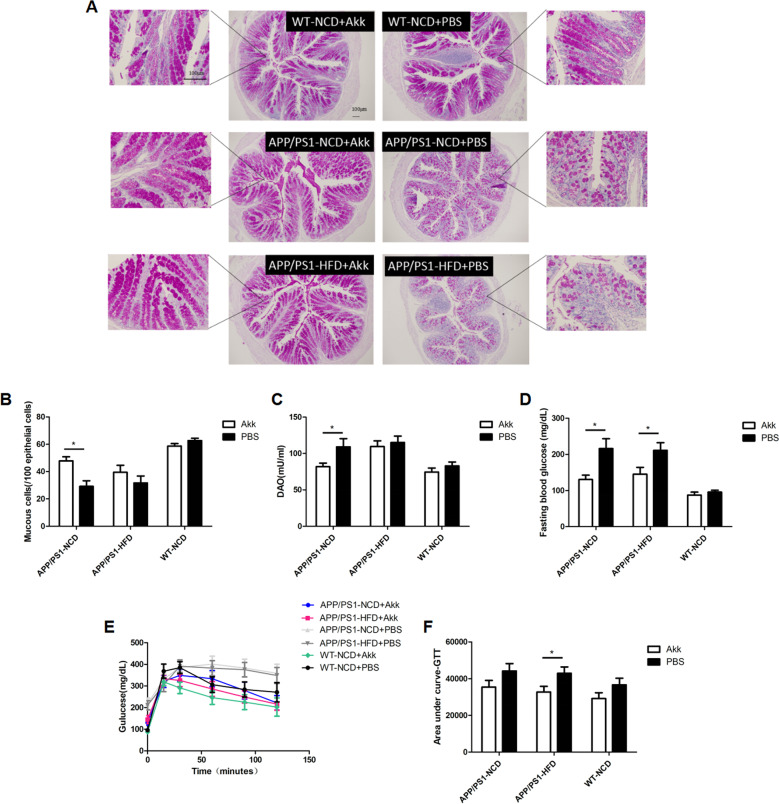
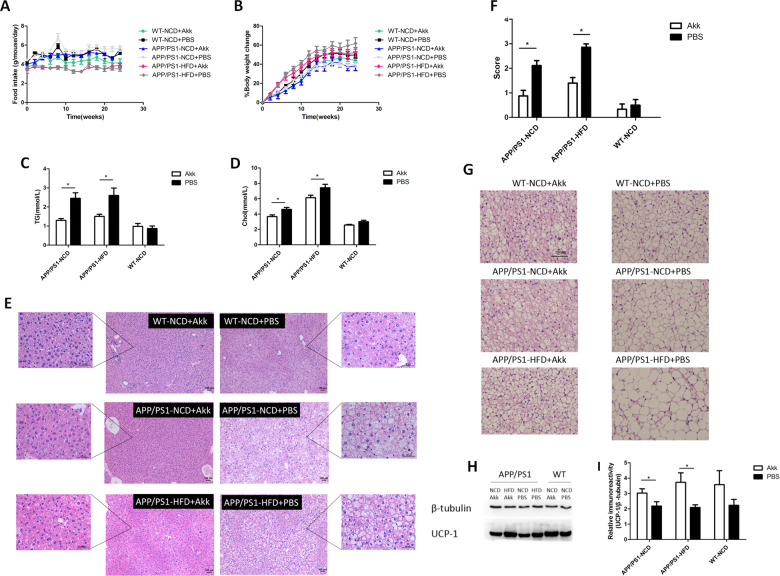
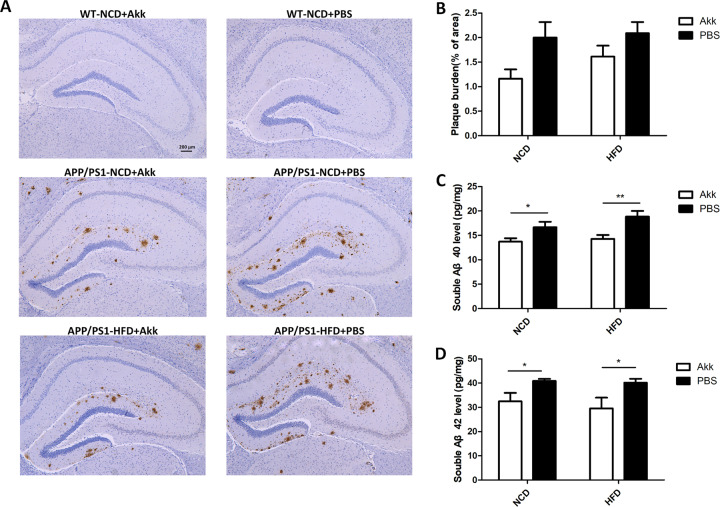
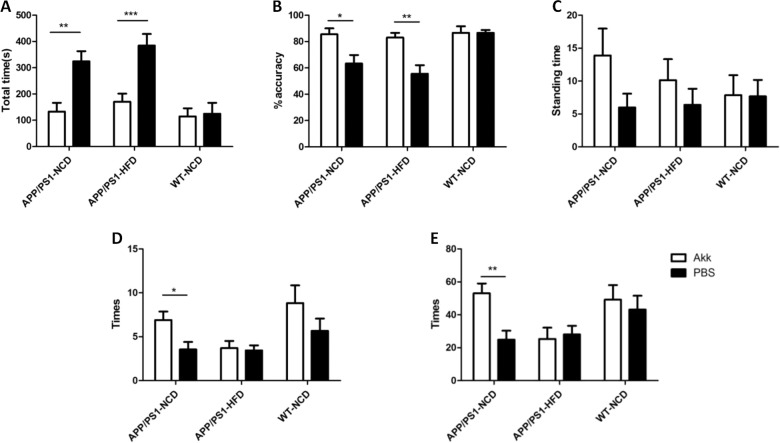
Objective: Alzheimer’s disease (AD) is a global health problem without effective methods to alleviate the disease progression. Amyloid β-protein (Aβ) is widely accepted as a key biomarker for AD. Metabolic syndromes, including obesity and insulin resistance, are key high risk factors for AD. Akkermansia muciniphila (Akk), the only representative human gut microbe in the genus Verrucomicrobia, can prevent the weight gain caused by a high-fat diet, repair the damaged integrity of the intestinal epithelium barrier, reduce endotoxin levels in blood and improve insulin resistance. The aim of this study is to explore the impact of Akk administration in AD model mice in different diets. Methods: APP/PS1 mice were fed either a normal chow diet or a high-fat diet and were treated with Akk by gavage each day for 6 months. The impacts of Akk on glucose metabolism, intestinal barrier and lipid metabolism in the mouse model of AD were determined. Changes in brain pathology and neuroethology were also analyzed. Results: Akk effectively reduced the fasting blood glucose and serum diamine oxidase levels, and alleviated the reduction of colonic mucus cells in APP/PS1 mice. After treatment with Akk, the APP/PS1 mice showed obviously reduced blood lipid levels, improved hepatic steatosis and scapular brown fat whitening. Moreover, Akk promoted the reduction of Aβ 40–42 levels in the cerebral cortex of APP/PS1 mice, shortened the study time and improved the completion rate in Y-maze tests. Conclusion: Akk effectively improved glucose tolerance, intestine barrier dysfunction and dyslipidemia in AD model mice. Our study results suggested that Akk could delay the pathological changes in the brain and relieve impairment of spatial learning and memory in AD model mice, which provides a new strategy for prevention and treatment of AD.
Overview
The claims and statistics of this paper haven’t been checked yet.
Free: it reads the open-access text and checks the first 5 claims that cite a source we can check. Create a free account to check every claim.
Integrity signals
Registry
Cites
Statistics
Figures
Verification
Claims the paper makes
The claims and statistics of this paper haven’t been checked yet.
Free: it reads the open-access text and checks the first 5 claims that cite a source we can check. Create a free account to check every claim.
Claims other papers make about this one
Each is checked against this paper’s own text: does it say what the citing paper says it does?
The cited source says what the claim attributes to it.
In the citing paper
“Recently, Ou et al. 47 suggested that A. muciniphila may improve the insulin resistance of Alzheimer's disease mice, reduce the decrease in colonic mucous cells, improve intestinal barrier dysfunction and dyslipidaemia, and delay pathological changes in the brain”
From The role of gut dysbiosis in Parkinson’s disease: mechanistic insights and therapeutic options (2021) · cites this paper as [47]
The cited source says what the claim attributes to it.
In the citing paper
“therefore, microbial intervention could provide a novel strategy for the prevention and treatment of Alzheimer's disease.47”
From The role of gut dysbiosis in Parkinson’s disease: mechanistic insights and therapeutic options (2021) · cites this paper as [47]
The cited source says what the claim attributes to it.
In the citing paper
“indicating that there is a close connection between gut microbiota and neurological disorders; therefore, microbial intervention could provide a novel strategy for the prevention and treatment of Alzheimer's disease.47”
From The role of gut dysbiosis in Parkinson’s disease: mechanistic insights and therapeutic options (2021) · cites this paper as [47]
Self-check
Percentages, sums and reported differences re-computed from the paper’s own numbers.
The self-check needs the paper’s full text.
Citations
Cites
Cross-talk between Akkermansia muciniphila and intestinal epithelium controls diet-induced obesity
Everard, A., Belzer, C., Geurts, L., Ouwerkerk, J. P., Druart, C., Bindels, L. B., Guiot, Y., Derrien, M., Muccioli, G. G., Delzenne, N. M., et al. (2013) · Proceedings of the National Academy of Sciences · doi:10.1073/pnas.1219451110 · Cited by 4,511
Forecasting the global burden of Alzheimer's disease
Brookmeyer, R., Johnson, E., Ziegler‐Graham, K., & Arrighi, H. M. (2007) · Alzheimer's & Dementia · doi:10.1016/j.jalz.2007.04.381 · Cited by 3,370
Plovier, H., Everard, A., Druart, C., Depommier, C., Van Hul, M., Geurts, L., Chilloux, J., Ottman, N., Duparc, T., Lichtenstein, L., et al. (2017) · Nature Medicine · doi:10.1038/nm.4236 · Cited by 2,204
Dao, M. C., Everard, A., Aron-Wisnewsky, J., Sokolovska, N., Prifti, E., Verger, E. O., Kayser, B. D., Levenez, F., Chilloux, J., Hoyles, L., et al. (2016) · Gut · doi:10.1136/gutjnl-2014-308778 · Cited by 1,931
Talbot, K., Wang, H.-Y., Kazi, H., Han, L.-Y., Bakshi, K. P., Stucky, A., Fuino, R. L., Kawaguchi, K. R., Samoyedny, A. J., Wilson, R. S., et al. (2012) · Journal of Clinical Investigation · doi:10.1172/jci59903 · Cited by 1,871
Shin, N.-R., Lee, J.-C., Lee, H.-Y., Kim, M.-S., Whon, T. W., Lee, M.-S., & Bae, J.-W. (2014) · Gut · doi:10.1136/gutjnl-2012-303839 · Cited by 1,550
Cattaneo, A., Cattane, N., Galluzzi, S., Provasi, S., Lopizzo, N., Festari, C., Ferrari, C., Guerra, U. P., Paghera, B., Muscio, C., et al. (2017) · Neurobiology of Aging · doi:10.1016/j.neurobiolaging.2016.08.019 · Cited by 1,382
The first 1000 cultured species of the human gastrointestinal microbiota
Rajilić-Stojanović, M., & de Vos, W. M. (2014) · FEMS Microbiology Reviews · doi:10.1111/1574-6976.12075 · Cited by 1,182
Reduction of Abeta amyloid pathology in APPPS1 transgenic mice in the absence of gut microbiota
Harach, T., Marungruang, N., Duthilleul, N., Cheatham, V., Mc Coy, K. D., Frisoni, G., Neher, J. J., Fåk, F., Jucker, M., Lasser, T., et al. (2017) · Scientific Reports · doi:10.1038/srep41802 · Cited by 901
Moloney, A. M., Griffin, R. J., Timmons, S., O’Connor, R., Ravid, R., & O’Neill, C. (2010) · Neurobiology of Aging · doi:10.1016/j.neurobiolaging.2008.04.002 · Cited by 764
Cited by
Items 201–300 of 329
Feng, S., Wang, W., Zhang, X., Helal, S. E., Peng, N., & Zhang, Z. (2025) · Frontiers in Microbiology · doi:10.3389/fmicb.2025.1638771 · Cited by 11
“…conditions such as metabolic disorders (Everard et al., 2013; Zhao et al., 2017; Hänninen et al., 2018), liver injury (Keshavarz Azizi Raftar et al., 2021a), neurological problems (Ou et al., 2020), colitis (Paredes-Sabja et al., 2013; Zhai et al., 2019), and aging (Cerro et al., 2021) in mice.”
Cannabinoids’ Role in Modulating Central and Peripheral Immunity in Neurodegenerative Diseases
Sharon, N., Yarmolinsky, L., Khalfin, B., Fleisher‐Berkovich, S., & Ben‐Shabat, S. (2024) · International Journal of Molecular Sciences · doi:10.3390/ijms25126402 · Cited by 8
“In the ALS model, the administration of A. muciniphila ameliorated ALS symptoms and improved mouse survival [215].”
Sun, Q., Cui, Z., Li, J., Zhang, Q., Zheng, J., Lu, F., & Liu, F. (2024) · Aging advances. · doi:10.4103/agingadv.agingadv-d-24-00017 · Cited by 10
Zhang, S., Mao, X., Chang, L., Li, M., Wei, C., Li, H., Shen, X., Niu, K., Zhang, R., Jiang, Y., et al. (2025) · Journal of Ethnopharmacology · doi:10.1016/j.jep.2025.119944 · Cited by 8
Vahed, A., Shamsi, M. M., Siadat, S. D., Behmanesh, M., Negaresh, R., Agh-Mohammadi, S., & Ebrahimi, M. (2025) · Diabetes Research and Clinical Practice · doi:10.1016/j.diabres.2025.112908 · Cited by 8
Oh my gut! Is the microbial origin of neurodegenerative diseases real?
Walker, A. C., & Czyż, D. M. (2023) · Infection and Immunity · doi:10.1128/iai.00437-22 · Cited by 12
“While the bacterium is known for its numerous health benefits, including attenuation of cognitive defects and Aβ plaques in AD rodent models, its presence in PCD patients, predomi nantly PD, correlates with the pathogenicity (152, 153, 209, 210).”
Chang, Y. B., Jung, E.-J., Suh, H. J., & Choi, H. (2023) · Foods · doi:10.3390/foods12244428 · Cited by 8
Song, Y., Lei, H., Cao, Z., Zhang, C., Chen, C., Wu, M., Zhang, H., Du, R., Lijun, L., Chen, X., et al. (2024) · Chemical Research in Toxicology · doi:10.1021/acs.chemrestox.4c00042 · Cited by 9
Bai, Z., Lan, H., Luo, D., Li, X., Zhang, Y., Geng, M., & Chang, S. (2024) · eFood · doi:10.1002/efd2.152 · Cited by 8
Traini, C., Bulli, I., Sarti, G., Morecchiato, F., Coppi, M., Rossolini, G. M., Pilato, V. D., & Vannucchi, M. G. (2024) · Nutrients · doi:10.3390/nu16152381 · Cited by 10
Torrens, A. A., Mitchell, C. A., Pourshahidi, L. K., Murphy, B., Allwood, J. W., Rizzetto, L., Scholz, M., Tuohy, K. M., Pereira‐Caro, G., Moreno‐Rojas, J. M., et al. (2022) · International Journal of Food Sciences and Nutrition · doi:10.1080/09637486.2022.2141209 · Cited by 8
“…pre-clinical models have demonstrated microbiota modulators include probiotic bacteria (Wang et al. 2020; Zhu et al. 2021) human commensal bacteria (Ou et al. 2020), butyrate producing bacteria (Sun et al. 2020; Go et al. 2021), prebiotics (Sun et al. 2019; Han et al. 2020; Lee et al. 2021) and…”
BackgroundA New Insight on Feasibility of Pre-, Pro-, and Synbiotics-based Therapies in Alzheimer’s Disease
Talebi, M., Ebrahimi, V., Rasouli, A., Farjami, A., Soofiyani, S. R., Soleimanian, A., Forouhandeh, H., & Tarhriz, V. (2022) · Journal of Reports in Pharmaceutical Sciences · doi:10.4103/jrptps.jrptps_170_21 · Cited by 8
Yan, L., Li, H., Qian, Y., Liu, Q., Cong, S., Dou, B., Wang, Y., Wang, M., & Yu, T. (2024) · Frontiers in Neuroscience · doi:10.3389/fnins.2024.1334735 · Cited by 10
Natural products: Harnessing the power of gut microbiota for neurological health
Cheng, H., Liu, J., Zhang, D., Wu, J., Wu, J., Zhou, Y., Tan, Y., Feng, W., & Peng, C. Y. (2024) · Phytomedicine · doi:10.1016/j.phymed.2024.156019 · Cited by 7
Akkermansia mono-colonization modulates microglia and astrocytes in a strain specific manner
Schwerdtfeger, L., Lanser, T. B., Montini, F., Moreira, T. G., LeServe, D. S., Cox, L. M., & Weiner, H. L. (2025) · Journal of Neuroinflammation · doi:10.1186/s12974-025-03417-3 · Cited by 9
Basgaran, A., Lymberopoulos, E., Burchill, E., Reis-Dehabadi, M., & Sharma, N. (2025) · Brain Communications · doi:10.1093/braincomms/fcaf059 · Cited by 8
“49 Our finding here Figure 5 Abundance in the disease grouping in Curated microbiome dataset.”
Hou, R., Song, W., Nan, Y., Gong, Y., Liu, J. Y., & Liu, J. (2025) · Frontiers in Pharmacology · doi:10.3389/fphar.2025.1662336 · Cited by 7
Li, X., Liu, B., Sekar, D., Sur, M., Reddy, J., Natarajan, S. K., Lund, P. J., & Yu, J. (2025) · Nutrients · doi:10.3390/nu17172902 · Cited by 8
“The genus Akkermansia has been found to improve cognitive dysfunction in AD rodent models [34,35].”
Gong, K., Zhang, S., Pan, Y., Cai, Q., Wu, M., Yin, X., Ma, J., Ji, H., Wang, Z., Wu, W., et al. (2025) · Microbiome · doi:10.1186/s40168-025-02196-6 · Cited by 9
“Ou et al. found that AKK bacteria effectively relieve disorders in glucolipid metabolism and intestine barrier function, delay amyloid pathology and then improve cognitive deficits in an AD mouse model [50].”
Akkermansia Muciniphila Plays a Neuroprotective Role in HMC3 Cells Through The ‘Gut–Brain’ Axis
Zou, R., Shen, G., Wu, Y., Guo, M., Chen, J., Yang, S., Zhao, H., & Zheng, H. (2023) · Future Microbiology · doi:10.2217/fmb-2022-0007 · Cited by 9
Liu, Y. J., Li, Z., Sun, T., Li, Z., Manyande, A., Xiang, H., & He, Z. (2024) · CNS Neuroscience & Therapeutics · doi:10.1111/cns.14610 · Cited by 7
The role of the gut microbiome in the regulation of astrocytes in Alzheimer's disease
Chandra, S., & Vassar, R. J. (2024) · Neurotherapeutics · doi:10.1016/j.neurot.2024.e00425 · Cited by 7
Zou, Z., Lei, D., Yin, Y., Xu, R., Luo, H., Chen, T., Liu, M., & Li, X. (2025) · Heliyon · doi:10.1016/j.heliyon.2025.e42925 · Cited by 12
The Potential Role of m6A in the Regulation of TBI-Induced BGA Dysfunction
Huang, P., Liu, M., Zhang, J., Zhong, X., & Zhong, C. (2022) · Antioxidants · doi:10.3390/antiox11081521 · Cited by 7
Neuroprotective Role of MiRNA-9 in Neurological Diseases: A Mini Review
Wang, S., Jiang, G., & Wang, S. (2022) · Current Molecular Medicine · doi:10.2174/1566524023666221025123132 · Cited by 9
Huang, F., Marungruang, N., Martinsson, I., Camprubí-Ferrer, L., Nguyen, T. D., Gondo, T. F., Karlsson, E. N., Deierborg, T., Öste, R., & Heyman‐Lindén, L. (2023) · Frontiers in Nutrition · doi:10.3389/fnut.2023.1257472 · Cited by 9
Correlating the Gut Microbiome to Health and Disease
Marques, T. M., Mall, J. G., Forsgård, R. A., Wall, R., Brummer, R. J., & de Vos, W. M. (2024) · Elsevier eBooks · doi:10.1016/b978-0-323-99971-7.00010-2 · Cited by 13
Kim, Y., Cho, M., Jeon, C., Goh, G., & Kim, M. (2025) · Biomedicine & Pharmacotherapy · doi:10.1016/j.biopha.2025.118598 · Cited by 6
Yu, E., Eid, J. S., Cheng, A., Lynch, B. S., & Bauter, M. R. (2024) · Toxicology Reports · doi:10.1016/j.toxrep.2024.101790 · Cited by 9
Wang, H., Rao, M. P. N., Cheng, M., Xian, M., Zhou, Y., Zhou, L., Cao, H., Li, W., Sibirny, A. А., Wang, F., et al. (2023) · Journal of Bioscience and Bioengineering · doi:10.1016/j.jbiosc.2023.01.001 · Cited by 7
Li, J., Zhang, F., Zhao, L., & Dong, C. (2023) · Reviews in the Neurosciences · doi:10.1515/revneuro-2023-0006 · Cited by 6
Zhang, T., Wu, X., Liu, B., Huang, H., Zhou, C., & Liang, P. (2023) · Frontiers in Neuroscience · doi:10.3389/fnins.2023.1156453 · Cited by 9
“Furthermore, Akkermansia influences hippocampal development and cognitive function (Yang et al., 2019; Ou et al., 2020).”
BackgroundWu, W., Zeng, C., Wu, C., Wu, T., Pang, J., Zhou, P., & Cao, Y. (2024) · Biochemical and Biophysical Research Communications · doi:10.1016/j.bbrc.2024.150374 · Cited by 7
Xiang, Q., Sun, S., Liu, Y., Wu, Z., & Zhang, X. (2023) · Food Bioscience · doi:10.1016/j.fbio.2023.103051 · Cited by 7
Effect of gut symbiotic bacteria Akkermansia muciniphila on aging-related obesity
Liu, Z., Chen, M., Zheng, W., Zhan, X., Sui, W., Huang, H., Jiang, Q., & Zhao, W. (2025) · Biochemical and Biophysical Research Communications · doi:10.1016/j.bbrc.2025.151606 · Cited by 8
Li, X., Miao, X., Zhang, X., Tian, H., Wang, L. C., Liu, J., Zhang, J., Tan, R., & Huang, J. (2026) · Journal of Agricultural and Food Chemistry · doi:10.1021/acs.jafc.5c15040 · Cited by 5
Lee, M., Ahn, K., & Kim, M. (2024) · PLoS ONE · doi:10.1371/journal.pone.0312670 · Cited by 6
“However, a few studies have also reported that Akkermansia muciniphila improves glucose tolerance, intestinal barrier dysfunction and dyslipidemia [27, 41].”
BackgroundLi, J., Lu, M., Huang, H., Zhao, T., Yu, H., Zhou, C. L., & Ma, W. (2025) · Molecular Nutrition & Food Research · doi:10.1002/mnfr.70027 · Cited by 5
“A. muciniphila also effectively improved glucose tolerance, intestinal barrier dysfunction, and lipid abnormalities in AD mice, and it slowed pathological changes in the brains of AD mice and alleviated spatial learning and memory impairment [49].”
Zhou, W., Zhan, L., Xu, H., & Zhang, L. (2022) · Journal of Alzheimer s Disease · doi:10.3233/jad-220692 · Cited by 6
“There is evidence that Akkermansia effectively improves glucose tolerance, dyslipidemia, and intestinal barrier dysfunction and relieves the disorder of learning and memory in Alzheimer’s disease [59].”
The Role of the Human Gutome on Chronic Disease
Hoefer, C. C., Hollon, L. K., & Campbell, J. A. (2022) · Clinics in Laboratory Medicine · doi:10.1016/j.cll.2022.09.015 · Cited by 5
Khalili, L., Park, G., Nagpal, R., & Salazar, G. (2024) · SSRN Electronic Journal · doi:10.2139/ssrn.4771341 · Cited by 5
Lin, H., Shi, Z., Wang, B., Wang, S., He, J., & Zhang, W. (2025) · Food Research International · doi:10.1016/j.foodres.2025.116909 · Cited by 4
Cui, X., Yi, C., Liu, J., Qi, J., Deng, W., Yuan, X., Zhou, R., Chen, M., Xiang, Q., & Xu, H. (2025) · Investigative Ophthalmology & Visual Science · doi:10.1167/iovs.66.9.6 · Cited by 7
Akkermansia muciniphila – multifunctional bacteria
Wosińska, A., PAZIK, D., Łopuszyńska, I., KOSECKA, K., Rudziński, P., Cieślik, A., Jargieło, A., KOSIERADZKA, K., ADAMOWICZ, D., & Stańczyk, J. (2023) · Journal of Education Health and Sport · doi:10.12775/jehs.2023.21.01.009 · Cited by 4
Yeo, S., Lee, C., Park, H., Eo, K., Yeom, S. C., Kim, H., & Huh, C. (2025) · Food Science of Animal Resources · doi:10.5851/kosfa.2024.e117 · Cited by 3
Influence of the Microbiota Through the Gut-Brain Axis in Neurological Diseases
Guarnotta, V., Mandarino, F. V., Fasulo, E., Maida, M. F., Laterza, L., Sferrazza, S., Raimondo, D., & Sinagra, E. (2024) · Integrated science · doi:10.1007/978-3-031-73061-0_20 · Cited by 3
Drug enteric metabolism in gut microbiota-brain crosstalk
Maramai, S., Taddei, M., Castagnetti, A., Viciani, E., Koufi, F., Neri, I., Boschetti, E., Evangelisti, C., Ratti, S., Baldelli, L., et al. (2025) · Life Sciences · doi:10.1016/j.lfs.2025.124075 · Cited by 3
Wang, L., Zhang, R., Zhao, L., Xiao, L., Zhang, X., Liu, L., Wang, J., Chen, K., Li, J., Zhang, M., et al. (2026) · Nature Communications · doi:10.1038/s41467-026-71140-5 · Cited by 4
“Akkermansia muci-niphila prevents weight gain associated with high-fat diets, repairs the damagetointestinalepithelialbarriers,reducesendotoxinlevelsinthe blood and improves insulin sensitivity 18 .”
Kissmann, A., Paß, F., Ruzicka, H.-M., Dorst, I., Stieger, K. R., Weil, T., Gihring, A., Elad, L., Knippschild, U., & Rosenau, F. (2024) · Women · doi:10.3390/women4010007 · Cited by 3
“The impact of A. muciniphila on health has been discussed in the context of different diseases including metabolic disorders such as obesity [55], diabetes mellitus [91], and neurodegenerative diseases such as multiple sclerosis [92,93], Alzheimer’s [94], and Parkinson’s disease [95].”
BackgroundAtypical gut microbiota composition in a mouse model of developmental stuttering
Nanda, S., Lamot, B., Guarino, N., Usler, E. R., Chugani, D. C., Dutta, A., & Chow, H. M. (2024) · Scientific Reports · doi:10.1038/s41598-024-74766-x · Cited by 3
“For example, in PD patients, increased Akkermansia relative abundance contributes to disease progression 52,53 , whereas it has been hypothesized to play a protective role in MS 43,54,55 .”
BackgroundThe interplay between gut microbiota composition and dementia
Pour, R. G. K., Zounouzi, S. K., Farshbafnadi, M., & Rezaei, N. (2025) · Reviews in the Neurosciences · doi:10.1515/revneuro-2024-0113 · Cited by 3
Chen, J., Yu, Y., Sun, S., Yu, W., Lei, Y., Lu, C., Zhai, J., Bai, F., Ren, F., & Wang, R. (2025) · Journal of Nutrition · doi:10.1016/j.tjnut.2025.03.027 · Cited by 4
Wang, X., Zhang, H., Zhou, W. P., Li, X., Ibáñez, C. F., & Xie, M. (2025) · BMC Biology · doi:10.1186/s12915-025-02230-x · Cited by 4
“In line with this, daily feeding of APP/PS1 mice with Akkermansia muciniphila for 6 months led to decreased Aβ plaque burden in cerebral cortex and improved performance in the Y-maze test [39].”
Liu, L., Wang, L., Wang, Y., Zhao, H., Gao, X., Yin, W., & Xie, J. (2025) · Frontiers in Immunology · doi:10.3389/fimmu.2025.1657524 · Cited by 6
The Role of the Human Gutome on Chronic Disease
Hoefer, C. C., Hollon, L. K., & Campbell, J. A. (2021) · Advances in Molecular Pathology · doi:10.1016/j.yamp.2021.06.003 · Cited by 3
A Novel Strategy for Alzheimer’s Disease Based on the Regulatory Effect of Amyloid-β on Gut Flora
Huang, L., Lu, Z., Zhang, H., Wen, H., Li, Z., Liu, Q., & Wang, R. (2022) · Journal of Alzheimer s Disease · doi:10.3233/jad-220651 · Cited by 3
Self-citationQuigley, E. M. M., Stevenson, A., Jeffery, I. B., & Masters, J. (2023) · Alimentary Pharmacology & Therapeutics · doi:10.1111/apt.17354 · Cited by 3
Bukowski-Thall, G., Fellendorf, F. T., Gorkiewicz, S., Ip, K. C. K., Schmidt, L., Durdević, M., Habisch, H., Mörkl, S., Wagner‐Skacel, J., Bengesser, S., et al. (2023) · bioRxiv (Cold Spring Harbor Laboratory) · doi:10.1101/2023.11.16.566698 · Cited by 3
Lashus, C., Gomez, A., Hummel, T. R., Jacobs, L. F., Majid, A., Raju, R. M., Smith, C. J., Williams, J., & Bratman, G. N. (2025) · Environmental Research · doi:10.1016/j.envres.2025.123582 · Cited by 3
“Oral administration of A. muciniphila improves intestinal barrier function, reduces neurotoxic peptide accumulation in the hippocampus, attenuates anxiety-like behaviors, and improves cognitive function (Ou et al., 2020).”
Chen, Y.-J., Ho, H. J., Tseng, C.-H., Chen, Y.-F., Shieh, J.-J., & Wu, C.-Y. (2026) · Inflammation · doi:10.1007/s10753-025-02436-9 · Cited by 2
The Role of Antioxidants in the Connection Between Microbiota, Neuroinflammation and Epilepsy
Dardano, D. M., Serra, M., Ussia, S., Ritorto, G., Altomare, C., Macrì, E., Mollace, R., Savino, R., Palma, E., Citraro, R., et al. (2026) · Biomedicines · doi:10.3390/biomedicines14030550 · Cited by 2
Du, Y., An, Y., Cao, Z., Xu, G., Chu, M., & Lu, Y. (2026) · Food & Function · doi:10.1039/d5fo03902a · Cited by 3
Akkermansia muciniphila – obiecujący kandydat na probiotyk nowej generacji
Markowska, E., & Kiersztan, A. (2021) · Postępy Higieny i Medycyny Doświadczalnej · doi:10.2478/ahem-2021-0036 · Cited by 4
Zhang, Y., Li, Q., Tan, H., & Nie, S. (2025) · Elsevier eBooks · doi:10.1016/b978-0-443-21630-5.00015-0 · Cited by 2
Yang, F., Zhou, L., Deng, J., Wang, Y., Yang, Z., Zhang, Y., Liu, Y., & Zhang, Y. (2025) · Journal of Oceanology and Limnology · doi:10.1007/s00343-025-4317-8 · Cited by 2
“…research has demonstrated that Akkermansia supplementation is efficacious in improving intestinal barrier dysfunction, reducing Aβ plaque deposition in the brain, and significantly ameliorating learning and spatial memory deficits (Ou et al., 2020), which was also observed in our ORT and OLT tests.”
Lai, G., Bevilacqua, L., Giuliani, M. E., Bigossi, G., Marcozzi, S., Casoli, T., Abbrescia, P., Frigeri, A., Malavolta, M., & Balietti, M. (2025) · GeroScience · doi:10.1007/s11357-025-01797-1 · Cited by 5
“In an Alzheimer’s disease mouse model, it reduced amyloid-beta (Aβ) plaque deposition, improved glucose homeostasis, and alleviated cognitive deficits, highlighting its neuroprotective potential [101].”
Zheng, S., Li, M., Luan, X., Tong, C., Li, J., & Zhang, Z. (2025) · Frontiers in Veterinary Science · doi:10.3389/fvets.2025.1552482 · Cited by 1
Akkermansia muciniphila: A Promising Next Generation Probiotic
Hasnain, M. A., & Moon, G. (2025) · Current Topic in Lactic Acid Bacteria and Probiotics · doi:10.35732/ctlabp.2025.11.1.1 · Cited by 1
Using bismuth selenide nanoparticles to combat methylmercury-induced neurodegeneration
Lin, X., Xie, H., Zhang, Y., Wang, X., Ma, Y., Zhang, H., Hao, C., Mu, S., Liu, Q., Li, Q., et al. (2025) · Ecotoxicology and Environmental Safety · doi:10.1016/j.ecoenv.2025.119031 · Cited by 2
Bicknell, B. T., Liebert, A. D., McLachlan, C. S., & Kiat, H. (2026) · Journal of Clinical Medicine · doi:10.3390/jcm15010368 · Cited by 1
“Increases in this genus highlight the need for strain-level and functional profiling, as taxa may exert context-dependent effects [35,83,91,92].”
Bioactive Peptides Produced From Microbial Sources and Their Neuroprotective Effects
Konuk, M., & Korcan, S. E. (2026) · IGI Global eBooks · doi:10.4018/979-8-3373-4139-2.ch003 · Cited by 1
Geng, F., Zhao, N., Zhou, L., Liu, X.-T., Chen, X., Wang, Z.-T., Zhang, Z.-J., & Ren, Q.-G. (2026) · Journal of Neuroinflammation · doi:10.1186/s12974-026-03706-5 · Cited by 1
Fang, Q., Qin, C., Peng, Y., Xu, Z., Li, D., & Hu, S. (2026) · Journal of Future Foods · doi:10.1016/j.jfutfo.2026.02.009 · Cited by 1
Self-citationLong, Z., Li, J., Zhu, F., Liu, X., Zhou, J., Li, J., & Xu, W. (2026) · International Journal of Biological Macromolecules · doi:10.1016/j.ijbiomac.2026.151199 · Cited by 2
Nutraceuticals and the Microbiota–Gut–Brain Axis: A Pathway for Preventing Cognitive Decline
Castillo-Moral, Á., Toda-Ferran, C., Bullò, M., Teichenne-Jané, J., & Escoté, X. (2026) · Nutrition Reviews · doi:10.1093/nutrit/nuag017 · Cited by 1
Han, Y., Lu, J., Bu, X., Hu, L., Niu, C., Qiao, J., Wu, H., & Caiyin, Q. (2026) · Microorganisms · doi:10.3390/microorganisms14040820 · Cited by 1
“In Alzheimer’s disease (AD) models [75,76], supplementation with A. muciniphila improved spatial learning and memory deficits in APP/PS1 mice and delayed neuropathological progression [77].”
A systematic review on the effects of hypercaloric diet in animal models of Alzheimer's disease
Carbone, E., Scibetta, S., Cappella, M., Crestini, A., Perrone, F., Hallulli, M., Rosa, P., Rivabene, R., Maiolo, F., Simonelli, V., et al. (2026) · Journal of Alzheimer s Disease · doi:10.1177/13872877261448495 · Cited by 1
“36 – 3841,44 ,47 ,”
Mechanism and application of Akkermansia muciniphila in inflammatory diseases
Xie, L., Lu, J., Han, H., Liu, Z., Dong, C., Wu, H., & Qiao, J. (2026) · Frontiers in Cellular and Infection Microbiology · doi:10.3389/fcimb.2026.1819005 · Cited by 1
Zuffa, S., Allaband, C., Charron‐Lamoureux, V., Caraballo‐Rodríguez, A. M., Patan, A., Mohanty, I., Agongo, J., Bostick, J. W., Connerly, T. J., Thron, T., et al. (2026) · Cell Reports · doi:10.1016/j.celrep.2026.117499 · Cited by 20
Unhealthy dietary patterns and Alzheimer’s disease: associations and underlying mechanistic pathways
Ramasinghe, C., & Xu, B. (2026) · Critical Reviews in Food Science and Nutrition · doi:10.1080/10408398.2026.2691237 · Cited by 2
Effects of HSYA on serum and brain cholesterol levels in AD rats based on quantitative proteomics
Wang, C., Hou, J., Zhang, M., Zheng, Y., Ye, H., Qi, Y., Guo, L., & Hu, Y. (2022) · International Journal of Neuroscience · doi:10.1080/00207454.2022.2082964 · Cited by 2
“…and triglyceride levels and significant lipid metabolism disorder, and at the same time, a high-fat diet further aggravated the damage of learning and spatial memory ability of aPP/Ps1 mice [6]. aβ is derived from amyloid precursor protein (aPP) by sequential cleavages of β-and γ-secretase.”
BackgroundLi, R., Chen, W., Zhang, H., Liang, Q., Wang, L., Peng, W., & Wu, C.-J. (2024) · Food Science and Human Wellness · doi:10.26599/fshw.2024.9250214 · Cited by 2
“It can produce short-chain fatty acids, preserve colonic shielding permeability, and reverse cognitive deficits in AD mice [41].”
Semaglutide Ameliorates Neuroinflammation Caused by Enterogenous Pyrogen in APP/PS1 MicePreprint
Yuan, Y., Zhang, J., Zhang, Z., Zhai, Y., Cheng, X., Xue, L., Zhao, F. L., Cao, L. H., & Wang, H. (2025) · Research Square · doi:10.21203/rs.3.rs-6098406/v1 · Cited by 1
Huang, H., Lin, Y., Panyod, S., Chen, R.-A., Lin, Y., Wu, W., Chai, L. M. X., Hsu, C., Lu, K., Huang, Y., et al. (2022) · SSRN Electronic Journal · doi:10.2139/ssrn.4143257
The Gut Microbiota and Its Metabolites Contribute to Ageing and Ageing-Related Diseases
Chen, C., Cao, Z., Lei, H., & Zhang, L. (2023) · Healthy ageing and longevity · doi:10.1007/978-3-031-14023-5_1
Ren, L., Xu, D., Zhang, W., Wu, S., Yu, M., He, X., & Wei, Z. (2023) · SSRN Electronic Journal · doi:10.2139/ssrn.4530808
Hu, B., Bai, Y., & Gao, W. (2024) · Research Square · doi:10.21203/rs.3.rs-3943142/v1
Importance of Microbial Diversity on Health
Mukhopadhyay, S., Sunaina, S., Mohanty, T., Das, A., De, A. J., Dwivedi, I., & Aich, P. (2024) · Elsevier eBooks · doi:10.1016/b978-0-443-13320-6.00031-7
Yu, H., Chen, S., Li, X., Lin, J., Xue, Z., Liu, J., Lin, W. V., & Cao, L. S. (2024) · SSRN Electronic Journal · doi:10.2139/ssrn.4802934
Mi, T., Yang, S., Huo, F., Zhao, M., Lv, S., Su, T., Feng, S., Wang, H., Guo, L., Liu, Y., et al. (2024) · Research Square · doi:10.21203/rs.3.rs-4321131/v1
Wang, Y., Ruan, Y., Cui, C., & Wang, X. (2024) · PubMed Central · doi:10.12122/j.issn.1673-4254.2024.05.11 · Cited by 5
Hart, D. W., Sherman, M. A., Kim, M., Pelzel, R. J., Brown, J. L., & Lesné, S. (2024) · Research Square · doi:10.21203/rs.3.rs-4582616/v1 · Cited by 1
“In experimental models of disease, oral gavage with A. muciniphila in the APP/PS1 mouse model of Alzheimer’s disease reduced soluble amyloid-beta concentrations in brain tissue and improved cognitive performance in the Y-maze of 9-month-old mice 33 .”
Saini, K., Shilpi, S., & Singhal, N. K. (2025) · International Journal of Applied Pharmaceutics · doi:10.22159/ijap.2025v17i1.53491
Gao, X., Luo, J., Zou, J., Gong, Z., Li, Y., Lun, J., Zhou, B., Chen, J., Wang, Z., & Cao, H. (2026) · Food Science and Human Wellness · doi:10.26599/fshw.2025.9250580 · Cited by 2
Selenium intervention in Alzheimer's disease mice and its possible involvement of the gut-brain axis
Ma, G., Huang, Y., Zeng, K., Yan, X., Ran, X., Liang, Z., Hu, T., Li, J., Wang, M., Sun, Y., et al. (2026) · Journal of Functional Foods · doi:10.1016/j.jff.2026.107301
Recombinant Walnut-Derived Peptide Ameliorates d -Galactose-Induced Cognitive Deficits
Li, C., Zheng, D., Zhang, T., Qian, S., Liu, X., Yang, Z., Lim, K., Min, W., Huang, J., Yang, Y., et al. (2025) · Journal of Agricultural and Food Chemistry · doi:10.1021/acs.jafc.5c05601 · Cited by 2
Xu, L., Zhang, M., Shi, M., Lin, X., Qin, G., Fu, W. E., & Huang, B. (2025) · Scientific Reports · doi:10.1038/s41598-025-21101-7
Wang, L., Yu, L., Li, J., Wang, H., Zhang, Z., Fu, Z., Yu, H., Cui, Y., & Han, L. (2025) · Microbial Pathogenesis · doi:10.1016/j.micpath.2025.108177
Zheng, H., Xu, P., Jiang, Q., Xu, Q., Zheng, Y., Yan, J., Ji, H., Ning, J., Zhang, X., Li, C., et al. (2021) · Figshare · doi:10.6084/m9.figshare.14850839
Cox, L. M., Calcagno, N., Gauthier, C. D., Madore, C., Butovsky, O., & Weiner, H. L. (2022) · Figshare · doi:10.6084/m9.figshare.19343149
Metadata
- Authors
- Ou, Z., Deng, L., Lu, Z., Wu, F., Liu, W., Huang, D., & Peng, Y.
- Affiliations
- Zhujiang Hospital (CN)
- Sun Yat-sen University (CN)
- Corresponding author
- Peng, Yongzheng
- Venue
- Nutrition & Diabetes
- Published
- 2020-04-22
- Volume
- 10
- Issue
- 1
- Pages
- 12-12
- ISSN
- 2044-4052 (ISSN-L)
- PMC
- PMC7176648
- OpenAlex
- W3019588555
- Semantic Scholar
- 912ef0e93ba13afcb00cdfbe9bc3cac5e89f82d9
- Cited by
- 328
- References
- 47
- Citations by year
- 2026: 38 · 2025: 65 · 2024: 71 · 2023: 55 · 2022: 64 · 2021: 29 · 2020: 6
- FWCI
- 23.16
- Type
- journal article
- Language
- en
- Open access
- gold
- doi.org
- Licence
- cc-by
- creativecommons.org/licenses/by/4.0 (tdm)
- creativecommons.org/licenses/by/4.0 (vor)
- Locations
- Nutrition and Diabetes (publishedVersion, cc-by)
- PubMed Central (publishedVersion, cc-by)
- PubMed (publishedVersion)
- Funders
- Medical Science and Technology Foundation of Guangdong Province (2015A020213002)
- Topics
- Life Sciences › Neuroscience › Cellular and Molecular Neuroscience › Alzheimer's disease research and treatments
- Life Sciences › Biochemistry, Genetics and Molecular Biology › Molecular Biology › Gut microbiota and health
- Life Sciences › Neuroscience › Neurology › Neuroinflammation and Neurodegeneration Mechanisms
- Keywords
- Akkermansia muciniphila, Alzheimer's disease, amyloid-beta, APP/PS1 mice, high-fat diet, gut microbiota, intestinal barrier, glucose tolerance, dyslipidemia, hepatic steatosis, brown adipose tissue, spatial learning and memory, cognitive impairment, obesity, insulin resistance, endotoxin
- MeSH terms
- Gastrointestinal Microbiome, Akkermansia, Alzheimer Disease, Animals, Blood Glucose, Disease Models, Animal, Glucose, Amine Oxidase (Copper-Containing), Humans, Insulin Resistance, Mice, Transgenic, Peptide Fragments, Amyloid beta-Peptides, Maze Learning, Probiotics, Lipid Metabolism, Mice, Cognitive Dysfunction
About these checks
Registry, retraction, Cites and statistics results are computed, not judged, with one exception: a printed reference that no index lists is read once by a model before it counts as a citation error. Claims are extracted by a model and kept only when their quote appears verbatim in the text; each cited source is then checked, with a model’s help, for whether it says what the claim relies on. Those verdicts can be wrong — read the claim’s quote and the cited source before relying on one.
Statistics and arithmetic are recomputed, not judged.
Confidence bands are shown only for fields calibrated on our annotated test set. None is calibrated yet, so no band is shown.
What counts as a claim ›How we measure confidence ›How we check this ›
Are you an author, or do you see a problem with this page? Request a review
Data sources
Bibliographic data: Semantic Scholar, OpenAlex, Crossref.
Contains information from the Semantic Scholar Academic Graph Datasets, made available under the ODC Attribution License (ODC-BY 1.0).
Semantic Scholar’s data is described in: Kinney, R., et al. (2023). The Semantic Scholar Open Data Platform. arXiv:2301.10140.
