

Protective effects of Akkermansia muciniphila on cognitive deficits and amyloid pathology in a mouse model of Alzheimer's disease
Open accessThe DOI matches its Crossref record; 47 of the 47 references it cites were found in a registry or an index.
Abstract
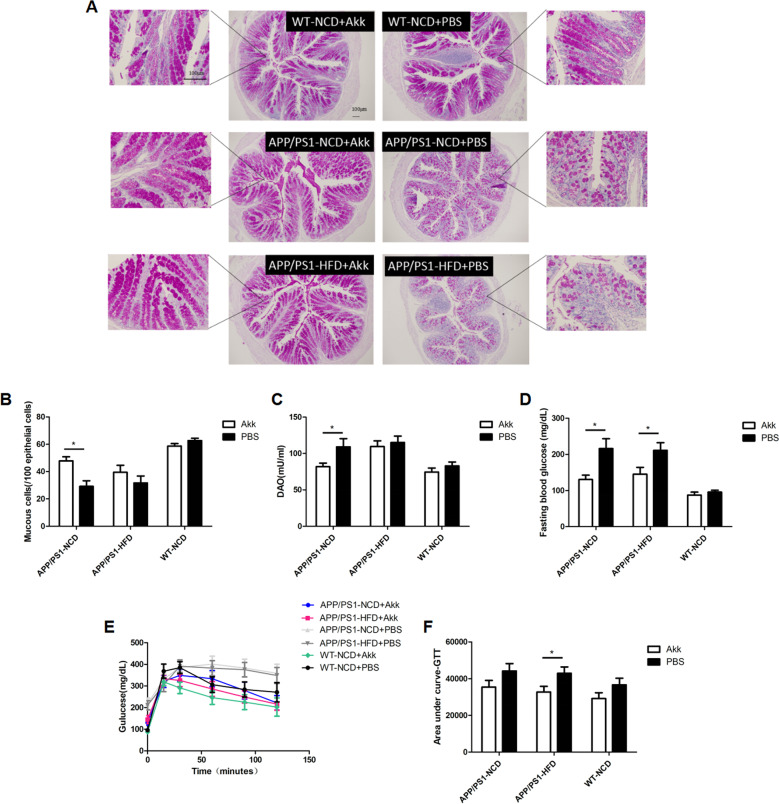
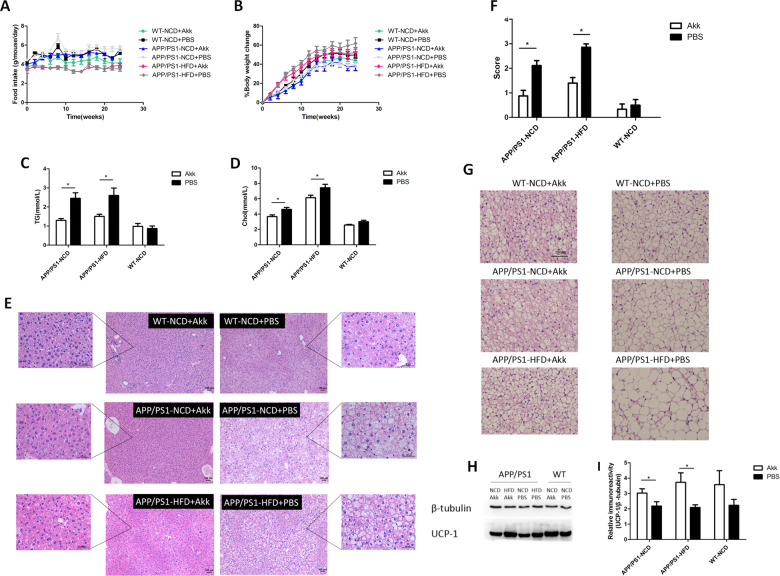
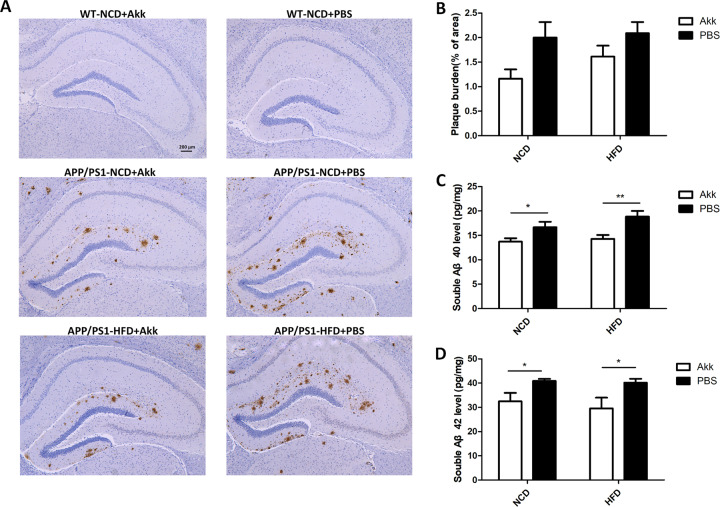
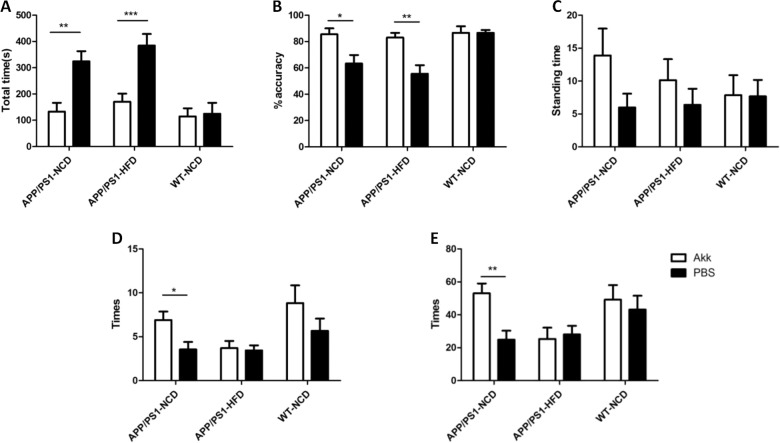
Objective: Alzheimer’s disease (AD) is a global health problem without effective methods to alleviate the disease progression. Amyloid β-protein (Aβ) is widely accepted as a key biomarker for AD. Metabolic syndromes, including obesity and insulin resistance, are key high risk factors for AD. Akkermansia muciniphila (Akk), the only representative human gut microbe in the genus Verrucomicrobia, can prevent the weight gain caused by a high-fat diet, repair the damaged integrity of the intestinal epithelium barrier, reduce endotoxin levels in blood and improve insulin resistance. The aim of this study is to explore the impact of Akk administration in AD model mice in different diets. Methods: APP/PS1 mice were fed either a normal chow diet or a high-fat diet and were treated with Akk by gavage each day for 6 months. The impacts of Akk on glucose metabolism, intestinal barrier and lipid metabolism in the mouse model of AD were determined. Changes in brain pathology and neuroethology were also analyzed. Results: Akk effectively reduced the fasting blood glucose and serum diamine oxidase levels, and alleviated the reduction of colonic mucus cells in APP/PS1 mice. After treatment with Akk, the APP/PS1 mice showed obviously reduced blood lipid levels, improved hepatic steatosis and scapular brown fat whitening. Moreover, Akk promoted the reduction of Aβ 40–42 levels in the cerebral cortex of APP/PS1 mice, shortened the study time and improved the completion rate in Y-maze tests. Conclusion: Akk effectively improved glucose tolerance, intestine barrier dysfunction and dyslipidemia in AD model mice. Our study results suggested that Akk could delay the pathological changes in the brain and relieve impairment of spatial learning and memory in AD model mice, which provides a new strategy for prevention and treatment of AD.
Overview
The claims and statistics of this paper haven’t been checked yet.
Free: it reads the open-access text and checks the first 5 claims that cite a source we can check. Create a free account to check every claim.
Integrity signals
Registry
Cites
Statistics
Figures
Verification
Claims the paper makes
The claims and statistics of this paper haven’t been checked yet.
Free: it reads the open-access text and checks the first 5 claims that cite a source we can check. Create a free account to check every claim.
Claims other papers make about this one
Each is checked against this paper’s own text: does it say what the citing paper says it does?
The cited source says what the claim attributes to it.
In the citing paper
“Recently, Ou et al. 47 suggested that A. muciniphila may improve the insulin resistance of Alzheimer's disease mice, reduce the decrease in colonic mucous cells, improve intestinal barrier dysfunction and dyslipidaemia, and delay pathological changes in the brain”
From The role of gut dysbiosis in Parkinson’s disease: mechanistic insights and therapeutic options (2021) · cites this paper as [47]
The cited source says what the claim attributes to it.
In the citing paper
“therefore, microbial intervention could provide a novel strategy for the prevention and treatment of Alzheimer's disease.47”
From The role of gut dysbiosis in Parkinson’s disease: mechanistic insights and therapeutic options (2021) · cites this paper as [47]
The cited source says what the claim attributes to it.
In the citing paper
“indicating that there is a close connection between gut microbiota and neurological disorders; therefore, microbial intervention could provide a novel strategy for the prevention and treatment of Alzheimer's disease.47”
From The role of gut dysbiosis in Parkinson’s disease: mechanistic insights and therapeutic options (2021) · cites this paper as [47]
Self-check
Percentages, sums and reported differences re-computed from the paper’s own numbers.
The self-check needs the paper’s full text.
Citations
Cites
Cross-talk between Akkermansia muciniphila and intestinal epithelium controls diet-induced obesity
Everard, A., Belzer, C., Geurts, L., Ouwerkerk, J. P., Druart, C., Bindels, L. B., Guiot, Y., Derrien, M., Muccioli, G. G., Delzenne, N. M., et al. (2013) · Proceedings of the National Academy of Sciences · doi:10.1073/pnas.1219451110 · Cited by 4,511
Forecasting the global burden of Alzheimer's disease
Brookmeyer, R., Johnson, E., Ziegler‐Graham, K., & Arrighi, H. M. (2007) · Alzheimer's & Dementia · doi:10.1016/j.jalz.2007.04.381 · Cited by 3,370
Plovier, H., Everard, A., Druart, C., Depommier, C., Van Hul, M., Geurts, L., Chilloux, J., Ottman, N., Duparc, T., Lichtenstein, L., et al. (2017) · Nature Medicine · doi:10.1038/nm.4236 · Cited by 2,204
Dao, M. C., Everard, A., Aron-Wisnewsky, J., Sokolovska, N., Prifti, E., Verger, E. O., Kayser, B. D., Levenez, F., Chilloux, J., Hoyles, L., et al. (2016) · Gut · doi:10.1136/gutjnl-2014-308778 · Cited by 1,931
Talbot, K., Wang, H.-Y., Kazi, H., Han, L.-Y., Bakshi, K. P., Stucky, A., Fuino, R. L., Kawaguchi, K. R., Samoyedny, A. J., Wilson, R. S., et al. (2012) · Journal of Clinical Investigation · doi:10.1172/jci59903 · Cited by 1,871
Shin, N.-R., Lee, J.-C., Lee, H.-Y., Kim, M.-S., Whon, T. W., Lee, M.-S., & Bae, J.-W. (2014) · Gut · doi:10.1136/gutjnl-2012-303839 · Cited by 1,550
Cattaneo, A., Cattane, N., Galluzzi, S., Provasi, S., Lopizzo, N., Festari, C., Ferrari, C., Guerra, U. P., Paghera, B., Muscio, C., et al. (2017) · Neurobiology of Aging · doi:10.1016/j.neurobiolaging.2016.08.019 · Cited by 1,382
The first 1000 cultured species of the human gastrointestinal microbiota
Rajilić-Stojanović, M., & de Vos, W. M. (2014) · FEMS Microbiology Reviews · doi:10.1111/1574-6976.12075 · Cited by 1,182
Reduction of Abeta amyloid pathology in APPPS1 transgenic mice in the absence of gut microbiota
Harach, T., Marungruang, N., Duthilleul, N., Cheatham, V., Mc Coy, K. D., Frisoni, G., Neher, J. J., Fåk, F., Jucker, M., Lasser, T., et al. (2017) · Scientific Reports · doi:10.1038/srep41802 · Cited by 901
Moloney, A. M., Griffin, R. J., Timmons, S., O’Connor, R., Ravid, R., & O’Neill, C. (2010) · Neurobiology of Aging · doi:10.1016/j.neurobiolaging.2008.04.002 · Cited by 764
Cited by
Microbiota–gut–brain axis and its therapeutic applications in neurodegenerative diseases
Loh, J. S., Mak, W. Q., Tan, L. K. S., Ng, C. X., Chan, H. H., Yeow, S. H., Foo, J. B., Ong, Y. S., How, C. W., & Khaw, K. Y. (2024) · Signal Transduction and Targeted Therapy · doi:10.1038/s41392-024-01743-1 · Cited by 1,193
Akkermansia muciniphila: paradigm for next-generation beneficial microorganisms
Cani, P. D., Depommier, C., Derrien, M., Everard, A., & de Vos, W. M. (2022) · Nature Reviews Gastroenterology & Hepatology · doi:10.1038/s41575-022-00631-9 · Cited by 1,192
The intestinal barrier: a pivotal role in health, inflammation, and cancer
Neurath, M. F., Artis, D., & Becker, C. (2025) · The Lancet Gastroenterology & Hepatology · doi:10.1016/s2468-1253(24)00390-x · Cited by 487
Suganya, K., & Koo, B.-S. (2020) · International Journal of Molecular Sciences · doi:10.3390/ijms21207551 · Cited by 368
The role of gut dysbiosis in Parkinson’s disease: mechanistic insights and therapeutic options
Wang, Q., Luo, Y., Ray Chaudhuri, K., Reynolds, R., Tan, E.-K., & Pettersson, S. (2021) · Brain · doi:10.1093/brain/awab156 · Cited by 281
The intestinal barrier in disorders of the central nervous system
Pellegrini, C., Fornai, M., D'Antongiovanni, V., Antonioli, L., Bernardini, N., & Derkinderen, P. (2023) · The Lancet Gastroenterology & Hepatology · doi:10.1016/s2468-1253(22)00241-2 · Cited by 239
Akkermansia muciniphila: biology, microbial ecology, host interactions and therapeutic potential
Ioannou, A., Berkhout, M. D., Geerlings, S. Y., & Belzer, C. (2025) · Nature Reviews Microbiology · doi:10.1038/s41579-024-01106-1 · Cited by 221
The function of gut microbiota in immune-related neurological disorders: a review
Sittipo, P., Choi, J., Lee, S., & Lee, Y. K. (2022) · Journal of Neuroinflammation · doi:10.1186/s12974-022-02510-1 · Cited by 221
“muciniphila alleviated the reduction of colonic mucus cells and relieved cognitive impairment and anxiety-related behaviors in an AD mouse model [113].”
BackgroundChidambaram, S. B., Essa, M. M., Rathipriya, A. G., Bishir, M., Ray, B., Mahalakshmi, A. M., Tousif, A. H., Sakharkar, M. K., Kashyap, R. S., Friedland, R. P., et al. (2022) · Pharmacology & Therapeutics · doi:10.1016/j.pharmthera.2021.107988 · Cited by 204
Jian, H., Liu, Y., Wang, X., Dong, X., & Zou, X. (2023) · International Journal of Molecular Sciences · doi:10.3390/ijms24043900 · Cited by 173
“In the last decade especially, it was uncovered that Akk can prevent and ameliorate obesity [12], diabetes [13], metabolic syndrome [14], inflammation [15], aging [16,17], negative effects of cancer therapy [18], neurodegenerative diseases [19], etc.”
BackgroundDing, Y., Bu, F., Chen, T., Shi, G., Yuan, X., Feng, Z., Duan, Z., Wang, R., Zhang, S., Wang, Q., et al. (2021) · Applied Microbiology and Biotechnology · doi:10.1007/s00253-021-11622-2 · Cited by 170
Zheng, H., Xu, P., Jiang, Q., Xu, Q., Zheng, Y., Yan, J., Ji, H., Ning, J., Zhang, X., Li, C., et al. (2021) · Microbiome · doi:10.1186/s40168-021-01088-9 · Cited by 153
Gut microbiome-targeted therapies for Alzheimer’s disease
Zhang, T., Gao, G., Kwok, L. Y., & Sun, Z. (2023) · Gut Microbes · doi:10.1080/19490976.2023.2271613 · Cited by 182
Implications of Gut Microbiota in Neurodegenerative Diseases
Zhang, H., Chen, Y., Wang, Z., Xie, G., Liu, M., Yuan, B., Chai, H., Wang, W., & Cheng, P. (2022) · Frontiers in Immunology · doi:10.3389/fimmu.2022.785644 · Cited by 177
Akkermansia muciniphila : A promising probiotic against inflammation and metabolic disorders
Zhao, Y., Yang, H., Wu, P., Yang, S., Xue, W., Xu, B., Zhang, S., Tang, B., & Xu, D. (2024) · Virulence · doi:10.1080/21505594.2024.2375555 · Cited by 165
“Qu et al. evaluated the effects of A. muciniphila on Alzheimer’s disease (AD) in a murine model with different diets [165].”
BackgroundHsu, Y.-C., Huang, Y.-Y., Tsai, S., Kuo, Y., Lin, J., Ho, H.-H., Chen, J., Hsia, K.-C., & Sun, Y. (2023) · Nutrients · doi:10.3390/nu16010016 · Cited by 175
“Another study indicated that Akkermansia slowed down the pathological changes in the brains of AD model mice and alleviated spatial learning and memory impairment [69].”
ResultChen, S., Chen, Z., Wang, Y., Hao, W., Yuan, Q., Zhou, H., Gao, C., Wang, Y., Wu, X., & Wang, S. (2021) · Journal of Advanced Research · doi:10.1016/j.jare.2021.11.017 · Cited by 133
“Verrucomicrobia includes the Akkermansia bacteria that have shown many health benefits [39].”
BackgroundLiu, Y., Li, H., Wang, X., Huang, J., Zhao, D. S., Tan, Y., Zhang, Z., Zhang, Z., Zhu, L., Wu, B., et al. (2023) · Journal of Translational Medicine · doi:10.1186/s12967-023-04137-z · Cited by 139
“Akkermansia has been reported to promote Aβ40-42 reduction and improve intestinal barrier dysfunction and dyslipidemia in APP/ PS1 mice [39].”
BackgroundRevisiting the role of Akkermansia muciniphila as a therapeutic bacterium
Si, J., Kang, H., You, H. J., & Ko, G. (2022) · Gut Microbes · doi:10.1080/19490976.2022.2078619 · Cited by 141
“, APP/PS1), for 6 months, not only improved metabolic disorders including glucose homeostasis and lipid metabolism, but also AD-related symptoms such as amyloid β-protein deposition in the brain and cognitive impairment.(57) However, the interaction of the brain with serum metabolites derived from A.”
BackgroundLü, Y., Bu, F., Wang, F., Liu, L., Zhang, S., Wang, G., & Hu, X. (2023) · Translational Neurodegeneration · doi:10.1186/s40035-023-00341-5 · Cited by 135
“The ameliorative effect of AKK treatment on cognitive function can be attributed to the repair of metabolic disorders and, concomitantly, reduction of Aβ pathology [197].”
BackgroundSafety of pasteurised Akkermansia muciniphila as a novel food pursuant to Regulation (EU) 2015/2283
EFSA Panel on Nutrition, N. F. A. F. A. (., Turck, D., Bohn, T., Castenmiller, J., De Henauw, S., Hirsch‐Ernst, K. I., Maciuk, A., Mangelsdorf, I., McArdle, H. J., Naska, A., et al. (2021) · EFSA Journal · doi:10.2903/j.efsa.2021.6780 · Cited by 110
“muciniphila to gnotobiotic/ germ-free/transgenic mice (Ganesh et al., 2013; Zackular et al., 2013; Baxter et al., 2014; Asquith et al., 2016; Desai et al., 2016; Berer et al., 2017; Cekanaviciute et al., 2017; Seregin et al., 2017; Bian et al., 2019; Liu et al., 2019; Ring et al., 2019; Stoll et al., 2019; Zhai et al.…”
BackgroundKumari, M., Singh, P., Nataraj, B. H., Kokkiligadda, A., Naithani, H., Azmal Ali, S., Behare, P. V., & Nagpal, R. (2021) · Food Research International · doi:10.1016/j.foodres.2021.110716 · Cited by 107
Wang, Z., Wang, C., Yuan, B., Liu, L., Zhang, H., Zhu, M., Chai, H., Peng, J., Huang, Y. H., Zhou, S., et al. (2025) · Microbiome · doi:10.1186/s40168-024-02001-w · Cited by 133
Li, S., Liang, T., Zhang, Y., Huang, K., Shu-ya, Y., Lv, H., Chen, Y., Zhang, C., & Guan, X. (2021) · Free Radical Biology and Medicine · doi:10.1016/j.freeradbiomed.2021.05.028 · Cited by 123
Akkermansia muciniphila plays critical roles in host health
Zhao, Q., Yu, J., Hao, Y., Zhou, H., Hu, Y., Zhang, C., Zheng, H., Wang, X., Zeng, F., Hu, J., et al. (2022) · Critical Reviews in Microbiology · doi:10.1080/1040841x.2022.2037506 · Cited by 111
“Gut-brain axis Alzheimer’s disease (Harach et al. 2017; Ou et al. 2020) Decreased in humans and mice Relieved impairment of memory and spatial learning in Alzheimer’s disease model mice (APP/ PS1 model) Shortened the study time and improved the completion rate in Y-maze tests Reduced Ab 40–42 levels in the cerebral co…”
BackgroundInfluentialAkkermansia muciniphila in neuropsychiatric disorders: friend or foe?
Lei, W., Cheng, Y., Gao, J., Liu, X., Shao, L., Kong, Q., Zheng, N., Ling, Z., & Hu, W. (2023) · Frontiers in Cellular and Infection Microbiology · doi:10.3389/fcimb.2023.1224155 · Cited by 112
“Frontiers in Cellular and Infection Microbiology 11 function deficits and learning and memory impairment in AD mouse models (Ou et al., 2020).”
BackgroundInfluentialKang, E. J., Cha, M., Kwon, G.-H., Han, S. H., Yoon, S. J., Lee, S., Ahn, M. E., Won, S., Ahn, E. H., & Suk, K. T. (2024) · Microbiome · doi:10.1186/s40168-024-01924-8 · Cited by 112
“Several studies have reported preventive and protective effects against cognitive impairment occurring in neuropsychiatric disorders through supplementation with A. muciniphila [33, 34].”
BackgroundRole of Akkermansia in Human Diseases: From Causation to Therapeutic Properties
Pellegrino, A., Coppola, G., Santopaolo, F., Gasbarrini, A., & Ponziani, F. R. (2023) · Nutrients · doi:10.3390/nu15081815 · Cited by 112
“muciniphila effectively reduced serum DAO, reverted the loss of colonic mucus cells, promoted the reduction of pathogenic Aβ 40–42 levels in the cerebral cortex, and improved cognitive abilities in AD mouse models [48].”
BackgroundThe Intestinal Barrier Dysfunction as Driving Factor of Inflammaging
Untersmayr, E., Brandt, A., Koidl, L., & Bergheim, I. (2022) · Nutrients · doi:10.3390/nu14050949 · Cited by 113
“, Akkermansia muciniphila, in mice with cognitive deficits has been found to protect the intestinal barrier and improve cognitive functions [164,173].”
BackgroundXu, R., Zhang, Y., Chen, S., Zeng, Y., Fu, X., Chen, T., Luo, S., & Zhang, X. (2022) · Critical Reviews in Microbiology · doi:10.1080/1040841x.2022.2044286 · Cited by 103
“muciniphila in patients with AD and cognitive deficits (Yang et al. 2019; Ou et al. 2020; Wu et al. 2020a; Higarza et al. 2021).”
BackgroundResultInfluentialLuo, S., Zhang, X., Huang, S. Q., Feng, X., Zhang, X., & Xiang, D.-X. (2022) · International Journal of Biological Macromolecules · doi:10.1016/j.ijbiomac.2022.05.185 · Cited by 98
Gut microbial taxa elevated by dietary sugar disrupt memory function
Noble, E. E., Olson, C. A., Davis, E. A., Tsan, L., Chen, Y.-W., Schade, R., Liu, C. M., Suarez, A. N., Jones, R. B., Serre, C. B. D. L., et al. (2021) · Translational Psychiatry · doi:10.1038/s41398-021-01309-7 · Cited by 105
Akkermansia in the gastrointestinal tract as a modifier of human health
Panzetta, M. E., & Valdivia, R. H. (2024) · Gut Microbes · doi:10.1080/19490976.2024.2406379 · Cited by 105
“89 Similar conclusions were made in two different animal models, AD-like Sprague-Dawley rat models injected by AlCl3 and D-galactose, 90 and AlCl3 exposed zebrafish models.”
MethodTherapeutics for neurodegenerative diseases by targeting the gut microbiome: from bench to bedside
Ma, Y., Li, X., Yu, J., & Wang, Y. (2024) · Translational Neurodegeneration · doi:10.1186/s40035-024-00404-1 · Cited by 105
“Pre-clinical studies showed that Akkermansia muciniphila can effectively halt the progression of NDs [134–136].”
BackgroundChu, C.-Q., Yu, L.-L., Qi, G.-Y., Mi, Y.-S., Wu, W.-Q., Lee, Y.-K., Zhai, Q.-X., Tian, F.-W., & Chen, W. (2022) · Neuroscience & Biobehavioral Reviews · doi:10.1016/j.neubiorev.2022.104556 · Cited by 83
Gut microbiota dysbiosis in Parkinson disease: A systematic review and pooled analysis
Kleine Bardenhorst, S., Cereda, E., Severgnini, M., Barichella, M., Pezzoli, G., Keshavarzian, A., Desideri, A., Pietrucci, D., Aho, V. T. E., Scheperjans, F., et al. (2023) · European Journal of Neurology · doi:10.1111/ene.15671 · Cited by 81
“Akkermansia is reported to have protective effects and to be negatively associated with metabolic diseases [39].”
BackgroundChen, Y., Ou, Z., Pang, M., Tao, Z., Zheng, X., Huang, Z., Wen, D., Li, Q., Zhou, R., Chen, P., et al. (2023) · Journal of Extracellular Vesicles · doi:10.1002/jev2.12328 · Cited by 92
“The Am strain ATCC BAA-835 was cultured in a modified basal mucin-based medium and cultivated at 37C under strictly anaerobic conditions with 80% N2, 10% H2 and 10% CO2 for 3–5 days until the optical density = 1 at 600 nm, as described previously (Ou et al., 2020).”
MethodSelf-citationThe intestinal immune system and gut barrier function in obesity and ageing
Shemtov, S. J., Emani, R., Bielska, O., Covarrubias, A. J., Verdin, E. M., Andersen, J. K., & Winer, D. A. (2022) · FEBS Journal · doi:10.1111/febs.16558 · Cited by 89
Ağagündüz, D., Bingöl, F. G., Çelik, E., Cemali, Ö., Özenir, Ç., Özoğul, F., & Capasso, R. (2022) · Journal of Translational Medicine · doi:10.1186/s12967-022-03609-y · Cited by 82
The Role of Diet and Gut Microbiota in Alzheimer’s Disease
Dissanayaka, D. M. S., Jayasena, V., Rainey‐Smith, S. R., Martins, R. N., & Fernando, W. M. A. D. B. (2024) · Nutrients · doi:10.3390/nu16030412 · Cited by 102
“Additionally, they found that A. muciniphila reduced A β 1–42 deposition in AD mice [55–57].”
BackgroundKim, H., Su-Min, K., Park, S.-J., Park, G., Shin, H., Park, M. S., & Kim, J. (2021) · Frontiers in Aging Neuroscience · doi:10.3389/fnagi.2021.709091 · Cited by 85
Fasina, O. B., Wang, J., Mo, J., Osada, H., Ohno, H., Pan, W., Xiang, L., & Qi, J. (2022) · Frontiers in Pharmacology · doi:10.3389/fphar.2022.814271 · Cited by 82
Facchin, S., Calgaro, M., & Savarino, E. V. (2025) · Cells · doi:10.3390/cells14151130 · Cited by 84
“In a study conducted in the context of Alzheimer’s disease (AD), using a mouse model, cultured cells, and elderly patients, it was observed that commensal bacteria such Akkermansia muciniphila may exert a protective effect against the development of neurode-generation [75].”
Sun, Y., Zeng, X., Liu, Y., Zhan, S., Wu, Z., Zheng, X., & Zhang, X. (2022) · International Journal of Biological Macromolecules · doi:10.1016/j.ijbiomac.2022.07.090 · Cited by 70
Effects of semaglutide on gut microbiota, cognitive function and inflammation in obese mice
Feng, J., Teng, Z., Yu, Y., Liu, J., & Chen, S. (2024) · PeerJ · doi:10.7717/peerj.17891 · Cited by 76
Zeng, S.-Y., Liu, Y., Liu, J., Zeng, Z., Xie, H., & Liu, J. (2023) · Aging and Disease · doi:10.14336/ad.2023.0325 · Cited by 73
“For example, Oral administration of A. muciniphila reduces Aβ plaque deposition in the brains of APP/PS1 mice, thereby alleviating cognitive impairment and anxiety [64].”
BackgroundOu, Z., Situ, B., Huang, X., Xue, Y., He, X., Li, Q., Ou, D., He, B., Chen, J., Huang, Y., et al. (2023) · Journal of Extracellular Vesicles · doi:10.1002/jev2.12395 · Cited by 72
“OU et al. (Tang et al., 2019) and Alzheimer’s disease (Ou et al., 2020).”
BackgroundSelf-citationKim, Y., Lim, J., & Oh, J. (2024) · Biomedicine & Pharmacotherapy · doi:10.1016/j.biopha.2024.117277 · Cited by 71
Lian, Z., Xu, Y., Wang, C., Chen, Y., Li, Y., Liu, Z., Liu, Y., He, P., Cai, Z., & Zhao, J. (2023) · Pharmacological Research · doi:10.1016/j.phrs.2023.106714 · Cited by 66
He, X., Yan, C., Zhao, S., Zhao, Y., Huang, R., & Li, Y. (2022) · Experimental Gerontology · doi:10.1016/j.exger.2022.111959 · Cited by 64
Duan, J., Sun, J., Jiang, T., Ma, X., Li, X., Wang, Y., Zhang, F., & Liu, C. (2023) · The Science of The Total Environment · doi:10.1016/j.scitotenv.2023.168106 · Cited by 60
Qiao, C.-M., Huang, W., Zhou, Y., Quan, W., Niu, G.-Y., Li, T., Zhang, M.-X., Wu, J., Zhao, L., Zhao, W.-J., et al. (2024) · Brain Sciences · doi:10.3390/brainsci14030238 · Cited by 66
“In addition, Akk has been shown to attenuate cognitive impairment and brain amyloid-beta deposition in an APP/PS1 mice model of Alzheimer’s disease [13].”
BackgroundDepommier, C., Everard, A., Druart, C., Maiter, D., Thissen, J.-P., Loumaye, A., Hermans, M. P., Delzenne, N. M., de Vos, W. M., & Cani, P. D. (2021) · Gut Microbes · doi:10.1080/19490976.2021.1994270 · Cited by 55
Targeting gut microbiota to alleviate neuroinflammation in Alzheimer’s disease
Nguyen, V. T. T., & Endres, K. (2022) · Advanced Drug Delivery Reviews · doi:10.1016/j.addr.2022.114418 · Cited by 61
The gut microbiota is an emerging target for improving brain health during ageing
Boehme, M., Guzzetta, K. E., Wasén, C., & Cox, L. M. (2022) · Gut Microbiome · doi:10.1017/gmb.2022.11 · Cited by 62
“…in neurologic diseases including models of multiple sclerosis, amyotrophic lateral sclerosis, epilepsy and Alzheimer ’ s disease (Blacher et al., 2019; Cox et al., 2021; Liu et al., 2019; Olson et al., 2018; Ou et al., 2020), suggesting there could be a benefit of elevated Akkermansia in ageing.”
The microbiota restrains neurodegenerative microglia in a model of amyotrophic lateral sclerosis
Cox, L. M., Calcagno, N., Gauthier, C., Madore, C., Butovsky, O., & Weiner, H. L. (2022) · Microbiome · doi:10.1186/s40168-022-01232-z · Cited by 53
“Akkermansia may also have beneficial roles for other neurologic diseases, including multiple sclerosis [43], epilepsy [59], and Alzheimer’s disease [60].”
BackgroundDu, Y., Li, X., An, Y., Song, Y., & Lu, Y. (2022) · Frontiers in Nutrition · doi:10.3389/fnut.2022.930626 · Cited by 56
“Alcohol consumption, n (%) 5 (17) 12 (40) 0.”
BackgroundInfluentialTingler, A. M., & Engevik, M. A. (2025) · Infection and Immunity · doi:10.1128/iai.00503-24 · Cited by 68
“For example, some mouse and zebra models have found that administration of A. muciniphila can improve outcomes of Alzheimer’s disease in these models (244–246).”
González-Sanmiguel, J., Schuh, C. M. A. P., Muñoz-Montesino, C., Contreras‐Kallens, P., Aguayo, L. G., & Aguayo, S. D. (2020) · Cells · doi:10.3390/cells9112476 · Cited by 51
Huang, H., Lin, Y., Panyod, S., Chen, R.-A., Lin, Y., Chai, L. M. X., Hsu, C., Wu, W., Lu, K., Huang, Y., et al. (2022) · Journal of Ethnopharmacology · doi:10.1016/j.jep.2022.115872 · Cited by 48
Wang, J., Zhang, J., Yu, Z., Chung, S. K., & Xu, B. (2024) · Ageing Research Reviews · doi:10.1016/j.arr.2024.102416 · Cited by 53
Gut microbiome and Alzheimer’s disease: What we know and what remains to be explored
Kapoor, B., Biswas, P., Gulati, M., Rani, P., & Gupta, R. (2024) · Ageing Research Reviews · doi:10.1016/j.arr.2024.102570 · Cited by 46
Liu, D., Fu, D., Zhang, L., & Sun, L. (2021) · Chinese Chemical Letters · doi:10.1016/j.cclet.2020.09.009 · Cited by 45
Qu, L., Li, Y., Liu, F., Fang, Y., He, J., Ma, J., Xu, T., Wang, L., Lei, P., Dong, H., et al. (2023) · Aging and Disease · doi:10.14336/ad.2023.0823-2 · Cited by 68
“…as evidenced by its significant amelioration of Aβ protein deposition and intestinal barrier dysfunction in the brains of APP/PS1 mice, and neurobehavioral assessments demonstrated notable enhancements in memory function and mitigation of obesity induced by a high-fat diet [108, 109].”
BackgroundHealth and Disease:Akkermansia muciniphila, the Shining Star of the Gut Flora
Xue, C., Li, G., Gu, X., Su, Y., Zheng, Q., Yuan, X. H., Bao, Z., Lu, J., & Li, L. (2023) · Research · doi:10.34133/research.0107 · Cited by 52
“muciniphila administration improves glucose metabolism, the intestinal barrier, and lipid metabolism in mouse models of AD [98].”
Qiu, Y., Hou, Y., Gohel, D., Zhou, Y., Xu, J., Bykova, M., Yang, Y., Leverenz, J. B., Pieper, A. A., Nussinov, R., et al. (2024) · Cell Reports · doi:10.1016/j.celrep.2024.114128 · Cited by 40
Khalili, L., Nagpal, R., Park, G., & Salazar, G. (2024) · Microorganisms · doi:10.1016/j.cdnut.2024.102205 · Cited by 51
Pessoa, J., Belew, G. D., Barroso, C., Egas, C., & Jones, J. G. (2023) · Nutrients · doi:10.3390/nu15092097 · Cited by 42
“Akkermansia was also depleted from a mouse model of autism spectrum disorders [46] and had a protective effect in a mouse model of Alzheimer’s disease [47].”
BackgroundMruk-Mazurkiewicz, H., Kulaszyńska, M., Czarnecka, W., Podkówka, A., Ekstedt, N., Zawodny, P., Wierzbicka-Woś, A., Marlicz, W. M., Skupin, B., Stachowska, E., et al. (2024) · Nutrients · doi:10.3390/nu16111695 · Cited by 43
“A mouse model of AD APP/PS1 fed a normal diet or a high-fat diet and treated with A. muciniphila (5 × 10 9 CFU in 200 µ L sterile PBS) by gavage daily for 6 months showed improvement in cognitive deficits and a reduction in amyloid-β (A β ) protein levels [111].”
MethodCui, J., Xiao, S., Cao, Y., Zhang, Y., Yang, J., Zheng, L., Zhao, F., Liu, X., Liu, D., Zhou, Z., et al. (2024) · Environmental Science & Technology · doi:10.1021/acs.est.4c07427 · Cited by 45
Microbial signatures and therapeutic strategies in neurodegenerative diseases
Rob, M., Yousef, M., Lakshmanan, A. P., Mahboob, A., Terranegra, A., & Châari, A. (2025) · Biomedicine & Pharmacotherapy · doi:10.1016/j.biopha.2025.117905 · Cited by 47
Convergent pathways of the gut microbiota–brain axis and neurodegenerative disorders
Gubert, C., Gasparotto, J., & Morais, L. H. (2022) · Gastroenterology report · doi:10.1093/gastro/goac017 · Cited by 45
“muciniphila showed, reduction of Ab deposits in the cortex of APP/PS1 mice and improved spatial cognitive outcomes and anxiety-related behavior of these mice were also demonstrated [221].”
Neurodegenerative Microbially-Shaped Diseases: Oxidative Stress Meets Neuroinflammation
Silva, D. F., Empadinhas, N., Cardoso, S. M., & Esteves, A. R. (2022) · Antioxidants · doi:10.3390/antiox11112141 · Cited by 47
“muciniphila displayed reduction in Aβ 40–42 levels in the cerebral cortex and cognitive improvements [84].”
BackgroundZhang, Z., Deng, S., Chen, C., He, Q., Peng, X., Liang, Q., Zhuang, G., Wang, S., & Tang, D. (2023) · Phytotherapy Research · doi:10.1002/ptr.7827 · Cited by 43
Qu, L., Liu, F., Fang, Y., Wang, L., Chen, H., Yang, Q., Dong, H., Jin, L., Wu, W., & Sun, D. (2023) · Microbiology Spectrum · doi:10.1128/spectrum.00849-23 · Cited by 48
“muciniphila treatment restored the level of HDL-C by improving blood and peripheral metabolism, which enhanced Ab clearance in the brain (9, 35), thus reducing the toxicity of Ab in the brain.”
BackgroundGhassab, F. T., Mahmoudi, F. S., Tinjani, R. T., Meibodi, A. E., Zali, M. R., & Yadegar, A. (2024) · Life Sciences · doi:10.1016/j.lfs.2024.122748 · Cited by 41
Gut Microbiome, Inflammation, and Cerebrovascular Function: Link Between Obesity and Cognition
Olsthoorn, L., Vreeken, D., & Kiliaan, A. J. (2021) · Frontiers in Neuroscience · doi:10.3389/fnins.2021.761456 · Cited by 41
Regulation of gut microbiome by ketogenic diet in neurodegenerative diseases: A molecular crosstalk
Kaviyarasan, S., Sia, E. L. C., Retinasamy, T., Arulsamy, A., & Shaikh, M. F. (2022) · Frontiers in Aging Neuroscience · doi:10.3389/fnagi.2022.1015837 · Cited by 43
Fan, K.-C., Lin, C.-C., Chiu, Y., Koh, S., Liu, Y., & Chuang, Y. (2025) · Alzheimer s Research & Therapy · doi:10.1186/s13195-025-01769-9 · Cited by 49
Zhang, S., Wu, Z., Zhang, S., Ru, Y., Wang, Q., Tong, H., Qin, Q., Yan, Q., Li, Z., & Wu, G. (2025) · Food & Function · doi:10.1039/d5fo03139g · Cited by 43
Yanguas‐Casás, N., Torres‐Fuentes, C., Crespo‐Castrillo, A., Díaz-Pacheco, S., Healy, K., Stanton, C., Chowen, J. A., García‐Segura, L. M., Arévalo, M., Cryan, J. F., et al. (2021) · Neurobiology of Disease · doi:10.1016/j.nbd.2021.105495 · Cited by 40
“…we found that the marked enhancement was lost in female TgAPP submitted to HFD. Interestingly, it has recently been shown that treatment with Akkermansia could delay the brain pathological changes and improve impaired cognition and anxiety-related behaviors in a mice model of AD (Ou et al., 2020).”
Fang, X., Li, F., & Hong, D. (2021) · Current Medical Science · doi:10.1007/s11596-021-2464-5 · Cited by 41
Gao, X., Lin, C., Feng, Y., You, Y., Jin, Z. X., Li, M., Zhou, Y., & Chen, K. (2023) · Biochimica et Biophysica Acta (BBA) - Molecular Cell Research · doi:10.1016/j.bbamcr.2023.119630 · Cited by 42
Gut-brain axis and Alzheimer's disease: Therapeutic interventions and strategies
Singh, H., Chopra, C., Singh, H., Malgotra, V., Wani, A. K., Dhanjal, D. S., Sharma, I., Nepovimová, E., Alomar, S. Y., Singh, R., et al. (2023) · Journal of Functional Foods · doi:10.1016/j.jff.2023.105915 · Cited by 44
The role of Akkermansia muciniphila in maintaining health: a bibliometric study
Gao, F., Cheng, C., Li, R., Chen, Z., Tang, K., & Du, G. (2025) · Frontiers in Medicine · doi:10.3389/fmed.2025.1484656 · Cited by 53
Yang, C., Sun, J., Li, L., Zheng, J. H., Wang, C., Zhao, Y., Yun, D., Jia, M., Wu, Z., Liang, H., et al. (2025) · Alzheimer s & Dementia · doi:10.1002/alz.70406 · Cited by 53
Colitis-associated intestinal microbiota regulates brain glycine and host behavior in mice
Morozova, M. V., Borisova, M. A., Snytnikova, O. A., Achasova, K. M., Litvinova, E. A., Tsentalovich, Y. P., & Kozhevnikova, E. N. (2022) · Scientific Reports · doi:10.1038/s41598-022-19219-z · Cited by 36
“…with our findings, published data indicate that probiotic treatment with A. muciniphila reduces depression, anxiety-related and repetitive behavior and ameliorates motor degeneration, learning and memory deficits in various mouse models (Blacher et al., 2019; Burokas et al., 2017; Ou et al., 2020).”
BackgroundResultLiu, X., Shen, L., Wan, M., Xie, H., & Wang, Z. (2024) · Journal of Nanobiotechnology · doi:10.1186/s12951-024-02428-1 · Cited by 33
Therapeutic Prospect of New Probiotics in Neurodegenerative Diseases
Bi, M., Liu, C., Wang, Y., & Liu, S. (2023) · Microorganisms · doi:10.3390/microorganisms11061527 · Cited by 38
“muciniphila has been reported to improve cognitive deficits and reduce Aβ levels in an AD mouse model [99], whether A.”
BackgroundLiu, P., Zhou, X., Zhang, H., Wang, R., Wu, X., Jian, W., Li, W., Yuan, D., Wang, Q., & Zhao, W. (2022) · Frontiers in Immunology · doi:10.3389/fimmu.2022.796542 · Cited by 35
“Akkermansia can effectively repair the damaged integrity of the intestinal epithelium barrier and regulate dyslipidaemia in dementia model mice (37).”
BackgroundInfluentialSun, L., Liu, D., Fu, D., Yue, T., Scharre, D., & Zhang, L. (2021) · Chemical Engineering Journal · doi:10.1016/j.cej.2020.126733 · Cited by 32
The Many Ages of Microbiome–Gut–Brain Axis
Ratto, D., Roda, E., Romeo, M., Venuti, M. T., Desiderio, A., Lupo, G., Capelli, E., Sandionigi, A., & Rossi, P. (2022) · Nutrients · doi:10.3390/nu14142937 · Cited by 34
“Recently, Ou et al. (2020) [51] and Higarza et al. (2021) [52] demonstrated that Akkermansia could improve cognitive performance in two different preclinical models.”
BackgroundInfluentialVazquez-Medina, A., Rodriguez-Trujillo, N., Ayuso-Rodriguez, K., Marini-Martinez, F., Angeli-Morales, R., Caussade-Silvestrini, G. S., Godoy‐Vitorino, F., & Chorna, N. (2024) · Frontiers in Microbiology · doi:10.3389/fmicb.2024.1326584 · Cited by 38
“This hypothesis is supported by previous studies that highlight the potential of A. muciniphila in modulating this communication and its beneficial effects in neurodegenerative diseases (Blacher et al., 2019; Ou et al., 2020; Cox et al., 2021; Yuan et al., 2022).”
ResultMolecular Mechanism of Pasteurized Akkermansia muciniphila in Alleviating Type 2 Diabetes Symptoms
Niu, H., Zhou, M., Ji, A., Zogona, D., Wu, T., & Xu, X. (2024) · Journal of Agricultural and Food Chemistry · doi:10.1021/acs.jafc.4c01188 · Cited by 36
The Role of Gut Microbiota in the Onset and Progression of Obesity and Associated Comorbidities
Enache, R. M., Profir, M., Roşu, O. A., Creţoiu, S. M., & Gașpar, B. S. (2024) · International Journal of Molecular Sciences · doi:10.3390/ijms252212321 · Cited by 38
Cuisiniere, T., Calvé, A., Fragoso, G., Oliero, M., Hajjar, R., González, E., & Santos, M. M. (2021) · BMC Microbiology · doi:10.1186/s12866-021-02320-0 · Cited by 38
Cui, X., Gou, Z., Jiang, Z., Li, L., Lin, X., Fan, Q., Wang, Y., & Jiang, S. (2022) · Poultry Science · doi:10.1016/j.psj.2022.101721 · Cited by 36
“It is established that reduced abundance of Akkermansia is associated with obesity (Ou et al., 2020) which might partly explain the rela-”
Backgroundde Rijke, T. J., Doting, M. H. E., van Hemert, S., Deyn, P. P. D., Munster, B. C. V., Harmsen, H. J. M., & Sommer, I. E. (2022) · Frontiers in Psychiatry · doi:10.3389/fpsyt.2022.879491 · Cited by 33
“(46) had a relatively high methodological quality with a score of eight out of”
BackgroundMethodResultInfluentialSultana, O. F., Hia, R. A., & Reddy, P. H. (2024) · Antioxidants · doi:10.3390/antiox13020202 · Cited by 32
The multifaceted roles of Akkermansia muciniphila in neurological disorders
Ma, X., Liu, Q., & Yang, G. (2025) · Trends in Neurosciences · doi:10.1016/j.tins.2025.04.004 · Cited by 38
Metadata
- Authors
- Ou, Z., Deng, L., Lu, Z., Wu, F., Liu, W., Huang, D., & Peng, Y.
- Affiliations
- Zhujiang Hospital (CN)
- Sun Yat-sen University (CN)
- Corresponding author
- Peng, Yongzheng
- Venue
- Nutrition & Diabetes
- Published
- 2020-04-22
- Volume
- 10
- Issue
- 1
- Pages
- 12-12
- ISSN
- 2044-4052 (ISSN-L)
- PMC
- PMC7176648
- OpenAlex
- W3019588555
- Semantic Scholar
- 912ef0e93ba13afcb00cdfbe9bc3cac5e89f82d9
- Cited by
- 328
- References
- 47
- Citations by year
- 2026: 38 · 2025: 65 · 2024: 71 · 2023: 55 · 2022: 64 · 2021: 29 · 2020: 6
- FWCI
- 23.16
- Type
- journal article
- Language
- en
- Open access
- gold
- doi.org
- Licence
- cc-by
- creativecommons.org/licenses/by/4.0 (tdm)
- creativecommons.org/licenses/by/4.0 (vor)
- Locations
- Nutrition and Diabetes (publishedVersion, cc-by)
- PubMed Central (publishedVersion, cc-by)
- PubMed (publishedVersion)
- Funders
- Medical Science and Technology Foundation of Guangdong Province (2015A020213002)
- Topics
- Life Sciences › Neuroscience › Cellular and Molecular Neuroscience › Alzheimer's disease research and treatments
- Life Sciences › Biochemistry, Genetics and Molecular Biology › Molecular Biology › Gut microbiota and health
- Life Sciences › Neuroscience › Neurology › Neuroinflammation and Neurodegeneration Mechanisms
- Keywords
- Akkermansia muciniphila, Alzheimer's disease, amyloid-beta, APP/PS1 mice, high-fat diet, gut microbiota, intestinal barrier, glucose tolerance, dyslipidemia, hepatic steatosis, brown adipose tissue, spatial learning and memory, cognitive impairment, obesity, insulin resistance, endotoxin
- MeSH terms
- Gastrointestinal Microbiome, Akkermansia, Alzheimer Disease, Animals, Blood Glucose, Disease Models, Animal, Glucose, Amine Oxidase (Copper-Containing), Humans, Insulin Resistance, Mice, Transgenic, Peptide Fragments, Amyloid beta-Peptides, Maze Learning, Probiotics, Lipid Metabolism, Mice, Cognitive Dysfunction
About these checks
Registry, retraction, Cites and statistics results are computed, not judged, with one exception: a printed reference that no index lists is read once by a model before it counts as a citation error. Claims are extracted by a model and kept only when their quote appears verbatim in the text; each cited source is then checked, with a model’s help, for whether it says what the claim relies on. Those verdicts can be wrong — read the claim’s quote and the cited source before relying on one.
Statistics and arithmetic are recomputed, not judged.
Confidence bands are shown only for fields calibrated on our annotated test set. None is calibrated yet, so no band is shown.
What counts as a claim ›How we measure confidence ›How we check this ›
Are you an author, or do you see a problem with this page? Request a review
Data sources
Bibliographic data: Semantic Scholar, OpenAlex, Crossref.
Contains information from the Semantic Scholar Academic Graph Datasets, made available under the ODC Attribution License (ODC-BY 1.0).
Semantic Scholar’s data is described in: Kinney, R., et al. (2023). The Semantic Scholar Open Data Platform. arXiv:2301.10140.
