

Acetylation promotes BCAT2 degradation to suppress BCAA catabolism and pancreatic cancer growth
Open accessThe DOI matches its Crossref record; 37 of the 37 references it cites were found in a registry or an index.
Abstract
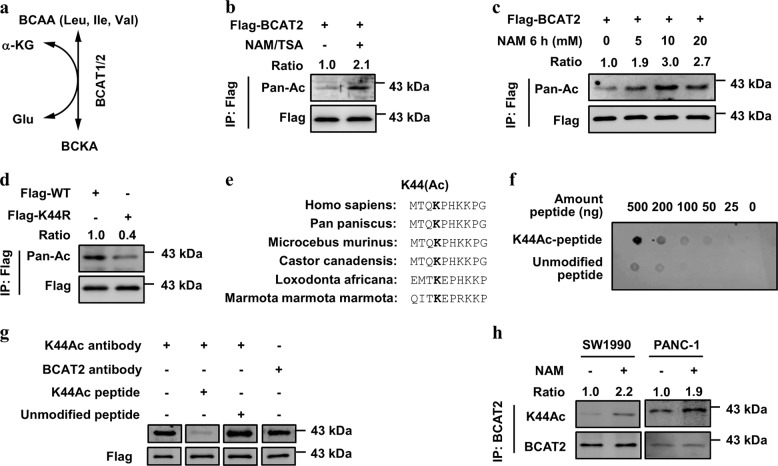
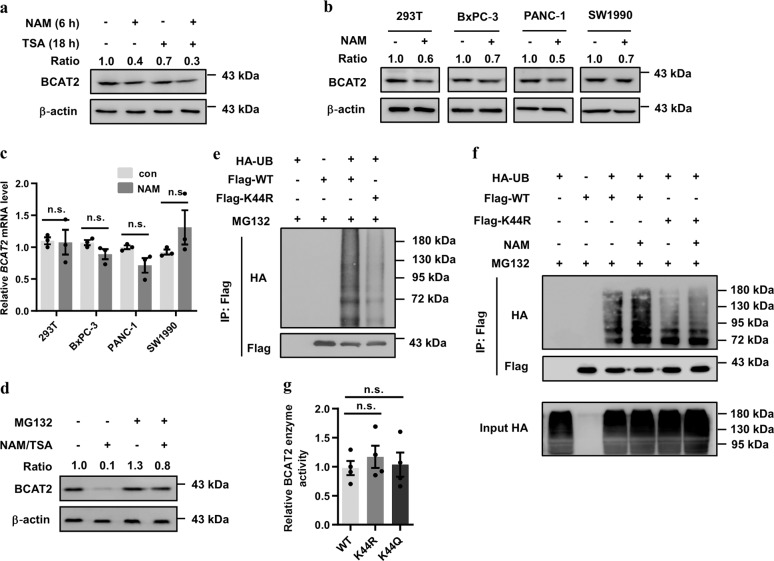
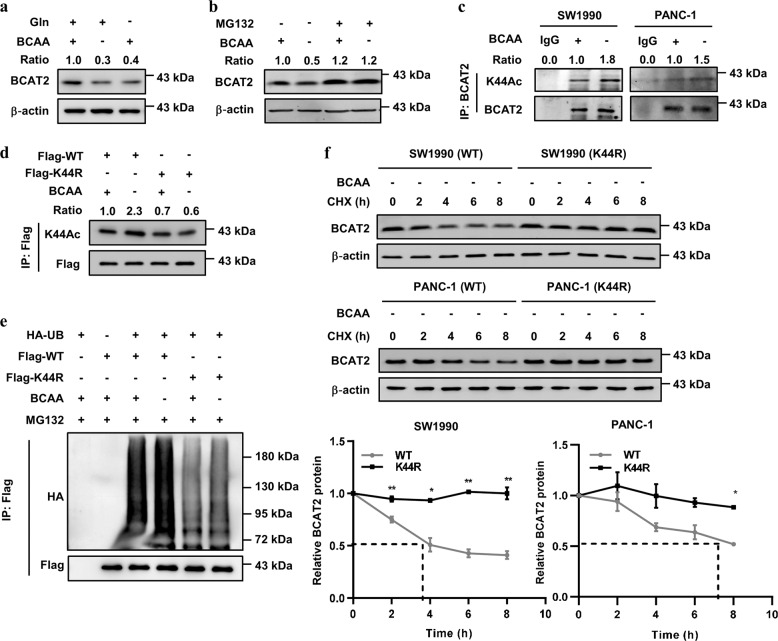
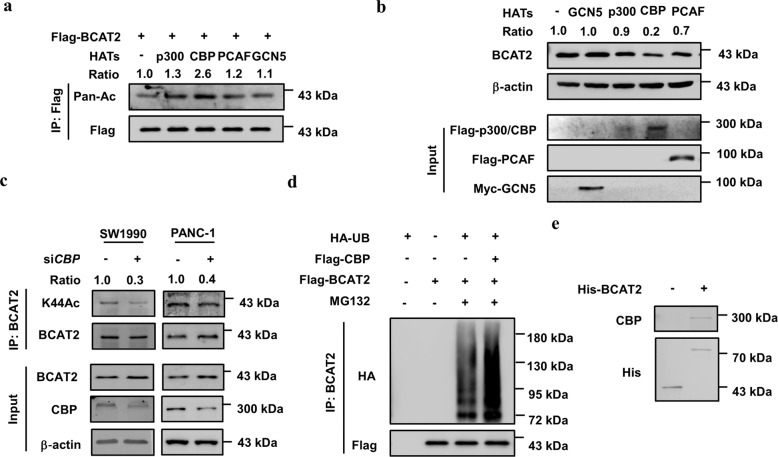
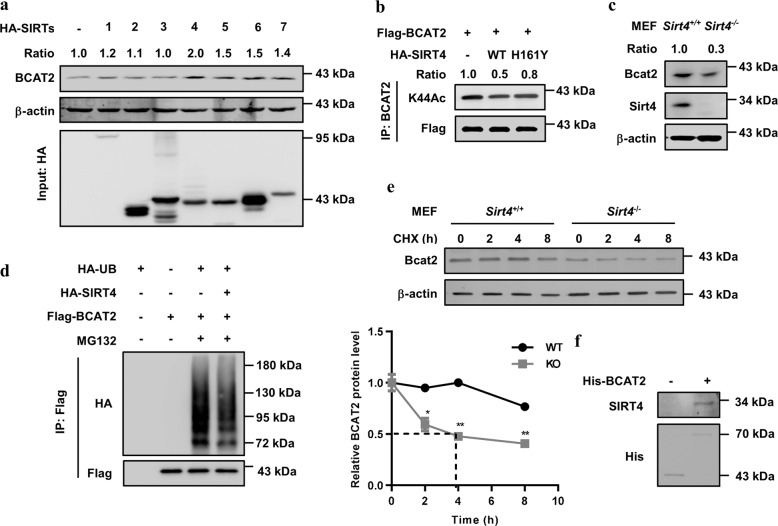
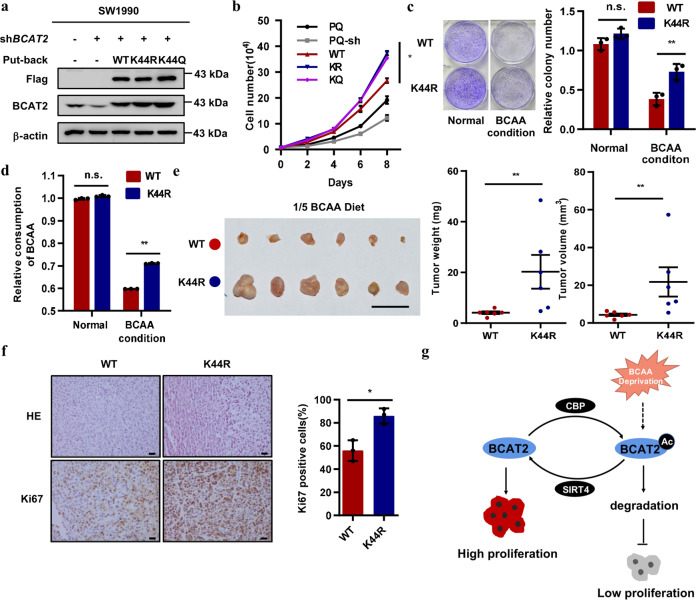
Pancreatic ductal adenocarcinoma (PDAC) is well-known for inefficient early diagnosis, with most patients diagnosed at advanced stages. Increasing evidence indicates that elevated plasma levels of branched-chain amino acids (BCAAs) are associated with an increased risk of pancreatic cancer. Branched-chain amino acid transaminase 2 (BCAT2) is an important enzyme in BCAA catabolism that reversibly catalyzes the initial step of BCAA degradation to branched-chain acyl-CoA. Here, we show that BCAT2 is acetylated at lysine 44 (K44), an evolutionarily conserved residue. BCAT2 acetylation leads to its degradation through the ubiquitin–proteasome pathway and is stimulated in response to BCAA deprivation. cAMP-responsive element-binding (CREB)-binding protein (CBP) and SIRT4 are the acetyltransferase and deacetylase for BCAT2, respectively. CBP and SIRT4 bind to BCAT2 and control the K44 acetylation level in response to BCAA availability. More importantly, the K44R mutant promotes BCAA catabolism, cell proliferation, and pancreatic tumor growth. Collectively, the data from our study reveal a previously unknown regulatory mechanism of BCAT2 in PDAC and provide a potential therapeutic target for PDAC treatment.
Overview
The claims and statistics of this paper haven’t been checked yet.
Free: it reads the open-access text and checks the first 5 claims that cite a source we can check. Create a free account to check every claim.
Integrity signals
Registry
Cites
Statistics
Figures
Verification
Claims the paper makes
The claims and statistics of this paper haven’t been checked yet.
Free: it reads the open-access text and checks the first 5 claims that cite a source we can check. Create a free account to check every claim.
Claims other papers make about this one
Each is checked against this paper’s own text: does it say what the citing paper says it does?
The source backs part of the claim, not all of it — or backs it for a different population, condition or comparison.
In the citing paper
“acetyl-deficient BCAT2 mutants better support pancreatic cancer cell growth and BCAA uptake in both in vitro and in mouse models under BCAA-deprived conditions [66].”
From Acetylation: a new target for protein degradation in cancer (2025) · cites this paper as [66]
Experimental — accuracy not yet measuredThe cited source says what the claim attributes to it.
In the citing paper
“Under BCAA-deprived conditions, BCAT2 becomes acetylated at K44 and displays a remarkably decreased half-life (Figure 2D) [66].”
From Acetylation: a new target for protein degradation in cancer (2025) · cites this paper as [66]
Self-check
Percentages, sums and reported differences re-computed from the paper’s own numbers.
The self-check needs the paper’s full text.
Citations
Cites
Siegel, R. L., Miller, K. D., & Jemal, A. (2018) · CA: A Cancer Journal for Clinicians · doi:10.3322/caac.21442 · Cited by 16,579
Lysine acetylation targets protein complexes and co-regulates major cellular functions
Choudhary, C., Kumar, C., Gnad, F., Nielsen, M. L., Rehman, M., Walther, T. C., Olsen, J. V., & Mann, M. (2009) · Science · doi:10.1126/science.1175371 · Cited by 4,040 · cited 1×
“RESULTS BCAT2 is acetylated mainly at lysine 44 Previous mass spectrometry data indicated that BCAT2 is a potential acetylated protein.(15,16) To confirm this modification, we transfected Flag-BCAT2 into HEK293T cells and detected the acetylation level of BCAT2 by western blotting using a pan-specific anti-acetylated…”
BackgroundNewgard, C. B., An, J., Bain, J. R., Muehlbauer, M. J., Stevens, R. D., Lien, L. F., Haqq, A. M., Shah, S. H., Arlotto, M., Slentz, C. A., et al. (2009) · Cell Metabolism · doi:10.1016/j.cmet.2009.02.002 · Cited by 3,165
Bidirectional Transport of Amino Acids Regulates mTOR and Autophagy
Nicklin, P., Bergman, P., Zhang, B., Triantafellow, E., Wang, H., Nyfeler, B., Yang, H., Hild, M., Kung, C., Wilson, C., et al. (2009) · Cell · doi:10.1016/j.cell.2008.11.044 · Cited by 1,798
Self-citationAcetylation and deacetylation of non-histone proteins
Glozak, M. A., Sengupta, N., Zhang, X., & Seto, E. (2005) · Gene · doi:10.1016/j.gene.2005.09.010 · Cited by 1,584
Cancer metabolism: a therapeutic perspective
Martinez-Outschoorn, U. E., Peiris-Pagés, M., Pestell, R. G., Sotgia, F., & Lisanti, M. P. (2017) · Nature Reviews Clinical Oncology · doi:10.1038/nrclinonc.2016.60 · Cited by 1,505
Sirt5 Is a NAD-Dependent Protein Lysine Demalonylase and Desuccinylase
Du, J., Zhou, Y., Su, X., Yu, J. J., Khan, S., Jiang, H., Kim, J., Woo, J., Kim, J. H., Choi, B. H., et al. (2011) · Science · doi:10.1126/science.1207861 · Cited by 1,429
Mammalian Sir2 homolog SIRT3 regulates global mitochondrial lysine acetylation
Lombard, D. B., Alt, F. W., Cheng, H.-L., Bunkenborg, J., Streeper, R. S., Mostoslavsky, R., Kim, J., Yancopoulos, G., Valenzuela, D., Murphy, A., et al. (2007) · Molecular and Cellular Biology · doi:10.1128/mcb.01636-07 · Cited by 1,216
Interplay between lipids and branched-chain amino acids in development of insulin resistance
Newgard, C. B. (2012) · Cell Metabolism · doi:10.1016/j.cmet.2012.01.024 · Cited by 1,080
The first identification of lysine malonylation substrates and its regulatory enzyme
Peng, C., Lu, Z., Xie, Z., Cheng, Z., Chen, Y., Tan, M., Luo, H., Zhang, Y., He, W., Yang, K., et al. (2011) · Molecular & Cellular Proteomics · doi:10.1074/mcp.m111.012658 · Cited by 751
Self-citation
Cited by
Metabolic reprogramming and epigenetic modifications on the path to cancer
Sun, L., Zhang, H., & Gao, P. (2022) · Protein & Cell · doi:10.1007/s13238-021-00846-7 · Cited by 770
“This PTM modulation of BCAT2 promotes its degradation and suppresses BCAA catabolism and pancreatic cancer progression (Lei et al., 2020).”
BackgroundAmino acid metabolism in health and disease
Ling, Z.-N., Jiang, Y.-F., Ru, J.-N., Lu, J.-H., Ding, B., & Wu, J. (2023) · Signal Transduction and Targeted Therapy · doi:10.1038/s41392-023-01569-3 · Cited by 545
“53 In addition, KRAS and USP1 can also regulate the expression of BCAT2 in PDAC through the ubiquitin-proteasome pathway: KRAS can stabilize the expression of BCAT2 in PDAC by inhibiting the ubiquitination of BCAT2 by spleen tyrosine kinase (SYK) and E3 ubiquitination ligase TRIM21, 54 while USP1…”
BackgroundZhong, Q., Xiao, X., Qiu, Y., Xu, Z., Chen, C., Chong, B., Zhao, X., Hai, S., Li, S., An, Z., et al. (2023) · MedComm · doi:10.1002/mco2.261 · Cited by 442
Yang, L., Chu, Z., Liu, M., Zou, Q., Li, J., Liu, Q., Wang, Y., Wang, T., Xiang, J., & Wang, B. (2023) · Journal of Hematology & Oncology · doi:10.1186/s13045-023-01453-1 · Cited by 352
Self-citationMann, G., Mora, S., Madu, G., & Adegoke, O. A. J. (2021) · Frontiers in Physiology · doi:10.3389/fphys.2021.702826 · Cited by 261
Molecular principles underlying aggressive cancers
Nussinov, R., Yavuz, B. R., & Jang, H. (2025) · Signal Transduction and Targeted Therapy · doi:10.1038/s41392-025-02129-7 · Cited by 100
Amino acid metabolism, redox balance and epigenetic regulation in cancer
Li, X., & Zhang, H. (2024) · The FEBS Journal · doi:10.1111/febs.16803 · Cited by 90
“BCAT2 K44 acetylation leads to its degradation through the ubiquitin-proteasome pathway and the K44R mutant promotes BCAA catabolism, cell proliferation and pancreatic tumour growth [122].”
BackgroundSelf-citationCai, Z., Chen, J., Yu, Z.-Z., Li, H., Liu, Z., Deng, D., Liu, J., Chen, C., Zhang, C., Ou, Z., et al. (2023) · Advanced Science · doi:10.1002/advs.202207155 · Cited by 86
KRAS mutation: The booster of pancreatic ductal adenocarcinoma transformation and progression
Zhang, Z., Zhang, H., Liao, X., & Tsai, H. (2023) · Frontiers in Cell and Developmental Biology · doi:10.3389/fcell.2023.1147676 · Cited by 82
“Acetylation of BCAT2 promotes the degradation of BCAT2, which inhibits the cell proliferation of PDAC (Lei et al., 2020).”
BackgroundXu, H. M., Liu, Y., Li, L.-S., & Liu, Y. (2023) · Aging and Disease · doi:10.14336/ad.2022.1123 · Cited by 72
“SIRT4 has specific deacetylase [24], lipoamidase [25], ADP-ribosyltransferase [26], and deacylase activities [22].”
BackgroundJiang, Z., Xiong, N., Yan, R., Li, S., Liu, H., Mao, Q., Sun, Y., Shen, S., Ye, L., Gao, P., et al. (2024) · Protein & Cell · doi:10.1093/procel/pwae052 · Cited by 70
“Lysine acetylation has been found to play key roles in cellular metabolism (Lei et al., 2020; Zhao et al., 2013).”
Yang, D., Liu, H., Cai, Y., Lu, K., Zhong, X., Xing, S., Song, W., Zhang, Y., Ye, L., Zhu, X., et al. (2022) · Cell Reports · doi:10.1016/j.celrep.2022.111691 · Cited by 63
Self-citationBranched-chain amino acids catabolism and cancer progression: focus on therapeutic interventions
Xu, E., Ji, B., Jin, K., & Chen, Y. (2023) · Frontiers in Oncology · doi:10.3389/fonc.2023.1220638 · Cited by 78
Li, J., Li, K.-Y., Su, Y., Shen, Y., Lei, M., Zhang, F., Yin, M., Chen, Z., Wen, W., Hu, W., et al. (2021) · National Science Review · doi:10.1093/nsr/nwab212 · Cited by 65
Self-citationNong, X.-Z., Zhang, C., Wang, J., Ding, P., Ji, G., & Wu, T. (2022) · Frontiers in Oncology · doi:10.3389/fonc.2022.988290 · Cited by 66
“In addition, BCAT2 has been found to be acetylated on lysine 44 and utilize the ubiquitin-proteasome pathway to accelerate its degradation, resulting in decreased BCAA catabolism, thereby inhibiting pancreatic tumor growth (37).”
BackgroundKang, Z., Jiang, S., Han, J., Gao, Y., Xie, Y., Chen, J., Liu, Q., Yu, J. Q., Zhao, X., Hong, J., et al. (2023) · Biochimica et Biophysica Acta (BBA) - Molecular Basis of Disease · doi:10.1016/j.bbadis.2023.166941 · Cited by 58
The role of metabolic reprogramming in pancreatic cancer chemoresistance
Liu, C., Li, C., & Liu, Y. (2023) · Frontiers in Pharmacology · doi:10.3389/fphar.2022.1108776 · Cited by 59
“Acetylation also leads to degradation of BCAT2 to inhibit cancer growth (Lei et al., 2020).”
BackgroundThe role of branched chain amino acids metabolic disorders in tumorigenesis and progression
Wang, J., Wang, W., Zhu, F., & Duan, Q. (2022) · Biomedicine & Pharmacotherapy · doi:10.1016/j.biopha.2022.113390 · Cited by 51
New insights into the pathophysiology of methylmalonic acidemia
Head, P. E., Meier, J. L., & Venditti, C. P. (2023) · Journal of Inherited Metabolic Disease · doi:10.1002/jimd.12617 · Cited by 51
“indicated SIRT4 likely deacylates and stabilizes branched-chain amino acid transaminase 2 (BCAT2).(92) Increased stabilization leads to increased catabolism of isoleucine and valine in addition to leucine.”
BackgroundThe contradictory role of branched-chain amino acids in lifespan and insulin resistance
He, Y., Li, K., Wei, J., Lin, Y., & Liu, Y. (2023) · Frontiers in Nutrition · doi:10.3389/fnut.2023.1189982 · Cited by 48
“To maintain the catabolic cycle, BCAT2 reversibly catalyzes the initial steps of BCAA catabolism to regenerate BCAAs and α-KG (α-Ketoglutarate) (3, 4).”
BackgroundWang, H., Feng, L., Pei, Z., Zhao, J., Lu, S., & Lu, W. (2024) · Aging Cell · doi:10.1111/acel.14434 · Cited by 46
“Acetyl-CoA and succinyl-CoA are eventually produced and enter the tricarboxylic acid cycle (Lei et al., 2020 ; Neinast et al., 2019 ).”
BCKDK alters the metabolism of non-small cell lung cancer
Wang, Y., Xiao, J., Jiang, W., Zuo, D., Wang, X., Jin, Y., Qiao, L., An, H., Yang, L., Dumoulin, D. W., et al. (2021) · Translational Lung Cancer Research · doi:10.21037/tlcr-21-885 · Cited by 46
“The importance of BCAA metabolic rewiring has been recently identified in multiple human cancer types (13-16).”
BackgroundSelf-citationOncogenic KRAS triggers metabolic reprogramming in pancreatic ductal adenocarcinoma
Shen, X., Niu, N., & Xue, J. (2022) · Journal of Translational Internal Medicine · doi:10.2478/jtim-2022-0022 · Cited by 41
Post-translational Acetylation Control of Cardiac Energy Metabolism
Ketema, E. B., & Lopaschuk, G. D. (2021) · Frontiers in Cardiovascular Medicine · doi:10.3389/fcvm.2021.723996 · Cited by 42
“cAMPresponsive element-binding (CREB)-binding protein (CBP) and SIRT4 were identified as the acetyltransferase and deacetylase for BCAT at lysine 44 (K44), respectively (186).”
BackgroundDong, B., Xu, J., Huang, Y., Guo, J., Dong, Q., Wang, Y., Li, N., Liu, Q., Zhang, M., Pan‐Hammarström, Q., et al. (2024) · Nature Cancer · doi:10.1038/s43018-024-00820-2 · Cited by 43
Self-citationPancreatic cancer: branched-chain amino acids as putative key metabolic regulators?
Rossmeislová, L., Gojda, J., & Smolková, K. (2021) · Cancer and Metastasis Reviews · doi:10.1007/s10555-021-10016-0 · Cited by 41
“For instance, under BCAA-deprived conditions, BCAT2 is downregulated through acetylation by CREB-binding protein, which leads to protein degradation [63].”
BackgroundWhole-body metabolic fate of branched-chain amino acids
Blair, M. C., Neinast, M. D., & Arany, Z. P. (2021) · Biochemical Journal · doi:10.1042/bcj20200686 · Cited by 41
Metabolomic biomarkers in liquid biopsy: accurate cancer diagnosis and prognosis monitoring
Wang, W., Zhen, S., Yu, P., Wang, L., & Zhang, Y. (2024) · Frontiers in Oncology · doi:10.3389/fonc.2024.1331215 · Cited by 46
“The catabolism of BCAAs mediated by amino acid branched-chain transaminases is abnormally active in pancreatic malignancies (97, 98).”
BackgroundSelf-citationZhao, J., Wan, M., Wang, S., Zhang, K., Xiong, Q., Li, Y., Yu, H., & Du, H. (2024) · Redox Biology · doi:10.1016/j.redox.2024.103160 · Cited by 37
“BCAT2 is a key enzyme in branched-chain amino acids catabolism, reversibly catalyzing the first stage of degradation to branched-chain acyl-CoA [24].”
BackgroundLi, Y., Bie, J., Zhao, L., Song, C., Zhang, T., Li, M., Yang, C., & Luo, J. (2023) · Cell Death and Differentiation · doi:10.1038/s41418-023-01185-2 · Cited by 36
“Since there were a few researches indicating that SIRT4 also possessed a weak deacetylation activity [24, 25], we knocked down SIRT4 in wildtype and SLC25A51 deficient cells, which revealed that loss of SIRT4 rarely influenced the mitochondrial acetylation levels (Supplementary Fig.”
BackgroundLv, M., Yang, X., Xu, C., Song, Q., Zhao, H., Sun, T., Liu, J., Zhang, Y., Sun, G., Xue, Y., et al. (2025) · Advanced Science · doi:10.1002/advs.202412553 · Cited by 42
Self-citationBranched-chain amino acid and cancer: metabolism, immune microenvironment and therapeutic targets
Xiong, H., Liu, R., Xu, K., Chen, X., Huang, L., Shou, Y., Huang, Y., Sheng, H., Lu, Y., & Zhang, H. (2025) · Journal of Translational Medicine · doi:10.1186/s12967-025-06664-3 · Cited by 36
“BCAA transaminase 2 (BCAT2) is an indispensable enzyme for BCAA decomposition, and its acetylation can inhibit the catabolism of BCAA and the growth of pancreatic cancer [8, 9].”
Regulatory mechanisms of amino acids in ferroptosis
Yao, H., Jiang, W., Liao, X., Wang, D., & Zhu, H. (2024) · Life Sciences · doi:10.1016/j.lfs.2024.122803 · Cited by 33
Toyokawa, Y., Koonthongkaew, J., & Takagi, H. (2021) · Applied Microbiology and Biotechnology · doi:10.1007/s00253-021-11612-4 · Cited by 34
Zhu, S., Gu, H., Peng, C. Y., Xia, F., Cao, H., & Cui, H. (2022) · Frontiers in Cell and Developmental Biology · doi:10.3389/fcell.2022.849625 · Cited by 34
“the ubiquitin–proteasomeubiquitin-proteasome pathway (Lei et al., 2020).”
Research progress on branched-chain amino acid aminotransferases
Chen, C., Naveed, H., & Chen, K. (2023) · Frontiers in Genetics · doi:10.3389/fgene.2023.1233669 · Cited by 30
Tian, Y., Ma, J., Wang, H., Yi, X., Wang, H., Zhang, H., Guo, S., Yang, Y., Zhang, B., Du, J., et al. (2023) · Cellular and Molecular Life Sciences · doi:10.1007/s00018-023-04965-8 · Cited by 29
“In response to BCAA deprivation, the acetylation of BCAT2 led to its degradation and thereby ameliorated cell proliferation and pancreatic tumor growth [10].”
BackgroundXu, H., Wang, X., Xu, X., Liu, L., Zhang, Y., Yan, X., Zhang, Y., Dang, K., & Li, Y. (2023) · Clinical Nutrition · doi:10.1016/j.clnu.2023.10.019 · Cited by 28
Self-citationGotvaldová, K., Špačková, J., Novotný, J., Baslarová, K., Ježek, P., Rossmeislová, L., Gojda, J., & Smolková, K. (2024) · Cancer & Metabolism · doi:10.1186/s40170-024-00335-5 · Cited by 27
“Lei et al. [11] showed that acetylation promotes BCAT2 degradation to suppress BCAA catabolism and pancreatic cancer growth.”
BackgroundPadinharayil, H., Rai, V., & George, A. (2023) · Cancers · doi:10.3390/cancers15041070 · Cited by 30
“This post-transcriptional modification of BCAT2 encourages its destruction and inhibits BCAA catabolism and the spread of pancreatic cancer [93].”
BackgroundUbiquitination in cancer: mechanisms and therapeutic opportunities
Zhu, S., Zhang, X., Liu, W., Zhou, Z. G., Xiong, S., Li, J., Chen, X., & Peng, C. (2025) · 癌症:英文版 · doi:10.1002/cac2.70044 · Cited by 28
“Conversely, the deacetylase sirtuin 4 (SIRT4) antagonizes this process by removing acetyl groups from BCAT2 to stabilize the protein [129].”
Self-citationLin, S., Miao, Y., Zheng, X., Dong, Y., Yang, Q., Yang, Q., Du, S., Xu, J., Zhou, S., & Yuan, T. (2022) · Cell Death Discovery · doi:10.1038/s41420-022-01029-x · Cited by 27
Mei, W., Wei, M., Tang, C., Li, W., Ye, B., Xin, S., Ma, W., & Ye, L. (2025) · Cell Death and Disease · doi:10.1038/s41419-025-07559-3 · Cited by 24
“Recent studies have elucidated the role of BCAAs and BCAT2 in the pathogenesis of certain cancers, including pancreatic ductal adenocarcinoma (PDAC) [7, 20, 21].”
InfluentialSchmidt, C., Wehsling, M., Mignon, M. L., Wille, G., Rey, Y. P., Schnellbaecher, A., Zabezhinsky, D., Fischer, M., & Zimmer, A. (2021) · Biotechnology and Bioengineering · doi:10.1002/bit.27755 · Cited by 23
Lü, Z., Sun, G., He, K.-Y., Zhang, Z., Han, X., Qu, X.-H., Wan, D.-F., Wan, D.-F., Tou, F., Han, X.-J., et al. (2024) · Biochimica et Biophysica Acta (BBA) - Molecular Basis of Disease · doi:10.1016/j.bbadis.2024.167220 · Cited by 21
Metabolic Rewiring and Stemness: A Critical Attribute of Pancreatic Cancer Progression
Ogunleye, A. O., Nimmakayala, R. K., Batra, S. K., & Ponnusamy, M. P. (2023) · Stem Cells · doi:10.1093/stmcls/sxad017 · Cited by 24
Acetylation: a new target for protein degradation in cancer
Crawford, C. E. W., & Burslem, G. M. (2025) · Trends in Cancer · doi:10.1016/j.trecan.2025.01.013 · Cited by 20
Wang, Z., Yang, Y., Xing, Y., Si, D., Wang, S., Lin, J., Li, C., Zhang, J., & Yin, D. (2023) · Scientific Reports · doi:10.1038/s41598-023-41176-4 · Cited by 22
“An increase in plasma BCAAs levels has also been observed in pancreatic cancer and hepatocellular carcinoma 16 .”
BackgroundResearch Progress of Sirtuin4 in Cancer
Bai, Y., Yang, J., Cui, Y., Yao, Y., Wu, F., Liu, C., Fan, X., & Zhang, Y. (2021) · Frontiers in Oncology · doi:10.3389/fonc.2020.562950 · Cited by 20
“BCAT2 acetylation leads to its degradation through a ubiquitin-proteasome pathway, and is stimulated by deprivation of branched-chain amino acids (34) (Figure 4).”
BackgroundSelf-citationHe, L., Liu, Q., Cheng, J., Cao, M., Zhang, S., Wan, X., Li, J., & Tu, H. (2023) · Biogerontology · doi:10.1007/s10522-023-10022-5 · Cited by 20
Self-citationMa, Q., Li, H., Song, Z., Deng, Z., Huang, W., & Liu, Q. (2024) · Metabolism · doi:10.1016/j.metabol.2024.156016 · Cited by 19
Pancreatic stellate cells regulate branched-chain amino acid metabolism in pancreatic cancer
Jiang, W., Qiao, L., Han, Y., Zhang, A., An, H., Xiao, J., & Ren, L. (2021) · Annals of Translational Medicine · doi:10.21037/atm-21-761 · Cited by 19
“Changes in BCAA metabolism not only affect the intrinsic cancer characteristics of a cell but also reflect systematic metabolic changes related to some cancers (9).”
BackgroundHigh dose isoleucine stabilizes nuclear PTEN to suppress the proliferation of lung cancer
Wang, H., Chen, S., Kang, W., Ding, B., Cui, S., Zhou, L., Zhang, N., Luo, H., Wang, M., Zhang, F., et al. (2023) · Discover Oncology · doi:10.1007/s12672-023-00634-1 · Cited by 20
“Paradoxically, high dietary BCAA intake or BCAA depletion promotes tumor initiation and growth [32, 45, 46].”
BackgroundSelf-citationThe role of amino acid metabolism alterations in pancreatic cancer: From mechanism to application
Fu, S., Xu, S., & Zhang, S. (2023) · Biochimica et Biophysica Acta (BBA) - Reviews on Cancer · doi:10.1016/j.bbcan.2023.188893 · Cited by 20
Worpenberg, L., Gobet, C., & Naef, F. (2025) · Genome biology · doi:10.1186/s13059-025-03800-6 · Cited by 19
Yang, A., Wu, Q., Wang, A.-M., Chen, Q., Yang, J., Tao, Y., Sun, Y., & Zhang, J. (2022) · Bioorganic Chemistry · doi:10.1016/j.bioorg.2022.106229 · Cited by 19
Gondáš, E., Trancikova, A. K., Baranovičová, E., Šofránko, J., Hatok, J., Kowtharapu, B. S., Galanda, T., Dobrota, D., Kubatka, P., Büsselberg, D., et al. (2022) · Cancers · doi:10.3390/cancers14030585 · Cited by 21
The mechanism and progress of ferroptosis in pancreatic cancer
Bao, Z., Hou, X.-B., Li, H.-L., Mao, Y., & Wang, W. (2022) · Acta Histochemica · doi:10.1016/j.acthis.2022.151919 · Cited by 18
Multiple roles of branched-chain amino acid metabolism in tumour progression
Wang, L., Shi, F., Cao, Y., & Xie, L. (2025) · Journal of Biomedical Science · doi:10.1186/s12929-025-01132-y · Cited by 17
Yi, Z., Kou, J., Li, W., Wang, Y., Su, X., & Zhang, H. (2025) · Frontiers in Pharmacology · doi:10.3389/fphar.2025.1595176 · Cited by 17
“High expression of BCKDK and certain malignant proliferation behaviors have been con fi rmed in colorectal cancer (Lei et al., 2020), breast cancer (Xu C. et al., 2023), and NSCLC (Xue et al., 2023).”
Self-citationKoonthongkaew, J., Ploysongsri, N., Toyokawa, Y., Ruangpornvisuti, V. W., & Takagi, H. (2022) · Applied and Environmental Microbiology · doi:10.1128/aem.00557-22 · Cited by 16
Ping, D., Pu, X., Ding, G., Zhang, C., Jin, J., Xu, C., Liu, J., Jia, S., & Cao, L. (2023) · Biochimica et Biophysica Acta (BBA) - Gene Regulatory Mechanisms · doi:10.1016/j.bbagrm.2023.194941 · Cited by 15
Hu, H., Yin, S., Ma, R., Chen, R., Li, S., Chen, Y., He, F., & Yang, L. (2021) · Journal of Cancer · doi:10.7150/jca.56135 · Cited by 15
“CBP directly acetylated BCAT2 to promote protein degradation [14], CBP dramatically enhanced DOT1L acetylation and promoted protein stability [15] and CBP directly acetylated KDM2B and promoted target gene Ivyspring”
BackgroundMuscle loss in cancer cachexia: what is the basis for nutritional support?
Faiad, J. Z., Andrade, M. F., de Castro, G. S., de Resende, J., Coêlho, M. D. C., de Aquino, G. P., & Seelaender, M. C. L. (2025) · Frontiers in Pharmacology · doi:10.3389/fphar.2025.1519278 · Cited by 13
Xu, Y.-F., Yang, N., Hao, P.-H., Wen, R., & Zhang, T. (2025) · Cellular & Molecular Biology Letters · doi:10.1186/s11658-025-00773-z · Cited by 14
“Acetylation can promote ubiquitination [41, 42].”
Cao, Q., Fan, J., Zou, J., & Wang, W. (2024) · Scientific Reports · doi:10.1038/s41598-024-74441-1 · Cited by 14
Metabolic characteristics in hepatocellular carcinoma: amino acid metabolic reprogramming
Zhou, R., Li, Y., Li, G., Li, Y., Luo, L., Wang, B., & Wang, L. (2026) · Molecular Cancer · doi:10.1186/s12943-025-02492-7 · Cited by 13
“On the other hand, an increasing body of evidence suggests that BCAAs might also promote cancer development through certain mechanisms [194–196].”
Targeting protein modification: a new direction for immunotherapy of pancreatic cancer
Ge, X., Zhang, K., Zhu, J., Chen, Y., Wang, Z., Wang, P., Xu, P., & Yao, J. J. (2024) · International Journal of Biological Sciences · doi:10.7150/ijbs.101861 · Cited by 11
Branched chain amino acids and their aberrant metabolism in cancer
Brown, M. L., Cai, X., & Simon, M. C. (2025) · Trends in cancer · doi:10.1016/j.trecan.2025.10.004 · Cited by 14
Shi, W., Lin, X., Luo, W., Pan, Y., Liao, F., Wang, Z., Zhan, B., Feng, J., & Huang, H. (2024) · BMC Cancer · doi:10.1186/s12885-024-12193-x · Cited by 11
“Moreover, the degradation of BCAT2 in PDAC cells is promoted by acetylation of lysine 44 residue and enhance growth of PDAC [32].”
BackgroundBranched chain amino acids catabolism as a source of new drug targets in pathogenic protists
Souza, H. F. S., Marsiccobetre, S., Souza, R. O. O., Luévano‐Martínez, L. A., & Silber, A. M. (2023) · Experimental Parasitology · doi:10.1016/j.exppara.2023.108499 · Cited by 12
Yao, H., Xu, J., Zhou, A., Shen, D., Dong, Q., Yang, X., Li, M., Mi, X., Lu, Y., Zhong, R., et al. (2024) · Molecular Cancer Research · doi:10.1158/1541-7786.mcr-24-0434 · Cited by 10
“The metabolism of a branched-chain amino acid (BCAA) is closely related to the progression of various cancers (11–13).”
Cai, D., Ji, J., Yang, C.-H., & Cai, H. (2026) · Oncology Research Featuring Preclinical and Clinical Cancer Therapeutics · doi:10.32604/or.2025.071152 · Cited by 16
“Notably, suppressing BCKDHA in PDAC did not reduce TCA cycle metabolites or respiration, but it markedly inhibited fatty acid synthesis, indicating that PDAC diverts BCAA carbon into lipogenesis [35].”
STRECK, E. L., Bussular, F. P., Wessler, L. B., Duarte, M. B., de Rezende, V. L., Rodrigues, M. S., Torres, C. A., Lemos, I. D. S., Candiotto, G., Gava, F. F., et al. (2020) · Metabolic Brain Disease · doi:10.1007/s11011-020-00631-1 · Cited by 11
“The acetylation process promoted degradation of Branched-chain amino acid transaminase 2 (BCAT2), an essential enzyme of BCAA degradation, and suppressed BCAA catabolism in the context of pancreatic cancer (Lei et al. 2020).”
BackgroundInfluentialCheng, Y., Xiao, Z., Cai, W., Zhou, T., & Yang, Z. (2025) · Cancer Gene Therapy · doi:10.1038/s41417-025-00880-1 · Cited by 10
“The aforementioned results demonstrate that the overexpression of Sirt1 exerts a potent inhibitory effect on tumor cell secretion of androgens, thereby effectively delaying tumor progression.”
Li, Z., Liu, Z., Lin, M., Pan, H., Liu, Y., Liu, Y., Xie, Y., Zhang, J., Guan, S., Li, Y., et al. (2025) · Journal of Experimental & Clinical Cancer Research · doi:10.1186/s13046-025-03399-3 · Cited by 9
Shi, Y., Xie, X., Sun, Y., Chen, Y., & Chen, G. (2025) · Biomedicines · doi:10.3390/biomedicines13123072 · Cited by 9
“Under physiological conditions, BCAAs are transaminated by BCAT2 to form BCKAs, which are subsequently decarboxylated by the BCKDH complex for entry into the TCA cycle and ATP production [63].”
Ferroptosis in Cancer Immunotherapy—Implications for Hepatocellular Carcinoma
Kusnick, J., Bruneau, A., Tacke, F., & Hammerich, L. (2022) · Immuno · doi:10.3390/immuno2010014 · Cited by 9
“hepatocellular carcinoma xenograft mice (H22) pancreatic carcinoma xenograft mice (SW1990) [135] pancreatic ductal carcinoma xenograft mice [136]”
BackgroundXu, K., Shah, P. V., Makhanasa, D., & Khan, M. W. (2025) · Cancers · doi:10.3390/cancers17111751 · Cited by 9
“Lei et al. discovered that acetylation at K44 leads to BCAT2 degradation by the ubiquitin–proteasome pathway under BCAA-deprived conditions, which efficiently inhibits PDAC proliferation [7].”
Li, W., Tu, J., Zheng, J., Das, A., Qi, Y., Jiang, X., Ding, W., Bai, X., Lai, K., Yang, S., et al. (2025) · JOR Spine · doi:10.1002/jsp2.70042 · Cited by 9
“Furthermore, A proteomics research on fibroblasts has found SIRT4 can alter the mitochondrial activity by binding to BCAA catabolic enzymes BCAT [27] and MCCC1 [28, 29].”
Hellmann, A. R., Zwara, A., Weryszko, O., Czapiewska, M., Korczyńska, J., Sztendel, A., Śledziński, T., & Mika, A. (2025) · Biomedicine & Pharmacotherapy · doi:10.1016/j.biopha.2025.117894 · Cited by 7
Acetylation-dependent USP7-TRIM25 axis drives oncogenic progression in non-small cell lung cancer
Yang, J., Chen, Z., Hu, W., Zeng, W., Lei, Z., Tong, X., Li, Q., Luo, G., Hu, K., Chen, Z., et al. (2025) · Cell Death and Disease · doi:10.1038/s41419-025-08034-9 · Cited by 8
“To comparatively evaluate TRIM25 acetylation status in malignant and normal cells, we performed WB analysis using two normal bronchial epithelial cell lines and two NSCLC cell lines.”
TCF12 activates MAGT1 expression to regulate the malignant progression of pancreatic carcinoma cells
Wang, L., Tang, Y., Wu, H., & Shan, G. (2021) · Oncology Letters · doi:10.3892/ol.2021.13180 · Cited by 7
Sirtuin insights: bridging the gap between cellular processes and therapeutic applications
Kamal, S., Babar, S., Ali, W., Rehman, K., Hussain, A., & Akash, M. S. H. (2024) · Naunyn-Schmiedeberg s Archives of Pharmacology · doi:10.1007/s00210-024-03263-9 · Cited by 8
“Deprivation of branched-chain amino acids prompts BCAT2 acetylation, leading to its subsequent degradation via the ubiquitin–proteasome pathway (Lei et al. 2020).”
Chang, Y.-C., Chen, Y.-C., Chan, Y., Liu, C., & Chang, S. (2024) · International Journal of Molecular Sciences · doi:10.3390/ijms252111549 · Cited by 7
Histological tumor necrosis in pancreatic cancer after neoadjuvant therapy
Kudo, M., Ishii, G., Gotohda, N., Konishi, M., Takahashi, S., Kobayashi, S., Sugimoto, M., Martin, J. D., Cabral, H., & Kojima, M. (2022) · Oncology Reports · doi:10.3892/or.2022.8332 · Cited by 7
Yang, Y., Jiao, Y., & Mohammadi, M. R. (2023) · Cellular Molecular and Biomedical Reports · doi:10.55705/cmbr.2023.378480.1091 · Cited by 7
“Branched-chain amino acid transaminase (BCAT2) is mainly acetylated at lysine 44, which inhibits BCAA metabolism and pancreatic tumorigenesis [16].”
BackgroundRewiring amino acids in cancer
Zhang, Y., Lyu, J., & Fang, H. (2025) · Biochimica et Biophysica Acta (BBA) - Reviews on Cancer · doi:10.1016/j.bbcan.2025.189465 · Cited by 7
Self-citationCai, X., Li, W., Wang, L., Shi, Y., Gao, J., Wang, H., Lei, T., & Lu, J. (2024) · BMC Endocrine Disorders · doi:10.1186/s12902-024-01768-1 · Cited by 7
Advances of SIRT4 in cancer metabolism and therapy
Yue, X., Shi, Y., & Luo, Q. (2023) · Pediatric Discovery · doi:10.1002/pdi3.17 · Cited by 6
Han, Y., Chen, L., Manthari, R. K., Yu, Y., Zhang, J., Wang, J., & Cao, J. (2022) · Animal Science Journal · doi:10.1111/asj.13769 · Cited by 7
The effect of branched-chain amino acid supplementation on cancer treatment
Lee, K., & Blanton, C. A. (2023) · Nutrition and Health · doi:10.1177/02601060231153428 · Cited by 7
“The mTORC1 pathway is responsible for stimulating cell growth, proliferation, DNA repair, and many other types of anabolism in the body (Ericksen et al., 2019; Lei et al., 2020; Taherizadeh et al., 2021).”
BackgroundInfluentialChen, X., Xu, Q., & Hai-bing, Y. (2024) · Environmental Toxicology · doi:10.1002/tox.24379 · Cited by 5
Research advances in branched-chain amino acid metabolism in tumors
Li, Z., Chen, S., Wu, X., Liu, F., Zhu, J., Chen, J., Lu, X., & Chi, R. (2024) · Molecular and Cellular Biochemistry · doi:10.1007/s11010-024-05163-1 · Cited by 5
“…functions of BCAAs in cancer remain controversial, with evidence suggesting that BCAA could enhance tumor development in a dose-dependent manner [19], as well as inhibit tumor development by enhancing anti-tumor immune function, as evidenced for pancreatic and triple-negative breast cancer [20–22].”
InfluentialLiu, X., Wang, X., Ren, J., Fang, Y., Gu, M., Zhou, F., Xiao, R., Luo, X., Bai, J., Jiang, D., et al. (2025) · BMC Cancer · doi:10.1186/s12885-024-13374-4 · Cited by 5
BCAAs and related metabolic enzymes: partners in crime driving tumor development
He, B., Li, L., Liu, Y., Hao, M., Zhang, L., & Hu, X. (2026) · Frontiers in Cell and Developmental Biology · doi:10.3389/fcell.2026.1748587 · Cited by 4
Gong, X., Gu, L., Yang, D., He, Y., Li, Q., Qin, H., & Wang, Y. (2025) · eLife · doi:10.7554/elife.100923.3 · Cited by 4
Self-citationZhao, Z., Liu, M., Wang, Q., Wen, H., & Qi, X. (2025) · Comparative Biochemistry and Physiology Part D Genomics and Proteomics · doi:10.1016/j.cbd.2025.101672 · Cited by 5
Lactylation of BCAT2-K377 Contributes to the Progression of Severe Preeclampsia
Yin, Y., Xu, Q. S., Liao, L., Zhang, Y., Yuan, L., Li, Y., Wang, Y., Zheng, X., & Zhou, R. (2026) · Hypertension · doi:10.1161/hypertensionaha.125.25378 · Cited by 3
Self-citationMetabolic pathway analysis of tumors using stable isotopes
Bi, Q., Zhao, J., Nie, J. H., & Huang, F. (2025) · Seminars in Cancer Biology · doi:10.1016/j.semcancer.2025.05.002 · Cited by 3
Metadata
- Authors
- Lei, M.-Z., Li, X.-X., Zhang, Y., Li, J.-T., Zhang, F., Wang, Y.-P., Yin, M., Qu, J., & Lei, Q.-Y.
- Affiliations
- Shanghai Medical College of Fudan University (CN)
- Corresponding author
- Qu, Jia
- Lei, Qun-Ying
- Venue
- Signal Transduction and Targeted Therapy
- Published
- 2020-05-29
- Volume
- 5
- Issue
- 1
- Pages
- 70-70
- ISSN
- 2059-3635 (ISSN-L)
- PMC
- PMC7256045
- OpenAlex
- W3031710066
- Cited by
- 129
- References
- 37
- Citations by year
- 2026: 19 · 2025: 25 · 2024: 26 · 2023: 29 · 2022: 13 · 2021: 15 · 2020: 2
- FWCI
- 5.05
- Type
- journal article
- Language
- en
- Open access
- gold
- doi.org
- Licence
- cc-by
- creativecommons.org/licenses/by/4.0 (tdm)
- creativecommons.org/licenses/by/4.0 (vor)
- Locations
- Signal Transduction and Targeted Therapy (publishedVersion, cc-by)
- PubMed Central (publishedVersion, cc-by)
- PubMed (publishedVersion)
- Funders
- National Natural Science Foundation of China (81802745, 81790253, 81790250, 91959202)
- Shanghai Municipal Education Commission (N173606)
- Topics
- Life Sciences › Biochemistry, Genetics and Molecular Biology › Cancer Research › Cancer, Lipids, and Metabolism
- Health Sciences › Medicine › Oncology › Pancreatic and Hepatic Oncology Research
- Life Sciences › Biochemistry, Genetics and Molecular Biology › Biochemistry › Amino Acid Enzymes and Metabolism
- Keywords
- BCAT2, lysine acetylation, pancreatic ductal adenocarcinoma, branched-chain amino acids, BCAA catabolism, protein degradation, ubiquitin-proteasome system, CBP, SIRT4, tumor growth, therapeutic target
- MeSH terms
- Acetylation, Amino Acids, Branched-Chain, Transaminases, Humans, Neoplasm Proteins, Pancreatic Neoplasms, Pregnancy Proteins, Minor Histocompatibility Antigens, Cell Line, Tumor, HEK293 Cells, Proteolysis
About these checks
Registry, retraction, Cites and statistics results are computed, not judged, with one exception: a printed reference that no index lists is read once by a model before it counts as a citation error. Claims are extracted by a model and kept only when their quote appears verbatim in the text; each cited source is then checked, with a model’s help, for whether it says what the claim relies on. Those verdicts can be wrong — read the claim’s quote and the cited source before relying on one.
Statistics and arithmetic are recomputed, not judged.
Confidence bands are shown only for fields calibrated on our annotated test set. None is calibrated yet, so no band is shown.
What counts as a claim ›How we measure confidence ›How we check this ›
Are you an author, or do you see a problem with this page? Request a review
Data sources
Bibliographic data: Semantic Scholar, OpenAlex, Crossref.
Contains information from the Semantic Scholar Academic Graph Datasets, made available under the ODC Attribution License (ODC-BY 1.0).
Semantic Scholar’s data is described in: Kinney, R., et al. (2023). The Semantic Scholar Open Data Platform. arXiv:2301.10140.
