

Inflammation and aging: signaling pathways and intervention therapies
Open accessThe DOI matches its Crossref record; 476 of the 479 references it cites were found in a registry or an index; 215 of the 287 sources its claims cite were checked for support.
Abstract
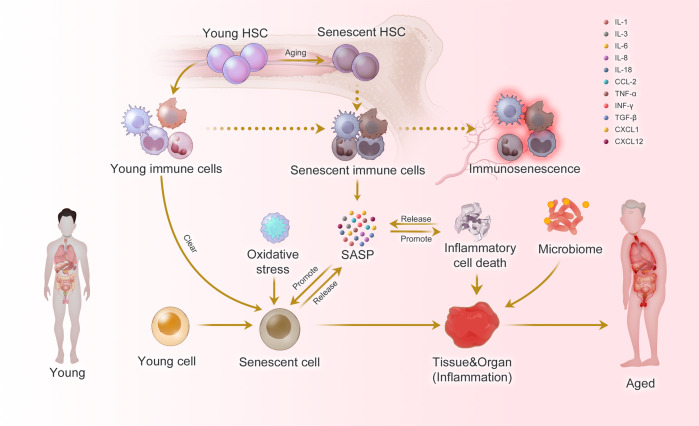
Aging is characterized by systemic chronic inflammation, which is accompanied by cellular senescence, immunosenescence, organ dysfunction, and age-related diseases. Given the multidimensional complexity of aging, there is an urgent need for a systematic organization of inflammaging through dimensionality reduction. Factors secreted by senescent cells, known as the senescence-associated secretory phenotype (SASP), promote chronic inflammation and can induce senescence in normal cells. At the same time, chronic inflammation accelerates the senescence of immune cells, resulting in weakened immune function and an inability to clear senescent cells and inflammatory factors, which creates a vicious cycle of inflammation and senescence. Persistently elevated inflammation levels in organs such as the bone marrow, liver, and lungs cannot be eliminated in time, leading to organ damage and aging-related diseases. Therefore, inflammation has been recognized as an endogenous factor in aging, and the elimination of inflammation could be a potential strategy for anti-aging. Here we discuss inflammaging at the molecular, cellular, organ, and disease levels, and review current aging models, the implications of cutting-edge single cell technologies, as well as anti-aging strategies. Since preventing and alleviating aging-related diseases and improving the overall quality of life are the ultimate goals of aging research, our review highlights the critical features and potential mechanisms of inflammation and aging, along with the latest developments and future directions in aging research, providing a theoretical foundation for novel and practical anti-aging strategies.
Overview
CoChat Summary
## TL;DR
This review argues that inflammaging—a chronic, systemic inflammatory state—is tightly intertwined with cellular senescence, immunosenescence, organ dysfunction, and age-related disease. It synthesizes signaling pathways, aging models, single-cell technologies, and intervention strategies, emphasizing anti-inflammatory approaches, senolytics, stem cell therapy, and organ transplantation.
## Key findings
- The paper describes a “vicious cycle” in which senescent cells secrete SASP factors that promote chronic inflammation, while chronic inflammation accelerates immune-cell senescence and weakens clearance of senescent cells and inflammatory factors.
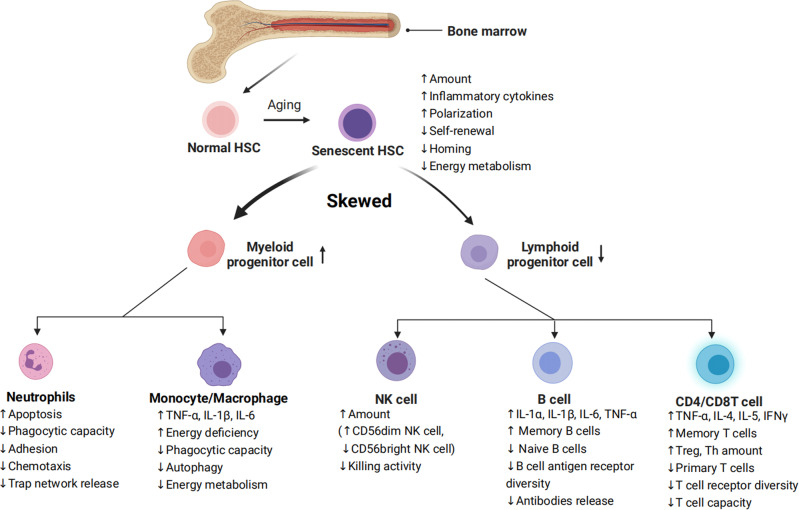
- It highlights reported age-related immune changes across cell types, including decreased circulating naive CD8 T cells as a consistent marker of immunosenescence in healthy older adults, reduced NK-cell cytotoxicity, and age-associated shifts in HSC differentiation toward myeloid lineages.
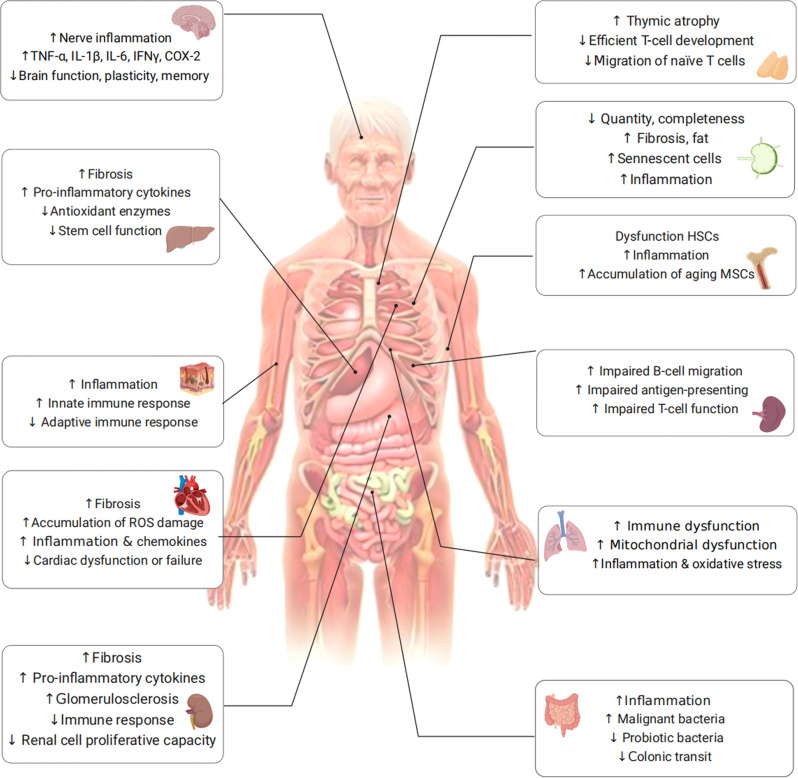
- The review links inflammaging to organ-level decline in the bone marrow, thymus, spleen, lymph nodes, brain, heart, kidney, liver, skin, lung, and gut, with examples such as age-related thymic degeneration reducing new T-cell output and aged bone marrow impairing HSC function.
- For intervention, it notes that the first senolytic combination, dasatinib plus quercetin, increased 6-minute walking distance by an average of 21.5 meters in the first human trial, but other outcomes did not change significantly and long-term efficacy remains insufficiently supported.
## Methods
- Narrative review of inflammaging across molecular, cellular, organ, and disease levels, with sections on signaling pathways, classical aging models, single-cell technology, and intervention strategies.
- No new experimental sample or cohort is reported in the paper itself; instead, it synthesizes findings from prior mouse, human, and cell-line studies cited throughout the text.
- The main approach is qualitative integration of published evidence, including examples from in vitro senescence models, in vivo mouse models, centenarian studies, and emerging single-cell/multi-omics work.
## Limitations
- The paper explicitly notes that the exact causality between inflammation and aging remains unresolved and “deserves further studies” for effective intervention.
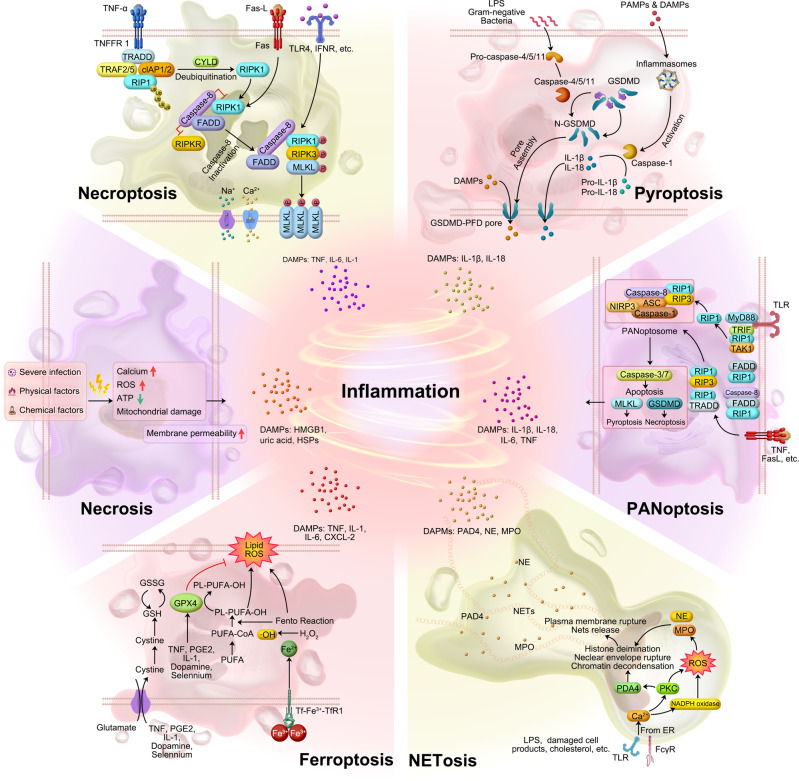
- It also states that PANoptosis has no direct evidence yet linking it to aging, so any connection is speculative.
- Evident from the text: this is a broad review rather than a primary study, so many conclusions are synthesized from heterogeneous prior studies rather than tested in one unified dataset.
Model-written summary. Check it against the paper before relying on it.
Integrity signals
Registry
Cites
Statistics
Figures
Verification
Claims the paper makes
140 Valid · 17 Not valid · 39 Not checked · 40 Own results and interpretations
Some cited sources support this claim and some don’t — read each source’s verdict below.
In the paper
“At the same time, inflammation promotes oxidation through inflammatory mediators.205,206”
§ Inflammation and aging: signaling pathways and intervention therapies > Mechanisms of inflammaging > Triggers of inflammaging
What the sources say
- Disputedcites [205] Furman D Expression of specific inflammasome gene modules stratifies older individuals into two extreme clinical and immunological states Nat. Med. 2017 23 174 184 10.1038/nm.4267 28092664 PMC5320935 sourceExperimental — accuracy not yet measured
The Discussion describes the opposite causal direction: oxidative stress triggers an inflammatory response, including production of inflammatory cytokines. The Results attribute chronic oxidative stress to possible mitochondrial metabolic reprogramming, not to inflammatory mediators. Page numbers are unavailable in our copy. (LLM, conf=0.82)
Checked by a reasoning model — may be wrong.
- Partly supportedcites [206] Furman D Chronic inflammation in the etiology of disease across the life span Nat. Med. 2019 25 1822 1832 10.1038/s41591-019-0675-0 31806905 PMC7147972 sourceExperimental — accuracy not yet measured
The ‘Systemic chronic inflammation and non-communicable disease risk’ section says systemic chronic inflammation can damage tissues by inducing oxidative stress. That supports the inflammation-to-oxidation link, but the passage does not say that inflammatory mediators are the mechanism. (LLM, conf=0.85)
plainstates a cause- Asserted: passes — The authors put it forward as true.
- Checkable: passes — It can be checked against evidence.
- Load-bearing: passes — The paper’s conclusions depend on it.
- Based: passes — The paper gives a reason why it holds.
- Disputed
At least one cited source doesn’t support this claim or points to a different paper, and none confirmed it — see the verdicts below.
In the paper
“Senescent neutrophils exhibit several distinct characteristics during NETosis, including a reduced capacity to release NETs, instability in the quality of formed NETs, and decreased activity of DNA degrading enzymes (DNases) within NETs.”
§ Inflammation and aging: signaling pathways and intervention therapies > Mechanisms of inflammaging > Inflammatory cell death
What the sources say
- Disputedcites [269] Sabbatini M Aging hampers neutrophil extracellular traps (NETs) efficacy Aging Clin. Exp. Res. 2022 34 2345 2353 10.1007/s40520-022-02201-0 35920993 PMC9637667 sourceExperimental — accuracy not yet measured
The Results and Discussion report that neutrophils from elderly subjects produced more NETs than those from adults after LPS stimulation, contrary to the unqualified claim of reduced release. The Introduction and Discussion note reduced NET production in other studies using different stimulation conditions, but distinguish those findings from this paper’s results. (LLM, conf=0.87)
Checked by a reasoning model — may be wrong.
plainstates a cause- Asserted: passes — The authors put it forward as true.
- Checkable: passes — It can be checked against evidence.
- Load-bearing: unclear — It is unclear whether the paper’s conclusions depend on it.
- Based: passes — The paper gives a reason why it holds.
- Disputed
The cited sources support only part of this claim — read each source’s verdict below.
In the paper
“However, in the aging heart, macrophages recruited to the site of infarction exhibit a pro-inflammatory M1 phenotype initially, but subsequently transition to an anti-inflammatory M2 phenotype after myocardial infarction (MI).”
§ Inflammation and aging: signaling pathways and intervention therapies > Inflammaging at the organ level > Sterile organs
What the sources say
- Partly supportedcites [143] Ma Y Mouton AJ Lindsey ML Cardiac macrophage biology in the steady-state heart, the aging heart, and following myocardial infarction Transl. Res. 2018 191 15 28 10.1016/j.trsl.2017.10.001 29106912 PMC5846093 sourceExperimental — accuracy not yet measured
The Abstract and “Macrophages in the MI Heart—Macrophage phenotypes” describe an early M1 and later M2 pattern after infarction. But the paper treats aging-heart macrophages separately and does not establish that this post-MI pattern occurs specifically in aging hearts. Its “Macrophage polarization mechanisms” section also says whether individual macrophages convert in vivo remains uncertain. Page numbers are unavailable in our copy. (LLM, conf=0.88)
plainstates a cause- Asserted: passes — The authors put it forward as true.
- Checkable: passes — It can be checked against evidence.
- Load-bearing: unclear — It is unclear whether the paper’s conclusions depend on it.
- Based: passes — The paper gives a reason why it holds.
- Partly supported
Every source the paper cites for this claim was checked and supports it.
In the paper
“This phenotypic switch promotes angiogenesis and scar formation, aiding in the recovery process.143”
§ Inflammation and aging: signaling pathways and intervention therapies > Inflammaging at the organ level > Sterile organs
What the sources say
- Supportedcites [143] Ma Y Mouton AJ Lindsey ML Cardiac macrophage biology in the steady-state heart, the aging heart, and following myocardial infarction Transl. Res. 2018 191 15 28 10.1016/j.trsl.2017.10.001 29106912 PMC5846093 source
The “Macrophage phenotypes” section says that M2 macrophages facilitate neoangiogenesis and scar repair, and that shifting the M1/M2 balance improves myocardial repair and function after MI. This supports the cited sentence’s account of angiogenesis, scar formation, and recovery. (LLM, conf=0.92)
plainstates a cause- Asserted: passes — The authors put it forward as true.
- Checkable: passes — It can be checked against evidence.
- Load-bearing: unclear — It is unclear whether the paper’s conclusions depend on it.
- Based: passes — The paper gives a reason why it holds.
- Supported
The cited sources that could be checked couldn’t confirm or dispute this claim.
In the paper
“Senescence of HSCs is the basis of immunosenescence. Senescent HSC differentiate into various types of dysfunctional immune cells, driving immunosenescence.16”
§ Inflammation and aging: signaling pathways and intervention therapies > Inflammaging at the cellular level > Hematopoietic stem cells (HSCs)
What the sources say
- Could not verifycites [16] Liggett LA Sankaran VG Unraveling Hematopoiesis through the Lens of Genomics Cell 2020 182 1384 1400 10.1016/j.cell.2020.08.030 32946781 PMC7508400 sourceExperimental — accuracy not yet measured
The Clonal hematopoiesis section describes age-related changes in HSC numbers and clonal expansion, but does not link HSC senescence to immunosenescence. A search for immunosenescence and dysfunctional immune cells found no passage establishing that proposed mechanism; the Outstanding Questions section also notes that some older people retain ostensibly normal hematopoiesis. (LLM, conf=0.72)
plainstates a cause- Asserted: passes — The authors put it forward as true.
- Checkable: passes — It can be checked against evidence.
- Load-bearing: unclear — It is unclear whether the paper’s conclusions depend on it.
- Based: passes — The paper gives a reason why it holds.
- Could not verify
95 more claims · 66 with their cited sources checked
Create a free account to see all 236 claims and every source verdict.
- It may state two separate claims as one. 111
- Probably not a substantial claim. 41
- Borderline: one of the tests for a substantial claim is unclear. 1
Claims other papers make about this one
Each is checked against this paper’s own text: does it say what the citing paper says it does?
The cited source says what the claim attributes to it.
In the citing paper
“Inflammation is implicated in various pathways and processes associated with ageing, including immunosenescence, oxidative stress, metabolic dysregulation, cellular senescence, and other critical events of the ageing process.37”
From Antiageing strategy for neurodegenerative diseases: from mechanisms to clinical advances (2025) · cites this paper as [37]
In the citing paper
“These frameworks suggest that the pathophysiology of AD is characterized by phosphorylated tau accumulation and propagation,31 heightened inflammatory responses, dysregulation of oxidative stress (related to mitochondrial dysfunction),37 alongside a gradual decline in cholinergic function.38”
From Antiageing strategy for neurodegenerative diseases: from mechanisms to clinical advances (2025) · cites this paper as [37]
In the citing paper
“exercise can reduce inflammation levels, which is a contributing factor to the ageing process.37”
From Antiageing strategy for neurodegenerative diseases: from mechanisms to clinical advances (2025) · cites this paper as [37]
Citations
Cites
Reduction in the incidence of type 2 diabetes with lifestyle intervention or metformin
(2002) · New England Journal of Medicine · doi:10.1056/nejmoa012512 · Cited by 19,011
Diversity of the Human Intestinal Microbial Flora
Eckburg, P. B., Bik, E. M., Bernstein, C. N., Purdom, E., Dethlefsen, L., Sargent, M., Gill, S. R., Nelson, K. E., & Relman, D. A. (2005) · Science · doi:10.1126/science.1110591 · Cited by 7,913
Mizgerd, J. P., Kubo, H., Kutkoski, G. J., Bhagwan, S. D., Scharffetter-Kochanek, K., Beaudet, A. L., & Doerschuk, C. M. (1997) · The Journal of Experimental Medicine · doi:10.1084/jem.186.8.1357 · Cited by 7,306
Chronic inflammation in the etiology of disease across the life span
Furman, D., Campisi, J., Verdin, E., Carrera-Bastos, P., Targ, S., Franceschi, C., Ferrucci, L., Gilroy, D. W., Fasano, A., Miller, G. W., et al. (2019) · Nature Medicine · doi:10.1038/s41591-019-0675-0 · Cited by 4,915
NLRP3 inflammasomes are required for atherogenesis and activated by cholesterol crystals
Duewell, P., Kono, H., Rayner, K. J., Sirois, C. M., Vladimer, G., Bauernfeind, F. G., Abela, G. S., Franchi, L., Nuñez, G., Schnurr, M., et al. (2010) · Nature · doi:10.1038/nature08938 · Cited by 4,026
Mortality Associated With Influenza and Respiratory Syncytial Virus in the United States
Thompson, W. W., Shay, D. K., Weintraub, E., Brammer, L., Cox, N., Anderson, L. J., & Fukuda, K. (2003) · JAMA · doi:10.1001/jama.289.2.179 · Cited by 3,673
Inflammaging: a new immune–metabolic viewpoint for age-related diseases
Franceschi, C., Garagnani, P., Parini, P., Giuliani, C., & Santoro, A. (2018) · Nature Reviews Endocrinology · doi:10.1038/s41574-018-0059-4 · Cited by 3,586
Sies, H., Berndt, C., & Jones, D. P. (2017) · Annual Review of Biochemistry · doi:10.1146/annurev-biochem-061516-045037 · Cited by 3,520
Gut microbiota composition correlates with diet and health in the elderly
Claesson, M. J., Jeffery, I. B., Conde, S., Power, S. E., O’Connor, E. M., Cusack, S., Harris, H. M. B., Coakley, M., Lakshminarayanan, B., O’Sullivan, O., et al. (2012) · Nature · doi:10.1038/nature11319 · Cited by 3,314 · cited 1×
“Older adults (>65 years) exhibit reduced microbiota diversity compared to adults, along with greater inter-individual variation in microbiota composition.(182) This is characterized by diminished populations of beneficial bacteria such as Bifidobacterium, Bacillus, E.”
BackgroundCellular Senescence: Defining a Path Forward
Gorgoulis, V., Adams, P. D., Alimonti, A., Bennett, D. C., Bischof, O., Bishop, C., Campisi, J., Collado, M., Evangelou, K., Ferbeyre, G., et al. (2019) · Cell · doi:10.1016/j.cell.2019.10.005 · Cited by 3,225 · cited 1×
“net).(371) On the other hand, other technologies, such as machine learning which integrates multi-modal and multidimensional big data, are also important to address the complexity of aging problems (Table 4).”
Background
Cited by
Items 101–200 of 1,410
Microplastic exposure linked to accelerated aging and impaired adipogenesis in fat cells
Moon, H., Jeong, D., Choi, J., Jeong, S., Kim, H., Song, B., Lim, S., Kim, I.-K., Lee, S., & Kim, S. W. (2024) · Scientific Reports · doi:10.1038/s41598-024-74892-6 · Cited by 40
“These markers play crucial roles in the inflammatory response, with IL6 and TNF-a particularly associated with the senescence-associated secretory phenotype (SASP) 26,27 .”
BackgroundInfluentialExploring the interplay between inflammation and male fertility
Fomichova, O., Oliveira, P. F., & Bernardino, R. L. (2024) · FEBS Journal · doi:10.1111/febs.17366 · Cited by 60
Oxidative Stress, Inflammation, and Cellular Senescence in Neuropathic Pain: Mechanistic Crosstalk
Stojanović, B., Bevc, I. M., Stojanovic, M. D., Stojanović, B., Lazarević, T., Spasić, M., Petrovic, M., Stefanovic, I., Marković, M., Nešić, J., et al. (2025) · Antioxidants · doi:10.3390/antiox14101166 · Cited by 54
“Inflammation and cellular senescence are intricately linked through a self-reinforcing cycle in which inflammatory signaling not only triggers but also sustains and amplifies the senescent phenotype [204].”
MRI-based multi-organ clocks for healthy aging and disease assessment
Cao, H., Song, Z., Duggan, M. R., Erus, G., Srinivasan, D., Tian, Y., Bai, W., Rafii, M. S., Aisen, P. S. S., Belsky, D. W., et al. (2025) · Nature Medicine · doi:10.1038/s41591-025-03999-8 · Cited by 52
“30 and Supplementary Table 9 performed mediation analyses to link the MRIBAGs to ProtBAGs and late-life depression 34 .”
Age-Related Alterations in Peripheral Immune Landscape with Magnified Impact on Post-Stroke Brain
Lü, J., Li, H., Zhang, G., Yang, F., Zhang, X., Ping, A., Xu, Z., Gu, Y., Wang, R., Ying, D., et al. (2023) · Research · doi:10.34133/research.0287 · Cited by 45
“The immune system plays an integral role in this process, resulting in a state known as immunosenes-cence [39].”
BackgroundBats as instructive animal models for studying longevity and aging
Cooper, L. N., ANSARI, M. Y. K., Capshaw, G., Galazyuk, A. V., Lauer, A. M., Moss, C. F., Sears, K. E., Stewart, M., Teeling, E. C., Wilkinson, G. S., et al. (2024) · Annals of the New York Academy of Sciences · doi:10.1111/nyas.15233 · Cited by 33
“Because aging is associated with chronic inflammation, 58 some bats that are able to inhibit inflammasomes are probably avoiding aspects of age-related diseases and potentially increasing lifespan.”
Enteric Nervous System Alterations in Inflammatory Bowel Disease: Perspectives and Implications
Suman, S. (2024) · Gastrointestinal Disorders · doi:10.3390/gidisord6020025 · Cited by 36
Spatiotemporal multi-omics: exploring molecular landscapes in aging and regenerative medicine
Chu, L.-X., Wang, W.-J., Gu, X.-P., Wu, P., Gao, C., Zhang, Q., Wu, J., Jiang, D.-W., Huang, J.-Q., Ying, X.-W., et al. (2024) · Military Medical Research · doi:10.1186/s40779-024-00537-4 · Cited by 29
“Aging, a multifaceted phenomenon, is characterized by a progressive decline in physiological functions coupled with an increased vulnerability to age-related diseases [1–5].”
BackgroundSelf-citationUncovering key mechanisms and intervention therapies in aging skin
Zhang, Y., Liu, L., Yue, L., Huang, Y., Wang, B., & Liu, P. (2024) · Cytokine & Growth Factor Reviews · doi:10.1016/j.cytogfr.2024.07.009 · Cited by 31
Impact of Immunosenescence on Vaccine Immune Responses and Countermeasures
Chen, L., Shao, C., Li, J., & Zhu, F. (2024) · Vaccines · doi:10.3390/vaccines12111289 · Cited by 46
Immune aging and infectious diseases
Chen, R., Zou, J., Chen, J., Wang, L., Kang, R., & Tang, D. (2024) · Chinese Medical Journal · doi:10.1097/cm9.0000000000003410 · Cited by 40
“These components are markedly different between normal and senescent states and can be categorized by their molecular families [ Table 1 ].”
InfluentialFan, Y., Yuan, J., Somekh, J., Peleg, M., Zhu, Y., Jia, Z., Wu, F. L., & Huang, Z. (2025) · Science Advances · doi:10.1126/sciadv.adr3757 · Cited by 35
“Given that inflammation is an endogenous factor in aging, targeting such pathways could be a potential antiaging strategy ( 64 ).”
Molecular pathways and diagnosis in spatially resolved Alzheimer’s hippocampal atlas
Wang, P., Han, L., Wang, L., Tao, Q., Guo, Z., Luo, T., He, Y., Xu, Z. P., Yu, J., Liu, Y., et al. (2025) · Neuron · doi:10.1016/j.neuron.2025.03.002 · Cited by 42
Self-citationLiu, Y., Ge, M., Xiao, X., Lu, Y., Zhao, W., Zheng, K., Yu, K., He, Y., Zhong, Q., Zhou, L., et al. (2025) · Nature Aging · doi:10.1038/s43587-025-00900-7 · Cited by 51
“A prominent feature of this process is the elevated levels of pro-inflammatory cytokines, such as tumor necrosis factor (TNF), interleukin (IL)-6, IL-1 and C-reactive protein (CRP), in the bloodstream of aging adults 1 .”
Unlocking the Power: New Insights into the Anti-Aging Properties of Mushrooms
Luo, J., Ganesan, K., & Xu, B. (2024) · Journal of Fungi · doi:10.3390/jof10030215 · Cited by 37
“Furthermore, individuals who consume mushrooms may also consume a variety of different self-selected meals or prepare mushrooms in different ways, which may counteract the proposed health benefits of mushroom bioactive compounds and limit their effectiveness.”
BackgroundEmerging Vistas for the Nutraceutical Withania somnifera in Inflammaging
Basudkar, V., Gujrati, G., Ajgaonkar, S., Gandhi, M., Mehta, D. S., & Nair, S. (2024) · Pharmaceuticals · doi:10.3390/ph17050597 · Cited by 33
“Inflammaging is a chronic, systemic, low-grade inflammation resulting from high levels of inflammation that is primarily observed in elderly patients [2,3].”
BackgroundToader, C., Tătaru, C. P., Munteanu, O., Covache-Busuioc, R.-A., Șerban, M., Ciurea, A. V., & Enyedi, M. (2024) · International Journal of Molecular Sciences · doi:10.3390/ijms252413614 · Cited by 40
Biomarkers of Aging and Relevant Evaluation Techniques: A Comprehensive Review
Xue, T., Zhu, Z., Wang, L., Li, C., Sun, L., Wang, W., & Gong, W. (2024) · Aging and Disease · doi:10.14336/ad.2023.00808-1 · Cited by 63
“Many senescent cells exhibit a pro-inflammatory SASP, which involves the release of various chemokines and cytokines that modulate or attract immune cells [107].”
BackgroundSelf-citationHumzah, D., Molina, B., Salti, G., Cigni, C., Bellia, G., & Grimolizzi, F. (2024) · International Journal of Molecular Sciences · doi:10.3390/ijms25063216 · Cited by 36
“Compared to HHC without chondroitin, the combined formula (HA–SC) works more efficiently for wound reparation, collagen, and elastin expression [84].”
BackgroundGu, M., Liu, Y., Zheng, W., Jing, Z., Li, X., Guo, W., Zhao, Z., Yang, X., Liu, Z., Zhu, X., et al. (2024) · Seminars in Cancer Biology · doi:10.1016/j.semcancer.2024.08.006 · Cited by 35
Self-citationZhang, J., Hu, H., Zhu, Y., Jin, Y., Zhang, H., Fan, R., Ye, Y., Xin, X., & Dong, L. (2024) · Phytomedicine · doi:10.1016/j.phymed.2024.156288 · Cited by 33
Hallmarks of aging: A user’s guide for comparative biologists
Biga, P. R., Duan, J. E., Young, T. E., Marks, J. R., Bronikowski, A. M., Decena-Segarra, L. P., Randolph, E. C., Pavuluri, A., Li, G., Fang, Y., et al. (2024) · Ageing Research Reviews · doi:10.1016/j.arr.2024.102616 · Cited by 33
“This dysregulation leads to increased inflammatory reactions, accumulation of proinflammatory cytokine (Li et al., 2023), elevated NF-κ B signaling (Songkiatisak et al., 2022), changes in the peri-and extracellular environments (Marino and Weeraratna, 2020), and altered metabolic regulation and…”
Zhou, Y., Wang, D., Xiao, Q., Ma, L., Gou, H., Ru, Y., Tang, J., Xu, X., Chen, X., Sun, W., et al. (2024) · Free Radical Biology and Medicine · doi:10.1016/j.freeradbiomed.2024.12.016 · Cited by 33
Inflammation and tumor immune escape in response to DNA damage
Nihira, N. T., Kudo, R., & Ohta, T. (2025) · Seminars in Cancer Biology · doi:10.1016/j.semcancer.2025.02.005 · Cited by 33
Targeting DNA damage in ageing: towards supercharging DNA repair
Bujarrabal-Dueso, A., Garinis, G. A., Robbins, P. D., Vijg, J., & Schumacher, B. (2025) · Nature Reviews Drug Discovery · doi:10.1038/s41573-025-01212-6 · Cited by 38
“Inflammation can drive tissue damage, and there is ample evidence that, during human ageing, chronic inflammation could be a major disease mechanism 154,155 .”
Xie, S., & Wu, Q. (2024) · Journal of Orthopaedic Surgery and Research · doi:10.1186/s13018-024-04808-7 · Cited by 35
“Senescent cells can secrete the senescence-associated secretory phenotype to promote chronic inflammation, and induce normal cell senescence [43].”
BackgroundSenescence landscape in the liver following sepsis and senolytics as potential therapeutics
Lavarti, R., Cai, L., Alvarez‐Diaz, T., Medina‐Rodriguez, T., Bombin, S., & Raju, R. P. (2024) · Aging Cell · doi:10.1111/acel.14354 · Cited by 31
“Even though one of the characteristics of senescence is SASP, in vitro and in vivo studies have shown that inflammation can trigger senescence (Lasry & Ben-Neriah, 2015; Li et al., 2023; Vernot, 2020).”
Natural Modulators of Key Signaling Pathways in Skin Inflammageing
Ren, Q., Qu, L., Yuan, Y., & Wang, F. (2024) · Clinical Cosmetic and Investigational Dermatology · doi:10.2147/ccid.s502252 · Cited by 33
Pangrazzi, L., & Meryk, A. (2024) · Biology · doi:10.3390/biology14010017 · Cited by 41
Porel, P., Kaur, M., Sharma, V., & Aran, K. R. (2025) · Journal of Diabetes & Metabolic Disorders · doi:10.1007/s40200-025-01588-7 · Cited by 34
Diagnosis and Treatment Options for T2-Low Asthma
Thomas, D., Hamada, Y., Gibson, P. G., Brightling, C. E., Castro, M., & Heaney, L. G. (2025) · The Journal of Allergy and Clinical Immunology In Practice · doi:10.1016/j.jaip.2025.04.055 · Cited by 36
Gulej, R., Patai, R., Ungvari, A., Kállai, A., Tarantini, S., Yabluchanskiy, A., Huffman, D. M., Conboy, M. J., Conboy, I. M., Kivimäki, M., et al. (2025) · GeroScience · doi:10.1007/s11357-025-01657-y · Cited by 32
Hu, Z., Wu, L., Lv, Y., Ge, C., Luo, X., Zhan, S., Huang, W., Shen, X., Yu, D., & Liu, B. (2025) · Journal of Animal Science and Biotechnology/Journal of animal science and biotechnology · doi:10.1186/s40104-025-01216-7 · Cited by 37
“Aging is a universal phenomenon associated with intrinsic factors such as chronic inflammation, oxidative stress, cellular senescence and gut microbial dysbiosis, which can lead to organ damages such as leaky gut and liver injury [1–3].”
Osteoimmunology and aging: Mechanisms, implications, and therapeutic perspectives
Wang, Y.-T., Zheng, S.-Y., Luo, Y., Xiao, W., Huang, C., & Li, Y. (2025) · Ageing Research Reviews · doi:10.1016/j.arr.2025.102822 · Cited by 39
Self-citationZhang, Y., Dai, J., Hang, R., Yao, X., Bai, L., Wang, H., Huang, D., & Hang, R. (2024) · Biomaterials Advances · doi:10.1016/j.bioadv.2024.214010 · Cited by 26
IgG Glycosylation: Biomarker, Functional Modulator, and Structural Component
Radovani, B., & Nimmerjahn, F. (2024) · The Journal of Immunology · doi:10.4049/jimmunol.2400447 · Cited by 28
Golgi-restored vesicular replenishment retards bone aging and empowers aging bone regeneration
Liu, P., Guo, H., Huang, X., Liu, A., Zhu, T., Zheng, C., Fu, F., Zhang, K., Li, S., Luo, X., et al. (2025) · Bone Research · doi:10.1038/s41413-024-00386-w · Cited by 28
Immunological biomarkers of aging
Wu, F., Mu, W., Markov, N. T., Fuentealba, M., Halaweh, H., Senchyna, F., Manwaring-Mueller, M., Winer, D. A., & Furman, D. (2025) · The Journal of Immunology · doi:10.1093/jimmun/vkae036 · Cited by 41
Mas‐Coma, S., Artigas, P., Cuervo, P., Elías-Escribano, A. D., Fantozzi, C., Colangeli, G., Córdoba, A., Marquez-Guzman, D. J., Mas‐Bargues, C., Borrás, C., et al. (2025) · One Health · doi:10.1016/j.onehlt.2025.101093 · Cited by 34
A new clinical age of aging research
Zhang, Z., Yang, R., Zi, Z., & Liu, B. (2024) · Trends in Endocrinology and Metabolism · doi:10.1016/j.tem.2024.08.004 · Cited by 28
Optimising vaccine immunogenicity in ageing populations: key strategies
Jiang, G., Zou, Y., Zhao, D., & Yu, J. (2024) · The Lancet Infectious Diseases · doi:10.1016/s1473-3099(24)00497-3 · Cited by 34
León-Oliva, D. D., Boaru, D. L., Minaya‐Bravo, A., Castro-Martinez, P. D., Fraile‐Μartinez, O., Montero, C. G., Cobo-Prieto, D., Barrena-Blázquez, S., López-González, L., Albillos, A., et al. (2024) · Heliyon · doi:10.1016/j.heliyon.2024.e39684 · Cited by 28
“Persistent low-grade inflammation, known as inflammaging, not only triggers oxidative stress but also acts as a driver of the aging process [128,129].”
The impact of aging on liver health and the development of liver diseases
Williams, S. N., & Ding, W. (2025) · Hepatology Communications · doi:10.1097/hc9.0000000000000808 · Cited by 35
“[66,67] As one of the molecular drivers of inflammatory signaling in macrophages, the upregulated expression of forkhead box protein O1 was correlated to a significant increase in inflammaging-associated markers such as NF-κβ and circulating cytokines like IL-1 β in aged mice as well as isolated…”
Elastin-derived extracellular matrix fragments drive aging through innate immune activation
Yi, J., Wang, Y., Sui, H., Chen, Z., Ye, T., Zhong, Y., Qian, J., Wu, B., Huang, J., Tian, T., et al. (2025) · Nature Aging · doi:10.1038/s43587-025-00961-8 · Cited by 36
“The reasons for age-related dysfunction of the immune system and inflammation are complex, with previous studies attributing these conditions mainly to the senescence-associated secretory phenotype and gut microbiota 18,22 .”
Self-citationOzdemir, S. A., Faizan, M. I., Kaur, G., Shaikh, S. B., Islam, K. U., & Rahman, I. (2025) · International Journal of Molecular Sciences · doi:10.3390/ijms26199687 · Cited by 35
Mechanistic insights and biomarker discovery in immune cell aging and age-associated diseases
Upadhyay, P., Suhail, A., Khanal, P., & Kumar, S. (2025) · Frontiers in Immunology · doi:10.3389/fimmu.2025.1637191 · Cited by 32
A potential association between COVID-19 vaccination and development of Alzheimer’s disease
Roh, J. H., Jung, I., Suh, Y., & Kim, M. H. (2024) · QJM · doi:10.1093/qjmed/hcae103 · Cited by 28
Research progress on interferon and cellular senescence
Wang, D., Chen, K., Wang, Z., Wu, H., & Li, Y. (2024) · The FASEB Journal · doi:10.1096/fj.202400808rr · Cited by 23
“41 In addition, chronic inflammation not only accumulates with senescence but, in turn, promotes cellular and organismal senescence.”
Zhang, M., Zhong, J., Song, Z., Xu, Q., Chen, Y., & Zhang, Z. (2024) · Biomedicine & Pharmacotherapy · doi:10.1016/j.biopha.2024.117068 · Cited by 35
Trisal, A., & Singh, A. K. (2024) · Cellular and Molecular Neurobiology · doi:10.1007/s10571-024-01493-2 · Cited by 30
Din, M., Paul, S., Ullah, S., Yang, H., Xu, R.-G., Abidin, N. A. Z., Sun, A., Chen, Y. C., Gao, R., Chowdhury, B., et al. (2024) · Nature Communications · doi:10.1038/s41467-024-53069-9 · Cited by 29
“7E9, 7E3, and 10E5 were gifts from Barry S. Coller (Rockefeller University).”
How age affects human hematopoietic stem and progenitor cells and the strategies to mitigate aging
Li, X., Wang, J., Hu, L., & Cheng, T. (2025) · Experimental Hematology · doi:10.1016/j.exphem.2025.104711 · Cited by 27
Self-citationPrummel, K. D., Woods, K., Kholmatov, M. M., Schmitt, E. C., Vlachou, E. P., Labyadh, M., Wehner, R., Poschmann, G., Stühler, K., Winter, S., et al. (2025) · Nature Communications · doi:10.1038/s41467-025-65803-y · Cited by 34
Sirakawin, C., Lin, D., Zhou, Z., Wang, X., Kelleher, R., Huang, S., Long, W., Pires‐daSilva, A., Liu, Y., Wang, J., et al. (2023) · Aging Cell · doi:10.1111/acel.14064 · Cited by 25
“…though the pro-inflammatory and senescence genes had been widely used as age-related markers in vitro and in vivo (Bruunsgaard et al., 2003; Gordon et al., 2011; Li et al., 2023), they can be also upregulated in other conditions, not related to aging (Ferrucci & Fabbri, 2018; Vasto et al., 2007).”
BackgroundShi, Y., Hong, R., Fan, Z., Huan, R., Gao, Y., Ma, M., Liu, T., & Pan, C. (2025) · Toxicology · doi:10.1016/j.tox.2025.154067 · Cited by 27
Melatonin: A Potential Therapy for Osteoporosis With Insights Into Molecular Mechanisms
Lu, K., Hsieh, Y., Lin, R.-C., Tsai, M., & Yang, S. (2025) · Journal of Pineal Research · doi:10.1111/jpi.70062 · Cited by 31
Liu, X., Jiao, H., Zhang, B., Zhang, S., Yan, K., Qu, J., Zhang, W., Yu, L., & Liu, G.-H. (2023) · Life Medicine · doi:10.1093/lifemedi/lnad050 · Cited by 22
Self-citationAntuña, E., Potes, Y., Baena-Huerta, F. J., Cachán-Vega, C., Menéndez-Coto, N., Darriba, E. Á., Fernández-Fernández, M., Bencosme, N. B., Bermúdez, M., Álvarez, E. M. L., et al. (2024) · International Journal of Molecular Sciences · doi:10.3390/ijms25031439 · Cited by 27
“The process of aging is marked by the occurrence of systemic chronic inflammation, which is accompanied by cellular senescence, immunosenescence, organ dysfunction, and age-related diseases [6].”
BackgroundChronic kidney disease and aging: dissecting the p53/p21 pathway as a therapeutic target
Goyal, K., Afzal, M., Altamimi, A. S. A., Babu, M. A., Ballal, S., Kaur, I., Kumar, S., Kumar, M., Chauhan, A. S., Ali, H., et al. (2024) · Biogerontology · doi:10.1007/s10522-024-10173-z · Cited by 26
Zou, J., Ding, W., Chen, Y., Pan, X., Fu, X., Zheng, S., Lin, Y., Xia, C., Ma, Y., Zhang, X., et al. (2025) · Carbohydrate Polymers · doi:10.1016/j.carbpol.2025.123501 · Cited by 28
Immunosenescence in autoimmune diseases
Hu, H., Zhang, G., Chen, T., Liu, Y., Meng, L., Holmdahl, R., Dai, L., & Zhao, Y. C. (2025) · Autoimmunity Reviews · doi:10.1016/j.autrev.2025.103805 · Cited by 32
Zou, J., Cui, W., Deng, N., Li, C., Yang, W., Ye, X., Yao, F., Zhang, T., Xiao, J., Ma, C., et al. (2025) · Journal of Controlled Release · doi:10.1016/j.jconrel.2025.113730 · Cited by 27
Self-citationMechanisms and Therapeutic Strategies of Macrophage Polarization in Intervertebral Disc Degeneration
Zheng, K., Wang, S., Deng, M., Luo, Y., Li, W., Zeng, L., & Wang, Y. (2025) · JOR Spine · doi:10.1002/jsp2.70065 · Cited by 31
Self-citationDu, L., Li, X., Li, B., Ding, R., Zhang, Q., Guo, Y., Zhang, Q., Wang, Y., Chen, J., Zhou, X., et al. (2025) · Analytical Chemistry · doi:10.1021/acs.analchem.5c02124 · Cited by 23
Self-citationVitamin K: New insights related to senescence and cancer metastasis
Chen, A., Li, J., Shen, N., Huang, H., & Hang, Q. (2023) · Biochimica et Biophysica Acta (BBA) - Reviews on Cancer · doi:10.1016/j.bbcan.2023.189057 · Cited by 25
Self-citationGalacto-Oligosaccharides and the Elderly Gut: Implications for Immune Restoration and Health
Hu, Y., Aljumaah, M. R., & Azcárate-Peril, M. A. (2024) · Advances in Nutrition · doi:10.1016/j.advnut.2024.100263 · Cited by 30
Cellular senescence in tumor immune escape: Mechanisms, implications, and therapeutic potential
You, L., & Wu, Q. (2025) · Critical Reviews in Oncology/Hematology · doi:10.1016/j.critrevonc.2025.104628 · Cited by 21
Liu, S., Ji, H., Zhang, T., Huang, J., Yin, X., Zhang, J., Wang, P., Wang, F., & Tang, X. (2024) · Phytomedicine · doi:10.1016/j.phymed.2024.156255 · Cited by 28
Immunosenescence and age-related immune cells: causes of age-related diseases
Kim, N., Sim, S.-J., Han, H.-G., Yoon, J.-H., & Han, Y. (2024) · Archives of Pharmacal Research · doi:10.1007/s12272-024-01529-7 · Cited by 25
“In contrast, CD8 + T cells undergo more rapid and significant changes (Aw et al. 2009; Qin et al. 2016; Li et al. 2023a).”
Mafe, A. N., & Büsselberg, D. (2025) · Foods · doi:10.3390/foods14173079 · Cited by 30
“Immune overstimulation can foster chronic inflammation, while suppression can impair immune surveillance, reducing the body’s capacity to detect and eliminate potentially malignant cells [130].”
Dai, G.-C., Wang, H., Ming, Z., Lu, P., Li, Y., Gao, Y., Shi, L., Cheng, Z., Liu, X., & Rui, Y. (2024) · Ageing Research Reviews · doi:10.1016/j.arr.2024.102215 · Cited by 24
Elzainy, A., Sadik, A. E., & Altowayan, W. M. (2024) · Biomolecules · doi:10.3390/biom14030297 · Cited by 20
Ahmadi, N. K., & Ahmadi, V. (2024) · Biology · doi:10.3390/biology13110862 · Cited by 27
Probiotic-Reduced Inflammaging in Older Adults: A Randomized, Double-Blind, Placebo-Controlled Trial
Ahrén, I. L., Björklund, M., Molin, G., Xu, J., Önning, G., Elmståhl, S., & Jeppsson, B. W. (2024) · Probiotics and Antimicrobial Proteins · doi:10.1007/s12602-024-10310-7 · Cited by 26
“Aging is marked by the accumulation of molecular and cellular alterations that contribute to an elevated vulnerability to chronic diseases prevalent in later life [2].”
Li, S., Kumar, S., Gu, X., & DeFalco, T. (2024) · Molecular Aspects of Medicine · doi:10.1016/j.mam.2024.101323 · Cited by 38
Role of chemokines in aging and age-related diseases
Chaudhary, J. K., Danga, A. K., Kumari, A., Bhardwaj, A., & Rath, P. C. (2024) · Mechanisms of Ageing and Development · doi:10.1016/j.mad.2024.112009 · Cited by 30
Zhi-qiang, L., Wang, T., Du, S., Miao, Z., Zhao, Y., Tang, Y., Meng, X., Yu, S., Zhang, D., Jiang, H., et al. (2025) · Aging Cell · doi:10.1111/acel.14463 · Cited by 24
“Senomorphics can suppress SASP, which drives sterile inflammation associated with aging (Lagoumtzi and Chondrogianni 2021; Li, Li, Zhang, et al. 2023).”
Wei, S., Dong, Y., Shou, Z., Zhang, Y., Zheng, S., Zan, X., Li, L., & Zhang, C. (2025) · Materials Today Bio · doi:10.1016/j.mtbio.2025.101467 · Cited by 24
Santos‐García, I., Bascuñana, P., Brackhan, M., Villa, M. P., Eiriz, I., Brüning, T., & Pahnke, J. (2025) · Alzheimer s Research & Therapy · doi:10.1186/s13195-025-01673-2 · Cited by 24
“The inflammatory response is one of the hallmarks of cellular senescence, and it serves to both propagate the senescence process and facilitate its clearance [48, 49].”
Lu, P., Zhou, H., Xu, X., Long, Y., Jiang, J., & Wang, F. (2025) · Journal of the American Chemical Society · doi:10.1021/jacs.5c03498 · Cited by 21
Neutrophil-to-lymphocyte ratio in aging: Trends and clinical implications
Lagunas‐Rangel, F. A. (2025) · Experimental Gerontology · doi:10.1016/j.exger.2025.112908 · Cited by 34
The aging interactome: From cellular dysregulation to therapeutic frontiers in age-related diseases
Qoura, L. A., Churov, A. V., Maltseva, O. N., Arbatskiy, M. S., & Tkacheva, O. N. (2025) · Biochimica et Biophysica Acta (BBA) - Molecular Basis of Disease · doi:10.1016/j.bbadis.2025.168060 · Cited by 26
Targeting the senescence-associated secretory phenotype to modify osteoarthritis in aging
Afzal, M., Rekha, M. M., Sahoo, S., Pandey, S. N., Maji, C., Goyal, K., Ali, H., Singh, S. K., Gupta, G., & Hussain, M. S. (2025) · Inflammopharmacology · doi:10.1007/s10787-025-02001-8 · Cited by 29
Organism-wide cellular dynamics and epigenomic remodeling in mammalian aging
Lu, Z., Zhang, Z., Xu, Z., Abdulraouf, A., Zhou, W. Y., & Cao, J. (2026) · Science · doi:10.1126/science.adw6273 · Cited by 34
Shi, R., Chen, C., Zhao, S., Yuan, H., Zhao, J., & Zhao, H. (2023) · Archives of Gerontology and Geriatrics · doi:10.1016/j.archger.2023.105283 · Cited by 19
Shi, R., Jin, Y., Fan, H., Hu, X., Wu, X., Wang, D., Zhao, B., Dai, X., & Liu, X. (2024) · Journal of Agricultural and Food Chemistry · doi:10.1021/acs.jafc.3c07041 · Cited by 21
Janjetović, Z., & Slominski, A. T. (2024) · Cosmetics · doi:10.3390/cosmetics11020037 · Cited by 25
Cell Senescence-Independent Changes of Human Skin Fibroblasts with Age
Fullard, N., Fullard, N., Welsh, C., Maltman, D. J., Bascom, C., Tasseff, R. A., Isfort, R. J., Costello, L., Scanlan, R.-L., Przyborski, S. A., et al. (2024) · Cells · doi:10.3390/cells13080659 · Cited by 25
“It is an increasingly common view that ageing reflects the accumulation of senescent cells and the resultant inflammation [24–26], and ageing cells are merely cells on the pathway toward senescence, as discussed by Ogrodnik [50].”
BackgroundZhang, X., Zhao, H., Li, Z., Liu, X., Zhang, Y., Yang, N., Zhang, T., Yang, X., & Lü, M. (2024) · Aging Cell · doi:10.1111/acel.14427 · Cited by 27
“As biological aging progresses, systemic inflamma - tion levels gradually increase, often referred to as “inflammaging” (Ajoolabady et al., 2023; Li et al., 2023 ).”
Khan, H., Naseem, T., Kaushik, P., Narang, J., Khan, R., Panwar, S., & Parvez, S. (2024) · Ageing Research Reviews · doi:10.1016/j.arr.2024.102535 · Cited by 22
Meimei, C., Fei, Z., Xu, W., Lei, H., Zhenqiang, H., Rongjun, Y., Qiang, Z., Qiuyang, L., Xiaozhen, L., Yuan, Y., et al. (2024) · Journal of Ethnopharmacology · doi:10.1016/j.jep.2024.118943 · Cited by 23
Self-citationZhang, D., Chen, X., Feng, Y., Li, L., & Liu, M. (2024) · Journal of Colloid and Interface Science · doi:10.1016/j.jcis.2024.12.020 · Cited by 20
Hidaka, Y., Hashimoto, M., Suehiro, T., Fukuhara, R., Ishikawa, T., Tsunoda, N., Koyama, A., Honda, K., Miyagawa, Y., Yoshiura, K., et al. (2024) · Fluids and Barriers of the CNS · doi:10.1186/s12987-024-00601-0 · Cited by 21
Periocular Aging Across Populations and Esthetic Considerations: A Narrative Review
Tao, B. K.-L., Butt, F. R., Dhivagaran, T., Balas, M., Nijhawan, N., Nassrallah, G. B., Hussain, A., & Ing, E. B. (2025) · Journal of Clinical Medicine · doi:10.3390/jcm14020535 · Cited by 25
Kotlyarov, S. N., & Оськин, Д. Н. (2025) · International Journal of Molecular Sciences · doi:10.3390/ijms26062378 · Cited by 27
“At the same time, chronic inflammation in COPD can lead to sustained activation of the JAK/STAT pathway, enhancing the production of pro-inflammatory cytokines and promoting tissue damage [230].”
3D-printed bioceramic scaffolds for bone defect repair: bone aging and immune regulation
Qi, H., Zhang, B., & Lian, F. (2025) · Frontiers in Bioengineering and Biotechnology · doi:10.3389/fbioe.2025.1557203 · Cited by 22
ATM and p53 in aging and cancer: a double-edged sword in genomic integrity
Pandey, S. N., Afzal, M., Uikey, J., Ganesan, S., Mishra, S., Bansal, P., Kazmi, I. A., Alzarea, S. I., Almalk, W. H., Goyal, K., et al. (2025) · Biogerontology · doi:10.1007/s10522-025-10249-4 · Cited by 26
“Excessive SASP signaling is associated with chronic inflammation, aging-related diseases, and therapy resistance, but SASP also contributes to tumor suppression (Li et al. 2023).”
Role of cellular senescence in hepatic diseases (Review)
Xing, Y., & Zhu, J. (2025) · International Journal of Molecular Medicine · doi:10.3892/ijmm.2025.5623 · Cited by 21
“Current understanding holds that inflamma‑ tion‑related triggers, including viral infection, alcohol and HFd, induce metabolic reprogramming, mitochondrial dysfunction, oxidative stress, loss of proteostasis and epigen‑ etic changes, driving cellular senescence in endothelial and immune cells (256).”
Maqsood, S., Basher, N. S., Arshad, M. T., Ikram, A., Kalman, D., Hossain, M. S., Laryea, E., & Ibrahim, N. A. (2025) · Food Science & Nutrition · doi:10.1002/fsn3.70895 · Cited by 26
“These molecules have shown the ability to reduce oxidative damage to cellular structures by scavenging free radicals and adapting essential signaling pathways associated with inflammation and metabolism (Li et al. 2023).”
Aitella, E., Azzellino, G., Romano, C. P., Ginaldi, L., & Martinis, M. D. (2025) · International Journal of Molecular Sciences · doi:10.3390/ijms26199268 · Cited by 25
“Immunosenescence results in a progressive decline in immunocompetence and tumor surveillance, as well as an increased susceptibility to dysregulated immune responses, autoimmune conditions, metabolic syndromes, and chronic inflammatory diseases [4].”
Metadata
- Authors
- Li, X., Li, C., Zhang, W., Wang, Y., Qian, P., & Huang, H.
- Affiliations
- First Affiliated Hospital Zhejiang University (CN)
- Zhejiang University-University of Edinburgh Institute (CN)
- Corresponding author
- Qian, Pengxu
- Huang, He
- Venue
- Signal Transduction and Targeted Therapy
- Published
- 2023-06-08
- Volume
- 8
- Issue
- 1
- Pages
- 239-239
- ISSN
- 2059-3635 (ISSN-L)
- PMC
- PMC10248351
- OpenAlex
- W4379966446
- Semantic Scholar
- 03e8f6a34adfe5506c86edea58c1c55ce12b0141
- Cited by
- 1,443
- References
- 479
- Citations by year
- 2026: 496 · 2025: 592 · 2024: 322 · 2023: 32
- FWCI
- 51.26
- Type
- journal article
- Language
- en
- Open access
- gold
- doi.org
- Licence
- cc-by
- creativecommons.org/licenses/by/4.0 (tdm)
- creativecommons.org/licenses/by/4.0 (vor)
- Locations
- Signal Transduction and Targeted Therapy (publishedVersion, cc-by)
- PubMed Central (publishedVersion, cc-by)
- PubMed (publishedVersion)
- DOAJ (DOAJ: Directory of Open Access Journals) (submittedVersion, cc-by-sa)
- Funders
- National Natural Science Foundation of China (81900176, 92268117, 82130003, 82222003, 82161138028, 82222003, 92268117)
- National Key Research and Development Program of China (2022YFA1103500)
- Topics
- Life Sciences › Biochemistry, Genetics and Molecular Biology › Cell Biology › Telomeres, Telomerase, and Senescence
- Life Sciences › Biochemistry, Genetics and Molecular Biology › Aging › Genetics, Aging, and Longevity in Model Organisms
- Life Sciences › Biochemistry, Genetics and Molecular Biology › Molecular Biology › Inflammasome and immune disorders
- Keywords
- inflammaging, aging, chronic inflammation, cellular senescence, immunosenescence, senescence-associated secretory phenotype, senolytics, anti-aging strategies, age-related diseases, organ dysfunction, single-cell technologies, aging models, signaling pathways
- MeSH terms
- Humans, Inflammation, Quality of Life, Signal Transduction, Cellular Senescence
About these checks
Registry, retraction, Cites and statistics results are computed, not judged, with one exception: a printed reference that no index lists is read once by a model before it counts as a citation error. Claims are extracted by a model and kept only when their quote appears verbatim in the text; each cited source is then checked, with a model’s help, for whether it says what the claim relies on. Those verdicts can be wrong — read the claim’s quote and the cited source before relying on one.
The claim verdicts this report counts are experimental: their accuracy is not yet measured.
A language model drew the claims from the paper on 2026-10-10, under version 3 of the claim definition (model deepseek-v4.1-flash, prompt extract-v3).
A second model labelled each claim on 2026-10-10 (model jev-1.13-20260917, definition revision gold-guideline-v0.2).
Cited sources are checked with a language model’s help (gpt-6-sol).
Statistics and arithmetic are recomputed, not judged.
Confidence bands are shown only for fields calibrated on our annotated test set. None is calibrated yet, so no band is shown.
What counts as a claim ›How we measure confidence ›How we check this ›
Are you an author, or do you see a problem with this page? Request a review
Data sources
Bibliographic data: Semantic Scholar, OpenAlex, Crossref.
Contains information from the Semantic Scholar Academic Graph Datasets, made available under the ODC Attribution License (ODC-BY 1.0).
Semantic Scholar’s data is described in: Kinney, R., et al. (2023). The Semantic Scholar Open Data Platform. arXiv:2301.10140.
