

Inflammation and aging: signaling pathways and intervention therapies
Open accessThe DOI matches its Crossref record; 476 of the 479 references it cites were found in a registry or an index; 215 of the 287 sources its claims cite were checked for support.
Abstract
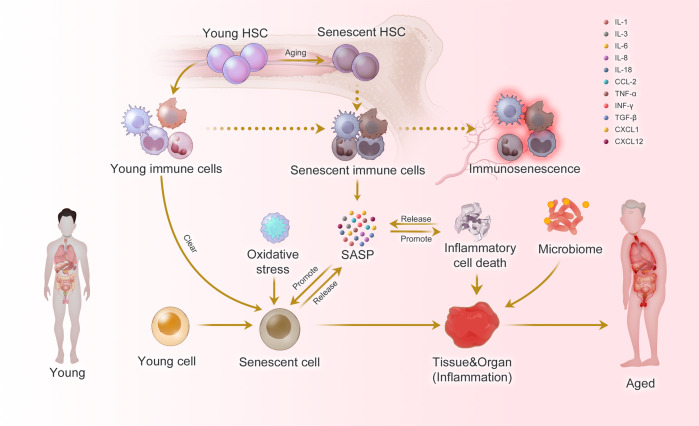
Aging is characterized by systemic chronic inflammation, which is accompanied by cellular senescence, immunosenescence, organ dysfunction, and age-related diseases. Given the multidimensional complexity of aging, there is an urgent need for a systematic organization of inflammaging through dimensionality reduction. Factors secreted by senescent cells, known as the senescence-associated secretory phenotype (SASP), promote chronic inflammation and can induce senescence in normal cells. At the same time, chronic inflammation accelerates the senescence of immune cells, resulting in weakened immune function and an inability to clear senescent cells and inflammatory factors, which creates a vicious cycle of inflammation and senescence. Persistently elevated inflammation levels in organs such as the bone marrow, liver, and lungs cannot be eliminated in time, leading to organ damage and aging-related diseases. Therefore, inflammation has been recognized as an endogenous factor in aging, and the elimination of inflammation could be a potential strategy for anti-aging. Here we discuss inflammaging at the molecular, cellular, organ, and disease levels, and review current aging models, the implications of cutting-edge single cell technologies, as well as anti-aging strategies. Since preventing and alleviating aging-related diseases and improving the overall quality of life are the ultimate goals of aging research, our review highlights the critical features and potential mechanisms of inflammation and aging, along with the latest developments and future directions in aging research, providing a theoretical foundation for novel and practical anti-aging strategies.
Overview
CoChat Summary
## TL;DR
This review argues that inflammaging—a chronic, systemic inflammatory state—is tightly intertwined with cellular senescence, immunosenescence, organ dysfunction, and age-related disease. It synthesizes signaling pathways, aging models, single-cell technologies, and intervention strategies, emphasizing anti-inflammatory approaches, senolytics, stem cell therapy, and organ transplantation.
## Key findings
- The paper describes a “vicious cycle” in which senescent cells secrete SASP factors that promote chronic inflammation, while chronic inflammation accelerates immune-cell senescence and weakens clearance of senescent cells and inflammatory factors.
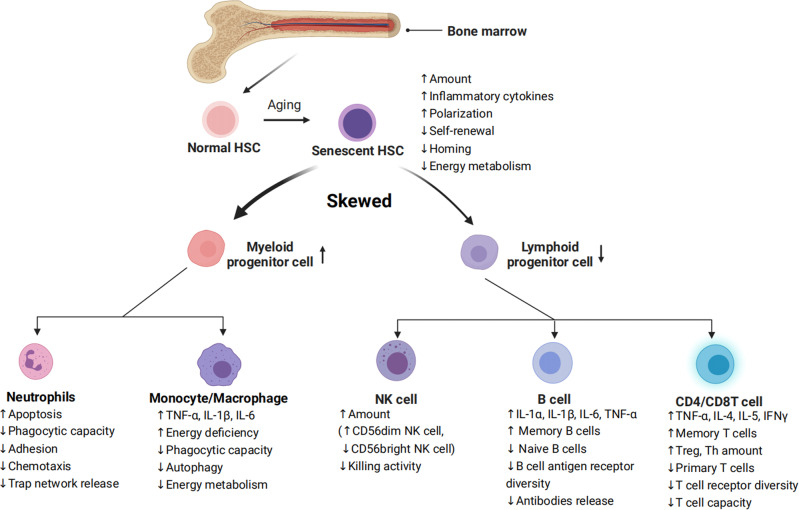
- It highlights reported age-related immune changes across cell types, including decreased circulating naive CD8 T cells as a consistent marker of immunosenescence in healthy older adults, reduced NK-cell cytotoxicity, and age-associated shifts in HSC differentiation toward myeloid lineages.
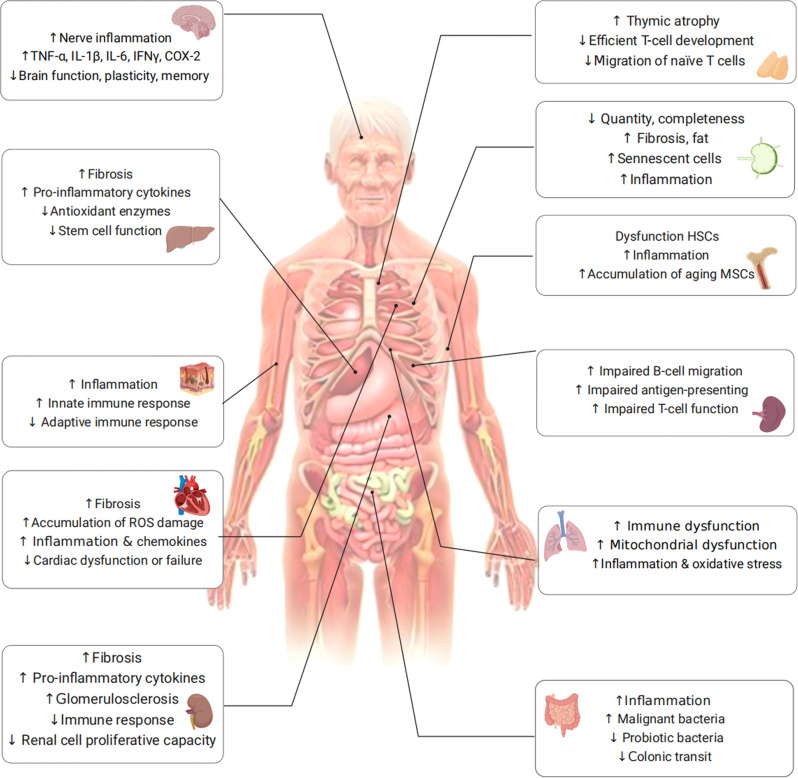
- The review links inflammaging to organ-level decline in the bone marrow, thymus, spleen, lymph nodes, brain, heart, kidney, liver, skin, lung, and gut, with examples such as age-related thymic degeneration reducing new T-cell output and aged bone marrow impairing HSC function.
- For intervention, it notes that the first senolytic combination, dasatinib plus quercetin, increased 6-minute walking distance by an average of 21.5 meters in the first human trial, but other outcomes did not change significantly and long-term efficacy remains insufficiently supported.
## Methods
- Narrative review of inflammaging across molecular, cellular, organ, and disease levels, with sections on signaling pathways, classical aging models, single-cell technology, and intervention strategies.
- No new experimental sample or cohort is reported in the paper itself; instead, it synthesizes findings from prior mouse, human, and cell-line studies cited throughout the text.
- The main approach is qualitative integration of published evidence, including examples from in vitro senescence models, in vivo mouse models, centenarian studies, and emerging single-cell/multi-omics work.
## Limitations
- The paper explicitly notes that the exact causality between inflammation and aging remains unresolved and “deserves further studies” for effective intervention.
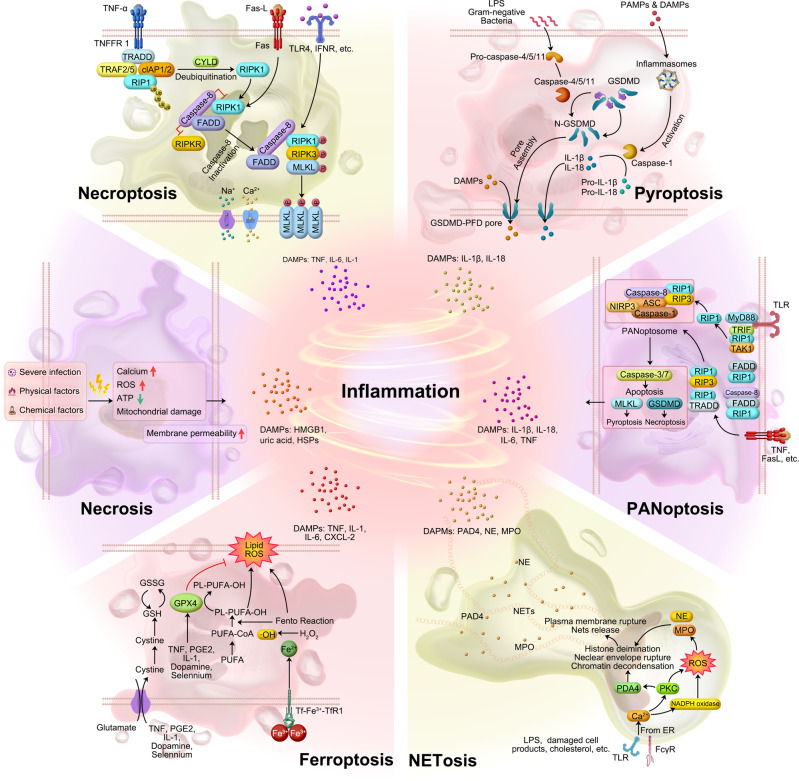
- It also states that PANoptosis has no direct evidence yet linking it to aging, so any connection is speculative.
- Evident from the text: this is a broad review rather than a primary study, so many conclusions are synthesized from heterogeneous prior studies rather than tested in one unified dataset.
Model-written summary. Check it against the paper before relying on it.
Integrity signals
Registry
Cites
Statistics
Figures
Verification
Claims the paper makes
140 Valid · 17 Not valid · 39 Not checked · 40 Own results and interpretations
Some cited sources support this claim and some don’t — read each source’s verdict below.
In the paper
“At the same time, inflammation promotes oxidation through inflammatory mediators.205,206”
§ Inflammation and aging: signaling pathways and intervention therapies > Mechanisms of inflammaging > Triggers of inflammaging
What the sources say
- Disputedcites [205] Furman D Expression of specific inflammasome gene modules stratifies older individuals into two extreme clinical and immunological states Nat. Med. 2017 23 174 184 10.1038/nm.4267 28092664 PMC5320935 sourceExperimental — accuracy not yet measured
The Discussion describes the opposite causal direction: oxidative stress triggers an inflammatory response, including production of inflammatory cytokines. The Results attribute chronic oxidative stress to possible mitochondrial metabolic reprogramming, not to inflammatory mediators. Page numbers are unavailable in our copy. (LLM, conf=0.82)
Checked by a reasoning model — may be wrong.
- Partly supportedcites [206] Furman D Chronic inflammation in the etiology of disease across the life span Nat. Med. 2019 25 1822 1832 10.1038/s41591-019-0675-0 31806905 PMC7147972 sourceExperimental — accuracy not yet measured
The ‘Systemic chronic inflammation and non-communicable disease risk’ section says systemic chronic inflammation can damage tissues by inducing oxidative stress. That supports the inflammation-to-oxidation link, but the passage does not say that inflammatory mediators are the mechanism. (LLM, conf=0.85)
plainstates a cause- Asserted: passes — The authors put it forward as true.
- Checkable: passes — It can be checked against evidence.
- Load-bearing: passes — The paper’s conclusions depend on it.
- Based: passes — The paper gives a reason why it holds.
- Disputed
At least one cited source doesn’t support this claim or points to a different paper, and none confirmed it — see the verdicts below.
In the paper
“Senescent neutrophils exhibit several distinct characteristics during NETosis, including a reduced capacity to release NETs, instability in the quality of formed NETs, and decreased activity of DNA degrading enzymes (DNases) within NETs.”
§ Inflammation and aging: signaling pathways and intervention therapies > Mechanisms of inflammaging > Inflammatory cell death
What the sources say
- Disputedcites [269] Sabbatini M Aging hampers neutrophil extracellular traps (NETs) efficacy Aging Clin. Exp. Res. 2022 34 2345 2353 10.1007/s40520-022-02201-0 35920993 PMC9637667 sourceExperimental — accuracy not yet measured
The Results and Discussion report that neutrophils from elderly subjects produced more NETs than those from adults after LPS stimulation, contrary to the unqualified claim of reduced release. The Introduction and Discussion note reduced NET production in other studies using different stimulation conditions, but distinguish those findings from this paper’s results. (LLM, conf=0.87)
Checked by a reasoning model — may be wrong.
plainstates a cause- Asserted: passes — The authors put it forward as true.
- Checkable: passes — It can be checked against evidence.
- Load-bearing: unclear — It is unclear whether the paper’s conclusions depend on it.
- Based: passes — The paper gives a reason why it holds.
- Disputed
The cited sources support only part of this claim — read each source’s verdict below.
In the paper
“However, in the aging heart, macrophages recruited to the site of infarction exhibit a pro-inflammatory M1 phenotype initially, but subsequently transition to an anti-inflammatory M2 phenotype after myocardial infarction (MI).”
§ Inflammation and aging: signaling pathways and intervention therapies > Inflammaging at the organ level > Sterile organs
What the sources say
- Partly supportedcites [143] Ma Y Mouton AJ Lindsey ML Cardiac macrophage biology in the steady-state heart, the aging heart, and following myocardial infarction Transl. Res. 2018 191 15 28 10.1016/j.trsl.2017.10.001 29106912 PMC5846093 sourceExperimental — accuracy not yet measured
The Abstract and “Macrophages in the MI Heart—Macrophage phenotypes” describe an early M1 and later M2 pattern after infarction. But the paper treats aging-heart macrophages separately and does not establish that this post-MI pattern occurs specifically in aging hearts. Its “Macrophage polarization mechanisms” section also says whether individual macrophages convert in vivo remains uncertain. Page numbers are unavailable in our copy. (LLM, conf=0.88)
plainstates a cause- Asserted: passes — The authors put it forward as true.
- Checkable: passes — It can be checked against evidence.
- Load-bearing: unclear — It is unclear whether the paper’s conclusions depend on it.
- Based: passes — The paper gives a reason why it holds.
- Partly supported
Every source the paper cites for this claim was checked and supports it.
In the paper
“This phenotypic switch promotes angiogenesis and scar formation, aiding in the recovery process.143”
§ Inflammation and aging: signaling pathways and intervention therapies > Inflammaging at the organ level > Sterile organs
What the sources say
- Supportedcites [143] Ma Y Mouton AJ Lindsey ML Cardiac macrophage biology in the steady-state heart, the aging heart, and following myocardial infarction Transl. Res. 2018 191 15 28 10.1016/j.trsl.2017.10.001 29106912 PMC5846093 source
The “Macrophage phenotypes” section says that M2 macrophages facilitate neoangiogenesis and scar repair, and that shifting the M1/M2 balance improves myocardial repair and function after MI. This supports the cited sentence’s account of angiogenesis, scar formation, and recovery. (LLM, conf=0.92)
plainstates a cause- Asserted: passes — The authors put it forward as true.
- Checkable: passes — It can be checked against evidence.
- Load-bearing: unclear — It is unclear whether the paper’s conclusions depend on it.
- Based: passes — The paper gives a reason why it holds.
- Supported
The cited sources that could be checked couldn’t confirm or dispute this claim.
In the paper
“Senescence of HSCs is the basis of immunosenescence. Senescent HSC differentiate into various types of dysfunctional immune cells, driving immunosenescence.16”
§ Inflammation and aging: signaling pathways and intervention therapies > Inflammaging at the cellular level > Hematopoietic stem cells (HSCs)
What the sources say
- Could not verifycites [16] Liggett LA Sankaran VG Unraveling Hematopoiesis through the Lens of Genomics Cell 2020 182 1384 1400 10.1016/j.cell.2020.08.030 32946781 PMC7508400 sourceExperimental — accuracy not yet measured
The Clonal hematopoiesis section describes age-related changes in HSC numbers and clonal expansion, but does not link HSC senescence to immunosenescence. A search for immunosenescence and dysfunctional immune cells found no passage establishing that proposed mechanism; the Outstanding Questions section also notes that some older people retain ostensibly normal hematopoiesis. (LLM, conf=0.72)
plainstates a cause- Asserted: passes — The authors put it forward as true.
- Checkable: passes — It can be checked against evidence.
- Load-bearing: unclear — It is unclear whether the paper’s conclusions depend on it.
- Based: passes — The paper gives a reason why it holds.
- Could not verify
95 more claims · 66 with their cited sources checked
Create a free account to see all 236 claims and every source verdict.
- It may state two separate claims as one. 111
- Probably not a substantial claim. 41
- Borderline: one of the tests for a substantial claim is unclear. 1
Claims other papers make about this one
Each is checked against this paper’s own text: does it say what the citing paper says it does?
The cited source says what the claim attributes to it.
In the citing paper
“Inflammation is implicated in various pathways and processes associated with ageing, including immunosenescence, oxidative stress, metabolic dysregulation, cellular senescence, and other critical events of the ageing process.37”
From Antiageing strategy for neurodegenerative diseases: from mechanisms to clinical advances (2025) · cites this paper as [37]
In the citing paper
“These frameworks suggest that the pathophysiology of AD is characterized by phosphorylated tau accumulation and propagation,31 heightened inflammatory responses, dysregulation of oxidative stress (related to mitochondrial dysfunction),37 alongside a gradual decline in cholinergic function.38”
From Antiageing strategy for neurodegenerative diseases: from mechanisms to clinical advances (2025) · cites this paper as [37]
In the citing paper
“exercise can reduce inflammation levels, which is a contributing factor to the ageing process.37”
From Antiageing strategy for neurodegenerative diseases: from mechanisms to clinical advances (2025) · cites this paper as [37]
Citations
Cites
Reduction in the incidence of type 2 diabetes with lifestyle intervention or metformin
(2002) · New England Journal of Medicine · doi:10.1056/nejmoa012512 · Cited by 19,011
Diversity of the Human Intestinal Microbial Flora
Eckburg, P. B., Bik, E. M., Bernstein, C. N., Purdom, E., Dethlefsen, L., Sargent, M., Gill, S. R., Nelson, K. E., & Relman, D. A. (2005) · Science · doi:10.1126/science.1110591 · Cited by 7,913
Mizgerd, J. P., Kubo, H., Kutkoski, G. J., Bhagwan, S. D., Scharffetter-Kochanek, K., Beaudet, A. L., & Doerschuk, C. M. (1997) · The Journal of Experimental Medicine · doi:10.1084/jem.186.8.1357 · Cited by 7,306
Chronic inflammation in the etiology of disease across the life span
Furman, D., Campisi, J., Verdin, E., Carrera-Bastos, P., Targ, S., Franceschi, C., Ferrucci, L., Gilroy, D. W., Fasano, A., Miller, G. W., et al. (2019) · Nature Medicine · doi:10.1038/s41591-019-0675-0 · Cited by 4,915
NLRP3 inflammasomes are required for atherogenesis and activated by cholesterol crystals
Duewell, P., Kono, H., Rayner, K. J., Sirois, C. M., Vladimer, G., Bauernfeind, F. G., Abela, G. S., Franchi, L., Nuñez, G., Schnurr, M., et al. (2010) · Nature · doi:10.1038/nature08938 · Cited by 4,026
Mortality Associated With Influenza and Respiratory Syncytial Virus in the United States
Thompson, W. W., Shay, D. K., Weintraub, E., Brammer, L., Cox, N., Anderson, L. J., & Fukuda, K. (2003) · JAMA · doi:10.1001/jama.289.2.179 · Cited by 3,673
Inflammaging: a new immune–metabolic viewpoint for age-related diseases
Franceschi, C., Garagnani, P., Parini, P., Giuliani, C., & Santoro, A. (2018) · Nature Reviews Endocrinology · doi:10.1038/s41574-018-0059-4 · Cited by 3,586
Sies, H., Berndt, C., & Jones, D. P. (2017) · Annual Review of Biochemistry · doi:10.1146/annurev-biochem-061516-045037 · Cited by 3,520
Gut microbiota composition correlates with diet and health in the elderly
Claesson, M. J., Jeffery, I. B., Conde, S., Power, S. E., O’Connor, E. M., Cusack, S., Harris, H. M. B., Coakley, M., Lakshminarayanan, B., O’Sullivan, O., et al. (2012) · Nature · doi:10.1038/nature11319 · Cited by 3,314 · cited 1×
“Older adults (>65 years) exhibit reduced microbiota diversity compared to adults, along with greater inter-individual variation in microbiota composition.(182) This is characterized by diminished populations of beneficial bacteria such as Bifidobacterium, Bacillus, E.”
BackgroundCellular Senescence: Defining a Path Forward
Gorgoulis, V., Adams, P. D., Alimonti, A., Bennett, D. C., Bischof, O., Bishop, C., Campisi, J., Collado, M., Evangelou, K., Ferbeyre, G., et al. (2019) · Cell · doi:10.1016/j.cell.2019.10.005 · Cited by 3,225 · cited 1×
“net).(371) On the other hand, other technologies, such as machine learning which integrates multi-modal and multidimensional big data, are also important to address the complexity of aging problems (Table 4).”
Background
Cited by
Items 201–300 of 1,410
Seze, J. D., Dive, D., Ayrignac, X., Castelnovo, G., Payet, M., Rayah, A., Gobbi, C., Vermersch, P., & Zecca, C. (2024) · Neurology and Therapy · doi:10.1007/s40120-024-00603-y · Cited by 22
“These adverse changes are exacerbated by the effects of substances secreted by already senescent cells and can promote the onset of senescence in previously healthy cells, setting up a vicious circle of inflammation and immunosenescence [36, 37].”
BackgroundYusri, K., Kumar, S., Fong, S., Gruber, J., & Sorrentino, V. (2024) · International Journal of Molecular Sciences · doi:10.3390/ijms25126793 · Cited by 26
“While inflammatory markers themselves are useful biomarkers of aging [52], there is no specific target against inflammaging, with many proposed therapeutics being geroprotectors known for their anti-inflammatory properties such as rapamycin and metformin [53].”
BackgroundQu, Y., Meng, B., Cai, S., Yang, B., He, Y., Fu, C., Li, X., Li, P., Cao, Z., Mao, X., et al. (2024) · Journal of Nanobiotechnology · doi:10.1186/s12951-024-02820-x · Cited by 22
Self-citationChen, P., Ning, X., Feng, W., Li, Y., Chen, G., Shi, X., Pan, Y., Shi, X., Xiao, Y., Liu, Y., et al. (2024) · Advanced Science · doi:10.1002/advs.202404142 · Cited by 27
Cellular senescence: from homeostasis to pathological implications and therapeutic strategies
Li, C., Yuan, Y., Jia, Y., Zhou, Q., Wang, Q., & Jiang, X. (2025) · Frontiers in Immunology · doi:10.3389/fimmu.2025.1534263 · Cited by 29
Self-citationMicrovascular endothelial dysfunction in vascular senescence and disease
Kasal, D. A. B., Sena, V., Huguenin, G. V. B., Lorenzo, A. D., & Tibiriçá, E. V. (2025) · Frontiers in Cardiovascular Medicine · doi:10.3389/fcvm.2025.1505516 · Cited by 28
“One perspective is that the senescent phenotype and in fl ammation are epiphenomena which coexist both in aging and age-related diseases, and act synergically, in a vicious cycle (69).”
Hong, Y., Wang, Y., Shu, W., Li, J., Mi, Y., Chen, H., & Chen, C. (2025) · Ageing Research Reviews · doi:10.1016/j.arr.2025.102835 · Cited by 20
Self-citationGuo, R., Du, F., Xiang, X., Feng, Z., Huang, J., Nie, C., Ma, L., & Qiu, L. (2025) · Signal Transduction and Targeted Therapy · doi:10.1038/s41392-025-02355-z · Cited by 26
HIV infection and immunosenescence: challenges and intervention strategies
Jin, J., Xu, Q., Zhang, X., Zhu, A., Xia, W., Moog, C., Chan, A. S. W., Zhang, T., & Su, B. (2025) · BMC Medicine · doi:10.1186/s12916-025-04545-6 · Cited by 23
“Ageing haematopoietic stem cells (HSCs) exhibit impaired self-renewal capacity, leading them to differentiate into dysfunctional immune cells, thereby disrupting immune homeostasis [149].”
Xia, J., Chen, M., Shao, H., Chen, H., Zhu, S., Zhao, M., Luo, W., Yang, J., & Wu, S. (2023) · Frontiers in Bioscience-Landmark · doi:10.31083/j.fbl2812356 · Cited by 19
Nurturing longevity through natural compounds: Where do we stand, and where do we go?
Todorova, M. N., Savova, M. S., Mihaylova, L. V., & Georgiev, M. I. (2024) · Food Frontiers · doi:10.1002/fft2.350 · Cited by 20
Honey vesicle-like nanoparticles protect aged liver from non-alcoholic steatohepatitis
Liu, B., Nguyen, P. L., Yu, H., Li, X., Wang, H., Nguyen, T. G. B., Sahoo, P. K., Sur, M., Reddy, J., Sillman, S. J., et al. (2024) · Acta Pharmaceutica Sinica B · doi:10.1016/j.apsb.2024.05.002 · Cited by 25
Self-citationLin, L., Tang, R., Liu, Y., Li, Z., Li, H., & Yang, H. (2024) · Frontiers in Pharmacology · doi:10.3389/fphar.2024.1415844 · Cited by 26
miR-146a Decreases Inflammation and ROS Production in Aged Dermal Fibroblasts
Zhang, L., Wang, I. C., Meng, S., & Xu, J. (2024) · International Journal of Molecular Sciences · doi:10.3390/ijms25136821 · Cited by 21
“In aging skin, dysregulated immune responses lead to an imbalance of pro-inflammatory and anti-inflammatory cytokines, resulting in a prolonged inflammatory phase that hinders timely progression to tissue repair [5,14].”
BackgroundZhao, Z., Zhou, J., Shi, A., Wang, J., Li, H., Yin, X., Gao, J., Wu, Y., Li, J., Sun, Y. X., et al. (2024) · Journal of Hazardous Materials · doi:10.1016/j.jhazmat.2024.136090 · Cited by 22
Biotics as novel therapeutics in targeting signs of skin ageing via the gut-skin axis
Millman, J. F., Kondrashina, A. V., Walsh, C., Busca, K., Karawugodage, A., Park, J., Sirisena, S., Martin, F., Felice, V. D., & Lane, J. A. (2024) · Ageing Research Reviews · doi:10.1016/j.arr.2024.102518 · Cited by 26
Polyploidy-mediated resilience in hepatic aging: molecular mechanisms and functional implication
Addissouky, T. A. (2024) · Egyptian Liver Journal · doi:10.1186/s43066-024-00391-y · Cited by 20
“The chronic low-grade inflammation driven by the SASP contributes to tissue dysfunction and can promote the development of age-related liver diseases [49, 50].”
Fotopoulou, F., Rodriguez-Correa, E., Dussiau, C., & Milsom, M. D. (2024) · Experimental Hematology · doi:10.1016/j.exphem.2024.104698 · Cited by 19
Sari, N. K., Stepvia, S., Ilyas, M. F., Setiati, S., Harimurti, K., & Fitriana, I. (2025) · Frontiers in Medicine · doi:10.3389/fmed.2025.1491584 · Cited by 33
“For instance, studies have shown that the number of naive T cells decreases while the proportion of memory T cells increases with age, reflecting a shift in immune response capabilities (30, 55).”
Nishida, Y., Terkawi, M. A., Matsumae, G., Yokota, S., Tokuhiro, T., Ogawa, Y., Ishizu, H., Shiota, J., Endo, T., Alhasan, H., et al. (2024) · JCI Insight · doi:10.1172/jci.insight.182418 · Cited by 20
Tian, Y., Wang, J., Zhu, T., Li, X., Zhang, H., Zhao, X., Yang, X., Luo, Y., Tao, L., Wu, Z., et al. (2025) · Nutrients · doi:10.3390/nu17111783 · Cited by 19
“BA acceleration is associated with the activation of pro-inflammatory [18] and pro-oxidative pathways [19].”
Self-citationcGAS-STING are responsible for premature aging of telomerase-deficient zebrafish
Şerifoğlu, N., Allavena, G., Lopes-Bastos, B., Marzullo, M., Marques, A., Colibert, P., Bousounis, P., Trompouki, E., & Ferreira, M. G. (2025) · The EMBO Journal · doi:10.1038/s44318-025-00482-5 · Cited by 24
“While the origins of in fl ammaging are mostly unclear, it is typically characterized by high levels of pro-in fl ammatory cytokines, chemokines, acute phase proteins, and soluble cytokine receptors in the serum (Franceschi et al, 2018; Li et al, 2023).”
Potential Role of Inflammasomes in Aging
Lee, G., & Lee, G.-S. (2025) · International Journal of Molecular Sciences · doi:10.3390/ijms26146768 · Cited by 20
“On the other hand, it is accompanied by gradual functional decline and increased susceptibility to various diseases, including neurodegenerative, cardiovascular, and musculoskeletal diseases [30].”
The Immune System and Cellular Senescence: A Complex Interplay in Aging and Disease
Ayoub, M., Jaoude, C. A., Ayoub, M., Hamadé, A., & Rima, M. (2025) · Immunology · doi:10.1111/imm.70036 · Cited by 31
“For example, the chronic SASP skews haematopoiesis toward dysfunctional myeloid cells, impairs antigen presentation and disrupts coordinated innate/adaptive responses, leaving hosts slower to control pathogens [180].”
Corda, M., Charalampous, P., Haagsma, J. A., Assunção, R., & Martins, C. (2024) · BMC Public Health · doi:10.1186/s12889-024-18572-0 · Cited by 20
“Perhaps due to cumulative effects of PM 2.5 in human health, like toxicity, the lower immunity in these age-groups or the inflammation process related to this exposure might exacerbate the inflammation process resulting from aging [36].”
InfluentialAnti-aging based on stem cell therapy: A scoping review
Assaad, N. E., Chebly, A., Salame, R., Achkar, R., Atme, N. B., Akouch, K., Raffoul, P., Hanna, C., Zeid, S. A., Ghosn, M. G., et al. (2024) · World Journal of Experimental Medicine · doi:10.5493/wjem.v14.i3.97233 · Cited by 22
Wu, J., Zhang, M., Zhang, H., Sheng, M., Sun, J., Wu, F., Gao, H., Chen, L., Li, Z., Tian, Q., et al. (2024) · Engineering · doi:10.1016/j.eng.2024.06.014 · Cited by 16
Accardi, G., Calabrò, A., Caldarella, R., Caruso, C., Ciaccio, M., Simone, M. D., Ligotti, M. E., Meraviglia, S., Zarcone, R., Candore, G., et al. (2024) · Biology · doi:10.3390/biology13121010 · Cited by 19
“Simultaneously, chronic inflammation accelerates immunosenescence, resulting in reduced immune capacity and a weakened ability to clear senescent cells and inflammatory agents, thus perpetuating a detrimental cycle [14].”
Prasinezumab slows motor progression in Parkinsons disease: beyond the clinical data
Xiao, B., & Tan, E. (2025) · npj Parkinson s Disease · doi:10.1038/s41531-025-00886-4 · Cited by 24
Understanding and improving vaccine efficacy in older adults
Hofer, S. J., Rapp, S., Klenerman, P., & Simon, A. K. (2025) · Nature Aging · doi:10.1038/s43587-025-00939-6 · Cited by 27
“The loss of cellular and molecular homeostasis in the immune system progresses with age and contributes to ‘inflammaging’, a low-grade chronic hyperinflammatory state that has been implicated in many age-related and noncommunicable diseases 9–11 .”
Cellular Senescence and Immunosenescence in Melanoma: Insights From the Tumor Microenvironment
Xiong, L., & Cheng, J. (2025) · Cancer Medicine · doi:10.1002/cam4.71223 · Cited by 17
“Importantly, senescence exerts context-dependent effects: acute senescence may limit tumor growth via cell cycle arrest and immune clearance, whereas persistent accumulation of senescent cells has been linked to chronic inflammation, immune suppression, and therapeutic resistance [15].”
Bioactive peptides in cosmetic formulations: Review of current in vitro and ex vivo evidence
van Walraven, N., Fitzgerald, R. J., Danneel, H.-J., & Amigo‐Benavent, M. (2025) · Peptides · doi:10.1016/j.peptides.2025.171440 · Cited by 20
Wang, S., Liang, J., Ding, R., Zhao, W., Zhang, J., Peng, P., Chai, J., Yan, Y., & Peng, L. (2025) · Journal of Controlled Release · doi:10.1016/j.jconrel.2025.114247 · Cited by 20
Kaur, K. (2025) · Diseases · doi:10.3390/diseases13100345 · Cited by 22
“…function leads to higher risks of infections, cancer, autoimmune disorders, Alzheimer’s disease, atherosclerosis, vision problems like age-related macular degeneration, cardiovascular issues, coronary heart disease, liver fibrosis, neurodegenerative diseases, and exposure to pathogens [90,92,93].”
Remodeling the tumor dormancy ecosystem to prevent recurrence and metastasis
Liang, Y., Chen, W., Zhang, Y., & Li, L. (2026) · Signal Transduction and Targeted Therapy · doi:10.1038/s41392-025-02328-2 · Cited by 36
Benlidayı, İ. C. (2023) · Clinical Rheumatology · doi:10.1007/s10067-023-06708-3 · Cited by 17
“Organ damage and diseases associated with aging result from persistently high inflammation levels in tissues such as the bone marrow, liver, and lungs [45].”
A pathological convergence theory for non‐communicable diseases
Padrón‐Monedero, A. (2023) · Aging Medicine · doi:10.1002/agm2.12273 · Cited by 22
Li, C., Qin, T., Zhao, J., Jin, Y., Qin, Y., He, R., Wu, T., Duan, C., Jiang, L., Yuan, F., et al. (2024) · Bone Research · doi:10.1038/s41413-024-00323-x · Cited by 18
Self-citationXiang, Q., Qu, L., Lei, H., Duan, Z., Zhu, C., Yuwen, W., Ma, X., & Fan, D. (2024) · Journal of Agricultural and Food Chemistry · doi:10.1021/acs.jafc.3c09158 · Cited by 16
Inflammation in myelodysplastic syndrome pathogenesis
Rodríguez‐Sevilla, J. J., & Colla, S. (2024) · Seminars in Hematology · doi:10.1053/j.seminhematol.2024.09.005 · Cited by 20
The Hidden Dangers of Sedentary Living: Insights into Molecular, Cellular, and Systemic Mechanisms
Diniz, D. G., Bento‐Torres, J., da Costa, V. O., Carvalho, J. P. R., Tomás, A. M., de Oliveira, T. C. G., Soares, F. C., de Macedo, L. D. E. D., Jardim, N. Y. V., Bento-Torres, N. V. O., et al. (2024) · International Journal of Molecular Sciences · doi:10.3390/ijms251910757 · Cited by 22
“Chronic inflammation promotes cell senescence and immunosenescence that leads to impaired clearance mechanisms [228].”
BackgroundZhang, J., Guan, X., & Zhong, X. (2024) · Seminars in Cancer Biology · doi:10.1016/j.semcancer.2024.10.006 · Cited by 26
Martinović, A., Mantovani, M., Trpchevska, N., Novak, E., Milev, N. B., Bode, L., Ewald, C. Y., Bischof, E. Y., Reichmuth, T., Lapides, R. A., et al. (2024) · Frontiers in Aging · doi:10.3389/fragi.2024.1495029 · Cited by 22
Dermal white adipose tissue: A new modulator in wound healing and regeneration
Wu, Z., Wang, Z., Chen, T., Wang, D., Zhou, F., Zhang, G., Wei, S., & Wu, Y. (2024) · Regenerative Therapy · doi:10.1016/j.reth.2024.11.015 · Cited by 20
“Aged individuals exhibit a chronic in fl ammation state in the whole body, which is known as in fl ammaging [75].”
Guo, D., Zhu, W., & Qiu, H. (2024) · International Journal of Molecular Sciences · doi:10.3390/ijms25168794 · Cited by 19
“Furthermore, chronic inflammation has emerged as a pivotal mediator of aging and a determinant in many age-related chronic disorders, independent of acute infections [1].”
BackgroundTANK-Binding Kinase 1 in the Pathogenesis and Treatment of Inflammation-Related Diseases
Lü, H., Chen, X., Huang, M., Jiang, Y., & Liu, T. (2025) · International Journal of Molecular Sciences · doi:10.3390/ijms26051941 · Cited by 17
“Inflammatory cells and mediators are involved in a wide range of biological processes during disease, such as autoimmunity, tissue remodeling, oxidative stress, cell proliferation, vascular regeneration, metabolism, aging, and neurological functions [29–34].”
Functions and application of circRNAs in vascular aging and aging-related vascular diseases
He, S., Huang, B., Xu, F., Yang, J., Li, C., Liu, F., Yuan, L., Lin, X. J., & Liu, J. (2025) · Journal of Nanobiotechnology · doi:10.1186/s12951-025-03199-z · Cited by 17
“Apart from inducing cell-cycle arrest, a notable feature of cellular senescence is the production of proinflammatory cytokines, growth factors, and proteases, collectively known as the senescence-associated secretory phenotype (SASP), which contributes to chronic inflammation [17, 34–36].”
Self-citationWang, J., Zhang, L., Cui, X., Xu, X., Guo, R., Li, K., Zhang, L., Xu, B., Jiang, C., & Yu, Y. (2025) · Science Immunology · doi:10.1126/sciimmunol.adr2041 · Cited by 17
Regenerating aged bone marrow via a nitric oxide nanopump
Li, K., Hu, S., Li, H., Lin, W., Zhao, D., Xu, Z., Pan, C., Wang, H., Li, D., Liu, J., et al. (2025) · Nature Communications · doi:10.1038/s41467-025-61256-5 · Cited by 20
Immunoinflammation and post-translational modifications in the aging process
Xiao, J., Qin, X., Chen, W., Que, X., Ma, Y., Huang, W., Ou, H., Bao, Y., Qu, L., & Shan, S. (2025) · Journal of Translational Medicine · doi:10.1186/s12967-025-06892-7 · Cited by 19
“…immune cells serve as the primary surveillance and clearance mechanism for senescent cells, SASP factors may impair immune surveillance, leading to the accumulation of senescent cells and chronic inflammatory signaling molecules, thereby creating a vicious cycle between inflammation and aging [35].”
Targeting mitochondrial autophagy for anti-aging
Shan, W., Liu, Y., Tang, R., Li, L., Yang, H., & Lin, L. (2025) · Cell Death Discovery · doi:10.1038/s41420-025-02913-y · Cited by 22
Exosomes in aging and age-related disorders: mechanisms, therapeutic potentials, and challenges
Safaei, S., Sohrabi, S., Zahmatkesh, P., Soltani‐Zangbar, M. S., & Maleki, L. A. (2025) · Journal of Translational Medicine · doi:10.1186/s12967-025-07379-1 · Cited by 20
“This offers a mechanistic link to the revised Hallmarks of Aging, where chronic inflammation and altered inter-cellular communication are explicit hallmarks [49–51].”
Gurung, P., Lim, J., Magar, T. B. T., Shrestha, R., & Kim, Y. (2024) · Antioxidants · doi:10.3390/antiox13040433 · Cited by 15
Shen, X., Li, M., Li, Y., Jiang, Y., Niu, K., Zhang, S., Lu, X., Zhang, R., Zhao, Z., Zhou, L., et al. (2024) · Chinese Medicine · doi:10.1186/s13020-024-00927-9 · Cited by 17
“Cxcl1 primarily recruits neutrophils through Cxcr2 [11, 76, 77], and while their number may not decline drastically with age, their functionality (phagocytosis, adhesion, chemotaxis) suffers under the chronic inflammatory burden [11]. c-Fos c-Fos, one of the components of activator protein-1…”
BackgroundZhou, H., Zheng, Z., Fan, C., & Zhou, Z. (2025) · Seminars in Cancer Biology · doi:10.1016/j.semcancer.2025.01.001 · Cited by 22
Mapping Human Uterine Disorders Through Single-Cell Transcriptomics
Boldu-Fernández, S., Lliberos, C., Simón, C., & Mas, A. (2025) · Cells · doi:10.3390/cells14030156 · Cited by 20
“Immune dysfunction and chronic inflammation further exacerbate disease progression, impairing immune cell function and disrupting tissue homeostasis [152].”
Age reprogramming: Innovations and ethical considerations for prolonged longevity (Review)
Saliev, T., & Singh, P. (2025) · Biomedical Reports · doi:10.3892/br.2025.1974 · Cited by 14
“For example, modifying pathways involved in T‑cell regeneration or reducing pro‑inflammatory cytokines could enhance immune resilience in older adults (76).”
Single‐cell transcriptomic analysis of the senescent microenvironment in bone metastasis
Wang, S., Ao, L., Lin, H., Wei, H., Wu, Z., Lu, S., Liang, F., Shen, R., Zhang, H., Miao, T., et al. (2024) · Cell Proliferation · doi:10.1111/cpr.13743 · Cited by 15
Mercado, G., Käufer, C., Richter, F., & Peelaerts, W. (2024) · Journal of Parkinson s Disease · doi:10.3233/jpd-240195 · Cited by 20
Can, Z., Li, J., Tang, W., Li, Y., Lin, C., Peng, D., & Yang, C. (2025) · International Journal of Molecular Sciences · doi:10.3390/ijms26073381 · Cited by 17
Modulation of Sirtuins to address aging related disorders through the use of selected phytochemicals
Wang, J., Ren, Y., & Qu, S. (2025) · Phytomedicine · doi:10.1016/j.phymed.2025.156648 · Cited by 16
Iqbal, H., & Rhee, D. (2025) · Journal of Ginseng Research · doi:10.1016/j.jgr.2025.05.005 · Cited by 16
Li, Y., Kang, K., Bao, H., Liu, S., Zhao, B., Hu, G., & Wu, J. (2025) · Biology · doi:10.3390/biology14060643 · Cited by 18
“Similarly, cell senescence is a critical mechanism for organ dysfunction, triggering a cascade of events through the secretion of senescence-associated secretory phenotypes (SASPs), which induces healthy cells to age [68].”
Ávila, F., Cruz, N., González, M. A., Fuentes, E., Wehinger, S., & Mariane Lutz, R. (2025) · Biochimie · doi:10.1016/j.biochi.2025.06.001 · Cited by 17
ACE2 Alleviates Microglia Neuroinflammation by RANK-RANKL-OPG Axis in Parkinson’s Disease
Xu, Y., An, Z., Hou, K., Zhou, M., Liu, Y., Wang, J., Hashimoto, M., & Wei, J. (2025) · Inflammation · doi:10.1007/s10753-025-02331-3 · Cited by 13
Targeting Cellular Senescence: Pathophysiology in Multisystem Age-Related Diseases
Liu, J., Yu, H., & Xu, Y. (2025) · Biomedicines · doi:10.3390/biomedicines13071727 · Cited by 15
“This indicates that the SASP may contribute to inflammation [62,63].”
Aging and Herbal Interventions: Mechanistic Insights and Therapeutic Potential
Suvedi, D., Kumar, A., Kalia, S., Kumar, A., Koul, S., James, A., Kumar, D., Nagraik, R., & Gulilat, H. (2025) · Journal of Cosmetic Dermatology · doi:10.1111/jocd.70335 · Cited by 23
Testicular immunosenescence: a key player in age-related spermatogenic decline
Zhan, M.-W., Zhou, M.-H., Zhao, B.-B., Bao, X.-J., Chen, Y., & Zhu, J. (2025) · Frontiers in Cell and Developmental Biology · doi:10.3389/fcell.2025.1669826 · Cited by 15
Tsang, V. S. K., Malaspina, A., & Henson, S. M. (2025) · Journal of Inflammation · doi:10.1186/s12950-025-00460-y · Cited by 16
“A central mechanism driving immunosenescence is inflammageing, driven by the accumulation of senescent cells [45–47].”
The metabolic engine of cognition: microglia–neuron interactions in health, ageing and disease
Asimakidou, E., Pluchino, S., Silva, B. A., & Peruzzotti‐Jametti, L. (2025) · Nature Metabolism · doi:10.1038/s42255-025-01409-4 · Cited by 30
“However, whether these microglial metabolic changes stem solely from local, CNS-confined processes or are also influenced by ageing-related systemic peripheral inflammation still remains an active area of investigation 114,134 .”
cGAS–STING signaling pathway as a therapeutic target in human diseases
Xiao, Y., Ma, Y., Zhao, J., Zhang, X., Gan, C., Gao, J., & Huang, Z. (2025) · Chinese Medical Journal · doi:10.1097/cm9.0000000000003904 · Cited by 16
“[267] The cGAS–STING signaling pathway may serve as a central mediator linking age-induced cellular damage and SASP activation through the IFN signaling pathway [268] [Figure 3].”
Association of the HALP Score with Dyslipidemia: A Large, Nationwide Retrospective Study
Alshuweishi, Y., Basudan, A., Alfaifi, M. A., Daghistani, H., & Alfhili, M. A. (2023) · Medicina · doi:10.3390/medicina59112002 · Cited by 16
Fraile‐Μartinez, O., León-Oliva, D. D., Boaru, D. L., Castro-Martinez, P. D., Montero, C. G., Barrena-Blázquez, S., García-García, J., García‐Honduvilla, N., Álvarez‐Mon, M., López-González, L., et al. (2024) · Frontiers in Genetics · doi:10.3389/fgene.2024.1345459 · Cited by 17
“In fl ammatory responses can manifest as acute or chronic, each serving different purposes (Li et al., 2023).”
BackgroundXia, W., Chen, H., Han, Y., Zhu, L.-X., Xie, C., & Hou, M. (2024) · FEBS Journal · doi:10.1111/febs.17164 · Cited by 21
Ferulic Acid Alleviates Radiation-Induced Immune Damage by Acting on JAK/STAT Signaling Pathway
Huang, M., Ye, A., Zhang, H., Chen, J., Yang, T., Wei, X., Gao, Y., & Ma, Z.-C. (2024) · Pharmaceuticals · doi:10.3390/ph17091175 · Cited by 14
The role of mitochondria in cytokine and chemokine signalling during ageing
Kalykaki, M., Rubio‐Tomás, T., & Tavernarakis, N. (2024) · Mechanisms of Ageing and Development · doi:10.1016/j.mad.2024.111993 · Cited by 17
Martinez, J. C., Morandini, F., Rechsteiner, C., Fitzgibbons, L., Sieczkiewicz, N., Liao, X., He, W., Bae, S. J., Meadow, M. E., Hillpot, E. C., et al. (2026) · Nature Aging · doi:10.1038/s43587-026-01206-y · Cited by 22
“…proinflammatory cytokines and genes such as interleukin (IL)-6, IL-8 and IL-13, type 1 interferons (IFNs) and nuclear factor kappa-light-chain-enhancer of activated B cells (NF-κB), among others, results in a detrimental phenotype known as ‘inflam-maging’, one of the major hallmarks of aging 1,2 .”
Prediction of ADMET profile and anti-inflammatory potential of chamuangone
Jantarawong, S., Wathanaphanit, P., Panichayupakaranant, P., & Pengjam, Y. (2025) · Scientific Reports · doi:10.1038/s41598-025-86809-y · Cited by 18
The role and mechanisms of macrophages in chronic pain: A peripheral-to-central perspective
Liu, J., Chen, Y., & Chen, G. (2025) · Brain Research Bulletin · doi:10.1016/j.brainresbull.2025.111470 · Cited by 15
“Furthermore, IL-13 released by CD8 + T cells has been demonstrated to augment IL-10 production from macrophages, therefore facilitating the treatment of neuropathic pain (Singh et al., 2022).”
InfluentialImmunosenescence and the Geriatric Giants: Molecular Insights into Aging and Healthspan
Fetarayani, D., Kahdina, M., Waitupu, A., Pratiwi, L., Ningtyas, M. C., Adytia, G. J., & Sutanto, H. (2025) · Medical Sciences · doi:10.3390/medsci13030100 · Cited by 28
“This oxidative stress activates inflammatory cascades such as p38 MAPK, JNK, and NF-κ B, further sustaining inflammaging [120].”
Pan, P., Cao, S., Gao, H. Y., Qu, X., Ma, Y., Yang, J., Pei, X., & Yang, Y. (2025) · International Journal of Biological Macromolecules · doi:10.1016/j.ijbiomac.2025.142368 · Cited by 21
Blajovan, M.-D., Abu-Awwad, S.-A., Tomescu, M., Tudoran, C., Gurguş, D., Dinu, A. R., & Abu-Awwad, A. (2025) · Geriatrics · doi:10.3390/geriatrics10020052 · Cited by 13
“The nearly twofold increase in fall incidence among immunocompromised individuals [33] suggests that immunosenescence and persistent inflammation create a high-risk environment for functional decline and instability [36].”
Yu, P., Liu, B., Dong, C., & Chang, Y. (2025) · Cells · doi:10.3390/cells14080619 · Cited by 20
“…research that led to the induction of pluripotent stages in somatic cells through Yamanaka’s four transcription factors (Oct4, Sox2, Klf4, and c-Myc) [14], embryonic stem cells (ESCs) derived from the inner cell mass of a blastocyst were regarded as a primary source of pluripotent cells…”
Bonetto, V., Ferraresi, A., Sampò, S., & Isidoro, C. (2025) · International Journal of Molecular Sciences · doi:10.3390/ijms26104800 · Cited by 13
“A smaller NSC pool and waning adult neurogenesis bring a higher risk of cognitive impairment and neurodegenerative diseases [2].”
Lymphoma accelerates T cell and tissue aging
Hesterberg, R. S., Davis, J. T., Handoo, K. J., Elmarsafawi, A. G., Augello, A. C., Cheng, C., Atkins, R. M., Lee, D. H., Yang, C., Yao, J., et al. (2025) · Cancer Cell · doi:10.1016/j.ccell.2025.07.023 · Cited by 16
Periodontal Manifestations of Systemic Diseases
Susin, C., Stadler, A. F., Haas, A. N., & Albandar, J. M. (2025) · Journal of Periodontal Research · doi:10.1111/jre.70034 · Cited by 18
Li, S., Fang, X., Hu, S., Cai, K., Xu, H., Shi, Y., Ye, Z., Wang, X., Jiang, C., & Shao, Z. (2025) · ACS Nano · doi:10.1021/acsnano.5c11287 · Cited by 19
Anghel, F. M., Matei, S.-C., Olteanu, G., Barna, R. A., & Marian, C. (2025) · Biomedicines · doi:10.3390/biomedicines13123050 · Cited by 24
“…these NF-κ B-dependent cytokines and chemokines reinforce their own production: TNF-α and IL-1 β stimulate the activation of the canonical NF-κ B in adipocytes, macrophages and endothelial cells, while MCP-1 re-cruits more monocytes that differentiate into pro-inflammatory M1 macrophages [108,109].”
Network Rewiring in the Aging Immune System: From Chronic Inflammation to Age-Related Pathologies
Müller, L., & Benedetto, S. D. (2026) · Cells · doi:10.3390/cells15050414 · Cited by 16
“This altered signaling threshold favors persistent cytokine production while simultaneously impairing responsiveness to acute immune challenges, thereby contributing to immune rigidity [64,65].”
Exploring ncRNA-mediated pathways in sepsis-induced pyroptosis
Bhat, A. A., Riadi, Y., Afzal, M., Bansal, P., Kaur, H., Deorari, M., Ali, H., Shahwan, M. J., Almalki, W. H., Kazmi, I. A., et al. (2024) · Pathology - Research and Practice · doi:10.1016/j.prp.2024.155224 · Cited by 12
Papazisis, G., Topalidou, X., Gioula, G., González, P. A., Bueno, S. M., & Kalergis, A. M. (2024) · Vaccines · doi:10.3390/vaccines12040353 · Cited by 13
Xie, E., Chen, Y., Yang, W., Pan, Q., Shen, Z., Zhou, F., Shen, J., Li, T., Li, Q., & Li, X. (2024) · Food Research International · doi:10.1016/j.foodres.2024.114205 · Cited by 13
Self-citationSingh, S. K., Parihar, S., Jain, S., Ho, J. A., & Vankayala, R. (2024) · Journal of Materials Chemistry B · doi:10.1039/d4tb00578c · Cited by 14
The preparation, modification and hepatoprotective activity of chitooligosaccharides: A review
Liu, P., Chen, W., Wu, D., Zhang, Z., Li, W., & Yang, Y. G. (2024) · International Journal of Biological Macromolecules · doi:10.1016/j.ijbiomac.2024.134489 · Cited by 16
Natural products: A potential immunomodulators against inflammatory-related diseases
Priya, T. S., Ramalingam, V., & Babu, K. S. (2024) · Inflammopharmacology · doi:10.1007/s10787-024-01562-4 · Cited by 15
Ageing results in an exacerbated inflammatory response to LPS by resident lung cells
Diaz-Nicieza, C., Sahyoun, L. C., Michalaki, C., Johansson, C., & Culley, F. J. (2024) · Immunity & Ageing · doi:10.1186/s12979-024-00467-8 · Cited by 12
“The age-associated changes to innate immunity we describe have important implications for our understanding of the pathogenesis of respiratory infections in the elderly and for the development of novel therapies for the burden of age-related respiratory disease [43, 44].”
Cellular senescence: A new perspective on the suppression of periodontitis (Review)
Lin, X.-J., Yuan, Q., Zhou, J., Dong, Y., Sunchuri, D., & Guo, Z.-L. (2024) · Molecular Medicine Reports · doi:10.3892/mmr.2024.13362 · Cited by 14
“oxidation‑reduction status and inflammatory responses trig‑ gered by oxidative stress (8).”
BackgroundXu, B., Wang, G., Xu, L., Ding, L., Li, S.-M., & Han, Y.-F. (2024) · Molecular Biology Reports · doi:10.1007/s11033-024-10098-3 · Cited by 10
The dichotomic role of cytokines in aging
Silva, R. C. M. C. (2024) · Biogerontology · doi:10.1007/s10522-024-10152-4 · Cited by 16
“Furthermore, TNF-TNFR2 is important for colon tumor cells growth (Li et al. 2023a), underscoring a negative effect associated with this axis.”
InfluentialMadini, N., Vincenti, A., Beretta, A., Santero, S., Viroli, G., & Cena, H. (2024) · Nutrients · doi:10.3390/nu16234141 · Cited by 18
“It has various effects on metabolism [136], including cytokine-induced anorexia, gastroparesis, and nausea, which are common manifestations of the inflammatory response [136,137].”
Metadata
- Authors
- Li, X., Li, C., Zhang, W., Wang, Y., Qian, P., & Huang, H.
- Affiliations
- First Affiliated Hospital Zhejiang University (CN)
- Zhejiang University-University of Edinburgh Institute (CN)
- Corresponding author
- Qian, Pengxu
- Huang, He
- Venue
- Signal Transduction and Targeted Therapy
- Published
- 2023-06-08
- Volume
- 8
- Issue
- 1
- Pages
- 239-239
- ISSN
- 2059-3635 (ISSN-L)
- PMC
- PMC10248351
- OpenAlex
- W4379966446
- Semantic Scholar
- 03e8f6a34adfe5506c86edea58c1c55ce12b0141
- Cited by
- 1,443
- References
- 479
- Citations by year
- 2026: 496 · 2025: 592 · 2024: 322 · 2023: 32
- FWCI
- 51.26
- Type
- journal article
- Language
- en
- Open access
- gold
- doi.org
- Licence
- cc-by
- creativecommons.org/licenses/by/4.0 (tdm)
- creativecommons.org/licenses/by/4.0 (vor)
- Locations
- Signal Transduction and Targeted Therapy (publishedVersion, cc-by)
- PubMed Central (publishedVersion, cc-by)
- PubMed (publishedVersion)
- DOAJ (DOAJ: Directory of Open Access Journals) (submittedVersion, cc-by-sa)
- Funders
- National Natural Science Foundation of China (81900176, 92268117, 82130003, 82222003, 82161138028, 82222003, 92268117)
- National Key Research and Development Program of China (2022YFA1103500)
- Topics
- Life Sciences › Biochemistry, Genetics and Molecular Biology › Cell Biology › Telomeres, Telomerase, and Senescence
- Life Sciences › Biochemistry, Genetics and Molecular Biology › Aging › Genetics, Aging, and Longevity in Model Organisms
- Life Sciences › Biochemistry, Genetics and Molecular Biology › Molecular Biology › Inflammasome and immune disorders
- Keywords
- inflammaging, aging, chronic inflammation, cellular senescence, immunosenescence, senescence-associated secretory phenotype, senolytics, anti-aging strategies, age-related diseases, organ dysfunction, single-cell technologies, aging models, signaling pathways
- MeSH terms
- Humans, Inflammation, Quality of Life, Signal Transduction, Cellular Senescence
About these checks
Registry, retraction, Cites and statistics results are computed, not judged, with one exception: a printed reference that no index lists is read once by a model before it counts as a citation error. Claims are extracted by a model and kept only when their quote appears verbatim in the text; each cited source is then checked, with a model’s help, for whether it says what the claim relies on. Those verdicts can be wrong — read the claim’s quote and the cited source before relying on one.
The claim verdicts this report counts are experimental: their accuracy is not yet measured.
A language model drew the claims from the paper on 2026-10-10, under version 3 of the claim definition (model deepseek-v4.1-flash, prompt extract-v3).
A second model labelled each claim on 2026-10-10 (model jev-1.13-20260917, definition revision gold-guideline-v0.2).
Cited sources are checked with a language model’s help (gpt-6-sol).
Statistics and arithmetic are recomputed, not judged.
Confidence bands are shown only for fields calibrated on our annotated test set. None is calibrated yet, so no band is shown.
What counts as a claim ›How we measure confidence ›How we check this ›
Are you an author, or do you see a problem with this page? Request a review
Data sources
Bibliographic data: Semantic Scholar, OpenAlex, Crossref.
Contains information from the Semantic Scholar Academic Graph Datasets, made available under the ODC Attribution License (ODC-BY 1.0).
Semantic Scholar’s data is described in: Kinney, R., et al. (2023). The Semantic Scholar Open Data Platform. arXiv:2301.10140.
