

Inflammation and aging: signaling pathways and intervention therapies
Open accessThe DOI matches its Crossref record; 476 of the 479 references it cites were found in a registry or an index; 215 of the 287 sources its claims cite were checked for support.
Abstract
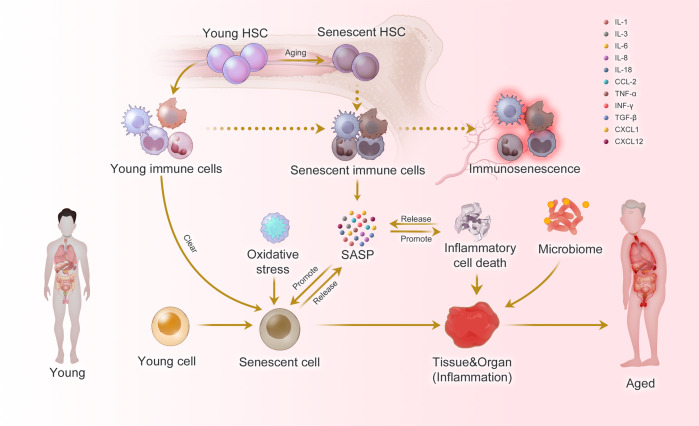
Aging is characterized by systemic chronic inflammation, which is accompanied by cellular senescence, immunosenescence, organ dysfunction, and age-related diseases. Given the multidimensional complexity of aging, there is an urgent need for a systematic organization of inflammaging through dimensionality reduction. Factors secreted by senescent cells, known as the senescence-associated secretory phenotype (SASP), promote chronic inflammation and can induce senescence in normal cells. At the same time, chronic inflammation accelerates the senescence of immune cells, resulting in weakened immune function and an inability to clear senescent cells and inflammatory factors, which creates a vicious cycle of inflammation and senescence. Persistently elevated inflammation levels in organs such as the bone marrow, liver, and lungs cannot be eliminated in time, leading to organ damage and aging-related diseases. Therefore, inflammation has been recognized as an endogenous factor in aging, and the elimination of inflammation could be a potential strategy for anti-aging. Here we discuss inflammaging at the molecular, cellular, organ, and disease levels, and review current aging models, the implications of cutting-edge single cell technologies, as well as anti-aging strategies. Since preventing and alleviating aging-related diseases and improving the overall quality of life are the ultimate goals of aging research, our review highlights the critical features and potential mechanisms of inflammation and aging, along with the latest developments and future directions in aging research, providing a theoretical foundation for novel and practical anti-aging strategies.
Overview
CoChat Summary
## TL;DR
This review argues that inflammaging—a chronic, systemic inflammatory state—is tightly intertwined with cellular senescence, immunosenescence, organ dysfunction, and age-related disease. It synthesizes signaling pathways, aging models, single-cell technologies, and intervention strategies, emphasizing anti-inflammatory approaches, senolytics, stem cell therapy, and organ transplantation.
## Key findings
- The paper describes a “vicious cycle” in which senescent cells secrete SASP factors that promote chronic inflammation, while chronic inflammation accelerates immune-cell senescence and weakens clearance of senescent cells and inflammatory factors.
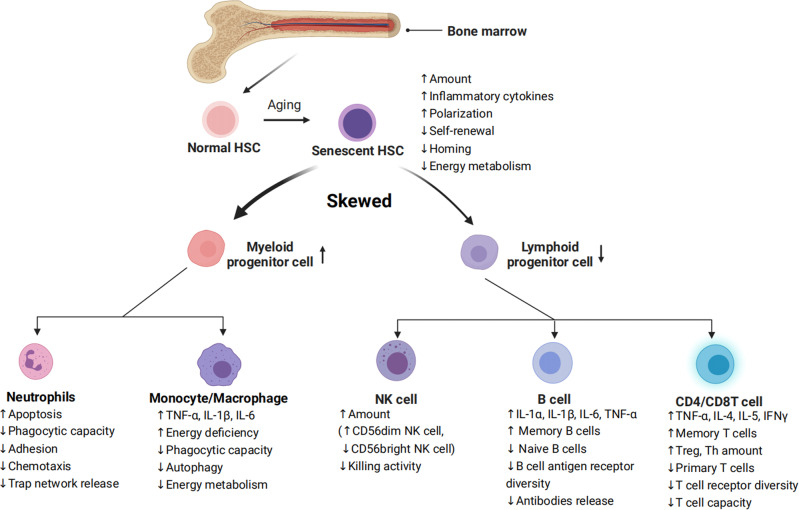
- It highlights reported age-related immune changes across cell types, including decreased circulating naive CD8 T cells as a consistent marker of immunosenescence in healthy older adults, reduced NK-cell cytotoxicity, and age-associated shifts in HSC differentiation toward myeloid lineages.
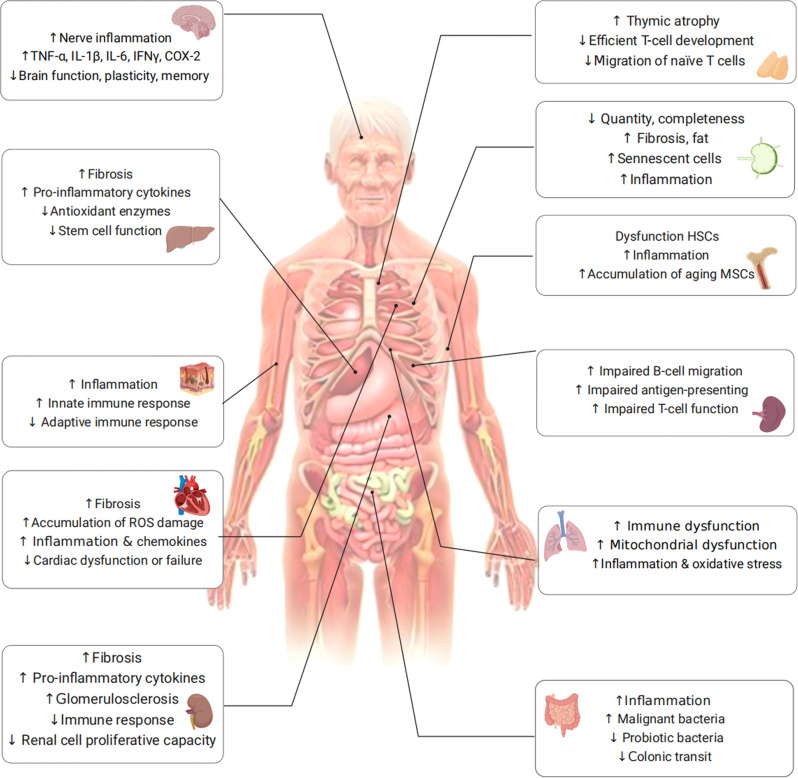
- The review links inflammaging to organ-level decline in the bone marrow, thymus, spleen, lymph nodes, brain, heart, kidney, liver, skin, lung, and gut, with examples such as age-related thymic degeneration reducing new T-cell output and aged bone marrow impairing HSC function.
- For intervention, it notes that the first senolytic combination, dasatinib plus quercetin, increased 6-minute walking distance by an average of 21.5 meters in the first human trial, but other outcomes did not change significantly and long-term efficacy remains insufficiently supported.
## Methods
- Narrative review of inflammaging across molecular, cellular, organ, and disease levels, with sections on signaling pathways, classical aging models, single-cell technology, and intervention strategies.
- No new experimental sample or cohort is reported in the paper itself; instead, it synthesizes findings from prior mouse, human, and cell-line studies cited throughout the text.
- The main approach is qualitative integration of published evidence, including examples from in vitro senescence models, in vivo mouse models, centenarian studies, and emerging single-cell/multi-omics work.
## Limitations
- The paper explicitly notes that the exact causality between inflammation and aging remains unresolved and “deserves further studies” for effective intervention.
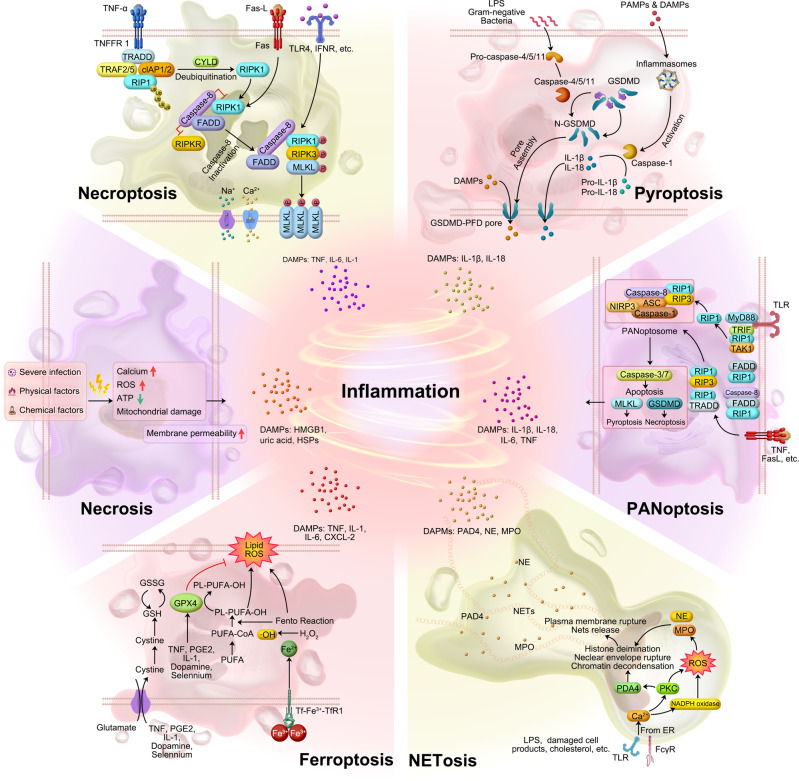
- It also states that PANoptosis has no direct evidence yet linking it to aging, so any connection is speculative.
- Evident from the text: this is a broad review rather than a primary study, so many conclusions are synthesized from heterogeneous prior studies rather than tested in one unified dataset.
Model-written summary. Check it against the paper before relying on it.
Integrity signals
Registry
Cites
Statistics
Figures
Verification
Claims the paper makes
140 Valid · 17 Not valid · 39 Not checked · 40 Own results and interpretations
Some cited sources support this claim and some don’t — read each source’s verdict below.
In the paper
“At the same time, inflammation promotes oxidation through inflammatory mediators.205,206”
§ Inflammation and aging: signaling pathways and intervention therapies > Mechanisms of inflammaging > Triggers of inflammaging
What the sources say
- Disputedcites [205] Furman D Expression of specific inflammasome gene modules stratifies older individuals into two extreme clinical and immunological states Nat. Med. 2017 23 174 184 10.1038/nm.4267 28092664 PMC5320935 sourceExperimental — accuracy not yet measured
The Discussion describes the opposite causal direction: oxidative stress triggers an inflammatory response, including production of inflammatory cytokines. The Results attribute chronic oxidative stress to possible mitochondrial metabolic reprogramming, not to inflammatory mediators. Page numbers are unavailable in our copy. (LLM, conf=0.82)
Checked by a reasoning model — may be wrong.
- Partly supportedcites [206] Furman D Chronic inflammation in the etiology of disease across the life span Nat. Med. 2019 25 1822 1832 10.1038/s41591-019-0675-0 31806905 PMC7147972 sourceExperimental — accuracy not yet measured
The ‘Systemic chronic inflammation and non-communicable disease risk’ section says systemic chronic inflammation can damage tissues by inducing oxidative stress. That supports the inflammation-to-oxidation link, but the passage does not say that inflammatory mediators are the mechanism. (LLM, conf=0.85)
plainstates a cause- Asserted: passes — The authors put it forward as true.
- Checkable: passes — It can be checked against evidence.
- Load-bearing: passes — The paper’s conclusions depend on it.
- Based: passes — The paper gives a reason why it holds.
- Disputed
At least one cited source doesn’t support this claim or points to a different paper, and none confirmed it — see the verdicts below.
In the paper
“Senescent neutrophils exhibit several distinct characteristics during NETosis, including a reduced capacity to release NETs, instability in the quality of formed NETs, and decreased activity of DNA degrading enzymes (DNases) within NETs.”
§ Inflammation and aging: signaling pathways and intervention therapies > Mechanisms of inflammaging > Inflammatory cell death
What the sources say
- Disputedcites [269] Sabbatini M Aging hampers neutrophil extracellular traps (NETs) efficacy Aging Clin. Exp. Res. 2022 34 2345 2353 10.1007/s40520-022-02201-0 35920993 PMC9637667 sourceExperimental — accuracy not yet measured
The Results and Discussion report that neutrophils from elderly subjects produced more NETs than those from adults after LPS stimulation, contrary to the unqualified claim of reduced release. The Introduction and Discussion note reduced NET production in other studies using different stimulation conditions, but distinguish those findings from this paper’s results. (LLM, conf=0.87)
Checked by a reasoning model — may be wrong.
plainstates a cause- Asserted: passes — The authors put it forward as true.
- Checkable: passes — It can be checked against evidence.
- Load-bearing: unclear — It is unclear whether the paper’s conclusions depend on it.
- Based: passes — The paper gives a reason why it holds.
- Disputed
The cited sources support only part of this claim — read each source’s verdict below.
In the paper
“However, in the aging heart, macrophages recruited to the site of infarction exhibit a pro-inflammatory M1 phenotype initially, but subsequently transition to an anti-inflammatory M2 phenotype after myocardial infarction (MI).”
§ Inflammation and aging: signaling pathways and intervention therapies > Inflammaging at the organ level > Sterile organs
What the sources say
- Partly supportedcites [143] Ma Y Mouton AJ Lindsey ML Cardiac macrophage biology in the steady-state heart, the aging heart, and following myocardial infarction Transl. Res. 2018 191 15 28 10.1016/j.trsl.2017.10.001 29106912 PMC5846093 sourceExperimental — accuracy not yet measured
The Abstract and “Macrophages in the MI Heart—Macrophage phenotypes” describe an early M1 and later M2 pattern after infarction. But the paper treats aging-heart macrophages separately and does not establish that this post-MI pattern occurs specifically in aging hearts. Its “Macrophage polarization mechanisms” section also says whether individual macrophages convert in vivo remains uncertain. Page numbers are unavailable in our copy. (LLM, conf=0.88)
plainstates a cause- Asserted: passes — The authors put it forward as true.
- Checkable: passes — It can be checked against evidence.
- Load-bearing: unclear — It is unclear whether the paper’s conclusions depend on it.
- Based: passes — The paper gives a reason why it holds.
- Partly supported
Every source the paper cites for this claim was checked and supports it.
In the paper
“This phenotypic switch promotes angiogenesis and scar formation, aiding in the recovery process.143”
§ Inflammation and aging: signaling pathways and intervention therapies > Inflammaging at the organ level > Sterile organs
What the sources say
- Supportedcites [143] Ma Y Mouton AJ Lindsey ML Cardiac macrophage biology in the steady-state heart, the aging heart, and following myocardial infarction Transl. Res. 2018 191 15 28 10.1016/j.trsl.2017.10.001 29106912 PMC5846093 source
The “Macrophage phenotypes” section says that M2 macrophages facilitate neoangiogenesis and scar repair, and that shifting the M1/M2 balance improves myocardial repair and function after MI. This supports the cited sentence’s account of angiogenesis, scar formation, and recovery. (LLM, conf=0.92)
plainstates a cause- Asserted: passes — The authors put it forward as true.
- Checkable: passes — It can be checked against evidence.
- Load-bearing: unclear — It is unclear whether the paper’s conclusions depend on it.
- Based: passes — The paper gives a reason why it holds.
- Supported
The cited sources that could be checked couldn’t confirm or dispute this claim.
In the paper
“Senescence of HSCs is the basis of immunosenescence. Senescent HSC differentiate into various types of dysfunctional immune cells, driving immunosenescence.16”
§ Inflammation and aging: signaling pathways and intervention therapies > Inflammaging at the cellular level > Hematopoietic stem cells (HSCs)
What the sources say
- Could not verifycites [16] Liggett LA Sankaran VG Unraveling Hematopoiesis through the Lens of Genomics Cell 2020 182 1384 1400 10.1016/j.cell.2020.08.030 32946781 PMC7508400 sourceExperimental — accuracy not yet measured
The Clonal hematopoiesis section describes age-related changes in HSC numbers and clonal expansion, but does not link HSC senescence to immunosenescence. A search for immunosenescence and dysfunctional immune cells found no passage establishing that proposed mechanism; the Outstanding Questions section also notes that some older people retain ostensibly normal hematopoiesis. (LLM, conf=0.72)
plainstates a cause- Asserted: passes — The authors put it forward as true.
- Checkable: passes — It can be checked against evidence.
- Load-bearing: unclear — It is unclear whether the paper’s conclusions depend on it.
- Based: passes — The paper gives a reason why it holds.
- Could not verify
95 more claims · 66 with their cited sources checked
Create a free account to see all 236 claims and every source verdict.
- It may state two separate claims as one. 111
- Probably not a substantial claim. 41
- Borderline: one of the tests for a substantial claim is unclear. 1
Claims other papers make about this one
Each is checked against this paper’s own text: does it say what the citing paper says it does?
The cited source says what the claim attributes to it.
In the citing paper
“Inflammation is implicated in various pathways and processes associated with ageing, including immunosenescence, oxidative stress, metabolic dysregulation, cellular senescence, and other critical events of the ageing process.37”
From Antiageing strategy for neurodegenerative diseases: from mechanisms to clinical advances (2025) · cites this paper as [37]
In the citing paper
“These frameworks suggest that the pathophysiology of AD is characterized by phosphorylated tau accumulation and propagation,31 heightened inflammatory responses, dysregulation of oxidative stress (related to mitochondrial dysfunction),37 alongside a gradual decline in cholinergic function.38”
From Antiageing strategy for neurodegenerative diseases: from mechanisms to clinical advances (2025) · cites this paper as [37]
In the citing paper
“exercise can reduce inflammation levels, which is a contributing factor to the ageing process.37”
From Antiageing strategy for neurodegenerative diseases: from mechanisms to clinical advances (2025) · cites this paper as [37]
Citations
Cites
Reduction in the incidence of type 2 diabetes with lifestyle intervention or metformin
(2002) · New England Journal of Medicine · doi:10.1056/nejmoa012512 · Cited by 19,011
Diversity of the Human Intestinal Microbial Flora
Eckburg, P. B., Bik, E. M., Bernstein, C. N., Purdom, E., Dethlefsen, L., Sargent, M., Gill, S. R., Nelson, K. E., & Relman, D. A. (2005) · Science · doi:10.1126/science.1110591 · Cited by 7,913
Mizgerd, J. P., Kubo, H., Kutkoski, G. J., Bhagwan, S. D., Scharffetter-Kochanek, K., Beaudet, A. L., & Doerschuk, C. M. (1997) · The Journal of Experimental Medicine · doi:10.1084/jem.186.8.1357 · Cited by 7,306
Chronic inflammation in the etiology of disease across the life span
Furman, D., Campisi, J., Verdin, E., Carrera-Bastos, P., Targ, S., Franceschi, C., Ferrucci, L., Gilroy, D. W., Fasano, A., Miller, G. W., et al. (2019) · Nature Medicine · doi:10.1038/s41591-019-0675-0 · Cited by 4,915
NLRP3 inflammasomes are required for atherogenesis and activated by cholesterol crystals
Duewell, P., Kono, H., Rayner, K. J., Sirois, C. M., Vladimer, G., Bauernfeind, F. G., Abela, G. S., Franchi, L., Nuñez, G., Schnurr, M., et al. (2010) · Nature · doi:10.1038/nature08938 · Cited by 4,026
Mortality Associated With Influenza and Respiratory Syncytial Virus in the United States
Thompson, W. W., Shay, D. K., Weintraub, E., Brammer, L., Cox, N., Anderson, L. J., & Fukuda, K. (2003) · JAMA · doi:10.1001/jama.289.2.179 · Cited by 3,673
Inflammaging: a new immune–metabolic viewpoint for age-related diseases
Franceschi, C., Garagnani, P., Parini, P., Giuliani, C., & Santoro, A. (2018) · Nature Reviews Endocrinology · doi:10.1038/s41574-018-0059-4 · Cited by 3,586
Sies, H., Berndt, C., & Jones, D. P. (2017) · Annual Review of Biochemistry · doi:10.1146/annurev-biochem-061516-045037 · Cited by 3,520
Gut microbiota composition correlates with diet and health in the elderly
Claesson, M. J., Jeffery, I. B., Conde, S., Power, S. E., O’Connor, E. M., Cusack, S., Harris, H. M. B., Coakley, M., Lakshminarayanan, B., O’Sullivan, O., et al. (2012) · Nature · doi:10.1038/nature11319 · Cited by 3,314 · cited 1×
“Older adults (>65 years) exhibit reduced microbiota diversity compared to adults, along with greater inter-individual variation in microbiota composition.(182) This is characterized by diminished populations of beneficial bacteria such as Bifidobacterium, Bacillus, E.”
BackgroundCellular Senescence: Defining a Path Forward
Gorgoulis, V., Adams, P. D., Alimonti, A., Bennett, D. C., Bischof, O., Bishop, C., Campisi, J., Collado, M., Evangelou, K., Ferbeyre, G., et al. (2019) · Cell · doi:10.1016/j.cell.2019.10.005 · Cited by 3,225 · cited 1×
“net).(371) On the other hand, other technologies, such as machine learning which integrates multi-modal and multidimensional big data, are also important to address the complexity of aging problems (Table 4).”
Background
Cited by
Tumilaar, S. G., Hardianto, A., Dohi, H., & Kurnia, D. (2024) · Journal of Chemistry · doi:10.1155/2024/5594386 · Cited by 265
Progress in Understanding Oxidative Stress, Aging, and Aging-Related Diseases
Yang, J., Luo, J., Tian, X., Zhao, Y., Li, Y., & Wu, X. (2024) · Antioxidants · doi:10.3390/antiox13040394 · Cited by 259
“OS also accelerates organismal aging through the release of inflammatory cytokines [62], downregulation of immune function and regenerative capacity [63], induction of transcriptomic changes associated with the aging process [57], and inhibition of multiple oxidase activities [54].”
BackgroundInhibition of IL-11 signalling extends mammalian healthspan and lifespan
Widjaja, A. A., Lim, W.-W., Viswanathan, S., Chothani, S., Corden, B., Dasan, C. M., Goh, J. W. T., Lim, R., Singh, B. K., Tan, J., et al. (2024) · Nature · doi:10.1038/s41586-024-07701-9 · Cited by 238
“…is an important hallmark of ageing that is intimately linked with senescence and implicated in the pathogenesis of age-related frailty, metabolic dysfunction and multi-morbidity 7,16,17,39 notably Jak–Stat signalling in fly adipose tissue, can adversely affect metabolism and lifespan 47,48 .”
BackgroundMahmud, F., Sarker, D. B., Jocelyn, J. A., & Sang, Q.-X. A. (2024) · Cells · doi:10.3390/cells13211788 · Cited by 239
Metformin decelerates aging clock in male monkeys
Yang, Y., Lu, X., Liu, N., Ma, S., Zhang, H., Zhang, Z., Yang, K., Jiang, M., Zheng, Z., Qiao, Y., et al. (2024) · Cell · doi:10.1016/j.cell.2024.08.021 · Cited by 227
Self-citationAntiageing strategy for neurodegenerative diseases: from mechanisms to clinical advances
Jiang, Q., Liu, J., Huang, S., Wang, X.-Y., Chen, X., Liu, G.-H., Ye, K., Song, W., Masters, C. L., Wang, J., et al. (2025) · Signal Transduction and Targeted Therapy · doi:10.1038/s41392-025-02145-7 · Cited by 165
Self-citationThe Nrf2-HO-1 system and inflammaging
O’Rourke, S. A., Shanley, L. C., & Dunne, A. (2024) · Frontiers in Immunology · doi:10.3389/fimmu.2024.1457010 · Cited by 230
“As a result, older individuals have a higher risk of developing a number of chronic immune-mediated diseases (6, 7, 13).”
BackgroundThe role of cellular senescence in skin aging and age-related skin pathologies
Chin, T., Lee, X. E., Ng, P. Y., Lee, Y., & Dreesen, O. (2023) · Frontiers in Physiology · doi:10.3389/fphys.2023.1297637 · Cited by 138
Stress, epigenetics, and aging: Unraveling the intricate crosstalk
Wu, Z., Qu, J., Zhang, W., & Liu, G.-H. (2024) · Molecular Cell · doi:10.1016/j.molcel.2023.10.006 · Cited by 134
Self-citationImmunosenescence: signaling pathways, diseases and therapeutic targets
Fu, Y., Wang, B., Alu, A., Hong, W., Hong, L., He, X., Shi, H., Cheng, P., & Yang, X. (2025) · Signal Transduction and Targeted Therapy · doi:10.1038/s41392-025-02371-z · Cited by 187
“6, 7).”
Mi, B., Xiong, Y., Knoedler, S. A., Alfertshofer, M. G., Panayi, A. C., Wang, H., Lin, S., Li, G., & Liu, G. (2024) · Bone Research · doi:10.1038/s41413-024-00346-4 · Cited by 174
IL-1 family cytokines in inflammation and immunity
Garlanda, C., Ceglie, I. D., & Jaillon, S. (2025) · Cellular and Molecular Immunology · doi:10.1038/s41423-025-01358-8 · Cited by 170
“Moreover, IL-1 is a key mediator of the chronic systemic in fl ammation associated with aging, commonly referred to as in fl ammaging, which is driven by cellular senescence and immune system alterations [227].”
Aggregation-Induced Emission Luminogen: Role in Biopsy for Precision Medicine
Duo, Y., Han, L., Yang, Y., Wang, Z., Wang, L., Chen, J., Xiang, Z., Yoon, J., Luo, G., & Tang, B. Z. (2024) · Chemical Reviews · doi:10.1021/acs.chemrev.4c00244 · Cited by 126
Hou, Y., Chen, M., Bian, Y., Hu, Y., Chuan, J., Zhong, L., Zhu, Y., & Tong, R. (2024) · npj Vaccines · doi:10.1038/s41541-024-00874-4 · Cited by 143
“Aging is a common, inevitable, and complex process in nature 1 , and the aging population is a worldwide concern.”
BackgroundAdvances of Schwann cells in peripheral nerve regeneration: From mechanism to cell therapy
Wei, C., Guo, Y., Ci, Z., Li, M., Zhang, Y., & Zhou, Y. (2024) · Biomedicine & Pharmacotherapy · doi:10.1016/j.biopha.2024.116645 · Cited by 121
Intestinal stem cells: guardians of homeostasis in health and aging amid environmental challenges
Choi, J., & Augenlicht, L. H. (2024) · Experimental & Molecular Medicine · doi:10.1038/s12276-024-01179-1 · Cited by 116
“Ultimately, the accumulation of age-associated changes contributes to an altered mucosal microenvir-onment, which disrupts the functional harmony of the intestinal epithelium and predisposes older individuals to gastrointestinal ailments 47 .”
BackgroundPoria cocos: traditional uses, triterpenoid components and their renoprotective pharmacology
Guo, Z.-Y., Wu, X., Zhang, S.-J., Yang, J., Miao, H., & Zhao, Y.-Y. (2024) · Acta Pharmacologica Sinica · doi:10.1038/s41401-024-01404-7 · Cited by 104
Kannan, G., Paul, B. M., & Thangaraj, P. (2025) · Inflammopharmacology · doi:10.1007/s10787-024-01635-4 · Cited by 132
“Its influence on the aging process and age-related diseases has also garnered attention, emphasizing its potential as a target for interventions aimed at promoting healthy aging (Li et al. 2023a, b).”
Exosomal miR-302b rejuvenates aging mice by reversing the proliferative arrest of senescent cells
Bi, Y., Qiao, X., Cai, Z., Zhao, H., Ye, R., Liu, Q., Gao, L., Liu, Y., Liang, B., Liu, Y., et al. (2025) · Cell Metabolism · doi:10.1016/j.cmet.2024.11.013 · Cited by 109
Targeting Cytokine-Mediated Inflammation in Brain Disorders: Developing New Treatment Strategies
Mallick, R., Basak, S., Chowdhury, P., Bhowmik, P., Das, R. K., Banerjee, A., Paul, S., Pathak, S., & Duttaroy, A. K. (2025) · Pharmaceuticals · doi:10.3390/ph18010104 · Cited by 122
“Research on immunosenescence and age-associated alterations in cytokine signaling may guide strategies for decreasing age-related neuroinflammation [191,192].”
Ketogenic diet induces p53-dependent cellular senescence in multiple organs
Wei, S.-J., Schell, J. R., Chocron, E. S., Varmazyad, M., Xu, G., Chen, W. H., Martinez, G. M., Dong, F. F., Sreenivas, P., Trevino, R., et al. (2024) · Science Advances · doi:10.1126/sciadv.ado1463 · Cited by 87
“While these cytokines are produced by various cells and have pleiotropic effects, they are frequently produced by senescent cells and have been shown to be pro-inflammatory ( 61 ).”
Inflammation and aging-related disease: A transdisciplinary inflammaging framework
Andonian, B. J., Hippensteel, J. A., Abuabara, K., Boyle, E. M., Colbert, J. F., Devinney, M. J., Faye, A. S., Kochar, B. D., Lee, J., Litke, R. R., et al. (2024) · GeroScience · doi:10.1007/s11357-024-01364-0 · Cited by 121
The double-edged effects of IL-6 in liver regeneration, aging, inflammation, and diseases
Wang, M.-J., Zhang, H.-L., Chen, F., Guo, X.-J., Liu, Q.-G., & Hou, J. (2024) · Experimental Hematology & Oncology · doi:10.1186/s40164-024-00527-1 · Cited by 99
“Senescent cells are characterized by the expression of senescence-associated secretory phenotype (SASP) [37, 38], which promotes the development of various chronic diseases.”
BackgroundInfluentialNan, L., Guo, P., Hui, W., Xia, F., & Yi, C. (2025) · Frontiers in Pharmacology · doi:10.3389/fphar.2025.1592596 · Cited by 84
Zhang, F., Guo, J., Yu, S., Zheng, Y., Duan, M., Zhao, L., Wang, Y., Yang, Z., & Jiang, X. (2024) · 癌症:英文版 · doi:10.1002/cac2.12591 · Cited by 112
“Nevertheless, “immune senes-cence” induced by associated phenomena accompanying tumor cell senescence (e.g., SASP) promotes tumor progression [319].”
BackgroundSelf-citationOxidative Stress and Age-Related Tumors
Carlo, E. D., & Sorrentino, C. (2024) · Antioxidants · doi:10.3390/antiox13091109 · Cited by 112
““Inflammaging” refers to the chronic, low-grade inflammation that typically accompanies aging, which is characterized by increased levels of pro-inflammatory markers in the blood and tissues [8] which feeds oxidative stress, creating a feedback loop that exacerbates cellular damage.”
BackgroundLiu, B., Peng, Z., Zhang, H., Zhang, N., Liu, Z., Xia, Z., Huang, S., Luo, P., & Cheng, Q. (2025) · Molecular Cancer · doi:10.1186/s12943-025-02284-z · Cited by 105
“However, when senescent cells are not promptly cleared, sustained secretion of the SASP creates a growth-stimulatory and immunosuppressive microenvironment that supports tumor development [5, 131].”
Sex and gender affect immune aging
Calabrò, A., Accardi, G., Aiello, A., Caruso, C., & Candore, G. (2023) · Frontiers in Aging · doi:10.3389/fragi.2023.1272118 · Cited by 71
Kim, M. E., & Lee, J. S. (2024) · Current Issues in Molecular Biology · doi:10.3390/cimb47010008 · Cited by 94
“This functional plasticity underscores their critical role in either exacerbating neuronal damage or promoting tissue repair [13–15].”
Pathological and Inflammatory Consequences of Aging
García‐Domínguez, M. (2025) · Biomolecules · doi:10.3390/biom15030404 · Cited by 91
“At the peripheral level, the release of SASP mediators significantly amplifies systemic inflammation, triggering a cascade of physiopathological events that disrupt normal tissue homeostasis [21].”
Oxidative Stress-Driven Cellular Senescence: Mechanistic Crosstalk and Therapeutic Horizons
Stojanović, B., Jovanovic, I., Stojanovic, M. D., Stojanović, B., Kovačević, V., Radosavljević, I., Jovanović, D., Kovačević, M. M., Zornić, N., Arsić, A. A., et al. (2025) · Antioxidants · doi:10.3390/antiox14080987 · Cited by 117
“Both replicative senescence and stress-induced premature senescence (SIPS) share common transcriptional pathways, particularly those related to inflammation and immune surveillance [93].”
Anti-Inflammatory Role of the Klotho Protein and Relevance to Aging
Prud’homme, G. J., & Wang, Q. (2024) · Cells · doi:10.3390/cells13171413 · Cited by 88
“Chronic inflammation, often low-grade, plays a major role in age-related diseases, in a process termed inflammaging [71–74].”
Targeting Cellular Senescence for Healthy Aging: Advances in Senolytics and Senomorphics
Alum, E., Izah, S., Uti, D., Ugwu, O., Betiang, P., Basajja, M., & Ejemot-Nwadiaro, R. (2025) · Drug Design, Development and Therapy · doi:10.2147/dddt.s543211 · Cited by 63
“33 The accumulation of senescent cells over time underscores the necessity of developing treatment strategies that selectively target these cells while preserving their beneficial roles in cancer suppression and tissue repair.”
Research progress on multiple cell death pathways of podocytes in diabetic kidney disease
Yang, C., Zhang, Z., Liu, J., Chen, P., Li, J., Shu, H., Chu, Y., & Li, L. (2023) · Molecular Medicine · doi:10.1186/s10020-023-00732-4 · Cited by 73
“Regulated cell death includes pyroptosis, necroptosis and ferroptosis can trigger a strong inflammatory immune response (Wei and Szeto 2019; Li et al. 2023).”
BackgroundAging Biomarker Consortium, Zhang, L., Guo, J., Liu, Y., Sun, S., Liu, B., Yang, Q., Tao, J., Tian, X.-L., Pu, J., et al. (2023) · Life Medicine · doi:10.1093/lifemedi/lnad033 · Cited by 60
“high-sensitivity C-reactive protein (hs-CRP), vascular endothelial growth factor (VEGF), oxidized low-density lipoprotein (ox-LDL), and reactive oxygen species (ROS), have been shown to increase in the plasma with age [6, 128–130].”
Self-citationThe brain–body energy conservation model of aging
Shaulson, E. D., Cohen, A. A., & Picard, M. A. (2024) · Nature Aging · doi:10.1038/s43587-024-00716-x · Cited by 85
“This skewed distribution of signaling agents reflects an increase in cell–cell communication across various aging cell types 64,109 .”
The contribution of age-related changes in the gut-brain axis to neurological disorders
Khan, R., Gesù, C. M. D., Lee, J., & McCullough, L. D. (2024) · Gut Microbes · doi:10.1080/19490976.2024.2302801 · Cited by 63
Aging, Cancer, and Inflammation: The Telomerase Connection
Boccardi, V., & Marano, L. (2024) · International Journal of Molecular Sciences · doi:10.3390/ijms25158542 · Cited by 75
“Recent research has highlighted the significant impact of chronic inflammation on immune aging, showing a strong correlation between inflammation and telomere biology in various major health conditions, including cancer [7].”
BackgroundXu, W., Li, X., Zhong, Y.-S., He, J., Xie, W., Kang, Y.-K., Ying, H., & Yu, C.-H. (2025) · Carbohydrate Polymers · doi:10.1016/j.carbpol.2025.123381 · Cited by 62
Self-citationCellular senescence in cancer: from mechanism paradoxes to precision therapeutics
Feng, T., Xie, F., Lee, L. M.-Y., Lin, Z., Tu, Y., Lyu, Y., Yu, P., Wu, J., Chen, B., Zhang, G., et al. (2025) · Molecular Cancer · doi:10.1186/s12943-025-02419-2 · Cited by 83
“Elevated levels of pro-inflammatory cytokines such as IL6 and TNF-α, along with senescent cell accumulation, foster a tumor-permissive microenvironment [5, 6].”
Xiong, W., Han, Z., Ding, S., Wang, H., Du, Y., Cui, W., & Zhang, M. (2024) · Advanced Science · doi:10.1002/advs.202400345 · Cited by 65
The role of quercetin in NLRP3-associated inflammation
Wu, J., Lv, T., Liu, Y., Liu, Y., Han, Y., Liu, X., Peng, X., Tang, F. R., & Cai, J. (2024) · Inflammopharmacology · doi:10.1007/s10787-024-01566-0 · Cited by 69
“Previous studies have reported that chronic inflammation can promote the progression of diabetes, aging, cancer, and other diseases (Li et al. 2023a; Nigam et al. 2023; Zhang et al. 2014).”
The Anti-Aging Mechanism of Metformin: From Molecular Insights to Clinical Applications
Zhang, T., Li-jun, Z., Makarczyk, M. J., Feng, P., & Zhang, J. (2025) · Molecules · doi:10.3390/molecules30040816 · Cited by 74
“Consequently, inflammation is increasingly recognized as an intrinsic driver of aging, suggesting that its abatement may present an effective anti-aging intervention [12,44,45].”
Ahmed, M. (2025) · Immunity & Ageing · doi:10.1186/s12979-025-00522-y · Cited by 74
“Elevated pro-inflammatory cytokines such as IL-6 and TNF-α trigger systemic catabolism and impair regenerative mechanisms [24, 25].”
Allan, K. C., Joo, J. H., Kim, S., Shaia, J., Kaelber, D. C., Singh, R., Talcott, K. E., & Rachitskaya, A. V. (2025) · Ophthalmology · doi:10.1016/j.ophtha.2025.01.016 · Cited by 54
Wang, Y., Li, X., Wang, W., Zou, L., Miao, H., & Zhao, Y. (2024) · Phytotherapy Research · doi:10.1002/ptr.8324 · Cited by 75
Self-citationLawrence, M., Goyal, A., Pathak, S., & Ganguly, P. (2024) · International Journal of Molecular Sciences · doi:10.3390/ijms25137411 · Cited by 64
“Due to their role in several diseases, both cellular senescence and inflammaging are increasingly being investigated at the genetic level and have been hypothesized as potential targets for anti-aging and regenerative strategies [34].”
BackgroundEpidemiology of oral health in older adults aged 65 or over: prevalence, risk factors and prevention
Huang, X., Kang, L., & Bi, J. (2025) · Aging Clinical and Experimental Research · doi:10.1007/s40520-025-03110-8 · Cited by 82
Deciphering the mechanisms, biochemistry, physiology, and social habits in the process of aging
Asejeje, F. O., & Ogunro, O. B. (2023) · Archives of Gerontology and Geriatrics Plus · doi:10.1016/j.aggp.2023.100003 · Cited by 72
Macrophage iron dyshomeostasis promotes aging‐related renal fibrosis
Wu, L., Lin, H., Li, S., Huang, Y., Sun, Y., Shu, S., Luo, T., Liang, T., Lai, W., Rao, J., et al. (2024) · Aging Cell · doi:10.1111/acel.14275 · Cited by 67
“This creates a detrimental cycle of inflammation and aging (Li et al., 2023 ).”
Dietary Polyphenols as Anti-Aging Agents: Targeting the Hallmarks of Aging
Liu, Y., Fang, M., Tu, X., Mo, X., Zhang, L., Yang, B., Wang, F., Kim, Y., Huang, C., Chen, L., et al. (2024) · Nutrients · doi:10.3390/nu16193305 · Cited by 71
“Failure to clear senescent cells and SASP will result in a vicious cycle of inflammation and aging [176].”
BackgroundLi, H., Cai, R., Zhou, Y., Jiang, Y., & Tan, S. (2025) · Journal of Neuroinflammation · doi:10.1186/s12974-025-03563-8 · Cited by 79
Hu, L., Li, J., Tang, Z., Gong, P., Chang, Z., Chen, Y., Ma, T., Jiang, S., Yang, C., & Zhang, T. (2025) · Cardiovascular Diabetology · doi:10.1186/s12933-025-02770-0 · Cited by 60
“Obesity exacerbates inflammaging through the senescence-associated secretory phenotype (SASP) [49], where senescent cells secrete pro-inflammatory cytokines and proteases, disrupting tissue homeostasis and biological age acceleration [50].”
Calcium Signaling Dynamics in Vascular Cells and Their Dysregulation in Vascular Disease
Dai, C., & Khalil, R. A. (2025) · Biomolecules · doi:10.3390/biom15060892 · Cited by 70
Zhan, J., Cui, Y., Zhang, P., Du, Y., Hecker, P., Zhou, S., Liang, Y., Zhang, W., Jin, Z., Wang, Y., et al. (2024) · Advanced Healthcare Materials · doi:10.1002/adhm.202403315 · Cited by 56
Self-citationResearch Progress in Skin Aging and Immunity
He, X., Gao, X., & Xie, W. (2024) · International Journal of Molecular Sciences · doi:10.3390/ijms25074101 · Cited by 59
“SASP factors include pro-inflammatory and immunomodulatory cytokines, chemokines, proteases, and growth factors [83].”
BackgroundImmune Alterations with Aging: Mechanisms and Intervention Strategies
Yu, W., Yu, Y., Sun, S., Lu, C., Zhai, J., Lei, Y., Bai, F., Wang, R., & Chen, J. (2024) · Nutrients · doi:10.3390/nu16223830 · Cited by 61
“The concept of ‘immunosenescence’ was introduced for the first time, and research into immunosenescence has since been initiated [6].”
Senolytic therapeutics: An emerging treatment modality for osteoarthritis
Ansari, M. M., Ghosh, M., Lee, D., & Son, Y. (2024) · Ageing Research Reviews · doi:10.1016/j.arr.2024.102275 · Cited by 57
Cancer and Cardiovascular Disease
Alhuneafat, L., Guha, A., Blaes, A. H., & Konety, S. (2025) · JACC CardioOncology · doi:10.1016/j.jaccao.2025.07.001 · Cited by 67
Nunes-Pinto, M., de Mello, R. G. B., Pinto, M. N., Moro, C., Vellas, B. J., Martinez, L. O., Rolland, Y., & Barreto, P. D. S. (2024) · Ageing Research Reviews · doi:10.1016/j.arr.2024.102587 · Cited by 61
The Role of Inflammation in the Pathogenesis of Viral Respiratory Infections
Kombe, A. J. K., Abadi, L. F., Gerasimova, Y. V., Nanduri, R., Tamang, P., Kandala, M., & Kelesidis, T. (2024) · Microorganisms · doi:10.3390/microorganisms12122526 · Cited by 56
Liu, Q., Li, J., Sun, X., Lin, J., Yu, Z., Xiao, Y., Li, D., Sun, B., Bao, H., & Liu, Y. (2025) · Journal of Hematology & Oncology · doi:10.1186/s13045-025-01735-w · Cited by 65
“For example, SASP which induces chronic inflammation, a hallmark of systemic immunosenescence, drives and sustains the pro-inflammatory and immunosuppressive TME in most cases [260, 261].”
Nanorepair medicine for treatment of organ injury
Wang, H., Hsu, J. C., Song, W., Lan, X., Cai, W., & Ni, D. (2024) · National Science Review · doi:10.1093/nsr/nwae280 · Cited by 49
“Senescence and various stimuli, such as trauma, radiation, toxins, and viral infections, can inflict severe damage upon vital organs, resulting in a decreased quality of life or even death [1 ,2 ].”
BackgroundLyu, Y.-X., Fu, Q., Wilczok, D., Ying, K., King, A., Antebi, A., Vojta, A., Stolzing, A., Moskalev, A., Georgievskaya, A., et al. (2024) · Aging · doi:10.18632/aging.206135 · Cited by 75
Lipid metabolism in homeostasis and disease
Li, Z., Deng, W., Yang, L., Tang, C., Yue, J.-M., Monteiro, O., Baptista‐Hon, D. T., & Li, T. (2026) · Signal Transduction and Targeted Therapy · doi:10.1038/s41392-025-02357-x · Cited by 74
“394 In recent decades, numerous genetic pathways regulating lifespan have been identi fi ed.”
Aging, ROS, and cellular senescence: a trilogy in the progression of liver fibrosis
Almalki, W. H., & Almujri, S. S. (2024) · Biogerontology · doi:10.1007/s10522-024-10153-3 · Cited by 56
“This decline involves reduced T and B lymphocyte function, diminished cytokine production, and decreased vaccine efficacy (Li et al. 2023).”
More TOR: The expanding role of mTOR in regulating immune responses
Patel, C. H., & Powell, J. D. (2025) · Immunity · doi:10.1016/j.immuni.2025.06.010 · Cited by 52
Zheng, L., He, S., Wang, H., Li, J., Liu, Y., & Liu, S. (2024) · Aging and Disease · doi:10.14336/ad.2024.0206 · Cited by 83
“Aging of the liver may lead to decreased liver function, increasing the risk of chronic liver disease and liver cancer [130].”
Applications of Exosomal miRNAs from Mesenchymal Stem Cells as Skin Boosters
Zheng, J., Yang, B., Liu, S., Xu, Z., Ding, Z., & Mo, M. (2024) · Biomolecules · doi:10.3390/biom14040459 · Cited by 54
“…also results in the activation of DDR and SASP in nearby cells, chronic inflammation, and normal cellular senescence, which lowers immune function and creates a pro-inflammatory environment that first occurs locally and then spreads to the systemic level, accelerating the aging of the body [78,80].”
BackgroundShi, Y., Zhao, L., Wang, J., Liu, X., Bai, Y., Cong, H., & Li, X. (2024) · Cardiovascular Diabetology · doi:10.1186/s12933-024-02366-0 · Cited by 47
“Chronic inflammation, which is accompanied by cellular senescence, immunosenescence, organ dysfunction, and age-related diseases, appears to be closely linked to aging [11].”
BackgroundInfluentialSelf-citationRecent Advances in Aging and Immunosenescence: Mechanisms and Therapeutic Strategies
Wang, S., Huo, T., Lu, M., Zhao, Y., Zhang, J., He, W., & Chen, H. (2025) · Cells · doi:10.3390/cells14070499 · Cited by 57
Teng, H., Xiao, H., Li, X., Huang, J., Zhang, B., & Zeng, M. (2025) · Trends in Food Science & Technology · doi:10.1016/j.tifs.2025.105000 · Cited by 50
Self-citationGhassab, F. T., Mahmoudi, F. S., Tinjani, R. T., Meibodi, A. E., Zali, M. R., & Yadegar, A. (2024) · Life Sciences · doi:10.1016/j.lfs.2024.122748 · Cited by 41
Peng, K., Yao, Y.-X., Lu, X., Wang, W.-J., Zhang, Y., Zhao, H., Wang, H., Xu, D., & Tan, Z.-X. (2024) · Journal of Hazardous Materials · doi:10.1016/j.jhazmat.2024.135103 · Cited by 43
Immunometabolism and oxidative stress: roles and therapeutic strategies in cancer and aging
Zhou, N.-J., Bao, W.-Q., Zhang, C., Jiang, M., Liang, T.-L., Ma, G.-Y., Liu, L., Pan, H., & Li, R.-Z. (2025) · npj Aging · doi:10.1038/s41514-025-00250-z · Cited by 50
“Consequently, targeting in fl ammation for resolution is regarded as a promising strategy for aging intervention 25 .”
InfluentialImmunosenescence and inflammaging: Mechanisms and modulation through diet and lifestyle
Müller, L., & Benedetto, S. D. (2025) · Frontiers in Immunology · doi:10.3389/fimmu.2025.1708280 · Cited by 65
“These endogenous ligands activate innate immune sensors — TLRs and NLRs — triggering in fl ammasome assembly and cytokine release, thereby sustaining systemic in fl ammation over time (2, 6, 7, 11).”
The impact of ageing mechanisms on musculoskeletal system diseases in the elderly
Cai, Y., Han, Z., Cheng, H., Li, H., Wang, K., Chen, J., Liu, Z., Xie, Y., Lin, Y., Zhou, S., et al. (2024) · Frontiers in Immunology · doi:10.3389/fimmu.2024.1405621 · Cited by 60
Conner, S. J., Borges, H. B., Guarin, J. R., Gerton, T. J., Yui, A., Salhany, K. J., Mensah, D. N., Hamilton, G. A., Le, G. H., Lew, K. C., et al. (2024) · Cancer Research · doi:10.1158/0008-5472.can-23-2526 · Cited by 47
Unraveling immunosenescence in sepsis: from cellular mechanisms to therapeutics
Wang, Y., Zhang, H., & Miao, C. (2025) · Cell Death and Disease · doi:10.1038/s41419-025-07714-w · Cited by 50
“Moreover, these cells also show abnormal TLR function and increased apoptosis [38, 94, 95].”
InfluentialSelf-citationShero, J. A., Lindholm, M. E., Sandri, M. F., & Stanford, K. I. (2025) · Circulation Research · doi:10.1161/circresaha.124.325614 · Cited by 45
Wang, T., Yang, C., Li, Z., Li, T., Zhang, R., Zhao, Y., Cheng, T., Zong, Z., Ma, Y., Zhang, D., et al. (2023) · Redox Biology · doi:10.1016/j.redox.2023.103017 · Cited by 42
“However, ferroptosis, as one of the modes of inflammatory-related cell death, also has been reported that it can be increasingly activated by alterations in cellular function and metabolism during aging [19].”
BackgroundLasure, V., Gautam, A. S., & Singh, R. K. (2024) · Food & Function · doi:10.1039/d4fo02602k · Cited by 39
The mechanisms, hallmarks, and therapies for brain aging and age-related dementia
Jin, S., Lü, W., Zhang, J., Zhang, L., Tao, F., Zhang, Y., Hu, X., & Liu, Q. (2024) · Science Bulletin · doi:10.1016/j.scib.2024.09.005 · Cited by 44
Unveiling mechanisms of lung aging in COPD: A promising target for therapeutics development
Devulder, J. V. (2024) · Chinese Medical Journal - Pulmonary and Critical Care Medicine · doi:10.1016/j.pccm.2024.08.007 · Cited by 47
Kao, C., Charmsaz, S., Tsai, H., Aziz, K., Shu, D. H., Munjal, K., Griffin, E., Leatherman, J. M., Lipson, E. J., Ged, Y. M. A., et al. (2025) · Nature Communications · doi:10.1038/s41467-025-58512-z · Cited by 50
Ristori, S., Bertoni, G., Bientinesi, E., & Monti, D. (2025) · Nutrients · doi:10.3390/nu17111837 · Cited by 45
Karpuzoglu, E., Holladay, S. D., & Gogal, R. M. (2025) · Frontiers in Immunology · doi:10.3389/fimmu.2025.1704203 · Cited by 66
“Unlike the episodic chronic in fl ammation seen in active autoimmune disease, in fl ammaging involves elevated circulating pro-in fl ammatory cytokines (IL-6, IL-1 b , TNF-a , IFN-g , CRP), accumulation of senescent immune cells with SASP, altered redox and metabolic states (12, 145).”
InfluentialOn the wake of metformin: Do anti-diabetic SGLT2 inhibitors exert anti-aging effects?
Scisciola, L., Olivieri, F., Ambrosino, C., Barbieri, M., Rizzo, M. R., & Paolisso, G. (2023) · Ageing Research Reviews · doi:10.1016/j.arr.2023.102131 · Cited by 37
NLRP3-Induced NETosis: A Potential Therapeutic Target for Ischemic Thrombotic Diseases?
Kumar, R. K., Patil, G., & Dayal, S. (2023) · Cells · doi:10.3390/cells12232709 · Cited by 38
Mitochondrial DNA leakage triggers inflammation in age-related cardiovascular diseases
Ding, W., Chen, J., Zhao, L., Wu, S., Chen, X., & Chen, H. (2024) · Frontiers in Cell and Developmental Biology · doi:10.3389/fcell.2024.1287447 · Cited by 46
The Molecular Mechanisms in Senescent Cells Induced by Natural Aging and Ionizing Radiation
Ibragimova, M., Kussainova, A., Aripova, A., Bersimbaev, R. I., & Bulgakova, O. (2024) · Cells · doi:10.3390/cells13060550 · Cited by 45
“Chronic inflammation has a detrimental effect on the immune system by accelerating the senescence of immune cells, which impairs their ability to eliminate senescent cells and inflammatory molecules [147].”
BackgroundTargeting senescent cells to reshape the tumor microenvironment and improve anticancer efficacy
Jiang, B., Zhang, W., Zhang, X., & Sun, Y. (2024) · Seminars in Cancer Biology · doi:10.1016/j.semcancer.2024.05.002 · Cited by 39
Self-citationLuo, Z., Wei, W., Qiu, D., Su, Z., Liu, L., Zhou, H., Cui, H., & Yang, L. (2024) · Bone Research · doi:10.1038/s41413-024-00351-7 · Cited by 46
The neurotransmitter puzzle of Alzheimer's: Dissecting mechanisms and exploring therapeutic horizons
Sharma, M., Pal, P., & Gupta, S. K. (2024) · Brain Research · doi:10.1016/j.brainres.2024.148797 · Cited by 40
Toll-like receptors in innate immunity and inflammation: from fundamental biology to clinic insights
Qian, C., Cao, X., & Hoffmann, J. A. (2026) · Immunity & Inflammation · doi:10.1007/s44466-026-00040-6 · Cited by 48
Zhu, W., Liu, Q., Zhang, Z., Wang, Y., Mei, J., Xu, D., Zhou, J. Y., Su, Z., Zhang, X., Zhu, C., et al. (2024) · Small Structures · doi:10.1002/sstr.202400014 · Cited by 34
Self-citationMetabolic mechanisms orchestrated by Sirtuin family to modulate inflammatory responses
Li, X., Li, Y., Hao, Q., Jin, J., & Wang, Y. (2024) · Frontiers in Immunology · doi:10.3389/fimmu.2024.1448535 · Cited by 49
“Accumulated macromolecular damage triggers innate immune system activation, leading to in fl ammation (46, 47).”
BackgroundSelf-citationMesenchymal Stem Cell‐Derived Exosomes: A Promising Therapeutic Strategy for Age‐Related Diseases
Wei, B., Wei, M., Huang, H., Fan, T., Zhang, Z., & Song, X. (2024) · Cell Proliferation · doi:10.1111/cpr.13795 · Cited by 47
“This evolving inflammatory milieu is posited to further the aging process in a cyclical and self-sustaining manner [95].”
Self-citationGeroscience: A Translational Review
Kritchevsky, S. B., & Cummings, S. R. (2025) · JAMA · doi:10.1001/jama.2025.11289 · Cited by 52
Molecular hallmarks of ageing in amyotrophic lateral sclerosis
Jagaraj, C. J., Shadfar, S., Kashani, S. A., Saravanabavan, S., Farzana, F., & Atkin, J. D. (2024) · Cellular and Molecular Life Sciences · doi:10.1007/s00018-024-05164-9 · Cited by 43
Metadata
- Authors
- Li, X., Li, C., Zhang, W., Wang, Y., Qian, P., & Huang, H.
- Affiliations
- First Affiliated Hospital Zhejiang University (CN)
- Zhejiang University-University of Edinburgh Institute (CN)
- Corresponding author
- Qian, Pengxu
- Huang, He
- Venue
- Signal Transduction and Targeted Therapy
- Published
- 2023-06-08
- Volume
- 8
- Issue
- 1
- Pages
- 239-239
- ISSN
- 2059-3635 (ISSN-L)
- PMC
- PMC10248351
- OpenAlex
- W4379966446
- Semantic Scholar
- 03e8f6a34adfe5506c86edea58c1c55ce12b0141
- Cited by
- 1,443
- References
- 479
- Citations by year
- 2026: 496 · 2025: 592 · 2024: 322 · 2023: 32
- FWCI
- 51.26
- Type
- journal article
- Language
- en
- Open access
- gold
- doi.org
- Licence
- cc-by
- creativecommons.org/licenses/by/4.0 (tdm)
- creativecommons.org/licenses/by/4.0 (vor)
- Locations
- Signal Transduction and Targeted Therapy (publishedVersion, cc-by)
- PubMed Central (publishedVersion, cc-by)
- PubMed (publishedVersion)
- DOAJ (DOAJ: Directory of Open Access Journals) (submittedVersion, cc-by-sa)
- Funders
- National Natural Science Foundation of China (81900176, 92268117, 82130003, 82222003, 82161138028, 82222003, 92268117)
- National Key Research and Development Program of China (2022YFA1103500)
- Topics
- Life Sciences › Biochemistry, Genetics and Molecular Biology › Cell Biology › Telomeres, Telomerase, and Senescence
- Life Sciences › Biochemistry, Genetics and Molecular Biology › Aging › Genetics, Aging, and Longevity in Model Organisms
- Life Sciences › Biochemistry, Genetics and Molecular Biology › Molecular Biology › Inflammasome and immune disorders
- Keywords
- inflammaging, aging, chronic inflammation, cellular senescence, immunosenescence, senescence-associated secretory phenotype, senolytics, anti-aging strategies, age-related diseases, organ dysfunction, single-cell technologies, aging models, signaling pathways
- MeSH terms
- Humans, Inflammation, Quality of Life, Signal Transduction, Cellular Senescence
About these checks
Registry, retraction, Cites and statistics results are computed, not judged, with one exception: a printed reference that no index lists is read once by a model before it counts as a citation error. Claims are extracted by a model and kept only when their quote appears verbatim in the text; each cited source is then checked, with a model’s help, for whether it says what the claim relies on. Those verdicts can be wrong — read the claim’s quote and the cited source before relying on one.
The claim verdicts this report counts are experimental: their accuracy is not yet measured.
A language model drew the claims from the paper on 2026-10-10, under version 3 of the claim definition (model deepseek-v4.1-flash, prompt extract-v3).
A second model labelled each claim on 2026-10-10 (model jev-1.13-20260917, definition revision gold-guideline-v0.2).
Cited sources are checked with a language model’s help (gpt-6-sol).
Statistics and arithmetic are recomputed, not judged.
Confidence bands are shown only for fields calibrated on our annotated test set. None is calibrated yet, so no band is shown.
What counts as a claim ›How we measure confidence ›How we check this ›
Are you an author, or do you see a problem with this page? Request a review
Data sources
Bibliographic data: Semantic Scholar, OpenAlex, Crossref.
Contains information from the Semantic Scholar Academic Graph Datasets, made available under the ODC Attribution License (ODC-BY 1.0).
Semantic Scholar’s data is described in: Kinney, R., et al. (2023). The Semantic Scholar Open Data Platform. arXiv:2301.10140.
