

Inflammation and aging: signaling pathways and intervention therapies
Open accessThe DOI matches its Crossref record; 476 of the 479 references it cites were found in a registry or an index; 215 of the 287 sources its claims cite were checked for support.
Abstract
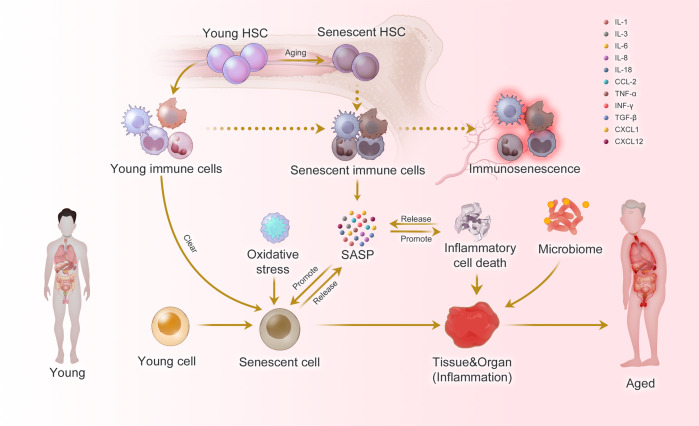
Aging is characterized by systemic chronic inflammation, which is accompanied by cellular senescence, immunosenescence, organ dysfunction, and age-related diseases. Given the multidimensional complexity of aging, there is an urgent need for a systematic organization of inflammaging through dimensionality reduction. Factors secreted by senescent cells, known as the senescence-associated secretory phenotype (SASP), promote chronic inflammation and can induce senescence in normal cells. At the same time, chronic inflammation accelerates the senescence of immune cells, resulting in weakened immune function and an inability to clear senescent cells and inflammatory factors, which creates a vicious cycle of inflammation and senescence. Persistently elevated inflammation levels in organs such as the bone marrow, liver, and lungs cannot be eliminated in time, leading to organ damage and aging-related diseases. Therefore, inflammation has been recognized as an endogenous factor in aging, and the elimination of inflammation could be a potential strategy for anti-aging. Here we discuss inflammaging at the molecular, cellular, organ, and disease levels, and review current aging models, the implications of cutting-edge single cell technologies, as well as anti-aging strategies. Since preventing and alleviating aging-related diseases and improving the overall quality of life are the ultimate goals of aging research, our review highlights the critical features and potential mechanisms of inflammation and aging, along with the latest developments and future directions in aging research, providing a theoretical foundation for novel and practical anti-aging strategies.
Overview
CoChat Summary
## TL;DR
This review argues that inflammaging—a chronic, systemic inflammatory state—is tightly intertwined with cellular senescence, immunosenescence, organ dysfunction, and age-related disease. It synthesizes signaling pathways, aging models, single-cell technologies, and intervention strategies, emphasizing anti-inflammatory approaches, senolytics, stem cell therapy, and organ transplantation.
## Key findings
- The paper describes a “vicious cycle” in which senescent cells secrete SASP factors that promote chronic inflammation, while chronic inflammation accelerates immune-cell senescence and weakens clearance of senescent cells and inflammatory factors.
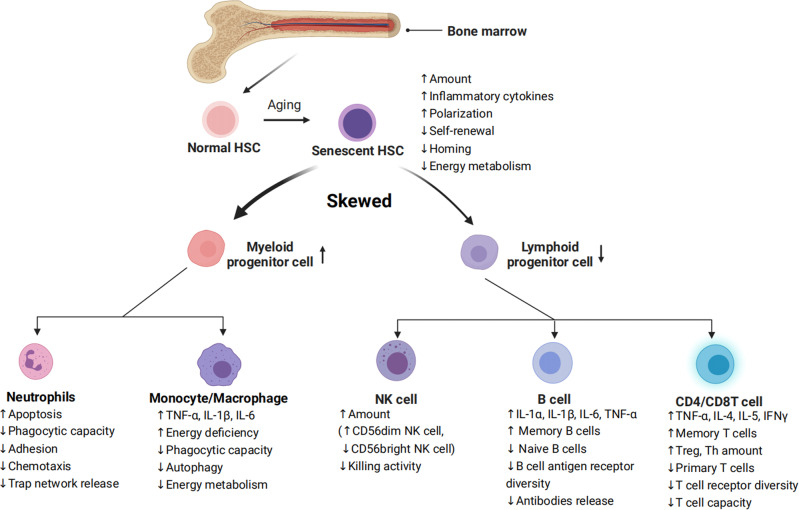
- It highlights reported age-related immune changes across cell types, including decreased circulating naive CD8 T cells as a consistent marker of immunosenescence in healthy older adults, reduced NK-cell cytotoxicity, and age-associated shifts in HSC differentiation toward myeloid lineages.
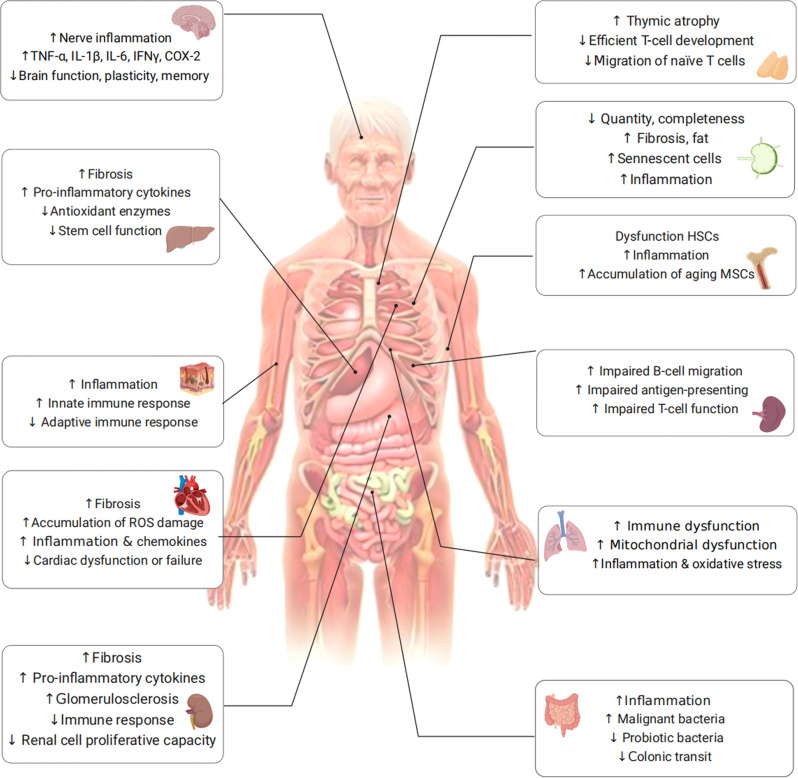
- The review links inflammaging to organ-level decline in the bone marrow, thymus, spleen, lymph nodes, brain, heart, kidney, liver, skin, lung, and gut, with examples such as age-related thymic degeneration reducing new T-cell output and aged bone marrow impairing HSC function.
- For intervention, it notes that the first senolytic combination, dasatinib plus quercetin, increased 6-minute walking distance by an average of 21.5 meters in the first human trial, but other outcomes did not change significantly and long-term efficacy remains insufficiently supported.
## Methods
- Narrative review of inflammaging across molecular, cellular, organ, and disease levels, with sections on signaling pathways, classical aging models, single-cell technology, and intervention strategies.
- No new experimental sample or cohort is reported in the paper itself; instead, it synthesizes findings from prior mouse, human, and cell-line studies cited throughout the text.
- The main approach is qualitative integration of published evidence, including examples from in vitro senescence models, in vivo mouse models, centenarian studies, and emerging single-cell/multi-omics work.
## Limitations
- The paper explicitly notes that the exact causality between inflammation and aging remains unresolved and “deserves further studies” for effective intervention.
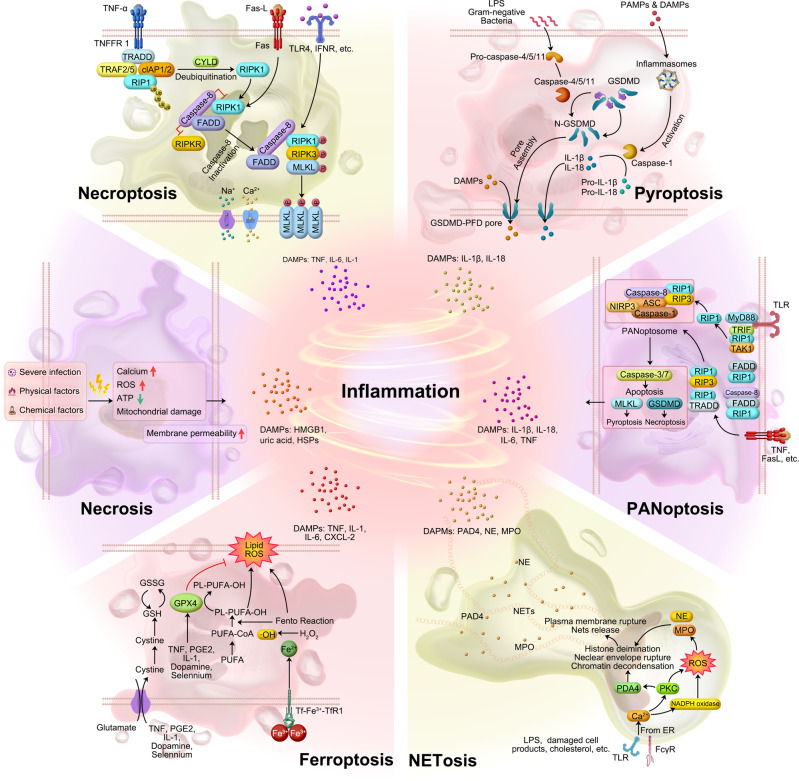
- It also states that PANoptosis has no direct evidence yet linking it to aging, so any connection is speculative.
- Evident from the text: this is a broad review rather than a primary study, so many conclusions are synthesized from heterogeneous prior studies rather than tested in one unified dataset.
Model-written summary. Check it against the paper before relying on it.
Integrity signals
Registry
Cites
Statistics
Figures
Verification
Claims the paper makes
140 Valid · 17 Not valid · 39 Not checked · 40 Own results and interpretations
Some cited sources support this claim and some don’t — read each source’s verdict below.
In the paper
“At the same time, inflammation promotes oxidation through inflammatory mediators.205,206”
§ Inflammation and aging: signaling pathways and intervention therapies > Mechanisms of inflammaging > Triggers of inflammaging
What the sources say
- Disputedcites [205] Furman D Expression of specific inflammasome gene modules stratifies older individuals into two extreme clinical and immunological states Nat. Med. 2017 23 174 184 10.1038/nm.4267 28092664 PMC5320935 sourceExperimental — accuracy not yet measured
The Discussion describes the opposite causal direction: oxidative stress triggers an inflammatory response, including production of inflammatory cytokines. The Results attribute chronic oxidative stress to possible mitochondrial metabolic reprogramming, not to inflammatory mediators. Page numbers are unavailable in our copy. (LLM, conf=0.82)
Checked by a reasoning model — may be wrong.
- Partly supportedcites [206] Furman D Chronic inflammation in the etiology of disease across the life span Nat. Med. 2019 25 1822 1832 10.1038/s41591-019-0675-0 31806905 PMC7147972 sourceExperimental — accuracy not yet measured
The ‘Systemic chronic inflammation and non-communicable disease risk’ section says systemic chronic inflammation can damage tissues by inducing oxidative stress. That supports the inflammation-to-oxidation link, but the passage does not say that inflammatory mediators are the mechanism. (LLM, conf=0.85)
plainstates a cause- Asserted: passes — The authors put it forward as true.
- Checkable: passes — It can be checked against evidence.
- Load-bearing: passes — The paper’s conclusions depend on it.
- Based: passes — The paper gives a reason why it holds.
- Disputed
At least one cited source doesn’t support this claim or points to a different paper, and none confirmed it — see the verdicts below.
In the paper
“Senescent neutrophils exhibit several distinct characteristics during NETosis, including a reduced capacity to release NETs, instability in the quality of formed NETs, and decreased activity of DNA degrading enzymes (DNases) within NETs.”
§ Inflammation and aging: signaling pathways and intervention therapies > Mechanisms of inflammaging > Inflammatory cell death
What the sources say
- Disputedcites [269] Sabbatini M Aging hampers neutrophil extracellular traps (NETs) efficacy Aging Clin. Exp. Res. 2022 34 2345 2353 10.1007/s40520-022-02201-0 35920993 PMC9637667 sourceExperimental — accuracy not yet measured
The Results and Discussion report that neutrophils from elderly subjects produced more NETs than those from adults after LPS stimulation, contrary to the unqualified claim of reduced release. The Introduction and Discussion note reduced NET production in other studies using different stimulation conditions, but distinguish those findings from this paper’s results. (LLM, conf=0.87)
Checked by a reasoning model — may be wrong.
plainstates a cause- Asserted: passes — The authors put it forward as true.
- Checkable: passes — It can be checked against evidence.
- Load-bearing: unclear — It is unclear whether the paper’s conclusions depend on it.
- Based: passes — The paper gives a reason why it holds.
- Disputed
The cited sources support only part of this claim — read each source’s verdict below.
In the paper
“However, in the aging heart, macrophages recruited to the site of infarction exhibit a pro-inflammatory M1 phenotype initially, but subsequently transition to an anti-inflammatory M2 phenotype after myocardial infarction (MI).”
§ Inflammation and aging: signaling pathways and intervention therapies > Inflammaging at the organ level > Sterile organs
What the sources say
- Partly supportedcites [143] Ma Y Mouton AJ Lindsey ML Cardiac macrophage biology in the steady-state heart, the aging heart, and following myocardial infarction Transl. Res. 2018 191 15 28 10.1016/j.trsl.2017.10.001 29106912 PMC5846093 sourceExperimental — accuracy not yet measured
The Abstract and “Macrophages in the MI Heart—Macrophage phenotypes” describe an early M1 and later M2 pattern after infarction. But the paper treats aging-heart macrophages separately and does not establish that this post-MI pattern occurs specifically in aging hearts. Its “Macrophage polarization mechanisms” section also says whether individual macrophages convert in vivo remains uncertain. Page numbers are unavailable in our copy. (LLM, conf=0.88)
plainstates a cause- Asserted: passes — The authors put it forward as true.
- Checkable: passes — It can be checked against evidence.
- Load-bearing: unclear — It is unclear whether the paper’s conclusions depend on it.
- Based: passes — The paper gives a reason why it holds.
- Partly supported
Every source the paper cites for this claim was checked and supports it.
In the paper
“This phenotypic switch promotes angiogenesis and scar formation, aiding in the recovery process.143”
§ Inflammation and aging: signaling pathways and intervention therapies > Inflammaging at the organ level > Sterile organs
What the sources say
- Supportedcites [143] Ma Y Mouton AJ Lindsey ML Cardiac macrophage biology in the steady-state heart, the aging heart, and following myocardial infarction Transl. Res. 2018 191 15 28 10.1016/j.trsl.2017.10.001 29106912 PMC5846093 source
The “Macrophage phenotypes” section says that M2 macrophages facilitate neoangiogenesis and scar repair, and that shifting the M1/M2 balance improves myocardial repair and function after MI. This supports the cited sentence’s account of angiogenesis, scar formation, and recovery. (LLM, conf=0.92)
plainstates a cause- Asserted: passes — The authors put it forward as true.
- Checkable: passes — It can be checked against evidence.
- Load-bearing: unclear — It is unclear whether the paper’s conclusions depend on it.
- Based: passes — The paper gives a reason why it holds.
- Supported
The cited sources that could be checked couldn’t confirm or dispute this claim.
In the paper
“Senescence of HSCs is the basis of immunosenescence. Senescent HSC differentiate into various types of dysfunctional immune cells, driving immunosenescence.16”
§ Inflammation and aging: signaling pathways and intervention therapies > Inflammaging at the cellular level > Hematopoietic stem cells (HSCs)
What the sources say
- Could not verifycites [16] Liggett LA Sankaran VG Unraveling Hematopoiesis through the Lens of Genomics Cell 2020 182 1384 1400 10.1016/j.cell.2020.08.030 32946781 PMC7508400 sourceExperimental — accuracy not yet measured
The Clonal hematopoiesis section describes age-related changes in HSC numbers and clonal expansion, but does not link HSC senescence to immunosenescence. A search for immunosenescence and dysfunctional immune cells found no passage establishing that proposed mechanism; the Outstanding Questions section also notes that some older people retain ostensibly normal hematopoiesis. (LLM, conf=0.72)
plainstates a cause- Asserted: passes — The authors put it forward as true.
- Checkable: passes — It can be checked against evidence.
- Load-bearing: unclear — It is unclear whether the paper’s conclusions depend on it.
- Based: passes — The paper gives a reason why it holds.
- Could not verify
95 more claims · 66 with their cited sources checked
Create a free account to see all 236 claims and every source verdict.
- It may state two separate claims as one. 111
- Probably not a substantial claim. 41
- Borderline: one of the tests for a substantial claim is unclear. 1
Claims other papers make about this one
Each is checked against this paper’s own text: does it say what the citing paper says it does?
The cited source says what the claim attributes to it.
In the citing paper
“Inflammation is implicated in various pathways and processes associated with ageing, including immunosenescence, oxidative stress, metabolic dysregulation, cellular senescence, and other critical events of the ageing process.37”
From Antiageing strategy for neurodegenerative diseases: from mechanisms to clinical advances (2025) · cites this paper as [37]
In the citing paper
“These frameworks suggest that the pathophysiology of AD is characterized by phosphorylated tau accumulation and propagation,31 heightened inflammatory responses, dysregulation of oxidative stress (related to mitochondrial dysfunction),37 alongside a gradual decline in cholinergic function.38”
From Antiageing strategy for neurodegenerative diseases: from mechanisms to clinical advances (2025) · cites this paper as [37]
In the citing paper
“exercise can reduce inflammation levels, which is a contributing factor to the ageing process.37”
From Antiageing strategy for neurodegenerative diseases: from mechanisms to clinical advances (2025) · cites this paper as [37]
Citations
Cites
Reduction in the incidence of type 2 diabetes with lifestyle intervention or metformin
(2002) · New England Journal of Medicine · doi:10.1056/nejmoa012512 · Cited by 19,011
Diversity of the Human Intestinal Microbial Flora
Eckburg, P. B., Bik, E. M., Bernstein, C. N., Purdom, E., Dethlefsen, L., Sargent, M., Gill, S. R., Nelson, K. E., & Relman, D. A. (2005) · Science · doi:10.1126/science.1110591 · Cited by 7,913
Mizgerd, J. P., Kubo, H., Kutkoski, G. J., Bhagwan, S. D., Scharffetter-Kochanek, K., Beaudet, A. L., & Doerschuk, C. M. (1997) · The Journal of Experimental Medicine · doi:10.1084/jem.186.8.1357 · Cited by 7,306
Chronic inflammation in the etiology of disease across the life span
Furman, D., Campisi, J., Verdin, E., Carrera-Bastos, P., Targ, S., Franceschi, C., Ferrucci, L., Gilroy, D. W., Fasano, A., Miller, G. W., et al. (2019) · Nature Medicine · doi:10.1038/s41591-019-0675-0 · Cited by 4,915
NLRP3 inflammasomes are required for atherogenesis and activated by cholesterol crystals
Duewell, P., Kono, H., Rayner, K. J., Sirois, C. M., Vladimer, G., Bauernfeind, F. G., Abela, G. S., Franchi, L., Nuñez, G., Schnurr, M., et al. (2010) · Nature · doi:10.1038/nature08938 · Cited by 4,026
Mortality Associated With Influenza and Respiratory Syncytial Virus in the United States
Thompson, W. W., Shay, D. K., Weintraub, E., Brammer, L., Cox, N., Anderson, L. J., & Fukuda, K. (2003) · JAMA · doi:10.1001/jama.289.2.179 · Cited by 3,673
Inflammaging: a new immune–metabolic viewpoint for age-related diseases
Franceschi, C., Garagnani, P., Parini, P., Giuliani, C., & Santoro, A. (2018) · Nature Reviews Endocrinology · doi:10.1038/s41574-018-0059-4 · Cited by 3,586
Sies, H., Berndt, C., & Jones, D. P. (2017) · Annual Review of Biochemistry · doi:10.1146/annurev-biochem-061516-045037 · Cited by 3,520
Gut microbiota composition correlates with diet and health in the elderly
Claesson, M. J., Jeffery, I. B., Conde, S., Power, S. E., O’Connor, E. M., Cusack, S., Harris, H. M. B., Coakley, M., Lakshminarayanan, B., O’Sullivan, O., et al. (2012) · Nature · doi:10.1038/nature11319 · Cited by 3,314 · cited 1×
“Older adults (>65 years) exhibit reduced microbiota diversity compared to adults, along with greater inter-individual variation in microbiota composition.(182) This is characterized by diminished populations of beneficial bacteria such as Bifidobacterium, Bacillus, E.”
BackgroundCellular Senescence: Defining a Path Forward
Gorgoulis, V., Adams, P. D., Alimonti, A., Bennett, D. C., Bischof, O., Bishop, C., Campisi, J., Collado, M., Evangelou, K., Ferbeyre, G., et al. (2019) · Cell · doi:10.1016/j.cell.2019.10.005 · Cited by 3,225 · cited 1×
“net).(371) On the other hand, other technologies, such as machine learning which integrates multi-modal and multidimensional big data, are also important to address the complexity of aging problems (Table 4).”
Background
Cited by
Items 401–500 of 1,410
Aptamers as Diagnostic and Therapeutic Agents for Aging and Age-Related Diseases
Park, T.-I., Yang, A. H., Kanth, B. K., & Pack, S. P. (2025) · Biosensors · doi:10.3390/bios15040232 · Cited by 9
“Third, dysregulated inflammation, often characterized as a cytokine storm, contributes to age-related problems such as immune and cellular senescence [177].”
Lu, C., Wang, X., Chen, X., Qin, T., Ye, P., Liu, J., Wang, S., & Luo, W. (2025) · Aging Cell · doi:10.1111/acel.70057 · Cited by 11
Arnhold, J. (2025) · Biomolecules · doi:10.3390/biom15040547 · Cited by 8
“Without going into detail, the concept of inflammaging summarizes key features characteristic of the chronic inflammatory process in older persons [7,12,17,20–24].”
Zhang, J., Wang, T., Wang, Y., Li, Y., Wang, L., Wang, J., Miao, Y., Xu, F., & Yao, Y. (2025) · Cell Reports · doi:10.1016/j.celrep.2025.115571 · Cited by 10
Self-citationRen, J., Liu, W., Jin, X., Zhang, C., Xu, X., Deng, G., Gao, X.-M., Li, J., Li, R., Zhang, X., et al. (2025) · Frontiers in Public Health · doi:10.3389/fpubh.2025.1542921 · Cited by 13
The Role of the Exposome in Aging and Age-Related Diseases: A Comprehensive Review
Kareem, M. A., Ashwini, A., & Sunil, T. (2025) · Journal of Pharmacy And Bioallied Sciences · doi:10.4103/jpbs.jpbs_599_25 · Cited by 8
“[20] Research into these mechanisms offers the opportunity to find interventions that might mitigate the downside of the environmental factors on aging.”
Zhao, Y., Wang, Y., Chen, L., Chen, H., Tang, Y., He, Y., & Yao, P. (2025) · Nutrients · doi:10.3390/nu17101618 · Cited by 11
“Genetic variants influence lipid metabolism and insulin resistance [44–46], while biological aging reflects systemic changes in organ function and inflammation [47].”
Self-citationPHYSIOLOGICAL FRACTURE HEALING IS UNAFFECTED BY NEUTROPHIL-DERIVED IL-6 OR IL-6R SIGNALING IN MICE
Fischer, V., Küppers, O., Steppe, L., Krüger, B. T., Hidalgo, J., Haffner‐Luntzer, M., & Ignatius, A. A. (2025) · Shock · doi:10.1097/shk.0000000000002615 · Cited by 8
“In addition, it would be interesting to investigate whether neutrophil-specific IL-6 signaling plays a role in aged mice, as aging is associated with increased inflammation, cellular senescence, mitochondrial dysfunction, and immune system dysregulation (69).”
Zhang, Z., Cao, F., Liang, D., Pan, M., Lu, W. W., Lyu, H., Xie, Y., Zhang, L., & Tang, P. (2025) · Journal of Orthopaedic Translation · doi:10.1016/j.jot.2025.04.018 · Cited by 12
The n-butanol extract of Polygonatum sibiricum improves spleen aging via p53 pathway
Chao, J., Wang, Y., Huang, Q., Zhang, H., Chen, Y., Cheng, X., Mao, J., Yu, J., Yan, M., Chen, S., et al. (2025) · Phytomedicine · doi:10.1016/j.phymed.2025.156888 · Cited by 8
Self-citationLiu, X., Wang, C., Mao, H., & Wei, J. (2025) · Oncology Reports · doi:10.3892/or.2025.8926 · Cited by 16
“The complex interaction among the SASP, oxidative stress and inflamma‑ tion highlights the intrinsic association between cellular senescence and the initiation and progressive accumulation of inflammatory responses (77).”
Zhou, J., An, X., Xia, X., Xiao, W., Ding, D., Li, W., & Huang, Q. (2025) · European journal of medical research · doi:10.1186/s40001-025-02755-5 · Cited by 17
Carvalho, B. G., Ribeiro, A., da Mota, J. C. N. L., Carvalho, L. M., & Nicoletti, C. F. (2025) · Nutrition Research · doi:10.1016/j.nutres.2025.06.010 · Cited by 10
Li, G., Cui, H., Fan, R., Liu, G., Hou, Z., Zhang, Y., Che, X., Wang, T., Wei, H., & Li, P. (2025) · Advanced Science · doi:10.1002/advs.202500283 · Cited by 15
Two-dimensional materials for anti-inflammatory applications
Liu, R., Zhang, X., Zha, Z., Xu, C., & Miao, Z. (2025) · Smart Materials in Medicine · doi:10.1016/j.smaim.2025.07.002 · Cited by 13
Unveiling the link: aging and its impact on ocular diseases
Wang, K., Xie, Y., Lin, Y., Zhu, R., Gao, T., Han, Z., Yang, Z., Jiang, X., Chen, H., Wu, Z., et al. (2025) · Experimental Eye Research · doi:10.1016/j.exer.2025.110551 · Cited by 13
Shen, Z., Zhou, S., Zhang, Y., Zhang, Y., Wang, H., Li, D., Wang, Y., Xie, Z., & Ge, H. (2025) · Food Research International · doi:10.1016/j.foodres.2025.117180 · Cited by 9
Self-citationNanoplastics: An emerging environmental concern in age-related diseases
Shiwakoti, S., Dhakal, B., Ok, Y., Gong, D.-S., Ko, J.-Y., Kim, P.-G., & Oak, M. (2025) · Environmental Pollution · doi:10.1016/j.envpol.2025.126972 · Cited by 11
Guo, C., Li, X., Fan, Z., Zhang, J., & Chen, M. (2025) · Annals of Medicine · doi:10.1080/07853890.2025.2561232 · Cited by 13
“Under conditions of chronic inflammation, immune cells such as macrophages and lymphocytes release a large number of pro-inflammatory cytokines, including IL-6 and TNF-α, which can induce cellular senescence [147].”
Self-citationImpact of night shift work on telomere length and epigenetic age in older workers
Ferrari, L., Comotti, A., Fattori, A., Barnini, T., Laurino, M., Bufano, P., Albetti, B., Hoxha, M., Russo, S., Ciocan, C., et al. (2025) · Journal of Occupational Medicine and Toxicology · doi:10.1186/s12995-025-00477-2 · Cited by 10
“These long-term effects are generally associated with an increased risk of inflammatory, degenerative, and fibrotic diseases, which are characteristic of ageing [7].”
Patterns of Organ‐Specific Proteomic Aging in Relation to Lifestyle, Diseases, and Mortality
Wang, Q., Huang, J., He, Q., Sun, M., Snyder, M. P., & Li, L. (2025) · Aging Cell · doi:10.1111/acel.70251 · Cited by 12
“The clustering of accelerated aging across multiple organs in individuals with chronic diseases suggests shared mechanisms, including chronic low-grade inflammation, mitochondrial inefficiency, oxidative stress, and impaired tissue, which drive systemic aging (Li et al. 2023; Liao and Kennedy 2016).”
Xu, B., Zhou, Z., Xiao, Y., Liu, Q., Xiao, T., Lv, Z., & Wang, H. (2025) · International Journal of Molecular Sciences · doi:10.3390/ijms262311693 · Cited by 8
Aging and lung diseases: Unraveling mechanisms and therapeutic targets
Zhou, Y., Chen, G., Li, X., Li, X., Lin, Z., Liu, L., Pu, D., Chen, J., Chen, Y., Lin, Z., et al. (2025) · Chinese Medical Journal - Pulmonary and Critical Care Medicine · doi:10.1016/j.pccm.2025.11.005 · Cited by 11
Self-citationAnastasiou, I. A., Kounatidis, D. C., Vallianou, N. G., Rebelos, E., Karampela, Ι., & Dalamaga, Μ. (2025) · International Journal of Molecular Sciences · doi:10.3390/ijms27010233 · Cited by 11
“The chronic inflammatory environment present in atherosclerosis, marked by elevated cytokines such as IL-1 β , IL-6, TNF-α , and interferon-gamma (IFN-γ ), promotes oxidative stress and DNA damage in HSCs, particularly given their high turnover rates required to sustain lifelong hematopoiesis [83].”
Visceral adiposity, metabolic health and aging
Maeyens, L. T., Nelson, J. F., & Zhao, S. (2026) · Nature Aging · doi:10.1038/s43587-026-01076-4 · Cited by 17
Tsap, M. I., Yatsenko, A. S., Hegermann, J., Beckmann, B., Tsikas, D., & Shcherbata, H. R. (2024) · eLife · doi:10.7554/elife.98020 · Cited by 8
“…frequently develop chronic, low-grade inflammation, a condition often named inflammaging, which is characterized by a sustained increase in inflammatory markers without apparent infection or injury ( Chitnis and Weiner, 2017 ; Franceschi et al., 2018 ; McGeer and McGeer, 2004 ; Li et al., 2023 ).”
BackgroundYang, P., Miao, Y., Wang, T., & Sun, J. (2024) · Inflammation Research · doi:10.1007/s00011-024-01886-5 · Cited by 14
“This impairs the immune function and makes it more difficult to eliminate senescent cells and inflammatory factors, creating a vicious cycle of inflammatory responses and cellular senescence [16–18].”
Lorenz, E. C., Smith, B. H., Liang, Y., Park, W. D., Bentall, A., Dhala, A. F., Waterman, A. D., Kennedy, C. C., Hickson, L. J., Rule, A. D., et al. (2024) · Transplantation · doi:10.1097/tp.0000000000005103 · Cited by 8
“8 9-11 Additionally, chronic inflammation has been associated with cellular senescence, or irreversible cell cycle arrest, although it is unclear whether the senescent features are the cause and/or the result of chronic inflammation.”
Delaying Renal Aging: Metformin Holds Promise as a Potential Treatment
Qiao, Z., Zhao, J., Yuan, J., Qin, Y., Zhu, Z., Liu, J., & Sun, S. (2024) · Aging and Disease · doi:10.14336/ad.2024.0168 · Cited by 13
“Senescent cells secrete SASP factors that induce chronic inflammation and accelerate aging of neighboring normal cells [77].”
Cellular senescence contributes to spontaneous repair of the rat meniscus
Aimono, Y., Endo, K., & Sekiya, I. (2024) · Aging Cell · doi:10.1111/acel.14385 · Cited by 12
“Senescent cells that acquire SASP secrete a variety of inflammatory cytokines, chemokines, growth factors, and prote - ases (Li et al., 2023 ).”
Anti-Aging Potential of Avocado Oil via Its Antioxidant Effects
Torres‐Isidro, O., González-Montoya, M., Vargas-Vargas, M. A., Florian-Rodriguez, U., Garcia‐Berumen, C. I., Montoya-Pérez, R. D. C., Saavedra‐Molina, A., Cortés, E. C., Rodríguez-Orozco, A. R., & Cortés‐Rojo, C. (2025) · Pharmaceuticals · doi:10.3390/ph18020246 · Cited by 11
Jiang, Q., Zhou, J., Chen, Q., Huang, Y., Yang, C., & Liu, C. (2023) · Functional & Integrative Genomics · doi:10.1007/s10142-023-01163-4 · Cited by 8
“Consistent with previous studies, cellular senescence induces the activity of SASP complement IL-1α, IL-6, Mmp-3, Mmp-9, Cxcl-1, and Cxcl-10 pathways (Li et al. 2023), which might affect the proliferation of tumor epithelial cells via cell–cell communication.”
ROS-based nanomedicines for anti-inflammatory therapies
Repellin, M., Guérin, H., Catania, G., & Lollo, G. (2023) · Redox Experimental Medicine · doi:10.1530/rem-23-0021 · Cited by 10
“In addition to oxidative stress on cellular components, ROS-related mitochondria damages and inflammation have been demonstrated to elicit age-related pathologies or early cellular senescence (Hajam et al., 2022; Li et al., 2023).”
BackgroundNiu, K., Chang, L., Zhang, R., Jiang, Y., Shen, X., Lu, X., Zhang, S., Ma, K., Zhao, Z., Li, M., et al. (2024) · Journal of Traditional and Complementary Medicine · doi:10.1016/j.jtcme.2024.01.009 · Cited by 8
Liang, Y., Qiu, S., Zou, Y., Leung, E. L., & Luo, L. (2024) · Antioxidants and Redox Signaling · doi:10.1089/ars.2024.0556 · Cited by 8
“In addition, Astragaloside IV (AS-IV), curcumin also attenuated diabetic cardiomyopathy (Kar et al., 2023; Li et al., 2023d).”
InfluentialHost Risk Factors for Tuberculosis
Asgharzadeh, V., Rezaei, S. A. S., Asgharzadeh, M., Rashedi, J., Kafil, H. S., Nobari, H. J., Khalili, A. A., Raeisi, M., Ozma, M. A., & Poor, B. M. (2024) · Infectious Disorders - Drug Targets · doi:10.2174/0118715265304343240722190414 · Cited by 14
Zhang, L., Chen, Y., Yu, H. H., Zhang, J., Jiang, W., Li, Q., Li, X., & Zhou, Y. (2024) · Nursing and Health Sciences · doi:10.1111/nhs.13168 · Cited by 7
“This premature aging can be attributed to several factors, including a chronic inflammatory state commonly found in these patients, which may accelerate aging (Li et al. 2023).”
Self-citationBoonmee, A., Benjaskulluecha, S., Kueanjinda, P., Wongprom, B., Pattarakankul, T., Sri-ngern-ngam, K., Umthong, S., Takano, J., Koseki, H., & Palaga, T. (2024) · Epigenetics & Chromatin · doi:10.1186/s13072-024-00562-6 · Cited by 8
Priora, M., Becciolini, A., Celletti, E., Penta, M. D., Gullo, A. L., Paroli, M., Bravi, E., Andracco, R., Nucera, V., Ometto, F., et al. (2024) · Medicina · doi:10.3390/medicina60121982 · Cited by 11
Chang, T.-T., Chang, C., & Liao, V. H. (2024) · Chemico-Biological Interactions · doi:10.1016/j.cbi.2024.111349 · Cited by 10
Zhen, Y., Zhou, X., Xiong, A., Yan, Y., & Zhang, X. (2024) · International Journal of Biological Macromolecules · doi:10.1016/j.ijbiomac.2024.139377 · Cited by 8
Liao, P., Tong, S., Du, L., Mei, J., Wang, B., Lu, Y., Yao, M., Zhang, C., Liu, D., Zhong, Z., et al. (2025) · Journal of Orthopaedic Translation · doi:10.1016/j.jot.2024.09.013 · Cited by 10
“Senescent monocytes/macrophages exhibit an impaired capacity for the clearance of senescent cells and the defense against viral pathogens [2,11].”
Wen, S., Ng, S., Noriega, L., Chen, T., Chen, C., Lee, S., Huang, C., & Kuo, W. (2025) · BioFactors · doi:10.1002/biof.2152 · Cited by 7
“40 Strategies to reverse cellular aging include preventing cells from aging and enhancing the clearance of senescent cells, both of which effectively mitigate the deleterious effects of these cells.”
Patel, S., Ellis, K., Scipione, C. A., Fish, J. E., & Howe, K. L. (2025) · Frontiers in Cardiovascular Medicine · doi:10.3389/fcvm.2024.1506360 · Cited by 16
“Numerous pro-in fl ammatory cytokines and growth factors, including GM-CSF, IL-1, and IL-6 and anti-in fl ammatory cytokines such as IL-4 and IL-13 are produced by senescent cells (48, 53).”
InfluentialLi, G., Li, D., Li, Y., & Liu, B. (2025) · Experimental Gerontology · doi:10.1016/j.exger.2025.112690 · Cited by 9
“This inflammatory environment not only destabilizes plaques but also promotes vascular smooth muscle cell (VSMC) proliferation and migration, accelerating vascular remodeling and plaque instability (Li et al., 2023).”
Wei, J., Tan, Z., Huang, G., Zeng, Y., Chen, S., Yuan, G., He, S., & Zhou, Y. (2025) · Food Science & Nutrition · doi:10.1002/fsn3.70161 · Cited by 10
Calorie-restriction treatment mitigates the aging in rat liver model
Urlandini, L., Leonetti, A. E., Conforti, F., Perri, A., Lofaro, D., Antonucci, G., Mandalà, M., Bossio, S., Agostino, S. D., & Rago, V. (2025) · Biogerontology · doi:10.1007/s10522-025-10245-8 · Cited by 8
“…CR efficaciously counteracts hepatic pathological changes related to aging, Aging is a multifactorial process characterized by systemic low-chronic inflammation, which is accompanied by cellular senescence and organ dysfunction, leading to the onset of many aging-related diseases (Li et al. 2023).”
Bo, M. D., Gambirasi, M., Vruzhaj, I., Cecchin, E., Pishdadian, A., Toffoli, G., & Safa, A. (2025) · International Journal of Molecular Sciences · doi:10.3390/ijms26114982 · Cited by 10
“Increased concentrations of pro-inflammatory cytokines, specifically IL-6, TNF-α , and IL-1, have been repeatedly associated with frailty, cognitive deterioration, atherosclerosis, insulin resistance, and neurodegenerative disorders in the elderly [2,21,116].”
Peker, P., Geçgel, A., Duşgün, A., et al. (2025) · Journal of Clinical Medicine · doi:10.3390/jcm14113715 · Cited by 7
“…accurately reflected by the NPS. Aging is known to alter immune function, leading to a state of chronic, low-grade inflammation referred to as “inflamm-aging”, characterized by elevated levels of pro-inflammatory cytokines (e.g., IL-6, TNF-α ) and a decline in anti-inflammatory mechanisms [40].”
Wu, H., Lin, Z., Zhang, C., Jiang, Y., Bai, L., Zheng, J., Wei, S., & Deng, C. (2025) · Environmental Pollution · doi:10.1016/j.envpol.2025.126603 · Cited by 10
Lima, D. P., Monteiro, P. A., de Luna, J. R. G., Júnior, A. B. V., Santos, L. T. R., de Almeida, S. B., Saldanha, R., de Alencar, M. S., Lopes, F. K. D. M., Alencar, Á. P., et al. (2025) · Frontiers in Nutrition · doi:10.3389/fnut.2025.1507545 · Cited by 10
“Various factors may contribute to reduced appetite in PD, including “inflammaging” (62, 63), dysautonomic symptoms (such as constipation and dyspepsia) (64–66), dysphagia (67), antiparkinsonian side effects (66, 68, 69), depression (65, 69, 70) and dementia syndrome (71, 72).”
Transcriptional Diversity in Response to Aging Across Skeletal Muscles
Liu, C., Zheng, D., Zhang, R., Li, H., Tong, X., Wu, Y., Zhang, G., Wang, S., Chen, H., Ren, Z., et al. (2025) · Aging Cell · doi:10.1111/acel.70164 · Cited by 12
“…myofibers and MuSCs, excessive adipocyte accumulation, adipogenic differentiation of FAPs, immune cell dysfunction, and altered intercellular communication (Giuliani et al. 2021; Jing et al. 2022; Kedlian et al. 2024; Leote et al. 2024; Li et al. 2023; Petrany et al. 2020; Wang, Zhou, et al. 2024).”
Self-citationRecent progress in stem cell and immune cell-based interventions for aging and age-related disorders
Li, H., Han, D., Zong, F., Zhang, Y., Han, Z., & Xu, Z. (2025) · Frontiers in Aging · doi:10.3389/fragi.2025.1638168 · Cited by 8
Maejima, Y., Yokota, S., Yamachi, M., Hidema, S., Ono, T., Taira, S., Nishimori, K., de Wet, H., & Shimomura, K. (2025) · Aging Cell · doi:10.1111/acel.70198 · Cited by 8
“Factors secreted by senescent cells, known as the senescence-associated secretory phenotype (SASP), such as IL-6 and TNFα, promote chronic inflammation (Li et al. 2023).”
Li, N., Li, Y., Xu, J., Elango, J., & Wu, W. (2025) · Antioxidants · doi:10.3390/antiox14081021 · Cited by 8
“Maintaining a balanced cytokine profile is critical for immune homeostasis, and the associated signaling pathways are key targets for anti-inflammatory intervention [47–49].”
The Interplay of Aging and Cancer: Mechanisms, Implications, and Therapeutic Strategies
Wang, L., Luo, Y., Chen, X., Wang, Y., & Zhang, Y. (2025) · MedComm – Oncology · doi:10.1002/mog2.70041 · Cited by 10
Self-citationInterplay Between Aging and Glial Cell Dysfunction: Implications for CNS Health
García‐Domínguez, M. (2025) · Life · doi:10.3390/life15101498 · Cited by 17
“Within the CNS, its impact is particularly pronounced, manifesting through the sustained activation of glial populations, most prominently microglia and astrocytes [190].”
SkinspanTM: A Healthy Longevity Framework for Skin Aging
Wyles, S. P., Maredia, H. S., Ansaf, R. B., Dweydari, M., Hurt, R. T., Bonnes, S. L. R., Khosla, S., LeBrasseur, N. K., Draelos, Z. D., & Davis, M. D. P. (2025) · Mayo Clinic Proceedings · doi:10.1016/j.mayocp.2025.07.027 · Cited by 16
Wu, X., Wang, R., Zhang, Q., Liu, T., Liu, J.-Y., Xu, X., & Gong, J.-H. (2025) · Cell Death Discovery · doi:10.1038/s41420-025-02746-9 · Cited by 11
He, W., Qiu, H., Feng, Y., Qiu, Q., Zheng, L., Pan, C., Cui, X. J., Sun, Y., Wang, B., & Hu, Y. (2025) · Cell Death and Disease · doi:10.1038/s41419-025-08050-9 · Cited by 8
“Factors secreted by senescent cells, collectively termed the senescence-associated secretory phenotype (SASP), perpetuate chronic in fl ammation and further promote cellular senescence [12].”
Li, Y., Chen, X., Zhong, P., Xing, Y., & Miao, P. (2025) · BMC Neurology · doi:10.1186/s12883-025-04460-6 · Cited by 10
“These factors collectively exacerbate chronic inflammation and oxidative damage in tissue microenvironments, contributing to age-related pathologies [9].”
Skeletal Muscle-Cardiac Muscle Aging
Kalra, K., Berchie, P. O., Singh, S. B., Jamil, Y., Karthikeyan, N., Ancheta, O. G., Hashmi, A. Z., Martyn, T., Kapadia, S., Menon, V., et al. (2025) · JACC Advances · doi:10.1016/j.jacadv.2025.102347 · Cited by 13
Lee-Ødegård, S., Argentieri, M. A., Norheim, F., Drevon, C. A., & Birkeland, K. I. (2025) · npj Aging · doi:10.1038/s41514-025-00318-w · Cited by 9
“Several molecular biomarkers have been proposed to estimate biological age, including epigenetic clocks 4 , such as one developed by our lab (eABEC) 5 , telomere length 6 , and in fl ammaging scores 7 .”
Lee, J., Han, M., Wang, K., Butler, L. R., & Sinclair, D. A. (2026) · Progress in Retinal and Eye Research · doi:10.1016/j.preteyeres.2026.101442 · Cited by 9
Gu, W., Wan, R., Chen, Z., Wang, W., Xie, S., Hao, C., Liu, G., Wan, M., & Gao, P. (2026) · EBioMedicine · doi:10.1016/j.ebiom.2026.106226 · Cited by 13
Striking the right balance with type I interferon signalling in cancer
Chadwick, T. B., So, J., Hertzog, P. J., Haynes, N. M., & Parker, B. S. (2026) · Nature reviews. Cancer · doi:10.1038/s41568-026-00915-1 · Cited by 17
“tumour immune surveillance 301 , compromise T cell priming and promote immune exhaustion 109 .”
Bertoni, G., Ristori, S., & Monti, D. (2026) · Cells · doi:10.3390/cells15080657 · Cited by 11
Rethinking early Alzheimer’s disease: An impaired internal model updating disorder?
Antonioni, A. (2026) · Neuroscience & Biobehavioral Reviews · doi:10.1016/j.neubiorev.2026.106790 · Cited by 9
Metabolic regulation of aged hematopoietic stem cells: key players and mechanisms
Karimnia, N., Harris, J., Heazlewood, S. Y., Cao, B., & Nilsson, S. K. (2023) · Experimental Hematology · doi:10.1016/j.exphem.2023.09.006 · Cited by 8
Zhang, W., Huang, H., Liu, X., Zhang, L., Li, L., Ding, Y., Xiao, Y., Ali, M. J., Sun, H., & Xiao, C. (2024) · Investigative Ophthalmology & Visual Science · doi:10.1167/iovs.65.3.38 · Cited by 8
“56 Inhibiting IL-6 has been reported to improve erythroid progenitors function in aged mice.”
Self-citationZhao, X. O., Zong, J., Liu, Y., Aili, T., Qiu, M., Wu, J., & Hu, B. (2024) · Aging and Disease · doi:10.14336/ad.2024.0123-1 · Cited by 13
“SASPs consist of various factors, including IL-6, IL-1, CXCL-4, CXCL-5, CXCL-6, CXCL-12, CCL-2, CCL-3, CCL-7, CCL-8, transforming growth factor-β (TGF-β), and matrix metalloproteinases (MMPs) [100, 103].”
InfluentialMacamo, E. D., Mkhize‐Kwitshana, Z. L., Mthombeni, J. Q., & Naidoo, P. (2024) · Current Issues in Molecular Biology · doi:10.3390/cimb46070431 · Cited by 9
“Senescent cells, also known as the senescence-associated secretory phenotype (SASP), stop dividing but remain metabolically active and often release inflammatory chemicals [15].”
BackgroundLi, C., Wen, Q., Zhu, G., Zhang, Y., Wang, Y., Luo, D., & Wu, J. (2024) · International Urology and Nephrology · doi:10.1007/s11255-024-04203-5 · Cited by 8
“The vicious cycle between inflammation and aging has been reported in previous studies [28].”
Self-citationThe network structural entropy for single-cell RNA sequencing data during skin aging
Liu, Z., Lin, H., Li, X., Xue, H., Lu, Y., Xu, F., & Shuai, J. (2024) · Briefings in Bioinformatics · doi:10.1093/bib/bbae698 · Cited by 7
Self-citationCela, E., Patterson, E. K., Gill, S. E., Cepinskas, G., & Fraser, D. D. (2025) · Clinical and Translational Science · doi:10.1111/cts.70161 · Cited by 12
Cellular senescence in age-related musculoskeletal diseases
Xiong, J., Guo, Q., & Luo, X. (2025) · Frontiers of Medicine · doi:10.1007/s11684-025-1125-7 · Cited by 10
Casciano, F., Severi, P., Marongiu, L., Caproni, A., Terranova, C., Spitilli, A., Ferrari, D., Ruzza, C., Marconi, P., Rizzo, P., et al. (2025) · Frontiers in Immunology · doi:10.3389/fimmu.2025.1574455 · Cited by 8
Hasanaj, E., Beaulieu, D., Wang, C., Hu, Q., Bueno, M., Sembrat, J., Pineda, R., Melo-Narváez, M. C., Cárdenes, N., Yanwu, Z., et al. (2024) · bioRxiv (Cold Spring Harbor Laboratory) · doi:10.1101/2024.12.21.629928 · Cited by 7
“The last assumption is problematic as literature has shown that aging patients suffer from other hallmarks of aging not related to senescence such as inflammation, epigenetic alterations, or mitochondrial dysfunction 23,24,96 .”
Knapik, M., Kuna, J., Chmielewski, G., Jaśkiewicz, Ł., & Krajewska–Włodarczyk, M. (2025) · Journal of Clinical Medicine · doi:10.3390/jcm14186527 · Cited by 9
“Chronic inflammation is associated with elevated levels of pro-inflammatory cytokines, which affect various physiological processes, including, among others, the sleeping pattern and muscle metabolism [57,88].”
Hatanaka, S., Shida, T., Osuka, Y., Kojima, N., Motokawa, K., Okamura, T., Hirano, H., Awata, S., & Sasai, H. (2024) · Clinical Nutrition ESPEN · doi:10.1016/j.clnesp.2024.09.017 · Cited by 6
Wilson, S. J. (2024) · Comprehensive Psychoneuroendocrinology · doi:10.1016/j.cpnec.2024.100266 · Cited by 7
“Indeed, circulating inflammation creates DNA damage and accelerates cell senescence; aged cells, in turn, secrete more cytokines, known as the senescence-associated secretory phenotype (SASP) [67].”
BackgroundZhan, Y., Yang, R., Feng, J., Bai, G., Shi, X., Zhang, J., & Zhang, J. (2025) · BMC Public Health · doi:10.1186/s12889-025-21430-2 · Cited by 11
“At mean-while, chronic inflammation accelerates the senescence of various cells like immune cells, which impairs immune function and the ability to clear senescent cells and inflammatory factors [43].”
Jeong, C.-U., Leiby, J. S., Kim, D., & Choe, E. K. (2025) · JMIR Aging · doi:10.2196/64473 · Cited by 13
“Previous studies have also identified the importance of factors such as kidney function [24], metabolic health [25,26], and inflammatory markers [27,28] in the aging process.”
Lactylation: A Novel Epigenetic Regulator of Cellular Senescence
Sun, C., Li, J., Dong, L., Mou, Y., Zhang, B., & Song, X. (2025) · Aging and Disease · doi:10.14336/ad.2025.0277 · Cited by 15
“Moreover, the induction of tumor cellular senescence has emerged as a promising therapeutic approach [4-7].”
Huang, R., Che, R., Sun, T., Xie, W., & Zhang, S. (2025) · Frontiers in Microbiology · doi:10.3389/fmicb.2025.1550971 · Cited by 12
“mortality (Bao et al., 2023; Guo et al., 2022; Li et al., 2023).”
Ding, Y., Sun, Z., Wu, Z., Zhang, Y., Ma, J., Luo, H., & Cao, X. (2025) · Advanced Healthcare Materials · doi:10.1002/adhm.202501042 · Cited by 9
Lei, Y., Sung, H. K., Burger, D. E., & Sweeney, G. (2025) · Ageing Research Reviews · doi:10.1016/j.arr.2025.102823 · Cited by 9
da Silva, J. C., Ramos, R. F., da Silva, A. A. S. V., de Melo, M. E. F., de Oliveira, M. A., de Sousa, L. B., Bispo, E. C. I., da Silva, I. G. M., Sousa, M. G. D. C., Corrêa, J. R., et al. (2025) · Journal of Endodontics · doi:10.1016/j.joen.2025.07.009 · Cited by 10
Albarrati, A., & Gale, N. (2025) · Current Issues in Molecular Biology · doi:10.3390/cimb47070561 · Cited by 6
“Furthermore, inflammaging has been proposed as a key mechanism in aging [15,17,22].”
Li, Y., Yang, Y., Xia, D., Fang, Y., Tang, C., Yu, J., Geng, D., Wang, Z., & Xiao, L. (2025) · Redox Biology · doi:10.1016/j.redox.2025.103804 · Cited by 6
“Inflammatory senescence refers to a state of long-term chronic pro-inflammatory response that progressively increases with senescence and is closely associated with the development of various age-related diseases [18].”
Xu, Z., Wang, E., Wang, Y., Zhou, Y., Zeng, F., Luo, Y., Tan, Y., Jiang, Y., Zhao, C., & Hong, H. (2025) · Journal of Functional Foods · doi:10.1016/j.jff.2025.106979 · Cited by 8
Self-citationPayet, L. D., Coléon, A., Bedin, A., Auguste, L., Duroyon, M., Mollévi, C., Blain, H., Mennechet, F. J. D., Jeziorski, É., & Tuaillon, É. (2025) · Scientific Reports · doi:10.1038/s41598-025-13883-7 · Cited by 8
“This reduced expression of PD-L1 may contribute to the failure to adequately control inflammatory responses, potentially leading to the chronic low-grade inflammation characteristic of inflammaging 32,43 .”
Takahashi, T., Takahashi, T., & Asano, Y. (2025) · Biomedical Journal · doi:10.1016/j.bj.2025.100906 · Cited by 7
“…and acquisition of a proinflammatory secretory profile, is increasingly implicated in the pathogenesis and progression of SSc. Senescence can be triggered by environmental stress, oxidative damage, and chronic inflammation, leading to the accumulation of senescent cells in various tissues [90,91].”
Role of circadian CLOCK signaling in cellular senescence
Yuan, Z., Nepovimová, E., Wu, Q., & Kuča, K. (2025) · Biogerontology · doi:10.1007/s10522-025-10319-7 · Cited by 6
“The SASP not only promotes chronic inflammation but also induces senescence in normal cells (Li et al. 2023b; Olivieri et al. 2015).”
InfluentialChen, J., Yang, L., Wang, L., Liu, Q., & Qiu, B. (2025) · Frontiers in Nutrition · doi:10.3389/fnut.2025.1642363 · Cited by 9
Fukuda, N., Takamaru, N., Kang, J., & Toita, R. (2025) · ACS Applied Materials & Interfaces · doi:10.1021/acsami.5c15449 · Cited by 6
Tendon Tissue Engineering: Pathophysiological Mechanism and Bioengineering Therapy of Tendinopathy
Chen, B., Zhao, Y., Guo, S., Tang, C., Xu, B., Zhou, M., Chen, Q., Ma, L., Lyu, J., Guo, L., et al. (2025) · International Journal of Nanomedicine · doi:10.2147/ijn.s550439 · Cited by 8
“109 Aging also induces senescence and depletion of the stem cell pool.”
Self-citationAn mRNA microsphere vaccine inhibiting overactivation of DNA sensing mechanisms
Zhang, F., Zheng, J., Wang, F., Zhuang, Y., Tang, Y., Wang, D., Du, Y., Zhao, W., Lu, M., Hu, W., et al. (2025) · 中国科学通报:英文版 · doi:10.1016/j.scib.2025.11.016 · Cited by 8
Guo, C., Luo, J., Wu, Y., Luo, J.-M., Han, B., Liu, S., & Xu, B. (2025) · Journal of Agricultural and Food Chemistry · doi:10.1021/acs.jafc.5c12207 · Cited by 6
Molecular Mechanisms Driving Metastatic Progression Within the Aged Tumor Microenvironment
Kumar, S., Chand, J., Sharma, P., Singh, S., Khanal, P., Chellammal, H. S. J., Suhail, A., & Mittal, S. (2025) · International Journal of Molecular Sciences · doi:10.3390/ijms262311508 · Cited by 6
“A key characteristic of the aging lung is the accumulation of senescent cells in both the epithelial and stromal areas, which, through their SASP, induce a persistent inflammatory state that fosters genomic instability and epithelial– mesenchymal transition [94].”
Metadata
- Authors
- Li, X., Li, C., Zhang, W., Wang, Y., Qian, P., & Huang, H.
- Affiliations
- First Affiliated Hospital Zhejiang University (CN)
- Zhejiang University-University of Edinburgh Institute (CN)
- Corresponding author
- Qian, Pengxu
- Huang, He
- Venue
- Signal Transduction and Targeted Therapy
- Published
- 2023-06-08
- Volume
- 8
- Issue
- 1
- Pages
- 239-239
- ISSN
- 2059-3635 (ISSN-L)
- PMC
- PMC10248351
- OpenAlex
- W4379966446
- Semantic Scholar
- 03e8f6a34adfe5506c86edea58c1c55ce12b0141
- Cited by
- 1,443
- References
- 479
- Citations by year
- 2026: 496 · 2025: 592 · 2024: 322 · 2023: 32
- FWCI
- 51.26
- Type
- journal article
- Language
- en
- Open access
- gold
- doi.org
- Licence
- cc-by
- creativecommons.org/licenses/by/4.0 (tdm)
- creativecommons.org/licenses/by/4.0 (vor)
- Locations
- Signal Transduction and Targeted Therapy (publishedVersion, cc-by)
- PubMed Central (publishedVersion, cc-by)
- PubMed (publishedVersion)
- DOAJ (DOAJ: Directory of Open Access Journals) (submittedVersion, cc-by-sa)
- Funders
- National Natural Science Foundation of China (81900176, 92268117, 82130003, 82222003, 82161138028, 82222003, 92268117)
- National Key Research and Development Program of China (2022YFA1103500)
- Topics
- Life Sciences › Biochemistry, Genetics and Molecular Biology › Cell Biology › Telomeres, Telomerase, and Senescence
- Life Sciences › Biochemistry, Genetics and Molecular Biology › Aging › Genetics, Aging, and Longevity in Model Organisms
- Life Sciences › Biochemistry, Genetics and Molecular Biology › Molecular Biology › Inflammasome and immune disorders
- Keywords
- inflammaging, aging, chronic inflammation, cellular senescence, immunosenescence, senescence-associated secretory phenotype, senolytics, anti-aging strategies, age-related diseases, organ dysfunction, single-cell technologies, aging models, signaling pathways
- MeSH terms
- Humans, Inflammation, Quality of Life, Signal Transduction, Cellular Senescence
About these checks
Registry, retraction, Cites and statistics results are computed, not judged, with one exception: a printed reference that no index lists is read once by a model before it counts as a citation error. Claims are extracted by a model and kept only when their quote appears verbatim in the text; each cited source is then checked, with a model’s help, for whether it says what the claim relies on. Those verdicts can be wrong — read the claim’s quote and the cited source before relying on one.
The claim verdicts this report counts are experimental: their accuracy is not yet measured.
A language model drew the claims from the paper on 2026-10-10, under version 3 of the claim definition (model deepseek-v4.1-flash, prompt extract-v3).
A second model labelled each claim on 2026-10-10 (model jev-1.13-20260917, definition revision gold-guideline-v0.2).
Cited sources are checked with a language model’s help (gpt-6-sol).
Statistics and arithmetic are recomputed, not judged.
Confidence bands are shown only for fields calibrated on our annotated test set. None is calibrated yet, so no band is shown.
What counts as a claim ›How we measure confidence ›How we check this ›
Are you an author, or do you see a problem with this page? Request a review
Data sources
Bibliographic data: Semantic Scholar, OpenAlex, Crossref.
Contains information from the Semantic Scholar Academic Graph Datasets, made available under the ODC Attribution License (ODC-BY 1.0).
Semantic Scholar’s data is described in: Kinney, R., et al. (2023). The Semantic Scholar Open Data Platform. arXiv:2301.10140.
