

Recent advances in targeting the “undruggable” proteins: from drug discovery to clinical trials
Open accessThe DOI matches its Crossref record; 672 of the 672 references it cites were found in a registry or an index; 168 of the 876 sources its claims cite were checked for support.
Abstract
Undruggable proteins are a class of proteins that are often characterized by large, complex structures or functions that are difficult to interfere with using conventional drug design strategies. Targeting such undruggable targets has been considered also a great opportunity for treatment of human diseases and has attracted substantial efforts in the field of medicine. Therefore, in this review, we focus on the recent development of drug discovery targeting “undruggable” proteins and their application in clinic. To make this review well organized, we discuss the design strategies targeting the undruggable proteins, including covalent regulation, allosteric inhibition, protein–protein/DNA interaction inhibition, targeted proteins regulation, nucleic acid-based approach, immunotherapy and others.
Overview
CoChat Summary
TL;DR
This review surveys drug-discovery strategies for "undruggable" proteins — targets with flat, pocketless interfaces such as KRAS, phosphatases, transcription factors, and PPI-driven proteins — covering covalent regulation, allosteric modulation, PPI/protein–DNA inhibition, targeted protein degradation and stabilization, nucleic acid approaches, and immunotherapy. It catalogs marketed drugs, clinical candidates, and preclinical leads across these modalities, framing the field's shift from "undruggable" to "difficult to drug" or "yet to be drugged."
Key findings
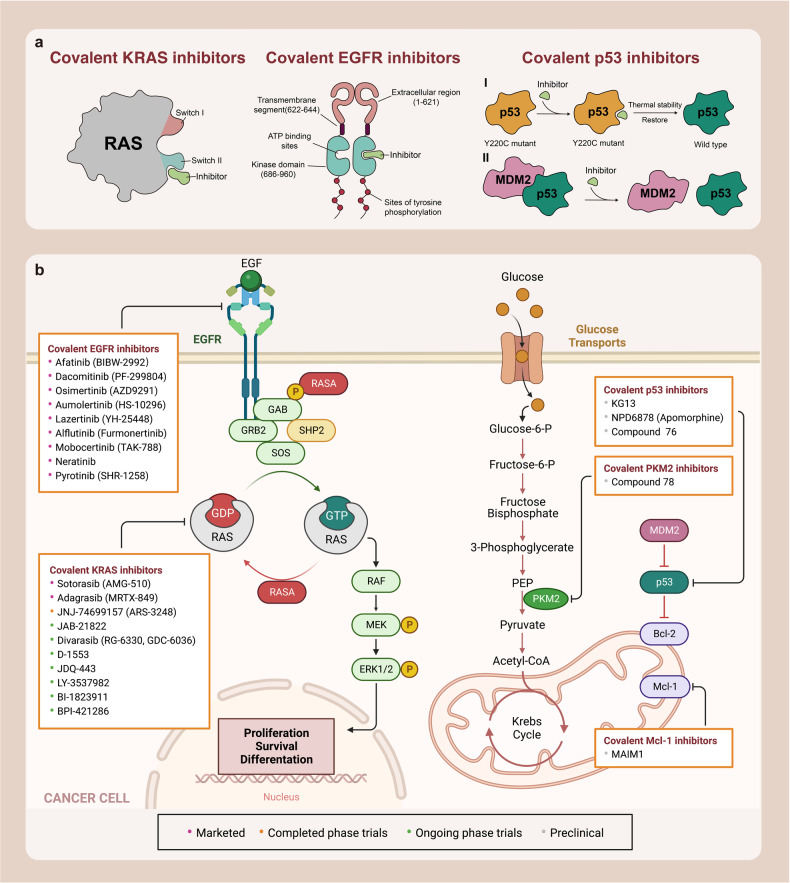
- Covalent inhibition produced the field's landmark success: sotorasib (AMG-510) received FDA accelerated approval in May 2021 for KRASG12C-mutated NSCLC, with an overall remission rate of 37%, disease control rate of 81%, median PFS 6.8 months, and median duration of remission 10.0 months; adagrasib (MRTX-849) followed with ORR 58%, median duration of treatment 9.5 months, and median duration of remission 12.6 months.
- Clinical-stage covalent KRASG12C inhibitors report ORRs including JAB-21822 56.3% (18/32, DCR 90.6%), divarasib 46% confirmed ORR (26/57 evaluable NSCLC patients), D-1553 37.8% (28/74, DCR 91.9%), JDQ-443 57% (4/7) at the phase II recommended dose, and IBI-351 50.9% (28/55) overall with 61.9% (13/21) at the recommended dose.
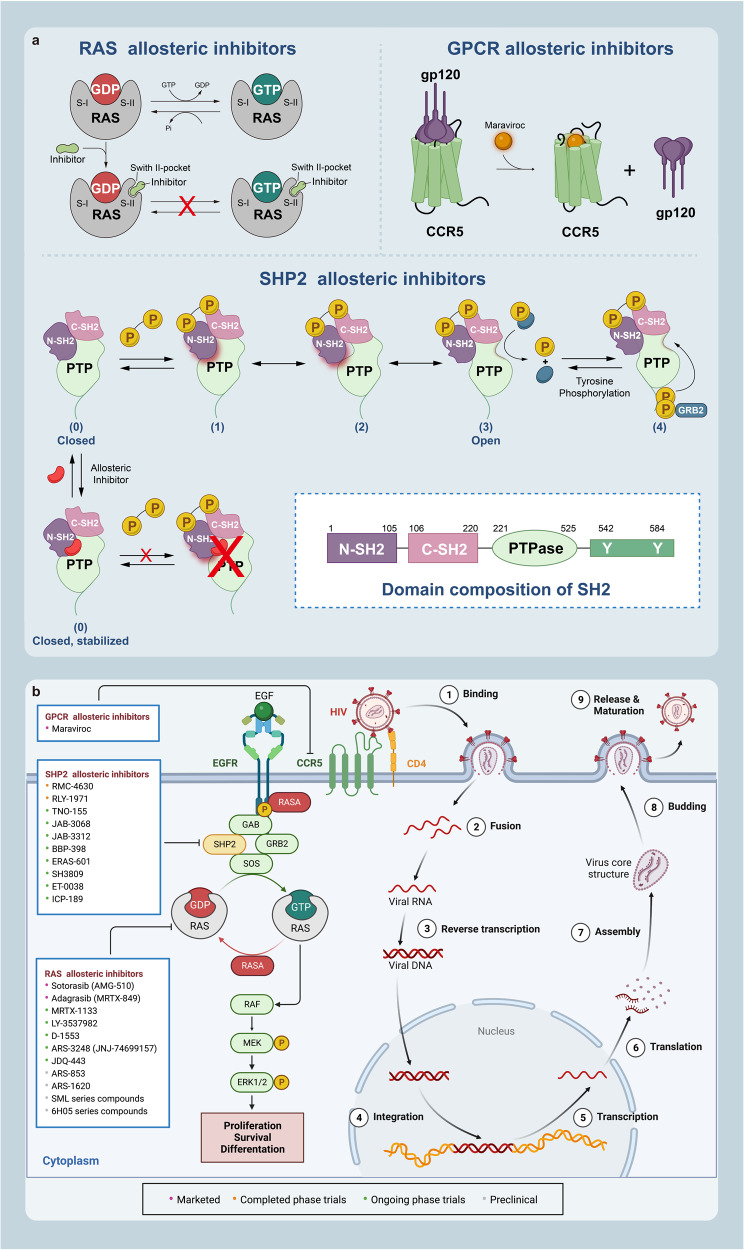
- Allosteric modulators target undruggable proteins lacking orthosteric pockets: MRTX-1133 binds inactive KRASG12D with IC50 < 2 nM and ~700-fold selectivity over KRASWT; SHP2 allosteric inhibitors (TNO-155, JAB-3068, RMC-4630, JAB-3312, RLY-1971, BBP-398, ERAS-601, SH3809, ET-0038, ICP-189) have entered clinical trials though none are approved.
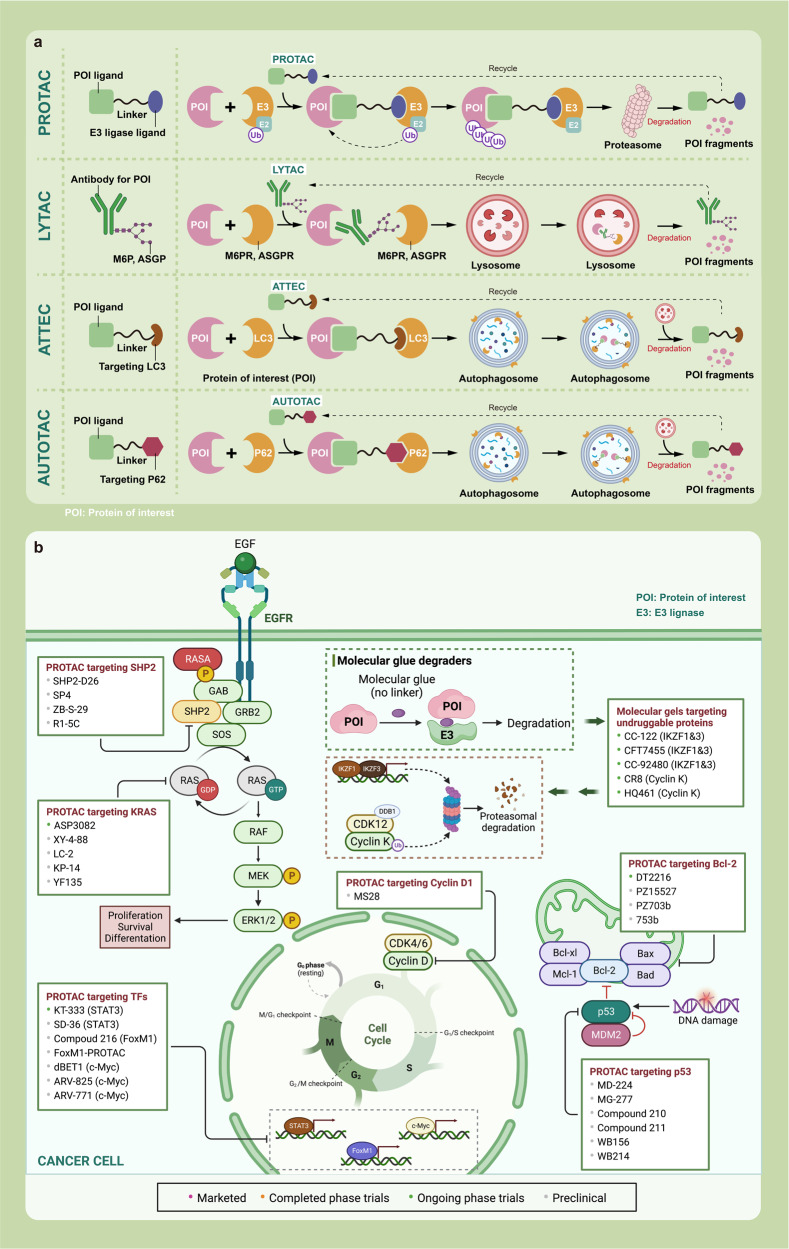
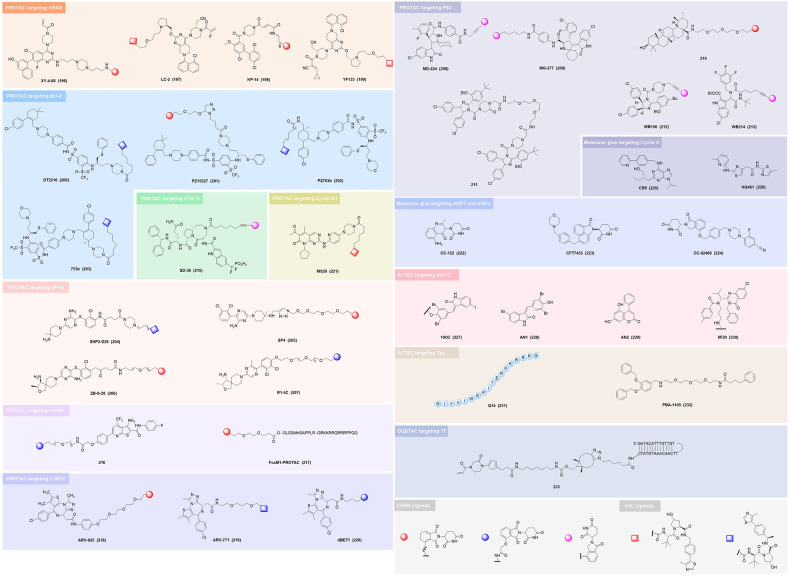
- Targeted protein degradation extends to previously undruggable targets: PROTACs degrade KRASG12C (LC-2, DC50 0.25 μM in NCI-H23), Bcl-2/Bcl-xL (DT2216 in phase I), SHP2 (SHP2-D26, DC50 2.6 nM in MV4;11), MDM2/p53 (MD-224, IC50 1.5 nM), STAT3 (KT-333 in phase I), and c-Myc pathway proteins; molecular glues degrade IKZF1/3 and Cyclin K.
Methods
- Narrative review, not primary research: the authors organize drug-discovery strategies for undruggable proteins into covalent regulation, allosteric modulation, PPI and protein–DNA interaction inhibition, targeted protein regulation (degradation/stabilization), nucleic acid-based approaches, immunotherapy, and other approaches (upstream/downstream effectors, synthetic lethality, PTMs, conjugates).
- Evidence base is the published literature and trial registries: six summary tables (Tables 1–6) compile compound name/structure, target, cancer cell line activity, indications, status/clinical trial identifier, and references, with clinical trial data collected from ClinicalTrials.gov (last accessed March 2023).
- Undruggable target classes defined as small GTPases (RAS family), phosphatases (PTPs, PSTPs), transcription factors (p53, Myc, ER, AR, XBP1, NRF2, NF-κB, BACH), epigenetic targets, and other proteins including PPI- and intrinsically disordered proteins.
Limitations
- The paper states that a lack of accurate structural information on undruggable proteins remains a significant obstacle, and that cryo-EM low resolutions still need to be addressed; it also notes that genetic therapies such as therapeutic RNAs and synthetic lethal screening are limited by off-target effects and side effects.
- The paper states that for marketed drugs, upcoming resistance is a major challenge that must be foreseen and protective plans developed; it also notes that most existing modulators are inhibitors, so activators (e.g., for p53) and PPI stabilizers remain underexplored.
- Evident from the text: many cited clinical trials are listed as completed, terminated, withdrawn, or ongoing with results "pending publication" or not posted, so several efficacy claims rest on conference abstracts, company reports, or unpublished data rather than peer-reviewed results; the review also relies heavily on preclinical cell-line IC50/DC50 values that may not translate clinically.
Model-written summary. Check it against the paper before relying on it.
Integrity signals
Registry
Cites
Statistics
Figures
Verification
Claims the paper makes
98 Valid · 25 Not valid · 463 Not checked · 121 Own results and interpretations
At least one cited source doesn’t support this claim or points to a different paper, and none confirmed it — see the verdicts below.
In the paper
“The chemical and enzymatic stability of XY-02-075 is greatly improved by methylene substitution of the central oxygen in the phosphonic anhydride bonds of SML-8-73-1 and SM-10-70-1.”
§ Recent advances in targeting the “undruggable” proteins: from drug discovery to clinical trials > Covalent regulation > Covalent KRAS inhibitors
What the sources say
- Disputedcites [92] Xiong Y Covalent guanosine mimetic inhibitors of G12C KRAS ACS Med. Chem. Lett. 2017 8 61 66 10.1021/acsmedchemlett.6b00373 28105276 PMC5238463 sourceExperimental — accuracy not yet measured
Our copy identifies XY-02-075 as compound 47, the 'phosphonyl sulfonamide analogue' built by sulfonylation of ethylenediamine (sulfamoyl phosphonate, Scheme/Abstract), whose cocrystal structure shows 'replacement of β-phosphate with sulfonamide' — so its modified linkage is a P–N(S) bond, not a methylene-substituted central oxygen. The methylene substitution of the central oxygen is described for a different series: bisphosphonate 10 (XY-01-103) and the difluoro/monofluoromethylene analogues 11 and 12, where the paper says the P–C–P bisphosphonate 'is considered to be resistant to acidic and enzymatic hydrolysis' (quoting refs 29,30) and that 11 'remove[s] the liability of the hydrolytic instability of the diphosphate moiety'. No passage in our copy mentions SM-10-70-1 at all (searched: SM-10-70-1), and no measured chemical/enzymatic stability data are reported for XY-02-075 — its t1/2 of 2.3 h is a labeling (kinact) value, not a hydrolytic stability value. (LLM, conf=0.75)
Checked by a reasoning model — may be wrong.
plainstates a cause- Asserted: passes — The authors put it forward as true.
- Checkable: passes — It can be checked against evidence.
- Load-bearing: passes — The paper’s conclusions depend on it.
- Based: passes — The paper gives a reason why it holds.
- Disputed
At least one cited source doesn’t support this claim or points to a different paper, and none confirmed it — see the verdicts below.
In the paper
“XY-02-075 is expected to be a promising compound despite 40 folds reduction in affinity compared to SML-8-73-1.92”
§ Recent advances in targeting the “undruggable” proteins: from drug discovery to clinical trials > Covalent regulation > Covalent KRAS inhibitors
What the sources say
- Disputedcites [92] Xiong Y Covalent guanosine mimetic inhibitors of G12C KRAS ACS Med. Chem. Lett. 2017 8 61 66 10.1021/acsmedchemlett.6b00373 28105276 PMC5238463 sourceExperimental — accuracy not yet measured
The passage labeled Abstract (page unavailable) calls compound 11—not XY-02-075—promising and says it has 40-fold lower affinity than SML-8-73-1. The paper identifies XY-02-075 as compound 47 and reports a Ki of 1.6 μM, versus 9 nM for SML-8-73-1; it does not make the claimed promising-compound assessment for XY-02-075. (LLM, conf=0.91)
Checked by a reasoning model — may be wrong.
plain- Asserted: passes — The authors put it forward as true.
- Checkable: passes — It can be checked against evidence.
- Load-bearing: unclear — It is unclear whether the paper’s conclusions depend on it.
- Based: passes — The paper gives a reason why it holds.
- Disputed
At least one cited source doesn’t support this claim or points to a different paper, and none confirmed it — see the verdicts below.
In the paper
“Wei’s team developed a TF-DUBTAC platform capable of selectively stabilizing oncoproteins, including FOXO3A, p53, and IRF3.”
§ Recent advances in targeting the “undruggable” proteins: from drug discovery to clinical trials > Targeted proteins’ regulation > Targeted protein stabilization (TPS)
What the sources say
- Disputedcites [549] Liu J TF-DUBTACs stabilize tumor suppressor transcription factors J. Am. Chem. Soc. 2022 144 12934 12941 10.1021/jacs.2c04824 35786952 PMC10981454 sourceExperimental — accuracy not yet measured
The Conclusions report that the TF-DUBTACs stabilized FOXO3A, p53, and IRF3, but explicitly identify them as tumor suppressor transcription factors—not oncoproteins. The same passage distinguishes TF-DUBTACs from the authors’ TF-PROTAC technology for targeting oncogenic transcription factors. (LLM, conf=0.90)
Checked by a reasoning model — may be wrong.
plainstates a cause- Asserted: passes — The authors put it forward as true.
- Checkable: passes — It can be checked against evidence.
- Load-bearing: passes — The paper’s conclusions depend on it.
- Based: passes — The paper gives a reason why it holds.
- Disputed
At least one cited source doesn’t support this claim or points to a different paper, and none confirmed it — see the verdicts below.
In the paper
“Yet, no studies have been conducted on undruggable targets.547”
§ Recent advances in targeting the “undruggable” proteins: from drug discovery to clinical trials > Targeted proteins’ regulation > Lysosome-based TPD
What the sources say
- Disputedcites [547] Grohmann C Development of NanoLuc-targeting protein degraders and a universal reporter system to benchmark tag-targeted degradation platforms Nat. Commun. 2022 13 2073 10.1038/s41467-022-29670-1 35440107 PMC9019100 sourceExperimental — accuracy not yet measured
The Results sections “FKBPF36V-targeting degraders outperform other tTPD systems” and “tTPD systems trigger physiologically relevant degradation” report a NanoTAC study of MLKL, a pseudokinase: NC4 degraded MLKL-NanoLuc and reduced MLKL-driven necroptosis. This runs contrary to the claim that no studies have been conducted on such targets, although the paper does not explicitly call MLKL “undruggable.” Page numbers were not available in our copy. (LLM, conf=0.73)
Checked by a reasoning model — may be wrong.
plain- Asserted: passes — The authors put it forward as true.
- Checkable: passes — It can be checked against evidence.
- Load-bearing: unclear — It is unclear whether the paper’s conclusions depend on it.
- Based: passes — The paper gives a reason why it holds.
- Disputed
The cited sources support only part of this claim — read each source’s verdict below.
In the paper
“Sotorasib specifically and irreversibly inhibits KRASG12C by binding to GDP and locking KRAS in an inactive state.”
§ Recent advances in targeting the “undruggable” proteins: from drug discovery to clinical trials > Covalent regulation > Covalent KRAS inhibitors
What the sources say
- Partly supportedcites [53] Skoulidis F Sotorasib for lung cancers with KRAS p.G12C mutation N. Engl. J. Med. 2021 384 2371 2381 10.1056/NEJMoa2103695 34096690 PMC9116274 sourceExperimental — accuracy not yet measured
The passage labeled Abstract > Conclusions says sotorasib specifically and irreversibly inhibits KRASG12C and traps it in an inactive state. It does not say sotorasib binds to GDP: it says the drug binds to a pocket in KRAS that is present when KRAS is GDP-bound. (LLM, conf=0.90)
plainstates a cause- Asserted: passes — The authors put it forward as true.
- Checkable: passes — It can be checked against evidence.
- Load-bearing: passes — The paper’s conclusions depend on it.
- Based: passes — The paper gives a reason why it holds.
- Partly supported
286 more claims · 45 with their cited sources checked
Create a free account to see all 707 claims and to verify the 708 references still open.
- It may state two separate claims as one. 382
- Probably not a substantial claim. 57
- The quote only partly states this claim. 6
Claims other papers make about this one
Each is checked against this paper’s own text: does it say what the citing paper says it does?
The cited source says what the claim attributes to it.
In the citing paper
“Allosteric modulators typically attach to regions distinct from the orthosteric site of receptors, inducing conformational changes to regulate the affinity and/or efficacy of orthosteric ligands, or to directly modulate receptor activity with positive, negative, or neutral effects.542–545”
From Recent advances in Alzheimer's disease: Mechanisms, clinical trials and new drug development strategies. (2024) · cites this paper as [543]
Self-check
Percentages, sums and reported differences re-computed from the paper’s own numbers.
Each contradiction between two passages listed here was confirmed by an independent check.
Rated major: it would touch a result — a value a result rests on, reported and recomputed p-values on opposite sides of the significance level, two passages that conflict with no sign which is right, or a cited work retracted before this paper was published.
In the paper
§ Recent advances in targeting the “undruggable” proteins: from drug discovery to clinical trials > Covalent regulation > Covalent KRAS inhibitors
“| RMC-8839 (16)a | KRASG12C | – | – | Preclinical | 83 |”
§ Recent advances in targeting the “undruggable” proteins: from drug discovery to clinical trials > Covalent regulation > Covalent KRAS inhibitors
“RMC-8839 (16) is the first orally-administered, mutant-selective, covalent KRASG13C inhibitor developed by Revolution Medicines. This compound directly targets KRASG13C”
Rated major: it would touch a result — a value a result rests on, reported and recomputed p-values on opposite sides of the significance level, two passages that conflict with no sign which is right, or a cited work retracted before this paper was published.
In the paper
§ Recent advances in targeting the “undruggable” proteins: from drug discovery to clinical trials > PPI inhibition
“| Macdonald’s researchCompound (170) | Myc-Max | HEK293T(IC50 = 29 μM) | – | Preclinical | 428 |”
§ Recent advances in targeting the “undruggable” proteins: from drug discovery to clinical trials > PPI inhibition > Myc PPI inhibitors
“Although compound (170) was the most active (IC50 = 29 nM), it was unsuitable for in vivo studies.”
Rated major: it would touch a result — a value a result rests on, reported and recomputed p-values on opposite sides of the significance level, two passages that conflict with no sign which is right, or a cited work retracted before this paper was published.
In the paper
§ Recent advances in targeting the “undruggable” proteins: from drug discovery to clinical trials > PPI inhibition
“| Macdonald’s researchCompound (171) | Myc-Max | HEK293T(IC50 = 100 μM) | – | Preclinical | 429 |”
§ Recent advances in targeting the “undruggable” proteins: from drug discovery to clinical trials > PPI inhibition > Myc PPI inhibitors
“resulting in compound (171) (IC50 = 100 nM).”
Rated minor: it would not touch a result — a value no result rests on, a p-value that stays on the same side of the significance level, or a conflict that is clerical, resolved elsewhere in the paper, or outside its own findings.
In the paper
§ Recent advances in targeting the “undruggable” proteins: from drug discovery to clinical trials > Allosteric modulators > RAS allosteric inhibitors
“These include Sotorasib (AMG-510), Adagrasib (MRTX-849), ARS-853, ARS-1620, LY-3537982, GDC-6036 (RG-6300), D-1553, ARS-3248 (JNJ-74699157), JDQ-443, and SML series compounds, among others, such as LY-3537982, ARS-853, ARS-1620, and 6H05 series compounds (Table 2).”
§ Recent advances in targeting the “undruggable” proteins: from drug discovery to clinical trials > Allosteric modulators
“| MRTX-1133 (79) | KRASG12D | – | Colorectal cancer, NSCLC, pancreas cancer | OngoingNCT05737706(I/II) | 254 |”
Rated minor: it would not touch a result — a value no result rests on, a p-value that stays on the same side of the significance level, or a conflict that is clerical, resolved elsewhere in the paper, or outside its own findings.
In the paper
§ Recent advances in targeting the “undruggable” proteins: from drug discovery to clinical trials > PPI inhibition > RAS PPI inhibitors
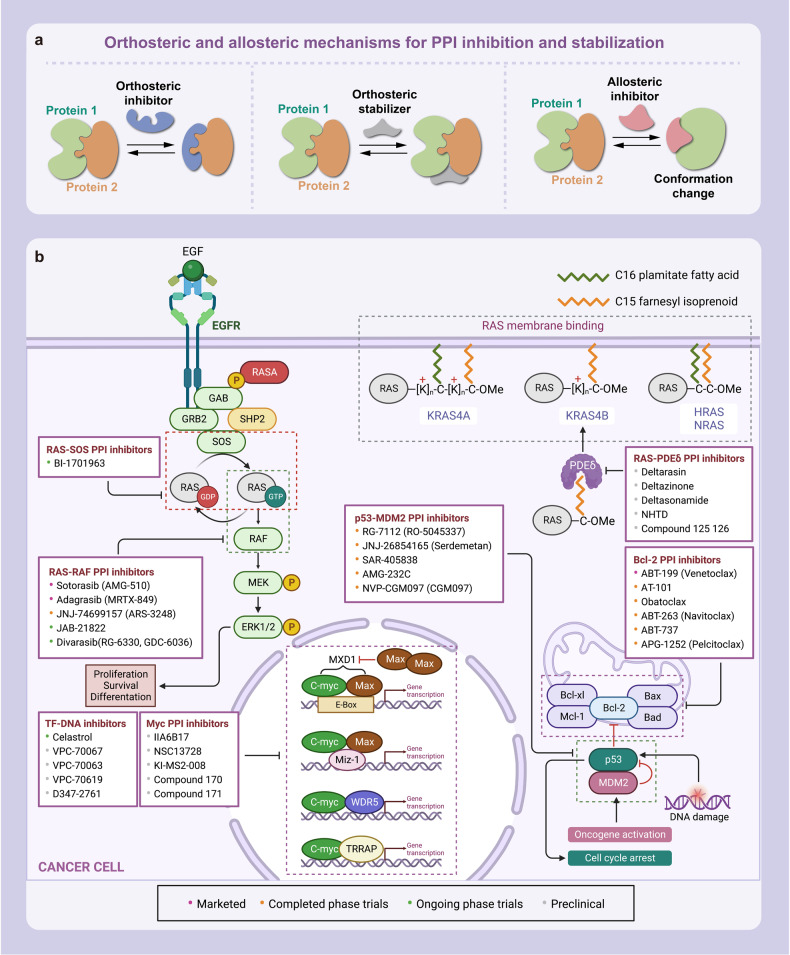
“Compound (129) exhibited superior affinity for PDEδ (Kd = 38 ± 17 nM)”
§ Recent advances in targeting the “undruggable” proteins: from drug discovery to clinical trials > PPI inhibition > RAS PPI inhibitors
“compound (127) (Kd = 9 ± 2.3 nM)”
3 more findings
Create a free account to see every finding of this check.
Citations
Cites
1 retracted
Luo, M.-L., Zhao, Q., He, X.-H., Xie, X., Zhu, H.-P., You, F.-M., Peng, C., Zhan, G., & Huang, W. (2023) · Biomedicine & Pharmacotherapy · doi:10.1016/j.biopha.2023.114574 · Cited by 25
Self-citationRetractedPD-1 and PD-L1 Immune Checkpoint Blockade to Treat Breast Cancer
Hartkopf, A. D., Taran, F.-A., Wallwiener, M., Walter, C. B., Krämer, B., Grischke, E.-M., & Brucker, S. Y. (2016) · Breast Care · doi:10.1159/000453569 · Cited by 30,845
Repertoires of Autophagy in the Pathogenesis of Ocular Diseases
Li, Y.-J., Jiang, Q., Cao, G.-F., Yao, J., & Yan, B. (2015) · Cellular Physiology and Biochemistry · doi:10.1159/000373980 · Cited by 16,304
Potent and specific genetic interference by double-stranded RNA in Caenorhabditis elegans
Fire, A., Xu, S., Montgomery, M. K., Kostas, S. A., Driver, S. E., & Mello, C. C. (1998) · Nature · doi:10.1038/35888 · Cited by 15,429
Nishimura, R., Osako, T., Nishiyama, Y., Tashima, R., Nakano, M., Fujisue, M., Toyozumi, Y., & Arima, N. (2013) · Oncology · doi:10.1159/000353099 · Cited by 13,166
Comprehensive molecular portraits of human breast tumours
The Cancer Genome Atlas Network (2012) · Nature · doi:10.1038/nature11412 · Cited by 12,129
Lynch, T. J., Bell, D. W., Sordella, R., Gurubhagavatula, S., Okimoto, R. A., Brannigan, B. W., Harris, P. L., Haserlat, S. M., Supko, J. G., Haluska, F. G., et al. (2004) · New England Journal of Medicine · doi:10.1056/nejmoa040938 · Cited by 11,486
Duplexes of 21-nucleotide RNAs mediate RNA interference in cultured mammalian cells
Elbashir, S. M., Harborth, J., Lendeckel, W., Yalcin, A., Weber, K., & Tuschl, T. (2001) · Nature · doi:10.1038/35078107 · Cited by 9,456
EGFR Mutations in Lung Cancer: Correlation with Clinical Response to Gefitinib Therapy
Paez, J. G., Jänne, P. A., Lee, J. C., Tracy, S., Greulich, H., Gabriel, S., Herman, P., Kaye, F. J., Lindeman, N., Boggon, T. J., et al. (2004) · Science · doi:10.1126/science.1099314 · Cited by 9,368
Gefitinib or Carboplatin–Paclitaxel in Pulmonary Adenocarcinoma
Mok, T. S., Wu, Y.-L., Thongprasert, S., Yang, C.-H., Chu, D.-T., Saijo, N., Sunpaweravong, P., Han, B., Margono, B., Ichinose, Y., et al. (2009) · New England Journal of Medicine · doi:10.1056/nejmoa0810699 · Cited by 8,261
Research works printed but not linked: 2
- Walter AO Discovery of a mutant-selective covalent inhibitor of EGFR that overcomes T790M-mediated resistance in NSCLC Cancer Discov. 2013 3 1404 1415 10.1158/2159-8290.CD-13-0314 24065731 PMC4048995 · DOI · Paper page
- Meng, J. After the AACR Conference, what new drugs are worth watching? https://baijiahao.baidu.com/s?id=1730615953532632799&wfr=spider&for=pc (2022).
Cited by
Zhang, J., Zhang, Y., Wang, J., Xia, Y., Zhang, J., & Chen, L. (2024) · Signal Transduction and Targeted Therapy · doi:10.1038/s41392-024-01911-3 · Cited by 1,138
Mechanisms of PANoptosis and relevant small-molecule compounds for fighting diseases
Wang, L., Zhu, Y., Zhang, L., Guo, L., Wang, X., Pan, Z., Jiang, X., Wu, F., & He, G. (2023) · Cell Death & Disease · doi:10.1038/s41419-023-06370-2 · Cited by 183
“However, subsequent studies have found that NSA act as a direct chemical inhibitor of GSDMD and binds to GSDMD to inhibit GSDMD-mediated pyroptosis [174].”
BackgroundSelf-citationGlaviano, A., Lau, H., Carter, L. M., Lee, E. H. C., Lam, H. Y., Okina, E., Tan, D. J. J., Tan, W., Ang, H. L., Carbone, D., et al. (2025) · Journal of Hematology & Oncology · doi:10.1186/s13045-024-01634-6 · Cited by 184
Mining the CRBN target space redefines rules for molecular glue-induced neosubstrate recognition
Petzold, G., Gainza, P., Annunziato, S., Lamberto, I., Trenh, P., McAllister, L. A., DeMarco, B., Schwander, L., Bunker, R. D., Zlotosch, M., et al. (2025) · Science · doi:10.1126/science.adt6736 · Cited by 117
Targeting the undruggables—the power of protein degraders
Zhang, C., Liu, Y., Li, G., Yang, Z., Han, C., Sun, X., Sheng, C., Ding, K., & Rao, Y. (2024) · Science Bulletin · doi:10.1016/j.scib.2024.03.056 · Cited by 119
Jeon, S., Jeon, Y., Lim, J.-Y., Kim, Y., Cha, B., & Kim, W. (2025) · Signal Transduction and Targeted Therapy · doi:10.1038/s41392-024-02070-1 · Cited by 118
Syahputra, E. W., Lee, H., Cho, H., Park, H. J., Park, K.-S., & Hwang, D. (2025) · Pharmaceutics · doi:10.3390/pharmaceutics17040501 · Cited by 88
Bhat, S., Palepu, K., Hong, L., Mao, J., Ye, T., Iyer, R., Zhao, L., Chen, T., Vincoff, S., Watson, R., et al. (2025) · Science Advances · doi:10.1126/sciadv.adr8638 · Cited by 82
Advancing Covalent Ligand and Drug Discovery beyond Cysteine
Kim, G., Grams, R. J., & Hsu, K. (2025) · Chemical Reviews · doi:10.1021/acs.chemrev.5c00001 · Cited by 90
Selection of Nucleotide-Encoded Mass Libraries of Macrocyclic Peptides for Inaccessible Drug Targets
Colas, K., Bindl, D., & Suga, H. (2024) · Chemical Reviews · doi:10.1021/acs.chemrev.4c00422 · Cited by 81
Targeted Covalent Modification Strategies for Drugging the Undruggable Targets
Tamura, T., Kawano, M., & Hamachi, I. (2025) · Chemical Reviews · doi:10.1021/acs.chemrev.4c00745 · Cited by 81
Computer-Aided Drug Discovery for Undruggable Targets
Sun, Q., Wang, H., Xie, J., Wang, L., Mu, J., Li, J., Ren, Y., & Lai, L. (2025) · Chemical Reviews · doi:10.1021/acs.chemrev.4c00969 · Cited by 83
33 Unresolved Questions in Nanoscience and Nanotechnology
Mirkin, C. A., Petrosko, S. H., Artzi, N., Aydın, K., Biaggne, A., Brinker, C. J., Bujold, K. E., Cao, Y. C., Chan, R. R., Chen, C., et al. (2025) · ACS Nano · doi:10.1021/acsnano.5c12854 · Cited by 69
Journey of PROTAC: From Bench to Clinical Trial and Beyond
Berkley, K., Zalejski, J., Sharma, N., & Sharma, A. K. (2025) · Biochemistry · doi:10.1021/acs.biochem.4c00577 · Cited by 66
Zhao, Q., Han, B., Peng, C. Y., Zhang, N., Huang, W., He, G., & Li, J. (2024) · Medicinal Research Reviews · doi:10.1002/med.22039 · Cited by 57
“For example, imine ‐ based cyclometalated ‐ Ir(III) – NHCs 31 exhibited good anticancer efficiency.”
Self-citationTackling Undruggable Targets with Designer Peptidomimetics and Synthetic Biologics
Swenson, C., Mandava, G., Thomas, D. M., & Moellering, R. E. (2024) · Chemical Reviews · doi:10.1021/acs.chemrev.4c00423 · Cited by 64
Allosteric drugs: New principles and design approaches
Tee, W.-V., & Berezovsky, I. N. (2024) · Current Opinion in Structural Biology · doi:10.1016/j.sbi.2023.102758 · Cited by 58
Target Engagement Assays in Early Drug Discovery
John‐Campbell, S. S., & Bhalay, G. (2025) · Journal of Medicinal Chemistry · doi:10.1021/acs.jmedchem.4c03115 · Cited by 70
Computational advances in discovering cryptic pockets for drug discovery
Bemelmans, M. P., Cournia, Z., Damm‐Ganamet, K. L., Gervasio, F. L., & Pande, V. (2025) · Current Opinion in Structural Biology · doi:10.1016/j.sbi.2024.102975 · Cited by 56
Bi, X., Wang, Y., Wang, J., & Liu, C. (2025) · Pharmaceutics · doi:10.3390/pharmaceutics17091186 · Cited by 63
“On the other hand, targets—typically proteins—can be represented by their amino acid sequences, structural conformations, or contextual positions in protein–protein interaction (PPI) networks [38–40].”
Lipid nanoparticles as the drug carrier for targeted therapy of hepatic disorders
Chu, R., Wang, Y., Kong, J., Pan, T. S., Yang, Y., & He, J. F. (2024) · Journal of Materials Chemistry B · doi:10.1039/d3tb02766j · Cited by 51
Proteolysis‐Targeting Chimera (PROTAC): Current Applications and Future Directions
Fan, G., Chen, S., Zhang, Q., Yu, N., Shen, Z., Liu, Z., Guo, W., Tang, Z., Yang, J., & Liu, M. (2025) · MedComm · doi:10.1002/mco2.70401 · Cited by 62
“…has gradually overcome “undruggable” limitations, with current strategies primarily focusing on indirect interference (such as the BRD4–cMyc axis), structure-induced binding (such as β -catenin), and precise degradation of post-transcriptional regulatory targets (such as RHAU and SF3B1) [169].”
New strategies to enhance the efficiency and precision of drug discovery
An, Q., Huang, L., Wang, C., Wang, D., & Tu, Y. (2025) · Frontiers in Pharmacology · doi:10.3389/fphar.2025.1550158 · Cited by 50
“However, many intracellular proteins are deemed “ undruggable ” due to the absence of accessible active sites, posing a signi fi cant challenge in the design and development of effective small molecule inhibitors (Xie et al., 2023).”
Eladl, O. (2025) · Biochemical Pharmacology · doi:10.1016/j.bcp.2025.117297 · Cited by 44
Evolution of Pyrrolysyl-tRNA Synthetase: From Methanogenesis to Genetic Code Expansion
Koch, N. G., & Budiša, N. (2024) · Chemical Reviews · doi:10.1021/acs.chemrev.4c00031 · Cited by 47
KRAS G12C-mutant driven non-small cell lung cancer (NSCLC)
Rosell, R., Codony‐Servat, J., González, J., Santarpía, M., Jain, A. S., Shivamallu, C., Wang, Y., Giménez-Capitán, A. A., Molina‐Vila, M. Á., Nilsson, J. A., et al. (2023) · Critical Reviews in Oncology/Hematology · doi:10.1016/j.critrevonc.2023.104228 · Cited by 47
Yuan, Y., Yu, L.-L., Bi, C., Huang, L., Su, B., Nie, J., Dou, Z., Yang, S., & Li, Y. (2025) · Chinese Medicine · doi:10.1186/s13020-025-01075-4 · Cited by 47
“In addition, the development of indirect targets helps to avoid the technical challenges of undruggable targets and reduce the toxic side effects of drugs [78].”
The changing landscape of medicinal chemistry optimization
Rácz, A., Mihalovits, L. M., Beckers, M., Fechner, N., Stiefl, N., Sirockin, F., McCoull, W., Evertsson, E., Lemurell, M., Makara, G. M., et al. (2025) · Nature Reviews Drug Discovery · doi:10.1038/s41573-025-01225-1 · Cited by 54
“Validated targets that were previously considered less tractable or even undruggable, such as small GTPases, phosphatases, transcription factors and epigenetic targets, are also being reconsidered 47 .”
Antiviral drug discovery and development: challenges and future directions
Du, S., Hu, X., Li, P., Xu, S., Kim, M., Liu, X., & Zhan, P. (2026) · Signal Transduction and Targeted Therapy · doi:10.1038/s41392-025-02539-7 · Cited by 54
“20 With the advent of the molecular biology revolution and the human genome era, precision medicine emphasizes detailed molecular mechanisms, making TBDD the prevailing direction in traditional pharmaceutical research.”
Citrullination modulation stabilizes HIF-1α to promote tumour progression
Chen, R., Lin, Z., Shen, S., Zhu, C., Yan, K., Suo, C., Liu, R., Wei, H., Gao, L., Fan, K., et al. (2024) · Nature Communications · doi:10.1038/s41467-024-51882-w · Cited by 49
“With the recent development of high-resolution protein structure studies and virtual screening strategies, PPIs have been considered potential targets for disease treatment 46,47 .”
Exploration of Cryptic Pockets Using Enhanced Sampling Along Normal Modes: A Case Study of KRAS G12D
Vithani, N., Zhang, S., Thompson, J. P., Patel, L. A., Demidov, A., Xia, J., Balaeff, A., Mentes, A., Arnautova, Y. A., Kohlmann, A., et al. (2024) · Journal of Chemical Information and Modeling · doi:10.1021/acs.jcim.4c01435 · Cited by 40
Dalton, S. E., Pietro, O. D., & Hennessy, E. T. (2025) · Journal of Medicinal Chemistry · doi:10.1021/acs.jmedchem.4c02661 · Cited by 39
Dwivedi, R., Kaushik, M., Tripathi, M., Dada, R., & Tiwari, P. (2024) · Brain Research · doi:10.1016/j.brainres.2024.149120 · Cited by 38
Kondapuram, S. K., Ramachandran, H. K., Arya, H., & Coumar, M. S. (2023) · Life Sciences · doi:10.1016/j.lfs.2023.122260 · Cited by 35
Therapeutic Target Identification and Drug Discovery Driven by Chemical Proteomics
Zou, M., Zhou, H., Gu, L., Zhang, J., & Fang, L. (2024) · Biology · doi:10.3390/biology13080555 · Cited by 40
VAV1 as a putative therapeutic target in autoimmune and chronic inflammatory diseases
Neurath, M. F., & Berg, L. J. (2024) · Trends in Immunology · doi:10.1016/j.it.2024.06.004 · Cited by 34
Jiao, J., Qian, Y., Lv, Y., Wei, W., Long, Y., Guo, X., Buerliesi, A., Ye, J., Han, H., Li, J., et al. (2024) · Pharmacological Research · doi:10.1016/j.phrs.2024.107469 · Cited by 38
Protein-Based Degraders: From Chemical Biology Tools to Neo-Therapeutics
Ou, L., Setegne, M. T., Elliot, J., Shen, F., & Dassama, L. M. K. (2025) · Chemical Reviews · doi:10.1021/acs.chemrev.4c00595 · Cited by 33
The value of protein allostery in rational anticancer drug design: an update
Nussinov, R., & Jang, H. (2024) · Expert Opinion on Drug Discovery · doi:10.1080/17460441.2024.2384467 · Cited by 31
“SHP2 allosteric inhibitors directly stabilize the autoinhibited conformation of SHP2, thereby preventing interactions between the catalytic phosphatase domain and SHP2 substrates [106,107].”
Protacs in cancer therapy: mechanisms, design, clinical trials, and future directions
Vikal, A., Maurya, R., Patel, B. B., Sharma, R. K., Patel, P., Patil, U. K., & Kurmi, B. D. (2024) · Drug Delivery and Translational Research · doi:10.1007/s13346-024-01754-z · Cited by 32
“CADD also facilitates structure-based drug design by leveraging crystal structures of target proteins and E3 ligases to design ligands with enhanced affinity, specificity, and drug-like properties [142].”
The evolution and application of RNA-focused small molecule libraries
Taghavi, A., Springer, N. A., Zanon, P. R. A., Li, Y., Li, C., Childs‐Disney, J. L., & Disney, M. D. (2025) · RSC Chemical Biology · doi:10.1039/d4cb00272e · Cited by 32
López‐Cortés, A., Cabrera‐Andrade, A., Echeverría‐Garcés, G., Echeverría-Espinoza, P., Pineda-Albán, M., Elsitdie, N., Bueno‐Miño, J., Segundo, C. M. C., Dorado, J., Pazos, A., et al. (2024) · Scientific Reports · doi:10.1038/s41598-024-68565-7 · Cited by 31
“Conversely, phosphatases act as their counterparts, critically regulating cellular dynamics by removing phosphate from proteins, including serine, threonine, and tyrosine residues 46–48 .”
BackgroundPolymers for Disrupting Protein–Protein Interactions: Where Are We and Where Should We Be?
Le, S. P., Krishna, J., Gupta, P., Dutta, R., Li, S., Chen, J., & Thayumanavan, S. (2024) · Biomacromolecules · doi:10.1021/acs.biomac.4c00850 · Cited by 30
Expedited SARS‐CoV‐2 Main Protease Inhibitor Discovery through Modular ‘Direct‐to‐Biology’ Screening
Wilders, H., Biggs, G. S., Rowe, S. M., Cawood, E. E., Riziotis, I. G., Rendina, A. R., Grant, E. K., Pettinger, J., Fallon, D. J., Skehel, M. J., et al. (2024) · Angewandte Chemie International Edition · doi:10.1002/anie.202418314 · Cited by 36
Lin, J., Chen, Z., Zhang, D., Zhang, N., Chen, H., & Guo, D. (2025) · Macromolecular Rapid Communications · doi:10.1002/marc.202401051 · Cited by 31
Self-citationConditional PROTAC: Recent Strategies for Modulating Targeted Protein Degradation
Yim, J., Park, J., Kim, G., Lee, H. H., Chung, J. S., Jo, A., Koh, M., & Park, J. (2024) · ChemMedChem · doi:10.1002/cmdc.202400326 · Cited by 36
Targeting MYC: Multidimensional regulation and therapeutic strategies in oncology
Duan, Y., Liu, Z., Wang, Q., Zhang, J., Liu, J., Zhang, Z., & Li, C. (2024) · Genes & Diseases · doi:10.1016/j.gendis.2024.101435 · Cited by 38
“117 In the absence of conventional binding pockets, drugs can bind to MYC proteins via cysteine-responsive covalent ligands.”
Khedkar, N. R., Sindkhedkar, M. D., & Joseph, A. (2025) · Bioorganic Chemistry · doi:10.1016/j.bioorg.2025.108197 · Cited by 31
Navigating PROTACs in Cancer Therapy: Advancements, Challenges, and Future Horizons
Ibrahim, S., Khan, M. U., Khurram, I., Rehman, R., Rauf, A., Ahmad, Z., Aljohani, A. S. M., Abdulmonem, W. A., & Quradha, M. M. (2025) · Food Science & Nutrition · doi:10.1002/fsn3.70011 · Cited by 30
Afonso, A. L., Cavaleiro, C. T., Castanho, M. A. R. B., Neves, V., & Cavaco, M. C. (2025) · International Journal of Molecular Sciences · doi:10.3390/ijms26073117 · Cited by 30
Cai, H. X., Zhang, T., & Yuanjia, H. (2025) · European Journal of Medicinal Chemistry · doi:10.1016/j.ejmech.2025.118055 · Cited by 29
The Quest for Non-Invasive Diagnosis: A Review of Liquid Biopsy in Glioblastoma
Elias, M. G., Hadjiyiannis, H., Vafaee, F., Scott, K. F., SOUZA, P. D., Becker, T. M., & Fatima, S. (2025) · Cancers · doi:10.3390/cancers17162700 · Cited by 33
“These include density-gradient centrifugation [12,25], spiral microfluidic technology [26,27] and chip technology [23,24].”
Zeng, S., Jin, Y., Xia, H., Shang, Y., Li, Y., Wang, Z., & Huang, W. (2023) · Bioorganic Chemistry · doi:10.1016/j.bioorg.2023.107016 · Cited by 27
Self-citationLeveraging AI to explore structural contexts of post-translational modifications in drug binding
Medvedev, K. E., Schaeffer, R. D., & Grishin, N. V. (2025) · Journal of Cheminformatics · doi:10.1186/s13321-025-01019-y · Cited by 26
“Given the challenges associated with directly targeting undrug-gable transcription factors, modulating their activity through PTM-based approaches presents a viable alternative [25].”
Zhou, Y., Garrigues, S. L., Villemure, E., Ishisoko, N., Nguyen, H. Q., Hamidi, N. K., Vogt, R., Wang, Y., Blake, R. A., Rudolph, J., et al. (2024) · ACS Medicinal Chemistry Letters · doi:10.1021/acsmedchemlett.4c00445 · Cited by 27
Evolution of antisense oligonucleotides: navigating nucleic acid chemistry and delivery challenges
Ruchi, R., Raman, G. M., Kumar, V., & Bahal, R. (2024) · Expert Opinion on Drug Discovery · doi:10.1080/17460441.2024.2440095 · Cited by 26
Qiao, X., Zhu, C., Lan, X., Li, M., Li, N., Huang, J., Liu, N., Zhang, J., & Lu, S. (2025) · Journal of Medicinal Chemistry · doi:10.1021/acs.jmedchem.5c01619 · Cited by 26
Ryu, M., Oh, S., Jeong, K., Hwang, S., Kim, J., Chung, M., & Chi, S. (2024) · ACS Nano · doi:10.1021/acsnano.4c11436 · Cited by 24
Novel Therapeutics in Soft Tissue Sarcoma
Mavroeidis, L., Napolitano, A., Huang, P. H., & Jones, R. L. (2024) · Cancers · doi:10.3390/cancers17010010 · Cited by 23
“The vast majority of them do not involve targetable kinases but transcription factors, which lack defined pockets for binding of conventional ligands [138,146].”
Evaluation of DNA encoded library and machine learning model combinations for hit discovery
Iqbal, S., Jiang, W., Hansen, E., Aristotelous, T., Liu, S., Reidenbach, A. G., Raffier, C., Leed, A., Chen, C., Chung, L., et al. (2025) · npj Drug Discovery. · doi:10.1038/s44386-025-00007-4 · Cited by 28
Dietary flavonoid actions on senescence, aging, and applications for health
Watkins, B. A., Mitchell, A. E., Shin, A. C., Dehghani, F., & Shen, C. (2025) · The Journal of Nutritional Biochemistry · doi:10.1016/j.jnutbio.2025.109862 · Cited by 24
Predicting small molecule–RNA interactions without RNA tertiary structures
Fei-YuHan, Wang, P., Zhang, J., Shan, X., Cai, Z., Ma, J., Wang, Y., & Zhang, Q. C. (2026) · Nature Biotechnology · doi:10.1038/s41587-025-02942-z · Cited by 22
Wang, W., McDonald, M. C. L., Hariprasad, R., Hamilton, T., & Frank, D. A. (2024) · Cancers · doi:10.3390/cancers16071387 · Cited by 24
“This reflects the fact that, as opposed to kinases, which have discrete ATP-binding domains in which a small organic molecule can be designed to bind, transcription factors have large, flat surfaces that allow them to interact with DNA or other proteins [137].”
BackgroundDrug innovation via integration of traditional Chinese and Western medicine
Li, Z., Yang, L., Kong, L., Sun, H. J., Sun, Y., Chen, X., Yin, F., Yan, G., & Wang, X. (2025) · Science of Traditional Chinese Medicine · doi:10.1097/st9.0000000000000070 · Cited by 23
Park, K., & Jeon, M. (2025) · Pharmaceuticals · doi:10.3390/ph18121793 · Cited by 21
“Despite their structural intractability, such proteins frequently play essential roles in cancer, neurodegeneration, and immune disorders, and therefore remain high-value therapeutic targets [2].”
The Role of MYC in Tumor Immune Microenvironment Regulation: Insights and Future Directions
Nirala, B. K., & Yustein, J. T. (2025) · Frontiers in Bioscience-Landmark · doi:10.31083/fbl37304 · Cited by 20
“Numerous therapeutic strategies have been developed to target MYC and its associated pathways, including both direct inhibition and indirect approaches [102–105].”
RNA-loaded nanoparticles for the treatment of hematological cancers
Garbayo, E., Moukhtari, S. H. E., Rodríguez‐Nogales, C., Agirre, X., Rodríguez-Madoz, J. R., Rodríguez-Márquez, P., Prósper, F., Couvreur, P., & Blanco‐Prieto, M. J. (2024) · Advanced Drug Delivery Reviews · doi:10.1016/j.addr.2024.115448 · Cited by 20
From Bench to Bedside: Transforming Cancer Therapy with Protease Inhibitors
Shoari, A. (2025) · Targets · doi:10.3390/targets3010008 · Cited by 21
Harnessing p53 for targeted cancer therapy: new advances and future directions
Andrysík, Z., & Espinosa, J. M. (2025) · Transcription · doi:10.1080/21541264.2025.2452711 · Cited by 22
Kafle, P., Kharel, P., Nilson, D., Herndon, D., Yasuda, S., & Sharma, I. (2025) · Chem · doi:10.1016/j.chempr.2025.102753 · Cited by 18
Liu, W., Ma, Y., He, Y., Liu, Y., Guo, Z., He, J., Han, X., Hu, Y., Li, M., Jiang, R., et al. (2024) · Journal of Medicinal Chemistry · doi:10.1021/acs.jmedchem.4c00784 · Cited by 20
DCTPP1: A promising target in cancer therapy and prognosis through nucleotide metabolism
Liu, S., Li, F., & Wang, Z. (2025) · Drug Discovery Today · doi:10.1016/j.drudis.2025.104348 · Cited by 19
Developing New Strategies to Construct Pseudo-natural Macrocycles for Undruggable Targets
Wang, H., Bi, T., & Yang, W. (2025) · Accounts of Chemical Research · doi:10.1021/acs.accounts.5c00524 · Cited by 18
Zhang, G., Wang, X., Wang, G., Suo, X., Qiu, Y., Luo, R., Liu, Y., Li, Q., Luo, W., Shi, Z., et al. (2024) · Nano Today · doi:10.1016/j.nantod.2024.102183 · Cited by 18
Liu, Y., Chen, J., Li, X., Fan, Y., Peng, C. Y., Ye, X., Wang, Y. A., & Xie, X. (2025) · Pharmacological Research · doi:10.1016/j.phrs.2025.107577 · Cited by 19
Self-citationMishra, A. K., Sahoo, P. K., Singh, R., & Jain, S. (2025) · Inflammopharmacology · doi:10.1007/s10787-025-01815-w · Cited by 18
“With their inherent structural diversity and ability to interact with multiple biological targets, natural products are gaining recognition as promising sources for developing such therapies (Xie et al. 2023).”
New approaches for challenging therapeutic targets
Sharma, K. R., Malik, A., Roof, R. A., Boyce, J. P., & Verma, S. K. (2024) · Drug Discovery Today · doi:10.1016/j.drudis.2024.103942 · Cited by 17
Revisiting the Plasmodium falciparum druggable genome using predicted structures and data mining
Godinez‐Macias, K. P., Chen, D., Wallis, J. L., Siegel, M. G., Adam, A., Bopp, S. E. R., Carolino, K., Coulson, L. B., Durst, G., Thathy, V., et al. (2025) · npj Drug Discovery. · doi:10.1038/s44386-025-00006-5 · Cited by 17
“However, new approaches targeting “ undruggable ” proteins have emerged, such as allosteric inhibitors modulating protein-protein interactions, RNA antisense oligonucleotides (RNAi), and PROTAC (proteolysis-targeting chimera) technology 76 .”
Durojaye, O. A., Yekeen, A. A., Idris, M. O., Okoro, N. O., Odiba, A. S., & Nwanguma, B. C. (2024) · International Journal of Biological Macromolecules · doi:10.1016/j.ijbiomac.2024.131840 · Cited by 17
Dual-targeted NAMPT inhibitors as a progressive strategy for cancer therapy
Özgencil, F., Gunindi, H. B., & Eren, G. (2024) · Bioorganic Chemistry · doi:10.1016/j.bioorg.2024.107509 · Cited by 15
From Tyrosine Kinases to Tyrosine Phosphatases: New Therapeutic Targets in Cancers and Beyond
Zhou, Y., Yao, Z., Lin, Y., & Zhang, H. (2024) · Pharmaceutics · doi:10.3390/pharmaceutics16070888 · Cited by 16
“The highly conserved structure of the PTPs’ active sites contributes to a reduced likelihood of off-target toxicity in PTP-targeted therapy [122,148,149].”
BackgroundKage, M., Hayashi, R., Matsuo, A., Tamiya, M., Kuramoto, S., Ohara, K., Irie, M., Chiyoda, A., Takano, K., Ito, T., et al. (2024) · Bioorganic & Medicinal Chemistry · doi:10.1016/j.bmc.2024.117830 · Cited by 16
Hit me with your best shot: Integrated hit discovery for the next generation of drug targets
Ashraf, S. N., Blackwell, J. H., Holdgate, G. A., Lucas, S. C. C., Solovyeva, A., Storer, R. I., & Whitehurst, B. C. (2024) · Drug Discovery Today · doi:10.1016/j.drudis.2024.104143 · Cited by 19
Song, Z., Lu, A., & Yuan, L. (2024) · Journal of Pharmaceutical and Biomedical Analysis · doi:10.1016/j.jpba.2024.116556 · Cited by 15
RNAi technology development for weed control: all smoke and no fire?
Panozzo, S., Milani, A., Bordignon, S., Scarabel, L., & Varotto, S. (2025) · Pest Management Science · doi:10.1002/ps.8729 · Cited by 15
“21 This is because undruggable targets lack binding sites for the drug.”
Dedon, L. R., Yuan, H., Chi, J., Gu, H., Arias, A. J., Covault, J., & Zhou, Y. (2025) · Scientific Reports · doi:10.1038/s41598-025-92313-0 · Cited by 17
The Discovery of Cryptic Pockets Increases the Druggability of “Undruggable” Proteins
Mou, M., Yang, W., Huang, G., Yang, X., Zhang, X. L., Kandegama, W., Ashby, C. R., Hao, G., & Gao, Y. (2025) · Medicinal Research Reviews · doi:10.1002/med.70001 · Cited by 15
Protocol for Oligonucleotides Characterization Using Hydrophilic Interaction Chromatography
Guillarme, D., Fekete, S., & Studzińska, S. (2025) · Journal of Separation Science · doi:10.1002/jssc.70088 · Cited by 14
Untangling the Role of MYC in Sarcomas and Its Potential as a Promising Therapeutic Target
Sias, F., Zoroddu, S., Migheli, R., & Bagella, L. (2025) · International Journal of Molecular Sciences · doi:10.3390/ijms26051973 · Cited by 15
“Furthermore, CDK4 indirectly contributes to MYC stabilization by modulating chromatin accessibility [100].”
Multifaceted roles of OCT4 in tumor microenvironment: biology and therapeutic implications
Chen, W., & Wang, Y. (2025) · Oncogene · doi:10.1038/s41388-025-03408-x · Cited by 17
“Since OCT4 and other TFs are generally considered as “ undruggable ” targets, other therapeutic modality, such as PROTACs (proteolysis-targeting chimeras) and covalent binders [239], might be considered.”
Advanced coacervation-driven nanoscale polymeric assemblies for biomedical applications
Shu, L., Gong, Y., Lin, M., Sun, J., & Chen, X. (2024) · Applied Physics Reviews · doi:10.1063/5.0197742 · Cited by 14
Chang, E., Kim, S., Hwang, H. S., Song, K. J., Kim, K., Kim, M., Jang, S. J., You, S., Kim, K. P., & An, J. (2024) · Clinical and Translational Medicine · doi:10.1002/ctm2.1796 · Cited by 15
Development of natural product-based targeted protein degraders as anticancer agents
Chen, C., Feng, Y., Zhou, C., Liu, Z., Tang, Z., Zhang, Y., Li, T., Gu, C., & Chen, J. (2024) · Bioorganic Chemistry · doi:10.1016/j.bioorg.2024.107772 · Cited by 14
Intracellularly manipulable aggregation of the aggregation-induced emission luminogens
Wang, W., Xin, Z., Liu, D., Liu, Y. U., Liu, Y. U., Qiu, Z., Zhang, J., Alam, P., Cai, X., Zhao, Z., et al. (2024) · Biosensors and Bioelectronics · doi:10.1016/j.bios.2024.116800 · Cited by 13
Pitakbut, T., Munkert, J., Xi, W., Wei, Y., & Fuhrmann, G. (2024) · BMC Chemistry · doi:10.1186/s13065-024-01324-x · Cited by 13
Dong, B., Tee, W.-V., & Berezovsky, I. N. (2025) · Journal of Molecular Biology · doi:10.1016/j.jmb.2025.169293 · Cited by 15
Li, X., Hu, H., Wang, H., Liu, J., Jiang, W., Zhou, F., & Zhang, J. (2025) · Materials Horizons · doi:10.1039/d4mh01158a · Cited by 15
Self-citationDecoding KRAS dynamics: Exploring the impact of mutations and inhibitor binding
Pandey, D., & Roy, K. K. (2024) · Archives of Biochemistry and Biophysics · doi:10.1016/j.abb.2024.110279 · Cited by 13
The Evolving Landscape of Protein Allostery: From Computational and Experimental Perspectives
Ekambaram, S., Arakelov, G., & Dokholyan, N. V. (2025) · Journal of Molecular Biology · doi:10.1016/j.jmb.2025.169060 · Cited by 15
Advancing active compound discovery for novel drug targets: insights from AI-driven approaches
Wang, X.-Y., Chen, Y., Li, Y.-F., Wei, C., Liu, M.-Y., Yuan, C.-X., Zheng, Y.-Y., Qin, M.-H., Sheng, Y.-F., Tong, X., et al. (2025) · Acta Pharmacologica Sinica · doi:10.1038/s41401-025-01591-x · Cited by 19
“Furthermore, the scope of novel targets also extends to include undruggable proteins lacking conventional binding pockets [4], addressed by innovative modalities like proteolysis-targeting chimeras (PROTACs) [5], Molecular Glues (MGs) [6], and Antibody-Drug Conjugates (ADCs) [7].”
Self-citation
Metadata
- Authors
- Xie, X., Yu, T., Li, X., Zhang, N., Foster, L. J., Peng, C., Huang, W., & He, G.
- Affiliations
- University of British Columbia (CA)
- Chengdu University of Traditional Chinese Medicine (CN)
- Sichuan University (CN)
- Corresponding author
- Peng, Cheng
- Huang, Wei
- He, Gu
- Venue
- Signal Transduction and Targeted Therapy
- Published
- 2023-09-06
- Volume
- 8
- Issue
- 1
- Pages
- 335-335
- ISSN
- 2059-3635 (ISSN-L)
- PMC
- PMC10480221
- OpenAlex
- W4386446579
- Semantic Scholar
- 10717dfbac76f1ca9b0348797db5269a5f868391
- Cited by
- 396
- References
- 670
- Citations by year
- 2026: 127 · 2025: 173 · 2024: 92 · 2023: 4
- FWCI
- 10.40
- Type
- journal article
- Language
- en
- Open access
- gold
- doi.org
- Licence
- cc-by
- creativecommons.org/licenses/by/4.0 (tdm)
- creativecommons.org/licenses/by/4.0 (vor)
- Locations
- Signal Transduction and Targeted Therapy (publishedVersion, cc-by)
- PubMed Central (publishedVersion, cc-by)
- PubMed (publishedVersion)
- DOAJ (DOAJ: Directory of Open Access Journals) (submittedVersion, cc-by-sa)
- Funders
- National Natural Science Foundation of China (22177084, 82104373, 82073998)
- Topics
- Life Sciences › Biochemistry, Genetics and Molecular Biology › Molecular Biology › Protein Degradation and Inhibitors
- Life Sciences › Pharmacology, Toxicology and Pharmaceutics › Drug Discovery › Computational Drug Discovery Methods
- Life Sciences › Biochemistry, Genetics and Molecular Biology › Cancer Research › Cancer Mechanisms and Therapy
- Keywords
- undruggable proteins, drug discovery, covalent drug design, allosteric inhibition, protein-protein interaction inhibition, nucleic acid therapeutics, immunotherapy, clinical translation
- MeSH terms
- Humans, Immunotherapy, Nucleic Acids, Drug Design, Drug Delivery Systems, Drug Discovery
About these checks
Registry, retraction, Cites and statistics results are computed, not judged, with one exception: a printed reference that no index lists is read once by a model before it counts as a citation error. Claims are extracted by a model and kept only when their quote appears verbatim in the text; each cited source is then checked, with a model’s help, for whether it says what the claim relies on. Those verdicts can be wrong — read the claim’s quote and the cited source before relying on one.
The claim verdicts this report counts are experimental: their accuracy is not yet measured.
A language model drew the claims from the paper on 2026-10-05, under version 3 of the claim definition (model deepseek-v4.1-flash, prompt extract-v3).
A second model labelled each claim on 2026-10-05 (model jev-1.13-20260917, definition revision gold-guideline-v0.2).
Cited sources are checked with a language model’s help (qwen3.8-omni-flash and gpt-6-sol).
Statistics and arithmetic are recomputed, not judged.
Confidence bands are shown only for fields calibrated on our annotated test set. None is calibrated yet, so no band is shown.
What counts as a claim ›How we measure confidence ›How we check this ›
Are you an author, or do you see a problem with this page? Request a review
Data sources
Bibliographic data: Semantic Scholar, OpenAlex, Crossref.
Contains information from the Semantic Scholar Academic Graph Datasets, made available under the ODC Attribution License (ODC-BY 1.0).
Semantic Scholar’s data is described in: Kinney, R., et al. (2023). The Semantic Scholar Open Data Platform. arXiv:2301.10140.
