

Recent advances in targeting the “undruggable” proteins: from drug discovery to clinical trials
Open accessThe DOI matches its Crossref record; 672 of the 672 references it cites were found in a registry or an index; 168 of the 876 sources its claims cite were checked for support.
Abstract
Undruggable proteins are a class of proteins that are often characterized by large, complex structures or functions that are difficult to interfere with using conventional drug design strategies. Targeting such undruggable targets has been considered also a great opportunity for treatment of human diseases and has attracted substantial efforts in the field of medicine. Therefore, in this review, we focus on the recent development of drug discovery targeting “undruggable” proteins and their application in clinic. To make this review well organized, we discuss the design strategies targeting the undruggable proteins, including covalent regulation, allosteric inhibition, protein–protein/DNA interaction inhibition, targeted proteins regulation, nucleic acid-based approach, immunotherapy and others.
Overview
CoChat Summary
TL;DR
This review surveys drug-discovery strategies for "undruggable" proteins — targets with flat, pocketless interfaces such as KRAS, phosphatases, transcription factors, and PPI-driven proteins — covering covalent regulation, allosteric modulation, PPI/protein–DNA inhibition, targeted protein degradation and stabilization, nucleic acid approaches, and immunotherapy. It catalogs marketed drugs, clinical candidates, and preclinical leads across these modalities, framing the field's shift from "undruggable" to "difficult to drug" or "yet to be drugged."
Key findings
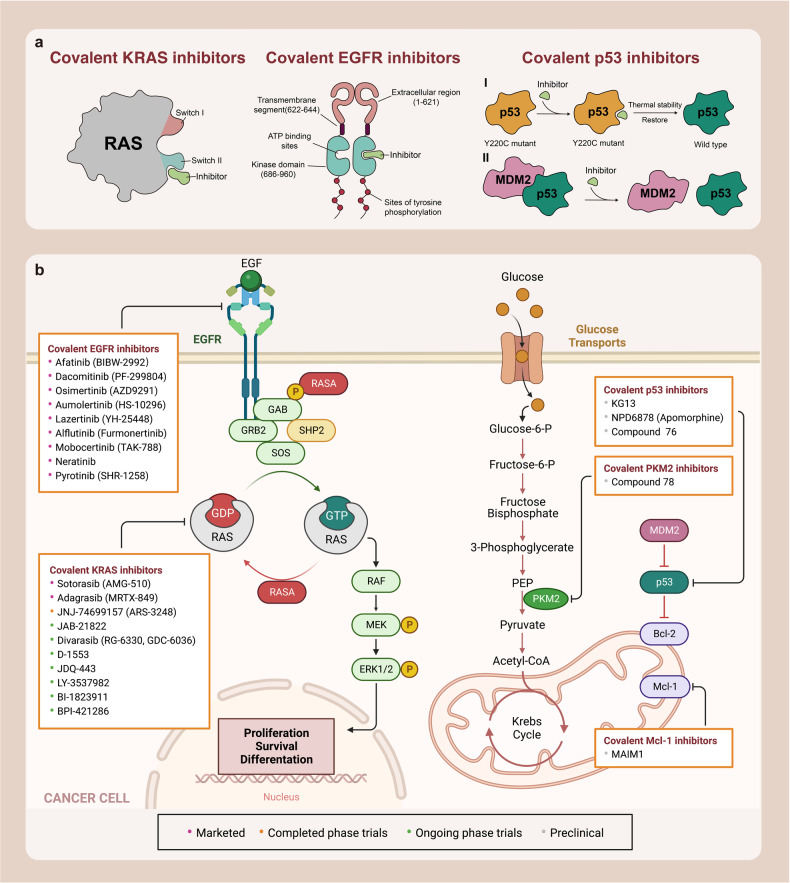
- Covalent inhibition produced the field's landmark success: sotorasib (AMG-510) received FDA accelerated approval in May 2021 for KRASG12C-mutated NSCLC, with an overall remission rate of 37%, disease control rate of 81%, median PFS 6.8 months, and median duration of remission 10.0 months; adagrasib (MRTX-849) followed with ORR 58%, median duration of treatment 9.5 months, and median duration of remission 12.6 months.
- Clinical-stage covalent KRASG12C inhibitors report ORRs including JAB-21822 56.3% (18/32, DCR 90.6%), divarasib 46% confirmed ORR (26/57 evaluable NSCLC patients), D-1553 37.8% (28/74, DCR 91.9%), JDQ-443 57% (4/7) at the phase II recommended dose, and IBI-351 50.9% (28/55) overall with 61.9% (13/21) at the recommended dose.
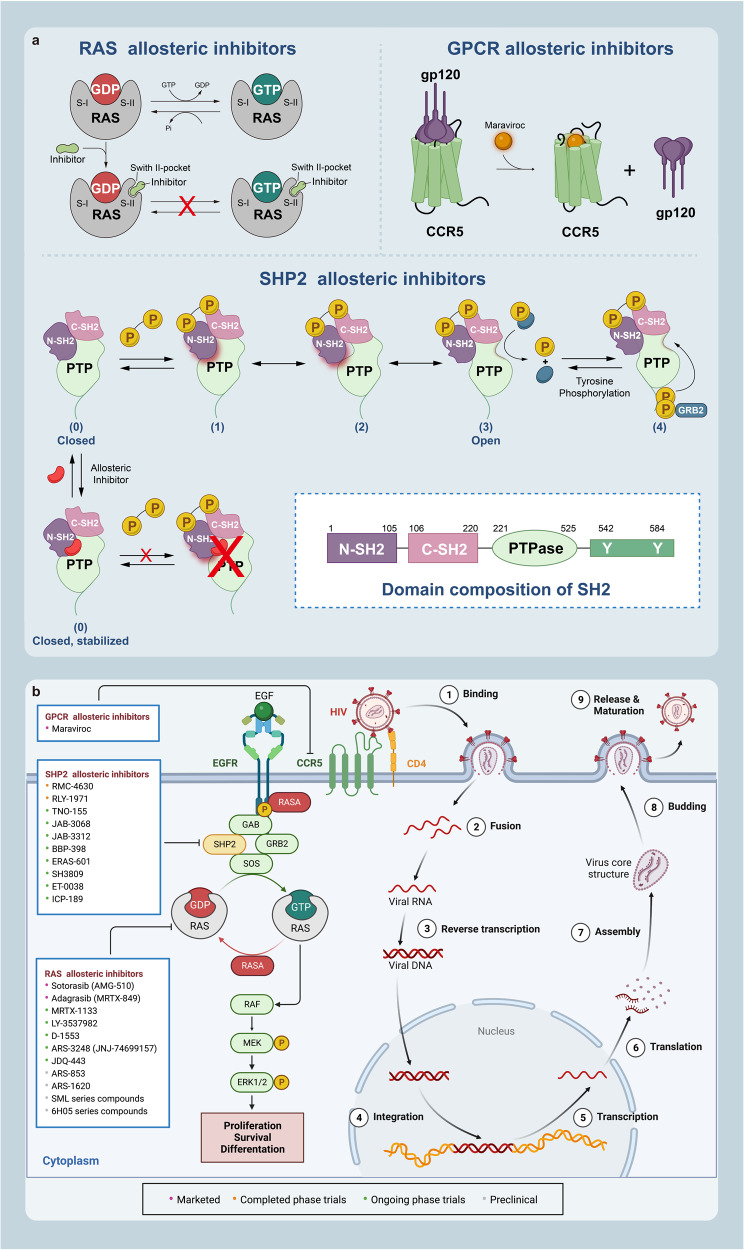
- Allosteric modulators target undruggable proteins lacking orthosteric pockets: MRTX-1133 binds inactive KRASG12D with IC50 < 2 nM and ~700-fold selectivity over KRASWT; SHP2 allosteric inhibitors (TNO-155, JAB-3068, RMC-4630, JAB-3312, RLY-1971, BBP-398, ERAS-601, SH3809, ET-0038, ICP-189) have entered clinical trials though none are approved.
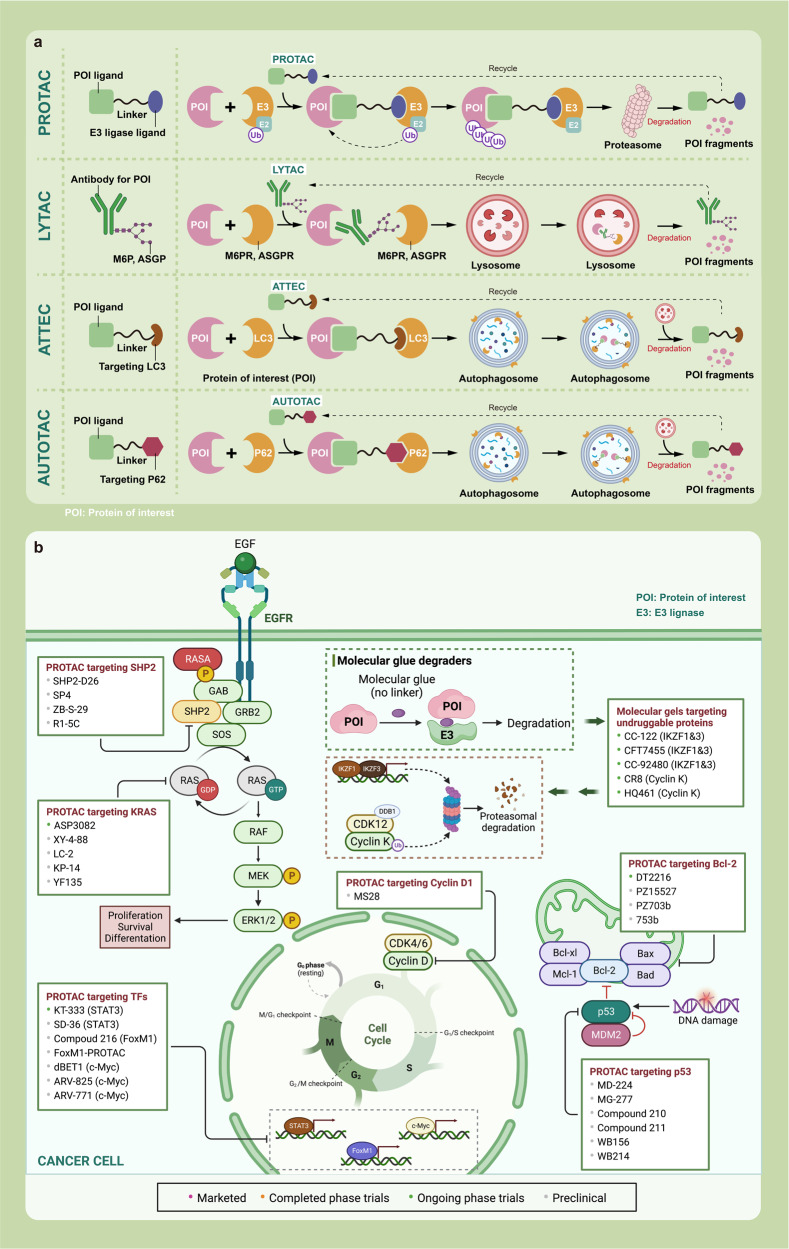
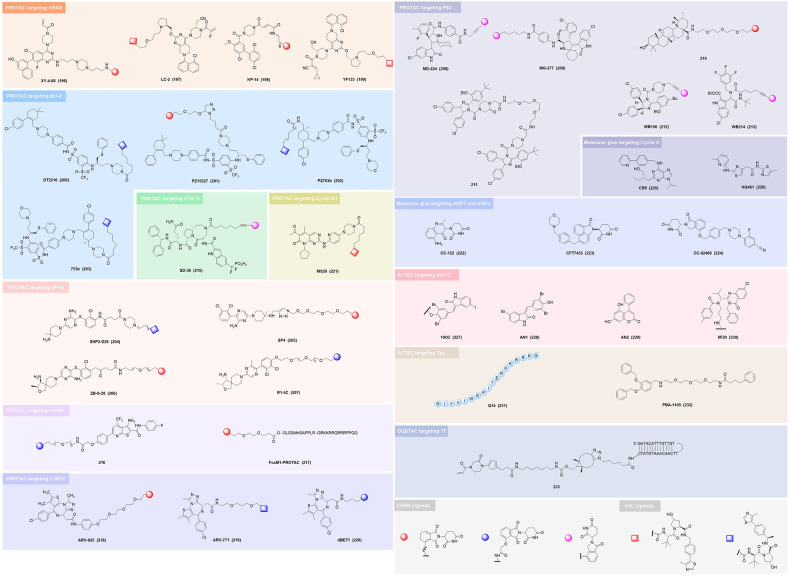
- Targeted protein degradation extends to previously undruggable targets: PROTACs degrade KRASG12C (LC-2, DC50 0.25 μM in NCI-H23), Bcl-2/Bcl-xL (DT2216 in phase I), SHP2 (SHP2-D26, DC50 2.6 nM in MV4;11), MDM2/p53 (MD-224, IC50 1.5 nM), STAT3 (KT-333 in phase I), and c-Myc pathway proteins; molecular glues degrade IKZF1/3 and Cyclin K.
Methods
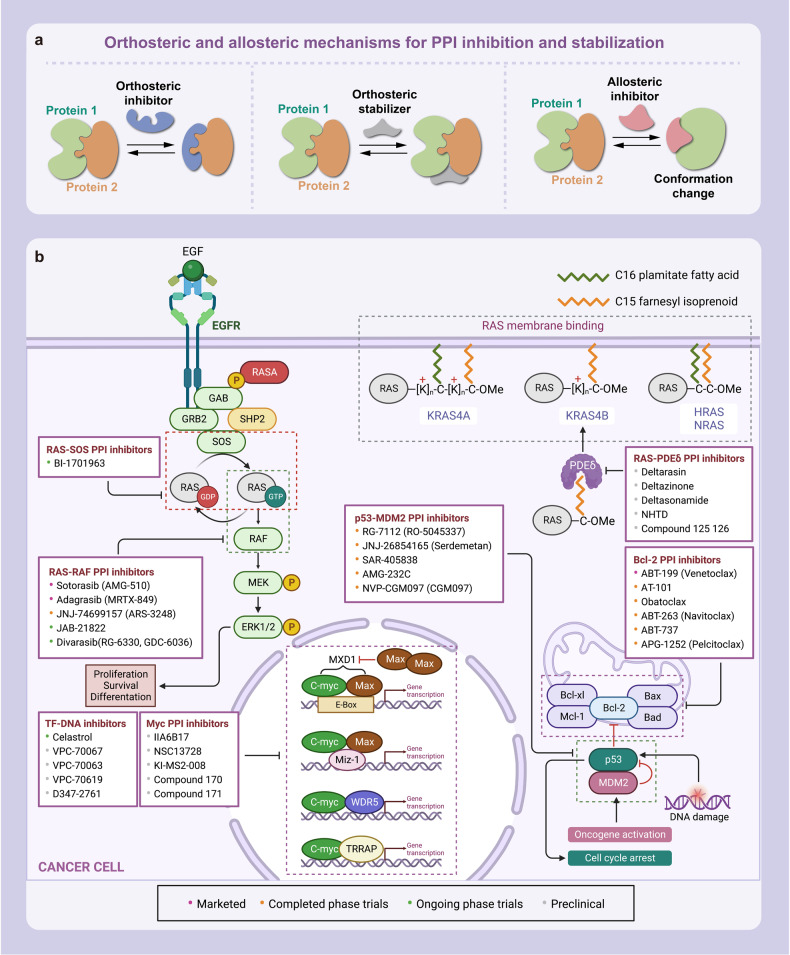
- Narrative review, not primary research: the authors organize drug-discovery strategies for undruggable proteins into covalent regulation, allosteric modulation, PPI and protein–DNA interaction inhibition, targeted protein regulation (degradation/stabilization), nucleic acid-based approaches, immunotherapy, and other approaches (upstream/downstream effectors, synthetic lethality, PTMs, conjugates).
- Evidence base is the published literature and trial registries: six summary tables (Tables 1–6) compile compound name/structure, target, cancer cell line activity, indications, status/clinical trial identifier, and references, with clinical trial data collected from ClinicalTrials.gov (last accessed March 2023).
- Undruggable target classes defined as small GTPases (RAS family), phosphatases (PTPs, PSTPs), transcription factors (p53, Myc, ER, AR, XBP1, NRF2, NF-κB, BACH), epigenetic targets, and other proteins including PPI- and intrinsically disordered proteins.
Limitations
- The paper states that a lack of accurate structural information on undruggable proteins remains a significant obstacle, and that cryo-EM low resolutions still need to be addressed; it also notes that genetic therapies such as therapeutic RNAs and synthetic lethal screening are limited by off-target effects and side effects.
- The paper states that for marketed drugs, upcoming resistance is a major challenge that must be foreseen and protective plans developed; it also notes that most existing modulators are inhibitors, so activators (e.g., for p53) and PPI stabilizers remain underexplored.
- Evident from the text: many cited clinical trials are listed as completed, terminated, withdrawn, or ongoing with results "pending publication" or not posted, so several efficacy claims rest on conference abstracts, company reports, or unpublished data rather than peer-reviewed results; the review also relies heavily on preclinical cell-line IC50/DC50 values that may not translate clinically.
Model-written summary. Check it against the paper before relying on it.
Integrity signals
Registry
Cites
Statistics
Figures
Verification
Claims the paper makes
98 Valid · 25 Not valid · 463 Not checked · 121 Own results and interpretations
At least one cited source doesn’t support this claim or points to a different paper, and none confirmed it — see the verdicts below.
In the paper
“The chemical and enzymatic stability of XY-02-075 is greatly improved by methylene substitution of the central oxygen in the phosphonic anhydride bonds of SML-8-73-1 and SM-10-70-1.”
§ Recent advances in targeting the “undruggable” proteins: from drug discovery to clinical trials > Covalent regulation > Covalent KRAS inhibitors
What the sources say
- Disputedcites [92] Xiong Y Covalent guanosine mimetic inhibitors of G12C KRAS ACS Med. Chem. Lett. 2017 8 61 66 10.1021/acsmedchemlett.6b00373 28105276 PMC5238463 sourceExperimental — accuracy not yet measured
Our copy identifies XY-02-075 as compound 47, the 'phosphonyl sulfonamide analogue' built by sulfonylation of ethylenediamine (sulfamoyl phosphonate, Scheme/Abstract), whose cocrystal structure shows 'replacement of β-phosphate with sulfonamide' — so its modified linkage is a P–N(S) bond, not a methylene-substituted central oxygen. The methylene substitution of the central oxygen is described for a different series: bisphosphonate 10 (XY-01-103) and the difluoro/monofluoromethylene analogues 11 and 12, where the paper says the P–C–P bisphosphonate 'is considered to be resistant to acidic and enzymatic hydrolysis' (quoting refs 29,30) and that 11 'remove[s] the liability of the hydrolytic instability of the diphosphate moiety'. No passage in our copy mentions SM-10-70-1 at all (searched: SM-10-70-1), and no measured chemical/enzymatic stability data are reported for XY-02-075 — its t1/2 of 2.3 h is a labeling (kinact) value, not a hydrolytic stability value. (LLM, conf=0.75)
Checked by a reasoning model — may be wrong.
plainstates a cause- Asserted: passes — The authors put it forward as true.
- Checkable: passes — It can be checked against evidence.
- Load-bearing: passes — The paper’s conclusions depend on it.
- Based: passes — The paper gives a reason why it holds.
- Disputed
At least one cited source doesn’t support this claim or points to a different paper, and none confirmed it — see the verdicts below.
In the paper
“XY-02-075 is expected to be a promising compound despite 40 folds reduction in affinity compared to SML-8-73-1.92”
§ Recent advances in targeting the “undruggable” proteins: from drug discovery to clinical trials > Covalent regulation > Covalent KRAS inhibitors
What the sources say
- Disputedcites [92] Xiong Y Covalent guanosine mimetic inhibitors of G12C KRAS ACS Med. Chem. Lett. 2017 8 61 66 10.1021/acsmedchemlett.6b00373 28105276 PMC5238463 sourceExperimental — accuracy not yet measured
The passage labeled Abstract (page unavailable) calls compound 11—not XY-02-075—promising and says it has 40-fold lower affinity than SML-8-73-1. The paper identifies XY-02-075 as compound 47 and reports a Ki of 1.6 μM, versus 9 nM for SML-8-73-1; it does not make the claimed promising-compound assessment for XY-02-075. (LLM, conf=0.91)
Checked by a reasoning model — may be wrong.
plain- Asserted: passes — The authors put it forward as true.
- Checkable: passes — It can be checked against evidence.
- Load-bearing: unclear — It is unclear whether the paper’s conclusions depend on it.
- Based: passes — The paper gives a reason why it holds.
- Disputed
At least one cited source doesn’t support this claim or points to a different paper, and none confirmed it — see the verdicts below.
In the paper
“Wei’s team developed a TF-DUBTAC platform capable of selectively stabilizing oncoproteins, including FOXO3A, p53, and IRF3.”
§ Recent advances in targeting the “undruggable” proteins: from drug discovery to clinical trials > Targeted proteins’ regulation > Targeted protein stabilization (TPS)
What the sources say
- Disputedcites [549] Liu J TF-DUBTACs stabilize tumor suppressor transcription factors J. Am. Chem. Soc. 2022 144 12934 12941 10.1021/jacs.2c04824 35786952 PMC10981454 sourceExperimental — accuracy not yet measured
The Conclusions report that the TF-DUBTACs stabilized FOXO3A, p53, and IRF3, but explicitly identify them as tumor suppressor transcription factors—not oncoproteins. The same passage distinguishes TF-DUBTACs from the authors’ TF-PROTAC technology for targeting oncogenic transcription factors. (LLM, conf=0.90)
Checked by a reasoning model — may be wrong.
plainstates a cause- Asserted: passes — The authors put it forward as true.
- Checkable: passes — It can be checked against evidence.
- Load-bearing: passes — The paper’s conclusions depend on it.
- Based: passes — The paper gives a reason why it holds.
- Disputed
At least one cited source doesn’t support this claim or points to a different paper, and none confirmed it — see the verdicts below.
In the paper
“Yet, no studies have been conducted on undruggable targets.547”
§ Recent advances in targeting the “undruggable” proteins: from drug discovery to clinical trials > Targeted proteins’ regulation > Lysosome-based TPD
What the sources say
- Disputedcites [547] Grohmann C Development of NanoLuc-targeting protein degraders and a universal reporter system to benchmark tag-targeted degradation platforms Nat. Commun. 2022 13 2073 10.1038/s41467-022-29670-1 35440107 PMC9019100 sourceExperimental — accuracy not yet measured
The Results sections “FKBPF36V-targeting degraders outperform other tTPD systems” and “tTPD systems trigger physiologically relevant degradation” report a NanoTAC study of MLKL, a pseudokinase: NC4 degraded MLKL-NanoLuc and reduced MLKL-driven necroptosis. This runs contrary to the claim that no studies have been conducted on such targets, although the paper does not explicitly call MLKL “undruggable.” Page numbers were not available in our copy. (LLM, conf=0.73)
Checked by a reasoning model — may be wrong.
plain- Asserted: passes — The authors put it forward as true.
- Checkable: passes — It can be checked against evidence.
- Load-bearing: unclear — It is unclear whether the paper’s conclusions depend on it.
- Based: passes — The paper gives a reason why it holds.
- Disputed
The cited sources support only part of this claim — read each source’s verdict below.
In the paper
“Sotorasib specifically and irreversibly inhibits KRASG12C by binding to GDP and locking KRAS in an inactive state.”
§ Recent advances in targeting the “undruggable” proteins: from drug discovery to clinical trials > Covalent regulation > Covalent KRAS inhibitors
What the sources say
- Partly supportedcites [53] Skoulidis F Sotorasib for lung cancers with KRAS p.G12C mutation N. Engl. J. Med. 2021 384 2371 2381 10.1056/NEJMoa2103695 34096690 PMC9116274 sourceExperimental — accuracy not yet measured
The passage labeled Abstract > Conclusions says sotorasib specifically and irreversibly inhibits KRASG12C and traps it in an inactive state. It does not say sotorasib binds to GDP: it says the drug binds to a pocket in KRAS that is present when KRAS is GDP-bound. (LLM, conf=0.90)
plainstates a cause- Asserted: passes — The authors put it forward as true.
- Checkable: passes — It can be checked against evidence.
- Load-bearing: passes — The paper’s conclusions depend on it.
- Based: passes — The paper gives a reason why it holds.
- Partly supported
286 more claims · 45 with their cited sources checked
Create a free account to see all 707 claims and to verify the 708 references still open.
- It may state two separate claims as one. 382
- Probably not a substantial claim. 57
- The quote only partly states this claim. 6
Claims other papers make about this one
Each is checked against this paper’s own text: does it say what the citing paper says it does?
The cited source says what the claim attributes to it.
In the citing paper
“Allosteric modulators typically attach to regions distinct from the orthosteric site of receptors, inducing conformational changes to regulate the affinity and/or efficacy of orthosteric ligands, or to directly modulate receptor activity with positive, negative, or neutral effects.542–545”
From Recent advances in Alzheimer's disease: Mechanisms, clinical trials and new drug development strategies. (2024) · cites this paper as [543]
Self-check
Percentages, sums and reported differences re-computed from the paper’s own numbers.
Each contradiction between two passages listed here was confirmed by an independent check.
Rated major: it would touch a result — a value a result rests on, reported and recomputed p-values on opposite sides of the significance level, two passages that conflict with no sign which is right, or a cited work retracted before this paper was published.
In the paper
§ Recent advances in targeting the “undruggable” proteins: from drug discovery to clinical trials > Covalent regulation > Covalent KRAS inhibitors
“| RMC-8839 (16)a | KRASG12C | – | – | Preclinical | 83 |”
§ Recent advances in targeting the “undruggable” proteins: from drug discovery to clinical trials > Covalent regulation > Covalent KRAS inhibitors
“RMC-8839 (16) is the first orally-administered, mutant-selective, covalent KRASG13C inhibitor developed by Revolution Medicines. This compound directly targets KRASG13C”
Rated major: it would touch a result — a value a result rests on, reported and recomputed p-values on opposite sides of the significance level, two passages that conflict with no sign which is right, or a cited work retracted before this paper was published.
In the paper
§ Recent advances in targeting the “undruggable” proteins: from drug discovery to clinical trials > PPI inhibition
“| Macdonald’s researchCompound (170) | Myc-Max | HEK293T(IC50 = 29 μM) | – | Preclinical | 428 |”
§ Recent advances in targeting the “undruggable” proteins: from drug discovery to clinical trials > PPI inhibition > Myc PPI inhibitors
“Although compound (170) was the most active (IC50 = 29 nM), it was unsuitable for in vivo studies.”
Rated major: it would touch a result — a value a result rests on, reported and recomputed p-values on opposite sides of the significance level, two passages that conflict with no sign which is right, or a cited work retracted before this paper was published.
In the paper
§ Recent advances in targeting the “undruggable” proteins: from drug discovery to clinical trials > PPI inhibition
“| Macdonald’s researchCompound (171) | Myc-Max | HEK293T(IC50 = 100 μM) | – | Preclinical | 429 |”
§ Recent advances in targeting the “undruggable” proteins: from drug discovery to clinical trials > PPI inhibition > Myc PPI inhibitors
“resulting in compound (171) (IC50 = 100 nM).”
Rated minor: it would not touch a result — a value no result rests on, a p-value that stays on the same side of the significance level, or a conflict that is clerical, resolved elsewhere in the paper, or outside its own findings.
In the paper
§ Recent advances in targeting the “undruggable” proteins: from drug discovery to clinical trials > Allosteric modulators > RAS allosteric inhibitors
“These include Sotorasib (AMG-510), Adagrasib (MRTX-849), ARS-853, ARS-1620, LY-3537982, GDC-6036 (RG-6300), D-1553, ARS-3248 (JNJ-74699157), JDQ-443, and SML series compounds, among others, such as LY-3537982, ARS-853, ARS-1620, and 6H05 series compounds (Table 2).”
§ Recent advances in targeting the “undruggable” proteins: from drug discovery to clinical trials > Allosteric modulators
“| MRTX-1133 (79) | KRASG12D | – | Colorectal cancer, NSCLC, pancreas cancer | OngoingNCT05737706(I/II) | 254 |”
Rated minor: it would not touch a result — a value no result rests on, a p-value that stays on the same side of the significance level, or a conflict that is clerical, resolved elsewhere in the paper, or outside its own findings.
In the paper
§ Recent advances in targeting the “undruggable” proteins: from drug discovery to clinical trials > PPI inhibition > RAS PPI inhibitors
“Compound (129) exhibited superior affinity for PDEδ (Kd = 38 ± 17 nM)”
§ Recent advances in targeting the “undruggable” proteins: from drug discovery to clinical trials > PPI inhibition > RAS PPI inhibitors
“compound (127) (Kd = 9 ± 2.3 nM)”
3 more findings
Create a free account to see every finding of this check.
Citations
Cites
1 retracted
Luo, M.-L., Zhao, Q., He, X.-H., Xie, X., Zhu, H.-P., You, F.-M., Peng, C., Zhan, G., & Huang, W. (2023) · Biomedicine & Pharmacotherapy · doi:10.1016/j.biopha.2023.114574 · Cited by 25
Self-citationRetractedPD-1 and PD-L1 Immune Checkpoint Blockade to Treat Breast Cancer
Hartkopf, A. D., Taran, F.-A., Wallwiener, M., Walter, C. B., Krämer, B., Grischke, E.-M., & Brucker, S. Y. (2016) · Breast Care · doi:10.1159/000453569 · Cited by 30,845
Repertoires of Autophagy in the Pathogenesis of Ocular Diseases
Li, Y.-J., Jiang, Q., Cao, G.-F., Yao, J., & Yan, B. (2015) · Cellular Physiology and Biochemistry · doi:10.1159/000373980 · Cited by 16,304
Potent and specific genetic interference by double-stranded RNA in Caenorhabditis elegans
Fire, A., Xu, S., Montgomery, M. K., Kostas, S. A., Driver, S. E., & Mello, C. C. (1998) · Nature · doi:10.1038/35888 · Cited by 15,429
Nishimura, R., Osako, T., Nishiyama, Y., Tashima, R., Nakano, M., Fujisue, M., Toyozumi, Y., & Arima, N. (2013) · Oncology · doi:10.1159/000353099 · Cited by 13,166
Comprehensive molecular portraits of human breast tumours
The Cancer Genome Atlas Network (2012) · Nature · doi:10.1038/nature11412 · Cited by 12,129
Lynch, T. J., Bell, D. W., Sordella, R., Gurubhagavatula, S., Okimoto, R. A., Brannigan, B. W., Harris, P. L., Haserlat, S. M., Supko, J. G., Haluska, F. G., et al. (2004) · New England Journal of Medicine · doi:10.1056/nejmoa040938 · Cited by 11,486
Duplexes of 21-nucleotide RNAs mediate RNA interference in cultured mammalian cells
Elbashir, S. M., Harborth, J., Lendeckel, W., Yalcin, A., Weber, K., & Tuschl, T. (2001) · Nature · doi:10.1038/35078107 · Cited by 9,456
EGFR Mutations in Lung Cancer: Correlation with Clinical Response to Gefitinib Therapy
Paez, J. G., Jänne, P. A., Lee, J. C., Tracy, S., Greulich, H., Gabriel, S., Herman, P., Kaye, F. J., Lindeman, N., Boggon, T. J., et al. (2004) · Science · doi:10.1126/science.1099314 · Cited by 9,368
Gefitinib or Carboplatin–Paclitaxel in Pulmonary Adenocarcinoma
Mok, T. S., Wu, Y.-L., Thongprasert, S., Yang, C.-H., Chu, D.-T., Saijo, N., Sunpaweravong, P., Han, B., Margono, B., Ichinose, Y., et al. (2009) · New England Journal of Medicine · doi:10.1056/nejmoa0810699 · Cited by 8,261
Research works printed but not linked: 2
- Walter AO Discovery of a mutant-selective covalent inhibitor of EGFR that overcomes T790M-mediated resistance in NSCLC Cancer Discov. 2013 3 1404 1415 10.1158/2159-8290.CD-13-0314 24065731 PMC4048995 · DOI · Paper page
- Meng, J. After the AACR Conference, what new drugs are worth watching? https://baijiahao.baidu.com/s?id=1730615953532632799&wfr=spider&for=pc (2022).
Cited by
Items 101–200 of 435
CarsiDock-Cov: A deep learning-guided approach for automated covalent docking and screening
Shen, C., Du, H., Zhang, X., Gu, S., Cai, H., Kang, Y., Pan, P., Zhao, Q., & Hou, T. (2025) · Acta Pharmaceutica Sinica B · doi:10.1016/j.apsb.2025.07.043 · Cited by 13
“The formation of covalent bonds with those rare and non-conserved residues significantly improves the binding potency and selectivity, and even remarkably facilitates the ligand discovery for those “undruggable” targets that usually own a shallow binding site 4-6 .”
Dey, K., Erwin, N., Molina, N., Chen, H., He, M., & Zheng, G. (2025) · Medicinal Chemistry Research · doi:10.1007/s00044-025-03454-w · Cited by 14
Molecular basis for antibody recognition of multiple drug–peptide/MHC complexes
Maso, L., Rajak, E., Bang, I., Koide, A., Hattori, T., Neel, B. G., & Koide, S. (2024) · Proceedings of the National Academy of Sciences · doi:10.1073/pnas.2319029121 · Cited by 12
Li, H., Zhang, Y., Huang, B. S., Yang, F., Ma, Q., Wang, X., Liu, Y., Ren, J., Pan, X., Liang, C., et al. (2024) · Chemical Engineering Journal · doi:10.1016/j.cej.2024.149961 · Cited by 12
Emerging Roles of ncRNAs in Type 2 Diabetes Mellitus: From Mechanisms to Drug Discovery
Yang, Y., & Cheng, H. (2024) · Biomolecules · doi:10.3390/biom14111364 · Cited by 12
King, Z., Desai, S. R., Frank, D. A., & Shastri, A. (2025) · Neoplasia · doi:10.1016/j.neo.2025.101137 · Cited by 12
“STAT proteins were initially deemed “ undruggable ” due to the lack of deep pockets, such as ATP binding domains, to which small molecules could bind[81].”
RASON promotes KRASG12C-driven tumor progression and immune evasion in non-small cell lung cancer
Wu, J., Xie, K., Zhang, Y., Zhang, W., Cheng, R., Zhang, Y., Xia, Y., Liu, T., Yin, R. H., Qiu, Y., et al. (2025) · Journal of Experimental & Clinical Cancer Research · doi:10.1186/s13046-025-03369-9 · Cited by 11
Myeloid cell path to malignancy: insights into liver cancer
Ramirez, C. F. A., & Akkari, L. (2025) · Trends in cancer · doi:10.1016/j.trecan.2025.02.006 · Cited by 12
Wang, Y., Ma, Y., Chang, Y.-H., Yan, J., Zhang, J., Cai, M.-Y., & Wei, K. (2025) · Biology · doi:10.3390/biology14121665 · Cited by 14
“…face significant limitations in targeting certain “undruggable” proteins—targets historically considered intractable for small-molecule intervention due to features like lacking well-defined binding pockets or those involving protein-protein interactions with large, flat interfaces [40–42].”
Covalent Activation of the C‐type Lectin DC‐SIGN
Lefèbre, J., Besch, M., Csorba, N., Garami, K. N., Orgován, Z., Schlosser, G., Bermejo, I. A., Ábrányi‐Balogh, P., Keserű, G. M., & Rademacher, C. (2025) · Angewandte Chemie International Edition · doi:10.1002/anie.202520594 · Cited by 11
Click. Screen. Degrade. A Miniaturized D2B Workflow for Rapid PROTAC Discovery
Mitrovic, M., Greco, F., Cruz-Garcia, Y., Lučić, A., Hoffmann, L., Chander, R., Schönfeld, J., Liebisch, N., Sivashanmugam, S. A., Schwalm, M. P., et al. (2026) · Journal of Medicinal Chemistry · doi:10.1021/acs.jmedchem.5c02543 · Cited by 14
Unleashing the power of DNA-encoded libraries for challenging targets in drug discovery
Du, N., Li, Y., Lou, Q., Zhang, G., Li, Y., & Li, Y. (2026) · Pharmaceutical Science Advances · doi:10.1016/j.pscia.2026.100115 · Cited by 14
The power of computational proteomics platforms to decipher protein-protein interactions
González‐Avendaño, M., López, J., Vergara‐Jaque, A., & Cerda, O. (2024) · Current Opinion in Structural Biology · doi:10.1016/j.sbi.2024.102882 · Cited by 10
Recent advances in methods for quantifying the cell penetration of macromolecules
Batistatou, N., & Kritzer, J. A. (2024) · Current Opinion in Chemical Biology · doi:10.1016/j.cbpa.2024.102501 · Cited by 10
Extracellular Vesicle (EV) Survivin for Cancer Diagnostics and Therapeutics: A Review
Wijaya, W., Phyu, S. M., & Jiang, S. (2024) · Frontiers in Bioscience-Landmark · doi:10.31083/j.fbl2908302 · Cited by 11
From serendipity to strategy: molecular glue degraders in cancer therapeutics
Darling, S., Bajrami, I., & West, S. C. (2025) · Critical Reviews in Biochemistry and Molecular Biology · doi:10.1080/10409238.2025.2564068 · Cited by 9
“…struggle to overcome the challenge of selectivity (Figure 1B, iii) (Klaeger et al. 2017). with so many of these undruggable proteins classed as oncogenic, tackling this challenge has become a high priority in cancer therapeutics and a variety of approaches are being employed (Xie et al. 2023).”
PROTACs coupled with oligonucleotides to tackle the undruggable
Zhang, G., Yan, S., Liu, Y., Du, Z., Min, Q., & Qin, S. (2025) · Bioanalysis · doi:10.1080/17576180.2025.2459528 · Cited by 12
Proximity-induced membrane protein degradation for cancer therapies
Zhang, D., Wang, Z., Inuzuka, H., & Wei, W. (2025) · RSC Medicinal Chemistry · doi:10.1039/d5md00141b · Cited by 9
Lee, Y., Yoo, S., Cho, S., Kim, I., & Kim, I.-S. (2025) · Journal of Controlled Release · doi:10.1016/j.jconrel.2025.113885 · Cited by 13
DiffDock-Glide: A Hybrid Physics-Based and Data-Driven Approach to Molecular Docking
Herron, L., Dakka, J., Yao, K., Shi, D., Zhang, Y., & Jerome, S. V. (2026) · Journal of Chemical Information and Modeling · doi:10.1021/acs.jcim.5c01635 · Cited by 14
Knocking on Cells’ Door: Strategic Approaches for miRNA and siRNA in Anticancer Therapy
Serra, M., Buccellini, A., & Paolillo, M. (2025) · International Journal of Molecular Sciences · doi:10.3390/ijms26178703 · Cited by 10
Rewiring enzyme regulation: Allosteric drugs and predictive tools
Fidan, V. G., Ilim, K., Gürsoy, A., Ozkan, S. B., & Keskin, Ö. (2025) · Current Opinion in Structural Biology · doi:10.1016/j.sbi.2025.103159 · Cited by 9
Direct Targeting of Gene Regulators by Iridium(III) and Rhodium(III) Complexes
Wu, L., Kong, L., Wang, W., & Leung, C. (2025) · Accounts of Chemical Research · doi:10.1021/acs.accounts.5c00570 · Cited by 9
Zeng, L., Song, L., Liu, L., Wu, F., Xu, Q., Yan, H., Lin, S., Jiang, W., Wang, Z., Li, D., et al. (2024) · Med · doi:10.1016/j.medj.2024.02.011 · Cited by 11
Modulation of Nrf2 expression by targeting i-motif DNA
Warner, E. F., Guneri, D., O'Connell, M. A., MacDonald, C. J., & Waller, Z. A. E. (2025) · Communications Chemistry · doi:10.1038/s42004-024-01387-w · Cited by 10
“This has increased the importance of understanding the functional role of these DNA structures and how these can be modulated for therapeutic purposes, particularly for targeting proteins where intervention cannot be achieved by other means 20 .”
Käck, H., & Sjögren, T. (2025) · Journal of Synchrotron Radiation · doi:10.1107/s1600577524012281 · Cited by 10
Development of MDM2‐Targeting PROTAC for Advancing Bone Regeneration
Jeong, S., Cha, J., Ahmed, W., Kim, J., Kim, M., Hong, K. T., Choi, W., Choi, S., Yoo, T. H., An, H., et al. (2025) · Advanced Science · doi:10.1002/advs.202415626 · Cited by 13
GalNAc End‐Capped Poly(β‐amino ester)s with Screened Side Chains for Efficient Gene Delivery
Liu, X., Li, Y., Liu, X., Huang, Y., Wang, F., Li, J., Guo, Y., Zhu, X., Zhu, L., & Zhang, C. (2025) · Small Methods · doi:10.1002/smtd.202401286 · Cited by 9
Cui, Z., Huang, F., Fang, K., Yan, J., Zhang, Y., Kang, D. D., Zhou, Y., Zhao, Y., Everitt, J. I., Hankey, W., et al. (2025) · Advanced Science · doi:10.1002/advs.202417605 · Cited by 10
Niu, X., Zhang, Z., Song, Y., & Wang, H. (2025) · Journal of Agricultural and Food Chemistry · doi:10.1021/acs.jafc.5c05257 · Cited by 9
Dutta, S., Tripathy, S., Bej, S., Parvin, S., Jana, B., Patra, C. R., & Das, A. (2025) · Chemical Science · doi:10.1039/d5sc03783b · Cited by 9
Ni, M., Xing, L., Wang, Y., Liu, X., Zhang, L., Li, Y., Li, L., & Huang, Y. (2025) · Asian Journal of Pharmaceutical Sciences · doi:10.1016/j.ajps.2025.101093 · Cited by 15
“In recent years, therapeutic protein drugs are an essential class of pharmaceuticals for treating various diseases, from oncology to autoimmune and chronic inflammatory diseases [ 1–4 ].”
Szupryczyński, K., Czeleń, P., Jeliński, T., & Szefler, B. (2024) · International Journal of Nanomedicine · doi:10.2147/ijn.s469217 · Cited by 8
RNAi in psoriasis: A melodic exploration of miRNA, shRNA, and amiRNA with a spotlight on siRNA
Purewal, J. S., & Doshi, G. (2024) · European Journal of Pharmacology · doi:10.1016/j.ejphar.2024.177083 · Cited by 9
The new era of siRNA therapy: Advances in cancer treatment
Zhang, Z., Yu, M., Hu, G., & Gan, Y. (2025) · Clinical and Translational Medicine · doi:10.1002/ctm2.70363 · Cited by 7
Tian, X., Wang, X., Chen, S., Sun, X., Shao, D., Zhang, K., Gao, Q., & Hao, L. (2025) · Ageing Research Reviews · doi:10.1016/j.arr.2025.102886 · Cited by 7
Molecular glues: A new path to the world of the unattainable
Khaledian, M., Sheikh, H., Babaei, F., Divsalar, A., Gharshasbi, M., Ottmann, C., Haertlé, T., Saboury, A. A., & Rasouli, M. (2025) · International Journal of Biological Macromolecules · doi:10.1016/j.ijbiomac.2025.148861 · Cited by 8
Baker, C., Acquah, F. A., Chivukula, L. G., Wu, L., Philippe-Venec, L., Abedi, M., Tao, Y., Ramirez, D. M. C., McCoy, M., Moore, B. D., et al. (2025) · Journal of Medicinal Chemistry · doi:10.1021/acs.jmedchem.5c01836 · Cited by 10
Purine-rich element binding protein alpha: a DNA/RNA binding protein with multiple roles in cancers
Yu, S., Jiang, C., Yang, Y., Cheng, F., Liu, F., Liu, C., & Gong, X. Q. (2025) · Molecular Medicine · doi:10.1186/s10020-025-01087-8 · Cited by 7
Versatile One-Pot Synthesis of Hydrophobic Tags by Multicomponent Reactions
Balestrero, F. C., Gioiello, L., Goutsiou, G., Sangaletti, S., Martino, R. M. C. D., Condorelli, F., Grolla, A. A., & Pirali, T. (2025) · ACS Omega · doi:10.1021/acsomega.4c09726 · Cited by 9
Li, Y., Ladd, Z., Xiong, Z., Bui-Linh, C., Paiboonrungruang, C., Subramaniyan, B., Li, H., Wang, H., Balch, C., Shersher, D. D., et al. (2025) · Cancers · doi:10.3390/cancers17111853 · Cited by 10
“Targeting transcription factors, such as NRF2, remains highly challenging, as they are generally considered ‘undruggable’ due to their structural and functional characteristics [125].”
Hunter, C. E., Pohl, E., & Freitag, S. (2025) · Biophysical Reviews · doi:10.1007/s12551-025-01359-x · Cited by 8
“, targeted protein degradation (TPD), including proteolysis targeting chimeras (PROTACs) (Li et al. 2022), and multimeric assemblies (Xie et al. 2023).”
Binding Dynamics of a Stapled Peptide Targeting the Transcription Factor NF−Y
Durukan, C., Arbore, F., Klintrot, R., Bigiotti, C., Ilie, I. M., Vreede, J., Grossmann, T. N., & Hennig, S. (2024) · ChemBioChem · doi:10.1002/cbic.202400020 · Cited by 7
Peptide-driven strategies against lung cancer
Karankar, V. S., Awasthi, S., & Srivastava, N. (2025) · Life Sciences · doi:10.1016/j.lfs.2025.123453 · Cited by 8
Zhang, L., Zhang, S., Zhang, Y., Liu, B., Li, X., & Han, B. (2024) · ChemBioChem · doi:10.1002/cbic.202400837 · Cited by 6
Self-citationUnified Deep Learning of Molecular and Protein Language Representations with T5ProtChem
Kelly, T., Xia, S., Lü, J., & Zhang, Y. (2025) · Journal of Chemical Information and Modeling · doi:10.1021/acs.jcim.5c00051 · Cited by 6
Yang, L., Zuo, H., Sha, M., Zhan, W., Li, J., Liu, Y., Fang, F., Wang, Y., & Ma, X. (2025) · Journal of Medicinal Chemistry · doi:10.1021/acs.jmedchem.5c01307 · Cited by 7
Update on Structure and Function of SH2 Domains: Mechanisms and Emerging Targeting Strategies
Kasembeli, M. M., Rodas, J., & Tweardy, D. J. (2025) · International Journal of Molecular Sciences · doi:10.3390/ijms26189060 · Cited by 7
“Covalent inhibitors provide sustained inhibition for the lifetime of the protein target, may be effective at a reduced dosage compared to competitive inhibitors, and potentially overcome drug resistance mechanisms [67].”
Basu, R., & Fletcher, S. (2026) · RSC Chemical Biology · doi:10.1039/d5cb00230c · Cited by 7
Iron-Based Nanoparticles as Delivery Tools
Parang, K., Vadlapatla, R., Koomer, A., Moran, V., Jackson, L., & Shirazi, A. N. (2026) · Pharmaceuticals · doi:10.3390/ph19050654 · Cited by 6
“Such technologies may provide new approaches for addressing previously difficult or “undruggable” biological targets [165,166].”
Prajapati, V., Singh, A. K., Kumar, A. M., Singh, H., Pathak, P., Grishina, M., Kumar, V., Khalilullah, H., Verma, A., & Kumar, P. (2025) · RSC Medicinal Chemistry · doi:10.1039/d4md00923a · Cited by 7
Mathias, B. U. F. F., Goyon, A., Elger, C., Ruppert, R., Haindl, M., Zhang, K., & Guillarme, D. (2025) · Journal of Chromatography A · doi:10.1016/j.chroma.2025.465972 · Cited by 6
Xing, Y., Zhou, L., Chen, Y., Zhang, Q., Wu, X., Gan, Z., Wu, K., Jiang, D., Wei, S., & Chen, H. (2025) · International Journal of Biological Macromolecules · doi:10.1016/j.ijbiomac.2025.143759 · Cited by 7
Engineering Gypsophila elegans hairy root cultures to produce endosomal escape‐enhancing saponins
Lacchini, E., Qu, T., Moses, T., Volkov, A. N., & Goossens, A. (2025) · Plant Biotechnology Journal · doi:10.1111/pbi.70122 · Cited by 6
Sakaoka, S., & Kano, S. (2025) · World Patent Information · doi:10.1016/j.wpi.2025.102381 · Cited by 6
Silvani, G., Stenzel, M. H., & Kilian, K. A. (2025) · ACS Nano Medicine · doi:10.1021/acsnanomed.5c00019 · Cited by 8
Exploring Protein Bioconjugation: A Redox-Based Strategy for Tryptophan Targeting
Yang, Q., Liu, S., Huang, W., Peng, C. Y., & Han, B. (2024) · Research · doi:10.34133/research.0410 · Cited by 6
“Additionally, covalent inhibitors help to circumvent some potential resistance mechanisms, especially when facing undruggable proteins [4–6] or kinases [7] (such as SHP2 and KRAS) that lack traditional binding pockets due to mutations.”
BackgroundSelf-citationOropeza-Valdez, J. J., Padrón-Manrique, C., Vázquez-Jiménez, A., Soberón, X., & Reséndis-Antonio, O. (2024) · Frontiers in Molecular Biosciences · doi:10.3389/fmolb.2024.1429281 · Cited by 6
O‐Phthalaldehyde: A Versatile Chemical with its Roles and Future Perspectives
Misra, A., Mondal, S., & Mondal, M. A. (2024) · Asian Journal of Organic Chemistry · doi:10.1002/ajoc.202400383 · Cited by 6
Menchon, G., Gaci, A., Matvere, A., Aubry, M., Bore, A., Gilot, D., Goyenvalle, A., & Pedeux, R. (2025) · Molecular Therapy — Nucleic Acids · doi:10.1016/j.omtn.2025.102577 · Cited by 6
“4 Several ASOs are currently approved by the U.S. Food and Drug Administration for genetic and rare diseases 5,6 and several phase II and III studies are ongoing in the oncology therapeutic area.”
In‐Bridge Stereochemistry: A Determinant of Stapled Peptide Conformation and Activity
Zhang, J., & Dong, S. (2024) · ChemBioChem · doi:10.1002/cbic.202300747 · Cited by 6
Enhancing Challenging Target Screening via Multimodal Protein-Ligand Contrastive LearningPreprint
Wang, Z., Wang, Z., Yang, M., Pang, L., Nie, F., Liu, S., Gao, Z., Zhao, G., Ji, X., Huang, D., et al. (2024) · bioRxiv (Cold Spring Harbor Laboratory) · doi:10.1101/2024.08.22.609123 · Cited by 8
“…MDM2; intrinsically disordered pro-40 teins, like c-Myc and Tau; proteins exhibiting high conformational flexibility, including TRIP13 and TG2; and proteins lacking well-defined druggable pockets on their sur-42 faces, as observed in the small GTPase RAS family proteins (e.g., KRAS and HRAS) [2–4].”
BackgroundDe novo design of phosphotyrosine peptide bindersPreprint
Bauer, M. S., Zhang, J. Z., Wu, K., Lee, G. R., Coventry, B., Silvestri, I. M., Klupt, K. A., Shi, J., Brent, R. I., Li, X., et al. (2025) · bioRxiv (Cold Spring Harbor Laboratory) · doi:10.1101/2025.09.29.678898 · Cited by 6
“Our RFD2-MI approach can be readily generalized to other PTMs such as methylation, acetylation, or glycosylation to enable the generation of custom binders for a wide range of regulatory protein states previously considered undruggable (17, 18).”
Self-citationGafar, M. A., Omolo, C. A., Ibrahim, U. H., Elamin, G., Tageldin, A., Elhassan, E., Ismail, E. A., Mackraj, I., & Govender, T. (2025) · International Journal of Biological Macromolecules · doi:10.1016/j.ijbiomac.2025.140152 · Cited by 5
Wu, C., Liu, F., Lin, S., & Chyuan, I. (2025) · Journal of the Formosan Medical Association · doi:10.1016/j.jfma.2025.04.023 · Cited by 7
Exploiting allosteric modulation: a new frontier for precision medicine
Alum, E. U., Udechukwu, C. D., & Obasi, D. C. (2025) · Molecular Biology Reports · doi:10.1007/s11033-025-10650-9 · Cited by 5
“Many proteins involved in complex diseases are considered difficult to target with traditional drug discovery methods because they lack suitable binding pockets for conventional small molecules [ 60 ].”
Structure–activity relationships of KRAS-G12D inhibitors for pancreatic cancer
Suyal, C., Mangala, S. S., Kishore, A., & Kini, S. G. (2025) · Drug Discovery Today · doi:10.1016/j.drudis.2025.104396 · Cited by 7
Liu, C., Xu, Y., Wang, N., Liu, H., Yang, X., Zhou, S., Huang, D., Li, Y., You, Y., Wu, Q., et al. (2025) · Acta Pharmaceutica Sinica B · doi:10.1016/j.apsb.2025.09.004 · Cited by 5
“Especially for undruggable targets, the superiority of CRISPR/Cas9 is emphasized 5,6 .”
Nanotechnology-based strategies for overcoming clinical limitations of PROTACs in cancer therapy
Cho, H., Kim, J., Lee, H.-Y., Kang, H., & Kim, K. (2025) · Journal of Materials Chemistry B · doi:10.1039/d5tb01162k · Cited by 6
Peng, T., Su, M., Zhang, Z., Wang, Y., Zhu, Y., & Li, J. (2025) · JACS Au · doi:10.1021/jacsau.5c00978 · Cited by 6
Insights into RAS-driven melanoma and its therapeutic implications
Chatziioannou, E., Lallas, K., Sinnberg, T. W., Niessner, H., Stratigos, A., Flatz, L., & Amaral, T. (2026) · Cancer Treatment Reviews · doi:10.1016/j.ctrv.2026.103090 · Cited by 7
Molecular glue degraders: Rational design, specificity engineering, and advanced delivery
Ma, L., Wang, N., Zhu, J., Wu, L., He, S., & Zhang, B. (2026) · Acta Pharmaceutica Sinica B · doi:10.1016/j.apsb.2026.02.020 · Cited by 10
“However, VAV1 remains a difficult drug target because it functions as a guanine-nucleotide exchange factor (GEF) for Rho-family GTPases, and none of its seven folded domains is predicted to contain G-loop motifs 69-71 .”
Yan, X., Liu, J., Liu, J., Wei, S., Li, R., Mu, W., Zhang, N., & Liu, Y. (2026) · Asian Journal of Pharmaceutical Sciences · doi:10.1016/j.ajps.2026.101119 · Cited by 11
“…(such as the Bcl-2 family and NF-κ B); (4) intrinsically disordered proteins (IDPs) lack stable conformations for ligand binding (e.g., Tau and α -synuclein); (5) competitive inhibition is not feasible because the substrate has extremely strong affinity (e.g., the KRAS-GTP complex) [ 8 ,9 ].”
Self-citationDiscovery of a KLHL41 Ligand for Muscle Specific Protein Degradation
Yim, J., Lee, J., Kim, S., Choi, J., Yoon, S., Cho, H., Jung, S., Yoo, G., Lee, S., Park, H., et al. (2026) · Nature Communications · doi:10.1038/s41467-026-73252-4 · Cited by 6
Frontiers of Neurodegenerative Disease Treatment: Targeting Immune Cells in Brain Border Regions
Satyanarayanan, S. K., Han, Z., Xiao, J., Yuan, Q., Yung, W., Ke, Y., Chang, R. C., Zhu, M. H., Su, H., Su, K. P., et al. (2024) · Brain Behavior and Immunity · doi:10.1016/j.bbi.2024.10.007 · Cited by 5
Khramtsov, Y. V., Ulasov, A. V., Rosenkranz, A. A., Slastnikova, T. A., Lupanova, T. N., Georgiev, G. P., & Sobolev, A. S. (2024) · Pharmaceutics · doi:10.3390/pharmaceutics16101345 · Cited by 6
D'Alessio‐Sands, L., Gaynier, J., Michel‐Milian, V., Agbowuro, A. A., & Brackett, C. M. (2025) · Drug Development Research · doi:10.1002/ddr.70042 · Cited by 6
“Against this backdrop, two KRAS inhibitors are present in the market with many in clinical and preclinical development (Xie et al. 2023).”
López-Estévez, A. M., Carrascal-Miniño, A., Torres, D., Alonso, M. J., de Rosales, R. T. M., & Pellico, J. (2025) · ACS Omega · doi:10.1021/acsomega.4c09823 · Cited by 5
Phogat, A., Krishnan, S. R., Pandey, M., & Gromiha, M. M. (2025) · Methods · doi:10.1016/j.ymeth.2025.01.020 · Cited by 5
Targeting KRAS-G12C in lung cancer: The emerging role of PROTACs in overcoming resistance
Chidambaram, K., Rekha, A., Goyal, A., & Rana, M. (2025) · Pathology - Research and Practice · doi:10.1016/j.prp.2025.155954 · Cited by 5
Tafere, C., Siraj, E. A., Yayehrad, A. T., & Workye, M. (2025) · International Journal of Pharmaceutics · doi:10.1016/j.ijpharm.2025.125848 · Cited by 6
Catalytic Photooxygenation Demonstrates Therapeutic Efficacy in Transthyretin Amyloidosis
Yamane, M., Umeda, H., Toyobe, M., Iwai, A., Ishihara, K., Kudo, G., Mitsunuma, H., Hori, Y., Tomita, T., Mizuguchi, M., et al. (2025) · Journal of the American Chemical Society · doi:10.1021/jacs.5c06205 · Cited by 7
Target agnostic cellular screening in the era of chemically induced proximity
Jin, M. (2025) · RSC Medicinal Chemistry · doi:10.1039/d5md00529a · Cited by 4
Mafe, A. N., Bappa, L. D., Sharifi‐Rad, J., Setzer, W. N., & Călina, D. C. (2025) · Archiv der Pharmazie · doi:10.1002/ardp.70170 · Cited by 4
“Central to its anticancer activity is the α‐methylene‐γ‐lactone moiety, which acts as a reactive electrophilic center capable of forming covalent bonds with nucleophilic residues on cellular proteins and enzymes [26].”
O'Shaughnessy, L., Khosravi, R., Robins, J., Anane-Adjei, A., Mazza, M., Hori, N., Gurnani, P., & Alexander, C. (2025) · RSC Applied Polymers · doi:10.1039/d5lp00251f · Cited by 4
Covalent chemistry in targeted protein degradation
Tan, J., Liang, Y., Shao, S., & Shen, Y. (2026) · Advanced Drug Delivery Reviews · doi:10.1016/j.addr.2026.115777 · Cited by 5
Alshahrani, M. M. (2026) · Scientific Reports · doi:10.1038/s41598-026-37939-4 · Cited by 4
Tageldin, A., Gafar, M. A., Ismail, E. A., Nyandoro, V. O., Elamin, G., Nkambule, B. B., Bester, L. A., Ibrahim, U. H., Govender, T., & Omolo, C. A. (2026) · International Journal of Pharmaceutics · doi:10.1016/j.ijpharm.2026.126683 · Cited by 6
Directional Engineering of Cyclic β-Hairpin Peptides for PET/CT Imaging of PD-L1
Liu, C., Zhang, S., Chen, J., Geng, H. R., Li, H., Zhang, Z., Lu, Q., Xu, L., Li, J., Zhang, H., et al. (2026) · Journal of the American Chemical Society · doi:10.1021/jacs.5c21595 · Cited by 4
Schulte, J., Schwegler, E., Hellmich, U. A., & Morgner, N. (2026) · Journal of the American Chemical Society · doi:10.1021/jacs.5c18602 · Cited by 4
Lin, W., Qiao, E., Wang, Z., Tang, C., Li, C., & Lu, J. (2026) · Journal of Nanobiotechnology · doi:10.1186/s12951-026-04372-8 · Cited by 5
“These proteins are clinically referred to as “undruggable” proteins [2].”
Review on the Mechanism of and Therapies Targeting PANoptosis in Ulcerative Colitis
Zhao, M., LIU, M., Tian, W., Ren, T., Jing, J., Zheng, Y., & Chen, Z. (2026) · Biomolecules · doi:10.3390/biom16050624 · Cited by 5
“In addition, research on other pan-apoptosis-related proteins such as ZBP [84,85], AIM2 [86], ASC [87], and the pore-forming molecules GSDMD (whose inhibitors include disulfiram [88], LDC7559 [89], etc.) and MLKL (such as NSA [90]) has also made progress.”
Ali, I., Faiza, M. R., Mehmood, A. K., Wang, Z., Zhang, F., & Zhang, X. (2026) · Journal of drug targeting · doi:10.1080/1061186x.2026.2687011 · Cited by 5
Causal inference and digital twins: a roadmap for the future of clinical trials
Estévez, S. R., Peck, R., McKinney, E. F., Weatherall, J., Bailey, S., Rochon, J., Anagnostopoulos, C., Marquet, P., Wood, A., Best, N., et al. (2026) · npj Digital Medicine · doi:10.1038/s41746-026-02871-4 · Cited by 7
Liao, Y., Wei, Z., Xu, H., Zhang, Z., & Zhu, F. (2024) · Precision medication. · doi:10.1016/j.prmedi.2024.10.002 · Cited by 5
Expedited SARS‐CoV‐2 Main Protease Inhibitor Discovery through Modular ‘Direct‐to‐Biology’ Screening
Wilders, H., Biggs, G. S., Rowe, S. M., Cawood, E. E., Riziotis, I. G., Rendina, A. R., Grant, E. K., Pettinger, J., Fallon, D. J., Skehel, M. J., et al. (2024) · Angewandte Chemie · doi:10.1002/ange.202418314 · Cited by 4
WD repeat domain 5 (WDR5) inhibitors: a patent review (2016-present)
Coker, J. A., & Stauffer, S. R. (2024) · Expert Opinion on Therapeutic Patents · doi:10.1080/13543776.2024.2441658 · Cited by 4
Integrating Hydrogen Exchange with Molecular Dynamics for Improved Ligand Binding Predictions
Walters, B. T., Patapoff, A. W., Kiefer, J. R., Wu, P., & Wang, W. (2025) · Journal of Chemical Information and Modeling · doi:10.1021/acs.jcim.5c00397 · Cited by 6
Interactions of Nedaplatin with Nucleobases and Purine Alkaloids: Their Role in Cancer Therapy
Szupryczyński, K., & Szefler, B. (2025) · Biomedicines · doi:10.3390/biomedicines13071551 · Cited by 4
Marotta, M., Zirpoli, S., Prevete, N., Simone, C. D., Cristofano, A. D., Liotti, F., & Melillo, R. M. (2025) · Biomedicine & Pharmacotherapy · doi:10.1016/j.biopha.2025.118384 · Cited by 5
Metadata
- Authors
- Xie, X., Yu, T., Li, X., Zhang, N., Foster, L. J., Peng, C., Huang, W., & He, G.
- Affiliations
- University of British Columbia (CA)
- Chengdu University of Traditional Chinese Medicine (CN)
- Sichuan University (CN)
- Corresponding author
- Peng, Cheng
- Huang, Wei
- He, Gu
- Venue
- Signal Transduction and Targeted Therapy
- Published
- 2023-09-06
- Volume
- 8
- Issue
- 1
- Pages
- 335-335
- ISSN
- 2059-3635 (ISSN-L)
- PMC
- PMC10480221
- OpenAlex
- W4386446579
- Semantic Scholar
- 10717dfbac76f1ca9b0348797db5269a5f868391
- Cited by
- 396
- References
- 670
- Citations by year
- 2026: 127 · 2025: 173 · 2024: 92 · 2023: 4
- FWCI
- 10.40
- Type
- journal article
- Language
- en
- Open access
- gold
- doi.org
- Licence
- cc-by
- creativecommons.org/licenses/by/4.0 (tdm)
- creativecommons.org/licenses/by/4.0 (vor)
- Locations
- Signal Transduction and Targeted Therapy (publishedVersion, cc-by)
- PubMed Central (publishedVersion, cc-by)
- PubMed (publishedVersion)
- DOAJ (DOAJ: Directory of Open Access Journals) (submittedVersion, cc-by-sa)
- Funders
- National Natural Science Foundation of China (22177084, 82104373, 82073998)
- Topics
- Life Sciences › Biochemistry, Genetics and Molecular Biology › Molecular Biology › Protein Degradation and Inhibitors
- Life Sciences › Pharmacology, Toxicology and Pharmaceutics › Drug Discovery › Computational Drug Discovery Methods
- Life Sciences › Biochemistry, Genetics and Molecular Biology › Cancer Research › Cancer Mechanisms and Therapy
- Keywords
- undruggable proteins, drug discovery, covalent drug design, allosteric inhibition, protein-protein interaction inhibition, nucleic acid therapeutics, immunotherapy, clinical translation
- MeSH terms
- Humans, Immunotherapy, Nucleic Acids, Drug Design, Drug Delivery Systems, Drug Discovery
About these checks
Registry, retraction, Cites and statistics results are computed, not judged, with one exception: a printed reference that no index lists is read once by a model before it counts as a citation error. Claims are extracted by a model and kept only when their quote appears verbatim in the text; each cited source is then checked, with a model’s help, for whether it says what the claim relies on. Those verdicts can be wrong — read the claim’s quote and the cited source before relying on one.
The claim verdicts this report counts are experimental: their accuracy is not yet measured.
A language model drew the claims from the paper on 2026-10-05, under version 3 of the claim definition (model deepseek-v4.1-flash, prompt extract-v3).
A second model labelled each claim on 2026-10-05 (model jev-1.13-20260917, definition revision gold-guideline-v0.2).
Cited sources are checked with a language model’s help (qwen3.8-omni-flash and gpt-6-sol).
Statistics and arithmetic are recomputed, not judged.
Confidence bands are shown only for fields calibrated on our annotated test set. None is calibrated yet, so no band is shown.
What counts as a claim ›How we measure confidence ›How we check this ›
Are you an author, or do you see a problem with this page? Request a review
Data sources
Bibliographic data: Semantic Scholar, OpenAlex, Crossref.
Contains information from the Semantic Scholar Academic Graph Datasets, made available under the ODC Attribution License (ODC-BY 1.0).
Semantic Scholar’s data is described in: Kinney, R., et al. (2023). The Semantic Scholar Open Data Platform. arXiv:2301.10140.
