

Recent advances in targeting the “undruggable” proteins: from drug discovery to clinical trials
Open accessThe DOI matches its Crossref record; 672 of the 672 references it cites were found in a registry or an index; 168 of the 876 sources its claims cite were checked for support.
Abstract
Undruggable proteins are a class of proteins that are often characterized by large, complex structures or functions that are difficult to interfere with using conventional drug design strategies. Targeting such undruggable targets has been considered also a great opportunity for treatment of human diseases and has attracted substantial efforts in the field of medicine. Therefore, in this review, we focus on the recent development of drug discovery targeting “undruggable” proteins and their application in clinic. To make this review well organized, we discuss the design strategies targeting the undruggable proteins, including covalent regulation, allosteric inhibition, protein–protein/DNA interaction inhibition, targeted proteins regulation, nucleic acid-based approach, immunotherapy and others.
Overview
CoChat Summary
TL;DR
This review surveys drug-discovery strategies for "undruggable" proteins — targets with flat, pocketless interfaces such as KRAS, phosphatases, transcription factors, and PPI-driven proteins — covering covalent regulation, allosteric modulation, PPI/protein–DNA inhibition, targeted protein degradation and stabilization, nucleic acid approaches, and immunotherapy. It catalogs marketed drugs, clinical candidates, and preclinical leads across these modalities, framing the field's shift from "undruggable" to "difficult to drug" or "yet to be drugged."
Key findings
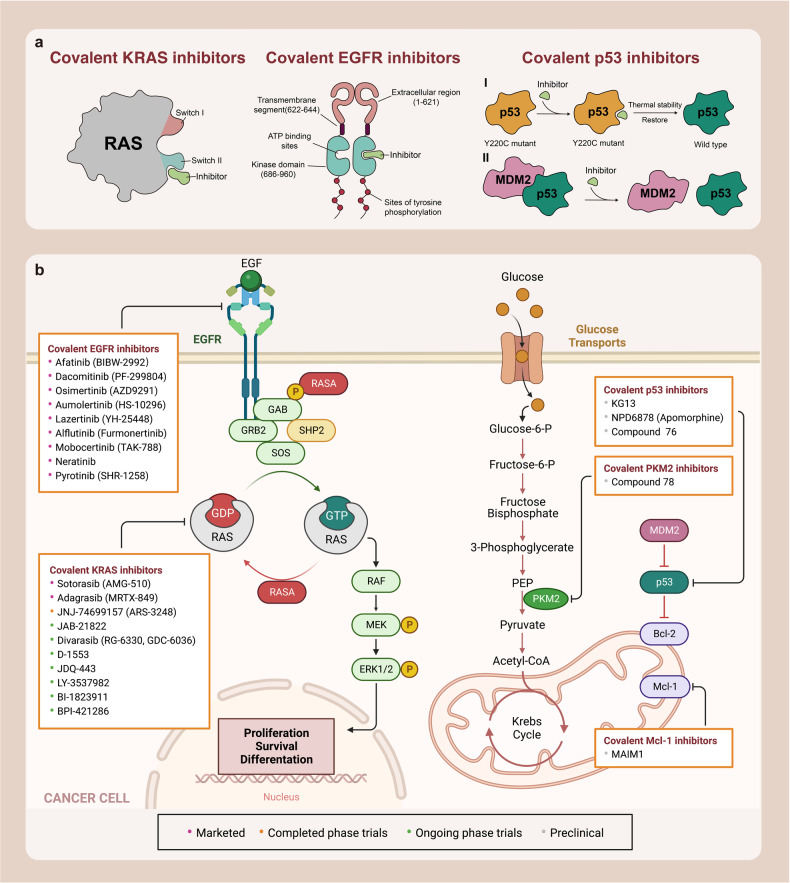
- Covalent inhibition produced the field's landmark success: sotorasib (AMG-510) received FDA accelerated approval in May 2021 for KRASG12C-mutated NSCLC, with an overall remission rate of 37%, disease control rate of 81%, median PFS 6.8 months, and median duration of remission 10.0 months; adagrasib (MRTX-849) followed with ORR 58%, median duration of treatment 9.5 months, and median duration of remission 12.6 months.
- Clinical-stage covalent KRASG12C inhibitors report ORRs including JAB-21822 56.3% (18/32, DCR 90.6%), divarasib 46% confirmed ORR (26/57 evaluable NSCLC patients), D-1553 37.8% (28/74, DCR 91.9%), JDQ-443 57% (4/7) at the phase II recommended dose, and IBI-351 50.9% (28/55) overall with 61.9% (13/21) at the recommended dose.
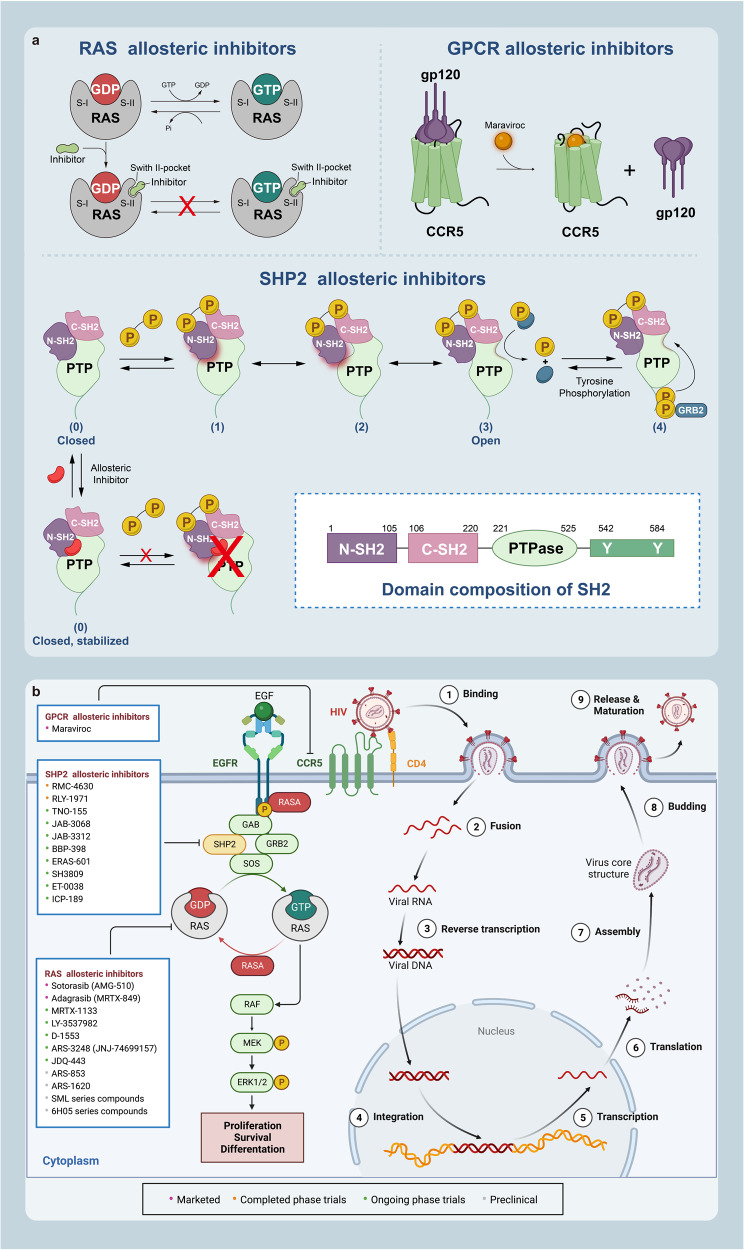
- Allosteric modulators target undruggable proteins lacking orthosteric pockets: MRTX-1133 binds inactive KRASG12D with IC50 < 2 nM and ~700-fold selectivity over KRASWT; SHP2 allosteric inhibitors (TNO-155, JAB-3068, RMC-4630, JAB-3312, RLY-1971, BBP-398, ERAS-601, SH3809, ET-0038, ICP-189) have entered clinical trials though none are approved.
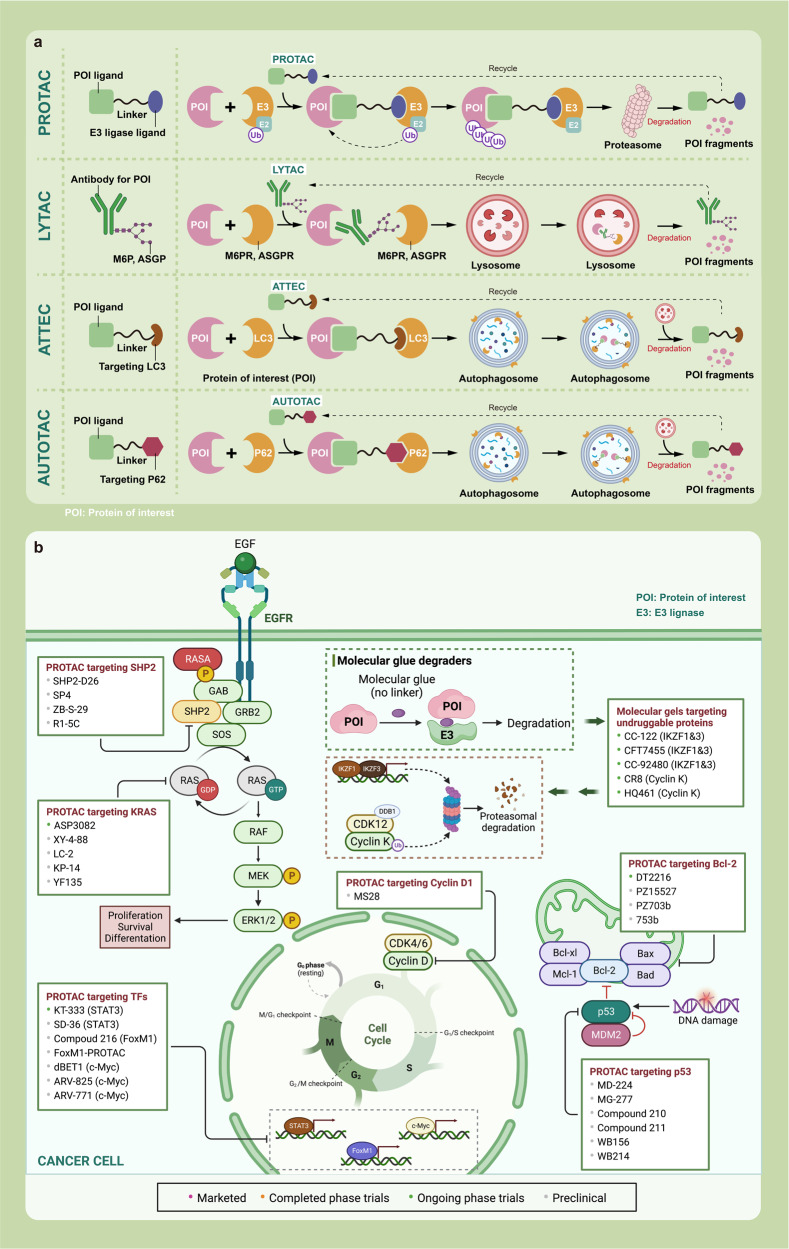
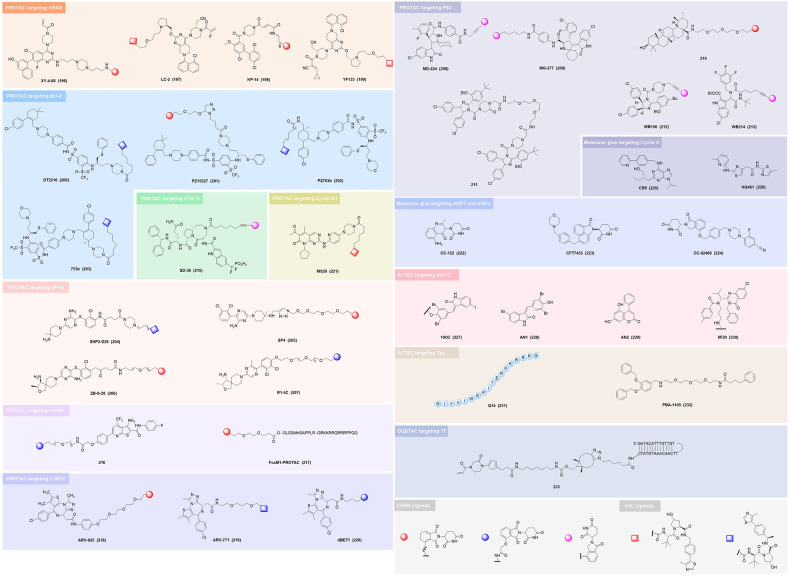
- Targeted protein degradation extends to previously undruggable targets: PROTACs degrade KRASG12C (LC-2, DC50 0.25 μM in NCI-H23), Bcl-2/Bcl-xL (DT2216 in phase I), SHP2 (SHP2-D26, DC50 2.6 nM in MV4;11), MDM2/p53 (MD-224, IC50 1.5 nM), STAT3 (KT-333 in phase I), and c-Myc pathway proteins; molecular glues degrade IKZF1/3 and Cyclin K.
Methods
- Narrative review, not primary research: the authors organize drug-discovery strategies for undruggable proteins into covalent regulation, allosteric modulation, PPI and protein–DNA interaction inhibition, targeted protein regulation (degradation/stabilization), nucleic acid-based approaches, immunotherapy, and other approaches (upstream/downstream effectors, synthetic lethality, PTMs, conjugates).
- Evidence base is the published literature and trial registries: six summary tables (Tables 1–6) compile compound name/structure, target, cancer cell line activity, indications, status/clinical trial identifier, and references, with clinical trial data collected from ClinicalTrials.gov (last accessed March 2023).
- Undruggable target classes defined as small GTPases (RAS family), phosphatases (PTPs, PSTPs), transcription factors (p53, Myc, ER, AR, XBP1, NRF2, NF-κB, BACH), epigenetic targets, and other proteins including PPI- and intrinsically disordered proteins.
Limitations
- The paper states that a lack of accurate structural information on undruggable proteins remains a significant obstacle, and that cryo-EM low resolutions still need to be addressed; it also notes that genetic therapies such as therapeutic RNAs and synthetic lethal screening are limited by off-target effects and side effects.
- The paper states that for marketed drugs, upcoming resistance is a major challenge that must be foreseen and protective plans developed; it also notes that most existing modulators are inhibitors, so activators (e.g., for p53) and PPI stabilizers remain underexplored.
- Evident from the text: many cited clinical trials are listed as completed, terminated, withdrawn, or ongoing with results "pending publication" or not posted, so several efficacy claims rest on conference abstracts, company reports, or unpublished data rather than peer-reviewed results; the review also relies heavily on preclinical cell-line IC50/DC50 values that may not translate clinically.
Model-written summary. Check it against the paper before relying on it.
Integrity signals
Registry
Cites
Statistics
Figures
Verification
Claims the paper makes
98 Valid · 25 Not valid · 463 Not checked · 121 Own results and interpretations
At least one cited source doesn’t support this claim or points to a different paper, and none confirmed it — see the verdicts below.
In the paper
“The chemical and enzymatic stability of XY-02-075 is greatly improved by methylene substitution of the central oxygen in the phosphonic anhydride bonds of SML-8-73-1 and SM-10-70-1.”
§ Recent advances in targeting the “undruggable” proteins: from drug discovery to clinical trials > Covalent regulation > Covalent KRAS inhibitors
What the sources say
- Disputedcites [92] Xiong Y Covalent guanosine mimetic inhibitors of G12C KRAS ACS Med. Chem. Lett. 2017 8 61 66 10.1021/acsmedchemlett.6b00373 28105276 PMC5238463 sourceExperimental — accuracy not yet measured
Our copy identifies XY-02-075 as compound 47, the 'phosphonyl sulfonamide analogue' built by sulfonylation of ethylenediamine (sulfamoyl phosphonate, Scheme/Abstract), whose cocrystal structure shows 'replacement of β-phosphate with sulfonamide' — so its modified linkage is a P–N(S) bond, not a methylene-substituted central oxygen. The methylene substitution of the central oxygen is described for a different series: bisphosphonate 10 (XY-01-103) and the difluoro/monofluoromethylene analogues 11 and 12, where the paper says the P–C–P bisphosphonate 'is considered to be resistant to acidic and enzymatic hydrolysis' (quoting refs 29,30) and that 11 'remove[s] the liability of the hydrolytic instability of the diphosphate moiety'. No passage in our copy mentions SM-10-70-1 at all (searched: SM-10-70-1), and no measured chemical/enzymatic stability data are reported for XY-02-075 — its t1/2 of 2.3 h is a labeling (kinact) value, not a hydrolytic stability value. (LLM, conf=0.75)
Checked by a reasoning model — may be wrong.
plainstates a cause- Asserted: passes — The authors put it forward as true.
- Checkable: passes — It can be checked against evidence.
- Load-bearing: passes — The paper’s conclusions depend on it.
- Based: passes — The paper gives a reason why it holds.
- Disputed
At least one cited source doesn’t support this claim or points to a different paper, and none confirmed it — see the verdicts below.
In the paper
“XY-02-075 is expected to be a promising compound despite 40 folds reduction in affinity compared to SML-8-73-1.92”
§ Recent advances in targeting the “undruggable” proteins: from drug discovery to clinical trials > Covalent regulation > Covalent KRAS inhibitors
What the sources say
- Disputedcites [92] Xiong Y Covalent guanosine mimetic inhibitors of G12C KRAS ACS Med. Chem. Lett. 2017 8 61 66 10.1021/acsmedchemlett.6b00373 28105276 PMC5238463 sourceExperimental — accuracy not yet measured
The passage labeled Abstract (page unavailable) calls compound 11—not XY-02-075—promising and says it has 40-fold lower affinity than SML-8-73-1. The paper identifies XY-02-075 as compound 47 and reports a Ki of 1.6 μM, versus 9 nM for SML-8-73-1; it does not make the claimed promising-compound assessment for XY-02-075. (LLM, conf=0.91)
Checked by a reasoning model — may be wrong.
plain- Asserted: passes — The authors put it forward as true.
- Checkable: passes — It can be checked against evidence.
- Load-bearing: unclear — It is unclear whether the paper’s conclusions depend on it.
- Based: passes — The paper gives a reason why it holds.
- Disputed
At least one cited source doesn’t support this claim or points to a different paper, and none confirmed it — see the verdicts below.
In the paper
“Wei’s team developed a TF-DUBTAC platform capable of selectively stabilizing oncoproteins, including FOXO3A, p53, and IRF3.”
§ Recent advances in targeting the “undruggable” proteins: from drug discovery to clinical trials > Targeted proteins’ regulation > Targeted protein stabilization (TPS)
What the sources say
- Disputedcites [549] Liu J TF-DUBTACs stabilize tumor suppressor transcription factors J. Am. Chem. Soc. 2022 144 12934 12941 10.1021/jacs.2c04824 35786952 PMC10981454 sourceExperimental — accuracy not yet measured
The Conclusions report that the TF-DUBTACs stabilized FOXO3A, p53, and IRF3, but explicitly identify them as tumor suppressor transcription factors—not oncoproteins. The same passage distinguishes TF-DUBTACs from the authors’ TF-PROTAC technology for targeting oncogenic transcription factors. (LLM, conf=0.90)
Checked by a reasoning model — may be wrong.
plainstates a cause- Asserted: passes — The authors put it forward as true.
- Checkable: passes — It can be checked against evidence.
- Load-bearing: passes — The paper’s conclusions depend on it.
- Based: passes — The paper gives a reason why it holds.
- Disputed
At least one cited source doesn’t support this claim or points to a different paper, and none confirmed it — see the verdicts below.
In the paper
“Yet, no studies have been conducted on undruggable targets.547”
§ Recent advances in targeting the “undruggable” proteins: from drug discovery to clinical trials > Targeted proteins’ regulation > Lysosome-based TPD
What the sources say
- Disputedcites [547] Grohmann C Development of NanoLuc-targeting protein degraders and a universal reporter system to benchmark tag-targeted degradation platforms Nat. Commun. 2022 13 2073 10.1038/s41467-022-29670-1 35440107 PMC9019100 sourceExperimental — accuracy not yet measured
The Results sections “FKBPF36V-targeting degraders outperform other tTPD systems” and “tTPD systems trigger physiologically relevant degradation” report a NanoTAC study of MLKL, a pseudokinase: NC4 degraded MLKL-NanoLuc and reduced MLKL-driven necroptosis. This runs contrary to the claim that no studies have been conducted on such targets, although the paper does not explicitly call MLKL “undruggable.” Page numbers were not available in our copy. (LLM, conf=0.73)
Checked by a reasoning model — may be wrong.
plain- Asserted: passes — The authors put it forward as true.
- Checkable: passes — It can be checked against evidence.
- Load-bearing: unclear — It is unclear whether the paper’s conclusions depend on it.
- Based: passes — The paper gives a reason why it holds.
- Disputed
The cited sources support only part of this claim — read each source’s verdict below.
In the paper
“Sotorasib specifically and irreversibly inhibits KRASG12C by binding to GDP and locking KRAS in an inactive state.”
§ Recent advances in targeting the “undruggable” proteins: from drug discovery to clinical trials > Covalent regulation > Covalent KRAS inhibitors
What the sources say
- Partly supportedcites [53] Skoulidis F Sotorasib for lung cancers with KRAS p.G12C mutation N. Engl. J. Med. 2021 384 2371 2381 10.1056/NEJMoa2103695 34096690 PMC9116274 sourceExperimental — accuracy not yet measured
The passage labeled Abstract > Conclusions says sotorasib specifically and irreversibly inhibits KRASG12C and traps it in an inactive state. It does not say sotorasib binds to GDP: it says the drug binds to a pocket in KRAS that is present when KRAS is GDP-bound. (LLM, conf=0.90)
plainstates a cause- Asserted: passes — The authors put it forward as true.
- Checkable: passes — It can be checked against evidence.
- Load-bearing: passes — The paper’s conclusions depend on it.
- Based: passes — The paper gives a reason why it holds.
- Partly supported
286 more claims · 45 with their cited sources checked
Create a free account to see all 707 claims and to verify the 708 references still open.
- It may state two separate claims as one. 382
- Probably not a substantial claim. 57
- The quote only partly states this claim. 6
Claims other papers make about this one
Each is checked against this paper’s own text: does it say what the citing paper says it does?
The cited source says what the claim attributes to it.
In the citing paper
“Allosteric modulators typically attach to regions distinct from the orthosteric site of receptors, inducing conformational changes to regulate the affinity and/or efficacy of orthosteric ligands, or to directly modulate receptor activity with positive, negative, or neutral effects.542–545”
From Recent advances in Alzheimer's disease: Mechanisms, clinical trials and new drug development strategies. (2024) · cites this paper as [543]
Self-check
Percentages, sums and reported differences re-computed from the paper’s own numbers.
Each contradiction between two passages listed here was confirmed by an independent check.
Rated major: it would touch a result — a value a result rests on, reported and recomputed p-values on opposite sides of the significance level, two passages that conflict with no sign which is right, or a cited work retracted before this paper was published.
In the paper
§ Recent advances in targeting the “undruggable” proteins: from drug discovery to clinical trials > Covalent regulation > Covalent KRAS inhibitors
“| RMC-8839 (16)a | KRASG12C | – | – | Preclinical | 83 |”
§ Recent advances in targeting the “undruggable” proteins: from drug discovery to clinical trials > Covalent regulation > Covalent KRAS inhibitors
“RMC-8839 (16) is the first orally-administered, mutant-selective, covalent KRASG13C inhibitor developed by Revolution Medicines. This compound directly targets KRASG13C”
Rated major: it would touch a result — a value a result rests on, reported and recomputed p-values on opposite sides of the significance level, two passages that conflict with no sign which is right, or a cited work retracted before this paper was published.
In the paper
§ Recent advances in targeting the “undruggable” proteins: from drug discovery to clinical trials > PPI inhibition
“| Macdonald’s researchCompound (170) | Myc-Max | HEK293T(IC50 = 29 μM) | – | Preclinical | 428 |”
§ Recent advances in targeting the “undruggable” proteins: from drug discovery to clinical trials > PPI inhibition > Myc PPI inhibitors
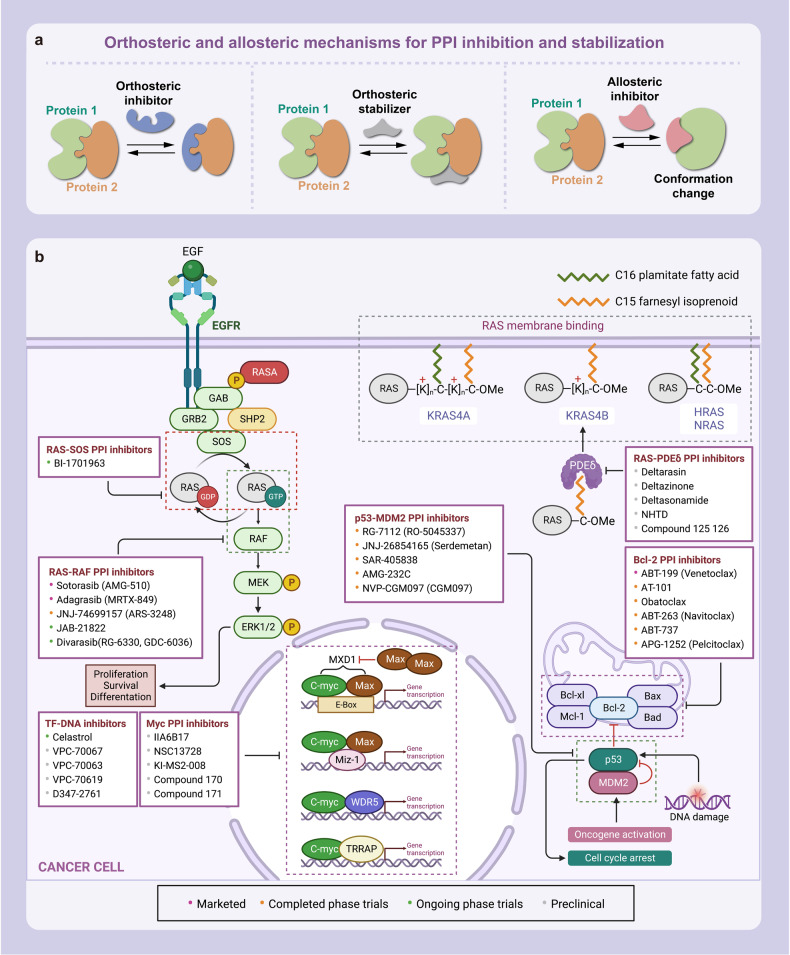
“Although compound (170) was the most active (IC50 = 29 nM), it was unsuitable for in vivo studies.”
Rated major: it would touch a result — a value a result rests on, reported and recomputed p-values on opposite sides of the significance level, two passages that conflict with no sign which is right, or a cited work retracted before this paper was published.
In the paper
§ Recent advances in targeting the “undruggable” proteins: from drug discovery to clinical trials > PPI inhibition
“| Macdonald’s researchCompound (171) | Myc-Max | HEK293T(IC50 = 100 μM) | – | Preclinical | 429 |”
§ Recent advances in targeting the “undruggable” proteins: from drug discovery to clinical trials > PPI inhibition > Myc PPI inhibitors
“resulting in compound (171) (IC50 = 100 nM).”
Rated minor: it would not touch a result — a value no result rests on, a p-value that stays on the same side of the significance level, or a conflict that is clerical, resolved elsewhere in the paper, or outside its own findings.
In the paper
§ Recent advances in targeting the “undruggable” proteins: from drug discovery to clinical trials > Allosteric modulators > RAS allosteric inhibitors
“These include Sotorasib (AMG-510), Adagrasib (MRTX-849), ARS-853, ARS-1620, LY-3537982, GDC-6036 (RG-6300), D-1553, ARS-3248 (JNJ-74699157), JDQ-443, and SML series compounds, among others, such as LY-3537982, ARS-853, ARS-1620, and 6H05 series compounds (Table 2).”
§ Recent advances in targeting the “undruggable” proteins: from drug discovery to clinical trials > Allosteric modulators
“| MRTX-1133 (79) | KRASG12D | – | Colorectal cancer, NSCLC, pancreas cancer | OngoingNCT05737706(I/II) | 254 |”
Rated minor: it would not touch a result — a value no result rests on, a p-value that stays on the same side of the significance level, or a conflict that is clerical, resolved elsewhere in the paper, or outside its own findings.
In the paper
§ Recent advances in targeting the “undruggable” proteins: from drug discovery to clinical trials > PPI inhibition > RAS PPI inhibitors
“Compound (129) exhibited superior affinity for PDEδ (Kd = 38 ± 17 nM)”
§ Recent advances in targeting the “undruggable” proteins: from drug discovery to clinical trials > PPI inhibition > RAS PPI inhibitors
“compound (127) (Kd = 9 ± 2.3 nM)”
3 more findings
Create a free account to see every finding of this check.
Citations
Cites
1 retracted
Luo, M.-L., Zhao, Q., He, X.-H., Xie, X., Zhu, H.-P., You, F.-M., Peng, C., Zhan, G., & Huang, W. (2023) · Biomedicine & Pharmacotherapy · doi:10.1016/j.biopha.2023.114574 · Cited by 25
Self-citationRetractedPD-1 and PD-L1 Immune Checkpoint Blockade to Treat Breast Cancer
Hartkopf, A. D., Taran, F.-A., Wallwiener, M., Walter, C. B., Krämer, B., Grischke, E.-M., & Brucker, S. Y. (2016) · Breast Care · doi:10.1159/000453569 · Cited by 30,845
Repertoires of Autophagy in the Pathogenesis of Ocular Diseases
Li, Y.-J., Jiang, Q., Cao, G.-F., Yao, J., & Yan, B. (2015) · Cellular Physiology and Biochemistry · doi:10.1159/000373980 · Cited by 16,304
Potent and specific genetic interference by double-stranded RNA in Caenorhabditis elegans
Fire, A., Xu, S., Montgomery, M. K., Kostas, S. A., Driver, S. E., & Mello, C. C. (1998) · Nature · doi:10.1038/35888 · Cited by 15,429
Nishimura, R., Osako, T., Nishiyama, Y., Tashima, R., Nakano, M., Fujisue, M., Toyozumi, Y., & Arima, N. (2013) · Oncology · doi:10.1159/000353099 · Cited by 13,166
Comprehensive molecular portraits of human breast tumours
The Cancer Genome Atlas Network (2012) · Nature · doi:10.1038/nature11412 · Cited by 12,129
Lynch, T. J., Bell, D. W., Sordella, R., Gurubhagavatula, S., Okimoto, R. A., Brannigan, B. W., Harris, P. L., Haserlat, S. M., Supko, J. G., Haluska, F. G., et al. (2004) · New England Journal of Medicine · doi:10.1056/nejmoa040938 · Cited by 11,486
Duplexes of 21-nucleotide RNAs mediate RNA interference in cultured mammalian cells
Elbashir, S. M., Harborth, J., Lendeckel, W., Yalcin, A., Weber, K., & Tuschl, T. (2001) · Nature · doi:10.1038/35078107 · Cited by 9,456
EGFR Mutations in Lung Cancer: Correlation with Clinical Response to Gefitinib Therapy
Paez, J. G., Jänne, P. A., Lee, J. C., Tracy, S., Greulich, H., Gabriel, S., Herman, P., Kaye, F. J., Lindeman, N., Boggon, T. J., et al. (2004) · Science · doi:10.1126/science.1099314 · Cited by 9,368
Gefitinib or Carboplatin–Paclitaxel in Pulmonary Adenocarcinoma
Mok, T. S., Wu, Y.-L., Thongprasert, S., Yang, C.-H., Chu, D.-T., Saijo, N., Sunpaweravong, P., Han, B., Margono, B., Ichinose, Y., et al. (2009) · New England Journal of Medicine · doi:10.1056/nejmoa0810699 · Cited by 8,261
Research works printed but not linked: 2
- Walter AO Discovery of a mutant-selective covalent inhibitor of EGFR that overcomes T790M-mediated resistance in NSCLC Cancer Discov. 2013 3 1404 1415 10.1158/2159-8290.CD-13-0314 24065731 PMC4048995 · DOI · Paper page
- Meng, J. After the AACR Conference, what new drugs are worth watching? https://baijiahao.baidu.com/s?id=1730615953532632799&wfr=spider&for=pc (2022).
Cited by
Items 401–435 of 435
RAS-targeted therapies for pancreatic cancer
Chan, L. L., Kwong, T. T., Yau, J., & Chan, S. L. (2026) · ESMO Gastrointestinal Oncology · doi:10.1016/j.esmogo.2026.100414
“9 Together, the high-affinity binding of RAS to guanine nucleotides, the absence of obvious druggable pockets, and the difficulty of targeting broad protein — protein interaction surfaces contributed to decades of unsuccessful attempts to directly inhibit RAS.”
Yuan, S., Wu, H., Yao, J., Lian, X., Zhuo, L., Li, K., Cao, D., Lü, A., & Xia, J. (2026) · International Journal of Biological Macromolecules · doi:10.1016/j.ijbiomac.2026.154371
An artificial antibody-based modular platform for targeted degradation of cellular membrane proteins
Deng, J., Liu, J., Chu, Z., Guo, Y., Liu, Y.-Y., Gao, T., Wang, Y., Lou, C., Tang, H., Wang, H., et al. (2026) · Nano Today · doi:10.1016/j.nantod.2026.103187
Genetic principles enabling the creation of bacteria-based therapeutics
Williams, A. B., Groseclose, T. M., Holec, S. A. M., Newman, D., Mora, D. S. O., & Linke, L. (2026) · Genetics · doi:10.1093/genetics/iyag235 · Cited by 1
Drug target identification and validation using AI
Gurunathan, R., Abhirami, R., Pravin, M. A., & Singh, S. K. (2026) · Elsevier eBooks · doi:10.1016/b978-0-443-40338-5.00012-3
Hydrophobic Tag Protein Degraders: An Emerging Therapeutic Strategy for Cancer
Pineda, T. A., Kumar, S., Ghosal, G., Natarajan, A., & Karpf, A. R. (2026) · Pharmaceuticals · doi:10.3390/ph19091477
“Many target proteins are deemed ‘undruggable’ due to flat functional surfaces and the absence of well-defined ligand-binding pockets, posing significant challenges for conventional drug design strategies [119,120].”
Perumal, S., & Ramanathan, K. (2026) · ChemistrySelect · doi:10.1002/slct.74551
He, S., Wei, L., Ye, W., Zou, Q., & Zhang, F. (2026) · Communications Chemistry · doi:10.1038/s42004-026-02194-1 · Cited by 1
Silencing with precision: In silico strategies for antisense oligonucleotide engineering
Abhigna, N., Kavana, C. P., Harendra, B., Srinivasa, S., Dharmashekara, C., Kollur, S. P., Shreevatsa, B., & Shivamallu, C. (2026) · Molecular Biology Reports · doi:10.1007/s11033-026-12635-8
“The inability to predict the function of ASOs in living organisms substantially constrains the ability to accurately predict the mechanism by which RNA-binding proteins interact with ASOs [80 – 82].”
Combinatorial synthesis of novel polycations for mRNA delivery via Ugi 4-component polymerisation
O’Shaughnessy, L., Khosravi, R., Anane‐Adjei, A. B., Mazza, M., Hori, N., Gurnani, P., & Alexander, C. (2026) · RSC Applied Polymers · doi:10.1039/d6lp00114a
Binding without Docking: Small-Molecule Binding Paths on Disordered Proteins
Louet, A. A. B., Hummer, G., & Vendruscolo, M. (2026) · Journal of the American Chemical Society · doi:10.1021/jacs.6c05891 · Cited by 1
From Undruggable to Actionable: Redefining Druggability Through Emerging Therapeutic Modalities
El-sagheir, A. M. K. (2026) · ChemMedChem · doi:10.1002/cmdc.70516
KRAS Mutations in Cancers: From Undruggable Dilemma to Precision Medicine
Cai, J., Wu, Y., Jia, X., Yang, L., Yang, W., Lu, W., Huang, Z., Pan, Y., Fei, Z., Ru, J., et al. (2026) · MedComm · doi:10.1002/mco2.71050 · Cited by 1
More, R., Sanka, K., & Kuttiappan, A. (2026) · Journal of Drug Delivery Science and Technology · doi:10.1016/j.jddst.2026.109004
Xu, Z., Wang, J., Li, X., Liao, T., Kuang, Y., Wang, K., & Li, C. (2026) · ACS Applied Materials & Interfaces · doi:10.1021/acsami.6c15772
Self-citationPI3K signaling in breast cancer: therapeutic advances versus adaptive resistance
Napolitano, F., Unni, N. G., & Arteaga, C. L. (2026) · Journal of Clinical Investigation · doi:10.1172/jci207635
“Another emerging therapeutic strategy involves disrupting oncogenic protein-protein interactions, which are increasingly recognized as druggable therapeutic targets (114, 115).”
Identification of Cysteine-Reactive Early Mitotic InhibitorsPreprint
Zhang, X., Buechler, E., López, M., Abdusamad, M., Taylor, C., Damoiseaux, R. D., & Torres, J. Z. (2026) · bioRxiv (Cold Spring Harbor Laboratory) · doi:10.64898/2026.10.13.758496
“16 Currently, cell-based chemical screening campaigns for inhibitors targeting specific mitotic subphases are scarce, and there is a critical need to develop novel cancer therapeutics that leverage modern covalent chemical libraries to target proteins that have historically been difficult to drug.”
Harnessing the ubiquitin-proteasome system: advances and challenges of PROTACs in breast cancer
Fanai, H. L., Babu, B., Rajagopal, K., & Byran, G. (2026) · Molecular Biology Reports · doi:10.1007/s11033-026-12830-7
de Araujo, A. D., Luo, L., Azad, M. G., Yu, M., Mason, J. M., Lim, J., Hill, T. A., & Fairlie, D. P. (2026) · Angewandte Chemie International Edition · doi:10.1002/anie.4950007
de Araujo, A. D., Luo, L., Azad, M. G., Yu, M., Mason, J. M., Lim, J., Hill, T. A., & Fairlie, D. P. (2026) · Angewandte Chemie · doi:10.1002/ange.4950007
Luo, Z., Zhang, Z., Yu, Y., Zhou, J., Zhang, H., Ding, Y., & Ni, J. (2026) · Chinese Chemical Letters · doi:10.1016/j.cclet.2026.113530
Huang, J., Liu, J., Chong, C., Guo, Y., & Jin, X. (2026) · Chemistry · doi:10.3390/chemistry8100145
Poonam, Rana, R., Thakur, M., Sharma, A., Pannu, S., Sharma, S., Naman, S., Rani, S., Devi, D., Kumar, V., et al. (2026) · Frontiers in Oncology · doi:10.3389/fonc.2026.1908830
Protein Folding Interference Enables Selective Cyclin D1 DegradationPreprint
Galbiati, A., Colasurdo, E., Patsilinakos, A., Lanfredini, S., Bonifati, S., Massignan, T., Varricchio, C., Bencheva, L., Boldrini, A., Terruzzi, L., et al. (2026) · bioRxiv (Cold Spring Harbor Laboratory) · doi:10.64898/2026.10.22.760876
Li, S., Duan, H., Liu, X., Meihua, S. H. A. N., Shen, Z., Wu, M., Wang, P., Yao, Q., & Fu, W. (2026) · Functional & Integrative Genomics · doi:10.1007/s10142-026-02098-2
“Transcription factors such as c-Fos lack a well-defined catalytic pocket and remain challenging small-molecule targets (Henley and Koehler 2021; Xie et al. 2023).”
Engineering multifunctional nano-PROTACs platforms for precision cancer therapy
Ning, Y., Wu, Y., Su, L., Liu, J., & Huang, F. (2026) · Science China Materials · doi:10.1007/s40843-026-4383-8
Moon, J., Rew, J., Shin, H. K., Song, K., Cho, H., Jung, J., & Kyung, M. (2026) · International Journal of Molecular Sciences · doi:10.3390/ijms27219766
Xie, H., Wang, G., 原志庆, Li, Y., & Liu, Y. (2026) · Cancer Letters · doi:10.1016/j.canlet.2026.218931
PROTAC technologies for drug discovery: opportunities and challenges
Zhang, R., Chen, Y., Li, Z., Zhang, R., Zhang, L., & Chen, C. (2026) · Pharmacological Reviews · doi:10.1016/j.pharmr.2026.100169
DNA and RNA helicase inhibitors as therapeutics
Castro, J. (2026) · Methods in enzymology on CD-ROM/Methods in enzymology · doi:10.1016/bs.mie.2026.10.022
Melnyk, J. E., Chen, M., Hurtig, J. E., Lee, E., de Carvalho, M. P., & Mortison, J. D. (2026) · ChemBioChem · doi:10.1002/cbic.70597
Bilyard, M. K., & Srinivasan, B. (2026) · Methods in enzymology on CD-ROM/Methods in enzymology · doi:10.1016/bs.mie.2026.10.017
Molecular glues: from mechanistic insights to rational design in a new era of targeted therapy
Zheng, X., Cao, Y., Sun, S., Min, J., Qian, J., Li, N., Yang, Y., & Gu, C. (2026) · Targetome · doi:10.48130/targetome-0026-0054
Metadata
- Authors
- Xie, X., Yu, T., Li, X., Zhang, N., Foster, L. J., Peng, C., Huang, W., & He, G.
- Affiliations
- University of British Columbia (CA)
- Chengdu University of Traditional Chinese Medicine (CN)
- Sichuan University (CN)
- Corresponding author
- Peng, Cheng
- Huang, Wei
- He, Gu
- Venue
- Signal Transduction and Targeted Therapy
- Published
- 2023-09-06
- Volume
- 8
- Issue
- 1
- Pages
- 335-335
- ISSN
- 2059-3635 (ISSN-L)
- PMC
- PMC10480221
- OpenAlex
- W4386446579
- Semantic Scholar
- 10717dfbac76f1ca9b0348797db5269a5f868391
- Cited by
- 396
- References
- 670
- Citations by year
- 2026: 127 · 2025: 173 · 2024: 92 · 2023: 4
- FWCI
- 10.40
- Type
- journal article
- Language
- en
- Open access
- gold
- doi.org
- Licence
- cc-by
- creativecommons.org/licenses/by/4.0 (tdm)
- creativecommons.org/licenses/by/4.0 (vor)
- Locations
- Signal Transduction and Targeted Therapy (publishedVersion, cc-by)
- PubMed Central (publishedVersion, cc-by)
- PubMed (publishedVersion)
- DOAJ (DOAJ: Directory of Open Access Journals) (submittedVersion, cc-by-sa)
- Funders
- National Natural Science Foundation of China (22177084, 82104373, 82073998)
- Topics
- Life Sciences › Biochemistry, Genetics and Molecular Biology › Molecular Biology › Protein Degradation and Inhibitors
- Life Sciences › Pharmacology, Toxicology and Pharmaceutics › Drug Discovery › Computational Drug Discovery Methods
- Life Sciences › Biochemistry, Genetics and Molecular Biology › Cancer Research › Cancer Mechanisms and Therapy
- Keywords
- undruggable proteins, drug discovery, covalent drug design, allosteric inhibition, protein-protein interaction inhibition, nucleic acid therapeutics, immunotherapy, clinical translation
- MeSH terms
- Humans, Immunotherapy, Nucleic Acids, Drug Design, Drug Delivery Systems, Drug Discovery
About these checks
Registry, retraction, Cites and statistics results are computed, not judged, with one exception: a printed reference that no index lists is read once by a model before it counts as a citation error. Claims are extracted by a model and kept only when their quote appears verbatim in the text; each cited source is then checked, with a model’s help, for whether it says what the claim relies on. Those verdicts can be wrong — read the claim’s quote and the cited source before relying on one.
The claim verdicts this report counts are experimental: their accuracy is not yet measured.
A language model drew the claims from the paper on 2026-10-05, under version 3 of the claim definition (model deepseek-v4.1-flash, prompt extract-v3).
A second model labelled each claim on 2026-10-05 (model jev-1.13-20260917, definition revision gold-guideline-v0.2).
Cited sources are checked with a language model’s help (qwen3.8-omni-flash and gpt-6-sol).
Statistics and arithmetic are recomputed, not judged.
Confidence bands are shown only for fields calibrated on our annotated test set. None is calibrated yet, so no band is shown.
What counts as a claim ›How we measure confidence ›How we check this ›
Are you an author, or do you see a problem with this page? Request a review
Data sources
Bibliographic data: Semantic Scholar, OpenAlex, Crossref.
Contains information from the Semantic Scholar Academic Graph Datasets, made available under the ODC Attribution License (ODC-BY 1.0).
Semantic Scholar’s data is described in: Kinney, R., et al. (2023). The Semantic Scholar Open Data Platform. arXiv:2301.10140.
