

Major depressive disorder: hypothesis, mechanism, prevention and treatment
Open accessThe DOI matches its Crossref record; 511 of the 514 references it cites were found in a registry or an index; 260 of the 474 sources its claims cite were checked for support.
Abstract
Worldwide, the incidence of major depressive disorder (MDD) is increasing annually, resulting in greater economic and social burdens. Moreover, the pathological mechanisms of MDD and the mechanisms underlying the effects of pharmacological treatments for MDD are complex and unclear, and additional diagnostic and therapeutic strategies for MDD still are needed. The currently widely accepted theories of MDD pathogenesis include the neurotransmitter and receptor hypothesis, hypothalamic-pituitary-adrenal (HPA) axis hypothesis, cytokine hypothesis, neuroplasticity hypothesis and systemic influence hypothesis, but these hypothesis cannot completely explain the pathological mechanism of MDD. Even it is still hard to adopt only one hypothesis to completely reveal the pathogenesis of MDD, thus in recent years, great progress has been made in elucidating the roles of multiple organ interactions in the pathogenesis MDD and identifying novel therapeutic approaches and multitarget modulatory strategies, further revealing the disease features of MDD. Furthermore, some newly discovered potential pharmacological targets and newly studied antidepressants have attracted widespread attention, some reagents have even been approved for clinical treatment and some novel therapeutic methods such as phototherapy and acupuncture have been discovered to have effective improvement for the depressive symptoms. In this work, we comprehensively summarize the latest research on the pathogenesis and diagnosis of MDD, preventive approaches and therapeutic medicines, as well as the related clinical trials.
Overview
CoChat Summary
TL;DR
MDD is a heterogeneous, highly prevalent disorder whose pathogenesis is not fully explained by any single hypothesis; the review synthesizes evidence for monoamine, HPA-axis, inflammatory, genetic/epigenetic, brain-remodeling, and social-psychological mechanisms, with growing emphasis on astrocyte and multi-organ involvement. It also surveys diagnostic biomarkers, prevention strategies, and pharmacological and nonpharmacological treatments, noting that current antidepressants leave a substantial proportion of patients without remission.
Key findings
- MDD affects about 300 million people worldwide; it ranked third in disease burden in 2018 and is predicted to rank first by 2030. Heritability is estimated at 30–50%, and GWAS have identified 178 genetic risk loci and over 200 candidate genes, though no single genetic variation has been found to increase MDD risk.
- Women have approximately twice the incidence of MDD as men. In 2018, comorbid disorders rather than MDD itself accounted for 63% of all MDD-related costs in the United States.
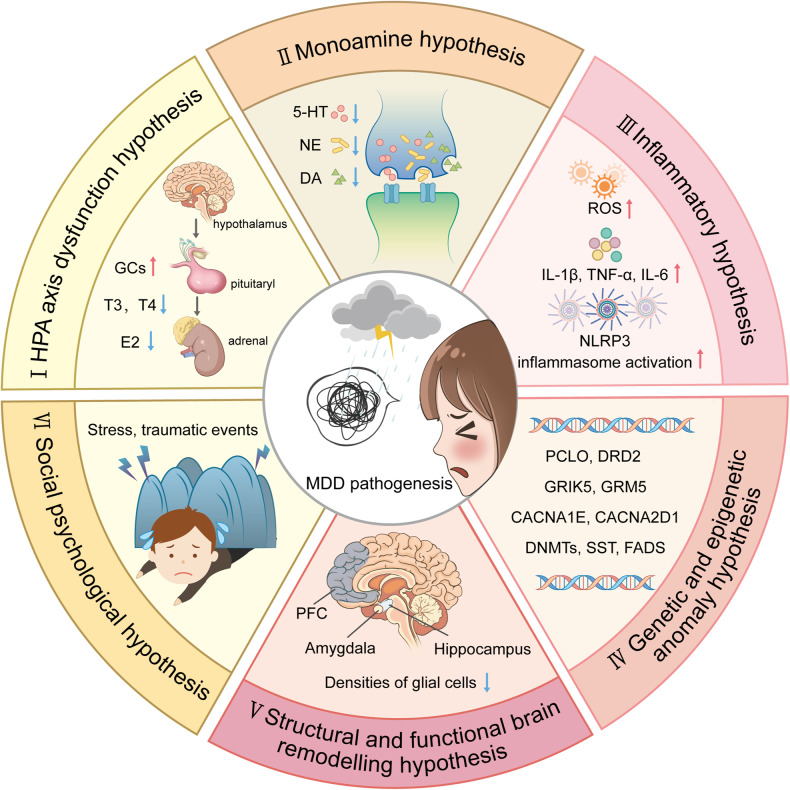
- Multiple interacting mechanisms are implicated, including monoamine deficiency (5-HT, DA, NE), HPA-axis hyperactivity and glucocorticoid/GR signaling, proinflammatory cytokines (IL-1β, TNF-α, IL-6), oxidative stress, NLRP3 inflammasome activation, reduced BDNF, and astrocytic marker changes (Cx30/43, GFAP, AQP4, S100B).
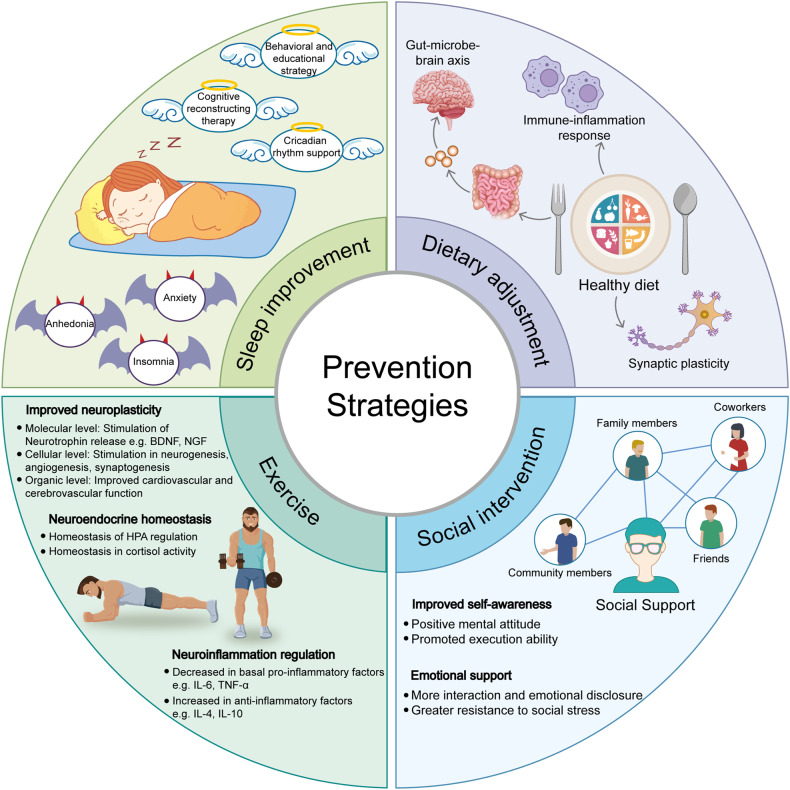
- In a 1-year follow-up, clinically significant worsening of depressive symptoms occurred in 44% of untreated patients versus 38% with circadian rhythm support (CRS), 28% with cognitive behavioral therapy for insomnia (CBT-I), and 9% with CBT-I + CRS. Even after multiple treatment attempts, almost 30% of MDD patients do not experience remission.
Methods
- Narrative review summarizing recent research on MDD etiology, pathogenesis, diagnosis, prevention, mechanisms, and pharmacological and nonpharmacological treatment, including related clinical experiments.
- Evidence discussed includes human postmortem tissue studies, transcriptomic and multiomics analyses, clinical imaging (MRI, R-fMRI, PET with SV2A radioligand), serum biomarker studies, randomized controlled trials, meta-analyses, and animal models such as CUMS, CUMR, CURD, CSDS, and LPS- or stress-induced depression models.
- No systematic review, meta-analysis, or primary data collection is described; the paper synthesizes and organizes findings across hypotheses and treatment categories.
Limitations
- Stated in the paper: the etiology of MDD remains unclear; no single hypothesis fully explains its pathological basis; diagnostic criteria are subjective and lack characteristic symptoms or objective diagnostic evidence; animal models of MDD and other mental diseases are lacking; most cellular and structural alterations cannot be consistently observed in vivo; existing theories cannot completely explain why almost 30% of patients do not remit after multiple treatments.
- Evident from the text: as a narrative review, it does not describe a systematic literature search, inclusion/exclusion criteria, or formal quality appraisal of the cited studies.
- Evident from the text: many proposed mechanisms and biomarkers are described as promising but not yet validated for clinical diagnosis or treatment, and the review notes inconsistent neuroimaging findings and controversy over some markers such as serum GFAP.
Model-written summary. Check it against the paper before relying on it.
Integrity signals
Registry
Cites
Statistics
Figures
Verification
Claims the paper makes
212 Valid · 21 Not valid · 143 Not checked · 25 Own results and interpretations
At least one cited source doesn’t support this claim or points to a different paper, and none confirmed it — see the verdicts below.
In the paper
“However, no single genetic variation has been found to increase the risk of MDD thus far. 26”
What the sources say
- Disputedcites [26] Kendall KM The genetic basis of major depression Psychol. Med. 2021 51 2217 2230 10.1017/S0033291721000441 33682643 sourceExperimental — accuracy not yet measured
The GWAS discussion (p. 16) says that two significant loci near SIRT1 and LHPP were identified and replicated in Han Chinese patients with recurrent MDD. It also describes European depression risk SNPs and 178 risk loci in Europeans. The paper distinguishes these findings from its narrower statement (p. 10) that a sequencing study found no association for individual rare or low-frequency variants. (LLM, conf=0.88)
Checked by a reasoning model — may be wrong.
plain- Asserted: passes — The authors put it forward as true.
- Checkable: passes — It can be checked against evidence.
- Load-bearing: unclear — It is unclear whether the paper’s conclusions depend on it.
- Based: passes — The paper gives a reason why it holds.
- Disputed
Some cited sources support this claim and some don’t — read each source’s verdict below.
In the paper
“Global topological E/I imbalance in MDD is discovered through gene and protein expression of molecules related to inhibitory GABAergic and excitatory glutamatergic signaling in the postmortem MDD brains. 22 , 208 , 209”
What the sources say
- Partly supportedcites [22] Sequeira A Global brain gene expression analysis links glutamatergic and GABAergic alterations to suicide and major depression PLoS ONE 2009 4 e6585 10.1371/journal.pone.0006585 19668376 PMC2719799 sourceExperimental — accuracy not yet measured
The Results (Pathways globally differentially expressed; page not provided) report altered expression of GABAergic and glutamatergic genes across brain regions in people who died by suicide with major depression. The paper does not establish a global topological excitation–inhibition imbalance or report protein-expression measurements; its Methods describe RNA-based expression analysis. (LLM, conf=0.87)
- Not checked — no full text of the sourcecites [208] Hu YT Tan ZL Hirjak D Northoff G Brain-wide changes in excitation-inhibition balance of major depressive disorder: a systematic review of topographic patterns of GABA- and glutamatergic alterations Mol. Psychiatry 2023 28 3257 3266 10.1038/s41380-023-02193-x 37495889 source
- Disputedcites [209] Zhao J Prefrontal alterations in GABAergic and glutamatergic gene expression in relation to depression and suicide J. Psychiatr. Res. 2018 102 261 274 10.1016/j.jpsychires.2018.04.020 29753198 sourceExperimental — accuracy not yet measured
The Discussion (p. 11) says that glutamatergic and GABAergic mRNA expression changed similarly, leaving it unclear whether the overall excitation–inhibition balance was disturbed. The Results (p. 6) report gene-expression changes in two prefrontal regions, not a discovered global topological imbalance or a measurement of protein expression. (LLM, conf=0.88)
Checked by a reasoning model — may be wrong.
plainstates a cause- Asserted: passes — The authors put it forward as true.
- Checkable: passes — It can be checked against evidence.
- Load-bearing: unclear — It is unclear whether the paper’s conclusions depend on it.
- Based: passes — The paper gives a reason why it holds.
- Partly supported
At least one cited source doesn’t support this claim or points to a different paper, and none confirmed it — see the verdicts below.
In the paper
“In individuals with MDD, aerobic exercise was found to be beneficial in ameliorating depressive symptoms, particularly in those with more severe depressive symptoms and a higher baseline RewP. 325 , 326”
What the sources say
- Not checked — no full text of the sourcecites [325] Brush CJ A randomized trial of aerobic exercise for major depression: examining neural indicators of reward and cognitive control as predictors and treatment targets Psychol. Med. 2022 52 893 903 10.1017/S0033291720002573 32838817 source
- Disputedcites [326] Kujawa A Reduced reward responsiveness predicts change in depressive symptoms in anxious children and adolescents following treatment J. Child Adolesc. Psychopharmacol. 2019 29 378 385 10.1089/cap.2018.0172 31062997 PMC6585168 sourceExperimental — accuracy not yet measured
The Results (page unavailable) report that a reduced—not higher—baseline RewP predicted greater improvement in depressive symptoms. The study examined anxious children and adolescents treated with CBT or SSRIs, not aerobic exercise in individuals with MDD; it also does not establish that those with more severe baseline symptoms benefited more. (LLM, conf=0.82)
Checked by a reasoning model — may be wrong.
plainstates a cause- Asserted: passes — The authors put it forward as true.
- Checkable: passes — It can be checked against evidence.
- Load-bearing: passes — The paper’s conclusions depend on it.
- Based: passes — The paper gives a reason why it holds.
Every source the paper cites for this claim was checked and supports it.
In the paper
“Specifically, increasing evidence suggests that astrocytic dysfunction plays a substantial role in MDD. 17”
What the sources say
- Supportedcites [17] Zhou X Astrocyte, a promising target for mood disorder interventions Front. Mol. Neurosci. 2019 12 136 10.3389/fnmol.2019.00136 31231189 PMC6560156 source
The Introduction says abnormal astrocyte function may contribute to mood-disorder pathophysiology, with particular emphasis on depression. The Human Data section reports altered astrocyte-related gene and protein expression in patients with depression and MDD. Together, these passages support the claim’s hedged description of a substantial role in MDD; page numbers were not provided. (LLM, conf=0.92)
hedgedstates an association- Asserted: passes — The authors put it forward as true.
- Checkable: passes — It can be checked against evidence.
- Load-bearing: passes — The paper’s conclusions depend on it.
- Based: passes — The paper gives a reason why it holds.
- Supported
Every source the paper cites for this claim was checked and supports it.
In the paper
“Recent family, twin, and adoption studies suggests that genetic factors play a crucial role in the occurrence of MDD. 25”
What the sources say
- Supportedcites [25] Lohoff FW Overview of the genetics of major depressive disorder Curr. Psychiatry Rep. 2010 12 539 546 10.1007/s11920-010-0150-6 20848240 PMC3077049 source
The Introduction states that genetic factors play important roles in the development of MDD, as indicated by family, twin, and adoption studies. The Twin and Family Studies section likewise says these study types consistently document a genetic component. (LLM, conf=0.94)
hedgedstates a cause- Asserted: passes — The authors put it forward as true.
- Checkable: passes — It can be checked against evidence.
- Load-bearing: unclear — It is unclear whether the paper’s conclusions depend on it.
- Based: passes — The paper gives a reason why it holds.
- Supported
189 more claims · 106 with their cited sources checked
Create a free account to see all 401 claims and to verify the 4 references still open.
- It may state two separate claims as one. 178
- Probably not a substantial claim. 47
Claims other papers make about this one
Each is checked against this paper’s own text: does it say what the citing paper says it does?
The source backs part of the claim, not all of it — or backs it for a different population, condition or comparison.
In the citing paper
“Recent studies have revealed a close relationship between gut microbiota and mood disorders, drawing increasing attention to the role of gut microbial communities in the onset and progression of these mood disorders [5,6].”
From The Impact of Weizmannia coagulans BC99 on Anxiety and Depression: An 8-Week Clinical Pilot Study Through the Gut Microbiota–Brain Axis (2025) · cites this paper as [6]
Experimental — accuracy not yet measured
Self-check
Percentages, sums and reported differences re-computed from the paper’s own numbers.
Each contradiction between two passages listed here was confirmed by an independent check.
Rated minor: it would not touch a result — a value no result rests on, a p-value that stays on the same side of the significance level, or a conflict that is clerical, resolved elsewhere in the paper, or outside its own findings.
In the paper
“SD is found to reduce BDNF levels and induce depressive-like behaviors in the sorted astrocytes from GFAP-GFP transgenic mice by activating the NLRP3 inflammasome.”
“chronic SD can specifically activate the NLRP3 inflammasome and decrease the level of BDNF in astrocytes to ameliorate depressive-like behaviors.”
Rated minor: it would not touch a result — a value no result rests on, a p-value that stays on the same side of the significance level, or a conflict that is clerical, resolved elsewhere in the paper, or outside its own findings.
In the paper
“Estrogen therapy can decrease the quantity of 5-HT 1 and β-adrenergic receptors”
“while increasing the quantity of 5-HT 1 receptors.”
Rated minor: it would not touch a result — a value no result rests on, a p-value that stays on the same side of the significance level, or a conflict that is clerical, resolved elsewhere in the paper, or outside its own findings.
In the paper
“Over 100 gene loci, including those associated with presynaptic vesicle trafficking (PCLO), dopaminergic neurotransmission (a primary target of antipsychotics), glutamate ionotropic receptor kainate type subunit 5 (GRIK5), and metabotropic glutamate receptor 5 (GRM5), and neuronal calcium signaling such as calcium voltage-gated channel subunit alpha1 E (CACNA1E) and calcium voltage-gated channel auxiliary subunit alpha2 delta1”
“However, no single genetic variation has been found to increase the risk of MDD thus far.”
Citations
Cites
Items 401–511 of 511
Brini, S., Brudasca, N. I., Hodkinson, A., Kaluzinska, K., Wach, A., Storman, D., Prokop-Dorner, A., Jemioło, P., & Bala, M. M. (2023) · Clinical Psychology Review · doi:10.1016/j.cpr.2022.102236 · Cited by 44
Encoding of environmental illumination by primate melanopsin neurons
Liu, A., Milner, E. S., Peng, Y.-R., Blume, H. A., Brown, M. C., Bryman, G. S., Emanuel, A. J., Morquette, P., Viet, N.-M., Sanes, J. R., et al. (2023) · Science · doi:10.1126/science.ade2024 · Cited by 44
Brown, S. J., Christofides, K., Weissleder, C., Huang, X.-F., Shannon Weickert, C., Lim, C. K., & Newell, K. A. (2024) · Neuropsychopharmacology · doi:10.1038/s41386-023-01736-8 · Cited by 44 · cited 1×
“141,254,255 Recently, growing evidence support that the occurrence of MDD are the results of the correlational disorders from multiple systems or organs, not only limiting in brain.”
BackgroundChoi, H.-S., Park, J. H., Ahn, J. H., Hong, S., Cho, J. H., Won, M., & Lee, C. H. (2015) · Journal of the Neurological Sciences · doi:10.1016/j.jns.2015.10.001 · Cited by 43 · cited 1×
“Currently, new SNRIs, including duloxetine (DXT), 68 desvenlafaxine (DVS), 69 and venlafaxine, 70 are widely used in MDD patients resistant to other treatments.”
BackgroundD2 dopamine receptor regulation of learning, sleep and plasticity
França, A. S. C., Lobão-Soares, B., Muratori, L., Nascimento, G., Winne, J., Pereira, C. M., Jeronimo, S. M. B., & Ribeiro, S. (2015) · European Neuropsychopharmacology · doi:10.1016/j.euroneuro.2015.01.011 · Cited by 43 · cited 1×
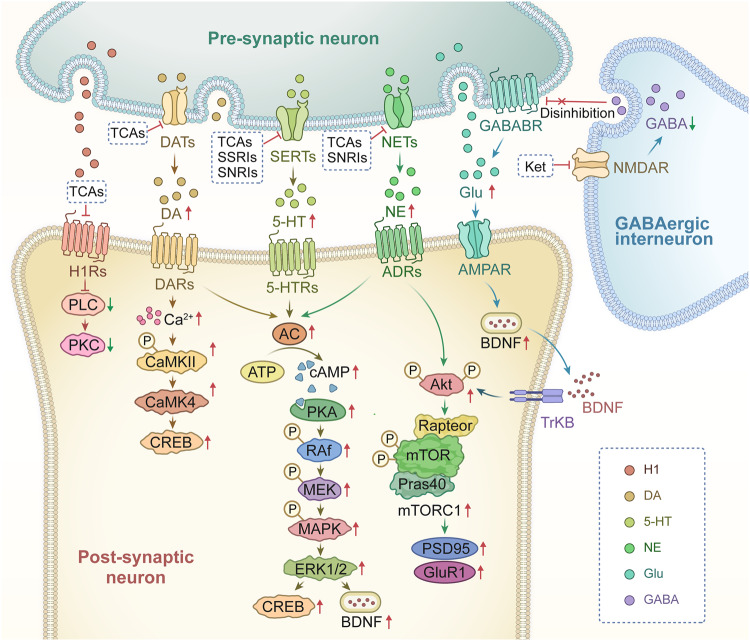
“498,499 In another way, the stimulated DARs by DA can also activate the cAMP-PKA pathway, which in turn activates the levels of CREB and BDNF by stimulating MAPK/ERK 1/2 pathway.”
BackgroundWang, J., Qiao, J., Zhang, Y., Wang, H., Zhu, S., Zhang, H., Hartle, K., Guo, H., Guo, W., He, J., et al. (2014) · Journal of Neurochemistry · doi:10.1111/jnc.12792 · Cited by 43 · cited 4×
“…and the chronic unpredictable mild stress (CUMS)-induced reduction in the levels of myelin-and oligodendrocyte-related proteins can be prevented by DVS. 69 DVS may reduce oligodendrocyte dysfunction in the CUMS mouse model by altering cholesterol production and reducing depression-like phenotypes.”
BackgroundInfluentialChen, Q., Bi, Y., Zhao, X., Lai, Y., Yan, W., Xie, L., Gao, T., Xie, S., Zeng, T., Li, J., et al. (2022) · Journal of Affective Disorders · doi:10.1016/j.jad.2022.03.079 · Cited by 43 · cited 1×
“…reported that increased average values of ALFF and fALFF in the right caudate and corpus callosum may serve as potential markers for diagnosing MDD. 272 Another study based on the largest R-fMRI database of MDD patients con fi rmed that the DMN plays a crucial role in MDD diagnosis, as DMN FC is…”
BackgroundT 3 Augmentation in Major Depressive Disorder: Safety Considerations
Rosenthal, L. J., Goldner, W. S., & O’Reardon, J. P. (2011) · American Journal of Psychiatry · doi:10.1176/appi.ajp.2011.10030402 · Cited by 42 · cited 1×
“112 Overactivity of the HPA axis may be caused by damaged astrocytes and aberrant GR function.”
BackgroundSato, S., & Yeh, T. L. (2013) · CNS Drugs · doi:10.1007/s40263-012-0028-8 · Cited by 42 · cited 1×
“45 Speci fi cally, in 2018, comorbid disorders rather than MDD itself were responsible for 63% of all costs related to MDD in the United States.”
BackgroundGüleş, E., Iosifescu, D. V., & Tural, Ü. (2020) · Neuropsychobiology · doi:10.1159/000505782 · Cited by 42 · cited 1×
“…in the dorsolateral prefrontal cortex (dlPFC) of patients with MDD. 179 S100B levels are elevated in the CSF or serum of patients with MDD, 180 which suggests that S100B is a potential diagnostic biomarker for depressive episodes associated with MDD. Communication between neurons and…”
BackgroundNovikova, I. N., Manole, A., Zherebtsov, E. A., Stavtsev, D. D., Vukolova, M. N., Dunaev, A. V., Angelova, P. R., & Abramov, A. Y. (2020) · Free Radical Biology and Medicine · doi:10.1016/j.freeradbiomed.2020.07.011 · Cited by 42 · cited 1×
“51 Monoamine oxidase (MAO) activates the metabolism of adrenaline and triggers calcium signaling in astrocytes, 52 which suggests that antidepressants may directly affect astrocytes by preventing them from reabsorbing monoamines.”
BackgroundSustained Molecular Pathology Across Episodes and Remission in Major Depressive Disorder
Scifo, E., Pabba, M., Kapadia, F., Ma, T., Lewis, D. A., Tseng, G. C., & Sibille, E. (2018) · Biological Psychiatry · doi:10.1016/j.biopsych.2017.08.008 · Cited by 41 · cited 1×
“210,211 Meanwhile, GABAergic signaling is decreased in regions comprising the default mode network (DMN), while it is increased in the lateral prefrontal cortex (LPFC).”
BackgroundKujawa, A., Burkhouse, K. L., Karich, S. R., Fitzgerald, K. D., Monk, C. S., & Phan, K. L. (2019) · Journal of Child and Adolescent Psychopharmacology · doi:10.1089/cap.2018.0172 · Cited by 41
Iron Aggravates the Depressive Phenotype of Stressed Mice by Compromising the Glymphatic System
Liang, S., Lu, Y., Li, Z., Li, S., Chen, B., Zhang, M., Chen, B., Ji, M., Gong, W., Xia, M., et al. (2020) · Neuroscience Bulletin · doi:10.1007/s12264-020-00539-x · Cited by 41
Self-citationBreedvelt, J. J. F., Brouwer, M. E., Harrer, M., Semkovska, M., Ebert, D. D., Cuijpers, P., & Bockting, C. L. H. (2021) · The British Journal of Psychiatry · doi:10.1192/bjp.2020.198 · Cited by 41
Qiu, H., Liang, K., Lu, L., Gao, Y., Li, H., Hu, X., Xing, H., Huang, X., & Gong, Q. (2023) · Journal of Affective Disorders · doi:10.1016/j.jad.2022.09.060 · Cited by 41
Xu, Y., Liang, J., Sun, Y., Zhang, Y., Shan, F., Ge, J., & Xia, Q. (2023) · International Immunopharmacology · doi:10.1016/j.intimp.2023.110108 · Cited by 41 · cited 1×
“…Family H Member 1 (SERPINH1), IL-8, humanin like-8 (MTRNRL8), and chemokine ligand 4 (CCL4) are among the genes whose expression is altered in MDD. 460,461 According to Gene Ontology (GO) enrichment analysis, MDD is related to decreased expression of genes related to oligodendrocyte development,…”
BackgroundDiversity among principal and GABAergic neurons of the anterior olfactory nucleus
Kay, R. B., & Brunjes, P. C. (2014) · Frontiers in Cellular Neuroscience · doi:10.3389/fncel.2014.00111 · Cited by 40 · cited 1×
“439 Decreased cortical levels of GABA and speci fi c populations of GABA neurons have been reported in investigations of postmortem MDD patient tissues, 440 and the SST mRNA level is speci fi cally decreased in patients with MDD. 213 The DR nucleus is the largest and most signi fi cant conduit of…”
BackgroundZhang, L., Verwer, R. W. H., Zhao, J., Huitinga, I., Lucassen, P. J., & Swaab, D. F. (2021) · Journal of Affective Disorders · doi:10.1016/j.jad.2021.08.098 · Cited by 40
Seasonality in Major Depressive Disorder: Effect of Sex and Age
Fellinger, M., Waldhoer, T., Serretti, A., Hinterbuchinger, B., Pruckner, N., König, D., Gmeiner, A., Vyssoki, S., Vyssoki, B., & Fugger, G. (2021) · Journal of Affective Disorders · doi:10.1016/j.jad.2021.09.051 · Cited by 40
Zhang, K., Liu, R., Gao, Y., Ma, W., & Shen, W. (2020) · Neuropsychiatric Disease and Treatment · doi:10.2147/ndt.s274778 · Cited by 39 · cited 2×
“…can both stimulate the KYN pathway and trigger TRP metabolism and subsequent synthesis of various TRYCATs, including the toxic NMDAR activator QUIN, 246 which in fl uences glutamate transmission, has a variety of immunomodulatory effects and has both neurotoxic and neuro-protective effects on the…”
BackgroundÖzdemir, P. G., Boysan, M., Smolensky, M. H., Selvi, Y., Aydin, A., & Yilmaz, E. (2015) · The Journal of Clinical Psychiatry · doi:10.4088/jcp.14m09376 · Cited by 38
Zavvari, F., Nahavandi, A., & Goudarzi, M. (2020) · Journal of Chemical Neuroanatomy · doi:10.1016/j.jchemneu.2019.101711 · Cited by 38 · cited 1×
“393,394 The most of above antidepressants have been widely used for the MDD patients according to the respective potential pharmacological actions (Fig.”
BackgroundHill Almeida, L. M., Flicker, L., Hankey, G. J., Golledge, J., Yeap, B. B., & Almeida, O. P. (2022) · Journal of Affective Disorders · doi:10.1016/j.jad.2022.04.133 · Cited by 38 · cited 1×
“294 Dietary adjustment Dietary adjustment is an effective, safe, and widely applicable method for preventing MDD, especially by inhibiting MDD-related pathological in fl ammation.”
MethodThe neuroprotective mechanism of lithium after ischaemic stroke
Chen, B., Zhang, M., Ji, M., Zhang, D., Chen, B., Gong, W., Li, X., Zhou, Y., Dong, C., Wen, G., et al. (2022) · Communications Biology · doi:10.1038/s42003-022-03051-2 · Cited by 37 · cited 4×
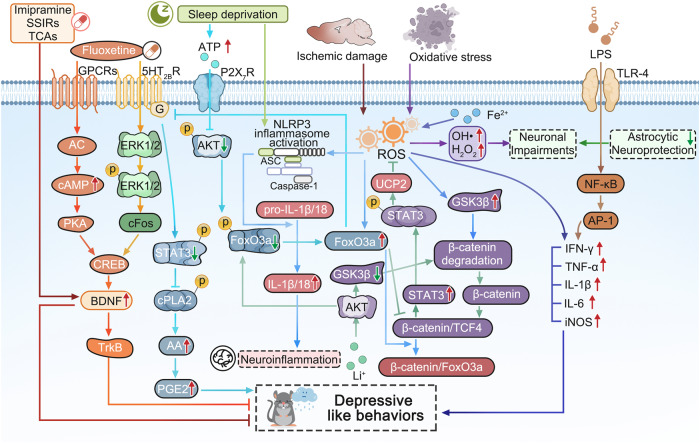
“136 This neuroprotective mechanism of Li + after ischemia-reperfusion injuries contributes to the improved depressive-like behaviors, besides of motor and cognitive capacities.”
BackgroundInfluentialSelf-citationGarcía‐Marchena, N., Barrera-Conde, M., Mestre-Pintó, J. I., Araos, P. F., Serrano, A., Pérez‐Mañá, C., Papaseit, E., Fonseca, F., Ruiz, J. J., de Fonseca, F. R., et al. (2019) · PLoS ONE · doi:10.1371/journal.pone.0213791 · Cited by 36
Skupio, U., Tertil, M., Bilecki, W., Barut, J., Korostynski, M., Golda, S., Kudla, L., Wiktorowska, L., Sowa, J. E., Siwiec, M., et al. (2020) · Neuropsychopharmacology · doi:10.1038/s41386-019-0450-4 · Cited by 36 · cited 1×
“75 The dorsolateral part of the striatum is linked to the drug-seeking behavior and drug addiction associated with psychiatric disorders.”
BackgroundYang, Y., Song, Y., Zhang, X., Zhao, W., Ma, T., Liu, Y., Ma, P., Zhao, Y., & Zhang, H. (2020) · Psychopharmacology · doi:10.1007/s00213-020-05490-3 · Cited by 36
Self-citationMingardi, J., La Via, L., Tornese, P., Carini, G., Trontti, K., Seguini, M., Tardito, D., Bono, F., Fiorentini, C., Elia, L., et al. (2021) · Neurobiology of Stress · doi:10.1016/j.ynstr.2021.100381 · Cited by 36 · cited 1×
“381,382 Furthermore, by inhibiting NMDARs, ketamine can reduce the excitation of speci fi c cortical GABAergic interneurons, resulting in a temporary increase in glutamate release that stimulates postsynaptic AMPA glutamate receptors.”
BackgroundSchmitz, F., Pierozan, P., Rodrigues, A. F., Biasibetti, H., Grings, M., Zanotto, B., Coelho, D. M., Vargas, C. R., Leipnitz, G., & Wyse, A. T. S. (2017) · Molecular Neurobiology · doi:10.1007/s12035-016-0289-1 · Cited by 35 · cited 2×
“85 When a large amount of glutamate is released from neuronal vesicles, glutamate clearance is mainly achieved by glutamate transporters (EAATs) on the membrane of astrocytes, which transport excess glutamate into astrocytes, where it is converted to glutamylamine through the action of glutamine…”
BackgroundKautzky, A., James, G. M., Philippe, C., Baldinger-Melich, P., Kraus, C., Kranz, G. S., Vanicek, T., Gryglewski, G., Wadsak, W., Mitterhauser, M., et al. (2017) · Translational Psychiatry · doi:10.1038/tp.2017.108 · Cited by 35 · cited 1×
“258 However, the current clinical diagnostic criteria for MDD are subjective, and diagnoses are mainly based on clinical symptoms, leading to high rates of missed and incorrect diagnoses.”
BackgroundCytokine Signalling at the Microglial Penta-Partite Synapse
Aramideh, J. A., Vidal-Itriago, A., Morsch, M., & Graeber, M. B. (2021) · International Journal of Molecular Sciences · doi:10.3390/ijms222413186 · Cited by 35 · cited 1×
“219 In addition to the tripartite synapse, the more recent concepts of the four-part extracellular matrix and the microglial fi ve-part synapse 220 also support the idea that glial dysfunction plays key roles in the early pathological features common to psychiatric disorders.”
BackgroundPAGE, G., Barc-Pain, S., Pontcharraud, R., Cante, A., Piriou, A., & Barrier, L. (2004) · Neurochemistry International · doi:10.1016/j.neuint.2004.04.002 · Cited by 34 · cited 1×
“498,499 In another way, the stimulated DARs by DA can also activate the cAMP-PKA pathway, which in turn activates the levels of CREB and BDNF by stimulating MAPK/ERK 1/2 pathway.”
BackgroundBouamrane, L., Scheyer, A. F., Lassalle, O., Iafrati, J., Thomazeau, A., & Chavis, P. (2017) · Frontiers in Cellular Neuroscience · doi:10.3389/fncel.2016.00308 · Cited by 34 · cited 2×
“206 A meta-regression analysis indicated that glutamine and glutamate levels are decreased in the PFC, which is correlated with the therapies to MDD. 207 Global topological E/I imbalance in MDD is discovered through gene and protein expression of molecules related to inhibitory GABAergic and…”
BackgroundMethodAnalysis of amitriptyline overdose in emergency medicine
Guloglu, C., Orak, M., Ustundag, M., & Altunci, Y. A. (2011) · Emergency Medicine Journal · doi:10.1136/emj.2009.076596 · Cited by 33 · cited 2×
“351 By blocking H1 receptors, they can induce sedation and drowsiness, which may bene fi t depressed patients with sleep disorders.”
BackgroundLi, B., Zhang, S., Li, M., Zhang, H., Hertz, L., & Peng, L. (2009) · Neuropharmacology · doi:10.1016/j.neuropharm.2009.07.004 · Cited by 33
Self-citationDuan, D.-M., Tu, Y., Liu, P., & Jiao, S. (2016) · Neural Regeneration Research · doi:10.4103/1673-5374.193238 · Cited by 33
Repetitive transcranial magnetic stimulation for the treatment of postpartum depression
Cox, E. Q., Killenberg, S., Frische, R., McClure, R., Hill, M., Jenson, J., Pearson, B., & Meltzer-Brody, S. E. (2020) · Journal of Affective Disorders · doi:10.1016/j.jad.2019.11.069 · Cited by 33
Dong, L., Li, B., Verkhratsky, A., & Peng, L. (2015) · Psychopharmacology · doi:10.1007/s00213-015-3921-2 · Cited by 32
Self-citationLi, B., Jia, S., Yue, T., Yang, L., Huang, C., Verkhratsky, A., & Peng, L. (2017) · Frontiers in Cellular Neuroscience · doi:10.3389/fncel.2017.00335 · Cited by 32 · cited 3×
“60 Then, in the nucleus, the altered transcription factor c-Fos can further biphasic change the expression of caveoline under the chronic treatments, thus the alteration levels of caveoline on cellular membrane can fi nally affect the downstream activation of PTEN/PI3K/AKT/GSK3 β 60 .”
BackgroundSelf-citationChamera, K., Szuster-Głuszczak, M., Trojan, E., & Basta-Kaim, A. (2020) · Cells · doi:10.3390/cells9071676 · Cited by 31
Bettini, E., Stahl, S. M., De Martin, S., Mattarei, A., Sgrignani, J., Carignani, C., Nola, S., Locatelli, P., Pappagallo, M., Inturrisi, C. E., et al. (2022) · Pharmaceuticals · doi:10.3390/ph15080997 · Cited by 31
Hochol, A., Tortorella, C., Ricinski, M., Ziolkowska, A., Nussdorfer, G., & Malendowicz, L. (2007) · International Journal of Molecular Medicine · doi:10.3892/ijmm.19.2.207 · Cited by 30 · cited 1×
“Leptin controls the function of the HPA axis 127 via its receptor in the hypothalamus.”
BackgroundHicks, E. M., Seah, C., Cote, A. C., Marchese, S., Brennand, K., Nestler, E. J., Girgenti, M. J., & Huckins, L. M. (2023) · Translational Psychiatry · doi:10.1038/s41398-023-02412-7 · Cited by 30 · cited 1×
“32 Recent studies revealed that gender speci fi c genomic differences in MDD patients, the down-regulation of the MDD-related gene Dusp6 in females leads to an increased susceptibility to stress, but this expression is not present in male mice.”
BackgroundDekker, K., Benjamins, J. S., Maksimovic, T., Filardi, M., Hofman, W. F., van Straten, A., & Van Someren, E. J. W. (2020) · Psychotherapy and Psychosomatics · doi:10.1159/000503570 · Cited by 29 · cited 3×
“287 Although CRS has been reported to have only an indirect effect in alleviating sleep disturbance and depressive symptoms, 288 treatment with CRS may help maintain the bene fi cial effects of CBT-I.”
BackgroundLiu, Y., Yang, C., Chen, M., Sun, S. H., & Tzeng, S. (2010) · Journal of Neurochemistry · doi:10.1111/j.1471-4159.2010.06589.x · Cited by 28 · cited 1×
“216 This results in neuronal damage, a reduced number of synapses, decreased neurogenesis, and even impairment of key cerebral circuits that regulate mood.”
BackgroundSelf-citationAre the thyroid and adrenal system alterations linked in depression?
Mokrani, M.-C., Duval, F., Erb, A., Gonzalez Lopera, F., & Danila, V. (2020) · Psychoneuroendocrinology · doi:10.1016/j.psyneuen.2020.104831 · Cited by 28 · cited 3×
“According to research, hypercortisolemia may result in a reduction in TRH mRNA levels in the mid-caudal PVN. 113 TRH expression in the PVN is lower in nonpsychiatric patients treated with corticosteroids, and the mRNA levels of TRH are lower in the PVN of depressed patients who have recurrent…”
BackgroundInfluentialDe Martin, S., Gabbia, D., Folli, F., Bifari, F., Fiorina, P., Ferri, N., Stahl, S., Inturrisi, C. E., Pappagallo, M., Traversa, S., et al. (2021) · Frontiers in Pharmacology · doi:10.3389/fphar.2021.671859 · Cited by 28
Sun, K., Liu, Z., Chen, G., Zhou, Z., Zhong, S., Tang, Z., Wang, S., Zhou, G., Zhou, X., Shao, L., et al. (2022) · Journal of Affective Disorders · doi:10.1016/j.jad.2021.12.065 · Cited by 28 · cited 2×
“…types of structural and functional features examined; however, more importantly, very few studies have used multimodal approaches to diagnose MDD. 276 Recently, in a study utilizing multimodal MRI data, patients with MDD were successfully distinguished from healthy controls by radiomics analysis.”
BackgroundSelf-citationCai, X., Wu, M., Zhang, Z., Liu, H., Huang, S., Song, J., Ren, S., & Huang, Y. (2023) · CNS Neuroscience & Therapeutics · doi:10.1111/cns.14200 · Cited by 28 · cited 1×
“436 A recent meta-analysis of 43 randomized controlled trials involving adult subjects with acupuncture for MDD demonstrated that acupuncture, either alone or in combination with antidepressants, signi fi cantly reduced the hamilton depression scal scores and had fewer adverse effects compared to…”
BackgroundStriatal interaction among dopamine, glutamate and ascorbate
Moráles, I., Fuentes, A. M., Ballaz, S., Obeso, J. A., & Rodríguez, M. (2012) · Neuropharmacology · doi:10.1016/j.neuropharm.2012.08.007 · Cited by 27 · cited 1×
“76 Due to processes involving dopamine D2 receptor signaling, 77 the glutamine level increases in the presence of dopaminergic lesions and decreases in the presence of a high DA level.”
BackgroundExperiences of depression, the role of social support and its impact on health outcomes
Smith, L., Hill, N., & Kokanovic, R. (2015) · Journal of Mental Health · doi:10.3109/09638237.2014.954693 · Cited by 27 · cited 1×
“…lack social support, and receiving adequate social support can confer greater resistance to stress and prevent the occurrence and recurrence of MDD. 330 ,331 Low-functioning social support or self-perceived poor social support causes worse symptoms and treatment outcomes in depressed patients.”
BackgroundA pilot study of acupuncture monotherapy in patients with major depressive disorder
Mischoulon, D., Brill, C. D., Ameral, V. E., Fava, M., & Yeung, A. S. (2012) · Journal of Affective Disorders · doi:10.1016/j.jad.2012.03.023 · Cited by 27 · cited 4×
“428 EA stimulation can effectively treat MDD; 429 – 431 however, the speci fi c mechanism by which acupuncture treats depression remains unclear.”
BackgroundInfluentialA practical approach to prescribing antidepressants
Shultz, E., & Malone, D. A. (2013) · Cleveland Clinic Journal of Medicine · doi:10.3949/ccjm.80a.12133 · Cited by 27
Hanania, T., Manfredi, P., Inturrisi, C., & Vitolo, O. V. (2020) · Experimental and Clinical Psychopharmacology · doi:10.1037/pha0000310 · Cited by 27
Mechanisms Underlying the Antidepressant Effect of Acupuncture via the CaMK Signaling Pathway
Bai, L., Zhang, D., Cui, T.-T., Li, J.-F., Gao, Y.-Y., Wang, N.-Y., Jia, P.-L., Zhang, H.-Y., Sun, Z.-R., Zou, W., et al. (2020) · Frontiers in Behavioral Neuroscience · doi:10.3389/fnbeh.2020.563698 · Cited by 27
Li, X., Chen, B., Zhang, D., Wang, S., Feng, Y., Wu, X., Cui, L., Ji, M., Gong, W., Verkhratsky, A., et al. (2023) · Molecular Psychiatry · doi:10.1038/s41380-023-02037-8 · Cited by 27 · cited 2×
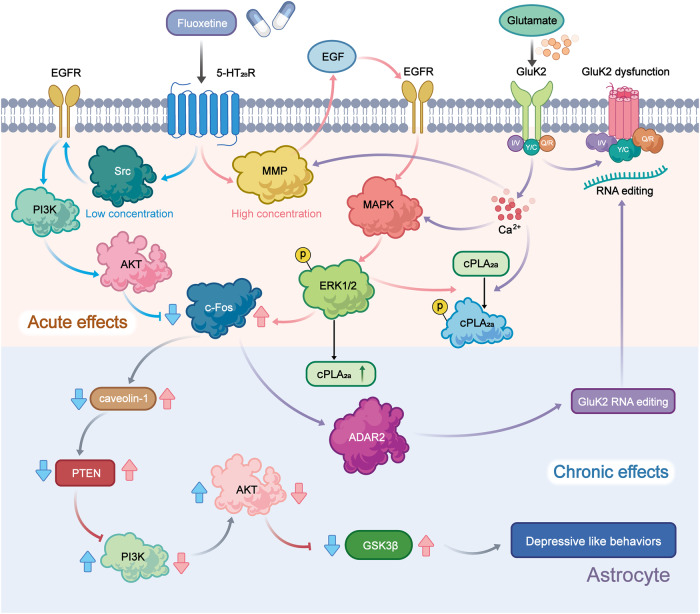
“62 In addition, after fl uoxetine-mediated stimulation of the 5-HT 2B receptor in astrocytes, epidermal growth factor receptor (EGFR) is transactivated and subsequently activates the MAPK/ERK and PI3K/AKT signaling cascades, which control the expression of mRNA or proteins that may be linked to mood…”
BackgroundSelf-citationSviridova, A., Rogovskii, V., Кудрин, В. С., Pashenkov, M. V., Boyко, A., & Melnikov, M. (2021) · Journal of Neuroimmunology · doi:10.1016/j.jneuroim.2021.577608 · Cited by 26
Lenk, T., Rabet, S., Sprick, M., Raabe, G., & Schröder, U. (2023) · ChemPhysChem · doi:10.1002/cphc.202200614 · Cited by 26 · cited 1×
“143,144 Recent research has shown a link between decreased hippocampal neurogenesis and low levels of BDNF and glial-derived neurotrophic factor (GDNF) in the brains of depressed individuals.”
BackgroundKetamine vs midazolam: Mood improvement reduces suicidal ideation in depression
Hochschild, A., Keilp, J. G., Madden, S. P., Burke, A. K., Mann, J. J., & Grunebaum, M. F. (2022) · Journal of Affective Disorders · doi:10.1016/j.jad.2021.12.055 · Cited by 25 · cited 1×
“481 In several studies, a single dose of ketamine reduced immobility in the forced swim test immediately after injection and had effects similar to those of an antidepressant.”
BackgroundZhao, J., Zhang, R., Wang, W., Jiang, S., Liang, H., Guo, C., Qi, J., Zeng, H., & Song, H. (2023) · International Immunopharmacology · doi:10.1016/j.intimp.2023.109880 · Cited by 25
Pang, F., Yang, Y., Huang, S., Yang, Z., Zhu, Z., Liao, D., Guo, X., Zhou, M., Li, Y., & Tang, C. (2023) · Brain Sciences · doi:10.3390/brainsci13030436 · Cited by 25 · cited 1×
“252 In summary, as shown in Fig.”
Heterogeneity in the three‐year course of major depression among older adults
Hybels, C. F., Pieper, C. F., Blazer, D. G., & Steffens, D. C. (2016) · International Journal of Geriatric Psychiatry · doi:10.1002/gps.4391 · Cited by 24 · cited 1×
“332 – 334 A previous study also reported that patients who lack adequate social support are more likely to experience MDD. 335 Social support may have an in fl uence on depression through neuroendocrine pathways, 336,337 and social support can improve a person ’ s psychological wellbeing and make…”
BackgroundVoltage-Dependent Dopamine Potency at D1-Like Dopamine Receptors
Ågren, R., & Sahlholm, K. (2020) · Frontiers in Pharmacology · doi:10.3389/fphar.2020.581151 · Cited by 24 · cited 1×
“81 An increase in DA signaling brought on by compromised astrocyte activity may induce a long-lasting change in striatal neurotransmission 80 since DA signaling is crucial for both structural and synaptic plasticity.”
BackgroundDex modulates the balance of water-electrolyte metabolism by depressing the expression of AVP in PVN
Yang, W., Li, H., Cheng, Z., You, L., Li, W., Feng, J., Wang, L., & Cheng, J. (2022) · Frontiers in Pharmacology · doi:10.3389/fphar.2022.919032 · Cited by 24 · cited 2×
“The hypothalamic paraventricular nucleus (PVN) rapidly secretes CRH and arginine vasopressin (AVP) 107 when the HPA axis is activated by stress.”
BackgroundBarros-Barbosa, A. R., Lobo, M. G., Ferreirinha, F., Correia-de-Sá, P., & Cordeiro, J. M. (2015) · Neuroscience · doi:10.1016/j.neuroscience.2015.08.026 · Cited by 23 · cited 1×
“212 ,213 Stimulating P2X 7 R in neocortical nerve terminals can block the reuptake of GABA and glutamate by the presynaptic membrane and promote the release of these two neurotransmitters in the cerebral cortex of rats and humans, 214,215 and activation of P2X 7 R reduces the expression of GLAST.”
BackgroundSolís, Ó., García‐Sanz, P., Herranz, A. S., Asensio, M.-J., & Moratalla, R. (2016) · Neurotoxicity Research · doi:10.1007/s12640-016-9612-x · Cited by 23 · cited 1×
“78 DA signaling is considered to play a key role in astrocyte-neuron crosstalk in the striatum.”
BackgroundGuo, W., Tang, Z., Cai, Z., Zhao, W., Yang, J., Wang, X., Ji, J., Huang, X., & Sun, X. (2021) · The FASEB Journal · doi:10.1096/fj.202100124rr · Cited by 23 · cited 1×
“195 ATP can increase the expression of amino-3-hydroxy-5-methyl-4-isoxazole propionic acid receptors (AMPARs) by stimulating P2X 7 R and increasing the amplitude of miniature excitatory postsynaptic currents.”
BackgroundZepeda, R., Contreras, V., Pissani, C., Stack, K., Vargas, M., Owen, G. I., Lazo, O. M., & Bronfman, F. C. (2016) · Neuropharmacology · doi:10.1016/j.neuropharm.2016.03.011 · Cited by 22 · cited 2×
“72 However, the expression of protein markers of astrocytes and neurons is unaffected by DVS, and the chronic unpredictable mild stress (CUMS)-induced reduction in the levels of myelin-and oligodendrocyte-related proteins can be prevented by DVS. 69 DVS may reduce oligodendrocyte dysfunction in the…”
BackgroundReverse triiodothyronine (rT3) attenuates ischemia-reperfusion injury
Rastogi, L., Godbole, M. M., Sinha, R. A., & Pradhan, S. (2018) · Biochemical and Biophysical Research Communications · doi:10.1016/j.bbrc.2018.10.031 · Cited by 22 · cited 1×
“115,116 It has been shown that T3 induces astrocyte proliferation by autocrine production of growth factors such as epidermal growth factor (EGF) and FGF-2.”
BackgroundCole, R. C., Hazeltine, E., Weng, T. B., Wharff, C. J., DuBose, L. E., Schmid, P. G., Sigurðsson, G., Magnotta, V. A., Pierce, G. L., & Voss, M. W. (2019) · Hippocampus · doi:10.1002/hipo.23151 · Cited by 22
Stewart, R. A., Patel, T. A., McDermott, K. A., & Cougle, J. R. (2022) · Journal of Affective Disorders · doi:10.1016/j.jad.2022.04.026 · Cited by 22 · cited 1×
“335 ,339 Studies have reported that when controlling for all other variables, each aspect of social support is clearly associated with MDD, and to some extent, the occurrence of panic disorder in patients with MDD is more strongly associated with poor functional support.”
BackgroundJacobson, L. (2014) · Brain Research · doi:10.1016/j.brainres.2014.07.054 · Cited by 21 · cited 1×
“108 The GC and mineralocorticoid (MC) receptors GR and MR are members of the nuclear receptor (NR) superfamily.”
BackgroundLi, Z., Lu, Y., Liang, S., Li, S., Chen, B., Zhang, M., Xia, M., Guan, D., Verkhratsky, A., & Li, B. (2020) · Neurochemistry International · doi:10.1016/j.neuint.2020.104689 · Cited by 21 · cited 4×
“130 Both in vivo and in vitro, fl uox-etine ’ s inhibitory actions on A1 reactive astrocytes depend on astrocytic 5-HT 2B R. 55 Recently, fl uoxetine was shown to act as a 5-HT 2B agonist, and this fi nding is also supported by research by other groups.”
BackgroundResultInfluentialSelf-citationXu, G., Xiao, Q., Huang, B., Lei, H., Yin, Z., Huang, L., Zhou, Z., Tian, H., Huang, F., Liu, Y., et al. (2023) · Neuropsychobiology · doi:10.1159/000527903 · Cited by 21 · cited 1×
“437 In conclusion, the common antidepressants can improve some depressive symptoms in some patients with depression, but are always associated with the risk of adverse effects or recurrence.”
BackgroundSelf-citationZotcheva, E., Pintzka, C. W. S., Salvesen, Ø., Selbæk, G., Håberg, A. K., & Ernstsen, L. (2019) · Frontiers in Behavioral Neuroscience · doi:10.3389/fnbeh.2019.00053 · Cited by 19
Astroglial Serotonin Receptors as the Central Target of Classic Antidepressants
Verkhratsky, A., Parpura, V., Scuderi, C., & Li, B. (2021) · Advances in Neurobiology · doi:10.1007/978-3-030-77375-5_13 · Cited by 19 · cited 1×
“59 Administration of fl uoxetine in different concentrations to astrocytes expressing the 5-HT 2B receptor may activate distinct signaling pathways to control gene expression.”
BackgroundSelf-citationGould, G. G., Javors, M. A., & Frazer, A. (2007) · Biological Psychiatry · doi:10.1016/j.biopsych.2006.02.029 · Cited by 18 · cited 1×
“371 For example, paroxetine and venlafaxine can inhibit SERT and, to a lesser extent, NET.”
BackgroundEpigenetic profiles associated with major depression in the human brain
Bustamante, A. C., Armstrong, D. L., & Uddin, M. (2018) · Psychiatry Research · doi:10.1016/j.psychres.2017.12.010 · Cited by 18 · cited 1×
“465 Metabolomics has recently emerged as a useful technique for identifying markers and pathways associated with a wide range of diseases.”
MethodRajkowska, G., & Miguel-Hidalgo, J. J. (2019) · Methods in Molecular Biology · doi:10.1007/978-1-4939-9068-9_17 · Cited by 18 · cited 1×
“170 In addition, the K + -buffering capacity and presumably synaptic transmission are impaired in mice lacking AQP4, and impairment of these processes is associated with depressive-like behaviors.”
BackgroundHsu, J.-H., Chien, I.-C., & Lin, C.-H. (2019) · Journal of Affective Disorders · doi:10.1016/j.jad.2019.03.070 · Cited by 18 · cited 3×
“228 The incidence of depression is high in cirrhosis patients; moreover, depression is an independent predictor of mortality from cirrhosis.”
BackgroundLabad, J., Ortega, L., Cabezas, Á., Montalvo, I., Arranz, S., Algora, M. J., Solé, M., Martorell, L., Vilella, E., & Sánchez‐Gistau, V. (2019) · The World Journal of Biological Psychiatry · doi:10.1080/15622975.2019.1628301 · Cited by 18 · cited 1×
“233 Stress can activate microglia, which are considered important immunocytes of the CNS. Mediators released by activated microglia can stimulate the HPA axis and induce GC production.”
BackgroundmGluR5 Facilitates Long-Term Synaptic Depression in a Stress-Induced Depressive Mouse Model
Jiang, X., Lin, W., Cheng, Y., & Wang, D. (2020) · The Canadian Journal of Psychiatry · doi:10.1177/0706743719874162 · Cited by 18 · cited 2×
“194 ATP can mediate the activity of the astrocyte-neuron network, and ATP is a signaling molecule that also controls synaptic plasticity.”
BackgroundCurrò, D., Navarra, P., Samengo, I., & Martire, M. (2020) · The Journal of Headache and Pain · doi:10.1186/s10194-020-01153-y · Cited by 18
Seeing glutamate at central synapses
Hao, Y., & Plested, A. J. R. (2022) · Journal of Neuroscience Methods · doi:10.1016/j.jneumeth.2022.109531 · Cited by 18 · cited 11×
“245 According to clinical research, TRP and tryptophan catabolites (TRYCATs) may play a crucial role in psychiatric illnesses, including MDD. Peripheral and central in fl ammation can both stimulate the KYN pathway and trigger TRP metabolism and subsequent synthesis of various TRYCATs, including the toxic NMDAR activat…”
BackgroundInfluentialHursitoglu, O., Kurutas, E. B., Strawbridge, R., Oner, E., Gungor, M., Tuman, T. C., & Uygur, O. F. (2023) · Progress in Neuro-Psychopharmacology and Biological Psychiatry · doi:10.1016/j.pnpbp.2022.110670 · Cited by 18 · cited 1×
“261 The serum level of the chemokine-like protein TAFA-5 (FAM19A5) has also been reported to be increased in patients with MDD, and increased serum FAM19A5 levels are associated with reactive astrogliosis, neuroin fl ammation, and neurodegeneration.”
BackgroundLee, J. Y., Lim, O. K., Lee, J. K., Park, Y., Kim, C., Yoon, J. W., & Park, K. D. (2015) · Annals of Rehabilitation Medicine · doi:10.5535/arm.2015.39.5.786 · Cited by 17 · cited 1×
“…that leptin is linked to the pathological and physiological processes of numerous mental illnesses and plays a vital regulatory role in the CNS. 128,129 According to our previous reports, leptin can enhance the pharmacological effects of fl uoxetine in astrocytes sorting from GFAP-GFP transgenic…”
BackgroundFunctional brain abnormalities in major depressive disorder using the Hilbert-Huang transform
Yu, H., Li, F., Wu, T., Li, R., Yao, L., Wang, C., & Wu, X. (2018) · Brain Imaging and Behavior · doi:10.1007/s11682-017-9816-6 · Cited by 17
Self-citationHerbet, M., Natorska‑Chomicka, D., Korga, A., Ostrowska, M., Izdebska, M., Gawrońska‑Grzywacz, M., Piątkowska‑Chmiel, I., Pawłowski, K., Ślaska, B., Poleszak, E., et al. (2019) · Molecular Medicine Reports · doi:10.3892/mmr.2019.9865 · Cited by 17 · cited 1×
“462 Glyceraldehyde-3-phosphate dehydrogenase (GAPDH) and lactate dehydrogenase B (LDHB) mRNA levels were found to be substantially decreased in MDD. 462 The transcription of genes in the brain tissues of IL18 - / - mice was examined with the use of genome-wide microarrays, and the results revealed…”
MethodGreaney, J. L., Saunders, E. F. H., & Alexander, L. M. (2022) · American Journal of Physiology-Heart and Circulatory Physiology · doi:10.1152/ajpheart.00643.2021 · Cited by 17 · cited 1×
“134 Thioredoxin reductase, heme-oxygenase 1, glutathione, and glutathione peroxidase are only a few of the ROS-detoxifying enzymes that are abundant in astrocytes.”
BackgroundTricyclic antidepressants target FKBP51 SUMOylation to restore glucocorticoid receptor activity
Budziñski, M. L., Sokn, C., Gobbini, R., Ugo, B., Antunica-Noguerol, M., Senin, S., Bajaj, T., Gassen, N. C., Rein, T., Schmidt, M. V., et al. (2022) · Molecular Psychiatry · doi:10.1038/s41380-022-01491-0 · Cited by 17
Alzarea, S., Abbas, M., Ronan, P. J., Lutfy, K., & Rahman, S. (2022) · Brain Sciences · doi:10.3390/brainsci12111493 · Cited by 17 · cited 2×
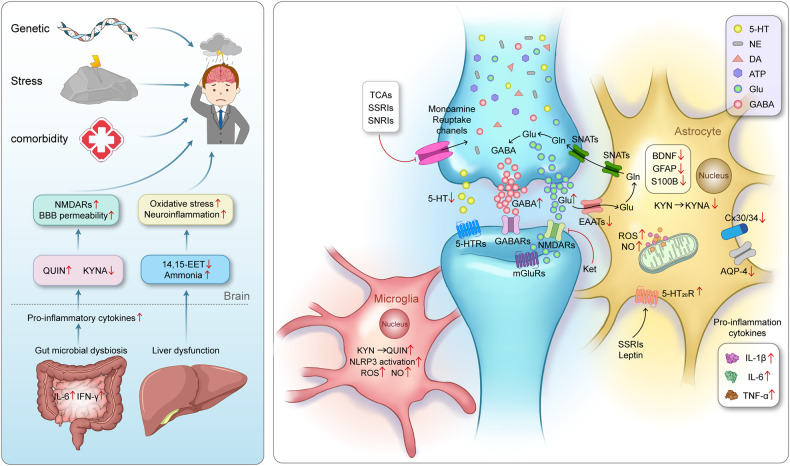
“The microbiota-gut-brain axis is clearly disrupted in MDD. 243,248 When liver dysfunction occurs and causes OS and neuroin fl ammation in the brain, which also contribute to the pathophysiology of MDD. 497 Adobe Illustrator was used to generate this fi gure neuroimaging techniques in diagnosing MDD…”
MethodCastillo-Gómez, E., Pérez-Rando, M., Vidueira, S., & Nácher, J. (2016) · Frontiers in Cellular Neuroscience · doi:10.3389/fncel.2016.00170 · Cited by 16 · cited 1×
“160 MDD-related marker proteins in neural cells .”
BackgroundLi, M., Teng, H., Sun, G., Zhao, J., Fan, M., Zhao, Z., Zhou, J., & Zhao, M. (2019) · Psychiatry Research · doi:10.1016/j.psychres.2019.04.017 · Cited by 16
Arinami, H., Suzuki, Y., Tajiri, M., Tsuneyama, N., & Someya, T. (2021) · BMC Psychiatry · doi:10.1186/s12888-021-03116-2 · Cited by 15 · cited 1×
“120 In animal models, E2 has been shown to alleviate depressive-like behavior.”
BackgroundLiu, Y., Zhang, J., Zhang, M., Li, X., Li, K., Wang, B., Yang, Y., Song, R., Si, Y., Ni, T., et al. (2022) · Journal of Affective Disorders · doi:10.1016/j.jad.2022.04.083 · Cited by 14 · cited 1×
“264 It has been reported that abnormal gray matter volume (GMV) in several brain regions is positively correlated with MDD. 265,266 Regarding functional MRI, recent studies have revealed that cerebral functional abnormalities are not limited to speci fi c brain regions in patients with MDD.”
BackgroundSelf-citationResting state functional MRI in neurology and psychiatry
Kremneva, E. I., Sinitsyn, D. O., Добрынина, Л. А., Suslina, A. D., & Кротенкова, М. В. (2022) · S S Korsakov Journal of Neurology and Psychiatry · doi:10.17116/jnevro20221220215 · Cited by 14 · cited 1×
“269 It has the bene fi ts of being noninvasive and easy to perform and offering high temporal and spatial resolution.”
BackgroundHertz, L. (2011) · Methods in molecular biology · doi:10.1007/978-1-61779-452-0_20 · Cited by 13
Yamanishi, K., Hashimoto, T., Miyauchi, M., Mukai, K., Ikubo, K., Uwa, N., Watanabe, Y., Ikawa, T., Okuzaki, D., Okamura, H., et al. (2019) · Biomedical Reports · doi:10.3892/br.2019.1259 · Cited by 13
Zhao, Y.-N., Cao, Y.-F., Zhang, Y.-H., Lu, Y., Ping, X., Qin, S.-K., Liu, S.-N., Chu, L., Sun, G.-Q., & Pei, L. (2020) · Evidence-Based Complementary and Alternative Medicine · doi:10.1155/2020/3056954 · Cited by 13 · cited 1×
“393,394 The most of above antidepressants have been widely used for the MDD patients according to the respective potential pharmacological actions (Fig.”
BackgroundWathra, R. A., Mulsant, B. H., Daskalakis, Z. J., Downar, J., McClintock, S. M., Nestor, S. M., Rajji, T. K., Trevizol, A. P., & Blumberger, D. M. (2023) · The British Journal of Psychiatry · doi:10.1192/bjp.2023.81 · Cited by 13
Hasebe, K., Mohebbi, M., Gray, L. J., Walker, A. J., Bortolasci, C. C., Turner, A., Berk, M., Walder, K. R., Maes, M. H. J., Kanchanatawan, B., et al. (2021) · Acta Neuropsychiatrica · doi:10.1017/neu.2021.44 · Cited by 11
The relationship of major depressive disorder with Crohn's disease activity
Facanali, C. B. G., Sobrado Junior, C. W., Fraguas Junior, R., Facanali Junior, M. R., Boarini, L. R., Sobrado, L. F., & Cecconello, I. (2023) · Clinics · doi:10.1016/j.clinsp.2023.100188 · Cited by 10 · cited 1×
“229,230 Neuroendocrine-immune axis .”
Reichrath, J. (2011) · Dermato-Endocrinology · doi:10.4161/derm.17544 · Cited by 8
Bekhbat, M., Li, Z., Mehta, N. D., Treadway, M. T., Lucido, M. J., Woolwine, B. J., Haroon, E., Miller, A. H., & Felger, J. C. (2022) · Molecular Psychiatry · doi:10.1038/s41380-022-01754-w · Cited by 8 · cited 1×
“73 Astrocytes in the lateral habeula are involved in regulating depressive-like behavior, 74 whereas the reward circuit is mediated by the striatum.”
BackgroundCombined HTR1A/1B methylation and human functional connectome to recognize patients with MDD
Xu, Z., Gao, C., Tan, T., Jiang, W., Wang, T., Chen, Z., Shen, T., Chen, L., Tang, H., Chen, W., et al. (2022) · Psychiatry Research · doi:10.1016/j.psychres.2022.114842 · Cited by 8 · cited 1×
“278 By now, the widely accepted objective diagnostic indicators or methods for MDD are still de fi cient.”
BackgroundReichrath, J. (2011) · PubMed · doi:10.4161/derm.3.3.17544 · Cited by 5
Sramek, J. J., Hardy, L. W., Bieck, P., Zamora, C., Versavel, M., Kharidia, J., Grinnell, T., Chen, Y., Sullivan, M., Ding, H., et al. (2016) · CNS Neuroscience & Therapeutics · doi:10.1111/cns.12513 · Cited by 5 · cited 1×
“373 Chronic treatment with fl uoxetine has been shown to increase the expression of Cx43 in the rat PFC, which further prevents the dysfunction of astrocytic gap junctions induced by CUS and reverses the depressive-like behaviors caused by gap junction blockade.”
BackgroundLi, V. W., Morton, E., Michalak, E. E., Tam, E. M., Levitt, A. J., Levitan, R. D., Cheung, A., Morehouse, R., Ramasubbu, R., Yatham, L. N., et al. (2022) · Journal of Affective Disorders · doi:10.1016/j.jad.2021.10.035 · Cited by 5
Zhang, Y., Wang, Q., Zheng, Z., Sun, Y., Niu, Y., Li, D., Wang, S., & Meng, W. (2023) · Brain Research · doi:10.1016/j.brainres.2022.148208 · Cited by 5 · cited 1×
“149 By promoting neurotransmitter release, facilitating vesicle docking, and upregulating the expression of synaptic vesicle proteins, BDNF, which is released by astrocytes in response to long-term antidepressant therapy, may assist in increasing synaptic plasticity at presynaptic terminals.”
BackgroundSelf-citation(2011) · doi:10.4161/derm.3.3.15332
Cited by
PI3K/AKT signaling pathway: Molecular mechanisms and therapeutic potential in depression
Guo, N., Wang, X., Xu, M., Bai, J., Yu, H., & Zhang, L. (2024) · Pharmacological Research · doi:10.1016/j.phrs.2024.107300 · Cited by 218
Vagus nerve stimulation (VNS): recent advances and future directions
Austelle, C. W., Cox, S. S., Wills, K. E., & Badran, B. W. (2024) · Clinical Autonomic Research · doi:10.1007/s10286-024-01065-w · Cited by 151
“For example, major depression is associated with alterations in the brain and periphery, including immune and endocrine dysfunction [21].”
BackgroundJiao, W., Lin, J., Deng, Y., Ji, Y., Liang, C., Wei, S., Xi, J., & Yan, F. (2025) · Journal of Neuroinflammation · doi:10.1186/s12974-024-03312-3 · Cited by 144
Sharma, S., Chawla, S., Kumar, P., Ahmad, R., & Verma, P. K. (2024) · Brain Research · doi:10.1016/j.brainres.2024.149123 · Cited by 111
Kalogerakou, T., & Αντωνιάδου, Μ. (2024) · Antioxidants · doi:10.3390/antiox13121508 · Cited by 125
Metadata
- Authors
- Cui, L., Li, S., Wang, S., Wu, X., Liu, Y., Yu, W., Wang, Y., Tang, Y., Xia, M., & Li, B.
- Affiliations
- China Medical University (CN)
- Chengdu University (CN)
- First Hospital of China Medical University (CN)
- Corresponding author
- Xia, Maosheng
- Li, Baoman
- ORCID
- Venue
- Signal Transduction and Targeted Therapy
- Published
- 2024-02-09
- Volume
- 9
- Issue
- 1
- Pages
- 30-30
- ISSN
- 2059-3635 (ISSN-L)
- PMC
- PMC10853571
- OpenAlex
- W4392731282
- Semantic Scholar
- e69e2e42bcc9396c4df790e7a320846a0aa10211
- Cited by
- 1,244
- References
- 514
- Citations by year
- 2026: 536 · 2025: 570 · 2024: 138
- FWCI
- 60.09
- Type
- journal article
- Language
- en
- Open access
- gold
- doi.org
- Licence
- cc-by
- creativecommons.org/licenses/by/4.0 (tdm)
- creativecommons.org/licenses/by/4.0 (vor)
- Locations
- Signal Transduction and Targeted Therapy (publishedVersion, cc-by)
- PubMed Central (publishedVersion, cc-by)
- PubMed (publishedVersion)
- DOAJ (DOAJ: Directory of Open Access Journals) (submittedVersion)
- Funders
- National Natural Science Foundation of China (81871852, 32271038)
- Topics
- Health Sciences › Medicine › Pharmacology (medical) › Treatment of Major Depression
- Life Sciences › Neuroscience › Biological Psychiatry › Tryptophan and brain disorders
- Life Sciences › Neuroscience › Cellular and Molecular Neuroscience › Neurotransmitter Receptor Influence on Behavior
- Keywords
- major depressive disorder, pathogenesis, neurotransmitter hypothesis, hypothalamic-pituitary-adrenal axis, neuroplasticity, antidepressants, therapeutic target, phototherapy, acupuncture, depression prevention, depression diagnosis
- MeSH terms
- Major Depressive Disorder, Humans, Hypothalamo-Hypophyseal System, Pituitary-Adrenal System
About these checks
Registry, retraction, Cites and statistics results are computed, not judged, with one exception: a printed reference that no index lists is read once by a model before it counts as a citation error. Claims are extracted by a model and kept only when their quote appears verbatim in the text; each cited source is then checked, with a model’s help, for whether it says what the claim relies on. Those verdicts can be wrong — read the claim’s quote and the cited source before relying on one.
The claim verdicts this report counts are experimental: their accuracy is not yet measured.
A language model drew the claims from the paper on 2026-09-28, under version 3 of the claim definition (prompt extract-v3).
A second model labelled each claim on 2026-09-28 (model jev-1.13-20260917, definition revision gold-guideline-v0.2).
Cited sources are checked with a language model’s help (gpt-6-sol).
Statistics and arithmetic are recomputed, not judged.
Confidence bands are shown only for fields calibrated on our annotated test set. None is calibrated yet, so no band is shown.
What counts as a claim ›How we measure confidence ›How we check this ›
Are you an author, or do you see a problem with this page? Request a review
Data sources
Bibliographic data: Semantic Scholar, OpenAlex, Crossref.
Contains information from the Semantic Scholar Academic Graph Datasets, made available under the ODC Attribution License (ODC-BY 1.0).
Semantic Scholar’s data is described in: Kinney, R., et al. (2023). The Semantic Scholar Open Data Platform. arXiv:2301.10140.
