

Genome-wide DNA methylation comparison between live human brain and peripheral tissues within individuals
Open accessThe DOI matches its Crossref record; 36 of the 36 references it cites were found in a registry or an index.
Abstract
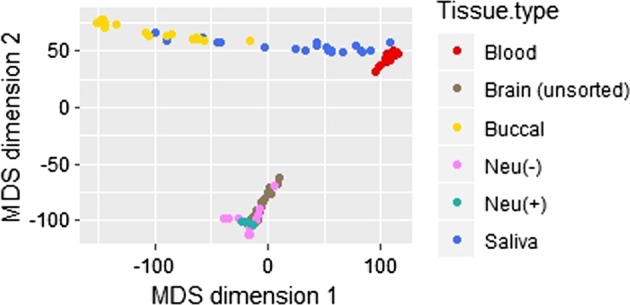
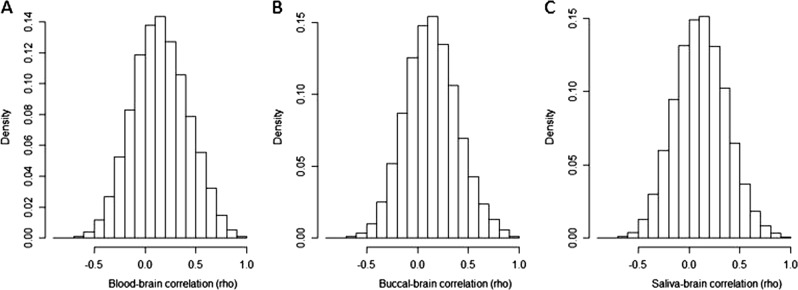
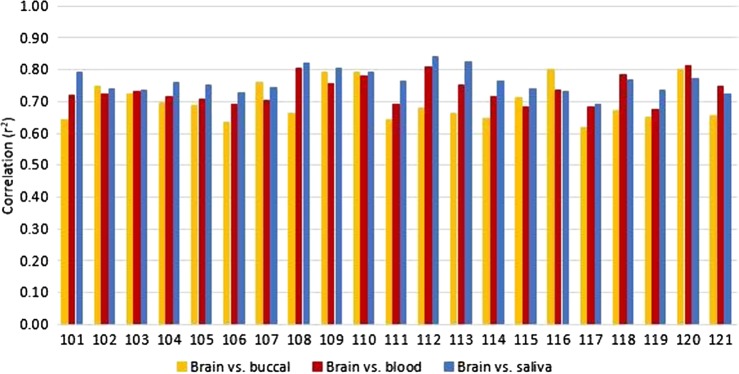
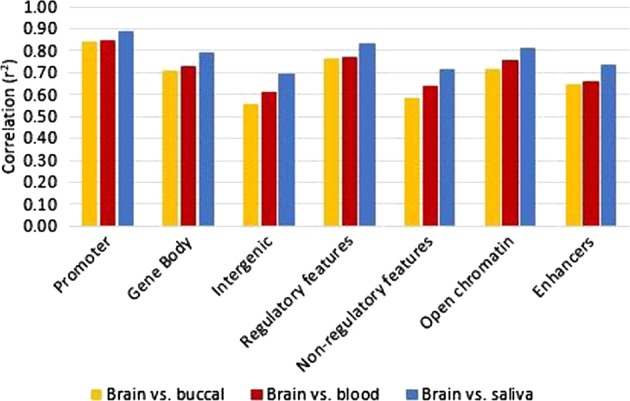
Differential DNA methylation in the brain is associated with many psychiatric diseases, but access to brain tissues is essentially limited to postmortem samples. The use of surrogate tissues has become common in identifying methylation changes associated with psychiatric disease. In this study, we determined the extent to which peripheral tissues can be used as surrogates for DNA methylation in the brain. Blood, saliva, buccal, and live brain tissue samples from 27 patients with medically intractable epilepsy undergoing brain resection were collected (age range 5–61 years). Genome-wide methylation was assessed with the Infinium HumanMethylation450 ( n = 12) and HumanMethylationEPIC BeadChip arrays ( n = 21). For the EPIC methylation data averaged for each CpG across subjects, the saliva–brain correlation ( r = 0.90) was higher than that for blood–brain (r = 0.86) and buccal–brain ( r = 0.85) comparisons. However, within individual CpGs, blood had the highest proportion of CpGs correlated to brain at nominally significant levels (20.8%), as compared to buccal tissue (17.4%) and saliva (15.1%). For each CpG and each gene, levels of brain-peripheral tissue correlation varied widely. This indicates that to determine the most useful surrogate tissue for representing brain DNA methylation, the patterns specific to the genomic region of interest must be considered. To assist in that objective, we have developed a website, IMAGE-CpG, that allows researchers to interrogate DNA methylation levels and degree of cross-tissue correlation in user-defined locations across the genome.
Overview
The claims and statistics of this paper haven’t been checked yet.
Free: it reads the open-access text and checks the first 5 claims that cite a source we can check. Create a free account to check every claim.
Integrity signals
Registry
Cites
Statistics
Figures
Verification
Claims the paper makes
The claims and statistics of this paper haven’t been checked yet.
Free: it reads the open-access text and checks the first 5 claims that cite a source we can check. Create a free account to check every claim.
Claims other papers make about this one
Each is checked against this paper’s own text: does it say what the citing paper says it does?
The source backs part of the claim, not all of it — or backs it for a different population, condition or comparison.
In the citing paper
“However, at the individual CpG level, correlations for all peripheral tissues were only nominally significantly correlated with brain tissue.”
From Epigenetics and depression (2019) · cites this paper as [33]
Experimental — accuracy not yet measuredThe source backs part of the claim, not all of it — or backs it for a different population, condition or comparison.
In the citing paper
“overlap in DNA methylation levels measured in saliva, buccal cells and blood is limited”
From The applied implications of epigenetics in anxiety, affective and stress-related disorders - A review and synthesis on psychosocial stress, psychotherapy and prevention (2020) · cites this paper as Braun et al., 2019
Experimental — accuracy not yet measuredThe source backs part of the claim, not all of it — or backs it for a different population, condition or comparison.
In the citing paper
“Still, it may be useful in developing biomarkers of disease and treatment response.98”
From Epigenetic regulation in major depression and other stress-related disorders: molecular mechanisms, clinical relevance and therapeutic potential (2023) · cites this paper as [98]
Experimental — accuracy not yet measuredThe cited source says what the claim attributes to it.
In the citing paper
“a recent study performed genome-wide methylation assays on blood, brain, saliva, and buccal samples and found that cross-tissue correlation strength was highly region-specific, with the correlation coefficient varying widely for different CpGs.”
From Epigenetics and depression (2019) · cites this paper as [33]
The cited source says what the claim attributes to it.
In the citing paper
“it has been suggested that DNA methylation patterns in saliva may be closer to that of brain tissue than DNA methylation in blood or buccal cells (Braun et al., 2019;Lowe et al., 2013;Smith et al., 2015).”
From The applied implications of epigenetics in anxiety, affective and stress-related disorders - A review and synthesis on psychosocial stress, psychotherapy and prevention (2020) · cites this paper as Braun et al., 2019
4 more claims about this paper
Create a free account to see every claim other papers make about this one.
Self-check
Percentages, sums and reported differences re-computed from the paper’s own numbers.
The self-check needs the paper’s full text.
Citations
Cites
Biological insights from 108 schizophrenia-associated genetic loci
Schizophrenia Working Group of the Psychiatric Genomics Consortium (2014) · Nature · doi:10.1038/nature13595 · Cited by 7,577
Aryee, M. J., Jaffe, A. E., Corrada-Bravo, H., Ladd-Acosta, C., Feinberg, A. P., Hansen, K. D., & Irizarry, R. A. (2014) · Bioinformatics · doi:10.1093/bioinformatics/btu049 · Cited by 4,397
eQTLGen, Wray, N. R., 23andMe, the Major Depressive Disorder Working Group of the Psychiatric Genomics Consortium, Ripke, S., Mattheisen, M., Trzaskowski, M., Byrne, E. M., Abdellaoui, A., Adams, M. J., et al. (2018) · Nature Genetics · doi:10.1038/s41588-018-0090-3 · Cited by 3,005
cocor: A Comprehensive Solution for the Statistical Comparison of Correlations
Diedenhofen, B., & Musch, J. (2015) · PLOS ONE · doi:10.1371/journal.pone.0121945 · Cited by 1,919
Teschendorff, A. E., Marabita, F., Lechner, M., Bartlett, T., Tegner, J., Gomez-Cabrero, D., & Beck, S. (2013) · Bioinformatics · doi:10.1093/bioinformatics/bts680 · Cited by 1,683
Protoplasmic Astrocytes in CA1 Stratum Radiatum Occupy Separate Anatomical Domains
Bushong, E. A., Martone, M. E., Jones, Y. Z., & Ellisman, M. H. (2002) · The Journal of Neuroscience · doi:10.1523/jneurosci.22-01-00183.2002 · Cited by 1,578
Genome-wide association study identifies 30 loci associated with bipolar disorder
eQTLGen Consortium, Stahl, E. A., BIOS Consortium, the Bipolar Disorder Working Group of the Psychiatric Genomics Consortium, Breen, G., Forstner, A. J., McQuillin, A., Ripke, S., Trubetskoy, V., Mattheisen, M., et al. (2019) · Nature Genetics · doi:10.1038/s41588-019-0397-8 · Cited by 1,519
Self-citationLow-level processing of Illumina Infinium DNA Methylation BeadArrays
Triche, T. J., Weisenberger, D. J., Van Den Berg, D., Laird, P. W., & Siegmund, K. D. (2013) · Nucleic Acids Research · doi:10.1093/nar/gkt090 · Cited by 905
Preprocessing, normalization and integration of the Illumina HumanMethylationEPIC array with minfi
Fortin, J.-P., Triche, T. J., & Hansen, K. D. (2017) · Bioinformatics · doi:10.1093/bioinformatics/btw691 · Cited by 865
Aging effects on DNA methylation modules in human brain and blood tissue
Horvath, S., Zhang, Y., Langfelder, P., Kahn, R. S., Boks, M. P., van Eijk, K., van den Berg, L. H., & Ophoff, R. A. (2012) · Genome Biology · doi:10.1186/gb-2012-13-10-r97 · Cited by 645
Cited by
Items 201–300 of 472
Hall, E. C. R., Murgatroyd, C., Stebbings, G. K., Cunniffe, B., Harle, L., Salter, M., Ramadass, A., Westra, J. W., Hunter, E., Akoulitchev, A. V., et al. (2020) · Genes · doi:10.3390/genes11080905 · Cited by 14
“However, initial studies indicated that shared epigenetic characteristics, including chromatin structures, between the primary tissue and surrogate blood-based readouts exist [40,59,60].”
BackgroundIdentifying Depression Through Machine Learning Analysis of Omics Data: Scoping Review
Taylor, B., Hobensack, M., de Rivera, S. N., Zhao, Y., Creber, R. M., & Cato, K. (2024) · JMIR Nursing · doi:10.2196/54810 · Cited by 11
“Importantly, recent studies have shown a high correlation in gene expression and methylation patterns between blood and saliva samples and brain tissue, supporting the utility of peripheral samples as valuable surrogates for understanding the molecular mechanisms underlying depression [12-14].”
BackgroundXie, K., Sun, Y., Li, X., Yang, S., Wang, M., Zhang, Y., Wang, Q., Wu, K., Kong, D., Guo, T., et al. (2024) · European Archives of Psychiatry and Clinical Neuroscience · doi:10.1007/s00406-024-01922-9 · Cited by 13
“Currently, there are studies that have conducted meta-analyses of neurome-tabolites in the brains of autistic patients as well as blood markers of oxidative stress, which provide valid information for diagnosis and pathological studies of ASD [12].”
Peedicayil, J. (2021) · Current Neuropharmacology · doi:10.2174/1570159x19666210920091036 · Cited by 10
“There are websites available that enable the interpretation of epigenetic data from peripheral tissues in the context of the brain [70, 71].”
Taylor, R., Smith, R., Collins, C. E., Mossman, D., Wong‐Brown, M. W., Chan, E., Evans, T., Attia, J. R., Buckley, N., Drysdale, K., et al. (2020) · Brain and Behavior · doi:10.1002/brb3.1579 · Cited by 9
“However, analysis of specific DNA CpGs and genes indicated that cross-tissue correlations varied widely (Braun et al., 2019).”
BackgroundMethodInfluentialChen, M., & Cao, C. (2023) · Child Development · doi:10.1111/cdev.13972 · Cited by 9
Dahrendorff, J., Currier, G. W., & Uddin, M. (2024) · American Journal of Medical Genetics Part B Neuropsychiatric Genetics · doi:10.1002/ajmg.b.32985 · Cited by 15
“…brain, informed by consulting publicly available resources such as the Epigenomics Roadmap Consortium (Kundaje et al., 2015), the PsychENCODE knowledge portal (Akbarian et al., 2015) or web tools such as BECon (Edgar et al., 2017), Image-CpG (Braun et al., 2019) or wgbstools (Loyfer et al., 2023).”
Epigenetic scores derived in saliva are associated with gestational age at birth
Mckinnon, K., Conole, E. L. S., Vaher, K., Hillary, R. F., Gadd, D. A., Binkowska, J. M., Sullivan, G., Stevenson, A. J., Corrigan, A. E., Murphy, L., et al. (2024) · Clinical Epigenetics · doi:10.1186/s13148-024-01701-2 · Cited by 9
“Saliva sampling was used due to accessibility and the non-invasiveness of the method; DNAm patterns measured via saliva samples correlate with brain and other tissue DNAm patterns [49, 50].”
MethodThe researcher's guide to selecting biomarkers in mental health studies
Verhoeven, J. E., Wolkowitz, O. M., Satz, I. B., Conklin, Q. A., Lamers, F., Lavebratt, C., Lin, J., Lindqvist, D., Mayer, S. E., Melas, P. A., et al. (2024) · BioEssays · doi:10.1002/bies.202300246 · Cited by 12
Genetic and environmental contributions to epigenetic aging across adolescence and young adulthood
Kuznetsov, D. V., Liu, Y., Schowe, A. M., Czamara, D., Instinske, J., Pahnke, C. K. L., Nöthen, M. M., Spinath, F. M., Binder, E. B., Diewald, M., et al. (2025) · Clinical Epigenetics · doi:10.1186/s13148-025-01880-6 · Cited by 16
Fujisawa, T. X., Nishitani, S., Makita, K., Yao, A., Takiguchi, S., Hamamura, S., Shimada, K., Okazawa, H., Matsuzaki, H., & Tomoda, A. (2022) · Frontiers in Neuroscience · doi:10.3389/fnins.2021.799761 · Cited by 10
Chalfun, G., Brasil, A. D. A., Paravidino, V. B., Soares‐Lima, S. C., Lopes, M. D. S. A., Salú, M. D. S., dos Santos, P. V. B. E., Trompiere, A. C. P. D. C., Milone, L. T. V., Rodrigues-Santos, G., et al. (2022) · Epigenomics · doi:10.2217/epi-2022-0444 · Cited by 9
Taylor, J. Y., Jones‐Patten, A., Prescott, L., Potts‐Thompson, S., Joyce, C., Tayo, B. O., & Saban, K. L. (2024) · PLoS ONE · doi:10.1371/journal.pone.0295293 · Cited by 7
Tang, L., Zhao, P., Pan, C., Song, Y., Zheng, J., Zhu, R., Wang, F., & Tang, Y. (2024) · Journal of Affective Disorders · doi:10.1016/j.jad.2024.07.110 · Cited by 9
Wigley, I. L. C. M., Mascheroni, E., Peruzzo, D., Giorda, R., Bonichini, S., & Montirosso, R. (2021) · Frontiers in Psychology · doi:10.3389/fpsyg.2021.672786 · Cited by 10
“In addition, a recent genome-wide research revealed robust correlations between saliva-brain (r = 0.90), blood–brain (r = 0.86) and buccal–brain (r = 0.85) methylation patterns (Braun et al., 2019).”
BackgroundInfluentialFarrow, E., Chiocchetti, A. G., Rogers, J. C., Pauli, R., Raschle, N. M., González-Madruga, K., Smaragdi, A., Martinelli, A., Kohls, G., Stadler, C., et al. (2021) · Translational Psychiatry · doi:10.1038/s41398-021-01609-y · Cited by 11
Altered DNA methylation of CYP2E1 gene in schizophrenia patients with tardive dyskinesia
Zhang, P., Li, Y., Wang, K., Huang, J., Su, B., Xu, C. D., Wang, Z., Tan, S., Yang, F., & Tan, Y. (2022) · BMC Medical Genomics · doi:10.1186/s12920-022-01404-8 · Cited by 9
Zong, X., Wang, G., Nie, Z., Ma, S., Kang, L., Zhang, N., Weng, S., Tan, Q. R., Zheng, J., & Hu, M. (2023) · Frontiers in Psychiatry · doi:10.3389/fpsyt.2023.1127353 · Cited by 8
Wieting, J., Jahn, K., Bleich, S., Frieling, H., & Deest, M. (2023) · Clinical Epigenetics · doi:10.1186/s13148-023-01616-4 · Cited by 9
“%) at a nominal significance level of p < 0.05 [29].”
BackgroundInfluentialEvaluation von Stressprävention und Stressbewältigung mittels epigenetischer Marker
Stoffel, M., Gardini, E., Ehrenthal, J. C., Abbruzzese, E., & Ditzen, B. (2020) · Verhaltenstherapie · doi:10.1159/000505595 · Cited by 8
Consortium profile: the methylation, imaging and NeuroDevelopment (MIND) consortium
Schuurmans, I. K., Mulder, R. H., Baltramonaityte, V., Lahtinen, A., Qiuyu, F., Rothmann, L. M., Staginnus, M., Tuulari, J. J., Burt, S. A., Buß, C., et al. (2025) · Molecular Psychiatry · doi:10.1038/s41380-025-03203-w · Cited by 13
“These CpGs can be identi fi ed using blood-brain methylation databases (e.g., BECon [38], Blood-Brain Comparison Tool [39], IMAGE-CpG [40]), which provide cross-tissue comparisons.”
Zhang, S., Shi, K., Lyu, N., Zhang, Y., Liang, G., Zhang, W., Wang, X., Wen, H., Wen, L., Ma, H., et al. (2023) · The World Journal of Biological Psychiatry · doi:10.1080/15622975.2023.2198595 · Cited by 7
“Nonetheless, it has been presented that the correlation of DNA methylation levels between the brain and peripheral blood is significantly greater than predicted by chance (Walton et al. 2016; Braun et al. 2019).”
BackgroundWieting, J., Jahn, K., Eberlein, C. K., Bleich, S., Frieling, H., & Deest, M. (2023) · Behavioural Brain Research · doi:10.1016/j.bbr.2023.114494 · Cited by 8
Zeng, X., Tan, Z., Wang, W., Li, W., Li, S., Zhang, D., & Tan, Q. (2023) · Neuroscience · doi:10.1016/j.neuroscience.2023.08.008 · Cited by 7
Asselt, A. J. V., Beck, J. J., Finnicum, C. T., Johnson, B. N., Kallsen, N. A., Hottenga, J., de Geus, E. J. C., Boomsma, D. I., Ehli, E. A., & van Dongen, J. (2023) · International Journal of Molecular Sciences · doi:10.3390/ijms241914640 · Cited by 9
“…by Braun et al. compared the methylation levels of samples from multiple tissue sources (which included whole blood and buccal) in 27 individuals and calculated an overall correlation of DNA methylation across subjects of 0.81 comparing the methylation levels of whole-blood and buccal samples [12].”
BackgroundInfluentialSpencer, H., Lesemann, F. H. P., Buisman, R. S. M., Kraaijenvanger, E. J., Branje, S., Boks, M. P., & Bos, P. A. (2024) · Hormones and Behavior · doi:10.1016/j.yhbeh.2024.105595 · Cited by 9
“Studies suggest that gene methylation patterns in saliva can serve as useful proxies for brain tissue methylation (Braun et al., 2019; Smith et al., 2015).”
Carpentieri, V., Cerniglia, L., Cimino, S., Pucci, M., Pascale, E., D’Addario, C., & Adriani, W. (2021) · Behavioural Brain Research · doi:10.1016/j.bbr.2021.113246 · Cited by 8
Zhu, Y., Lussier, A. A., Smith, A. D. A. C., Simpkin, A. J., Suderman, M. J., Walton, E., Relton, C. L., & Dunn, E. C. (2021) · Psychoneuroendocrinology · doi:10.1016/j.psyneuen.2022.105854 · Cited by 8
Epigenetic associations with adolescent grey matter maturation and cognitive development
Jensen, D., Chen, J., Turner, J. A., Stephen, J. M., Wang, Y., Wilson, T. W., Calhoun, V. D., & Liu, J. (2023) · Frontiers in Genetics · doi:10.3389/fgene.2023.1222619 · Cited by 9
“1% of individual CpGs in saliva correlated to brain at a nominally significant level (Braun et al., 2019).”
BackgroundMolina, T. C., Casillas-Díaz, N., Pérez-Nadador, I., Vales‐Villamarín, C., López-Martínez, M. Á., Riveiro-Álvarez, R., Wilhelm, L., Cervera‐Juanes, R. P., Garcés, C., Lomniczi, A., et al. (2023) · Clinical Epigenetics · doi:10.1186/s13148-023-01612-8 · Cited by 7
“Recent studies identified sub-sets of DMCs that correlate between blood and brain [83] and blood and liver [84], but further studies need to be done to generate a map of those sites informative of a wider range of tissues and cell types.”
BackgroundGurugubelli, K. R., Ballambattu, V. B., & Bobby, Z. (2020) · Journal of Tropical Pediatrics · doi:10.1093/tropej/fmaa108 · Cited by 7
Methylation of OXT and OXTR genes, central oxytocin, and social behavior in female macaques
Leon, D. D., Nishitani, S., Walum, H., McCormack, K. M., Wilson, M. E., Smith, A. K., Young, L. J., & Sánchez, M. M. (2020) · Hormones and Behavior · doi:10.1016/j.yhbeh.2020.104856 · Cited by 7
“, 2015), and 11% (Braun et al., 2019), depending on the brain regions analyzed.”
BackgroundInfluentialGoldenthal, A. R., Lieberman, E. E., Rizk, M., Ogden, R. T., Rubin‐Falcone, H., Zanderigo, F., Huang, Y.-Y., Min, E., Yuan, M., Milak, M. S., et al. (2024) · Journal of Affective Disorders · doi:10.1016/j.jad.2024.08.148 · Cited by 6
McKenna, B. G., Lussier, A. A., Suderman, M. J., Walton, E., Simpkin, A. J., Hüls, A., & Dunn, E. C. (2025) · Current Environmental Health Reports · doi:10.1007/s40572-024-00469-0 · Cited by 10
Hüls, A., Liu, J., Konwar, C., Conneely, K. N., Levey, A. I., Lah, J. J., Wingo, A. P., & Wingo, T. S. (2025) · Alzheimer s & Dementia · doi:10.1002/alz.70318 · Cited by 7
“First,weassessed the correlation between the DNAm beta values of the top CpGsacross blood and brain tissue using the Blood–Brain Epigenetic Concordance (BECon) tool, 45 and the data from Braun et al. on the Gene Expression Omnibus Database (accession code GSE111165).”
InfluentialOccean, J. R., Wani, A. H., Donglasan, J., Aiello, A. E., Galea, S., Koenen, K. C., Qu, A., Wildman, D. E., & Uddin, M. (2021) · Psychiatry Research · doi:10.1016/j.psychres.2022.114510 · Cited by 8
Can Epigenetics Predict Drug Efficiency in Mental Disorders?
David, G. B., Amir, Y., Salalha, R., Sharvit, L. E., Richter‐Levin, G., & Atzmon, G. (2023) · Cells · doi:10.3390/cells12081173 · Cited by 9
High-resolution omics of vascular ageing and inflammatory pathways in neurodegeneration
Kwok, A. J., Lu, J., Huang, J., Ip, B. Y. M., Mok, V., Lai, H. M., & Ko, H. (2023) · Seminars in Cell and Developmental Biology · doi:10.1016/j.semcdb.2023.06.005 · Cited by 7
Assche, E. V., Hohoff, C., Zang, J. C. S., Knight, M. J., & Baune, B. T. (2023) · Frontiers in Molecular Neuroscience · doi:10.3389/fnmol.2023.1223216 · Cited by 7
“Despite the higher overall correlation for saliva (r = 90 and r = 86 for blood), blood still seems to be the better, accessible proxy for CpG-specific DNA methylation (Braun et al., 2019).”
BackgroundShirata, T., Suzuki, A., Matsumoto, Y., Noto, K., Goto, K., & Otani, K. (2020) · Neuropsychiatric Disease and Treatment · doi:10.2147/ndt.s252177 · Cited by 6
Craig, F., Mascheroni, E., Giorda, R., Felline, M. G., Bacco, M. G., Castagna, A., Tenuta, F., Villa, M., Costabile, A., Trabacca, A., et al. (2021) · International Journal of Environmental Research and Public Health · doi:10.3390/ijerph182312736 · Cited by 5
“Nonetheless, recent findings suggest that peripheral methylation levels correlate with those measured centrally [66], with saliva samples being more closely aligned with DNA methylation patterns in the brain [67].”
BackgroundIntergenerational transmission of stress-related epigenetic regulation
Collins, N. J., & Roth, T. L. (2020) · Elsevier eBooks · doi:10.1016/b978-0-12-819262-7.00007-6 · Cited by 9
Inflammation in Alzheimer’s disease: do sex and APOE matter?Preprint
Duarte‐Guterman, P., Albert, A., Inkster, A. M., Barha, C. K., Galea, L. A. M., & Initiative, O. B. O. T. A. D. N. (2019) · bioRxiv (Cold Spring Harbor Laboratory) · doi:10.1101/741777 · Cited by 4
Synthetic epigenomes for open cross-platform episignature classifiersPreprint
Ferraro, F., Bārdiņa, L., Drost, M., van der Linde, H. C., de Groot, M., Peymani, F., Santini, A., Rasche, H., Hildonen, M., Souche, E. L., et al. (2025) · medRxiv · doi:10.1101/2025.03.28.25324859 · Cited by 6
Fornage, M., Tarraf, W., Daviglus, M. L., DeCarli, C. S., González, K. A., Isasi, C. R., Kuwayama, S., Lamar, M., Levin, B. E., Parada, H., et al. (2025) · Clinical Epigenetics · doi:10.1186/s13148-025-01941-w · Cited by 7
“However, several studies have reported high correlations between DNAm in peripheral blood and that in brain tissues [61, 62].”
Russell, H., Angus, G., Singleton, S., Bell, C. G., & Hales, T. G. (2026) · Clinical Epigenetics · doi:10.1186/s13148-025-02047-z · Cited by 12
“It is important to note that there is only partial concordance in DNA methylation between brain and blood [70, 71].”
Hodge, K. M., Burt, A., Camerota, M., Carter, B. S., Check, J. F., Conneely, K. N., Helderman, J., Hofheimer, J. A., Hüls, A., McGowan, E. C., et al. (2024) · Scientific Reports · doi:10.1038/s41598-024-68071-w · Cited by 9
“DNAm was assessed with the Infinium HumanMethylationEPIC BeadChip arrays (n = 21) 20 .”
InfluentialForum, D. M. K., Bjerregaard, C., & Thomsen, P. H. (2025) · Nordic Journal of Psychiatry · doi:10.1080/08039488.2024.2436987 · Cited by 7
“However, a within-subject comparison of individual CpGs revealed that the proportion of CpGs correlated with the brain at nominally significant levels was highest for blood compared to buccal and saliva tissues [79].”
InfluentialSaban, K. L., Janusek, L. W., de la Peña, P., Lee, S., Tell, D., Mathews, H., Nowak, A. L., Nyembwe, A., & Taylor, J. Y. (2025) · Biological Research For Nursing · doi:10.1177/10998004251346179 · Cited by 6
“Importantly, saliva DNAm demonstrates more similar patterns of DNAm to brain tissue as compared to blood (Braun et al., 2019; Smith et al., 2015), and it correlates with front limbic brain function (Chiarella et al., 2020; Ismaylova et al., 2018).”
Hanson, T., Spencer, S., Harker, S. A., Barry, F., Beauchemin, J., Braden, B. B., Burton, P., D’Sa, V. A., Koinis‐Mitchell, D., Mennenga, S. E., et al. (2025) · Molecular Neurobiology · doi:10.1007/s12035-025-05506-z · Cited by 6
“Importantly, two studies have reported that saliva may serve as a better proxy for brain DNAm than blood, with saliva–brain correlations exceeding those of blood–brain [23, 24].”
Du, S.-Z., Chen, C., Qin, L., & Tang, X.-L. (2021) · Translational Cancer Research · doi:10.21037/tcr-21-74 · Cited by 5
“The sites of CpG island, miRNA promoter region and GWAS disease-related regions outside the region also cover 90% of the sites of the Human Methylation 27 BeadChip (10).”
BackgroundInfluentialCreasey, N., Beijers, R., O’Donnell, K. J., de Weerth, C., & Tollenaar, M. S. (2023) · Development and Psychopathology · doi:10.1017/s0954579423000226 · Cited by 7
Correlation of telomere length in brain tissue with peripheral tissues in living human subjects
Carver, A. J., Hing, B. W. Q., Elser, B. A., Lussier, S. J., Yamanashi, T., Howard, M. A., Kawasaki, H., Shinozaki, G., & Stevens, H. E. (2024) · Frontiers in Molecular Neuroscience · doi:10.3389/fnmol.2024.1303974 · Cited by 6
Self-citationThe Use of Saliva for Genetic and Epigenetic Research
Nemoda, Z. (2020) · Springer eBooks · doi:10.1007/978-3-030-35784-9_6 · Cited by 5
Giovanni, A. D., Giuliani, C., Marini, M., & Luiselli, D. (2021) · Applied Sciences · doi:10.3390/app112311179 · Cited by 5
Coto-Vílchez, C., Martínez-Magaña, J. J., Mora-Villalobos, L., Valerio, D., Genis-Mendoza, A. D., Silverman, J. M., Nicolini, H., Raventós, H., & Chavarria-Soley, G. (2021) · CNS Spectrums · doi:10.1017/s109285292100105x · Cited by 9
“It has been suggested that interpretation of blood methylation results for brain disorders should focus on CpG sites with a high correlation in DNA methylation across both tissue types, and some tools have been developed for this purpose.(19,20) While previous work has shown that some risk factors for LOAD could have…”
MethodShen, X., Barbu, M. C., Caramaschi, D., Arathimos, R., Czamara, D., David, F. S., Dearman, A., Dilkes, E., Herrera-Rivero, M., Huider, F., et al. (2023) · medRxiv · doi:10.1101/2023.10.27.23297630 · Cited by 5
DNA methylation patterns and epigenetic aging associated with suicide attempts in bipolar disorder
Mitjans, M., Acosta-Díez, M., Giménez‐Palomo, A., Zafrilla-López, M., Sáiz, P. A., Barrot‐Feixat, C., Jiménez, E., Papiol, S., Defez, J., Xifró, A., et al. (2025) · Journal of Affective Disorders · doi:10.1016/j.jad.2025.120118 · Cited by 5
“0 BeadChip (Braun et al., 2019), was used to infer the blood-brain correlation of DMPs between BD/SA and non-SA to strengthen the interpretation of significant methylation findings.”
Balfour, D., Kleinig, Z., Mittinty, M., & Cohen‐Woods, S. (2026) · Progress in Neuro-Psychopharmacology and Biological Psychiatry · doi:10.1016/j.pnpbp.2026.111708 · Cited by 3
Paired blood and brain tissue methylation biomarkers in focal cortical dysplasia
Khurana, I., Khoury, J., Busch, R. M., Blümcke, I., Najm, I., & El‐Osta, A. (2025) · Brain Communications · doi:10.1093/braincomms/fcaf277 · Cited by 4
Association between methylation in the promoter region of the GAD2 gene and opioid use disorder
Tang, H., Zhang, Y., 寻玉凤, Yu, J., Lu, Y., Zhang, R., Dang, W., Zhu, F., & Zhang, J. (2023) · Brain Research · doi:10.1016/j.brainres.2023.148407 · Cited by 4
Gao, C., Amador, C., Walker, R. M., Campbell, A., Madden, R. A., Adams, M. J., Bai, X., Liu, Y., Li, M., Hayward, C., et al. (2023) · Genome biology · doi:10.1186/s13059-023-02953-6 · Cited by 3
Gao, J., Pang, X., Zhang, L., Li, S., Qin, Z., Xie, X., & Liu, J. (2023) · BMC Neuroscience · doi:10.1186/s12868-023-00811-6 · Cited by 6
Does DNA methylation in the fetal brain leave an epigenetic memory in the blood?
Strawn, M., Safranski, T. J., & Behura, S. K. (2023) · Gene · doi:10.1016/j.gene.2023.147788 · Cited by 5
McKenna, B. G., Knight, A. K., Smith, A. K., Corwin, E. J., Carter, S. E., Palmer, R. H. C., Dunlop, A. L., & Brennan, P. A. (2023) · Development and Psychopathology · doi:10.1017/s0954579423001232 · Cited by 6
“…is evidence that methylation in peripheral tissue is reflective of systemic changes to inflammation and may be comparable to methylation of brain tissue (Braun et al., 2019; Smeeth et al., 2021; Smith et al., 2014), it may not accurately reflect DNA methylation within the central nervous system.”
BackgroundWang, Z., Fu, G., Ma, G., Wang, C., Wang, Q., Lu, C., Fu, L., Zhang, X., Cong, B., & Li, S. (2024) · Human Genetics · doi:10.1007/s00439-024-02659-0 · Cited by 6
“The methylation datasets were downloaded from the GEO datasets to calculate ITC (GSE 59685 (Lunnon et al. 2014), GSE 111165 (Braun et al. 2019), GSE 124366 (Islam et al. 2019), GSE 130153 (Murata et al. 2019), GSE 149318 (Asenius et al. 2020), and GSE 154566 (Kandaswamy et al. 2021)).”
The association between neighborhood deprivation and DNA methylation in an autopsy cohort
Pett, L., Li, Z., Abrishamcar, S., Hodge, K. M., Everson, T. M., Christensen, G. M., Gearing, M., Kobor, M. S., Konwar, C., MacIsaac, J. L., et al. (2024) · Aging · doi:10.18632/aging.205764 · Cited by 8
Exploring the role of OXTR gene methylation in attachment development: A longitudinal study
Cuyvers, B., Ein‐Dor, T., Houbrechts, M., Freson, K., Goossens, L., Noortgate, W. V. D., Leeuwen, K. G. V., Bijttebier, P., Claes, S. J., Turner, J. D., et al. (2024) · Developmental Psychobiology · doi:10.1002/dev.22496 · Cited by 5
Grandmotherhood is associated with reduced OXTR DNA methylation
Rilling, J. K., Lee, M., Zhou, C., Gonzalez, A., & Lindo, J. (2024) · Psychoneuroendocrinology · doi:10.1016/j.psyneuen.2024.107122 · Cited by 4
DNA Methylation Patterns Associated with Tinnitus in Young Adults—A Pilot Study
Bhatt, I. S., Garay, J. A. R., Torkamani, A., & Dias, R. (2024) · Journal of the Association for Research in Otolaryngology · doi:10.1007/s10162-024-00961-2 · Cited by 4
“We utilized saliva-derived DNA to identify DMRs associated with tinnitus, which is supported by the current literature indicating high correlations in DNA methylation levels between saliva and live human brain tissues [35].”
Xu, Y., Yang, S., & Cao, C. (2025) · NeuroImage · doi:10.1016/j.neuroimage.2025.121003 · Cited by 8
Mellor, J., Hunter, E., & Akoulitchev, A. V. (2025) · Cancers · doi:10.3390/cancers17132187 · Cited by 5
“For example, characteristic DNA methylation footprints in schizophrenic patients are evident in their blood [19].”
Liu, S., Liu, D., Bender, C. M., Erickson, K. I., Sereika, S. M., Shaffer, J. R., Weeks, D. E., & Conley, Y. P. (2025) · Epigenomics · doi:10.1080/17501911.2025.2542116 · Cited by 4
Methylation of the serotonin transporter gene moderates the depressive subjective effect of cocaine
Longtain, R. B., Graham, D. P., Harding, M. J., Garza, R. D. L., & Nielsen, D. A. (2021) · Behavioural Brain Research · doi:10.1016/j.bbr.2021.113675 · Cited by 5
Creasey, N., Leijten, P. H. O., Tollenaar, M. S., Boks, M. P., & Overbeek, G. J. (2024) · Child Development · doi:10.1111/cdev.14090 · Cited by 5
Solsona, R., Normand‐Gravier, T., Borrani, F., Bernardi, H., & Sanchez, A. M. J. (2024) · Physiological Reports · doi:10.14814/phy2.16044 · Cited by 5
“Saliva contains a mixture of two main cell types: approximately 70% of leukocytes and 30% of epithelial cells (Braun et al., 2019).”
BackgroundAssociations of Socioeconomic Disparities With Buccal DNA-Methylation Measures Of Biological AgingPreprint
Raffington, L., Schwaba, T., Aikins, M., Richter, D., Wagner, G. G., Harden, K. P., Belsky, D. W., & Tucker–Drob, E. M. (2022) · bioRxiv (Cold Spring Harbor Laboratory) · doi:10.1101/2022.12.07.519438 · Cited by 4
Tanner, S., Drummond, K. D., Thomson, S. M., Vacy, K., Symeonides, C., Novakovic, B., Mansell, T., O’Hely, M., Saffery, R., Tang, M. L. K., et al. (2026) · Environmental Epigenetics · doi:10.1093/eep/dvag027 · Cited by 3
Cao-Lei, L., Elgbeili, G., Laplante, D. P., Szyf, M., & King, S. (2025) · International Journal of Molecular Sciences · doi:10.3390/ijms26199468 · Cited by 5
“Although previous studies [63–65] have shown some cross-tissue concordance in methylation patterns, the extent to which peripheral methylation accurately reflects brain-specific epigenetic modifications remains uncertain.”
Stavrum, A.-K., Sirignano, L., Frid, L. M., Frank, J., Foo, J. C., Spíndola, L., Höffler, K. D., Oedegaard, K. J., Haavik, J., Rietschel, M., et al. (2025) · Translational Psychiatry · doi:10.1038/s41398-025-03772-y · Cited by 4
Carpentieri, V., Lambacher, G., Troianiello, M., Pucci, M., Pietro, D. D., Laviola, G., D’Addario, C., Pascale, E., & Adriani, W. (2023) · Children · doi:10.3390/children10030584 · Cited by 4
“Recent studies demonstrate that DNA methylation levels in epithelial cells and in the brain are very similar [24,25].”
BackgroundGlobal DNA methylation patterns in Alcohol Use Disorder
Schuch, J. B., Bandeira, C. E., Jorge, L. S., Müller, D., Charão, M. F., da Silva, B. S., Grevet, E. H., Kessler, F. H. P., DIEMEN, L. V., Rovaris, D. L., et al. (2023) · Genetics and Molecular Biology · doi:10.1590/1678-4685-gmb-2023-0139 · Cited by 4
“Although the correlation of blood-brain genome-wide methylation is high (r=0.86) (Braun et al. , 2019), the evaluation of methylation levels directly from the brain remains the desirable choice in psychiatric disorders.”
BackgroundInfluentialD’Addario, C., Bellia, F., Piccinini, A., Annunzi, E., Cannito, L., Lionetti, F., Dell’Osso, B. M., Adriani, W., Dainese, E., Domenico, A. D., et al. (2024) · Biomedicines · doi:10.3390/biomedicines12092149 · Cited by 7
“Moreover, changes in DNA methylation in saliva have been found to correlate with those in the brain [54] and blood [55].”
BackgroundExpanding Upon Genomics in Rare Diseases: Epigenomic Insights
Tan, J. W., Blake, E. J., Farris, J. D., & Klee, E. W. (2024) · International Journal of Molecular Sciences · doi:10.3390/ijms26010135 · Cited by 3
“For tissues that are not always easily accessible, such as the brain, using blood as a surrogate may not fully capture the tissue-specific methylation pattern due to variability in correlation, as observed in previous studies [55,56].”
Karlsson, I., Ericsson, M., Wang, Y., Jylhävä, J., Hägg, S., Aslan, A. K. D., Reynolds, C. A., & Pedersen, N. L. (2021) · Clinical Epigenetics · doi:10.1186/s13148-021-01075-9 · Cited by 5
“To investigate whether DNA methylation in blood leukocytes is correlated with that in brain cells, we performed lookup in IMAGE-CpG [21], an online tool to compare methylation levels in blood and brain from live human tissues, and the Blood Brain DNA Methylation Comparison Tool [22], where methylation levels can be co…”
MethodInfluentialAPOE gene region methylation is associated with cognitive performance in middle-aged urban adults
Shen, B., Hernandez, D. G., Chitrala, K. N., Kuczmarski, M. F., Hooten, N. N., Pacheco, N. L., Mode, N. A., Zonderman, A. B., Ezike, N., & Evans, M. K. (2022) · Neurobiology of Aging · doi:10.1016/j.neurobiolaging.2022.03.010 · Cited by 3
Theron, D., Hopkins, L. N., Sutherland, H. G. E., Griffiths, L. R., & Fernandez, F. (2023) · International Journal of Molecular Sciences · doi:10.3390/ijms241713480 · Cited by 6
Identifying epigenetic aging moderators using the epigenetic pacemaker
Farrell, C. P., Lapborisuth, K., Hu, C., Pu, K., Snir, S., & Pellegrini, M. A. (2024) · Frontiers in Bioinformatics · doi:10.3389/fbinf.2023.1308680 · Cited by 6
Marra, P. S., Seki, T., Nishizawa, Y., Chang, G., Yamanishi, K., Nishiguchi, T., Shibata, K., Braun, P., & Shinozaki, G. (2024) · Journal of Affective Disorders · doi:10.1016/j.jad.2024.01.241 · Cited by 4
Self-citationPérez, I. F., Jiménez-Baladó, J., Macias-Gómez, A., Suárez‐Pérez, A., Vallverdú-Prats, M., Pérez‐Giraldo, A., Viles-García, M., Peris‐Subiza, J., Vidal-Notari, S., Steinhauer, E. G., et al. (2024) · Translational Stroke Research · doi:10.1007/s12975-024-01252-x · Cited by 7
“Nevertheless, previous studies have shown a good correlation between DNAm from blood, brain, and arterial tissue [79, 80], but depending on specific loci.”
Li, Y., Guo, S., Xie, X., Zhang, Y., Jiao, T., Wu, Y., Ma, Y., Chen, R., Chen, R., Yu, Y., et al. (2024) · European Child & Adolescent Psychiatry · doi:10.1007/s00787-024-02600-w · Cited by 3
“Previous research suggested that peripheral blood DNA methylation may serve as useful biomarkers for improving suicide prediction [14].”
Hanson, T., Spencer, S., Harker, S. A., Barry, F., Burton, P., Beauchemin, J., Mennenga, S. E., Braden, B. B., D’Sa, V. A., Koinis‐Mitchell, D., et al. (2024) · Biological Psychiatry Global Open Science · doi:10.1016/j.bpsgos.2024.100421 · Cited by 6
“Saliva, buccal, and blood samples vary in correlation with brain DNAm (26 – 28), so using different peripheral sample types, such as blood or buccal cells, could yield different re-sults.”
Blood-based sex-differential DNA methylation in Alzheimer’s disease
Yang, T., Li, C., Wei, Q., Cheng, Y., Xiao, Y., & Shang, H. (2024) · Ageing and Neurodegenerative Diseases · doi:10.20517/and.2024.28 · Cited by 3
Capturing the epigenome: Differences among blood, saliva, and brain samples
Nishitani, S. (2022) · Elsevier eBooks · doi:10.1016/b978-0-12-823039-8.00006-x · Cited by 3
Noel, E. S., Chen, A., Pena, Y. A., & Honeycutt, J. A. (2024) · bioRxiv (Cold Spring Harbor Laboratory) · doi:10.1101/2024.01.31.578313 · Cited by 4
Jensen, D., Chen, J., Turner, J. A., Stephen, J. M., Wang, Y., Wilson, T. W., Calhoun, V. D., & Liu, J. (2025) · Frontiers in Genetics · doi:10.3389/fgene.2024.1451150 · Cited by 4
Collins, C., Brown, J., & Chung, H. C. (2025) · DNA · doi:10.3390/dna5020028 · Cited by 5
“Indeed, recent epigenome-wide association studies (EWAS) using the EPIC array have reported new age-linked CpGs in salivary DNA [7].”
Circulating epigenetic signatures classifying brain insulin resistance in humans
Kullmann, S., Singh, A., Sehgal, R., Eichelmann, F., Sandforth, L., Wilms, B., Jähnert, M., Peter, A., Meyhöfer, S., Walther, D., et al. (2025) · Science Translational Medicine · doi:10.1126/scitranslmed.adv7834 · Cited by 4
Bender, A., Bertele, L., Musaoğlu, M. N., Pasche, S., Edelmann, S., & Nieratschker, V. (2025) · Brain Sciences · doi:10.3390/brainsci15090950 · Cited by 2
“These findings also highlight the issue of tissue-specificity in epigenetic research, where DNAm patterns can vary substantially across tissues [56], and raise the question of whether peripheral PRDM8 DNAm changes reflect corresponding patterns in the brain as the primary site of relevance for…”
Acute stress induces changes in epigenome-wide DNA methylation
Zillich, L., Czernin, N. S., Salvador, Ó. C., Hummel, E. M., Pauli, P., Reif, A., Deckert, J., Domschke, K., & Schiele, M. A. (2025) · Neuropsychopharmacology · doi:10.1038/s41386-025-02289-8 · Cited by 7
Metadata
- Authors
- Braun, P. R., Han, S., Hing, B., Nagahama, Y., Gaul, L. N., Heinzman, J. T., Grossbach, A. J., Close, L., Dlouhy, B. J., Howard, M. A., Kawasaki, H., Potash, J. B., & Shinozaki, G.
- Affiliations
- University of Iowa (US)
- Corresponding author
- Shinozaki, Gen
- ORCID
- Venue
- Translational Psychiatry
- Published
- 2019-01-31
- Volume
- 9
- Issue
- 1
- Pages
- 47-47
- ISSN
- 2158-3188 (ISSN-L)
- PMC
- PMC6355837
- OpenAlex
- W2913887378
- Cited by
- 467
- References
- 34
- Citations by year
- 2026: 44 · 2025: 52 · 2024: 68 · 2023: 65 · 2022: 80 · 2021: 78 · 2020: 58 · 2019: 21
- FWCI
- 19.50
- Type
- journal article
- Language
- en
- Open access
- gold
- doi.org
- Licence
- cc-by
- creativecommons.org/licenses/by/4.0 (tdm)
- creativecommons.org/licenses/by/4.0 (vor)
- Locations
- Translational Psychiatry (publishedVersion, cc-by)
- Europe PMC (PubMed Central) (publishedVersion, other-oa)
- PubMed Central (publishedVersion, cc-by)
- PubMed (publishedVersion)
- DOAJ (DOAJ: Directory of Open Access Journals) (submittedVersion)
- Funders
- U.S. Department of Health & Human Services | National Institutes of Health (K23MH107654, T32GM008629)
- Topics
- Life Sciences › Biochemistry, Genetics and Molecular Biology › Molecular Biology › Epigenetics and DNA Methylation
- Life Sciences › Biochemistry, Genetics and Molecular Biology › Genetics › Genetic Associations and Epidemiology
- Life Sciences › Biochemistry, Genetics and Molecular Biology › Genetics › Genetic Syndromes and Imprinting
- Keywords
- DNA methylation, brain tissue, saliva, buccal tissue, blood, drug-resistant epilepsy, mental illness, CpG sites
- MeSH terms
- Adolescent, Adult, Mental Disorders, Brain, Child, Child, Preschool, Female, Humans, Male, Middle Aged, Saliva, CpG Islands, DNA Methylation, Epigenesis, Genetic, Genome-Wide Association Study, Young Adult
About these checks
Registry, retraction, Cites and statistics results are computed, not judged, with one exception: a printed reference that no index lists is read once by a model before it counts as a citation error. Claims are extracted by a model and kept only when their quote appears verbatim in the text; each cited source is then checked, with a model’s help, for whether it says what the claim relies on. Those verdicts can be wrong — read the claim’s quote and the cited source before relying on one.
Statistics and arithmetic are recomputed, not judged.
Confidence bands are shown only for fields calibrated on our annotated test set. None is calibrated yet, so no band is shown.
What counts as a claim ›How we measure confidence ›How we check this ›
Are you an author, or do you see a problem with this page? Request a review
Data sources
Bibliographic data: Semantic Scholar, OpenAlex, Crossref.
Contains information from the Semantic Scholar Academic Graph Datasets, made available under the ODC Attribution License (ODC-BY 1.0).
Semantic Scholar’s data is described in: Kinney, R., et al. (2023). The Semantic Scholar Open Data Platform. arXiv:2301.10140.
