

N,N-dimethyltryptamine compound found in the hallucinogenic tea ayahuasca, regulates adult neurogenesis in vitro and in vivo
Open accessThe DOI matches its Crossref record; 87 of the 87 references it cites were found in a registry or an index.
Abstract
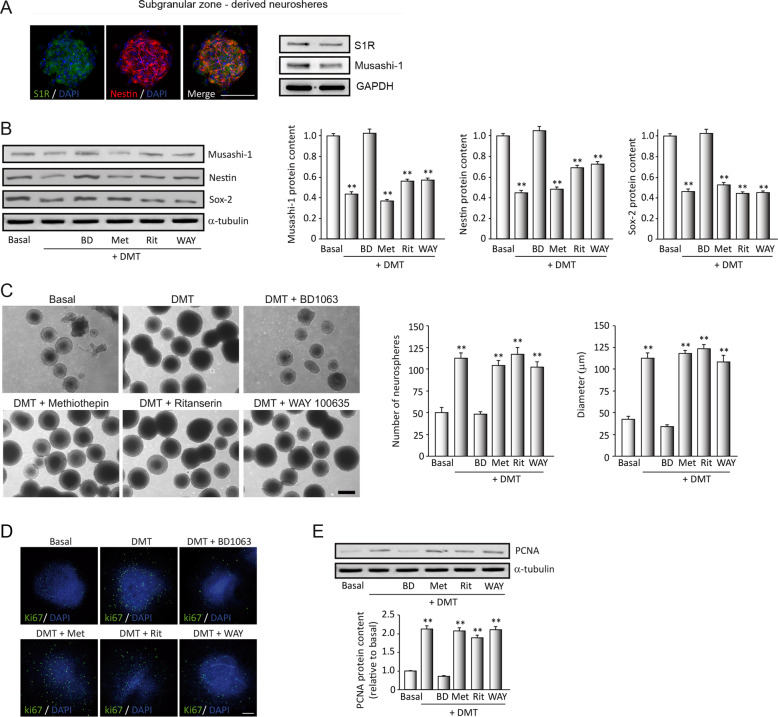
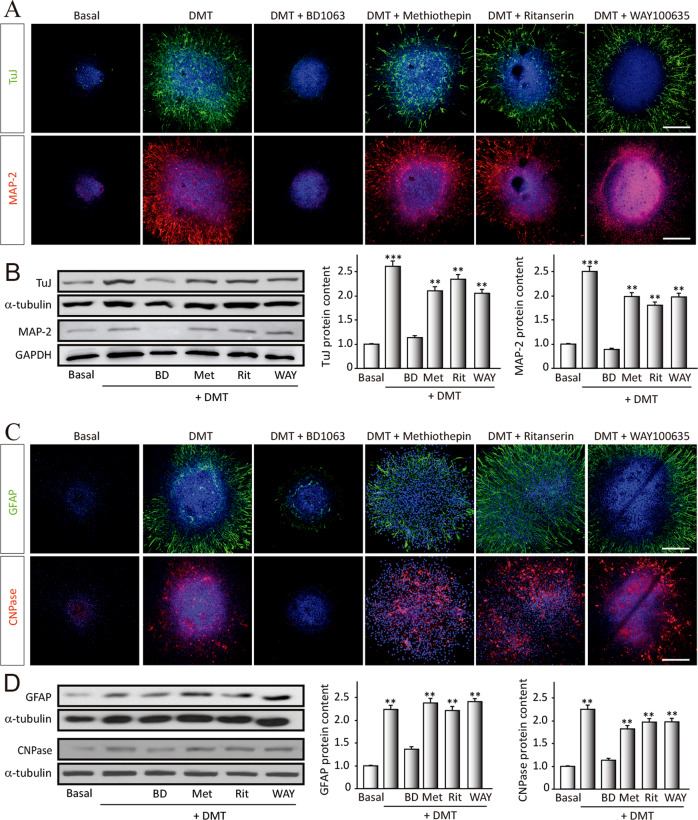
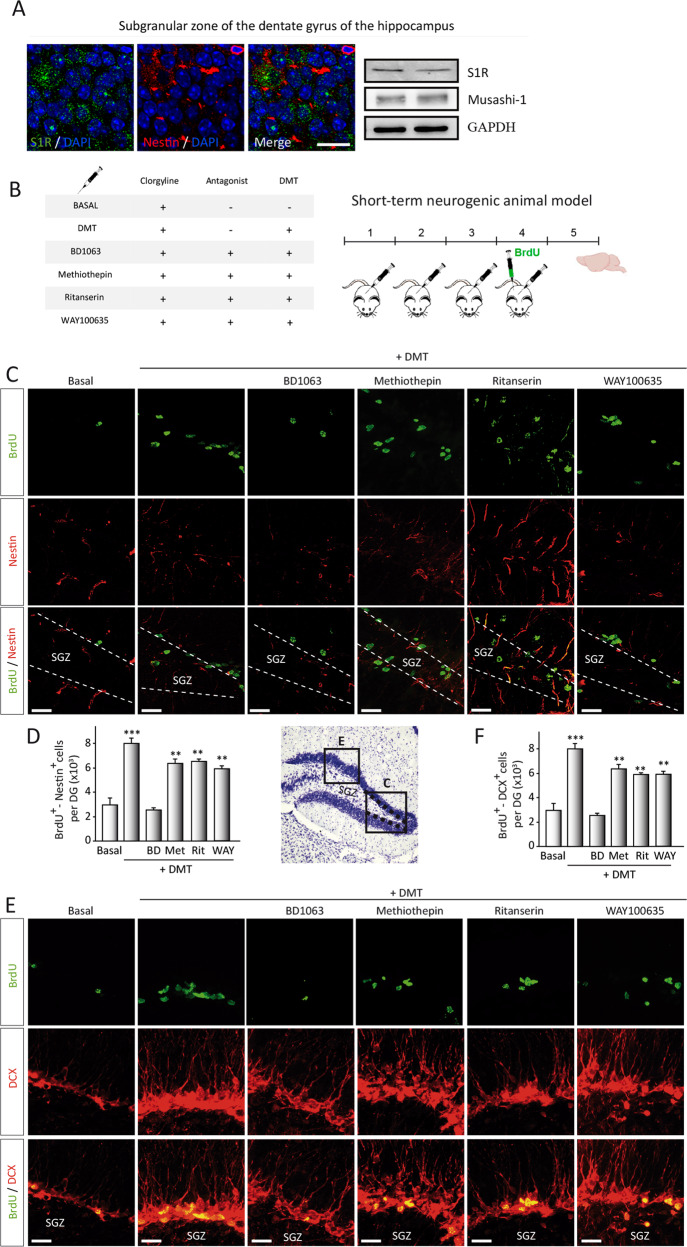
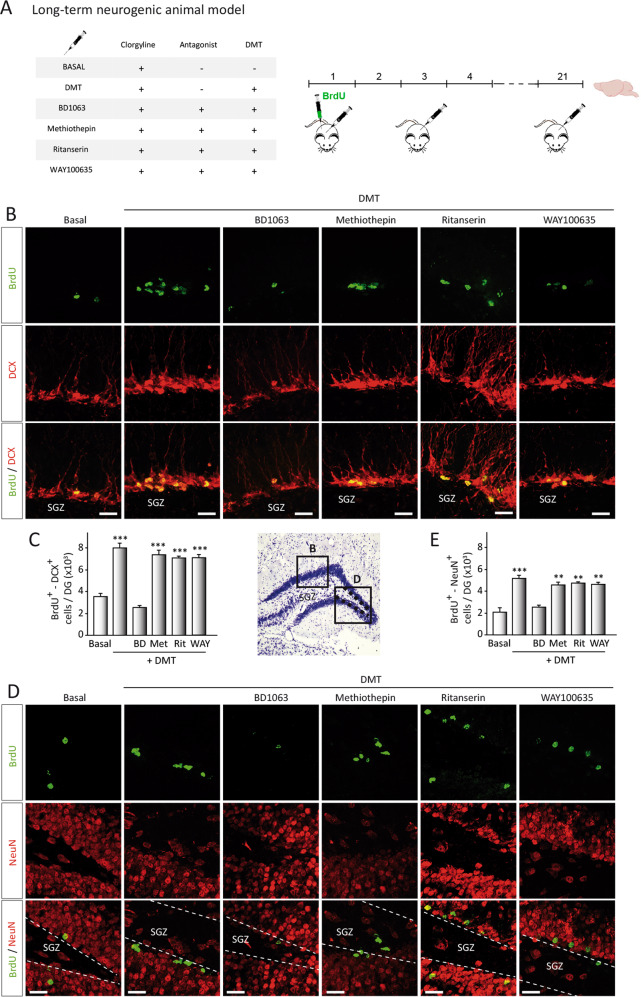
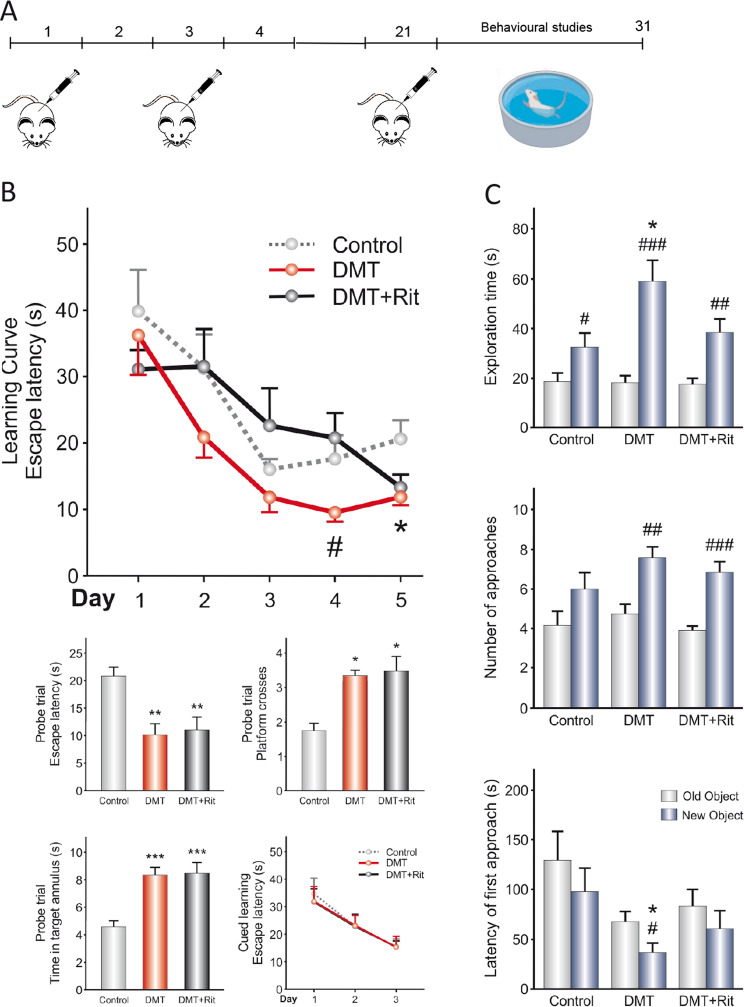
N,N-dimethyltryptamine (DMT) is a component of the ayahuasca brew traditionally used for ritual and therapeutic purposes across several South American countries. Here, we have examined, in vitro and vivo, the potential neurogenic effect of DMT. Our results demonstrate that DMT administration activates the main adult neurogenic niche, the subgranular zone of the dentate gyrus of the hippocampus, promoting newly generated neurons in the granular zone. Moreover, these mice performed better, compared to control non-treated animals, in memory tests, which suggest a functional relevance for the DMT-induced new production of neurons in the hippocampus. Interestingly, the neurogenic effect of DMT appears to involve signaling via sigma-1 receptor (S1R) activation since S1R antagonist blocked the neurogenic effect. Taken together, our results demonstrate that DMT treatment activates the subgranular neurogenic niche regulating the proliferation of neural stem cells, the migration of neuroblasts, and promoting the generation of new neurons in the hippocampus, therefore enhancing adult neurogenesis and improving spatial learning and memory tasks.
Overview
The claims and statistics of this paper haven’t been checked yet.
Free: it reads the open-access text and checks the first 5 claims that cite a source we can check. Create a free account to check every claim.
Integrity signals
Registry
Cites
Statistics
Figures
Verification
Claims the paper makes
The claims and statistics of this paper haven’t been checked yet.
Free: it reads the open-access text and checks the first 5 claims that cite a source we can check. Create a free account to check every claim.
Claims other papers make about this one
Each is checked against this paper’s own text: does it say what the citing paper says it does?
The source backs part of the claim, not all of it — or backs it for a different population, condition or comparison.
In the citing paper
“Repeated daily administration of DMT (1 μM, 7 days) to neural stem cells (n = 6) from adult mice's subgranular zone of the dentate gyrus showed stimulation of proliferation, and differentiation to neurons, astrocytes, and oligodendrocytes (41).”
From Psychedelics and Neuroplasticity: A Systematic Review Unraveling the Biological Underpinnings of Psychedelics. (2021) · cites this paper as [41]
Experimental — accuracy not yet measuredThe source backs part of the claim, not all of it — or backs it for a different population, condition or comparison.
In the citing paper
“Acute effects of repeated administration of DMT and ayahuasca were investigated in vitro, and suggest stimulation of neuroplasticity at a (sub)cellular level (41, 44).”
From Psychedelics and Neuroplasticity: A Systematic Review Unraveling the Biological Underpinnings of Psychedelics. (2021) · cites this paper as [41]
Experimental — accuracy not yet measuredThe source backs part of the claim, not all of it — or backs it for a different population, condition or comparison.
In the citing paper
“Short-term treatment (n = 5) resulted in BrdU+ cells in the hippocampus, indicating enhanced proliferation and migration of neuronal precursors”
From Psychedelics and Neuroplasticity: A Systematic Review Unraveling the Biological Underpinnings of Psychedelics. (2021) · cites this paper as [41]
Experimental — accuracy not yet measuredThe source backs part of the claim, not all of it — or backs it for a different population, condition or comparison.
In the citing paper
“in vitro, animal and human studies have demonstrated how harmine, tetrahydroharmine, harmaline (all three present in B. caapi) and dimethyltryptamine (present in P. viridis) stimulate adult neurogenesis and neuroplasticity, similarly to other serotoninergic psychedelic substances (40–43).”
From Ayahuasca-assisted meaning reconstruction therapy for grief: a non-randomized clinical trial protocol (2025) · cites this paper as [43]
Experimental — accuracy not yet measuredThe cited source says what the claim attributes to it.
In the citing paper
“Evidence from in vitro studies (n = 5) suggests that psychedelics stimulate molecular and cellular neuroplasticity (41–44, 53).”
From Psychedelics and Neuroplasticity: A Systematic Review Unraveling the Biological Underpinnings of Psychedelics. (2021) · cites this paper as [41]
4 more claims about this paper
Create a free account to see every claim other papers make about this one.
Self-check
Percentages, sums and reported differences re-computed from the paper’s own numbers.
The self-check needs the paper’s full text.
Citations
Cites
Fiji: an open-source platform for biological-image analysis
Schindelin, J., Arganda-Carreras, I., Frise, E., Kaynig, V., Longair, M., Pietzsch, T., Preibisch, S., Rueden, C., Saalfeld, S., Schmid, B., et al. (2012) · Nature Methods · doi:10.1038/nmeth.2019 · Cited by 66,890
Gage, F. H. (2000) · Science · doi:10.1126/science.287.5457.1433 · Cited by 4,786
Requirement of hippocampal neurogenesis for the behavioral effects of antidepressants
Santarelli, L., Saxe, M., Gross, C., Surget, A., Battaglia, F., Dulawa, S., Weisstaub, N., Lee, J., Duman, R., Arancio, O., et al. (2003) · Science · doi:10.1126/science.1083328 · Cited by 4,321
Autoradiographic and histological evidence of postnatal hippocampal neurogenesis in rats
Altman, J., & Das, G. D. (1965) · Journal of Comparative Neurology · doi:10.1002/cne.901240303 · Cited by 3,592
Ageing as a risk factor for neurodegenerative disease
Hou, Y., Dan, X., Babbar, M., Wei, Y., Hasselbalch, S. G., Croteau, D. L., & Bohr, V. A. (2019) · Nature Reviews Neurology · doi:10.1038/s41582-019-0244-7 · Cited by 3,310
Functional neurogenesis in the adult hippocampus
van Praag, H., Schinder, A. F., Christie, B. R., Toni, N., Palmer, T. D., & Gage, F. H. (2002) · Nature · doi:10.1038/4151030a · Cited by 2,853
ADULT NEUROGENESIS IN THE MAMMALIAN CENTRAL NERVOUS SYSTEM
Ming, G.-L., & Song, H. (2005) · Annual Review of Neuroscience · doi:10.1146/annurev.neuro.28.051804.101459 · Cited by 1,839
Moreno-Jiménez, E. P., Flor-García, M., Terreros-Roncal, J., Rábano, A., Cafini, F., Pallas-Bazarra, N., Ávila, J., & Llorens-Martín, M. (2019) · Nature Medicine · doi:10.1038/s41591-019-0375-9 · Cited by 1,577
Astroglia induce neurogenesis from adult neural stem cells
Song, H., Stevens, C. F., & Gage, F. H. (2002) · Nature · doi:10.1038/417039a · Cited by 1,452
Human Hippocampal Neurogenesis Persists throughout Aging
Boldrini, M., Fulmore, C. A., Tartt, A. N., Simeon, L. R., Pavlova, I., Poposka, V., Rosoklija, G. B., Stankov, A., Arango, V., Dwork, A. J., et al. (2018) · Cell Stem Cell · doi:10.1016/j.stem.2018.03.015 · Cited by 1,345
Cited by
Items 101–143 of 143
Is there a place for psychedelics in sports practice?
Portes, M. A. M., Werle, I., & Bertoglio, L. J. (2025) · Acta Neuropsychiatrica · doi:10.1017/neu.2025.13 · Cited by 4
Psychoactive substances: novel molecular insights and therapeutic potential for Alzheimer's disease
Fu, C.-L., Li, X., Liu, X., Zheng, Y., Ma, X., Zhang, B., Chen, S. X., Hu, L., Su, S., Wang, X., et al. (2025) · Translational Neurodegeneration · doi:10.1186/s40035-025-00498-1 · Cited by 5
“DMT is a hallucinogenic compound that mediates cognition and perception in humans by targeting the 5-HT 2A R [249, 250].”
McGovern, H. T., Wellman, N., Hutchinson, B. T., Oestreich, L., Cooper, S., Fonzo, G. A., & Doss, M. K. (2026) · Psychopharmacology · doi:10.1007/s00213-026-07163-z · Cited by 2
Batalla, M. (2023) · Science Reviews Biology · doi:10.57098/scirevs.biology.2.2.1 · Cited by 2
“Moreover, previous studies performed in humans 98 , using the traditional medicine of native peoples of South America Ayahuasca which main component is DMT infusion 99 has anti-depressant activity, a therapeutic effect usually linked to hippocampal neurogenesis 100 .”
BackgroundKorsmo, H. W. (2024) · Livers · doi:10.3390/livers4040043 · Cited by 1
Psychedelic studies in nonhuman primates: Past and future
Masthay, J. C., Kwan, A. C., & Chang, S. W. C. (2025) · Molecular Psychiatry · doi:10.1038/s41380-025-03240-5 · Cited by 4
“Both psilocybin [113] and DMT [114] increase neurogenesis in the mouse hippocampus, an effect that correlates with behavioral impacts like extinction of fear conditioning [113] and improved performance (compared with controls) on a memory test [114].”
Effects of ayahuasca on neuropsychological performance and social cognition: A systematic review
de Paula, C. C., Vicentini, A. B., Guerra, L. T. L., Bouso, J. C., Hallak, J. E. C., & SANTOS, R. G. D. (2026) · Journal of Psychopharmacology · doi:10.1177/02698811261424212 · Cited by 1
Psychedelics and longevity: implications for lifespan, healthspan and functional aging
Haden, M., Woods, B., Woods, T., & Tupper, K. W. (2026) · Longevity · doi:10.1080/30653495.2026.2696224 · Cited by 1
Luca, F. D., Brenna, C., Bassi, M., Bilel, S., Gregori, A., Locatelli, C., Neri, L. M., Adami, R., Bottai, D., Marti, M., et al. (2026) · Molecules · doi:10.3390/molecules31142453 · Cited by 1
The DEA report on ayahuasca risks: “Science” in service of prohibition?
Labate, B. C., Ermakova, A. O., Sloshower, J., Coelho, N. L. G., Palhano-Fontes, F., Antunes, H. F., de Assis, G. L., Cavnar, C., de Araújo, D. B., & Ribeiro, S. T. G. (2023) · Journal of Psychedelic Studies · doi:10.1556/2054.2023.00279 · Cited by 2
dos Santos, B. C., Reis, A. K. G., Nucci, R. A. B., Campos, A. C. P., Martins, D. O., Daldegan‐Bueno, D., & Pagano, R. L. (2024) · Brain Behavior and Immunity Integrative · doi:10.1016/j.bbii.2024.100087 · Cited by 1
Greene, S. L. (2025) · Comprehensive analytical chemistry · doi:10.1016/bs.coac.2024.12.002 · Cited by 1
Kelley, D. P., Venable, K. E., Billac, G. B., Destouni, A., Ebenezer, P. J., Stadler, K., Nichols, C. D., Barker, S. A., & Francis, J. (2021) · Research Square · doi:10.21203/rs.3.rs-602961/v1 · Cited by 1
Kelley, D. P. (2022) · Louisiana State University · doi:10.31390/gradschool_dissertations.5761 · Cited by 1
Proceedings 榊原カンファレンス 今回の症例 : 心房細動 : 薬物療法の経過からカテーテルアブレーション実施に至るまで
梅村, 純. (2012) · CORE journal循環器 : current opinion & review for the next stage
Reichelt, A. C., & Dunkley, B. T. (2022) · PsyArXiv (OSF Preprints) · doi:10.31234/osf.io/xa62p · Cited by 1
Colonic diverticular disease as a risk factor for neurodegenerative and associated diseases
Paley, E. L. (2023) · Elsevier eBooks · doi:10.1016/b978-0-443-19122-0.00023-6
Effects of psychedelics on neurogenesis and brain plasticity: A systematic reviewPreprint
da Cruz, R. V. L., Leão, R. N., & Moulin, T. C. (2023) · bioRxiv (Cold Spring Harbor Laboratory) · doi:10.1101/2023.07.19.549676
Dubbini, A. (2023) · OBM Integrative and Complementary Medicine · doi:10.21926/obm.icm.2303035
Totes and trauma 3: a schematic for trauma persistence
Patterson, K. E. (2023) · Kybernetes · doi:10.1108/k-05-2023-0736
Schimmelpfennig, J., & Jankowiak-Siuda, K. (2023) · Pharmacotherapy in Psychiatry and Neurology · doi:10.5114/fpn.2023.131979 · Cited by 1
Vilaró, V. M. V., & Agudelo, C. A. M. (2024) · Revista Latinoamericana de Derecho Social · doi:10.22201/iij.24487899e.2024.38.18939 · Cited by 1
Tryptamine, stem cell/progenitor protein biosynthesis, and aminoacyl-tRNA biosynthesis
Paley, E. L. (2024) · Elsevier eBooks · doi:10.1016/b978-0-443-28830-2.00009-9
Philological analysis of ancient Egyptian recipes supported by modern chemical profiling approaches
Russell, J., Kim, H. K., Korthout, H. A. A. J., Naimi, A., Reher, R., van Duijn, B., Wang, M., & Pommerening, T. (2025) · Journal of Ethnopharmacology · doi:10.1016/j.jep.2025.120498
Salles, G., Almeida, C. A. D. F., Alves, I. D. C., Braz, G. D. A., Lopes, F. B., Fernandes, J. P. S., Chagas‐Paula, D. A., Neto, A. K., Alves, M. F., Bruno, V., et al. (2025) · Archives of Toxicology · doi:10.1007/s00204-025-04208-8 · Cited by 1
“Moreover, these concentrations are consistent with previous studies reporting that 1 µM DMT modulates adult neurogenesis in neural stem cells (Morales-Garcia et al. 2020) and 90 µM DMT promotes functional and structural neuroplasticity in cortical neurons (Ly et al. 2018).”
Mahapatra, C., Naik, P., Swain, S. K., & Mohapatra, P. P. (2024) · Figshare · doi:10.6084/m9.figshare.26575538
Cheng, D., Lei, Z.-G., Chu, K., Lam, O. J. H., Chiang, C. Y., & Zhang, Z.-J. (2024) · Figshare · doi:10.6084/m9.figshare.25734511
Mahapatra, C., Naik, P., Swain, S. K., & Mohapatra, P. P. (2024) · Figshare · doi:10.6084/m9.figshare.26575541
Mahapatra, C., Naik, P., Swain, S. K., & Mohapatra, P. P. (2024) · Figshare · doi:10.6084/m9.figshare.26575544
Mahapatra, C., Naik, P., Swain, S. K., & Mohapatra, P. P. (2024) · Figshare · doi:10.6084/m9.figshare.26575532
Mahapatra, C., Naik, P., Swain, S. K., & Mohapatra, P. P. (2024) · Figshare · doi:10.6084/m9.figshare.26575550
Mahapatra, C., Naik, P., Swain, S. K., & Mohapatra, P. P. (2024) · Figshare · doi:10.6084/m9.figshare.26575535
Mahapatra, C., Naik, P., Swain, S. K., & Mohapatra, P. P. (2024) · Figshare · doi:10.6084/m9.figshare.26575547
Successful Treatment of Exploding Head Syndrome With Ketamine
Haruyunyan, L., Liester, M., & Liang, B. (2025) · Cureus · doi:10.7759/cureus.97558
“Mice models have shown that σ 1 receptor activation is involved in this neurogenic effect, which leads to the downstream effects of improving adult neurogenesis and enhancing memory tasks and spatial learning [8].”
Inserra, A., Murray, C. J., Campanale, A., VanderZwaag, J., & Tremblay, M. (2026) · Frontiers in Neuroscience · doi:10.3389/fnins.2025.1690318 · Cited by 1
Personality, not cognition, distinguishes chronic ayahuasca and cannabis users from non-users
Bouso, J. C., Andión, Ó., Fondevila, S., González, D., Alcázar‐Córcoles, M. Á., Kohek, M., SANTOS, R. G. D., Hallak, J. E. C., & Riba, J. (2026) · European Neuropsychopharmacology · doi:10.1016/j.euroneuro.2026.112782
Bouso, J. C., Andión, Ó., Cantillo, J., Pérez, I. H., Farré, M., Obiols, J. E., & González, D. (2026) · Psychedelics · doi:10.1016/j.psyche.2026.100018
Lodetti, G., de Bitencourt, R. M., Inserra, A., Redivo, H., Teixeira, A. G., de Farias, A. C. S., Pickler, K. D. P., Rohling, J. P. V., Endler, A. T., Zampronio, E. P., et al. (2026) · Progress in Neuro-Psychopharmacology and Biological Psychiatry · doi:10.1016/j.pnpbp.2026.111817
Proliferative Effects of the Psychedelic N,N -Dimethyltryptamine (DMT) in Human Neural Stem Cells
Salerno, J. A., Dominguez, E. R., Karmirian, K., Arrais, B. A. B. M. S., Alves, J., Erjautz, G., Kroening, K., Souza, L. R. Q., Ornelas, I. M., & Rehen, S. K. (2026) · ACS Chemical Neuroscience · doi:10.1021/acschemneuro.6c00209
Psicodélico presente na ayahuasca pode ajudar o cérebro a produzir novos neurônios
Rehen, S. K., & Salerno, J. A. (2026) · doi:10.64628/ade.j33fcjkty
Fonseca, F. C. D. S., Machado, D. P. D., Cavalcante, A. D., Perez, A. C., Romero, T. R. L., & Duarte, I. D. G. (2026) · Journal of Pain Research and Management · doi:10.46439/painresearch.2.015 · Cited by 1
King, A., Hardy, M. S., Rhee, T. G., & Wilkinson, S. T. (2026) · CNS Drugs · doi:10.1007/s40263-026-01330-8
“DMT has also been shown to quickly induce neuroplasticity and neurogenesis, even at low doses [40].”
Daneluz, D. M., dos Santos, A. S., de Melo, S. R., de Oliveira, R. M. W., & Stern, C. A. J. (2026) · Molecular Neurobiology · doi:10.1007/s12035-026-06264-2
“For instance, administration of 2 mg/kg DMT (i.p.) activated the neurogenic niche in the subgranular zone of DG in mice, and repeated administration of the same dose on alternate days for 21 days further increased neurogenesis in this region [34].”
Metadata
- Authors
- Morales-Garcia, J. A., Calleja-Conde, J., Lopez-Moreno, J. A., Alonso-Gil, S., Sanz-SanCristobal, M., Riba, J., & Perez-Castillo, A.
- Affiliations
- Universidad Complutense de Madrid (ES)
- Corresponding author
- Morales-Garcia, Jose A.
- Venue
- Translational Psychiatry
- Published
- 2020-09-28
- Volume
- 10
- Issue
- 1
- Pages
- 331-331
- ISSN
- 2158-3188 (ISSN-L)
- PMC
- PMC7522265
- OpenAlex
- W3090852378
- Semantic Scholar
- b63ca56e33c732c8d941f367f9b98074bc039ae6
- Cited by
- 138
- References
- 87
- Citations by year
- 2026: 15 · 2025: 23 · 2024: 33 · 2023: 24 · 2022: 29 · 2021: 11 · 2020: 1
- FWCI
- 6.39
- Type
- journal article
- Language
- en
- Open access
- gold
- doi.org
- Licence
- cc-by
- creativecommons.org/licenses/by/4.0 (tdm)
- creativecommons.org/licenses/by/4.0 (vor)
- Locations
- Translational Psychiatry (publishedVersion, cc-by)
- PubMed Central (publishedVersion, cc-by)
- PubMed (publishedVersion)
- Research Publications (Maastricht University) (publishedVersion, cc-by)
- Research Publications (Maastricht University) (submittedVersion, other-oa)
- Funders
- Ministerio de Economía y Competitividad (SAF2017-85199-P)
- EC | European Regional Development Fund
- Topics
- Life Sciences › Neuroscience › Developmental Neuroscience › Neurogenesis and neuroplasticity mechanisms
- Social Sciences › Psychology › Clinical Psychology › Psychedelics and Drug Studies
- Life Sciences › Pharmacology, Toxicology and Pharmaceutics › Pharmacology › Pharmacological Receptor Mechanisms and Effects
- Keywords
- N,N-dimethyltryptamine, ayahuasca, adult neurogenesis, dentate gyrus, subgranular zone, sigma-1 receptor, neural stem cells, neuroblast migration, spatial learning and memory, hallucinogens
- MeSH terms
- Animals, N,N-Dimethyltryptamine, Tea, Banisteriopsis, Mice, Neurogenesis, Neural Stem Cells
About these checks
Registry, retraction, Cites and statistics results are computed, not judged, with one exception: a printed reference that no index lists is read once by a model before it counts as a citation error. Claims are extracted by a model and kept only when their quote appears verbatim in the text; each cited source is then checked, with a model’s help, for whether it says what the claim relies on. Those verdicts can be wrong — read the claim’s quote and the cited source before relying on one.
Statistics and arithmetic are recomputed, not judged.
Confidence bands are shown only for fields calibrated on our annotated test set. None is calibrated yet, so no band is shown.
What counts as a claim ›How we measure confidence ›How we check this ›
Are you an author, or do you see a problem with this page? Request a review
Data sources
Bibliographic data: Semantic Scholar, OpenAlex, Crossref.
Contains information from the Semantic Scholar Academic Graph Datasets, made available under the ODC Attribution License (ODC-BY 1.0).
Semantic Scholar’s data is described in: Kinney, R., et al. (2023). The Semantic Scholar Open Data Platform. arXiv:2301.10140.
