

Defining data-driven subgroups of obsessive–compulsive disorder with different treatment responses based on resting-state functional connectivity
Open accessThe DOI matches its Crossref record; 81 of the 81 references it cites were found in a registry or an index.
Abstract
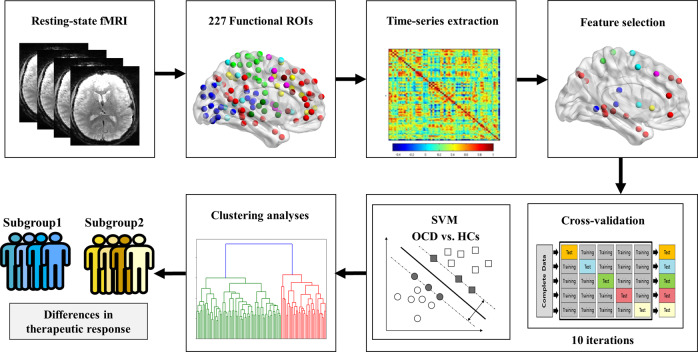
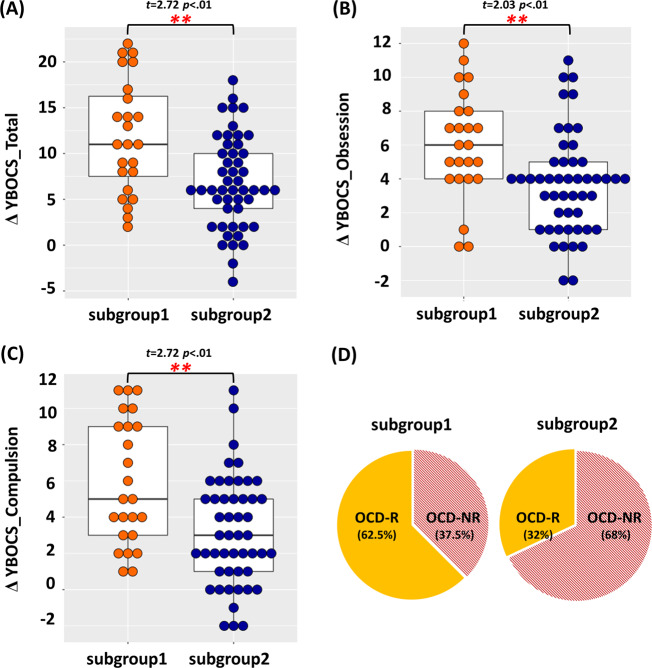
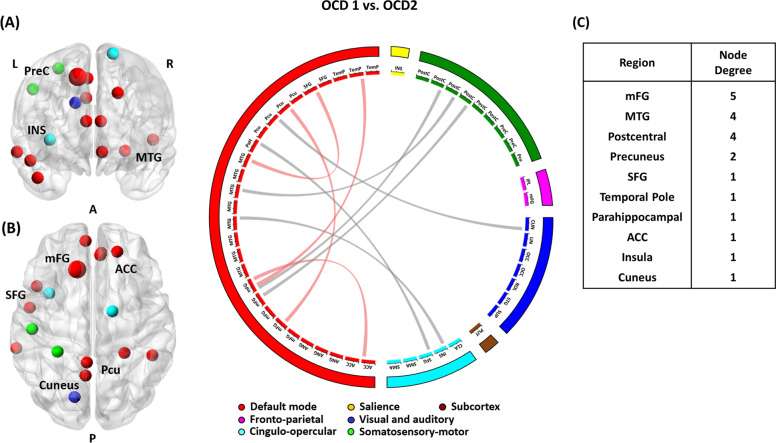
Characterization of obsessive–compulsive disorder (OCD), like other psychiatric disorders, suffers from heterogeneities in its symptoms and therapeutic responses, and identification of more homogeneous subgroups may help to resolve the heterogeneity. We aimed to identify the OCD subgroups based on resting-state functional connectivity (rsFC) and to explore their differences in treatment responses via a multivariate approach. From the resting-state functional MRI data of 107 medication-free OCD patients and 110 healthy controls (HCs), we selected rsFC features, which discriminated OCD patients from HCs via support vector machine (SVM) analyses. With the selected brain features, we subdivided OCD patients into subgroups using hierarchical clustering analyses. We identified 35 rsFC features that achieved a high sensitivity (82.74%) and specificity (76.29%) in SVM analyses. The OCD patients were subdivided into two subgroups, which did not show significant differences in their demographic and clinical backgrounds. However, one of the OCD subgroups demonstrated more impaired rsFC that was involved either within the default mode network (DMN) or between DMN brain regions and other network regions. This subgroup also showed both lower improvements in symptom severity in the 16-week follow-up visit and lower responder percentage than the other subgroup. Our results highlight that not only abnormalities within the DMN but also aberrant rsFC between the DMN and other networks may contribute to the treatment response and support the importance of these neurobiological alterations in OCD patients. We suggest that abnormalities in these connectivity may play predictive biomarkers of treatment response, and aid to build more optimal treatment strategies.
Overview
The claims and statistics of this paper haven’t been checked yet.
Free: it reads the open-access text and checks the first 5 claims that cite a source we can check. Create a free account to check every claim.
Integrity signals
Registry
Cites
Statistics
Figures
Verification
Claims the paper makes
The claims and statistics of this paper haven’t been checked yet.
Free: it reads the open-access text and checks the first 5 claims that cite a source we can check. Create a free account to check every claim.
Claims other papers make about this one
Each is checked against this paper’s own text: does it say what the citing paper says it does?
The source backs part of the claim, not all of it — or backs it for a different population, condition or comparison.
In the citing paper
“Other studies have attempted to identify predictors of therapeutic response in OCD patients, but the wide diversity of methodologies and outcomes makes it difficult to identify precise and reproducible markers of resistance [47–53].”
From Error-Related Brain Potentials as Biomarkers of Pathology Severity and Treatment Resistance in Patients With Obsessive-Compulsive Disorder (2026) · cites this paper as [48]
Experimental — accuracy not yet measured
Self-check
Percentages, sums and reported differences re-computed from the paper’s own numbers.
The self-check needs the paper’s full text.
Citations
Cites
Scikit-learn: Machine Learning in Python
Pedregosa, F., Varoquaux, G., Gramfort, A., Michel, V., Thirion, B., Grisel, O., Blondel, M., Müller, A., Nothman, J., Louppe, G., et al. (2012) · arXiv · doi:10.48550/arxiv.1201.0490 · Cited by 71,016
Cortes, C., & Vapnik, V. (1995) · Machine Learning · doi:10.1007/bf00994018 · Cited by 59,421
Cortes, C., & Vapnik, V. (1995) · Machine-mediated learning · doi:10.1023/a:1022627411411 · Cited by 48,445
Dermatologist-level classification of skin cancer with deep neural networks
Esteva, A., Kuprel, B., Novoa, R. A., Ko, J., Swetter, S. M., Blau, H. M., & Thrun, S. (2017) · Nature · doi:10.1038/nature21056 · Cited by 14,362
The Elements of Statistical Learning: Data Mining, Inference, and Prediction
John Lu, Z. Q. (2010) · Journal of the Royal Statistical Society Series A: Statistics in Society · doi:10.1111/j.1467-985x.2010.00646_6.x · Cited by 12,390
Complex brain networks: graph theoretical analysis of structural and functional systems
Bullmore, E., & Sporns, O. (2009) · Nature Reviews Neuroscience · doi:10.1038/nrn2575 · Cited by 11,820
The Yale-Brown Obsessive Compulsive Scale: I. Development, Use, and Reliability
Goodman, W. K. (1989) · Archives of General Psychiatry · doi:10.1001/archpsyc.1989.01810110048007 · Cited by 7,712
Conn : A Functional Connectivity Toolbox for Correlated and Anticorrelated Brain Networks
Whitfield-Gabrieli, S., & Nieto-Castanon, A. (2012) · Brain Connectivity · doi:10.1089/brain.2012.0073 · Cited by 4,885
A component based noise correction method (CompCor) for BOLD and perfusion based fMRI
Behzadi, Y., Restom, K., Liau, J., & Liu, T. T. (2007) · NeuroImage · doi:10.1016/j.neuroimage.2007.04.042 · Cited by 4,502
What is a support vector machine?
Noble, W. S. (2006) · Nature Biotechnology · doi:10.1038/nbt1206-1565 · Cited by 4,301
circlize implements and enhances circular visualization in R
Gu, Z., Gu, L., Eils, R., Schlesner, M., & Brors, B. (2014) · Bioinformatics · doi:10.1093/bioinformatics/btu393 · Cited by 4,246
Functional Network Organization of the Human Brain
Power, J. D., Cohen, A. L., Nelson, S. M., Wig, G. S., Barnes, K. A., Church, J. A., Vogel, A. C., Laumann, T. O., Miezin, F. M., Schlaggar, B. L., et al. (2011) · Neuron · doi:10.1016/j.neuron.2011.09.006 · Cited by 4,124
BrainNet Viewer: A Network Visualization Tool for Human Brain Connectomics
Xia, M., Wang, J., & He, Y. (2013) · PLoS ONE · doi:10.1371/journal.pone.0068910 · Cited by 4,106
The epidemiology of obsessive-compulsive disorder in the National Comorbidity Survey Replication
Ruscio, A. M., Stein, D. J., Chiu, W. T., & Kessler, R. C. (2010) · Molecular Psychiatry · doi:10.1038/mp.2008.94 · Cited by 2,771
Functional-anatomic fractionation of the brain’s default network
Andrews-Hanna, J. R., Reidler, J. S., Sepulcre, J., Poulin, R., & Buckner, R. L. (2010) · Neuron · doi:10.1016/j.neuron.2010.02.005 · Cited by 2,767
Machine learning for neuroimaging with scikit-learn
Abraham, A., Pedregosa, F., Eickenberg, M., Gervais, P., Mueller, A., Kossaifi, J., Gramfort, A., Thirion, B., & Varoquaux, G. (2014) · Frontiers in Neuroinformatics · doi:10.3389/fninf.2014.00014 · Cited by 2,384
The influence of head motion on intrinsic functional connectivity MRI
Van Dijk, K. R. A., Sabuncu, M. R., & Buckner, R. L. (2012) · NeuroImage · doi:10.1016/j.neuroimage.2011.07.044 · Cited by 2,344
Prediction of individual brain maturity using fMRI
Dosenbach, N. U. F., Nardos, B., Cohen, A. L., Fair, D. A., Power, J. D., Church, J. A., Nelson, S. M., Wig, G. S., Vogel, A. C., Lessov-Schlaggar, C. N., et al. (2010) · Science · doi:10.1126/science.1194144 · Cited by 2,183
Resting-state connectivity biomarkers define neurophysiological subtypes of depression
Drysdale, A. T., Grosenick, L., Downar, J., Dunlop, K., Mansouri, F., Meng, Y., Fetcho, R. N., Zebley, B., Oathes, D. J., Etkin, A., et al. (2017) · Nature Medicine · doi:10.1038/nm.4246 · Cited by 2,170
Nonlinear spatial normalization using basis functions
Ashburner, J., & Friston, K. J. (1999) · Human Brain Mapping · doi:10.1002/(sici)1097-0193(1999)7:4<254::aid-hbm4>3.0.co;2-g · Cited by 1,884
Machine learning classifiers and fMRI: A tutorial overview
Pereira, F., Mitchell, T., & Botvinick, M. (2009) · NeuroImage · doi:10.1016/j.neuroimage.2008.11.007 · Cited by 1,624
Practice Guideline for the Treatment of Patients With Obsessive-Compulsive Disorder
(2008) · APA Practice Guidelines for the Treatment of Psychiatric Disorders: Comprehensive Guidelines and Guideline Watches · doi:10.1176/appi.books.9780890423363.149114 · Cited by 1,028
The role of default network deactivation in cognition and disease
Anticevic, A., Cole, M. W., Murray, J. D., Corlett, P. R., Wang, X.-J., & Krystal, J. H. (2012) · Trends in Cognitive Sciences · doi:10.1016/j.tics.2012.10.008 · Cited by 978
Hallquist, M. N., Hwang, K., & Luna, B. (2013) · NeuroImage · doi:10.1016/j.neuroimage.2013.05.116 · Cited by 753
The Cross National Epidemiology of obsessive-compulsive disorder
Weisman, M. M., Bland, R. C., CANINO, G. J., Greenwald, S., Hwu, H., Lee, C. K., Newman, S. C., Browne, M. A. O., Rubio-Stipec, M., WICKRAMARATNE, P. J., et al. (1994) · Max Planck Institute for Plasma Physics · Cited by 688
Weissman, M. M., Bland, R. C., CANINO, G. J., Greenwald, S., Hwu, H., Lee, C. K., Newman, S. C., Oakley‐Browne, M., Rubio-Stipec, M., & WICKRAMARATNE, P. J. (1994) · PubMed · Cited by 648
Methods for cleaning the BOLD fMRI signal
Caballero-Gaudes, C., & Reynolds, R. C. (2017) · NeuroImage · doi:10.1016/j.neuroimage.2016.12.018 · Cited by 542
Obsessive-Compulsive Disorder: Advances in Diagnosis and Treatment
Hirschtritt, M. E., Bloch, M. H., & Mathews, C. A. (2017) · JAMA · doi:10.1001/jama.2017.2200 · Cited by 493
Slice-timing effects and their correction in functional MRI
Sladky, R., Friston, K. J., Tröstl, J., Cunnington, R., Moser, E., & Windischberger, C. (2011) · NeuroImage · doi:10.1016/j.neuroimage.2011.06.078 · Cited by 453
Obsessive-Compulsive Disorder as a Disturbance of Security Motivation.
Szechtman, H., & Woody, E. (2004) · Psychological Review · doi:10.1037/0033-295x.111.1.111 · Cited by 370
Shared Neural Circuits for Mentalizing about the Self and Others
Lombardo, M. V., Chakrabarti, B., Bullmore, E. T., Wheelwright, S. J., Sadek, S. A., Suckling, J., MRC AIMS Consortium, & Baron-Cohen, S. (2010) · Journal of Cognitive Neuroscience · doi:10.1162/jocn.2009.21287 · Cited by 358
Chen, C.-H., Ridler, K., Suckling, J., Williams, S., Fu, C. H. Y., Merlo-Pich, E., & Bullmore, E. (2007) · Biological Psychiatry · doi:10.1016/j.biopsych.2006.09.018 · Cited by 354
Neurobiological basis of head motion in brain imaging
Zeng, L.-L., Wang, D., Fox, M. D., Sabuncu, M., Hu, D., Ge, M., Buckner, R. L., & Liu, H. (2014) · Proceedings of the National Academy of Sciences · doi:10.1073/pnas.1317424111 · Cited by 285
Anticevic, A., Hu, S., Zhang, S., Savic, A., Billingslea, E., Wasylink, S., Repovs, G., Cole, M. W., Bednarski, S., Krystal, J. H., et al. (2014) · Biological Psychiatry · doi:10.1016/j.biopsych.2013.10.021 · Cited by 268
Predicting treatment response in social anxiety disorder from functional magnetic resonance imaging.
Doehrmann, O., Ghosh, S. S., Polli, F. E., Reynolds, G. O., Horn, F., Keshavan, A., Triantafyllou, C., Saygin, Z. M., Whitfield-Gabrieli, S., Hofmann, S. G., et al. (2013) · JAMA Psychiatry · doi:10.1001/2013.jamapsychiatry.5 · Cited by 262
Stern, E. R., Fitzgerald, K. D., Welsh, R. C., Abelson, J. L., & Taylor, S. F. (2012) · PLoS ONE · doi:10.1371/journal.pone.0036356 · Cited by 245
Gürsel, D. A., Avram, M., Sorg, C., Brandl, F., & Koch, K. (2018) · Neuroscience & Biobehavioral Reviews · doi:10.1016/j.neubiorev.2018.01.016 · Cited by 231
Perani, D., Garibotto, V., Gorini, A., Moresco, R. M., Henin, M., Panzacchi, A., Matarrese, M., Carpinelli, A., Bellodi, L., & Fazio, F. (2008) · NeuroImage · doi:10.1016/j.neuroimage.2008.04.233 · Cited by 219
Treatment Response, Symptom Remission, and Wellness in Obsessive-Compulsive Disorder
Farris, S. G., McLean, C. P., Van Meter, P. E., Simpson, H. B., & Foa, E. B. (2013) · The Journal of Clinical Psychiatry · doi:10.4088/jcp.12m07789 · Cited by 216
Wu, Q., Li, D., Kuang, W., Zhang, T., Lui, S., Huang, X., Chan, R. C. K., Kemp, G. J., & Gong, Q. (2011) · Human Brain Mapping · doi:10.1002/hbm.21108 · Cited by 212
Dold, M., Aigner, M., Lanzenberger, R., & Kasper, S. (2013) · International Journal of Neuropsychopharmacology · doi:10.1017/s1461145712000740 · Cited by 211
Whalen, P. J., Johnstone, T., Somerville, L. H., Nitschke, J. B., Polis, S., Alexander, A. L., Davidson, R. J., & Kalin, N. H. (2008) · Biological Psychiatry · doi:10.1016/j.biopsych.2007.08.019 · Cited by 210
Bruss, G. S., Gruenberg, A. M., Goldstein, R. D., & Barber, J. P. (1994) · Psychiatry Research · doi:10.1016/0165-1781(94)90110-4 · Cited by 193
Zhang, X., Mormino, E. C., Sun, N., Sperling, R. A., Sabuncu, M. R., Yeo, B. T. T., Initiative, T. A. D. N., Weiner, M. W., Aisen, P., Weiner, M., et al. (2016) · Proceedings of the National Academy of Sciences · doi:10.1073/pnas.1611073113 · Cited by 178
Yan, W., Calhoun, V., Song, M., Cui, Y., Yan, H., Liu, S., Fan, L., Zuo, N., Yang, Z., Xu, K., et al. (2019) · EBioMedicine · doi:10.1016/j.ebiom.2019.08.023 · Cited by 169
Knopp, J., Knowles, S., Bee, P., Lovell, K., & Bower, P. (2013) · Clinical Psychology Review · doi:10.1016/j.cpr.2013.08.008 · Cited by 164
Shin, D.-J., Jung, W. H., He, Y., Wang, J., Shim, G., Byun, M. S., Jang, J. H., Kim, S. N., Lee, T. Y., Park, H. Y., et al. (2014) · Biological Psychiatry · doi:10.1016/j.biopsych.2013.09.002 · Cited by 162
Self-citationMachine Learning for Neuroimaging with Scikit-Learn
Abraham, A., Pedregosa, F., Eickenberg, M., Gervais, P., Muller, A., Kossaifi, J., Gramfort, A., Thirion, B., & Varoquaux, G. P. (2014) · arXiv (Cornell University) · doi:10.48550/arxiv.1412.3919 · Cited by 158
Strother, S. C., Conte, S. L., Hansen, L. K., Anderson, J., Zhang, J., Pulapura, S. K., & Rottenberg, D. A. (2004) · NeuroImage · doi:10.1016/j.neuroimage.2004.07.022 · Cited by 155
Reggente, N., Moody, T. D., Morfini, F., Sheen, C., Rissman, J., O’Neill, J., & Feusner, J. D. (2018) · Proceedings of the National Academy of Sciences · doi:10.1073/pnas.1716686115 · Cited by 154
Fitzgerald, K. D., Stern, E. R., Angstadt, M., Nicholson-Muth, K. C., Maynor, M. R., Welsh, R. C., Hanna, G. L., & Taylor, S. F. (2010) · Biological Psychiatry · doi:10.1016/j.biopsych.2010.08.018 · Cited by 152
Cross-National Epidemiology of Obsessive-Compulsive Disorder
Weissman, M. M. (1998) · CNS Spectrums · doi:10.1017/s1092852900007136 · Cited by 150
Antidepressant and Double Antidepressant Treatment for the Affective Disorder of Epilepsy
Blumer, D. (1997) · The Journal of Clinical Psychiatry · doi:10.4088/jcp.v58n0101 · Cited by 146
Drug treatment of obsessive-compulsive disorder
Kellner, M. (2010) · Dialogues in Clinical Neuroscience · doi:10.31887/dcns.2010.12.2/mkellner · Cited by 145
Jang, J. H., Kim, J., Jung, W. H., Choi, J., Jung, M. H., Lee, J., Choi, C., Kang, D., & Kwon, J. S. (2010) · Neuroscience Letters · doi:10.1016/j.neulet.2010.03.031 · Cited by 125
Self-citationDefault mode network subsystem alterations in obsessive–compulsive disorder
Beucke, J. C., Sepulcre, J., Eldaief, M. C., Sebold, M., Kathmann, N., & Kaufmann, C. (2014) · British Journal of Psychiatry · doi:10.1192/bjp.bp.113.137380 · Cited by 112
Obsessive compulsive disorder: The hidden epidemic
Hollander, E. (1997) · PsycEXTRA Dataset · doi:10.1037/e542002004-001 · Cited by 90
Olatunji, B. O., Ferreira-Garcia, R., Caseras, X., Fullana, M. A., Wooderson, S., Speckens, A., Lawrence, N., Giampietro, V., Brammer, M. J., Phillips, M. L., et al. (2014) · Psychological Medicine · doi:10.1017/s0033291713002766 · Cited by 81
Müller, M. J., & Dragičević, A. (2002) · Journal of Affective Disorders · doi:10.1016/s0165-0327(02)00097-6 · Cited by 76
Moran, J. M., Lee, S. M., & Gabrieli, J. D. E. (2011) · Journal of Cognitive Neuroscience · doi:10.1162/jocn.2010.21580 · Cited by 75
Hoexter, M. Q., Dougherty, D. D., Shavitt, R. G., D′Alcante, C. C., Duran, F., Lopes, A. C., Diniz, J. B., Batistuzzo, M. C., Evans, K. C., Bressan, R. A., et al. (2012) · European Neuropsychopharmacology · doi:10.1016/j.euroneuro.2012.06.014 · Cited by 73
Göttlich, M., Krämer, U. M., Kordon, A., Hohagen, F., & Zurowski, B. (2015) · Biological Psychology · doi:10.1016/j.biopsycho.2015.09.004 · Cited by 73
A Neural Marker of Obsessive-Compulsive Disorder from Whole-Brain Functional Connectivity
Takagi, Y., Sakai, Y., Lisi, G., Yahata, N., Abe, Y., Nishida, S., Nakamae, T., Morimoto, J., Kawato, M., Narumoto, J., et al. (2017) · Scientific Reports · doi:10.1038/s41598-017-07792-7 · Cited by 71
Predictors of treatment response to fluvoxamine in obsessive–compulsive disorder: An fMRI study
Sanematsu, H., Nakao, T., Yoshiura, T., Nabeyama, M., Togao, O., Tomita, M., Masuda, Y., Nakatani, E., Nakagawa, A., & Kanba, S. (2010) · Journal of Psychiatric Research · doi:10.1016/j.jpsychires.2009.08.007 · Cited by 68
Default mode network deactivation during emotion processing predicts early antidepressant response
Spies, M., Kraus, C., Geissberger, N., Auer, B., Klöbl, M., Tik, M., Stürkat, I.-L., Hahn, A., Woletz, M., Pfabigan, D. M., et al. (2017) · Translational Psychiatry · doi:10.1038/tp.2016.265 · Cited by 68
A 2012 evidence-based algorithm for the pharmacotherapy for obsessive-compulsive disorder
Stein, D. J., Koen, N., Fineberg, N., Fontenelle, L. F., Matsunaga, H., Osser, D., & Simpson, H. B. (2012) · Current Psychiatry Reports · doi:10.1007/s11920-012-0268-9 · Cited by 65
Klumpp, H., Keutmann, M. K., Fitzgerald, D. A., Shankman, S. A., & Phan, K. L. (2014) · Biology of Mood & Anxiety Disorders · doi:10.1186/s13587-014-0014-5 · Cited by 65
Default network connectivity as a vulnerability marker for obsessive compulsive disorder
Peng, Z. W., Xu, T., He, Q. H., Shi, C. Z., Wei, Z., Miao, G. D., Jing, J., Lim, K. O., Zuo, X. N., & Chan, R. C. K. (2014) · Psychological Medicine · doi:10.1017/s0033291713002250 · Cited by 63
Yun, J., Jang, J. H., Kim, S. N., Jung, W. H., & Kwon, J. S. (2015) · Progress in Neuro-Psychopharmacology and Biological Psychiatry · doi:10.1016/j.pnpbp.2015.06.009 · Cited by 57
Self-citationPatterns of default mode network deactivation in obsessive compulsive disorder
Gonçalves, Ó. F., Soares, J. M., Carvalho, S., Leite, J., Ganho-Ávila, A., Fernandes-Gonçalves, A., Pocinho, F., Carracedo, A., & Sampaio, A. (2017) · Scientific Reports · doi:10.1038/srep44468 · Cited by 57
Brennan, B. P., Wang, D., Li, M., Perriello, C., Ren, J., Elias, J. A., Van Kirk, N. P., Krompinger, J. W., Pope, H. G., Haber, S. N., et al. (2019) · Biological Psychiatry: Cognitive Neuroscience and Neuroimaging · doi:10.1016/j.bpsc.2018.07.014 · Cited by 54
Predictors of response to serotonin reuptake inhibitors in obsessive-compulsive disorder
Hazari, N., Narayanaswamy, J. C., & Arumugham, S. S. (2016) · Expert Review of Neurotherapeutics · doi:10.1080/14737175.2016.1199960 · Cited by 52
Obsessive-Compulsive Disorder:Boundary Issues
Fineberg, N. A., Saxena, S., Zohar, J., & Craig, K. J. (2007) · CNS Spectrums · doi:10.1017/s1092852900021167 · Cited by 51
Monté, G. C., Falcón, C., Pomarol‐Clotet, E., & Ashburner, J. (2018) · NeuroImage · doi:10.1016/j.neuroimage.2018.05.065 · Cited by 47
Feusner, J. D., Moody, T., Lai, T. M., Sheen, C., Khalsa, S., Brown, J., Levitt, J., Alger, J., & O’Neill, J. (2015) · Frontiers in Psychiatry · doi:10.3389/fpsyt.2015.00074 · Cited by 46
Independent component analysis of resting state activity in pediatric obsessive‐compulsive disorder
Gruner, P., Vo, A., Argyelan, M., Ikuta, T., Degnan, A. J., John, M., Peters, B. D., Malhotra, A. K., Uluğ, A. M., & Szeszko, P. R. (2014) · Human Brain Mapping · doi:10.1002/hbm.22551 · Cited by 46
Glutamate Modulators in the Treatment of Obsessive-Compulsive Disorder
Pittenger, C. (2015) · Psychiatric Annals · doi:10.3928/00485713-20150602-06 · Cited by 37
Costa, D. L. D. C., Shavitt, R. G., Cesar, R. C., Joaquim, M. A., Borcato, S., Valério, C., Miguel, E. C., & Diniz, J. B. (2013) · Journal of Psychiatric Research · doi:10.1016/j.jpsychires.2013.07.006 · Cited by 36
Berney, A., Leyton, M., Gravel, P., Sibon, I., Sookman, D., Rosa‐Neto, P., Dikšić, M., Nakai, A., Pinard, G., Todorov, C., et al. (2011) · Archives of General Psychiatry · doi:10.1001/archgenpsychiatry.2011.16 · Cited by 35
Bech, P., Lönn, S. L., & Overø, K. F. (2010) · The Journal of Clinical Psychiatry · doi:10.4088/jcp.08m04749blu · Cited by 19
Ramsay, J. (2003) · Psychometrika · doi:10.1007/bf02295616 · Cited by 18
Research works printed but not linked: 1
- Keutmann MK Fitzgerald DA Phan KL Klumpp H Cognitive behavioral therapy normalizes prefrontal-amygdala resting state functional connectivity in social anxiety disorder Biol. Psychiatry 2014 75 226s 226s PMC4276016 25540682
Cited by
Brucar, L. R., Feczko, E., Fair, D. A., & Zilverstand, A. (2022) · Biological Psychiatry · doi:10.1016/j.biopsych.2022.12.020 · Cited by 63
Neurocircuit models of obsessive-compulsive disorder: limitations and future directions for research
Shephard, E., Batistuzzo, M. C., Hoexter, M. Q., Stern, E. R., Zuccolo, P. F., Ogawa, C. Y., da Silva, R. D. M. F., Brunoni, A. R., Costa, D. L. D. C., Doretto, V. F., et al. (2022) · Brazilian Journal of Psychiatry · doi:10.1590/1516-4446-2020-1709 · Cited by 43
Beyond Feared Outcomes: Exploring Sensory Phenomena as a Novel Therapeutic Target for OCD
Díaz, D. E., & Fitzgerald, K. D. (2025) · American Journal of Psychiatry · doi:10.1176/appi.ajp.20241213 · Cited by 32
Robust sex differences in functional brain connectivity are present in utero
Cook, K. M., De Asis-Cruz, J., Lopez, C., Quistorff, J., Kapse, K., Andersen, N., Vezina, G., & Limperopoulos, C. (2023) · Cerebral Cortex · doi:10.1093/cercor/bhac218 · Cited by 31
Wang, Y., Qin, Y. F., Li, H., Yao, D., Sun, B., Gong, J., Dai, Y., Wen, C., Zhang, L., Zhang, C., et al. (2021) · Frontiers in Neuroscience · doi:10.3389/fnins.2021.665578 · Cited by 24
Metadata
- Authors
- Kwak, S., Kim, M., Kim, T., Kwak, Y., Oh, S., Lho, S. K., Moon, S.-Y., Lee, T. Y., & Kwon, J. S.
- Affiliations
- Seoul National University (KR)
- Corresponding author
- Kwon, Jun Soo
- ORCID
- Venue
- Translational Psychiatry
- Published
- 2020-10-26
- Volume
- 10
- Issue
- 1
- Pages
- 359-359
- ISSN
- 2158-3188 (ISSN-L)
- PMC
- PMC7589530
- OpenAlex
- W3094562254
- Cited by
- 22
- References
- 80
- Citations by year
- 2026: 5 · 2025: 2 · 2024: 1 · 2023: 3 · 2022: 5 · 2021: 6
- FWCI
- 1.40
- Type
- journal article
- Language
- en
- Open access
- gold
- doi.org
- Licence
- cc-by
- creativecommons.org/licenses/by/4.0 (tdm)
- creativecommons.org/licenses/by/4.0 (vor)
- Locations
- Translational Psychiatry (publishedVersion, cc-by)
- PubMed Central (publishedVersion, cc-by)
- PubMed (publishedVersion)
- Seoul National University Open Repository (Seoul National University) (submittedVersion)
- Funders
- National Research Foundation of Korea (2019R1A2B5B03100844, 2018R1A4A1025891)
- Topics
- Social Sciences › Psychology › Clinical Psychology › Obsessive-Compulsive Spectrum Disorders
- Life Sciences › Neuroscience › Cognitive Neuroscience › Functional Brain Connectivity Studies
- Social Sciences › Psychology › Experimental and Cognitive Psychology › Mental Health Research Topics
- Keywords
- obsessive-compulsive disorder, resting-state functional connectivity, treatment response prediction, default mode network, treatment-resistant OCD, symptom severity, predictive biomarkers, subgroup classification
- MeSH terms
- Brain, Brain Mapping, Humans, Magnetic Resonance Imaging, Obsessive-Compulsive Disorder
About these checks
Registry, retraction, Cites and statistics results are computed, not judged, with one exception: a printed reference that no index lists is read once by a model before it counts as a citation error. Claims are extracted by a model and kept only when their quote appears verbatim in the text; each cited source is then checked, with a model’s help, for whether it says what the claim relies on. Those verdicts can be wrong — read the claim’s quote and the cited source before relying on one.
Statistics and arithmetic are recomputed, not judged.
Confidence bands are shown only for fields calibrated on our annotated test set. None is calibrated yet, so no band is shown.
What counts as a claim ›How we measure confidence ›How we check this ›
Are you an author, or do you see a problem with this page? Request a review
Data sources
Bibliographic data: Semantic Scholar, OpenAlex, Crossref.
Contains information from the Semantic Scholar Academic Graph Datasets, made available under the ODC Attribution License (ODC-BY 1.0).
Semantic Scholar’s data is described in: Kinney, R., et al. (2023). The Semantic Scholar Open Data Platform. arXiv:2301.10140.
