

The DOI matches its Crossref record; 33 of the 33 references it cites were found in a registry or an index.
A chemical approach for global protein knockdown from mice to non-human primates
Open accessAbstract
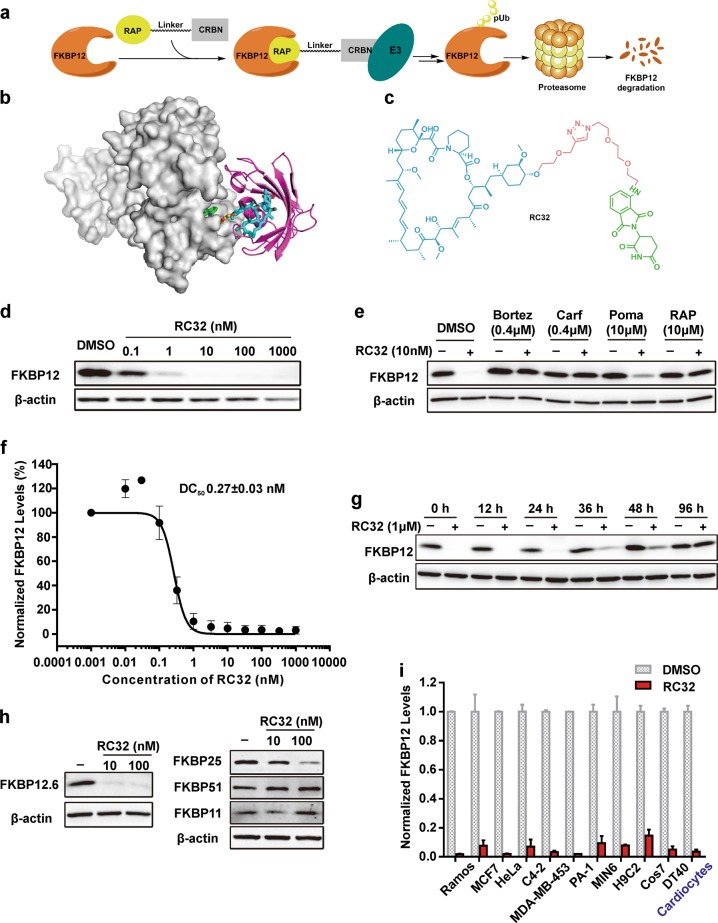
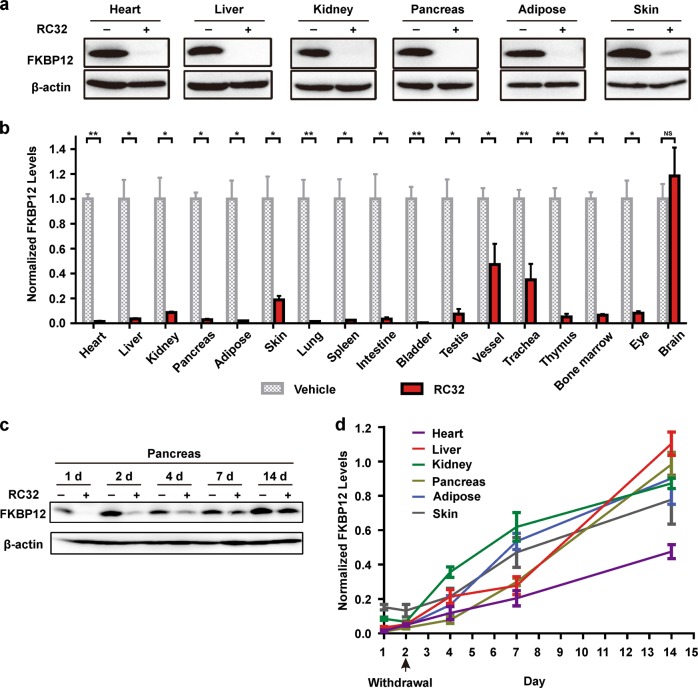
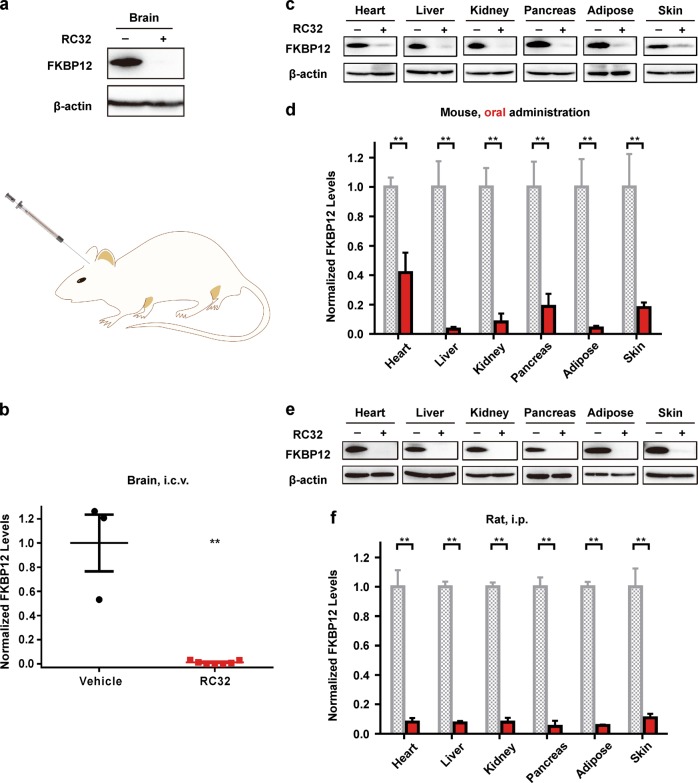
Although conventional genetic modification approaches for protein knockdown work very successfully due to the increasing use of CRISPR/Cas9, effective techniques for achieving protein depletion in adult animals, especially in large animals such as non-human primates, are lacking. Here, we report a chemical approach based on PROTACs technology that efficiently and quickly knocks down FKBP12 (12-kDa FK506-binding) protein globally in vivo. Both intraperitoneal and oral administration led to rapid, robust, and reversible FKBP12 degradation in mice. The efficiency and practicality of this method were successfully demonstrated in both large and small animals (mice, rats, Bama pigs, and rhesus monkeys). Furthermore, we showed this approach can also be applied to effectively knockdown other target proteins such as Bruton's tyrosine kinase (BTK). This chemical protein knockdown strategy provides a powerful research tool for gene function studies in animals, particularly in large animals, for which gene-targeted knockout strategies may remain unfeasible.
Overview
The claims and statistics of this paper haven’t been checked yet.
Run the check — free, no account needed. It reads the open-access text and checks the sources it cites.
Integrity signals
Registry
Cites
Statistics
Figures
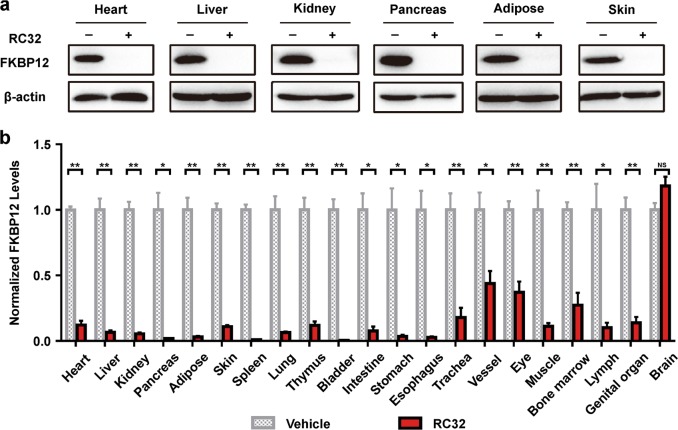
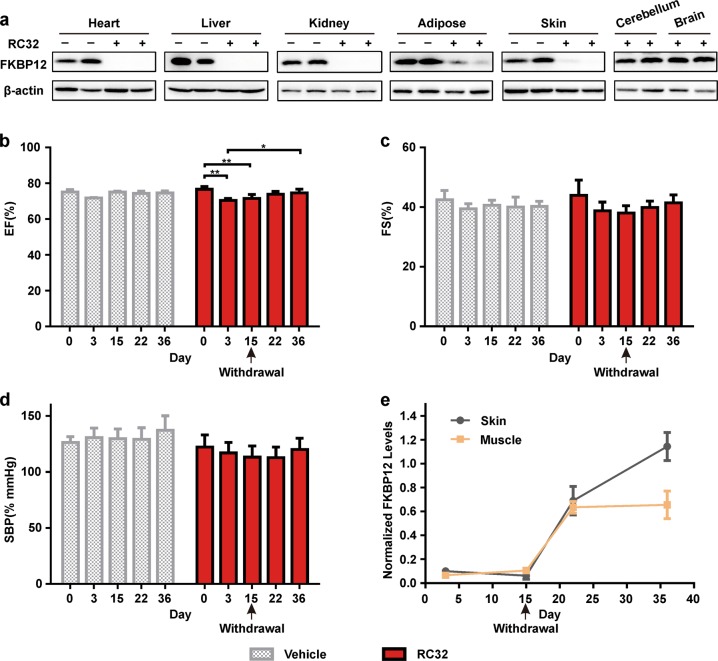
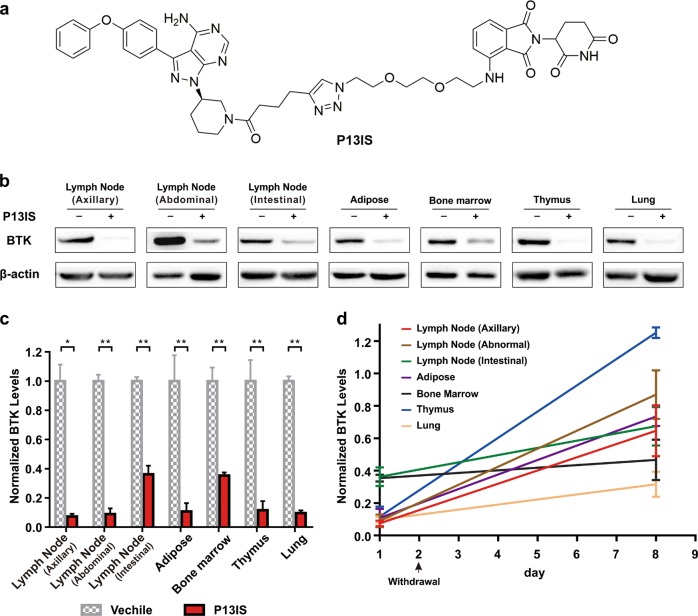
Verification
Claims the paper makes
The claims and statistics of this paper haven’t been checked yet.
Run the check — free, no account needed. It reads the open-access text and checks the sources it cites.
Claims other papers make about this one
Each is checked against this paper’s own text: does it say what the citing paper says it does?
In the citing paper
“Preclinical and clinical studies have demonstrated multiple routes of administration, including oral 18 .”
From Targeted protein degradation: expanding the toolbox (2019) · cites this paper as [18]
Self-check
Percentages, sums and reported differences re-computed from the paper’s own numbers.
The self-check needs the paper’s full text.
Citations
Cites
Genome engineering using the CRISPR-Cas9 system
Ran, F. A., Hsu, P. D., Wright, J., Agarwala, V., Scott, D. A., & Zhang, F. (2013) · Nature Protocols · doi:10.1038/nprot.2013.143 · Cited by 11,133
Duplexes of 21-nucleotide RNAs mediate RNA interference in cultured mammalian cells
Elbashir, S. M., Harborth, J., Lendeckel, W., Yalcin, A., Weber, K., & Tuschl, T. (2001) · Nature · doi:10.1038/35078107 · Cited by 9,456
The new frontier of genome engineering with CRISPR-Cas9
Doudna, J. A., & Charpentier, E. (2014) · Science · doi:10.1126/science.1258096 · Cited by 7,062
Phthalimide conjugation as a strategy for in vivo target protein degradation
Winter, G. E., Buckley, D. L., Paulk, J., Roberts, J. M., Souza, A., Dhe-Paganon, S., & Bradner, J. E. (2015) · Science · doi:10.1126/science.aab1433 · Cited by 1,760
Vézina, C., KUDELSKI, A., & Sehgal, S. N. (1975) · The Journal of Antibiotics · doi:10.7164/antibiotics.28.721 · Cited by 1,691
Catalytic in vivo protein knockdown by small-molecule PROTACs
Bondeson, D. P., Mares, A., Smith, I. E. D., Ko, E., Campos, S., Miah, A. H., Mulholland, K. E., Routly, N., Buckley, D. L., Gustafson, J. L., et al. (2015) · Nature Chemical Biology · doi:10.1038/nchembio.1858 · Cited by 1,356
The dTAG system for immediate and target-specific protein degradation
Nabet, B., Roberts, J. M., Buckley, D. L., Paulk, J., Dastjerdi, S., Yang, A., Leggett, A. L., Erb, M. A., Lawlor, M. A., Souza, A., et al. (2018) · Nature Chemical Biology · doi:10.1038/s41589-018-0021-8 · Cited by 1,118
Niu, Y., Shen, B., Cui, Y., Chen, Y., Wang, J., Wang, L., Kang, Y., Zhao, X., Si, W., Li, W., et al. (2014) · Cell · doi:10.1016/j.cell.2014.01.027 · Cited by 1,033
Self-citationGenetic compensation: A phenomenon in search of mechanisms
El-Brolosy, M. A., & Stainier, D. Y. R. (2017) · PLOS Genetics · doi:10.1371/journal.pgen.1006780 · Cited by 829
Wehrens, X. H. T., Lehnart, S. E., Huang, F., Vest, J. A., Reiken, S. R., Mohler, P. J., Sun, J., Guatimosim, S., Song, L., Rosemblit, N., et al. (2003) · Cell · doi:10.1016/s0092-8674(03)00434-3 · Cited by 760
Cited by
Sorted by citations
Targeting Strategies for Tissue-Specific Drug Delivery
Zhao, Z., Ukidve, A., Kim, J., & Mitragotri, S. (2020) · Cell · doi:10.1016/j.cell.2020.02.001 · Cited by 1,145
Proteolysis-Targeting Chimeras as Therapeutics and Tools for Biological Discovery
Burslem, G. M., & Crews, C. M. (2020) · Cell · doi:10.1016/j.cell.2019.11.031 · Cited by 1,079
Targeted protein degradation: expanding the toolbox
Schapira, M., Calabrese, M. F., Bullock, A. N., & Crews, C. M. (2019) · Nature Reviews Drug Discovery · doi:10.1038/s41573-019-0047-y · Cited by 960
Advancing targeted protein degradation for cancer therapy
Dale, B., Cheng, M., Park, K., Kanıskan, H. Ü., Xiong, Y., & Jin, J. J. (2021) · Nature reviews. Cancer · doi:10.1038/s41568-021-00365-x · Cited by 697
Multiplexed CRISPR technologies for gene editing and transcriptional regulation
McCarty, N. S., Graham, A. E., Studená, L., & Ledesma‐Amaro, R. (2020) · Nature Communications · doi:10.1038/s41467-020-15053-x · Cited by 567
Edmondson, S. D., Yang, B., & Fallan, C. (2019) · Bioorganic & Medicinal Chemistry Letters · doi:10.1016/j.bmcl.2019.04.030 · Cited by 422
Light-Induced Protein Degradation with Photocaged PROTACs
Xue, G., Wang, K., Zhou, D., Zhong, H., & Pan, Z. (2019) · Journal of the American Chemical Society · doi:10.1021/jacs.9b06422 · Cited by 377
Proteolysis-targeting chimeras (PROTACs) in cancer therapy
Li, X., Pu, W., Zheng, Q., Ai, M., Chen, S., & Peng, Y. (2022) · Molecular Cancer · doi:10.1186/s12943-021-01434-3 · Cited by 389
PROTAC Technology: Opportunities and Challenges
Gao, H., Sun, X., & Rao, Y. (2020) · ACS Medicinal Chemistry Letters · doi:10.1021/acsmedchemlett.9b00597 · Cited by 364
Self-citationPHOTACs enable optical control of protein degradation
Reynders, M., Matsuura, B. S., Bérouti, M., Simoneschi, D., Marzio, A., Pagano, M., & Trauner, D. H. (2020) · Science Advances · doi:10.1126/sciadv.aay5064 · Cited by 344
PROTACs: great opportunities for academia and industry (an update from 2020 to 2021)
He, M., Cao, C., Ni, Z., Liu, Y., Song, P., Hao, S., He, Y., Sun, X., & Rao, Y. (2022) · Signal Transduction and Targeted Therapy · doi:10.1038/s41392-022-00999-9 · Cited by 283
Self-citationZeng, S., Huang, W., Zheng, X., Cheng, L., Zhang, Z., Wang, J., & Shen, Z. (2020) · European Journal of Medicinal Chemistry · doi:10.1016/j.ejmech.2020.112981 · Cited by 264
Self-citationExtended pharmacodynamic responses observed upon PROTAC-mediated degradation of RIPK2
Mares, A., Miah, A. H., Smith, I. E. D., Rackham, M., Thawani, A. R., Cryan, J., Haile, P. A., Votta, B. J., Beal, A. M., Capriotti, C., et al. (2020) · Communications Biology · doi:10.1038/s42003-020-0868-6 · Cited by 232
Prey for the Proteasome: Targeted Protein Degradation—A Medicinal Chemist's Perspective
Luh, L. M., Scheib, U., Juenemann, K., Wortmann, L., Brands, M., & Cromm, P. M. (2020) · Angewandte Chemie International Edition · doi:10.1002/anie.202004310 · Cited by 201
Harnessing the Power of Proteolysis for Targeted Protein Inactivation
Verma, R., Mohl, D., & Deshaies, R. J. (2020) · Molecular Cell · doi:10.1016/j.molcel.2020.01.010 · Cited by 185
Dragovich, P. S., Pillow, T. H., Blake, R. A., Sadowsky, J. D., Adaligil, E., Adhikari, P., Chen, J., Corr, N., dela Cruz-Chuh, J., Del Rosario, G., et al. (2021) · Journal of Medicinal Chemistry · doi:10.1021/acs.jmedchem.0c01846 · Cited by 174
Self-citationPROTACs– a game-changing technology
Konstantinidou, M., Li, J., Zhang, B., Wang, Z., Shaabani, S., ter Brake, F., Essa, K., & Dömling, A. S. S. (2019) · Expert Opinion on Drug Discovery · doi:10.1080/17460441.2019.1659242 · Cited by 171
Drummond, M. L., Henry, A., Li, H., & Williams, C. I. (2020) · Journal of Chemical Information and Modeling · doi:10.1021/acs.jcim.0c00897 · Cited by 166
Developments of CRBN-based PROTACs as potential therapeutic agents
Wang, C., Zhang, Y., Wu, Y., & Xing, D. (2021) · European Journal of Medicinal Chemistry · doi:10.1016/j.ejmech.2021.113749 · Cited by 158
Dragovich, P. S., Pillow, T. H., Blake, R. A., Sadowsky, J. D., Adaligil, E., Adhikari, P., Bhakta, S., Blaquiere, N., Chen, J., dela Cruz-Chuh, J., et al. (2021) · Journal of Medicinal Chemistry · doi:10.1021/acs.jmedchem.0c01845 · Cited by 152
Self-citationSteinebach, C., Ng, Y. L. D., Sosič, I., Lee, C.-S., Chen, S., Lindner, S., Vu, L. P., Bricelj, A., Haschemi, R., Monschke, M., et al. (2020) · Chemical Science · doi:10.1039/d0sc00167h · Cited by 148
Opportunities for Small Molecules in Cancer Immunotherapy
van der Zanden, S. Y., Luimstra, J. J., Neefjes, J., Borst, J., & Ovaa, H. (2020) · Trends in Immunology · doi:10.1016/j.it.2020.04.004 · Cited by 119
Antibody-mediated delivery of chimeric protein degraders which target estrogen receptor alpha (ERα)
Dragovich, P. S., Adhikari, P., Blake, R. A., Blaquiere, N., Chen, J., Cheng, Y.-X., den Besten, W., Han, J., Hartman, S. J., He, J., et al. (2020) · Bioorganic & Medicinal Chemistry Letters · doi:10.1016/j.bmcl.2019.126907 · Cited by 120
Snapshots and ensembles of BTK and cIAP1 protein degrader ternary complexes
Schiemer, J., Horst, R., Meng, Y., Montgomery, J. I., Xu, Y., Feng, X., Borzilleri, K., Uccello, D. P., Leverett, C., Brown, S., et al. (2021) · Nature Chemical Biology · doi:10.1038/s41589-020-00686-2 · Cited by 113
PROTACs: Emerging Targeted Protein Degradation Approaches for Advanced Druggable Strategies
Sincere, N. I., Anand, K., Ashique, S., Yang, J., & You, C. (2023) · Molecules · doi:10.3390/molecules28104014 · Cited by 112
Mechanistic and Structural Features of PROTAC Ternary Complexes
Casement, R., Bond, A. G., Craigon, C., & Ciulli, A. (2021) · Methods in molecular biology · doi:10.1007/978-1-0716-1665-9_5 · Cited by 104
Lin, X., Xiang, H., & Luo, G. (2020) · European Journal of Medicinal Chemistry · doi:10.1016/j.ejmech.2020.112689 · Cited by 104
The long journey to bring a Myc inhibitor to the clinic
Whitfield, J. R., & Soucek, L. (2021) · The Journal of Cell Biology · doi:10.1083/jcb.202103090 · Cited by 101
Ibrutinib Resistance Mechanisms and Treatment Strategies for B-Cell Lymphomas
George, B., Chowdhury, S. M., Hart, A., Sircar, A., Singh, S. K., Nath, U. K., Mamgain, M., Singhal, N. K., Sehgal, L., & Jain, N. K. (2020) · Cancers · doi:10.3390/cancers12051328 · Cited by 97
He, Q., Zhou, L., Yu, D. P., Zhu, R., Chen, Y., Song, M., Liu, X., Liao, Y., Ding, T., Fan, W., et al. (2023) · Journal of Medicinal Chemistry · doi:10.1021/acs.jmedchem.3c00587 · Cited by 86
The rise and rise of protein degradation: Opportunities and challenges ahead
Hughes, S. J., Testa, A., Thompson, N., & Churcher, I. (2021) · Drug Discovery Today · doi:10.1016/j.drudis.2021.08.006 · Cited by 81
Design and characterization of cereblon-mediated androgen receptor proteolysis-targeting chimeras
Takwale, A. D., Jo, S.-H., Jeon, Y. U., Kim, H. S., Shin, C. H., Lee, H. K., Ahn, S., Lee, C. O., Ha, J. D., Kim, J., et al. (2020) · European Journal of Medicinal Chemistry · doi:10.1016/j.ejmech.2020.112769 · Cited by 82
Systematic Investigation of the Permeability of Androgen Receptor PROTACs
Scott, D. E., Rooney, T. P. C., Bayle, E. D., Mirza, T., Willems, H. M. G., Clarke, J. H., Andrews, S. P., & Skidmore, J. (2020) · ACS Medicinal Chemistry Letters · doi:10.1021/acsmedchemlett.0c00194 · Cited by 80
PIKES Analysis Reveals Response to Degraders and Key Regulatory Mechanisms of the CRL4 Network
Reichermeier, K. M., Straube, R., Reitsma, J. M., Sweredoski, M. J., Rose, C. M., Moradian, A., den Besten, W., Hinkle, T., Verschueren, E., Petzold, G., et al. (2020) · Molecular Cell · doi:10.1016/j.molcel.2019.12.013 · Cited by 78
Optical control of targeted protein degradation
Reynders, M., & Trauner, D. H. (2021) · Cell chemical biology · doi:10.1016/j.chembiol.2021.05.010 · Cited by 75
PROTAC Cell Permeability and Oral Bioavailability: A Journey Into Uncharted Territory
Poongavanam, V., & Kihlberg, J. (2022) · Future Medicinal Chemistry · doi:10.4155/fmc-2021-0208 · Cited by 72
Zhao, L., Zheng, R., Rao, X., Huang, C., Zhou, H., Yu, X., Jiang, X., & Li, S. (2024) · Advanced Science · doi:10.1002/advs.202309204 · Cited by 70
Amino acid homorepeats in proteins
Chavali, S., Singh, A. K., Santhanam, B., & Babu, M. M. (2020) · Nature Reviews Chemistry · doi:10.1038/s41570-020-0204-1 · Cited by 70
Targeting bromodomain-containing protein 4 (BRD4) inhibits MYC expression in colorectal cancer cells
Otto, C., Schmidt, S., Kastner, C., Denk, S., Kettler, J., Müller, N., Germer, C., Wolf, E., Gallant, P., & Wiegering, A. (2019) · Neoplasia · doi:10.1016/j.neo.2019.10.003 · Cited by 69
A MedChem toolbox for cereblon-directed PROTACs
Steinebach, C., Sosič, I., Lindner, S., Bricelj, A., Kohl, F., Ng, Y. L. D., Monschke, M., Wagner, K. G., Krönke, J., & Gütschow, M. (2019) · MedChemComm · doi:10.1039/c9md00185a · Cited by 66
Opportunities and Challenges of Small Molecule Induced Targeted Protein Degradation
He, M., Lv, W., & Rao, Y. (2021) · Frontiers in Cell and Developmental Biology · doi:10.3389/fcell.2021.685106 · Cited by 63
Self-citationProteolysis targeting chimeras (PROTACs) for epigenetics research
Vogelmann, A., Robaa, D., Sippl, W., & Jung, M. (2020) · Current Opinion in Chemical Biology · doi:10.1016/j.cbpa.2020.01.010 · Cited by 59
Functional genomics and the future of iPSCs in disease modeling
Brooks, I. R., Garrone, C. M., Kerins, C., Kiar, C. S., Syntaka, S., Xu, J. Z., Spagnoli, F. M., & Watt, F. M. (2022) · Stem Cell Reports · doi:10.1016/j.stemcr.2022.03.019 · Cited by 54
Triazol: A Privileged Scaffold for Proteolysis Targeting Chimeras
Xia, L., Ba, M.-Y., Liu, W., Cheng, W., Hu, C.-P., Zhao, Q., Yao, Y., Sun, M., & Duan, Y. (2019) · Future Medicinal Chemistry · doi:10.4155/fmc-2019-0159 · Cited by 51
Self-citationSun, Y., Yan, K. H., Wang, Y., Xu, C., Wang, D., Zhou, W. Z., Guo, S., Han, Y., Tang, L., Shao, Y., et al. (2022) · Nature Cancer · doi:10.1038/s43018-022-00408-8 · Cited by 48
Self-citationGrohmann, C., Magtoto, C. M., Walker, J. R., Chua, N. K., Gabrielyan, A., Hall, M., Cobbold, S. A., Mieruszynski, S., Brzozowski, M., Simpson, D. S., et al. (2022) · Nature Communications · doi:10.1038/s41467-022-29670-1 · Cited by 43
Targeted protein degradation in the transmembrane and extracellular space
Zhu, R., Zhang, H., & Chen, P. R. (2025) · Science · doi:10.1126/science.adx5094 · Cited by 43
The transcriptional repressor BCL11A promotes breast cancer metastasis
Seachrist, D. D., Hannigan, M. M., Ingles, N. N., Webb, B. M., Weber-Bonk, K. L., Yu, P., Bebek, G., Singh, S., Sizemore, S. T., Varadan, V., et al. (2020) · Journal of Biological Chemistry · doi:10.1074/jbc.ra120.014018 · Cited by 39
Maneiro, M., Vita, E. D., Conole, D., Kounde, C. S., Zhang, Q., & Tate, E. W. (2021) · Progress in medicinal chemistry · doi:10.1016/bs.pmch.2021.01.002 · Cited by 38
Liu, R., Liu, Z., Chen, M., Xing, H., Zhang, P., & Zhang, J. (2023) · Chemical Science · doi:10.1039/d3sc04249a · Cited by 39
Degrading proteins in animals: “PROTAC”tion goes in vivo
Guo, J., Liu, J., & Wei, W. (2019) · Cell Research · doi:10.1038/s41422-019-0144-9 · Cited by 38
Targeting the Ubiquitin System in Glioblastoma
Scholz, N., Kurian, K. M., Siebzehnrübl, F. A., & Licchesi, J. D. F. (2020) · Frontiers in Oncology · doi:10.3389/fonc.2020.574011 · Cited by 37
One oncogene, several vulnerabilities: EWS/FLI targeted therapies for Ewing sarcoma
Flores, G., & Grohar, P. J. (2021) · Journal of bone oncology · doi:10.1016/j.jbo.2021.100404 · Cited by 39
PROTACs Targeting MLKL Protect Cells from Necroptosis
Rathje, O. H., Perryman, L., Payne, R. J., & Hamprecht, D. W. (2023) · Journal of Medicinal Chemistry · doi:10.1021/acs.jmedchem.3c00665 · Cited by 37
Macrocyclic FKBP51 Ligands Define a Transient Binding Mode with Enhanced Selectivity
Voll, A. M., Meyners, C., Taubert, M. C., Bajaj, T., Heymann, T., Merz, S., Charalampidou, A., Kolos, J., Purder, P. L., Geiger, T. M., et al. (2021) · Angewandte Chemie International Edition · doi:10.1002/anie.202017352 · Cited by 34
Antibody–bottlebrush prodrug conjugates for targeted cancer therapy
Liu, B., Nguyen, H. V. ‐., Jiang, Y., Wang, A., Lensch, V., Sun, Z., Boyer, Z., Raftopoulos, P. A., Dai, Y., MacNicol, P. L., et al. (2025) · Nature Biotechnology · doi:10.1038/s41587-025-02772-z · Cited by 41
Methods to accelerate PROTAC drug discovery
Osman, J., Thompson, P. E., Jörg, M., & Scanlon, M. J. (2025) · Biochemical Journal · doi:10.1042/bcj20243018 · Cited by 34
Liu, J., Ma, T., Yao, R., Li, L., Zheng, Q., & Wang, M. (2026) · Cell · doi:10.1016/j.cell.2025.12.007 · Cited by 31
An IMiD-induced SALL4 degron system for selective degradation of target proteins
Yamanaka, S., Shoya, Y., Matsuoka, S., Nishida-Fukuda, H., Shibata, N., & Sawasaki, T. (2020) · Communications Biology · doi:10.1038/s42003-020-01240-5 · Cited by 29
Methods to identify and optimize small molecules interacting with RNA (SMIRNAs)
Ursu, A., Vézina‐Dawod, S., & Disney, M. D. (2019) · Drug Discovery Today · doi:10.1016/j.drudis.2019.06.019 · Cited by 31
Progress of proteolysis-targeting chimeras (PROTACs) delivery system in tumor treatment
Fan, L., Tong, W., Wei, A., & Mu, X. (2024) · International Journal of Biological Macromolecules · doi:10.1016/j.ijbiomac.2024.133680 · Cited by 30
Gong, B., Zhang, W., Cong, W., Gu, Y., Ji, W., Yin, T., Zhou, H., Hu, H., Zhuang, J., Luo, Y., et al. (2024) · Advanced Healthcare Materials · doi:10.1002/adhm.202400149 · Cited by 31
Targeting the E3 ubiquitin ligases DCAF15 and cereblon for cancer therapy
Nguyen, K. M., & Busino, L. (2020) · Seminars in Cancer Biology · doi:10.1016/j.semcancer.2020.03.007 · Cited by 29
Natural product-based PROteolysis TArgeting Chimeras (PROTACs)
Liu, M., Martyn, A. P., & Quinn, R. J. (2022) · Natural Product Reports · doi:10.1039/d2np00038e · Cited by 29
Selective degradation-inducing probes for studying cereblon (CRBN) biology
Powell, C. E., Du, G., Bushman, J. W., He, Z., Zhang, T., Fischer, E. S., & Gray, N. S. (2021) · RSC Medicinal Chemistry · doi:10.1039/d0md00382d · Cited by 29
Cardiac regeneration: Options for repairing the injured heart
Wang, J., An, M., Haubner, B. J., & Penninger, J. M. (2023) · Frontiers in Cardiovascular Medicine · doi:10.3389/fcvm.2022.981982 · Cited by 27
Self-citationRecent Advances in Optically Controlled PROTAC
Ouyang, M., Feng, Y. N., Chen, H., Liu, Y., Tan, C., & Tan, Y. C. (2023) · Bioengineering · doi:10.3390/bioengineering10121368 · Cited by 25
Recent Progress on Microtubule Degradation Agents
Zhang, C., Zhao, M., Wang, G., & Li, Y. (2023) · Journal of Medicinal Chemistry · doi:10.1021/acs.jmedchem.3c00517 · Cited by 22
PROTAC: a revolutionary technology propelling small molecule drugs into the next golden age
Cai, J., Chen, C., Wang, J., Zhang, X., Cui, Y., Zhu, Q., & Sun, H. (2025) · Frontiers in Oncology · doi:10.3389/fonc.2025.1676414 · Cited by 24
Self-citationRecent advances in epigenetic proteolysis targeting chimeras (Epi-PROTACs)
Tomaselli, D., Mautone, N., Mai, A., & Rotili, D. (2020) · European Journal of Medicinal Chemistry · doi:10.1016/j.ejmech.2020.112750 · Cited by 21
Targeting micro-environmental pathways by PROTACs as a therapeutic strategy
Liu, J., Peng, Y., Inuzuka, H., & Wei, W. (2022) · Seminars in Cancer Biology · doi:10.1016/j.semcancer.2022.07.001 · Cited by 20
The Role of Protein Engineering in Biomedical Applications of Mammalian Synthetic Biology
Bojar, D., & Fussenegger, M. (2019) · Small · doi:10.1002/smll.201903093 · Cited by 20
Development of Human Carbonic Anhydrase II Heterobifunctional Degraders
O’Herin, C., Moriuchi, Y. W., Bemis, T. A., Kohlbrand, A. J., Burkart, M. D., & Cohen, S. M. (2023) · Journal of Medicinal Chemistry · doi:10.1021/acs.jmedchem.2c01843 · Cited by 23
Development of Degraders of Cyclin-Dependent Kinases 4 and 6 Based on Rational Drug Design
He, H., Zhang, X., Wang, J., Liu, Q., Zhang, L., Lu, C., Yuan, Y., Zhao, Z., Li, H., & Chen, Z. (2024) · Journal of Medicinal Chemistry · doi:10.1021/acs.jmedchem.4c00965 · Cited by 18
Self-citationOjasalu, K., Lieber, S., Sokòl, A. M., Nist, A., Stiewe, T., Bullwinkel, I., Finkernagel, F., Reinartz, S., Müller‐Brüsselbach, S., Grosse, R., et al. (2023) · Theranostics · doi:10.7150/thno.81656 · Cited by 17
Alkubaisi, B. O., Shahin, A. I., Zenati, R. A., Ravi, A., Alchami, R., Alkalla, M., Khaled, R., El-Gamal, M. I., & Al‐Tel, T. H. (2023) · ChemMedChem · doi:10.1002/cmdc.202300117 · Cited by 17
Rapamycin recruits SIRT2 for FKBP12 deacetylation during mTOR activity modulation in innate immunity
Hu, L. T., Chen, F., Wu, C., Wang, J., Chen, S., Li, X., Wang, J., Wu, L., Ding, J., Wang, J.-C., et al. (2021) · iScience · doi:10.1016/j.isci.2021.103177 · Cited by 14
Self-citationImproving treatment for acute ischemic stroke—Clot busting innovation in the pipeline
Liu, J. S. T., Ding, Y., Schoenwaelder, S. M., & Liu, X. (2022) · Frontiers in Medical Technology · doi:10.3389/fmedt.2022.946367 · Cited by 15
Joshi, M., Dey, P., & De, A. (2023) · Exploration of Targeted Anti-tumor Therapy · doi:10.37349/etat.2023.00194 · Cited by 15
PROTAC Beyond Cancer- Exploring the New Therapeutic Potential of Proteolysis Targeting Chimeras
Bhole, R. P., Patil, S., Kapare, H. S., Chikhale, R. V., & Gurav, S. S. (2024) · Current Topics in Medicinal Chemistry · doi:10.2174/0115680266309968240621072550 · Cited by 15
Targeted Protein Degradation as a Promising Tool for Epigenetic Upregulation of Fetal Hemoglobin
Verheul, T. C. J., Trinh, V. T., Vázquez, O., & Philipsen, S. (2020) · ChemMedChem · doi:10.1002/cmdc.202000574 · Cited by 14
In vivo synthetic chemistry of proteolysis targeting chimeras (PROTACs)
Tomoshige, S., & Ishikawa, M. (2021) · Bioorganic & Medicinal Chemistry · doi:10.1016/j.bmc.2021.116221 · Cited by 17
Chimera induced protein degradation: PROTACs and beyond
Yin, L., & Hu, Q. (2020) · European Journal of Medicinal Chemistry · doi:10.1016/j.ejmech.2020.112494 · Cited by 14
Advancing target validation with PROTAC technology
Spitz, M. L., Kashkush, A., & Benhamou, R. I. (2025) · Expert Opinion on Drug Discovery · doi:10.1080/17460441.2025.2490248 · Cited by 12
Harnessing the Power of Natural Products for Targeted Protein Degradation
Zhu, B., Wu, Z., Shou, Y., Zhao, K., Lu, Q., Qin, J., & Guo, H. (2025) · Medicinal Research Reviews · doi:10.1002/med.22113 · Cited by 12
Reboud‐Ravaux, M. (2021) · Biologie Aujourd hui · doi:10.1051/jbio/2021007 · Cited by 10
Photocontrolled trimethoprim PROTACs targeting the eDHFR protein tag
Sharma, N., Sarkar, S., Ko, T., Edwards, K. J., Pham, J. M., Nguyen, T., Gong, A. Z., Flores, J. I., Trauner, D. H., & Sellmyer, M. A. (2025) · Nature Communications · doi:10.1038/s41467-025-67527-5 · Cited by 10
Duan, L., Xu, X. G., Xu, L., Wen, C., Ouyang, K., Li, Z., & Liang, Y. (2021) · Frontiers in Pharmacology · doi:10.3389/fphar.2021.764154 · Cited by 8
Selective degradation of the estrogen receptor in the treatment of cancers
Wang, Z., Ma, Z., & Shen, Z. (2021) · The Journal of Steroid Biochemistry and Molecular Biology · doi:10.1016/j.jsbmb.2021.105848 · Cited by 7
Li, S., Yan, W., Sun, K., Miao, J., Liu, Z., Xu, J., Wang, X., Лі, Б., & Zhang, Q. (2024) · Molecular Nutrition & Food Research · doi:10.1002/mnfr.202400193 · Cited by 7
Beute für das Proteasom: Gezielter Proteinabbau aus medizinalchemischer Perspektive
Luh, L. M., Scheib, U., Juenemann, K., Wortmann, L., Brands, M., & Cromm, P. M. (2020) · Angewandte Chemie · doi:10.1002/ange.202004310 · Cited by 7
Peripheralized sepiapterin reductase inhibition as a safe analgesic therapy
Cronin, S. J. F., Andrews, N. A., & Latrémolière, A. (2023) · Frontiers in Pharmacology · doi:10.3389/fphar.2023.1173599 · Cited by 7
From Degraders to Molecular Glues: New Ways of Breaking Down Disease‐Associated Proteins
Nagel, Y. A., Britschgi, A., & Ricci, A. (2021) · Wiley eBooks · doi:10.1002/9783527826872.ch2 · Cited by 6
Identification of ligand linkage vectors for the development of p300/CBP degraders
Brownsey, D. K., Rowley, B. C., Gorobets, E., Mihara, K., Maity, R., Papatzimas, J. W., Gelfand, B. S., Hollenberg, M. D., Bahlis, N. J., & Derksen, D. J. (2022) · RSC Medicinal Chemistry · doi:10.1039/d1md00070e · Cited by 6
Sladky, V. C., Strong, M. A., Tapias-Gomez, D., Jewett, C. E., Drown, C. G., Scott, P. M., & Holland, A. J. (2025) · Science Advances · doi:10.1126/sciadv.adq2339 · Cited by 5
He, X., Gong, L., Zhang, J., Pang, X., Li, Y., Wei, W., Cui, Y., & Lin, Z. (2026) · Proceedings of the National Academy of Sciences · doi:10.1073/pnas.2525897123 · Cited by 4
Zhong, T., Sun, X., Li, Y., Liu, Y., Lin, X., Rao, Y., & Wu, W. (2022) · Signal Transduction and Targeted Therapy · doi:10.1038/s41392-022-00970-8 · Cited by 4
Self-citationSladky, V. C., Strong, M. A., Tapias-Gomez, D., Jewett, C. E., Drown, C. G., Scott, P. M., & Holland, A. J. (2024) · bioRxiv (Cold Spring Harbor Laboratory) · doi:10.1101/2024.06.04.597287 · Cited by 4
Context matters: E3 ligase–ligand pairing strategies for optimized PROTAC performance
Yin, L., Shu, P., & Peng, X. (2025) · Protein & Cell · doi:10.1093/procel/pwaf107 · Cited by 6
Advancing PROTAC therapeutics through chemistry-guided design of smart delivery systems
Yao, T., Zhou, Z., Wang, G., Zhu, Z.-Y., & Li, X.-N. (2026) · Acta Pharmacologica Sinica · doi:10.1038/s41401-026-01853-2 · Cited by 5
Metadata
- Authors
- Sun, X., Wang, J., Yao, X., Zheng, W., Mao, Y., Lan, T., Wang, L., Sun, Y., Zhang, X., Zhao, Q., Zhao, J., Xiao, R.-P., Zhang, X., Ji, G., & Rao, Y.
- Affiliations
- Center for Life Sciences (CN)
- Chinese Academy of Sciences (CN)
- Tsinghua University (CN)
- Peking University (CN)
- Corresponding author
- Zhang, Xinyi
- Zhang, Xiuqin
- Ji, Guangju
- Rao, Yu
- ORCID
- Venue
- Cell Discovery
- Published
- 2019-02-05
- Volume
- 5
- Issue
- 1
- Pages
- 10-10
- ISSN
- 2056-5968 (ISSN-L)
- PMC
- PMC6361926
- OpenAlex
- W2914693193
- Cited by
- 118
- References
- 33
- Citations by year
- 2026: 8 · 2025: 13 · 2024: 12 · 2023: 11 · 2022: 12 · 2021: 21 · 2020: 30 · 2019: 11
- FWCI
- 6.12
- Type
- journal article
- Language
- en
- Open access
- gold
- doi.org
- Locations
- Cell Discovery (publishedVersion, cc-by)
- Europe PMC (PubMed Central) (publishedVersion, other-oa)
- PubMed Central (publishedVersion, cc-by)
- PubMed (publishedVersion)
- DOAJ (DOAJ: Directory of Open Access Journals) (submittedVersion)
- Funders
- National Natural Science Foundation of China (81573327)
- Topics
- Life Sciences › Biochemistry, Genetics and Molecular Biology › Molecular Biology › Protein Degradation and Inhibitors
- Physical Sciences › Chemistry › Organic Chemistry › Chemical Synthesis and Analysis
- Life Sciences › Biochemistry, Genetics and Molecular Biology › Molecular Biology › CRISPR and Genetic Engineering
- Keywords
- PROTACs, Bruton's tyrosine kinase, non-human primates, rhesus monkeys, Bama pig, oral administration, intraperitoneal administration, large animal model, gene function analysis
About these checks
Registry, retraction, Cites and statistics results are computed, not judged, with one exception: a printed reference that no index lists is read once by a model before it counts as a citation error. Claims are extracted by a model and kept only when their quote appears verbatim in the text; each cited source is then checked, with a model’s help, for whether it says what the claim relies on. Those verdicts can be wrong — read the claim’s quote and the cited source before relying on one.
Statistics and arithmetic are recomputed, not judged.
Confidence bands are shown only for fields calibrated on our annotated test set. None is calibrated yet, so no band is shown.
What counts as a claim ›How we measure confidence ›How we check this ›
Are you an author, or do you see a problem with this page? Request a review
