

The aryl hydrocarbon receptor and the gut–brain axis
Open accessThe DOI matches its Crossref record; 164 of the 164 references it cites were found in a registry or an index.
Abstract
The aryl hydrocarbon receptor (AHR) is a ligand-activated transcription factor initially identified as the receptor for dioxin. Almost half a century after its discovery, AHR is now recognized as a receptor for multiple physiological ligands, with important roles in health and disease. In this review, we discuss the role of AHR in the gut–brain axis and its potential value as a therapeutic target for immune-mediated diseases.
Overview
The claims and statistics of this paper haven’t been checked yet.
Free: it reads the open-access text and checks the first 5 claims that cite a source we can check. Create a free account to check every claim.
Integrity signals
Registry
Cites
Statistics
Figures
Verification
Claims the paper makes
The claims and statistics of this paper haven’t been checked yet.
Free: it reads the open-access text and checks the first 5 claims that cite a source we can check. Create a free account to check every claim.
Claims other papers make about this one
Each is checked against this paper’s own text: does it say what the citing paper says it does?
The source backs part of the claim, not all of it — or backs it for a different population, condition or comparison.
In the citing paper
“Higher Firmicutes abundance has been associated with reduced depressive and anxiety symptoms through enhanced butyrate production, which modulates the gut-brain axis and alleviates neuroinflammation [49,50].”
From The Impact of Weizmannia coagulans BC99 on Anxiety and Depression: An 8-Week Clinical Pilot Study Through the Gut Microbiota–Brain Axis (2025) · cites this paper as [50]
Experimental — accuracy not yet measured
Self-check
Percentages, sums and reported differences re-computed from the paper’s own numbers.
The self-check needs the paper’s full text.
Citations
Cites
Radiotherapy Plus Concomitant and Adjuvant Temozolomide for Glioblastoma
Stupp, R., Mason, W. P., van den Bent, M. J., Weller, M., Fisher, B., Taphoorn, M. J. B., Belanger, K., Brandes, A. A., Marosi, C., Bogdahn, U., et al. (2005) · New England Journal of Medicine · doi:10.1056/nejmoa043330 · Cited by 21,807
Dendritic cells and the control of immunity
Banchereau, J., & Steinman, R. M. (1998) · Nature · doi:10.1038/32588 · Cited by 14,336 · cited 1×
“DCs play central roles in the maintenance of tolerance and the generation of protective immune responses against pathogens in the gut as well as in other tissues.(78,79) AHR is highly expressed in DCs,(80) affecting their differentiation and function.”
BackgroundMicrobial tryptophan catabolites in health and disease
Roager, H. M., & Licht, T. R. (2018) · Nature Communications · doi:10.1038/s41467-018-05470-4 · Cited by 2,236 · cited 1×
“Additional AHR agonists are produced by the metabolism of commensal microorganisms.(9,18,19) Moreover, some medications are reported to activate AHR, including omeprazole,(20) sulindac,(21) laquinimod,(22) tapinarof,(23) and diclofenac.”
BackgroundCao-Lormeau, V.-M., Blake, A., Mons, S., Lastère, S., Roche, C., Vanhomwegen, J., Dub, T., Baudouin, L., Teissier, A., Larre, P., et al. (2016) · The Lancet · doi:10.1016/s0140-6736(16)00562-6 · Cited by 2,205
Innate Lymphoid Cells: 10 Years On
Vivier, E., Artis, D., Colonna, M., Diefenbach, A., Di Santo, J. P., Eberl, G., Koyasu, S., Locksley, R. M., McKenzie, A. N. J., Mebius, R. E., et al. (2018) · Cell · doi:10.1016/j.cell.2018.07.017 · Cited by 2,124
An endogenous tumour-promoting ligand of the human aryl hydrocarbon receptor
Opitz, C. A., Litzenburger, U. M., Sahm, F., Ott, M., Tritschler, I., Trump, S., Schumacher, T., Jestaedt, L., Schrenk, D., Weller, M., et al. (2011) · Nature · doi:10.1038/nature10491 · Cited by 1,898 · cited 1×
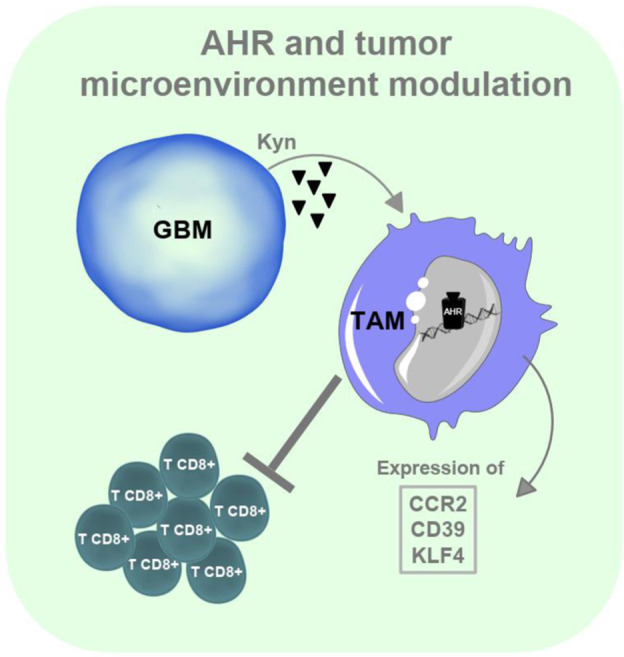
“reported that tryptophan 2,3-dioxygenase in glioblastoma leads to the production of kynurenine, which acts in an autocrine manner to enhance tumor invasiveness and replication.(150,151) In addition, Gramarzki et al.”
BackgroundControl of Treg and TH17 cell differentiation by the aryl hydrocarbon receptor
Quintana, F. J., Basso, A. S., Iglesias, A. H., Korn, T., Farez, M. F., Bettelli, E., Caccamo, M., Oukka, M., & Weiner, H. L. (2008) · Nature · doi:10.1038/nature06880 · Cited by 1,865
Self-citationAstrocyte scar formation aids central nervous system axon regeneration
Anderson, M. A., Burda, J. E., Ren, Y., Ao, Y., O’Shea, T. M., Kawaguchi, R., Coppola, G., Khakh, B. S., Deming, T. J., & Sofroniew, M. V. (2016) · Nature · doi:10.1038/nature17623 · Cited by 1,851
The aryl hydrocarbon receptor links TH17-cell-mediated autoimmunity to environmental toxins
Veldhoen, M., Hirota, K., Westendorf, A. M., Buer, J., Dumoutier, L., Renauld, J.-C., & Stockinger, B. (2008) · Nature · doi:10.1038/nature06881 · Cited by 1,634
An Interaction between Kynurenine and the Aryl Hydrocarbon Receptor Can Generate Regulatory T Cells
Mezrich, J. D., Fechner, J. H., Zhang, X., Johnson, B. P., Burlingham, W. J., & Bradfield, C. A. (2010) · The Journal of Immunology · doi:10.4049/jimmunol.0903670 · Cited by 1,601
Research works printed but not linked: 2
- Mascanfroni ID Metabolic control of type 1 regulatory T cell differentiation by AHR and HIF1-α Nat. Med 2015 21 638 646 26005855 PMC4476246 · DOI · Paper page
- Paracer, S. & Ahmadjian V. Symbiosis: an introduction to biological associations. 2nd ed. (Oxford University Press, New York, 2000). 291 p.
Cited by
Microbiota-derived metabolites as drivers of gut–brain communication
Ahmed, H., Leyrolle, Q., Koistinen, V., Kärkkäinen, O., Layé, S., Delzenne, N., & Hanhineva, K. (2022) · Gut Microbes · doi:10.1080/19490976.2022.2102878 · Cited by 462
“Tryptophan-derived metabolites are a major group of AhR activators and the significance of AhR-signaling pathway has been recently associated with intestinal immune responses and neurological signaling.(165,166) Tryptophan is catabolized through several pathways, including the kynurenine pathway, that produces interme…”
BackgroundImmune Influencers in Action: Metabolites and Enzymes of the Tryptophan-Kynurenine Metabolic Pathway
Tanaka, M., Tóth, F., Polyák, H., Szabó, Á., Mándi, Y., & Vécsei, L. (2021) · Biomedicines · doi:10.3390/biomedicines9070734 · Cited by 248
“The commensal microflora and microbial AhR agonists are under extensive research in search of the gut microflora-produced biomolecules in influence on CNS and thus novel opportunities for AhR-targeted medications [19].”
BackgroundZhang, Z., Mu, X., Cao, Q., Shi, Y., Hu, X., & Zheng, H. (2022) · Nature Communications · doi:10.1038/s41467-022-29760-0 · Cited by 222
Lactobacillus reuteri tryptophan metabolism promotes host susceptibility to CNS autoimmunity
Montgomery, T. L., Eckstrom, K., Lile, K. H., Caldwell, S., Heney, E. R., Lahue, K. G., D’Alessandro, A., Wargo, M. J., & Krementsov, D. N. (2022) · Microbiome · doi:10.1186/s40168-022-01408-7 · Cited by 198
“These indole derivatives represent known ligands of the immunomodulatory transcription factor, the aryl hydrocarbon receptor (AhR) [64, 65].”
BackgroundHestad, K., Alexander, J., Rootwelt, H., & Aaseth, J. O. (2022) · Biomolecules · doi:10.3390/biom12070998 · Cited by 200
“Although a few endogenous compounds may antagonise AhR signalling [90,91], most endogenous AhR ligands will act as receptor agonists [87].”
Background
Metadata
- Authors
- Barroso, A., Mahler, J. V., Fonseca-Castro, P. H., & Quintana, F. J.
- Affiliations
- Brigham and Women's Hospital (US)
- Broad Institute (US)
- Corresponding author
- Quintana, Francisco J.
- Venue
- Cellular & Molecular Immunology
- Published
- 2021-01-06
- Volume
- 18
- Issue
- 2
- Pages
- 259-268
- ISSN
- 1672-7681 (ISSN-L)
- 2042-0226
- PMC
- PMC8027889
- OpenAlex
- W3119971140
- Cited by
- 152
- References
- 164
- Citations by year
- 2026: 23 · 2025: 33 · 2024: 28 · 2023: 22 · 2022: 35 · 2021: 11
- FWCI
- 2.28
- Type
- journal article
- Language
- en
- Open access
- hybrid
- doi.org
- Licence
- cc-by
- creativecommons.org/licenses/by/4.0 (tdm)
- creativecommons.org/licenses/by/4.0 (vor)
- Locations
- Cellular and Molecular Immunology (publishedVersion, cc-by)
- PubMed Central (publishedVersion, cc-by)
- PubMed (publishedVersion)
- Funders
- National Multiple Sclerosis Society (PA-1604-08459)
- International Progressive MS Alliance (PA-1604-08459)
- National Institutes of Health (ES02530, ES029136)
- National Institute of Allergy and Infectious Diseases (R01AI126880)
- National Institute of Neurological Disorders and Stroke (R01NS102807)
- Topics
- Physical Sciences › Environmental Science › Health, Toxicology and Mutagenesis › Toxic Organic Pollutants Impact
- Life Sciences › Biochemistry, Genetics and Molecular Biology › Molecular Biology › Gut microbiota and health
- Health Sciences › Medicine › Gastroenterology › Gastrointestinal motility and disorders
- Keywords
- aryl hydrocarbon receptor, gut-brain axis, dioxins, ligand-activated transcription factors, immune-mediated diseases, therapeutic target, endogenous ligands
- MeSH terms
- Brain-Gut Axis, Animals, Autoimmune Diseases, Gene Expression Regulation, Humans, Immune System, Receptors, Aryl Hydrocarbon
About these checks
Registry, retraction, Cites and statistics results are computed, not judged, with one exception: a printed reference that no index lists is read once by a model before it counts as a citation error. Claims are extracted by a model and kept only when their quote appears verbatim in the text; each cited source is then checked, with a model’s help, for whether it says what the claim relies on. Those verdicts can be wrong — read the claim’s quote and the cited source before relying on one.
Statistics and arithmetic are recomputed, not judged.
Confidence bands are shown only for fields calibrated on our annotated test set. None is calibrated yet, so no band is shown.
What counts as a claim ›How we measure confidence ›How we check this ›
Are you an author, or do you see a problem with this page? Request a review
How to cite
Cite CoChat for the checks on this page, and the paper for its own findings.
- This page
- CoChat. (2026). Citation check: The aryl hydrocarbon receptor and the gut–brain axis. https://app.cochat.ai/papers/10.1038/s41423-020-00585-5
- The paper
- Barroso, A., Mahler, J. V., Fonseca-Castro, P. H., & Quintana, F. J. (2021). The aryl hydrocarbon receptor and the gut–brain axis. Cellular & Molecular Immunology. https://doi.org/10.1038/s41423-020-00585-5
Data sources
Bibliographic data: Semantic Scholar, OpenAlex, Crossref.
Contains information from the Semantic Scholar Academic Graph Datasets, made available under the ODC Attribution License (ODC-BY 1.0).
Semantic Scholar’s data is described in: Kinney, R., et al. (2023). The Semantic Scholar Open Data Platform. arXiv:2301.10140.
