

The DOI matches its Crossref record; 33 of the 34 references it cites were found in a registry or an index.
Characterization of the receptor-binding domain (RBD) of 2019 novel coronavirus: implication for development of RBD protein as a viral attachment inhibitor and vaccine
Open accessAbstract
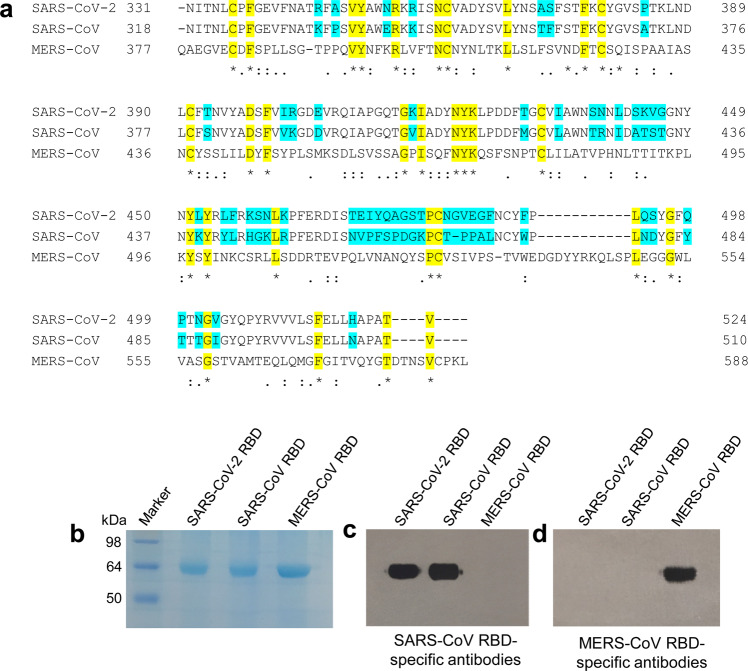
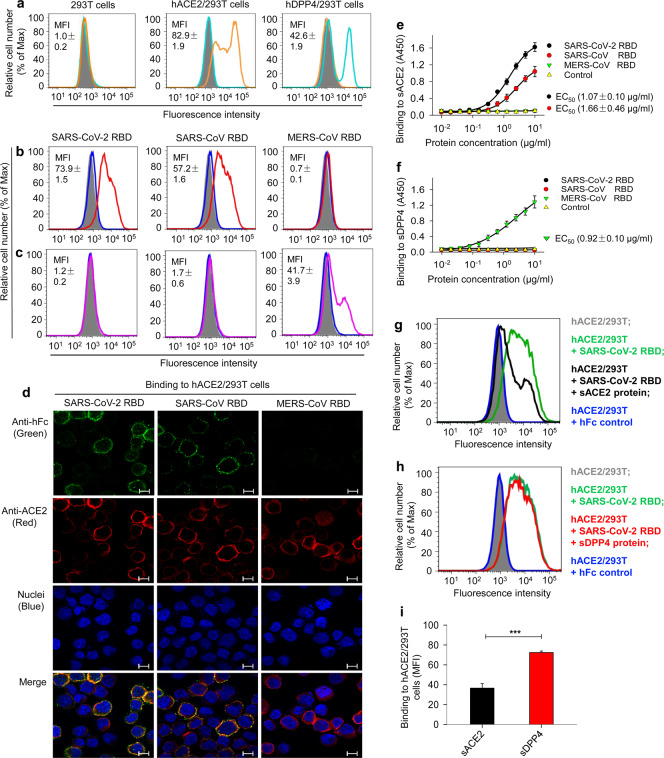
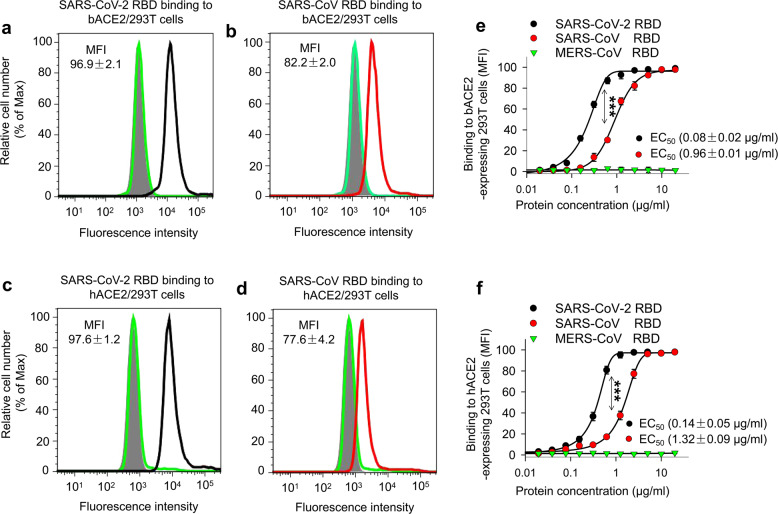
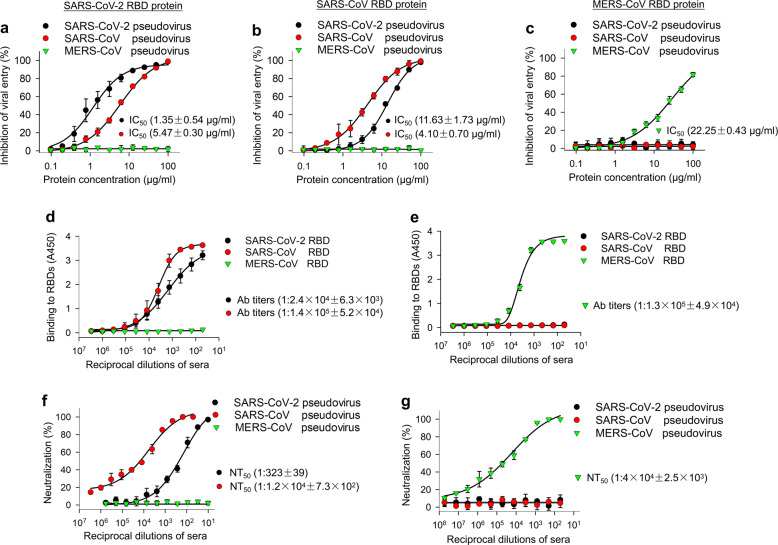
The outbreak of Coronavirus Disease 2019 (COVID-19) has posed a serious threat to global public health, calling for the development of safe and effective prophylactics and therapeutics against infection of its causative agent, severe acute respiratory syndrome coronavirus 2 (SARS-CoV-2), also known as 2019 novel coronavirus (2019-nCoV). The CoV spike (S) protein plays the most important roles in viral attachment, fusion and entry, and serves as a target for development of antibodies, entry inhibitors and vaccines. Here, we identified the receptor-binding domain (RBD) in SARS-CoV-2 S protein and found that the RBD protein bound strongly to human and bat angiotensin-converting enzyme 2 (ACE2) receptors. SARS-CoV-2 RBD exhibited significantly higher binding affinity to ACE2 receptor than SARS-CoV RBD and could block the binding and, hence, attachment of SARS-CoV-2 RBD and SARS-CoV RBD to ACE2-expressing cells, thus inhibiting their infection to host cells. SARS-CoV RBD-specific antibodies could cross-react with SARS-CoV-2 RBD protein, and SARS-CoV RBD-induced antisera could cross-neutralize SARS-CoV-2, suggesting the potential to develop SARS-CoV RBD-based vaccines for prevention of SARS-CoV-2 and SARS-CoV infection.
Overview
The claims and statistics of this paper haven’t been checked yet.
Run the check — free, no account needed. It reads the open-access text and checks the sources it cites.
Integrity signals
Registry
Cites
Statistics
Figures
Verification
Claims the paper makes
The claims and statistics of this paper haven’t been checked yet.
Run the check — free, no account needed. It reads the open-access text and checks the sources it cites.
Claims other papers make about this one
Each is checked against this paper’s own text: does it say what the citing paper says it does?
The source backs part of the claim, not all of it — or backs it for a different population, condition or comparison.
In the citing paper
“Some recent studies also demonstrated that immunization with the recombinant RBD of SARS-CoV-2 induced high titers of neutralizing antibodies in the absence of antibody-dependent enhancement (ADE) of infection (Quinlan et al., 2020; Tai et al., 2020).”
From A thermostable mRNA vaccine against COVID-19 (2020) · cites this paper as Tai et al., 2020
Experimental — accuracy not yet measured
Self-check
Percentages, sums and reported differences re-computed from the paper’s own numbers.
The self-check needs the paper’s full text.
Citations
Cites
A novel coronavirus from patients with pneumonia in China, 2019
Zhu, N., Zhang, D., Wang, W., Li, X., Yang, B., Song, J., Zhao, X., Huang, B., Shi, W., Lu, R., et al. (2020) · New England Journal of Medicine · doi:10.1056/nejmoa2001017 · Cited by 28,244
A pneumonia outbreak associated with a new coronavirus of probable bat origin
Zhou, P., Yang, X.-L., Wang, X.-G., Hu, B., Zhang, L., Zhang, W., Si, H.-R., Zhu, Y., Li, B., Huang, C.-L., et al. (2020) · Nature · doi:10.1038/s41586-020-2012-7 · Cited by 21,969 · cited 3×
“Since SARS-CoV-2 is more phylogenetically related to SARS-CoV than MERS-CoV, 22 we further detected the cross-reactivity of SARS-CoV RBD-specific antibodies with SARS-CoV-2 RBD and crossneutralizing activity of SARS-CoV RBD-specific antibodies against pseudotyped SARS-CoV-2.”
BackgroundResultInfluentialGorbalenya, A. E., Baker, S. C., Baric, R. S., de Groot, R. J., Drosten, C., Gulyaeva, A. A., Haagmans, B. L., Lauber, C., Leontovich, A. M., Neuman, B. W., et al. (2020) · Nature Microbiology · doi:10.1038/s41564-020-0695-z · Cited by 8,745
Angiotensin-converting enzyme 2 is a functional receptor for the SARS coronavirus
Li, W., Moore, M. J., Vasilieva, N., Sui, J., Wong, S. K., Berne, M. A., Somasundaran, M., Sullivan, J. L., Luzuriaga, K., Greenough, T. C., et al. (2003) · Nature · doi:10.1038/nature02145 · Cited by 5,923
Isolation of a Novel Coronavirus from a Man with Pneumonia in Saudi Arabia
Zaki, A. M., van Boheemen, S., Bestebroer, T. M., Osterhaus, A. D. M. E., & Fouchier, R. A. M. (2012) · New England Journal of Medicine · doi:10.1056/nejmoa1211721 · Cited by 5,677
Chou, T.-C. (2006) · Pharmacological Reviews · doi:10.1124/pr.58.3.10 · Cited by 5,163
Bats Are Natural Reservoirs of SARS-Like Coronaviruses
Li, W., Shi, Z., Yu, M., Ren, W., Smith, C. S., Epstein, J. H., Wang, H., Crameri, G. S., Hú, Z., Zhang, H., et al. (2005) · Science · doi:10.1126/science.1118391 · Cited by 2,571
Dipeptidyl peptidase 4 is a functional receptor for the emerging human coronavirus-EMC
Raj, V. S., Mou, H., Smits, S. L., Dekkers, D. H. W., Müller, M. A., Dijkman, R., Muth, D., Demmers, J. A. A., Zaki, A., Fouchier, R. A. M., et al. (2013) · Nature · doi:10.1038/nature12005 · Cited by 2,061
Structure of SARS Coronavirus Spike Receptor-Binding Domain Complexed with Receptor
Li, F., Li, W., Farzan, M., & Harrison, S. C. (2005) · Science · doi:10.1126/science.1116480 · Cited by 2,035
The spike protein of SARS-CoV — a target for vaccine and therapeutic development
Du, L., He, Y., Zhou, Y., Liu, S., Zheng, B.-J., & Jiang, S. (2009) · Nature Reviews Microbiology · doi:10.1038/nrmicro2090 · Cited by 1,678
Cited by
Sorted by citations
Items 201–300 of 1,001
Discovery of Cyclic Peptide Ligands to the SARS-CoV-2 Spike Protein Using mRNA Display
Norman, A. R., Franck, C., Christie, M., Hawkins, P. M. E., Patel, K., Ashhurst, A. S., Aggarwal, A., Low, J. K. K., Siddiquee, R., Ashley, C. L., et al. (2021) · ACS Central Science · doi:10.1021/acscentsci.0c01708 · Cited by 76
Immunopathology of galectin-3: an increasingly promising target in COVID-19
Caniglia, J. L., Asuthkar, S., Tsung, A. J., Guda, M. R., & Velpula, K. K. (2020) · F1000Research · doi:10.12688/f1000research.25979.1 · Cited by 75
“While the CTD of SARS-CoV2 has been shown to exhibit higher affinity for ACE2 receptors than that of SARSCoV, this is likely insufficient to fully explain the marked disparity in transmissibility (Tai et al., 2020).”
A Recent Update on Advanced Molecular Diagnostic Techniques for COVID-19 Pandemic: An Overview
Roberts, A., Chouhan, R. S., Shahdeo, D., Shrikrishna, N. S., Kesarwani, V., Horvat, M., & Gandhi, S. (2021) · Frontiers in Immunology · doi:10.3389/fimmu.2021.732756 · Cited by 74
Seyedpour, S., Khodaei, B., Loghman, A. H., Seyedpour, N., Kisomi, M. F., Balibegloo, M., Nezamabadi, S. S., Gholami, B., Saghazadeh, A., & Rezaei, N. (2020) · Journal of Cellular Physiology · doi:10.1002/jcp.30032 · Cited by 74
Francés‐Monerris, A., Hognon, C., Miclot, T., García‐Iriepa, C., Iriepa, I., Terenzi, A., Grandemange, S., Barone, G., Marazzi, M., & Monari, A. (2020) · Journal of Proteome Research · doi:10.1021/acs.jproteome.0c00779 · Cited by 72
Mehta, A., Michler, T., & Merkel, O. M. (2021) · Advanced Healthcare Materials · doi:10.1002/adhm.202001650 · Cited by 76
Statins—From Fungi to Pharmacy
Sadowska, A. J., Osiński, P., Roztocka, A., Kaczmarz-Chojnacka, K., Zapora, E., Sawicka, D., & Car, H. (2023) · International Journal of Molecular Sciences · doi:10.3390/ijms25010466 · Cited by 83
The 2020 Pandemic: Current SARS-CoV-2 Vaccine Development
Alturki, S. O., Alturki, S. O., Connors, J. R., Cusimano, G. M., Kutzler, M. A., Izmirly, A. M., & Haddad, E. K. (2020) · Frontiers in Immunology · doi:10.3389/fimmu.2020.01880 · Cited by 80
Verkhivker, G. M., Agajanian, S., Öztaş, D. Y., & Gupta, G. (2021) · Biochemistry · doi:10.1021/acs.biochem.1c00139 · Cited by 62
Theoharides, T. C., & Kempuraj, D. (2023) · Cells · doi:10.3390/cells12050688 · Cited by 82
“Moreover, activation of TLR4 increased the expression of ACE2 [117], further enhancing viral infectivity in an autocrine loop fashion.”
BackgroundInfluentialSARS-CoV-2 and diabetes: New challenges for the disease
Cristelo, C., Azevedo, C., Marques, J. M., Nunes, R., & Sarmento, B. F. C. C. (2020) · Diabetes Research and Clinical Practice · doi:10.1016/j.diabres.2020.108228 · Cited by 73
Paola, L. D., Hadi‐Alijanvand, H., Song, X., Hu, G., & Giuliani, A. (2020) · Journal of Proteome Research · doi:10.1021/acs.jproteome.0c00273 · Cited by 71
Ca2+-dependent mechanism of membrane insertion and destabilization by the SARS-CoV-2 fusion peptide
Khelashvili, G., Plante, A., Doktorova, M., & Weinstein, H. (2021) · Biophysical Journal · doi:10.1016/j.bpj.2021.02.023 · Cited by 73
“; https://doi.org/10.1101/2020.12.03.410472 doi: bioRxiv preprint receptor (see Refs.”
InfluentialArashkia, A., Jalilvand, S., Mohajel, N., Afchangi, A., Azadmanesh, K., Salehi-Vaziri, ., Fazlalipour, M., Pouriayevali, M. H., Jalali, T., Nasab, S. D. M., et al. (2020) · Reviews in Medical Virology · doi:10.1002/rmv.2183 · Cited by 73
Suzuki, Y., & Gychka, S. G. (2021) · Vaccines · doi:10.3390/vaccines9010036 · Cited by 72
“This protein consists of two subunits: Subunit 1 (S1) that contains the ACE2 receptor-binding domain (RBD) and Subunit 2 (S2) that plays a role in the fusion process [3,4] (Figure 1).”
BackgroundZhang, T., Tong, X., Zhang, S., Wang, D., Wang, L., Wang, Q., & Fan, H. S. (2021) · Frontiers in Pharmacology · doi:10.3389/fphar.2021.731453 · Cited by 73
“However, the RBD of the S1 domain did not exhibit binding activity to DPP4 in human cells (Tai et al., 2020).”
BackgroundEpitope-based peptide vaccines predicted against novel coronavirus disease caused by SARS-CoV-2
Li, L., Sun, T., He, Y., Wendong, L., Yubo, F., & Jing, Z. (2020) · Virus Research · doi:10.1016/j.virusres.2020.198082 · Cited by 70
COVID ‐19, microthromboses, inflammation, and platelet activating factor
Demopoulos, C. A., Antonopoulou, S., & Theoharides, T. C. (2020) · BioFactors · doi:10.1002/biof.1696 · Cited by 71
A short review on antibody therapy for COVID-19
Kumar, G. V., Jeyanthi, V., & Ramakrishnan, S. (2020) · New Microbes and New Infections · doi:10.1016/j.nmni.2020.100682 · Cited by 69
“Th is could block the binding of SARSCoV-2 RBD to ACE2-expressing cells, thus constraini ng their infection to host cells [26].”
BackgroundTackling SARS-CoV-2: Proposed Targets and Repurposed Drugs
Joshi, S. S., Joshi, M., & Degani, M. S. (2020) · Future Medicinal Chemistry · doi:10.4155/fmc-2020-0147 · Cited by 68
“, reported a recombinant RBD protein which competitively binds to ACE2 receptors, thus inhibiting infection of SARS-CoV-2 in cells [41].”
BackgroundUpdate on therapeutic approaches and emerging therapies for SARS-CoV-2 virus
Omolo, C. A., Soni, N., Fasiku, V. O., Mackraj, I., & Govender, T. (2020) · European Journal of Pharmacology · doi:10.1016/j.ejphar.2020.173348 · Cited by 69
Waning antibody responses in COVID-19: what can we learn from the analysis of other coronaviruses?
Hamady, A., Lee, J., & Loboda, Z. (2021) · Infection · doi:10.1007/s15010-021-01664-z · Cited by 66
Pang, Y. T., Acharya, A., Lynch, D. L., Pavlova, À., & Gumbart, J. C. (2022) · Communications Biology · doi:10.1038/s42003-022-04138-6 · Cited by 66
Assessment of avidity related to IgG subclasses in SARS-CoV-2 Brazilian infected patients
Moura, A. D., da Costa, H. H. M., Correa, V. A., Lima, A. K. D. S., Lindoso, J. Â. L., Gaspari, E. D., Hong, M. A., Cunha-Junior, J. P., & Prudêncio, C. R. (2021) · Scientific Reports · doi:10.1038/s41598-021-95045-z · Cited by 75
Royal, J. M., Simpson, C. A., McCormick, A. A., Phillips, A., Hume, S., Morton, J., Shepherd, J., Oh, Y., Swope, K., DeBeauchamp, J., et al. (2021) · Vaccines · doi:10.3390/vaccines9111347 · Cited by 71
“This domain is required for human host cell receptor, ACE-2, binding and is a target for neutralizing antibodies [24].”
BackgroundVerkhivker, G. M. (2020) · Journal of Proteome Research · doi:10.1021/acs.jproteome.0c00654 · Cited by 61
Makarenkov, V., Mazoure, B., Rabusseau, G., & Legendre, P. (2021) · BMC Ecology and Evolution · doi:10.1186/s12862-020-01732-2 · Cited by 67
Fu, Y., & Xiong, S. (2021) · Journal of Controlled Release · doi:10.1016/j.jconrel.2021.05.049 · Cited by 67
“that specifically recognizes ACE2 [6,7].”
Fallon, L., Belfon, K. A. A., Raguette, L. E., Wang, Y., Stepanenko, D., Cuomo, A. E., Guerra, J., Budhan, S., Varghese, S., Corbo, C. P., et al. (2021) · Journal of the American Chemical Society · doi:10.1021/jacs.1c00556 · Cited by 64
Mousavi, S. S., Karami, A., Haghighi, T. M., Tumilaar, S. G., Fatimawali, F., Idroes, R., Mahmud, S., Çelik, İ., Ağagündüz, D., Tallei, T. E., et al. (2021) · Molecules · doi:10.3390/molecules26185724 · Cited by 72
“RBD exhibits a high affinity for the human angiotensin-converting enzyme 2 (hACE2) protein, which serves as the receptor for SARS-CoV-2 virus entry [17].”
BackgroundJawad, B., Adhikari, P., Podgornik, R., & Ching, W. Y. (2022) · The Journal of Physical Chemistry Letters · doi:10.1021/acs.jpclett.2c00423 · Cited by 66
SARS-CoV-2 cell entry beyond the ACE2 receptor
Alipoor, S. D., & Mirsaeidi, M. S. (2022) · Molecular Biology Reports · doi:10.1007/s11033-022-07700-x · Cited by 74
“observed that the spike protein of SARS-CoV-2 did not bind to 293 T-cells expressing human CD26 [55].”
BackgroundSun, X., Huang, X., Park, K. S., Zhou, X., Kennedy, A. A., Pretto, C. D., Wu, Q., Wan, Z., Xu, Y., Gong, W., et al. (2024) · ACS Nano · doi:10.1021/acsnano.3c11374 · Cited by 70
“To test this idea, we introduced a 6× His-tag to the spike protein receptor binding domain (RBD), the key binding interface that the SARS-CoV-2 virus uses to initiate membrane fusion, 33 and incorporated this into the one-pot synthesis reaction with ZMCP (Figure 6A).”
MethodEpitope based peptide vaccine against SARS-COV2: an immune-informatics approach
Bhatnager, R., Bhasin, M., Arora, J., & Dang, A. S. (2020) · Journal of Biomolecular Structure and Dynamics · doi:10.1080/07391102.2020.1787227 · Cited by 67
“Hence, it can be inferred that S2 domain plays a significant role in mediating cell entry (Tai et al., 2020).”
BackgroundInfluentialPandit, M., & Latha, N. (2020) · doi:10.21203/rs.3.rs-22687/v1 · Cited by 76
Deciphering the TCR Repertoire to Solve the COVID-19 Mystery
Gutierrez, L., Beckford, J., & Alachkar, H. (2020) · Trends in Pharmacological Sciences · doi:10.1016/j.tips.2020.06.001 · Cited by 65
Zhu, Y., Yu, D., Han, Y., Yan, H., Chong, H., Ren, L., Wang, J., Li, T., & He, Y. (2020) · Science Advances · doi:10.1126/sciadv.abc9999 · Cited by 64
Current methods for diagnosis of human coronaviruses: pros and cons
Benzigar, M. R., Bhattacharjee, R., Baharfar, M., & Liu, G. (2020) · Analytical and Bioanalytical Chemistry · doi:10.1007/s00216-020-03046-0 · Cited by 71
Can, H., Köseoğlu, A. E., Alak, S. E., Güvendi, M., Döşkaya, M., Karakavuk, M., Gürüz, A. Y., & Ün, C. (2020) · Scientific Reports · doi:10.1038/s41598-020-79645-9 · Cited by 66
Finkelstein, M. T., Mermelstein, A. G., Miller, E. P., Seth, P. C., Stancofski, E.-S. D., & Fera, D. (2021) · Viruses · doi:10.3390/v13010134 · Cited by 63
“The KD is lower than what is observed for the SARS-CoV RBD binding to ACE2 [21,22,26,27], although the full S trimeric ectodomains have similar affinities [14,26].”
BackgroundMiller, L. M., Barnes, L. F., Raab, S. A., Draper, B. E., El‐Baba, T. J., Lutomski, C. A., Robinson, C. V., Clemmer, D. E., & Jarrold, M. F. (2021) · Journal of the American Chemical Society · doi:10.1021/jacs.1c00353 · Cited by 66
Wei, X., Xiao, Y., Wang, J., Chen, R., Zhang, W., Yang, Y., Lv, D., Qin, C., Gu, D., Zhang, B., et al. (2020) · arXiv (Cornell University) · doi:10.48550/arxiv.2003.13547 · Cited by 73
“9) 40 15 25 13 \ \ 14 Retrospective Research 16 57 Zhang J 2/19 3/2 China,wuhan 57(25-87) 140 71 69 58 9 \ 90 Retrospective Research 15 58 Xu X 2/19 1/26 China, Zhejiang 41(32-52) 62 36 26 \ \ 0 20 Retrospective Research 15 59 CDC 2/17 2/11 China 30-69 44672 22981 21691 8255 \ 1023 5276 Descriptive Research 15 7 Huang…”
InfluentialPutative contributions of circadian clock and sleep in the context of SARS-CoV-2 infection
Cruz, M. G. M. E., Miyazawa, M., & Gozal, D. (2020) · European Respiratory Journal · doi:10.1183/13993003.01023-2020 · Cited by 64
“As expression levels of ACE2 likely affect the efficiency of virus attachment and entry as well as disease severity (6) , and the interactions between viral S protein and ACE2 may directly cause lung injury (7), ACE2 can be a potential target of therapeutic and preventative interventions (8) .”
BackgroundCOVID‐19: Focus on the lungs but do not forget the gastrointestinal tract
Smyk, W., Janik, M. K., Portincasa, P., Milkiewicz, P., Lammert, F., & Krawczyk, M. J. (2020) · European Journal of Clinical Investigation · doi:10.1111/eci.13276 · Cited by 64
An updated analysis of variations in SARS-CoV-2 genome
Uğurel, O. M., Ata, O., & Turgut‐Balik, D. (2020) · TURKISH JOURNAL OF BIOLOGY · doi:10.3906/biy-2005-111 · Cited by 63
“…about 1 year to resolve this mechanism for the SARS-CoV (Li et al., 2003), this timing was much shorter, as nearly 3 months, with the research ability that have been gained with the developing DNA sequencing technologies and over years of experience in this area (Tai et al., 2020; Ou et al., 2020).”
BackgroundInfluentialImmunoglobulin fragment F(ab’)2 against RBD potently neutralizes SARS-CoV-2 in vitro
Pan, X., Zhou, P., Fan, T., Wu, Y., Zhang, J., Shi, X., Shang, W., Fang, L., Jiang, X., Shi, J. R., et al. (2020) · Antiviral Research · doi:10.1016/j.antiviral.2020.104868 · Cited by 65
Angiotensin Converting Enzyme 2 (ACE2) in Pregnancy: Preeclampsia and Small for Gestational Age
Tamanna, S., Clifton, V. L., Rae, K. M., Helden, D. F. V., Lumbers, E. R., & Pringle, K. G. (2020) · Frontiers in Physiology · doi:10.3389/fphys.2020.590787 · Cited by 64
“In acute respiratory distress syndrome recombinant human ACE2 reduces SARS-induced lung injury (Imai et al., 2005) and has been shown to prevent cell infection by SARS-Cov-2 (Monteil et al., 2020; Tai et al., 2020).”
BackgroundSuručić, R. V., Tubić, B., Stojiljković, M. P., Djuric, D. M., Travar, M., Grabež, M., Šavikin, K., & Škrbić, R. (2020) · Molecular and Cellular Biochemistry · doi:10.1007/s11010-020-03981-7 · Cited by 65
“The virusreceptor attachment occurs at the binding domain presented at 331 and 524 residues of the virus S glycoprotein [7].”
BackgroundLu, M., Dravid, P., Zhang, Y., Trivedi, S., Li, A., Harder, O. E., Mahesh, K. C., Chaiwatpongsakorn, S., Zani, A., Kenney, A. D., et al. (2021) · Proceedings of the National Academy of Sciences · doi:10.1073/pnas.2026153118 · Cited by 66
Dynamics of antibodies to SARS‐CoV‐2 in convalescent plasma donors
Steenhuis, M., van Mierlo, G. J., Derksen, N. I. L., Heer, P. O., Kruithof, S., Loeff, F. C., Berkhout, L. C., Linty, F., Reusken, C. B. E. M., Reimerink, J. H. J., et al. (2021) · Clinical & Translational Immunology · doi:10.1002/cti2.1285 · Cited by 63
“The S protein mediates binding of 70 the virus particle to angiotension converting enzyme-2 (ACE2) on target cells through its receptor binding 71 domain (RBD) [12, 13], enabling merging of viral and target cell membrane.”
BackgroundSite-Specific Steric Control of SARS-CoV-2 Spike Glycosylation
Allen, J. D., Chawla, H., Samsudin, F., Zuzic, L., Shivgan, A. T., Watanabe, Y., He, W., Callaghan, S., Song, G., Yong, P., et al. (2021) · Biochemistry · doi:10.1021/acs.biochem.1c00279 · Cited by 61
Özer, T., & Henry, C. S. (2021) · TrAC Trends in Analytical Chemistry · doi:10.1016/j.trac.2021.116424 · Cited by 68
Ferdausi, N., Islam, S., Rimti, F. H., Quayum, S. T., Arshad, E. M., Ibnat, A., Islam, T., Arefin, A., Ema, T. I., Biswas, P., et al. (2022) · Journal of Advanced Veterinary and Animal Research · doi:10.5455/javar.2022.i588 · Cited by 65
Landscape and selection of vaccine epitopes in SARS-CoV-2
Smith, C. C., Olsen, K. S., Gentry, K. M., Sambade, M. J., Beck, W. A., Garness, J. A., Entwistle, S., Willis, C., Vensko, S. P., II, Woods, A., et al. (2021) · Genome Medicine · doi:10.1186/s13073-021-00910-1 · Cited by 62
VanPatten, S., He, M., Altiti, A. S., Cheng, K. F., Ghanem, M. H., & Al‐Abed, Y. (2020) · Future Medicinal Chemistry · doi:10.4155/fmc-2020-0180 · Cited by 65
Rapid design and development of CRISPR-Cas13a targeting SARS-CoV-2 spike protein
Wang, L., Zhou, J., Wang, Q., Wang, Y., & Kang, C. (2020) · Theranostics · doi:10.7150/thno.51479 · Cited by 62
“The RBD in S is a popular target for the design of neutralizing antibodies, inhibitors, and vaccines [23, 24].”
BackgroundPourseif, M. M., Parvizpour, S., Jafari, B., Dehghani, J., Naghili, B., & Omidi, Y. (2020) · Bioimpacts · doi:10.34172/bi.2021.11 · Cited by 63
Kiew, L. V., Chang, C.-Y., Huang, S., Wang, P., Heh, C.-H., Liu, C.-T., Cheng, C.-H., Lu, Y.-X., Chen, Y., Huang, Y.-X., et al. (2021) · Biosensors and Bioelectronics · doi:10.1016/j.bios.2021.113213 · Cited by 64
Verkhivker, G. M., & Paola, L. D. (2021) · The Journal of Physical Chemistry B · doi:10.1021/acs.jpcb.1c00395 · Cited by 55
Ban, D. K., Bodily, T. A., Karkisaval, A. G., Dong, Y., Natani, S., Ramanathan, A., Ramil, A., Srivastava, S., Bandaru, P., Glinsky, G. V., et al. (2022) · Proceedings of the National Academy of Sciences · doi:10.1073/pnas.2206521119 · Cited by 64
Teralı, K., Baddal, B., & Gülcan, H. O. (2020) · Journal of Molecular Graphics and Modelling · doi:10.1016/j.jmgm.2020.107697 · Cited by 64
“Viral entry depends on binding of the S1 subunit to ACE2 through the receptor-binding domain (RBD) in the S1 subunit, facilitating viral attachment to the surface of target cells [11].”
BackgroundThe Cellular basis of loss of smell in 2019-nCoV-infected individuals
Gupta, K., Mohanty, S. K., Mittal, A., Kalra, S., Kumar, S., Mishra, T., Ahuja, J., Sengupta, D., & Ahuja, G. (2020) · Briefings in Bioinformatics · doi:10.1093/bib/bbaa168 · Cited by 62
“0001), which is in line with the published experimental results [52].”
ResultGhorbani, M., Brooks, B. R., & Klauda, J. B. (2020) · The Journal of Physical Chemistry B · doi:10.1021/acs.jpcb.0c05994 · Cited by 61
Verkhivker, G. M., & Paola, L. D. (2021) · The Journal of Physical Chemistry B · doi:10.1021/acs.jpcb.0c10637 · Cited by 56
Chen, W., Wei, J., Kundu, R. T., Adhikari, R., Liu, Z., Lee, J., Versteeg, L., Poveda, C., Keegan, B. P., Villar, M. J., et al. (2021) · Biochimica et Biophysica Acta (BBA) - General Subjects · doi:10.1016/j.bbagen.2021.129893 · Cited by 62
“Beyond our findings with SARS-CoV, additional studies have already shown that mammalian cell-expressed SARS-CoV-2 RBD triggered high specific total IgG as well as neutralizing antibody titers in mice [7] and that the vaccination of insect cellexpressed RBD protected non-human primates (NHPs) from SARS-CoV-2 challenge…”
ResultWalker, S. N., Chokkalingam, N., Reuschel, E. L., Purwar, M., Xu, Z., Gary, E. N., Kim, K. Y., Helble, M., Schultheis, K., Walters, J. N., et al. (2020) · Journal of Clinical Microbiology · doi:10.1128/jcm.01533-20 · Cited by 61
“A 193 amino acid region on the spike protein of SARS-CoV-1 and SARS60 CoV-2 termed the receptor binding domain (RBD) was found to interact with the ACE2 receptor 61 and primarily mediates cell entry(5-10).”
BackgroundStructural genetics of circulating variants affecting the SARS-CoV-2 spike/human ACE2 complex
Ortuso, F., Mercatelli, D., Guzzi, P. H., & Giorgi, F. M. (2021) · Journal of Biomolecular Structure and Dynamics · doi:10.1080/07391102.2021.1886175 · Cited by 61
Qi, X., Wang, J., Królczyk, G., Gardoni, P., & Li, Z. (2022) · Journal of Energy Storage · doi:10.1016/j.est.2022.104682 · Cited by 62
RetractedPotential Benefits and Harms of Novel Antidiabetic Drugs During COVID-19 Crisis
Mirabelli, M., CHIEFARI, E. D., Puccio, L., FOTI, D. P., & Brunetti, A. (2020) · International Journal of Environmental Research and Public Health · doi:10.3390/ijerph17103664 · Cited by 64
Haslberger, A. G., Jacob, U., Hippe, B., & Karlic, H. (2020) · Functional Foods in Health and Disease · doi:10.31989/ffhd.v10i5.707 · Cited by 64
COVID-19 update: The race to therapeutic development
Twomey, J. D., Luo, S., Dean, A. Q., Bozza, W. P., Nalli, A. D., & Zhang, B. (2020) · Drug Resistance Updates · doi:10.1016/j.drup.2020.100733 · Cited by 62
COVID-19 Vaccines (Revisited) and Oral-Mucosal Vector System as a Potential Vaccine Platform
Ashraf, M. U., Kim, Y., Kumar, S., Seo, D., Ashraf, M., & Bae, Y. (2021) · Vaccines · doi:10.3390/vaccines9020171 · Cited by 62
Therapeutic proteins: developments, progress, challenges, and future perspectives
Kumar, V., Barwal, A., Sharma, N., Mir, D. S., Kumar, P., & Kumar, V. (2024) · 3 Biotech · doi:10.1007/s13205-024-03958-z · Cited by 62
“This Recombinant human-soluble ACE2 protein prevents the SARS-CoV-2 from binding to ACE2 (Zhou et al. 2020; Monteil et al. 2020; Tai et al. 2020).”
Kuwentrai, C., Yu, J., Li, R., Zhang, B., Hu, Y., Gong, H., Dou, Y., Deng, J., Huang, J., & Xu, C. (2020) · Bioengineering & Translational Medicine · doi:10.1002/btm2.10202 · Cited by 61
“HA was chosen as the building block for the MN device because it has excellent biocompatibility and biodegradability, and is regularly used in cosmetics as a dermal filler.(4) Several types of HA are available”
BackgroundMethodAdhikari, P., Li, N., Shin, M. D., Steinmetz, N. F., Twarock, R., Podgornik, R., & Ching, W. Y. (2020) · Physical Chemistry Chemical Physics · doi:10.1039/d0cp03145c · Cited by 60
Endocrine aspects of ACE2 regulation: RAAS, steroid hormones and SARS-CoV-2
Young, M. J., Clyne, C. D., & Chapman, K. E. (2020) · Journal of Endocrinology · doi:10.1530/joe-20-0260 · Cited by 64
Potential SARS-CoV-2 Immune Correlates of Protection in Infection and Vaccine Immunization
Sui, Y., Bekele, Y., & Berzofsky, J. A. (2021) · Pathogens · doi:10.3390/pathogens10020138 · Cited by 57
Neurobiology of COVID-19: how can the virus affect the brain?
Generoso, J. S., de Quevedo, J. L. B., Cattani, M., Lodetti, B. F., Sousa, L., Collodel, A., Díaz, A. P., & Dal‐Pizzol, F. (2021) · Brazilian Journal of Psychiatry · doi:10.1590/1516-4446-2020-1488 · Cited by 65
“34,35 It is also involved in assembly and viral budding, resulting in the complete formation of the virion.”
COVID-19: Immunology, Immunopathogenesis and Potential Therapies
Bhardwaj, A., Sapra, L., Saini, C., Azam, Z., Mishra, P. K., Verma, B., Mishra, G. C., & Srivastava, R. K. (2021) · International Reviews of Immunology · doi:10.1080/08830185.2021.1883600 · Cited by 65
“Blockade of RBD binding to the S protein by antibodies against it can prevent the viral entry into host cells and thus prevents SARS-CoV-2 infection [246].”
BackgroundEmerging genetic diversity among clinical isolates of SARS-CoV-2: Lessons for today
Sheikh, J. A., Singh, J., Singh, H., Jamal, S., Khubaib, M., Kohli, S., Dobrindt, U., Rahman, S. A., Ehtesham, N. Z., & Hasnain, S. E. (2020) · Infection Genetics and Evolution · doi:10.1016/j.meegid.2020.104330 · Cited by 58
Potential inhibitors of the interaction between ACE2 and SARS-CoV-2 (RBD), to develop a drug
Benítez‐Cardoza, C. G., & Vique‐Sánchez, J. L. (2020) · Life Sciences · doi:10.1016/j.lfs.2020.117970 · Cited by 59
“In this study we carried out a Docking aimed at the reported residues that are important for the SARS-CoV-2 RBD/spike protein, to interact with ACE2 [10,22], we determined that residues Lys26, His34, Glu37, Asp38, Tyr41, Gln96, Gln325, Asn330, Lys353, Arg357, Ala386, Ala387, Pro389 and Arg393 are important for the maj…”
Cellular and Humoral Immune Responses in Covid-19 and Immunotherapeutic Approaches
Hasan, A., Al‐Ozairi, E., Albaqsumi, Z., Ahmad, R., & Al‐Mulla, F. (2021) · ImmunoTargets and Therapy · doi:10.2147/itt.s280706 · Cited by 56
Valdés-Balbín, Y., Santana-Mederos, D., Paquet, F., Fernández-Castillo, S., Climent, Y., Chiodo, F., Rodríguez, L., Ramírez, B. S., León, K., Hernández, T., et al. (2021) · ACS Central Science · doi:10.1021/acscentsci.1c00216 · Cited by 53
Advances in Neutralization Assays for SARS‐CoV‐2
Lu, Y., Jin, W., Li, Q., Hu, H., Lu, J., & Chen, Z. (2021) · Scandinavian Journal of Immunology · doi:10.1111/sji.13088 · Cited by 58
Zang, J., Zhu, Y., Zhou, Y., Gu, C., Yi, Y., Wang, S., Xu, S., Hu, G., Du, S., Yin, Y., et al. (2021) · Cell Discovery · doi:10.1038/s41421-021-00315-9 · Cited by 59
Pyrć, K., Milewska, A., Barreto-Durán, E., Botwina, P., Dąbrowska, A., Jędrysik, M., Benedyk‐Machaczka, M., Lopes, R. M., Arenas‐Pinto, A., Badr, M. Y., et al. (2021) · Scientific Reports · doi:10.1038/s41598-021-99404-8 · Cited by 59
Detection and discrimination of SARS-CoV-2 spike protein-derived peptides using THz metamaterials
Lee, S. H., Lee, Y. K., Lee, S., Kwak, J., Song, H. S., & Seo, M. (2022) · Biosensors and Bioelectronics · doi:10.1016/j.bios.2022.113981 · Cited by 61
“Their RNA genome primarily encodes four proteins: the S protein, envelope protein, membrane protein, and nucleocapsid protein (Beig Parikhani et al., 2021; Ji et al., 2020; Tai et al., 2020; Krammer et al., 2020; Kim et al., 2021; Naqvi et al., 2020).”
In-silico design of a potential inhibitor of SARS-CoV-2 S protein
Jaiswal, G., & Kumar, V. (2020) · PLoS ONE · doi:10.1371/journal.pone.0240004 · Cited by 59
An mRNA-based T-cell-inducing antigen strengthens COVID-19 vaccine against SARS-CoV-2 variants
Tai, W., Feng, S., Chai, B., Lu, S., Zhao, G., Chen, D., Yu, W., Ren, L., Shi, H., Lü, J., et al. (2023) · Nature Communications · doi:10.1038/s41467-023-38751-8 · Cited by 58
Defendi, H. G. T., Madeira, L. D. S., & Borschiver, S. (2021) · Journal of Pharmaceutical Innovation · doi:10.1007/s12247-021-09535-8 · Cited by 63
Kerkour, R., Chafai, N., Moumeni, O., & Chafaa, S. (2022) · Journal of Molecular Structure · doi:10.1016/j.molstruc.2022.134196 · Cited by 57
“Paients have also been treated with antibodies, while others have een treated solely or with traditional medical remedies such as erbal decoctions [5] .”
BackgroundCurrent development of COVID-19 diagnostics, vaccines and therapeutics
Zhang, N., Li, C., Hu, Y., Li, K., Liang, J., Wang, L., Du, L., & Jiang, S. (2020) · Microbes and Infection · doi:10.1016/j.micinf.2020.05.001 · Cited by 55
“Until now, some different animal models are under developed, including hamsters, ferrets, ACE2-transgenic mice and non-human primates [36].”
InfluentialPrinciples and Challenges in anti-COVID-19 Vaccine Development
Strizova, Z. O., Smetanová, J., Bartůňková, J., & Milota, T. (2021) · International Archives of Allergy and Immunology · doi:10.1159/000514225 · Cited by 58
Precision therapeutic targets for COVID-19
Krumm, Z. A., Lloyd, G. M., Francis, C. P., Nasif, L. H., Mitchell, D. A., Golde, T. E., Giasson, B. I., & Xia, Y. (2021) · Virology Journal · doi:10.1186/s12985-021-01526-y · Cited by 58
“Soluble SARS-CoV-2 RBD inhibited pseudoviral entry in human ACE2-expressing cells [102].”
BackgroundEmerging Biosensors to Detect Severe Acute Respiratory Syndrome Coronavirus 2 (SARS-CoV-2): A Review
Lim, W. Y., Lan, B. L., & Ramakrishnan, N. (2021) · Biosensors · doi:10.3390/bios11110434 · Cited by 56
“ACE2 receptor on the human host cell through its RBD [55].”
BackgroundAltered gut microbial metabolites could mediate the effects of risk factors in Covid‐19
Chen, J., Hall, S., & Vitetta, L. (2021) · Reviews in Medical Virology · doi:10.1002/rmv.2211 · Cited by 55
“to enter host cells, explains why S protein has much higher affinity than that of SARS‐CoV for the same receptor.(13,14) Y‐shaped spike pairs are”
BackgroundHe, Y., Qi, J., Xiao, L., Shen, L., Yu, W., & Hu, T. (2021) · Engineering in Life Sciences · doi:10.1002/elsc.202000106 · Cited by 55
“In addition, it can bind to a host receptor, angiotensinconverting enzyme 2 (ACE2) through the receptor-binding domain (RBD) [14].”
BackgroundNatural Bioactive Molecules: An Alternative Approach to the Treatment and Control of COVID-19
Islam, F., Bibi, S., Meem, A. F. K., Islam, M. M., Rahaman, M. S., Bepary, S., Rahman, M. M., Rahman, M. M., Elzaki, A. A., Kajoak, S. A., et al. (2021) · International Journal of Molecular Sciences · doi:10.3390/ijms222312638 · Cited by 55
Aptamer Sandwich Assay for the Detection of SARS-CoV-2 Spike Protein Antigen
Svobodová, M., Skouridou, V., Jauset‐Rubio, M., Viéitez, I., Fernández‐Villar, A., Cabrera, J. J., Poveda, E., Bofill, C. B., Sans, T., Bashammakh, A. S., et al. (2021) · ACS Omega · doi:10.1021/acsomega.1c05521 · Cited by 55
Novel Evidence of Acute Kidney Injury in COVID-19
Chueh, T.-I., Zheng, C., Hou, Y., & Lu, K. (2020) · Journal of Clinical Medicine · doi:10.3390/jcm9113547 · Cited by 54
“Hemodynamic instability, such as in patients with cardiorenal syndrome preceded by myocardial injury [5] or a cytokine storm induced by SARS-CoV-2 [55], reduces renal perfusion, and up to 80% of patients with acute tubular necrosis (ATN) require dialysis [52].”
Background
Metadata
- Authors
- Tai, W., He, L., Zhang, X., Pu, J., Voronin, D., Jiang, S., Zhou, Y., & Du, L.
- Affiliations
- New York Blood Center (US)
- Beijing Institute of Microbiology and Epidemiology (CN)
- Shanghai Medical College of Fudan University (CN)
- Corresponding author
- Jiang, Shibo
- Zhou, Yusen
- Du, Lanying
- Venue
- Cellular & Molecular Immunology
- Published
- 2020-03-19
- Volume
- 17
- Issue
- 6
- Pages
- 613-620
- ISSN
- 1672-7681 (ISSN-L)
- 2042-0226
- PMC
- PMC7091888
- OpenAlex
- W3011537081
- Cited by
- 1,654
- References
- 34
- Citations by year
- 2026: 28 · 2025: 68 · 2024: 120 · 2023: 184 · 2022: 296 · 2021: 482 · 2020: 475
- FWCI
- 47.20
- Type
- journal article
- Language
- en
- Open access
- hybrid
- doi.org
- Locations
- Cellular and Molecular Immunology (publishedVersion, cc-by)
- PubMed Central (publishedVersion, cc-by)
- PubMed (publishedVersion)
- Informationszentrum Lebenswissenschaften (ZB MED) (submittedVersion, cc-by)
- Funders
- U.S. Department of Health & Human Services | National Institutes of Health (R01AI137472, R01AI139092)
- Topics
- Health Sciences › Medicine › Infectious Diseases › SARS-CoV-2 and COVID-19 Research
- Life Sciences › Agricultural and Biological Sciences › Animal Science and Zoology › Animal Virus Infections Studies
- Life Sciences › Biochemistry, Genetics and Molecular Biology › Molecular Biology › vaccines and immunoinformatics approaches
- Keywords
- SARS-CoV-2, receptor binding domain, spike protein, ACE2 receptor, viral attachment inhibition, entry inhibitors, vaccine development, cross-reactive antibodies, SARS-CoV, COVID-19 pandemic, neutralizing antibodies, receptor binding affinity
- MeSH terms
- Betacoronavirus, COVID-19, SARS-CoV-2, COVID-19 Vaccines, Amino Acid Sequence, Animals, Antibodies, Viral, Binding Sites, Chiroptera, Cross Reactions, Humans, Pneumonia, Viral, Protein Binding, Viral Vaccines, Sequence Alignment, Coronavirus Infections, Receptor, Angiotensin, Type 2, Severe acute respiratory syndrome-related coronavirus, Mice, Virus Internalization, HEK293 Cells, Pandemics, Spike Glycoprotein, Coronavirus
About these checks
Registry, retraction, Cites and statistics results are computed, not judged, with one exception: a printed reference that no index lists is read once by a model before it counts as a citation error. Claims are extracted by a model and kept only when their quote appears verbatim in the text; each cited source is then checked, with a model’s help, for whether it says what the claim relies on. Those verdicts can be wrong — read the claim’s quote and the cited source before relying on one.
Statistics and arithmetic are recomputed, not judged.
Confidence bands are shown only for fields calibrated on our annotated test set. None is calibrated yet, so no band is shown.
What counts as a claim ›How we measure confidence ›How we check this ›
Are you an author, or do you see a problem with this page? Request a review
