

The DOI matches its Crossref record; 33 of the 34 references it cites were found in a registry or an index.
Characterization of the receptor-binding domain (RBD) of 2019 novel coronavirus: implication for development of RBD protein as a viral attachment inhibitor and vaccine
Open accessAbstract
The outbreak of Coronavirus Disease 2019 (COVID-19) has posed a serious threat to global public health, calling for the development of safe and effective prophylactics and therapeutics against infection of its causative agent, severe acute respiratory syndrome coronavirus 2 (SARS-CoV-2), also known as 2019 novel coronavirus (2019-nCoV). The CoV spike (S) protein plays the most important roles in viral attachment, fusion and entry, and serves as a target for development of antibodies, entry inhibitors and vaccines. Here, we identified the receptor-binding domain (RBD) in SARS-CoV-2 S protein and found that the RBD protein bound strongly to human and bat angiotensin-converting enzyme 2 (ACE2) receptors. SARS-CoV-2 RBD exhibited significantly higher binding affinity to ACE2 receptor than SARS-CoV RBD and could block the binding and, hence, attachment of SARS-CoV-2 RBD and SARS-CoV RBD to ACE2-expressing cells, thus inhibiting their infection to host cells. SARS-CoV RBD-specific antibodies could cross-react with SARS-CoV-2 RBD protein, and SARS-CoV RBD-induced antisera could cross-neutralize SARS-CoV-2, suggesting the potential to develop SARS-CoV RBD-based vaccines for prevention of SARS-CoV-2 and SARS-CoV infection.
Overview
The claims and statistics of this paper haven’t been checked yet.
Run the check — free, no account needed. It reads the open-access text and checks the sources it cites.
Integrity signals
Registry
Cites
Statistics
Figures
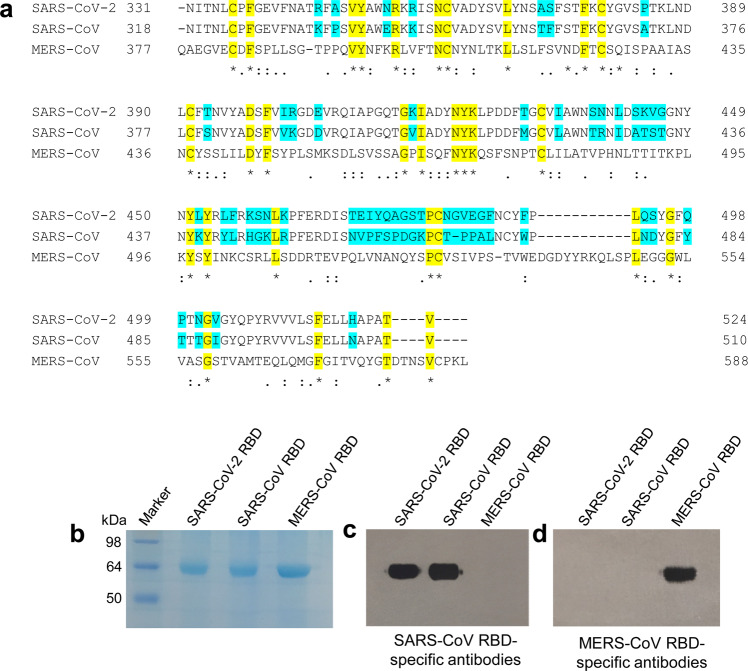
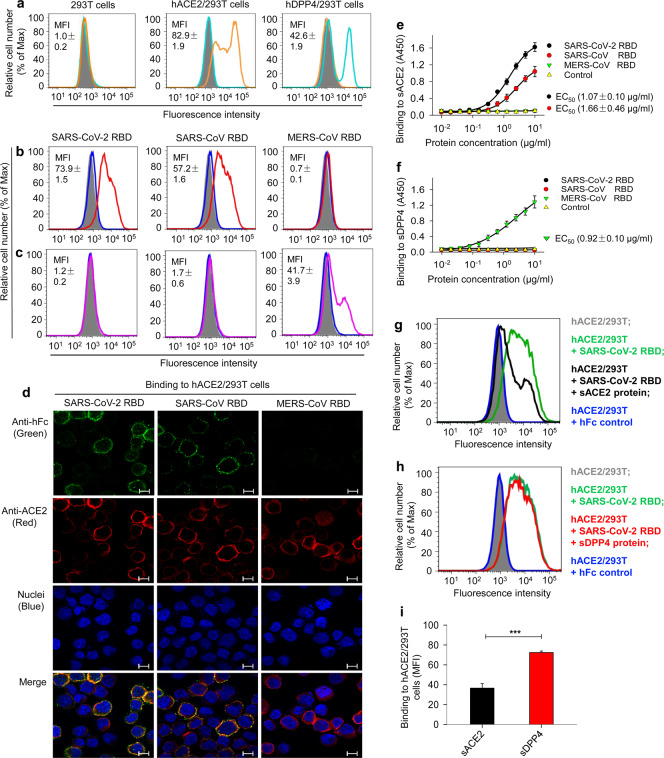
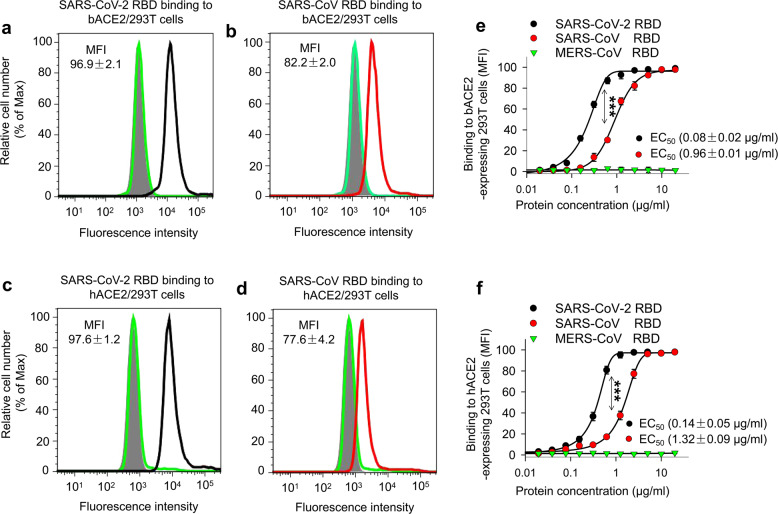
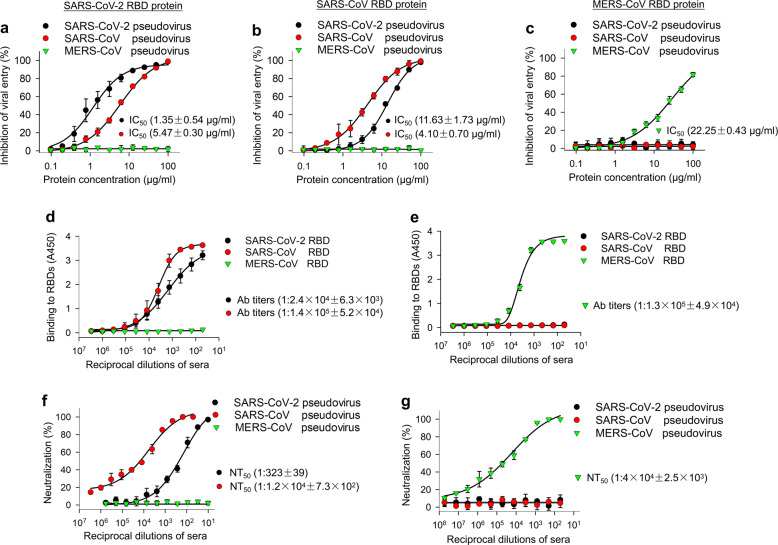
Verification
Claims the paper makes
The claims and statistics of this paper haven’t been checked yet.
Run the check — free, no account needed. It reads the open-access text and checks the sources it cites.
Claims other papers make about this one
Each is checked against this paper’s own text: does it say what the citing paper says it does?
The source backs part of the claim, not all of it — or backs it for a different population, condition or comparison.
In the citing paper
“Some recent studies also demonstrated that immunization with the recombinant RBD of SARS-CoV-2 induced high titers of neutralizing antibodies in the absence of antibody-dependent enhancement (ADE) of infection (Quinlan et al., 2020; Tai et al., 2020).”
From A thermostable mRNA vaccine against COVID-19 (2020) · cites this paper as Tai et al., 2020
Experimental — accuracy not yet measured
Self-check
Percentages, sums and reported differences re-computed from the paper’s own numbers.
The self-check needs the paper’s full text.
Citations
Cites
A novel coronavirus from patients with pneumonia in China, 2019
Zhu, N., Zhang, D., Wang, W., Li, X., Yang, B., Song, J., Zhao, X., Huang, B., Shi, W., Lu, R., et al. (2020) · New England Journal of Medicine · doi:10.1056/nejmoa2001017 · Cited by 28,244
A pneumonia outbreak associated with a new coronavirus of probable bat origin
Zhou, P., Yang, X.-L., Wang, X.-G., Hu, B., Zhang, L., Zhang, W., Si, H.-R., Zhu, Y., Li, B., Huang, C.-L., et al. (2020) · Nature · doi:10.1038/s41586-020-2012-7 · Cited by 21,969 · cited 3×
“Since SARS-CoV-2 is more phylogenetically related to SARS-CoV than MERS-CoV, 22 we further detected the cross-reactivity of SARS-CoV RBD-specific antibodies with SARS-CoV-2 RBD and crossneutralizing activity of SARS-CoV RBD-specific antibodies against pseudotyped SARS-CoV-2.”
BackgroundResultInfluentialGorbalenya, A. E., Baker, S. C., Baric, R. S., de Groot, R. J., Drosten, C., Gulyaeva, A. A., Haagmans, B. L., Lauber, C., Leontovich, A. M., Neuman, B. W., et al. (2020) · Nature Microbiology · doi:10.1038/s41564-020-0695-z · Cited by 8,745
Angiotensin-converting enzyme 2 is a functional receptor for the SARS coronavirus
Li, W., Moore, M. J., Vasilieva, N., Sui, J., Wong, S. K., Berne, M. A., Somasundaran, M., Sullivan, J. L., Luzuriaga, K., Greenough, T. C., et al. (2003) · Nature · doi:10.1038/nature02145 · Cited by 5,923
Isolation of a Novel Coronavirus from a Man with Pneumonia in Saudi Arabia
Zaki, A. M., van Boheemen, S., Bestebroer, T. M., Osterhaus, A. D. M. E., & Fouchier, R. A. M. (2012) · New England Journal of Medicine · doi:10.1056/nejmoa1211721 · Cited by 5,677
Chou, T.-C. (2006) · Pharmacological Reviews · doi:10.1124/pr.58.3.10 · Cited by 5,163
Bats Are Natural Reservoirs of SARS-Like Coronaviruses
Li, W., Shi, Z., Yu, M., Ren, W., Smith, C. S., Epstein, J. H., Wang, H., Crameri, G. S., Hú, Z., Zhang, H., et al. (2005) · Science · doi:10.1126/science.1118391 · Cited by 2,571
Dipeptidyl peptidase 4 is a functional receptor for the emerging human coronavirus-EMC
Raj, V. S., Mou, H., Smits, S. L., Dekkers, D. H. W., Müller, M. A., Dijkman, R., Muth, D., Demmers, J. A. A., Zaki, A., Fouchier, R. A. M., et al. (2013) · Nature · doi:10.1038/nature12005 · Cited by 2,061
Structure of SARS Coronavirus Spike Receptor-Binding Domain Complexed with Receptor
Li, F., Li, W., Farzan, M., & Harrison, S. C. (2005) · Science · doi:10.1126/science.1116480 · Cited by 2,035
The spike protein of SARS-CoV — a target for vaccine and therapeutic development
Du, L., He, Y., Zhou, Y., Liu, S., Zheng, B.-J., & Jiang, S. (2009) · Nature Reviews Microbiology · doi:10.1038/nrmicro2090 · Cited by 1,678
Cited by
Sorted by citations
Items 401–500 of 1,001
Berndt, A., Smalley, T. N., Ren, B., Simkovsky, R., Badary, A., Sproles, A. E., Fields, F. J., Torres-Tiji, Y., Heredia, V., & Mayfield, S. P. (2021) · PLoS ONE · doi:10.1371/journal.pone.0257089 · Cited by 50
“This suggests that the algae-produced SARS-CoV-2 RBD is functional in ACE2 binding, and appears to have a similar affinity as SARS-CoV-2 RBD produced in HEK cells, the standard for functional SARS-CoV-2 RBD protein.”
BackgroundInfluentialRecent advances in nanotechnology-based COVID-19 vaccines and therapeutic antibodies
Du, L., Yang, Y., Zhang, X., & Li, F. (2021) · Nanoscale · doi:10.1039/d1nr03831a · Cited by 43
Wu, W.-L., Chiang, C.-Y., Lai, S.-C., Yu, C.-Y., Huang, Y., Liao, H., Liao, C., Chen, H., & Liu, S. (2022) · JCI Insight · doi:10.1172/jci.insight.157597 · Cited by 41
“SARS-CoV-2 uses its spike (S) glycoprotein to bind the human angiotensin-converting enzyme 2 (hACE2) receptor and mediate membrane fusion for virus entry (7–10).”
Padhi, S., Sanjukta, S., Chourasia, R., Labala, R. K., Singh, S. P., & Rai, A. K. (2021) · Frontiers in Molecular Biosciences · doi:10.3389/fmolb.2021.636647 · Cited by 41
Malladi, S. K., Patel, U. R., Rajmani, R. S., Singh, R., Pandey, S., Kumar, S., Khaleeq, S., van Vuren, P. J., Riddell, S., Goldie, S., et al. (2021) · ACS Infectious Diseases · doi:10.1021/acsinfecdis.1c00276 · Cited by 38
Sadremomtaz, A., Al-Dahmani, Z. M., Ruiz-Moreno, A. J., Monti, A., Wang, C., Azad, T., Bell, J. C., Doti, N., Velasco-Velázquez, M. A., de Jong, D., et al. (2021) · Journal of Medicinal Chemistry · doi:10.1021/acs.jmedchem.1c00477 · Cited by 38
In Silico and In Vivo Evaluation of SARS-CoV-2 Predicted Epitopes-Based Candidate Vaccine
Shehata, M., Mahmoud, S. H., Tarek, M., Al-Karmalawy, A. A., Mahmoud, A., Mostafa, A., ElHefnawi, M., & Ali, M. A. (2021) · Molecules · doi:10.3390/molecules26206182 · Cited by 39
“The S protein plays a crucial role in the entry and a tachment of viral particles with host cell receptor and high antigenic surfac p otein [6,7].”
BackgroundCOVID-19 Vaccines: Current and Future Perspectives
Soraci, L., Lattanzio, F., Soraci, G., Gambuzza, M. E., Pulvirenti, C., Cozza, A., Corsonello, A., Luciani, F., & Rezza, G. (2022) · Vaccines · doi:10.3390/vaccines10040608 · Cited by 42
“It represents the ligand for RBDs of the SARS-CoV-2 S protein [37,49].”
BackgroundLiu, X., Drelich, A. K., Li, W., Chen, C., Sun, Z., Shi, M., Adams, C., Mellors, J. W., Tseng, C.-T. K., & Dimitrov, D. S. (2020) · Vaccine · doi:10.1016/j.vaccine.2020.09.058 · Cited by 39
“Therefore, SARS-CoV-2 RBD has been selected as a primary target for vaccine design [15,16].”
Saravanan, K. M., Zhang, H., Senthil, R., Vijayakumar, K. K., Sounderrajan, V., Wei, Y., & Shakila, H. (2020) · Journal of Biomolecular Structure and Dynamics · doi:10.1080/07391102.2020.1834457 · Cited by 39
“It has been reported that the SARS-CoV and SARS-CoV2 have similar kind of receptors, especially the receptor-binding domain (RBD) and the receptor-binding motif (RBM) in the viral genome (Tai et al., 2020; Yin & Wunderink, 2018; T. Zhang et al., 2020).”
BackgroundA novel pseudovirus‐based mouse model of SARS-CoV-2 infection to test COVID-19 interventions
Tseng, S.-H., Lam, B. K., Kung, Y. J., Lin, J. W., Liu, L., Tsai, Y. C., Ferrall, L., Roden, R. B. S., Wu, T. ‐., & Hung, C. (2021) · Journal of Biomedical Science · doi:10.1186/s12929-021-00729-3 · Cited by 38
“An attractive approach is through the administration of viral attachment inhibitors, such as soluble RBD [15] which would bind hACE2 and block binding sites for SARSCoV-2.”
BackgroundAsdaq, S. M. B., Ikbal, A. M. A., Sahu, R. K., Bhattacharjee, B., Paul, T., Deka, B., Fattepur, S., Widyowati, R., Vijaya, J., Mohaini, M. A., et al. (2021) · Nanomaterials · doi:10.3390/nano11071841 · Cited by 42
ACE2: a key modulator of the renin-angiotensin system and pregnancy
Tamanna, S., Lumbers, E. R., Morosin, S. K., Delforce, S. J., & Pringle, K. G. (2021) · American Journal of Physiology-Regulatory, Integrative and Comparative Physiology · doi:10.1152/ajpregu.00211.2021 · Cited by 39
Immuno-informatics approach for multi-epitope vaccine designing against SARS-CoV-2Preprint
Banerjee, S., Majumder, K., Gutierrez, G. J., Gupta, D., & Mittal, B. (2020) · bioRxiv (Cold Spring Harbor Laboratory) · doi:10.1101/2020.07.23.218529 · Cited by 38
“It has been also deciphered that the spike glycoprotein, a structural protein expressed in SARS-CoV-2, has binding affinity to the human Angiotensin Converting Enzyme 2 (ACE2) receptor cells and is responsible for attachment followed by entry into host cells 3 .”
Immuno-epidemiology and pathophysiology of coronavirus disease 2019 (COVID-19)
Olwenyi, O. A., Dyavar, S. R., Acharya, A., Podany, A. T., Fletcher, C. V., Ng, C. L., Reid, S. P., & Byrareddy, S. N. (2020) · Journal of Molecular Medicine · doi:10.1007/s00109-020-01961-4 · Cited by 39
“The E protein is usually least expressed but is critical to maturation of the virus [49, 50].”
BackgroundAli, A., Noman, M., Guo, Y., Liu, X., Zhang, R., Zhou, J. H., Yang, Z., Zhang, X., Qi, Y., Chen, X., et al. (2021) · Scientific Reports · doi:10.1038/s41598-021-85426-9 · Cited by 39
Tatlow, D., Tatlow, C., Tatlow, S., & Tatlow, S. (2020) · Clinical and Experimental Pharmacology and Physiology · doi:10.1111/1440-1681.13393 · Cited by 37
“of the identified spike proteins in the SARS-CoV-2 receptor binding domain and ACE2 region may provide useful information for treatment or vaccine development.(1,3)”
BackgroundDirect or Collateral Liver Damage in SARS-CoV-2–Infected Patients
Lizardo-Thiebaud, M. J., Cervantes‐Alvarez, E., la Rosa, N. L., Tejeda‐Dominguez, F., Palacios-Jiménez, M., Méndez-Guerrero, O., Delaye-Martínez, M. A., Rodríguez-Álvarez, F., Romero-Morales, B., Liu, W., et al. (2020) · Seminars in Liver Disease · doi:10.1055/s-0040-1715108 · Cited by 38
Delivery of mRNA Vaccine against SARS-CoV-2 Using a Polyglucin:Spermidine Conjugate
Карпенко, Л. И., Рудометов, А. П., Sharabrin, S. V., Щербаков, Д. Н., Borgoyakova, M. B., Bazhan, S. I., Volosnikova, E. A., Борисовна, Р. Н., Orlova, L. A., Pyshnaya, I. A., et al. (2021) · Vaccines · doi:10.3390/vaccines9020076 · Cited by 40
Acute kidney injury in patients with COVID-19: Epidemiology, pathogenesis and treatment
Adamczak, M., Surma, S., & Więcek, A. (2022) · Advances in Clinical and Experimental Medicine · doi:10.17219/acem/143542 · Cited by 38
Head-to-head evaluation on diagnostic accuracies of six SARS-CoV-2 serological assays
Tan, S. S. Y., Saw, S., Chew, K. L., Huak, C. Y., Khoo, C., Pajarillaga, A., Wang, W., Tambyah, P. A., Ong, L., Jureen, R., et al. (2020) · Pathology · doi:10.1016/j.pathol.2020.09.007 · Cited by 38
El-Tanbouly, R., Hassan, Z., & El-Messeiry, S. (2021) · Frontiers in Molecular Biosciences · doi:10.3389/fmolb.2021.709395 · Cited by 44
“This is mediated by the binding domain of the protein (Tai et al., 2020); this is then followed by fusion of viral membrane (Walls et al.”
BackgroundFarnós, O., Venereo-Sánchez, A., Xu, X., Chan, C., Dash, S., Chaabane, H., Sauvageau, J., Brahimi, F., Saragovi, H. U., Leclerc, D., et al. (2020) · Vaccines · doi:10.3390/vaccines8040654 · Cited by 37
“Coronaviruses’ entry into the host cell is the first and most important step in the viral pathogenesis [9].”
BackgroundSARS-CoV-2: Immune Response Elicited by Infection and Development of Vaccines and Treatments
Canedo-Marroquín, G., Saavedra, F., Andrade, C. A., Berríos-Rojas, R. V., Rodríguez‐Guilarte, L., Opazo, M. C., Riedel, C. A., & Kalergis, A. M. (2020) · Frontiers in Immunology · doi:10.3389/fimmu.2020.569760 · Cited by 40
Markers Associated with COVID-19 Susceptibility, Resistance, and Severity
Fakhroo, A. D., Thani, A. A. A., & Yassine, H. M. (2020) · Viruses · doi:10.3390/v13010045 · Cited by 38
“The four main protein components of a coronavirus are spike (S), envelope (E), membrane (M), and nucleocapsid (N) proteins [7].”
BackgroundKruglova, N., Siniavin, A., Gushchin, V., & Mazurov, D. (2021) · Viruses · doi:10.3390/v13061133 · Cited by 37
Seyfoori, A., Barough, M. S., Mokarram, P., Ahmadi, M., Mehrbod, P., Sheidary, A., Madrakian, T., Kiumarsi, M., Walsh, T., McAlinden, K. D., et al. (2021) · International Journal of Molecular Sciences · doi:10.3390/ijms22136937 · Cited by 39
“This formulation also showed protection against A/California/04/2009 (H1N1pdm) pandemic strain, A/Victoria/3/75 (H3N2) strain, and A/Vietnam/1203/2004 (H5N1) infections [89].”
BackgroundDevelopment of an Inactivated Vaccine against SARS CoV-2
Pavel, S. T. I., Yetişkin, H., Uygut, M. A., Aslan, A. F., Aydın, G., İnan, Ö., Kaplan, B., & Özdarendeli, A. (2021) · Vaccines · doi:10.3390/vaccines9111266 · Cited by 40
“Most of the current SARS-CoV-2 vaccines are based on the spike (S) protein to elicit an immune response against SARS-CoV-2 [7,38,39].”
BackgroundMolecular adaptations during viral epidemics
Rochman, N. D., Wolf, Y. I., & Koonin, E. V. (2022) · EMBO Reports · doi:10.15252/embr.202255393 · Cited by 38
“Notably, some impactful events in epidemic prehistory appear to promote generalizability to new hosts without clear signatures of species-specific adaptations, for example, the Spike insertions identified among Betacoronaviruses (Gussow et al , 2020).”
InfluentialSARS-CoV-2 triggers pericyte-mediated cerebral capillary constriction
Hirunpattarasilp, C., James, G., Kwanthongdee, J., Freitas, F., Huo, J., Sethi, H., Kittler, J. T., Owens, R. J., McCoy, L. E., & Attwell, D. (2022) · Brain · doi:10.1093/brain/awac272 · Cited by 50
Rapid adaptation of SARS-CoV-2 in BALB/c mice: Novel mouse model for vaccine efficacyPreprint
Gu, H., Chen, Q., Yang, G., He, L., Fan, H., Deng, Y., Wang, Y., Teng, Y., Zhao, Z., Cui, Y., et al. (2020) · bioRxiv (Cold Spring Harbor Laboratory) · doi:10.1101/2020.05.02.073411 · Cited by 37
“We have previously demonstrated that RBD in the S protein of Coronaviruses, including SARS-CoV and MERS-CoV, is the key target for development of vaccines and therapeutics (13, 14, 19, 27, 28).”
BackgroundTrimeric SARS-CoV-2 Spike interacts with dimeric ACE2 with limited intra-Spike avidityPreprint
Lui, I., Zhou, X. X., Lim, S. A., Elledge, S. K., Solomon, P. E., Rettko, N. J., Zha, B. S., Kirkemo, L. L., Gramespacher, J. A., Liu, J., et al. (2020) · bioRxiv (Cold Spring Harbor Laboratory) · doi:10.1101/2020.05.21.109157 · Cited by 34
“Similar to SARS-CoV-1, the interaction between the SARS-CoV-2 Spike protein and the angiotensinconverting enzyme 2 (ACE2) on human cells is critical for viral entry into host cells (Gralinski & Menachery, 2020; Tai et al., 2020; Wu et al., 2020).”
ResultSpinello, A., Saltalamacchia, A., Borišek, J., & Magistrato, A. (2021) · The Journal of Physical Chemistry Letters · doi:10.1021/acs.jpclett.1c01415 · Cited by 32
Omotuyi, O. I., Olubiyi, O. O., Nash, O., Afolabi, E. O., Oyinloye, B. E., Fatumo, S., Femi-Oyewo, M. N., & Bogoro, S. (2021) · Computers in Biology and Medicine · doi:10.1016/j.compbiomed.2022.105226 · Cited by 35
“In addition to its role as the cellular receptor, the S protein has continued to draw attention for two key reasons, first, as veritable drug/ vaccine target [6] and secondly, as a hotbed for clinically-relevant mutations [7].”
Emerging zoonotic diseases and COVID-19 pandemic: global Perspective and Indian Scenario
Bardhan, M., Ray, I., Roy, S., Bhatt, P. K., Patel, S. Y., Asri, S., Shariff, S., Shree, A., Mitra, S., Roy, P., et al. (2023) · Annals of Medicine and Surgery · doi:10.1097/ms9.0000000000001057 · Cited by 39
“But, for bat viruses to spill over and infect humans, the dependence is on the Spike glycoprotein’s receptor binding domain([25]).”
BackgroundCould an endo-lysosomal ion channel be the Achilles heel of SARS-CoV2?
Grimm, C. M., & Tang, R. (2020) · Cell Calcium · doi:10.1016/j.ceca.2020.102212 · Cited by 36
“In case of SARS-CoV and SARS-CoV2 this receptor is angiotensin-converting enzyme 2 (ACE2), while MERS-CoV recognizes dipeptidyl peptidase 4 (DPP4) as its receptor [2].”
BackgroundTen things we learned about COVID-19
Cecconi, M., Forni, G., & Mantovani, A. (2020) · Intensive Care Medicine · doi:10.1007/s00134-020-06140-0 · Cited by 40
“The cell dies releasing millions of new viruses that infect other cells and other individuals [1].”
BackgroundSingh, N., Nand, S., Singh, V., & Singh, M. P. (2020) · Journal of Chemical Neuroanatomy · doi:10.1016/j.jchemneu.2020.101874 · Cited by 37
Targeting Crucial Host Factors of SARS-CoV-2
Tharappel, A. M., Samrat, S. K., Li, Z., & Li, H. (2020) · ACS Infectious Diseases · doi:10.1021/acsinfecdis.0c00456 · Cited by 36
Exploring the Role of Glycans in the Interaction of SARS-CoV-2 RBD and Human Receptor ACE2
Nguyen, K., Chakraborty, S., Mansbach, R. A., Korber, B., & Gnanakaran, S. (2021) · Viruses · doi:10.3390/v13050927 · Cited by 38
Egg yolk immunoglobulin (IgY) targeting SARS-CoV-2 S1 as potential virus entry blocker
Bao, L., Zhang, C., Lyu, J., Yi, P., Shen, X., Tang, B., Zhao, H., Ren, B., Kuang, Y., Zhou, L., et al. (2021) · Journal of Applied Microbiology · doi:10.1111/jam.15340 · Cited by 36
“Most current anti- SARS- CoV- 2 antibodies neutralize viruses by binding to epitopes on the S protein of SARSCoV- 2 (Tai et al., 2020; Tian et al., 2020).”
BackgroundGupta, A., Kumar, S., Kumar, R., Choudhary, A. K., Kumari, K., Singh, P., & Kumar, V. (2020) · ChemistrySelect · doi:10.1002/slct.202001709 · Cited by 35
Neuroprotective effects of rutin against cuprizone-induced multiple sclerosis in mice
Nicola, M. A., Attaai, A., Abdel-Raheem, M. H., Mohammed, A. F., & Abu-Elhassan, Y. F. (2024) · Inflammopharmacology · doi:10.1007/s10787-024-01442-x · Cited by 37
“A structural and active site prediction of NF-κB was performed by means of computed atlas of surface topography of proteins (CASTp) (Tai et al. 2020), as well as MOE Site Finder tool (MOE, 2019.01).”
MethodInfluentialCharacteristics of the Coronavirus Disease 2019 and related Therapeutic Options
Huang, B., Ling, R., Cheng, Y., Wen, J., Dai, Y., Huang, W., Zhang, S., Lu, X., Luo, Y., & Jiang, Y.-Z. (2020) · Molecular Therapy — Methods & Clinical Development · doi:10.1016/j.omtm.2020.06.013 · Cited by 38
“Similar to SARS-CoV, SARS-CoV-2 also uses angiotensin converting enzyme II (ACE2) as a cellular entry receptor, suggesting that the infection process of SARS-CoV-2 into cells could be similar to that of SARS-CoV.(9,14,15) Coronavirus enters into the host cells through”
InfluentialZhu, H., Du, W., Song, M., Liu, Q., Herrmann, A., & Huang, Q. (2020) · Computational and Structural Biotechnology Journal · doi:10.1016/j.csbj.2020.12.035 · Cited by 35
“Cleavage of the S1/S2 site by furin primes the spike protein for efficient binding of S1 to ACE2 through its receptor-binding domain (RBD) attaching the virus to the cell surface [16].”
SARS-CoV-2 is well adapted for humans. What does this mean for re-emergence?Preprint
Zhan, S. H., Deverman, B. E., & Chan, Y. A. (2020) · bioRxiv (Cold Spring Harbor Laboratory) · doi:10.1101/2020.05.01.073262 · Cited by 34
Brigger, D., Horn, M. P., Pennington, L. F., Powell, A. E., Siegrist, D., Weber, B., Engler, O. B., Piezzi, V., Damonti, L., Iseli, P., et al. (2020) · Allergy · doi:10.1111/all.14608 · Cited by 33
Qi, X., Ke, B., Feng, Q., Yang, D., Lian, Q., Li, Z., Lu, L., Ke, C., Liu, Z., & Liao, G. (2020) · Chemical Communications · doi:10.1039/d0cc03263h · Cited by 34
Maroli, N., Bhasuran, B., Natarajan, J., & Kolandaivel, P. (2020) · Journal of Biomolecular Structure and Dynamics · doi:10.1080/07391102.2020.1823887 · Cited by 35
“The process of PPs leads to the production of 16 NSPs and all these NSPs having the indistinct function in the host cells such as suppression of host gene expression, formulation of multi-domain complexes and some of them act as primase(Stobart et al., 2013; Te Velthuis et al., 2012).”
BackgroundCharacterization of Critical Determinants of ACE2–SARS CoV-2 RBD Interaction
Brown, E. E. F., Rezaei, R., Jamieson, T. R., Dave, J., Martin, N. T., Singaravelu, R., Crupi, M. J. F., Boulton, S., Tucker, S., Duong, J., et al. (2021) · International Journal of Molecular Sciences · doi:10.3390/ijms22052268 · Cited by 34
“From a therapeutic perspective, recombinant RBD is under clinical consideration for use as a potential viral attachment inhibitor, given its ability to competitively inhibit SARS-CoV-2 virus particles [25].”
BackgroundThe Role of Mucosal Immunity and Recombinant Probiotics in SARS-CoV2 Vaccine Development
Moradi‐Kalbolandi, S., Majidzadeh‐A, K., Abdolvahab, M. H., Jalili, N., & Farahmand, L. (2021) · Probiotics and Antimicrobial Proteins · doi:10.1007/s12602-021-09773-9 · Cited by 35
Rodrigues, K. A., Rodriguez‐Aponte, S. A., Dalvie, N. C., Lee, J. H., Abraham, W. D., Carnathan, D. G., Jimenez, L. E., Ngo, J. T., Chang, J. Y. H., Zhang, Z., et al. (2021) · Science Advances · doi:10.1126/sciadv.abj6538 · Cited by 36
Slattery, S. S., Giguere, D. J., Stuckless, E. E., Shrestha, A., Briere, L.-A. K., Galbraith, A., Reaume, S. J., Boyko, X., Say, H., Browne, T. S., et al. (2022) · Scientific Reports · doi:10.1038/s41598-022-11053-7 · Cited by 35
ElSayed, M. H., Atif, H. M., Eladl, M. A., Elaidy, S. M., Helaly, A. M. N., Hisham, F. A., Farag, N. E., Osman, N. M. S., Ibrahiem, A. T., Khella, H. W. Z., et al. (2023) · Biomedicine & Pharmacotherapy · doi:10.1016/j.biopha.2023.114917 · Cited by 34
Site-specific N-glycosylation Characterization of Recombinant SARS-CoV-2 Spike ProteinsPreprint
Zhang, Y., Zhao, W., Mao, Y., Chen, Y., Wang, S., Zhong, Y., Su, T., Gong, M., Du, D., Lu, X., et al. (2020) · bioRxiv (Cold Spring Harbor Laboratory) · doi:10.1101/2020.03.28.013276 · Cited by 37
Sorokina, M., Teixeira, J. M. C., Barrera-Vilarmau, S., Paschke, R., Papasotiriou, I., Rodrigues, J., & Kastritis, P. L. (2020) · Scientific Data · doi:10.1038/s41597-020-00652-6 · Cited by 34
Ortega, M. R., Spisak, N., Mora, T., & Walczak, A. M. (2023) · PLoS Genetics · doi:10.1371/journal.pgen.1010652 · Cited by 34
Requena, D., Médico, A., Chacón, R. D., Ramírez, M., & Marín-Sánchez, O. (2020) · Frontiers in Immunology · doi:10.3389/fimmu.2020.02008 · Cited by 34
“This binds strongly to the angiotensin-converting enzyme 2 (ACE2) receptors (21, 22).”
BackgroundWhat We Do Know and Do Not Yet Know about COVID-19 Vaccines as of the Beginning of the Year 2021
Yoo, J. (2021) · Journal of Korean Medical Science · doi:10.3346/jkms.2021.36.e54 · Cited by 33
Born, J., Manica, M., Cadow, J., Markert, G., Mill, N. A., Filipavicius, M., Janakarajan, N., Cardinale, A., Laino, T., & Martínez, M. R. (2021) · Machine Learning Science and Technology · doi:10.1088/2632-2153/abe808 · Cited by 35
“The plausibility of this approach was highlighted using a recombinant RBD protein to prevent SARS-CoV-2’s RBD from binding to ACE2’s peptidase domain [74, 75].”
BackgroundMamedov, T., Yuksel, D., Ilgın, M., Gürbüzaslan, İ., Gulec, B., Yetişkin, H., Uygut, M. A., Pavel, S. T. I., Özdarendeli, A., MAMMADOVA, G., et al. (2021) · Viruses · doi:10.3390/v13081595 · Cited by 34
“It has been demonstrated that the binding affinity betwe n ACE2 and the RBD of SARS-CoV-2 is much stronger than that of SARS-CoV [58], which logically explains the increased infectivity of SARS-CoV-2 versus SARS-CoV.”
BackgroundSingle domain shark VNAR antibodies neutralize SARS‐CoV‐2 infection in vitro
Gauhar, A., Privezentzev, C. V., Demydchuk, M., Gerlza, T., Rieger, J., Kungl, A. J., Walsh, F. S., Rutkowski, J. L., & Stocki, P. (2021) · The FASEB Journal · doi:10.1096/fj.202100986rr · Cited by 30
COVID-19: Underlying Adipokine Storm and Angiotensin 1-7 Umbrella
Méry, G., Épaulard, O., Borel, A., Toussaint, B., & Gouëllec, A. L. (2020) · Frontiers in Immunology · doi:10.3389/fimmu.2020.01714 · Cited by 33
“It has been reported that SARS-CoV-2 has a greater affinity for ACE2 than SARS-CoV-1 due to the specific amino-acid composition in the receptor-binding domain of the spike protein (18).”
BackgroundSARS-CoV-2 vaccine candidates in rapid development
Li, L.-F., Guo, P., Zhang, X., Yu, Z.-D., Zhang, W.-C., & Sun, H.-Q. (2020) · Human Vaccines & Immunotherapeutics · doi:10.1080/21645515.2020.1804777 · Cited by 36
Ko, K., Nagashima, S., Bunthen, E., Ouoba, S., Akita, T., Sugiyama, A., Ohisa, M., Sakaguchi, T., Tahara, H., Ohge, H., et al. (2021) · PLoS ONE · doi:10.1371/journal.pone.0246383 · Cited by 32
“The spike proteins are key surface glycoproteins that play essential roles in viral entry and interact with host cell receptors [21, 22].”
BackgroundUemura, K., Sasaki, M., Sanaki, T., Toba, S., Takahashi, Y., Orba, Y., Hall, W. W., Maenaka, K., Sawa, H., & Sato, A. (2021) · Scientific Reports · doi:10.1038/s41598-021-84882-7 · Cited by 31
Azad, T., Singaravelu, R., Fekete, E. E. F., Taha, Z., Rezaei, R., Arulanandam, R., Boulton, S., Diallo, J., Ilkow, C. S., & Bell, J. C. (2021) · Biosensors and Bioelectronics · doi:10.1016/j.bios.2021.113122 · Cited by 32
Hennrich, A. A., Sawatsky, B., Santos-Mandujano, R., Banda, D. H., Oberhuber, M., Schopf, A., Pfaffinger, V., Wittwer, K., Riedel, C., Pfaller, C. K., et al. (2021) · PLOS Pathogens · doi:10.1371/journal.ppat.1009064 · Cited by 30
Zhou, X., Ma, F., Xie, J., Yuan, M., Li, Y., Shaabani, N., Zhao, F., Huang, D., Wu, N. C., Lee, C.-C. D., et al. (2021) · Cell Reports · doi:10.1016/j.celrep.2021.109109 · Cited by 31
“Their entry into human cells is initiated by interaction between the receptor binding domain (RBD) of the virus spike protein (S protein) and the cell surface receptor angiotensin-converting enzyme 2 (ACE2) (Shang et al., 2020; Tai et al., 2020; Walls et al., 2020; Zhou et al., 2020).”
BackgroundNguyen, H. V., Lan, P. D., Nissley, D. A., O’Brien, E. P., & Li, M. S. (2021) · The Journal of Physical Chemistry B · doi:10.1021/acs.jpcb.1c03639 · Cited by 32
Barrios, R. E., Lim, C., Kelley, M. S., & Li, X. (2021) · The Science of The Total Environment · doi:10.1016/j.scitotenv.2021.149480 · Cited by 32
Advances in mRNA and other vaccines against MERS-CoV
Tai, W., Zhang, X., Yang, Y., Zhu, J., & Du, L. (2021) · Translational research · doi:10.1016/j.trsl.2021.11.007 · Cited by 36
Two Different Therapeutic Approaches for SARS-CoV-2 in hiPSCs-Derived Lung Organoids
Spitalieri, P., Centofanti, F., Murdocca, M., Scioli, M. G., Latini, A., Cesare, S. D., Citro, G., Rossi, A., Orlandi, A., Miersch, S., et al. (2022) · Cells · doi:10.3390/cells11071235 · Cited by 31
“Moreover, the fact that cells expressing the ACE2 receptor can be infected by SARS-CoV-2, but not if they express DPP4, suggests that SARS-CoV-2 does not use DPP4 for viral cell entry [23,68,69].”
BackgroundDevelopment of a ferritin-based nanoparticle vaccine against the SARS-CoV-2 Omicron variant
Tai, W.-B., Chai, B.-J., Feng, S.-J., Zhuang, X., Ma, J., Pang, M., Pan, L., Yang, Z., Tian, M.-Y., & Cheng, G. (2022) · bioRxiv · doi:10.1038/s41392-022-01041-8 · Cited by 32
In Silico Evaluation of Natural Flavonoids as a Potential Inhibitor of Coronavirus Disease
Kashyap, P., Thakur, M., Singh, N., Shikha, D., Kumar, S., Baniwal, P., Yadav, Y. S., Sharma, M., Sridhar, K., & Inbaraj, B. S. (2022) · Molecules · doi:10.3390/molecules27196374 · Cited by 34
Röltgen, K., Wirz, O. F., Stevens, B., Powell, A. E., Hogan, C. A., Najeeb, J., Hunter, M., Sahoo, M. K., Huang, C., Yamamoto, F. F., et al. (2020) · medRxiv · doi:10.1101/2020.08.15.20175794 · Cited by 32
“SARS-CoV-2 RBD binds strongly to human ACE2 receptors (1, 10), and is likely an important”
BackgroundVerkhivker, G. M. (2020) · International Journal of Molecular Sciences · doi:10.3390/ijms21218268 · Cited by 29
Effectiveness of COVID‑19 vaccines and their challenges (Review)
Marfè, G., Perna, S., & Shukla, A. K. (2021) · Experimental and Therapeutic Medicine · doi:10.3892/etm.2021.10843 · Cited by 32
SARS-CoV-2 (COVID-19): Zoonotic Origin and Susceptibility of Domestic and Wild Animals
Vinodh Kumar, O. R., Ramkumar, R., Pruthvishree, B. S., Pande, T., Sinha, D. K., Singh, B. R., Dhama, K., & Malik, Y. S. (2020) · Journal of Pure and Applied Microbiology · doi:10.22207/jpam.14.spl1.11 · Cited by 31
Interaction of Human ACE2 to Membrane-Bound SARS-CoV-1 and SARS-CoV-2 S Glycoproteins
Anand, S. P., Chen, Y., Prévost, J., Gasser, R., Beaudoin-Bussières, G., Abrams, C. F., Pazgier, M., & Finzi, A. (2020) · Viruses · doi:10.3390/v12101104 · Cited by 31
“It has been suggested that this could 68 be a critical factor explaining the higher transmissibility of SARS-CoV-2 [1, 6, 17].”
BackgroundDevelopment of a robust Escherichia coli-based cell-free protein synthesis application platform
Jiang, N., Ding, X., & Lu, Y. (2020) · Biochemical Engineering Journal · doi:10.1016/j.bej.2020.107830 · Cited by 35
“It is the target of antibodies, entry inhibitors and vaccine development [44,45].”
Haun, B. K., Lai, C.-Y., Williams, C. A., Wong, T. A. S., Lieberman, M. M., Pessaint, L., Andersen, H., & Lehrer, A. T. (2020) · Frontiers in Immunology · doi:10.3389/fimmu.2020.599587 · Cited by 29
Temporal increase in D614G mutation of SARS-CoV-2 in the Middle East and North Africa
Sallam, M., Ababneh, N. A., Dababseh, D., Bakri, F. G., & Mahafzah, A. M. (2021) · Heliyon · doi:10.1016/j.heliyon.2021.e06035 · Cited by 31
“The receptor-binding domain (RBD) in the S1 subunit binds ACE2 and facilitates fusion with host cell membrane (Tai et al., 2020).”
Kumar, V., Parate, S., Yoon, S., Lee, G., & Lee, K. W. (2021) · Frontiers in Microbiology · doi:10.3389/fmicb.2021.647295 · Cited by 33
Sharifi, Y., Payab, M., Mohammadi‐Vajari, E., Aghili, S. M. M., Sharifi, F., Mehrdad, N., Kashani, E., Shadman, Z., Larijani, B. A., & Ebrahimpur, M. (2021) · Journal of Diabetes & Metabolic Disorders · doi:10.1007/s40200-021-00822-2 · Cited by 32
Bonanni, P., Cantón, R., Gill, D., Halfon, P., Liebert, U. G., Crespo, K. A. N., Martín, J. J. P., & Trombetta, C. M. (2021) · COVID · doi:10.3390/covid1010004 · Cited by 36
“Coherently, although the immune response to SARS-CoV2 is variable, the S protein has been found to be highly immunogenic [86,87], and the S-RBD to this protein is possibly considered the main target to elicit potent neutralizing antibodies [84,85,87–89], further confirmed by the presence of S-RBD in most infected indi…”
BackgroundInfluentialPan, X., Shi, J. R., Hu, X., Wu, Y. L., Zeng, L., Yao, Y., Shang, W., Liu, K., Gao, G., Guo, W., et al. (2021) · Cell Discovery · doi:10.1038/s41421-021-00320-y · Cited by 30
SARS‐CoV‐2 structural coverage map reveals viral protein assembly, mimicry, and hijacking mechanisms
O’Donoghue, S. I., Schafferhans, A., Sikta, N., Stolte, C., Kaur, S., Ho, B. K., Anderson, S., Procter, J. B., Dallago, C., Bordin, N., et al. (2021) · Molecular Systems Biology · doi:10.15252/msb.202010079 · Cited by 36
Brindha, S., & Kuroda, Y. (2022) · International Journal of Molecular Sciences · doi:10.3390/ijms23031703 · Cited by 32
“Specific binding of the RBD to ACE2 is essential for infection [7] and the RBD is thus a promising target for the design of therapeutics and the production of neutralizing antibodies [8].”
BackgroundAspects of Nanotechnology for COVID-19 Vaccine Development and Its Delivery Applications
Prabhakar, P. K., Khurana, N., Vyas, M., Sharma, V., Batiha, G. E., Kaur, H., Singh, J., Kumar, D., Sharma, N., Kaushik, A. K., et al. (2023) · Pharmaceutics · doi:10.3390/pharmaceutics15020451 · Cited by 32
“A novel SARS-CoV-2 protein subunit vaccine has been developed by the University of Queensland, Australia, employing a “molecular clamp” technique, which prevents viral spike proteins from adhering in the first step [130].”
MethodVerkhivker, G. M., Alshahrani, M., & Gupta, G. (2023) · Viruses · doi:10.3390/v15051143 · Cited by 29
Adegoke, O., Oyinlola, K., Achadu, O. J., & Yang, Z. (2023) · Analytica Chimica Acta · doi:10.1016/j.aca.2023.341926 · Cited by 31
Rice, A., Verma, M. S., Shin, A., Zakin, L., Sieling, P. A., Tanaka, S., Adisetiyo, H., Taft, J. D., Patel, R. S., Buta, S., et al. (2020) · bioRxiv (Cold Spring Harbor Laboratory) · doi:10.1101/2020.07.29.227595 · Cited by 30
Arbeitman, C. R., Auge, G. A., Blaustein, M., Bredeston, L. M., Corapi, E., Craig, P. O., Cossio, L. A., Daín, L., D’Alessio, C., Elias, F., et al. (2020) · bioRxiv (Cold Spring Harbor Laboratory) · doi:10.1101/2020.09.17.300335 · Cited by 31
Antony, P., & Vijayan, R. (2021) · Biomolecules · doi:10.3390/biom11081244 · Cited by 31
“This in turn provides enhanced binding affinity of SARS-CoV-2 o hACE2 compa e to SARS-CoV [11].”
BackgroundRehman, S. U., & Tabish, M. (2020) · Clinical Science · doi:10.1042/cs20200419 · Cited by 31
Endo-Lysosomal Cation Channels and Infectious Diseases
Chao, Y., Chang, S., & Grimm, C. M. (2020) · Reviews of physiology, biochemistry and pharmacology · doi:10.1007/112_2020_31 · Cited by 30
Tsai, P., Wang, M., Yang, D., Liang, K.-H., Chou, S., Chiou, S., Lin, T.-H., Wang, C.-T., & Chang, T.-J. (2020) · Journal of the Chinese Medical Association · doi:10.1097/jcma.0000000000000387 · Cited by 29
Management of SARS‐CoV‐2 pneumonia
Sagnelli, C., Celia, B., Monari, C., Cirillo, S., Angelis, G. D., Bianco, A., & Coppola, N. (2020) · Journal of Medical Virology · doi:10.1002/jmv.26470 · Cited by 29
“ACE‐2 is a type I membrane protein; its physiological enzymatic activity on angiotensin I (Ang I) induces the production of Ang 1–924 and is involved in vasoconstriction and blood pressure control in the context of the renin‐angiotensin‐aldosterone system; a decreased expression of ACE‐2 seems to be related to cardiov…”
ResultKuchar, E. P., Załęski, A., Wronowski, M., Krankowska, D. C., Podsiadły, E., Brodaczewska, K. K., Lewicka, A., Lewicki, S., Kiéda, C., Horban, A., et al. (2020) · European Journal of Clinical Microbiology & Infectious Diseases · doi:10.1007/s10096-020-04038-9 · Cited by 30
“Theymay include a different age-dependent expression and/or distribution of ACE2 receptor for SARS-CoV-1 and SARSCoV-2 (suggested by [3, 16, 18, 20, 31, 33, 35, 38, 39]).”
Background
Metadata
- Authors
- Tai, W., He, L., Zhang, X., Pu, J., Voronin, D., Jiang, S., Zhou, Y., & Du, L.
- Affiliations
- New York Blood Center (US)
- Beijing Institute of Microbiology and Epidemiology (CN)
- Shanghai Medical College of Fudan University (CN)
- Corresponding author
- Jiang, Shibo
- Zhou, Yusen
- Du, Lanying
- Venue
- Cellular & Molecular Immunology
- Published
- 2020-03-19
- Volume
- 17
- Issue
- 6
- Pages
- 613-620
- ISSN
- 1672-7681 (ISSN-L)
- 2042-0226
- PMC
- PMC7091888
- OpenAlex
- W3011537081
- Cited by
- 1,654
- References
- 34
- Citations by year
- 2026: 28 · 2025: 68 · 2024: 120 · 2023: 184 · 2022: 296 · 2021: 482 · 2020: 475
- FWCI
- 47.20
- Type
- journal article
- Language
- en
- Open access
- hybrid
- doi.org
- Locations
- Cellular and Molecular Immunology (publishedVersion, cc-by)
- PubMed Central (publishedVersion, cc-by)
- PubMed (publishedVersion)
- Informationszentrum Lebenswissenschaften (ZB MED) (submittedVersion, cc-by)
- Funders
- U.S. Department of Health & Human Services | National Institutes of Health (R01AI137472, R01AI139092)
- Topics
- Health Sciences › Medicine › Infectious Diseases › SARS-CoV-2 and COVID-19 Research
- Life Sciences › Agricultural and Biological Sciences › Animal Science and Zoology › Animal Virus Infections Studies
- Life Sciences › Biochemistry, Genetics and Molecular Biology › Molecular Biology › vaccines and immunoinformatics approaches
- Keywords
- SARS-CoV-2, receptor binding domain, spike protein, ACE2 receptor, viral attachment inhibition, entry inhibitors, vaccine development, cross-reactive antibodies, SARS-CoV, COVID-19 pandemic, neutralizing antibodies, receptor binding affinity
- MeSH terms
- Betacoronavirus, COVID-19, SARS-CoV-2, COVID-19 Vaccines, Amino Acid Sequence, Animals, Antibodies, Viral, Binding Sites, Chiroptera, Cross Reactions, Humans, Pneumonia, Viral, Protein Binding, Viral Vaccines, Sequence Alignment, Coronavirus Infections, Receptor, Angiotensin, Type 2, Severe acute respiratory syndrome-related coronavirus, Mice, Virus Internalization, HEK293 Cells, Pandemics, Spike Glycoprotein, Coronavirus
About these checks
Registry, retraction, Cites and statistics results are computed, not judged, with one exception: a printed reference that no index lists is read once by a model before it counts as a citation error. Claims are extracted by a model and kept only when their quote appears verbatim in the text; each cited source is then checked, with a model’s help, for whether it says what the claim relies on. Those verdicts can be wrong — read the claim’s quote and the cited source before relying on one.
Statistics and arithmetic are recomputed, not judged.
Confidence bands are shown only for fields calibrated on our annotated test set. None is calibrated yet, so no band is shown.
What counts as a claim ›How we measure confidence ›How we check this ›
Are you an author, or do you see a problem with this page? Request a review
