

The DOI matches its Crossref record; 33 of the 34 references it cites were found in a registry or an index.
Characterization of the receptor-binding domain (RBD) of 2019 novel coronavirus: implication for development of RBD protein as a viral attachment inhibitor and vaccine
Open accessAbstract
The outbreak of Coronavirus Disease 2019 (COVID-19) has posed a serious threat to global public health, calling for the development of safe and effective prophylactics and therapeutics against infection of its causative agent, severe acute respiratory syndrome coronavirus 2 (SARS-CoV-2), also known as 2019 novel coronavirus (2019-nCoV). The CoV spike (S) protein plays the most important roles in viral attachment, fusion and entry, and serves as a target for development of antibodies, entry inhibitors and vaccines. Here, we identified the receptor-binding domain (RBD) in SARS-CoV-2 S protein and found that the RBD protein bound strongly to human and bat angiotensin-converting enzyme 2 (ACE2) receptors. SARS-CoV-2 RBD exhibited significantly higher binding affinity to ACE2 receptor than SARS-CoV RBD and could block the binding and, hence, attachment of SARS-CoV-2 RBD and SARS-CoV RBD to ACE2-expressing cells, thus inhibiting their infection to host cells. SARS-CoV RBD-specific antibodies could cross-react with SARS-CoV-2 RBD protein, and SARS-CoV RBD-induced antisera could cross-neutralize SARS-CoV-2, suggesting the potential to develop SARS-CoV RBD-based vaccines for prevention of SARS-CoV-2 and SARS-CoV infection.
Overview
The claims and statistics of this paper haven’t been checked yet.
Run the check — free, no account needed. It reads the open-access text and checks the sources it cites.
Integrity signals
Registry
Cites
Statistics
Figures
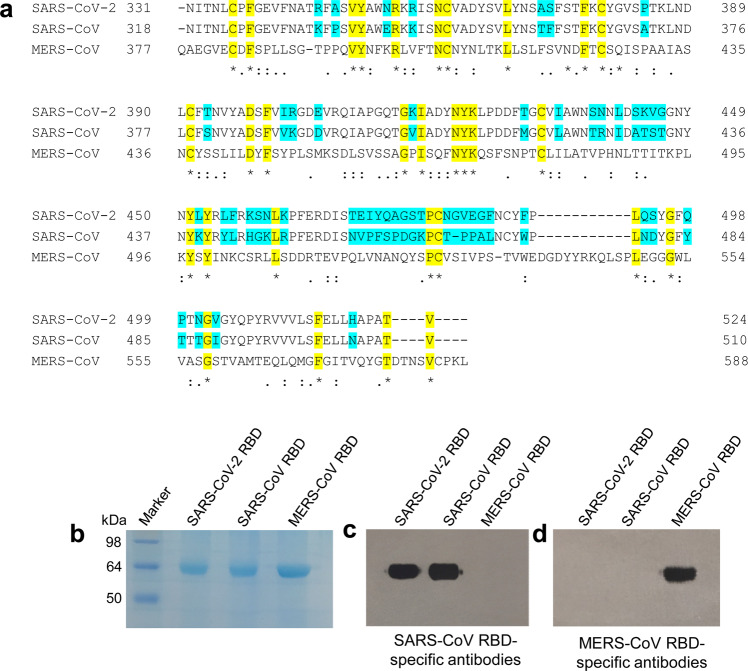
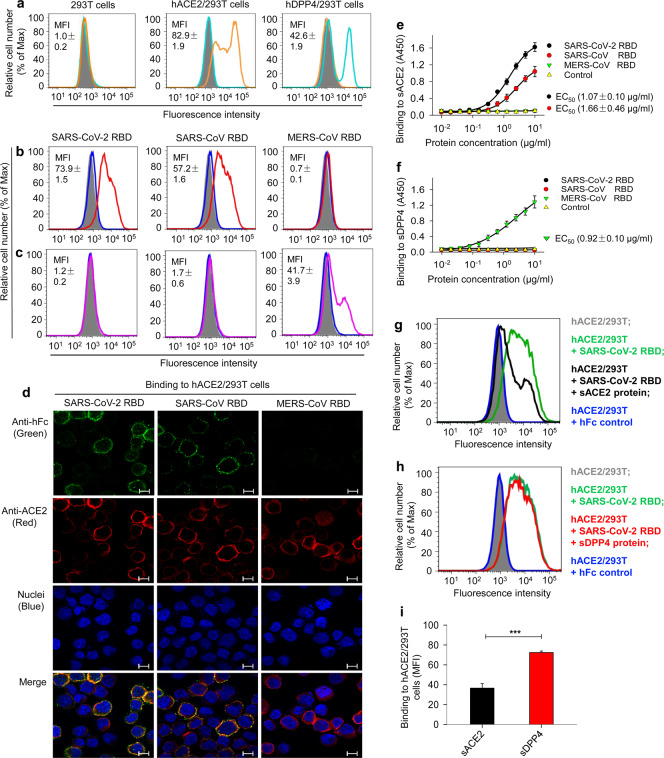
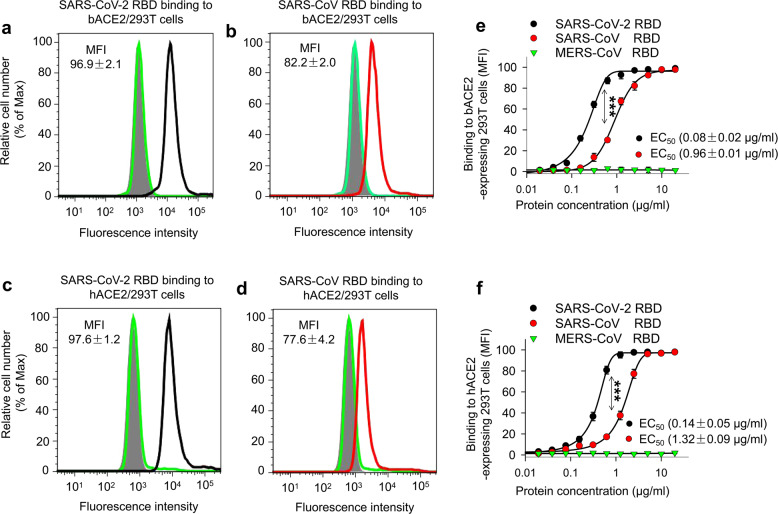
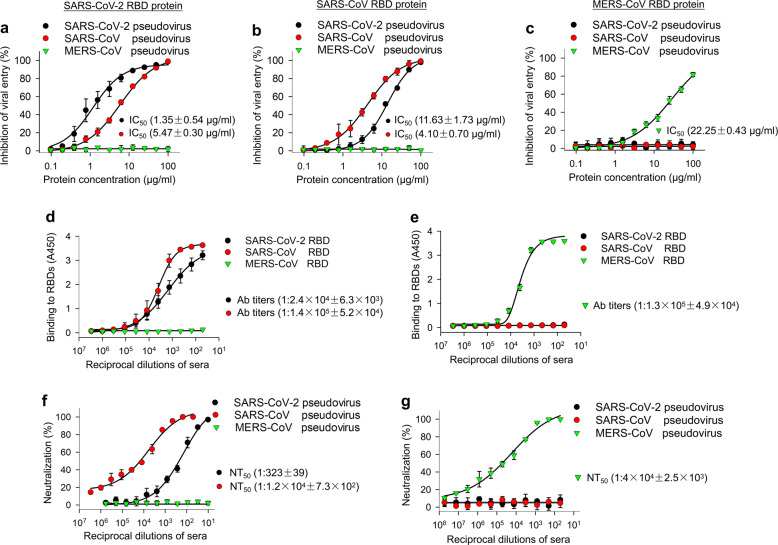
Verification
Claims the paper makes
The claims and statistics of this paper haven’t been checked yet.
Run the check — free, no account needed. It reads the open-access text and checks the sources it cites.
Claims other papers make about this one
Each is checked against this paper’s own text: does it say what the citing paper says it does?
The source backs part of the claim, not all of it — or backs it for a different population, condition or comparison.
In the citing paper
“Some recent studies also demonstrated that immunization with the recombinant RBD of SARS-CoV-2 induced high titers of neutralizing antibodies in the absence of antibody-dependent enhancement (ADE) of infection (Quinlan et al., 2020; Tai et al., 2020).”
From A thermostable mRNA vaccine against COVID-19 (2020) · cites this paper as Tai et al., 2020
Experimental — accuracy not yet measured
Self-check
Percentages, sums and reported differences re-computed from the paper’s own numbers.
The self-check needs the paper’s full text.
Citations
Cites
A novel coronavirus from patients with pneumonia in China, 2019
Zhu, N., Zhang, D., Wang, W., Li, X., Yang, B., Song, J., Zhao, X., Huang, B., Shi, W., Lu, R., et al. (2020) · New England Journal of Medicine · doi:10.1056/nejmoa2001017 · Cited by 28,244
A pneumonia outbreak associated with a new coronavirus of probable bat origin
Zhou, P., Yang, X.-L., Wang, X.-G., Hu, B., Zhang, L., Zhang, W., Si, H.-R., Zhu, Y., Li, B., Huang, C.-L., et al. (2020) · Nature · doi:10.1038/s41586-020-2012-7 · Cited by 21,969 · cited 3×
“Since SARS-CoV-2 is more phylogenetically related to SARS-CoV than MERS-CoV, 22 we further detected the cross-reactivity of SARS-CoV RBD-specific antibodies with SARS-CoV-2 RBD and crossneutralizing activity of SARS-CoV RBD-specific antibodies against pseudotyped SARS-CoV-2.”
BackgroundResultInfluentialGorbalenya, A. E., Baker, S. C., Baric, R. S., de Groot, R. J., Drosten, C., Gulyaeva, A. A., Haagmans, B. L., Lauber, C., Leontovich, A. M., Neuman, B. W., et al. (2020) · Nature Microbiology · doi:10.1038/s41564-020-0695-z · Cited by 8,745
Angiotensin-converting enzyme 2 is a functional receptor for the SARS coronavirus
Li, W., Moore, M. J., Vasilieva, N., Sui, J., Wong, S. K., Berne, M. A., Somasundaran, M., Sullivan, J. L., Luzuriaga, K., Greenough, T. C., et al. (2003) · Nature · doi:10.1038/nature02145 · Cited by 5,923
Isolation of a Novel Coronavirus from a Man with Pneumonia in Saudi Arabia
Zaki, A. M., van Boheemen, S., Bestebroer, T. M., Osterhaus, A. D. M. E., & Fouchier, R. A. M. (2012) · New England Journal of Medicine · doi:10.1056/nejmoa1211721 · Cited by 5,677
Chou, T.-C. (2006) · Pharmacological Reviews · doi:10.1124/pr.58.3.10 · Cited by 5,163
Bats Are Natural Reservoirs of SARS-Like Coronaviruses
Li, W., Shi, Z., Yu, M., Ren, W., Smith, C. S., Epstein, J. H., Wang, H., Crameri, G. S., Hú, Z., Zhang, H., et al. (2005) · Science · doi:10.1126/science.1118391 · Cited by 2,571
Dipeptidyl peptidase 4 is a functional receptor for the emerging human coronavirus-EMC
Raj, V. S., Mou, H., Smits, S. L., Dekkers, D. H. W., Müller, M. A., Dijkman, R., Muth, D., Demmers, J. A. A., Zaki, A., Fouchier, R. A. M., et al. (2013) · Nature · doi:10.1038/nature12005 · Cited by 2,061
Structure of SARS Coronavirus Spike Receptor-Binding Domain Complexed with Receptor
Li, F., Li, W., Farzan, M., & Harrison, S. C. (2005) · Science · doi:10.1126/science.1116480 · Cited by 2,035
The spike protein of SARS-CoV — a target for vaccine and therapeutic development
Du, L., He, Y., Zhou, Y., Liu, S., Zheng, B.-J., & Jiang, S. (2009) · Nature Reviews Microbiology · doi:10.1038/nrmicro2090 · Cited by 1,678
Cited by
Sorted by citations
Items 101–200 of 1,001
Two Different Antibody-Dependent Enhancement (ADE) Risks for SARS-CoV-2 Antibodies
Ricke, D. O. (2021) · Frontiers in Immunology · doi:10.3389/fimmu.2021.640093 · Cited by 133
Cannabinoids Block Cellular Entry of SARS-CoV-2 and the Emerging Variants
van Breemen, R. B., Muchiri, R. N., Bates, T. A., Weinstein, J. B., Leier, H. C., Farley, S., & Tafesse, F. G. (2022) · Journal of Natural Products · doi:10.1021/acs.jnatprod.1c00946 · Cited by 135
The possible of immunotherapy for COVID-19: A systematic review
AminJafari, A., & Ghasemi, S. (2020) · International Immunopharmacology · doi:10.1016/j.intimp.2020.106455 · Cited by 132
SARS-CoV-2 and ACE2: The biology and clinical data settling the ARB and ACEI controversy
Chung, M. K., Karnik, S. S., Saef, J., Bergmann, C. C., Barnard, J., Lederman, M. M., Tilton, J. C., Cheng, F., Harding, C. V., Young, J. B., et al. (2020) · EBioMedicine · doi:10.1016/j.ebiom.2020.102907 · Cited by 138
“Strategies to increase ACE2 shedding from cells may be protective against viral infection [70].”
BackgroundWei, Y., & Shah, R. (2020) · Pharmaceuticals · doi:10.3390/ph13070155 · Cited by 140
“The SARS-CoV-2 S protein has been shown to have a much higher binding affinity to the ACE2 than the SARS-CoV S protein [20,22].”
BackgroundThe Role of Type I Interferons in the Pathogenesis and Treatment of COVID-19
Schreiber, G. (2020) · Frontiers in Immunology · doi:10.3389/fimmu.2020.595739 · Cited by 136
COVID-19: Advances in diagnostic tools, treatment strategies, and vaccine development
Sreepadmanabh, M., Sahu, A. K., & Chande, A. G. (2020) · Journal of Biosciences · doi:10.1007/s12038-020-00114-6 · Cited by 139
Annasamy, G., Kumar, N. A., & Anand, S. (2021) · TrAC Trends in Analytical Chemistry · doi:10.1016/j.trac.2021.116205 · Cited by 131
Biomechanical characterization of SARS-CoV-2 spike RBD and human ACE2 protein-protein interaction
Cao, W., Dong, C., Kim, S., Hou, D., Tai, W., Du, L., Im, W., & Zhang, X. H. (2021) · Biophysical Journal · doi:10.1016/j.bpj.2021.02.007 · Cited by 128
“RBD proteins were expressed as previously described with some modifications (21).”
Fougeroux, C. E., Goksøyr, L., Idorn, M., Soroka, V., Myeni, S. K., Dagil, R., Janitzek, C. M., Søgaard, M., Aves, K.-L., Horsted, E. W., et al. (2021) · Nature Communications · doi:10.1038/s41467-020-20251-8 · Cited by 134
Pathogen reduction of SARS-CoV-2 virus in plasma and whole blood using riboflavin and UV light
Ragan, I. K., Hartson, L., Pidcoke, H. F., Bowen, R., & Goodrich, R. P. (2020) · PLoS ONE · doi:10.1371/journal.pone.0233947 · Cited by 131
“By contrast, SARS-CoV-2 binding strength to the ACE2 receptor is higher, suggesting a cause for the greater propensity for human to human transmission (10,11).”
BackgroundA global treatments for coronaviruses including COVID‐19
Yousefi, B., Valizadeh, S., Ghaffari, H., Vahedi, A., Karbalaei, M., & Eslami, M. (2020) · Journal of Cellular Physiology · doi:10.1002/jcp.29785 · Cited by 120
Particulate Alum via Pickering Emulsion for an Enhanced COVID‐19 Vaccine Adjuvant
Peng, S., Cao, F., Xia, Y., Gao, X., Dai, L., Yan, J., & Ma, G. (2020) · Advanced Materials · doi:10.1002/adma.202004210 · Cited by 125
Neutralizing Aptamers Block S/RBD‐ACE2 Interactions and Prevent Host Cell Infection
Liu, X., Wang, Y., Wu, J., Qi, J., Zeng, Z., Wan, Q., Chen, Z., Manandhar, P., Cavener, V. S., Boyle, N. R., et al. (2021) · Angewandte Chemie International Edition · doi:10.1002/anie.202100345 · Cited by 123
SARS-CoV-2 mediated neuroinflammation and the impact of COVID-19 in neurological disorders
Amruta, N., Chastain, W. H., Paz, M., Solch-Ottaiano, R. J., Murray-Brown, I. C., Befeler, J. B., Gressett, T. E., Longo, M. T., Engler-Chiurazzi, E. B., & Bix, G. J. (2021) · Cytokine & Growth Factor Reviews · doi:10.1016/j.cytogfr.2021.02.002 · Cited by 123
Yan, H., Jiao, H., Liu, Q., Zhang, Z., Xiong, Q., Wang, B.-J., Wang, X., Guo, M. S., Wang, L., Lan, K., et al. (2021) · Nature Ecology & Evolution · doi:10.1038/s41559-021-01407-1 · Cited by 121
The Matrix-M™ adjuvant: A critical component of vaccines for the 21 st century
Stertman, L., Palm, A.-K. E., Zarnegar, B., Carow, B., Lunderius-Andersson, C., Magnusson, S. E., Carnrot, C., Shinde, V., Smith, G., Glenn, G. M., et al. (2023) · Human Vaccines & Immunotherapeutics · doi:10.1080/21645515.2023.2189885 · Cited by 136
“In mice and non-human primate models, NVX-CoV2373 induced high anti-spike antibody titers that blocked binding to the human angiotensin-converting enzyme 2 (hACE2) receptor on host cells.(35,70,71) In the mouse spleen, NVXCoV2373 also elicited multifunctional CD4+ and CD8+ T cells, CD4+ Tfh cells, and antigen-specific…”
BackgroundProgress in Developing Inhibitors of SARS-CoV-2 3C-Like Protease
Li, Q., & Kang, C. (2020) · Microorganisms · doi:10.3390/microorganisms8081250 · Cited by 118
Therapeutic targets and interventional strategies in COVID-19: mechanisms and clinical studies
Zhou, Y., Xie, Y., Tang, L., Pu, D., Zhu, Y., Liu, J., & Ma, X. (2021) · Signal Transduction and Targeted Therapy · doi:10.1038/s41392-021-00733-x · Cited by 116
Zhang, G., Cong, Y., Liu, F., Sun, J., Zhang, J., Cao, G., Zhou, L., Yang, W., Song, Q., Wang, F., et al. (2022) · Nature Nanotechnology · doi:10.1038/s41565-022-01177-2 · Cited by 120
Teng, S., Sobitan, A., Rhoades, R. E., Liu, D., & Tang, Q. (2020) · Briefings in Bioinformatics · doi:10.1093/bib/bbaa233 · Cited by 117
“RecentstudiesshowedthatSARS-Cov-2Sprotein has a higher affinity to ACE2 compared with those of SARS-CoV [5] and bat coronavirus S [8, 9].”
Achak, M., Alaoui, S. B., Chhiti, Y., Alaoui, F. E. M., Barka, N., & Boumya, W. (2020) · The Science of The Total Environment · doi:10.1016/j.scitotenv.2020.143192 · Cited by 117
Arbeitman, C. R., Auge, G. A., Blaustein, M., Bredeston, L. M., Corapi, E., Craig, P. O., Cossio, L. A., Daín, L., D’Alessio, C., Elias, F., et al. (2020) · Scientific Reports · doi:10.1038/s41598-020-78711-6 · Cited by 115
Zahradník, J., Marciano, S., Shemesh, M., Zoler, E., Chiaravalli, J., Meyer, B., Rudich, Y., Dym, O., Elad, N., & Schreiber, G. (2021) · doi:10.1101/2021.01.06.425392 · Cited by 458
“One potential civet with this approach is the importance of the ACE2 activities, both as a carboxypeptidase, removing a single C-terminal amino acid from Ang II to generate Ang-(1-7) and regulating amino acid transport and pancreatic insulin secretion16,17 These functions, which could be hampered by an inhibitor, are…”
BackgroundTai, W., Zhang, X., He, Y., Jiang, S., & Du, L. (2020) · Antiviral Research · doi:10.1016/j.antiviral.2020.104820 · Cited by 116
“Briefly, SARS-CoV and SARS-CoV-2 pseudoviruses were first generated as previously described (Tai et al., 2020).”
InfluentialSmall molecules in the treatment of COVID-19
Lei, S., Chen, X., Wu, J., Duan, X., & Men, K. (2022) · Signal Transduction and Targeted Therapy · doi:10.1038/s41392-022-01249-8 · Cited by 119
Neutralizing antibodies targeting SARS-CoV-2 spike protein
Shi, X., Yu, L., Yan, L., Guang, Y., & Qiang, M. (2020) · Stem Cell Research · doi:10.1016/j.scr.2020.102125 · Cited by 114
A potent neutralizing nanobody against SARS‐CoV‐2 with inhaled delivery potential
Gai, J., Ma, L., Li, G., Zhu, M., Peng, Q., Li, X., Zhang, H., Zhang, Y., Chen, Y., Ji, W., et al. (2021) · MedComm · doi:10.1002/mco2.60 · Cited by 113
Rahman, M. M., Masum, M. H. U., Wajed, S., & Talukder, A. (2022) · VirusDisease · doi:10.1007/s13337-022-00755-1 · Cited by 116
Nguyen, T. T., Pathirana, P. N., Nguyen, Q. V. H., Nguyen, Q. V. H., Bhatti, A., Nguyen, N. D., Nguyen, Q. V. H., Nguyen, N. D., Creighton, D., & Abdelrazek, M. (2021) · Scientific Reports · doi:10.1038/s41598-021-83105-3 · Cited by 111
Kaur, N., Singh, R., Dar, Z., Bijarnia, R. K., Dhingra, N., & Kaur, T. (2020) · Infection Genetics and Evolution · doi:10.1016/j.meegid.2020.104490 · Cited by 115
(2021) · doi:10.1371/journal.pmed.1003769 · Cited by 111
“Viral attachment to the human angiotensin-converting enzyme 2 (hACE2) receptor of host cells is mediated by SARS-CoV2 spike protein and serves as a target for development of antibodies and vaccines [4,5].”
BackgroundAsghari, A., Wang, C., Yoo, K. M., Rostamian, A., Xu, X., Shin, J.-D., Dalir, H., & Chen, R. T. (2021) · Applied Physics Reviews · doi:10.1063/5.0022211 · Cited by 110
Ginger from Farmyard to Town: Nutritional and Pharmacological Applications
Unuofin, J. O., Masuku, N. P., Paimo, O. K., & Lebelo, S. L. (2021) · Frontiers in Pharmacology · doi:10.3389/fphar.2021.779352 · Cited by 110
SARS-CoV-2 spike protein-mediated cell signaling in lung vascular cells
Suzuki, Y., Nikolaienko, S. I., Dibrova, V. A., Dibrova, Y. V., Vasylyk, V. M., Novikov, M. Y., Shults, N. V., & Gychka, S. G. (2020) · Vascular Pharmacology · doi:10.1016/j.vph.2020.106823 · Cited by 105
SARS-CoV-2 Antibody Avidity Responses in COVID-19 Patients and Convalescent Plasma Donors
Benner, S. E., Patel, E. U., Laeyendecker, O. B., Pekosz, A. S., Littlefield, K. E., Eby, Y. J., Fernández, R. E., Miller, J., Kirby, C. S., Keruly, M., et al. (2020) · The Journal of Infectious Diseases · doi:10.1093/infdis/jiaa581 · Cited by 105
DPP4 inhibition: Preventing SARS‐CoV ‐2 infection and/or progression of COVID ‐19?
Strollo, R., & Pozzilli, P. (2020) · Diabetes/Metabolism Research and Reviews · doi:10.1002/dmrr.3330 · Cited by 105
“the receptor binding domain of SARS-CoV-2 can bind to 293T cells expressing human ACE2 but not to 293T cells expressing human DPP4 (11).”
BackgroundAntivirals Against Coronaviruses: Candidate Drugs for SARS-CoV-2 Treatment?
Santos, I. A., Grosche, V. R., Bergamini, F. R. G., Silva, R. S., & Jardim, A. C. G. (2020) · Frontiers in Microbiology · doi:10.3389/fmicb.2020.01818 · Cited by 114
Khan, M. I., Khan, Z. A., Baig, M. H., Ahmad, I. S., Farouk, A., Song, Y. G., & Dong, J.-J. (2020) · PLoS ONE · doi:10.1371/journal.pone.0238344 · Cited by 106
Mechanisms of SARS-CoV-2 Evolution Revealing Vaccine-Resistant Mutations in Europe and America
Wang, R., Chen, J., & Wei, G. (2021) · The Journal of Physical Chemistry Letters · doi:10.1021/acs.jpclett.1c03380 · Cited by 110
Harnessing innate immunity to eliminate SARS-CoV-2 and ameliorate COVID-19 disease
Golonka, R. M., Saha, P., Yeoh, B. S., Chattopadhyay, S., Gewirtz, A. T., Joe, B., & Vijay–Kumar, M. (2020) · Physiological Genomics · doi:10.1152/physiolgenomics.00033.2020 · Cited by 102
“This includes targeting the receptor binding-domain on the spike (S) protein layer on the “corona” or halo of SARS-CoV-2, which mediates virus fusion and entry into host epithelial cells lining mucosal surfaces such as the lungs and intestine (35, 43, 45, 48).”
BackgroundRecombinant vaccines for COVID-19
Yadav, T., Srivastava, N., Mishra, G., Dhama, K., Kumar, S., Puri, B., & Saxena, S. K. (2020) · Human Vaccines & Immunotherapeutics · doi:10.1080/21645515.2020.1820808 · Cited by 105
The pathophysiology of SARS-CoV-2: A suggested model and therapeutic approach
Morris, G., Bortolasci, C. C., Puri, B. K., OLIVE, L. S., Marx, W., O'Neil, A. E., Athan, E., Carvalho, A. F., Maes, M. H. J., Walder, K. R., et al. (2020) · Life Sciences · doi:10.1016/j.lfs.2020.118166 · Cited by 107
Alouane, T., Laamarti, M., Essabbar, A., Hakmi, M., Bouricha, E. M., Chemao-Elfihri, M. W., Kartti, S., Boumajdi, N., Bendani, H., Laamarti, R., et al. (2020) · Pathogens · doi:10.3390/pathogens9100829 · Cited by 107
“On the other hand, the RBD of S protein, allows the virus to bind to the ACE2 receptor on host cells (39,40).”
BackgroundCOVID-19 Compared to Other Pandemic Diseases
Pitlik, S. D. (2020) · Rambam Maimonides Medical Journal · doi:10.5041/rmmj.10418 · Cited by 100
Spike Proteins of SARS-CoV and SARS-CoV-2 Utilize Different Mechanisms to Bind With Human ACE2
Xie, Y., Karki, C. B., Du, D., Li, H., Wang, J., Sobitan, A., Teng, S., Tang, Q., & Li, L. (2020) · Frontiers in Molecular Biosciences · doi:10.3389/fmolb.2020.591873 · Cited by 107
“The number of confirmed cases of COVID-19 is still increasing dramatically (Tai et al., 2020).”
BackgroundImmunoinformatic identification of B cell and T cell epitopes in the SARS-CoV-2 proteome
Crooke, S. N., Ovsyannikova, I. G., Kennedy, R. B., & Poland, G. A. (2020) · Scientific Reports · doi:10.1038/s41598-020-70864-8 · Cited by 104
“surface (65), and studies have shown that antibodies with potent neutralizing activity against SARS-CoV 324 target this domain (66-68).”
BackgroundBojadzic, D., Alcazar, O., & Buchwald, P. (2021) · Frontiers in Pharmacology · doi:10.3389/fphar.2020.600372 · Cited by 105
Trinité, B., Tarrés-Freixas, F., Rodon, J., Pradenas, E., Urrea, V., Marfil, S., de la Concepción, M. L. R., Ávila‐Nieto, C., Aguilar‐Gurrieri, C., Barajas, A., et al. (2021) · Scientific Reports · doi:10.1038/s41598-021-81862-9 · Cited by 104
ACE2 in the Era of SARS-CoV-2: Controversies and Novel Perspectives
Saponaro, F., Rutigliano, G., Sestito, S., Bandini, L., Storti, B., Bizzarri, R., & Zucchi, R. (2020) · Frontiers in Molecular Biosciences · doi:10.3389/fmolb.2020.588618 · Cited by 106
Mishra, C. B., Pandey, P., Sharma, R. D., Malik, M. Z., Mongre, R. K., Lynn, A. M., Prasad, R., Jeon, R., & Prakash, A. (2020) · Briefings in Bioinformatics · doi:10.1093/bib/bbaa378 · Cited by 103
HVIDB: a comprehensive database for human–virus protein–protein interactions
Yang, X., Lian, X., Fu, C., Wuchty, S., Yang, S., & Zhang, Z. (2020) · Briefings in Bioinformatics · doi:10.1093/bib/bbaa425 · Cited by 100
Ding, Q., Shults, N. V., Gychka, S. G., Harris, B. T., & Suzuki, Y. (2021) · International Journal of Molecular Sciences · doi:10.3390/ijms22041687 · Cited by 122
“as a receptor to enter the host cells [17,18].”
BackgroundDrug Discovery Strategies for SARS-CoV-2
Shyr, Z. A., Gorshkov, K., Chen, C. Z., & Zheng, W. (2020) · Journal of Pharmacology and Experimental Therapeutics · doi:10.1124/jpet.120.000123 · Cited by 98
“Several groups have now identified the RBD in SARS-CoV-2 and have confirmed by biochemical analyses as well as crystal structure prediction analyses that this domain binds strongly to both human and bat ACE2 receptor with a binding affinity significantly higher than that of SARS-CoV to the ACE2 receptor (Tai et al., 2…”
BackgroundSARS‐CoV‐2 RBD Neutralizing Antibody Induction is Enhanced by Particulate Vaccination
Huang, W., Zhou, S., He, X., Chiem, K., Mabrouk, M. T., Nissly, R. H., Bird, I. M., Strauss, M., Sambhara, S. R., Ortega, J., et al. (2020) · Advanced Materials · doi:10.1002/adma.202005637 · Cited by 99
Advances in gene-based vaccine platforms to address the COVID-19 pandemic
Pushparajah, D., Jimenez, S., Wong, S. L., Alattas, H., Nafissi, N., & Slavcev, R. A. (2021) · Advanced Drug Delivery Reviews · doi:10.1016/j.addr.2021.01.003 · Cited by 99
“Interestingly, the RBD of SARS-CoV-2 has been shown to bind to the ACE2 target receptor with considerably higher affinity than that seen by SARS-CoV [32,33].”
Binzel, D. W., Li, X., Burns, N., Khan, E., Lee, W.-J., Chen, L.-C., Ellipilli, S., Miles, W. O., Ho, Y. S., & Guo, P. (2021) · Chemical Reviews · doi:10.1021/acs.chemrev.1c00009 · Cited by 97
Targeting acute kidney injury in COVID-19
Kellum, J. A., van Till, J. W. O., & Mulligan, G. (2020) · Nephrology Dialysis Transplantation · doi:10.1093/ndt/gfaa231 · Cited by 98
“A variety of epithelial cells express the angiotensin-converting enzyme 2 (ACE2) receptor and this receptor is used by b-coronaviruses to enter the cells [3, 4].”
BackgroundBaig, M. S., Alagumuthu, M., Rajpoot, S., & Saqib, U. (2020) · Drugs in R&D · doi:10.1007/s40268-020-00312-5 · Cited by 96
“The receptor-binding domain (RBD) in the S1 subunit initiates direct binding with the ACE2 PD, whereas the S2 subunit contains basic elements needed for the membrane fusion [19, 20, 23, 24].”
BackgroundGastrointestinal symptoms, pathophysiology, and treatment in COVID-19
Zhang, J., Garrett, S., & Sun, J. (2020) · Genes & Diseases · doi:10.1016/j.gendis.2020.08.013 · Cited by 100
“77,78 Meanwhile, M protein is the most structurally organized protein and plays a role in determining the shape of the viral envelope.”
Application of Nanotechnology in the COVID-19 Pandemic
Yang, D. (2021) · International Journal of Nanomedicine · doi:10.2147/ijn.s296383 · Cited by 99
A focused review on technologies, mechanisms, safety, and efficacy of available COVID-19 vaccines
Ghasemiyeh, P., Mohammadi‐Samani, S., Firouzabadi, N., Dehshahri, A., & Vazin, A. (2021) · International Immunopharmacology · doi:10.1016/j.intimp.2021.108162 · Cited by 100
Quéméner, A. M., Centomo, M. L., Sax, S. L., & Panella, R. (2022) · Molecules · doi:10.3390/molecules27020536 · Cited by 94
“The most forward approach is to silence the angiotensin-converting enzyme 2 (ACE2) as SARS-CoV-2 entry receptor [150,151].”
BackgroundSARS‐CoV‐2 S1 is superior to the RBD as a COVID‐19 subunit vaccine antigen
Wang, Y., Wang, L., Cao, H., & Liu, C. (2020) · Journal of Medical Virology · doi:10.1002/jmv.26320 · Cited by 94
Papageorgiou, A. C., & Mohsin, I. (2020) · Cells · doi:10.3390/cells9112343 · Cited by 94
“, ACE2 for SARS-CoV-2 and SARS-CoV and dipeptidyl peptidase 4 for MERS-CoV [35].”
MethodRole of host factors in SARS-CoV-2 entry
Evans, J. P., & Liu, S. (2021) · Journal of Biological Chemistry · doi:10.1016/j.jbc.2021.100847 · Cited by 97
“Early observations indicated that the receptor-binding domain (RBD) of SARS-CoV-2 S exhibited higher affinity for ACE2 than the RBD of SARS-CoV S (11, 14, 15), and cryo-EM structures of SARS-CoV and SARS-CoV-2 RBD in complex with ACE2 demonstrated more extensive interactions between SARS-CoV-2 RBD and ACE2 (12, 14).”
Distant residues modulate conformational opening in SARS-CoV-2 spike protein
Ray, D., Le, L., & Andricioaei, I. (2021) · Proceedings of the National Academy of Sciences · doi:10.1073/pnas.2100943118 · Cited by 89
Saha, P., Banerjee, A. K., Tripathi, P. P., Srivastava, A. K., & Ray, U. (2020) · Bioscience Reports · doi:10.1042/bsr20201312 · Cited by 90
“S protein if SARS-CoV2 has two domains: S1 and S2 [8] .”
BackgroundKarthik, K., Senthilkumar, T. M. A., Udhayavel, S., & Raj, G. D. (2020) · Human Vaccines & Immunotherapeutics · doi:10.1080/21645515.2020.1796425 · Cited by 87
“Polyclonal antibodies of SARS-CoV RBD were found to cross-react and prevent the entry of SARS-CoV-2 under in vitro condition.(40) Another study reported that SARS-CoV specific mAb, CR3022 could bind to RBD of SARS-CoV-2 but did not compete with ACE2 for its binding.”
BackgroundSARS-CoV-2 Spike Targets USP33-IRF9 Axis via Exosomal miR-148a to Activate Human Microglia
Mishra, R., & Banerjea, A. C. (2021) · Frontiers in Immunology · doi:10.3389/fimmu.2021.656700 · Cited by 90
Xiang, T., Liang, B., Fang, Y., Lu, S., Li, S., Wang, H., Li, H., Yang, X., Shěn, S., Zhu, B., et al. (2021) · Frontiers in Immunology · doi:10.3389/fimmu.2021.708523 · Cited by 84
“envelope (E), and nucleocapsid (N) protein (3, 4).”
BackgroundSARS-CoV-2 infection serology: a useful tool to overcome lockdown?
Nuccetelli, M., Pieri, M., Grelli, S., Ciotti, M., Miano, R., Andreoni, M., & Bernardini, S. (2020) · Cell Death Discovery · doi:10.1038/s41420-020-0275-2 · Cited by 85
Anand, U., Jakhmola, S., Indari, O., Jha, H. C., Chen, Z., Tripathi, V. S., & de la Lastra, J. M. P. (2021) · Frontiers in Immunology · doi:10.3389/fimmu.2021.658519 · Cited by 84
Sanches, P. R. D. S., Charlie‐Silva, I., Braz, H. L. B., Bittar, C., Calmon, M. F., Rahal, P., & Cilli, E. M. (2021) · Journal of Virus Eradication · doi:10.1016/j.jve.2021.100054 · Cited by 88
“31 However, mutations in other amino acids from Spike protein (S) could affect virus infection despite his interaction with human ACE2.”
Neurological manifestations of coronavirus infections – a systematic review
Almqvist, J., Granberg, T., Tzortzakakis, A., Klironomos, S., Kollia, E., Öhberg, C., Martinꝉ, R., Piehl, F., Ouellette, R., & Ineichen, B. V. (2020) · Annals of Clinical and Translational Neurology · doi:10.1002/acn3.51166 · Cited by 85
Prajapat, M., Shekhar, N., Sarma, P., Avti, P., Singh, S. K., Kaur, H., Bhattacharyya, A., Kumar, S., Sharma, S., Prakash, A., et al. (2020) · Journal of Molecular Graphics and Modelling · doi:10.1016/j.jmgm.2020.107716 · Cited by 88
Immunomodulatory Effects of Azithromycin Revisited: Potential Applications to COVID-19
Venditto, V. J., Haydar, D., Abdel‐Latif, A., Gensel, J. C., Anstead, M., Pitts, M. G., Creameans, J. W., Kopper, T. J., Peng, C., & Feola, D. J. (2021) · Frontiers in Immunology · doi:10.3389/fimmu.2021.574425 · Cited by 90
“Notably, SARS-CoV and SARS-CoV-2 enter cells after binding angiotensin converting enzyme 2 (ACE2) while MERS enters through dipeptidyl peptidase 4 (DPP4) (24).”
BackgroundEpistatic models predict mutable sites in SARS-CoV-2 proteins and epitopes
Rodriguez-Rivas, J., Croce, G., Muscat, M., & Weigt, M. (2022) · Proceedings of the National Academy of Sciences · doi:10.1073/pnas.2113118119 · Cited by 86
Developing a low-cost and accessible COVID-19 vaccine for global health
Hotez, P. J., & Bottazzi, M. E. (2020) · PLoS neglected tropical diseases · doi:10.1371/journal.pntd.0008548 · Cited by 83
“Moreover, new studies by Tai and colleagues find that using pseudotyped SARS-CoV-2, the SARS-CoV RBD blocks the entry of both SARS-CoV and SARS-CoV-2 pseudovirus into human ACE2-expressing 293T cells [17].”
BackgroundTargets and strategies for vaccine development against SARS-CoV-2
Malik, J. A., Mulla, A. H., Farooqi, T., Pottoo, F. H., Anwar, S., & Rengasamy, K. R. R. (2021) · Biomedicine & Pharmacotherapy · doi:10.1016/j.biopha.2021.111254 · Cited by 81
Zheng, B., Peng, W., Guo, M., Huang, M., Gu, Y., Wang, T., Ni, G., & Ming, D. (2021) · Chemical Engineering Journal · doi:10.1016/j.cej.2021.129392 · Cited by 83
“RBD that binds to host susceptible cells is regarded as promising antigens for many recombinant-protein-based COVID-19 vaccine candidates.[47,48] RBD could be connected with DPPC-COOH in the liposome under the”
Drug targets for COVID-19 therapeutics: Ongoing global efforts
Saxena, A. (2020) · Journal of Biosciences · doi:10.1007/s12038-020-00067-w · Cited by 84
“Many antibodies demonstrating the ability to disrupt this binding are in preclinical stages of development (Chen et al. 2020; Tai et al. 2020; Tian et al. 2020).”
BackgroundRath, S. L., & Kumar, K. (2020) · Frontiers in Molecular Biosciences · doi:10.3389/fmolb.2020.583523 · Cited by 83
“The receptor binding domain (RBD) of the Spike glycoprotein is a potential target for vaccine and drug development [36, 37].”
BackgroundSuthar, S., Das, S., Nagpure, A. S., Madhurantakam, C., Tiwari, S. B., Gahlot, P., & Tyagi, V. K. (2020) · Journal of Environmental Management · doi:10.1016/j.jenvman.2020.111700 · Cited by 82
Padhi, A. K., Seal, A., Khan, J. M., Ahamed, M., & Tripathi, T. (2020) · European Journal of Pharmacology · doi:10.1016/j.ejphar.2020.173836 · Cited by 84
“Thus, SARS-CoV-2 encodes epitope features distinct from those of other CoVs in the RBD. Blockade of the S-protein from ACE2 receptor interaction and cell fusion is among the key targets for antiviral development (Zhou et al., 2020).”
InfluentialKar, P., Sharma, N. R., Singh, B., Sen, A., & Roy, A. (2020) · Journal of Biomolecular Structure and Dynamics · doi:10.1080/07391102.2020.1780947 · Cited by 84
“Binding energy scores and interaction profile of the phytochemicals of Clerodendrum spp. with SARS-CoV-2 RdRp. Ligands Binding energy scores (kcal/mol) Interacting residues SARS-CoV-2 RdRp (7BV2) Taraxerol 7.4 ± 0.02 Lys545, Arg555 Friedelin 7.1 ± 0.01 Asp623 Stigmasterol 7.0 ± 0.03 Lys545, Arg555, Thr687, Ala688 Remd…”
BackgroundInfluentialByrnes, J. R., Zhou, X. X., Lui, I., Elledge, S. K., Glasgow, J. E., Lim, S. A., Loudermilk, R. P., Chiu, C. Y., Wang, T. T., Wilson, M. R., et al. (2020) · mSphere · doi:10.1128/msphere.00802-20 · Cited by 77
“Viral entry is dependent on a binding interaction between the receptor-binding domain (RBD) of the viral Spike protein and angiotensin-converting enzyme 2 (ACE2) on the cell surface (1, 2).”
BackgroundPrabhakara, C., Godbole, R. K., Sil, P., Jahnavi, S., Gulzar, S.-E.-J., van Zanten, T. S., Sheth, D., Subhash, N., Chandra, A., Shivaraj, A., et al. (2021) · PLoS Pathogens · doi:10.1371/journal.ppat.1009706 · Cited by 82
Dehury, B., Raina, V., Misra, N., & Suar, M. (2020) · Journal of Biomolecular Structure and Dynamics · doi:10.1080/07391102.2020.1802348 · Cited by 80
“2020 Informa UK Limited, trading as Taylor & Francis Group host and viral membranes with the help of the S2 subunit (Li et al., 2005; Liu et al., 2004; Tai et al., 2020).”
Epigenetic regulation of ACE2, the receptor of the SARS-CoV-2 virus1
Beacon, T. H., Delcuve, G. P., & Davie, J. (2020) · Genome · doi:10.1139/gen-2020-0124 · Cited by 76
Gelman, R., Bayatra, A., Kessler, A., Schwartz, A., & Ilan, Y. (2020) · Emerging Microbes & Infections · doi:10.1080/22221751.2020.1776161 · Cited by 81
“and it could block the binding and attachment of SARS-CoV-2 RBD to ACE2-expressing cells inhibiting their infection to the host cells [30].”
BackgroundTargeting SARS-CoV2 Spike Protein Receptor Binding Domain by Therapeutic Antibodies
Hussain, A., Hasan, A., Babadaei, M. M. N., Bloukh, S. H., Chowdhury, M. E. H., Sharifi, M., Haghighat, S., & Falahati, M. (2020) · Biomedicine & Pharmacotherapy · doi:10.1016/j.biopha.2020.110559 · Cited by 78
“After comparing the RBD of the virus with the existing structures of SARS-CoV, MERSCoV, and HKU4-CoV (bat CoV), it was found that the recognition of receptor-ligand interaction is difficult despite the knowledge of the evolutionary history of RNA viruses [24].”
Sharun, K., Tiwari, R., Yatoo, M. I., Patel, S. K., Natesan, S., Dhama, J., Malik, Y. S., Harapan, H., Singh, R. K., & Dhama, K. (2020) · Expert Opinion on Biological Therapy · doi:10.1080/14712598.2020.1796963 · Cited by 75
Rotondo, J. C., Martini, F., Maritati, M., Mazziotta, C., Mauro, G. D., Lanzillotti, C., Barp, N., Gallerani, A., Tognon, M. G., & Contini, C. (2021) · Viruses · doi:10.3390/v13091687 · Cited by 81
An Overview of Vaccine Development for COVID-19
Shahcheraghi, S. H., Ayatollahi, J., Aljabali, A. A. A., Shastri, M. D., Shukla, S. D., Chellappan, D. K., Jha, N. K., Anand, K., Katari, N. K., Mehta, M., et al. (2021) · Therapeutic Delivery · doi:10.4155/tde-2020-0129 · Cited by 79
An Interpretable Machine Learning Approach for Hepatitis B Diagnosis
Obaido, G., Ogbuokiri, B., Swart, T. G., Ayawei, N., Kasongo, S. M., Aruleba, K., Mienye, I. D., Aruleba, I., Chukwu, C. W., Osaye, F. J., et al. (2022) · Applied Sciences · doi:10.3390/app122111127 · Cited by 81
Baker, D., Amor, S., Kang, A. S., Schmierer, K., & Giovannoni, G. (2020) · Multiple Sclerosis and Related Disorders · doi:10.1016/j.msard.2020.102174 · Cited by 75
“2020; Tai et al.”
COVID-19 Therapeutic Options Under Investigation
Kaddoura, M., Ibrahim, M. A., Hijazi, G., Soudani, N., Audi, A., Alkalamouni, H., Haddad, S., Eid, A. H., & Zaraket, H. (2020) · Frontiers in Pharmacology · doi:10.3389/fphar.2020.01196 · Cited by 75
“Interestingly, SARS-CoV-1 RBD-specific polyclonal antibodies could cross-neutralize SARS-CoV-1 and SARS-CoV-2 pseudovirus infection, by blocking their entry into human ACE2 (hACE2)expressing cells, suggesting the potential to develop RBD-based vaccine for prevention of infection by SARS-CoV-2 (Tai et al., 2020).”
BackgroundCardiovascular Complications Associated with COVID-19 and Potential Therapeutic Strategies
Samidurai, A., & Das, A. (2020) · International Journal of Molecular Sciences · doi:10.3390/ijms21186790 · Cited by 82
“Efforts are also underway to design a monoclonal antibody that can target the specific epitope on the spike protein of SARS-CoV-2 and block the virus entry in to the host cell [108,159,160].”
BackgroundStructural insight into SARS-CoV-2 neutralizing antibodies and modulation of syncytia
Asarnow, D. E., Wang, B., Lee, W.-H. S., Hu, Y., Huang, C.-W., Faust, B., Ng, P. M. L., Ngoh, E. Z. X., Bohn, M., Bulkley, D. P., et al. (2021) · Cell · doi:10.1016/j.cell.2021.04.033 · Cited by 75
“The RBD binds to ACE2 via the receptor binding motif (RBM), a small patch made up of about 20 amino acids (Lan et al., 2020; Tai et al., 2020).”
Metadata
- Authors
- Tai, W., He, L., Zhang, X., Pu, J., Voronin, D., Jiang, S., Zhou, Y., & Du, L.
- Affiliations
- New York Blood Center (US)
- Beijing Institute of Microbiology and Epidemiology (CN)
- Shanghai Medical College of Fudan University (CN)
- Corresponding author
- Jiang, Shibo
- Zhou, Yusen
- Du, Lanying
- Venue
- Cellular & Molecular Immunology
- Published
- 2020-03-19
- Volume
- 17
- Issue
- 6
- Pages
- 613-620
- ISSN
- 1672-7681 (ISSN-L)
- 2042-0226
- PMC
- PMC7091888
- OpenAlex
- W3011537081
- Cited by
- 1,654
- References
- 34
- Citations by year
- 2026: 28 · 2025: 68 · 2024: 120 · 2023: 184 · 2022: 296 · 2021: 482 · 2020: 475
- FWCI
- 47.20
- Type
- journal article
- Language
- en
- Open access
- hybrid
- doi.org
- Locations
- Cellular and Molecular Immunology (publishedVersion, cc-by)
- PubMed Central (publishedVersion, cc-by)
- PubMed (publishedVersion)
- Informationszentrum Lebenswissenschaften (ZB MED) (submittedVersion, cc-by)
- Funders
- U.S. Department of Health & Human Services | National Institutes of Health (R01AI137472, R01AI139092)
- Topics
- Health Sciences › Medicine › Infectious Diseases › SARS-CoV-2 and COVID-19 Research
- Life Sciences › Agricultural and Biological Sciences › Animal Science and Zoology › Animal Virus Infections Studies
- Life Sciences › Biochemistry, Genetics and Molecular Biology › Molecular Biology › vaccines and immunoinformatics approaches
- Keywords
- SARS-CoV-2, receptor binding domain, spike protein, ACE2 receptor, viral attachment inhibition, entry inhibitors, vaccine development, cross-reactive antibodies, SARS-CoV, COVID-19 pandemic, neutralizing antibodies, receptor binding affinity
- MeSH terms
- Betacoronavirus, COVID-19, SARS-CoV-2, COVID-19 Vaccines, Amino Acid Sequence, Animals, Antibodies, Viral, Binding Sites, Chiroptera, Cross Reactions, Humans, Pneumonia, Viral, Protein Binding, Viral Vaccines, Sequence Alignment, Coronavirus Infections, Receptor, Angiotensin, Type 2, Severe acute respiratory syndrome-related coronavirus, Mice, Virus Internalization, HEK293 Cells, Pandemics, Spike Glycoprotein, Coronavirus
About these checks
Registry, retraction, Cites and statistics results are computed, not judged, with one exception: a printed reference that no index lists is read once by a model before it counts as a citation error. Claims are extracted by a model and kept only when their quote appears verbatim in the text; each cited source is then checked, with a model’s help, for whether it says what the claim relies on. Those verdicts can be wrong — read the claim’s quote and the cited source before relying on one.
Statistics and arithmetic are recomputed, not judged.
Confidence bands are shown only for fields calibrated on our annotated test set. None is calibrated yet, so no band is shown.
What counts as a claim ›How we measure confidence ›How we check this ›
Are you an author, or do you see a problem with this page? Request a review
