

The DOI matches its Crossref record; 33 of the 34 references it cites were found in a registry or an index.
Characterization of the receptor-binding domain (RBD) of 2019 novel coronavirus: implication for development of RBD protein as a viral attachment inhibitor and vaccine
Open accessAbstract
The outbreak of Coronavirus Disease 2019 (COVID-19) has posed a serious threat to global public health, calling for the development of safe and effective prophylactics and therapeutics against infection of its causative agent, severe acute respiratory syndrome coronavirus 2 (SARS-CoV-2), also known as 2019 novel coronavirus (2019-nCoV). The CoV spike (S) protein plays the most important roles in viral attachment, fusion and entry, and serves as a target for development of antibodies, entry inhibitors and vaccines. Here, we identified the receptor-binding domain (RBD) in SARS-CoV-2 S protein and found that the RBD protein bound strongly to human and bat angiotensin-converting enzyme 2 (ACE2) receptors. SARS-CoV-2 RBD exhibited significantly higher binding affinity to ACE2 receptor than SARS-CoV RBD and could block the binding and, hence, attachment of SARS-CoV-2 RBD and SARS-CoV RBD to ACE2-expressing cells, thus inhibiting their infection to host cells. SARS-CoV RBD-specific antibodies could cross-react with SARS-CoV-2 RBD protein, and SARS-CoV RBD-induced antisera could cross-neutralize SARS-CoV-2, suggesting the potential to develop SARS-CoV RBD-based vaccines for prevention of SARS-CoV-2 and SARS-CoV infection.
Overview
The claims and statistics of this paper haven’t been checked yet.
Run the check — free, no account needed. It reads the open-access text and checks the sources it cites.
Integrity signals
Registry
Cites
Statistics
Figures
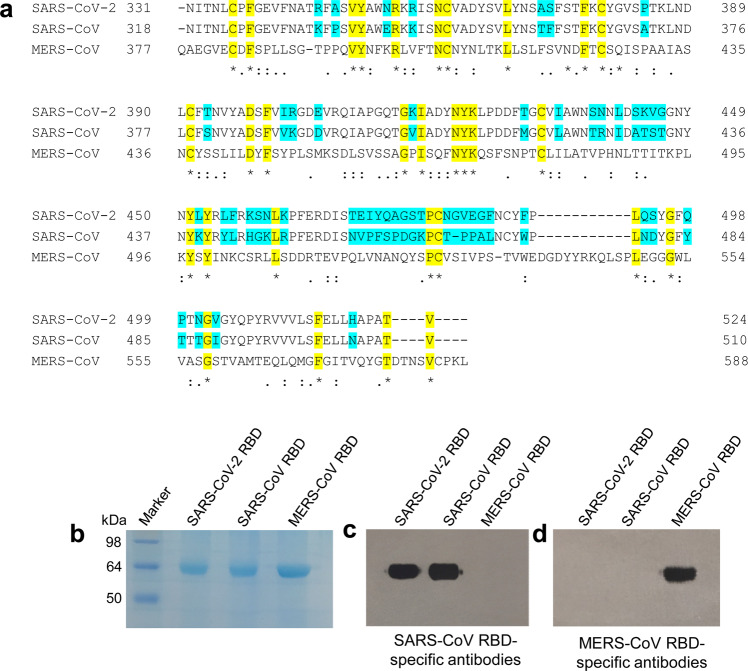
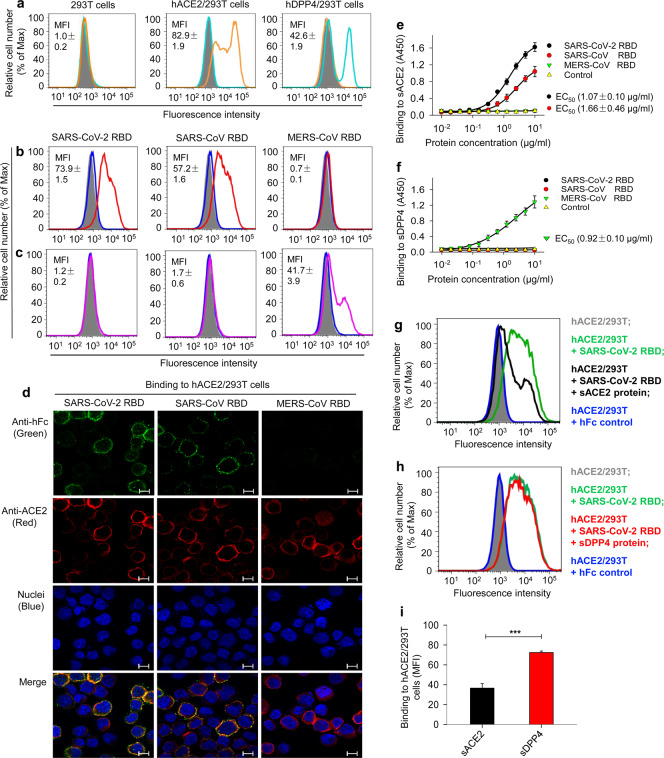
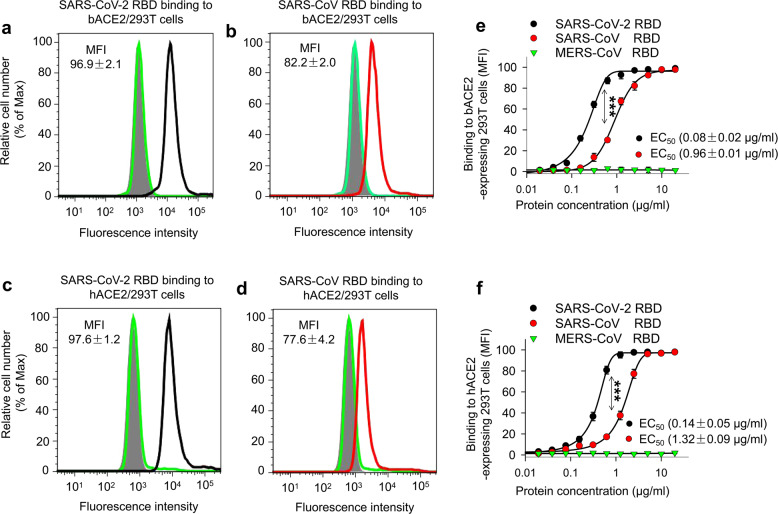
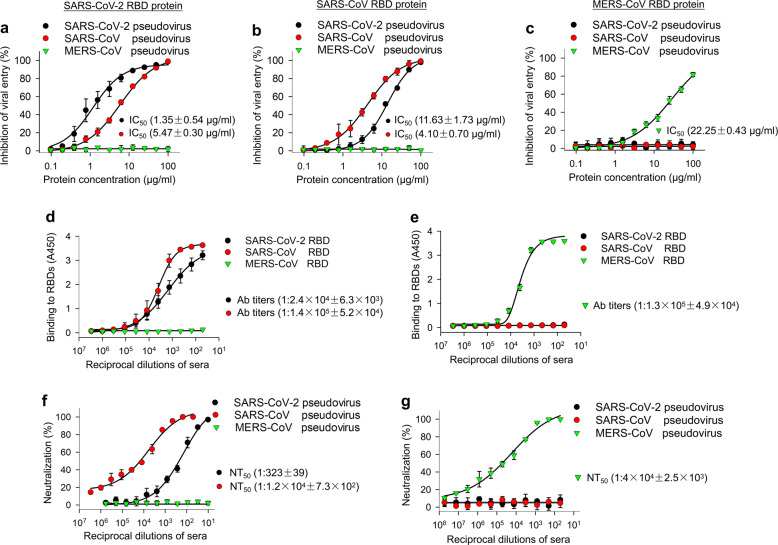
Verification
Claims the paper makes
The claims and statistics of this paper haven’t been checked yet.
Run the check — free, no account needed. It reads the open-access text and checks the sources it cites.
Claims other papers make about this one
Each is checked against this paper’s own text: does it say what the citing paper says it does?
The source backs part of the claim, not all of it — or backs it for a different population, condition or comparison.
In the citing paper
“Some recent studies also demonstrated that immunization with the recombinant RBD of SARS-CoV-2 induced high titers of neutralizing antibodies in the absence of antibody-dependent enhancement (ADE) of infection (Quinlan et al., 2020; Tai et al., 2020).”
From A thermostable mRNA vaccine against COVID-19 (2020) · cites this paper as Tai et al., 2020
Experimental — accuracy not yet measured
Self-check
Percentages, sums and reported differences re-computed from the paper’s own numbers.
The self-check needs the paper’s full text.
Citations
Cites
A novel coronavirus from patients with pneumonia in China, 2019
Zhu, N., Zhang, D., Wang, W., Li, X., Yang, B., Song, J., Zhao, X., Huang, B., Shi, W., Lu, R., et al. (2020) · New England Journal of Medicine · doi:10.1056/nejmoa2001017 · Cited by 28,244
A pneumonia outbreak associated with a new coronavirus of probable bat origin
Zhou, P., Yang, X.-L., Wang, X.-G., Hu, B., Zhang, L., Zhang, W., Si, H.-R., Zhu, Y., Li, B., Huang, C.-L., et al. (2020) · Nature · doi:10.1038/s41586-020-2012-7 · Cited by 21,969 · cited 3×
“Since SARS-CoV-2 is more phylogenetically related to SARS-CoV than MERS-CoV, 22 we further detected the cross-reactivity of SARS-CoV RBD-specific antibodies with SARS-CoV-2 RBD and crossneutralizing activity of SARS-CoV RBD-specific antibodies against pseudotyped SARS-CoV-2.”
BackgroundResultInfluentialGorbalenya, A. E., Baker, S. C., Baric, R. S., de Groot, R. J., Drosten, C., Gulyaeva, A. A., Haagmans, B. L., Lauber, C., Leontovich, A. M., Neuman, B. W., et al. (2020) · Nature Microbiology · doi:10.1038/s41564-020-0695-z · Cited by 8,745
Angiotensin-converting enzyme 2 is a functional receptor for the SARS coronavirus
Li, W., Moore, M. J., Vasilieva, N., Sui, J., Wong, S. K., Berne, M. A., Somasundaran, M., Sullivan, J. L., Luzuriaga, K., Greenough, T. C., et al. (2003) · Nature · doi:10.1038/nature02145 · Cited by 5,923
Isolation of a Novel Coronavirus from a Man with Pneumonia in Saudi Arabia
Zaki, A. M., van Boheemen, S., Bestebroer, T. M., Osterhaus, A. D. M. E., & Fouchier, R. A. M. (2012) · New England Journal of Medicine · doi:10.1056/nejmoa1211721 · Cited by 5,677
Chou, T.-C. (2006) · Pharmacological Reviews · doi:10.1124/pr.58.3.10 · Cited by 5,163
Bats Are Natural Reservoirs of SARS-Like Coronaviruses
Li, W., Shi, Z., Yu, M., Ren, W., Smith, C. S., Epstein, J. H., Wang, H., Crameri, G. S., Hú, Z., Zhang, H., et al. (2005) · Science · doi:10.1126/science.1118391 · Cited by 2,571
Dipeptidyl peptidase 4 is a functional receptor for the emerging human coronavirus-EMC
Raj, V. S., Mou, H., Smits, S. L., Dekkers, D. H. W., Müller, M. A., Dijkman, R., Muth, D., Demmers, J. A. A., Zaki, A., Fouchier, R. A. M., et al. (2013) · Nature · doi:10.1038/nature12005 · Cited by 2,061
Structure of SARS Coronavirus Spike Receptor-Binding Domain Complexed with Receptor
Li, F., Li, W., Farzan, M., & Harrison, S. C. (2005) · Science · doi:10.1126/science.1116480 · Cited by 2,035
The spike protein of SARS-CoV — a target for vaccine and therapeutic development
Du, L., He, Y., Zhou, Y., Liu, S., Zheng, B.-J., & Jiang, S. (2009) · Nature Reviews Microbiology · doi:10.1038/nrmicro2090 · Cited by 1,678
Cited by
Sorted by citations
Items 601–700 of 1,001
Tsilioni, I., & Theoharides, T. C. (2023) · International Journal of Molecular Sciences · doi:10.3390/ijms24119487 · Cited by 24
“Infection by SARS-CoV-2 involves attachment, fusion, and cellular entry facilitated by the S protein via binding with high affinity to the host cell surface receptor ACE2 [1].”
BackgroundPharmacological strategies to prevent SARS-CoV-2 infection and treat the early phases of COVID-19
Scarabel, L., Guardascione, M., Bo, M. D., & Toffoli, G. (2021) · International Journal of Infectious Diseases · doi:10.1016/j.ijid.2021.01.035 · Cited by 25
“SARSCoV-2 uses the same cellular receptor as SARS-CoV-1, namely human angiotensin-converting enzyme 2 (hACE2) (Tai et al., 2020).”
BackgroundZhang, L., Ghosh, S. K., Basavarajappa, S. C., Muller‐Greven, J., Penfield, J., Brewer, A., Ramakrishnan, P., Buck, M., & Weinberg, A. (2021) · bioRxiv (Cold Spring Harbor Laboratory) · doi:10.1101/2021.01.07.425621 · Cited by 25
Wu, B., Zhang, G., Ji, J., Luo, R., Chen, J., Liu, F., Coy, E. L., Moya, S. E., Li, Q., Suo, X., et al. (2023) · Advanced Functional Materials · doi:10.1002/adfm.202312941 · Cited by 23
Wang, Y., Li, J., Cao, H., Li, L., Dai, J., Cao, M., Deng, H., Zhong, D., Luo, Y., Li, Y., et al. (2024) · Emerging Microbes & Infections · doi:10.1080/22221751.2024.2399945 · Cited by 23
Altitude conditions seem to determine the evolution of COVID-19 in Brazil
Fernandes, J. S. C., da Silva, R. S., Silva, A. C., Villela, D. C., Mendonça, V. A., & Lacerda, A. C. R. (2021) · Scientific Reports · doi:10.1038/s41598-021-83971-x · Cited by 23
CyDisCo production of functional recombinant SARS‐CoV ‐2 spike receptor binding domain
Prahlad, J., Struble, L. R., Lutz, W. E., Wallin, S. A., Khurana, S., Schnaubelt, A. T., Broadhurst, M. J., Bayles, K. W., & Borgstahl, G. E. O. (2021) · Protein Science · doi:10.1002/pro.4152 · Cited by 23
Roostaee, M., & Sheikhshoaie, I. (2021) · Journal of Food Measurement & Characterization · doi:10.1007/s11694-021-01200-5 · Cited by 23
Zanganeh, S., Goodarzi, N., Doroudian, M., & Movahed, E. (2021) · Reviews in Medical Virology · doi:10.1002/rmv.2321 · Cited by 23
“(bACE2) and human ACE2 (hACE2) receptors and blocks the entry of SARS‐CoV and SARS‐CoV‐2 into their respective hACE2‐expressing cells.(100) Most monoclonal antibodies neutralize the virus through”
BackgroundInfluentialPrefusion spike protein conformational changes are slower in SARS-CoV-2 than in SARS-CoV-1
Kumar, V. G., Ogden, D. S., Isu, U. H., Polasa, A., Losey, J., & Moradi, M. (2022) · Journal of Biological Chemistry · doi:10.1016/j.jbc.2022.101814 · Cited by 22
“Recently, several cryo-EM and computational studies have shed light on the differential receptor-binding behavior of the CoV-1 and CoV-2 spike proteins (9, 17, 27, 36, 37).”
Advances in Targeting ACE2 for Developing COVID-19 Therapeutics
Suvarnapathaki, S., Chauhan, D., Nguyen, A., Ramalingam, M., & Camci‐Unal, G. (2022) · Annals of Biomedical Engineering · doi:10.1007/s10439-022-03094-w · Cited by 24
Ayoup, M. S., ElShafey, M. M., Abdel‐Hamid, H., Ghareeb, D. A., Abu-Serie, M. M., Heikal, L., & Teleb, M. (2023) · European Journal of Medicinal Chemistry · doi:10.1016/j.ejmech.2023.115272 · Cited by 23
“The absorbance at 450 nm (A450) was measured by an ELISA plate reader (Tecan, San Jose, CA) [68,69].”
MethodHasan, M. K., Kamruzzaman, M., Manjur, O. H. B., Mahmud, A., Hussain, N., Mondal, M. S. A., Hosen, M. I., Bello, M., & Rahman, A. (2021) · Heliyon · doi:10.1016/j.heliyon.2021.e06435 · Cited by 23
“The virus attaches to its host cell mostly in the upper respiratory tract via an interaction taking place between the virus’s spike glycoprotein and human’s ACE-2 receptor (Tai et al., 2020).”
SARS-CoV-2 Spike Protein Extrapolation for COVID Diagnosis and Vaccine Development
Malik, Y. S., Kumar, P., Ansari, M. I., Hemida, M. G., Zowalaty, M. E. E., Abdel-Moneim, A. S., Ganesh, B., Tazerji, S. S., Natesan, S., Sircar, S., et al. (2021) · Frontiers in Molecular Biosciences · doi:10.3389/fmolb.2021.607886 · Cited by 23
“A SARS-CoV-2 specific subunit vaccine based on Molecular Clamp technology is being developed (Takashima et al., 2011), and Novavax, Inc. has developed nanoparticle vaccine candidate based on S protein which is under evaluation in animal models.”
MethodThe renin–angiotensin system – a therapeutic target in COVID-19?
Sturrock, B. R., Milne, K. M., & Chevassut, T. J. T. (2020) · Clinical Medicine · doi:10.7861/clinmed.2020-0146 · Cited by 23
COVID-19 and the gastrointestinal tract: what do we already know?
de Almeida, J. F. M., & Chehter, E. Z. (2020) · Einstein (São Paulo) · doi:10.31744/einstein_journal/2020rw5909 · Cited by 25
“In addition, they may increase the expression of ACE2.”
ResultMultiple epitope-based vaccine prediction against SARS-CoV-2 spike glycoprotein
Sirohi, P. R., Gupta, J., Somvanshi, P., Prajapati, V. K., & Grover, A. (2020) · Journal of Biomolecular Structure and Dynamics · doi:10.1080/07391102.2020.1846626 · Cited by 21
“The RBD of the S1 domain contains the receptor binding motif and plays a key role in host interaction (Tai et al., 2020).”
BackgroundCOVID-19 Infection in the Human Reproductive Tract of Men and Nonpregnant Women
Morelli, F., Meirelles, L. E. D. F., de Souza, M. V. F., Mari, N. L., Mesquita, C. S. S., Dartibale, C. B., Damke, G. M. Z. F., Damke, E., da Silva, V. R. S., Souza, R. P., et al. (2021) · American Journal of Tropical Medicine and Hygiene · doi:10.4269/ajtmh.20-1098 · Cited by 22
Population Genomics Insights into the First Wave of COVID-19
Vasilarou, M., Alachiotis, N., Garefalaki, J., Beloukas, A. I., & Pavlidis, P. (2021) · Life · doi:10.3390/life11020129 · Cited by 30
“The highly divergent Spike protein S1 of coronaviruses facilitates viral attachment, fusion, and entry and thus serves as a target for antibody and vaccine development [52].”
BackgroundAbolaban, F. A., & Djouider, F. (2021) · Open Life Sciences · doi:10.1515/biol-2021-0051 · Cited by 22
Eid, J. I., Das, B. B., Al-Tuwaijri, M., & Basal, W. T. (2021) · Food Science & Nutrition · doi:10.1002/fsn3.2576 · Cited by 22
A Virion-Based Combination Vaccine Protects against Influenza and SARS-CoV-2 Disease in Mice
Chaparian, R. R., Harding, A. T., Hamele, C. E., Riebe, K. J., Karlsson, A., Sempowski, G. D., Heaton, N. S., & Heaton, B. E. (2022) · Journal of Virology · doi:10.1128/jvi.00689-22 · Cited by 26
“to develop a strain of IAV that would encode a gene for the receptor binding domain (RBD) of the major antigen of SARS-CoV-2, the spike (S) glycoprotein (27, 28).”
BackgroundImmunogenicity of SARS-CoV-2 vaccines in patients with cancer
Kakkassery, H., Carpenter, E., Patten, P., & Irshad, S. (2022) · Trends in Molecular Medicine · doi:10.1016/j.molmed.2022.07.006 · Cited by 23
“antibodies have shown higher neutralisation capacity [41,42].”
A SARS-CoV-2 and influenza double hit vaccine based on RBD-conjugated inactivated influenza A virus
Wang, Z., Li, Z., Shi, W., Zhu, D., Hu, S., Dinh, P., & Cheng, K. (2023) · Science Advances · doi:10.1126/sciadv.abo4100 · Cited by 22
Recent advances towards natural plants as potential inhibitors of SARS-Cov-2 targets
He, Z., Yuan, J., Zhang, Y., Li, R., Mo, M., Wang, Y., & Ti, H. (2023) · Pharmaceutical Biology · doi:10.1080/13880209.2023.2241518 · Cited by 23
“According to the above mechanisms, RBD is the primary binding site of current antiviral drugs and vaccines (Tai et al. 2020).”
BackgroundA Guide to the Short, Long and Circular RNAs in Hypertension and Cardiovascular Disease
Prestes, P. R., Maier, M. C., Woods, B. A., & Charchar, F. J. (2020) · International Journal of Molecular Sciences · doi:10.3390/ijms21103666 · Cited by 23
“Abbreviations ACE2 angiotensin-converting enzyme 2 Ang II angiotensin II ANRIL antisense noncoding RNA in the INK4 locus ARC activity-regulated cytoskeleton-associated protein BP blood pressure CAD coronary artery disease Carl cardiac apoptosis-related lncRNA Chaer cardiac hypertrophy associated epigenetic regulator C…”
BackgroundBraga, C. L., Silva-Aguiar, R. P., Battaglini, D., Peruchetti, D. B., Robba, C., Pelosi, P. P., Rocco, P. R. M., Caruso‐Neves, C., & Silva, P. L. (2020) · Pharmacology Research & Perspectives · doi:10.1002/prp2.623 · Cited by 22
González, S. M., Siddik, A. B., & Su, R. (2021) · Frontiers in Immunology · doi:10.3389/fimmu.2021.612807 · Cited by 23
“Interestingly, although both coronaviruses share only ~79% genetic similarity (8), and 76% homology in their amino acids sequences, both SARS-CoV and SARS-CoV-2 harbor crucial amino acid residues at the receptor binding domain (RBD) of S protein required for binding to ACE2 (9).”
BackgroundInfluentialPeptide‐Based Inhibitors for SARS‐CoV‐2 and SARS‐CoV
Panchal, D., Kataria, J., Patel, K., Crowe, K. M., Pai, V., Azizogli, A., Kadian, N., Sanyal, S., Roy, A., Dodd‐o, J., et al. (2021) · Advanced Therapeutics · doi:10.1002/adtp.202100104 · Cited by 22
In Search of Herbal Anti-SARS-Cov2 Compounds
Matveeva, T. V., Khafizova, G. V., & Сокорнова, С. В. (2020) · Frontiers in Plant Science · doi:10.3389/fpls.2020.589998 · Cited by 21
Chasing COVID-19 through SARS-CoV-2 spike glycoprotein
Saxena, S. K., Kumar, S., Baxi, P., Srivastava, N., Puri, B., & Ratho, R. K. (2020) · VirusDisease · doi:10.1007/s13337-020-00642-7 · Cited by 21
Jeong, H., Choi, Y.-M., Seo, H., & Kim, B. (2021) · Frontiers in Immunology · doi:10.3389/fimmu.2021.637654 · Cited by 22
“Currently, several SARS-CoV-2 vaccine candidates are being developed, among which multiple vaccines target RBDs (18, 29).”
BackgroundSantana, M. Á. C., Arreguín-Cano, J. A., Kanán, A. D., Velázquez, F. A. D., Munguía, P. D. C. S., Martínez-Castañón, G. A., Castillo, B., Valencia, C. S., & Orozco, M. F. S. (2021) · Medicina · doi:10.3390/medicina57050493 · Cited by 25
“Moreover, it has been demonstrated that overexpressing ACE2 from different cellular lines of HeLa cells allows for COVID-19 infection and replication [47,48].”
BackgroundGlycosylation and Serological Reactivity of an Expression-enhanced SARS-CoV-2 Viral Spike Mimetic
Chawla, H., Jossi, S. E., Faustini, S. E., Samsudin, F., Allen, J. D., Watanabe, Y., Newby, M. L., Marcial‐Juárez, E., Lamerton, R. E., McLellan, J. S., et al. (2021) · Journal of Molecular Biology · doi:10.1016/j.jmb.2021.167332 · Cited by 19
Strategies for the Management of Spike Protein-Related Pathology
Halma, M. T. J., Plothe, C., Marik, P. E., & Lawrie, T. A. (2023) · Microorganisms · doi:10.3390/microorganisms11051308 · Cited by 22
“Structurally, the spike protein, particularly the receptorbinding domain (RBD) of the S1 subunit, has attracted much attention, as it is the most prominent aspect of the viral capsid [34] (It consists of spike (S) and nucleocapsid (N)) glycoproteins.”
BackgroundThe Role of the Nuclear Factor-Kappa B (NF-κB) Pathway in SARS-CoV-2 Infection
Kesika, P., Thangaleela, S., Sisubalan, N., Radha, A., Sivamaruthi, B. S., & Chaiyasut, C. (2024) · Pathogens · doi:10.3390/pathogens13020164 · Cited by 28
“The experiments conducted in vitro on the spike proteins of the virus suggested a potential affinity of the protein to ACE2 [29].”
BackgroundCertainty of success: three critical parameters in coronavirus vaccine development
Kaslow, D. C. (2020) · npj Vaccines · doi:10.1038/s41541-020-0193-6 · Cited by 22
Marciniec, K., Chrobak, E., Dąbrowska, A., Bębenek, E., Kadela-Tomanek, M., Pęcak, P., & Boryczka, S. (2020) · Biomolecules · doi:10.3390/biom10081148 · Cited by 21
The Impact of SARS-CoV-2 on the Human Immune System and Microbiome
Wang, C., Zhou, X., Wang, M., & Chen, X. (2020) · Infectious Microbes & Diseases · doi:10.1097/im9.0000000000000045 · Cited by 21
“Considering the similarity of SARS-CoV to SARS-CoV-2, crossreactive NAbs have been reported by several groups.(14) This is”
BackgroundNovel human neutralizing mAbs specific for Spike-RBD of SARS-CoV-2
Passariello, M., Gentile, C., Ferrucci, V., Sasso, E., Vetrei, C., Fusco, G., Viscardi, M., Brandi, S., Cerino, P., Zambrano, N., et al. (2021) · Scientific Reports · doi:10.1038/s41598-021-90348-7 · Cited by 21
Liu, X., Gao, F., Gou, L., Chen, Y., Gu, Y., Ao, L., Shen, H., Hu, Z., Guo, X., & Gao, W. (2020) · bioRxiv (Cold Spring Harbor Laboratory) · doi:10.1101/2020.05.03.074914 · Cited by 21
Wang, B., Asarnow, D. E., Lee, W.-H. S., Huang, C.-W., Faust, B., Ng, P. M. L., Ngoh, E. Z. X., Bohn, M., Bulkley, D. P., Pizzorno, A., et al. (2020) · bioRxiv (Cold Spring Harbor Laboratory) · doi:10.1101/2020.07.14.203414 · Cited by 19
Possible role of traditional systems of medicine to manage covid-19: A review
Singh, P. A., Bajwa, N., & Baldi, A. (2021) · Israel Journal of Plant Sciences · doi:10.1163/22238980-bja10021 · Cited by 20
Kombe, A. J. K., Zahid, A., Mohammed, A., Shi, R., & Jin, T. (2021) · Frontiers in Molecular Biosciences · doi:10.3389/fmolb.2021.670815 · Cited by 19
Shin, H. J., Ku, K. B., Kim, H. S., Moon, H.-W., Jeong, G. U., Hwang, I., Yoon, G. Y., Lee, S.-H., Lee, S., Ahn, D., et al. (2021) · International Journal of Biological Sciences · doi:10.7150/ijbs.61320 · Cited by 22
“While preparing this manuscript, another group reported that the RBD protein of SARS-CoV-2 inhibits virus binding to ACE2expressing cells [23].”
BackgroundBuchwald, P. (2022) · Frontiers in Drug Discovery · doi:10.3389/fddsv.2022.898035 · Cited by 20
TNFα-induced metabolic reprogramming drives an intrinsic anti-viral state
Ciesla, J. H., Moreno, I., & Munger, J. C. (2022) · PLoS Pathogens · doi:10.1371/journal.ppat.1010722 · Cited by 25
“To address this question, we analyzed the replication of two β-Coronaviruses, OC43 and SARS-CoV-2 in HFFs or HFFs transduced with the angiotensin-converting enzyme 2 (ACE2), the surface protein required for SARS-CoV-2 entry [29], respectively.”
MethodVerkhivker, G. M., Agajanian, S., Kassab, R., & Krishnan, K. (2022) · International Journal of Molecular Sciences · doi:10.3390/ijms231911542 · Cited by 18
From acute SARS-CoV-2 infection to pulmonary hypertension
Egom, E. E. A., Shiwani, H. A., & Nouthé, B. (2022) · Frontiers in Physiology · doi:10.3389/fphys.2022.1023758 · Cited by 20
Saman, S., Chen, C., Malak, N., Khan, A., Nasreen, N., Khan, A. N., Niaz, S., Rehman, G., Rodríguez‐Vivas, R. I., & Cossío-Bayúgar, R. (2022) · Genes · doi:10.3390/genes14010118 · Cited by 20
“To assess the potential binding sites of the selected proteins, the Computed Atlas of Surface Topology of Proteins (CASTp) was employed [34].”
MethodGhoula, M., Naceri, S., Sitruk, S., Flatters, D., Moroy, G., & Camproux, A. (2023) · Computational and Structural Biotechnology Journal · doi:10.1016/j.csbj.2023.03.029 · Cited by 20
“The receptor-binding domain (RBD) of the spike protein is responsible for the interaction with ACE2 [19].”
Mishra, S. K., Priya, P., Prakash, G., Haque, R., & Shanker, A. (2023) · Computers in Biology and Medicine · doi:10.1016/j.compbiomed.2023.107233 · Cited by 20
Kumar, P., Sobhanan, J., Takano, Y., & Biju, V. (2021) · NPG Asia Materials · doi:10.1038/s41427-020-00275-8 · Cited by 21
Farouk, A., Baig, M. H., Khan, M. I., Park, T., Alotaibi, S. S., & Dong, J.-J. (2021) · Saudi Journal of Biological Sciences · doi:10.1016/j.sjbs.2021.02.066 · Cited by 20
“There are four structural proteins in SARS-CoV-2, that include envelope (E), membrane (M), spike (S), and nucleocapsid (N) proteins, which are playing a prominent role in the viral assembly (Tai et al., 2020; Du et al., 2016) (Fig.”
A rapid, point-of-care red blood cell agglutination assay detecting antibodies against SARS-CoV-2
Kruse, R. L., Huang, Y., Smetana, H., Gehrie, E. A., Amukele, T. K., Tobian, A. A. R., Mostafa, H. H., & Wang, Z. (2021) · Biochemical and Biophysical Research Communications · doi:10.1016/j.bbrc.2021.03.016 · Cited by 18
Dubey, A., Lobo, C. L., gs, R., Shetty, A., Hebbar, S., & El‐Zahaby, S. A. (2021) · Asian Journal of Pharmaceutical Sciences · doi:10.1016/j.ajps.2021.08.004 · Cited by 19
“The S protein further gets split into S1 and S2 subunits by the host cell protease, out of which S1 will involve in host cell target, receptor binding, and cellular tropism, and the S2 will mediate the virus fusion in transmitting host cells [28] .”
Saravanan, R., Saranya, N., Ragapriya, V., Rajaswaminathan, V., Kavino, M., Krishnamoorthy, A. S., & Nakkeeran, S. (2022) · Indian Journal of Microbiology · doi:10.1007/s12088-022-01011-2 · Cited by 22
“0 server was used to find binding site pockets for the targets [23].”
MethodDeng, Y., Li, J., Sun, C., Chi, H., Luo, D., Wang, R., Qiu, H., Zhang, Y., Wu, M. L., Zhang, X., et al. (2022) · Advanced Materials · doi:10.1002/adma.202200443 · Cited by 19
Guo, Y., & Kanamarlapudi, V. (2023) · International Journal of Molecular Sciences · doi:10.3390/ijms24065664 · Cited by 20
“The anti-ARF1 antibody, rabbit polyclonal, was described previously [39].”
BackgroundStructural insights of key enzymes into therapeutic intervention against SARS-CoV-2
Shahid, M., & Shahzad‐ul‐Hussan, S. (2020) · Journal of Structural Biology · doi:10.1016/j.jsb.2020.107690 · Cited by 19
Spike protein fusion loop controls SARS-CoV-2 fusogenicity and infectivity
Pal, D. (2021) · Journal of Structural Biology · doi:10.1016/j.jsb.2021.107713 · Cited by 22
“leading to higher affinity and improved host targeting compared to the SARS-CoV (7, 15).”
Rantam, F. A., Kharisma, V. D., Waloejo, C. S., Nugraha, J., Wijaya, A. Y., Susilowati, H., Kuncorojakti, S., & Nugraha, A. P. (2021) · F1000Research · doi:10.12688/f1000research.54258.1 · Cited by 18
“The results showed that the position of the B cell epitope was identified on the SARS-CoV-2 spike glycoprotein of the Indonesian isolate and had a length of 10 to 11-mer (Figure 2).(34) Furthermore, the results also revealed that all identified epitopes had a value above the threshold of 0.”
Cell Entry of Animal Coronaviruses
Cheng, Y.-R., Li, X., Zhao, X., & Lin, H. (2021) · Viruses · doi:10.3390/v13101977 · Cited by 19
“HS has also been shown to assist in SARS-CoV and SARS-CoV-2 entry by binding to the S protein directly, facilitating cell attachment and entry [47].”
InfluentialBerguer, P. M., Blaustein, M., Bredeston, L. M., Craig, P. O., D’Alessio, C., Elias, F., Farré, P. C., Fernández, N., Gentili, H., Gándola, Y. B., et al. (2022) · Scientific Reports · doi:10.1038/s41598-021-03675-0 · Cited by 18
Priya, P., & Shanker, A. (2020) · Infection Genetics and Evolution · doi:10.1016/j.meegid.2020.104646 · Cited by 18
“Four structural proteins, E (envelope protein), M (membrane protein), N (nucleo-capsid protein) and S (spike protein) are present in the SARS-CoV-2 virus while the entry of SARS-CoV-2 into human is facilitated by the interaction of spike protein with the host angiotensinconverting enzyme 2 (ACE2) similar to the entry…”
Gaetano, S. D., Capasso, D., Delre, P., Pirone, L., Saviano, M., Pedone, E. M., & Mangiatordi, G. F. (2021) · International Journal of Molecular Sciences · doi:10.3390/ijms22126462 · Cited by 19
“[10] reported a recombinant RBD protein able to bind to ACE2 receptors, thus inhibiting SARSCoV-2 infection in cells.”
BackgroundPerspectives on electrochemical biosensing of COVID-19
Luong, A. D., Buzid, A., Vashist, S. K., & Luong, J. H. T. (2021) · Current Opinion in Electrochemistry · doi:10.1016/j.coelec.2021.100794 · Cited by 18
Anaeigoudari, A., Mollaei, H. R., Arababadi, M. K., & Nosratabadi, R. (2021) · Inflammation · doi:10.1007/s10753-021-01519-7 · Cited by 19
PRAK-03202: A triple antigen virus-like particle vaccine candidate against SARS CoV-2
Mazumder, S., Rastogi, R., Undale, A., Arora, K., Arora, N. M., Pratim, B., Kumar, D., Joseph, A., Mali, B., Arya, V. B., et al. (2021) · Heliyon · doi:10.1016/j.heliyon.2021.e08124 · Cited by 18
Yashvardhini, N., Kumar, A., & Jha, D. K. (2021) · Vacunas · doi:10.1016/j.vacun.2021.10.002 · Cited by 18
Khorattanakulchai, N., Manopwisedjaroen, S., Rattanapisit, K., Panapitakkul, C., Kemthong, T., Suttisan, N., Srisutthisamphan, K., Malaivijitnond, S., Thitithanyanont, A., Jongkaewwattana, A., et al. (2022) · Journal of Medical Virology · doi:10.1002/jmv.27881 · Cited by 18
“Earlier reports showed that the receptor‐binding domain (RBD) located on the Spike (S) protein of SARS‐CoV‐2 is considered the main target for neutralizing antibodies and therapeutic vaccine development.(6) The subunit‐based vaccines developed against SARS‐CoV‐2 such as NVX‐CoV2373 (Novavax), ZF2001 (Anhui Zhifei Long…”
BackgroundIdentification of three conserved linear B cell epitopes on the SARS-CoV-2 spike protein
Wang, A., Tian, Y., Liu, H., Ding, P., Chen, Y., Liang, C., Du, Y., Jiang, D., Zhu, X., Yin, J., et al. (2022) · Emerging Microbes & Infections · doi:10.1080/22221751.2022.2109515 · Cited by 18
Shi, J., Wang, G., Zheng, J. H., Verma, A. K., Guan, X., Malisheni, M. M., Geng, Q., Li, F., Perlman, S. M., & Du, L. (2022) · npj Vaccines · doi:10.1038/s41541-022-00580-z · Cited by 18
Yamamoto, J. K., Edison, L. K., Rowe, D. K., Takano, T., Gilor, C., Crews, C. D., Tuanyok, A., Arukha, A. P., Shiomitsu, S., Walden, H. S., et al. (2023) · Viruses · doi:10.3390/v15040914 · Cited by 18
“In contrast, neither FCoV1 nor FCoV2 uses ACE2 as their host cell receptor [25,26].”
InfluentialCOVID‐19 and the impact on Alzheimer's disease pathology
Furman, S., Green, K. N., & Lane, T. E. (2023) · Journal of Neurochemistry · doi:10.1111/jnc.15985 · Cited by 18
“SARS-CoV-2 shares about 80% of its genetic identity with SARS1 (Zhou, Yang, et al., 2020), and both viruses use angiotensin-converting enzyme 2 (ACE2) a host cell binding receptor (Li et al., 2003; Tai et al., 2020).”
Zakiyyah, S. N., Irkham, I., Einaga, Y., Gultom, N. S., Fauzia, R. P., Kadja, G. T. M., Gaffar, S., Özsöz, M., & Hartati, Y. W. (2024) · ACS Applied Bio Materials · doi:10.1021/acsabm.4c00088 · Cited by 18
Gurung, A. B., Ali, M. A., Lee, J., Farah, M. A., & Al‐Anazi, K. M. (2020) · Journal of Infection and Public Health · doi:10.1016/j.jiph.2020.12.014 · Cited by 18
Nguyen, K. V. (2021) · Nucleosides Nucleotides & Nucleic Acids · doi:10.1080/15257770.2021.1914851 · Cited by 18
“K; this increase is thought to be at least partly because of change N501Y (a change from asparagine, N, to tyrosine, Y at amino acid site 501) inside, which is needed for binding to ACE2 in human cells.([5]) Mutations in the S protein’s RBD can change antibody recognition and ACE2 binding specificity.”
BackgroundMohebbi, A., Askari, F. S., Sammak, A. S., Ebrahimi, M., & Najafimemar, Z. (2021) · Future Virology · doi:10.2217/fvl-2020-0394 · Cited by 18
Khan, M. I., Baig, M. H., Mondal, T., Alorabi, M., Sharma, T., Dong, J.-J., & Choi, Y. (2021) · Viruses · doi:10.3390/v13112295 · Cited by 18
“The S protein’s receptor-binding domain (RBD) is the region responsible for the attachment [17].”
BackgroundCOVID-19 Pandemic Effect on Energy Consumption in State Universities: Michoacan, Mexico Case Study
López-Sosa, L. B., Alvarado-Flores, J. J., Marín-Aguilar, T. D. N. J., Corral-Huacuz, J. C., Aguilera-Mandujano, A., Rodríguez-Torres, G. M., Morales-Máximo, M., Rodríguez-Magallón, M. D. C., Vera, J. V. A., Rodríguez, M. L. Á., et al. (2021) · Energies · doi:10.3390/en14227642 · Cited by 18
“8% was observed, only in the first half of 2020 [41].”
BackgroundIn silico Design and Characterization of Multi-epitopes Vaccine for SARS-CoV2 from Its Spike Protein
Kathwate, G. H. (2022) · International Journal of Peptide Research and Therapeutics · doi:10.1007/s10989-021-10348-z · Cited by 18
“Several reports and animal trials suggest that S-protein can be a potential target for vaccine development (Prompetchara et al. 2020; Tai et al. 2020; Du et al. 2009; Pogrebnyak et al. 2005; Jiang et al. 2005; Hotez et al. 2020).”
BackgroundShi, J., Zheng, J. H., Zhang, X., Tai, W., Odle, A. E., Perlman, S. M., & Du, L. (2022) · Translational research · doi:10.1016/j.trsl.2022.04.007 · Cited by 18
“The mouse serum samples were detected for neutralizing antibody activity against infection of SARS-CoV-2 prototypic strain and mutant pseudoviruses using our established pseudovirus neutralization assay with some modifications.(7,26) Briefly, a plasmid encoding the S protein of SARS-CoV-2 prototypic strain or each of…”
BackgroundMethodUpdate on Extracellular Vesicle-Based Vaccines and Therapeutics to Combat COVID-19
Mustajab, T., Kwamboka, M. S., Choi, D. A., Kang, D. W., Kim, J., Han, K. R., Han, Y., Lee, S., Song, D., & Chwae, Y. (2022) · International Journal of Molecular Sciences · doi:10.3390/ijms231911247 · Cited by 18
“The association between the RBD of SARS-CoV-2 and the ACE2 of the host has been thought to be the most crucial to be targeted for vaccine development [92], antibody neutralization, and small-molecule inhibitors [93], which block the entry of virus into the cell.”
BackgroundTherapeutic Effects of Cannabinoids and Their Applications in COVID-19 Treatment
Pérez, R., Glaser, T., Villegas, C., Burgos, V., Ulrich, H., & Paz, C. (2022) · Life · doi:10.3390/life12122117 · Cited by 20
Neurological damages in COVID‐19 patients: Mechanisms and preventive interventions
Sarkar, S., Karmakar, S., Basu, M., Ghosh, P., & Ghosh, M. K. (2023) · MedComm · doi:10.1002/mco2.247 · Cited by 17
Molecular Review Covid19 from the Pathogenesis and Transmission Aspect
Setiawan, F., Puspitasari, H., Sunariani, J., & Yudianto, A. (2020) · JURNAL KESEHATAN LINGKUNGAN · doi:10.20473/jkl.v12i1si.2020.93-103 · Cited by 17
Progress in understanding COVID-19: insights from the omics approach
Lin, B., Liu, J., Liu, Y., & Qin, X. (2020) · Critical Reviews in Clinical Laboratory Sciences · doi:10.1080/10408363.2020.1851167 · Cited by 18
“However, the affinity of SARS-CoV-2 RBD for ACE2 is 10-fold higher than that of the SARS-CoV RBD [11]; thus, SARS-CoV-2 has a stronger transmission ability than SARS-CoV [10].”
BackgroundCOVID-19 versus SARS: A comparative review
Keshta, A. S., Mallah, S. I., Zubaidi, K. A., Ghorab, O. K. H. A., Keshta, M. S., Alarabi, D., Abousaleh, M. A., Salman, M. T., Taha, O. E., Zeidan, A. A., et al. (2021) · Journal of Infection and Public Health · doi:10.1016/j.jiph.2021.04.007 · Cited by 20
“However, the RBD of the spike protein of SARS-CoV-2 exhibits greater affinity for binding to ACE2 than the SARS-CoV-1 RBD, which may explain the higher intra-host replication and inter-host transmission efficacy of SARS-CoV-2 [32]. w a m p 9 and SARS cases (March 14, 2021). ransmission The primary mode of transmission…”
InfluentialNeuropsychologische Störungen bei coronavirusassoziierten Erkrankungen
Peper, M., & Schott, J. (2021) · Zeitschrift für Neuropsychologie · doi:10.1024/1016-264x/a000342 · Cited by 17
Verkhivker, G. M. (2022) · International Journal of Molecular Sciences · doi:10.3390/ijms23062928 · Cited by 17
“SARS-CoV-2 infection is transmitted when the viral S glycoprotein binds to the ACE2, leading to the entry of S protein into host cells and followed by the fusion of the viral and cellular membranes mediated by the S2 subunit of the spike S protein [9,13,14].”
BackgroundStruble, L. R., Smith, A. L., Lutz, W. E., Grubbs, G., Sagar, S., Bayles, K. W., Radhakrishnan, P., Khurana, S., El‐Gamal, D., & Borgstahl, G. E. O. (2022) · Protein Science · doi:10.1002/pro.4300 · Cited by 16
Advancements in Testing Strategies for COVID-19
Asghar, R., Rasheed, M., Hassan, J. U., Rafique, M., Khan, M., & Deng, Y. (2022) · Biosensors · doi:10.3390/bios12060410 · Cited by 17
Portable Surface Plasmon Resonance Detector for COVID-19 Infection
Trzaskowski, M., Mazurkiewicz-Pisarek, A., Trzciński, J., Drozd, M., Podgórski, R., ZABOST, A. T., & AUGUSTYNOWICZ-KOPEĆ, E. M. (2023) · Sensors · doi:10.3390/s23083946 · Cited by 17
Khuntia, S., Sahoo, B. C., Lenka, J., Kar, B., & Sahoo, S. (2023) · Industrial Crops and Products · doi:10.1016/j.indcrop.2023.117185 · Cited by 17
Akinsulie, O. C., Shahzad, S., Ogunleye, S. C., Oladapo, I. P., Joshi, M., Ugwu, C. E., Gbadegoye, J. O., Hassan, F. O., Adeleke, R. A., Akande, Q. A., et al. (2023) · Frontiers in Immunology · doi:10.3389/fimmu.2023.1224102 · Cited by 19
Sun, J., Liu, X., Zhang, S., Li, M., Zhang, Q., & Chen, J. (2023) · Physical Chemistry Chemical Physics · doi:10.1039/d3cp03392a · Cited by 17
Ives, C. M., Nguyen, L., Fogarty, C. A., Harbison, A. M., Durocher, Y., Klassen, J. S., & Fadda, E. (2024) · eLife · doi:10.7554/elife.95708 · Cited by 22
“…Clausen et al., 2020 ; Mycroft-West et al., 2020 ; Nguyen et al., 2022 ), but also as a protein scaffold for COVID-19 vaccines ( Dickey et al., 2022 ; Kleanthous et al., 2021 ; Montgomerie et al., 2023 ; Ochoa-Azze et al., 2022 ; Tai et al., 2020 ; Valdes-Balbin et al., 2021 ; Yang et al., 2022 ).”
BackgroundRaisinghani, N., Alshahrani, M., Gupta, G., Xiao, S., Tao, P., & Verkhivker, G. M. (2024) · The Journal of Physical Chemistry B · doi:10.1021/acs.jpcb.4c01341 · Cited by 14
Pan-beta-coronavirus subunit vaccine prevents SARS-CoV-2 Omicron, SARS-CoV, and MERS-CoV challenge
Wang, G., Verma, A. K., Guan, X., Bu, F., Odle, A. E., Li, F., Liu, B., Perlman, S. M., & Du, L. (2024) · Journal of Virology · doi:10.1128/jvi.00376-24 · Cited by 17
“…five times with PBST, the plates were incubated with serially diluted SARS-CoV-2 S or MERS-CoV RBD protein-immunized mouse sera (pAb) (17, 37, 47), SARS-CoV-2 RBD-targeting nano body (Nb) (46), or SARS-CoV RBD-targeting mouse monoclonal antibody (mAb, 33G4) (45), which was followed by…”
Metadata
- Authors
- Tai, W., He, L., Zhang, X., Pu, J., Voronin, D., Jiang, S., Zhou, Y., & Du, L.
- Affiliations
- New York Blood Center (US)
- Beijing Institute of Microbiology and Epidemiology (CN)
- Shanghai Medical College of Fudan University (CN)
- Corresponding author
- Jiang, Shibo
- Zhou, Yusen
- Du, Lanying
- Venue
- Cellular & Molecular Immunology
- Published
- 2020-03-19
- Volume
- 17
- Issue
- 6
- Pages
- 613-620
- ISSN
- 1672-7681 (ISSN-L)
- 2042-0226
- PMC
- PMC7091888
- OpenAlex
- W3011537081
- Cited by
- 1,654
- References
- 34
- Citations by year
- 2026: 28 · 2025: 68 · 2024: 120 · 2023: 184 · 2022: 296 · 2021: 482 · 2020: 475
- FWCI
- 47.20
- Type
- journal article
- Language
- en
- Open access
- hybrid
- doi.org
- Locations
- Cellular and Molecular Immunology (publishedVersion, cc-by)
- PubMed Central (publishedVersion, cc-by)
- PubMed (publishedVersion)
- Informationszentrum Lebenswissenschaften (ZB MED) (submittedVersion, cc-by)
- Funders
- U.S. Department of Health & Human Services | National Institutes of Health (R01AI137472, R01AI139092)
- Topics
- Health Sciences › Medicine › Infectious Diseases › SARS-CoV-2 and COVID-19 Research
- Life Sciences › Agricultural and Biological Sciences › Animal Science and Zoology › Animal Virus Infections Studies
- Life Sciences › Biochemistry, Genetics and Molecular Biology › Molecular Biology › vaccines and immunoinformatics approaches
- Keywords
- SARS-CoV-2, receptor binding domain, spike protein, ACE2 receptor, viral attachment inhibition, entry inhibitors, vaccine development, cross-reactive antibodies, SARS-CoV, COVID-19 pandemic, neutralizing antibodies, receptor binding affinity
- MeSH terms
- Betacoronavirus, COVID-19, SARS-CoV-2, COVID-19 Vaccines, Amino Acid Sequence, Animals, Antibodies, Viral, Binding Sites, Chiroptera, Cross Reactions, Humans, Pneumonia, Viral, Protein Binding, Viral Vaccines, Sequence Alignment, Coronavirus Infections, Receptor, Angiotensin, Type 2, Severe acute respiratory syndrome-related coronavirus, Mice, Virus Internalization, HEK293 Cells, Pandemics, Spike Glycoprotein, Coronavirus
About these checks
Registry, retraction, Cites and statistics results are computed, not judged, with one exception: a printed reference that no index lists is read once by a model before it counts as a citation error. Claims are extracted by a model and kept only when their quote appears verbatim in the text; each cited source is then checked, with a model’s help, for whether it says what the claim relies on. Those verdicts can be wrong — read the claim’s quote and the cited source before relying on one.
Statistics and arithmetic are recomputed, not judged.
Confidence bands are shown only for fields calibrated on our annotated test set. None is calibrated yet, so no band is shown.
What counts as a claim ›How we measure confidence ›How we check this ›
Are you an author, or do you see a problem with this page? Request a review
