

The DOI matches its Crossref record; 33 of the 34 references it cites were found in a registry or an index.
Characterization of the receptor-binding domain (RBD) of 2019 novel coronavirus: implication for development of RBD protein as a viral attachment inhibitor and vaccine
Open accessAbstract
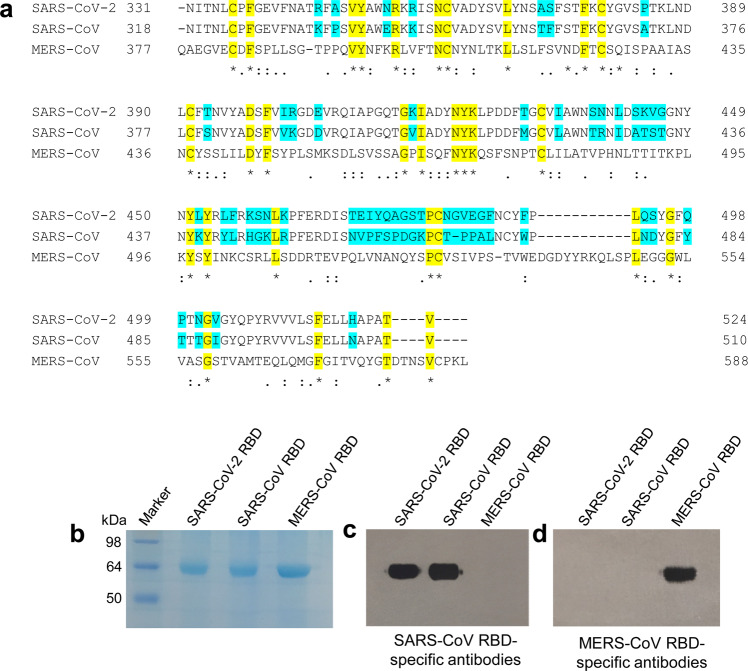
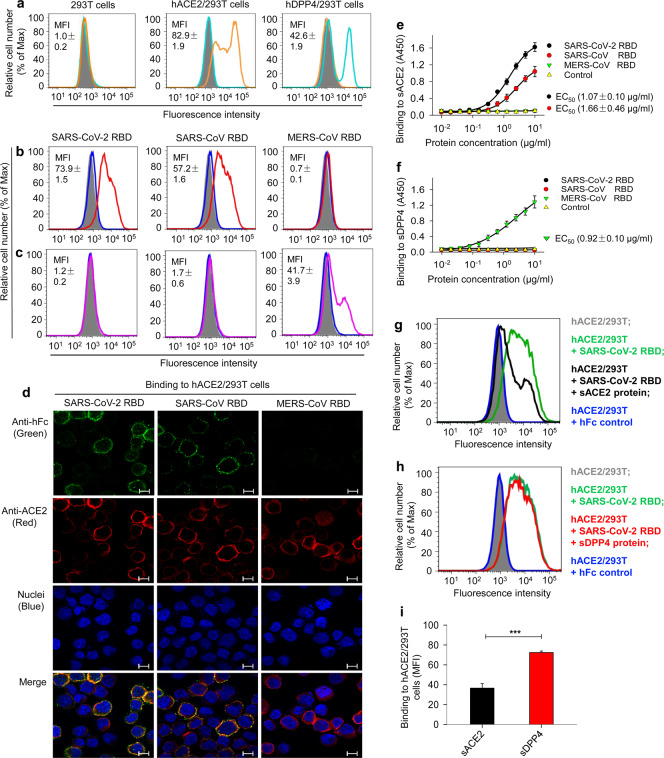
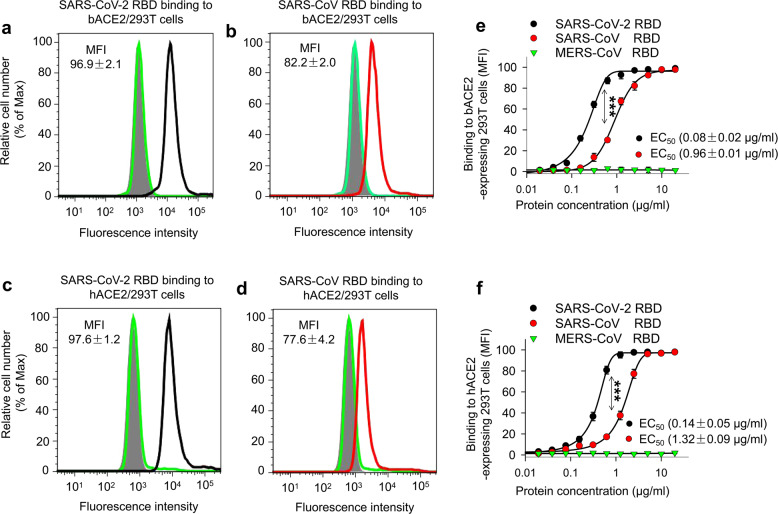
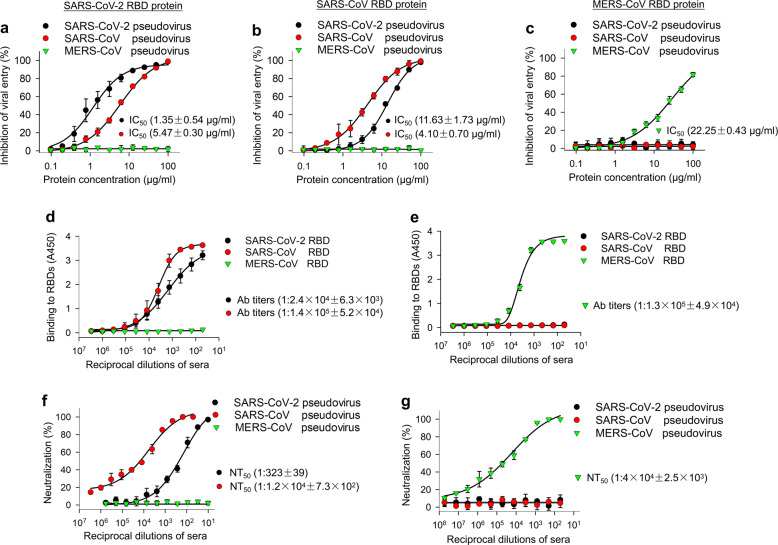
The outbreak of Coronavirus Disease 2019 (COVID-19) has posed a serious threat to global public health, calling for the development of safe and effective prophylactics and therapeutics against infection of its causative agent, severe acute respiratory syndrome coronavirus 2 (SARS-CoV-2), also known as 2019 novel coronavirus (2019-nCoV). The CoV spike (S) protein plays the most important roles in viral attachment, fusion and entry, and serves as a target for development of antibodies, entry inhibitors and vaccines. Here, we identified the receptor-binding domain (RBD) in SARS-CoV-2 S protein and found that the RBD protein bound strongly to human and bat angiotensin-converting enzyme 2 (ACE2) receptors. SARS-CoV-2 RBD exhibited significantly higher binding affinity to ACE2 receptor than SARS-CoV RBD and could block the binding and, hence, attachment of SARS-CoV-2 RBD and SARS-CoV RBD to ACE2-expressing cells, thus inhibiting their infection to host cells. SARS-CoV RBD-specific antibodies could cross-react with SARS-CoV-2 RBD protein, and SARS-CoV RBD-induced antisera could cross-neutralize SARS-CoV-2, suggesting the potential to develop SARS-CoV RBD-based vaccines for prevention of SARS-CoV-2 and SARS-CoV infection.
Overview
The claims and statistics of this paper haven’t been checked yet.
Run the check — free, no account needed. It reads the open-access text and checks the sources it cites.
Integrity signals
Registry
Cites
Statistics
Figures
Verification
Claims the paper makes
The claims and statistics of this paper haven’t been checked yet.
Run the check — free, no account needed. It reads the open-access text and checks the sources it cites.
Claims other papers make about this one
Each is checked against this paper’s own text: does it say what the citing paper says it does?
The source backs part of the claim, not all of it — or backs it for a different population, condition or comparison.
In the citing paper
“Some recent studies also demonstrated that immunization with the recombinant RBD of SARS-CoV-2 induced high titers of neutralizing antibodies in the absence of antibody-dependent enhancement (ADE) of infection (Quinlan et al., 2020; Tai et al., 2020).”
From A thermostable mRNA vaccine against COVID-19 (2020) · cites this paper as Tai et al., 2020
Experimental — accuracy not yet measured
Self-check
Percentages, sums and reported differences re-computed from the paper’s own numbers.
The self-check needs the paper’s full text.
Citations
Cites
A novel coronavirus from patients with pneumonia in China, 2019
Zhu, N., Zhang, D., Wang, W., Li, X., Yang, B., Song, J., Zhao, X., Huang, B., Shi, W., Lu, R., et al. (2020) · New England Journal of Medicine · doi:10.1056/nejmoa2001017 · Cited by 28,244
A pneumonia outbreak associated with a new coronavirus of probable bat origin
Zhou, P., Yang, X.-L., Wang, X.-G., Hu, B., Zhang, L., Zhang, W., Si, H.-R., Zhu, Y., Li, B., Huang, C.-L., et al. (2020) · Nature · doi:10.1038/s41586-020-2012-7 · Cited by 21,969 · cited 3×
“Since SARS-CoV-2 is more phylogenetically related to SARS-CoV than MERS-CoV, 22 we further detected the cross-reactivity of SARS-CoV RBD-specific antibodies with SARS-CoV-2 RBD and crossneutralizing activity of SARS-CoV RBD-specific antibodies against pseudotyped SARS-CoV-2.”
BackgroundResultInfluentialGorbalenya, A. E., Baker, S. C., Baric, R. S., de Groot, R. J., Drosten, C., Gulyaeva, A. A., Haagmans, B. L., Lauber, C., Leontovich, A. M., Neuman, B. W., et al. (2020) · Nature Microbiology · doi:10.1038/s41564-020-0695-z · Cited by 8,745
Angiotensin-converting enzyme 2 is a functional receptor for the SARS coronavirus
Li, W., Moore, M. J., Vasilieva, N., Sui, J., Wong, S. K., Berne, M. A., Somasundaran, M., Sullivan, J. L., Luzuriaga, K., Greenough, T. C., et al. (2003) · Nature · doi:10.1038/nature02145 · Cited by 5,923
Isolation of a Novel Coronavirus from a Man with Pneumonia in Saudi Arabia
Zaki, A. M., van Boheemen, S., Bestebroer, T. M., Osterhaus, A. D. M. E., & Fouchier, R. A. M. (2012) · New England Journal of Medicine · doi:10.1056/nejmoa1211721 · Cited by 5,677
Chou, T.-C. (2006) · Pharmacological Reviews · doi:10.1124/pr.58.3.10 · Cited by 5,163
Bats Are Natural Reservoirs of SARS-Like Coronaviruses
Li, W., Shi, Z., Yu, M., Ren, W., Smith, C. S., Epstein, J. H., Wang, H., Crameri, G. S., Hú, Z., Zhang, H., et al. (2005) · Science · doi:10.1126/science.1118391 · Cited by 2,571
Dipeptidyl peptidase 4 is a functional receptor for the emerging human coronavirus-EMC
Raj, V. S., Mou, H., Smits, S. L., Dekkers, D. H. W., Müller, M. A., Dijkman, R., Muth, D., Demmers, J. A. A., Zaki, A., Fouchier, R. A. M., et al. (2013) · Nature · doi:10.1038/nature12005 · Cited by 2,061
Structure of SARS Coronavirus Spike Receptor-Binding Domain Complexed with Receptor
Li, F., Li, W., Farzan, M., & Harrison, S. C. (2005) · Science · doi:10.1126/science.1116480 · Cited by 2,035
The spike protein of SARS-CoV — a target for vaccine and therapeutic development
Du, L., He, Y., Zhou, Y., Liu, S., Zheng, B.-J., & Jiang, S. (2009) · Nature Reviews Microbiology · doi:10.1038/nrmicro2090 · Cited by 1,678
Cited by
Sorted by citations
The trinity of COVID-19: immunity, inflammation and intervention
Tay, M. Z., Poh, C. M., Rénia, L., MacAry, P. A., & Ng, L. F. P. (2020) · Nature Reviews Immunology · doi:10.1038/s41577-020-0311-8 · Cited by 4,360
Immunology of COVID-19: Current State of the Science
Vabret, N., Britton, G. J., Gruber, C., Hegde, S., Kim, J., Kuksin, M., Levantovsky, R., Malle, L., Moreira, A., Park, M. D., et al. (2020) · Immunity · doi:10.1016/j.immuni.2020.05.002 · Cited by 1,623
Phase 1–2 Trial of a SARS-CoV-2 Recombinant Spike Protein Nanoparticle Vaccine
Keech, C., Albert, G., Cho, I., Robertson, A., Reed, P., Neal, S., Plested, J. S., Zhu, M., Cloney-Clark, S., Zhou, H., et al. (2020) · New England Journal of Medicine · doi:10.1056/nejmoa2026920 · Cited by 1,156
Astuti, I., & Ysrafil, Y. (2020) · Diabetes & Metabolic Syndrome Clinical Research & Reviews · doi:10.1016/j.dsx.2020.04.020 · Cited by 1,088
“Both of these proteins (TMPRSS2 and ACE2) are the main determinants of the entry of this virus.”
InfluentialBeyerstedt, S., Casaro, E. B., & Rangel, É. B. (2021) · European Journal of Clinical Microbiology & Infectious Diseases · doi:10.1007/s10096-020-04138-6 · Cited by 897
“SARS-CoV-2 shares 80% identity with SARS-CoV [1], and both viruses use the angiotensin-converting enzyme 2 (ACE2) as a cellular entry receptor [2, 3].”
BackgroundBiomarkers associated with COVID-19 disease progression
Ponti, G., Maccaferri, M., Ruini, C., Tomasi, A., & Özben, T. (2020) · Critical Reviews in Clinical Laboratory Sciences · doi:10.1080/10408363.2020.1770685 · Cited by 920
“protein binds strongly to ACE2 receptors [16].”
COVID-19 Vaccine: A comprehensive status report
Kaur, S. P., & Gupta, V. (2020) · Virus Research · doi:10.1016/j.virusres.2020.198114 · Cited by 870
Neutralizing Antibodies against SARS-CoV-2 and Other Human Coronaviruses
Jiang, S., Hillyer, C., & Du, L. (2020) · Trends in Immunology · doi:10.1016/j.it.2020.03.007 · Cited by 847
“CoVRBD-based vaccines that might eventually prevent SARS-CoV-2 and SARSCoV infection [15].”
mRNA-based therapeutics: powerful and versatile tools to combat diseases
Qin, S., Tang, X., Chen, Y., Chen, K., Fan, N., Xiao, W., Zheng, Q., Li, G., Teng, Y., Wu, M., et al. (2022) · Signal Transduction and Targeted Therapy · doi:10.1038/s41392-022-01007-w · Cited by 852
Adaptation of SARS-CoV-2 in BALB/c mice for testing vaccine efficacy
Gu, H., Chen, Q., Yang, G., He, L., Fan, H., Deng, Y.-Q., Wang, Y., Teng, Y., Zhao, Z., Cui, Y., et al. (2020) · Science · doi:10.1126/science.abc4730 · Cited by 762
Self-citationImmune response, inflammation, and the clinical spectrum of COVID-19
García, L. F. (2020) · Frontiers in Immunology · doi:10.3389/fimmu.2020.01441 · Cited by 739
A thermostable mRNA vaccine against COVID-19
Zhang, N.-N., Li, X.-F., Deng, Y.-Q., Zhao, H., Huang, Y.-J., Yang, G., Huang, W.-J., Gao, P., Zhou, C., Zhang, R.-R., et al. (2020) · Cell · doi:10.1016/j.cell.2020.07.024 · Cited by 671
“Some recent studies also demonstrated that immunization with the recombinant RBD of SARS-CoV-2 induced high titers of neutralizing antibodies in the absence of antibody-dependent enhancement (ADE) of infection (Quinlan et al., 2020; Tai et al., 2020).”
COVID-19: A promising cure for the global panic
Vellingiri, B., Jayaramayya, K., Iyer, M., Narayanasamy, A., Govindasamy, V., Giridharan, B., Ganesan, S., Venugopal, A., Venkatesan, D., Ganesan, H., et al. (2020) · The Science of The Total Environment · doi:10.1016/j.scitotenv.2020.138277 · Cited by 650
“It has been reported that the SARS-CoV and SARS-CoV-2 have similar kind of receptors, especially the receptor binding domain (RBD) and the receptor binding motif (RBM) in the viral genome (Yin and Wunderink, 2018; Zhang et al., 2020; Tai et al., 2020) .”
SARS-CoV-2 immunity: review and applications to phase 3 vaccine candidates
Poland, G. A., Ovsyannikova, I. G., & Kennedy, R. B. (2020) · The Lancet · doi:10.1016/s0140-6736(20)32137-1 · Cited by 572
The COVID-19 pandemic: a global health crisis
Pollard, C., Morran, M. P., & Nestor‐Kalinoski, A. L. (2020) · Physiological Genomics · doi:10.1152/physiolgenomics.00089.2020 · Cited by 554
Yi, C., Sun, X., Ye, J., Ding, L., Liu, M., Yang, Z., Lü, X., Zhang, Y., Ma, L., Gu, W., et al. (2020) · Cellular and Molecular Immunology · doi:10.1038/s41423-020-0458-z · Cited by 485
“Hence, the S protein, especially its RBD, which is responsible for hACE2 binding, is the most promising target for the development of SARS-CoV vaccines and antibody-based drugs.(23) Based on the newly disclosed structural information and our functional analysis, we discussed the receptor recognition and antigenic feat…”
Drug repurposing approach to fight COVID-19
Singh, T. U., Parida, S., Lingaraju, M. C., Kesavan, M., Kumar, D., & Singh, R. K. (2020) · Pharmacological Reports · doi:10.1007/s43440-020-00155-6 · Cited by 490
SARS-CoV-2 variant prediction and antiviral drug design are enabled by RBD in vitro evolution
Zahradník, J., Marciano, S., Shemesh, M., Zoler, E., Harari, D., Chiaravalli, J., Meyer, B., Rudich, Y., Li, C., Marton, I., et al. (2021) · Nature Microbiology · doi:10.1038/s41564-021-00954-4 · Cited by 454
Röltgen, K., Powell, A. E., Wirz, O. F., Stevens, B. A., Hogan, C. A., Najeeb, J., Hunter, M., Wang, H., Sahoo, M. K., Huang, C., et al. (2020) · Science Immunology · doi:10.1126/sciimmunol.abe0240 · Cited by 452
“Length of hospital stay, median days (IQR) NA 5 (2-8) 17 (9-49) 15 (5-29)”
BackgroundQuantification of SARS-CoV-2 neutralizing antibody by a pseudotyped virus-based assay
Nie, J., Li, Q., Wu, J., Zhao, C., Hao, H., Liu, H., Zhang, L., Nie, L., Qin, H., Wang, M., et al. (2020) · Nature Protocols · doi:10.1038/s41596-020-0394-5 · Cited by 427
Duan, L., Zheng, Q., Zhang, H., Niu, Y., Lou, Y., & Wang, H. (2020) · Frontiers in Immunology · doi:10.3389/fimmu.2020.576622 · Cited by 417
“This minimal form of RBDs of both viruses could serve as a vaccine candidate (100).”
BackgroundAnalysis of the SARS-CoV-2 spike protein glycan shield reveals implications for immune recognition
Grant, O. C., Montgomery, D., Ito, K., & Woods, R. J. (2020) · Scientific Reports · doi:10.1038/s41598-020-71748-7 · Cited by 379
Immune-mediated approaches against COVID-19
Florindo, H. F., Kleiner, R., Vaskovich‐Koubi, D., Acúrcio, R. C., Carreira, B., Yeini, E., Tiram, G., Liubomirski, Y., & Satchi‐Fainaro, R. (2020) · Nature Nanotechnology · doi:10.1038/s41565-020-0732-3 · Cited by 356
Sex differences in severity and mortality from COVID-19: are males more vulnerable?
Pradhan, A., & Olsson, P. (2020) · Biology of Sex Differences · doi:10.1186/s13293-020-00330-7 · Cited by 333
“The importance of S protein, especially the RBD region, makes it a potential target for SARS-CoV-2 vaccine and antibodybased drug development [19].”
BackgroundACE2: Evidence of role as entry receptor for SARS-CoV-2 and implications in comorbidities
Cuervo, N. Z., & Grandvaux, N. (2020) · eLife · doi:10.7554/elife.61390 · Cited by 313
Cell membrane-coated nanoparticles: a novel multifunctional biomimetic drug delivery system
Liu, H., Su, Y.-Y., Jiang, X.-C., & Gao, J.-Q. (2023) · Drug Delivery and Translational Research · doi:10.1007/s13346-022-01252-0 · Cited by 302
Rahman, S., Montero, M. T. V., Rowe, K., Kirton, R., & Kunik, F. (2021) · Expert Review of Clinical Pharmacology · doi:10.1080/17512433.2021.1902303 · Cited by 315
A therapeutic neutralizing antibody targeting receptor binding domain of SARS-CoV-2 spike protein
Kim, C.-M., Ryu, D.-K., Lee, J., Kim, Y., Seo, J. M., Kim, Y., Jeong, J.-H., Kim, M., Kim, J.-I., Kim, P., et al. (2021) · Nature Communications · doi:10.1038/s41467-020-20602-5 · Cited by 283
Basu, A., Sarkar, A., & Maulik, U. (2020) · Scientific Reports · doi:10.1038/s41598-020-74715-4 · Cited by 289
Recombinant protein vaccines, a proven approach against coronavirus pandemics
Pollet, J. B. K., Chen, W., & Strych, U. (2021) · Advanced Drug Delivery Reviews · doi:10.1016/j.addr.2021.01.001 · Cited by 287
Circular RNA vaccine in disease prevention and treatment
Niu, D., Wu, Y., & Lian, J. (2023) · Signal Transduction and Targeted Therapy · doi:10.1038/s41392-023-01561-x · Cited by 281
“210,219 The Omicron variant carries more than 30 mutations in the spike protein, 15 of which are located in the RBD. 220 Therefore, the RBD has emerged as an antigen in the therapeutic strategy to design vaccines.”
BackgroundWang, Z., Popowski, K. D., Zhu, D., Abad, B. L. D. J., Wang, X., Liu, M., Lutz, H., Naeyer, N. D., DeMarco, C. T., Denny, T. N., et al. (2022) · Nature Biomedical Engineering · doi:10.1038/s41551-022-00902-5 · Cited by 277
Serological Approaches for COVID-19: Epidemiologic Perspective on Surveillance and Control
Lee, C. Y., Lin, R. T. P., Rénia, L., & Ng, L. F. P. (2020) · Frontiers in Immunology · doi:10.3389/fimmu.2020.00879 · Cited by 262
“A substantial level of cross-reactivity by SARS-CoV RBD-induced antibodies to SARS-CoV-2 RBD was described (Table 1) (20).”
BackgroundDynamic changes in anti-SARS-CoV-2 antibodies during SARS-CoV-2 infection and recovery from COVID-19
Li, K., Huang, B., Wu, M., Zhong, A., Li, L., Cai, Y., Wang, Z., Wu, L., Zhu, M., Li, J., et al. (2020) · Nature Communications · doi:10.1038/s41467-020-19943-y · Cited by 257
Cunha, L. L., Perazzio, S. F., Azzi, J., Cravedi, P., & Riella, L. V. (2020) · Frontiers in Immunology · doi:10.3389/fimmu.2020.01748 · Cited by 245
“In SARS-CoV2, the spike protein (S) mediates the attachment, fusion, and entry of the virus in human cells (99).”
BackgroundSARS-CoV-2 Vaccines Based on the Spike Glycoprotein and Implications of New Viral Variants
Martínez-Flores, D., Zepeda–Cervantes, J., Cruz-Reséndiz, A., Aguirre‐Sampieri, S., Sampieri, A., & Vaca, L. A. (2021) · Frontiers in Immunology · doi:10.3389/fimmu.2021.701501 · Cited by 244
Monoclonal antibodies for COVID-19 therapy and SARS-CoV-2 detection
Hwang, Y., Lu, R., Su, S.-C., Chiang, P.-Y., Ko, S.-H., Ke, F.-Y., Liang, K.-H., Hsieh, T.-Y., & Wu, H. (2022) · Journal of Biomedical Science · doi:10.1186/s12929-021-00784-w · Cited by 247
Rapid SARS-CoV-2 Spike Protein Detection by Carbon Nanotube-Based Near-Infrared Nanosensors
Pinals, R. L., Ledesma, F., Yang, D., Navarro, N., Jeong, S., Pak, J. E., Kuo, L., Chuang, Y., Cheng, Y., Sun, H.-Y., et al. (2021) · Nano Letters · doi:10.1021/acs.nanolett.1c00118 · Cited by 241
Yao, H., Lu, X., Chen, Q., Xu, K., Chen, Y. Z., Cheng, M., Chen, K., Cheng, L., Weng, T.-H., Shi, D., et al. (2020) · Cell Discovery · doi:10.1038/s41421-020-00226-1 · Cited by 241
Design of a peptide-based subunit vaccine against novel coronavirus SARS-CoV-2
Kalita, P., Padhi, A. K., Zhang, K. Y. J., & Tripathi, T. (2020) · Microbial Pathogenesis · doi:10.1016/j.micpath.2020.104236 · Cited by 234
A Potently Neutralizing Antibody Protects Mice against SARS-CoV-2 Infection
Alsoussi, W. B., Turner, J. S., Case, J. B., Zhao, H., Schmitz, A. J., Zhou, J. Q., Chen, R. E., Lei, T., Rizk, A. A., McIntire, K. M., et al. (2020) · The Journal of Immunology · doi:10.4049/jimmunol.2000583 · Cited by 181
“Multiple amino acid variations exist between SARS-CoV-2 and SARS-CoV RBDs and to a much larger extent between SARSCoV-2 and MERS-CoV RBDs (13, 50).”
BackgroundSantoso, A., Pranata, R., Wibowo, A., Farabi, M. J. A., Huang, I., & Antariksa, B. (2020) · The American Journal of Emergency Medicine · doi:10.1016/j.ajem.2020.04.052 · Cited by 220
“receptor-binding domain (RBD) in the SARS-CoV-2 S protein has a higher binding affinity for human ACE2 and is significantly higher compared to SARS-CoV-1.(34,35) Although ACE2 is only slightly expressed in the cardiomyocyte, it was highly expressed in the pericytes.”
Ding, S., & Liang, T. J. (2020) · Gastroenterology · doi:10.1053/j.gastro.2020.04.052 · Cited by 223
“Multiple Cryo-EM structures of the recombinant S receptor binding domain and ACE2 complex have already been solved with an unprecedented speed [23] [24] [25] [26] .”
Electrochemical sensors for the detection of SARS-CoV-2 virus
Kumar, N., Shetti, N. P., Jagannath, S., & Aminabhavi, T. M. (2021) · Chemical Engineering Journal · doi:10.1016/j.cej.2021.132966 · Cited by 220
“Spike protein has two subunits: S1 subunit contains a receptor-binding domain (RBD), which is responsible mainly for binding of the virus to the receptor, and S2 subunit mediates the virushost cell fusion and the entry [37,60,79].”
BackgroundSargiacomo, C., Sotgia, F., & Lisanti, M. P. (2020) · Aging · doi:10.18632/aging.103001 · Cited by 215
“One is CD26 [3] and the other is ACE-2 (angiotensinconverting enzyme 2) [4].”
BackgroundSARS-CoV-2 Infection and Cardiovascular Disease: COVID-19 Heart
Dhakal, B. P., Sweitzer, N. K., Indik, J. H., Acharya, D., & William, P. (2020) · Heart Lung and Circulation · doi:10.1016/j.hlc.2020.05.101 · Cited by 216
“248 proteins of which S protein mediates the viral entry into host cells [17,18].”
Evidence for SARS-CoV-2 Infection of Animal Hosts
Abdel-Moneim, A. S., & Abdelwhab, E. M. (2020) · Pathogens · doi:10.3390/pathogens9070529 · Cited by 209
The SARS-CoV-2 Spike protein has a broad tropism for mammalian ACE2 proteins
Conceicao, C., Thakur, N., Human, S., Kelly, J. T., Logan, L., Bialy, D., Bhat, S., Stevenson-Leggett, P., Zagrajek, A. K., Hollinghurst, P., et al. (2020) · PLoS Biology · doi:10.1371/journal.pbio.3001016 · Cited by 207
“The apparent lack of tropism for bat ACE2 proteins we observed 295 was surprising as there is previous evidence of SARS-CoV-2 infection of bat ACE2 expressing 296 cells in vitro [1] and in vitro binding experiments suggest that the SARS-CoV-2 RBD binds bat 297 ACE2 with high affinity [24].”
ResultZamzami, M. A., Rabbani, G., Ahmad, A., Basalah, A. A., Alsabban, W. H., Ahn, S. N., & Choudhry, H. (2021) · Bioelectrochemistry · doi:10.1016/j.bioelechem.2021.107982 · Cited by 211
“fabricated a graphene-based FET biosensor for instant detection of SARS-CoV-2 spike S1 protein using monoclonal antibody immobilized, which had a LOD of 1 fg/mL [37].”
Wang, S., Liang, B., Wang, W., Li, L., Feng, N., Zhao, Y., Wang, T., Yan, F., Yang, S., & Xia, X. (2023) · Signal Transduction and Targeted Therapy · doi:10.1038/s41392-023-01408-5 · Cited by 230
“Inactivated RABV-vectored vaccines also exhibit efficacy in emerging beta coronavirus.(137,138) Full-length S protein incorporation into the RABV vector reduced the growth titers of recombinant virus.”
BackgroundReview on E-waste management and its impact on the environment and society
Jain, M., Kumar, D., Chaudhary, J., Sudesh, K., Sharma, S., & Verma, A. S. (2023) · Waste Management Bulletin · doi:10.1016/j.wmb.2023.06.004 · Cited by 212
The Immune Response and Immunopathology of COVID-19
Mortaz, E., Tabarsi, P., Varahram, M., Folkerts, G., & Adcock, I. M. (2020) · Frontiers in Immunology · doi:10.3389/fimmu.2020.02037 · Cited by 210
Sex-based clinical and immunological differences in COVID-19
Huang, B., Cai, Y., Li, N., Li, K., Wang, Z., Li, L., Wu, L., Zhu, M., Li, J., Wang, Z., et al. (2021) · BMC Infectious Diseases · doi:10.1186/s12879-021-06313-2 · Cited by 211
Inhibition of SARS-CoV-2 viral entry upon blocking N- and O-glycan elaboration
Yang, Q., Hughes, T. A., Kelkar, A., Yu, X., Cheng, K., Park, S., Huang, W., Lovell, J. F., & Neelamegham, S. (2020) · eLife · doi:10.7554/elife.61552 · Cited by 199
“This assay provides an aggregate measure of both molecular binding and viral fusion/entry in the context of the physiological Spike trimeric configuration ( Tai et al., 2020 ).”
MethodFunctionalized TiO2 Nanotube-Based Electrochemical Biosensor for Rapid Detection of SARS-CoV-2
Vadlamani, B. S., Uppal, T., Verma, S. C., & Misra, M. (2020) · Sensors · doi:10.3390/s20205871 · Cited by 204
“The S1 subunit of the S protein consists of a receptor binding domain (RBD) that has a high binding affinity towards the host angiotensin-converting enzyme II (ACE2) receptor present on the human cells; the S2 subunit mediates virus-host cell fusion and entry [14].”
BackgroundNeurological manifestations of COVID-19: a systematic review
Nepal, G., Rehrig, J. H., Shrestha, G. S., Shing, Y. K., Yadav, J. K., Ojha, R., Pokhrel, G., Tu, Z., & Huang, D. (2020) · Critical Care · doi:10.1186/s13054-020-03121-z · Cited by 201
“zyme 2 (ACE2) as a host cell entry receptor [41].”
BackgroundSARS-CoV-2 Mutations and their Viral Variants
Coşar, B., KARAGÜLLEOĞLU, Z. Y., ÜNAL, S., İnce, A. T., Uncuoglu, D. B., Tuncer, G., Kilinc, B. R., Ozkan, Y. E., Ozkoc, H. C., Demir, I. N., et al. (2021) · Cytokine & Growth Factor Reviews · doi:10.1016/j.cytogfr.2021.06.001 · Cited by 205
“The RBD CoV genome in the S protein is the most variable part [48].”
Antibody signature induced by SARS-CoV-2 spike protein immunogens in rabbits
Ravichandran, S., Coyle, E. M., Klenow, L., Tang, J., Grubbs, G., Liu, S., Wang, T. T., Golding, H., & Khurana, S. (2020) · Science Translational Medicine · doi:10.1126/scitranslmed.abc3539 · Cited by 187
Hatmal, M. M., Alshaer, W., Al-Hatamleh, M. A. I., Hatmal, M., Smadi, O., Taha, M. O., Oweida, A., Boer, J. C., Mohamud, R., & Plebanski, M. (2020) · Cells · doi:10.3390/cells9122638 · Cited by 205
“Researchers argue that this similarity strongly suggests the convergent evolution of the SARS-CoV-2 and SARS-CoV RBD structures to improve binding affinity to the same ACE2 receptor, even though SARS-CoV-2 does not cluster within SARS-CoV in the beta coronavirus genus [6,42].”
SARS-CoV-2 Proteome Microarray for Mapping COVID-19 Antibody Interactions at Amino Acid Resolution
Wang, H., Wu, X., Zhang, X., Hou, X., Liang, T., Wang, D., Teng, F., Dai, J., Duan, H., Guo, S., et al. (2020) · ACS Central Science · doi:10.1021/acscentsci.0c00742 · Cited by 188
Luchsinger, L. L., Ransegnola, B. P., Jin, D. K., Muecksch, F., Weisblum, Y., Bao, W., George, P. J., Rodriguez, M., Tricoche, N., Schmidt, F., et al. (2020) · Journal of Clinical Microbiology · doi:10.1128/jcm.02005-20 · Cited by 180
“found the most immunogenic antigens are the S- and N-proteins,(10) and development of serological tests 70 for SARS-CoV-2 antibodies has focused heavily on these viral proteins.”
Sasaki, M., Uemura, K., Sato, A., Toba, S., Sanaki, T., Maenaka, K., Hall, W. W., Orba, Y., & Sawa, H. (2021) · PLoS Pathogens · doi:10.1371/journal.ppat.1009233 · Cited by 183
“Human kidney 293T cells lack ACE2 expression and its exogenous introduction confers susceptibility to SARS-CoV-2 infection [13,30].”
BackgroundSardar, R., Satish, D., Birla, S., & Gupta, D. K. (2020) · Heliyon · doi:10.1016/j.heliyon.2020.e04658 · Cited by 182
Powell, A. E., Zhang, K., Sanyal, M., Tang, S., Weidenbacher, P. A. B., Li, S., Pham, T. D., Pak, J. E., Chiu, W., & Kim, P. S. (2021) · ACS Central Science · doi:10.1021/acscentsci.0c01405 · Cited by 174
“(1-1213) or spikeΔC (1-1137) to a modified GCN4 trimerization domain followed by a hexahistidine tag.”
SARS-CoV-2 SPIKE PROTEIN: an optimal immunological target for vaccines
Salvatori, G., Luberto, L., Maffei, M., Aurisicchio, L., Roscilli, G., Palombo, F., & Marra, E. (2020) · Journal of Translational Medicine · doi:10.1186/s12967-020-02392-y · Cited by 174
Körner, R. W., Majjouti, M., Alcazar, M. A. A., & Mahabir, E. (2020) · Viruses · doi:10.3390/v12080880 · Cited by 184
“The RBD in SARS-CoV-2 S protein seems the most likely target for the development of virus attachment inhibitors, neutralizing antibodies, and vaccines [12].”
BackgroundImmunogenicity of Pfizer-BioNTech COVID-19 vaccine in patients with inborn errors of immunity
Hagin, D., Freund, T., Navon, M., Halperin, T., Adir, D., Marom, R., Levi, I., Benor, S., Alcalay, Y., & Freund, N. T. (2021) · Journal of Allergy and Clinical Immunology · doi:10.1016/j.jaci.2021.05.029 · Cited by 174
“The SARS-CoV-2 Spike protein RBD is the part of the virus responsible for viral entry through attachment to ACE2 receptor.(26) In view of this fact, RBD was previously identified as one of the key determinants for neutralizing antibodies, with high correlation between anti-RBD antibody titers and serum neutralization.”
BackgroundA Comprehensive Review of the Protein Subunit Vaccines Against COVID-19
Heidary, M., Kaviar, V. H., Shirani, M., Ghanavati, R., Motahar, M., Sholeh, M., Ghahramanpour, H., & Khoshnood, S. (2022) · Frontiers in Microbiology · doi:10.3389/fmicb.2022.927306 · Cited by 179
Zhai, X., Sun, J., Yan, Z., Zhang, J., Zhao, J., Zhao, Z., Gao, Q., He, W.-T., Veit, M., & Su, S. (2020) · Journal of Virology · doi:10.1128/jvi.00831-20 · Cited by 177
“It has been reported in some studies that S of SARS-CoV-2 binds with higher affinity to its receptor than does S of SARS-CoV (15, 17, 26, 29).”
BackgroundStructure and Function of Major SARS-CoV-2 and SARS-CoV Proteins
Gorkhali, R., Koirala, P., Rijal, S., Mainali, A., Baral, A., & Bhattarai, H. K. (2021) · Bioinformatics and Biology Insights · doi:10.1177/11779322211025876 · Cited by 185
COVID-19 vaccine design: the Janus face of immune enhancement
Hotez, P. J., Corry, D. B., & Bottazzi, M. E. (2020) · Nature reviews. Immunology · doi:10.1038/s41577-020-0323-4 · Cited by 168
Rahman, M. S., Hoque, M. N., Islam, M. R., Akter, S., Alam, A. R.-U., Siddique, M. A., Saha, O., Rahaman, M. M., Sultana, M., Crandall, K. A., et al. (2020) · PeerJ · doi:10.7717/peerj.9572 · Cited by 166
SARS-CoV-2 Nucleocapsid Protein Interacts with RIG-I and Represses RIG-Mediated IFN-β Production
Chen, K., Xiao, F., Hu, D., Ge, W., Tian, M., Wang, W., Pan, P., Wu, K., & Wu, J. (2020) · Viruses · doi:10.3390/v13010047 · Cited by 177
Cherrak, S. A., Merzouk, H., & Mokhtari-Soulimane, N. A. (2020) · PLoS ONE · doi:10.1371/journal.pone.0240653 · Cited by 166
“The main encoded proteins of this RNA are a trimeric structural spike protein, a homodimeric protease [9, 10], an RNA polymerase and several nonstructural proteins [11, 12].”
BackgroundAntiviral and immunomodulatory activity of curcumin: A case for prophylactic therapy for COVID-19
Thimmulappa, R. K., Mudnakudu-Nagaraju, K. K., Shivamallu, C., Subramaniam, K., Radhakrishnan, A., Bhojraj, S., & Kuppusamy, G. (2021) · Heliyon · doi:10.1016/j.heliyon.2021.e06350 · Cited by 168
“Therefore, curcumin supplementation may potentially protect from SARS-CoV-2 infection by down-regulating ACE2 expression.”
InfluentialMa, X., Guan, C., Chen, R., Wang, Y., Feng, S., Wang, R., Qu, G., Zhao, S., Wang, F., Wang, X., et al. (2020) · Cellular and Molecular Immunology · doi:10.1038/s41423-020-00604-5 · Cited by 160
Huang, J., Song, W., Huang, H., & Sun, Q. (2020) · Journal of Clinical Medicine · doi:10.3390/jcm9041131 · Cited by 165
COVID-19: Progress in diagnostics, therapy and vaccination
Liu, X., Liu, C., Liu, G., Luo, W., & Xia, N. (2020) · Theranostics · doi:10.7150/thno.47987 · Cited by 159
“SARS-CoV-2 targets cells through the S protein, which binds to the human angiotensin-converting enzyme 2 (ACE2) receptor and employs the cellular serine protease TMPRSS2 for S protein priming [27-31].”
BackgroundThe Rise and Impact of COVID-19 in India
Kumar, S. U., Kumar, D. T., Christopher, B. P., & Doss, C. G. P. (2020) · Frontiers in Medicine · doi:10.3389/fmed.2020.00250 · Cited by 155
“The two possible reasons could be (i) the viral load (quantity of virus) tends to be relatively higher in COVID-19-positive patients, especially in the nose and throat immediately after they develop symptoms, and (ii) the binding affinity of SARSCoV-2 to host cell receptors is higher than that of SARS-CoV (13, 14).”
BackgroundCOVID 19: a clue from innate immunity
Birra, D., Benucci, M., Landolfi, L., Merchionda, A., Loi, G., Amato, P., Licata, G., Quartuccio, L., Triggiani, M., & Moscato, P. (2020) · Immunologic Research · doi:10.1007/s12026-020-09137-5 · Cited by 155
Could SARS-CoV-2 Spike Protein Be Responsible for Long-COVID Syndrome?
Theoharides, T. C. (2022) · Molecular Neurobiology · doi:10.1007/s12035-021-02696-0 · Cited by 156
“The spike protein is made up of the S1 subunit containing a receptor-binding domain (RBD) that attaches to ACE2 and the S2 subunit containing a transmembrane anchor that mediates fusion of viral and host cell membranes [1].”
BackgroundA novel receptor-binding domain (RBD)-based mRNA vaccine against SARS-CoV-2
Tai, W., Zhang, X., Drelich, A., Shi, J., Hsu, J. C., Luchsinger, L., Hillyer, C. D., Tseng, C.-T. K., Jiang, S., & Du, L. (2020) · Cell Research · doi:10.1038/s41422-020-0387-5 · Cited by 151
Self-citationCurrent and Perspective Diagnostic Techniques for COVID-19
Yuan, X., Yang, C., He, Q., Chen, J., Yu, D., Li, J., Zhai, S., Qin, Z., Du, K., Chu, Z., et al. (2020) · ACS Infectious Diseases · doi:10.1021/acsinfecdis.0c00365 · Cited by 151
Applications of Charge Detection Mass Spectrometry in Molecular Biology and Biotechnology
Jarrold, M. F. (2021) · Chemical Reviews · doi:10.1021/acs.chemrev.1c00377 · Cited by 163
Human-IgG-Neutralizing Monoclonal Antibodies Block the SARS-CoV-2 Infection
Wan, J., Xing, S., Ding, L., Wang, Y., Gu, C., Wu, Y., Rong, B., Li, C., Wang, S., Chen, K., et al. (2020) · Cell Reports · doi:10.1016/j.celrep.2020.107918 · Cited by 153
“The S1 region, especially the RBD, primes the viral particle to human cell surface through the interaction with the receptor protein angiotensin I converting enzyme 2 (ACE2; Tai et al., 2020), which then triggers an infusion process primarily mediated by the S2 region (Walls et al.”
Spinello, A., Saltalamacchia, A., & Magistrato, A. (2020) · The Journal of Physical Chemistry Letters · doi:10.1021/acs.jpclett.0c01148 · Cited by 150
Designing a multi-epitope peptide based vaccine against SARS-CoV-2
Singh, A., Thakur, M. K., Sharma, L. K., & Chandra, K. (2020) · Scientific Reports · doi:10.1038/s41598-020-73371-y · Cited by 147
Thrombotic complications of COVID-19
Avila, J., Long, B., Holladay, D., & Gottlieb, M. (2021) · The American Journal of Emergency Medicine · doi:10.1016/j.ajem.2020.09.065 · Cited by 143
Prospect of SARS-CoV-2 spike protein: Potential role in vaccine and therapeutic development
Samrat, S. K., Tharappel, A. M., Li, Z., & Li, H. (2020) · Virus Research · doi:10.1016/j.virusres.2020.198141 · Cited by 148
Site-specific N-glycosylation Characterization of Recombinant SARS-CoV-2 Spike Proteins
Zhang, Y., Zhao, W., Mao, Y., Chen, Y., Wang, S., Zhong, Y., Su, T., Gong, M., Du, D., Lu, X., et al. (2020) · Molecular & Cellular Proteomics · doi:10.1074/mcp.ra120.002295 · Cited by 141
“Given its indispensable role in viral entry and infectivity, the S protein is probably the most promising immunogen, especially given the comprehensive understanding of the structure and function provided by recent studies (4, 12 – 14).”
Bojadzic, D., Alcazar, O., Chen, J., Chuang, S.-T., Capcha, J. M. C., Shehadeh, L. A., & Buchwald, P. (2021) · ACS Infectious Diseases · doi:10.1021/acsinfecdis.1c00070 · Cited by 147
Understanding neutralising antibodies against SARS-CoV-2 and their implications in clinical practice
Pang, N. Y., Pang, A. S., Chow, V. T. K., & Wang, D. Y. (2021) · Military Medical Research · doi:10.1186/s40779-021-00342-3 · Cited by 146
“This activates the antibody-dependent cell cytotoxicity (ADCC) and complement cascade which eliminates infected cells [21].”
BackgroundUnderstanding the molecular mechanisms of statin pleiotropic effects
German, C. A., & Liao, J. K. (2023) · Archives of Toxicology · doi:10.1007/s00204-023-03492-6 · Cited by 160
Shirbhate, E., Pandey, J., Patel, V. K., Kamal, M., Jawaid, T., Gorain, B., Kesharwani, P., & Rajak, H. (2021) · Pharmacological Reports · doi:10.1007/s43440-021-00303-6 · Cited by 164
Molecular characteristics, immune evasion, and impact of SARS-CoV-2 variants
Sun, C., Xie, C., Bu, G., Zhong, L., & Zeng, M. (2022) · Signal Transduction and Targeted Therapy · doi:10.1038/s41392-022-01039-2 · Cited by 149
COVID ‐19, pulmonary mast cells, cytokine storms, and beneficial actions of luteolin
Theoharides, T. C. (2020) · BioFactors · doi:10.1002/biof.1633 · Cited by 141
Bibliometric Analysis on COVID-19: A Comparison of Research Between English and Chinese Studies
Fan, J., Gao, Y., Zhao, N., Dai, R., Zhang, H., Feng, X., Shi, G., Tian, J., Chen, C., Hambly, B. D., et al. (2020) · Frontiers in Public Health · doi:10.3389/fpubh.2020.00477 · Cited by 154
“Such collaborations are certainly enhancing our understanding of the nature of the SARS-CoV-2 virus (36, 37), have supported development of effective vaccines (38, 39), and has provided vital data to assist clinical diagnosis at the international level (40).”
BackgroundTwo Years into the COVID-19 Pandemic: Lessons Learned
da Silva, S. J. R., do Nascimento, J. C. F., Mendes, R. P. G., Guarines, K. M., da Silva, C. T. A., da Silva, P. G., de Magalhães, J. J. F., Vigar, J. R. J., Silva‐Júnior, A., Kohl, A., et al. (2022) · ACS Infectious Diseases · doi:10.1021/acsinfecdis.2c00204 · Cited by 155
Predicting equilibrium distributions for molecular systems with deep learning
Zheng, S., He, J., Liu, C., Shi, Y., Lu, Z., Feng, W., Ju, F., Wang, J., Zhu, J., Min, Y., et al. (2024) · Nature Machine Intelligence · doi:10.1038/s42256-024-00837-3 · Cited by 206
Neutralizing antibodies for the prevention and treatment of COVID-19
Du, L., Yang, Y., & Zhang, X. (2021) · Cellular and Molecular Immunology · doi:10.1038/s41423-021-00752-2 · Cited by 133
“Relative to the SARS-CoV-1 S RBD, the SARS-CoV-2 S RBD has a higher binding affinity for ACE2 [28, 35, 38], partially explaining the more efficient human-tohuman transmission of SARS-CoV-2.”
Background
Metadata
- Authors
- Tai, W., He, L., Zhang, X., Pu, J., Voronin, D., Jiang, S., Zhou, Y., & Du, L.
- Affiliations
- New York Blood Center (US)
- Beijing Institute of Microbiology and Epidemiology (CN)
- Shanghai Medical College of Fudan University (CN)
- Corresponding author
- Jiang, Shibo
- Zhou, Yusen
- Du, Lanying
- Venue
- Cellular & Molecular Immunology
- Published
- 2020-03-19
- Volume
- 17
- Issue
- 6
- Pages
- 613-620
- ISSN
- 1672-7681 (ISSN-L)
- 2042-0226
- PMC
- PMC7091888
- OpenAlex
- W3011537081
- Cited by
- 1,654
- References
- 34
- Citations by year
- 2026: 28 · 2025: 68 · 2024: 120 · 2023: 184 · 2022: 296 · 2021: 482 · 2020: 475
- FWCI
- 47.20
- Type
- journal article
- Language
- en
- Open access
- hybrid
- doi.org
- Locations
- Cellular and Molecular Immunology (publishedVersion, cc-by)
- PubMed Central (publishedVersion, cc-by)
- PubMed (publishedVersion)
- Informationszentrum Lebenswissenschaften (ZB MED) (submittedVersion, cc-by)
- Funders
- U.S. Department of Health & Human Services | National Institutes of Health (R01AI137472, R01AI139092)
- Topics
- Health Sciences › Medicine › Infectious Diseases › SARS-CoV-2 and COVID-19 Research
- Life Sciences › Agricultural and Biological Sciences › Animal Science and Zoology › Animal Virus Infections Studies
- Life Sciences › Biochemistry, Genetics and Molecular Biology › Molecular Biology › vaccines and immunoinformatics approaches
- Keywords
- SARS-CoV-2, receptor binding domain, spike protein, ACE2 receptor, viral attachment inhibition, entry inhibitors, vaccine development, cross-reactive antibodies, SARS-CoV, COVID-19 pandemic, neutralizing antibodies, receptor binding affinity
- MeSH terms
- Betacoronavirus, COVID-19, SARS-CoV-2, COVID-19 Vaccines, Amino Acid Sequence, Animals, Antibodies, Viral, Binding Sites, Chiroptera, Cross Reactions, Humans, Pneumonia, Viral, Protein Binding, Viral Vaccines, Sequence Alignment, Coronavirus Infections, Receptor, Angiotensin, Type 2, Severe acute respiratory syndrome-related coronavirus, Mice, Virus Internalization, HEK293 Cells, Pandemics, Spike Glycoprotein, Coronavirus
About these checks
Registry, retraction, Cites and statistics results are computed, not judged, with one exception: a printed reference that no index lists is read once by a model before it counts as a citation error. Claims are extracted by a model and kept only when their quote appears verbatim in the text; each cited source is then checked, with a model’s help, for whether it says what the claim relies on. Those verdicts can be wrong — read the claim’s quote and the cited source before relying on one.
Statistics and arithmetic are recomputed, not judged.
Confidence bands are shown only for fields calibrated on our annotated test set. None is calibrated yet, so no band is shown.
What counts as a claim ›How we measure confidence ›How we check this ›
Are you an author, or do you see a problem with this page? Request a review
