

Nr2e3 is a genetic modifier that rescues retinal degeneration and promotes homeostasis in multiple models of retinitis pigmentosa
Open accessThe DOI matches its Crossref record; 106 of the 106 references it cites were found in a registry or an index.
Abstract
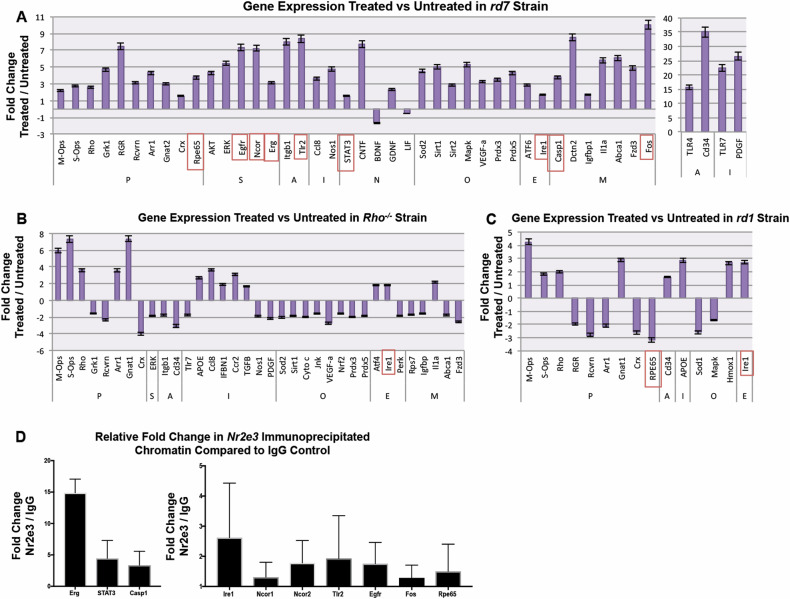
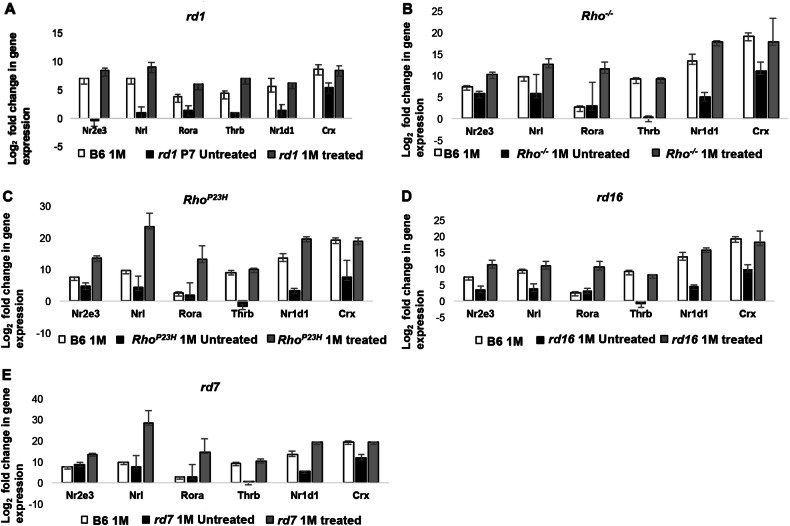
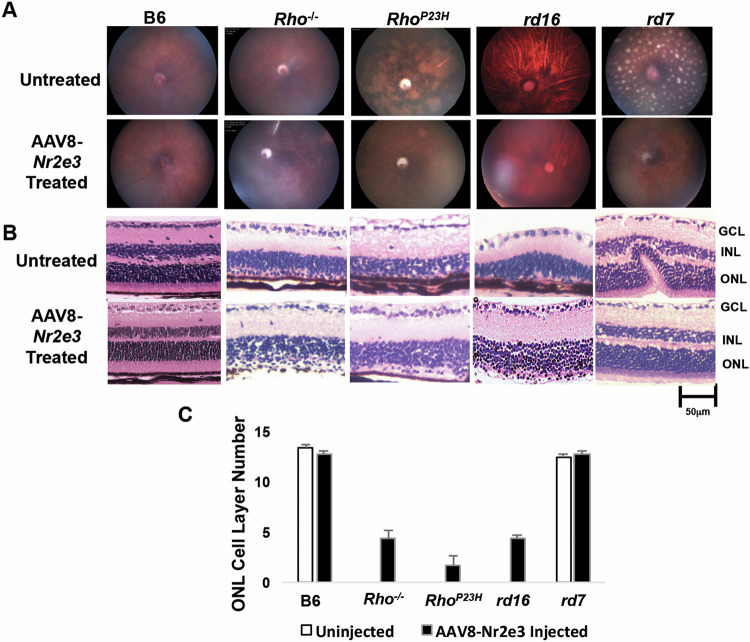
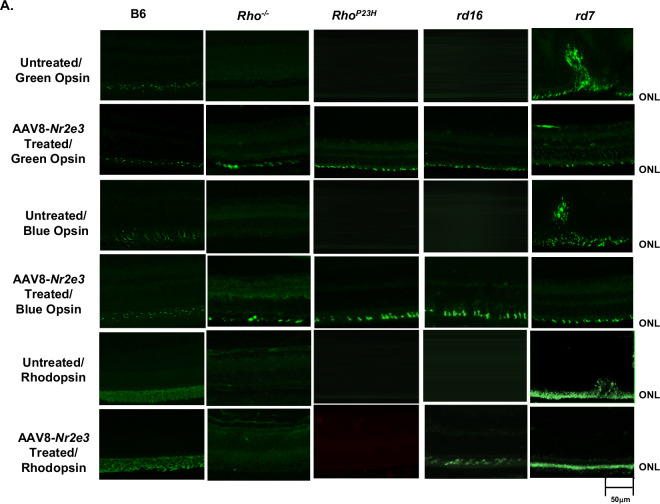
Recent advances in viral vector engineering, as well as an increased understanding of the cellular and molecular mechanism of retinal diseases, have led to the development of novel gene therapy approaches. Furthermore, ease of accessibility and ocular immune privilege makes the retina an ideal target for gene therapies. In this study, the nuclear hormone receptor gene Nr2e3 was evaluated for efficacy as broad-spectrum therapy to attenuate early to intermediate stages of retinal degeneration in five unique mouse models of retinitis pigmentosa (RP). RP is a group of heterogenic inherited retinal diseases associated with over 150 gene mutations, affecting over 1.5 million individuals worldwide. RP varies in age of onset, severity, and rate of progression. In addition, ~40% of RP patients cannot be genetically diagnosed, confounding the ability to develop personalized RP therapies. Remarkably, Nr2e3 administered therapy resulted in reduced retinal degeneration as observed by increase in photoreceptor cells, improved electroretinogram, and a dramatic molecular reset of key transcription factors and associated gene networks. These therapeutic effects improved retinal homeostasis in diseased tissue. Results of this study provide evidence that Nr2e3 can serve as a broad-spectrum therapy to treat multiple forms of RP.
Overview
The claims and statistics of this paper haven’t been checked yet.
Free: it reads the open-access text and checks the first 5 claims that cite a source we can check. Create a free account to check every claim.
Integrity signals
Registry
Cites
Statistics
Figures
Verification
Claims the paper makes
The claims and statistics of this paper haven’t been checked yet.
Free: it reads the open-access text and checks the first 5 claims that cite a source we can check. Create a free account to check every claim.
Claims other papers make about this one
Each is checked against this paper’s own text: does it say what the citing paper says it does?
The source backs part of the claim, not all of it — or backs it for a different population, condition or comparison.
In the citing paper
“Previous studies have shown that modifier genes, such as nuclear hormone receptors, have the potential to “reset” various networks related to retinal disease phenotypes, such as photoreceptor development, phototransduction, metabolism, cone cell development, inflammation, and cell survival, thus restoring the homeostasis in the retina to a healthy state.47,50–53”
From Gene Therapy for Retinal Degenerative Diseases: Progress, Challenges, and Future Directions (2023) · cites this paper as [52]
Experimental — accuracy not yet measuredThe cited source says what the claim attributes to it.
In the citing paper
“Modifier gene therapy has the potential to alter the retinal disease state even in the absence of a genetic diagnosis or in the absence of a gene therapy specific to the mutated gene in one of these patients.47,50–53”
From Gene Therapy for Retinal Degenerative Diseases: Progress, Challenges, and Future Directions (2023) · cites this paper as [52]
Self-check
Percentages, sums and reported differences re-computed from the paper’s own numbers.
The self-check needs the paper’s full text.
Citations
Cites
Yoshida, H., Matsui, T., Yamamoto, A., Okada, T., & Mori, K. (2001) · Cell · doi:10.1016/s0092-8674(01)00611-0 · Cited by 4,039
Mutation of the mouse klotho gene leads to a syndrome resembling ageing
Kuro-o, M., Matsumura, Y., Aizawa, H., Kawaguchi, H., Suga, T., Utsugi, T., Ohyama, Y., Kurabayashi, M., Kaname, T., Kume, E., et al. (1997) · Nature · doi:10.1038/36285 · Cited by 3,837
Russell, S., Bennett, J., Wellman, J. A., Chung, D. C., Yu, Z.-F., Tillman, A., Wittes, J., Pappas, J., Elci, O., McCague, S., et al. (2017) · The Lancet · doi:10.1016/s0140-6736(17)31868-8 · Cited by 1,952
Effect of gene therapy on visual function in Leber’s congenital amaurosis
Bainbridge, J. W. B., Smith, A. J., Barker, S. S., Robbie, S., Henderson, R., Balaggan, K., Viswanathan, A., Holder, G. E., Stockman, A., Tyler, N., et al. (2008) · New England Journal of Medicine · doi:10.1056/nejmoa0802268 · Cited by 1,924 · cited 1×
“Gene therapy has evolved from concept to clinic for various genetic disorders including hematological [2], immunological [3], ocular [4, 5], neuro-degenerative [6], and metabolic disorders [7].”
BackgroundGene therapy restores vision in a canine model of childhood blindness
Acland, G. M., Aguirre, G. D., Ray, J., Zhang, Q., Aleman, T. S., Cideciyan, A. V., Pearce-Kelling, S. E., Anand, V., Zeng, Y., Maguire, A. M., et al. (2001) · Nature Genetics · doi:10.1038/ng0501-92 · Cited by 1,202 · cited 1×
“The most widely accepted success of adeno-associated virus (AAV) vector-mediated ocular gene replacement is for treatment of Leber ’ s congenital amaurosis 2 (LCA2), a rare retinal disease due to mutations in the RPE65 gene [8, 9].”
BackgroundHamel, C. (2006) · Orphanet Journal of Rare Diseases · doi:10.1186/1750-1172-1-40 · Cited by 962
Bowes, C., Li, T., Danciger, M., Baxter, L. C., Applebury, M. L., & Farber, D. B. (1990) · Nature · doi:10.1038/347677a0 · Cited by 852
MacLaren, R. E., Groppe, M., Barnard, A. R., Cottriall, C. L., Tolmachova, T., Seymour, L., Clark, K. R., During, M. J., Cremers, F. P. M., Black, G. C. M., et al. (2014) · The Lancet · doi:10.1016/s0140-6736(13)62117-0 · Cited by 796
The Role of Orphan Nuclear Receptors in the Regulation of Cholesterol Homeostasis
Repa, J. J., & Mangelsdorf, D. J. (2000) · Annual Review of Cell and Developmental Biology · doi:10.1146/annurev.cellbio.16.1.459 · Cited by 759
Dalkara, D., Byrne, L. C., Klimczak, R. R., Visel, M., Yin, L., Merigan, W. H., Flannery, J. G., & Schaffer, D. V. (2013) · Science Translational Medicine · doi:10.1126/scitranslmed.3005708 · Cited by 734
Identification of genes that modify ataxin-1-induced neurodegeneration
Fernandez-Funez, P., Nino-Rosales, M. L., de Gouyon, B., She, W.-C., Luchak, J. M., Martinez, P., Turiegano, E., Benito, J., Capovilla, M., Skinner, P. J., et al. (2000) · Nature · doi:10.1038/35040584 · Cited by 661 · cited 1×
“…modi fi ers has been studied extensively in several diseases including cystic fi brosis, epileptic encephalopathy, spinocerebellar ataxia type 1, spinal muscular atrophy, dystonia, and retinal degeneration where drastically altered phenotypes occur when genetic background is shifted [30 – 38].”
BackgroundRetinitis Pigmentosa: Genes and Disease Mechanisms
Parmeggiani, F., S. Sorrentino, F., Ponzin, D., Barbaro, V., Ferrari, S., & Di Iorio, E. (2011) · Current Genomics · doi:10.2174/138920211795860107 · Cited by 627 · cited 1×
“RP represents a group of inherited diseases, affecting an estimated 1 in 4000 individuals, that cause degeneration of rod and cone photoreceptor cells, leading to the severe vision loss [14, 15].”
BackgroundGenes and mutations causing retinitis pigmentosa
Daiger, S. P., Sullivan, L. S., & Bowne, S. J. (2013) · Clinical Genetics · doi:10.1111/cge.12203 · Cited by 619
Mutations in RPE65 cause Leber's congenital amaurosis
Marlhens, F., Bareil, C., Griffoin, J.-M., Zrenner, E., Amalric, P., Eliaou, C., Liu, S.-Y., Harris, E., Redmond, T. M., Arnaud, B., et al. (1997) · Nature Genetics · doi:10.1038/ng1097-139 · Cited by 606 · cited 1×
“The most widely accepted success of adeno-associated virus (AAV) vector-mediated ocular gene replacement is for treatment of Leber ’ s congenital amaurosis 2 (LCA2), a rare retinal disease due to mutations in the RPE65 gene [8, 9].”
BackgroundPittler, S. J., & Baehr, W. (1991) · Proceedings of the National Academy of Sciences · doi:10.1073/pnas.88.19.8322 · Cited by 564 · cited 1×
“The mutant Pde6b gene contains a murine leukemia provirus insertion in intron 1 and a point mutation, which introduces a stop codon in exon 7 (Y347STOP) [56, 57].”
BackgroundGene therapy for Wiskott-Aldrich syndrome–long-term efficacy and genotoxicity
Braun, C. J., Boztug, K., Paruzynski, A., Witzel, M., Schwarzer, A., Rothe, M., Modlich, U., Beier, R., Göhring, G., Steinemann, D., et al. (2014) · Science Translational Medicine · doi:10.1126/scitranslmed.3007280 · Cited by 562 · cited 1×
“Gene therapy has evolved from concept to clinic for various genetic disorders including hematological [2], immunological [3], ocular [4, 5], neurodegenerative [6], and metabolic disorders [7].”
BackgroundRetinopathy induced in mice by targeted disruption of the rhodopsin gene
Humphries, M. M., Rancourt, D., Farrar, G. J., Kenna, P., Hazel, M., Bush, R. A., Sieving, P. A., Sheils, D. M., Creighton, P., Erven, A., et al. (1997) · Nature Genetics · doi:10.1038/ng0297-216 · Cited by 529
Haider, N. B., Jacobson, S. G., Cideciyan, A. V., Swiderski, R., Streb, L. M., Searby, C., Beck, G., Hockey, R., Hanna, D. B., Gorman, S., et al. (2000) · Nature Genetics · doi:10.1038/72777 · Cited by 507 · cited 1×
“These clinical categories include the recessive diseases enhanced S-cone syndrome (ESCS), Goldmann-Favre syndrome (GFS), and clumped pigmentary retinal degeneration (CPRD) [41 – 43].”
BackgroundSelf-citationAcland, G. M., Aguirre, G. D., Bennett, J., Aleman, T. S., Cideciyan, A. V., Bennicelli, J., Dejneka, N. S., Pearce-Kelling, S. E., Maguire, A. M., Palczewski, K., et al. (2005) · Molecular Therapy · doi:10.1016/j.ymthe.2005.08.008 · Cited by 477
Retinal remodeling triggered by photoreceptor degenerations
Jones, B. W., Watt, C. B., Frederick, J. M., Baehr, W., Chen, C., Levine, E. M., Milam, A. H., Lavail, M. M., & Marc, R. E. (2003) · Journal of Comparative Neurology · doi:10.1002/cne.10703 · Cited by 476
T cell genetic background determines default T helper phenotype development in vitro.
Hsieh, C. S., Macatonia, S. E., O'Garra, A., & Murphy, K. M. (1995) · The Journal of experimental medicine · doi:10.1084/jem.181.2.713 · Cited by 462
Palfi, S., Gurruchaga, J. M., Ralph, G. S., Lepetit, H., Lavisse, S., Buttery, P. C., Watts, C., Miskin, J., Kelleher, M., Deeley, S., et al. (2014) · The Lancet · doi:10.1016/s0140-6736(13)61939-x · Cited by 450 · cited 1×
“Gene therapy has evolved from concept to clinic for various genetic disorders including hematological [2], immunological [3], ocular [4, 5], neuro-degenerative [6], and metabolic disorders [7].”
BackgroundPrevalence of Retinitis Pigmentosa in Maine
Bunker, C. H., Berson, E. L., Bromley, W. C., Hayes, R. P., & Roderick, T. H. (1984) · American Journal of Ophthalmology · doi:10.1016/0002-9394(84)90636-6 · Cited by 449 · cited 1×
“RP can be inherited through multiple modes of inheritance such as autosomal dominant (30 – 40% of cases), autosomal recessive (50 – 60% of cases), or X-linked (5 – 15% of cases) manner in syndromic or non-syndromic forms [16 – 18].”
BackgroundA mutation in CFTR produces different phenotypes depending on chromosomal background
Kiesewetter, S., Macek, M., Davis, C., Curristin, S. M., Chu, C.-S., Graham, C., Shrimpton, A. E., Cashman, S. M., Tsui, L.-C., Mickle, J., et al. (1993) · Nature Genetics · doi:10.1038/ng1193-274 · Cited by 441
Fine-Tuning of the Unfolded Protein Response: Assembling the IRE1α Interactome
Hetz, C., & Glimcher, L. H. (2009) · Molecular Cell · doi:10.1016/j.molcel.2009.08.021 · Cited by 413 · cited 1×
“Ire1 encodes an ER-resident transmembrane protein that controls the most highly conserved unfolded protein response (UPR) signaling pathway during ER stress [97, 98].”
BackgroundA Modified γ-Retrovirus Vector for X-Linked Severe Combined Immunodeficiency
Hacein-Bey-Abina, S., Pai, S.-Y., Gaspar, H. B., Armant, M., Berry, C. C., Blanche, S., Bleesing, J., Blondeau, J., de Boer, H., Buckland, K. F., et al. (2014) · New England Journal of Medicine · doi:10.1056/nejmoa1404588 · Cited by 412 · cited 1×
“Gene therapy has evolved from concept to clinic for various genetic disorders including hematological [2], immunological [3], ocular [4, 5], neurodegenerative [6], and metabolic disorders [7].”
BackgroundMorphological, physiological, and biochemical changes in rhodopsin knockout mice
Lem, J., Krasnoperova, N. V., Calvert, P. D., Kosaras, B., Cameron, D. A., Nicolò, M., Makino, C. L., & Sidman, R. L. (1999) · Proceedings of the National Academy of Sciences · doi:10.1073/pnas.96.2.736 · Cited by 395
Chang, B., Hawes, N. L., Pardue, M. T., German, A. M., Hurd, R. E., Davisson, M. T., Nusinowitz, S., Rengarajan, K., Boyd, A. P., Sidney, S. S., et al. (2007) · Vision Research · doi:10.1016/j.visres.2006.11.020 · Cited by 394
Prolonged photoresponses in transgenic mouse rods lacking arrestin
Xu, J., Dodd, R. L., Makino, C. L., Simon, M. I., Baylor, D. A., & Chen, J. (1997) · Nature · doi:10.1038/39068 · Cited by 352
Chang, B., Khanna, H., Hawes, N., Jimeno, D., He, S., Lillo, C., Parapuram, S. K., Cheng, H., Scott, A., Hurd, R. E., et al. (2006) · Human Molecular Genetics · doi:10.1093/hmg/ddl107 · Cited by 328 · cited 11×
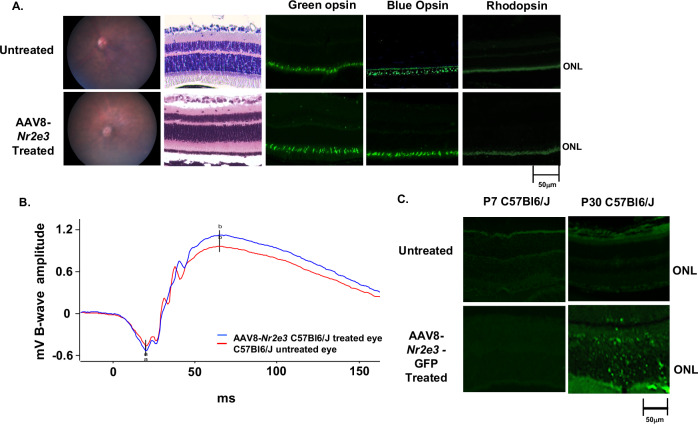
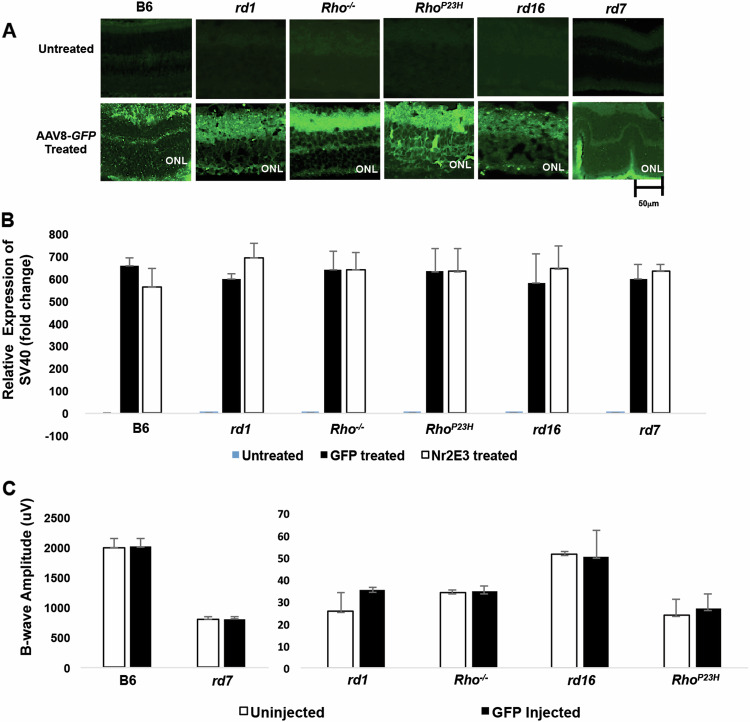
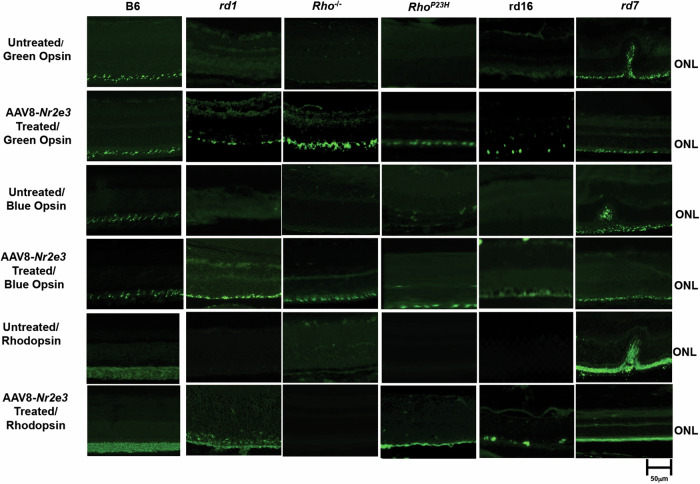
“Examination of AAV8-EGFP -Nr2e3 expression at P7 and P30 revealed that expression of the vector construct was con fi rmed at P30 (Fig.”
BackgroundInfluentialMorphological and Functional Abnormalities in the Inner Retina of the rd/rd Mouse
Strettoi, E., Porciatti, V., Falsini, B., Pignatelli, V., & Rossi, C. (2002) · The Journal of Neuroscience · doi:10.1523/jneurosci.22-13-05492.2002 · Cited by 301 · cited 1×
“The rd1 mouse, representing the most severe and early form of human retinal degeneration, harbors a mutant Pde6b gene mapped on chromosome 5 [50 – 55].”
BackgroundSakami, S., Maeda, T., Bereta, G., Okano, K., Golczak, M., Sumaroka, A., Roman, A. J., Cideciyan, A. V., Jacobson, S. G., & Palczewski, K. (2011) · Journal of Biological Chemistry · doi:10.1074/jbc.m110.209759 · Cited by 291
McLaughlin, M. E., Ehrhart, T. L., Berson, E. L., & Dryja, T. P. (1995) · Proceedings of the National Academy of Sciences · doi:10.1073/pnas.92.8.3249 · Cited by 288
RETINAL DEGENERATION IN THE MOUSE
SIDMAN, R. L., & GREEN, M. C. (1965) · Journal of Heredity · doi:10.1093/oxfordjournals.jhered.a107364 · Cited by 281
Peng, G.-H., Ahmad, O., Ahmad, F., Liu, J., & Chen, S. (2005) · Human Molecular Genetics · doi:10.1093/hmg/ddi070 · Cited by 270 · cited 3×
“…, neural retinal leucine zipper ( Nrl ), Cone-rod homeobox ( Crx ), retinoic acid receptor related orphan receptor alpha ( Rora ), and thyroid receptor beta ( Thrb ) to modulate photoreceptor cell fate and retinal function as an activator or suppressor of gene expression [47 – 49, 80, 81, 85 – 87].”
BackgroundResultCheng, H. (2004) · Human Molecular Genetics · doi:10.1093/hmg/ddh173 · Cited by 268 · cited 4×
“Recent studies reveal a key regulatory role for Nr2e3 in maintaining proper function of mature photoreceptor cells [69, 80].”
BackgroundResultInfluentialBeltran, W. A., Cideciyan, A. V., Lewin, A. S., Iwabe, S., Khanna, H., Sumaroka, A., Chiodo, V. A., Fajardo, D. S., Román, A. J., Deng, W.-T., et al. (2012) · Proceedings of the National Academy of Sciences · doi:10.1073/pnas.1118847109 · Cited by 260
PDZD7 is a modifier of retinal disease and a contributor to digenic Usher syndrome
Ebermann, I., Phillips, J. B., Liebau, M. C., Koenekoop, R. K., Schermer, B., Lopez, I., Schäfer, E., Roux, A.-F., Dafinger, C., Bernd, A., et al. (2010) · Journal of Clinical Investigation · doi:10.1172/jci39715 · Cited by 251
Modifier Genes Convert “Simple” Mendelian Disorders to Complex Traits
Dipple, K. M., & McCabe, E. R. B. (2000) · Molecular Genetics and Metabolism · doi:10.1006/mgme.2000.3052 · Cited by 251 · cited 1×
“Genetic modi fi er genes are powerful modulators that can enhance or suppress disease phenotypes [24, 27 – 29].”
BackgroundAAV cis -regulatory sequences are correlated with ocular toxicity
Xiong, W., Wu, D. M., Xue, Y., Wang, S. K., Chung, M. J., Ji, X., Rana, P., Zhao, S. R., Mai, S., & Cepko, C. L. (2019) · Proceedings of the National Academy of Sciences · doi:10.1073/pnas.1821000116 · Cited by 249
Gene Therapy for Aromatic l -Amino Acid Decarboxylase Deficiency
Hwu, W.-L., Muramatsu, S.-I., Tseng, S.-H., Tzen, K.-Y., Lee, N.-C., Chien, Y.-H., Snyder, R. O., Byrne, B. J., Tai, C.-H., & Wu, R.-M. (2012) · Science Translational Medicine · doi:10.1126/scitranslmed.3003640 · Cited by 246 · cited 1×
“Gene therapy has evolved from concept to clinic for various genetic disorders including hematological [2], immunological [3], ocular [4, 5], neuro-degenerative [6], and metabolic disorders [7].”
BackgroundGhazi, N. G., Abboud, E. B., Nowilaty, S. R., Alkuraya, H., Alhommadi, A., Cai, H., Hou, R., Deng, W.-T., Boye, S. L., Almaghamsi, A., et al. (2016) · Human Genetics · doi:10.1007/s00439-016-1637-y · Cited by 243
Dosage thresholds for AAV2 and AAV8 photoreceptor gene therapy in monkey
Vandenberghe, L. H., Bell, P., Maguire, A. M., Cearley, C. N., Xiao, R., Calcedo, R., Wang, L., Castle, M. J., Maguire, A. C., Grant, R., et al. (2011) · Science Translational Medicine · doi:10.1126/scitranslmed.3002103 · Cited by 242
Lolley, R. N., Farber, D. B., Rayborn, M. E., & Hollyfield, J. G. (1977) · Science · doi:10.1126/science.193183 · Cited by 232
Akhmedov, N. B., Piriev, N. I., Chang, B., Rapoport, A. L., Hawes, N. L., Nishina, P. M., Nusinowitz, S., Heckenlively, J. R., Roderick, T. H., Kozak, C. A., et al. (2000) · Proceedings of the National Academy of Sciences · doi:10.1073/pnas.97.10.5551 · Cited by 221 · cited 2×
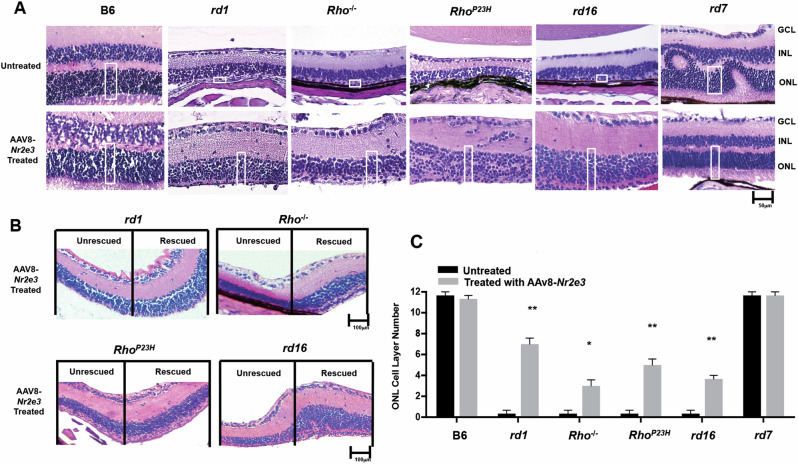
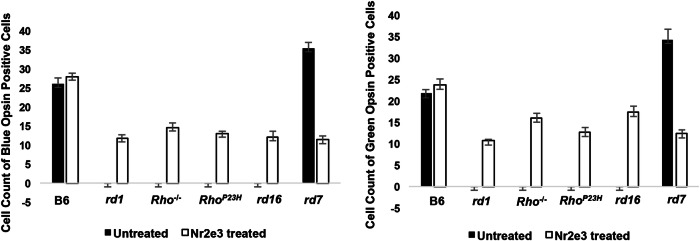
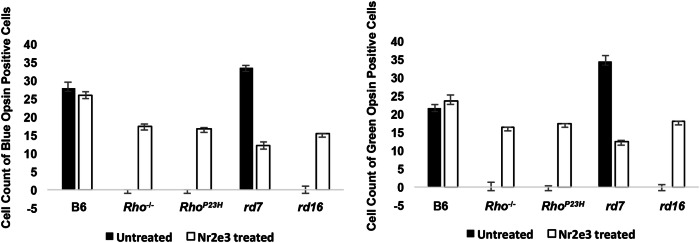
“…spots apparent at eye opening (postnatal (P) day 14), and whorls and rosettes in the outer nuclear layer (ONL) observed histologically by P10 [68, 69]. rd7 mice have two distinct outcomes: a disruption in development of cone cells causing a signi fi cant increase of blue opsin expressing cone…”
BackgroundWeleber, R. G., Pennesi, M. E., Wilson, D. J., Kaushal, S., Erker, L. R., Jensen, L., McBride, M. T., Flotte, T. R., Humphries, M., Calcedo, R., et al. (2016) · Ophthalmology · doi:10.1016/j.ophtha.2016.03.003 · Cited by 218 · cited 1×
“Gene therapy has evolved from concept to clinic for various genetic disorders including hematological [2], immunological [3], ocular [4, 5], neuro-degenerative [6], and metabolic disorders [7].”
BackgroundBowes, C., Li, T., Frankel, W. N., Danciger, M., Coffin, J. M., Applebury, M. L., & Farber, D. B. (1993) · Proceedings of the National Academy of Sciences · doi:10.1073/pnas.90.7.2955 · Cited by 217 · cited 2×
“The mutant Pde6b gene contains a murine leukemia provirus insertion in intron 1 and a point mutation, which introduces a stop codon in exon 7 (Y347STOP) [56, 57].”
BackgroundNoorwez, S. M., Kuksa, V., Imanishi, Y., Zhu, L., Filipek, S., Palczewski, K., & Kaushal, S. (2003) · Journal of Biological Chemistry · doi:10.1074/jbc.m300087200 · Cited by 202
Haider, N. B. (2001) · Human Molecular Genetics · doi:10.1093/hmg/10.16.1619 · Cited by 202
Self-citationCRISPR-Cas9: a new and promising player in gene therapy
Xiao-Jie, L., Hui-Ying, X., Zun-Ping, K., Jin-Lian, C., & Li-Juan, J. (2015) · Journal of Medical Genetics · doi:10.1136/jmedgenet-2014-102968 · Cited by 200
In Utero Gene Therapy Rescues Vision in a Murine Model of Congenital Blindness
Dejneka, N. S., Surace, E. M., Aleman, T. S., Cideciyan, A. V., Lyubarsky, A., Savchenko, A., Redmond, T. M., Tang, W., Wei, Z., Rex, T. S., et al. (2004) · Molecular Therapy · doi:10.1016/j.ymthe.2003.11.013 · Cited by 197
Genotype–phenotype correlation in cystic fibrosis: The role of modifier genes
Salvatore, F., Scudiero, O., & Castaldo, G. (2002) · American Journal of Medical Genetics · doi:10.1002/ajmg.10461 · Cited by 184
Blanton, S. H., Heckenlively, J. R., Cottingham, A. W., Friedman, J., Sadler, L. A., Wagner, M., Friedman, L. H., & Daiger, S. P. (1991) · Genomics · doi:10.1016/0888-7543(91)90008-3 · Cited by 183
Sharon, D. (2003) · Archives of Ophthalmology · doi:10.1001/archopht.121.9.1316 · Cited by 179
Ectopic synaptogenesis in the mammalian retina caused by rod photoreceptor-specific mutations
Peng, Y.-W., Hao, Y., Petters, R. M., & Wong, F. (2000) · Nature Neuroscience · doi:10.1038/80639 · Cited by 172
The rd mouse story: Seventy years of research on an animal model of inherited retinal degeneration
Farber, D. B., Flannery, J. G., & Bowes-Rickman, C. (1994) · Progress in Retinal and Eye Research · doi:10.1016/1350-9462(94)90004-3 · Cited by 165
Noorwez, S. M., Malhotra, R., McDowell, J. H., Smith, K. A., Krebs, M. P., & Kaushal, S. (2004) · Journal of Biological Chemistry · doi:10.1074/jbc.m312101200 · Cited by 159
Gene Therapy Progress and Prospects. Downregulating gene expression: the impact of RNA interference
Caplen, N. J. (2004) · Gene Therapy · doi:10.1038/sj.gt.3302324 · Cited by 151
Li, Z.-Y., Jacobson, S. G., & Milam, A. H. (1994) · Experimental Eye Research · doi:10.1006/exer.1994.1032 · Cited by 146 · cited 1×
“Although only partial rescue was observed in all models, studies in patients have demonstrated that retention of only a single layer of photoreceptor cells can be enough to maintain minimal visual function suggesting that an increase of even 20% is significant [61, 74].”
BackgroundEstimation of prognosis and prevalence of retinitis pigmentosa and Usher syndrome in Norway
Gröndahl, J. (1987) · Clinical Genetics · doi:10.1111/j.1399-0004.1987.tb02804.x · Cited by 145
Protective alleles and modifier variants in human health and disease
Harper, A. R., Nayee, S., & Topol, E. J. (2015) · Nature Reviews Genetics · doi:10.1038/nrg4017 · Cited by 142 · cited 1×
“Genetic modi fi ers are de fi ned as allelic variants found within the normal population [24, 25].”
BackgroundThe cell stress machinery and retinal degeneration
Athanasiou, D., Aguilà, M., Bevilacqua, D., Novoselov, S. S., Parfitt, D. A., & Cheetham, M. E. (2013) · FEBS Letters · doi:10.1016/j.febslet.2013.05.020 · Cited by 140
Coppieters, F., Leroy, B. P., Beysen, D., Hellemans, J., Bosscher, K. D., Haegeman, G., Robberecht, K., Wuyts, W. A., Coucke, P. J., & Baere, E. B. W. D. (2007) · The American Journal of Human Genetics · doi:10.1086/518426 · Cited by 134
Cheng, H., Aleman, T. S., Cideciyan, A. V., Khanna, R., Jacobson, S. G., & Swaroop, A. (2006) · Human Molecular Genetics · doi:10.1093/hmg/ddl185 · Cited by 126
Cai, X., Conley, S. M., Nash, Z., Fliesler, S. J., Cooper, M. J., & Naash, M. I. (2010) · The FASEB Journal · doi:10.1096/fj.09-139147 · Cited by 120
Mutations in the PDE6B Gene in Autosomal Recessive Retinitis Pigmentosa
DANCIGER, M., BLANEY, J., GAO, Y. Q., ZHAO, D. Y., HECKENLIVELY, J. R., JACOBSON, S. G., & FARBER, D. B. (1995) · Genomics · doi:10.1006/geno.1995.0001 · Cited by 119
Identification of a sixth locus for autosomal dominant retinitis pigmentosa on chromosome 19
Al-Maghtheh, M., Inglehearn, C. F., Keen, T. J., Gregory-Evans, K., Moore, A. T., Jay, M., Bird, A. C., & Bhattacharya, S. S. (1994) · Human Molecular Genetics · doi:10.1093/hmg/3.2.351 · Cited by 115
P23H opsin knock-in mice reveal a novel step in retinal rod disc morphogenesis
Sakami, S., Kolesnikov, A. V., Kefalov, V. J., & Palczewski, K. (2014) · Human Molecular Genetics · doi:10.1093/hmg/ddt561 · Cited by 114
Schorderet, D. F., & Escher, P. (2009) · Human Mutation · doi:10.1002/humu.21096 · Cited by 110
From mice to men: the cyclic GMP phosphodiesterase gene in vision and disease. The Proctor Lecture.
Farber, D. B. (1995) · PubMed · Cited by 101
Haider, N. B., Mollema, N., Gaule, M., Yuan, Y., Sachs, A. J., Nystuen, A., Naggert, J. Κ., & Nishina, P. M. (2009) · Experimental Eye Research · doi:10.1016/j.exer.2009.04.006 · Cited by 101 · cited 1×
“Studies completed by our lab and others have extensively documented the importance of Nr2e3 in photoreceptor development [69, 80, 81, 84]; however, the role of Nr2e3 in the mature retina is less understood.”
BackgroundSelf-citationGenetic characterization and disease mechanism of retinitis pigmentosa; current scenario
Ali, M. U., Rahman, M. S. U., Cao, J., & Yuan, P. (2017) · 3 Biotech · doi:10.1007/s13205-017-0878-3 · Cited by 96
Dosage thresholds and influence of transgene cassette in adeno-associated virus–related toxicity
Khabou, H., Cordeau, C., Pacot, L., Fisson, S., & Dalkara, D. (2018) · Human Gene Therapy · doi:10.1089/hum.2018.144 · Cited by 93 · cited 1×
“However, this present study employs a CAG promoter and a dose fi vefold less than the lowest dose evaluated recent studies [105, 106].”
MethodModifier genes in humans: strategies for identification
Houlston, R. S., & Tomlinson, I. P. M. (1998) · European Journal of Human Genetics · doi:10.1038/sj.ejhg.5200156 · Cited by 91
The transcription factor Nr2e3 functions in retinal progenitors to suppress cone cell generation
HAIDER, N. B., DEMARCO, P., NYSTUEN, A. M., HUANG, X., SMITH, R. S., MCCALL, M. A., NAGGERT, J. K., & NISHINA, P. M. (2006) · Visual Neuroscience · doi:10.1017/s095252380623027x · Cited by 86
Self-citationChow, C. Y., Kelsey, K. J. P., Wolfner, M. F., & Clark, A. G. (2015) · Human Molecular Genetics · doi:10.1093/hmg/ddv502 · Cited by 85 · cited 1×
“Modi fi er genes can signi fi cantly affect disease outcomes, impacting onset, rate of progression, and severity [24, 26, 27].”
BackgroundIRE1 directs proteasomal and lysosomal degradation of misfolded rhodopsin
Chiang, W.-C. J., Messah, C., & Lin, J. H. (2012) · Molecular Biology of the Cell · doi:10.1091/mbc.e11-08-0663 · Cited by 83 · cited 1×
“Thereby, Ire1 signaling enhances the protein-folding environment of the ER by expanding the amount of ER and its constituent protein-folding machinery, as well as clearing misfolded ER proteins [101].”
Background(2014) · Science Translational Medicine · doi:10.1126/scitranslmed.3010603 · Cited by 77
Lenis, T. L., Sarfare, S., Jiang, Z., Lloyd, M. B., Bok, D., & Radu, R. A. (2017) · Proceedings of the National Academy of Sciences · doi:10.1073/pnas.1620299114 · Cited by 72
Guziewicz, K. E., Zangerl, B., Komáromy, A. M., Iwabe, S., Chiodo, V. A., Boye, S. L., Hauswirth, W. W., Beltran, W. A., & Aguirre, G. D. (2013) · PLoS ONE · doi:10.1371/journal.pone.0075666 · Cited by 61
Andréasson, S., Ponjavic, V., Abrahamson, M., Ehinger, B., Wu, W. W., Fujita, R., Buraczyńska, M., & Swaroop, A. (1997) · American Journal of Ophthalmology · doi:10.1016/s0002-9394(14)71649-6 · Cited by 61
Cheng, H., Khan, N. W., Roger, J. E., & Swaroop, A. (2011) · Human Molecular Genetics · doi:10.1093/hmg/ddr334 · Cited by 61
Role of Nuclear Receptors in Central Nervous System Development and Associated Diseases
Ana Maria, A., Oscar Andréas, M.-R., & Haider, N. B. (2015) · Journal of Experimental Neuroscience · doi:10.4137/jen.s25480 · Cited by 59 · cited 1×
“These results illustrate that mutational load is modulated and balanced by transcription factors, including NHRs, for optimal cellular homeostasis [82, 83].”
BackgroundSelf-citationEffect of genetic background on the phenotype of theSmn2B/-mouse model of spinal muscular atrophy
Eshraghi, M., McFall, E. R., Gibeault, S., & Kothary, R. (2016) · Human Molecular Genetics · doi:10.1093/hmg/ddw278 · Cited by 58
Cacna1g is a genetic modifier of epilepsy in a mouse model of Dravet syndrome
Calhoun, J. D., Hawkins, N. A., Zachwieja, N. J., & Kearney, J. A. (2017) · Epilepsia · doi:10.1111/epi.13811 · Cited by 58
Genetic Background Modulates the Phenotype of a Mouse Model of DYT1 Dystonia
Tanabe, L. M., Martin, C. E., & Dauer, W. T. (2012) · PLoS ONE · doi:10.1371/journal.pone.0032245 · Cited by 57
The Gly56Arg mutation in NR2E3 accounts for 1-2% of autosomal dominant retinitis pigmentosa.
Gire, A. I., Sullivan, L. S., Bowne, S. J., Birch, D. G., Hughbanks-Wheaton, D. K., Heckenlively, J. R., & Daiger, S. P. (2007) · PubMed · Cited by 56
Genetic modifiers of vision and hearing
Haider, N. B. (2002) · Human Molecular Genetics · doi:10.1093/hmg/11.10.1195 · Cited by 54 · cited 2×
“Modi fi er genes can signi fi cantly affect disease outcomes, impacting onset, rate of progression, and severity [24, 26, 27].”
BackgroundSelf-citationCharbel Issa, P., De Silva, S. R., Lipinski, D. M., Singh, M. S., Mouravlev, A., You, Q., Barnard, A. R., Hankins, M. W., During, M. J., & MacLaren, R. E. (2013) · PLoS ONE · doi:10.1371/journal.pone.0060361 · Cited by 53 · cited 1×
“7m8 [71, 88].”
Dual role of Nr2e3 in photoreceptor development and maintenance
Webber, A. L., Hodor, P. G., Thut, C. J., Vogt, T., Zhang, T., Holder, D., & Petrukhin, K. E. (2008) · Experimental Eye Research · doi:10.1016/j.exer.2008.04.006 · Cited by 50
Functional and neurochemical development in the normal and degenerating mouse retina
Gibson, R., Fletcher, E. L., Vingrys, A. J., Zhu, Y., Vessey, K. A., & Kalloniatis, M. (2012) · The Journal of Comparative Neurology · doi:10.1002/cne.23284 · Cited by 50
Cruz, N. M., Yuan, Y., Leehy, B. D., Baid, R., Kompella, U., DeAngelis, M. M., Escher, P., & Haider, N. B. (2014) · PLoS ONE · doi:10.1371/journal.pone.0087942 · Cited by 47 · cited 3×
“Genetic modi fi ers play a key role in modulating disease onset, progression, and clinical outcome by either enhancing or suppressing disease [24, 40].”
BackgroundSelf-citationNoorwez, S. M., Sama, R. R. K., & Kaushal, S. (2009) · Journal of Biological Chemistry · doi:10.1074/jbc.m109.043364 · Cited by 43 · cited 1×
“Ire1 signaling pathway transcriptionally upregulates numerous ER chaperones that were shown to promote P23H rhodopsin exit from the ER by partially ameliorating this misfolding defect [102 – 104].”
BackgroundMechanisms of mutant PDE6 proteins underlying retinal diseases
Gopalakrishna, K. N., Boyd, K. K., & Artemyev, N. O. (2017) · Cellular Signalling · doi:10.1016/j.cellsig.2017.06.002 · Cited by 42
Haider, N. B., Zhang, W., Hurd, R., Ikeda, A., Nystuen, A. M., Naggert, J. K., & Nishina, P. M. (2008) · Mammalian Genome · doi:10.1007/s00335-008-9092-2 · Cited by 41
Self-citationPierrottet, C. O., Zuntini, M., Digiuni, M., Bazzanella, I., Ferri, P., Paderni, R., Rossetti, L. M., Cecchin, S., Orzalesi, N., & Bertelli, M. (2014) · Genetics and Molecular Research · doi:10.4238/2014.october.27.23 · Cited by 40
Genetic Variations Strongly Influence Phenotypic Outcome in the Mouse Retina
Jelcick, A. S., Yuan, Y., Leehy, B. D., Cox, L. C., Silveira, A. C., Qiu, F., Schenk, S., Sachs, A. J., Morrison, M. A., Nystuen, A., et al. (2011) · PLoS ONE · doi:10.1371/journal.pone.0021858 · Cited by 33 · cited 1×
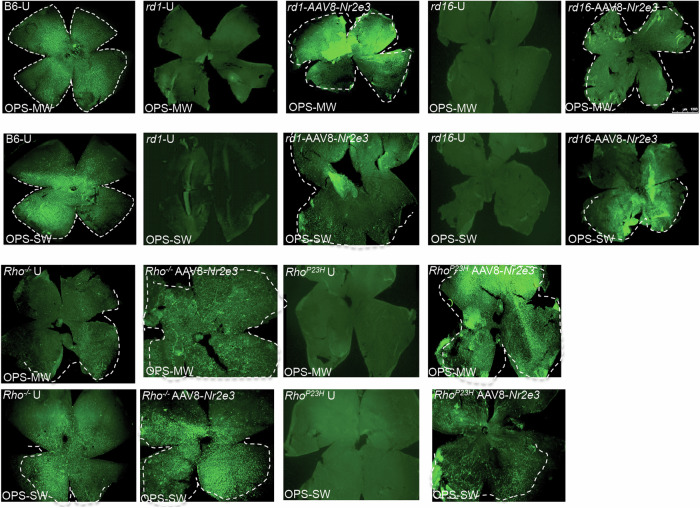
“Retina whole mounts have been performed as previously described [73].”
MethodSelf-citationRose-Hellekant, T. A., Gilchrist, K. W., & Sandgren, E. P. (2002) · American Journal Of Pathology · doi:10.1016/s0002-9440(10)64419-7 · Cited by 29
Kahle, N. A., Peters, T. M., Zobor, D., Kuehlewein, L., Kohl, S., Zhour, A., Werner, A., Seitz, I. P., Sothilingam, V., Michalakis, S., et al. (2018) · Human Gene Therapy Clinical Development · doi:10.1089/humc.2018.088 · Cited by 27 · cited 1×
“Currently, there are several ongoing clinical gene augmentation trials for other rare inherited retinal diseases [10 – 13].”
BackgroundMaddox, D. M., Ikeda, S., Ikeda, A., Zhang, W., Krebs, M. P., Nishina, P. M., & Naggert, J. Κ. (2012) · Investigative Ophthalmology & Visual Science · doi:10.1167/iovs.11-8871 · Cited by 25
In Vivo Visualization of Endoplasmic Reticulum Stress in the Retina Using the ERAI Reporter Mouse
Alavi, M. V., Chiang, W.-C. J., Kroeger, H., Yasumura, D., Matthes, M. T., Iwawaki, T., LaVail, M. M., Gould, D. B., & Lin, J. H. (2015) · Investigative Ophthalmology & Visual Science · doi:10.1167/iovs.15-16969 · Cited by 25
Nakamura, P. A., Tang, S., Shimchuk, A. A., Ding, S., & Reh, T. A. (2016) · Investigative Ophthalmology & Visual Science · doi:10.1167/iovs.16-20177 · Cited by 25
Multimodal Regulation Orchestrates Normal and Complex Disease States in the Retina
Olivares, A. M., Jelcick, A. S., Reinecke, J. B., Leehy, B. D., Haider, A., Morrison, M. A., Cheng, L. Z., Chen, D. F., DeAngelis, M. M., & Haider, N. B. (2017) · Scientific Reports · doi:10.1038/s41598-017-00788-3 · Cited by 20
Self-citationShen, T., GUAN, L., Li, S., Zhang, J., Xiao, X., Jiang, H., Yang, J., Guo, X., Wang, J., & Zhang, Q. (2014) · Molecular Medicine Reports · doi:10.3892/mmr.2014.2894 · Cited by 16
Self-citationOlivares, A. M., Han, Y., Soto, D. R., Flattery, K., Marini, J., Mollema, N., Haider, A., Escher, P., DeAngelis, M. M., & Haider, N. B. (2017) · Developmental Biology · doi:10.1016/j.ydbio.2017.05.021 · Cited by 13 · cited 3×
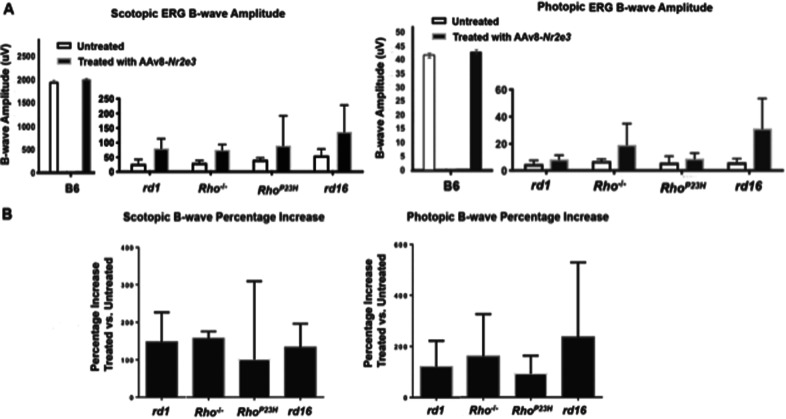
“Electroretinography (ERG) analysis was performed on Nr2e3 treated and untreated animals as described previously [72].”
MethodInfluentialSelf-citationRetinitis Pigmentosa and the Rhodopsin Gene
Shokravi, M., & Dryja, T. P. (1993) · International Ophthalmology Clinics · doi:10.1097/00004397-199303320-00020 · Cited by 10 · cited 2×
“The Rho P23H point mutation encodes a misfolded rhodopsin protein, one which undergoes incomplete glycosylation and is retained in the ER and/or Golgi where most of it is degraded [63, 65].”
Background
Research works printed but not linked: 3
- Haider NB, Naggert JK, Nishina PM. Excess cone cell proliferation due to lack of a functional NR2E3 causes retinal dysplasia and degeneration in rd7/rd7 mice. Hum Mol Genet. 2001;10:1619–26. 11487564 · DOI · Paper page
- Webber A, Hodor P, Thut C, Petrukhin K. Dual role of Nr2e3 in photoreceptor development and maintenance. Exp Eye Res. 2008;87:35–48. 18547563 · DOI
- Haider NB, Zhang W, Hurd R, Ikeda A, Nystuen AM, Naggert JK, et al. Mapping of genetic modifiers of Nr2e3 rd7/rd7 that suppress retinal degeneration and restore blue cone cells to normal quantity. Mamm Genome. 2008;19:145–54. 18286335 · DOI · Paper page
Cited by
Inherited retinal diseases: Therapeutics, clinical trials and end points—A review
Georgiou, M., Fujinami, K., & Michaelides, M. (2021) · Clinical & Experimental Ophthalmology · doi:10.1111/ceo.13917 · Cited by 171
“NR2E3 may serve as a genetic modifier and therapeutic agent to potentially treat a range of retinal degenerative diseases.(131) In patient-derived iPSCs, correction of NR2E3-associated ESCS has been described using CRISPR-Cas9.”
BackgroundGene Therapy for Retinal Degenerative Diseases: Progress, Challenges, and Future Directions
Drag, S., Dotiwala, F., & Upadhyay, A. K. (2023) · Investigative Opthalmology & Visual Science · doi:10.1167/iovs.64.7.39 · Cited by 145
Self-citationGeorgiou, M., Robson, A. G., Fujinami, K., de Guimarães, T. A. C., Fujinami‐Yokokawa, Y., Varela, M. D., Pontikos, N., Kalitzeos, A. A., Mahroo, O. A., Webster, A. R., et al. (2024) · Progress in Retinal and Eye Research · doi:10.1016/j.preteyeres.2024.101244 · Cited by 138
Gene-agnostic therapeutic approaches for inherited retinal degenerations
John, M. C., Quinn, J., Hu, M. L., Cehajic‐Kapetanovic, J., & Xue, K. (2023) · Frontiers in Molecular Neuroscience · doi:10.3389/fnmol.2022.1068185 · Cited by 43
“The apparent similarity in effects of Nr2e3 overexpression and suppression was attributed to differences in the timing of interventions, with Nr2e3 induced alteration of gene expression profiles of differentiating rods at birth counteracting the effects of the IRD mutations (Moore et al., 2020; Li et al., 2021).”
BackgroundResultTargeting of the NRL Pathway as a Therapeutic Strategy to Treat Retinitis Pigmentosa
Moore, S. M., Skowronska‐Krawczyk, D., & Chao, D. L. (2020) · Journal of Clinical Medicine · doi:10.3390/jcm9072224 · Cited by 31
“Li 2020 PMID 32123325 [81] -wt mice -Pde6β–/-Rho-/-RhoP23H -Cep290-/-Nr2e3-/Subretinal injection of AAV8-Nr2e3 overexpression vector -Injection P0, analysis P30 or P90-P120 -Injection P21, analysis P80-P110 -wt mice: no ERG changes -Pde6β-/-, Rho-/-, RhoP23H, Cep290-/-: partial rescue of scotopic ERG function -wt mice…”
BackgroundMethodInfluential
Metadata
- Authors
- Li, S., Datta, S., Brabbit, E., Love, Z., Woytowicz, V., Flattery, K., Capri, J., Yao, K., Wu, S., Imboden, M., Upadhyay, A., Arumugham, R., Thoreson, W. B., DeAngelis, M. M., & Haider, N. B.
- Affiliations
- Massachusetts Eye and Ear Infirmary (US)
- Ocugen, Inc. (United States) (US)
- University of Nebraska Medical Center (US)
- Corresponding author
- Haider, Neena B.
- Venue
- Gene Therapy
- Published
- 2020-03-02
- Volume
- 28
- Issue
- 5
- Pages
- 223-241
- ISSN
- 0969-7128 (ISSN-L)
- 1476-5462
- PMC
- PMC7483267
- OpenAlex
- W3009194131
- Cited by
- 68
- References
- 106
- Citations by year
- 2026: 5 · 2025: 13 · 2024: 15 · 2023: 15 · 2022: 7 · 2021: 7 · 2020: 6
- FWCI
- 2.84
- Type
- journal article
- Language
- en
- Update notices
- correction (2024-09-18)
- Open access
- hybrid
- doi.org
- Licence
- cc-by
- creativecommons.org/licenses/by/4.0 (tdm)
- creativecommons.org/licenses/by/4.0 (vor)
- Locations
- Gene Therapy (publishedVersion, cc-by)
- PubMed Central (publishedVersion, cc-by)
- PubMed (publishedVersion)
- DigitalCommons@UNMC (submittedVersion, cc-by)
- Funders
- American Macular Degeneration Foundation
- Research to Prevent Blindness
- Hope For Vision
- Massachusetts Lions Eye Research Fund
- U.S. Department of Health & Human Services | NIH | National Eye Institute (RO1EY017653, RO1EY017653-01A2S1)
- Ocugen INC
- Topics
- Health Sciences › Medicine › Ophthalmology › Retinal Development and Disorders
- Health Sciences › Medicine › Ophthalmology › Retinal Diseases and Treatments
- Life Sciences › Biochemistry, Genetics and Molecular Biology › Molecular Biology › Retinoids in leukemia and cellular processes
- Keywords
- NR2E3, retinitis pigmentosa, retinal degeneration, nuclear receptors, photoreceptors, retinal homeostasis, transcription factors, genetic modifiers, mouse model, electroretinogram
- MeSH terms
- Animals, Disease Models, Animal, Homeostasis, Humans, Photoreceptor Cells, Retina, Retinal Degeneration, Retinitis Pigmentosa, Mice, Orphan Nuclear Receptors
About these checks
Registry, retraction, Cites and statistics results are computed, not judged, with one exception: a printed reference that no index lists is read once by a model before it counts as a citation error. Claims are extracted by a model and kept only when their quote appears verbatim in the text; each cited source is then checked, with a model’s help, for whether it says what the claim relies on. Those verdicts can be wrong — read the claim’s quote and the cited source before relying on one.
Statistics and arithmetic are recomputed, not judged.
Confidence bands are shown only for fields calibrated on our annotated test set. None is calibrated yet, so no band is shown.
What counts as a claim ›How we measure confidence ›How we check this ›
Are you an author, or do you see a problem with this page? Request a review
Data sources
Bibliographic data: Semantic Scholar, OpenAlex, Crossref.
Contains information from the Semantic Scholar Academic Graph Datasets, made available under the ODC Attribution License (ODC-BY 1.0).
Semantic Scholar’s data is described in: Kinney, R., et al. (2023). The Semantic Scholar Open Data Platform. arXiv:2301.10140.
