

Agonist immunotherapy restores T cell function following MEK inhibition improving efficacy in breast cancer
Open accessThe DOI matches its Crossref record; 66 of the 66 references it cites were found in a registry or an index.
Abstract
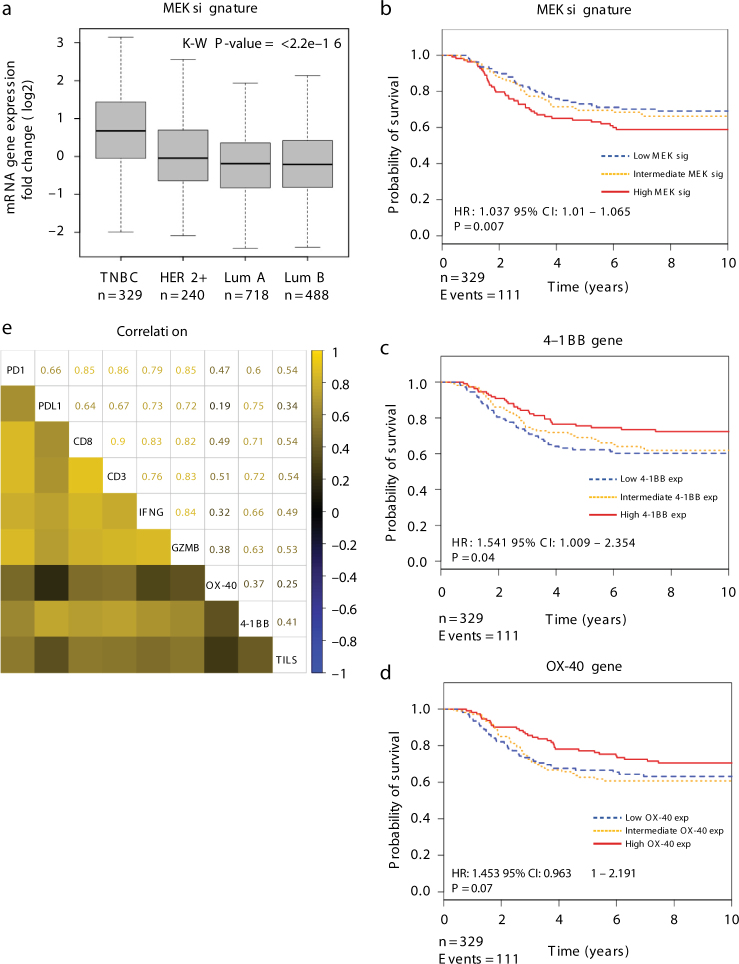
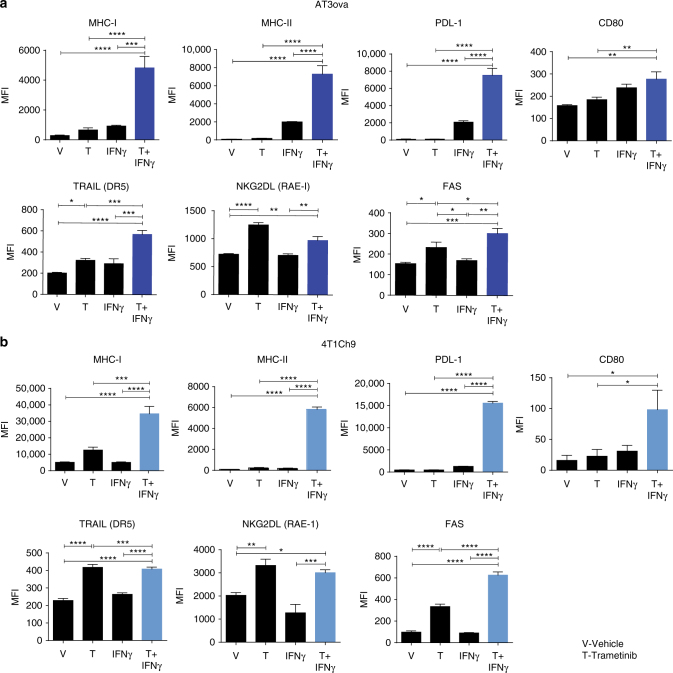
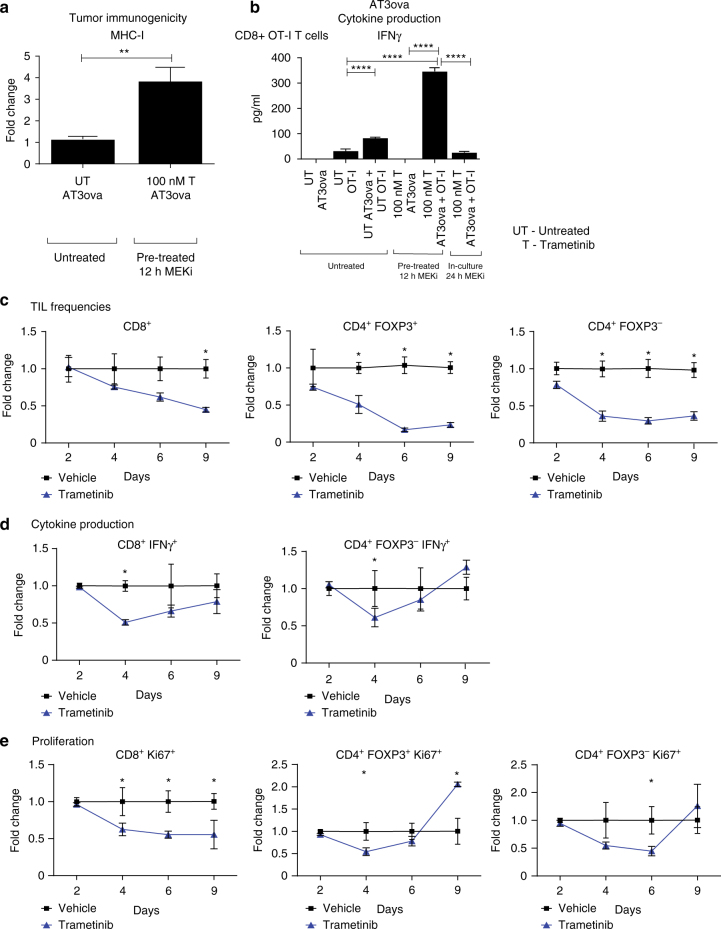
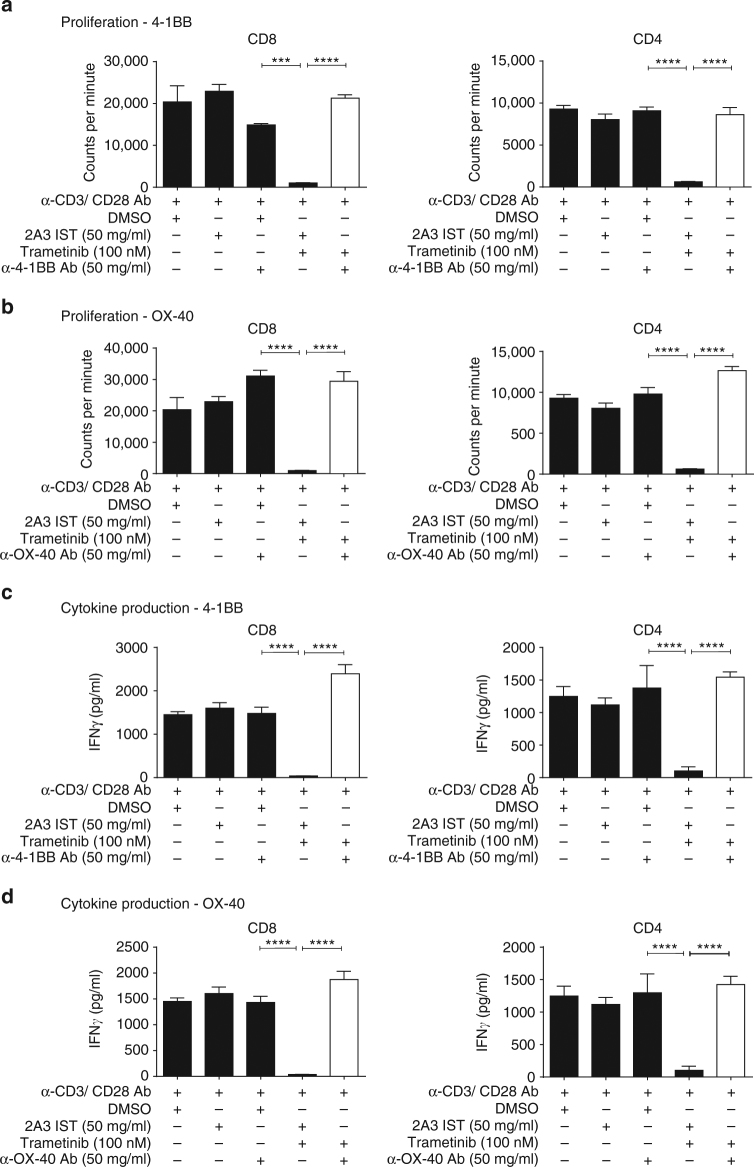
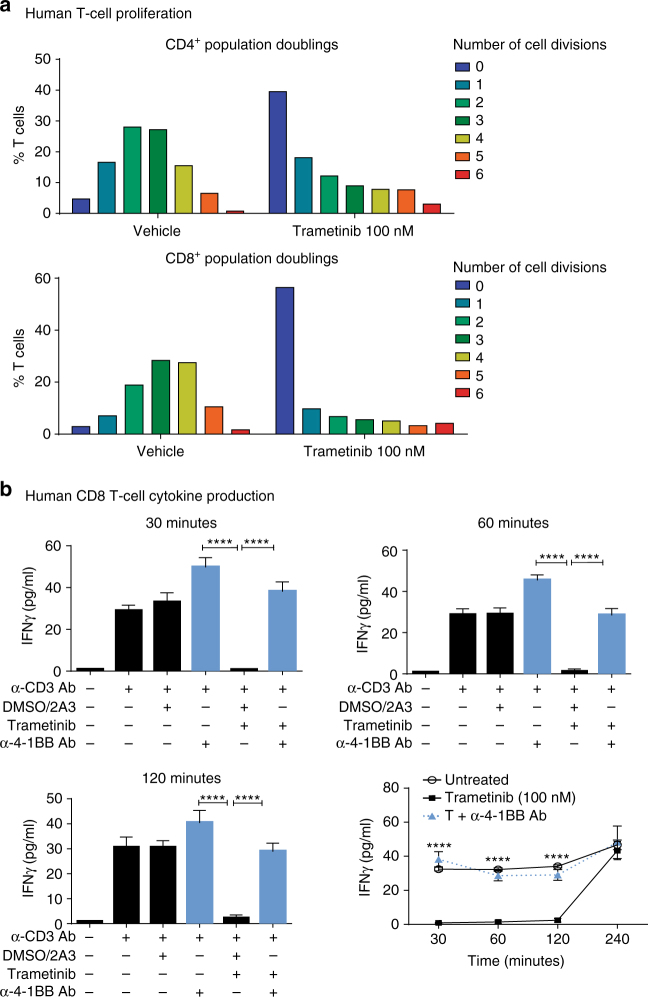
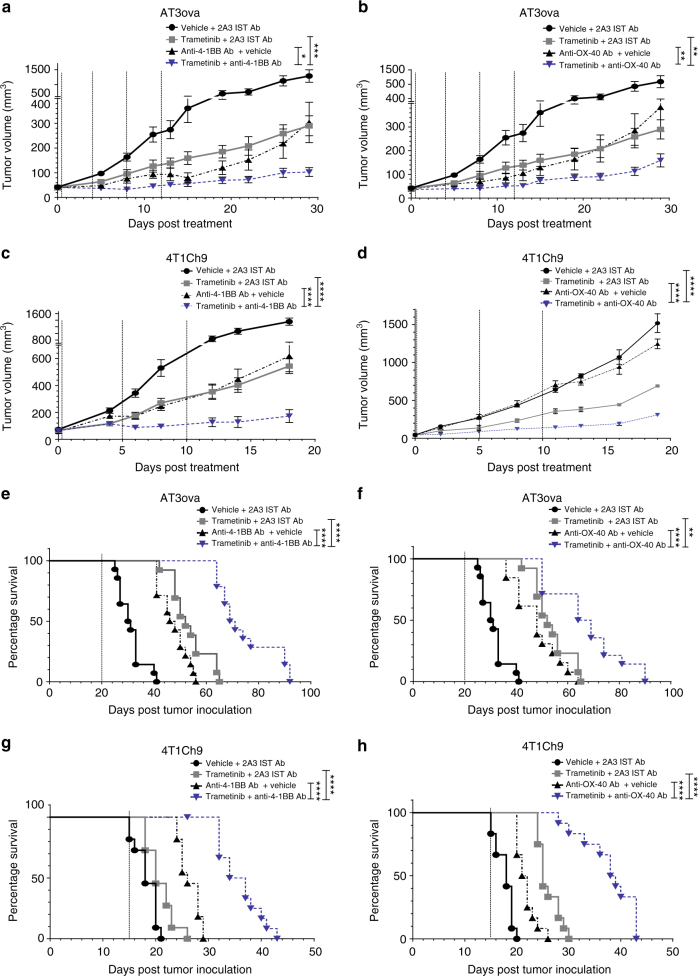
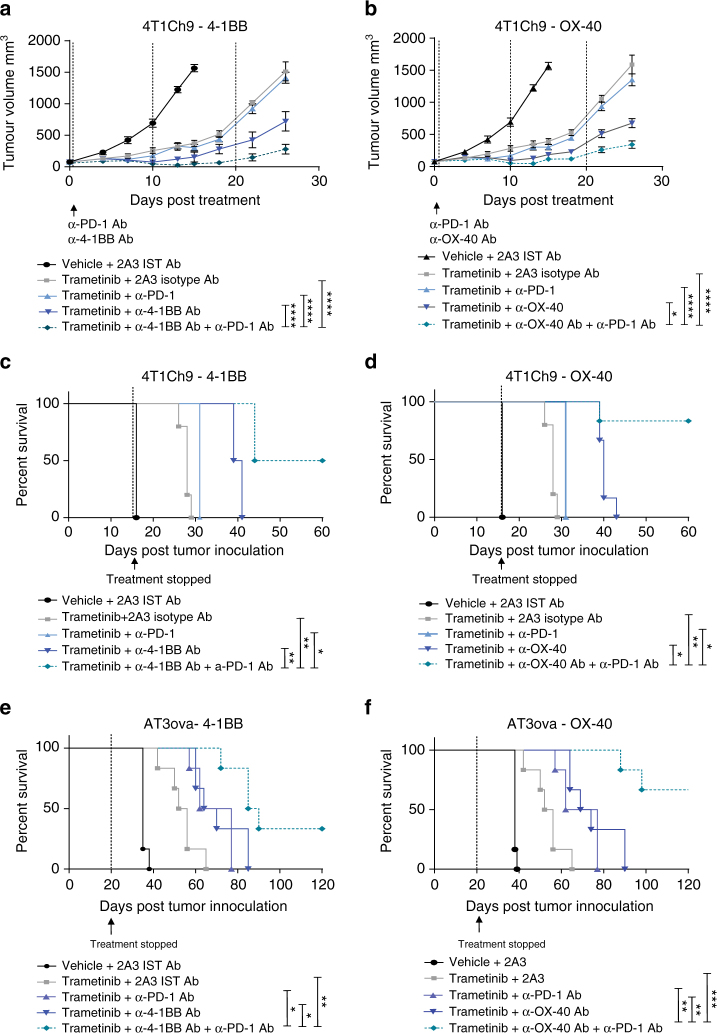
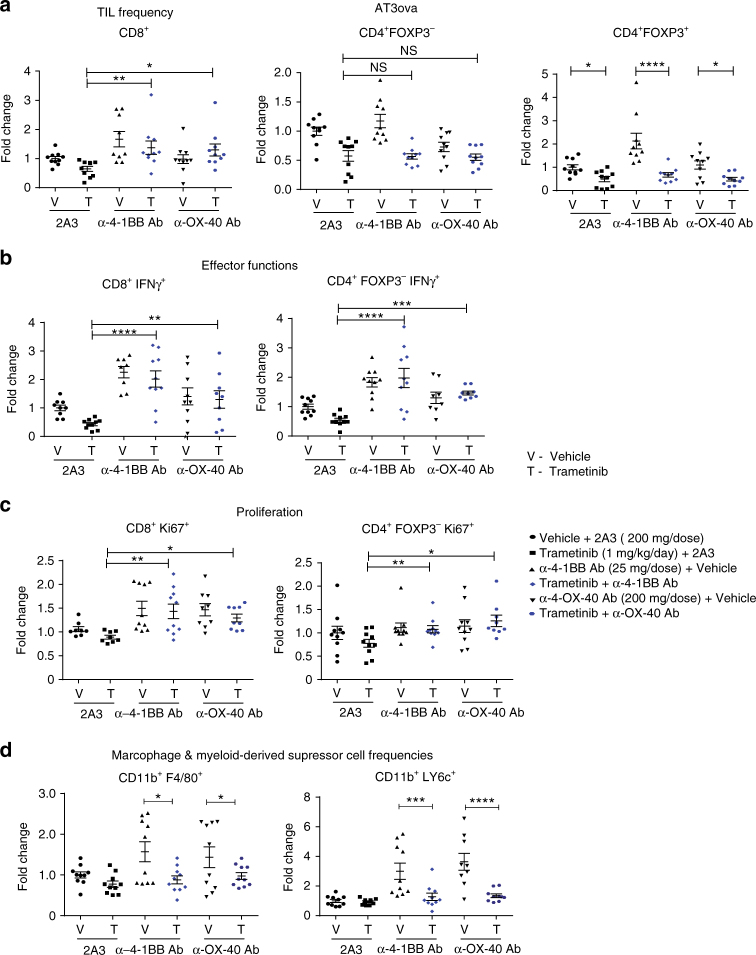
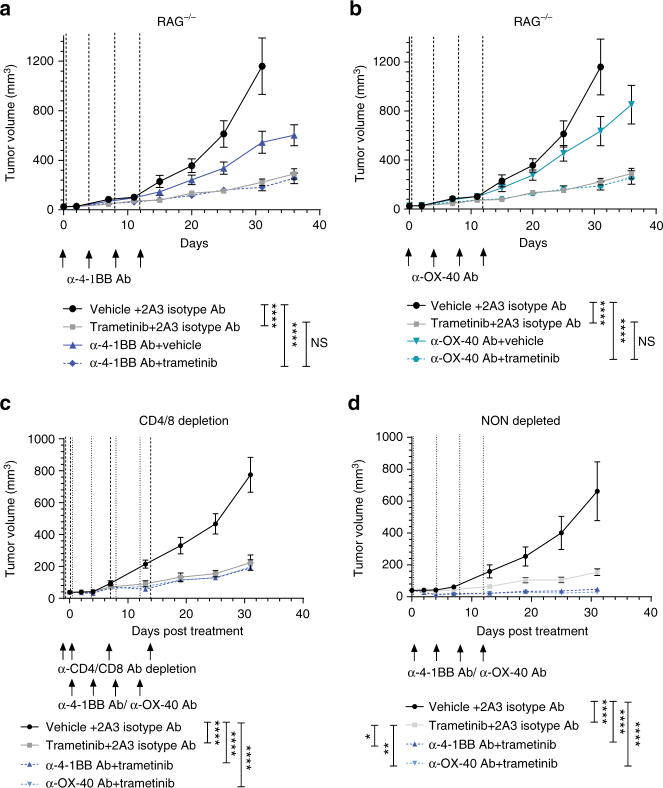
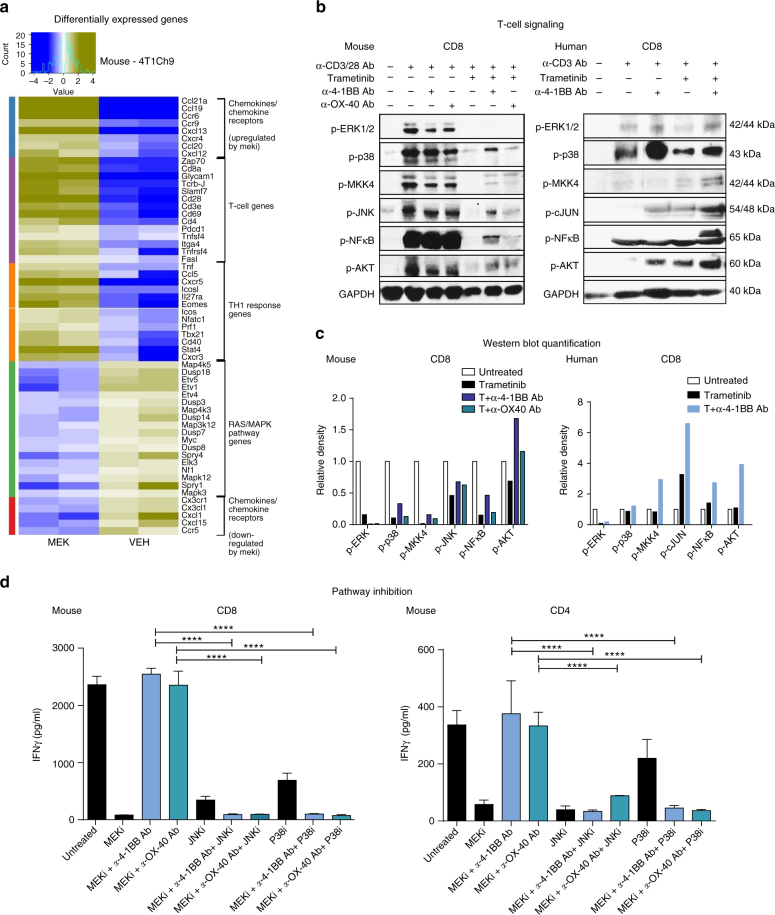
The presence of tumor-infiltrating lymphocytes in triple-negative breast cancers is correlated with improved outcomes. Ras/MAPK pathway activation is associated with significantly lower levels of tumor-infiltrating lymphocytes in triple-negative breast cancers and while MEK inhibition can promote recruitment of tumor-infiltrating lymphocytes to the tumor, here we show that MEK inhibition adversely affects early onset T-cell effector function. We show that α-4-1BB and α-OX-40 T-cell agonist antibodies can rescue the adverse effects of MEK inhibition on T cells in both mouse and human T cells, which results in augmented anti-tumor effects in vivo. This effect is dependent upon increased downstream p38/JNK pathway activation. Taken together, our data suggest that although Ras/MAPK pathway inhibition can increase tumor immunogenicity, the negative impact on T-cell activity is functionally important. This undesirable impact is effectively prevented by combination with T-cell immune agonist immunotherapies resulting in superior therapeutic efficacy.MEK inhibition in breast cancer is associated with increased tumour infiltrating lymphocytes (TILs), however, MAPK activity is required for T cells function. Here the authors show that TILs activity following MEK inhibition can be enhanced by agonist immunotherapy resulting in synergic therapeutic effects.
Overview
The claims and statistics of this paper haven’t been checked yet.
Free: it reads the open-access text and checks the first 5 claims that cite a source we can check. Create a free account to check every claim.
Integrity signals
Registry
Cites
Statistics
Figures
Verification
Claims the paper makes
The claims and statistics of this paper haven’t been checked yet.
Free: it reads the open-access text and checks the first 5 claims that cite a source we can check. Create a free account to check every claim.
Claims other papers make about this one
Each is checked against this paper’s own text: does it say what the citing paper says it does?
The source backs part of the claim, not all of it — or backs it for a different population, condition or comparison.
In the citing paper
“both BRAF and MEK inhibitors (including the FDA-approved agents vemurafenib, dabrafenib, and trametinib) mediate various cancer-cell-dependent immunostimulatory effects”
From Immunomodulation by targeted anticancer agents (2021) · cites this paper as Dushyanthen et al., 2017
Experimental — accuracy not yet measuredThe source backs part of the claim, not all of it — or backs it for a different population, condition or comparison.
In the citing paper
“improved antigen presentation on MHC class I molecules (Dushyanthen et al., 2017; Kang et al., 2019; Liu et al., 2015)”
From Immunomodulation by targeted anticancer agents (2021) · cites this paper as Dushyanthen et al., 2017
Experimental — accuracy not yet measuredIn the citing paper
“the ability of PD-1 or PD-L1 blockers (Liu et al., 2015; Loi et al., 2016) as well as immunostimulatory antibodies targeting TNF receptor superfamily member 4 (TNFRSF4, best known as OX40) or TNFRSF9 (best known as 4-1BB) (Dushyanthen et al., 2017) to improve the therapeutic activity of MEK inhibition in vivo , in syngeneic immunocompetent settings”
From Immunomodulation by targeted anticancer agents (2021) · cites this paper as Dushyanthen et al., 2017
In the citing paper
“loss of antigen presentation, TEFF cell exhaustion, and tumor infiltration by immunosuppressive cells have been commonly observed when tumors progress on KRAS, BRAF, or MEK inhibitors, in both preclinical (Dushyanthen et al., 2017; Liu et al., 2017b) and clinical settings (Frederick et al., 2013; Hugo et al., 2015)”
From Immunomodulation by targeted anticancer agents (2021) · cites this paper as Dushyanthen et al., 2017
Self-check
Percentages, sums and reported differences re-computed from the paper’s own numbers.
The self-check needs the paper’s full text.
Citations
Cites
Fast and accurate short read alignment with Burrows-Wheeler transform
Li, H., & Durbin, R. (2009) · Bioinformatics · doi:10.1093/bioinformatics/btp324 · Cited by 58,607
Subramanian, A., Tamayo, P., Mootha, V. K., Mukherjee, S., Ebert, B. L., Gillette, M. A., Paulovich, A., Pomeroy, S. L., Golub, T. R., Lander, E. S., et al. (2005) · Proceedings of the National Academy of Sciences · doi:10.1073/pnas.0506580102 · Cited by 53,625
limma powers differential expression analyses for RNA-sequencing and microarray studies
Ritchie, M. E., Phipson, B., Wu, D., Hu, Y., Law, C. W., Shi, W., & Smyth, G. K. (2015) · Nucleic Acids Research · doi:10.1093/nar/gkv007 · Cited by 40,458
PD-1 and PD-L1 Immune Checkpoint Blockade to Treat Breast Cancer
Hartkopf, A. D., Taran, F.-A., Wallwiener, M., Walter, C. B., Krämer, B., Grischke, E.-M., & Brucker, S. Y. (2016) · Breast Care · doi:10.1159/000453569 · Cited by 30,845
Cerami, E., Gao, J., Dogrusoz, U., Gross, B. E., Sumer, S. O., Aksoy, B. A., Jacobsen, A., Byrne, C. J., Heuer, M. L., Larsson, E., et al. (2012) · Cancer Discovery · doi:10.1158/2159-8290.cd-12-0095 · Cited by 17,455
Integrative Analysis of Complex Cancer Genomics and Clinical Profiles Using the cBioPortal
Gao, J., Aksoy, B. A., Dogrusoz, U., Dresdner, G., Gross, B., Sumer, S. O., Sun, Y., Jacobsen, A., Sinha, R., Larsson, E., et al. (2013) · Science Signaling · doi:10.1126/scisignal.2004088 · Cited by 15,160
Nishimura, R., Osako, T., Nishiyama, Y., Tashima, R., Nakano, M., Fujisue, M., Toyozumi, Y., & Arima, N. (2013) · Oncology · doi:10.1159/000353099 · Cited by 13,166
Comprehensive molecular portraits of human breast tumours
The Cancer Genome Atlas Network (2012) · Nature · doi:10.1038/nature11412 · Cited by 12,129
A framework for variation discovery and genotyping using next-generation DNA sequencing data
DePristo, M. A., Banks, E., Poplin, R., Garimella, K. V., Maguire, J. R., Hartl, C., Philippakis, A. A., del Angel, G., Rivas, M. A., Hanna, M., et al. (2011) · Nature Genetics · doi:10.1038/ng.806 · Cited by 11,456
Type, Density, and Location of Immune Cells Within Human Colorectal Tumors Predict Clinical Outcome
Galon, J., Costes, A., Sanchez-Cabo, F., Kirilovsky, A., Mlecnik, B., Lagorce-Pagès, C., Tosolini, M., Camus, M., Berger, A., Wind, P., et al. (2006) · Science · doi:10.1126/science.1129139 · Cited by 6,516
The genomic and transcriptomic architecture of 2,000 breast tumours reveals novel subgroups
METABRIC Group, Curtis, C., Shah, S. P., Chin, S.-F., Turashvili, G., Rueda, O. M., Dunning, M. J., Speed, D., Lynch, A. G., Samarajiwa, S., et al. (2012) · Nature · doi:10.1038/nature10983 · Cited by 6,097
affy—analysis of Affymetrix GeneChip data at the probe level
Gautier, L., Cope, L., Bolstad, B. M., & Irizarry, R. A. (2004) · Bioinformatics · doi:10.1093/bioinformatics/btg405 · Cited by 5,218
Of Mice and Not Men: Differences between Mouse and Human Immunology
Mestas, J., & Hughes, C. C. W. (2004) · The Journal of Immunology · doi:10.4049/jimmunol.172.5.2731 · Cited by 3,822
Molecular mechanisms of T cell co-stimulation and co-inhibition
Chen, L., & Flies, D. B. (2013) · Nature Reviews Immunology · doi:10.1038/nri3405 · Cited by 3,114
Salgado, R., Denkert, C., Demaria, S., Sirtaine, N., Klauschen, F., Pruneri, G., Wienert, S., Van den Eynden, G., Baehner, F. L., Penault-Llorca, F., et al. (2015) · Annals of Oncology · doi:10.1093/annonc/mdu450 · Cited by 3,113
Self-citationLoi, S., Sirtaine, N., Piette, F., Salgado, R., Viale, G., Van Eenoo, F., Rouas, G., Francis, P., Crown, J. P. A., Hitre, E., et al. (2013) · Journal of Clinical Oncology · doi:10.1200/jco.2011.41.0902 · Cited by 1,632
Self-citationMouse genomic variation and its effect on phenotypes and gene regulation.
Keane, T. M., Goodstadt, L., Danecek, P., White, M. A., Wong, K., Yalcin, B., Heger, A., Agam, A., Slater, G., Goodson, M., et al. (2011) · Nature · doi:10.1038/nature10413 · Cited by 1,580
Schwartz, R. H. (2003) · Annual Review of Immunology · doi:10.1146/annurev.immunol.21.120601.141110 · Cited by 1,487
Pembrolizumab in Patients With Advanced Triple-Negative Breast Cancer: Phase Ib KEYNOTE-012 Study
Nanda, R., Chow, L. Q. M., Dees, E. C., Berger, R., Gupta, S., Geva, R., Pusztai, L., Pathiraja, K., Aktan, G., Cheng, J. D., et al. (2016) · Journal of Clinical Oncology · doi:10.1200/jco.2015.64.8931 · Cited by 1,477
Loi, S., Michiels, S., Salgado, R., Sirtaine, N., Jose, V., Fumagalli, D., Kellokumpu-Lehtinen, P.-L., Bono, P., Kataja, V., Desmedt, C., et al. (2014) · Annals of Oncology · doi:10.1093/annonc/mdu112 · Cited by 1,256
Self-citationCyclooxygenase-Dependent Tumor Growth through Evasion of Immunity
Zelenay, S., van der Veen, A. G., Böttcher, J. P., Snelgrove, K. J., Rogers, N., Acton, S. E., Chakravarty, P., Girotti, M. R., Marais, R., Quezada, S. A., et al. (2015) · Cell · doi:10.1016/j.cell.2015.08.015 · Cited by 1,128
WGS500 Consortium, Rimmer, A., Phan, H., Mathieson, I., Iqbal, Z., Twigg, S. R. F., Wilkie, A. O. M., McVean, G., & Lunter, G. (2014) · Nature Genetics · doi:10.1038/ng.3036 · Cited by 1,057
Denkert, C., von Minckwitz, G., Brase, J. C., Sinn, B. V., Gade, S., Kronenwett, R., Pfitzner, B. M., Salat, C., Loi, S., Schmitt, W. D., et al. (2015) · Journal of Clinical Oncology · doi:10.1200/jco.2014.58.1967 · Cited by 1,026
Self-citationQuantitative Assessment of the Heterogeneity of PD-L1 Expression in Non–Small-Cell Lung Cancer
McLaughlin, J., Han, G., Schalper, K. A., Carvajal-Hausdorf, D., Pelekanou, V., Rehman, J., Velcheti, V., Herbst, R., LoRusso, P., & Rimm, D. L. (2016) · JAMA Oncology · doi:10.1001/jamaoncol.2015.3638 · Cited by 837
The CC chemokine CCL20 and its receptor CCR6
Schutyser, E., Struyf, S., & Van Damme, J. (2003) · Cytokine & Growth Factor Reviews · doi:10.1016/s1359-6101(03)00049-2 · Cited by 774
Boni, A., Cogdill, A. P., Dang, P., Udayakumar, D., Njauw, C.-N. J., Sloss, C. M., Ferrone, C. R., Flaherty, K. T., Lawrence, D. P., Fisher, D. E., et al. (2010) · Cancer Research · doi:10.1158/0008-5472.can-10-0118 · Cited by 742
Ebert, P. J. R., Cheung, J., Yang, Y., McNamara, E., Hong, R., Moskalenko, M., Gould, S. E., Maecker, H., Irving, B. A., Kim, J. M., et al. (2016) · Immunity · doi:10.1016/j.immuni.2016.01.024 · Cited by 713
Pratilas, C. A., Taylor, B. S., Ye, Q., Viale, A., Sander, C., Solit, D. B., & Rosen, N. (2009) · Proceedings of the National Academy of Sciences · doi:10.1073/pnas.0900780106 · Cited by 614
Improved antitumor activity of immunotherapy with BRAF and MEK inhibitors in BRAF V600E melanoma
Hu-Lieskovan, S., Mok, S., Homet Moreno, B., Tsoi, J., Robert, L., Goedert, L., Pinheiro, E. M., Koya, R. C., Graeber, T. G., Comin-Anduix, B., et al. (2015) · Science Translational Medicine · doi:10.1126/scitranslmed.aaa4691 · Cited by 563
In silico prediction of splice-altering single nucleotide variants in the human genome
Jian, X., Boerwinkle, E., & Liu, X. (2014) · Nucleic Acids Research · doi:10.1093/nar/gku1206 · Cited by 537
Loi, S., Dushyanthen, S., Beavis, P. A., Salgado, R., Denkert, C., Savas, P., Combs, S., Rimm, D. L., Giltnane, J. M., Estrada, M. V., et al. (2016) · Clinical Cancer Research · doi:10.1158/1078-0432.ccr-15-1125 · Cited by 536
Self-citationBalko, J. M., Giltnane, J. M., Wang, K., Schwarz, L. J., Young, C. D., Cook, R. S., Owens, P., Sanders, M. E., Kuba, M. G., Sánchez, V., et al. (2014) · Cancer Discovery · doi:10.1158/2159-8290.cd-13-0286 · Cited by 482
Self-citationWorldWide Antimalarial Resistance Network (WWARN) Lumefantrine PK/PD Study Group (2015) · BMC Medicine · doi:10.1186/s12916-015-0456-7 · Cited by 464
Liu, L., Mayes, P. A., Eastman, S., Shi, H., Yadavilli, S., Zhang, T., Yang, J., Seestaller-Wehr, L., Zhang, S.-Y., Hopson, C., et al. (2015) · Clinical Cancer Research · doi:10.1158/1078-0432.ccr-14-2339 · Cited by 446
Regulation of JNK and p38 MAPK in the immune system: Signal integration, propagation and termination
Huang, G., Shi, L. Z., & Chi, H. (2009) · Cytokine · doi:10.1016/j.cyto.2009.08.002 · Cited by 368
Chemokines in tumor progression and metastasis
Sarvaiya, P. J., Guo, D., Ulasov, I., Gabikian, P., & Lesniak, M. S. (2013) · Oncotarget · doi:10.18632/oncotarget.1426 · Cited by 348
A Role for CCR9 in T Lymphocyte Development and Migration
Uehara, S., Grinberg, A., Farber, J. M., & Love, P. E. (2002) · The Journal of Immunology · doi:10.4049/jimmunol.168.6.2811 · Cited by 331
CXCR5 Expressing Human Central Memory CD4 T Cells and Their Relevance for Humoral Immune Responses
Chevalier, N., Jarrossay, D., Ho, E., Avery, D. T., Ma, C. S., Yu, D., Sallusto, F., Tangye, S. G., & Mackay, C. R. (2011) · The Journal of Immunology · doi:10.4049/jimmunol.1002828 · Cited by 313
Dieci, M. V., Mathieu, M. C., Guarneri, V., Conte, P., Delaloge, S., Andre, F., & Goubar, A. (2015) · Annals of Oncology · doi:10.1093/annonc/mdv239 · Cited by 310
Rosenbaum, M. W., Bledsoe, J. R., Morales-Oyarvide, V., Huynh, T. G., & Mino-Kenudson, M. (2016) · Modern Pathology · doi:10.1038/modpathol.2016.95 · Cited by 288
The genomic landscape of breast cancer and its interaction with host immunity
Luen, S., Virassamy, B., Savas, P., Salgado, R., & Loi, S. (2016) · The Breast · doi:10.1016/j.breast.2016.07.015 · Cited by 277
Self-citationPerez, E. A., Ballman, K. V., Tenner, K. S., Thompson, E. A., Badve, S. S., Bailey, H., & Baehner, F. L. (2016) · JAMA Oncology · doi:10.1001/jamaoncol.2015.3239 · Cited by 230
Relevance of tumor-infiltrating lymphocytes in breast cancer
Dushyanthen, S., Beavis, P. A., Savas, P., Teo, Z. L., Zhou, C., Mansour, M., Darcy, P. K., & Loi, S. (2015) · BMC Medicine · doi:10.1186/s12916-015-0431-3 · Cited by 227
Self-citationThe Influence of the MAPK Pathway on T Cell Lineage Commitment
Sharp, L. L., Schwarz, D. A., Bott, C. M., Marshall, C. J., & Hedrick, S. M. (1997) · Immunity · doi:10.1016/s1074-7613(00)80382-9 · Cited by 220
Emens, L. A., Braiteh, F. S., Cassier, P., Delord, J.-P., Eder, J. P., Fasso, M., Xiao, Y., Wang, Y., Molinero, L., Chen, D. S., et al. (2015) · Cancer Research · doi:10.1158/1538-7445.am2015-2859 · Cited by 211
Signaling pathways involved in MDSC regulation
Trikha, P., & Carson, W. E. (2014) · Biochimica et Biophysica Acta (BBA) - Reviews on Cancer · doi:10.1016/j.bbcan.2014.04.003 · Cited by 201
Ingold Heppner, B., Untch, M., Denkert, C., Pfitzner, B. M., Lederer, B., Schmitt, W., Eidtmann, H., Fasching, P. A., Tesch, H., Solbach, C., et al. (2016) · Clinical Cancer Research · doi:10.1158/1078-0432.ccr-15-2338 · Cited by 200
The Erk2 MAPK Regulates CD8 T Cell Proliferation and Survival
D'Souza, W. N., Chang, C.-F., Fischer, A. M., Li, M., & Hedrick, S. M. (2008) · The Journal of Immunology · doi:10.4049/jimmunol.181.11.7617 · Cited by 193
Zeng, D.-Q., Yu, Y.-F., Ou, Q.-Y., Li, X.-Y., Zhong, R.-Z., Xie, C.-M., & Hu, Q.-G. (2016) · Oncotarget · doi:10.18632/oncotarget.7282 · Cited by 192
Prognostic and predictive significance of immune cells infiltrating cutaneous melanoma
Ladányi, A. (2015) · Pigment Cell & Melanoma Research · doi:10.1111/pcmr.12371 · Cited by 168 · cited 1×
“(2) Removal of variants found to occur in the Ensembl variation databases.”
BackgroundRationale for targeting the Ras/MAPK pathway in triple-negative breast cancer.
Giltnane, J. M., & Balko, J. M. (2014) · PubMed · Cited by 164
Self-citationThe TNFRs OX40, 4-1BB, and CD40 as targets for cancer immunotherapy
Moran, A. E., Kovacsovics-Bankowski, M., & Weinberg, A. D. (2013) · Current Opinion in Immunology · doi:10.1016/j.coi.2013.01.004 · Cited by 162
Mutant KRAS Conversion of Conventional T Cells into Regulatory T Cells
Zdanov, S., Mandapathil, M., Abu Eid, R., Adamson-Fadeyi, S., Wilson, W., Qian, J., Carnie, A., Tarasova, N., Mkrtichyan, M., Berzofsky, J. A., et al. (2016) · Cancer Immunology Research · doi:10.1158/2326-6066.cir-15-0241 · Cited by 159
Balko, J. M., Schwarz, L. J., Bhola, N. E., Kurupi, R., Owens, P., Miller, T. W., Gómez, H., Cook, R. S., & Arteaga, C. L. (2013) · Cancer Research · doi:10.1158/0008-5472.can-13-1385 · Cited by 157
Self-citationVella, L. J., Pasam, A., Dimopoulos, N., Andrews, M., Knights, A., Puaux, A.-L., Louahed, J., Chen, W., Woods, K., & Cebon, J. S. (2014) · Cancer Immunology Research · doi:10.1158/2326-6066.cir-13-0181 · Cited by 139
IL-15 Superagonist–Mediated Immunotoxicity: Role of NK Cells and IFN-γ
Guo, Y., Luan, L., Rabacal, W., Bohannon, J. K., Fensterheim, B. A., Hernandez, A., & Sherwood, E. R. (2015) · The Journal of Immunology · doi:10.4049/jimmunol.1500300 · Cited by 103
Homet Moreno, B., Mok, S., Comin-Anduix, B., Hu-Lieskovan, S., & Ribas, A. (2016) · OncoImmunology · doi:10.1080/2162402x.2015.1052212 · Cited by 101
Nikolsky, Y., Kirillov, E., Zuev, R., Rakhmatulin, E. A., & Nikolskaya, T. (2009) · Methods in molecular biology · doi:10.1007/978-1-60761-175-2_10 · Cited by 98
Ott, P. A., & Adams, S. (2011) · Immunotherapy · doi:10.2217/imt.10.99 · Cited by 67
Hida, A. I., Sagara, Y., Yotsumoto, D., Kanemitsu, S., Kawano, J., Baba, S., Rai, Y., Oshiro, Y., Aogi, K., Sagara, Y., et al. (2016) · Breast Cancer Research and Treatment · doi:10.1007/s10549-016-3848-2 · Cited by 63
Lee, D. Y., Choi, B. K., Lee, D. G., Kim, Y. H., Kim, C. H., Lee, S. J., & Kwon, B. S. (2013) · PLoS ONE · doi:10.1371/journal.pone.0069677 · Cited by 56
B7-H4 Treatment of T Cells Inhibits ERK, JNK, p38, and AKT Activation
Wang, X., Hao, J., Metzger, D. L., Ao, Z., Chen, L., Ou, D., Verchere, C. B., Mui, A., & Warnock, G. L. (2012) · PLoS ONE · doi:10.1371/journal.pone.0028232 · Cited by 53
Vasaturo, A., Halilović, A., Bol, K. F., Verweij, D. I., Blokx, W. A. M., Punt, C. J. A., Groenen, P. J. T. A., van Krieken, J. H., Textor, J. C., de Vries, I. J. M., et al. (2016) · Cancer Research · doi:10.1158/0008-5472.can-15-3211 · Cited by 36 · cited 1×
“As the tumor model has been developed in several mouse backgrounds, there is no true matched normal sample, and the following strategy was employed to remove germline variants: (1) Removal of all known germline mouse variants using the current single-nucleotide polymorphism and indel calls provided by the Mouse Genome…”
MethodDoes It MEK a Difference? Understanding Immune Effects of Targeted Therapy
Cooper, Z. A., Reuben, A., Austin-Breneman, J. L., & Wargo, J. A. (2015) · Clinical Cancer Research · doi:10.1158/1078-0432.ccr-15-0363 · Cited by 35
IL15 Agonists Overcome the Immunosuppressive Effects of MEK Inhibitors
Allegrezza, M. J., Rutkowski, M. R., Stephen, T. L., Svoronos, N., Tesone, A. J., Perales-Puchalt, A., Nguyen, J. M., Sarmin, F., Sheen, M. R., Jeng, E. K., et al. (2016) · Cancer Research · doi:10.1158/0008-5472.can-15-2808 · Cited by 33
Allegrezza, M. J., Svoronos, N., Perales‐Puchalt, A., Payne, K. K., Nguyen, J. M., & Conejo-Garcia, J. R. (2016) · The Journal of Immunology · doi:10.4049/jimmunol.196.supp.74.5 · Cited by 1
Cited by
Mutant BRAF and MEK inhibitors regulate the tumor immune microenvironment via pyroptosis
Erkes, D. A., Cai, W., Sanchez, I. M., Purwin, T. J., Rogers, C., Field, C. O., Berger, A. C., Hartsough, E. J., Rodeck, U., Alnemri, E. S., et al. (2020) · Cancer Discovery · doi:10.1158/2159-8290.cd-19-0672 · Cited by 459
“S3D and S3E), consistent with previous publications suggesting that MEKi inhibits T-cell function (21, 23).”
ResultKato, T., Noma, K., Ohara, T., Kashima, H., Katsura, Y., Sato, H., Komoto, S., Katsube, R., Ninomiya, T., Tazawa, H., et al. (2018) · Clinical Cancer Research · doi:10.1158/1078-0432.ccr-18-0205 · Cited by 367
“However, there are many problems that remain to be solved with regard to T-cell–mediated immunotherapies (11, 12).”
BackgroundMechanisms driving the immunoregulatory function of cancer cells
van Weverwijk, A., & de Visser, K. E. (2023) · Nature Reviews Cancer · doi:10.1038/s41568-022-00544-4 · Cited by 272
El Bairi, K., Haynes, H. R., Blackley, E., Fineberg, S., Shear, J., Turner, S., de Freitas, J. R., Sur, D., Amendola, L. C., Gharib, M., et al. (2021) · npj Breast Cancer · doi:10.1038/s41523-021-00346-1 · Cited by 268
Self-citationImmunomodulation by targeted anticancer agents
Petroni, G., Buqué, A., Zitvogel, L., Kroemer, G., & Galluzzi, L. (2021) · Cancer Cell · doi:10.1016/j.ccell.2020.11.009 · Cited by 212
Metadata
- Authors
- Dushyanthen, S., Teo, Z. L., Caramia, F., Savas, P., Mintoff, C. P., Virassamy, B., Henderson, M. A., Luen, S. J., Mansour, M., Kershaw, M. H., Trapani, J. A., Neeson, P. J., Salgado, R., McArthur, G. A., Balko, J. M., Beavis, P. A., Darcy, P. K., & Loi, S.
- Affiliations
- Peter MacCallum Cancer Centre (AU)
- The University of Melbourne (AU)
- Institut Jules Bordet (BE)
- Vanderbilt University (US)
- Corresponding author
- Beavis, Paul A.
- Darcy, Phillip K.
- Loi, Sherene
- ORCID
- Venue
- Nature Communications
- Published
- 2017-09-19
- Volume
- 8
- Issue
- 1
- Pages
- 606-606
- ISSN
- 2041-1723 (ISSN-L)
- PMC
- PMC5605577
- OpenAlex
- W2754588487
- Cited by
- 124
- References
- 66
- Citations by year
- 2026: 9 · 2025: 13 · 2024: 12 · 2023: 11 · 2022: 19 · 2021: 18 · 2020: 17 · 2019: 14 · 2018: 9 · 2017: 2
- FWCI
- 5.06
- Type
- journal article
- Language
- en
- Open access
- gold
- doi.org
- Licence
- cc-by
- creativecommons.org/licenses/by/4.0 (tdm)
- creativecommons.org/licenses/by/4.0 (vor)
- Locations
- Nature Communications (publishedVersion, cc-by)
- PubMed Central (publishedVersion, cc-by)
- PubMed (publishedVersion)
- Minerva Access (University of Melbourne) (submittedVersion, other-oa)
- RePEc: Research Papers in Economics (submittedVersion)
- Dépôt institutionnel de l'Université libre de Bruxelles (Université Libre de Bruxelles) (submittedVersion, other-oa)
- DOAJ (DOAJ: Directory of Open Access Journals) (submittedVersion, cc-by-sa)
- DOAJ (DOAJ: Directory of Open Access Journals) (submittedVersion)
- Funders
- Breast Cancer Research Foundation
- National Breast Cancer Foundation
- Medical Research Council
- National Health and Medical Research Council (1058388, 1041828)
- Topics
- Health Sciences › Medicine › Oncology › Cancer Immunotherapy and Biomarkers
- Life Sciences › Biochemistry, Genetics and Molecular Biology › Molecular Biology › Melanoma and MAPK Pathways
- Life Sciences › Immunology and Microbiology › Immunology › T-cell and B-cell Immunology
- Keywords
- MEK inhibition, triple-negative breast cancer, tumor-infiltrating lymphocytes, RAS/MAPK pathway, 4-1BB, OX40, T cell effector function, combination immunotherapy, antitumor immunity
- MeSH terms
- Animals, Breast Neoplasms, Female, Humans, Immunotherapy, Pyridones, Pyrimidinones, T-Lymphocytes, Mammary Neoplasms, Animal, T-Lymphocyte Subsets, Lymphocytes, Tumor-Infiltrating, MAP Kinase Signaling System, Cell Line, Tumor, Protein Kinase Inhibitors, MAP Kinase Kinase 1, MAP Kinase Kinase 2, Cell Proliferation, Mice, OX40 Ligand, 4-1BB Ligand, Triple Negative Breast Neoplasms
About these checks
Registry, retraction, Cites and statistics results are computed, not judged, with one exception: a printed reference that no index lists is read once by a model before it counts as a citation error. Claims are extracted by a model and kept only when their quote appears verbatim in the text; each cited source is then checked, with a model’s help, for whether it says what the claim relies on. Those verdicts can be wrong — read the claim’s quote and the cited source before relying on one.
Statistics and arithmetic are recomputed, not judged.
Confidence bands are shown only for fields calibrated on our annotated test set. None is calibrated yet, so no band is shown.
What counts as a claim ›How we measure confidence ›How we check this ›
Are you an author, or do you see a problem with this page? Request a review
Data sources
Bibliographic data: Semantic Scholar, OpenAlex, Crossref.
Contains information from the Semantic Scholar Academic Graph Datasets, made available under the ODC Attribution License (ODC-BY 1.0).
Semantic Scholar’s data is described in: Kinney, R., et al. (2023). The Semantic Scholar Open Data Platform. arXiv:2301.10140.
