

Functional mapping and annotation of genetic associations with FUMA
Open accessPublished version of a preprint
The DOI matches its Crossref record; 67 of the 67 references it cites were found in a registry or an index.
Abstract
A main challenge in genome-wide association studies (GWAS) is to pinpoint possible causal variants. Results from GWAS typically do not directly translate into causal variants because the majority of hits are in non-coding or intergenic regions, and the presence of linkage disequilibrium leads to effects being statistically spread out across multiple variants. Post-GWAS annotation facilitates the selection of most likely causal variant(s). Multiple resources are available for post-GWAS annotation, yet these can be time consuming and do not provide integrated visual aids for data interpretation. We, therefore, develop FUMA: an integrative web-based platform using information from multiple biological resources to facilitate functional annotation of GWAS results, gene prioritization and interactive visualization. FUMA accommodates positional, expression quantitative trait loci (eQTL) and chromatin interaction mappings, and provides gene-based, pathway and tissue enrichment results. FUMA results directly aid in generating hypotheses that are testable in functional experiments aimed at proving causal relations.
Overview
The claims and statistics of this paper haven’t been checked yet.
Free: it reads the open-access text and checks the first 5 claims that cite a source we can check. Create a free account to check every claim.
Integrity signals
Registry
Cites
Statistics
Figures
Verification
Claims the paper makes
The claims and statistics of this paper haven’t been checked yet.
Free: it reads the open-access text and checks the first 5 claims that cite a source we can check. Create a free account to check every claim.
Claims other papers make about this one
Each is checked against this paper’s own text: does it say what the citing paper says it does?
The cited source says what the claim attributes to it.
In the citing paper
“Independently associated loci from the metaanalysis were defined using FUMA 24 (see URLs), an online platform for functional mapping of genetic variants.”
From Genome-wide association meta-analysis in 269,867 individuals identifies new genetic and functional links to intelligence (2018) · cites this paper as [24]
The check wasn’t confident either way, so it gives no verdict — never disputed.
In the citing paper
“The genetic architecture of fertility showed enrichment for gene expression in brain and ovarian tissues, which is consistent with known biology33,34.”
From Genetic trade-offs in fertility and longevity explain the maintenance of disease-associated alleles in humans (2026) · cites this paper as [33]
Experimental — accuracy not yet measuredIn the citing paper
“While traditional Hi-C guided gene mapping restricts its analysis to genome-wide significant (GWS) loci7, H-MAGMA can leverage signals from sub-threshold loci that explain a significant proportion of heritability8.”
From A computational tool (H-MAGMA) for improved prediction of brain-disorder risk genes by incorporating brain chromatin interaction profiles (2020) · cites this paper as [7]
In the citing paper
“Gene-based analysis using FUMA28, with input SNPs mapped by position to 18,232 protein-coding genes, identified an additional locus for walking (near HP1BP3) and moderate activity (near KCNA6) (Supplementary Data 4).”
From GWAS identifies 14 loci for device-measured physical activity and sleep duration (2018) · cites this paper as [28]
In the citing paper
“Although several databases have been developed to collect eQTL summary statistics from individual studies11–17, these efforts have relied on the heterogeneous set of files provided by the original authors.”
From A compendium of uniformly processed human gene expression and splicing quantitative trait loci (2021) · cites this paper as [13]
1 more claim about this paper
Create a free account to see every claim other papers make about this one.
Self-check
Percentages, sums and reported differences re-computed from the paper’s own numbers.
The self-check needs the paper’s full text.
Citations
Cites
PLINK: a tool set for whole-genome association and population-based linkage analyses.
Purcell, S., Neale, B., Todd-Brown, K., Thomas, L., Ferreira, M. A. R., Bender, D., Maller, J., Sklar, P., de Bakker, P. I. W., Daly, M. J., et al. (2007) · The American Journal of Human Genetics · doi:10.1086/519795 · Cited by 34,089 · cited 2×
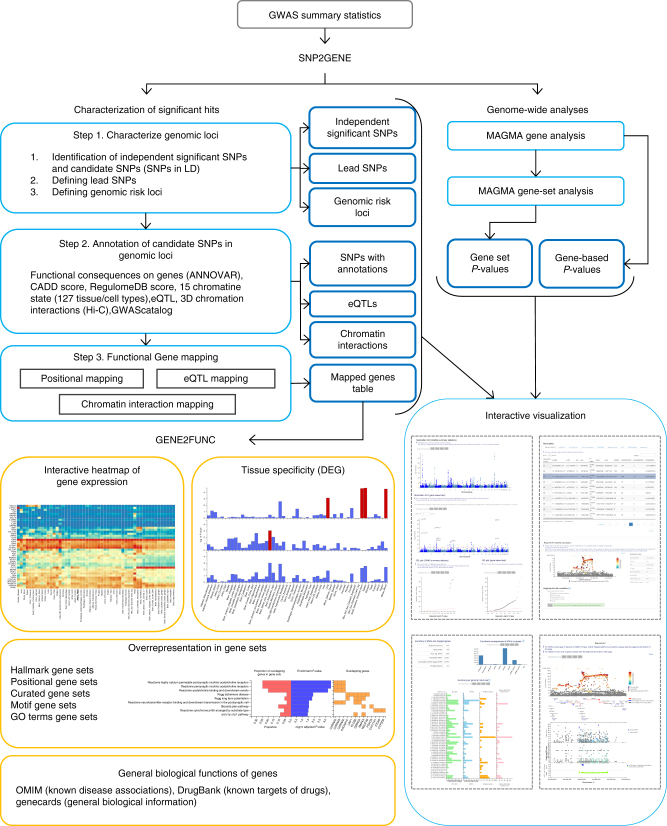
“In FUMA, this task is automated by using pairwise LD ( r 2 ) of SNPs in the reference panel (1000 genomes project phase 3 27 ) pre-computed by PLINK, resulting in a list of independent signi fi cant SNPs, lead SNPs and genomic risk loci based on the GWAS input fi le.”
MethodA global reference for human genetic variation
The 1000 Genomes Project Consortium, authors, C., Auton, A., Abecasis, G. R., Steering committee, Altshuler, D. M., Durbin, R. M., Abecasis, G. R., Bentley, D. R., Chakravarti, A., et al. (2015) · Nature · doi:10.1038/nature15393 · Cited by 18,247 · cited 1×
“In FUMA, this task is automated by using pairwise LD ( r 2 ) of SNPs in the reference panel (1000 genomes project phase 3 27 ) pre-computed by PLINK, resulting in a list of independent signi fi cant SNPs, lead SNPs and genomic risk loci based on the GWAS input fi le.”
MethodAn integrated encyclopedia of DNA elements in the human genome
The ENCODE Project Consortium (2012) · Nature · doi:10.1038/nature11247 · Cited by 18,072
ANNOVAR: functional annotation of genetic variants from high-throughput sequencing data
Wang, K., Li, M., & Hakonarson, H. (2010) · Nucleic Acids Research · doi:10.1093/nar/gkq603 · Cited by 14,621 · cited 3×
“…the independent signi fi cant SNPs are then annotated for functional consequences on gene functions (based on Ensembl genes (build 85) using ANNOVAR 12 ), deleteriousness score (CADD score 13 ), potential regulatory functions (RegulomeDB score 14 and 15-core chromatin state predicted by ChromHMM…”
MethodSudlow, C., Gallacher, J., Allen, N., Beral, V., Burton, P., Danesh, J., Downey, P., Elliott, P., Green, J., Landray, M., et al. (2015) · PLOS Medicine · doi:10.1371/journal.pmed.1001779 · Cited by 12,728 · cited 5×
“9; see Supplementary Note 5 and Supplementary Fig.”
BackgroundMethodResultInfluentialAnalysis of protein-coding genetic variation in 60,706 humans
Exome Aggregation Consortium, Lek, M., Karczewski, K. J., Minikel, E. V., Samocha, K. E., Banks, E., Fennell, T., O’Donnell-Luria, A. H., Ware, J. S., Hill, A. J., et al. (2016) · Nature · doi:10.1038/nature19057 · Cited by 9,587 · cited 1×
“For mapped genes, two scores of intolerance to functional mutations are annotated; probability of being loss-of-function intolerant (pLI) 58 and non-coding residual variation intolerance score (ncRVIS) 59 .”
BackgroundThe Ensembl Variant Effect Predictor
McLaren, W., Gil, L., Hunt, S. E., Riat, H. S., Ritchie, G. R. S., Thormann, A., Flicek, P., & Cunningham, F. (2016) · Genome Biology · doi:10.1186/s13059-016-0974-4 · Cited by 8,099
Biological insights from 108 schizophrenia-associated genetic loci
Schizophrenia Working Group of the Psychiatric Genomics Consortium (2014) · Nature · doi:10.1038/nature13595 · Cited by 7,577 · cited 3×
“We also applied FUMA to the most recent Schizophrenia (SCZ; 36,989 cases and 113,075 controls) GWAS summary statistics 3 , and 128 lead SNPs from 269 independent signi fi cant SNPs across 109 genomic loci were identi fi ed (Supplementary Note 5, Supplementary Fig.”
BackgroundMethodResultMolecular signatures database (MSigDB) 3.0
Liberzon, A., Subramanian, A., Pinchback, R., Thorvaldsdóttir, H., Tamayo, P., & Mesirov, J. P. (2011) · Bioinformatics · doi:10.1093/bioinformatics/btr260 · Cited by 7,111 · cited 3×
“To test for overrepresentation of biological functions, the prioritized genes (or a list of genes of interest) are tested against gene sets obtained from MsigDB (i.e., hallmark gene sets, positional gene sets, curated gene sets, motif gene sets, computational gene sets, GO gene sets, oncogenic signatures, and immunolo…”
MethodIntegrative analysis of 111 reference human epigenomes
Roadmap Epigenomics Consortium, Kundaje, A., Meuleman, W., Ernst, J., Bilenky, M., Yen, A., Heravi-Moussavi, A., Kheradpour, P., Zhang, Z., Wang, J., et al. (2015) · Nature · doi:10.1038/nature14248 · Cited by 6,368
Cited by
Items 601–700 of 1,048
Elvsåshagen, T., Bahrami, S., van der Meer, D., Agartz, I., Alnæs, D., Barch, D. M., Baur‐Streubel, R., Bertolino, A., Beyer, M. K., Blasi, G., et al. (2020) · Nature Communications · doi:10.1038/s41467-020-17376-1 · Cited by 51
Costilla, R., Kemper, K. E., Byrne, E. M., Porto-Neto, L. R., Carvalheiro, R., Purfield, D. C., Doyle, J. L., Berry, D. P., Moore, S. S., Wray, N. R., et al. (2020) · Genetics Selection Evolution · doi:10.1186/s12711-020-00569-z · Cited by 49
Integrative genomics analysis reveals a 21q22.11 locus contributing risk to COVID-19
Ma, Y., Huang, Y., Zhao, S., Yao, Y., Zhang, Y., Qu, J., Wu, N., & Su, J. (2021) · Human Molecular Genetics · doi:10.1093/hmg/ddab125 · Cited by 49
“We performed a MAGMA gene-property analysis (61), which is implemented in FUMA (64).”
MethodVerdiesen, R. M. G., van der Schouw, Y. T., van Gils, C. H., Verschuren, W. M. M., Broekmans, F. J., Borges, M. C., Soares, A. G., Lawlor, D. A., Eliassen, A. H., Kraft, P. L., et al. (2022) · Human Reproduction · doi:10.1093/humrep/deac028 · Cited by 49
“3.6a) (Watanabe et al. , 2017) for the characterization of genomic loci and functional gene mapping (parameter settings are listed in Supplementary Table SIII).”
InfluentialThe schizophrenia-associated variant in SLC39A8 alters protein glycosylation in the mouse brain
Mealer, R. G., Williams, S., Noël, M., Yang, B., D’Souza, A. K., Nakata, T., Graham, D. B., Creasey, E. A., Çetinbaş, M., Sadreyev, R. I., et al. (2022) · Molecular Psychiatry · doi:10.1038/s41380-022-01490-1 · Cited by 47
“Glycoprotein pathway analyses were performed using the GENE2FUNC tool of the FUMA platform [50] on October 30, 2020.”
MethodMolina‐Montes, E., Rodríguez‐Barranco, M., Ching-López, A., Artacho, R., Huerta, J. M., Amiano, P., Lasheras, C., Moreno‐Iribas, C., Jiménez-Zabala, A., Chirlaque, M., et al. (2022) · Clinical Nutrition · doi:10.1016/j.clnu.2022.07.027 · Cited by 47
“2) [38].”
Tesfaye, M., Jaholkowski, P., Hindley, G. F. L., Shadrin, A. A., Rahman, Z., Bahrami, S., Lin, A., Holen, B., Parker, N., Cheng, W., et al. (2023) · Genome Medicine · doi:10.1186/s13073-023-01212-4 · Cited by 46
“Both the GO analyses were performed using FUMA [43].”
MethodInfluentialHomann, J., Osburg, T., Ohlei, O., Dobricic, V., Deecke, L., Bos, I., Vandenberghe, R., Gabel, S., Scheltens, P., Teunissen, C. E., et al. (2022) · Frontiers in Aging Neuroscience · doi:10.3389/fnagi.2022.840651 · Cited by 46
“The FUMA platform2 (Watanabe et al., 2017) was used for post-GWAS analyses, including gene-based association analyses (via MAGMA, de Leeuw et al.”
MethodNagel, M., Speed, D., van der Sluis, S., & Østergaard, S. D. (2020) · Acta Psychiatrica Scandinavica · doi:10.1111/acps.13155 · Cited by 47
“Details of the 47 independent loci are shown in Table S1, while genome-wide results as well as postanalysis from FUMA (7) are available at https://ctg.cncr.nl/software/summary_sta tistics and http://fuma.ctglab.nl respectively (see a description of the FUMA analysis in the online supplement).”
BackgroundGadd, D. A., Hillary, R. F., McCartney, D. L., Shi, L., Stolicyn, A., Robertson, N., Walker, R. M., McGeachan, R. I., Campbell, A., Shen, X., et al. (2022) · Nature Communications · doi:10.1038/s41467-022-32319-8 · Cited by 48
Lee, C., Chen, T., Lim, A. M. W., Chang, C.-C., Sie, J. J., Chen, P., Chang, S., Wu, S.-J., Hsu, C., Hsieh, A., et al. (2022) · Communications Biology · doi:10.1038/s42003-022-04168-0 · Cited by 48
Baranova, A. V., Chandhoke, V., Cao, H., & Zhang, F. (2023) · General Psychiatry · doi:10.1136/gpsych-2022-100996 · Cited by 48
Hughes, D., Kunitoki, K., Elyounssi, S., Luo, M., Bazer, O. M., Hopkinson, C. E., Dowling, K. F., Doyle, A. E., Dunn, E. C., Eryilmaz, H., et al. (2023) · Nature Neuroscience · doi:10.1038/s41593-023-01321-8 · Cited by 52
Human cortical neurogenesis is altered via glucocorticoid-mediated regulation of ZBTB16 expression
Krontira, A. C., Cruceanu, C., Dony, L., Kyrousi, C., Link, M.-H., Rek, N., Pöhlchen, D., Raimundo, C., Penner-Goeke, S., Schowe, A. M., et al. (2024) · Neuron · doi:10.1016/j.neuron.2024.02.005 · Cited by 47
Koskeridis, F., Fancy, N. N., Tan, P. F., Meena, D., Εvangelou, Ε., Elliott, P., Wang, D. Y. Q., Matthews, P. M., Dehghan, A., & Tzoulaki, I. (2024) · Nature Communications · doi:10.1038/s41467-024-53452-6 · Cited by 49
“We used Functional Mapping and Annotation of GWAS (FUMA) 54 to functionally analyseall the generated summary results from MTAG.”
Genomic mechanisms in Alzheimer's disease
Bertram, L., & Tanzi, R. E. (2020) · Brain Pathology · doi:10.1111/bpa.12882 · Cited by 42
“Plots are made with FUMA (25) using data described in”
MethodInfluentialMulti-omic insights into Parkinson's Disease: From genetic associations to functional mechanisms
Schilder, B. M., Navarro, E., & Raj, T. (2021) · Neurobiology of Disease · doi:10.1016/j.nbd.2021.105580 · Cited by 48
Cheng, W., van der Meer, D., Parker, N., Hindley, G., O’Connell, K. S., Wang, Y., Shadrin, A. A., Alnæs, D., Bahrami, S., Lin, A., et al. (2022) · Molecular Psychiatry · doi:10.1038/s41380-022-01751-z · Cited by 47
“Distinct genomic locus definition, functional annotation, and gene mapping For each schizophrenia-volume pair, we first applied FUMA protocol [30] to define its shared loci (Supplementary Methods).”
MethodADGC, Bonn, CHARGE, EADB, Bellenguez, C., EADI, FinnGen, GERAD, GR@ACE/DEGESCO, & PGC-ALZ (2025) · medRxiv · doi:10.1101/2025.10.20.25338060 · Cited by 46
Li, S., Brimmers, A., van Boekel, R. L. M., Vissers, K. C. P., & Coenen, M. J. H. (2023) · Pain · doi:10.1097/j.pain.0000000000002910 · Cited by 49
“However, this warrants future research using gene expressions mapping methods, such as eQTL mapping or chromatin interaction mapping.(140) The overlapping genes across studies should be interpreted cautiously.”
MethodHao, X., Shao, Z., Zhang, N., Jiang, M., Cao, X., Li, S., Guan, Y., & Wang, C. (2023) · Nature Communications · doi:10.1038/s41467-023-43400-1 · Cited by 48
From Rare Copy Number Variants to Biological Processes in ADHD
Harich, B., van der Voet, M., Klein, M., Čížek, P., Fenckova, M., Schenck, A., & Franke, B. (2020) · American Journal of Psychiatry · doi:10.1176/appi.ajp.2020.19090923 · Cited by 44
“GENE2FUNC, a core process of FUMA (Functional Mapping and Annotation of Genome-wide Association Studies; http:// fuma.ctglab.nl [31]), was employed to analyze gene expression patterns.”
MethodGenetic basis of falling risk susceptibility in the UK Biobank Study
Trajanoska, K., Seppala, L. J., Medina‐Gómez, C., Hsu, Y., Zhou, S., van Schoor, N. M., de Groot, C. P. G. M., Karasik, D., Richards, J. B., Kiel, D. P., et al. (2020) · Communications Biology · doi:10.1038/s42003-020-01256-x · Cited by 47
Whole-Genome Sequence Data Suggest Environmental Adaptation of Ethiopian Sheep Populations
Wiener, P., Robert, C., Ahbara, A., Salavati, M., Abebe, A., Kebede, A., Wragg, D., Friedrich, J., Vasoya, D., Hume, D. A., et al. (2021) · Genome Biology and Evolution · doi:10.1093/gbe/evab014 · Cited by 47
“The number of markers was further reduced for the PBS analysis since additional markers were removed that were missing FST values for high-altitude versus LBR or low-altitude versus LBR comparisons.”
InfluentialMarshe, V. S., Maciukiewicz, M., Hauschild, A.-C., Islam, F., Li, Q., Tiwari, A. K., Sibille, E. L., Blumberger, D. M., Karp, J. F., Flint, A. J., et al. (2021) · Translational Psychiatry · doi:10.1038/s41398-021-01248-3 · Cited by 45
Zheng, T., Ellinghaus, D., Juzėnas, S., Cossais, F., Burmeister, G., Mayr, G., Jørgensen, I. F., Teder‐Laving, M., Skogholt, A. H., Chen, S., et al. (2021) · Gut · doi:10.1136/gutjnl-2020-323868 · Cited by 48
GEM: scalable and flexible gene–environment interaction analysis in millions of samples
Westerman, K. E., Pham, D. T., Hong, L., Chen, Y., Sevilla-González, M. D. R., Sung, Y. J., Sun, Y. V., Morrison, A. C., Chen, H., & Manning, A. K. (2021) · Bioinformatics · doi:10.1093/bioinformatics/btab223 · Cited by 45
Genome-Wide Association Study (GWAS) of dental caries in diverse populations
Alotaibi, R. N., Howe, B. J., Chernus, J. M., Mukhopadhyay, N., Sanchez, C. A., Deleyiannis, F. W. ‐., Neiswanger, K., Padilla, C. D., Poletta, F. A., Orioli, I. M., et al. (2021) · BMC Oral Health · doi:10.1186/s12903-021-01670-5 · Cited by 47
“To further investigate these significant or suggestive SNPs, we used the FUMA platform (Functional Mapping and Annotation of Genome-Wide Association Studies) [43] to prioritize, annotate, and interpret the genomic variants and genes from the GWAS results of both primary and permanent analyses.”
MethodAdewuyi, E. O., Mehta, D., Sapkota, Y., Yoshihara, K., Nyegaard, M., Steinthórsdóttir, V., Morris, A. P., Fassbender, A., Rahmioğlu, N., Vivo, I. D., et al. (2021) · Human Reproduction · doi:10.1093/humrep/deab254 · Cited by 46
Unravelling Rubber Tree Growth by Integrating GWAS and Biological Network-Based Approaches
Francisco, F. R., Aono, A. H., da Silva, C. C., Gonçalves, P. S., Scaloppi, E. J., Guen, V. L., Fritsche‐Neto, R., Souza, L. M., & de Souza, A. P. (2021) · Frontiers in Plant Science · doi:10.3389/fpls.2021.768589 · Cited by 48
“The genes identified flanking the snpsGWAS were interpreted according to their biological function and their metabolic context (Watanabe et al., 2017), suggesting their potential relationships in defining the phenotype.”
Reiner, B. C., Zhang, Y., Stein, L. M., Perea, E. D., Arauco‐Shapiro, G., Nathan, J. B., Ragnini, K., Hayes, M. R., Ferraro, T. N., Berrettini, W. H., et al. (2022) · Translational Psychiatry · doi:10.1038/s41398-022-02135-1 · Cited by 47
“0 [34] using FUMA [35] (see supplemental methods).”
Deak, J. D., Levey, D. F., Wendt, F. R., Zhou, H., Galimberti, M., Kranzler, H. R., Gaziano, J. M., Stein, M. B., Polimanti, R. A., Gelernter, J. E., et al. (2022) · JAMA Network Open · doi:10.1001/jamanetworkopen.2022.38880 · Cited by 45
Zheng, J., Wheeler, E., Pietzner, M., Andlauer, T. F. M., Yau, M. S., Hartley, A. E., Brumpton, B. M., Rasheed, H., Kemp, J. P., Frysz, M., et al. (2023) · Arthritis & Rheumatology · doi:10.1002/art.42538 · Cited by 44
“We used Functional Mapping and Annotation of Genome-Wide Association Studies (FUMA) (28), an integrative web-based platform (http://fuma.ctglab.nl) containing information from 18 biological data repositories and tools, to characterize the genetic association signals of sclerostin, as well as gene…”
MethodInfluentialA multiethnic whole genome sequencing study to identify novel loci for bone mineral density
Greenbaum, J., Su, K., Zhang, X., Liu, Y., Liu, A., Zhao, L., Luo, Z., Tian, Q., Shen, H., & Deng, H. (2021) · Human Molecular Genetics · doi:10.1093/hmg/ddab305 · Cited by 46
Haas, C. B., Hsu, L.-I., Lampe, J. W., Wernli, K. J., & Lindström, S. (2022) · Endocrinology · doi:10.1210/endocr/bqac020 · Cited by 44
A genome-wide meta-analysis identifies 50 genetic loci associated with carpal tunnel syndrome
Skúladóttir, Á., Björnsdóttir, G., Ferkingstad, E., Einarsson, G., Stefánsdóttir, L., Nawaz, M. S., Oddsson, Á., Olafsdottir, T. A., Saevarsdóttir, S., Walters, G. B., et al. (2022) · Nature Communications · doi:10.1038/s41467-022-29133-7 · Cited by 46
Tip60-mediated H2A.Z acetylation promotes neuronal fate specification and bivalent gene activation
Janas, J. A., Zhang, L., Luu, J. H., Demeter, J., Meng, L., Marro, S. G., Mall, M., Mooney, N. A., Schaukowitch, K., Ng, Y. H., et al. (2022) · Molecular Cell · doi:10.1016/j.molcel.2022.11.002 · Cited by 45
Genetic insights into ossification of the posterior longitudinal ligament of the spine
Koike, Y., Takahata, M., Nakajima, M., Otomo, N., Suetsugu, H., Liu, X., Endo, T., Imagama, S., Kobayashi, K., Kaito, T., et al. (2023) · eLife · doi:10.7554/elife.86514 · Cited by 46
Self-citationvan Eijck, C. W. F., Mustafa, D. A. M., Vadgama, D., de Miranda, N. F. C. C., Koerkamp, B. G., van Tienhoven, G., van der Burg, S. H., Malats, N., & van Eijck, C. H. J. (2023) · Gut · doi:10.1136/gutjnl-2023-330480 · Cited by 44
“35 The over-representation analysis was stratified by treatment, and the canonical pathways C2 collection (BioCarta, KEGG, PID and Reactome) and C5 collection (ontology gene sets) of the Human Molecular Signature Data-base were analysed.”
Ambalavanan, A., Chang, L., Choi, J., Zhang, Y., Stickley, S. A., Fang, Z. Y., Miliku, K., Robertson, B., Yonemitsu, C., Turvey, S. E., et al. (2024) · Nature Communications · doi:10.1038/s41467-024-51743-6 · Cited by 46
“Lead and independentsignalswereidenti fi edfromsigni fi cantSNPs( P 5e – 8)by linkage disequilibrium (LD) clumping using r 2 ≤ 0.1 and r 2 ≤ 0.6, respectively, within 250kb windows using the SNP2GENE function in the FUMA GWAS web interface 35 .”
InfluentialGorman, B. R., Ji, S., Francis, M., Sendamarai, A. K., Shi, Y., Devineni, P., Saxena, U., Partan, E. S., DeVito, A. K., Byun, J., et al. (2024) · Nature Communications · doi:10.1038/s41467-024-52129-4 · Cited by 48
“Index variants werede fi ned using the two-stage “ clumping ” procedure implemented in the Functional Mapping and Annotation (FUMA) platform 75 .”
Namjou, B., Stanaway, I. B., Lingren, T., Mentch, F. D., Benoit, B., Dikilitas, O., Niu, X., Shang, N., Shoemaker, A. H., Carey, D. J., et al. (2020) · International Journal of Obesity · doi:10.1038/s41366-020-00675-4 · Cited by 45
“At the next step, selected GWAS hits were functionally evaluated using FUMA (Functional Mapping and Annotation of Genome-Wide Association Studies) and Haplo-R [27, 28].”
MethodPolygenic Scores in Developmental Psychology: Invite Genetics In, Leave Biodeterminism Behind
Raffington, L., Mallard, T. T., & Harden, K. P. (2020) · Annual Review of Developmental Psychology · doi:10.1146/annurev-devpsych-051820-123945 · Cited by 52
Identification of TBX15 as an adipose master trans regulator of abdominal obesity genes
Pan, D. Z., Miao, Z., Comenho, C., Rajkumar, S., Koka, A., Lee, S. H., Alvarez, M., Kamińska, D., Ko, A., Sinsheimer, J. S., et al. (2021) · Genome Medicine · doi:10.1186/s13073-021-00939-2 · Cited by 50
“Furthermore, the red co-expression network was significantly enriched for genes upregulated in subcutaneous adipose tissue (p ~ 1.0 × 10⁻¹⁸) when compared to the 54 other tissues in Genotype-Tissue Expression (GTEx) v8 cohort [41] in a differential expression (DE) analysis by FUMA [75, 76] (Fig.”
BackgroundMethodResultInfluentialFunctional Characterisation of a GWAS Risk Locus Identifies GPX3 as a Lead Candidate Gene in ALS
Restuadi, R., Steyn, F. J., Kabashi, E., Ngo, S. T., Cheng, F., Nabais, M. F., Thompson, M. J., Qi, T., Wu, Y., Henders, A. K., et al. (2020) · Genome Medicine · doi:10.1186/s13073-021-01006-6 · Cited by 45
“The FUMA pipeline and five complementary tools (GCTA-COJO, S-LDSC, PoPS, SMR- HEIDI, TWAS) were used to perform post-GWAS analysis using the most recent published ALS summary data (n = 20,806 cases, n = 59,804 controls) [9] (Fig.”
BackgroundMethodInfluentialDeepNull models non-linear covariate effects to improve phenotypic prediction and association power
McCaw, Z. R., Colthurst, T., Yun, T., Furlotte, N. A., Carroll, A. W., Alipanahi, B., McLean, C. Y., & Hormozdiari, F. (2022) · Nature Communications · doi:10.1038/s41467-021-27930-0 · Cited by 49
Building causal knowledge in behavior genetics
Madole, J. W., & Harden, K. P. (2022) · Behavioral and Brain Sciences · doi:10.1017/s0140525x22000681 · Cited by 50
The lingering effects of Neanderthal introgression on human complex traits
Wei, X., Robles, C. R., Pazokitoroudi, A., Ganna, A., Gusev, A., Durvasula, A., Gazal, S., Loh, P.-R., Reich, D., & Sankararaman, S. (2023) · eLife · doi:10.7554/elife.80757 · Cited by 43
“We used FUMA (Watanabe et al., 2017) to annotate the unique credible NIMs as eQTLs (https://fuma.”
MethodPineda, S., Sur, S., Sigdel, T. K., Nguyen, M., Crespo, E., Torija, A., Meneghini, M., Gomà, M., Sirota, M., Bestard, O., et al. (2020) · Kidney International Reports · doi:10.1016/j.ekir.2020.07.023 · Cited by 43
“University Hospital (PR228/13) and the University of California–San Francisco approved the study (14-13573).”
BackgroundGenetic Pathways Underlying Individual Differences in Regular Physical Activity
de Geus, E. J. C. (2022) · Exercise and Sport Sciences Reviews · doi:10.1249/jes.0000000000000305 · Cited by 44
Staplin, N., Herrington, W. G., Murgia, F., Ibrahim, M. A.-H., Bull, K. R., Judge, P. K., Ng, S. Y. A., Turner, M., Zhu, D., Emberson, J., et al. (2022) · Hypertension · doi:10.1161/hypertensionaha.122.19354 · Cited by 49
“…differential expression in the kidney (see supplemental methods for details of functional annotations and tissue specificity enrichment analysis 31–33 ), or have been previously linked to the renin-angiotensin system, transforming growth factor-beta (TGF-beta) and its signalling pathways, or…”
A multi-ancestry genome-wide association study in type 1 diabetes
Michalek, D. A., Tern, C., Zhou, W., Robertson, C. C., Farber, E., Campolieto, P., Chen, W., Önengüt-Gümüşcü, S., & Rich, S. S. (2024) · Human Molecular Genetics · doi:10.1093/hmg/ddae024 · Cited by 46
“3) using FUMA software [43].”
Multi-omic spatial effects on high-resolution AI-derived retinal thickness
Jackson, V. E., Wu, Y., Bonelli, R., Owen, J. P., Scott, L. W., Farashi, S., Kihara, Y., Gantner, M. L., Egan, C. A., Williams, K. M., et al. (2025) · Nature Communications · doi:10.1038/s41467-024-55635-7 · Cited by 46
“5.3) 71 .”
InfluentialMortlock, S., Restuadi, R., Levien, R., Girling, J. E., Holdsworth‐Carson, S. J., Healey, M., Zhu, Z., Qi, T., Wu, Y., Lukowski, S. W., et al. (2019) · Clinical Epigenetics · doi:10.1186/s13148-019-0648-7 · Cited by 45
“To identify pathways potentially affected by or regulating changes in methylation across the cycle, we performed a pathway analysis using the “GENE2FUNC” function on the FUMA GWAS web-based platform [81].”
MethodGenome-wide association meta-analysis identifies five novel loci for age-related hearing impairment
Nagtegaal, A. P., Broer, L., Zilhäo, N. R., Jakobsdóttir, J., Bishop, C. E., Brumat, M., Christiansen, M. W., Cocca, M., Gao, Y. L., Heard‐Costa, N. L., et al. (2019) · Scientific Reports · doi:10.1038/s41598-019-51630-x · Cited by 45
Multi-trait analysis of rare-variant association summary statistics using MTAR
Luo, L., Shen, J., Zhang, H., Chhibber, A., Mehrotra, D. V., & Tang, Z.-Z. (2020) · Nature Communications · doi:10.1038/s41467-020-16591-0 · Cited by 46
“Gene set enrichment analysis was conducted using the one-sided hypergeometric test against Reactome Pathways and Gene Ontology Biological Processes, as implemented in the GENE2FUNC from FUMA 50 , with the genes tested in MTAR used as the background gene set.”
MethodLiu, X., Song, Z., Li, Y., Yao, Y., Fang, M., Bai, C., An, P., Chen, H., Chen, Z., Tang, B., et al. (2021) · Aging Cell · doi:10.1111/acel.13323 · Cited by 44
Rodriguez‐Fontenla, C., & Carracedo, Á. (2021) · Translational Psychiatry · doi:10.1038/s41398-021-01378-8 · Cited by 47
The morphometry of left cuneus mediating the genetic regulation on working memory
He, X., Li, X., Fu, J., Xu, J., Liu, H., Zhang, P., Liu, R., Yu, C., Ye, Z., & Qin, W. (2021) · Human Brain Mapping · doi:10.1002/hbm.25446 · Cited by 43
Bonfiglio, F., Liu, X., Smillie, C. S., Pandit, A., Kurilshikov, A., Bacigalupe, R., Zheng, T., Nim, H. T., García‐Etxebarria, K., Bujanda, L., et al. (2021) · Cell Genomics · doi:10.1016/j.xgen.2021.100069 · Cited by 50
Fernández-Carrión, R., Sorlí, J. V., Coltell, Ó., Pascual, E. C., Ortega‐Azorín, C., Barragán, R., Gimenez-Alba, I. M., Álvarez‐Sala, A., Fitó, M., Ordovás, J. M., et al. (2021) · Biomedicines · doi:10.3390/biomedicines10010079 · Cited by 45
“In addition, for the dichotomous sweet taste preference variable, we used the FUMA SNP2GENE tool for extensive functional annotation for all SNPs in genomic areas identified by lead SNPs; and the FUMA GENE2FUNC function for the annotation of genes in biological context [65].”
BackgroundMethodInfluentialSarnowski, C., Ghanbari, M., Bis, J. C., Logue, M., Fornage, M., Mishra, A., Ahmad, S., Beiser, A. S., Boerwinkle, E., Bouteloup, V., et al. (2022) · Communications Biology · doi:10.1038/s42003-022-03287-y · Cited by 38
Association between Human Genetic Variants and the Vaginal Bacteriome of Pregnant Women
Fan, W. Q., Kan, H., Liu, H.-Y., Wang, T., He, Y., Zhang, M., Li, Y., Li, Y., Meng, W., Li, Q., et al. (2021) · mSystems · doi:10.1128/msystems.00158-21 · Cited by 42
“Gene prioritization was based on a combination strategy of positional mapping and expression quantitative trait locus (eQTL) mapping in this study (70).”
BackgroundMethodGenome-wide association study of hospitalized COVID-19 patients in the United Arab Emirates
Mousa, M., Vurivi, H., Kannout, H., Uddin, M., Kaabi, N. A., Mahboub, B. H., Tay, G. K., & AlSafar, H. S. (2021) · EBioMedicine · doi:10.1016/j.ebiom.2021.103695 · Cited by 43
“Multiple comprehensive eQTL mapping resources for pro fi ling traits based on gene expression was conducted, including GTEx v7, Human Protein Atlas, and MAGMA analysis in FUMA.”
InfluentialKweon, H., Burik, C. A. P., Ning, Y., Ahlskog, R., Xia, C., Abner, E., Bao, Y., Bhatta, L., Faquih, T. O., de Feijter, M., et al. (2025) · Nature Human Behaviour · doi:10.1038/s41562-024-02080-7 · Cited by 45
“FUMA uses four mapping approaches: positional, chromatin interaction, expression quantitative trait locus mapping and MAGMA gene-based association tests.”
InfluentialXia, H.-Z., Jahr, F. M., Kim, N.-K., Xie, L., Shabalin, A. A., Bryois, J., Sweet, D. H., Kronfol, M. M., Palasuberniam, P., McRae, M., et al. (2018) · Human Molecular Genetics · doi:10.1093/hmg/ddy222 · Cited by 44
Pharmacological enrichment of polygenic risk for precision medicine in complex disorders
Reay, W. R., Atkins, J., Carr, V. J., Green, M. J., & Cairns, M. J. (2020) · Scientific Reports · doi:10.1038/s41598-020-57795-0 · Cited by 42
Yang, D.-W., Wang, T., Zhang, J., Li, X., He, Y., Xiao, R., Xue, W., Zheng, X., Zhang, P., Zhang, S., et al. (2020) · Journal of Translational Medicine · doi:10.1186/s12967-020-02390-0 · Cited by 43
“Using three gene mapping strategies (position mapping, eQTL mapping and chromatin interaction mapping) in FUMA, we further mapped the significant association variants to genes and identified 50 genomic risk loci and 64 mapped genes associated with radiation-induced oral mucositis (Additional files 4, 5: Table S3, S4).”
MethodInfluentialHost genetics influences the relationship between the gut microbiome and psychiatric disorders
Martins‐Silva, T., Salatino‐Oliveira, A., Genro, J. P., Meyer, F. D. T., Li, Y., Rohde, L. A., Hutz, M. H., & Tovo‐Rodrigues, L. (2020) · Progress in Neuro-Psychopharmacology and Biological Psychiatry · doi:10.1016/j.pnpbp.2020.110153 · Cited by 47
Díez‐Obrero, V., Dampier, C. H., Moratalla-Navarro, F., Devall, M. A. M., Plummer, S. J., Díez-Villanueva, A., Peters, U., Bien, S. A., Huyghe, J. R., Kundaje, A. B., et al. (2021) · Cellular and Molecular Gastroenterology and Hepatology · doi:10.1016/j.jcmgh.2021.02.003 · Cited by 45
He, L., Loika, Y., Park, Y., Bennett, D. A., Kellis, M., Kulminski, A. M., & Initiative, A. D. N. (2021) · Translational Psychiatry · doi:10.1038/s41398-021-01263-4 · Cited by 44
Genetic regulation of post-translational modification of two distinct proteins
Landini, A., Trbojević‐Akmačić, I., Navarro, P., Tsepilov, Y. A., Sharapov, S., Vučković, F., Polašek, O., Hayward, C., Pribić, T., Vilaj, M. Ć., et al. (2022) · Nature Communications · doi:10.1038/s41467-022-29189-5 · Cited by 45
Wright, D. J., Hall, N., Irish, N., Man, A., Glynn, W., Mould, A. W., Angeles, A. D. L., Angiolini, E., Swarbreck, D., Gharbi, K., et al. (2022) · BMC Genomics · doi:10.1186/s12864-021-08261-2 · Cited by 51
“nl/) [74] to annotate the gene sets within a biological context.”
BackgroundMethodInfluentialSeligowski, A. V., Misganaw, B., Duffy, L., Ressler, K. J., & Guffanti, G. (2022) · American Journal of Psychiatry · doi:10.1176/appi.ajp.21111113 · Cited by 43
Genome-wide contribution of common short-tandem repeats to Parkinson’s disease genetic risk
Bustos, B. I., Billingsley, K. J., Blauwendraat, C., Gibbs, J. R., Gan‐Or, Z., Krainc, D., Singleton, A., & Lubbe, S. J. (2022) · Brain · doi:10.1093/brain/awac301 · Cited by 45
Genetic Risk for Smoking: Disentangling Interplay Between Genes and Socioeconomic Status
Pasman, J. A., Demange, P. A., Guloksuz, S., Willemsen, A. H. M., Abdellaoui, A., ten Have, M., Hottenga, J.-J., Boomsma, D. I., de Geus, E., Bartels, M., et al. (2022) · Behavior Genetics · doi:10.1007/s10519-021-10094-4 · Cited by 41
Genome-Wide Association Study Identifies Genetic Associations with Perceived Age
Roberts, V., Main, B., Timpson, N. J., & Haworth, S. J. (2020) · Journal of Investigative Dermatology · doi:10.1016/j.jid.2020.03.970 · Cited by 41
Ashley‐Koch, A. E., Kimbrel, N. A., Qin, X., Lindquist, J. H., Garrett, M. E., Dennis, M. F., Hair, L. P., Huffman, J. E., Jacobson, D., Madduri, R., et al. (2023) · PLoS Genetics · doi:10.1371/journal.pgen.1010623 · Cited by 41
“No GWS loci were identified in the other ancestral groups (AA, AS and HA) and thus, no additional annotation analyses with FUMA [39] were performed.”
BackgroundMethodInfluentialGIP receptor agonism blocks chemotherapy-induced nausea and vomiting
Borner, T., Reiner, B. C., Crist, R. C., Furst, C. D., Doebley, S. A., Halas, J. G., Ai, M., Samms, R. J., Jonghe, B. C. D., & Hayes, M. R. (2023) · Molecular Metabolism · doi:10.1016/j.molmet.2023.101743 · Cited by 41
“Table S6) to identify cell-typespecific shared and unique neurobiological mechanisms in the AP/ NTS using FUMA [57].”
MethodMRBEE: A bias-corrected multivariable Mendelian randomization method
Lorincz‐Comi, N. J., Yang, Y., Li, G., & Zhu, X. (2024) · Human Genetics and Genomics Advances · doi:10.1016/j.xhgg.2024.100290 · Cited by 46
“39 Each SNP that tagged a locus had marginal evidence of association with the expression of a gene in that locus in at least one tissue, where association p values ranged from 3.3E (cid:2) 310 to 6.7E (cid:2) 5.”
Extracellular vesicle-mediated trafficking of molecular cues during human brain development
Pipicelli, F., Forero, A., Moser, S., Matteo, F. D., Baumann, N., Grätz, C., Pisfil, M. G., Bekjarova, Z., Pfaffl, M. W., Canafoglia, L., et al. (2024) · Cell Reports · doi:10.1016/j.celrep.2024.114755 · Cited by 43
Sex-stratified genome-wide association meta-analysis of major depressive disorder
Thomas, J. T., Thorp, J. G., Huider, F., Grimes, P. Z., Wang, R., Youssef, P., Coleman, J. R. I., Byrne, E. M., Adams, M. J., van Loo, H. M., et al. (2025) · Nature Communications · doi:10.1038/s41467-025-63236-1 · Cited by 45
Kwon, Y.-C., Lim, J., Bang, S., Ha, E., Hwang, M. Y., Yoon, K., Choe, J., Yoo, D., Lee, S., Lee, J., et al. (2020) · Annals of the Rheumatic Diseases · doi:10.1136/annrheumdis-2020-217663 · Cited by 42
“FUMA 22 was then employed to identify the most likely RA-relevant genes based on the lead RA-risk variants and the meta-analysis association summary statistics according to the following three mapping strategies—(1) Positional mapping: this strategy found genes within and 10 kb around the region…”
MethodImamura, M., Takahashi, A., Matsunami, M., Horikoshi, M., Iwata, M., Araki, S.-I., Toyoda, M., Susarla, G., Ahn, J., Park, K. H., et al. (2021) · Human Molecular Genetics · doi:10.1093/hmg/ddab044 · Cited by 44
“6 (22), using the GWAS meta-analysis data (Stage-1 set-1 and set2) of 5 786 456 imputed SNPs with high imputation quality (r2 ≥ 0.”
MethodGenetic and phenotypic analysis of the causal relationship between aging and COVID-19
Ying, K., Zhai, R., Pyrkov, T. V., Shindyapina, A. V., Mariotti, M., Fedichev, P. O., Shen, X., & Gladyshev, V. N. (2021) · Communications Medicine · doi:10.1038/s43856-021-00033-z · Cited by 41
Genetic architecture distinguishes tinnitus from hearing loss
Clifford, R. E., Maihofer, A. X., Chatzinakos, C., Coleman, J. R. I., Daskalakis, N. P., Gasperi, M., Hogan, K., Mikita, E. A., Stein, M. B., Tcheandjieu, C., et al. (2024) · Nature Communications · doi:10.1038/s41467-024-44842-x · Cited by 41
Akimova, E. T., Wolfram, T., Ding, X., Tropf, F. C., & Mills, M. C. (2024) · Nature Human Behaviour · doi:10.1038/s41562-024-02076-3 · Cited by 40
“We used FUMA 93 to annotate, prioritize, visualize and interpret GWAS results, to run MAGMA on our summary statistics and to map SNPs to genes.”
InfluentialRajesh, A. E., Olvera‐Barrios, A., Warwick, A., Wu, Y., Stuart, K. V., Biradar, M. I., Ung, C. Y., Khawaja, A. P., Luben, R., Foster, P. J., et al. (2025) · Nature Communications · doi:10.1038/s41467-024-55198-7 · Cited by 44
“To test the prioritised genes for enrichment in biological pathways, FUMA ’ s GENE2FUNC function was applied, using hypergeometric mean pathway analysis against gene sets obtained from MsigDB and WikiPathways.”
Laisk, T., Kukuškina, V., Palmer, D. S., Laber, S., Chen, C., Ferreira, T. C., Rahmioğlu, N., Zondervan, K. T., Becker, C. M., Smoller, J. W., et al. (2018) · Human Molecular Genetics · doi:10.1093/hmg/ddy317 · Cited by 47
“Functional annotation was performed using the FUMA platform designed for prioritization, annotation and interpretation of GWAS results (21).”
BackgroundMethodInfluentialArnau-Soler, A., Adams, M. J., Scotland, G., Major Depressive Disorder Working Group of the Psychiatric Genomics Consortium, Hayward, C., & Thomson, P. A. (2018) · PLOS ONE · doi:10.1371/journal.pone.0209160 · Cited by 35
Shikov, A. E., Skitchenko, R. K., Predeus, A. V., & Barbitoff, Y. A. (2020) · Scientific Reports · doi:10.1038/s41598-020-58040-4 · Cited by 40
Meng, W., Chan, B., Harris, C., Freidin, M. B., Hébert, H. L., Adams, M. J., Campbell, A., Hayward, C., Zheng, H., Zhang, X., et al. (2020) · Human Molecular Genetics · doi:10.1093/hmg/ddaa058 · Cited by 42
“212 Post-GWAS analysis: This study used FUMA as a main annotation tool for viewing 213 and annotating GWAS results (33).”
MethodHoggart, C., Shimizu, C., Galassini, R., Wright, V. J., Shailes, H., Bellos, E., Herberg, J. A., Pollard, A. J., O’Connor, D., Choi, S. W., et al. (2021) · European Journal of Human Genetics · doi:10.1038/s41431-021-00838-5 · Cited by 37
Large-Scale Phenomic and Genomic Analysis of Brain Asymmetrical Skew
Kong, X., Postema, M. C., Schijven, D., Carrión-Castillo, A., Pepe, A., Crivello, F., Joliot, M., Mazoyer, B. M., Fisher, S. E., & Francks, C. (2021) · Cerebral Cortex · doi:10.1093/cercor/bhab075 · Cited by 41
Baranova, A. V., Wang, J., Cao, H., Chen, J., Chen, J., Chen, M., Ni, S., Xu, X., Ke, X., Xie, S., et al. (2022) · Psychiatry Research · doi:10.1016/j.psychres.2022.114679 · Cited by 42
Han, Y. Y., Dorajoo, R., Chang, X., Wang, L., Khor, C. C., Sim, X., Cheng, C., Shi, Y., Tham, Y. C., Zhao, W., et al. (2017) · Scientific Reports · doi:10.1038/s41598-017-18214-z · Cited by 40
Human Genomics and Drug Development
Schmidt, A. F., Hingorani, A. D., & Finan, C. (2022) · Cold Spring Harbor Perspectives in Medicine · doi:10.1101/cshperspect.a039230 · Cited by 41
Aslam, M. M., Fan, K.-H., Lawrence, E., Bedison, M. A., Snitz, B. E., DeKosky, S. T., Lopez, O. L., Feingold, E., & Kamboh, M. I. (2023) · Molecular Psychiatry · doi:10.1038/s41380-023-02170-4 · Cited by 39
“FUMA has two core processes, SNP2GENE and GENE2FUNC [22].”
BackgroundMendelVar: gene prioritization at GWAS loci using phenotypic enrichment of Mendelian disease genes
Sobczyk, M., Gaunt, T. R., & Paternoster, L. (2021) · Bioinformatics · doi:10.1093/bioinformatics/btaa1096 · Cited by 40
Arenella, M., Cadby, G., Witte, W. D., Jones, R., Whitehouse, A., Moses, E. K., Fornito, A., Bellgrove, M. A., Hawi, Z., Johnson, B. P., et al. (2021) · Autism · doi:10.1177/13623613211019547 · Cited by 40
“To do so, we exploited the tool for functional mapping and annotation (FUMA) of GWAS that refers to tissue-specific expression patterns based on GTEx v6 RNA-seq data (Watanabe et al., 2017).”
Method
Metadata
- Authors
- Watanabe, K., Taskesen, E., van Bochoven, A., & Posthuma, D.
- Affiliations
- Vrije Universiteit Amsterdam (NL)
- Venue
- Nature Communications
- Published
- 2017-11-28
- Volume
- 8
- Issue
- 1
- Pages
- 1826-1826
- ISSN
- 2041-1723 (ISSN-L)
- PMC
- PMC5705698
- OpenAlex
- W2770092353
- Semantic Scholar
- 5962b3ca064a021d7bd3203f3037c759e203b442
- Cited by
- 4,083
- References
- 66
- Citations by year
- 2026: 522 · 2025: 740 · 2024: 715 · 2023: 543 · 2022: 530 · 2021: 435 · 2020: 277 · 2019: 213 · 2018: 97 · 2017: 8
- FWCI
- 66.54
- Type
- journal article
- Language
- en
- Open access
- gold
- doi.org
- Licence
- cc-by
- creativecommons.org/licenses/by/4.0 (tdm)
- creativecommons.org/licenses/by/4.0 (vor)
- Locations
- Nature Communications (publishedVersion, cc-by)
- bioRxiv (Cold Spring Harbor Laboratory) (acceptedVersion, cc-by-nc-nd)
- Europe PMC (PubMed Central) (publishedVersion, cc-by)
- PubMed Central (publishedVersion, cc-by)
- PubMed (publishedVersion)
- Pure Amsterdam UMC (publishedVersion, other-oa)
- Amsterdam UMC (VU Amsterdam) - Institutional Repository (publishedVersion)
- VU Research Portal (publishedVersion, other-oa)
- RePEc: Research Papers in Economics (submittedVersion)
- DOAJ (DOAJ: Directory of Open Access Journals) (submittedVersion, cc-by-sa)
- DOAJ (DOAJ: Directory of Open Access Journals) (submittedVersion)
- Data Archiving and Networked Services (DANS) (submittedVersion, other-oa)
- Data Archiving and Networked Services (DANS) (submittedVersion)
- Funders
- Nederlandse Organisatie voor Wetenschappelijk Onderzoek (VICI 453-14-005, NWO VICI 453-14-005, 453-13-005, 453-14-005)
- Lundbeckfonden (R155-2014-1724)
- Topics
- Life Sciences › Biochemistry, Genetics and Molecular Biology › Molecular Biology › Bioinformatics and Genomic Networks
- Life Sciences › Biochemistry, Genetics and Molecular Biology › Genetics › Genetic Associations and Epidemiology
- Life Sciences › Biochemistry, Genetics and Molecular Biology › Genetics › Genetic Mapping and Diversity in Plants and Animals
- Keywords
- FUMA, causal variant identification, functional annotation, gene prioritization, expression quantitative trait loci, chromatin interactions, pathway enrichment, web-based annotation platform, linkage disequilibrium
- MeSH terms
- Chromatin, Chromosome Mapping, Crohn Disease, Humans, Linkage Disequilibrium, Genome, Human, Computational Biology, Genetic Predisposition to Disease, Internet, Databases, Genetic, Quantitative Trait Loci, Genome-Wide Association Study, Molecular Sequence Annotation
About these checks
Registry, retraction, Cites and statistics results are computed, not judged, with one exception: a printed reference that no index lists is read once by a model before it counts as a citation error. Claims are extracted by a model and kept only when their quote appears verbatim in the text; each cited source is then checked, with a model’s help, for whether it says what the claim relies on. Those verdicts can be wrong — read the claim’s quote and the cited source before relying on one.
Statistics and arithmetic are recomputed, not judged.
Confidence bands are shown only for fields calibrated on our annotated test set. None is calibrated yet, so no band is shown.
What counts as a claim ›How we measure confidence ›How we check this ›
Are you an author, or do you see a problem with this page? Request a review
Data sources
Bibliographic data: Semantic Scholar, OpenAlex, Crossref.
Contains information from the Semantic Scholar Academic Graph Datasets, made available under the ODC Attribution License (ODC-BY 1.0).
Semantic Scholar’s data is described in: Kinney, R., et al. (2023). The Semantic Scholar Open Data Platform. arXiv:2301.10140.
