

Functional mapping and annotation of genetic associations with FUMA
Open accessPublished version of a preprint
The DOI matches its Crossref record; 67 of the 67 references it cites were found in a registry or an index.
Abstract
A main challenge in genome-wide association studies (GWAS) is to pinpoint possible causal variants. Results from GWAS typically do not directly translate into causal variants because the majority of hits are in non-coding or intergenic regions, and the presence of linkage disequilibrium leads to effects being statistically spread out across multiple variants. Post-GWAS annotation facilitates the selection of most likely causal variant(s). Multiple resources are available for post-GWAS annotation, yet these can be time consuming and do not provide integrated visual aids for data interpretation. We, therefore, develop FUMA: an integrative web-based platform using information from multiple biological resources to facilitate functional annotation of GWAS results, gene prioritization and interactive visualization. FUMA accommodates positional, expression quantitative trait loci (eQTL) and chromatin interaction mappings, and provides gene-based, pathway and tissue enrichment results. FUMA results directly aid in generating hypotheses that are testable in functional experiments aimed at proving causal relations.
Overview
The claims and statistics of this paper haven’t been checked yet.
Free: it reads the open-access text and checks the first 5 claims that cite a source we can check. Create a free account to check every claim.
Integrity signals
Registry
Cites
Statistics
Figures
Verification
Claims the paper makes
The claims and statistics of this paper haven’t been checked yet.
Free: it reads the open-access text and checks the first 5 claims that cite a source we can check. Create a free account to check every claim.
Claims other papers make about this one
Each is checked against this paper’s own text: does it say what the citing paper says it does?
The cited source says what the claim attributes to it.
In the citing paper
“Independently associated loci from the metaanalysis were defined using FUMA 24 (see URLs), an online platform for functional mapping of genetic variants.”
From Genome-wide association meta-analysis in 269,867 individuals identifies new genetic and functional links to intelligence (2018) · cites this paper as [24]
The check wasn’t confident either way, so it gives no verdict — never disputed.
In the citing paper
“The genetic architecture of fertility showed enrichment for gene expression in brain and ovarian tissues, which is consistent with known biology33,34.”
From Genetic trade-offs in fertility and longevity explain the maintenance of disease-associated alleles in humans (2026) · cites this paper as [33]
Experimental — accuracy not yet measuredIn the citing paper
“While traditional Hi-C guided gene mapping restricts its analysis to genome-wide significant (GWS) loci7, H-MAGMA can leverage signals from sub-threshold loci that explain a significant proportion of heritability8.”
From A computational tool (H-MAGMA) for improved prediction of brain-disorder risk genes by incorporating brain chromatin interaction profiles (2020) · cites this paper as [7]
In the citing paper
“Gene-based analysis using FUMA28, with input SNPs mapped by position to 18,232 protein-coding genes, identified an additional locus for walking (near HP1BP3) and moderate activity (near KCNA6) (Supplementary Data 4).”
From GWAS identifies 14 loci for device-measured physical activity and sleep duration (2018) · cites this paper as [28]
In the citing paper
“Although several databases have been developed to collect eQTL summary statistics from individual studies11–17, these efforts have relied on the heterogeneous set of files provided by the original authors.”
From A compendium of uniformly processed human gene expression and splicing quantitative trait loci (2021) · cites this paper as [13]
1 more claim about this paper
Create a free account to see every claim other papers make about this one.
Self-check
Percentages, sums and reported differences re-computed from the paper’s own numbers.
The self-check needs the paper’s full text.
Citations
Cites
PLINK: a tool set for whole-genome association and population-based linkage analyses.
Purcell, S., Neale, B., Todd-Brown, K., Thomas, L., Ferreira, M. A. R., Bender, D., Maller, J., Sklar, P., de Bakker, P. I. W., Daly, M. J., et al. (2007) · The American Journal of Human Genetics · doi:10.1086/519795 · Cited by 34,089 · cited 2×
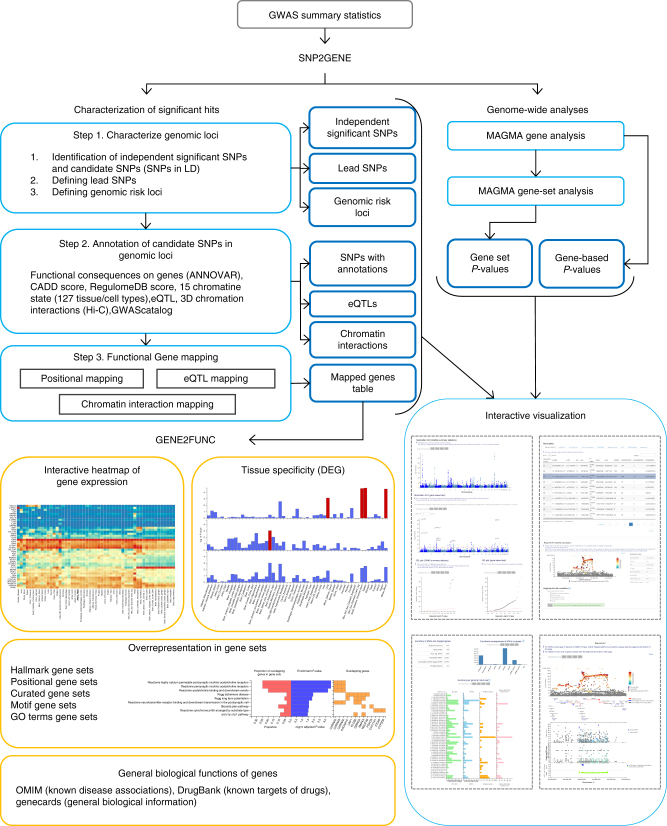
“In FUMA, this task is automated by using pairwise LD ( r 2 ) of SNPs in the reference panel (1000 genomes project phase 3 27 ) pre-computed by PLINK, resulting in a list of independent signi fi cant SNPs, lead SNPs and genomic risk loci based on the GWAS input fi le.”
MethodA global reference for human genetic variation
The 1000 Genomes Project Consortium, authors, C., Auton, A., Abecasis, G. R., Steering committee, Altshuler, D. M., Durbin, R. M., Abecasis, G. R., Bentley, D. R., Chakravarti, A., et al. (2015) · Nature · doi:10.1038/nature15393 · Cited by 18,247 · cited 1×
“In FUMA, this task is automated by using pairwise LD ( r 2 ) of SNPs in the reference panel (1000 genomes project phase 3 27 ) pre-computed by PLINK, resulting in a list of independent signi fi cant SNPs, lead SNPs and genomic risk loci based on the GWAS input fi le.”
MethodAn integrated encyclopedia of DNA elements in the human genome
The ENCODE Project Consortium (2012) · Nature · doi:10.1038/nature11247 · Cited by 18,072
ANNOVAR: functional annotation of genetic variants from high-throughput sequencing data
Wang, K., Li, M., & Hakonarson, H. (2010) · Nucleic Acids Research · doi:10.1093/nar/gkq603 · Cited by 14,621 · cited 3×
“…the independent signi fi cant SNPs are then annotated for functional consequences on gene functions (based on Ensembl genes (build 85) using ANNOVAR 12 ), deleteriousness score (CADD score 13 ), potential regulatory functions (RegulomeDB score 14 and 15-core chromatin state predicted by ChromHMM…”
MethodSudlow, C., Gallacher, J., Allen, N., Beral, V., Burton, P., Danesh, J., Downey, P., Elliott, P., Green, J., Landray, M., et al. (2015) · PLOS Medicine · doi:10.1371/journal.pmed.1001779 · Cited by 12,728 · cited 5×
“9; see Supplementary Note 5 and Supplementary Fig.”
BackgroundMethodResultInfluentialAnalysis of protein-coding genetic variation in 60,706 humans
Exome Aggregation Consortium, Lek, M., Karczewski, K. J., Minikel, E. V., Samocha, K. E., Banks, E., Fennell, T., O’Donnell-Luria, A. H., Ware, J. S., Hill, A. J., et al. (2016) · Nature · doi:10.1038/nature19057 · Cited by 9,587 · cited 1×
“For mapped genes, two scores of intolerance to functional mutations are annotated; probability of being loss-of-function intolerant (pLI) 58 and non-coding residual variation intolerance score (ncRVIS) 59 .”
BackgroundThe Ensembl Variant Effect Predictor
McLaren, W., Gil, L., Hunt, S. E., Riat, H. S., Ritchie, G. R. S., Thormann, A., Flicek, P., & Cunningham, F. (2016) · Genome Biology · doi:10.1186/s13059-016-0974-4 · Cited by 8,099
Biological insights from 108 schizophrenia-associated genetic loci
Schizophrenia Working Group of the Psychiatric Genomics Consortium (2014) · Nature · doi:10.1038/nature13595 · Cited by 7,577 · cited 3×
“We also applied FUMA to the most recent Schizophrenia (SCZ; 36,989 cases and 113,075 controls) GWAS summary statistics 3 , and 128 lead SNPs from 269 independent signi fi cant SNPs across 109 genomic loci were identi fi ed (Supplementary Note 5, Supplementary Fig.”
BackgroundMethodResultMolecular signatures database (MSigDB) 3.0
Liberzon, A., Subramanian, A., Pinchback, R., Thorvaldsdóttir, H., Tamayo, P., & Mesirov, J. P. (2011) · Bioinformatics · doi:10.1093/bioinformatics/btr260 · Cited by 7,111 · cited 3×
“To test for overrepresentation of biological functions, the prioritized genes (or a list of genes of interest) are tested against gene sets obtained from MsigDB (i.e., hallmark gene sets, positional gene sets, curated gene sets, motif gene sets, computational gene sets, GO gene sets, oncogenic signatures, and immunolo…”
MethodIntegrative analysis of 111 reference human epigenomes
Roadmap Epigenomics Consortium, Kundaje, A., Meuleman, W., Ernst, J., Bilenky, M., Yen, A., Heravi-Moussavi, A., Kheradpour, P., Zhang, Z., Wang, J., et al. (2015) · Nature · doi:10.1038/nature14248 · Cited by 6,368
Cited by
Items 401–500 of 1,048
Genetic variants underlying differences in facial morphology in East Asian and European populations
Zhang, M., Wu, S., Du, S., Qian, W., Chen, J., Qiao, L., Yang, Y., Tan, J., Yuan, Z., Peng, Q., et al. (2022) · Nature Genetics · doi:10.1038/s41588-022-01038-7 · Cited by 63
Association between the LRP1B and APOE loci and the development of Parkinson’s disease dementia
Real, R., Martinez-Carrasco, A., Reynolds, R. H., Lawton, M. A., Tan, M. M. X., Shoai, M., Corvol, J.-C., Ryten, M., Bresner, C., Hubbard, L., et al. (2023) · Brain · doi:10.1093/brain/awac414 · Cited by 61
“nl/).(26) Regional association plots were generated in LocusZoom (RRID:SCR_021374; http://locus zoom.”
Dissecting the shared genetic basis of migraine and mental disorders using novel statistical tools
Bahrami, S., Hindley, G., Winsvold, B. S., O’Connell, K. S., Frei, O., Shadrin, A. A., Cheng, W., Bettella, F., Rødevand, L. N., Ødegaard, K. J., et al. (2021) · Brain · doi:10.1093/brain/awab267 · Cited by 75
“Because of the confounding effect of LD and in line with previous literature, significantly associated SNPs were clumped into discrete ‘genomic loci’ defined by their cond/conjFDR value, LD structure (r(2)-value) and physical proximity.(44) Each locus comprised: a lead SNP—the most significantly associated SNP; indepe…”
MethodResultInfluentialDiscovery of genomic loci of the human cerebral cortex using genetically informed brain atlases
Makowski, C., van der Meer, D., Dong, W., Wang, H., Wu, Y., Zou, J., Liu, C., Rosenthal, S. B., Hagler, D. J., Fan, C. C., et al. (2022) · Science · doi:10.1126/science.abe8457 · Cited by 67
Yu, G., Liu, Z., Wu, X., Becker, B., Zhang, K., Fan, H., Peng, S., Kuang, N., Kang, J., Dong, G., et al. (2023) · Journal of Psychiatry and Neuroscience · doi:10.1503/jpn.220202 · Cited by 71
Witoelar, A., Rongve, A., Almdahl, I. S., Ulstein, I. D., Engvig, A., White, L. R., Selbæk, G., Stordal, E., Andersen, F., Brækhus, A., et al. (2018) · Scientific Reports · doi:10.1038/s41598-018-36429-6 · Cited by 69
Ferguson, A., Lyall, L. M., Ward, J., Strawbridge, R. J., Cullen, B., Graham, N., Niedzwiedz, C. L., Johnston, K. J. A., MacKay, D., Biello, S. M., et al. (2018) · EBioMedicine · doi:10.1016/j.ebiom.2018.08.004 · Cited by 70
“Gene-based analyses were carried out based on 171 the MAGMA method using all genetic associations within the summary statistics.(33,34) For these 172 analyses genome-wide significance was set at p<5x10.”
BackgroundMethodKimbrel, N. A., Ashley-Koch, A. E., Qin, X. J., Lindquist, J. H., Garrett, M. E., Dennis, M. F., Hair, L. P., Huffman, J. E., Jacobson, D. A., Madduri, R. K., et al. (2022) · Molecular Psychiatry · doi:10.1038/s41380-022-01472-3 · Cited by 70
“We also performed a gene-based analysis using FUMA [34] on the meta-analysis results.”
MethodGenome-wide association study of germline variants and breast cancer-specific mortality
Collaborators, N., Escala-Garcia, M., Guo, Q., Dörk, T., Canisius, S., Keeman, R., Dennis, J., Beesley, J. M., Lecarpentier, J., Bolla, M. K., et al. (2019) · British Journal of Cancer · doi:10.1038/s41416-019-0393-x · Cited by 75
Hong, S., Prokopenko, D., Dobričić, V., Kilpert, F., Bos, I., Vos, S. J. B., Tijms, B. M., Andréasson, U., Blennow, K., Vandenberghe, R. R., et al. (2020) · Translational Psychiatry · doi:10.1038/s41398-020-01074-z · Cited by 73
The P-factor and its genomic and neural equivalents: an integrated perspective
Sprooten, E., Franke, B., & Greven, C. U. (2021) · Molecular Psychiatry · doi:10.1038/s41380-021-01031-2 · Cited by 77
Skotte, L., Fadista, J., Bybjerg‐Grauholm, J., Appadurai, V., Hildebrand, M. S., Hansen, T. F., Banasik, K., Grove, J., Albiñana, C., Geller, F., et al. (2022) · Brain · doi:10.1093/brain/awab260 · Cited by 75
“Using the FUMA web application, 35 we searched the GWAS Catalog for previously reported associations with P 5 5 (cid:2) 10 –8 for SNPs at the febrile seizure loci.”
Guo, P., Gong, W., Li, Y., Liu, L., Yan, R., Wang, Y., Zhang, Y., & Yuan, Z. (2022) · BMC Medicine · doi:10.1186/s12916-022-02404-2 · Cited by 60
“Using the coloc.abf function in the coloc v5 R package [39] with prior probabilities all set at 1 × 10⁻⁴, colocalization analysis was performed on all SNPs in each locus identified by FUMA to further colocalize causal variants between LBD and AD as well as LBD and PD.”
BackgroundMethodInfluentialSeah, C., Breen, M. S., Rusielewicz, T., Bader, H. N., Xu, C., Hunter, C. J., McCarthy, B., Deans, P. J. M., Chattopadhyay, M., Goldberg, J., et al. (2022) · Nature Neuroscience · doi:10.1038/s41593-022-01161-y · Cited by 71
“To identify upstream drivers of the PTSD-specific HCort response signature, enrichment for TF targets, defined based on MSigDB C3 gene set groupings 113 , was performed using the FUMA pipeline 114 .”
Alipanahi, B., Hormozdiari, F., Behsaz, B., Cosentino, J., McCaw, Z. R., Schorsch, E., Sculley, D., Dorfman, E. H., Foster, P. J., Peng, L. H., et al. (2021) · The American Journal of Human Genetics · doi:10.1016/j.ajhg.2021.05.004 · Cited by 75
“To assess the biological plausibility of the novel loci identified in the ML-based GWAS, we compared gene set enrichment analyses of the 156 ML-based loci to those of the 65 Craig et al. loci by using FUMA.”
MethodAustin-Zimmerman, I., Levey, D. F., Giannakopoulou, O., Deak, J. D., Galimberti, M., Adhikari, K., Zhou, H., Denaxas, S., Irizar, H., Kuchenbaecker, K. B., et al. (2023) · Nature Communications · doi:10.1038/s41467-023-41249-y · Cited by 75
“A second clumping of the independent SNPs was performed with r 2 of 0.1 to identify lead SNPs 67 .”
InfluentialBehaviour Genetic Frameworks of Causal Reasoning for Personality Psychology
Briley, D. A., Livengood, J., & Derringer, J. (2018) · European Journal of Personality · doi:10.1002/per.2153 · Cited by 66
Genome-wide association study meta-analysis of suicide death and suicidal behavior
Li, Q. S., Shabalin, A. A., DiBlasi, E., Gopal, S., Canuso, C. M., FinnGen, I. S. G. C., Palotie, A., Drevets, W. C., Docherty, A. R., & Coon, H. (2023) · Molecular Psychiatry · doi:10.1038/s41380-022-01828-9 · Cited by 68
“The MAGMA analyses were performed using FUMA [54].”
MethodInfluentialAfrican ancestry GWAS of dementia in a large military cohort identifies significant risk loci
Sherva, R., Zhang, R., Sahelijo, N., Jun, G., Anglin, T., Chanfreau, C., Cho, K., Fonda, J. R., Gaziano, J. M., Harrington, K. M., et al. (2023) · Molecular Psychiatry · doi:10.1038/s41380-022-01890-3 · Cited by 68
“Gene-based tests, along with functional mapping and annotation, expression quantitative trait locus (eQTL) analyses, gene set enrichment tests, and canonical pathway analysis, were conducted using the FUMA web portal [27] which uses the same methodology implemented in MAGMA [28].”
MethodHeterogeneity and Polygenicity in Psychiatric Disorders: A Genome-Wide Perspective
Wendt, F. R., Pathak, G. A., Tylee, D. S., Goswami, A., & Polimanti, R. A. (2020) · Chronic Stress · doi:10.1177/2470547020924844 · Cited by 72
A genome-wide association meta-analysis identifies new eosinophilic esophagitis loci
Chang, X., March, M., Mentch, F. D., Nguyen, K., Glessner, J., Qu, H., Liu, Y., Furuta, G. T., Aceves, S. S., Gonsalves, N. P., et al. (2021) · Journal of Allergy and Clinical Immunology · doi:10.1016/j.jaci.2021.08.018 · Cited by 70
Xue, Z., Yuan, J., Chen, F., Yao, Y., Xing, S., Yu, X., Li, K., Wang, C., Bao, J., Qu, J., et al. (2022) · eBioMedicine · doi:10.1016/j.ebiom.2022.104161 · Cited by 66
Sex differences in the oral microbiome, host traits, and their causal relationships
Liu, X., Tong, X., Jie, Z., Zhu, J., Tian, L., Sun, Q., Ju, Y., Zou, L., Lu, H., Qiu, X., et al. (2022) · iScience · doi:10.1016/j.isci.2022.105839 · Cited by 72
Fan, H., Liu, Z., Wu, X., Yu, G., Gu, X., Kuang, N., Zhang, K., Liu, Y., Jia, T., Sahakian, B. J., et al. (2023) · The British Journal of Psychiatry · doi:10.1192/bjp.2023.107 · Cited by 68
The genetic architecture of multimodal human brain age
Wen, J., Zhao, B., Yang, Z., Erus, G., Skampardoni, I., Mamourian, E., Cui, Y., Hwang, G., Bao, J., Boquet-Pujadas, A., et al. (2024) · Nature Communications · doi:10.1038/s41467-024-46796-6 · Cited by 74
Smit, D. J. A., Wright, M. J., Meyers, J. L., Martin, N. G., Ho, Y. Y. W., Malone, S. M., Zhang, J., Burwell, S. J., Chorlian, D. B., de Geus, E. J. C., et al. (2018) · Human Brain Mapping · doi:10.1002/hbm.24238 · Cited by 65
Iacoangeli, A., Lin, T., Al Khleifat, A., Jones, A. R., Opie-Martin, S., Coleman, J. R. I., Shatunov, A., Sproviero, W., Williams, K. L., Garton, F., et al. (2020) · Cell Reports · doi:10.1016/j.celrep.2020.108323 · Cited by 59
“REAGENT or RESOURCE SOURCE IDENTIFIER Software and Algorithms Magma toolkit de Leeuw et al., 2015 https://fuma.ctglab.nl, https://ctg.cncr.nl/ software/magma Fuma webserver Watanabe et al., 2017 https://fuma.ctglab.nl METAL software Willer et al., 2010 https://genome.sph.umich.edu/wiki/ METAL R The R Project for Stati…”
MethodInfluentialTesi, N., van der Lee, S. J., Hulsman, M., Jansen, I. E., Stringa, N., van Schoor, N. M., Scheltens, P., van der Flier, W. M., Huisman, M., Reinders, M. J. T., et al. (2020) · Translational Psychiatry · doi:10.1038/s41398-020-01018-7 · Cited by 67
“[19] The other study integrated (i) 137 positional mapping, (ii) eQTL gene-mapping, and (iii) chromatin interaction as implemented in the tool Functional 138 Mapping and Annotation of Genome-Wide Association Studies (FUMA).[20, 46] The list of genes most likely affected 139 by each variant was obtained from both studi…”
MethodElucidating the genetic architecture of reproductive ageing in the Japanese population
Horikoshi, M., Day, F. R., Akiyama, M., Hirata, M., Kamatani, Y., Matsuda, K., Ishigaki, K., Kanai, M., Wright, H., Toro, C. A., et al. (2018) · Nature Communications · doi:10.1038/s41467-018-04398-z · Cited by 69
Hillary, R. F., Baños, D. T., Kousathanas, A., McCartney, D. L., Harris, S. E., Stevenson, A. J., Patxot, M., Ojavee, S. E., Zhang, Q., Liewald, D. C. M., et al. (2020) · Genome Medicine · doi:10.1186/s13073-020-00754-1 · Cited by 71
“Tissue specificity analyses were performed using the GENE2FUNC function in FUMA.”
MethodInfluentialNot all roads lead to the immune system: the genetic basis of multiple sclerosis severity
Jokubaitis, V., Campagna, M. P., Ibrahim, O., Stankovich, J. M., Kleinová, P., Matesanz, F., Hui, D., Eichau, S., Slee, M., Lechner‐Scott, J., et al. (2022) · Brain · doi:10.1093/brain/awac449 · Cited by 70
Sato, G. R., Shirai, Y., Namba, S., Edahiro, R., Sonehara, K., Hata, T., Uemura, M., the Biobank Japan Project, Yamanashi, Y., Furukawa, Y., et al. (2023) · Nature Communications · doi:10.1038/s41467-023-39136-7 · Cited by 68
“3.8) 35 to obtain functional, eQTL, and chromatin feature annotations.”
InfluentialGorman, B. R., Voloudakis, G., Igo, R. P., Kinzy, T. G., Halladay, C. W., Bigdeli, T. B., Zeng, B., Venkatesh, S., Bailey, J. N. C., Crawford, D. C., et al. (2024) · Nature Genetics · doi:10.1038/s41588-024-01764-0 · Cited by 68
“Association loci were defined using the FUMA GWAS online tool 71 with default options (merging together LD blocks closer than 250 kb into a locus).”
Whole blood transcriptome analysis in amyotrophic lateral sclerosis: A biomarker study
van Rheenen, W., Diekstra, F. P., Harschnitz, O., Westeneng, H., van Eijk, K. R., Saris, C. G. J., Groen, E. J. N., van Es, M. A., Blauw, H. M., van Vught, P. W. J., et al. (2018) · PLoS ONE · doi:10.1371/journal.pone.0198874 · Cited by 68
“Furthermore, we performed tissue enrichment analysis for differentially expressed genes using FUMA [21].”
MethodGenome-wide association study of breakfast skipping links clock regulation with food timing
Dashti, H. S., Merino, J., Lane, J. M., Song, Y., Smith, C. E., Tanaka, T., McKeown, N. M., Tucker, C., Sun, D., Bartz, T. M., et al. (2019) · American Journal of Clinical Nutrition · doi:10.1093/ajcn/nqz076 · Cited by 71
“Pathway analysis was conducted with the use of MAGMA (35) gene-set analysis in FUMA (36), which uses the full distribution of SNP P values and is performed for curated gene sets and GO terms obtained from MsigDB (total of 10,891 pathways).”
InfluentialThorp, J. G., Marees, A. T., Ong, J., An, J., MacGregor, S., & Derks, E. M. (2019) · Psychological Medicine · doi:10.1017/s0033291719002526 · Cited by 71
“GWAS results were annotated using FUMA GWAS (Watanabe et al., 2017).”
MethodColeman, J. R. I., Bryois, J., Gaspar, H. A., Jansen, P. R., Savage, J. E., Skene, N., Plomin, R., Muñoz-Manchado, A. B., Linnarsson, S., Crawford, G., et al. (2019) · Molecular Psychiatry · doi:10.1038/s41380-018-0040-6 · Cited by 66
Self-citationYeung, M. W., Wang, S., van de Vegte, Y. J., Borisov, O., van Setten, J., Snieder, H., Verweij, N., Said, M. A., & van der Harst, P. (2022) · Arteriosclerosis, Thrombosis, and Vascular Biology · doi:10.1161/atvbaha.121.317007 · Cited by 59
Zhang, R., Zhang, B., Shen, C., Sahakian, B. J., Li, Z., Zhang, W., Zhao, Y., Li, Y., Feng, J., & Cheng, W. (2024) · Nature Mental Health · doi:10.1038/s44220-024-00226-0 · Cited by 72
Clifford, R. E., Maihofer, A. X., Stein, M. B., Ryan, A. F., & Nievergelt, C. M. (2020) · JAMA Otolaryngology–Head & Neck Surgery · doi:10.1001/jamaoto.2020.2920 · Cited by 63
Sandoval‐Plata, G., Morgan, K., & Abhishek, A. (2021) · Annals of the Rheumatic Diseases · doi:10.1136/annrheumdis-2020-219796 · Cited by 68
Tylee, D. S., Lee, Y. K., Wendt, F. R., Pathak, G. A., Levey, D. F., De Angelis, F., Gelernter, J., & Polimanti, R. (2022) · JAMA Psychiatry · doi:10.1001/jamapsychiatry.2022.0914 · Cited by 65
Clinical implications of recent advances in primary open-angle glaucoma genetics
Choquet, H., Wiggs, J. L., & Khawaja, A. P. (2019) · Eye · doi:10.1038/s41433-019-0632-7 · Cited by 68
“, gene-based analysis) using GWAS summary statistics [23, 24].”
MethodBjörnsdóttir, G., Stefánsdóttir, L., Þorleifsson, G., Sulem, P., Norland, K., Ferkingstad, E., Oddsson, Á., Zink, F., Lund, S. H., Nawaz, M. S., et al. (2022) · Nature Communications · doi:10.1038/s41467-022-28167-1 · Cited by 71
Shared genetic loci between depression and cardiometabolic traits
Torgersen, K. S., Rahman, Z., Bahrami, S., Hindley, G., Parker, N., Frei, O., Shadrin, A. A., O’Connell, K. S., Tesli, M., Smeland, O. B., et al. (2022) · PLoS Genetics · doi:10.1371/journal.pgen.1010161 · Cited by 67
“We used FUMA [80] for gene-set enrichment for the genes nearest the identified shared loci represented by Gene Ontology [81] was based on this gene mapping strategies.”
MethodInfluentialKim, Y. J., Moon, S., Hwang, M. Y., Han, S., Jang, H.-M., Kong, J., Shin, D. M., Yoon, K., Kim, S., Lee, J.-E., et al. (2022) · Nature Communications · doi:10.1038/s41467-022-34163-2 · Cited by 68
Combined analysis of keratinocyte cancers identifies novel genome-wide loci
Liyanage, U. E., Law, M. H., Han, X., An, J., Ong, J., Gharahkhani, P., Gordon, S. D., Neale, R. Ε., Olsen, C. M., MacGregor, S., et al. (2019) · Human Molecular Genetics · doi:10.1093/hmg/ddz121 · Cited by 67
“Ipilimumab (antibodies targeting CTLA4) are currently in use to treat melanoma patients with stage III or IV disease (43,50).”
BackgroundMethodO’Connell, K. S., Shadrin, A. A., Bahrami, S., Smeland, O. B., Bettella, F., Frei, O., Krull, F., Askeland, R. B., Walters, G. B., Davíðsdóttir, K., et al. (2019) · Molecular Psychiatry · doi:10.1038/s41380-019-0613-z · Cited by 66
“Positional and functional annotation of all candidate SNPs, in the genomic loci with a conjFDR value 0.10 having an LD r2 ≥ 0.6 with one of the independent significant SNPs, was performed using ANNOVAR [46], implemented in FUMA [44].”
MethodInfluentialGenetic Susceptibility Loci in Genomewide Association Study of Cluster Headache
Harder, A. V. E., Winsvold, B. S., Noordam, R., Vijfhuizen, L. S., Børte, S., Kogelman, L. J. A., de Boer, I., Tronvik, E., Rosendaal, F. R., van Dijk, K. W., et al. (2021) · Annals of Neurology · doi:10.1002/ana.26146 · Cited by 69
“RNA-seq results show altered expression in patients with CH of POLR1B and TMEM87B, suggesting their involvement in CH.”
MethodInfluentialThe genetic relationships between brain structure and schizophrenia
Stauffer, E.-M., Bethlehem, R. A. I., Dorfschmidt, L., Won, H., Warrier, V., & Bullmore, E. T. (2023) · Nature Communications · doi:10.1038/s41467-023-43567-7 · Cited by 69
“FUMA 463 applies hypergeometric tests to investigate whether genes of interest are overrepresented in predefined chromosomal positions 464 (MSigDB C1) while accounting for multiple comparison correction [34].”
MethodInfluentialBergstedt, J., Pasman, J. A., Ma, Z., Harder, A., Yao, S., Parker, N., Treur, J. L., Smit, D. J. A., Frei, O., Shadrin, A. A., et al. (2024) · Nature Cardiovascular Research · doi:10.1038/s44161-024-00488-y · Cited by 68
“For this, we use eQTL estimates from FUMA based on PsychENCODE reference data 77 .”
InfluentialChu, X., Jaeger, M., Beumer, J., Bakker, O. B., Aguirre‐Gamboa, R., Oosting, M., Smeekens, S. P., Moorlag, S. J. C. F. M., Mourits, V. P., Koeken, V. A. C. M., et al. (2021) · Genome biology · doi:10.1186/s13059-021-02413-z · Cited by 66
“Watanabe K, Taskesen E, van Bochoven A, Posthuma D. Functional mapping and annotation of genetic associations with FUMA.”
MethodTimmins, I. R., Zaccardi, F., Nelson, C. P., Franks, P. W., Yates, T. E., & Dudbridge, F. (2020) · Communications Biology · doi:10.1038/s42003-020-01357-7 · Cited by 70
Genetic underpinnings of sociability in the general population
Bralten, J., Mota, N. R., Klemann, C. J. H. M., De Witte, W., Laing, E., Collier, D. A., de Kluiver, H., Bauduin, S. E. E. C., Arango, C., Ayuso-Mateos, J. L., et al. (2021) · Neuropsychopharmacology · doi:10.1038/s41386-021-01044-z · Cited by 60
“nl [51]) we further investigated the set of genes implicated by the gene-mapping approach (described above) in relation to tissue specificity and pathway enrichment.”
BackgroundRay, D., Venkataraghavan, S., Zhang, W., Leslie, E. J., Hetmanski, J. B., Weinberg, S. M., Murray, J. C., Marazita, M. L., Ruczinski, I., Taub, M. A., et al. (2021) · PLoS Genetics · doi:10.1371/journal.pgen.1009584 · Cited by 68
“Web Resources BCFtools, https://samtools.github.io/bcftools FUMA, https://fuma.ctglab.nl/ liftOverPlink, http://github.com/sritchie73/liftOverPlink Locuszoom plot, http://locuszoom.org/ Manhattan plot, https://github.com/YinLiLin/CMplot PLACO, https://github.com/RayDebashree/PLACO/ PLINK, https://www.cog-genomics.org/…”
MethodInfluentialAung, N., Vargas, J. D., Yang, C., Fung, K., Sanghvi, M. M., Piechnik, S. K., Neubauer, S., Manichaikul, A. W., Rotter, J. I., Taylor, K. D., et al. (2022) · Nature Genetics · doi:10.1038/s41588-022-01083-2 · Cited by 69
mBAT-combo: A more powerful test to detect gene-trait associations from GWAS data
Li, A., Liu, S., Bakshi, A., Jiang, L., Chen, W., Zheng, Z., Sullivan, P. F., Visscher, P. M., Wray, N. R., Yang, J., et al. (2023) · The American Journal of Human Genetics · doi:10.1016/j.ajhg.2022.12.006 · Cited by 71
Winsvold, B. S., Harder, A. V. E., Ran, C., Chalmer, M. A., Dalmasso, M. C., Ferkingstad, E., Tripathi, K. P., Bacchelli, E., Børte, S., Fourier, C., et al. (2023) · Annals of Neurology · doi:10.1002/ana.26743 · Cited by 66
“When considering the 20 prioritized genes, FUMA 24 found a signi fi cant enrichment for genes differentially S20), and a signi fi cant overlap with genes reported in the GWAS catalog for 10 traits, most signi fi cantly for headache and migraine (Table S21).”
MethodInfluentialAssociation of biological age with health outcomes and its modifiable factors
Liu, W., You, J., Ge, Y., Wu, B., Zhang, Y., Chen, S., Zhang, Y.-R., Huang, S., Ma, L., Feng, J., et al. (2023) · Aging Cell · doi:10.1111/acel.13995 · Cited by 66
“FUMA was used to identify the genomic risk loci and map the genes (Watanabe et al., 2017).”
MethodBjornsdottir, G., Chalmer, M. A., Stefansdottir, L., Skuladottir, A. T., Einarsson, G., Andresdottir, M., Beyter, D., Ferkingstad, E., Gretarsdottir, S., Halldorsson, B. V., et al. (2023) · Nature Genetics · doi:10.1038/s41588-023-01538-0 · Cited by 61
“We performed gene-based enrichment analysis using the GEN-E2FUNC tool in FUMA 95 .”
MethodThe polygenic nature of telomere length and the anti-ageing properties of lithium
Coutts, F., Palmos, A., Duarte, R. R. R., de Jong, S., Lewis, C. M., Dima, D., & Powell, T. R. (2018) · Neuropsychopharmacology · doi:10.1038/s41386-018-0289-0 · Cited by 71
“Gene-enrichment analysis MAGMA was applied to genome-wide summary statistics from the Codd et al. [10] GWAS, using the online tool FUMA [45].”
MethodMa, J., Nano, J., Ding, J., Zheng, Y., Hennein, R., Liu, C., Speliotes, E. K., Huan, T., Song, C., Mendelson, M. M., et al. (2019) · Diabetes · doi:10.2337/db18-1193 · Cited by 59
“By overlapping cis-meQTL variants with GWAS results in the NHGRI-EBI Catalog of GWAS (17), we found that cismeQTLs or their proxies (linkage disequilibrium R2 .0.8) for nine CpGs were associated with 26 unique traits in GWAS (Supplementary Table 12).”
MethodInfluentialWard, J., Tunbridge, E. M., Sandor, C., Lyall, L. M., Ferguson, A., Strawbridge, R. J., Lyall, D. M., Cullen, B., Graham, N., Johnston, K. J. A., et al. (2019) · Molecular Psychiatry · doi:10.1038/s41380-019-0439-8 · Cited by 66
Whole exome sequencing analyses reveal gene–microbiota interactions in the context of IBD
Hu, S., Vich Vila, A., Gacesa, R., Collij, V., Stevens, C., Fu, J. M., Wong, I., Talkowski, M. E., Rivas, M. A., Imhann, F., et al. (2021) · Gut · doi:10.1136/gutjnl-2019-319706 · Cited by 54
“…tissue-specific gene expression (expression quantitative trait loci (eQTLs)) in the GTEx Consortium database 36 and used the Enrichr 37 and FUMAGWAS 38 databases to annotate the biological function and immunological signatures of the genes with a mbQTL effect in the whole- exome-wide analyses.”
Defining the genetic control of human blood plasma N-glycome using genome-wide association study
Sharapov, S., Tsepilov, Y. A., Klarić, L., Mangino, M., Thareja, G., Shadrina, A. S., Šimurina, M., Dagostino, C., Dmitrieva, J., Vilaj, M. Ć., et al. (2019) · Human Molecular Genetics · doi:10.1093/hmg/ddz054 · Cited by 64
Genome-wide association study of occupational attainment as a proxy for cognitive reserve
Ko, H., Kim, S., Kim, K., Jung, S., Shim, I., Cha, S., Lee, H., Kim, B., Yoon, J., Ha, T. H., et al. (2021) · Brain · doi:10.1093/brain/awab351 · Cited by 62
Zhang, F., Cao, H., & Baranova, A. V. (2021) · Frontiers in Cardiovascular Medicine · doi:10.3389/fcvm.2021.735136 · Cited by 66
“FUMA was used for functional annotation and gene-mapping of variants and identify LD-independent genomic regions in the meta-analysis result (37).”
MethodInfluentialKimbrel, N. A., Ashley‐Koch, A. E., Qin, X., Lindquist, J. H., Garrett, M. E., Dennis, M. F., Hair, L. P., Huffman, J. E., Jacobson, D., Madduri, R., et al. (2022) · JAMA Psychiatry · doi:10.1001/jamapsychiatry.2022.3896 · Cited by 63
Liu, J. J., Borsari, B., Li, Y., Liu, S. X., Gao, Y., Xin, X., Lou, S., Jensen, M., Garrido-Martín, D., Verplaetse, T. L., et al. (2024) · Cell · doi:10.1016/j.cell.2024.11.012 · Cited by 71
Developing brain asymmetry shapes cognitive and psychiatric outcomes in adolescence
Zhang, J., Wu, X., Zhang, K., Kuang, N., Kong, X., Cao, M., Zhang, Y., Lian, Z., Liu, Y., Fan, H., et al. (2025) · Nature Communications · doi:10.1038/s41467-025-59110-9 · Cited by 62
Fung, J. N., Mortlock, S., Girling, J. E., Holdsworth-Carson, S. J., Teh, W. T., Zhu, Z., Lukowski, S. W., McKinnon, B. D., McRae, A., Yang, J., et al. (2018) · Scientific Reports · doi:10.1038/s41598-018-29462-y · Cited by 58
Multi-trait genome-wide association study identifies new loci associated with optic disc parameters
Bonnemaijer, P. W. M., van Leeuwen, E. M., Iglesias, A. I., Gharahkhani, P., Vitart, V., Khawaja, A. P., Simcoe, M. J., Höhn, R., Cree, A. J., Igo, R. P., et al. (2019) · Communications Biology · doi:10.1038/s42003-019-0634-9 · Cited by 63
Fabbri, C., Kasper, S., Kautzky, A., Bartova, L., Dold, M., Zohar, J., Souery, D., Montgomery, S., Albani, D., Raimondi, I., et al. (2019) · British Journal of Psychiatry · doi:10.1192/bjp.2018.256 · Cited by 61
Genome-wide association of polygenic risk extremes for Alzheimer's disease in the UK Biobank
Gouveia, C., Gibbons, E., Dehghani, N., Eapen, J., Guerreiro, R., & Bras, J. (2022) · Scientific Reports · doi:10.1038/s41598-022-12391-2 · Cited by 61
GWAS Atlas: an updated knowledgebase integrating more curated associations in plants and animals
Liu, X., Tian, D., Li, C., Tang, B., Wang, Z., Zhang, R., Pan, Y., Wang, Y., Zou, D., Zhang, Z., et al. (2022) · Nucleic Acids Research · doi:10.1093/nar/gkac924 · Cited by 65
Identification of novel genomic risk loci shared between common epilepsies and psychiatric disorders
Karadag, N., Shadrin, A. A., O’Connell, K. S., Hindley, G., Rahman, Z., Parker, N., Bahrami, S., Fominykh, V., Cheng, W., Holen, B., et al. (2023) · Brain · doi:10.1093/brain/awad038 · Cited by 64
“We linked all candidate SNPs in the loci to genes using the threeway gene-mapping procedure implemented in FUMA.46 However, functional validation is required to determine if the implicated genes play a role in the aetiology of epilepsy and psychiatric disorders.”
MethodInfluentialSmeland, O. B., Kutrolli, G., Bahrami, S., Fominykh, V., Parker, N., Fuhrer, J., Hindley, G., Rødevand, L. N., Jaholkowski, P. P., Tesfaye, M., et al. (2025) · Nature Neuroscience · doi:10.1038/s41593-025-02090-2 · Cited by 69
“For each GWAS, we defined independently associated genomic loci using FUMA 44 .”
InfluentialFung, K., Ramírez, J., Warren, H. R., Aung, N., Lee, A. M., Tzanis, E., Petersen, S. E., & Munroe, P. B. (2019) · Scientific Reports · doi:10.1038/s41598-019-45703-0 · Cited by 65
Tsepilov, Y. A., Freidin, M. B., Shadrina, A. S., Sharapov, S., Elgaeva, E. E., Zundert, J. H. M. V., Karssen, L. C., Suri, P., Williams, F. M. K., & Aulchenko, Y. S. (2020) · Communications Biology · doi:10.1038/s42003-020-1051-9 · Cited by 61
Genome-wide Study Identifies Association between HLA-B∗55:01 and Self-Reported Penicillin Allergy
Krebs, K., Bovijn, J., Zheng, N. S., Lepamets, M., Censin, J. C., Jürgenson, T., Särg, D., Abner, E., Laisk, T., Luo, Y., et al. (2020) · The American Journal of Human Genetics · doi:10.1016/j.ajhg.2020.08.008 · Cited by 62
Tcheandjieu, C., Xiao, K., Tejeda, H., Lynch, J. A., Ruotsalainen, S., Bellomo, T. R., Palnati, M., Judy, R., Klarin, D. M., Kember, R. L., et al. (2022) · Nature Genetics · doi:10.1038/s41588-022-01070-7 · Cited by 63
Self-citationGenetic loci shared between major depression and intelligence with mixed directions of effect
Bahrami, S., Shadrin, A. A., Frei, O., O’Connell, K. S., Bettella, F., Krull, F., Fan, C. C., Røssberg, J. I., Hindley, G., Ueland, T., et al. (2021) · Nature Human Behaviour · doi:10.1038/s41562-020-01031-2 · Cited by 62
Rødevand, L. N., Bahrami, S., Frei, O., Chu, Y., Shadrin, A. A., O’Connell, K. S., Smeland, O. B., Elvsåshagen, T., Hindley, G., Djurovic, S., et al. (2021) · Translational Psychiatry · doi:10.1038/s41398-021-01527-z · Cited by 63
“, proximity to a gene), (2) expression quantitative trait locus (eQTL) functionality, and (3) chromatin interaction [33].”
BackgroundMethodInfluentialDemystifying non-coding GWAS variants: an overview of computational tools and methods
Schipper, M., & Posthuma, D. (2022) · Human Molecular Genetics · doi:10.1093/hmg/ddac198 · Cited by 70
“The GWAS results can be visually explored using LocusZoom (26) or FUMA (21).”
BackgroundMethodSelf-citationStatistical power in network neuroscience
Helwegen, K., Libedinsky, I., & van den Heuvel, M. P. (2023) · Trends in Cognitive Sciences · doi:10.1016/j.tics.2022.12.011 · Cited by 63
Lovegrove, C. E., Bešević, J., Wiberg, A., Lacey, B., Littlejohns, T. J., Allen, N. E., Goldsworthy, M. E., Kim, J., Hannan, F. M., Curhan, G. C., et al. (2023) · Journal of the American Society of Nephrology · doi:10.1681/asn.0000000000000238 · Cited by 63
“26 Mendelian Randomization MR analyses use genetic instrumental variables (IVs) to in-terrogate causal effects of an exposure on an outcome.”
BackgroundJurgens, S. J., Rämö, J. T., Kramarenko, D. R., Wijdeveld, L. F. J. M., Haas, J., Chaffin, M. D., Garnier, S., Gaziano, L., Weng, L.-C. C., Lipov, A., et al. (2024) · Nature Genetics · doi:10.1038/s41588-024-01975-5 · Cited by 67
Montag, C., Ebstein, R. P., Jawinski, P., & Markett, S. A. (2020) · Neuroscience & Biobehavioral Reviews · doi:10.1016/j.neubiorev.2020.06.020 · Cited by 62
Genomewide Association Studies of LRRK2 Modifiers of Parkinson's Disease
Lai, D., Alipanahi, B., Fontanillas, P., Schwantes‐An, T., Aasly, J., Alcalay, R. N., Beecham, G. W., Berg, D., Bressman, S., Brice, A., et al. (2021) · Annals of Neurology · doi:10.1002/ana.26094 · Cited by 53
“nl/) was used to perform chromatin interaction mapping.(47) Hi-C data for chromatin interaction mapping were from Schmitt et al 2016 and Giusti-Rodriguez et al 2019,(48,49) and are available in FUMA.”
MethodHernandez Cordero, A. I., Gonzales, N. M., Parker, C. C., Sokolof, G., Vandenbergh, D. J., Cheng, R., Abney, M., Sko, A., Douglas, A., Palmer, A. A., et al. (2019) · The American Journal of Human Genetics · doi:10.1016/j.ajhg.2019.10.014 · Cited by 59
A single-cell view on host immune transcriptional response to in vivo BCG-induced trained immunity
Li, W., Moorlag, S. J. C. F. M., Koeken, V. A. C. M., Röring, R. J., de Bree, L. C. J., Mourits, V. P., Gupta, M. K., Zhang, B., Fu, J., Zhang, Z., et al. (2023) · Cell Reports · doi:10.1016/j.celrep.2023.112487 · Cited by 64
Khramtsova, E. A., Wilson, M. A., Martin, J., Winham, S. J., He, K., Davis, L. K., & Stranger, B. E. (2023) · Cell · doi:10.1016/j.cell.2023.04.014 · Cited by 60
Cheng, W., Parker, N., Karadag, N., Koch, E. M., Hindley, G., Icick, R., Shadrin, A. A., O’Connell, K. S., Bjella, T. D., Bahrami, S., et al. (2023) · The Lancet Psychiatry · doi:10.1016/s2215-0366(23)00143-8 · Cited by 60
Wu, Y., Qi, T., Wray, N. R., Visscher, P. M., Zeng, J., & Yang, J. (2023) · Cell Genomics · doi:10.1016/j.xgen.2023.100344 · Cited by 57
Causal associations between cardiorespiratory fitness and type 2 diabetes
Cai, L., Gonzales, T. I., Wheeler, E., Kerrison, N. D., Day, F. R., Langenberg, C., Perry, J. R. B., Brage, S., & Wareham, N. J. (2023) · Nature Communications · doi:10.1038/s41467-023-38234-w · Cited by 61
Yang, F. Y., Wu, Y., Hockey, R., Doust, J. A., Mishra, G. D., Montgomery, G. W., & Mortlock, S. (2023) · Cell Reports Medicine · doi:10.1016/j.xcrm.2023.101250 · Cited by 58
“Using FUMA to analyze genome-wide significant SNPs, 12 genomic risk loci (21 independent signals) were identified as significantly associated with both endometriosis and GPM and 3 with endometriosis and IBS (Table 2).”
InfluentialFall, T., Gustafsson, S., Orho‐Melander, M., & Ingelsson, E. (2018) · Diabetologia · doi:10.1007/s00125-018-4686-z · Cited by 59
Identification of genetic heterogeneity of Alzheimer's disease across age
Lo, M.-T., Kauppi, K., Fan, C.-C., Sanyal, N., Reas, E. T., Sundar, V. S., Lee, W.-C., Desikan, R. S., McEvoy, L. K., & Chen, C.-H. (2019) · Neurobiology of Aging · doi:10.1016/j.neurobiolaging.2019.02.022 · Cited by 51
“The gene-based P value was calculated based on the mean of the summary statistic (χ2 statistic) of GWAS for the SNPs in a gene(de Leeuw et al., 2015; Watanabe et al., 2017).”
MethodPolimanti, R. A., Ratanatharathorn, A. D., Maihofer, A. X., Choi, K. W., Stein, M. B., Morey, R. A., Logue, M. W., Nievergelt, C. M., Stein, D. J., Koenen, K. C., et al. (2019) · JAMA Network Open · doi:10.1001/jamanetworkopen.2019.3447 · Cited by 61
Metadata
- Authors
- Watanabe, K., Taskesen, E., van Bochoven, A., & Posthuma, D.
- Affiliations
- Vrije Universiteit Amsterdam (NL)
- Venue
- Nature Communications
- Published
- 2017-11-28
- Volume
- 8
- Issue
- 1
- Pages
- 1826-1826
- ISSN
- 2041-1723 (ISSN-L)
- PMC
- PMC5705698
- OpenAlex
- W2770092353
- Semantic Scholar
- 5962b3ca064a021d7bd3203f3037c759e203b442
- Cited by
- 4,083
- References
- 66
- Citations by year
- 2026: 522 · 2025: 740 · 2024: 715 · 2023: 543 · 2022: 530 · 2021: 435 · 2020: 277 · 2019: 213 · 2018: 97 · 2017: 8
- FWCI
- 66.54
- Type
- journal article
- Language
- en
- Open access
- gold
- doi.org
- Licence
- cc-by
- creativecommons.org/licenses/by/4.0 (tdm)
- creativecommons.org/licenses/by/4.0 (vor)
- Locations
- Nature Communications (publishedVersion, cc-by)
- bioRxiv (Cold Spring Harbor Laboratory) (acceptedVersion, cc-by-nc-nd)
- Europe PMC (PubMed Central) (publishedVersion, cc-by)
- PubMed Central (publishedVersion, cc-by)
- PubMed (publishedVersion)
- Pure Amsterdam UMC (publishedVersion, other-oa)
- Amsterdam UMC (VU Amsterdam) - Institutional Repository (publishedVersion)
- VU Research Portal (publishedVersion, other-oa)
- RePEc: Research Papers in Economics (submittedVersion)
- DOAJ (DOAJ: Directory of Open Access Journals) (submittedVersion, cc-by-sa)
- DOAJ (DOAJ: Directory of Open Access Journals) (submittedVersion)
- Data Archiving and Networked Services (DANS) (submittedVersion, other-oa)
- Data Archiving and Networked Services (DANS) (submittedVersion)
- Funders
- Nederlandse Organisatie voor Wetenschappelijk Onderzoek (VICI 453-14-005, NWO VICI 453-14-005, 453-13-005, 453-14-005)
- Lundbeckfonden (R155-2014-1724)
- Topics
- Life Sciences › Biochemistry, Genetics and Molecular Biology › Molecular Biology › Bioinformatics and Genomic Networks
- Life Sciences › Biochemistry, Genetics and Molecular Biology › Genetics › Genetic Associations and Epidemiology
- Life Sciences › Biochemistry, Genetics and Molecular Biology › Genetics › Genetic Mapping and Diversity in Plants and Animals
- Keywords
- FUMA, causal variant identification, functional annotation, gene prioritization, expression quantitative trait loci, chromatin interactions, pathway enrichment, web-based annotation platform, linkage disequilibrium
- MeSH terms
- Chromatin, Chromosome Mapping, Crohn Disease, Humans, Linkage Disequilibrium, Genome, Human, Computational Biology, Genetic Predisposition to Disease, Internet, Databases, Genetic, Quantitative Trait Loci, Genome-Wide Association Study, Molecular Sequence Annotation
About these checks
Registry, retraction, Cites and statistics results are computed, not judged, with one exception: a printed reference that no index lists is read once by a model before it counts as a citation error. Claims are extracted by a model and kept only when their quote appears verbatim in the text; each cited source is then checked, with a model’s help, for whether it says what the claim relies on. Those verdicts can be wrong — read the claim’s quote and the cited source before relying on one.
Statistics and arithmetic are recomputed, not judged.
Confidence bands are shown only for fields calibrated on our annotated test set. None is calibrated yet, so no band is shown.
What counts as a claim ›How we measure confidence ›How we check this ›
Are you an author, or do you see a problem with this page? Request a review
Data sources
Bibliographic data: Semantic Scholar, OpenAlex, Crossref.
Contains information from the Semantic Scholar Academic Graph Datasets, made available under the ODC Attribution License (ODC-BY 1.0).
Semantic Scholar’s data is described in: Kinney, R., et al. (2023). The Semantic Scholar Open Data Platform. arXiv:2301.10140.
