

Functional mapping and annotation of genetic associations with FUMA
Open accessPublished version of a preprint
The DOI matches its Crossref record; 67 of the 67 references it cites were found in a registry or an index.
Abstract
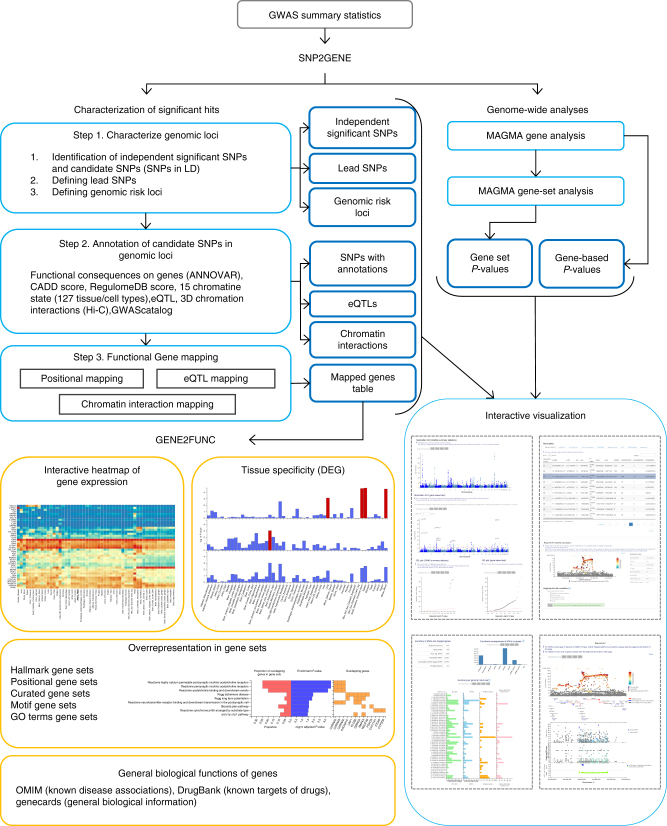
A main challenge in genome-wide association studies (GWAS) is to pinpoint possible causal variants. Results from GWAS typically do not directly translate into causal variants because the majority of hits are in non-coding or intergenic regions, and the presence of linkage disequilibrium leads to effects being statistically spread out across multiple variants. Post-GWAS annotation facilitates the selection of most likely causal variant(s). Multiple resources are available for post-GWAS annotation, yet these can be time consuming and do not provide integrated visual aids for data interpretation. We, therefore, develop FUMA: an integrative web-based platform using information from multiple biological resources to facilitate functional annotation of GWAS results, gene prioritization and interactive visualization. FUMA accommodates positional, expression quantitative trait loci (eQTL) and chromatin interaction mappings, and provides gene-based, pathway and tissue enrichment results. FUMA results directly aid in generating hypotheses that are testable in functional experiments aimed at proving causal relations.
Overview
The claims and statistics of this paper haven’t been checked yet.
Free: it reads the open-access text and checks the first 5 claims that cite a source we can check. Create a free account to check every claim.
Integrity signals
Registry
Cites
Statistics
Figures
Verification
Claims the paper makes
The claims and statistics of this paper haven’t been checked yet.
Free: it reads the open-access text and checks the first 5 claims that cite a source we can check. Create a free account to check every claim.
Claims other papers make about this one
Each is checked against this paper’s own text: does it say what the citing paper says it does?
The cited source says what the claim attributes to it.
In the citing paper
“Independently associated loci from the metaanalysis were defined using FUMA 24 (see URLs), an online platform for functional mapping of genetic variants.”
From Genome-wide association meta-analysis in 269,867 individuals identifies new genetic and functional links to intelligence (2018) · cites this paper as [24]
The check wasn’t confident either way, so it gives no verdict — never disputed.
In the citing paper
“The genetic architecture of fertility showed enrichment for gene expression in brain and ovarian tissues, which is consistent with known biology33,34.”
From Genetic trade-offs in fertility and longevity explain the maintenance of disease-associated alleles in humans (2026) · cites this paper as [33]
Experimental — accuracy not yet measuredIn the citing paper
“While traditional Hi-C guided gene mapping restricts its analysis to genome-wide significant (GWS) loci7, H-MAGMA can leverage signals from sub-threshold loci that explain a significant proportion of heritability8.”
From A computational tool (H-MAGMA) for improved prediction of brain-disorder risk genes by incorporating brain chromatin interaction profiles (2020) · cites this paper as [7]
In the citing paper
“Gene-based analysis using FUMA28, with input SNPs mapped by position to 18,232 protein-coding genes, identified an additional locus for walking (near HP1BP3) and moderate activity (near KCNA6) (Supplementary Data 4).”
From GWAS identifies 14 loci for device-measured physical activity and sleep duration (2018) · cites this paper as [28]
In the citing paper
“Although several databases have been developed to collect eQTL summary statistics from individual studies11–17, these efforts have relied on the heterogeneous set of files provided by the original authors.”
From A compendium of uniformly processed human gene expression and splicing quantitative trait loci (2021) · cites this paper as [13]
Self-check
Percentages, sums and reported differences re-computed from the paper’s own numbers.
The self-check needs the paper’s full text.
Citations
Cites
PLINK: a tool set for whole-genome association and population-based linkage analyses.
Purcell, S., Neale, B., Todd-Brown, K., Thomas, L., Ferreira, M. A. R., Bender, D., Maller, J., Sklar, P., de Bakker, P. I. W., Daly, M. J., et al. (2007) · The American Journal of Human Genetics · doi:10.1086/519795 · Cited by 34,089 · cited 2×
“In FUMA, this task is automated by using pairwise LD ( r 2 ) of SNPs in the reference panel (1000 genomes project phase 3 27 ) pre-computed by PLINK, resulting in a list of independent signi fi cant SNPs, lead SNPs and genomic risk loci based on the GWAS input fi le.”
MethodA global reference for human genetic variation
The 1000 Genomes Project Consortium, authors, C., Auton, A., Abecasis, G. R., Steering committee, Altshuler, D. M., Durbin, R. M., Abecasis, G. R., Bentley, D. R., Chakravarti, A., et al. (2015) · Nature · doi:10.1038/nature15393 · Cited by 18,247 · cited 1×
“In FUMA, this task is automated by using pairwise LD ( r 2 ) of SNPs in the reference panel (1000 genomes project phase 3 27 ) pre-computed by PLINK, resulting in a list of independent signi fi cant SNPs, lead SNPs and genomic risk loci based on the GWAS input fi le.”
MethodAn integrated encyclopedia of DNA elements in the human genome
The ENCODE Project Consortium (2012) · Nature · doi:10.1038/nature11247 · Cited by 18,072
ANNOVAR: functional annotation of genetic variants from high-throughput sequencing data
Wang, K., Li, M., & Hakonarson, H. (2010) · Nucleic Acids Research · doi:10.1093/nar/gkq603 · Cited by 14,621 · cited 3×
“…the independent signi fi cant SNPs are then annotated for functional consequences on gene functions (based on Ensembl genes (build 85) using ANNOVAR 12 ), deleteriousness score (CADD score 13 ), potential regulatory functions (RegulomeDB score 14 and 15-core chromatin state predicted by ChromHMM…”
MethodSudlow, C., Gallacher, J., Allen, N., Beral, V., Burton, P., Danesh, J., Downey, P., Elliott, P., Green, J., Landray, M., et al. (2015) · PLOS Medicine · doi:10.1371/journal.pmed.1001779 · Cited by 12,728 · cited 5×
“9; see Supplementary Note 5 and Supplementary Fig.”
BackgroundMethodResultInfluentialAnalysis of protein-coding genetic variation in 60,706 humans
Exome Aggregation Consortium, Lek, M., Karczewski, K. J., Minikel, E. V., Samocha, K. E., Banks, E., Fennell, T., O’Donnell-Luria, A. H., Ware, J. S., Hill, A. J., et al. (2016) · Nature · doi:10.1038/nature19057 · Cited by 9,587 · cited 1×
“For mapped genes, two scores of intolerance to functional mutations are annotated; probability of being loss-of-function intolerant (pLI) 58 and non-coding residual variation intolerance score (ncRVIS) 59 .”
BackgroundThe Ensembl Variant Effect Predictor
McLaren, W., Gil, L., Hunt, S. E., Riat, H. S., Ritchie, G. R. S., Thormann, A., Flicek, P., & Cunningham, F. (2016) · Genome Biology · doi:10.1186/s13059-016-0974-4 · Cited by 8,099
Biological insights from 108 schizophrenia-associated genetic loci
Schizophrenia Working Group of the Psychiatric Genomics Consortium (2014) · Nature · doi:10.1038/nature13595 · Cited by 7,577 · cited 3×
“We also applied FUMA to the most recent Schizophrenia (SCZ; 36,989 cases and 113,075 controls) GWAS summary statistics 3 , and 128 lead SNPs from 269 independent signi fi cant SNPs across 109 genomic loci were identi fi ed (Supplementary Note 5, Supplementary Fig.”
BackgroundMethodResultMolecular signatures database (MSigDB) 3.0
Liberzon, A., Subramanian, A., Pinchback, R., Thorvaldsdóttir, H., Tamayo, P., & Mesirov, J. P. (2011) · Bioinformatics · doi:10.1093/bioinformatics/btr260 · Cited by 7,111 · cited 3×
“To test for overrepresentation of biological functions, the prioritized genes (or a list of genes of interest) are tested against gene sets obtained from MsigDB (i.e., hallmark gene sets, positional gene sets, curated gene sets, motif gene sets, computational gene sets, GO gene sets, oncogenic signatures, and immunolo…”
MethodIntegrative analysis of 111 reference human epigenomes
Roadmap Epigenomics Consortium, Kundaje, A., Meuleman, W., Ernst, J., Bilenky, M., Yen, A., Heravi-Moussavi, A., Kheradpour, P., Zhang, Z., Wang, J., et al. (2015) · Nature · doi:10.1038/nature14248 · Cited by 6,368
A general framework for estimating the relative pathogenicity of human genetic variants
Kircher, M., Witten, D. M., Jain, P., O'Roak, B. J., Cooper, G. M., & Shendure, J. (2014) · Nature Genetics · doi:10.1038/ng.2892 · Cited by 6,183 · cited 3×
“In the described applications, three mapping strategies were applied to GWAS summary statistics with the following settings: positional mapping was performed by selecting exonic and splicing SNPs with CADD score ≥ 12.37 (de fi ned by Kircher et al. 13 ) to restrict the mapping to deleterious coding SNPs. eQTL mapping w…”
BackgroundMethodInfluentialThe Genotype-Tissue Expression (GTEx) pilot analysis: Multitissue gene regulation in humans
The GTEx Consortium, Ardlie, K. G., Deluca, D. S., Segrè, A. V., Sullivan, T. J., Young, T. R., Gelfand, E. T., Trowbridge, C. A., Maller, J. B., Tukiainen, T., et al. (2015) · Science · doi:10.1126/science.1262110 · Cited by 5,062
Genetic studies of body mass index yield new insights for obesity biology
Study, T. L. C., Locke, A. E., The ADIPOGen Consortium, The AGEN-BMI Working Group, The CARDIOGRAMplusC4D Consortium, The CKDGen Consortium, The, G. L. G. C., The, I. C. B. P., The MAGIC Investigators, The MuTHER Consortium, et al. (2015) · Nature · doi:10.1038/nature14177 · Cited by 4,534 · cited 4×
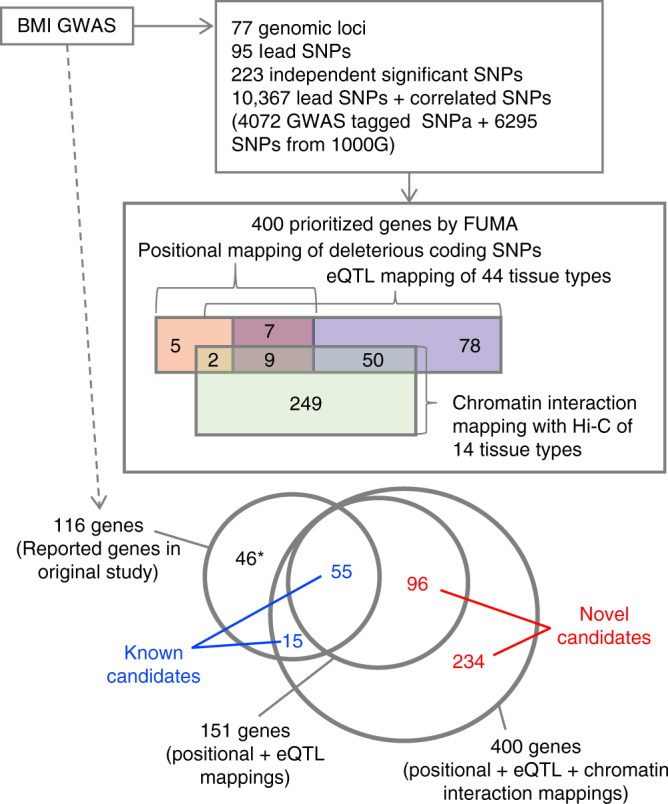
“To validate the utility of FUMA, we applied it to summary statistics of the most recent GWAS for body mass index (BMI; 236,231 individuals) 43 .”
BackgroundMethodInfluentialDrugBank: a comprehensive resource for in silico drug discovery and exploration
Wishart, D. S. (2006) · Nucleic Acids Research · doi:10.1093/nar/gkj067 · Cited by 3,892 · cited 1×
“…pathways, such as nicotinic acetylcholine receptors (nAChR), long-term potentiation and neurotransmitter receptor binding (Supplementary Data 20). nAChR is an important neuron receptor in which one of the subunits alpha-7 ( CHRNA7 ) has been recently studied as a new Schizophrenia drug…”
BackgroundSystematic Localization of Common Disease-Associated Variation in Regulatory DNA
Maurano, M. T., Humbert, R., Rynes, E., Thurman, R. E., Haugen, E., Wang, H., Reynolds, A. P., Sandstrom, R., Qu, H., Brody, J., et al. (2012) · Science · doi:10.1126/science.1222794 · Cited by 3,716 · cited 3×
“Since the input GWAS summary statistics only contained results from the discovery phase, we manually submitted the 71 reported lead SNPs to FUMA in addition to the independent lead SNPs that were identi fi ed as described above (Supplementary Data 7).”
BackgroundMethodInfluentialMAGMA: Generalized Gene-Set Analysis of GWAS Data
de Leeuw, C. A., Mooij, J. M., Heskes, T., & Posthuma, D. (2015) · PLOS Computational Biology · doi:10.1371/journal.pcbi.1004219 · Cited by 3,653
Self-citationAnnotation of functional variation in personal genomes using RegulomeDB
Boyle, A. P., Hong, E. L., Hariharan, M., Cheng, Y., Schaub, M. A., Kasowski, M., Karczewski, K. J., Park, J., Hitz, B. C., Weng, S., et al. (2012) · Genome Research · doi:10.1101/gr.137323.112 · Cited by 2,722 · cited 3×
“8 and Supplementary Data 14 – 17).”
BackgroundMethodThe NHGRI GWAS Catalog, a curated resource of SNP-trait associations
Welter, D., MacArthur, J., Morales, J., Burdett, T., Hall, P., Junkins, H., Klemm, A., Flicek, P., Manolio, T., Hindorff, L., et al. (2014) · Nucleic Acids Research · doi:10.1093/nar/gkt1229 · Cited by 2,707 · cited 1×
“n the past decade, more than 2500 genome-wide association studies (GWAS) have identi fi ed thousands of genetic loci for hundreds of traits 1 .”
BackgroundLocusZoom: regional visualization of genome-wide association scan results
Pruim, R. J., Welch, R. P., Sanna, S., Teslovich, T. M., Chines, P. S., Gliedt, T. P., Boehnke, M., Abecasis, G. R., & Willer, C. J. (2010) · Bioinformatics · doi:10.1093/bioinformatics/btq419 · Cited by 2,707 · cited 1×
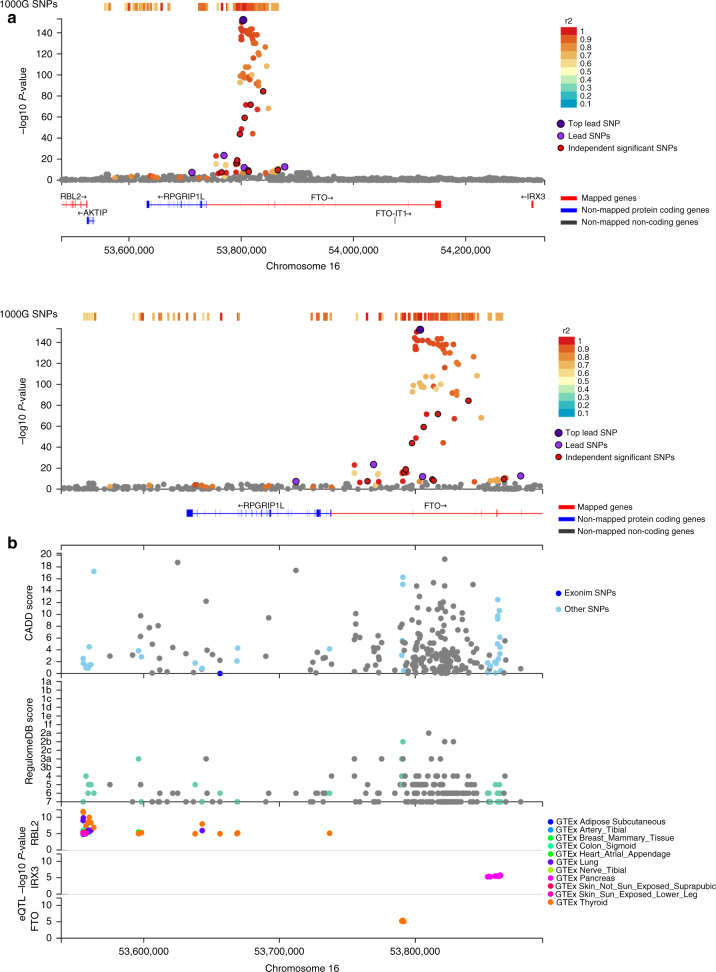
“LocusZoom is one of the most widely used visualization tool for GWAS results which plots LD structure of a risk locus, gene locations as well as SNP association values 40 .”
Amberger, J. S., Bocchini, C. A., Schiettecatte, F., Scott, A. F., & Hamosh, A. (2015) · Nucleic Acids Research · doi:10.1093/nar/gku1205 · Cited by 2,691
Franke, A., McGovern, D. P. B., Barrett, J. C., Wang, K., Radford-Smith, G. L., Ahmad, T., Lees, C. W., Balschun, T., Lee, J., Roberts, R., et al. (2010) · Nature Genetics · doi:10.1038/ng.717 · Cited by 2,520
ChromHMM: automating chromatin-state discovery and characterization
Ernst, J., & Kellis, M. (2012) · Nature Methods · doi:10.1038/nmeth.1906 · Cited by 2,475
Visscher, P. M., Brown, M. A., McCarthy, M. I., & Yang, J. (2012) · The American Journal of Human Genetics · doi:10.1016/j.ajhg.2011.11.029 · Cited by 2,425 · cited 1×
“As a variety of bioinformatics tools have been developed to obtain insights in GWAS results 23 – 25 , we compared the list of features available in FUMA with the features available in other tools, and describe these further below (Table 1).”
MethodCytokines and chemokines: At the crossroads of cell signalling and inflammatory disease
Turner, M. D., Nedjai, B., Hurst, T., & Pennington, D. J. (2014) · Biochimica et Biophysica Acta (BBA) - Molecular Cell Research · doi:10.1016/j.bbamcr.2014.05.014 · Cited by 2,162
The Electronic Medical Records and Genomics (eMERGE) Consortium, Wood, A. R., The MIGen Consortium, The PAGE Consortium, Study, T. L. C., Esko, T., Yang, J., Vedantam, S., Pers, T. H., Gustafsson, S., et al. (2014) · Nature Genetics · doi:10.1038/ng.3097 · Cited by 1,853
Systematic identification of trans eQTLs as putative drivers of known disease associations
Westra, H.-J., Peters, M. J., Esko, T., Yaghootkar, H., Schurmann, C., Kettunen, J., Christiansen, M. W., Fairfax, B. P., Schramm, K., Powell, J. E., et al. (2013) · Nature Genetics · doi:10.1038/ng.2756 · Cited by 1,658
FTO Obesity Variant Circuitry and Adipocyte Browning in Humans
Claussnitzer, M., Dankel, S. N., Kim, K.-H., Quon, G., Meuleman, W., Haugen, C., Glunk, V., Sousa, I. S., Beaudry, J. L., Puviindran, V., et al. (2015) · New England Journal of Medicine · doi:10.1056/nejmoa1502214 · Cited by 1,332
Genome-wide association study identifies 74 loci associated with educational attainment
Okbay, A., Beauchamp, J. P., Fontana, M. A., Lee, J. J., Pers, T. H., Rietveld, C. A., Turley, P., Chen, G.-B., Emilsson, V., Meddens, S. F. W., et al. (2016) · Nature · doi:10.1038/nature17671 · Cited by 1,297
Javierre, B. M., Burren, O. S., Wilder, S. P., Kreuzhuber, R., Hill, S. M., Sewitz, S., Cairns, J., Wingett, S. W., Várnai, C., Thiecke, M. J., et al. (2016) · Cell · doi:10.1016/j.cell.2016.09.037 · Cited by 1,046
Mapping long-range promoter contacts in human cells with high-resolution capture Hi-C
Mifsud, B., Tavares-Cadete, F., Young, A. N., Sugar, R., Schoenfelder, S., Ferreira, L., Wingett, S. W., Andrews, S., Grey, W., Ewels, P. A., et al. (2015) · Nature Genetics · doi:10.1038/ng.3286 · Cited by 990 · cited 1×
“…of biological resources that can aid in the interpretation of GWAS results, such as Hi-C and ChIA-PET, have dramatically increased recently and several studies have identi fi ed novel candidates from GWAS risk loci by integrating their results for example with chromatin interactions 51,54 – 57 .”
BackgroundWard, L. D., & Kellis, M. (2016) · Nucleic Acids Research · doi:10.1093/nar/gkv1340 · Cited by 927 · cited 2×
“Particularly for non-coding SNPs, SCAN 30 , RegulomeDB 14 and HaploReg 31 annotate regulatory information, such as eQTLs, enhancer/promoter regions, and transcription factor binding sites (see Tak and Farnham 32 for extensive overview).”
BackgroundA compendium of chromatin contact maps reveals spatially active regions in the human genome
Schmitt, A. D., Hu, M., Jung, I., Xu, Z., Qiu, Y., Tan, C. L., Li, Y., Lin, S., Lin, Y., Barr, C. L., et al. (2016) · Cell Reports · doi:10.1016/j.celrep.2016.10.061 · Cited by 866 · cited 4×
“FUMA currently contains Hi-C data of 14 tissue types and seven cell lines from the study of Schmitt et al. 11 , yet new chromatin interaction data will be added when it becomes available and FUMA also allows users to upload Click row to display a regional plot of GWAS summary statistics.”
BackgroundMethodInfluentialA Versatile Gene-Based Test for Genome-wide Association Studies
Liu, J. Z., Mcrae, A. F., Nyholt, D. R., Medland, S. E., Wray, N. R., Brown, K. M., Hayward, N. K., Montgomery, G. W., Visscher, P. M., Martin, N. G., et al. (2010) · The American Journal of Human Genetics · doi:10.1016/j.ajhg.2010.06.009 · Cited by 791 · cited 1×
“For instance, VEGAS performs permutation based simulation 33,34 , MAGMA employs multiple linear regression 35 and Pascal computes sum and maximum of chi-squared statistics 36 to obtain gene-based P -values.”
MethodBiological interpretation of genome-wide association studies using predicted gene functions
Pers, T. H., Karjalainen, J. M., Chan, Y., Westra, H.-J., Wood, A. R., Yang, J., Lui, J. C., Vedantam, S., Gustafsson, S., Esko, T., et al. (2015) · Nature Communications · doi:10.1038/ncomms6890 · Cited by 787 · cited 1×
“Additionally, there are several tools that perform not only gene-based test but also gene-set analyses using full distribution of genetic associations (e.g., MAGMA 35 , MAGENTA 37 , INRICH 38 , and DEPICT 39 ).”
MethodBeyond GWASs: Illuminating the Dark Road from Association to Function
Edwards, S. L., Beesley, J., French, J. D., & Dunning, A. M. (2013) · The American Journal of Human Genetics · doi:10.1016/j.ajhg.2013.10.012 · Cited by 784 · cited 1×
“As a variety of bioinformatics tools have been developed to obtain insights in GWAS results 23 – 25 , we compared the list of features available in FUMA with the features available in other tools, and describe these further below (Table 1).”
MethodWinkler, T. W., Justice, A. E., Graff, M., Barata, L., Feitosa, M. F., Chu, S., Czajkowski, J., Esko, T., Fall, T., Kilpeläinen, T. O., et al. (2015) · PLOS Genetics · doi:10.1371/journal.pgen.1005378 · Cited by 662
Genetic variability in the regulation of gene expression in ten regions of the human brain
UK Brain Expression Consortium, Ramasamy, A., North American Brain Expression Consortium, Trabzuni, D., Guelfi, S., Varghese, V., Smith, C., Walker, R., De, T., Coin, L., et al. (2014) · Nature Neuroscience · doi:10.1038/nn.3801 · Cited by 644 · cited 1×
“…mapping of deleterious coding SNPs and eQTL mapping prioritized 84 unique genes of which 36 genes were implicated by deleterious coding SNPs and 65 were implicated by eQTLs in fl uencing expression of these genes (six genes had both deleterious coding SNPs and eQTLs; Supplementary Data 18).”
BackgroundChromosome conformation elucidates regulatory relationships in developing human brain
Won, H., de la Torre-Ubieta, L., Stein, J. L., Parikshak, N. N., Huang, J., Opland, C. K., Gandal, M. J., Sutton, G. J., Hormozdiari, F., Lu, D., et al. (2016) · Nature · doi:10.1038/nature19847 · Cited by 584 · cited 2×
“…receptor in which one of the subunits alpha-7 ( CHRNA7 ) has been recently studied as a new Schizophrenia drug target 52,53 . nAChR was also identi fi ed as enriched pathway in the recent study using Hi-C in human cerebral cortex 51 that suggests potential involvement of nAChR pathway in SCZ risk.”
BackgroundWang, Y., Song, F., Zhang, B., Zhang, L., Xu, J., Kuang, D., Li, D., Choudhary, M. N. K., Li, Y., Hu, M., et al. (2018) · Genome Biology · doi:10.1186/s13059-018-1519-9 · Cited by 568 · cited 3×
“The availability of biological resources that can aid in the interpretation of GWAS results, such as Hi-C and ChIA-PET, have dramatically increased recently and several studies have identi fi ed novel candidates from GWAS risk loci by integrating their results for example with chromatin interactions 51,54 – 57 .”
MethodInfluentialGusev, A., Mancuso, N., Won, H., Kousi, M., Finucane, H. K., Reshef, Y., Song, L., Safi, A., Schizophrenia Working Group of the Psychiatric Genomics Consortium, McCarroll, S., et al. (2018) · Nature Genetics · doi:10.1038/s41588-018-0092-1 · Cited by 491
Segrè, A. V., DIAGRAM Consortium, MAGIC investigators, Groop, L., Mootha, V. K., Daly, M. J., & Altshuler, D. (2010) · PLoS Genetics · doi:10.1371/journal.pgen.1001058 · Cited by 463
Computing the Local Field Potential (LFP) from Integrate-and-Fire Network Models
Mazzoni, A., Lindén, H., Cuntz, H., Lansner, A., Panzeri, S., & Einevoll, G. T. (2015) · PLOS Computational Biology · doi:10.1371/journal.pcbi.1004584 · Cited by 461
WikiPathways: capturing the full diversity of pathway knowledge
Kutmon, M., Riutta, A., Nunes, N., Hanspers, K., Willighagen, E. L., Bohler, A., Mélius, J., Waagmeester, A., Sinha, S. R., Miller, R., et al. (2016) · Nucleic Acids Research · doi:10.1093/nar/gkv1024 · Cited by 417 · cited 2×
“To test for overrepresentation of biological functions, the prioritized genes (or a list of genes of interest) are tested against gene sets obtained from MsigDB (i.e., hallmark gene sets, positional gene sets, curated gene sets, motif gene sets, computational gene sets, GO gene sets, oncogenic signatures, and immunolo…”
MethodIdentification of context-dependent expression quantitative trait loci in whole blood
Zhernakova, D. V., Deelen, P., Vermaat, M., van Iterson, M., van Galen, M., Arindrarto, W., van 't Hof, P., Mei, H., van Dijk, F., Westra, H.-J., et al. (2017) · Nature Genetics · doi:10.1038/ng.3737 · Cited by 416
Bertoia, M. L., Mukamal, K. J., Cahill, L. E., Hou, T., Ludwig, D. S., Mozaffarian, D., Willett, W. C., Hu, F. B., & Rimm, E. B. (2015) · PLOS Medicine · doi:10.1371/journal.pmed.1001878 · Cited by 397
Tak, Y. G., & Farnham, P. J. (2015) · Epigenetics & Chromatin · doi:10.1186/s13072-015-0050-4 · Cited by 356 · cited 1×
“Particularly for non-coding SNPs, SCAN 30 , RegulomeDB 14 and HaploReg 31 annotate regulatory information, such as eQTLs, enhancer/promoter regions, and transcription factor binding sites (see Tak and Farnham 32 for extensive overview).”
BackgroundHormonal Contraception and the Risk of HIV Acquisition: An Individual Participant Data Meta-analysis
Morrison, C. S., Chen, P.-L., Kwok, C., Baeten, J. M., Brown, J., Crook, A. M., Van Damme, L., Delany-Moretlwe, S., Francis, S. C., Friedland, B. A., et al. (2015) · PLOS Medicine · doi:10.1371/journal.pmed.1001778 · Cited by 355
Fast and Rigorous Computation of Gene and Pathway Scores from SNP-Based Summary Statistics
Lamparter, D., Marbach, D., Rueedi, R., Kutalik, Z., & Bergmann, S. (2016) · PLOS Computational Biology · doi:10.1371/journal.pcbi.1004714 · Cited by 324 · cited 1×
“For instance, VEGAS performs permutation based simulation 33,34 , MAGMA employs multiple linear regression 35 and Pascal computes sum and maximum of chi-squared statistics 36 to obtain gene-based P -values.”
MethodVEGAS2: Software for More Flexible Gene-Based Testing
Mishra, A., & Macgregor, S. (2015) · Twin Research and Human Genetics · doi:10.1017/thg.2014.79 · Cited by 257
INRICH: interval-based enrichment analysis for genome-wide association studies
Lee, P. H., O'Dushlaine, C., Thomas, B., & Purcell, S. M. (2012) · Bioinformatics · doi:10.1093/bioinformatics/bts191 · Cited by 238
SCAN: SNP and copy number annotation
Gamazon, E. R., Zhang, W., Konkashbaev, A., Duan, S., Kistner, E. O., Nicolae, D. L., Dolan, M. E., & Cox, N. J. (2010) · Bioinformatics · doi:10.1093/bioinformatics/btp644 · Cited by 229 · cited 2×
“Particularly for non-coding SNPs, SCAN 30 , RegulomeDB 14 and HaploReg 31 annotate regulatory information, such as eQTLs, enhancer/promoter regions, and transcription factor binding sites (see Tak and Farnham 32 for extensive overview).”
Schizophrenia and the α7 Nicotinic Acetylcholine Receptor
Martin, L. F., & Freedman, R. (2007) · International Review of Neurobiology · doi:10.1016/s0074-7742(06)78008-4 · Cited by 213
Martin, P., McGovern, A., Orozco, G., Duffus, K., Yarwood, A., Schoenfelder, S., Cooper, N. J., Barton, A., Wallace, C., Fraser, P., et al. (2015) · Nature Communications · doi:10.1038/ncomms10069 · Cited by 213
α7-Nicotinic Acetylcholine Receptor Agonists for Cognitive Enhancement in Schizophrenia
Freedman, R. (2014) · Annual Review of Medicine · doi:10.1146/annurev-med-092112-142937 · Cited by 155
The Intolerance of Regulatory Sequence to Genetic Variation Predicts Gene Dosage Sensitivity
Petrovski, S., Gussow, A. B., Wang, Q., Halvorsen, M., Han, Y., Weir, W. H., Allen, A. S., & Goldstein, D. B. (2015) · PLOS Genetics · doi:10.1371/journal.pgen.1005492 · Cited by 130
Translating genome-wide association findings into new therapeutics for psychiatry
Breen, G., Li, Q., Roth, B. L., O'Donnell, P., Didriksen, M., Dolmetsch, R., O'Reilly, P. F., Gaspar, H. A., Manji, H., Huebel, C., et al. (2016) · Nature Neuroscience · doi:10.1038/nn.4411 · Cited by 118
Self-citationWang, Y., Zhang, B., Zhang, L., et al. (2017) · bioRxiv (Cold Spring Harbor Laboratory) · doi:10.1101/112268 · Cited by 118
A review of post-GWAS prioritization approaches
Hou, L., & Zhao, H. (2013) · Frontiers in Genetics · doi:10.3389/fgene.2013.00280 · Cited by 105 · cited 1×
“There are several tools such as ANNOVAR 12 and VEP 28 which annotate functional consequences on genes, and variant scores such as deleteriousness and phylogenetic conservations (extensive review is available in Hou and Zhang 29 ).”
MethodMcGovern, A., Schoenfelder, S., Martin, P., Massey, J., Duffus, K., Plant, D., Yarwood, A., Pratt, A. G., Anderson, A. E., Isaacs, J. D., et al. (2016) · Genome Biology · doi:10.1186/s13059-016-1078-x · Cited by 95
Post-GWAS: where next? More samples, more SNPs or more biology?
Marjoram, P., Zubair, A., & Nuzhdin, S. V. (2014) · Heredity · doi:10.1038/hdy.2013.52 · Cited by 74
Gusev, A., Mancuso, N., Finucane, H. K., Reshef, Y., Song, L., Safi, A., Oh, E., Schizophrenia Working Group of the Psychiatric Genomics Consortium, McCarroll, S., Neale, B., et al. (2016) · bioRxiv (Cold Spring Harbor Laboratory) · doi:10.1101/067355 · Cited by 66
Gigante, G., Deco, G., Marom, S., & Del Giudice, P. (2015) · PLOS Computational Biology · doi:10.1371/journal.pcbi.1004547 · Cited by 64
CNV Concordance in 1,097 MZ Twin Pairs
Abdellaoui, A., Ehli, E. A., Hottenga, J., Weber, Z. M., Mbarek, H., Willemsen, G. A. H. M., van Beijsterveldt, T., Brooks, A. I., Hudziak, J. J., Sullivan, P. F., et al. (2015) · Twin Research and Human Genetics · doi:10.1017/thg.2014.86 · Cited by 49
Braat, H., Peppelenbosch, M. P., & Hommes, D. W. (2006) · Annals of the New York Academy of Sciences · doi:10.1196/annals.1326.039 · Cited by 48
Raza, S. T., Abbas, S., Ahmad, A., Ahmed, F., Zaidi Zeeshan, H., & Mahdi, F. (2014) · Balkan Journal of Medical Genetics · doi:10.2478/bjmg-2014-0027 · Cited by 41 · cited 1×
“The 400 prioritized genes showed enrichment in 9 GO terms, such as “ response to zinc ion ” and “ oligopeptide binding ” overlapping with multiple metallothionein and glutathione S-Transferase genes whose association with obesity risk has been reported 45,46 (Supplementary Data 6).”
BackgroundLocusTrack: Integrated visualization of GWAS results and genomic annotation
Cuellar-Partida, G., Renteria, M. E., & MacGregor, S. (2015) · Source Code for Biology and Medicine · doi:10.1186/s13029-015-0032-8 · Cited by 38 · cited 1×
“LocusTrack is an extension of LocusZoom which also plots additional information together such as Chip-seq and chromatin state 41 .”
MethodSatô, M., Kawakami, T., Kadota, Y., Mori, M., & Suzuki, S. (2013) · Current Pharmaceutical Biotechnology · doi:10.2174/1389201011314040008 · Cited by 14 · cited 1×
“The 400 prioritized genes showed enrichment in 9 GO terms, such as “ response to zinc ion ” and “ oligopeptide binding ” overlapping with multiple metallothionein and glutathione S-Transferase genes whose association with obesity risk has been reported 45,46 (Supplementary Data 6).”
Background
Cited by
CADD: predicting the deleteriousness of variants throughout the human genome
Rentzsch, P., Witten, D., Cooper, G. M., Shendure, J., & Kircher, M. (2019) · Nucleic Acids Research · doi:10.1093/nar/gky1016 · Cited by 3,534
Alzheimer Disease Genetics Consortium (ADGC), Kunkle, B. W., The European Alzheimer’s Disease Initiative (EADI), Cohorts for Heart and Aging Research in Genomic Epidemiology Consortium (CHARGE), Genetic and Environmental Risk in AD/Defining Genetic, P. A. E. R. F. A. D. C. (., Grenier-Boley, B., Sims, R., Bis, J. C., Damotte, V., Naj, A. C., et al. (2019) · Nature Genetics · doi:10.1038/s41588-019-0358-2 · Cited by 2,946
Nalls, M. A., Blauwendraat, C., Vallerga, C. L., Heilbron, K., Bandres-Ciga, S., Chang, D., Tan, M., Kia, D. A., Noyce, A. J., Xue, A., et al. (2019) · The Lancet Neurology · doi:10.1016/s1474-4422(19)30320-5 · Cited by 2,454
Jansen, I. E., Savage, J. E., Watanabe, K., Bryois, J., Williams, D. M., Steinberg, S., Sealock, J., Karlsson, I. K., Hägg, S., Athanasiu, L., et al. (2019) · Nature Genetics · doi:10.1038/s41588-018-0311-9 · Cited by 2,277
Self-citationGenome-wide association studies
Uffelmann, E., Huang, Q. Q., Munung, N. S., de Vries, J., Okada, Y., Martin, A. R., Martin, H. C., Lappalainen, T., & Posthuma, D. (2021) · Nature Reviews Methods Primers · doi:10.1038/s43586-021-00056-9 · Cited by 1,849
Self-citation
Metadata
- Authors
- Watanabe, K., Taskesen, E., van Bochoven, A., & Posthuma, D.
- Affiliations
- Vrije Universiteit Amsterdam (NL)
- Venue
- Nature Communications
- Published
- 2017-11-28
- Volume
- 8
- Issue
- 1
- Pages
- 1826-1826
- ISSN
- 2041-1723 (ISSN-L)
- PMC
- PMC5705698
- OpenAlex
- W2770092353
- Cited by
- 4,083
- References
- 66
- Citations by year
- 2026: 522 · 2025: 740 · 2024: 715 · 2023: 543 · 2022: 530 · 2021: 435 · 2020: 277 · 2019: 213 · 2018: 97 · 2017: 8
- FWCI
- 66.54
- Type
- journal article
- Language
- en
- Open access
- gold
- doi.org
- Licence
- cc-by
- creativecommons.org/licenses/by/4.0 (tdm)
- creativecommons.org/licenses/by/4.0 (vor)
- Locations
- Nature Communications (publishedVersion, cc-by)
- bioRxiv (Cold Spring Harbor Laboratory) (acceptedVersion, cc-by-nc-nd)
- Europe PMC (PubMed Central) (publishedVersion, cc-by)
- PubMed Central (publishedVersion, cc-by)
- PubMed (publishedVersion)
- Pure Amsterdam UMC (publishedVersion, other-oa)
- Amsterdam UMC (VU Amsterdam) - Institutional Repository (publishedVersion)
- VU Research Portal (publishedVersion, other-oa)
- RePEc: Research Papers in Economics (submittedVersion)
- DOAJ (DOAJ: Directory of Open Access Journals) (submittedVersion, cc-by-sa)
- DOAJ (DOAJ: Directory of Open Access Journals) (submittedVersion)
- Data Archiving and Networked Services (DANS) (submittedVersion, other-oa)
- Data Archiving and Networked Services (DANS) (submittedVersion)
- Funders
- Nederlandse Organisatie voor Wetenschappelijk Onderzoek (VICI 453-14-005, NWO VICI 453-14-005, 453-13-005, 453-14-005)
- Lundbeckfonden (R155-2014-1724)
- Topics
- Life Sciences › Biochemistry, Genetics and Molecular Biology › Molecular Biology › Bioinformatics and Genomic Networks
- Life Sciences › Biochemistry, Genetics and Molecular Biology › Genetics › Genetic Associations and Epidemiology
- Life Sciences › Biochemistry, Genetics and Molecular Biology › Genetics › Genetic Mapping and Diversity in Plants and Animals
- Keywords
- FUMA, causal variant identification, functional annotation, gene prioritization, expression quantitative trait loci, chromatin interactions, pathway enrichment, web-based annotation platform, linkage disequilibrium
- MeSH terms
- Chromatin, Chromosome Mapping, Crohn Disease, Humans, Linkage Disequilibrium, Genome, Human, Computational Biology, Genetic Predisposition to Disease, Internet, Databases, Genetic, Quantitative Trait Loci, Genome-Wide Association Study, Molecular Sequence Annotation
About these checks
Registry, retraction, Cites and statistics results are computed, not judged, with one exception: a printed reference that no index lists is read once by a model before it counts as a citation error. Claims are extracted by a model and kept only when their quote appears verbatim in the text; each cited source is then checked, with a model’s help, for whether it says what the claim relies on. Those verdicts can be wrong — read the claim’s quote and the cited source before relying on one.
Statistics and arithmetic are recomputed, not judged.
Confidence bands are shown only for fields calibrated on our annotated test set. None is calibrated yet, so no band is shown.
What counts as a claim ›How we measure confidence ›How we check this ›
Are you an author, or do you see a problem with this page? Request a review
Data sources
Bibliographic data: Semantic Scholar, OpenAlex, Crossref.
Contains information from the Semantic Scholar Academic Graph Datasets, made available under the ODC Attribution License (ODC-BY 1.0).
Semantic Scholar’s data is described in: Kinney, R., et al. (2023). The Semantic Scholar Open Data Platform. arXiv:2301.10140.
