

Stress-responsive FKBP51 regulates AKT2-AS160 signaling and metabolic function
Open accessThe DOI matches its Crossref record; 59 of the 59 references it cites were found in a registry or an index.
Abstract
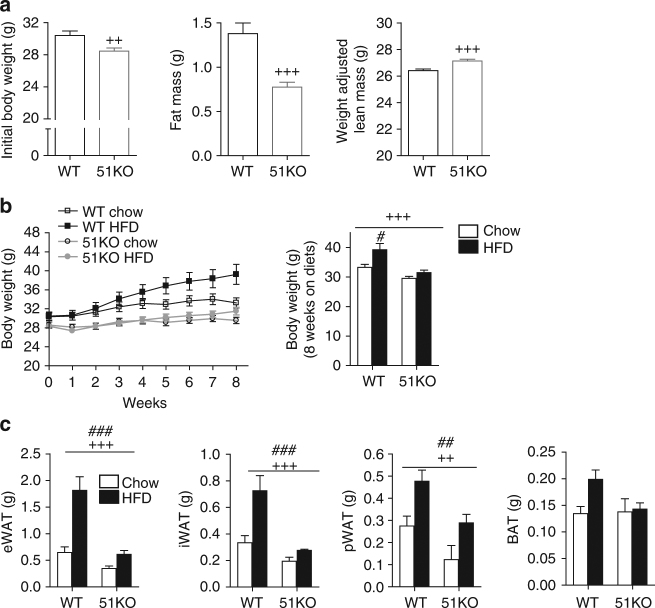
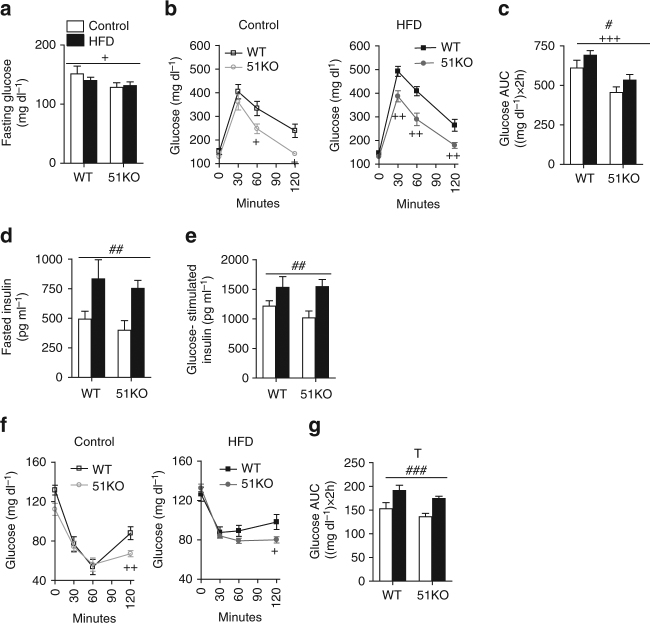
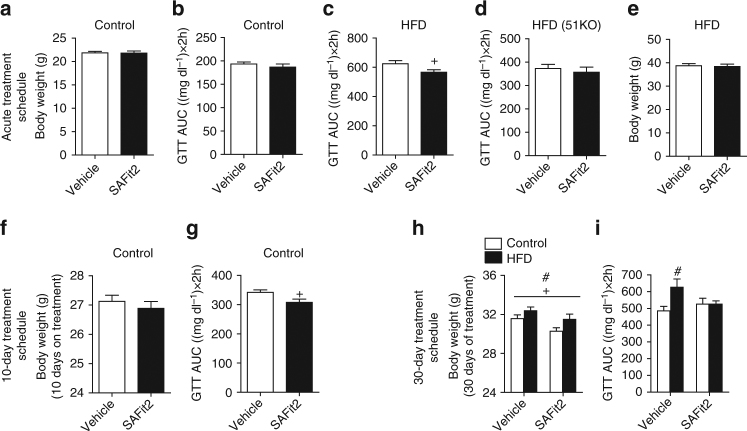
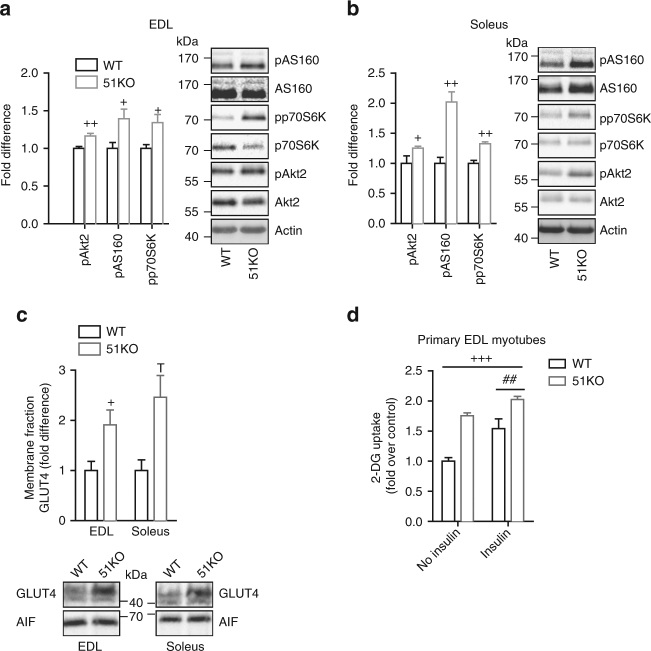
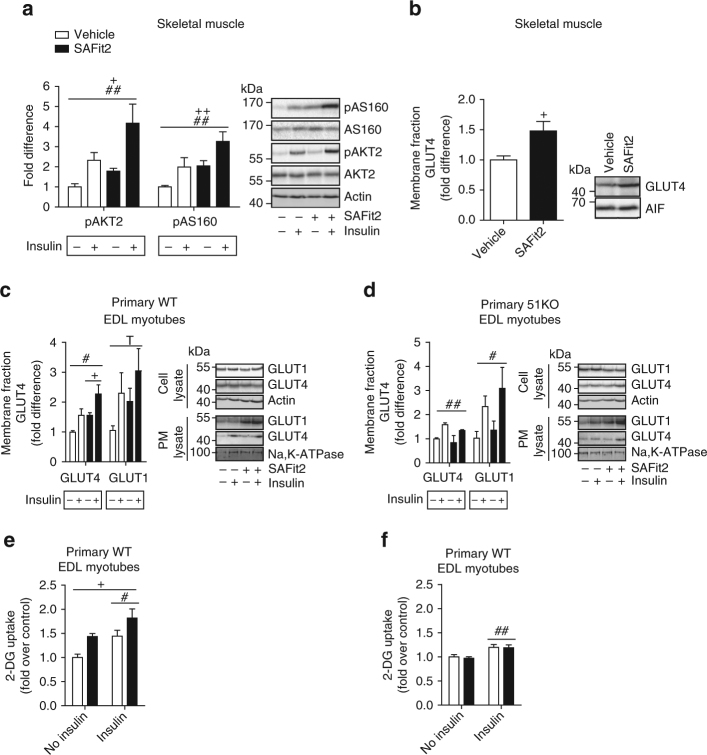
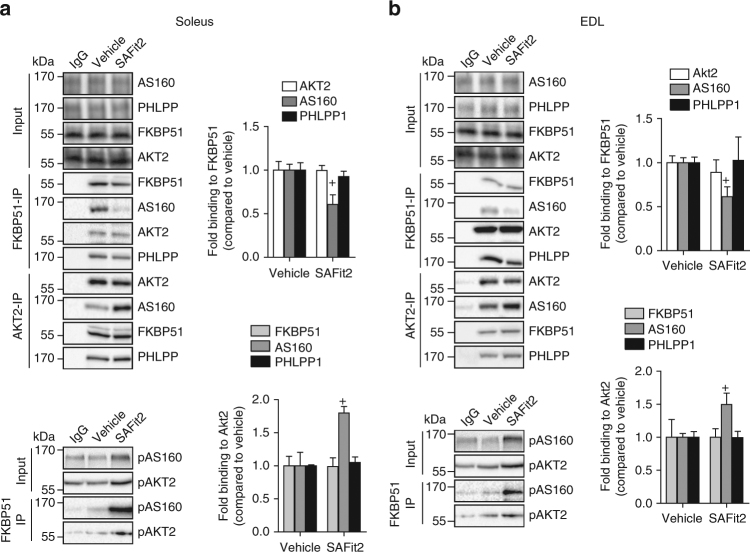
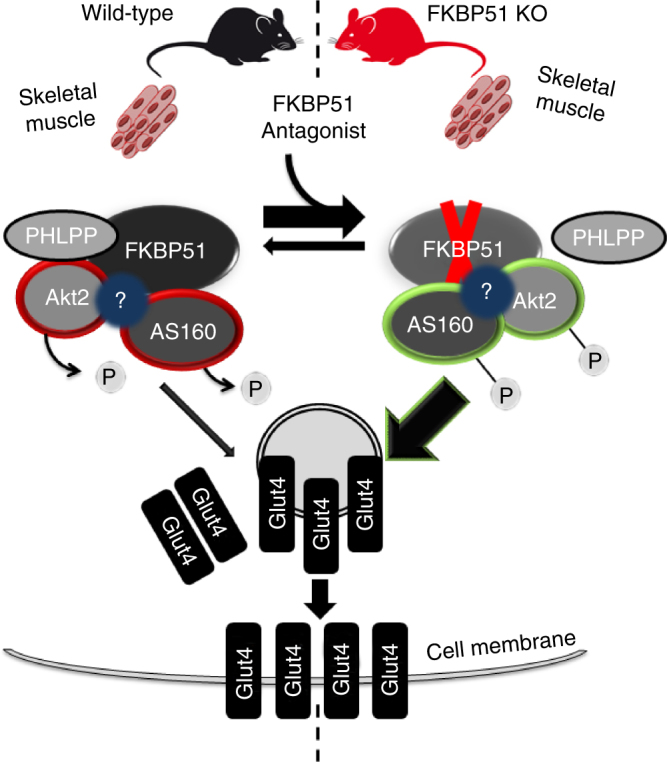
The co-chaperone FKBP5 is a stress-responsive protein-regulating stress reactivity, and its genetic variants are associated with T2D related traits and other stress-related disorders. Here we show that FKBP51 plays a role in energy and glucose homeostasis. Fkbp5 knockout (51KO) mice are protected from high-fat diet-induced weight gain, show improved glucose tolerance and increased insulin signaling in skeletal muscle. Chronic treatment with a novel FKBP51 antagonist, SAFit2, recapitulates the effects of FKBP51 deletion on both body weight regulation and glucose tolerance. Using shorter SAFit2 treatment, we show that glucose tolerance improvement precedes the reduction in body weight. Mechanistically, we identify a novel association between FKBP51 and AS160, a substrate of AKT2 that is involved in glucose uptake. FKBP51 antagonism increases the phosphorylation of AS160, increases glucose transporter 4 expression at the plasma membrane, and ultimately enhances glucose uptake in skeletal myotubes. We propose FKBP51 as a mediator between stress and T2D development, and potential target for therapeutic approaches.
Overview
The claims and statistics of this paper haven’t been checked yet.
Free: it reads the open-access text and checks the first 5 claims that cite a source we can check. Create a free account to check every claim.
Integrity signals
Registry
Cites
Statistics
Figures
Verification
Claims the paper makes
The claims and statistics of this paper haven’t been checked yet.
Free: it reads the open-access text and checks the first 5 claims that cite a source we can check. Create a free account to check every claim.
Self-check
Percentages, sums and reported differences re-computed from the paper’s own numbers.
The self-check needs the paper’s full text.
Citations
Cites
2 retracted
Kim, D., Sun, M., He, L., Zhou, Q.-H., Chen, J., Sun, X.-M., Bepler, G., Sebti, S. M., & Cheng, J. Q. (2010) · Journal of Biological Chemistry · doi:10.1074/jbc.m109.094060 · Cited by 55
RetractedKim, D., Sun, M., He, L., Zhou, Q., Chen, J., Sun, X.-M., Bepler, G., Sebti, S. M., & Cheng, J. Q. (2016) · Journal of Biological Chemistry · doi:10.1074/jbc.a109.094060 · Cited by 6
RetractedA gene atlas of the mouse and human protein-encoding transcriptomes
Su, A. I., Wiltshire, T., Batalov, S., Lapp, H., Ching, K. A., Block, D., Zhang, J., Soden, R., Hayakawa, M., Kreiman, G., et al. (2004) · Proceedings of the National Academy of Sciences · doi:10.1073/pnas.0400782101 · Cited by 3,475
Critical nodes in signalling pathways: insights into insulin action
Taniguchi, C. M., Emanuelli, B., & Kahn, C. R. (2006) · Nature Reviews Molecular Cell Biology · doi:10.1038/nrm1837 · Cited by 2,760
Cho, H., Mu, J., Kim, J. K., Thorvaldsen, J. L., Chu, Q., Crenshaw, E. B., Kaestner, K. H., Bartolomei, M. S., Shulman, G. I., & Birnbaum, M. J. (2001) · Science · doi:10.1126/science.292.5522.1728 · Cited by 1,836
Allele-specific FKBP5 DNA demethylation mediates gene–childhood trauma interactions
Klengel, T., Mehta, D., Anacker, C., Rex-Haffner, M., Pruessner, J. C., Pariante, C. M., Pace, T. W. W., Mercer, K. B., Mayberg, H. S., Bradley, B., et al. (2013) · Nature Neuroscience · doi:10.1038/nn.3275 · Cited by 1,447
Self-citationBinder, E. B. (2008) · JAMA · doi:10.1001/jama.299.11.1291 · Cited by 1,362
DeFronzo, R. A., Gunnarsson, R., Björkman, O., Olsson, M., & Wahren, J. (1985) · Journal of Clinical Investigation · doi:10.1172/jci111938 · Cited by 1,167
Insulin-stimulated Phosphorylation of a Rab GTPase-activating Protein Regulates GLUT4 Translocation
Sano, H., Kane, S., Sano, E., Mı̂inea, C. P., Asara, J. M., Lane, W. S., Garner, C. W., & Lienhard, G. E. (2003) · Journal of Biological Chemistry · doi:10.1074/jbc.c300063200 · Cited by 962
Cho, H., Thorvaldsen, J. L., Chu, Q., Feng, F., & Birnbaum, M. J. (2001) · Journal of Biological Chemistry · doi:10.1074/jbc.c100462200 · Cited by 959
Cited by
Substance P and pain chronicity
Zieglgänsberger, W. (2019) · Cell and Tissue Research · doi:10.1007/s00441-018-2922-y · Cited by 276
Hypothalamic–pituitary–adrenal axis and stress
(2020) · Handbook of Clinical Neurology · doi:10.1016/b978-0-444-64123-6.00004-7 · Cited by 382
Is the HPA Axis as Target for Depression Outdated, or Is There a New Hope?
Menke, A. (2019) · Frontiers in Psychiatry · doi:10.3389/fpsyt.2019.00101 · Cited by 240
Matosin, N., Halldorsdottir, T., & Binder, E. B. (2018) · Biological Psychiatry · doi:10.1016/j.biopsych.2018.01.021 · Cited by 226
FKBP Ligands—Where We Are and Where to Go?
Kolos, J. M., Voll, A. M., Bauder, M., & Hausch, F. (2018) · Frontiers in Pharmacology · doi:10.3389/fphar.2018.01425 · Cited by 158
“Furthermore, FKBP51-knockout mice displayed a resistance to weight gain under both regular and high-fat diets and an improved glucose tolerance (Stechschulte et al., 2016; Balsevich et al., 2017).”
BackgroundSelf-citationThe HPA Axis as Target for Depression
Menke, A. (2024) · Current Neuropharmacology · doi:10.2174/1570159x21666230811141557 · Cited by 131
“In addition, SAFit1 and SAFit2 could also improve metabolic function and glucose homeostasis [127].”
BackgroundHähle, A., Merz, S., Meyners, C., & Hausch, F. (2019) · Biomolecules · doi:10.3390/biom9010035 · Cited by 119
“(AS160) was coimmunoprecipitated along with FKBP51, Akt and PHLPP [41].”
BackgroundSelf-citationInjectable Lipid-Based Depot Formulations: Where Do We Stand?
Rahnfeld, L., & Luciani, P. (2020) · Pharmaceutics · doi:10.3390/pharmaceutics12060567 · Cited by 125
Martinez, G. J., Appleton, M., Kipp, Z. A., Loria, A. S., Min, B., & Hinds, T. D. (2023) · Physiological Reviews · doi:10.1152/physrev.00021.2023 · Cited by 118
Sidibeh, C. O., Pereira, M. J., Abalo, X. M., J. Boersma, G., Skrtic, S., Lundkvist, P., Katsogiannos, P., Hausch, F., Castillejo-López, C., & Eriksson, J. W. (2018) · Endocrine · doi:10.1007/s12020-018-1674-5 · Cited by 104
Self-citationAnnett, S., Moore, G., & Robson, T. (2020) · Pharmacology & Therapeutics · doi:10.1016/j.pharmthera.2020.107623 · Cited by 112
The impact of chronic stress on energy metabolism
van der Kooij, M. A. (2020) · Molecular and Cellular Neuroscience · doi:10.1016/j.mcn.2020.103525 · Cited by 97
FKBP51 and the molecular chaperoning of metabolism
Smedlund, K., Sánchez, E. R., & Hinds, T. D. (2021) · Trends in Endocrinology and Metabolism · doi:10.1016/j.tem.2021.08.003 · Cited by 81
Modulating FKBP5/FKBP51 and autophagy lowers HTT (huntingtin) levels
Bailus, B. J., Scheeler, S. M., Simons, J., Sanchez, M. A., Tshilenge, K., Creus‐Muncunill, J., Naphade, S. B., Lopez‐Ramirez, A., Zhang, N., Madushani, K. L., et al. (2021) · Autophagy · doi:10.1080/15548627.2021.1904489 · Cited by 78
“SAFit2 is a promising pharmacological agent that inhibits FKBP5 and modulates stress responses [16,45].”
BackgroundSelf-citationFocus on FKBP51: A molecular link between stress and metabolic disorders
Häusl, A. S., Balsevich, G., Gassen, N. C., & Schmidt, M. V. (2019) · Molecular Metabolism · doi:10.1016/j.molmet.2019.09.003 · Cited by 82
“In addition, an effect of UCP1 and consequently browning of white AKT2 in the insulin signaling pathway, ultimately modulating cellular glucose uptake [4].”
BackgroundInfluentialSelf-citationMaiarù, M., Morgan, O. B., Mao, T., Breitsamer, M., Bamber, H., Pöhlmann, M., Schmidt, M. V., Winter, G., Hausch, F., & Géranton, S. M. (2018) · Pain · doi:10.1097/j.pain.0000000000001204 · Cited by 62
“To reduce animal stress and improve the efficacy of the drug treatment, we explored a state-of-the art method of sustained release of FKBP51 using VPGs.(1) Here, SAFit2-VPG was injected subcutaneously 5 days (Fig.”
InfluentialSelf-citationChemogenomic Profiling of Human and Microbial FK506-Binding Proteins
Pomplun, S., Sippel, C., Hähle, A., Tay, D., Shima, K., Klages, A., Ünal, C. M., Rieß, B., Toh, H. T., Hansen, G., et al. (2018) · Journal of Medicinal Chemistry · doi:10.1021/acs.jmedchem.8b00137 · Cited by 62
Self-citationKamble, P. G., Hetty, S., Vranic, M., Almby, K. E., Castillejo-López, C., Abalo, X. M., Pereira, M. J., & Eriksson, J. W. (2020) · Scientific Reports · doi:10.1038/s41598-020-67293-y · Cited by 65
Structure-Based Design of High-Affinity Macrocyclic FKBP51 Inhibitors
Bauder, M., Meyners, C., Purder, P. L., Merz, S., Sugiarto, W. O., Voll, A. M., Heymann, T., & Hausch, F. (2021) · Journal of Medicinal Chemistry · doi:10.1021/acs.jmedchem.0c02195 · Cited by 53
Self-citationChildhood trauma, the stress response and metabolic syndrome: A focus on DNA methylation
Womersley, J. S., Nöthling, J., Toikumo, S., Malan‐Müller, S., van den Heuvel, L. L., McGregor, N. W., Seedat, S., & Hemmings, S. M. J. (2021) · European Journal of Neuroscience · doi:10.1111/ejn.15370 · Cited by 60
“Both genetic and pharmacological inhibition of FKBP5 in mice reduced high fat dietinduced increases in body and white fat mass, lowered fasting glucose and increased uptake and prolonged sensitivity in glucose and insulin tolerance tests, respectively (Balsevich et al., 2017).”
BackgroundUpregulation of WDR6 drives hepatic de novo lipogenesis in insulin resistance in mice
Yao, Z., Gong, Y., Chen, W., Shao, S., Song, Y., Guo, H., Li, Q., Liu, S., Wang, X., Zhang, Z., et al. (2023) · Nature Metabolism · doi:10.1038/s42255-023-00896-7 · Cited by 48
“The phosphorylation of AKT, a key readout of the insulin signalling pathway 21 , showed decreased response to insulin, indicating resistance to insulin (Fig.”
BackgroundTargeting glucocorticoid receptor signaling pathway for treatment of stress-related brain disorders
Göver, T., & Ślęzak, M. (2024) · Pharmacological Reports · doi:10.1007/s43440-024-00654-w · Cited by 49
Pöhlmann, M. L., Häusl, A. S., Harbich, D., Balsevich, G., Engelhardt, C., Feng, X., Breitsamer, M., Hausch, F., Winter, G., & Schmidt, M. V. (2018) · Frontiers in Behavioral Neuroscience · doi:10.3389/fnbeh.2018.00262 · Cited by 41
“In addition, FKBP51 has been shown to regulate several protein-protein interactions important for cellular function, which may be affected by SAFit2 treatment (Gassen et al., 2015; Balsevich et al., 2017).”
BackgroundMethodSelf-citationKusumanchi, P., Liang, T., Zhang, T., Ross, R. A., Han, S., Chandler, K., Oshodi, A., Jiang, Y., Dent, A. L., Skill, N. J., et al. (2021) · Hepatology · doi:10.1002/hep.31800 · Cited by 41
“(42) The use of this antagonist recapitulated the effects of FKBP51 deletion on body weight regulation and glucose tolerance.(14) It will be of interest to determine the effect of these selective inhibitors in the mouse models of ALD.”
BackgroundInfluentialGeiger, T. M., Walz, M., Meyners, C., Kuehn, A., Dreizler, J. K., Sugiarto, W. O., Maciel, E. V. S., Zheng, M. J., Lermyte, F., & Hausch, F. (2023) · Angewandte Chemie International Edition · doi:10.1002/anie.202309706 · Cited by 41
Self-citationInhibition of FKBP51 induces stress resilience and alters hippocampal neurogenesis
Codagnone, M. G., Kara, N. Z., Ratsika, A., Levone, B. R., van de Wouw, M., Tan, L. A., Cunningham, J. I., Sánchez, C., Cryan, J. F., & O’Leary, O. F. (2022) · Molecular Psychiatry · doi:10.1038/s41380-022-01755-9 · Cited by 49
“[52], chronic SAFit2 had no effect in the light-dark box test or the forced swim test.”
BackgroundBreitsamer, M., & Winter, G. (2018) · International Journal of Pharmaceutics · doi:10.1016/j.ijpharm.2018.12.030 · Cited by 37
Self-citationMacrocyclic FKBP51 Ligands Define a Transient Binding Mode with Enhanced Selectivity
Voll, A. M., Meyners, C., Taubert, M. C., Bajaj, T., Heymann, T., Merz, S., Charalampidou, A., Kolos, J., Purder, P. L., Geiger, T. M., et al. (2021) · Angewandte Chemie International Edition · doi:10.1002/anie.202017352 · Cited by 34
Self-citationKönig, L., Kalinichenko, L. S., Huber, S. E., Voll, A. M., Bauder, M., Kornhuber, J., Hausch, F., & Müller, C. P. (2019) · Addiction Biology · doi:10.1111/adb.12758 · Cited by 35
“Animals were injected (ip) immediately before each trial with either saline or 2 g/kg alcohol (ip), a dose which has no sedative effects and which was previously shown to have efficient reinforcing effects in WT mice.(33,36) Thereafter, mice”
BackgroundMethodSelf-citationMediobasal hypothalamic FKBP51 acts as a molecular switch linking autophagy to whole-body metabolism
Häusl, A. S., Bajaj, T., Brix, L. M., Pöhlmann, M. L., Hafner, K., Angelis, M. D., Nagler, J., Dethloff, F., Balsevich, G., Schramm, K., et al. (2022) · Science Advances · doi:10.1126/sciadv.abi4797 · Cited by 27
Self-citationDownregulation of FKBP5 Promotes Atrial Arrhythmogenesis
Wang, X., Song, J., Yuan, Y., Li, L., Abu-Taha, I., Heijman, J., Sun, L. T., Dobrev, S., Kamler, M., Xie, L., et al. (2023) · Circulation Research · doi:10.1161/circresaha.122.322213 · Cited by 31
Cooperative actions of Tbc1d1 and AS160/Tbc1d4 in GLUT4-trafficking activities
Hatakeyama, H., Morino, T., Ishii, T., & Kanzaki, M. (2018) · Journal of Biological Chemistry · doi:10.1074/jbc.ra118.004614 · Cited by 27
Selective Inhibitors of FKBP51 Employ Conformational Selection of Dynamic Invisible States
Jagtap, P. K. A., Asami, S., Sippel, C., Kaila, V. R. I., Hausch, F., & Sattler, M. (2019) · Angewandte Chemie International Edition · doi:10.1002/anie.201902994 · Cited by 27
Self-citationThe inhibition of FKBP5 protects β-cell survival under inflammation stress via AKT/FOXO1 signaling
Liu, N., Li, R., Cao, J., Song, X., Ma, W., Liu, T., Wang, L., Zou, J., Zhang, B., Liu, Z., et al. (2023) · Cell Death Discovery · doi:10.1038/s41420-023-01506-x · Cited by 29
Cruz, B., Vozella, V., Carper, B. A., Xu, J. C., Kirson, D., Hirsch, S., Nolen, T., Bradley, L., Fain, K., Crawford, M., et al. (2023) · Neuropsychopharmacology · doi:10.1038/s41386-022-01497-w · Cited by 25
“Furthermore, SAFit2 modulates other non-GR actions of FKBP5 suggesting modulation of PTSD/AUD via non-direct GR mechanisms [56, 57].”
BackgroundStructure-Based Discovery of a New Selectivity-Enabling Motif for the FK506-Binding Protein 51
Knaup, F. H., Meyners, C., Sugiarto, W. O., Wedel, S., Springer, M., Walz, C., Geiger, T. M., Schmidt, M. V., Sisignano, M., & Hausch, F. (2023) · Journal of Medicinal Chemistry · doi:10.1021/acs.jmedchem.3c00249 · Cited by 28
Self-citationGan, Y., Lin, W.-J., Fang, Y.-C., Tang, C., Lee, Y., & Jeng, C. (2024) · Life Sciences · doi:10.1016/j.lfs.2024.122867 · Cited by 28
Chemical systems biology reveals mechanisms of glucocorticoid receptor signaling
Bruno, N. E., Nwachukwu, J. C., Srinivasan, S., Nettles, C. C., Izard, T., Jin, Z., Nowak, J., Cameron, M. D., Boregowda, S. V., Phinney, D. G., et al. (2021) · Nature Chemical Biology · doi:10.1038/s41589-020-00719-w · Cited by 26
Gans, I. M., Grendler, J., Babich, R., Jayasundara, N., & Coffman, J. A. (2021) · Frontiers in Cell and Developmental Biology · doi:10.3389/fcell.2021.727037 · Cited by 28
Analysis of the Selective Antagonist SAFit2 as a Chemical Probe for the FK506-Binding Protein 51
Buffa, V., Knaup, F. H., Heymann, T., Springer, M., Schmidt, M. V., & Hausch, F. (2023) · ACS Pharmacology & Translational Science · doi:10.1021/acsptsci.2c00234 · Cited by 26
Self-citationBaischew, A., Engel, S., Taubert, M. C., Geiger, T. M., & Hausch, F. (2023) · Nature Structural & Molecular Biology · doi:10.1038/s41594-023-01098-1 · Cited by 22
“Conversely, FKBP51-knockout mice were protected from diet-induced obesity 6,7 or various forms of chronic pain 8 and displayed enhanced coping behavior against stress 9,10 .”
Self-citationAgam, G., Atawna, B., Damri, O., & Azab, A. N. (2024) · Cells · doi:10.3390/cells13100801 · Cited by 27
“Concerning T2DM, Balsevich and colleagues [32] demonstrated that FKBP51 antagonism enhanced glucose tolerance, with weight loss being a secondary factor.”
BackgroundMulti-Omics Analysis of the Expression and Prognosis for FKBP Gene Family in Renal Cancer
Sun, Z., Qin, X., Fang, J., Tang, Y., & Fan, Y. (2021) · Frontiers in Oncology · doi:10.3389/fonc.2021.697534 · Cited by 25
“SNPs in the FKBP5 gene, which cause the high expression of FKBP5, have been fundamentally linked to stress-related disorders, especially in psychiatric disorders (34, 35).”
BackgroundDNA methylation of FKBP5 in South African women: associations with obesity and insulin resistance
Willmer, T., Goedecke, J. H., Dias, S. C., Louw, J., & Pheiffer, C. (2020) · Clinical Epigenetics · doi:10.1186/s13148-020-00932-3 · Cited by 22
“Indeed, preclinical studies using animal models have demonstrated that deletion of the FKBP5 gene protects mice from diet-induced obesity and hepatic steatosis, and pharmacological inhibition of FKBP5 improves their metabolic health [41, 42].”
BackgroundA Novel Decalin-Based Bicyclic Scaffold for FKBP51-Selective Ligands
Feng, X., Sippel, C., Knaup, F. H., Bracher, A., Staibano, S., Romano, M. F., & Hausch, F. (2019) · Journal of Medicinal Chemistry · doi:10.1021/acs.jmedchem.9b01157 · Cited by 19
Self-citationEskandari, F., Salimi, M., Binayi, F., Abdollahifar, M., Eftekhary, M., Hedayati, M., Ghanbarian, H., & Zardooz, H. (2022) · Neuroendocrinology · doi:10.1159/000526989 · Cited by 21
Willmer, T., Oosthuizen, A., Dias, S. C., Mendham, A. E., Goedecke, J. H., & Pheiffer, C. (2022) · Scientific Reports · doi:10.1038/s41598-022-15678-6 · Cited by 17
“5%); (8) not currently on any medications; (9) non-smokers; (10) not currently pregnant/lactating; (11) no medical problems preventing participation in training; and (12) no surgical procedures 6 months prior to study.”
BackgroundLu, Q. R., Davel, A. P., McGraw, A. P., Rao, S., Newfell, B. G., & Jaffe, I. Z. (2019) · Endocrinology · doi:10.1210/en.2019-00258 · Cited by 21
Chen, J., Zhang, L., Zhu, Y., Zhao, D., Zhang, J., Zhu, Y., Pang, J., Xiao, Y., Wu, Q., Wang, Y., et al. (2024) · Signal Transduction and Targeted Therapy · doi:10.1038/s41392-023-01728-6 · Cited by 20
“37 We identi fi ed that FAK inhibition promoted the phosphorylation of the key rate-limiting step enzyme of PC biosynthesis-CCT α at Ser 315/319/323 sites, and then triggered the overproduction of PCs from CAFs.”
BackgroundHoshi, S., Meguro, S., Imai, H., Matsuoka, Y., Yoshida, Y., Onagi, A., Tanji, R., Honda‐Takinami, R., Matsuoka, K., Koguchi, T., et al. (2021) · Cancer Science · doi:10.1111/cas.14865 · Cited by 17
Post-translational modifications and stress adaptation: the paradigm of FKBP51
Rein, T. (2020) · Biochemical Society Transactions · doi:10.1042/bst20190332 · Cited by 16
Self-citationGenetically engineered mouse models of FK506‐binding protein 5
Gebru, N. T., Hill, S. E., & Blair, L. J. (2023) · Journal of Cellular Biochemistry · doi:10.1002/jcb.30374 · Cited by 17
“45,46,68 A role of FKBP51 in oxidative stress in the mitochondria has been reported but more work needs to be done to investigate this.”
InfluentialStress and glucocorticoid modulation of feeding and metabolism
Balsevich, G., Abizaid, A. B., Chen, A., Karatsoreos, I. N., & Schmidt, M. V. (2019) · Neurobiology of Stress · doi:10.1016/j.ynstr.2019.100171 · Cited by 18
Self-citationCharalampidou, A., Nehls, T., Meyners, C., Gandhesiri, S., Pomplun, S. J., Pentelute, B. L., Lermyte, F., & Hausch, F. (2024) · ACS Central Science · doi:10.1021/acscentsci.3c01283 · Cited by 13
Self-citationHuman FKBP5 Negatively Regulates Transcription through Inhibition of P-TEFb Complex Formation
Mall, D. P., Basu, S., Ghosh, K., Kumari, N., Lahiri, A., Paul, S., & Biswas, D. (2022) · Molecular and Cellular Biology · doi:10.1128/mcb.00344-21 · Cited by 14
“uptake protein to the plasma membrane and thus facilitates overall glucose uptake and homeostasis (15).”
BackgroundAhmad, I., Gupta, S., Faulkner, P., Mullens, D. A., Thomas, M., Sytha, S. P., Ivanov, I. V., Cai, J. J., Heaps, C. L., & Newell‐Fugate, A. E. (2024) · Cell Communication and Signaling · doi:10.1186/s12964-024-01587-w · Cited by 12
“In animal studies, deletion or inhibition of FKBP5 causes decreased WAT mass and protection against diet-induced weight gain, insulin resistance, and hepatic steatosis [51, 52].”
BackgroundBaicalin alleviates lipid metabolism disorders in diabetic kidney disease via targeting FKBP51
Mi, L., Zhu, H., Zhao, S.-Y., Li, X.-D., Tong, S., Ma, J., Xu, A., & Zhang, J. (2025) · Phytomedicine · doi:10.1016/j.phymed.2025.156473 · Cited by 11
Murphy, J., Tam, B. T., Kirkland, J. L., Tchkonia, T., Giorgadze, N., Pirtskhalava, T., Tsoukas, M. A., Morais, J. A., & Santosa, S. (2023) · Obesity · doi:10.1002/oby.23745 · Cited by 12
“05 for main effects and contrasts as in previous studies [26, 27].”
ResultTejwani, V., McCormack, A., Suresh, K. S., Woo, H., Xu, N., Davis, M. F., Brigham, E. P., Hansel, N. N., McCormack, M. C., & D’Alessio, F. R. (2021) · Frontiers in Immunology · doi:10.3389/fimmu.2021.744782 · Cited by 13
“The small molecule SAFit2 ligand, with high specificity for FKBP51, could represent a therapeutic target; reports have shown it to reduce the physiologic effects of FKBP51 in murine studies (31, 32).”
BackgroundWang, L., Wojcieszak, J., Kumar, R., Zhao, Z., Sun, X., Xie, S., Winblad, B. G., & Pavlov, P. F. (2023) · Molecular Neurobiology · doi:10.1007/s12035-023-03627-x · Cited by 13
Qiu, B., Zhong, Z., Dou, L., Xu, Y., Zou, Y., Weldon, K. S., Wang, J., Zhang, L., Liu, M., Williams, K. E., et al. (2024) · Cell & Bioscience · doi:10.1186/s13578-023-01184-3 · Cited by 12
“Mitochondrial reactive oxygen species (ROS)-medi- ated metabolic pathway alterations, and higher levels of ROS generally are known to enhance liver disease progression [11, 15, 22, 23].”
BackgroundMethodDassonvalle, J., Díaz‐Castro, F., Donoso-Barraza, C., Sepúlveda, C., la Fuente, F. P.-D., Pino, P., Espinosa, A., Chiong, M., Llanos, M. N., & Troncoso, R. (2020) · International Journal of Molecular Sciences · doi:10.3390/ijms21207582 · Cited by 11
“Moreover, Fkbp5-knockout mice are protected from HFD-induced weight gain, showing improved glucose tolerance and increased insulin signaling in skeletal muscle through a reduced bind of the PH domain leucine-rich repeat protein phosphatase (PHLPP) with Akt and AS160 [59].”
BackgroundSelective Inhibitors of FKBP51 Employ Conformational Selection of Dynamic Invisible States
Jagtap, P. K. A., Asami, S., Sippel, C., Kaila, V. R. I., Hausch, F., & Sattler, M. (2019) · Angewandte Chemie · doi:10.1002/ange.201902994 · Cited by 10
Self-citationChen, Y., Liu, Z., Wang, Y., Zhuang, J., Peng, Y., Mo, X., Chen, J., Shi, Y., Yu, M., Cai, W., et al. (2020) · Experimental and Therapeutic Medicine · doi:10.3892/etm.2020.8450 · Cited by 10
Strączkowski, M., Stefanowicz, M., Matulewicz, N., Nikołajuk, A., & Karczewska‐Kupczewska, M. (2022) · Endocrine · doi:10.1007/s12020-022-03018-7 · Cited by 10
“In the view of the existing literature [16, 19, 20] one may hypothesize that tissue FKBP5 mRNA expression may accurately reflect FKBP51 actions.”
BackgroundInfluentialFK506 binding protein 51: Its role in the adipose organ and beyond
Galigniana, N. M., Ruiz, M. C., & Piwien‐Pilipuk, G. (2022) · Journal of Cellular Biochemistry · doi:10.1002/jcb.30351 · Cited by 12
“111,112 When fat depots were individually analyzed, FKBP51KO mice have significant less amount of subcutaneous (inguinal WAT) and visceral (epididymal and perirenal WAT) compared to wild type mice.”
InfluentialRole of glucocorticoid signaling in exercise-associated changes in high-fat diet preference in rats
Yang, T. Y., Gardner, J. C., Gao, Z., Pan, Y., & Liang, N. (2020) · American Journal of Physiology-Regulatory, Integrative and Comparative Physiology · doi:10.1152/ajpregu.00288.2019 · Cited by 10
“Higher basal levels of fkbp5 are associated with weight gain (5, 6) and may lead to increased central GR resistance (8), impaired negative feedback (75), and increased Fig.”
BackgroundStructure-based discovery of small molecule inhibitors of FKBP51-Hsp90 protein-protein interaction
Wang, L., Kumar, R., Winblad, B. G., & Pavlov, P. F. (2024) · European Journal of Medicinal Chemistry · doi:10.1016/j.ejmech.2024.116356 · Cited by 8
Li, S.-L., Zhou, H., Liu, J., Yang, J., Jiang, L., Yuan, H., Wang, M.-H., Yang, K., & Xiang, M. (2024) · Acta Pharmacologica Sinica · doi:10.1038/s41401-024-01300-0 · Cited by 9
“It has been reported that FKBP51 knockout mice were resistant to HFD-induced weight gain and showed improved glucose tolerance as well as increased insulin signaling [28].”
Lack of FKBP51 Shapes Brain Structure and Connectivity in Male Mice
Engelhardt, C., Boulat, B., Czisch, M., & Schmidt, M. V. (2020) · Journal of Magnetic Resonance Imaging · doi:10.1002/jmri.27439 · Cited by 11
“In addition, the effects reported might be mediated by numerous other interacting protein partners of FKBP51 or due to the disruption of cellular pathways that involve FKBP51, such as, for example, the NF-κB, Akt, and MAPK pathways.(25,42,49) Finally, animals were imaged under basal conditions only, disregarding the i…”
BackgroundSelf-citationBreitsamer, M., Stulz, A., Heerklotz, H. H., & Winter, G. (2019) · European Journal of Pharmaceutics and Biopharmaceutics · doi:10.1016/j.ejpb.2019.06.007 · Cited by 7
Self-citationAntomagesh, F., Rajeswari, J. J., & Vijayan, M. M. (2023) · General and Comparative Endocrinology · doi:10.1016/j.ygcen.2023.114231 · Cited by 10
Zhu, B., Cai, B., Xue, K., Zhou, S., Yin, G., & Fang, J. (2025) · Journal of Cellular and Molecular Medicine · doi:10.1111/jcmm.70552 · Cited by 8
“To explore the therapeutic implications of FKBP5 inhibition in osteoporosis, we administered SAFit2, a selective inhibitor of FKBP5 [42, 43].”
Kovářová, V., Bordes, J., Mitra, S., Narayan, S. V., Springer, M., Brix, L. M., Deussing, J. M., & Schmidt, M. V. (2024) · Neuropsychopharmacology · doi:10.1038/s41386-024-02008-9 · Cited by 6
Self-citationDifferential Dynamics and Roles of FKBP51 Isoforms and Their Implications for Targeted Therapies
Martinelli, S., Hafner, K., Ködel, M., Arloth, J., Gassen, N. C., & Binder, E. B. (2024) · International Journal of Molecular Sciences · doi:10.3390/ijms252212318 · Cited by 7
Self-citationYegorova, S., Yegorov, O., & Ferreira, L. F. (2020) · Gene · doi:10.1016/j.gene.2020.145356 · Cited by 6
Hestehave, S., Florea, R., Singleton, S., Fedorec, A. J. H., Caxaria, S., Morgan, O. B., Kopp, K. T., Brown, L. A., Heymann, T., Sikandar, S., et al. (2025) · Proceedings of the National Academy of Sciences · doi:10.1073/pnas.2517405122 · Cited by 8
Self-citationFKBP5 as a key regulator of metabolic processes in birds: Insights from chicken pectoral muscle
Du, P., Zhang, X., Zhu, Y., Wang, Z., Si, X., Zhang, H., Huang, Y., & Chen, W. (2024) · Poultry Science · doi:10.1016/j.psj.2024.104657 · Cited by 5
Brix, L. M., Toksöz, I., Aman, L., Kovářová, V., Springer, M., Bordes, J., van Doeselaar, L., Engelhardt, C., Häusl, A. S., Narayan, S. V., et al. (2022) · Molecular Metabolism · doi:10.1016/j.molmet.2022.101579 · Cited by 7
“Furthermore, chronic treatment with a highly selective FKBP51 antagonist, SAFit2, recapitulates the effects of FKBP51 deletion on both body weight regulation and glucose tolerance [3,22,51].”
BackgroundSelf-citationDeutscher, R. C. E., Karagöz, M. S., Purder, P. L., Kolos, J., Meyners, C., Sugiarto, W. O., Krajczy, P., Tebbe, F., Geiger, T. M., Ünal, C., et al. (2023) · ChemBioChem · doi:10.1002/cbic.202300442 · Cited by 5
Self-citationFrom intracellular sensors to systemic resilience: Reframing the biology of stress
Hartmann, J. (2025) · Neurobiology of Stress · doi:10.1016/j.ynstr.2025.100755 · Cited by 5
Rett Syndrome: Thinking Beyond Brain Borders
Liu, Y., Guo, R., & Jaenisch, R. (2025) · Advances in experimental medicine and biology · doi:10.1007/978-3-031-89525-8_9 · Cited by 6
Si, Y., Zhao, X., Wu, L., Li, X., Quan, P., Yan, S., Zhang, X., Han, L., Yao, L., & Yang, F. (2026) · Brain Behavior and Immunity · doi:10.1016/j.bbi.2026.106296 · Cited by 5
Aryankalayil, M. J., Bylicky, M. A., Martello, S. E., Chopra, S., Sproull, M. T., May, J. M., Shankardass, A., MacMillan, L., Vanpouille‐Box, C., Eke, I., et al. (2023) · International Journal of Radiation Biology · doi:10.1080/09553002.2023.2214205 · Cited by 4
“…Sphk1, ApoD, Aldh1a1, Fkbp5 , Hmgcs2, Cfb and Pdk4 insulin resistance/decreased glucose use as indicated in Figure 4(B) (Jeoung and Harris 2008; Do Carmo et al. 2009; Kiefer et al. 2012; Wang et al. 2014; Balsevich et al. 2017; Sidibeh et al. 2018; Geisler et al. 2019; Annema et al. 2022).”
BackgroundBrücher, B. L. D. M., & Jamall, I. S. (2019) · 4open · doi:10.1051/fopen/2019023 · Cited by 4
Spatial 5mC-seq profiling of embryos and decidua after implantation in mammals
Shan, X., Tang, Y., Hu, J., Bian, M., Yao, X., Gao, L., & Liu, J. (2026) · Nature Methods · doi:10.1038/s41592-026-03079-w · Cited by 4
“The nutrient-supplier cell cluster is characterized by the active expression of several metabolism-associated genes 31 , including Fkbp5 (also known as Fkbp51 ) (Fig.”
Su, R., Wei, X., Wei, Q., Lü, D., Lin, Z., Wang, S., Shao, C., & Xu, X. L. (2022) · HepatoBiliary Surgery and Nutrition · doi:10.21037/hbsn-20-568 · Cited by 3
“And mechanically, GC may contribute to adipose tissue IR via FKBP51-dependent regulation of AKT2-AS160 signaling (60).”
BackgroundThe animal and cell models that uncovered FKBP51 as a regulator of glucocorticoid receptor function
Scammell, J. G. (2023) · Journal of Cellular Biochemistry · doi:10.1002/jcb.30375 · Cited by 3
“17,18 First, it will be important to confirm that SAFit2 increases GR binding in squirrel monkey cells, as we showed using FK506.”
Ma, J., Yang, Z., Gao, H., Huda, N., Jiang, Y., & Liangpunsakul, S. (2023) · Journal of Investigative Medicine · doi:10.1177/10815589231207793 · Cited by 4
Role of FKBP5 in adipose tissue function: Implications for obesity and insulin sensitivity
Laterveer, R., Hetty, S., Mathioudaki, A., Lundqvist, M., Svensson, M. K. E., Sundbom, M., Katsogiannos, P., Eriksson, J. W., & Pereira, M. J. (2025) · Molecular and Cellular Endocrinology · doi:10.1016/j.mce.2025.112718 · Cited by 3
“This observation aligns with findings from other studies that FKBP51 is not a major contributor to insulin resistance in human adipose tissue (Balsevich et al., 2017; Str ą czkowski et al., 2022).”
Role of FK506 binding protein 51 in central nervous system diseases
Peng, H., Wei, Y., Qiu, Y., Bi, R., Zeng, L., Hu, B., & Li, Y. Q. (2026) · Frontiers in Molecular Neuroscience · doi:10.3389/fnmol.2025.1725945 · Cited by 3
Wang, C., & Xia, Z. (2026) · Frontiers in Genetics · doi:10.3389/fgene.2026.1734673 · Cited by 4
Du, P., Zhang, X., Wang, Z., Su, C., Zhang, H., Zheng, R., Si, X., Chen, W., & Yanqun, H. (2026) · International Journal of Biological Macromolecules · doi:10.1016/j.ijbiomac.2026.150547 · Cited by 2
Bordes, J., Ji, X., Gasperoni, S., Sudre-Chinsky, C., Kalbasi, A., Harbich, D., Flachskamm, C., Fontanet, P., Narayan, S. V., Uhr, M., et al. (2026) · Advanced Science · doi:10.1002/advs.76040 · Cited by 2
“This formulation provides sustained release, resulting in stable plasma and brain concentrations with a half-life of approximately 7 days [ 24, 48 ].”
Self-citationMurphy, J., Morais, J. A., Tsoukas, M. A., Cooke, A. B., Daskalopoulou, S. S., & Santosa, S. (2025) · Frontiers in Immunology · doi:10.3389/fimmu.2025.1601847 · Cited by 2
“Statistical signi fi cance was set at p 0.1 for interactions and p < 0.05 for main effects and contrasts, consistent with prior research (40, 41).”
InfluentialJi, Y., Chen, W., Yao, L., Liu, F., Sun, X., & Wang, Z. (2026) · Brain Behavior and Immunity · doi:10.1016/j.bbi.2026.106556 · Cited by 3
Li, C., Huang, J., Ge, H., Si, L., Wu, L., Xie, Y., Xiao, L., & Wang, G. (2026) · The International Journal of Neuropsychopharmacology · doi:10.1093/ijnp/pyag018 · Cited by 1
“21 SAFit2 administration regulates glycolipid metabolism, 22 promotes hippocampal neurogenesis, and enhances stress resilience 23 in preclinical studies.”
Geiger, T. M., Walz, M., Meyners, C., Kuehn, A., Dreizler, J. K., Sugiarto, W. O., Maciel, E. V. S., Zheng, M., Lermyte, F., & Hausch, F. (2023) · Angewandte Chemie · doi:10.1002/ange.202309706 · Cited by 1
Self-citationShangraw, E. M., & McFadden, T. B. (2024) · Animal Nutriomics · doi:10.1017/anr.2024.15 · Cited by 1
Kumar, R., Winblad, B. G., & Pavlov, P. F. (2019) · Heat shock proteins · doi:10.1007/978-3-030-23158-3_14 · Cited by 1
Metadata
- Authors
- Balsevich, G., Häusl, A. S., Meyer, C. W., Karamihalev, S., Feng, X., Pöhlmann, M. L., Dournes, C., Uribe-Marino, A., Santarelli, S., Labermaier, C., Hafner, K., Mao, T., Breitsamer, M., Theodoropoulou, M., Namendorf, C., Uhr, M., Paez-Pereda, M., Winter, G., Hausch, F., Chen, A., Tschöp, M. H., Rein, T., Gassen, N. C., & Schmidt, M. V.
- Affiliations
- Max Planck Institute of Psychiatry (DE)
- Helmholtz Munich (DE)
- Ludwig-Maximilians-Universität München (DE)
- Technische Universität Darmstadt (DE)
- Corresponding author
- Schmidt, Mathias V.
- ORCID
- Venue
- Nature Communications
- Published
- 2017-11-23
- Volume
- 8
- Issue
- 1
- Pages
- 1725-1725
- ISSN
- 2041-1723 (ISSN-L)
- PMC
- PMC5700978
- OpenAlex
- W2770154204
- Semantic Scholar
- a238a38a46f1e80b3b92973439e2186091bf0f10
- Cited by
- 134
- References
- 58
- Citations by year
- 2026: 19 · 2025: 10 · 2024: 24 · 2023: 21 · 2022: 9 · 2021: 16 · 2020: 13 · 2019: 13 · 2018: 9
- FWCI
- 4.02
- Type
- journal article
- Language
- en
- Open access
- gold
- doi.org
- Licence
- cc-by
- creativecommons.org/licenses/by/4.0 (tdm)
- creativecommons.org/licenses/by/4.0 (vor)
- Locations
- Nature Communications (publishedVersion, cc-by)
- PubMed Central (publishedVersion, cc-by)
- PubMed (publishedVersion)
- MPG.PuRe (Max Planck Society) (submittedVersion, cc-by)
- PuSH - Publication Server of Helmholtz Zentrum München (submittedVersion, cc-by)
- RePEc: Research Papers in Economics (submittedVersion)
- DOAJ (DOAJ: Directory of Open Access Journals) (submittedVersion, cc-by-sa)
- Open access LMU (Ludwid Maxmilian's Universitat Munchen) (submittedVersion)
- Max Planck Digital Library (submittedVersion, other-oa)
- mediaTUM – the media and publications repository of the Technical University Munich (Technical University Munich) (submittedVersion)
- Site cant be reached (submittedVersion, cc-by)
- Funders
- University of Texas at El Paso
- FP7 Ideas: European Research Council (281338)
- Topics
- Life Sciences › Biochemistry, Genetics and Molecular Biology › Molecular Biology › Metabolism, Diabetes, and Cancer
- Health Sciences › Medicine › Endocrinology, Diabetes and Metabolism › Adipokines, Inflammation, and Metabolic Diseases
- Life Sciences › Biochemistry, Genetics and Molecular Biology › Molecular Biology › PI3K/AKT/mTOR signaling in cancer
- Keywords
- FKBP51, FKBP5, AKT2, AS160, type 2 diabetes, glucose homeostasis, insulin signaling, skeletal muscle, glucose uptake, GLUT4, high-fat diet, weight gain, stress response, molecular chaperones, energy homeostasis
- MeSH terms
- Tacrolimus Binding Protein 5, Animals, Biological Transport, Active, Glucose, Male, Mice, Inbred C57BL, Models, Biological, Phosphorylation, Stress, Physiological, Signal Transduction, Weight Gain, Mice, Knockout, Muscle Fibers, Skeletal, GTPase-Activating Proteins, Tacrolimus Binding Proteins, Proto-Oncogene Proteins c-akt, Glucose Transporter Type 4, Mice, Diet, High-Fat
About these checks
Registry, retraction, Cites and statistics results are computed, not judged, with one exception: a printed reference that no index lists is read once by a model before it counts as a citation error. Claims are extracted by a model and kept only when their quote appears verbatim in the text; each cited source is then checked, with a model’s help, for whether it says what the claim relies on. Those verdicts can be wrong — read the claim’s quote and the cited source before relying on one.
Statistics and arithmetic are recomputed, not judged.
Confidence bands are shown only for fields calibrated on our annotated test set. None is calibrated yet, so no band is shown.
What counts as a claim ›How we measure confidence ›How we check this ›
Are you an author, or do you see a problem with this page? Request a review
Data sources
Bibliographic data: Semantic Scholar, OpenAlex, Crossref.
Contains information from the Semantic Scholar Academic Graph Datasets, made available under the ODC Attribution License (ODC-BY 1.0).
Semantic Scholar’s data is described in: Kinney, R., et al. (2023). The Semantic Scholar Open Data Platform. arXiv:2301.10140.
