

Stress-responsive FKBP51 regulates AKT2-AS160 signaling and metabolic function
Open accessThe DOI matches its Crossref record; 59 of the 59 references it cites were found in a registry or an index.
Abstract
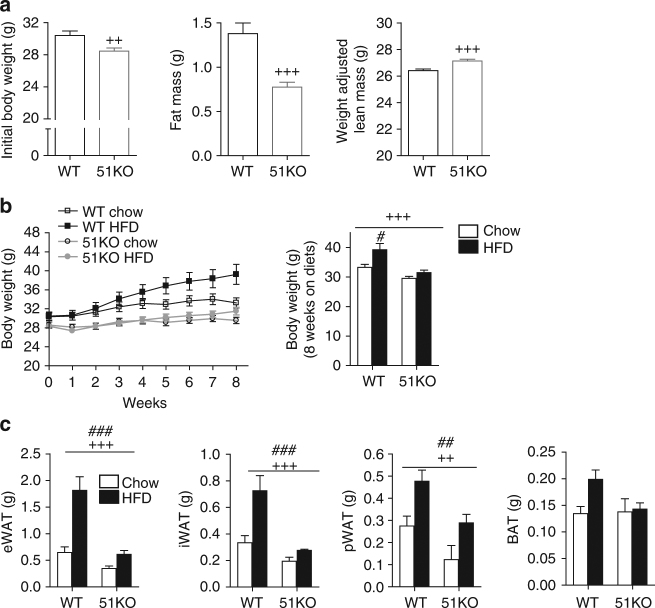
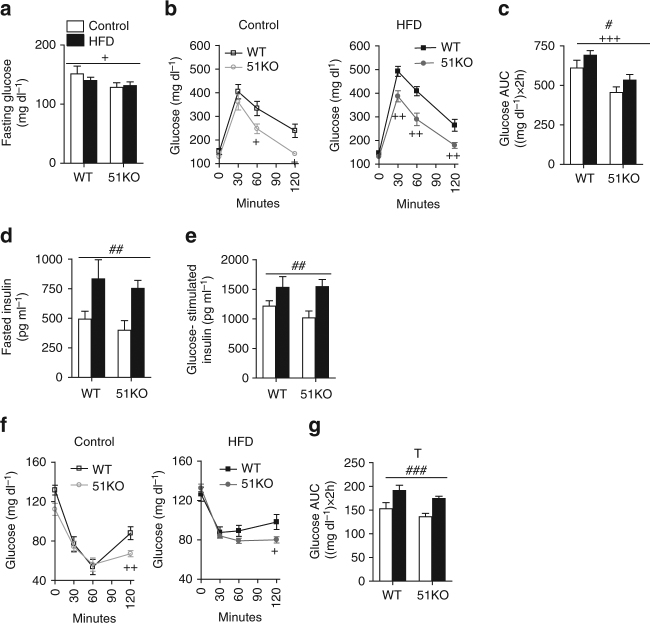
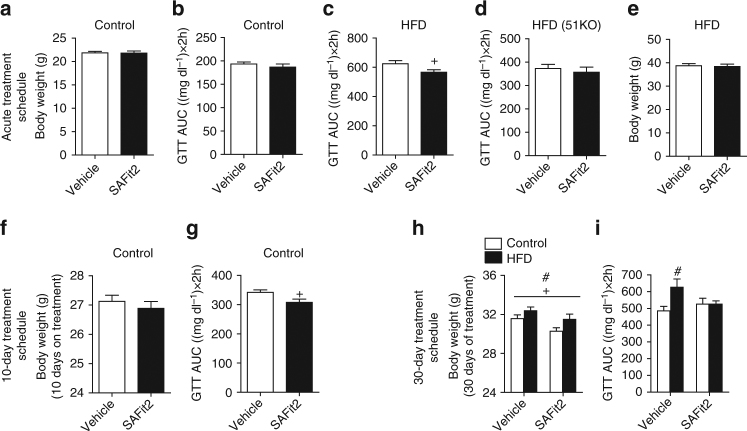
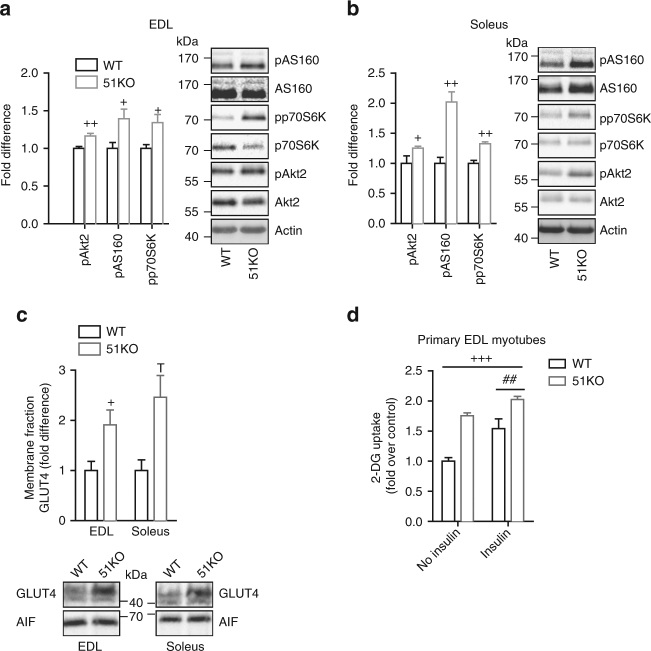
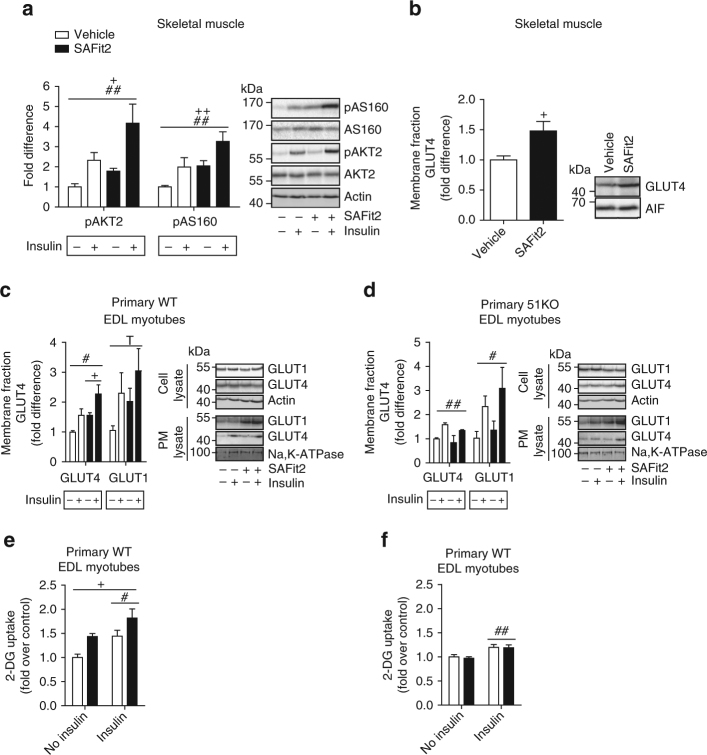
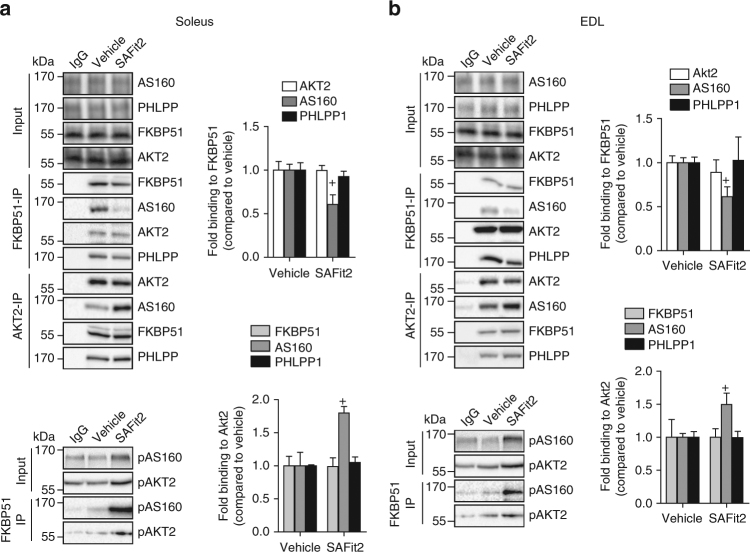
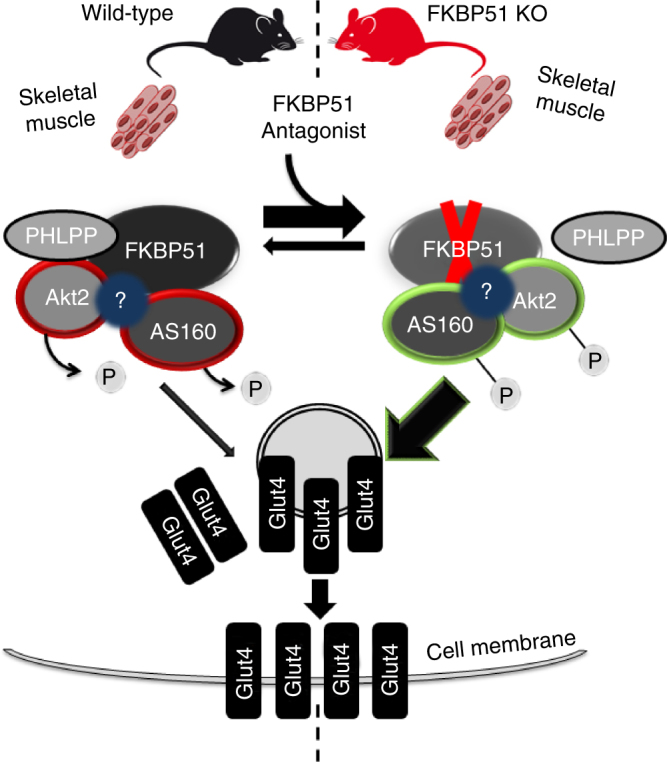
The co-chaperone FKBP5 is a stress-responsive protein-regulating stress reactivity, and its genetic variants are associated with T2D related traits and other stress-related disorders. Here we show that FKBP51 plays a role in energy and glucose homeostasis. Fkbp5 knockout (51KO) mice are protected from high-fat diet-induced weight gain, show improved glucose tolerance and increased insulin signaling in skeletal muscle. Chronic treatment with a novel FKBP51 antagonist, SAFit2, recapitulates the effects of FKBP51 deletion on both body weight regulation and glucose tolerance. Using shorter SAFit2 treatment, we show that glucose tolerance improvement precedes the reduction in body weight. Mechanistically, we identify a novel association between FKBP51 and AS160, a substrate of AKT2 that is involved in glucose uptake. FKBP51 antagonism increases the phosphorylation of AS160, increases glucose transporter 4 expression at the plasma membrane, and ultimately enhances glucose uptake in skeletal myotubes. We propose FKBP51 as a mediator between stress and T2D development, and potential target for therapeutic approaches.
Overview
The claims and statistics of this paper haven’t been checked yet.
Free: it reads the open-access text and checks the first 5 claims that cite a source we can check. Create a free account to check every claim.
Integrity signals
Registry
Cites
Statistics
Figures
Verification
Claims the paper makes
The claims and statistics of this paper haven’t been checked yet.
Free: it reads the open-access text and checks the first 5 claims that cite a source we can check. Create a free account to check every claim.
Self-check
Percentages, sums and reported differences re-computed from the paper’s own numbers.
The self-check needs the paper’s full text.
Citations
Cites
2 retracted
Kim, D., Sun, M., He, L., Zhou, Q.-H., Chen, J., Sun, X.-M., Bepler, G., Sebti, S. M., & Cheng, J. Q. (2010) · Journal of Biological Chemistry · doi:10.1074/jbc.m109.094060 · Cited by 55
RetractedKim, D., Sun, M., He, L., Zhou, Q., Chen, J., Sun, X.-M., Bepler, G., Sebti, S. M., & Cheng, J. Q. (2016) · Journal of Biological Chemistry · doi:10.1074/jbc.a109.094060 · Cited by 6
RetractedA gene atlas of the mouse and human protein-encoding transcriptomes
Su, A. I., Wiltshire, T., Batalov, S., Lapp, H., Ching, K. A., Block, D., Zhang, J., Soden, R., Hayakawa, M., Kreiman, G., et al. (2004) · Proceedings of the National Academy of Sciences · doi:10.1073/pnas.0400782101 · Cited by 3,475
Critical nodes in signalling pathways: insights into insulin action
Taniguchi, C. M., Emanuelli, B., & Kahn, C. R. (2006) · Nature Reviews Molecular Cell Biology · doi:10.1038/nrm1837 · Cited by 2,760
Cho, H., Mu, J., Kim, J. K., Thorvaldsen, J. L., Chu, Q., Crenshaw, E. B., Kaestner, K. H., Bartolomei, M. S., Shulman, G. I., & Birnbaum, M. J. (2001) · Science · doi:10.1126/science.292.5522.1728 · Cited by 1,836
Allele-specific FKBP5 DNA demethylation mediates gene–childhood trauma interactions
Klengel, T., Mehta, D., Anacker, C., Rex-Haffner, M., Pruessner, J. C., Pariante, C. M., Pace, T. W. W., Mercer, K. B., Mayberg, H. S., Bradley, B., et al. (2013) · Nature Neuroscience · doi:10.1038/nn.3275 · Cited by 1,447
Self-citationBinder, E. B. (2008) · JAMA · doi:10.1001/jama.299.11.1291 · Cited by 1,362
DeFronzo, R. A., Gunnarsson, R., Björkman, O., Olsson, M., & Wahren, J. (1985) · Journal of Clinical Investigation · doi:10.1172/jci111938 · Cited by 1,167
Insulin-stimulated Phosphorylation of a Rab GTPase-activating Protein Regulates GLUT4 Translocation
Sano, H., Kane, S., Sano, E., Mı̂inea, C. P., Asara, J. M., Lane, W. S., Garner, C. W., & Lienhard, G. E. (2003) · Journal of Biological Chemistry · doi:10.1074/jbc.c300063200 · Cited by 962
Cho, H., Thorvaldsen, J. L., Chu, Q., Feng, F., & Birnbaum, M. J. (2001) · Journal of Biological Chemistry · doi:10.1074/jbc.c100462200 · Cited by 959
Growth retardation and increased apoptosis in mice with homozygous disruption of the akt1 gene
Chen, W. S., Xu, P.-Z., Gottlob, K., Chen, M.-L., Sokol, K., Shiyanova, T., Roninson, I., Weng, W., Suzuki, R., Tobe, K., et al. (2001) · Genes & Development · doi:10.1101/gad.913901 · Cited by 928
Garofalo, R. S., Orena, S. J., Rafidi, K., Torchia, A. J., Stock, J. L., Hildebrandt, A. L., Coskran, T., Black, S. C., Brees, D. J., Wicks, J. R., et al. (2003) · Journal of Clinical Investigation · doi:10.1172/jci16885 · Cited by 726
5' AMP-activated protein kinase activation causes GLUT4 translocation in skeletal muscle.
Kurth-Kraczek, E. J., Hirshman, M. F., Goodyear, L. J., & Winder, W. W. (1999) · Diabetes · doi:10.2337/diabetes.48.8.1667 · Cited by 713
FKBP51 Affects Cancer Cell Response to Chemotherapy by Negatively Regulating Akt
Pei, H., Li, L., Fridley, B. L., Jenkins, G. D., Kalari, K. R., Lingle, W., Petersen, G., Lou, Z., & Wang, L. (2009) · Cancer Cell · doi:10.1016/j.ccr.2009.07.016 · Cited by 709
Wochnik, G. M., Rüegg, J., Abel, G. A., Schmidt, U., Holsboer, F., & Rein, T. (2005) · Journal of Biological Chemistry · doi:10.1074/jbc.m407498200 · Cited by 638
Self-citationGene–Stress–Epigenetic regulation of FKBP5: clinical and translational implications
Zannas, A. S., Wiechmann, T., Gassen, N. C., & Binder, E. B. (2016) · Neuropsychopharmacology · doi:10.1038/npp.2015.235 · Cited by 622
Self-citationThe Hsp90‐binding peptidylprolyl isomerase FKBP52 potentiates glucocorticoid signaling in vivo
Riggs, D. L., Roberts, P. J., Chirillo, S. C., Cheung‐Flynn, J., Prapapanich, V., Ratajczak, T., Gaber, R., Picard, D., & Smith, D. F. (2003) · The EMBO Journal · doi:10.1093/emboj/cdg108 · Cited by 353
AS160 Regulates Insulin- and Contraction-stimulated Glucose Uptake in Mouse Skeletal Muscle
Kramer, H. F., Witczak, C. A., Taylor, E. B., Fujii, N., Hirshman, M. F., & Goodyear, L. J. (2006) · Journal of Biological Chemistry · doi:10.1016/s0021-9258(19)84060-7 · Cited by 285
Vermeer, H., Hendriks-Stegeman, B. I., van der Burg, B., van Buul-Offers, S. C., & Jansen, M. (2003) · The Journal of Clinical Endocrinology & Metabolism · doi:10.1210/jc.2002-020354 · Cited by 285
Roy, A., Gorodetsky, E., Yuan, Q., Goldman, D., & Enoch, M.-A. (2010) · Neuropsychopharmacology · doi:10.1038/npp.2009.236 · Cited by 282
Treebak, J. T., Glund, S., Deshmukh, A., Klein, D. K., Long, Y. C., Jensen, T. E., Jørgensen, S. B., Viollet, B., Andersson, L., Neumann, D., et al. (2006) · Diabetes · doi:10.2337/db06-0175 · Cited by 280
Touma, C., Gassen, N. C., Herrmann, L., Cheung-Flynn, J., Büll, D. R., Ionescu, I. A., Heinzmann, J.-M., Knapman, A., Siebertz, A., Depping, A.-M., et al. (2011) · Biological Psychiatry · doi:10.1016/j.biopsych.2011.07.023 · Cited by 273
Self-citationFKBP51 and FKBP52 in signaling and disease
Storer, C. L., Dickey, C. A., Galigniana, M. D., Rein, T., & Cox, M. B. (2011) · Trends in Endocrinology & Metabolism · doi:10.1016/j.tem.2011.08.001 · Cited by 266
Self-citationZimmermann, P., Brückl, T., Nocon, A., Pfister, H., Binder, E. B., Uhr, M., Lieb, R., Moffitt, T. E., Caspi, A., Holsboer, F., et al. (2011) · American Journal of Psychiatry · doi:10.1176/appi.ajp.2011.10111577 · Cited by 262
Self-citationSinars, C. R., Cheung-Flynn, J., Rimerman, R. A., Scammell, J. G., Smith, D. F., & Clardy, J. (2003) · Proceedings of the National Academy of Sciences · doi:10.1073/pnas.0231020100 · Cited by 254
Arch, J. R. S., Hislop, D., Wang, S. J. Y., & Speakman, J. R. (2006) · International Journal of Obesity · doi:10.1038/sj.ijo.0803280 · Cited by 251
Selective inhibitors of the FK506-binding protein 51 by induced fit
Gaali, S., Kirschner, A., Cuboni, S., Hartmann, J., Kozany, C., Balsevich, G., Namendorf, C., Fernandez-Vizarra, P., Sippel, C., Zannas, A. S., et al. (2015) · Nature Chemical Biology · doi:10.1038/nchembio.1699 · Cited by 245
Self-citationCochaperone immunophilin FKBP52 is critical to uterine receptivity for embryo implantation
Tranguch, S., Cheung-Flynn, J., Daikoku, T., Prapapanich, V., Cox, M. B., Xie, H., Wang, H., Das, S. K., Smith, D. F., & Dey, S. K. (2005) · Proceedings of the National Academy of Sciences · doi:10.1073/pnas.0505775102 · Cited by 232
Hartmann, J., Wagner, K. V., Liebl, C., Scharf, S. H., Wang, X.-D., Wolf, M., Hausch, F., Rein, T., Schmidt, U., Touma, C., et al. (2012) · Neuropharmacology · doi:10.1016/j.neuropharm.2011.07.041 · Cited by 224
Self-citationChronic stress, metabolism, and metabolic syndrome
Tamashiro, K. L., Sakai, R. R., Shively, C. A., Karatsoreos, I. N., & Reagan, L. P. (2011) · Stress · doi:10.3109/10253890.2011.606341 · Cited by 211
Expression and Regulation of the Fkbp5 Gene in the Adult Mouse Brain
Scharf, S. H., Liebl, C., Binder, E. B., Schmidt, M. V., & Müller, M. B. (2011) · PLoS ONE · doi:10.1371/journal.pone.0016883 · Cited by 202
Self-citationMehta, D. (2011) · Archives of General Psychiatry · doi:10.1001/archgenpsychiatry.2011.50 · Cited by 200
Isolation and Culture of Skeletal Muscle Myofibers as a Means to Analyze Satellite Cells
Keire, P., Shearer, A., Shefer, G., & Yablonka-Reuveni, Z. (2013) · Methods in Molecular Biology · doi:10.1007/978-1-62703-128-8_28 · Cited by 183
Gassen, N. C., Hartmann, J., Zschocke, J., Stepan, J., Hafner, K., Zellner, A., Kirmeier, T., Kollmannsberger, L., Wagner, K. V., Dedic, N., et al. (2014) · PLoS Medicine · doi:10.1371/journal.pmed.1001755 · Cited by 177
Self-citationWeinstein, S. P., Wilson, C. M., Pritsker, A., & Cushman, S. W. (1998) · Metabolism · doi:10.1016/s0026-0495(98)90184-6 · Cited by 171
Steroid up-regulation of FKBP51 and its role in hormone signaling
Jääskeläinen, T., Makkonen, H., & Palvimo, J. J. (2011) · Current Opinion in Pharmacology · doi:10.1016/j.coph.2011.04.006 · Cited by 167
Mechanisms of obesity and related pathology: linking immune responses to metabolic stress
Karalis, K. P., Giannogonas, P., Kodela, E., Koutmani, Y., Zoumakis, M., & Teli, T. (2009) · The FEBS Journal · doi:10.1111/j.1742-4658.2009.07304.x · Cited by 160
Turro, E., Greene, D., Wijgaerts, A., Thys, C., Lentaigne, C., Bariana, T. K., Westbury, S. K., Kelly, A. M., Selleslag, D., Stephens, J. C., et al. (2016) · Science Translational Medicine · doi:10.1126/scitranslmed.aad7666 · Cited by 144
Nishiumi, S., & Ashida, H. (2007) · Bioscience Biotechnology and Biochemistry · doi:10.1271/bbb.70342 · Cited by 141
Pereira, M. J., Palming, J., Svensson, M. K. E., Rizell, M., Dalenbäck, J., Hammar, M., Fall, T., Sidibeh, C. O., Svensson, P., & Eriksson, J. W. (2014) · Metabolism · doi:10.1016/j.metabol.2014.05.015 · Cited by 112
Pharmacological Inhibition of the Psychiatric Risk Factor FKBP51 Has Anxiolytic Properties
Hartmann, J., Wagner, K. V., Gaali, S., Kirschner, A., Kozany, C., Ruhter, G., Dedic, N., Hausl, A. S., Hoeijmakers, L., Westerholz, S., et al. (2015) · Journal of Neuroscience · doi:10.1523/jneurosci.4024-14.2015 · Cited by 109
Self-citationThe stress regulator FKBP51 drives chronic pain by modulating spinal glucocorticoid signaling
Maiarù, M., Tochiki, K. K., Cox, M. B., Annan, L. V., Bell, C. G., Feng, X., Hausch, F., & Géranton, S. M. (2016) · Science Translational Medicine · doi:10.1126/scitranslmed.aab3376 · Cited by 104
Self-citationJiang, W., Cazacu, S., Xiang, C., Zenklusen, J. C., Fine, H. A., Berens, M., Armstrong, B., Brodie, C., & Mikkelsen, T. (2008) · Neoplasia · doi:10.1593/neo.07929 · Cited by 88
FKBP51 Null Mice Are Resistant to Diet-Induced Obesity and the PPARγ Agonist Rosiglitazone
Stechschulte, L. A., Qiu, B., Warrier, M., Hinds, T. D., Zhang, M., Gu, H., Xu, Y., Khuder, S. S., Russo, L., Najjar, S. M., et al. (2016) · Endocrinology · doi:10.1210/en.2015-1996 · Cited by 88
FKBP51 employs both scaffold and isomerase functions to promote NF-κB activation in melanoma
Romano, S., Xiao, Y., Nakaya, M., D'Angelillo, A., Chang, M., Jin, J., Hausch, F., Masullo, M., Feng, X., Romano, M. F., et al. (2015) · Nucleic Acids Research · doi:10.1093/nar/gkv615 · Cited by 82
Self-citationIsolation and Culture of Skeletal Muscle Myofibers as a Means to Analyze Satellite Cells
Shefer, G., & Yablonka-Reuveni, Z. (2004) · Basic Cell Culture Protocols · doi:10.1385/1-59259-838-2:281 · Cited by 72
ZIERATH, J. R., & WALLBERG‐HENRIKSSON, H. (2002) · Annals of the New York Academy of Sciences · doi:10.1111/j.1749-6632.2002.tb04270.x · Cited by 71
Interplay between diet-induced obesity and chronic stress in mice: potential role of FKBP51
Balsevich, G., Uribe, A., Wagner, K. V., Hartmann, J., Santarelli, S., Labermaier, C., & Schmidt, M. V. (2014) · Journal of Endocrinology · doi:10.1530/joe-14-0129 · Cited by 71
Self-citationSquirrel Monkey Immunophilin FKBP51 Is a Potent Inhibitor of Glucocorticoid Receptor Binding1
Denny, W. B., Valentine, D. L., Reynolds, P. D., Smith, D. F., & Scammell, J. G. (2000) · Endocrinology · doi:10.1210/en.141.11.4107 · Cited by 66
FKBP51 inhibits GSK3β and augments the effects of distinct psychotropic medications
Gassen, N. C., Hartmann, J., Zannas, A. S., Kretzschmar, A., Zschocke, J., Maccarrone, G., Hafner, K., Zellner, A., Kollmannsberger, L. K., Wagner, K. V., et al. (2016) · Molecular Psychiatry · doi:10.1038/mp.2015.38 · Cited by 62
Self-citationToneatto, J., Guber, S., Charó, N. L., Susperreguy, S., Schwartz, J., Galigniana, M., & Piwien-Pilipuk, G. (2013) · Journal of Cell Science · doi:10.1242/jcs.125799 · Cited by 55
Guarnieri, D. J., Brayton, C. E., Richards, S. M., Maldonado-Aviles, J., Trinko, J. R., Nelson, J., Taylor, J. R., Gourley, S. L., & DiLeone, R. J. (2012) · Biological Psychiatry · doi:10.1016/j.biopsych.2011.06.028 · Cited by 51
InterAKTions with FKBPs - Mutational and Pharmacological Exploration
Fabian, A.-K., März, A., Neimanis, S., Biondi, R. M., Kozany, C., & Hausch, F. (2013) · PLoS ONE · doi:10.1371/journal.pone.0057508 · Cited by 48
Self-citationBrandl, M., Drechsler, M., Bachmann, D., & Bauer, K.-H. (1997) · Chemistry and Physics of Lipids · doi:10.1016/s0009-3084(97)00028-5 · Cited by 44
Steroid Receptor-Associated Immunophilins: A Gateway to Steroid Signalling.
Ratajczak, T., Cluning, C., & Ward, B. K. (2015) · Europe PMC (PubMed Central) · Cited by 41
Hartmann, I., Fries, G. R., Bücker, J., Scotton, E., DIEMEN, L. V., & Kauer‐Sant’Anna, M. (2016) · Surgery for Obesity and Related Diseases · doi:10.1016/j.soard.2016.04.016 · Cited by 36
KONG, D., SONG, G., WANG, C., MA, H., REN, L., NIE, Q., ZHANG, X., & GAN, K. (2013) · Molecular Medicine Reports · doi:10.3892/mmr.2013.1457 · Cited by 29
The emerging role of FKBP5 in the regulation of metabolism and body weight
Zannas, A. S., Balsevich, G., & Gassen, N. C. (2016) · Surgery for Obesity and Related Diseases · doi:10.1016/j.soard.2016.05.016 · Cited by 16
Self-citationHwang, S., & Han, D. K. M. (2013) · Methods in molecular biology · doi:10.1007/978-1-62703-360-2_3 · Cited by 5
Cited by
Substance P and pain chronicity
Zieglgänsberger, W. (2019) · Cell and Tissue Research · doi:10.1007/s00441-018-2922-y · Cited by 276
Hypothalamic–pituitary–adrenal axis and stress
(2020) · Handbook of Clinical Neurology · doi:10.1016/b978-0-444-64123-6.00004-7 · Cited by 279
Is the HPA Axis as Target for Depression Outdated, or Is There a New Hope?
Menke, A. (2019) · Frontiers in Psychiatry · doi:10.3389/fpsyt.2019.00101 · Cited by 240
Matosin, N., Halldorsdottir, T., & Binder, E. B. (2018) · Biological Psychiatry · doi:10.1016/j.biopsych.2018.01.021 · Cited by 226
FKBP Ligands—Where We Are and Where to Go?
Kolos, J. M., Voll, A. M., Bauder, M., & Hausch, F. (2018) · Frontiers in Pharmacology · doi:10.3389/fphar.2018.01425 · Cited by 158
“Furthermore, FKBP51-knockout mice displayed a resistance to weight gain under both regular and high-fat diets and an improved glucose tolerance (Stechschulte et al., 2016; Balsevich et al., 2017).”
BackgroundSelf-citation
Metadata
- Authors
- Balsevich, G., Häusl, A. S., Meyer, C. W., Karamihalev, S., Feng, X., Pöhlmann, M. L., Dournes, C., Uribe-Marino, A., Santarelli, S., Labermaier, C., Hafner, K., Mao, T., Breitsamer, M., Theodoropoulou, M., Namendorf, C., Uhr, M., Paez-Pereda, M., Winter, G., Hausch, F., Chen, A., Tschöp, M. H., Rein, T., Gassen, N. C., & Schmidt, M. V.
- Affiliations
- Max Planck Institute of Psychiatry (DE)
- Helmholtz Munich (DE)
- Ludwig-Maximilians-Universität München (DE)
- Technische Universität Darmstadt (DE)
- Corresponding author
- Schmidt, Mathias V.
- ORCID
- Venue
- Nature Communications
- Published
- 2017-11-23
- Volume
- 8
- Issue
- 1
- Pages
- 1725-1725
- ISSN
- 2041-1723 (ISSN-L)
- PMC
- PMC5700978
- OpenAlex
- W2770154204
- Cited by
- 134
- References
- 58
- Citations by year
- 2026: 19 · 2025: 10 · 2024: 24 · 2023: 21 · 2022: 9 · 2021: 16 · 2020: 13 · 2019: 13 · 2018: 9
- FWCI
- 4.02
- Type
- journal article
- Language
- en
- Open access
- gold
- doi.org
- Licence
- cc-by
- creativecommons.org/licenses/by/4.0 (tdm)
- creativecommons.org/licenses/by/4.0 (vor)
- Locations
- Nature Communications (publishedVersion, cc-by)
- PubMed Central (publishedVersion, cc-by)
- PubMed (publishedVersion)
- MPG.PuRe (Max Planck Society) (submittedVersion, cc-by)
- PuSH - Publication Server of Helmholtz Zentrum München (submittedVersion, cc-by)
- RePEc: Research Papers in Economics (submittedVersion)
- DOAJ (DOAJ: Directory of Open Access Journals) (submittedVersion, cc-by-sa)
- Open access LMU (Ludwid Maxmilian's Universitat Munchen) (submittedVersion)
- Max Planck Digital Library (submittedVersion, other-oa)
- mediaTUM – the media and publications repository of the Technical University Munich (Technical University Munich) (submittedVersion)
- Site cant be reached (submittedVersion, cc-by)
- Funders
- University of Texas at El Paso
- FP7 Ideas: European Research Council (281338)
- Topics
- Life Sciences › Biochemistry, Genetics and Molecular Biology › Molecular Biology › Metabolism, Diabetes, and Cancer
- Health Sciences › Medicine › Endocrinology, Diabetes and Metabolism › Adipokines, Inflammation, and Metabolic Diseases
- Life Sciences › Biochemistry, Genetics and Molecular Biology › Molecular Biology › PI3K/AKT/mTOR signaling in cancer
- Keywords
- FKBP51, FKBP5, AKT2, AS160, type 2 diabetes, glucose homeostasis, insulin signaling, skeletal muscle, glucose uptake, GLUT4, high-fat diet, weight gain, stress response, molecular chaperones, energy homeostasis
- MeSH terms
- Tacrolimus Binding Protein 5, Animals, Biological Transport, Active, Glucose, Male, Mice, Inbred C57BL, Models, Biological, Phosphorylation, Stress, Physiological, Signal Transduction, Weight Gain, Mice, Knockout, Muscle Fibers, Skeletal, GTPase-Activating Proteins, Tacrolimus Binding Proteins, Proto-Oncogene Proteins c-akt, Glucose Transporter Type 4, Mice, Diet, High-Fat
About these checks
Registry, retraction, Cites and statistics results are computed, not judged, with one exception: a printed reference that no index lists is read once by a model before it counts as a citation error. Claims are extracted by a model and kept only when their quote appears verbatim in the text; each cited source is then checked, with a model’s help, for whether it says what the claim relies on. Those verdicts can be wrong — read the claim’s quote and the cited source before relying on one.
Statistics and arithmetic are recomputed, not judged.
Confidence bands are shown only for fields calibrated on our annotated test set. None is calibrated yet, so no band is shown.
What counts as a claim ›How we measure confidence ›How we check this ›
Are you an author, or do you see a problem with this page? Request a review
Data sources
Bibliographic data: Semantic Scholar, OpenAlex, Crossref.
Contains information from the Semantic Scholar Academic Graph Datasets, made available under the ODC Attribution License (ODC-BY 1.0).
Semantic Scholar’s data is described in: Kinney, R., et al. (2023). The Semantic Scholar Open Data Platform. arXiv:2301.10140.
