

HIF drives lipid deposition and cancer in ccRCC via repression of fatty acid metabolism
Open accessThe DOI matches its Crossref record; 46 of the 46 references it cites were found in a registry or an index.
Abstract
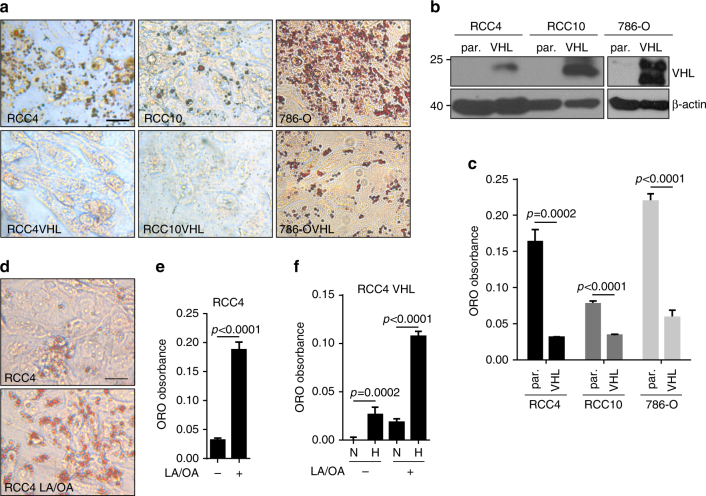
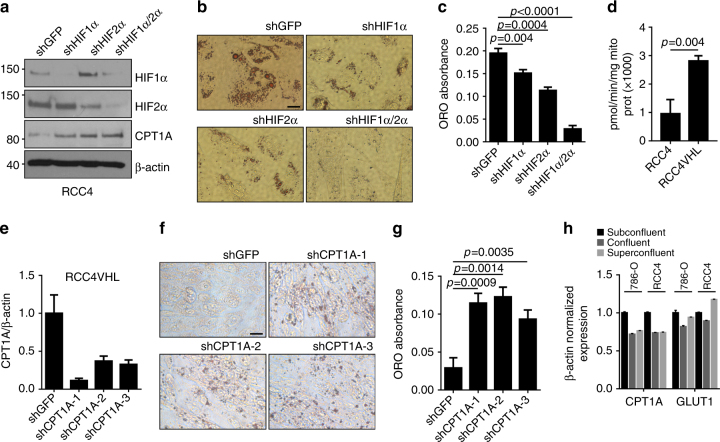
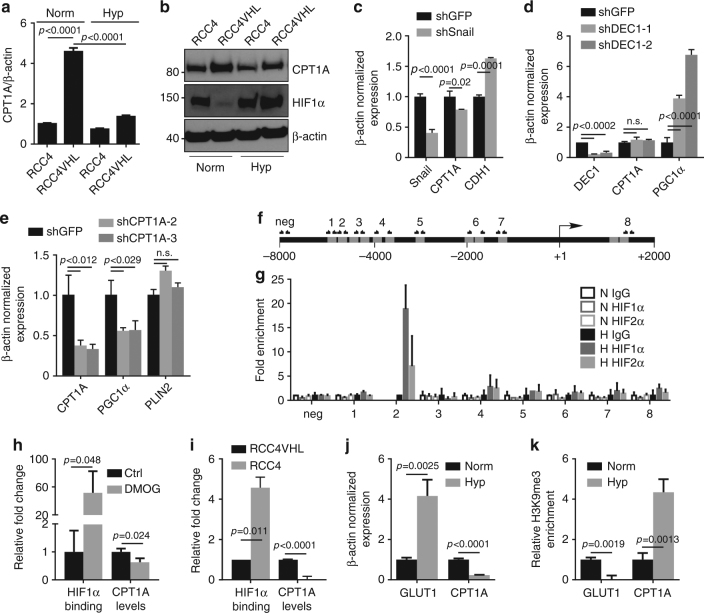
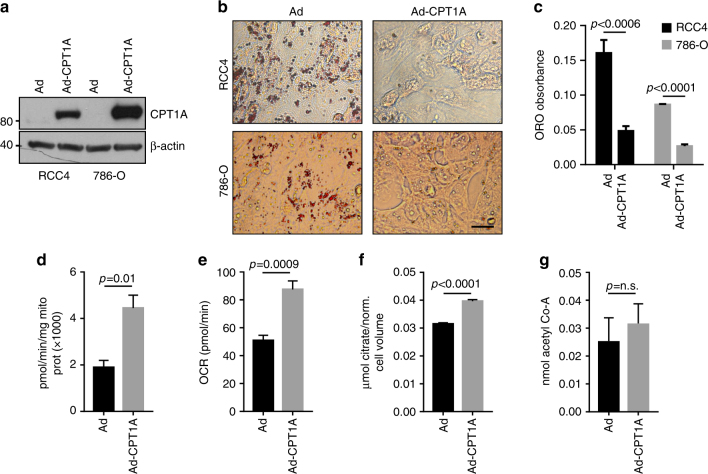
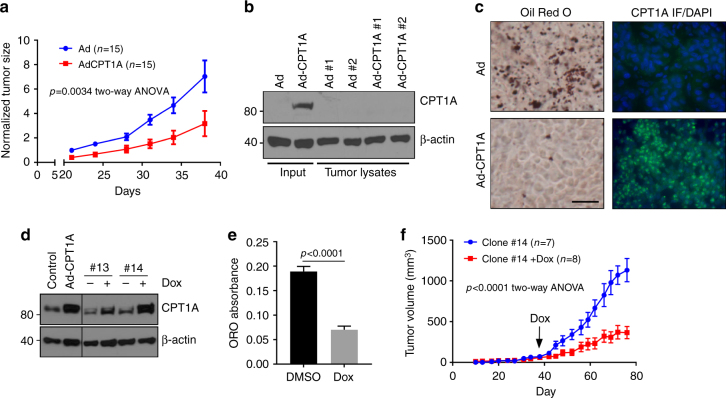
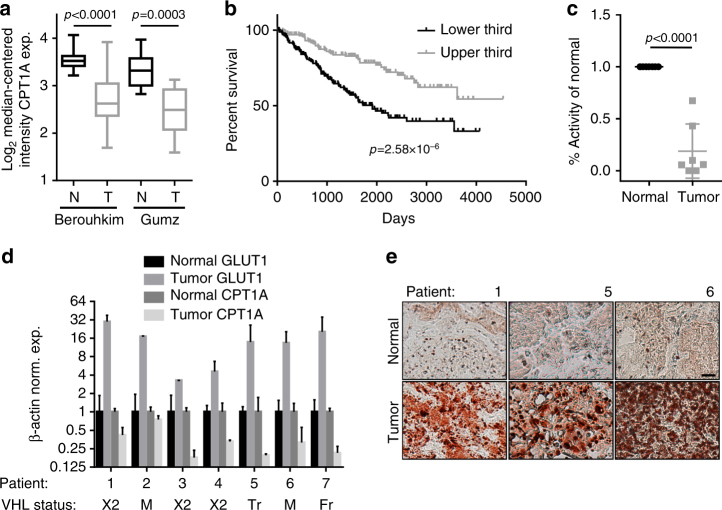
Clear cell renal cell carcinoma (ccRCC) is histologically defined by its lipid and glycogen-rich cytoplasmic deposits. Alterations in the VHL tumor suppressor stabilizing the hypoxia-inducible factors (HIFs) are the most prevalent molecular features of clear cell tumors. The significance of lipid deposition remains undefined. We describe the mechanism of lipid deposition in ccRCC by identifying the rate-limiting component of mitochondrial fatty acid transport, carnitine palmitoyltransferase 1A ( CPT1A ), as a direct HIF target gene. CPT1A is repressed by HIF1 and HIF2, reducing fatty acid transport into the mitochondria, and forcing fatty acids to lipid droplets for storage. Droplet formation occurs independent of lipid source, but only when CPT1A is repressed. Functionally, repression of CPT1A is critical for tumor formation, as elevated CPT1A expression limits tumor growth. In human tumors, CPT1A expression and activity are decreased versus normal kidney; and poor patient outcome associates with lower expression of CPT1A in tumors in TCGA. Together, our studies identify HIF control of fatty acid metabolism as essential for ccRCC tumorigenesis.
Overview
The claims and statistics of this paper haven’t been checked yet.
Free: it reads the open-access text and checks the first 5 claims that cite a source we can check. Create a free account to check every claim.
Integrity signals
Registry
Cites
Statistics
Figures
Verification
Claims the paper makes
The claims and statistics of this paper haven’t been checked yet.
Free: it reads the open-access text and checks the first 5 claims that cite a source we can check. Create a free account to check every claim.
Claims other papers make about this one
Each is checked against this paper’s own text: does it say what the citing paper says it does?
The cited source says what the claim attributes to it.
In the citing paper
“Indeed, both HIF-1α and HIF-2α suppress CPT1A, the rate limiting component for FA import into the mitochondria, thus channeling FAs away from β-oxidation to lipid storage, which is essential for ccRCC tumorigenesis [48].”
From The HIF Axes in Cancer - Angiogenesis, Metabolism and Immune-Modulation (2025) · cites this paper as [48]
In the citing paper
“Furthermore, HIF-2α represses the transcription of carnitine palmitoyltransferase 1A (CPT1A), which is responsible for mitochondrial β-oxidation by transporting fatty acids and results in lipid deposition78.”
From Glutamine reliance in cell metabolism (2020) · cites this paper as [78]
Self-check
Percentages, sums and reported differences re-computed from the paper’s own numbers.
The self-check needs the paper’s full text.
Citations
Cites
Hallmarks of Cancer: The Next Generation
Hanahan, D., & Weinberg, R. A. (2011) · Cell · doi:10.1016/j.cell.2011.02.013 · Cited by 66,590
Sulforhodamine B colorimetric assay for cytotoxicity screening
Vichai, V., & Kirtikara, K. (2006) · Nature Protocols · doi:10.1038/nprot.2006.179 · Cited by 3,671
Comprehensive molecular characterization of clear cell renal cell carcinoma
The Cancer Genome Atlas Research Network (2013) · Nature · doi:10.1038/nature12222 · Cited by 3,485
HIF-1 mediates adaptation to hypoxia by actively downregulating mitochondrial oxygen consumption
Papandreou, I., Cairns, R. A., Fontana, L., Lim, A. L., & Denko, N. C. (2006) · Cell Metabolism · doi:10.1016/j.cmet.2006.01.012 · Cited by 2,267
Cellular Fatty Acid Metabolism and Cancer
Currie, E., Schulze, A., Zechner, R., Walther, T. C., & Farese, R. V. (2013) · Cell Metabolism · doi:10.1016/j.cmet.2013.05.017 · Cited by 2,123
Reductive glutamine metabolism by IDH1 mediates lipogenesis under hypoxia
Metallo, C. M., Gameiro, P. A., Bell, E. L., Mattaini, K. R., Yang, J., Hiller, K., Jewell, C. M., Johnson, Z. R., Irvine, D. J., Guarente, L., et al. (2012) · Nature · doi:10.1038/nature10602 · Cited by 1,791
Kang, H. M., Ahn, S. H., Choi, P., Ko, Y.-A., Han, S. H., Chinga, F., Park, A. S. D., Tao, J., Sharma, K., Pullman, J., et al. (2015) · Nature Medicine · doi:10.1038/nm.3762 · Cited by 1,555
An Integrated Metabolic Atlas of Clear Cell Renal Cell Carcinoma
Hakimi, A. A., Reznik, E., Lee, C.-H., Creighton, C. J., Brannon, A. R., Luna, A., Aksoy, B. A., Liu, E. M., Shen, R., Lee, W., et al. (2016) · Cancer Cell · doi:10.1016/j.ccell.2015.12.004 · Cited by 798
The von Hippel–Lindau tumour suppressor protein: O2 sensing and cancer
Kaelin Jr, W. G. (2008) · Nature Reviews Cancer · doi:10.1038/nrc2502 · Cited by 726
Bensaad, K., Favaro, E., Lewis, C. A., Peck, B., Lord, S., Collins, J. M., Pinnick, K. E., Wigfield, S., Buffa, F. M., Li, J.-L., et al. (2014) · Cell Reports · doi:10.1016/j.celrep.2014.08.056 · Cited by 665
Cited by
Items 101–200 of 470
SDHB Suppresses the Tumorigenesis and Development of ccRCC by Inhibiting Glycolysis
Fang, Z., Sun, Q., Yang, H., & Zheng, J. (2021) · Frontiers in Oncology · doi:10.3389/fonc.2021.639408 · Cited by 50
“However, its molecular mechanism has not yet been fully clarified (6).”
BackgroundYang, H., Zhao, H., Ren, Z., Yi, X., Zhang, Q., Yang, Z., Kuang, Y., & Zhu, Y. (2021) · Acta Biochimica et Biophysica Sinica · doi:10.3724/abbs.2021023 · Cited by 46
“Deletion of CPT1A in ccRCC cells facilitates lipid accumulation RNA-seq data of patients with ccRCC were downloaded from the TCGA database.”
BackgroundInfluentialA review of the mechanism of succinylation in cancer
Lu, K., & Han, D. (2022) · Medicine · doi:10.1097/md.0000000000031493 · Cited by 46
PLIN3 is up-regulated and correlates with poor prognosis in clear cell renal cell carcinoma
Wang, K., Ruan, H., Song, Z., Cao, Q., Bao, L., Liu, D., Xu, T., Xiao, H., Wang, C., Cheng, G., et al. (2018) · Urologic Oncology Seminars and Original Investigations · doi:10.1016/j.urolonc.2018.04.006 · Cited by 43
Hypoxia, hypoxia-inducible gene 2 (HIG2)/HILPDA, and intracellular lipolysis in cancer
Povero, D., Johnson, S. M., & Liu, J. (2020) · Cancer Letters · doi:10.1016/j.canlet.2020.06.013 · Cited by 48
Wang, X., Song, H., Liang, J., Jia, Y., & Zhang, Y. (2022) · Molecular Medicine Reports · doi:10.3892/mmr.2022.12871 · Cited by 47
“Kidney. clear cell renal cell carcinoma (ccrcc) is histologi‑ cally characterized by the presence of numerous lds in the cytoplasm (59,60).”
Lin, H., Fu, L., Li, P., Zhu, J., Xu, Q., Wang, Y., Mumin, M. A., Zhou, X., Chen, Y., Shu, G., et al. (2023) · Journal of Translational Medicine · doi:10.1186/s12967-023-04161-z · Cited by 49
“Tumor-associated macrophages (TAMs) constitute a population of immune cells with heterogeneity in TME contributing to cancer initiation and malignant progression [14].”
BackgroundInfluentialSelf-citationZhang, S., Fang, T., He, Y., Feng, W., Yu, Z., Zheng, Y., Zhang, C., Hu, S., Liu, Z., Liu, J., et al. (2024) · EBioMedicine · doi:10.1016/j.ebiom.2024.105070 · Cited by 49
“As the most common mutation of ccRCC, tumor suppressor VHL mutation induces constitutive stabilization of HIF α , 11,12 which has been shown to promote the storage of fatty acids in the form of triacylglycerol in LDs. 8 Nevertheless, the role of VHL and HIF α in the regulation of cholesterol metabolism in ccRCC has no…”
InfluentialGao, Q., & Lee, W. (2019) · PubMed · Cited by 44
The Metabolic Landscape of Cancer Stem Cells: Insights and Implications for Therapy
Milella, M., Rutigliano, M., Pandolfo, S. D., Aveta, A., Crocetto, F., Ferro, M., d’Amati, A., Ditonno, P., Lucarelli, G. T., & Lasorsa, F. M. (2025) · Cells · doi:10.3390/cells14100717 · Cited by 49
“Hypoxia induces LD formation through HIF-mediated repression of CPT1A, an enzyme crucial for FAO [132].”
Lipid in Renal Carcinoma: Queen Bee to Target?
Tan, S. K., & Welford, S. M. (2020) · Trends in cancer · doi:10.1016/j.trecan.2020.02.017 · Cited by 41
Self-citationLü, W., Che, X., Qu, X., Zheng, C., Yang, X., Bao, B., Li, Z., Wang, D., Jin, Y., Wang, Y., et al. (2021) · Frontiers in Cell and Developmental Biology · doi:10.3389/fcell.2021.622198 · Cited by 44
“Direct repression of CPT1A by HIF1 and HIF2 has been reported to reduce the transport of fatty acids into the mitochondria and force fatty acids to form lipid droplets for storage that can promote ccRCC (Du et al., 2017; Tan and Welford, 2020).”
BackgroundShi, J., Miao, D., Lv, Q., Wang, K., Wang, Q., Liang, H., Yang, H., Xiong, Z., & Zhang, X. (2023) · Cell Death and Disease · doi:10.1038/s41419-023-06090-7 · Cited by 51
“The presence of large amounts of neutral lipids such as cholesteryl ester (CE) and triglyceride (TG) in ccRCC tumors suggests that lipids play an important role in ccRCC [9, 10].”
BackgroundThe potential roles of HIF-1α in epithelial-mesenchymal transition and ferroptosis in tumor cells
Shen, Z., Yu, N. H., Zhang, Y., Jia, M., Sun, Y., Li, Y., & Zhao, L. (2024) · Cellular Signalling · doi:10.1016/j.cellsig.2024.111345 · Cited by 46
EPHX2 Inhibits Colon Cancer Progression by Promoting Fatty Acid Degradation
Zhou, Y., Li, X., Guan, A., Zhou, H., Zhu, Y., Wang, R., & Li, R. (2022) · Frontiers in Oncology · doi:10.3389/fonc.2022.870721 · Cited by 46
“These lipid droplets are conducive for cell survival, invasion, and drug resistance (41, 42).”
BackgroundEmerging roles for fatty acid oxidation in cancer
Ma, J., Wang, S., Zhang, P., Zheng, S., Li, X., Li, J., & Pei, H. (2024) · Genes & Diseases · doi:10.1016/j.gendis.2024.101491 · Cited by 58
“58”
Wu, G., Xu, Y., Wang, Q., Li, J., Li, L., Han, C., & Xia, Q. (2019) · European Journal of Pharmacology · doi:10.1016/j.ejphar.2019.172637 · Cited by 40
Rewiring of Lipid Metabolism and Storage in Ovarian Cancer Cells after Anti-VEGF Therapy
Curtarello, M., Tognon, M., Venturoli, C., Silic‐Benussi, M., Grassi, A., Verza, M., Minuzzo, S. A., Pinazza, M., Brillo, V., Tosi, G., et al. (2019) · Cells · doi:10.3390/cells8121601 · Cited by 39
“Altogether, these findings remark the important biological contribution of lipid uptake to this phenomenon, which could also be in part driven by HIF-1 and HIF-2, which under hypoxic conditions repress CPT1A reducing FA transport into the mitochondria and forcing FA to LD for storage [40].”
BackgroundPHD3 Loss Promotes Exercise Capacity and Fat Oxidation in Skeletal Muscle
Yoon, H., Spinelli, J. B., Zaganjor, E., Wong, S. J., German, N. J., Randall, E. C., Dean, A., Clermont, A., Paulo, J. A., Garcia, D., et al. (2020) · Cell Metabolism · doi:10.1016/j.cmet.2020.06.017 · Cited by 39
“Likewise, HIF signaling represses the expression of genes important in fatty acid catabolism (Liu et al., 2014; Du et al., 2017; Huang et al., 2014).”
BackgroundGPX8 regulates clear cell renal cell carcinoma tumorigenesis through promoting lipogenesis by NNMT
Nguyen, T. T. M., Nguyen, T. H., Kim, H. S., Dao, T. T. P., Moon, Y., Seo, M., Kang, S., Mai, V.-H., An, Y., Jung, C., et al. (2023) · Journal of Experimental & Clinical Cancer Research · doi:10.1186/s13046-023-02607-2 · Cited by 46
“As high lipid content is characteristic of ccRCC tissue regardless of VHL mutation status, the proposed VHLindependence of GPX8-NNMT axis-mediated DNL is not mutually exclusive to the previously reported VHLdependent FAO in ccRCC.”
BackgroundResultInfluentialThe role of hypoxia-inducible factor 1α in hepatic lipid metabolism
Luo, M., Li, T., & Sang, H. (2023) · Journal of Molecular Medicine · doi:10.1007/s00109-023-02308-5 · Cited by 46
“FAO is a catabolic process that begins with the transportation of fatty acids to mitochondria by carnitine palmitoyl transferase 1 (CPT-1), which is the rate-limiting enzyme for mitochondrial degradation of fatty acids [53].”
BackgroundMetabolic Roles of HIF1, c-Myc, and p53 in Glioma Cells
Trejo‐Solís, C., Castillo‐Rodríguez, R. A., Serrano-García, N., Silva‐Adaya, D., Vargas-Cruz, S., Chávez-Cortéz, E. G., Gallardo‐Pérez, J. C., Zavala-Vega, S., Cruz-Salgado, A., & Magaña-Maldonado, R. (2024) · Metabolites · doi:10.3390/metabo14050249 · Cited by 43
“HIF2 α also inhibits CPT1A transcription [209].”
Xiao, H., Qu, Y., Li, H., Zhang, Y., Fei, M., Liang, C. Y., Yang, H., & Zhang, X. (2024) · Journal of Experimental & Clinical Cancer Research · doi:10.1186/s13046-023-02940-6 · Cited by 44
“Four genes, CPT1A, PLIN2, CD36 and KLF6 have recently been implicated in HIF-dependent lipid accumulation in ccRCC [30, 55–57].”
BackgroundCPT1A loss disrupts BCAA metabolism to confer therapeutic vulnerability in TP53-mutated liver cancer
Liu, Y., Wang, F., Yan, G., Tong, Y., Guo, W., Li, S., Qian, Y., Li, Q., Shu, Y., Zhang, L., et al. (2024) · Cancer Letters · doi:10.1016/j.canlet.2024.217006 · Cited by 42
Self-citationDeng, Q., Ji, Y., Li, J., & Wen, T. (2025) · Molecular Cancer · doi:10.1186/s12943-025-02457-w · Cited by 43
“Overexpression of CPT1A significantly downregulated CD36 expression and led to reduced tumor volume and decreased lipid deposition in mouse models [28–30].”
Tong, Y., Kai, J., Wang, S., Yu, Y., Xie, S., Zheng, H., Wang, Y., Liu, Y., Zhu, K., Guan, X., et al. (2021) · Cell Death and Disease · doi:10.1038/s41419-021-03901-7 · Cited by 42
“A principal role of VHL is in the regulation of HIF involved in oxygen sensing [30].”
BackgroundHao, L., Guo, Y., Peng, Q., Zhang, Z., Ji, J., Liu, Y., Xue, Y., Li, C., Zheng, K., & Shi, X. (2021) · Phytomedicine · doi:10.1016/j.phymed.2021.153913 · Cited by 38
The Heterogeneity of Lipid Metabolism in Cancer
Park, J. K., Coffey, N. J., Limoges, A., & Le, A. (2021) · Advances in experimental medicine and biology · doi:10.1007/978-3-030-65768-0_3 · Cited by 41
Jiang, C., Zhu, Y., Chen, H., Lin, J., Xie, R., Li, W., Xue, J., Chen, L., Chen, X., & Xu, S. (2023) · Cell Death & Disease · doi:10.1038/s41419-023-06181-5 · Cited by 36
Sainero‐Alcolado, L., Garde-Lapido, E., Snaebjornsson, M. T., Schoch, S., Stevens, I., Ruiz-Pérez, M. V., Dyrager, C., Pelechano, V., Axelson, H., Schulze, A., et al. (2024) · Proceedings of the National Academy of Sciences · doi:10.1073/pnas.2310479121 · Cited by 46
“It is well known that LD accumulation occurs during hypoxia (38, 39); however, the key role of MYC in this process has not been elucidated.”
Mou, W., Deng, Z., Zhu, L., Jiang, A., Lin, A., Xu, L., Deng, G., Huang, H., Guo, Z., Zhu, B., et al. (2025) · Science Advances · doi:10.1126/sciadv.adu1727 · Cited by 38
“Lipid accumulation is a prominent feature in RCC, especially in ccRCC, signifying malignant tumor progression and poor prognosis ( 69 , 70 ).”
Guo, F., Liu, J., Han, X., Zhang, X., Tian, L., Wang, Y., Bai, J., & Han, J. (2019) · International Journal of Biological Sciences · doi:10.7150/ijbs.31293 · Cited by 36
“The subsequent activation of hypoxic gene downstream has been thought to play an important role in RCC development [24].”
BackgroundEzzeddini, R., Taghikhani, M., Farrokhi, A. S., Somi, M. H., Samadi, N., Esfahani, A., & Rasaee, M. J. (2021) · Journal of Physiology and Biochemistry · doi:10.1007/s13105-021-00791-3 · Cited by 37
Targeting strategies in the treatment of fumarate hydratase deficient renal cell carcinoma
Lindner, A. K., Tulchiner, G. A., Seeber, A., Siska, P. J., Thurnher, M., & Pichler, R. (2022) · Frontiers in Oncology · doi:10.3389/fonc.2022.906014 · Cited by 41
“ccRCC shows disturbed metabolism of glucose, amino acids and lipids (11, 12), driving tumor growth and affecting prognosis (13).”
BackgroundPHF8-GLUL axis in lipid deposition and tumor growth of clear cell renal cell carcinoma
Peng, S., Wang, Z., Tang, P., Wang, S., Huang, Y., Xie, Q., Wang, Y., Tan, X., Tang, T., Yan, X., et al. (2023) · Science Advances · doi:10.1126/sciadv.adf3566 · Cited by 38
Chen, Z., Meng, F., Zhou, C., Wu, X., & Jin, C. (2022) · Water Research · doi:10.1016/j.watres.2022.119377 · Cited by 33
Geng, P., Ye, F., Dou, P., Hu, C., He, J., Zhao, J., Li, Q., Bao, M., Li, X., Liu, X., et al. (2024) · Journal of Experimental & Clinical Cancer Research · doi:10.1186/s13046-024-03184-8 · Cited by 35
“HIF-1 drives lipid deposition by suppressing carnitine palmitoyltransferase 1 A (CPT1A) to promote tumor growth in clear cell renal cell carcinoma [30].”
BackgroundTherapeutic targeting of lipid synthesis metabolism for selective elimination of cancer stem cells
Kim, W. (2018) · Archives of Pharmacal Research · doi:10.1007/s12272-018-1098-z · Cited by 35
Huang, X., Wang, T., Ye, J., Feng, H., Zhang, X., Ma, X., Wang, B., Huang, Y., & Zhang, X. (2022) · Frontiers in Genetics · doi:10.3389/fgene.2022.994741 · Cited by 37
“Clear cell renal cell carcinoma, the most common form of RCC, is characterised by fatty acid and glycogen reprogramming that rewires this aberrant metabolism in ubiquitous ontology events of chromosome 3p deletion and VHL mutation or deletion (Du et al., 2017; Wettersten et al., 2017; Jonasch et al., 2021).”
BackgroundRETRACTED: Fibronectin enhances tumor metastasis through B7‐H3 in clear cell renal cell carcinoma
Xie, J., Sun, M., Zhang, D., Chen, C., Lin, S., & Zhang, G. (2021) · FEBS Open Bio · doi:10.1002/2211-5463.13280 · Cited by 33
RetractedZhang, S., Zhang, Z., Liu, X., Deng, Y., Zheng, J., Deng, J., Wang, Y., Guo, B., Li, F., Chen, X., et al. (2023) · Molecular Cancer Research · doi:10.1158/1541-7786.mcr-22-0781 · Cited by 35
Lu, D., Li, Y., Niu, X., Sun, J., Zhan, W., Shi, Y., Yu, K., Huang, S., Liu, X., Xie, L., et al. (2024) · Research · doi:10.34133/research.0539 · Cited by 59
“This subsequently provides raw materials for cell proliferation in ccRCC [ 12 , 13 ].”
Renal Lipid Metabolism Abnormalities in Obesity and Clear Cell Renal Cell Carcinoma
Bobulescu, I. A., Pop, L. M., Mani, C., Turner, K., Rivera, C., Khatoon, S., Kairamkonda, S., Hannan, R., & Palle, K. (2021) · Metabolites · doi:10.3390/metabo11090608 · Cited by 35
“HIF activation in ccRCC represses CPT1A-mediated fatty acid transport into mitochondria, thus decreasing fatty acid beta-oxidation [61].”
BackgroundFeatures of increased malignancy in eosinophilic clear cell renal cell carcinoma
Nilsson, H., Lindgren, D., Axelson, H., Brueffer, C., Saal, L. H., Lundgren, J., & Johansson, M. (2020) · The Journal of Pathology · doi:10.1002/path.5532 · Cited by 35
“In ccRCC, CPT1A is downregulated by HIFs, resulting in reduced mitochondrial β-oxidation [32].”
BackgroundVascular Inflammation, Cancer, and Cardiovascular Diseases
Prousi, G. S., Joshi, A. M., Atti, V., Addison, D., Brown, S.-A. N., Guha, A., & Patel, B. D. (2023) · Current Oncology Reports · doi:10.1007/s11912-023-01426-0 · Cited by 32
“Chronic renal hypoxia as seen in renal cell carcinoma has been shown to lead to increased lipid peroxidation and overexpression of angiotensin receptors with the downregulation of angiotensin-converting enzymes [43, 44].”
BackgroundZhang, Q., Wang, X., Zhao, Y., Cheng, Z., Fang, D., Liu, Y., Tian, G., Li, M., & Luo, Z. Y. (2023) · ACS Nano · doi:10.1021/acsnano.3c08907 · Cited by 33
Investigating the causal associations between metabolic biomarkers and the risk of kidney cancer
Lin, L., Tang, Y., Kang, N., Li, X., & Hu, X. (2024) · Communications Biology · doi:10.1038/s42003-024-06114-8 · Cited by 33
“Actually,there hadbeenonestudyexploringtheroleoffattyacidinrenaltumorgrowth, despitetheresearchdidnotfocusontheexacttypeoffattyacid 8 .”
Wang, D., Mahmud, I., Thakur, V. S., Tan, S. K., Isom, D. G., Lombard, D. B., Gonzalgo, M. L., Kryvenko, O. N., Lorenzi, P. L., Tcheuyap, V. T., et al. (2024) · Cancer Research · doi:10.1158/0008-5472.can-23-2926 · Cited by 40
Self-citationDecreased SPTLC1 expression predicts worse outcomes in ccRCC patients
Zhu, W., Xu, W., Wang, J., Huang, Y., Abudurexiti, M., Qu, Y., Zhu, Y., Zhang, H., & Ye, D. (2019) · Journal of Cellular Biochemistry · doi:10.1002/jcb.29390 · Cited by 33
“Activation of the hypoxia‐ inducible transcription factor HIF suppresses the expression of carnitine palmitoyltransferase (CPT1A) and induces accumulation of lipid in ccRCC cells.(31) Interestingly, a recent study showed that SPTLC1 expression decreases with a concurrent increase of CPT1A.”
BackgroundBao, M., Shi, R., Zhang, K., Zhao, Y., Wang, Y., & Bao, X. (2019) · The EPMA Journal · doi:10.1007/s13167-019-00189-8 · Cited by 30
van der Mijn, J. C., Fu, L., Khani, F., Zhang, T., Molina, A. M., Barbieri, C. E., Chen, Q., Gross, S. S., Gudas, L. J., & Nanus, D. M. (2019) · Translational Oncology · doi:10.1016/j.tranon.2019.10.015 · Cited by 34
“[30] showed that the rate-limiting enzyme in mitochondrial FA import, carnitine palmitoyltransferase 1a (CPT1a), is directly repressed by HIF1a and HIF2a in human ccRCC cultures and that this repression results in a decrease in FA catabolism.”
BackgroundGlobal Characterization of Immune Infiltration in Clear Cell Renal Cell Carcinoma
Zheng, Y., Wen, Y., Cao, H., Gu, Y., Yan, L., Wang, Y., Wang, L., Zhang, L., & Shao, F. (2021) · OncoTargets and Therapy · doi:10.2147/ott.s282763 · Cited by 32
“ccRCC is characterized by robust lipid and glycogen accumulation.(3) Alteration of hypoxia-induced factor (HIF) signaling and activation of Correspondence: Fengmin Shao Henan Provincial Key Laboratory of Kidney Disease and Immunology, Henan Provincial People’s Hospital, Henan, People’s Republic of China Email fengmins…”
BackgroundSelf-citationAdipocyte HIF2α functions as a thermostat via PKA Cα regulation in beige adipocytes
Han, J. S., Jeon, Y. G., Oh, M., Lee, G., Nahmgoong, H., Han, S. M., Choi, J., Kim, Y. Y., Shin, K. C., Kim, J., et al. (2022) · Nature Communications · doi:10.1038/s41467-022-30925-0 · Cited by 31
Liparulo, I., Bergamini, C., Bortolus, M., Calonghi, N., Gasparre, G., Kurelac, I., Masin, L., Rizzardi, N., Rugolo, M., Wang, W., et al. (2020) · FEBS Journal · doi:10.1111/febs.15561 · Cited by 34
Manzi, M., Palazzo, M., Knott, M. E., Beauseroy, P., Yankilevich, P., Giménez, M. I., & Monge, M. E. (2020) · Journal of Proteome Research · doi:10.1021/acs.jproteome.0c00663 · Cited by 28
Yang, M., Wu, S., Cai, W., Ming, X., Zhou, Y., & Chen, X. (2022) · Lipids in Health and Disease · doi:10.1186/s12944-022-01693-z · Cited by 34
“This repression thus reduces FA transport into the mitochondria and redirects fatty acids to lipid droplets for storage, which is essential for ccRCC tumorigenesis [5].”
BackgroundCold exposure alters lipid metabolism of skeletal muscle through HIF-1α-induced mitophagy
Chen, W., Xu, Z., You, W., Zhou, Y., Wang, L., Huang, Y., & Shan, T. (2023) · BMC Biology · doi:10.1186/s12915-023-01514-4 · Cited by 35
“It has reported that HIF-1α drives lipid deposition in clear cell renal cell carcinoma by repressing CPT1α, subsequently reducing fatty acid transport into the mitochondria and forcing fatty acids to be stored as lipid droplets [39].”
BackgroundMetabolic reprogramming in nasopharyngeal carcinoma: Mechanisms and therapeutic opportunities
Liu, Q., Bode, A. M., Chen, X., & Luo, X. (2023) · Biochimica et Biophysica Acta (BBA) - Reviews on Cancer · doi:10.1016/j.bbcan.2023.189023 · Cited by 32
Tito, C., FALCO, E. D., Rosa, P., Iaiza, A., Fazi, F., Petrozza, V., & Calogero, A. (2021) · Genes · doi:10.3390/genes12081154 · Cited by 34
Metabolic reprogramming in the arsenic carcinogenesis
Ruan, Y., Fang, X. H., Guo, T., Liu, Y., Hu, Y., Wang, X., Hu, Y., Gao, L., Li, Y., Pi, J., et al. (2021) · Ecotoxicology and Environmental Safety · doi:10.1016/j.ecoenv.2021.113098 · Cited by 30
CRABP2 affects chemotherapy resistance of ovarian cancer by regulating the expression of HIF1α
Fu, X., Zhang, Q., Wang, Z., Xu, Y., & Dong, Q. (2024) · Cell Death and Disease · doi:10.1038/s41419-023-06398-4 · Cited by 28
Hua, X., Ge, S., Zhang, L., Jiang, Q. Y., Chen, J., Xiao, H., & Liang, C. Y. (2024) · Cell Death Discovery · doi:10.1038/s41420-024-01944-1 · Cited by 34
“Dysregulation of lipid metabolism is associated with ccRCC carcinogenesis, aggressiveness, cancer stem cell invasiveness, compromised ef fi cacy of sunitinib, and poor prognosis [12, 13, 32, 33].”
InfluentialSelf-citationFerroptosis-associated genes and compounds in renal cell carcinoma
He, C., Li, Q., Wu, W., Liu, K., Li, X., Zheng, H., & Lai, Y. (2024) · Frontiers in Immunology · doi:10.3389/fimmu.2024.1473203 · Cited by 31
“The inhibition of fatty acid metabolism via HIF increases intracellular lipid storage, and subsequently the sensitivity to iron-mediated cell death (84).”
BackgroundN-cadherin mimetic hydrogel enhances MSC chondrogenesis through cell metabolism
Ke, W., Ma, L., Wang, B., Song, Y., Luo, R., Li, G., Liao, Z., Shi, Y., Wang, K., Feng, X., et al. (2022) · Acta Biomaterialia · doi:10.1016/j.actbio.2022.07.050 · Cited by 30
Tumorigenesis Mechanisms Found in Hereditary Renal Cell Carcinoma: A Review
Webster, B. R., Gopal, N., & Ball, M. W. (2022) · Genes · doi:10.3390/genes13112122 · Cited by 30
“HIF activity therefore attenuates lipid metabolism via β-oxidation thus promoting lipid accumulation, a pathognomonic finding in ccRCC, and pushes the tumor even further towards relying on the Warburg effect through glycolysis for survival [49].”
BackgroundMBOAT7-driven phosphatidylinositol remodeling promotes the progression of clear cell renal carcinoma
Neumann, C. K. A., Silver, D. J., Varadharajan, V., Zhang, R., Traughber, C. A., Przybycin, C. G., Bayık, D., Smith, J. D., Lathia, J. D., Rini, B. I., et al. (2020) · Molecular Metabolism · doi:10.1016/j.molmet.2020.01.011 · Cited by 25
Self-citationRustum, Y. M., Chintala, S., Durrani, F. A., & Bhattacharya, A. (2018) · International Journal of Molecular Sciences · doi:10.3390/ijms19113378 · Cited by 28
Fuhrmann, D. C., Olesch, C., Kurrle, N., Schnütgen, F., Zukunft, S., Fleming, I., & Brüne, B. (2019) · Cells · doi:10.3390/cells8020172 · Cited by 35
“Corroborating these findings, the Cpt1-facilitated mitochondrial uptake of fatty acids is impaired under hypoxia [19].”
BackgroundHuang, H., Zhu, L., Huang, C., Dong, Y., Fan, L., Tao, L., Peng, Z., & Xiang, R. (2021) · Frontiers in Oncology · doi:10.3389/fonc.2021.726655 · Cited by 29
A lipid droplet specific fluorescent probe for image-guided photodynamic therapy under hypoxia
Zhuang, W., Tan, P., Li, S., Li, C., Zhang, J., Ai, J., Yang, L., Li, G., Wei, Q., Chen, M., et al. (2021) · Journal of Materials Chemistry B · doi:10.1039/d1tb01995c · Cited by 28
EFHD1 , a novel mitochondrial regulator of tumor metastasis in clear cell renal cell carcinoma
Meng, K., Hu, Y., Wang, D.-K., Li, Y., Shi, F., Lu, J., Wang, Y., Cao, Y., Zhang, C. Z., & He, Q. (2023) · Cancer Science · doi:10.1111/cas.15749 · Cited by 33
Bång-Rudenstam, A., Cerezo-Magaña, M., & Belting, M. (2019) · Cancer and Metastasis Reviews · doi:10.1007/s10555-019-09786-5 · Cited by 27
Liu, J., Wang, Y., Qiao, P., Yi, Y., Lin, S., Lu, F., Gao, C., Li, M., Yang, B., & Zhou, H. (2025) · Antioxidants · doi:10.3390/antiox14070775 · Cited by 37
“PKM2 can activate HIF1 α , which in turn inhibits CPT1 α , impairing FAO and exacerbating metabolic dysfunction [72,73].”
Tumor-intrinsic FABP5 is a novel driver for colon cancer cell growth via the HIF-1 signaling pathway
Seo, J., Yun, J.-E., Fukuda, J., & Chun, Y. (2021) · Cancer Genetics · doi:10.1016/j.cancergen.2021.11.001 · Cited by 27
Gu, Y.-R., Kim, J., Na, J. C., & Han, W. K. (2022) · PLoS ONE · doi:10.1371/journal.pone.0269432 · Cited by 28
“The primary molecular alteration reported in ccRCC is VHL inactivation (located on chromosome 3p) leading to the constitutive activation of HIFs through the stabilization of HIF subunits [1, 4, 20].”
Ceja-Galicia, Z. A., Aranda‐Rivera, A. K., Amador‐Martínez, I., Aparicio‐Trejo, O. E., Tapia, E., Trujillo, J., Ramírez, V., & Pedraza‐Chaverrí, J. (2023) · Foods · doi:10.3390/foods12050921 · Cited by 28
“This mechanism implies the repression of carnitine palmitoyl transferase 1 A (CPT1A), the rate-limiting enzyme of β-oxidation in mitochondria [51].”
BackgroundKalathil, A. A., Guin, S., Ashokan, A., Basu, U., Surnar, B., Delma, K. S., Lima, L. M., Kryvenko, O., & Dhar, S. (2023) · ACS Central Science · doi:10.1021/acscentsci.3c00286 · Cited by 21
Emergence of Lipid Droplets in the Mechanisms of Carcinogenesis and Therapeutic Responses
Delmas, D., Cotte, A. K., Connat, J., Hermetet, F., Bouyer, F., & Aires, V. (2023) · Cancers · doi:10.3390/cancers15164100 · Cited by 26
Lipid metabolic reprogramming by hypoxia-inducible factor-1 in the hypoxic tumour microenvironment
Seo, J., Yun, J.-E., Kim, S. J., & Chun, Y. (2022) · Pflügers Archiv - European Journal of Physiology · doi:10.1007/s00424-022-02683-x · Cited by 29
“CPT1A is a target of HIF and is negatively regulated by HIF-1 and HIF-2 in ccRCC; in ccRCC, the CPT1A level and activity are reduced, which is correlated with a poor prognosis [99].”
BackgroundThe Extracellular Matrix Environment of Clear Cell Renal Cell Carcinoma
Oxburgh, L. H. (2022) · Cancers · doi:10.3390/cancers14174072 · Cited by 29
“It is possible that the ETP cleavage mechanism could also be activated in renal epithelial cells as they undergo the metabolic transformation to ccRCC tumor cells, in which fatty acid oxidation is repressed and lipids accumulate in the cytoplasm [75].”
BackgroundTo be or not to be a fat burner, that is the question for cpt1c in cancer cells
Fadó, R., Zagmutt, S., Herrero, L., Muley, H., Rodríguez‐Rodríguez, R., Bi, H., Serra, D., & Casals, N. (2023) · Cell Death and Disease · doi:10.1038/s41419-023-05599-1 · Cited by 26
Self-citationWang, J., Zuo, Z., Yu, Z., Chen, Z., Meng, X., Ma, Z., Niu, J., Guo, R., Tran, L. J., Zhang, J., et al. (2023) · Functional & Integrative Genomics · doi:10.1007/s10142-023-01225-7 · Cited by 26
“However, despite advancements in research, the molecular mechanisms of ccRCC tumorigenesis and development are still not entirely clear (Du et al. 2017).”
Song, Z., Cao, Q., Ruan, H., Yang, H., Wang, K., Bao, L., Cheng, G., Xu, T., Xiao, H., Wang, C., et al. (2018) · Experimental Cell Research · doi:10.1016/j.yexcr.2018.09.017 · Cited by 24
HIF-2α expression and metabolic signaling require ACSS2 in clear cell renal cell carcinoma
Bacigalupa, Z. A., Arner, E. N., Vlach, L. M., Wolf, M. M., Brown, W. A., Krystofiak, E., Ye, X., Hongo, R. A., Landis, M. D., Amason, E. K., et al. (2024) · Journal of Clinical Investigation · doi:10.1172/jci164249 · Cited by 31
“HIF-2 α regulates transcription of a range of metabolic genes and pathways, including glycolysis and the lipid metabolism that fuels the clear cell phenotype (5, 6), and VHL -deficient tumor cells develop a dependence on HIF transcriptional activity.”
Role of Protein Kinase CK2 in Aberrant Lipid Metabolism in Cancer
Guerra, B., & Issinger, O. (2020) · Pharmaceuticals · doi:10.3390/ph13100292 · Cited by 26
“Although not fully understood at present, work by Du and colleagues points towards a role of CPT1A in contributing to ccRCC development as its re-establishment into VHL-defective cells blocks lipid accumulation and, most importantly, tumorigenesis [94].”
BackgroundZhao, G., Wu, Z., Ge, L., Yang, F., Hong, K., Zhang, S., & Ma, L. (2021) · Frontiers in Genetics · doi:10.3389/fgene.2021.650416 · Cited by 28
Liu, H., Lin, J., Zhou, W., Moses, R., Dai, Z., Kossenkov, A. V., Drapkin, R., Bitler, B. G., Karakashev, S. V., & Zhang, R. (2022) · Cancer Immunology Research · doi:10.1158/2326-6066.cir-22-0088 · Cited by 26
HIF-2α-induced upregulation of CD36 promotes the development of ccRCC
Liao, M., Li, Y., Xiao, A., Lu, Q., Zeng, H., Qin, H., Zheng, E., Luo, X., Chen, L., Ruan, X. Z., et al. (2022) · Experimental Cell Research · doi:10.1016/j.yexcr.2022.113389 · Cited by 29
Fang, X. H., Sun, R. B., Hu, Y., Wang, H., Guo, Y., Yang, B., Pi, J., & Xu, Y. (2018) · Metallomics · doi:10.1039/c8mt00251g · Cited by 23
Tan, P., Li, C., Wang, Y., Zhuang, W., Chen, M., Zhou, L., Zhang, J., Gong, Q., Wei, Q., & You, J. (2021) · Dyes and Pigments · doi:10.1016/j.dyepig.2021.109215 · Cited by 24
Targeting lipid metabolism via nanomedicine: A prospective strategy for cancer therapy
Huang, X., Hou, S., Li, Y., Xu, G., Xia, N., Duan, Z., Luo, K., & Tian, B. (2024) · Biomaterials · doi:10.1016/j.biomaterials.2024.123022 · Cited by 28
Yu, W., Haoyu, Y., Ling, Z., Xing, H., Pengfei, X., Anzhu, W., Lili, Z., & Linhua, Z. (2025) · Frontiers in Immunology · doi:10.3389/fimmu.2025.1549484 · Cited by 32
Decreased Expression of ACADSB Predicts Poor Prognosis in Clear Cell Renal Cell Carcinoma
Liu, X., Zhang, W., Wang, H., Zhu, L., & Xu, K. (2022) · Frontiers in Oncology · doi:10.3389/fonc.2021.762629 · Cited by 25
“Lip metabolism plays a critical role in the development and progression of renal cancer, and ccRCC is histologically defined by its lipid-and glycogen-rich cytoplasmic deposits (21).”
BackgroundMechanism of tonifying-kidney Chinese herbal medicine in the treatment of chronic heart failure
Chen, L., Yu, D., Ling, S., & Xu, J. (2022) · Frontiers in Cardiovascular Medicine · doi:10.3389/fcvm.2022.988360 · Cited by 26
“Studies have reported that the HIF-1 transcription factor, which is sensitive to hypoxia, inhibited the expression of CPT1 and LCAD, and controlled fatty acid metabolism (171, 172).”
BackgroundWang, R., Zhao, J., Jin, J., Tian, Y., Lan, L., Wang, X., Zhu, L., & Wang, J. (2022) · Lipids in Health and Disease · doi:10.1186/s12944-022-01726-7 · Cited by 22
“ccRCC cells [30]; at the same time, lipidomic-associated transcriptomic analysis revealed a higher level of triacylglycerols, phospholipids, and cholesterol esters in ccRCC cancerous tissues than in the surrounding renal cortex [41].”
BackgroundYang, L., Wang, X., Liu, J., Liu, X., Li, S., Zheng, F., Dong, Q., Xu, S., Xiong, J., & Fu, B. (2023) · Frontiers in Immunology · doi:10.3389/fimmu.2023.1225023 · Cited by 27
“To our knowledge, mitochondrial energy metabolism is not only closely related to the process of lactate metabolism (36) but also plays an important role in the progression of ccRCC (37).”
BackgroundChakraborty, A. A. (2020) · Seminars in Cancer Biology · doi:10.1016/j.semcancer.2020.03.012 · Cited by 25
Molecular and Metabolic Subtypes in Sporadic and Inherited Clear Cell Renal Cell Carcinoma
Czyzyk-Krzeska, M., Figueroa, J. A. L., Gulati, S., Cunningham, J. T., Meller, J., Shamsaei, B., Vemuri, B., & Plas, D. R. (2021) · Genes · doi:10.3390/genes12030388 · Cited by 23
“carnitine palmitoyltransferase 1A (CPTAA), reducing activity of fatty acid oxidation and deposition of lipids into the lipid droplets [35].”
BackgroundTang, Y., Jin, Y., Li, H., Xin, H., Chen, J., Li, X., & Pan, Y. F. (2022) · Journal of Cellular and Molecular Medicine · doi:10.1111/jcmm.17418 · Cited by 30
Li, K., Zhu, Y., Cheng, J., Li, A., Liu, Y., Yang, X., Huang, H., Peng, Z., & Xu, H. M. (2023) · Frontiers in Cell and Developmental Biology · doi:10.3389/fcell.2023.1078759 · Cited by 25
“Inhibition of FA metabolism promotes lipid deposition in ccRCC and cancer progression (Du et al., 2017).”
Background
Metadata
- Authors
- Du, W., Zhang, L., Brett-Morris, A., Aguila, B., Kerner, J., Hoppel, C. L., Puchowicz, M., Serra, D., Herrero, L., Rini, B. I., Campbell, S., & Welford, S. M.
- Affiliations
- Case Comprehensive Cancer Center (US)
- Case Western Reserve University (US)
- Instituto de Salud Carlos III (ES)
- Cleveland Clinic (US)
- Corresponding author
- Welford, Scott M.
- ORCID
- Venue
- Nature Communications
- Published
- 2017-11-24
- Volume
- 8
- Issue
- 1
- Pages
- 1769-1769
- ISSN
- 2041-1723 (ISSN-L)
- PMC
- PMC5701259
- OpenAlex
- W2768435200
- Semantic Scholar
- aba62b7a26062454720589f3fa85359ad3992682
- Cited by
- 468
- References
- 46
- Citations by year
- 2026: 36 · 2025: 65 · 2024: 73 · 2023: 83 · 2022: 56 · 2021: 64 · 2020: 47 · 2019: 27 · 2018: 17
- FWCI
- 8.36
- Type
- journal article
- Language
- en
- Open access
- gold
- doi.org
- Licence
- cc-by
- creativecommons.org/licenses/by/4.0 (tdm)
- creativecommons.org/licenses/by/4.0 (vor)
- Locations
- Nature Communications (publishedVersion, cc-by)
- PubMed Central (publishedVersion, cc-by)
- PubMed (publishedVersion)
- Dipòsit Digital de la Universitat de Barcelona (Universitat de Barcelona) (publishedVersion, cc-by)
- RePEc: Research Papers in Economics (submittedVersion)
- DOAJ (DOAJ: Directory of Open Access Journals) (submittedVersion, cc-by-sa)
- RECERCAT (Consorci de Serveis Universitaris de Catalunya) (submittedVersion, cc-by)
- Funders
- Case Comprehensive Cancer Center, Case Western Reserve University (P30CA43703)
- National Institutes of Health (UL1TR000439)
- National Cancer Institute (R21CA178157, P30CA043703)
- National Center for Advancing Translational Sciences
- Topics
- Life Sciences › Biochemistry, Genetics and Molecular Biology › Cancer Research › Cancer, Lipids, and Metabolism
- Life Sciences › Biochemistry, Genetics and Molecular Biology › Cancer Research › Cancer, Hypoxia, and Metabolism
- Life Sciences › Biochemistry, Genetics and Molecular Biology › Cancer Research › Ferroptosis and cancer prognosis
- Keywords
- clear cell renal cell carcinoma, hypoxia-inducible factor, HIF-1, HIF-2, VHL tumor suppressor, CPT1A, fatty acid uptake, mitochondrial fatty acid metabolism, lipid droplets, lipid accumulation, tumor growth, carcinogenesis, prognostic factors
- MeSH terms
- Endothelial PAS Domain-Containing Protein 1, Animals, Carcinoma, Renal Cell, Carnitine O-Palmitoyltransferase, Fatty Acids, Female, Humans, Kidney Neoplasms, Mice, Inbred BALB C, Mice, Nude, Mitochondria, Cell Line, Tumor, Basic Helix-Loop-Helix Transcription Factors, Basic Helix-Loop-Helix Proteins, Hypoxia-Inducible Factor 1, alpha Subunit, Carcinogenesis
About these checks
Registry, retraction, Cites and statistics results are computed, not judged, with one exception: a printed reference that no index lists is read once by a model before it counts as a citation error. Claims are extracted by a model and kept only when their quote appears verbatim in the text; each cited source is then checked, with a model’s help, for whether it says what the claim relies on. Those verdicts can be wrong — read the claim’s quote and the cited source before relying on one.
Statistics and arithmetic are recomputed, not judged.
Confidence bands are shown only for fields calibrated on our annotated test set. None is calibrated yet, so no band is shown.
What counts as a claim ›How we measure confidence ›How we check this ›
Are you an author, or do you see a problem with this page? Request a review
Data sources
Bibliographic data: Semantic Scholar, OpenAlex, Crossref.
Contains information from the Semantic Scholar Academic Graph Datasets, made available under the ODC Attribution License (ODC-BY 1.0).
Semantic Scholar’s data is described in: Kinney, R., et al. (2023). The Semantic Scholar Open Data Platform. arXiv:2301.10140.
