

HIF drives lipid deposition and cancer in ccRCC via repression of fatty acid metabolism
Open accessThe DOI matches its Crossref record; 46 of the 46 references it cites were found in a registry or an index.
Abstract
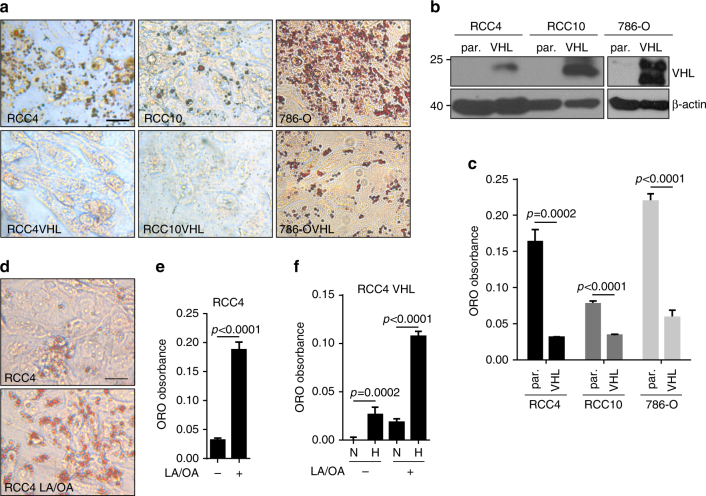
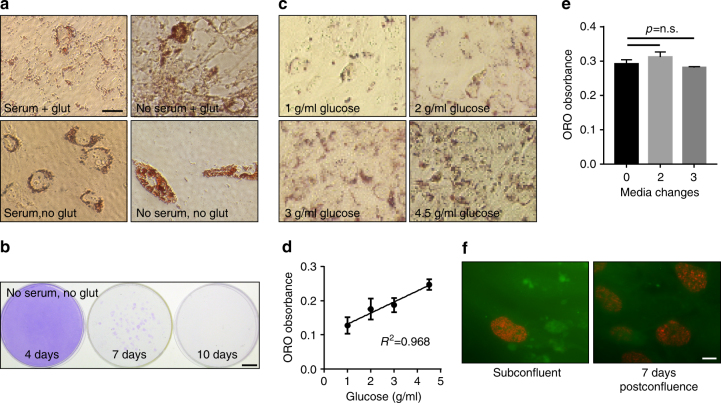
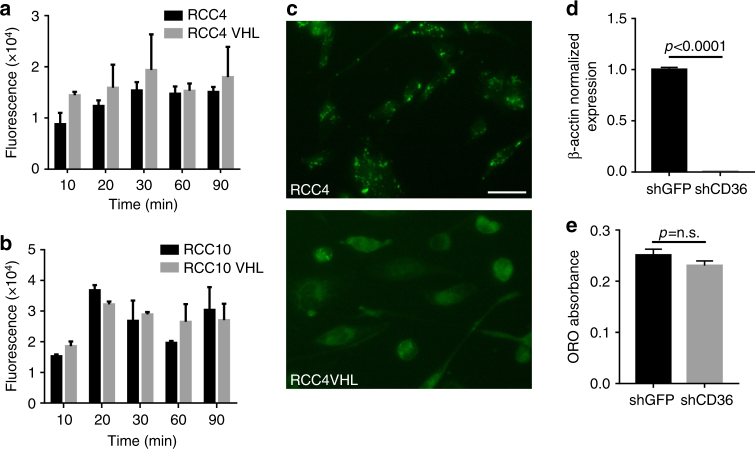
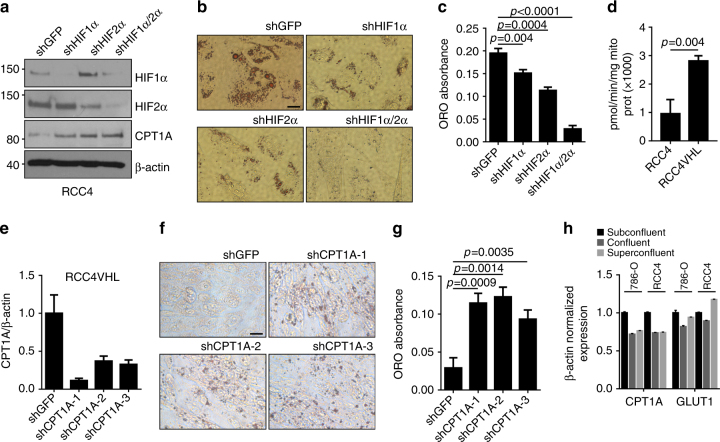
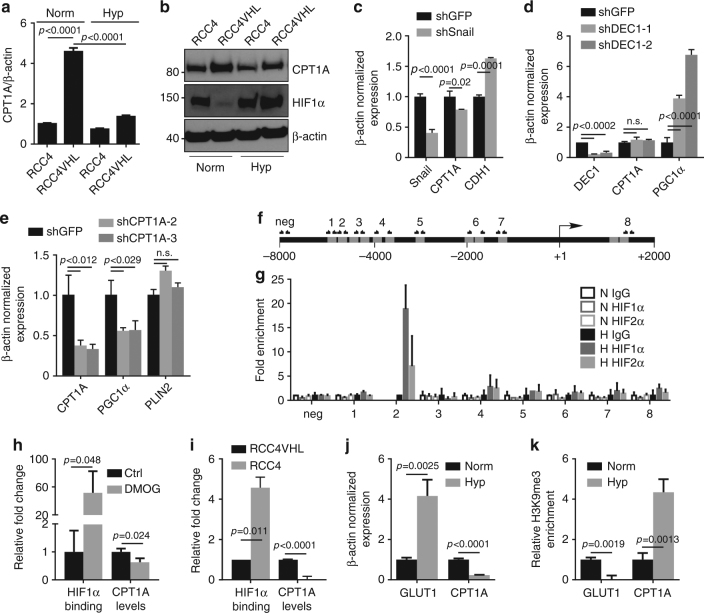
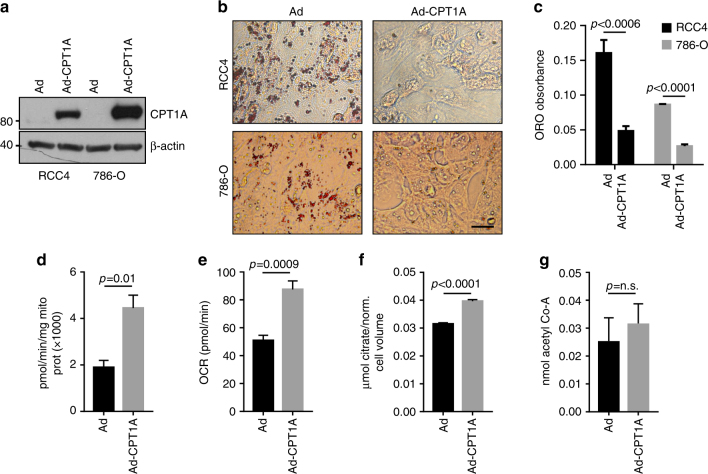
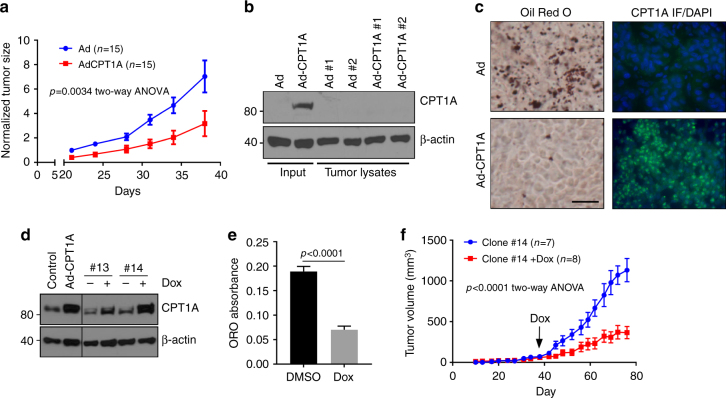
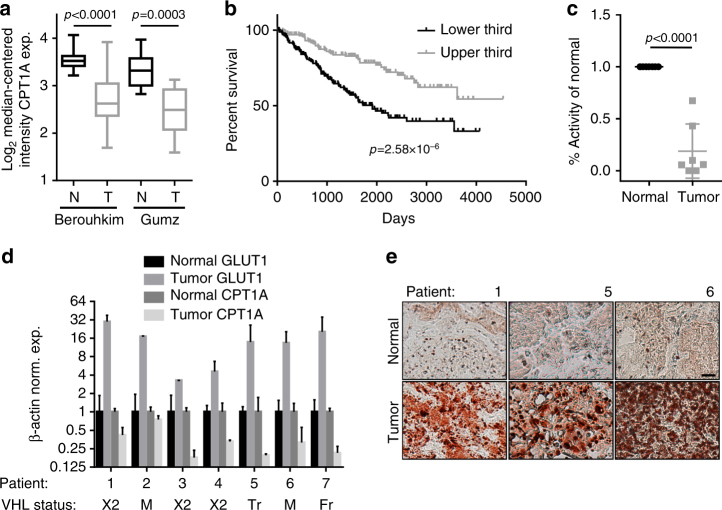
Clear cell renal cell carcinoma (ccRCC) is histologically defined by its lipid and glycogen-rich cytoplasmic deposits. Alterations in the VHL tumor suppressor stabilizing the hypoxia-inducible factors (HIFs) are the most prevalent molecular features of clear cell tumors. The significance of lipid deposition remains undefined. We describe the mechanism of lipid deposition in ccRCC by identifying the rate-limiting component of mitochondrial fatty acid transport, carnitine palmitoyltransferase 1A ( CPT1A ), as a direct HIF target gene. CPT1A is repressed by HIF1 and HIF2, reducing fatty acid transport into the mitochondria, and forcing fatty acids to lipid droplets for storage. Droplet formation occurs independent of lipid source, but only when CPT1A is repressed. Functionally, repression of CPT1A is critical for tumor formation, as elevated CPT1A expression limits tumor growth. In human tumors, CPT1A expression and activity are decreased versus normal kidney; and poor patient outcome associates with lower expression of CPT1A in tumors in TCGA. Together, our studies identify HIF control of fatty acid metabolism as essential for ccRCC tumorigenesis.
Overview
The claims and statistics of this paper haven’t been checked yet.
Free: it reads the open-access text and checks the first 5 claims that cite a source we can check. Create a free account to check every claim.
Integrity signals
Registry
Cites
Statistics
Figures
Verification
Claims the paper makes
The claims and statistics of this paper haven’t been checked yet.
Free: it reads the open-access text and checks the first 5 claims that cite a source we can check. Create a free account to check every claim.
Claims other papers make about this one
Each is checked against this paper’s own text: does it say what the citing paper says it does?
The cited source says what the claim attributes to it.
In the citing paper
“Indeed, both HIF-1α and HIF-2α suppress CPT1A, the rate limiting component for FA import into the mitochondria, thus channeling FAs away from β-oxidation to lipid storage, which is essential for ccRCC tumorigenesis [48].”
From The HIF Axes in Cancer - Angiogenesis, Metabolism and Immune-Modulation (2025) · cites this paper as [48]
In the citing paper
“Furthermore, HIF-2α represses the transcription of carnitine palmitoyltransferase 1A (CPT1A), which is responsible for mitochondrial β-oxidation by transporting fatty acids and results in lipid deposition78.”
From Glutamine reliance in cell metabolism (2020) · cites this paper as [78]
Self-check
Percentages, sums and reported differences re-computed from the paper’s own numbers.
The self-check needs the paper’s full text.
Citations
Cites
Hallmarks of Cancer: The Next Generation
Hanahan, D., & Weinberg, R. A. (2011) · Cell · doi:10.1016/j.cell.2011.02.013 · Cited by 66,590
Sulforhodamine B colorimetric assay for cytotoxicity screening
Vichai, V., & Kirtikara, K. (2006) · Nature Protocols · doi:10.1038/nprot.2006.179 · Cited by 3,671
Comprehensive molecular characterization of clear cell renal cell carcinoma
The Cancer Genome Atlas Research Network (2013) · Nature · doi:10.1038/nature12222 · Cited by 3,485
HIF-1 mediates adaptation to hypoxia by actively downregulating mitochondrial oxygen consumption
Papandreou, I., Cairns, R. A., Fontana, L., Lim, A. L., & Denko, N. C. (2006) · Cell Metabolism · doi:10.1016/j.cmet.2006.01.012 · Cited by 2,267
Cellular Fatty Acid Metabolism and Cancer
Currie, E., Schulze, A., Zechner, R., Walther, T. C., & Farese, R. V. (2013) · Cell Metabolism · doi:10.1016/j.cmet.2013.05.017 · Cited by 2,123
Reductive glutamine metabolism by IDH1 mediates lipogenesis under hypoxia
Metallo, C. M., Gameiro, P. A., Bell, E. L., Mattaini, K. R., Yang, J., Hiller, K., Jewell, C. M., Johnson, Z. R., Irvine, D. J., Guarente, L., et al. (2012) · Nature · doi:10.1038/nature10602 · Cited by 1,791
Kang, H. M., Ahn, S. H., Choi, P., Ko, Y.-A., Han, S. H., Chinga, F., Park, A. S. D., Tao, J., Sharma, K., Pullman, J., et al. (2015) · Nature Medicine · doi:10.1038/nm.3762 · Cited by 1,555
An Integrated Metabolic Atlas of Clear Cell Renal Cell Carcinoma
Hakimi, A. A., Reznik, E., Lee, C.-H., Creighton, C. J., Brannon, A. R., Luna, A., Aksoy, B. A., Liu, E. M., Shen, R., Lee, W., et al. (2016) · Cancer Cell · doi:10.1016/j.ccell.2015.12.004 · Cited by 798
The von Hippel–Lindau tumour suppressor protein: O2 sensing and cancer
Kaelin Jr, W. G. (2008) · Nature Reviews Cancer · doi:10.1038/nrc2502 · Cited by 726
Bensaad, K., Favaro, E., Lewis, C. A., Peck, B., Lord, S., Collins, J. M., Pinnick, K. E., Wigfield, S., Buffa, F. M., Li, J.-L., et al. (2014) · Cell Reports · doi:10.1016/j.celrep.2014.08.056 · Cited by 665
Cited by
Items 301–400 of 470
Ye, J., Chen, Y., Shao, Z., Wu, Y., Li, Y., Fang, S., & Wu, S. (2024) · Journal of Cellular and Molecular Medicine · doi:10.1111/jcmm.70291 · Cited by 8
Zhang, Q., Zhu, F., Tong, Y., Huang, Y., & Zhang, J. (2025) · Cells · doi:10.3390/cells14040253 · Cited by 6
“…transformation from citrate to acetyl-CoA, which is subsequently converted into palmitic acid and monounsaturated FAs by ACLY, FASN, and SCD. FAs are then converted into TGs, which can be preserved as lipid droplets as an energy reserve to support the unchecked proliferation of cancer cells [8,9].”
Fresnedo, O., Lopez-Gomez, J. A., Ceniceros, C., Larrinaga, G., Saiz, A., Mosteiro, L., Navarro-Imaz, H., & Rueda, Y. (2025) · Scientific Reports · doi:10.1038/s41598-025-09664-x · Cited by 6
“These include a prosteatotic effect due to CD36 overexpression 10 and the limitation of the mitochondrial metabolism of fatty acids (FA) 11 ; a reduction in cholesterogenesis as a consequence of INSIG-2 induction 12 ; and alterations in sphingolipid metabolism due to changes in the expression of…”
Cheng, G., Yu, Y., Wang, L., & Pan, Q. (2020) · Aging · doi:10.18632/aging.103091 · Cited by 6
“The fatty acid metabolism in ccRCC attract much attention and was confirmed to promote tumor progression [33, 34].”
BackgroundHigh SPATA18 Expression and its Diagnostic and Prognostic Value in Clear Cell Renal Cell Carcinoma
Lingui, X., Weifeng, L., Wang, Y., & Yibin, Z. (2023) · Medical Science Monitor · doi:10.12659/msm.938474 · Cited by 12
“Based on the literature review, we further analyzed the cause of this phenomenon, finding that there are many fat droplets in renal clear cell carcinoma tissue [29] that do not exist in other cancer tissues [30], and we found that ROS (reactive oxygen species, mainly produced in and targeted at mitochondria [31]) was…”
Murali, R., & Gopalakrishnan, A. V. (2023) · Medical Oncology · doi:10.1007/s12032-023-02225-0 · Cited by 7
“Downregulation of TCA cycle genes, downregulation of the β-oxidation pathway, and upregulation of glutamine transporters are associated with aggressive ccRCC and poor patient outcomes [38–40].”
BackgroundLi, X., Yuan-kai, W., Xiao, Z., Liu, Y., Wang, C., Zhou, L., & Yang, X. (2023) · Pathology - Research and Practice · doi:10.1016/j.prp.2023.154984 · Cited by 7
Li, G., Shen, Y., Wang, F., Hong, S. M., & Cai, M. (2020) · Medical Science Monitor · doi:10.12659/msm.920473 · Cited by 6
Epigenetic signature predicts overall survival clear cell renal cell carcinoma
Wang, Y., Chen, L., Ju, L., Qian, K., Wang, X., Xiao, Y., & Wang, G. (2020) · Cancer Cell International · doi:10.1186/s12935-020-01640-x · Cited by 10
Ren, X., Zhao, J., Liang, X.-F., Guo, X., Jiang, S.-B., & Xiang, Y. (2021) · Frontiers in Medicine · doi:10.3389/fmed.2021.785331 · Cited by 6
“In ccRCC, changes inmetabolic pathways, such as fatty acidmetabolism and glycerophospholipid metabolism, modulate tumor energetics and biosynthesis (23, 24).”
BackgroundBellal, S., Rolley, C., Richard, J., Bounaix, N., Corre, V. L., Copin, M., Blanchet, O., Bigot, P., Procaccio, V., & Bris, C. (2025) · Pathology & Oncology Research · doi:10.3389/pore.2025.1612172 · Cited by 9
Mo, Y., Wang, D., & Bai, Y. (2025) · Medicinal Research Reviews · doi:10.1002/med.70014 · Cited by 7
“Du et al. found that in cancer cells, CPT1A is regulated by HIF ‐ 1 α [95].”
Tian, X., Jiang, Y., Zhu, S., Liu, X., Anwaier, A., Ye, S., Chang, K. S., Qu, Y., Gu, Y., Zhang, H., et al. (2025) · View · doi:10.1002/viw.20250157 · Cited by 6
Alnukhali, M., Fornoni, A., Pollack, A., & Ahmad, A. (2026) · Seminars in Cancer Biology · doi:10.1016/j.semcancer.2025.12.010 · Cited by 6
Yang, M., Gong, C., Pang, D., Song, K., Huang, N., Ma, H., Gong, H., Chen, H., Xu, W., Yu, Y., et al. (2025) · Journal of Translational Medicine · doi:10.1186/s12967-025-06882-9 · Cited by 8
“Weinan Du et al. reported that CPT1A is a rate-limiting enzyme associated with β-oxidative metabolism of fatty acids, and that the level of PGC1α reflects the degree of mitochondrial biogenesis and oxidative metabolic processes [30].”
VHL synthetic lethality screens uncover CBF-β as a negative regulator of STING
Bertlin, J. A. C., Pauzaite, T., Liang, Q., Wit, N., Williamson, J. C., Sia, J. J., Matheson, N. J., Ortmann, B. M., Mitchell, T. J., Speak, A. O., et al. (2026) · Nature Communications · doi:10.1038/s41467-026-70517-w · Cited by 4
“…distinctive features of ccRCCs: vascular endothelial growth factor (VEGF) secretion results in highly angiogenic tumours, while increased fatty acid biosynthesis and impaired mitochondrial fatty acid transport cause cytoplasmic lipid deposition and the characteristic clear cell morphology 15 – 18 .”
Xie, J., Cui, L., Pan, S., Liu, D., Liu, F., & Liu, Z. (2022) · Disease Markers · doi:10.1155/2022/6085072 · Cited by 5
“Yet, many of the identified biomarkers have not been studied for their effect on the cellular phenotype and respective underlying molecular mechanisms in the KIRC [6].”
BackgroundJia, Z., Fu, Z., Kong, Y., Wang, C., Zhou, B., Lin, Y., & Huang, Y. (2023) · Translational Oncology · doi:10.1016/j.tranon.2023.101774 · Cited by 5
Zhang, B., Zhu, Y., Tang, Y., Liu, L., Liu, Y., Li, Y., Yu, W., & Lü, L. (2025) · Journal of Biological Chemistry · doi:10.1016/j.jbc.2025.108296 · Cited by 8
“As the rate-limiting enzyme for mitochondrial fatty acid transport, the expression of CPT1A is diminished by HIFs, which contributes to hypoxia-mediated LD accumulation (8).”
InfluentialMao, R., Shi, J., Ma, X., & Xu, H. (2021) · PPAR Research · doi:10.1155/2021/6631605 · Cited by 6
“reported that the accumulation of lipid droplets in the 786-O cells is associated with the low expression of CPT1A, and glucose is the major ingredient for the formation of the lipid droplets in the 786-O cells [35].”
BackgroundYao, Z., Zheng, Z., Zheng, X., Wu, H., Zhao, W., Mu, X., Sun, F., Wu, K., & Zheng, J. (2022) · Oxidative Medicine and Cellular Longevity · doi:10.1155/2022/9039732 · Cited by 5
“Accounting for 70% of pathologically determined RCC, clear cell renal cell carcinoma (ccRCC) is often histologically marked by enriched lipid and glycogen in fi ltration [2].”
FLCN Regulates HIF2α Nuclear Import and Proliferation of Clear Cell Renal Cell Carcinoma
Zhao, X., Ma, Y., Cui, J., Zhao, H., Liu, L., Wang, Y., Min, P., Zhang, L., Chen, Y., Du, J., et al. (2020) · Frontiers in Molecular Biosciences · doi:10.3389/fmolb.2020.00121 · Cited by 8
“, 2011) which can mediate cancer cell proliferation and invasion (Maranchie and Zhan, 2005; Pawlus et al., 2012; Du et al., 2017).”
BackgroundSelf-citationChen, D., & Hua, C. (2025) · Frontiers in Medicine · doi:10.3389/fmed.2025.1735808 · Cited by 7
Immunobiology and Metabolic Pathways of Renal Cell Carcinoma
Braun, D. A., & Chakraborty, A. A. (2023) · Hematology/Oncology Clinics of North America · doi:10.1016/j.hoc.2023.04.012 · Cited by 4
Lipid Metabolism Pathway and Renal Tumor Therapy
Wang, W., & Xin, C. (2023) · annals of urologic oncology · doi:10.32948/auo.2023.12.30 · Cited by 5
Machine Learning-Based Pathomics Model to Predict the Prognosis in Clear Cell Renal Cell Carcinoma
Li, X., Yang, X., Yang, X., Xie, X., Rui, W., & He, H. (2024) · Technology in Cancer Research & Treatment · doi:10.1177/15330338241307686 · Cited by 6
Wang, N., Xu, Z., Zhang, L., Lu, Y., Wang, Y., Yan, L., Cao, H., Wang, L., & Shao, F. (2025) · Frontiers in Immunology · doi:10.3389/fimmu.2025.1615601 · Cited by 6
“In ccRCC, this process is marked by signi fi cant disruptions in lipid metabolism (39).”
Self-citationPakhira, S., Kundu, S., & Roy, S. S. (2025) · Biochimica et Biophysica Acta (BBA) - Reviews on Cancer · doi:10.1016/j.bbcan.2025.189447 · Cited by 7
STBD1 mediates the crosstalk between glycogen and lipid droplets in clear cell renal cell carcinoma
Wang, H., Xiao, T., Zhuang, H., Liu, Y., Jin, K., Li, J., Li, J., Gao, Y., Yue, D., Cui, W., et al. (2025) · Cell Reports · doi:10.1016/j.celrep.2025.116429 · Cited by 6
Osteosarcoma immunometabolism: emerging mechanisms and clinical implications
Tan, B., & Ning, J. (2025) · Frontiers in Immunology · doi:10.3389/fimmu.2025.1689790 · Cited by 9
Rezaei, R., Larki, A. A., Hosseinzadegan, R., Dashti, Z. J. S., Tarkashvand, S., Akhoondi, R., Siri, M., Shams, M., Monsef, A., & Dastghaib, S. (2024) · International Journal of Clinical Practice · doi:10.1155/2024/8805868 · Cited by 7
“HIF1 and HIF2 suppress CPT1A, which reduces the amount of fatty acids that are transported into the mitochondria and causes lipid droplets to accumulate [44].”
BackgroundLipoproteins and the Tumor Microenvironment
Dossou, A. S., Sabnis, N. A., Nagarajan, B., Mathew, E., Fudala, R., & Lacko, A. G. (2020) · Advances in experimental medicine and biology · doi:10.1007/978-3-030-48457-6_6 · Cited by 4
Tao, Y., Luo, J., Zhu, H., Chu, Y., & Pei, L. (2022) · Digestive Diseases and Sciences · doi:10.1007/s10620-022-07751-x · Cited by 5
“HIF-1α has been reported to regulate cell metabolism [30].”
BackgroundKonaté, M. M., Li, M., McShane, L. M., & Zhao, Y. (2022) · Scientific Reports · doi:10.1038/s41598-022-23693-w · Cited by 4
Yang, M., Gong, C., Song, K., Huang, N., Chen, H., Gong, H., Yang, Y., Guo, S., & Xiao, H. (2023) · Oxidative Medicine and Cellular Longevity · doi:10.1155/2023/5885203 · Cited by 6
“The proliferation of renal cancer cells undergoes oxidative metabolic reprogramming during adaptation to the hypoxic tumor microenvironment, such as the downregulation processes of hypoxia-induced fatty acid catabolism [51 – 53].”
Yao, Q., Zhang, X., Wei, C., Chen, H., Xu, Q., Chen, J., & Chen, D. (2023) · Heliyon · doi:10.1016/j.heliyon.2023.e17224 · Cited by 4
VHL-deficiency leads to reductive stress in renal cells
Vellama, H., Eskla, K., Eichelmann, H. Y., Hüva, A., Tennant, D. A., Thakker, A., Roberts, J., Jagomäe, T., Porosk, R., Laisk, A., et al. (2023) · Free Radical Biology and Medicine · doi:10.1016/j.freeradbiomed.2023.07.029 · Cited by 4
“Taken together, these results suggest a more reductive metabolic environment in VHL-deficient renal proximal tubular cells, which is sustained by channelling the excess reductive power into fatty-acid synthesis [20].”
BackgroundGreco, F., Panunzio, A., Cerroni, L., Cea, L., Bernetti, C., Tafuri, A., Zobel, B. B., & Mallio, C. A. (2024) · International Journal of Molecular Sciences · doi:10.3390/ijms252312587 · Cited by 3
“Clear cell renal cell carcinoma (ccRCC) tumors are rich in neutral lipids like CHOL esters and triglycerides, reflecting substantial lipid buildup within the cells [8,9].”
Chen, J., Zhu, C., He, Y., Huang, L., Wang, W., & Huang, S. (2025) · Discover Oncology · doi:10.1007/s12672-025-01831-w · Cited by 4
A Feedback Loop Between Fatty Acid Metabolism and Epigenetics in Clear Cell Renal Carcinoma
Zhou, Y., Hu, Q., Wei, M., Chen, J., Shi, J., Yang, N., Jiang, L., Chen, J., Chen, Z.-Y., Yu, W., et al. (2025) · Advanced Science · doi:10.1002/advs.202504532 · Cited by 5
Coordinated expression of retained introns and poison exons in renal cell carcinoma
Martínez, J. C., Zhou, M., Giri, G., Tsai, Y., Rowley, M. M., Goda, G. A., Aleman, M. M., Kim, W. Y., & Domínguez, D. J. G. (2025) · Cell Reports · doi:10.1016/j.celrep.2025.115985 · Cited by 6
“71 Not all patients respond to ICI therapy, and the mechanisms modulating treatment response continue to be investigated (reviewed in Morad et al. 72 ).”
Tian, Y., Ren, C., Wang, H., Yang, W., Ye, J., Cai, B., Yang, K., Chi, Y., Zhang, D., Pan, X., et al. (2026) · Phytomedicine · doi:10.1016/j.phymed.2026.157884 · Cited by 3
Zou, C., Wang, Y. J., Chen, Q., Shi, J., Wu, X., & Luo, Q. (2026) · Frontiers in Oncology · doi:10.3389/fonc.2026.1745024 · Cited by 3
Lv, Y., Gu, G., Zeng, R., Liu, Z., Wu, J., & Zheng, Y. (2023) · Experimental Biology and Medicine · doi:10.1177/15353702231199475 · Cited by 3
“43 There have been numerous studies that have shown that human tumors are overexpressed with HSF1.”
BackgroundJo, S., Seo, M., Nguyen, T. H., Cha, J. W., An, Y. J., & Park, S. (2024) · Journal of the American Chemical Society · doi:10.1021/jacs.4c11809 · Cited by 3
Yang, Y., Li, D., Liu, Z., Zhou, K., Li, W., Yang, Y., Sun, R., & Li, Y. (2025) · Discover Oncology · doi:10.1007/s12672-024-01352-y · Cited by 3
“Altered metabolism is a well-recognized hallmark of cancer cells [29]. ccRCC is perhaps one of the most typical examples, and a notable change histologically is the appearance of a vast amount of lipids [30].”
The Role of HADHB in Mitochondrial Fatty Acid Metabolism During Initiation of Metastasis in ccRCC
Li, X., Wu, M., Chen, G., Ma, W., Chen, Y., Ding, Y., Dong, P., Ding, W., Zhang, L., Yang, L., et al. (2025) · Molecular Carcinogenesis · doi:10.1002/mc.23898 · Cited by 5
“Unlike normal renal cells, ccRCC cells have a pronounced tendency for lipid accumulation over lipid catabolism [31].”
Self-citationDeletion of the transcription factor ATF4 in a model of clear cell renal cell carcinoma
Chi, Y., Chikara, S., Aguila, E. M. D., Zhang, T., Geri, J. B., Nanus, D. M., & Gudas, L. J. (2025) · Neoplasia · doi:10.1016/j.neo.2025.101188 · Cited by 4
“…million mapped read; GSEA, gene set enrichment analysis; Fasn, fatty acid synthase; Fabps, fatty acid binding proteins; Acat, acetyl-CoA acetyltransferase; Hmgcs, 3-Hydroxy-3-Methylglutaryl-CoA Synthase; Fatps, fatty acid transport proteins; Ddit4, damage-inducible transcript 4. metabolism [12,13].”
Wang, J., Chen, J., Jiang, L., Wu, Q., & Wang, D. (2022) · Journal of Oncology · doi:10.1155/2022/7693993 · Cited by 3
“ccRCC with higher malignancy seems to bypass HIF1adriven lipid storage and increase the activation of β oxidation [4, 5].”
Cholesterol accumulation in ccRCC: the role of ccRCC-initiating VHL-HIFα pathway
Mohtar, M. A., Yusuf, S. N. H. M., & Syafruddin, S. E. (2024) · EBioMedicine · doi:10.1016/j.ebiom.2024.105112 · Cited by 3
“6,7 Despite these fi ndings, the pathological relevance and molecular mechanisms underpinning lipid accumulation in ccRCC, speci fi cally with respect to CE, remains elusive.”
BackgroundDeskeuvre, M., Lan, J., Messens, J., Riant, O., Féron, O., & Frédérick, R. (2024) · International Journal of Pharmaceutics · doi:10.1016/j.ijpharm.2024.124132 · Cited by 4
Bai, X., Peng, C. Y., Liu, B., Zhou, S., Guo, H., Hao, Y., Liu, H., Chen, Y., Liu, X., Ning, X., et al. (2024) · Journal of Magnetic Resonance Imaging · doi:10.1002/jmri.29588 · Cited by 3
“29,30 Furthermore, for the widely discussed ccLS classi fi cation, 21 the preliminary results of the current study indicated that ccRCCs with VHL mutations had signi fi cantly higher ccLS scores in the local cohort, suggesting a more typical MRI appearance.”
Chang, Q., Zhao, S., Sun, J., Guo, W., Yang, L., Qiu, L., Zhang, N., Fan, Y., & Liu, J. (2025) · Frontiers in Endocrinology · doi:10.3389/fendo.2025.1521940 · Cited by 3
Špendl, M., Kokošar, J., Praznik, E., Ausec, L., & Zupan, B. (2023) · Lecture notes in computer science · doi:10.1007/978-3-031-34344-5_39 · Cited by 3
Wei, X., Yang, S., Pu, X., He, S., Yang, Z., Sheng, X., Chen, W., & Zhang, Y. (2020) · Research Square · doi:10.21203/rs.3.rs-41006/v1 · Cited by 3
“There is a large amount of adipose tissue around lymphoma, CPT1A plays a crucial role in the reprogramming of lipid metabolism[10, 11].”
BackgroundOzawa, M., Naito, S., Makinoshima, H., Ito, H., Tsuya, A., Narisawa, T., Fukuhara, H., Takai, Y., Ushijima, M., Yagi, M., et al. (2025) · BMC Cancer · doi:10.1186/s12885-025-14661-4 · Cited by 3
“HIFs also promote lipid deposition [15, 22, 23] and angiogenesis [24].”
Huang, B., Yu, H., Wen, Z., Dong, J., Jin, S., & Li, H. (2025) · Lipids in Health and Disease · doi:10.1186/s12944-025-02746-9 · Cited by 3
“When oxygen levels drop, there is an increase in the accumulation of LDs, which acts as a protective mechanism against toxicity caused by oxidative stress [54, 57].”
Miao, D., Shi, J., Tan, D., Zhao, C., Lv, Q., Lu, F., Yang, J., Yang, H., Xiong, Z., & Zhang, X. (2025) · Cell Death and Differentiation · doi:10.1038/s41418-025-01646-w · Cited by 5
“Morphologically, ccRCC is termed “ clear-cell ” due to its rich contents of lipid droplets and glycogen [7].”
Wang, J., Nan, Y., Liu, Q., Ding, T., Liu, D., Duo, L., Zhao, J., Gao, S., Zhang, Y., Dai, Z., et al. (2026) · Cancer Research · doi:10.1158/0008-5472.can-25-3780 · Cited by 4
“These LDs in ccRCC cells are primarily composed of free fatty acids, glycerol, and sterols, which subsequently provide essential precursors for cellular proliferation within ccRCC (38, 45).”
Qi, X., Guo, Y. A., Yang, Y., Wang, H., Yang, X., Song, R., Qin, Q., Zhang, Y., Hu, M., Zhou, H., et al. (2026) · Advanced Science · doi:10.1002/advs.202511606 · Cited by 3
“Clear cell renal cell carcinoma (ccRCC) is characterized by excessive lipid droplet (LD) accumulation, which correlates with poor prognosis [ 15, 16 ].”
Bouraoui, Y., Said, R., Bruß, C., Martowicz, A., Wagner, K., Weber, F., Engelmann, S. U., Kälble, S., Höring, M., Liebisch, G., et al. (2026) · Frontiers in Immunology · doi:10.3389/fimmu.2026.1773666 · Cited by 3
Nguyen, T.-N., Nguyen-Tran, H.-H., Huang, K., Kuo, K.-L., Liao, S.-M., Lin, W., & Hsu, T. (2026) · Cancer Letters · doi:10.1016/j.canlet.2026.218605 · Cited by 2
Wang, D., Horton, T. M., Lee, K. D., Ogobuiro, I. C., Vatankhah, F., Ramos-Andrade, I., Pisano, J. C., Thakur, V. S., Gurevich, M. K., Taylor, S., et al. (2026) · Cancer Research · doi:10.1158/0008-5472.can-25-3236 · Cited by 3
Self-citationObesity-driven metabolic reprogramming and immune dysfunction in renal cancer
Ogbonna, H. N., & Norian, L. A. (2026) · Frontiers in Immunology · doi:10.3389/fimmu.2026.1866875 · Cited by 2
“With increasing HIF activation due to the lack of VHL, CPT1A expression is inhibited, promoting intracellular lipid accumulation (87).”
Yang, C., Tian, Y., & Lin, Q. (2022) · Epigenomics · doi:10.2217/epi-2022-0202 · Cited by 2
Unanticipated metabolic plasticity in response to chronic hypoxia
Papandreou, I., Benej, M., & Denko, N. C. (2023) · Cell Metabolism · doi:10.1016/j.cmet.2023.02.011 · Cited by 4
Loss of ACOX1 in clear cell renal cell carcinoma and its correlation with clinical features
Mo, Y., Zhao, J., Zhao, R., Huang, Y., Liang, Z., Zhou, X., Chu, J., Pan, X., Duan, S., Chen, S., et al. (2023) · Open Life Sciences · doi:10.1515/biol-2022-0696 · Cited by 3
“adaptation in ccRCC leads to the activation of lipid storage pathways, which is a necessary step in the development of malignant tumors [23].”
BackgroundPang, L. F., Hou, Y., Wang, X., Du, J., Huang, H., Yang, M., Wang, S., An, C., Meng, T., & Li, H. (2023) · Current Chinese Science · doi:10.2174/0122102981264993230925164537 · Cited by 2
Tomić, T., Tomić, D., Vukoja, M., Kraljević, M., Ljevak, I., Glamočlija, U., Tomić, V., Vukojević, K., Perak, R. B., & Šoljić, V. (2024) · Biomedicines · doi:10.3390/biomedicines12010149 · Cited by 2
“Loss-of-function mutation in VHL gene induces abnormal regulation of a number of VHL-mediated targets, pathways, and processes, which is a significant step in the onset and development of ccRCC [7,8].”
BackgroundQiu, J., YANG, T., SUN, Y., SUN, K., Xu, Y., & Xia, Q. (2024) · Oncology Research Featuring Preclinical and Clinical Cancer Therapeutics · doi:10.32604/or.2023.030462 · Cited by 2
“When overexpressing CPT1A, intracellular lipid deposition and KIRC formation were reduced [29].”
BackgroundZhang, M.-Q., Yang, B.-Z., Wang, Z., & Guo, S. (2024) · Medicine · doi:10.1097/md.0000000000037207 · Cited by 2
“[23] ccRCC cells exhibit characteristics of malignant epithelial cells, displaying transparent cytoplasm as a result of abundant lipid and glycogen accumulations.”
Kim, Y.-H., Chung, J., Lee, H. H., Park, J., & Kim, M. K. (2024) · Nutrients · doi:10.3390/nu16091265 · Cited by 3
“…along with the network of 79 metabolites; Figure S2: Results of random forest model via machine learning; Figure S3: Correlation between LysoPC and PUFAs in each group and nutritional analysis flow chart; Table S1: Distribution of cancer diagnoses, sites, and stages at diagnosis of renal”
BackgroundMethodLiu, W., Wang, Y., & Zhou, Y. (2024) · Translational Cancer Research · doi:10.21037/tcr-23-2058 · Cited by 2
“Hypoxia-induced factor (HIF) played a crucial role in the pathophysiology of ccRCC, and they could influence tumorigenesis of ccRCC by controlling fatty acid metabolism (47).”
Development of prognostic signatures and risk index related to lipid metabolism in ccRCC
Chen, W., Zhao, Z., Zhou, H., Dong, S., Li, X., Hu, S. C., Zhong, S., & Chen, K. (2024) · Frontiers in Oncology · doi:10.3389/fonc.2024.1378095 · Cited by 5
Urinary multi-omics reveal non-invasive diagnostic biomarkers in clear cell renal cell carcinoma
Jonsson, G., Oliveira, T., Hofmann, M., Lemberger, U. J., Stejskal, K., Krššáková, G., Sakic, I., Novatchkova, M., Mereiter, S., Grabmann, G., et al. (2026) · EMBO Molecular Medicine · doi:10.1038/s44321-026-00498-2 · Cited by 1
Urinary metabolites in association with kidney cancer risk
Al-Sayegh, T., Song, S., Lipworth, L. P., Cai, H., Qing Lan, B., Gao, Y., Rothman, N., Cai, Q., Zheng, W., & Shu, X. (2025) · Carcinogenesis · doi:10.1093/carcin/bgaf029 · Cited by 2
“In fact, lipid and glycogen-rich deposits in the cytoplasm are some of the histologically defining features of ccRCC (40).”
InfluentialZhang, F., Zheng, L., Zhou, W., He, X., & Liao, S. (2024) · Cell Biochemistry and Biophysics · doi:10.1007/s12013-024-01309-6 · Cited by 4
“Because cellular lipid deposition in tumors represents a key adaptive response in the progression of malignancy, inhibition of lipid deposition may reduce the risk of ccRCC by limiting tumor growth [29, 30].”
Bacigalupa, Z. A., Brown, W. A., Krystofiak, E., Wolf, M. M., Hongo, R. A., Landis, M. D., Amason, E. K., Beckermann, K. E., Rathmell, J. C., & Rathmell, W. K. (2022) · bioRxiv (Cold Spring Harbor Laboratory) · doi:10.1101/2022.04.21.489116 · Cited by 2
Bancet, A., Frem, R., Jeanneret, F., Mularoni, A., Bazelle, P., Roelants, C., Delcros, J., Guichou, J., Pillet, C., Coste, I., et al. (2022) · bioRxiv (Cold Spring Harbor Laboratory) · doi:10.1101/2022.12.16.520736 · Cited by 2
“In particular, HIF expression drives lipid deposition in ccRCC via the repression of fatty acid metabolism (Du et al., 2017).”
BackgroundLipid droplets: a candidate new research field for epithelial ovarian cancer
Koizume, S., Takahashi, T., & Miyagi, Y. (2024) · Frontiers in Pharmacology · doi:10.3389/fphar.2024.1437161 · Cited by 2
Cui, D., Yang, W., Guan, B., Wu, W., & Yu, W. (2025) · Genetics Research · doi:10.1155/genr/2237539 · Cited by 1
“Te extensive lipid storage in ccRCC not only infuences the tumor’s energy homeostasis but also releases lipid substances during cell proliferation for the synthesis of cellular biomembranes [10].”
Dou, Y. (2025) · New cell · doi:10.61958/ncjt1177 · Cited by 1
Zhan, T., Chen, M., Zhu, Q., Liu, M., Tan, J., Chen, X., Liu, J., Han, Z., Zou, Y., Xia, T., et al. (2025) · Biochimica et Biophysica Acta (BBA) - Molecular Basis of Disease · doi:10.1016/j.bbadis.2025.167919 · Cited by 3
Large scale gene set ranking for survival-related gene sets
Špendl, M., Kokošar, J., Praznik, E., Ausec, L., Štajdohar, M. R., & Zupan, B. (2025) · Artificial Intelligence in Medicine · doi:10.1016/j.artmed.2025.103149 · Cited by 1
Wang, Y., Li, P., Feng, T., Chen, Y., Liu, W., Ge, Q., & Zhang, Q. (2025) · Frontiers in Immunology · doi:10.3389/fimmu.2025.1630053 · Cited by 1
“Furthermore, HIFs control the RCC tumorigenesis in the same way (56).”
Gregory, A., Awad, A. M., Eltanani, S., Yumnamcha, T., Hart, J., Me, R., Lin, X., Shawky, M., & Ibrahim, A. S. (2025) · Frontiers in Pharmacology · doi:10.3389/fphar.2025.1660067 · Cited by 1
Kim, M., Song, G., Joung, J. Y., Seo, H. K., Lee, H. H., & Chung, J. (2025) · Journal of Korean Medical Science · doi:10.3346/jkms.2025.40.e333 · Cited by 1
Nanotechnology-based PD-L1 siRNA codelivery systems for improving cancer immunotherapy
Jabarimani, N., Sadeghi, M. S., Edalat, M., Atyabi, F., Jadidi‐Niaragh, F., & Dorkoosh, F. A. (2025) · Journal of drug targeting · doi:10.1080/1061186x.2025.2581984 · Cited by 3
“As a result, ROS generation from fatty acid oxidation (FAO) will not face a shortage of substrate. to stop the oxidative damage caused by elevated ROS levels, FAO is downregulated in cancer cells [60]. thus, Sustainable ROS generation is achieved by FAO augmentation [61].”
Yao, J.-T., Hu, P.-C., Li, X., Xu, J., Wang, K., Ye, S., Meng, X.-Y., Chen, H., Liang, Y., & Ma, Q. (2025) · Genes & Diseases · doi:10.1016/j.gendis.2025.101991 · Cited by 2
“60 Pharmacological activation of CPT1A attenuates lipid deposition while suppressing ccRCC cell proliferation and migration.”
Mitochondrial changes in clear cell renal cell carcinoma: mechanisms and potential targets
Yang, J., Pan, X., Luo, X., Zheng, X., & Wang, J. (2026) · Biochemical and Biophysical Research Communications · doi:10.1016/j.bbrc.2026.153354 · Cited by 1
Feng, F., Xu, Y., Deng, Z., Dong, X., Guijuan, C. H. E. N., Ma, W., Li, D., & Gan, W. (2026) · Frontiers in Immunology · doi:10.3389/fimmu.2026.1700983 · Cited by 1
“Interestingly, in ccRCC tumor tissues, CPT1A has been reported to reduce lipid accumulation in tumor cells and inhibit cell proliferation (30 – 32), again highlighting context-speci fi c roles.”
A Mitochondrial Plasma Proteomic Signature Identifies Metastatic Chromophobe Renal Cell Carcinoma
Steiner, C., Han, T., Safi, S., Bzeih, W., Mansour, H., Saad, E., Williams, J. F., Hirsch, M. S., Giri, V. K., Ascione, L., et al. (2026) · Cancers · doi:10.3390/cancers18061032 · Cited by 1
“While ccRCC is defined by profound glycolytic reprogramming and lipid accumulation [13,14], ChRCC is characterized by a strong oxidative, mitochondria-driven metabolic program, with elevated expression of the Krebs cycle and electron transport chain genes, enhanced pyruvate dehydrogenase activity…”
Jixiang, B., Chen, X., Xiaoxuan, P., Mingli, S., Jieru, H., & Shuhui, W. (2026) · Discover Oncology · doi:10.1007/s12672-026-04707-9 · Cited by 4
“…as a global transcriptional regulator via histone deubiquitination [19, 63], and its loss leads to broad transcriptional silencing through H2AK119ub accumulation, a molecular change strongly associated with highly aggressive, dedifferentiated (e.g., sarcomatoid) tumor phenotypes in ccRCC [20, 66].”
Bui, K. C. L., Do, Y. T., Kim, J. Y., & Seo, J. H. (2026) · International Journal of Molecular Sciences · doi:10.3390/ijms27114924 · Cited by 2
“Several experimental and transcriptomic studies have further demonstrated stronger associations between HIF-2 α activity and aggressive tumor behavior, metabolic plasticity, and therapeutic resistance in ccRCC [133].”
Zhang, P., Yu, W., Luo, H., Wang, D., Li, M., Wang, T., Guo, Y., Xiong, W., Gong, B., & Yu, H. (2026) · Biochimica et Biophysica Acta (BBA) - Molecular Basis of Disease · doi:10.1016/j.bbadis.2026.168315 · Cited by 1
Kojima, F., Matsuzaki, I., Kuroda, N., Mikasa, Y., Musangile, F. Y., Iwamoto, R., Takahashi, Y., Matsubara, A., Kohjimoto, Y., Hara, I., et al. (2021) · Clinical Pathology · doi:10.1177/2632010x211064821 · Cited by 1
Saraswathidurai, V., Balasubramanian, S., Perumal, E., & Santhakumar, K. (2022) · Cancer Biomarkers · doi:10.3233/cbm-230271 · Cited by 3
“Previous research has underscored the impact of fatty acid metabolism on ccRCC development, which was driven by HIF α stabilization due to the functional loss of VHL, the master regulatory protein of HIF α [27].”
BackgroundFatty acid metabolism related gene MECR contributes to the progression of prostate cancer
Liu, Y., Wan, L., Chen, Y., Zhang, R., Yi, X., Chen, M., Huang, X., & Liu, R. (2025) · Cancer Cell International · doi:10.1186/s12935-025-03738-6 · Cited by 2
UBXD8 promotes lung cancer progression and activates the HIF-1α pathway
Wang, M., Guo, Y., Liu, Y., Ma, S., Zhang, J., Li, Y., Liu, H., & Lu, L. (2025) · Biochemical Pharmacology · doi:10.1016/j.bcp.2025.117078 · Cited by 1
Pleiotropic Action of Selenium in the Prevention and Treatment of Cancer, and Related Diseases
Rustum, Y. M. (2019) · MDPI eBooks · doi:10.3390/books978-3-03897-693-6 · Cited by 2
Metadata
- Authors
- Du, W., Zhang, L., Brett-Morris, A., Aguila, B., Kerner, J., Hoppel, C. L., Puchowicz, M., Serra, D., Herrero, L., Rini, B. I., Campbell, S., & Welford, S. M.
- Affiliations
- Case Comprehensive Cancer Center (US)
- Case Western Reserve University (US)
- Instituto de Salud Carlos III (ES)
- Cleveland Clinic (US)
- Corresponding author
- Welford, Scott M.
- ORCID
- Venue
- Nature Communications
- Published
- 2017-11-24
- Volume
- 8
- Issue
- 1
- Pages
- 1769-1769
- ISSN
- 2041-1723 (ISSN-L)
- PMC
- PMC5701259
- OpenAlex
- W2768435200
- Semantic Scholar
- aba62b7a26062454720589f3fa85359ad3992682
- Cited by
- 468
- References
- 46
- Citations by year
- 2026: 36 · 2025: 65 · 2024: 73 · 2023: 83 · 2022: 56 · 2021: 64 · 2020: 47 · 2019: 27 · 2018: 17
- FWCI
- 8.36
- Type
- journal article
- Language
- en
- Open access
- gold
- doi.org
- Licence
- cc-by
- creativecommons.org/licenses/by/4.0 (tdm)
- creativecommons.org/licenses/by/4.0 (vor)
- Locations
- Nature Communications (publishedVersion, cc-by)
- PubMed Central (publishedVersion, cc-by)
- PubMed (publishedVersion)
- Dipòsit Digital de la Universitat de Barcelona (Universitat de Barcelona) (publishedVersion, cc-by)
- RePEc: Research Papers in Economics (submittedVersion)
- DOAJ (DOAJ: Directory of Open Access Journals) (submittedVersion, cc-by-sa)
- RECERCAT (Consorci de Serveis Universitaris de Catalunya) (submittedVersion, cc-by)
- Funders
- Case Comprehensive Cancer Center, Case Western Reserve University (P30CA43703)
- National Institutes of Health (UL1TR000439)
- National Cancer Institute (R21CA178157, P30CA043703)
- National Center for Advancing Translational Sciences
- Topics
- Life Sciences › Biochemistry, Genetics and Molecular Biology › Cancer Research › Cancer, Lipids, and Metabolism
- Life Sciences › Biochemistry, Genetics and Molecular Biology › Cancer Research › Cancer, Hypoxia, and Metabolism
- Life Sciences › Biochemistry, Genetics and Molecular Biology › Cancer Research › Ferroptosis and cancer prognosis
- Keywords
- clear cell renal cell carcinoma, hypoxia-inducible factor, HIF-1, HIF-2, VHL tumor suppressor, CPT1A, fatty acid uptake, mitochondrial fatty acid metabolism, lipid droplets, lipid accumulation, tumor growth, carcinogenesis, prognostic factors
- MeSH terms
- Endothelial PAS Domain-Containing Protein 1, Animals, Carcinoma, Renal Cell, Carnitine O-Palmitoyltransferase, Fatty Acids, Female, Humans, Kidney Neoplasms, Mice, Inbred BALB C, Mice, Nude, Mitochondria, Cell Line, Tumor, Basic Helix-Loop-Helix Transcription Factors, Basic Helix-Loop-Helix Proteins, Hypoxia-Inducible Factor 1, alpha Subunit, Carcinogenesis
About these checks
Registry, retraction, Cites and statistics results are computed, not judged, with one exception: a printed reference that no index lists is read once by a model before it counts as a citation error. Claims are extracted by a model and kept only when their quote appears verbatim in the text; each cited source is then checked, with a model’s help, for whether it says what the claim relies on. Those verdicts can be wrong — read the claim’s quote and the cited source before relying on one.
Statistics and arithmetic are recomputed, not judged.
Confidence bands are shown only for fields calibrated on our annotated test set. None is calibrated yet, so no band is shown.
What counts as a claim ›How we measure confidence ›How we check this ›
Are you an author, or do you see a problem with this page? Request a review
Data sources
Bibliographic data: Semantic Scholar, OpenAlex, Crossref.
Contains information from the Semantic Scholar Academic Graph Datasets, made available under the ODC Attribution License (ODC-BY 1.0).
Semantic Scholar’s data is described in: Kinney, R., et al. (2023). The Semantic Scholar Open Data Platform. arXiv:2301.10140.
