

The DOI matches its Crossref record; 83 of the 83 references it cites were found in a registry or an index.
Assembly of 913 microbial genomes from metagenomic sequencing of the cow rumen
Open accessAbstract
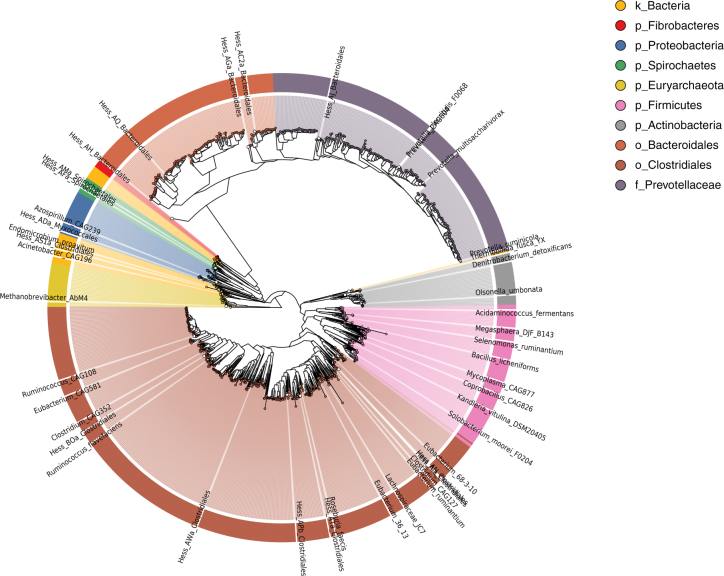
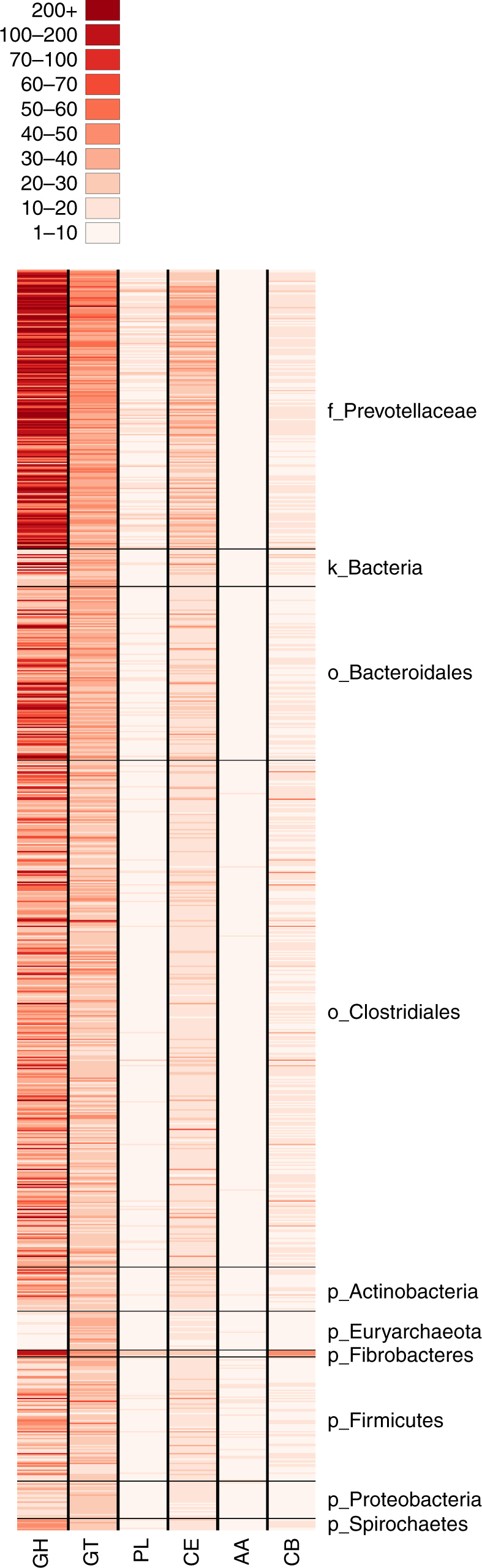
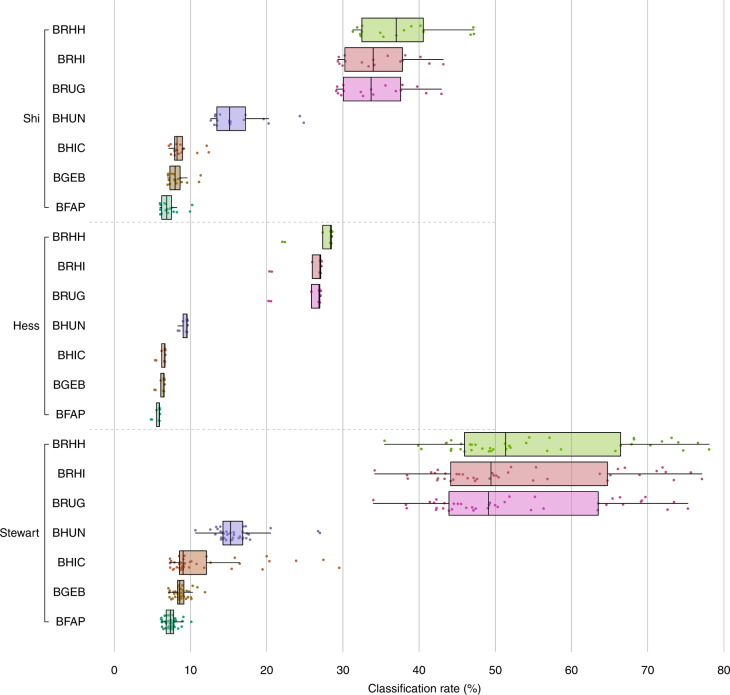
The cow rumen is adapted for the breakdown of plant material into energy and nutrients, a task largely performed by enzymes encoded by the rumen microbiome. Here we present 913 draft bacterial and archaeal genomes assembled from over 800 Gb of rumen metagenomic sequence data derived from 43 Scottish cattle, using both metagenomic binning and Hi-C-based proximity-guided assembly. Most of these genomes represent previously unsequenced strains and species. The draft genomes contain over 69,000 proteins predicted to be involved in carbohydrate metabolism, over 90% of which do not have a good match in public databases. Inclusion of the 913 genomes presented here improves metagenomic read classification by sevenfold against our own data, and by fivefold against other publicly available rumen datasets. Thus, our dataset substantially improves the coverage of rumen microbial genomes in the public databases and represents a valuable resource for biomass-degrading enzyme discovery and studies of the rumen microbiome.
Overview
The claims and statistics of this paper haven’t been checked yet.
Run the check — free, no account needed. It reads the open-access text and checks the sources it cites.
Integrity signals
Registry
Cites
Statistics
Figures
Verification
Claims the paper makes
The claims and statistics of this paper haven’t been checked yet.
Run the check — free, no account needed. It reads the open-access text and checks the sources it cites.
Claims other papers make about this one
Each is checked against this paper’s own text: does it say what the citing paper says it does?
In the citing paper
“Subsequently, Svartstrom et al. (2017) assembled 99 microbial genomes from the moose rumen, Stewart et al. (2018) assembled 913 microbial genomes from the rumen of cattle, and Parks et al. (2017) assembled over 8,000 novel microbial genomes from 1,500 public datasets, some of which originated from the rumen.”
From Addressing global ruminant agricultural challenges through understanding the rumen microbiome: past, present, and future (2018) · cites this paper as Stewart et al., 2018
In the citing paper
“Hi-C binning has been used effectively on human feces (Press et al., 2017) as well as in ruminants (Stewart et al., 2018).”
From Addressing global ruminant agricultural challenges through understanding the rumen microbiome: past, present, and future (2018) · cites this paper as Stewart et al., 2018
Self-check
Percentages, sums and reported differences re-computed from the paper’s own numbers.
The self-check needs the paper’s full text.
Citations
Cites
Trimmomatic: a flexible trimmer for Illumina sequence data
Bolger, A. M., Lohse, M., & Usadel, B. (2014) · Bioinformatics · doi:10.1093/bioinformatics/btu170 · Cited by 65,548
The Sequence Alignment/Map format and SAMtools
Li, H., Handsaker, B., Wysoker, A., Fennell, T., Ruan, J., Homer, N., Marth, G., Abecasis, G., Durbin, R., & 1000 Genome Project Data Processing Subgroup (2009) · Bioinformatics · doi:10.1093/bioinformatics/btp352 · Cited by 62,041
Fast and accurate short read alignment with Burrows-Wheeler transform
Li, H., & Durbin, R. (2009) · Bioinformatics · doi:10.1093/bioinformatics/btp324 · Cited by 58,607
BLAST+: architecture and applications
Camacho, C., Coulouris, G., Avagyan, V., Ma, N., Papadopoulos, J., Bealer, K., & Madden, T. L. (2009) · BMC Bioinformatics · doi:10.1186/1471-2105-10-421 · Cited by 22,074
Fast and sensitive protein alignment using DIAMOND
Buchfink, B., Xie, C., & Huson, D. H. (2015) · Nature Methods · doi:10.1038/nmeth.3176 · Cited by 14,201
Aligning sequence reads, clone sequences and assembly contigs with BWA-MEMPreprint
Li, H. (2013) · arXiv (Cornell University) · doi:10.48550/arxiv.1303.3997 · Cited by 10,846
Li, D., Liu, C.-M., Luo, R., Sadakane, K., & Lam, T. (2015) · Bioinformatics · doi:10.1093/bioinformatics/btv033 · Cited by 10,133
UniProt: the Universal Protein knowledgebase
Apweiler, R. (2003) · Nucleic Acids Research · doi:10.1093/nar/gkh131 · Cited by 7,593
The carbohydrate-active enzymes database (CAZy) in 2013
Lombard, V., Ramulu, H. G., Drula, É., Coutinho, P. M., & Henrissat, B. (2013) · Nucleic Acids Research · doi:10.1093/nar/gkt1178 · Cited by 6,452
O'Leary, N. A., Wright, M. W., Brister, J. R., Ciufo, S., Haddad, D., McVeigh, R., Rajput, B., Robbertse, B., Smith-White, B., Ako-Adjei, D., et al. (2016) · Nucleic Acids Research · doi:10.1093/nar/gkv1189 · Cited by 6,357
Cited by
Sorted by citations
Items 101–200 of 600
Characterisation of the British honey bee metagenome
Regan, T. W., Barnett, M. W., Laetsch, D. R., Bush, S. J., Wragg, D., Budge, G. E., Highet, F., Dainat, B., de Miranda, J. R., Watson, M., et al. (2018) · Nature Communications · doi:10.1038/s41467-018-07426-0 · Cited by 72
The human archaeome: methodological pitfalls and knowledge gaps
Mahnert, A., Blohs, M., Pausan, M.-R., & Moissl‐Eichinger, C. (2018) · Emerging Topics in Life Sciences · doi:10.1042/etls20180037 · Cited by 69
Recovering prokaryotic genomes from host-associated, short-read shotgun metagenomic sequencing data
Kashaf, S. S., Almeida, A., Segre, J. A., & Finn, R. D. (2021) · Nature Protocols · doi:10.1038/s41596-021-00508-2 · Cited by 72
“…of these repetitive regions, long-read sequencing can dramatically improve the quality of metagenome assemblies, but currently at the cost of reduced nucleotide accuracy, an issue that can be partly addressed through combining short-read and long-read sequence 22,23 data, termed hybrid assembly.”
BackgroundZhao, C., Wang, L., Ke, S., Chen, X., Kenéz, Á., Xu, W., Wang, D., Zhang, F., Li, Y., Cui, Z., et al. (2022) · Animal nutrition · doi:10.1016/j.aninu.2022.07.014 · Cited by 74
“The rumen microbiota enables the digestion of feed and production of both the energy source (about 70% of the energy required by ruminants) in the form of volatile fatty acids (VFA, mainly acetate, propionate, and butyrate) and the protein source (about 70% of the total protein reaching the small intestines) in the fo…”
BackgroundOverholt, W. A., Hölzer, M., Geesink, P., Diezel, C., Marz, M., & Küsel, K. (2020) · Environmental Microbiology · doi:10.1111/1462-2920.15186 · Cited by 72
“The DNA extraction was performed as previously described, using a phenol-chloroform-based method without mechanical lysis to minimize fragmentation (Taubert et al., 2018).”
MethodMicrobial dark matter filling the niche in hypersaline microbial mats
Wong, H. L., MacLeod, F. I., White, R. A., III, Visscher, P. T., & Burns, B. P. (2020) · Microbiome · doi:10.1186/s40168-020-00910-0 · Cited by 70
“All sequencing files from 356 the ten layers of smooth mats were co-assembled as described [89] (minimum kmer 27, with 357”
MethodGut microbiome signatures of extreme environment adaption in Tibetan pig
Zhao, F., Yang, L., Zhang, T., Zhuang, D., Wu, Q., Yu, J., Tian, C., & Zhang, Z. (2023) · npj Biofilms and Microbiomes · doi:10.1038/s41522-023-00395-3 · Cited by 73
Liang, J., Mai, W., Wang, J. H., Li, X., Su, M., Du, J., Wu, Y., Dai, J., Tang, Q., Gao, J., et al. (2020) · Journal of Cleaner Production · doi:10.1016/j.jclepro.2020.123896 · Cited by 69
Gong, G., Zhou, S., Luo, R., Gesang, Z., & Suolang, S. (2020) · BMC Microbiology · doi:10.1186/s12866-020-01993-3 · Cited by 68
“been also found in the sets of 913 MAGs recovered from the cow rumen [33].”
ResultMaleki, M., Shahraki, M. F., Kavousi, K., Ariaeenejad, S., & Salekdeh, G. H. (2020) · International Journal of Biological Macromolecules · doi:10.1016/j.ijbiomac.2020.03.100 · Cited by 67
Anderson, C. L., & Fernando, S. C. (2021) · Communications Biology · doi:10.1038/s42003-021-02331-7 · Cited by 66
Evolving understanding of rumen methanogen ecophysiology
Khairunisa, B. H., Heryakusuma, C., Ike, K. A., Mukhopadhyay, B., & Susanti, D. (2023) · Frontiers in Microbiology · doi:10.3389/fmicb.2023.1296008 · Cited by 78
Biotechnological utilization of animal gut microbiota for valorization of lignocellulosic biomass
Ozbayram, E. G., Kleinsteuber, S., & Nikolausz, M. (2019) · Applied Microbiology and Biotechnology · doi:10.1007/s00253-019-10239-w · Cited by 65
“…approach was used for the investigation of camel rumen (Gharechahi and Salekdeh 2018), moose rumen (Svartström et al. 2017), Vietnamese native goat rumen (Do et al. 2018), Indian buffalo rumen (Singh et al. 2014), goat rumen (Lim et al. 2013), and cow rumen (Dai et al. 2015; Stewart et al. 2018) .”
MethodChen, H., Chu, J. S.-C., Chen, J., Luo, Q., Wang, H., Lu, R., Zhu, Z., Yuan, G., Yi, X., Mao, Y., et al. (2021) · Molecular Biology and Evolution · doi:10.1093/molbev/msab315 · Cited by 65
“Meta-Hi-C assembly cross-links DNA molecules that are in close physical proximity within intact cells (Lieberman-Aiden et al. 2009; Stewart et al. 2018).”
Hervé, V., Liu, P., Dietrich, C., Sillam‐Dussès, D., Stiblík, P., Šobotník, J., & Brune, A. (2020) · PeerJ · doi:10.7717/peerj.8614 · Cited by 64
“More generally, Firmicutes and especially Ruminococcaceae are also abundant and metabolically important in rumen systems (Svartström et al., 2017; Söllinger et al., 2018; Stewart et al., 2018).”
Aguilar-Marín, S. B., Betancur-Murillo, C. L., Isaza, G. A., Mesa, H., & Jovel, J. (2020) · BMC Microbiology · doi:10.1186/s12866-020-02037-6 · Cited by 66
Prospects for multi-omics in the microbial ecology of water engineering
McDaniel, E., Wahl, A., Ishii, S., Pinto, A. J., Ziels, R. M., Nielsen, P. H., McMahon, K. D., & Williams, R. B. H. (2021) · Water Research · doi:10.1016/j.watres.2021.117608 · Cited by 66
Review: The application of omics to rumen microbiota function
Denman, S. E., Morgavi, D., & McSweeney, C. S. (2018) · animal · doi:10.1017/s175173111800229x · Cited by 66
“But in spite of that the Hungate collection covers only a fraction of the diversity found within the rumen (Li etal., 2018; Stewart et al., 2018).”
InfluentialAluthge, N. D., van Sambeek, D. M., Hinkle, E., Li, Y. S., Fernando, S. C., & Burkey, T. E. (2019) · Journal of Animal Science · doi:10.1093/jas/skz208 · Cited by 61
Occurrence and expression of genes encoding methyl-compound production in rumen bacteria
Kelly, W. J., Leahy, S. C., Kamke, J., Soni, P., Koike, S., Mackie, R. I., Seshadri, R., Cook, G. M., Morales, S. E., Greening, C., et al. (2019) · Animal Microbiome · doi:10.1186/s42523-019-0016-0 · Cited by 66
“Similar results were obtained from a BLAST search analysis of the predicted ORFs from 913 cattle rumen MAGs [27].”
BackgroundMethodResultInfluentialDiet, habitat environment and lifestyle conversion affect the gut microbiomes of giant pandas
Jin, L., Huang, Y., Yang, S., Wu, D., Li, C., Deng, W., Zhao, K., He, Y., Li, B., Zhang, G., et al. (2021) · The Science of The Total Environment · doi:10.1016/j.scitotenv.2021.145316 · Cited by 60
Mattock, J., & Watson, M. (2023) · Nature Methods · doi:10.1038/s41592-023-01934-8 · Cited by 59
Deng, F., Wang, C., Li, D., Peng, Y., Deng, L., Zhao, Y., Zhang, Z., Wei, M., Wu, K., Zhao, J., et al. (2023) · Microbiome · doi:10.1186/s40168-023-01603-0 · Cited by 59
“MAGs have been constructed in many mammalian species, such as humans [14], mice [15], and livestock, including cows [16, 17], goats [18], pigs [19, 20], buffalo [21], and chickens [22, 23].”
BackgroundAuffret, M. D., Stewart, R. D., Dewhurst, R. J., Duthie, C.-A., Watson, M., & Roehe, R. (2020) · Frontiers in Microbiology · doi:10.3389/fmicb.2020.01229 · Cited by 65
Zhou, S., Luo, R., Gong, G., Wang, Y., Gesang, Z., Wang, K., Xu, Z., & Suolang, S. (2020) · Frontiers in Microbiology · doi:10.3389/fmicb.2020.595066 · Cited by 59
Ma, L., Xu, S., Liu, H., Xu, T., Hu, L., Zhao, N., Han, X., & Zhang, X. (2019) · PeerJ · doi:10.7717/peerj.7645 · Cited by 58
Singh, N. K., Wood, J. M., Mhatre, S. S., & Venkateswaran, K. J. (2019) · Applied Microbiology and Biotechnology · doi:10.1007/s00253-019-09813-z · Cited by 57
Nature’s recyclers: anaerobic microbial communities drive crude biomass deconstruction
Lillington, S. P., Leggieri, P. A., Heom, K. A., & O’Malley, M. (2019) · Current Opinion in Biotechnology · doi:10.1016/j.copbio.2019.08.015 · Cited by 61
Experimental approaches to tracking mobile genetic elements in microbial communities
Saak, C. C., Dinh, C. B., & Dutton, R. J. (2020) · FEMS Microbiology Reviews · doi:10.1093/femsre/fuaa025 · Cited by 58
“an additional 63 draft genomes could be assembled (Stewart et al. 2018).”
BackgroundConcepts and Consequences of a Core Gut Microbiota for Animal Growth and Development
Perlman, D., Martínez-Álvaro, M., Moraïs, S., Altshuler, I., Hagen, L. H., Jami, E., Roehe, R., Pope, P. B., & Mizrahi, I. (2021) · Annual Review of Animal Biosciences · doi:10.1146/annurev-animal-013020-020412 · Cited by 57
Ariaeenejad, S., Maleki, M., Hosseini, E., Kavousi, K., Moosavi‐Movahedi, A. A., & Salekdeh, G. H. (2019) · Bioresource Technology · doi:10.1016/j.biortech.2019.02.059 · Cited by 55
Smith, R. H., Glendinning, L., Walker, A. W., & Watson, M. (2022) · Animal Microbiome · doi:10.1186/s42523-022-00207-7 · Cited by 69
“observed poor classification rates of rumen metagenomic data when using RefSeq, and reported the addition of Hungate collection genomes led to a classification rate increase of 2-fold, and the addition of RUGs led to an increase of 5-fold [13].”
BackgroundMethodResultInfluentialLi, C., Li, X., Guo, R., Ni, W., Liu, K., Liu, Z., Dai, J., Xu, Y., Abduriyim, S., Wu, Z., et al. (2023) · Microbiome · doi:10.1186/s40168-022-01448-z · Cited by 56
“This technology has generated thousands of MAG from humans [23], ruminants [24], chickens [25], pigs [26], and horse [6].”
BackgroundRobust taxonomic classification of uncharted microbial sequences and bins with CAT and BATPreprint
von Meijenfeldt, F. A. B., Arkhipova, K., Cambuy, D. D., Coutinho, F. H., & Dutilh, B. E. (2019) · bioRxiv (Cold Spring Harbor Laboratory) · doi:10.1101/530188 · Cited by 56
Applications of the Soil, Plant and Rumen Microbiomes in Pastoral Agriculture
Attwood, G. T., Wakelin, S. A., Leahy, S. C., Rowe, S. J., Clarke, S., Chapman, D. F., Muirhead, R. W., & Jacobs, J. M. E. (2019) · Frontiers in Nutrition · doi:10.3389/fnut.2019.00107 · Cited by 59
Kaushal, M., Mahuku, G., & Swennen, R. L. (2020) · Plants · doi:10.3390/plants9020263 · Cited by 54
“The amplicons were amplified using i5 and i7 primers as per the standard Illumina protocol [42].”
MethodHinsu, A., Tulsani, N. J., Panchal, K., Pandit, R. J., Jyotsana, B., Dafale, N. A., Patil, N. V., Purohit, H. J., Joshi, C. G., & Jakhesara, S. J. (2021) · Scientific Reports · doi:10.1038/s41598-021-88943-9 · Cited by 61
Nishikawa, Y., Kogawa, M., Hosokawa, M., Wagatsuma, R., Mineta, K., Takahashi, K., Ide, K., Yura, K., Behzad, H., Gojobori, T., et al. (2022) · ISME Communications · doi:10.1038/s43705-022-00179-4 · Cited by 51
“The advances in computational techniques, such as metagenome binning, have enabled the generation of metagenome-assembled genomes (MAGs) [3, 4].”
BackgroundRamos‐Barbero, M. D., Martin-Cuadrado, A.-B., Viver, T., Santos, F., Martínez‐García, M., & Antón, J. (2018) · Systematic and Applied Microbiology · doi:10.1016/j.syapm.2018.11.001 · Cited by 46
Brown, C. T., Moritz, D., O’Brien, M. P., Reidl, F., Reiter, T. E., & Sullivan, B. D. (2020) · Genome biology · doi:10.1186/s13059-020-02066-4 · Cited by 46
Characteristics and Functions of the Rumen Microbial Community of Cattle‐Yak at Different Ages
Sha, Y., Hu, J., Shi, B., Dingkao, R., Wang, J., Li, S., Zhang, W., Luo, Y., & Liu, X. (2020) · BioMed Research International · doi:10.1155/2020/3482692 · Cited by 49
“Most of the GHs iden-ti fi ed in our study were oligosaccharide-degrading enzymes such as cellulase, hemicellulose, and pectinase that degrade the plant cell wall to produce oligosaccharides [37].”
To Dereplicate or Not To Dereplicate?
Evans, J. T., & Denef, V. J. (2020) · mSphere · doi:10.1128/msphere.00971-19 · Cited by 48
“While initially, the reconstruction of MAGs was only achievable in lower-diversity or highly uneven communities (1), in the past five years reports on the reconstruction of hundreds to thousands of MAGs have become routine (2-5).”
BackgroundSchlaberg, R. (2019) · Clinical Chemistry · doi:10.1373/clinchem.2019.303248 · Cited by 50
McGovern, E., Waters, S. M., Blackshields, G., & McCabe, M. S. (2018) · Frontiers in Microbiology · doi:10.3389/fmicb.2018.01365 · Cited by 48
Pozzo, T., Higdon, S. M., Pattathil, S., Hahn, M. G., & Bennett, A. B. (2018) · PLoS ONE · doi:10.1371/journal.pone.0204525 · Cited by 48
Approaches for characterizing and tracking hospital-associated multidrug-resistant bacteria
Blake, K. S., Choi, J., & Dantas, G. A. (2021) · Cellular and Molecular Life Sciences · doi:10.1007/s00018-020-03717-2 · Cited by 51
Hoque, M. N., Rahman, M. S., Ahmed, R., Hossain, M. S., Islam, M. S., Crandall, K. A., Islam, T., Hossain, M. A., & Siddiki, A. Z. (2021) · Gene Reports · doi:10.1016/j.genrep.2021.101200 · Cited by 46
Novel Virus Identification through Metagenomics: A Systematic Review
Bassi, C., Guerriero, P., Pierantoni, M., Callegari, E., & Sabbioni, S. (2022) · Life · doi:10.3390/life12122048 · Cited by 49
Atanaki, F. F., Behrouzi, S., Ariaeenejad, S., Boroomand, A., & Kavousi, K. (2020) · ACS Omega · doi:10.1021/acsomega.9b04119 · Cited by 45
A review of the resistome within the digestive tract of livestock
Ma, T., McAllister, T. A., & Guan, L. L. (2021) · Journal of Animal Science and Biotechnology/Journal of animal science and biotechnology · doi:10.1186/s40104-021-00643-6 · Cited by 51
Liu, L., Wang, Y., Che, Y., Chen, Y., Xia, Y., Luo, R., Cheng, S. H., Zheng, C., & Zhang, T. (2020) · Microbiome · doi:10.1186/s40168-020-00937-3 · Cited by 44
Yan, M., & Yu, Z. (2024) · Microbiome · doi:10.1186/s40168-024-01791-3 · Cited by 46
“We predicted the CRISPR–Cas arrays across the high-quality RUG2 MAGs [41] using MinCED [42].”
MethodArumugam, K., Bessarab, I. N., Haryono, M., Liu, X., Zuniga-Montanez, R. E., Roy, S., Qiu, G., Drautz‐Moses, D. I., Law, Y., Wuertz, S., et al. (2021) · npj Biofilms and Microbiomes · doi:10.1038/s41522-021-00196-6 · Cited by 43
Martínez-Álvaro, M., Mattock, J., Auffret, M. D., Weng, Z., Duthie, C.-A., Dewhurst, R. J., Cleveland, M. A., Watson, M., & Roehe, R. (2022) · Microbiome · doi:10.1186/s40168-022-01352-6 · Cited by 44
“DNA Illumina TruSeq libraries were prepared from the entire genomic DNA of rumen samples and were whole metagenomic shotgun sequenced on Illumina HiSeq systems 4000 (samples from 283 animals from experimental years 2011, 2012, 2013 and 2014) [68, 120] or NovaSeq (samples from 76 animals from experimental year 2017) by…”
MethodRumen metaproteomics: Closer to linking rumen microbial function to animal productivity traits
Andersen, T. O., Kunath, B. J., Hagen, L. H., Arntzen, M. Ø., & Pope, P. B. (2020) · Methods · doi:10.1016/j.ymeth.2020.07.011 · Cited by 42
Genome-resolved metagenomics using environmental and clinical samples
Kayani, M. U. R., Huang, W., Feng, R., & Chen, L. (2021) · Briefings in Bioinformatics · doi:10.1093/bib/bbab030 · Cited by 45
Wang, Y., Youssef, N. H., Couger, M. B., Hanafy, R. A., Elshahed, M. S., & Stajich, J. (2019) · mSystems · doi:10.1128/msystems.00247-19 · Cited by 41
“Large-scale genomic and metagenomic sequencing of rumen microbes have produced hundreds of novel bacterial genomes, enabling the discovery of plant biomass-degrading enzymes and patterns of genomic evolution (1, 2).”
Trait biases in microbial reference genomes
Albright, S., & Louca, S. (2023) · Scientific Data · doi:10.1038/s41597-023-01994-7 · Cited by 42
MAGpy: a reproducible pipeline for the downstream analysis of metagenome-assembled genomes (MAGs)
Stewart, R. D., Auffret, M. D., Snelling, T. J., Roehe, R., & Watson, M. (2018) · Bioinformatics · doi:10.1093/bioinformatics/bty905 · Cited by 37
Hernández, R., Mares, M. C. D., Jiménez, H., Reyes, A., & Caro‐Quintero, A. (2022) · Frontiers in Microbiology · doi:10.3389/fmicb.2022.813002 · Cited by 41
“Our ability to detect these changes in abundance, and, more generally, microbial players that are present at lower frequencies, is restricted by depth of sequencing and biases of methods such as 16S rRNA gene and shotgun libraries (Stewart et al., 2018), thus, yielding a limited view of bovine ruminal bacteria.”
BackgroundViralCC retrieves complete viral genomes and virus-host pairs from metagenomic Hi-C data
Du, Y., Fuhrman, J. A., & Sun, F. (2023) · Nature Communications · doi:10.1038/s41467-023-35945-y · Cited by 38
Tomazetto, G., Pimentel, A. C., Wibberg, D., Dixon, N., & Squina, F. M. (2020) · Applied and Environmental Microbiology · doi:10.1128/aem.00199-20 · Cited by 42
“Searches for CAZymes, scaffolding proteins, and susCD gene pairs were performed as previously described (7, 86).”
InfluentialKlassen, L., Reintjes, G., Tingley, J. P., Jones, D. R., Hehemann, J., Smith, A. D., Schwinghamer, T. D., Arnosti, C., Jin, L., Alexander, T. W., et al. (2021) · Microbiome · doi:10.1186/s40168-020-00975-x · Cited by 42
“This complex microbiome is estimated to contain 69,000 carbohydrate-active enzyme (CAZyme) genes (Stewart et al., 2018) that encode extensive catalytic activities.”
Stewart, R. D., Auffret, M. D., Roehe, R., & Watson, M. (2018) · bioRxiv (Cold Spring Harbor Laboratory) · doi:10.1101/421024 · Cited by 38
Bioinformatics applied to biotechnology: A review towards bioenergy research
de Carvalho, L. M., Borelli, G., Camargo, A. P., de Assis, M. A., de Ferraz, S. M. F., Fiamenghi, M. B., José, J., Mofatto, L. S., Nagamatsu, S. T., Persinoti, G. F., et al. (2019) · Biomass and Bioenergy · doi:10.1016/j.biombioe.2019.02.016 · Cited by 37
Association between Rumen Microbiota and Marbling Score in Korean Native Beef Cattle
Kim, M., Park, T., Jeong, J. Y., Baek, Y.-C., & Lee, H. J. (2020) · Animals · doi:10.3390/ani10040712 · Cited by 38
“These genera are phylogenetically located within the Erysipelotrichaceae family, which was recently expanded based on genome recovery from the metagenome of the cow rumen [55].”
BackgroundAdoption of Climate Smart Agriculture by Communal Livestock Farmers in South Africa
Molieleng, L., Fourie, P. J., & Nwafor, I. C. (2021) · Sustainability · doi:10.3390/su131810468 · Cited by 36
“One of these includes rumen fermentation, which is the process that converts ingested feed into energy sources for the host [53].”
BackgroundDean, C. J., Slizovskiy, I. B., Crone, K. K., Pfennig, A., Heins, B., Caixeta, L. S., & Noyes, N. R. (2020) · Journal of Dairy Science · doi:10.3168/jds.2020-18277 · Cited by 33
Su, M., Hao, Z., Shi, H., Li, T., Wang, H. H., Li, Q., Zhang, Y., & Ma, Y. (2022) · Frontiers in Microbiology · doi:10.3389/fmicb.2022.851567 · Cited by 33
A metagenomic catalogue of the ruminant gut archaeome
Mi, J., Jing, X., Ma, C., Shi, F., Cao, Z., Yang, X., Yang, Y., Kakade, A., Wang, W., & Long, R. (2024) · Nature Communications · doi:10.1038/s41467-024-54025-3 · Cited by 46
“Although extensive research has been conducted on the rumen and intestinal microbial communities of ruminants, with a primary focus onbacterialpopulations 29,57 – 60 ,systematicanalysesoftheruminantgut archaeome remain insuf fi cient.”
Applying Genome-Resolved Metagenomics to Deconvolute the Halophilic Microbiome
Uritskiy, G., & DiRuggiero, J. (2019) · Genes · doi:10.3390/genes10030220 · Cited by 33
“Hybrid approaches are also possible in many cases, as binning of the individual and grouped assemblies may be combined and dereplicated to obtain the most robust MAGs of both rare and abundant species [80].”
BackgroundCurrent Status and Potential Applications of Underexplored Prokaryotes
Goh, K., Shahar, S., Chan, K.-G., Chong, C., Amran, S., Sani, M. H., Zakaria, I. I., & Kahar, U. M. (2019) · Microorganisms · doi:10.3390/microorganisms7100468 · Cited by 29
A rather dry subject; investigating the study of arid-associated microbial communities
Osborne, P., Hall, L. J., Kronfeld‐Schor, N., Thybert, D., & Haerty, W. (2020) · Environmental Microbiome · doi:10.1186/s40793-020-00367-6 · Cited by 35
Metagenomic methylation patterns resolve bacterial genomes of unusual size and structural complexity
Wilbanks, E. G., Doré, H., Ashby, M., Heiner, C. R., Roberts, R. J., & Eisen, J. A. (2022) · The ISME Journal · doi:10.1038/s41396-022-01242-7 · Cited by 33
“Recent advances in binning leverage information about the genome orthogonal to its sequence, such as chromosomal conformation [21, 22] or DNA methylation [23].”
BackgroundThe phenotype and genotype of fermentative prokaryotes
Hackmann, T. J., & Zhang, B. (2023) · Science Advances · doi:10.1126/sciadv.adg8687 · Cited by 36
Qi, W., Xue, M., Jia, M., Zhang, S., Yan, Q., & Sun, H. (2023) · Animal Bioscience · doi:10.5713/ab.23.0308 · Cited by 43
“For example, 43 Scottish cattle, 913 bacterial and archaeal MAGs were assembled using more than 800 G of metagenomics data [5]; most of these strains had never been sequenced.”
MethodBaudry, L., Foutel-Rodier, T., Thierry, A., Koszul, R., & Marbouty, M. (2019) · Frontiers in Genetics · doi:10.3389/fgene.2019.00753 · Cited by 32
“Meta3C-like methods have only been applied to microbial rich samples so far (mice and human gut, cow rumen, sewage) (Marbouty et al., 2017; Stewart et al., 2018; Stalder et al., 2019) and still need to be improved in order to be applied to sample with low concentration of microorganisms.”
MethodMetagenomic Analysis Reveals New Microbiota Related to Fiber Digestion in Pigs
Liu, G., Li, P., Hou, L., Niu, Q., Pu, G., Wang, B., Du, T., Kim, S. W., Niu, P., Li, Q., et al. (2021) · Frontiers in Microbiology · doi:10.3389/fmicb.2021.746717 · Cited by 36
Liang, J., Chang, J., Zhang, R., Fang, W., Chen, L., Ma, W., Zhang, Y., Yang, W., Li, Y., Zhang, P., et al. (2023) · Chemosphere · doi:10.1016/j.chemosphere.2023.139242 · Cited by 32
Dias, B. D. C., Lamarca, A. P., Machado, D. T., Klôh, V., de Carvalho, F. M., & de Vasconcelos, A. T. R. (2025) · Animal Microbiome · doi:10.1186/s42523-025-00379-y · Cited by 31
“For example, within the Firmicutes phylum, Clostridia taxa have been reported as key species in microbial consortia assembly in the chicken caecum [88], human gut [6], swine intestine [6, 89] and bovine rumen [90].”
Stergiadis, S., Luna, I. C., Mora-Ortiz, M., Stewart, R. D., Dewhurst, R. J., Humphries, D. J., Watson, M., Roehe, R., & Auffret, M. D. (2021) · Frontiers in Microbiology · doi:10.3389/fmicb.2020.590441 · Cited by 32
Ivanova, V. A., Chernevskaya, E., Vasiluev, P. A., Ivanov, A. B., Tolstoganov, I., Shafranskaya, D. D., Игоревич, У. В., Korobeynikov, A., Razin, S. V., Nv, B., et al. (2022) · Frontiers in Microbiology · doi:10.3389/fmicb.2021.770323 · Cited by 31
“The networks were visualized in Cytoscape (Su et al., 2014).”
Huang, G., Shi, W., Wang, L., Qu, Q., Zuo, Z., Wang, J., Zhao, F., & Wei, F. (2023) · Microbiome · doi:10.1186/s40168-023-01657-0 · Cited by 32
“…gene catalogs and metagenome-assembled genome collections of microbiomes from several model organisms, including humans [32–40], non-human primates [41], mice [42–44], pigs [45, 46], dogs [47], chickens [48], and ruminants [49–54]; however, it still remains lacking for the threatened mammal.”
BackgroundJiao, J., Wu, J., Zhou, C., He, Z., Tan, Z., & Wang, M. (2024) · The ISME Journal · doi:10.1093/ismejo/wrae002 · Cited by 28
“Discoveries enabled by this technology in ruminants have focused on MAGs recovered from rumen microbial consortia from dairy cows and beef cattle [7, 22, 23].”
The multi-kingdom microbiome catalog of the chicken gastrointestinal tract
Wang, Y., Qu, M., Bi, Y., Liu, W. J., Ma, S., Wan, B., Hu, Y., Zhu, B., Zhang, G., & Gao, G. F. (2024) · Biosafety and Health · doi:10.1016/j.bsheal.2024.02.006 · Cited by 30
Fu, R., Lin, H., Li, Q., Li, Z., Dai, Y., & Leng, J. (2025) · Frontiers in Microbiology · doi:10.3389/fmicb.2025.1554271 · Cited by 36
Tikariha, H., & Purohit, H. J. (2018) · Genomics · doi:10.1016/j.ygeno.2018.12.005 · Cited by 30
Zhang, Z., Wei, W., Yang, S., Huang, Z., Li, C., Yu, X., Qi, R., Liu, W., Loor, J. J., Wang, M., et al. (2022) · Nutrients · doi:10.3390/nu14142972 · Cited by 32
“The host digests plant feed primarily through fermentation mediated by the microorganisms in these three phyla levels [38].”
BackgroundGuo, W., Zhou, M., Li, F., Neves, A. L. A., Ma, T., Bi, S., Wang, W., Long, R., & Guan, L. L. (2024) · BMC Biology · doi:10.1186/s12915-024-02035-4 · Cited by 32
“Venn diagrams were created by Venny 2.1 (https://bioinfogp.cnb.csic.es/tools/venny/), the taxonomic information of sequences (host both ARGs and CAZymes) were obtained by aligning the corresponding contigs to rumen metagenome-assembled genomes (MAGs) [5] using Kraken2 [113].”
MethodInfluentialEffect of slow-release urea on the composition of ruminal bacteria and fungi communities in yak
Yan, X., Yan, B. Y., Ren, Q., Dou, J., Wang, W. W., Zhang, J. J., Zhou, J., Long, R., Ding, L., Han, J., et al. (2018) · Animal Feed Science and Technology · doi:10.1016/j.anifeedsci.2018.07.016 · Cited by 29
Deng, C., Zhao, R., Qiu, Z. G., Li, B. J., Zhang, T., Guo, F., Mu, R., Wu, Y., Qiao, X., Zhang, L., et al. (2021) · The Science of The Total Environment · doi:10.1016/j.scitotenv.2021.151635 · Cited by 29
Assessment of Hydrocarbon Degradation Potential in Microbial Communities in Arctic Sea Ice
Peeb, A., Dang, N. P., Truu, M., Nõlvak, H., Petrich, C., & Truu, J. (2022) · Microorganisms · doi:10.3390/microorganisms10020328 · Cited by 29
Characterization of metagenome-assembled genomes from the International Space Station
Singh, N. K., Wood, J. M., Patané, J. S. L., Moura, L. M. S., Lombardino, J., Setúbal, J. C., & Venkateswaran, K. (2023) · Microbiome · doi:10.1186/s40168-023-01545-7 · Cited by 29
“Projects retrieving thousands of MAGs have also been documented to understand yetto-be cultured microbiomes of cow rumens and other environmental samples [11].”
BackgroundZhao, Z. W., Ma, Z., Wang, H., & Zhang, C. F. (2021) · Animal Feed Science and Technology · doi:10.1016/j.anifeedsci.2021.114972 · Cited by 27
Metaproteomics as a tool for studying the protein landscape of human-gut bacterial species
Stamboulian, M. H., Canderan, J., & Ye, Y. (2022) · PLoS Computational Biology · doi:10.1371/journal.pcbi.1009397 · Cited by 28
Unravelling microbial drivers of the sulfate-reduction process inside landfill using metagenomics
Hu, L., Wang, Y., Ci, M., & Long, Y. (2022) · Chemosphere · doi:10.1016/j.chemosphere.2022.137537 · Cited by 28
Zhang, H., Lang, X., Zhang, Y., & Wang, C. (2022) · Frontiers in Microbiology · doi:10.3389/fmicb.2022.1062077 · Cited by 30
Han, X., Lei, X., Xuexin, Y., Shen, J., Zheng, L., Jin, C., Cao, Y., & Yao, J. (2021) · Frontiers in Microbiology · doi:10.3389/fmicb.2021.651631 · Cited by 27
“CAZymes-encoding gene abundance and KEGG enzyme gene abundance were helpful to characterize carbohydrate degradation for dairy goats (Stewart et al., 2018).”
BackgroundOladeinde, A., Abdo, Z., Press, M. O., Cook, K. L., Cox, N. A., Zwirzitz, B., Woyda, R., Lakin, S. M., Thomas, J. C., Looft, T. P., et al. (2021) · mSystems · doi:10.1128/msystems.00729-21 · Cited by 27
“Metagenome deconvolution was performed with ProxiMeta (82, 83), resulting in the creation of putative genome and genome fragment clusters.”
MethodWang, J., Liang, J., Li, Y., Tian, L., & Wei, Y. (2021) · AMB Express · doi:10.1186/s13568-020-01178-1 · Cited by 27
“Environmental biotechnology has recovered large amounts of functional genes from natural microbiota, however, most genes have not been characterized to date (Ariaeenejad et al. 2019; Stewart et al. 2018).”
Background
Metadata
- Authors
- Stewart, R. D., Auffret, M. D., Warr, A., Wiser, A. H., Press, M. O., Langford, K. W., Liachko, I., Snelling, T. J., Dewhurst, R. J., Walker, A. W., Roehe, R., & Watson, M.
- Affiliations
- Roslin Institute (GB)
- Scotland's Rural College (GB)
- University of Aberdeen (GB)
- Corresponding author
- Watson, Mick
- ORCID
- Venue
- Nature Communications
- Published
- 2018-02-28
- Volume
- 9
- Issue
- 1
- Pages
- 870-870
- ISSN
- 2041-1723 (ISSN-L)
- PMC
- PMC5830445
- OpenAlex
- W2786358949
- Cited by
- 559
- References
- 83
- Citations by year
- 2026: 39 · 2025: 48 · 2024: 77 · 2023: 69 · 2022: 64 · 2021: 73 · 2020: 89 · 2019: 73 · 2018: 27
- FWCI
- 24.09
- Type
- journal article
- Language
- en
- Open access
- gold
- doi.org
- Locations
- Nature Communications (publishedVersion, cc-by)
- Europe PMC (PubMed Central) (publishedVersion, cc-by)
- PubMed Central (publishedVersion, cc-by)
- PubMed (publishedVersion)
- Edinburgh Research Explorer (University of Edinburgh) (publishedVersion, cc-by)
- RePEc: Research Papers in Economics (submittedVersion)
- Aberdeen University Research Archive (Aberdeen University) (submittedVersion)
- DOAJ (DOAJ: Directory of Open Access Journals) (submittedVersion)
- DOAJ (DOAJ: Directory of Open Access Journals) (submittedVersion, cc-by-sa)
- Funders
- Rural and Environment Science and Analytical Services Division
- Scottish Government
- Scotland’s Rural College
- Directorate for Biological Sciences
- Biotechnology and Biological Sciences Research Council (BBS/E/D/30002276, BB/M01844X/1, BB/J004235/1, BB/R015023/1, BB/P013732/1, BB/J004235, BB/N016742/1, BB/ J004243/1, BB/N01720X/1, P013759, BBP013759/1, BBS/E/D/20310000)
- National Institute of Allergy and Infectious Diseases (R43AI122654, R44AI122654)
- Topics
- Life Sciences › Biochemistry, Genetics and Molecular Biology › Molecular Biology › Genomics and Phylogenetic Studies
- Life Sciences › Agricultural and Biological Sciences › Animal Science and Zoology › Ruminant Nutrition and Digestive Physiology
- Physical Sciences › Energy › Renewable Energy, Sustainability and the Environment › Anaerobic Digestion and Biogas Production
- Keywords
- rumen microbiome, draft genome sequence, metagenome binning, Hi-C, cattle, rumen bacteria, rumen archaea, carbohydrate metabolism, biomass-degrading enzymes, metagenome-assembled genomes, read classification
- MeSH terms
- Animals, Bacteria, Bacterial Proteins, Cattle, Phylogeny, Rumen, Genome, Bacterial, Metagenome, Metagenomics
About these checks
Registry, retraction, Cites and statistics results are computed, not judged, with one exception: a printed reference that no index lists is read once by a model before it counts as a citation error. Claims are extracted by a model and kept only when their quote appears verbatim in the text; each cited source is then checked, with a model’s help, for whether it says what the claim relies on. Those verdicts can be wrong — read the claim’s quote and the cited source before relying on one.
Statistics and arithmetic are recomputed, not judged.
Confidence bands are shown only for fields calibrated on our annotated test set. None is calibrated yet, so no band is shown.
What counts as a claim ›How we measure confidence ›How we check this ›
Are you an author, or do you see a problem with this page? Request a review
