

The DOI matches its Crossref record; 83 of the 83 references it cites were found in a registry or an index.
Assembly of 913 microbial genomes from metagenomic sequencing of the cow rumen
Open accessAbstract
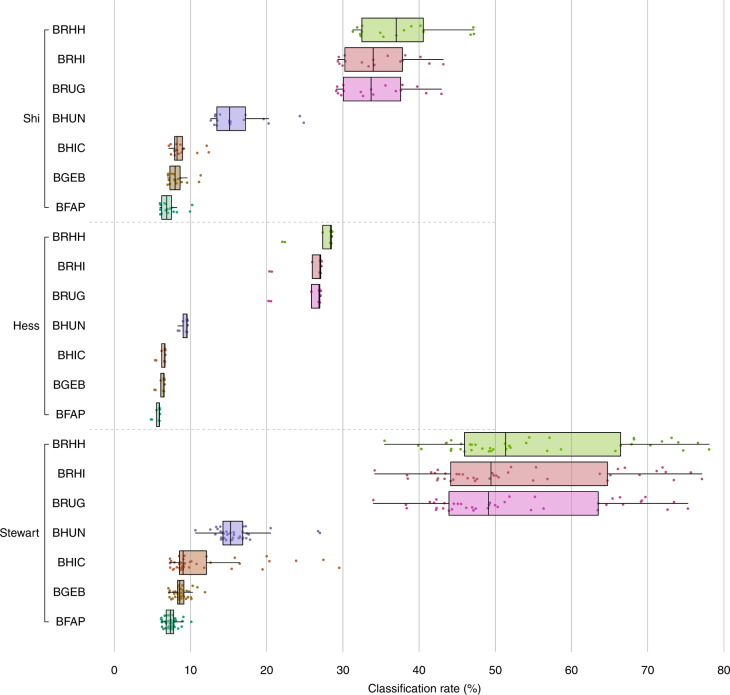
The cow rumen is adapted for the breakdown of plant material into energy and nutrients, a task largely performed by enzymes encoded by the rumen microbiome. Here we present 913 draft bacterial and archaeal genomes assembled from over 800 Gb of rumen metagenomic sequence data derived from 43 Scottish cattle, using both metagenomic binning and Hi-C-based proximity-guided assembly. Most of these genomes represent previously unsequenced strains and species. The draft genomes contain over 69,000 proteins predicted to be involved in carbohydrate metabolism, over 90% of which do not have a good match in public databases. Inclusion of the 913 genomes presented here improves metagenomic read classification by sevenfold against our own data, and by fivefold against other publicly available rumen datasets. Thus, our dataset substantially improves the coverage of rumen microbial genomes in the public databases and represents a valuable resource for biomass-degrading enzyme discovery and studies of the rumen microbiome.
Overview
The claims and statistics of this paper haven’t been checked yet.
Run the check — free, no account needed. It reads the open-access text and checks the sources it cites.
Integrity signals
Registry
Cites
Statistics
Figures
Verification
Claims the paper makes
The claims and statistics of this paper haven’t been checked yet.
Run the check — free, no account needed. It reads the open-access text and checks the sources it cites.
Claims other papers make about this one
Each is checked against this paper’s own text: does it say what the citing paper says it does?
The cited source says what the claim attributes to it.
In the citing paper
“Hi-C binning has been used effectively on human feces (Press et al., 2017) as well as in ruminants (Stewart et al., 2018).”
From Addressing global ruminant agricultural challenges through understanding the rumen microbiome: past, present, and future (2018) · cites this paper as Stewart et al., 2018
In the citing paper
“Subsequently, Svartstrom et al. (2017) assembled 99 microbial genomes from the moose rumen, Stewart et al. (2018) assembled 913 microbial genomes from the rumen of cattle, and Parks et al. (2017) assembled over 8,000 novel microbial genomes from 1,500 public datasets, some of which originated from the rumen.”
From Addressing global ruminant agricultural challenges through understanding the rumen microbiome: past, present, and future (2018) · cites this paper as Stewart et al., 2018
Self-check
Percentages, sums and reported differences re-computed from the paper’s own numbers.
The self-check needs the paper’s full text.
Citations
Cites
Trimmomatic: a flexible trimmer for Illumina sequence data
Bolger, A. M., Lohse, M., & Usadel, B. (2014) · Bioinformatics · doi:10.1093/bioinformatics/btu170 · Cited by 65,548
The Sequence Alignment/Map format and SAMtools
Li, H., Handsaker, B., Wysoker, A., Fennell, T., Ruan, J., Homer, N., Marth, G., Abecasis, G., Durbin, R., & 1000 Genome Project Data Processing Subgroup (2009) · Bioinformatics · doi:10.1093/bioinformatics/btp352 · Cited by 62,041
Fast and accurate short read alignment with Burrows-Wheeler transform
Li, H., & Durbin, R. (2009) · Bioinformatics · doi:10.1093/bioinformatics/btp324 · Cited by 58,607
BLAST+: architecture and applications
Camacho, C., Coulouris, G., Avagyan, V., Ma, N., Papadopoulos, J., Bealer, K., & Madden, T. L. (2009) · BMC Bioinformatics · doi:10.1186/1471-2105-10-421 · Cited by 22,074
Fast and sensitive protein alignment using DIAMOND
Buchfink, B., Xie, C., & Huson, D. H. (2015) · Nature Methods · doi:10.1038/nmeth.3176 · Cited by 14,201
Aligning sequence reads, clone sequences and assembly contigs with BWA-MEMPreprint
Li, H. (2013) · arXiv (Cornell University) · doi:10.48550/arxiv.1303.3997 · Cited by 10,846
Li, D., Liu, C.-M., Luo, R., Sadakane, K., & Lam, T. (2015) · Bioinformatics · doi:10.1093/bioinformatics/btv033 · Cited by 10,133
UniProt: the Universal Protein knowledgebase
Apweiler, R. (2003) · Nucleic Acids Research · doi:10.1093/nar/gkh131 · Cited by 7,593
The carbohydrate-active enzymes database (CAZy) in 2013
Lombard, V., Ramulu, H. G., Drula, É., Coutinho, P. M., & Henrissat, B. (2013) · Nucleic Acids Research · doi:10.1093/nar/gkt1178 · Cited by 6,452
O'Leary, N. A., Wright, M. W., Brister, J. R., Ciufo, S., Haddad, D., McVeigh, R., Rajput, B., Robbertse, B., Smith-White, B., Ako-Adjei, D., et al. (2016) · Nucleic Acids Research · doi:10.1093/nar/gkv1189 · Cited by 6,357
Cited by
Sorted by citations
Items 201–300 of 600
Accurate viral genome reconstruction and host assignment with proximity-ligation sequencingPreprint
Uritskiy, G., Press, M., Sun, C. L., Domínguez‐Huerta, G., Zayed, A. A., Wiser, A. H., Grove, J., Auch, B., Eacker, S. M., Sullivan, S. T., et al. (2021) · bioRxiv (Cold Spring Harbor Laboratory) · doi:10.1101/2021.06.14.448389 · Cited by 27
“Additional benchmarking data was generated from the shortread WGS and Hi-C sequencing data from the cow rumen metagenome (64), the wastewater benchmark metagenome (48), and the human fecal metagenome (see human fecal microbiome processing).”
MethodEffect of Dietary and Age Changes on Ruminal Microbial Diversity in Holstein Calves
Wu, Y., Jiao, C., Diao, Q., & Tu, Y. (2023) · Microorganisms · doi:10.3390/microorganisms12010012 · Cited by 26
“Cellulosic materials in the feed are degraded into available nutrients (e.g., volatile fatty acids (VFAs)) through fermentation, thereby providing energy for the growth of the host and leading to the production of milk and meat products for human consumption [1,2].”
Abulfaraj, A. A., Shami, A., Alotaibi, N. M., Alomran, M. M., Aloufi, A. S., Al‐Andal, A., AlHamdan, N. R., Alshehrei, F. M., Sefrji, F. O., Alsaadi, K. H., et al. (2024) · AMB Express · doi:10.1186/s13568-024-01678-4 · Cited by 29
“This pivotal truth has been recently substantiated by the pioneering efforts of several investigators (Dilthey et al. 2019, Quince et al. 2017, Raes et al. 2007, Scholz et al. 2016, Stewart et al. 2018, Tringe et al. 2005, Wilkins et al. 2019).”
Resultda Silva, É. B. R., da Silva, J. A. R., da Silva, W. C., Belo, T. S., Sousa, C. E. L., dos Santos, M. R. P., Neves, K. A. L., Rodrigues, T. C. G. D. C., Júnior, R. N. C. C., & Júnior, J. D. B. L. (2024) · Animals · doi:10.3390/ani14101448 · Cited by 34
“The rumen microbiota is made up of different microorganisms depending on the region where the animal is reared and the diet used [11,12].”
BackgroundDoster, E., Rovira, P., Noyes, N. R., Burgess, B. A., Yang, X., Weinroth, M. D., Linke, L., Magnuson, R. J., Boucher, C. A., Belk, K. E., et al. (2019) · Frontiers in Microbiology · doi:10.3389/fmicb.2019.02499 · Cited by 26
“The study and detection of microbial organisms has long been reliant on cultivation and characterization of certain species, but advancements in sequencing technologies have revealed an underlying microbial diversity largely ignored by culturebased techniques (Staley and Konopka, 1985; Hugenholtz, 2002; Stewart et al.…”
BackgroundRecovery of human gut microbiota genomes with third-generation sequencing
Li, Y., Jin, Y., Zhang, J., Pan, H., Wu, L., Liu, D., Liu, J., Hu, J., & Shen, J. (2021) · Cell Death and Disease · doi:10.1038/s41419-021-03829-y · Cited by 26
Metagenome-Assembled Genomes Contribute to Unraveling of the Microbiome of Cocoa Fermentation
de Almeida, O. G. G., & Martinis, E. C. P. D. (2021) · Applied and Environmental Microbiology · doi:10.1128/aem.00584-21 · Cited by 26
Low, K. E., Tingley, J. P., Klassen, L., King, M. L., Xing, X., Watt, C., Hoover, S. E., Gorzelak, M. A., & Abbott, D. W. (2023) · Biotechnology Advances · doi:10.1016/j.biotechadv.2023.108245 · Cited by 26
Xu, X., Lin, Y., Deng, Y., Liu, L., Wang, D., Tang, Q., Wang, C., Chen, X., Che, Y., Wyrsch, E. R., et al. (2025) · Nature Communications · doi:10.1038/s41467-025-62455-w · Cited by 31
“IDEEL scores 66 were calculated to assess protein-coding gene integrity, de fi ned as the proportion of predicted proteins ≥ 95%the length of their best BLASTPhit in a curated protein database.”
Genomic insights into ruminant evolution: from past to future prospects
Wang, B., Chen, L., & Wang, W. (2019) · 动物学研究 · doi:10.24272/j.issn.2095-8137.2019.061 · Cited by 27
“Most previous studies have focused on the interaction between microorganisms and the rumen (Bovine Genome Sequencing and Analysis Consortium et al., 2009; Seshadri et al., 2018; Stewart et al., 2018; Zhang et al., 2016).”
BackgroundAddressing Learning Needs on the Use of Metagenomics in Antimicrobial Resistance Surveillance
Duarte, A. S. R., Stärk, K. D. C., Munk, P., Leekitcharoenphon, P., Bossers, A., Luiken, R. E. C., Sarrazin, S., Lukjančenko, O., Pamp, S. J., Bortolaia, V., et al. (2020) · Frontiers in Public Health · doi:10.3389/fpubh.2020.00038 · Cited by 25
“Metagenomic assembly and binning (31) help overcoming the first issue, and many recent developments have contributed to increase the number of genomes assembled from metagenomics datasets, including the methods of Hi-C Chromatin conformation capture (31), DNA methylation profiling (32) and co-assembly and cobinning (3…”
BackgroundTominaga, K., Morimoto, D., Nishimura, Y., Ogata, H., & Yoshida, T. (2020) · Frontiers in Microbiology · doi:10.3389/fmicb.2020.00738 · Cited by 25
Taxonomic distribution and evolutionary analysis of the equol biosynthesis gene cluster
Dufault‐Thompson, K., Hall, B., & Jiang, X. (2022) · BMC Genomics · doi:10.1186/s12864-022-08426-7 · Cited by 25
“These included Senegalimassilia faecalis, a species isolated from healthy human faeces [32], RUG013 sp001486445, a species represented by a metagenomeassembled genome (MAG) from a cow rumen metagenome [33], and CAG-1427 sp000435475 and CAG-1427 sp900556585, represented by MAGs assembled from human fecal metagenomes co…”
BackgroundWeber, M., & Fuchs, T. M. (2022) · Microbiology Spectrum · doi:10.1128/spectrum.02013-22 · Cited by 25
Portik, D. M., Feng, X., Benoit, G., Nasko, D. J., Auch, B., Bryson, S., Cano, R. J., Carlin, M. R., Damerum, A., Farthing, B., et al. (2024) · bioRxiv (Cold Spring Harbor Laboratory) · doi:10.1101/2024.05.10.593587 · Cited by 25
“Metagenome deconvolution was performed with ProxiMeta (Press et al. 2017; Stewart et al. 2018), resulting in the creation of putative genome and genome fragment clusters, as well as viral, plasmid, and AMR gene host annotations.”
Gaio, D., DeMaere, M. Z., Anantanawat, K., Chapman, T. A., Djordjevic, S. P., & Darling, A. E. (2021) · Microbial Genomics · doi:10.1099/mgen.0.000501 · Cited by 27
Du, Y., & Sun, F. (2023) · Nature Communications · doi:10.1038/s41467-023-41209-6 · Cited by 24
“Plasmids present in multiple copies in genomes are often absent from MAGs retrieved by shotgun-based binning methods since such kind of methods rely on the coverage information to bin contigs 39 .”
Pore, S. D., Engineer, A. S., Dagar, S. S., & Dhakephalkar, P. K. (2019) · Bioresource Technology · doi:10.1016/j.biortech.2019.01.099 · Cited by 24
Grabner, E., Stare, E., Fanedl, L., Zorec, M., Jones, D. S., Johnston, C. D., Avguštin, G., & Accetto, T. (2023) · Systematic and Applied Microbiology · doi:10.1016/j.syapm.2023.126437 · Cited by 27
Disproportionate microbial responses to decadal drainage on a Siberian floodplain
Kwon, M. J., Tripathi, B. M., Goeckede, M., Shin, S. C., Myeong, N. R., Lee, Y. K., & Kim, M. (2021) · Global Change Biology · doi:10.1111/gcb.15785 · Cited by 24
“We combined two approaches for metagenome assembly as described previously (Stewart et al., 2018).”
MethodEnrofloxacin Alters Fecal Microbiota and Resistome Irrespective of Its Dose in Calves
Beyi, A. F., Goulart, D. B., Hawbecker, T., Ruddell, B., Hassall, A., Dewell, R. D., Dewell, G. A., Şahin, O., Zhang, Q., & Plummer, P. J. (2021) · Microorganisms · doi:10.3390/microorganisms9102162 · Cited by 23
“effective in identifying ARGs along with their reservoirs in high-biomass environmental samples, such as cattle feces [23,24].”
BackgroundCharacterization of the Microbial Communities along the Gastrointestinal Tract in Crossbred Cattle
Wang, K., Zhang, H., Hu, L., Zhang, G., Lu, H., Luo, H., Zhao, S., Zhu, H., & Wang, Y. (2022) · Animals · doi:10.3390/ani12070825 · Cited by 26
“Animals 2022, 12, 825 7 of 12 At the family level, all differentially abundant taxa from Bacteroidetes except Rikenellaceae and Bacteroidaceae were biomarkers for the stomach, such as Prevotellaceae and Muribaculaceae.”
BackgroundInfluentialFunctional characterization of prokaryotic dark matter: the road so far and what lies ahead
Escudeiro, P., Henry, C. S., & Dias, R. P. M. (2022) · Current Research in Microbial Sciences · doi:10.1016/j.crmicr.2022.100159 · Cited by 24
“These authors further highlight that their rumen metagenomic dataset not only offers a valuable resource for the discovery of biomass-degrading enzymes, but also that these novel enzymes might be potential candidates for application in the biofuels and biotechnology industries (Stewart et al., 2018).”
BackgroundInfluentialChaturvedi, A., Li, X., Dhandapani, V., Marshall, H., Kissane, S., Cambronero, M. C., Asole, G., Calvet, F., Ruiz‐Romero, M., Marangio, P., et al. (2023) · Nucleic Acids Research · doi:10.1093/nar/gkad685 · Cited by 22
Hao, Y., Gong, Y., Huang, S., Ji, S., Wang, W., Wang, Y., Yang, H., Cao, Z., & Li, S. (2021) · Microorganisms · doi:10.3390/microorganisms9081788 · Cited by 23
“The rumen is a complex microbial ecosystem containing a great diversity of bacteria, archaea, viruses, protozoa, and fungi [1,2].”
BackgroundRecovery of high-qualitied Genomes from a deep-inland Salt Lake Using BASALTPreprint
Yu, K., Qiu, Z. G., Mu, R., Qiao, X., Zhang, L., Lian, C., Deng, C., Wu, Y., Xu, Z., Li, B. J., et al. (2021) · bioRxiv (Cold Spring Harbor Laboratory) · doi:10.1101/2021.03.05.434042 · Cited by 22
Design of an Epitope-Based Vaccine Ensemble for Animal Trypanosomiasis by Computational Methods
Todó, L. M., Bigey, P., Reche, P. A., Pinazo, M., Gascón, J., & Alonso-Padilla, J. (2020) · Vaccines · doi:10.3390/vaccines8010130 · Cited by 22
“In order to find out the epitopes identity (i.e., % identity over the queried sequence length) to proteins in cows, we blasted them against cow microbiome protein sequences obtained from the Cow Microbiome Project [20] and against the NCBI non redundant (nr-) collection of Bos taurus and Bos indicus proteins.”
MethodAl‐Emran, H. M., Rahman, S., Hasan, M. S., Alam, R. U., Islam, O. K., Anwar, A., Jahid, I. K., & Hossain, M. A. (2022) · Journal of Medical Virology · doi:10.1002/jmv.28234 · Cited by 22
Tashkandi, M. A., Jalal, R. S., Baz, L., Refai, M. Y., Shami, A., Ashy, R. A., Abuauf, H. W., Alshehrei, F. M., Alshubaily, F. A., Barqawi, A. A., et al. (2022) · Agriculture · doi:10.3390/agriculture12111814 · Cited by 23
Biodegradation of synthetic organic pollutants: principles, progress, problems, and perspectives
Huang, Y. L., Deng, Y., Yu, K., Li, B. J., & Zhang, T. (2025) · FEMS Microbiology Reviews · doi:10.1093/femsre/fuaf043 · Cited by 23
“Abundant studies have shown the application potential of Hi-C in enhancing the metagenome-assembled genome quality (Bickhart et al. 2022 ) and revealing the functional–phenotypic determinants (Stewart et al. 2018 ).”
Amaro, F. X., Kim, D. H., Agarussi, M. C. N., da Silva, V. P., Fernandes, T., Arriola, K. G., Jiang, Y., Pech-Cervantes, A. A., Adesogan, A. T., Ferraretto, L. F., et al. (2020) · Translational Animal Science · doi:10.1093/tas/txaa222 · Cited by 22
Calderón-Franco, D., van Loosdrecht, M. C. M., Abeel, T., & Weissbrodt, D. G. (2023) · Antonie van Leeuwenhoek · doi:10.1007/s10482-023-01834-z · Cited by 22
Asselstine, V., Lam, S., Miglior, F., Brito, L. F., Sweett, H., Guan, L. L., Waters, S. M., Plastow, G. S., & Cánovas, Á. (2021) · Journal of Animal Science · doi:10.1093/jas/skab193 · Cited by 23
Rumen and Fecal Microbiota Characteristics of Qinchuan Cattle with Divergent Residual Feed Intake
Zhou, X., Ma, Y., Yang, C., Zhao, Z., Ding, Y., Zhang, Y., Wang, P., Zhao, L., Li, C., Su, Z., et al. (2023) · Microorganisms · doi:10.3390/microorganisms11020358 · Cited by 22
“Analysis of rumen and fecal resistant gene sources revealed that resistant genes were mainly derived from Firmicutes and Bacteroidetes, genes encoding broad-spectrum carbohydrate-activating enzymes, particularly GHs and GTs, which were reported to be enriched in the Bacteroidetes genome [68], which is consistent with…”
ResultRumen Biogeographical Regions and Microbiome Variation
Soltis, M. P., Moorey, S. E., Egert-McLean, A. M., Voy, B. H., Shepherd, E., & Myer, P. R. (2023) · Microorganisms · doi:10.3390/microorganisms11030747 · Cited by 22
“Cattle possess the capability to break down recalcitrant plant material into useable energy, which is largely due to the diverse degrading enzymes encoded by the commensal and symbiotic microbes [1,2] and the distinct structure of the forestomach [3].”
BackgroundZhang, L., Xiong, S., Du, T., Xu, Y., Zhao, X., Huang, G., Guan, Q., & Xiong, T. (2024) · Food Bioscience · doi:10.1016/j.fbio.2024.103697 · Cited by 20
Pd-promoting reduction of zinc salt to PdZn alloy catalyst for the hydrogenation of nitrothioanisole
Cheng, M. T., Zhang, X., Guo, Z., Lv, P., Xiong, R., Wang, Z., Zhou, Z. P., & Zhang, M. (2021) · Journal of Colloid and Interface Science · doi:10.1016/j.jcis.2021.06.024 · Cited by 20
Recoding the metagenome: microbiome engineering in situ
Whitfill, T. M., & Oh, J. (2019) · Current Opinion in Microbiology · doi:10.1016/j.mib.2019.09.005 · Cited by 18
Yuan, H., Wang, X., Lin, T., Kim, J., & Liu, W. (2021) · Scientific Reports · doi:10.1038/s41598-021-94628-0 · Cited by 19
Ortiz‐Chura, A., Gere, J. I., Marcoppido, G. A., Depetris, G. J., Cravero, S., Faverín, C., Pinares-Patiño, C. S., Cataldi, A. A., & Cerón‐Cucchi, M. E. (2021) · Animal nutrition · doi:10.1016/j.aninu.2021.07.005 · Cited by 21
“The genome of this bacterium was recently sequenced from the metagenome of beef cattle (Stewart et al., 2018).”
BackgroundTeseo, S., Otani, S., Brinch, C., Léroy, S., Ruiz, P., Desvaux, M., Forano, É., Aarestrup, F. M., & Sapountzis, P. (2022) · Microbiome · doi:10.1186/s40168-022-01357-1 · Cited by 19
Ma, X., La, Y., Yang, G., Dai, R., Zhang, J., Zhang, Y., Jin, J., Ma, X., Guo, X., Chu, M., et al. (2024) · Frontiers in Microbiology · doi:10.3389/fmicb.2023.1309535 · Cited by 19
Mies, U. S., Hervé, V., Kropp, T., Platt, K., Sillam‐Dussès, D., Šobotník, J., & Brune, A. (2024) · mBio · doi:10.1128/mbio.00826-24 · Cited by 19
Watson, M. (2018) · University of Edinburgh · doi:10.7488/ds/2438 · Cited by 21
Pittaluga, A. M., Yang, F., Gaffney, J., Embree, M. M., & Relling, A. E. (2023) · Journal of Animal Science · doi:10.1093/jas/skac308 · Cited by 18
Thapa, S., Zhou, S., O’Hair, J., Nasr, K. A., Ropelewski, A. J., & Li, H. (2023) · BMC Biotechnology · doi:10.1186/s12896-023-00821-6 · Cited by 18
“In 2018, Stewart et al. assembled 913 draft bacterial and archaeal Metagenome-Assembled Genomes (MAGs) from an extensive dataset of rumen metagenomic sequences obtained from 43 Scottish cattle [17].”
BackgroundLiang, J., Liu, S., Zhang, R., Chang, J., Lv, L., Nabi, M., Zhang, P., & Zhang, P. (2024) · Journal of Environmental Management · doi:10.1016/j.jenvman.2024.122736 · Cited by 18
Zhang, X., Ma, C., Zhang, W., Li, W., Yu, J., Xue, D., Wu, X., & Deng, G. (2020) · Microbial Biotechnology · doi:10.1111/1751-7915.13551 · Cited by 18
“were assembled to construct a metagenome for each sample by SOAP denovo software with the De Bruijn graph and overlap-layout-consensus (OLC) methods (Ye and Tang, 2016; Stewart et al., 2018).”
MethodZeleke, A. W., Dimonaco, N. J., Lawther, K., Lavery, A., Ferris, C. P., Moorby, J. M., & Huws, S. (2025) · Journal of Animal Science and Biotechnology/Journal of animal science and biotechnology · doi:10.1186/s40104-025-01240-7 · Cited by 23
“GHs represent one of the largest enzyme families that hydrolyse reactions related to the metabolism of various polysaccharides, including starch, cellulose, xylan, and chitin [97], which was consistent with our study.”
On the Role of Bioinformatics and Data Science in Industrial Microbiome Applications
van den Bogert, B., Boekhorst, J., Pirovano, W., & May, A. (2019) · Frontiers in Genetics · doi:10.3389/fgene.2019.00721 · Cited by 17
“In a recent study of cow rumen microbiome, a valuable environment for biomass-degrading enzyme discovery, Stewart et al. (2018) showed that 90% of the proteins predicted to be involved in the studied mechanism (carbohydrate metabolism) did not have a good match in public databases.”
BackgroundZhang, H., Zhang, W., Cao, Q., Wang, S., Zhu, Z., & Dong, H. (2024) · Frontiers in Bioengineering and Biotechnology · doi:10.3389/fbioe.2023.1275454 · Cited by 18
“Rumen microorganisms are crucial in degradation of the lignocellulosic biomass, where different kinds of microbials synergistically participate in the hydrolysis (Stewart et al., 2018).”
BackgroundGenome reconstruction and haplotype phasing using chromosome conformation capture methodologies
Xu, Z., & Dixon, J. R. (2019) · Briefings in Functional Genomics · doi:10.1093/bfgp/elz026 · Cited by 18
“Subsequentstudieshaveappliedthis approach to metagenomics samples from a variety of sources, including cow rumen (93,94), mouse (12) and human (95) fecal samples and Belgian lambic style beer (96).”
BackgroundShi, J., Su, H., He, S., Dai, S., Mao, H., & Wu, D. (2025) · Microorganisms · doi:10.3390/microorganisms13061175 · Cited by 22
“High-quality data collection is the initial step, primarily relying on metagenomic sequencing data from rumen content samples and genome data from isolated and cultured microorganisms [16,24].”
InfluentialDifferential Effects of Natural Grazing and Feedlot Feeding on Yak Fecal Microbiota
Shah, T., Ding, L., Din, A. U., Hassan, F., Ahmad, A. A., Wei, H., Wang, X., Yan, Q., Ishaq, M., Ali, N., et al. (2022) · Frontiers in Veterinary Science · doi:10.3389/fvets.2022.791245 · Cited by 17
“Prevotellaceae is one of the dominant bacteria of the saccharolytic group in the rumen and is known for its protein binding ability and digestion of multiple carbohydrate substrates (45).”
BackgroundA Catalog of over 5,000 Metagenome-Assembled Microbial Genomes from the Caprinae Gut Microbiota
Zhang, X., Lv, Q., Yan, Q., Zhang, Y., Guo, R., Meng, J., Ma, H., Qin, S., Zhu, Q., Li, C.-Q., et al. (2022) · Microbiology Spectrum · doi:10.1128/spectrum.02211-22 · Cited by 16
Assembly of novel microbial genomes from gut metagenomes of rhesus macaque ( Macaca mulatta )
Yang, S., Fan, Z., Li, J., Wang, X., Yue, B., Yue, B., He, M., Zhang, A., & Li, J. (2023) · Gut Microbes · doi:10.1080/19490976.2023.2188848 · Cited by 17
“To further compare the functional features, we predicted and annotated the genes of these MAGs.”
BackgroundInfluentialLiu, F., Li, R., Zhong, Y., Liu, X., Deng, W., Huang, X., Price, M., & Li, J. (2023) · mSystems · doi:10.1128/msystems.00252-23 · Cited by 17
“We found 237 different types of antibiotic resistance genes (ARGs) in all samples, with the highest ARG number (113) in the Old group and the lowest number (66) in the Cub group.”
BackgroundYang, S., Deng, W., Guo, L., Jin, L., Huang, Y., He, Y., Wu, D., Li, D., Zhang, A., Liu, C., et al. (2023) · Environmental Research · doi:10.1016/j.envres.2023.118090 · Cited by 16
Takizawa, S., Abe, K., Fukuda, Y., Feng, M., Baba, Y., Tada, C., & Nakai, Y. (2020) · Journal of Cleaner Production · doi:10.1016/j.jclepro.2020.120626 · Cited by 17
CAMITAX: Taxon labels for microbial genomes
Bremges, A., Fritz, A., & McHardy, A. C. (2020) · GigaScience · doi:10.1093/gigascience/giz154 · Cited by 12
“complete genomes even from complex environments [10, 11], and easily scale to hundreds or even thousands of metagenome samples [12–16].”
Li, Y., Gao, J., Xue, Y., Sun, R., Sun, X., Sun, Z., Liu, S., Tan, Z., Zhu, W., & Cheng, Y. (2023) · BMC Microbiology · doi:10.1186/s12866-023-02814-z · Cited by 15
“Background Domesticated ruminants are crucial sources of animal meat and dairy products for humans, and their population would further increase with discretionary incomes and urbanization [1].”
BackgroundThe claim of primacy of human gut Bacteroides ovatus in dietary cellobiose degradation
Li, M., Wang, Y., Guo, C., Wang, S., Zheng, L., Bu, Y., & Ding, K. (2023) · Gut Microbes · doi:10.1080/19490976.2023.2227434 · Cited by 16
“BACOVA_02745 with lower catalytic activity was the only β-glucosidases from human gut microbiota reported so far.(45) In spite of this, we consider that the exocellulases are still believed to be necessary for microbes to effectively extract energy.”
BackgroundJin, L., Wu, H., Guo, L., Yang, S., Wei, R., Huang, Y., Penttinen, P., Deng, W., Chen, J., Han, X., et al. (2023) · The Science of The Total Environment · doi:10.1016/j.scitotenv.2023.165671 · Cited by 15
Yunwei, L. U., Zhang, L., Liu, X., Lan, Y., Lixia, W. U., Wang, J., Wu, K., Chaojie, Y. A. N. G., Lv, R., Yi, D., et al. (2024) · Integrative Zoology · doi:10.1111/1749-4877.12813 · Cited by 15
Martínez-Álvaro, M., Mattock, J., González-Recio, Ó., Saborío‐Montero, A., Weng, Z., Lima, J., Duthie, C.-A., Dewhurst, R. J., Cleveland, M. A., Watson, M., et al. (2024) · Genetics Selection Evolution · doi:10.1186/s12711-024-00887-6 · Cited by 15
“…were prepared from microbial genomic DNA and sequenced on an Illumina HiSeq Systems 4000 (samples from 283 animals from experimental years 2011, 2012, 2013, and 2014) [40, 41] or a NovaSeq (samples from 76 animals from experimental year 2017) by Edinburgh Genomics (Edinburgh, Scotland, UK).”
MethodNeves, A. L. A., Chen, Y., Cao, K. L., Mandal, S., Sharpton, T. J., McAllister, T. A., & Guan, L. L. (2019) · animal · doi:10.1017/s1751731119002453 · Cited by 16
Species Identification in Plant-Associated Prokaryotes and Fungi Using DNA
Inderbitzin, P., Robbertse, B., & Schoch, C. L. (2020) · Phytobiomes Journal · doi:10.1094/pbiomes-12-19-0067-rvw · Cited by 15
“Prokaryote genomes are routinely reconstructed from environmental DNA (Parks et al. 2017; Stewart et al. 2018) and never before cultured microbes are isolated and grown in the lab (Cross et al. 2019; Epstein et al. 2013; Imachi et al. 2020).”
BackgroundShang, J., Peng, C., Guan, J., Cai, D., Wang, D., & Sun, Y. (2025) · Briefings in Bioinformatics · doi:10.1093/bib/bbaf626 · Cited by 14
Quijada, N. M., Bodas, R., Lorenzo, J. M., Schmitz‐Esser, S., Rodrı́guez-Làzaro, D., & Hernández, M. (2020) · Biomolecules · doi:10.3390/biom10081179 · Cited by 14
“However, the new insights provided by this study coupled to the development of ongoing rumen-specific databases, such as the Hungate 1000 [79,80] and the metagenomic associated genomes (MAGs) extracted from rumen shotgun sequencing [81,82], may help to deepen our knowledge on ruminant-associated bacteria and to improv…”
BackgroundKajitani, R., Noguchi, H., Gotoh, Y., Ogura, Y., Yoshimura, D., Okuno, M., Toyoda, A., Kuwahara, T., Hayashi, T., & Itoh, T. (2021) · Nucleic Acids Research · doi:10.1093/nar/gkab831 · Cited by 13
Translational multi-omics microbiome research for strategies to improve cattle production and health
Wang, Y., & Guan, L. L. (2022) · Emerging Topics in Life Sciences · doi:10.1042/etls20210257 · Cited by 16
An Age Effect of Rumen Microbiome in Dairy Buffaloes Revealed by Metagenomics
Li, L., Peng, K., Xue, M., Zhu, S., Liu, J., & Sun, H. (2022) · Microorganisms · doi:10.3390/microorganisms10081491 · Cited by 14
“Most of the identified GHs were polysaccharide-degrading enzymes such as cellulase, hemicellulose, and pectinase, all of which degrade the plant cell wall to produce oligosaccharides [78].”
BackgroundAmin, A. B., Zhang, L., Zhang, J., & Mao, S. (2023) · Applied Microbiology and Biotechnology · doi:10.1007/s00253-023-12620-2 · Cited by 16
Ju, Y., Zhang, Z., Liu, M., Lin, S., Sun, Q., Song, Z., Liang, W., Tong, X., Jie, Z., Lu, H., et al. (2024) · Genome biology · doi:10.1186/s13059-024-03389-2 · Cited by 15
“Bins with ≥ 80% completeness and ≤ 10% contamination were retained for further analysis [121].”
MosAIC: An annotated collection of mosquito-associated bacteria with high-quality genome assemblies
Foo, A., Brettell, L. E., Nichols, H. L., Students, 2. U.-M. C. I. M., Muñoz, M. M., Lysne, J. A., Dhokiya, V., Hoque, A. F., Brackney, D. E., Caragata, E. P., et al. (2024) · PLoS Biology · doi:10.1371/journal.pbio.3002897 · Cited by 14
Liu, X., Ding, H., Zhang, X., Zhao, J., Zhao, J., Zhang, Q., Liu, H., Sun, M., & Zhang, X. (2025) · Microbiome · doi:10.1186/s40168-024-02022-5 · Cited by 15
“Ruminant gastrointestinal microbial MAGs were investigated in this study, including 519 assembled as described above, and 410 [47], 538 [48], 913 [49] and 4934 [50] MAGs previously reported were re-annotated via prokka v1.”
Kalyani, D. C., Reichenbach, T., Aspeborg, H., & Divne, C. (2020) · Enzyme and Microbial Technology · doi:10.1016/j.enzmictec.2020.109723 · Cited by 14
Beyi, A. F., Hassall, A., Phillips, G. J., & Plummer, P. J. (2021) · Antibiotics · doi:10.3390/antibiotics10020221 · Cited by 15
“Keywords: antimicrobial resistance genes; digital dermatitis; Hi-C ProxiMeta; resistomes; tetracycline resistance”
InfluentialBohra, V., Tikariha, H., Purohit, H., & Dafale, N. A. (2022) · Applied Microbiology and Biotechnology · doi:10.1007/s00253-022-12020-y · Cited by 11
Malik, P. K., Trivedi, S., Kolte, A. P., Mohapatra, A., Biswas, S., Bhattar, A. V. K., Bhatta, R., & Rahman, H. (2023) · Microorganisms · doi:10.3390/microorganisms12010047 · Cited by 14
“The GHs are a broad class of enzymes that are involved in the metabolism of xylan, chitin, starch, and cellulose [84].”
Shi, Z., Lan, Y., Wang, Y., Yan, X., Ma, X., Hassan, F., Rushdi, H. E., Xu, Z., Wang, W., & Deng, T. (2024) · mSystems · doi:10.1128/msystems.01348-23 · Cited by 15
“Moreover, shotgun metagenomic sequencing has also been widely used for investigat ing microbial diversity in different farm animal species, including cattle (14), goats (15), sheep (16), and buffalo (17).”
BackgroundMcCallum, G. E., Rossiter, A. E., Quraishi, M. N., Iqbal, T. H., Kuehne, S. A., & van Schaik, W. (2023) · Microbial Genomics · doi:10.1099/mgen.0.001030 · Cited by 12
“3C/Hi- C approaches have been used to considerable effect in improving the assembly of MAGs in complex microbial ecosystems such as those present in the bovine rumen [17], the gut of dogs [18], sheep [19] and pigs [20].”
BackgroundMetagenomic approach to infer rumen microbiome derived traits of cattle
Manno, M. A. T., Gizzi, F. O., Martín, M., Espariz, M., Magni, C., & Blancato, V. S. (2023) · World Journal of Microbiology and Biotechnology · doi:10.1007/s11274-023-03694-1 · Cited by 15
Comparative analysis of functional diversity of rumen microbiome in bison and beef heifers
Nguyen, T. T. M., Badhan, A., Reid, I. D., Ribeiro, G. O., Gruninger, R. J., Tsang, A., Guan, L. L., & McAllister, T. A. (2023) · Applied and Environmental Microbiology · doi:10.1128/aem.01320-23 · Cited by 12
“…group in MycoCosm database (22); 410 rumen microbial genomes from Hungate1000 Project (21); 913 microbial genomes from cow rumen (24); 4,933 MAGs from 240 Scottish cattle rumen (23); 974 bacterial and 29 archaeal species from the Genomic Encyclopedia of Bacteria and Archaea…”
BackgroundZhou, M., O’Hara, E., Tang, S., Chen, Y., Walpole, M. E., Górka, P., Penner, G. B., & Guan, L. L. (2021) · Veterinary Sciences · doi:10.3390/vetsci8070138 · Cited by 13
“Studies evaluating rumen microbial composition typically use one of two major sequencing approaches: (i) marker-based amplicon sequencing [5], or (ii) metagenomic shotgun sequencing [6,7].”
MethodRumen multi-omics addressing diet–host–microbiome interplay in farm animals: a review
Dixit, S., Kumar, S., Sharma, R., Banakar, P. S., Singh, M., Keshri, A., & Tyagi, A. K. (2022) · Animal Biotechnology · doi:10.1080/10495398.2022.2078979 · Cited by 13
Comparative and functional analyses of fecal microbiome in Asian elephants
Li, G., Jiang, Y., Li, Q., An, D.-F., Bao, M., Lang, L., Han, L., Huang, X., & Jiang, C. (2022) · Antonie van Leeuwenhoek · doi:10.1007/s10482-022-01757-1 · Cited by 12
“They are mega-herbivores that spend 12–18 h per day feeding, and their diet is composed of highly fibrous plant material from more than 110 plant species depending on availability and season (Ishwaran 1983; Sukumar 2006).”
BackgroundTang, Y., Liu, X., Zhu, S., Jia, M., Liu, J., & Sun, H. (2024) · Journal of Advanced Research · doi:10.1016/j.jare.2024.09.016 · Cited by 11
Barcan, A. S., Humble, J. L., Kasaragod, S., Sajib, M. S. I., Barcan, R. A., McGinnity, P., Welch, T. J., Robertson, B., Vamanu, E., Bacigalupo, A., et al. (2025) · Animal Microbiome · doi:10.1186/s42523-025-00377-0 · Cited by 11
“Metagenome deconvolution was performed with ProxiMeta [36, 37], resulting in the creation of putative genome and genome fragment clusters.”
Campbell, B. E., Hassan, M. M., Moore, R. J., Olchowy, T. W. J., Soust, M., Jassim, R. A. M. A., & Alawneh, J. I. (2025) · Frontiers in Veterinary Science · doi:10.3389/fvets.2025.1584959 · Cited by 12
Discovery of novel carbohydrate degrading enzymes from soda lakes through functional metagenomics
Oumer, O. J., Simachew, A., Alexandersson, E., Johansson, E., & Gessesse, A. (2022) · Frontiers in Microbiology · doi:10.3389/fmicb.2022.1059061 · Cited by 11
“GHs are the best-described families of carbohydrate-degrading enzymes due to their high prevalence and broad distribution across genomes (Berlemont and Martiny, 2015; Stewart et al., 2018; Wang et al., 2019).”
BackgroundPanel 3: Genomics, precision medicine and targeted therapies
Santos‐Cortez, R. L. P., Bhutta, M. F., Earl, J. P., Hafrén, L., Jennings, M. P., Mell, J. C., Pichichero, M. E., Ryan, A. F., Tateossian, H., & Ehrlich, G. D. (2019) · International Journal of Pediatric Otorhinolaryngology · doi:10.1016/j.ijporl.2019.109835 · Cited by 11
Muñoz‐Tamayo, R., Davoudkhani, M., Fakih, I., Robles-Rodríguez, C. E., Rubino, F., Creevey, C. J., & Forano, É. (2023) · animal · doi:10.1016/j.animal.2023.100984 · Cited by 17
Sánchez‐Reyes, A., Bretón‐Deval, L., Mangelson, H., Salinas-Peralta, I., & Sánchez‐Flores, A. (2021) · International Microbiology · doi:10.1007/s10123-021-00189-7 · Cited by 10
Conteville, L. C., da Silva, J. V., Andrade, B. G. N., Coutinho, L. L., Palhares, J. C. P., & Regitano, L. C. D. A. (2024) · Scientific Data · doi:10.1038/s41597-024-04271-3 · Cited by 11
Eukfinder: a pipeline to retrieve microbial eukaryote genome sequences from metagenomic data
Zhao, D., Salas-Leiva, D. E., Williams, S. K., Dunn, K. A., Shao, J. D., & Roger, A. J. (2025) · mBio · doi:10.1128/mbio.00699-25 · Cited by 11
Liu, R., Li, P., Chen, F., Wang, S., Liu, Z., Zhao, G., & Yang, K. (2025) · Frontiers in Microbiology · doi:10.3389/fmicb.2025.1606437 · Cited by 10
“These microorganisms are essential for maintaining rumen homeostasis, promoting fiber degradation, and regulating nutrient metabolism through a dynamic balance of community structure and relative abundance (Stewart et al., 2018).”
Zeng, Y., Pu, Y., Niu, L., Deng, J., Zeng, D., Amato, K. R., Li, Y., Zhou, Y., Lin, Y., Wang, J., et al. (2021) · Global Ecology and Conservation · doi:10.1016/j.gecco.2021.e01946 · Cited by 10
Dowd, B., McDonnell, D., & Tuohy, M. G. (2022) · Frontiers in Sustainable Food Systems · doi:10.3389/fsufs.2022.722424 · Cited by 10
New approach of bioprocessing towards lignin biodegradation
Liu, Y., Luo, G., Ngo, H. H., & Zhang, S. (2022) · Bioresource Technology · doi:10.1016/j.biortech.2022.127730 · Cited by 10
Metadata
- Authors
- Stewart, R. D., Auffret, M. D., Warr, A., Wiser, A. H., Press, M. O., Langford, K. W., Liachko, I., Snelling, T. J., Dewhurst, R. J., Walker, A. W., Roehe, R., & Watson, M.
- Affiliations
- Roslin Institute (GB)
- Scotland's Rural College (GB)
- University of Aberdeen (GB)
- Corresponding author
- Watson, Mick
- ORCID
- Venue
- Nature Communications
- Published
- 2018-02-28
- Volume
- 9
- Issue
- 1
- Pages
- 870-870
- ISSN
- 2041-1723 (ISSN-L)
- PMC
- PMC5830445
- OpenAlex
- W2786358949
- Cited by
- 559
- References
- 83
- Citations by year
- 2026: 39 · 2025: 48 · 2024: 77 · 2023: 69 · 2022: 64 · 2021: 73 · 2020: 89 · 2019: 73 · 2018: 27
- FWCI
- 24.09
- Type
- journal article
- Language
- en
- Open access
- gold
- doi.org
- Locations
- Nature Communications (publishedVersion, cc-by)
- Europe PMC (PubMed Central) (publishedVersion, cc-by)
- PubMed Central (publishedVersion, cc-by)
- PubMed (publishedVersion)
- Edinburgh Research Explorer (University of Edinburgh) (publishedVersion, cc-by)
- RePEc: Research Papers in Economics (submittedVersion)
- Aberdeen University Research Archive (Aberdeen University) (submittedVersion)
- DOAJ (DOAJ: Directory of Open Access Journals) (submittedVersion)
- DOAJ (DOAJ: Directory of Open Access Journals) (submittedVersion, cc-by-sa)
- Funders
- Rural and Environment Science and Analytical Services Division
- Scottish Government
- Scotland’s Rural College
- Directorate for Biological Sciences
- Biotechnology and Biological Sciences Research Council (BBS/E/D/30002276, BB/M01844X/1, BB/J004235/1, BB/R015023/1, BB/P013732/1, BB/J004235, BB/N016742/1, BB/ J004243/1, BB/N01720X/1, P013759, BBP013759/1, BBS/E/D/20310000)
- National Institute of Allergy and Infectious Diseases (R43AI122654, R44AI122654)
- Topics
- Life Sciences › Biochemistry, Genetics and Molecular Biology › Molecular Biology › Genomics and Phylogenetic Studies
- Life Sciences › Agricultural and Biological Sciences › Animal Science and Zoology › Ruminant Nutrition and Digestive Physiology
- Physical Sciences › Energy › Renewable Energy, Sustainability and the Environment › Anaerobic Digestion and Biogas Production
- Keywords
- rumen microbiome, draft genome sequence, metagenome binning, Hi-C, cattle, rumen bacteria, rumen archaea, carbohydrate metabolism, biomass-degrading enzymes, metagenome-assembled genomes, read classification
- MeSH terms
- Animals, Bacteria, Bacterial Proteins, Cattle, Phylogeny, Rumen, Genome, Bacterial, Metagenome, Metagenomics
About these checks
Registry, retraction, Cites and statistics results are computed, not judged, with one exception: a printed reference that no index lists is read once by a model before it counts as a citation error. Claims are extracted by a model and kept only when their quote appears verbatim in the text; each cited source is then checked, with a model’s help, for whether it says what the claim relies on. Those verdicts can be wrong — read the claim’s quote and the cited source before relying on one.
Statistics and arithmetic are recomputed, not judged.
Confidence bands are shown only for fields calibrated on our annotated test set. None is calibrated yet, so no band is shown.
What counts as a claim ›How we measure confidence ›How we check this ›
Are you an author, or do you see a problem with this page? Request a review
