

The DOI matches its Crossref record; 83 of the 83 references it cites were found in a registry or an index.
Assembly of 913 microbial genomes from metagenomic sequencing of the cow rumen
Open accessAbstract
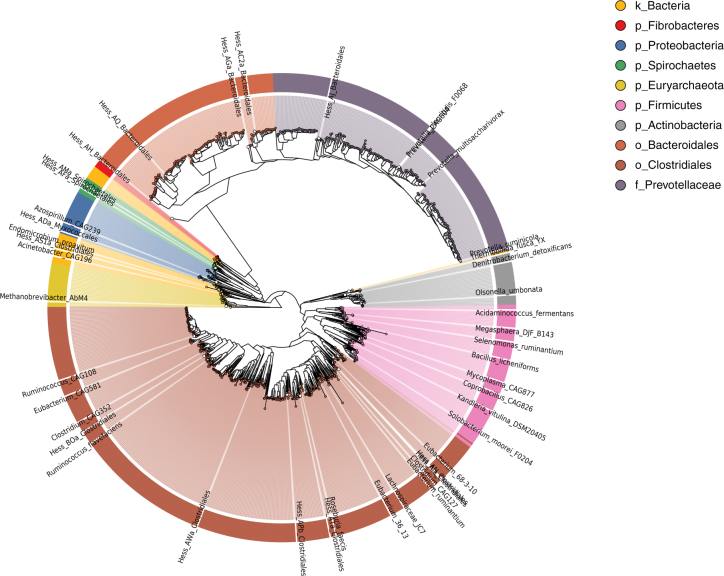
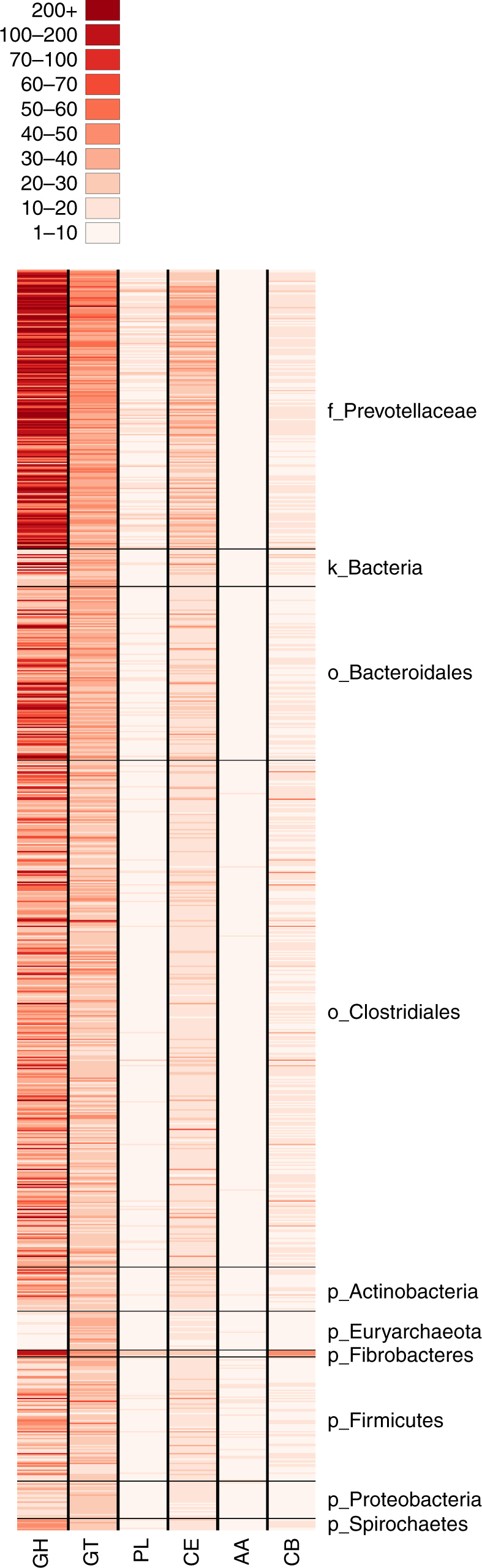
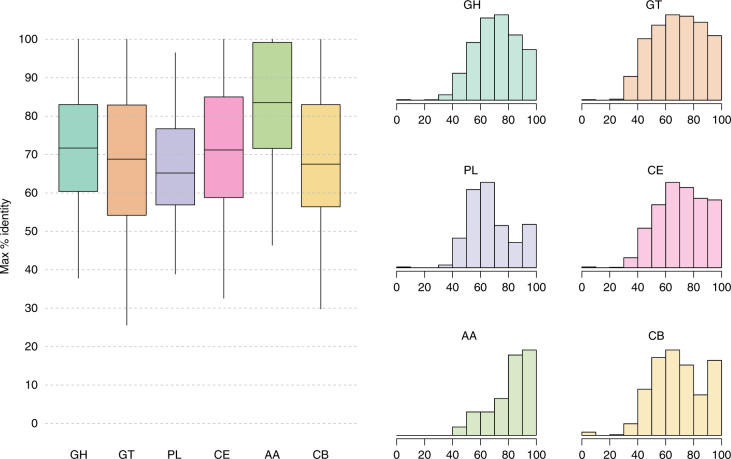
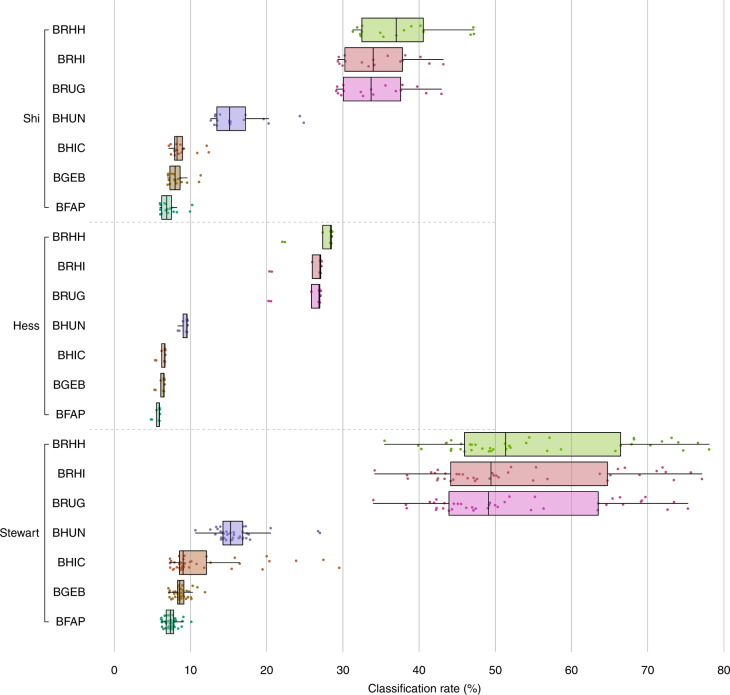
The cow rumen is adapted for the breakdown of plant material into energy and nutrients, a task largely performed by enzymes encoded by the rumen microbiome. Here we present 913 draft bacterial and archaeal genomes assembled from over 800 Gb of rumen metagenomic sequence data derived from 43 Scottish cattle, using both metagenomic binning and Hi-C-based proximity-guided assembly. Most of these genomes represent previously unsequenced strains and species. The draft genomes contain over 69,000 proteins predicted to be involved in carbohydrate metabolism, over 90% of which do not have a good match in public databases. Inclusion of the 913 genomes presented here improves metagenomic read classification by sevenfold against our own data, and by fivefold against other publicly available rumen datasets. Thus, our dataset substantially improves the coverage of rumen microbial genomes in the public databases and represents a valuable resource for biomass-degrading enzyme discovery and studies of the rumen microbiome.
Overview
The claims and statistics of this paper haven’t been checked yet.
Run the check — free, no account needed. It reads the open-access text and checks the sources it cites.
Integrity signals
Registry
Cites
Statistics
Figures
Verification
Claims the paper makes
The claims and statistics of this paper haven’t been checked yet.
Run the check — free, no account needed. It reads the open-access text and checks the sources it cites.
Claims other papers make about this one
Each is checked against this paper’s own text: does it say what the citing paper says it does?
In the citing paper
“Subsequently, Svartstrom et al. (2017) assembled 99 microbial genomes from the moose rumen, Stewart et al. (2018) assembled 913 microbial genomes from the rumen of cattle, and Parks et al. (2017) assembled over 8,000 novel microbial genomes from 1,500 public datasets, some of which originated from the rumen.”
From Addressing global ruminant agricultural challenges through understanding the rumen microbiome: past, present, and future (2018) · cites this paper as Stewart et al., 2018
In the citing paper
“Hi-C binning has been used effectively on human feces (Press et al., 2017) as well as in ruminants (Stewart et al., 2018).”
From Addressing global ruminant agricultural challenges through understanding the rumen microbiome: past, present, and future (2018) · cites this paper as Stewart et al., 2018
Self-check
Percentages, sums and reported differences re-computed from the paper’s own numbers.
The self-check needs the paper’s full text.
Citations
Cites
Trimmomatic: a flexible trimmer for Illumina sequence data
Bolger, A. M., Lohse, M., & Usadel, B. (2014) · Bioinformatics · doi:10.1093/bioinformatics/btu170 · Cited by 65,548
The Sequence Alignment/Map format and SAMtools
Li, H., Handsaker, B., Wysoker, A., Fennell, T., Ruan, J., Homer, N., Marth, G., Abecasis, G., Durbin, R., & 1000 Genome Project Data Processing Subgroup (2009) · Bioinformatics · doi:10.1093/bioinformatics/btp352 · Cited by 62,041
Fast and accurate short read alignment with Burrows-Wheeler transform
Li, H., & Durbin, R. (2009) · Bioinformatics · doi:10.1093/bioinformatics/btp324 · Cited by 58,607
BLAST+: architecture and applications
Camacho, C., Coulouris, G., Avagyan, V., Ma, N., Papadopoulos, J., Bealer, K., & Madden, T. L. (2009) · BMC Bioinformatics · doi:10.1186/1471-2105-10-421 · Cited by 22,074
Fast and sensitive protein alignment using DIAMOND
Buchfink, B., Xie, C., & Huson, D. H. (2015) · Nature Methods · doi:10.1038/nmeth.3176 · Cited by 14,201
Aligning sequence reads, clone sequences and assembly contigs with BWA-MEMPreprint
Li, H. (2013) · arXiv (Cornell University) · doi:10.48550/arxiv.1303.3997 · Cited by 10,846
Li, D., Liu, C.-M., Luo, R., Sadakane, K., & Lam, T. (2015) · Bioinformatics · doi:10.1093/bioinformatics/btv033 · Cited by 10,133
UniProt: the Universal Protein knowledgebase
Apweiler, R. (2003) · Nucleic Acids Research · doi:10.1093/nar/gkh131 · Cited by 7,593
The carbohydrate-active enzymes database (CAZy) in 2013
Lombard, V., Ramulu, H. G., Drula, É., Coutinho, P. M., & Henrissat, B. (2013) · Nucleic Acids Research · doi:10.1093/nar/gkt1178 · Cited by 6,452
O'Leary, N. A., Wright, M. W., Brister, J. R., Ciufo, S., Haddad, D., McVeigh, R., Rajput, B., Robbertse, B., Smith-White, B., Ako-Adjei, D., et al. (2016) · Nucleic Acids Research · doi:10.1093/nar/gkv1189 · Cited by 6,357
Cited by
Sorted by citations
Improved metagenomic analysis with Kraken 2
Wood, D. E., Lu, J., & Langmead, B. (2019) · Genome biology · doi:10.1186/s13059-019-1891-0 · Cited by 7,173
“As databases of assembled genomes continue to grow, databases of reference sequences used for metagenomics studies will also grow [21,23].”
BackgroundA new genomic blueprint of the human gut microbiota
Almeida, A., Mitchell, A. L., Boland, M., Forster, S. C., Gloor, G. B., Tarkowska, A., Lawley, T. D., & Finn, R. D. (2019) · Nature · doi:10.1038/s41586-019-0965-1 · Cited by 1,314
A genomic catalog of Earth’s microbiomes
Nayfach, S., Roux, S., Seshadri, R., Udwary, D., Varghese, N. J., Schulz, F., Wu, D., Páez-Espino, D., Chen, I.-M. A., Huntemann, M., et al. (2020) · Nature Biotechnology · doi:10.1038/s41587-020-0718-6 · Cited by 890
“We performed metagenomic assembly and binning on 10,450 globally distributed metagenomes from diverse habitats, including ocean and other aquatic environments (3,345), human and animal host-associated environments (3,536), as well as soils and other terrestrial environments (1,919), to recover 52,515 MAGs (Fig.”
BackgroundA practical guide to amplicon and metagenomic analysis of microbiome data
Liu, Y., Qin, Y., Chen, T., Lu, M., Qian, X., Guo, X., & Bai, Y. (2020) · Protein & Cell · doi:10.1007/s13238-020-00724-8 · Cited by 931
“…from the human gut (Li et al., 2014; Pasolli et al., 2019; Tierney et al., 2019), the mouse gut (Xiao et al., 2015), the chicken gut (Huang et al., 2018), the cow rumen (Stewart et al., 2018; Stewart et al., 2019), the ocean (Salazar et al., 2019), and the citrus rhizosphere (Xu et al., 2018).”
BackgroundNew insights from uncultivated genomes of the global human gut microbiome
Nayfach, S., Shi, Z. J., Seshadri, R., Pollard, K. S., & Kyrpides, N. C. (2019) · Nature · doi:10.1038/s41586-019-1058-x · Cited by 737
Karkman, A., Pärnänen, K., & Larsson, D. G. J. (2019) · Nature Communications · doi:10.1038/s41467-018-07992-3 · Cited by 628
Stewart, R. D., Auffret, M. D., Warr, A., Walker, A. W., Roehe, R., & Watson, M. (2019) · Nature Biotechnology · doi:10.1038/s41587-019-0202-3 · Cited by 611
Robust taxonomic classification of uncharted microbial sequences and bins with CAT and BAT
von Meijenfeldt, F. A. B., Arkhipova, K., Cambuy, D. D., Coutinho, F., & Dutilh, B. (2019) · Genome Biology · doi:10.1186/s13059-019-1817-x · Cited by 503
“This database was constructed after the publication of [7].”
InfluentialSequencing-based methods and resources to study antimicrobial resistance
Boolchandani, M., D’Souza, A. W., & Dantas, G. A. (2019) · Nature Reviews Genetics · doi:10.1038/s41576-019-0108-4 · Cited by 558
Li, F., Li, C., Chen, Y., Liu, J., Zhang, C., Irving, B., Fitzsimmons, C., Plastow, G., & Guan, L. L. (2019) · Microbiome · doi:10.1186/s40168-019-0699-1 · Cited by 530
“genomic characters of these heritable rumen taxa, such as the outcomes of the Hungate 1000 project [51] and the 913 microbial genomes assembled from rumen metagenomes [50], will provide more information to explain how host and rumen microorganisms coevolved at the genomic level and provide a better understanding of ho…”
BackgroundMethodSereika, M., Kirkegaard, R. H., Karst, S. M., Michaelsen, T. Y., Sørensen, E. A., Wollenberg, R. D., & Albertsen, M. (2022) · Nature Methods · doi:10.1038/s41592-022-01539-7 · Cited by 514
Huws, S. A., Creevey, C. J., Oyama, L. B., Mizrahi, I., Denman, S. E., Popova, M., Muñoz-Tamayo, R., Forano, E., Waters, S. M., Hess, M., et al. (2018) · Frontiers in Microbiology · doi:10.3389/fmicb.2018.02161 · Cited by 487
Self-citationMatthews, C., Crispie, F., Lewis, E., Reid, M., O’Toole, P. W., & Cotter, P. D. (2018) · Gut Microbes · doi:10.1080/19490976.2018.1505176 · Cited by 511
“This study also highlights the potential to use hybrid short-read and long-read sequencing approaches in order to obtain complete end to end assembly of microbial chromosomes direct from metagenomic data.(100) This approach may involve the use of both Illumina technologies for shorter reads and Pac-Bio or Oxford Nanop…”
MethodLi, F., Hitch, T. C. A., Chen, Y., Creevey, C. J., & Guan, L. L. (2019) · Microbiome · doi:10.1186/s40168-019-0618-5 · Cited by 337
“The sequencing depth of our metagenomes is comparable with the rumen metagenomes published recently, which obtained assembly of 913 near-complete and draft bacterial and archaeal genomes [49].”
BackgroundResultPérez-Cobas, A. E., Gomez-Valero, L., & Buchrieser, C. (2020) · Microbial Genomics · doi:10.1099/mgen.0.000409 · Cited by 314
Xie, F., Jin, W., Si, H., Yuan, Y., Tao, Y., Liu, J., Wang, X., Yang, C., Li, Q., Yan, X., et al. (2021) · Microbiome · doi:10.1186/s40168-021-01078-x · Cited by 333
The food-gut axis: lactic acid bacteria and their link to food, the gut microbiome and human health
De Filippis, F., Pasolli, E., & Ercolini, D. (2020) · FEMS Microbiology Reviews · doi:10.1093/femsre/fuaa015 · Cited by 303
Diverse hydrogen production and consumption pathways influence methane production in ruminants
Greening, C., Geier, R. R., Wang, C., Woods, L. C., Morales, S. E., McDonald, M. J., Rushton-Green, R., Morgan, X. C., Koike, S., Leahy, S. C., et al. (2019) · The ISME Journal · doi:10.1038/s41396-019-0464-2 · Cited by 328
Linking the resistome and plasmidome to the microbiome
Stalder, T., Press, M. O., Sullivan, S. T., Liachko, I., & Top, E. M. (2019) · The ISME Journal · doi:10.1038/s41396-019-0446-4 · Cited by 288
Weissman, J., Hou, S., & Fuhrman, J. A. (2021) · Proceedings of the National Academy of Sciences · doi:10.1073/pnas.2016810118 · Cited by 296
Metagenomics-enabled microbial surveillance
Ko, K. K. K., Chng, K. R., & Nagarajan, N. (2022) · Nature Microbiology · doi:10.1038/s41564-022-01089-w · Cited by 287
Review: Ruminal microbiome and microbial metabolome: effects of diet and ruminant host
Newbold, C. J., & Ramos‐Morales, E. (2020) · animal · doi:10.1017/s1751731119003252 · Cited by 289
Campanaro, S., Treu, L., Rodriguez‐R, L. M., Kovalovszki, A., Ziels, R. M., Maus, I., Zhu, X., Kougias, P., Basile, A., Luo, G., et al. (2020) · Biotechnology for Biofuels · doi:10.1186/s13068-020-01679-y · Cited by 255
Kent, A. G., Vill, A. C., Shi, Q., Satlin, M. J., & Brito, I. L. (2020) · Nature Communications · doi:10.1038/s41467-020-18164-7 · Cited by 216
Peng, X., Wilken, S. E., Lankiewicz, T. S., Gilmore, S. P., Brown, J. L., Henske, J. K., Swift, C. L., Salamov, A. A., Barry, K., Grigoriev, I. V., et al. (2021) · Nature Microbiology · doi:10.1038/s41564-020-00861-0 · Cited by 234
Extensive microbial diversity within the chicken gut microbiome revealed by metagenomics and culture
Gilroy, R., Ravi, A., Getino, M., Pursley, I., Horton, D. L., Alikhan, N.-F., Baker, D., Gharbi, K., Hall, N., Watson, M., et al. (2021) · PeerJ · doi:10.7717/peerj.10941 · Cited by 236
The fecal resistome of dairy cattle is associated with diet during nursing
Liu, J., Taft, D. H., Maldonado-Gómez, M. X., Johnson, D., Treiber, M. L., Lemay, D. G., DePeters, E. J., & Mills, D. A. (2019) · Nature Communications · doi:10.1038/s41467-019-12111-x · Cited by 221
New approaches for metagenome assembly with short reads
Ayling, M., Clark, M. D., & Leggett, R. M. (2019) · Briefings in Bioinformatics · doi:10.1093/bib/bbz020 · Cited by 228
“In vivo HiC cross-links DNA within live cells, allowing scaffolding similar to Dove-tail, but uniquely it also allows binning of chromosomes and plasmids in the same original cells [79].”
BackgroundLiu, S., Chen, Q., Zou, H., Yu, Y., Zhou, Z., Mao, J., & Zhang, S. (2019) · International Journal of Food Microbiology · doi:10.1016/j.ijfoodmicro.2019.05.001 · Cited by 213
Kieser, S., Brown, J., Zdobnov, E. M., Trajkovski, M., & McCue, L. A. (2020) · BMC Bioinformatics · doi:10.1186/s12859-020-03585-4 · Cited by 211
Hoque, M. N., Istiaq, A., Clement, R. A., Sultana, M., Crandall, K. A., Siddiki, A. Z., & Hossain, M. A. (2019) · Scientific Reports · doi:10.1038/s41598-019-49468-4 · Cited by 197
Interspecies cross-feeding orchestrates carbon degradation in the rumen ecosystem
Solden, L., Naas, A. E., Roux, S., Daly, R. A., Collins, W., Nicora, C., Purvine, S. O., Hoyt, D. W., Schückel, J., Jørgensen, B., et al. (2018) · Nature Microbiology · doi:10.1038/s41564-018-0225-4 · Cited by 195
Hitch, T. C. A., Riedel, T., Oren, A., Overmann, J., Lawley, T. D., & Clavel, T. (2021) · ISME Communications · doi:10.1038/s43705-021-00017-z · Cited by 193
Gharechahi, J., Vahidi, M. F., Bahram, M., Han, J., Ding, X., & Salekdeh, G. H. (2020) · The ISME Journal · doi:10.1038/s41396-020-00837-2 · Cited by 189
Alexa, E. A., Likotrafiti, E., Álvarez-Molina, A., Maradona, M. P., Santos, J. A., & Álvarez‐Ordóñez, A. (2018) · Genes · doi:10.3390/genes9050268 · Cited by 187
A Comprehensive Analysis of the Global Human Gut Archaeome from a Thousand Genome Catalogue
Chibani, C. M., Mahnert, A., Borrel, G., Almeida, A., Werner, A., Brugère, J., Gribaldo, S., Finn, R. D., Schmitz, R. A., & Moissl‐Eichinger, C. (2020) · Nature Microbiology · doi:10.1038/s41564-021-01020-9 · Cited by 186
A roadmap for metagenomic enzyme discovery
Robinson, S. L., Piel, J., & Sunagawa, S. (2021) · Natural Product Reports · doi:10.1039/d1np00006c · Cited by 195
Assembly of hundreds of novel bacterial genomes from the chicken caecum
Glendinning, L., Stewart, R. D., Pallen, M. J., Watson, K., & Watson, M. (2020) · Genome biology · doi:10.1186/s13059-020-1947-1 · Cited by 174
Panel), E. P. O. B. H. (. B., Koutsoumanis, K., Allende, A., Álvarez‐Ordóñez, A., Bolton, D., Bover‐Cid, S., Chemaly, M., Davies, R., Cesare, A. D., Hilbert, F., et al. (2019) · EFSA Journal · doi:10.2903/j.efsa.2019.5898 · Cited by 182
Lignocellulose degradation by rumen bacterial communities: New insights from metagenome analyses
Gharechahi, J., Vahidi, M. F., Sharifi, G., Ariaeenejad, S., Ding, X., Han, J., & Salekdeh, G. H. (2023) · Environmental Research · doi:10.1016/j.envres.2023.115925 · Cited by 171
Population Genetics in the Human Microbiome
Garud, N. R., & Pollard, K. S. (2019) · Trends in Genetics · doi:10.1016/j.tig.2019.10.010 · Cited by 142
“Assembly is improving with chromatin capture scaffolding [166] and longer reads.”
BackgroundGharechahi, J., & Salekdeh, G. H. (2018) · Biotechnology for Biofuels · doi:10.1186/s13068-018-1214-9 · Cited by 145
Metagenomic Data Assembly – The Way of Decoding Unknown Microorganisms
Lapidus, A. L., & Korobeynikov, A. (2021) · Frontiers in Microbiology · doi:10.3389/fmicb.2021.613791 · Cited by 134
“A recent cow rumen study (Stewart et al., 2018) analyzed more than 800 Gb of rumen metagenomic sequence data from 43 Scottish cattle that allowed to produce 913 draft assemblies of newly sequenced bacterial and archaeal strains and species.”
BackgroundLiu, N., Li, H., Chevrette, M. G., Zhang, L., Cao, L., Zhou, H., Zhou, X. J., Zhou, Z., Pope, P. B., Currie, C. R., et al. (2018) · The ISME Journal · doi:10.1038/s41396-018-0255-1 · Cited by 141
Somerville, V., Lutz, S., Schmid, M., Frei, D., Moser, A. I., Irmler, S., Frey, J. E., & Ahrens, C. H. (2019) · BMC Microbiology · doi:10.1186/s12866-019-1500-0 · Cited by 136
Meta-analysis of cheese microbiomes highlights contributions to multiple aspects of quality
Walsh, A. M., Macori, G., Kilcawley, K. N., & Cotter, P. D. (2020) · Nature Food · doi:10.1038/s43016-020-0129-3 · Cited by 133
Dong, X., Rattray, J. E., Campbell, D. C., Webb, J., Chakraborty, A., Adebayo, O., Matthews, S., Li, C., Fowler, M. G., Morrison, N., et al. (2020) · Nature Communications · doi:10.1038/s41467-020-19648-2 · Cited by 128
Bickhart, D. M., Watson, M., Koren, S., Panke-Buisse, K., Cersosimo, L. M., Press, M. O., Tassell, C. P. V., Kessel, J. A. S. V., Haley, B. J., Kim, S. W., et al. (2019) · Genome biology · doi:10.1186/s13059-019-1760-x · Cited by 131
“(17) and Hungate 1000(18) 177 assemblies.”
BackgroundMethodZhou, R., Wu, J., Lang, X., Liu, L., Casper, D. P., Wang, C., Zhang, L., & Wei, S. (2020) · Journal of Dairy Science · doi:10.3168/jds.2019-16611 · Cited by 130
Loss of microbial diversity and pathogen domination of the gut microbiota in critically ill patients
Ravi, A., Halstead, F. D., Bamford, A. L., Casey, A., Thomson, N. M., van Schaik, W., Snelson, C., Goulden, R., Foster-Nyarko, E., Savva, G. M., et al. (2019) · Microbial Genomics · doi:10.1099/mgen.0.000293 · Cited by 128
“In addition, in its simplest form, the ability of shotgun metagenomics to link mobile elements to the chromosomes from their host cells is poor, although proximity linkage approaches might overcome this limitation [80].”
BackgroundGruninger, R. J., Ribeiro, G. O., Cameron, A., & McAllister, T. A. (2019) · animal · doi:10.1017/s1751731119000752 · Cited by 128
Alneberg, J., Karlsson, C. M. G., Divne, A., Bergin, C., Homa, F., Lindh, M. V., Hugerth, L. W., Ettema, T. J. G., Bertilsson, S., Andersson, A. F., et al. (2018) · Microbiome · doi:10.1186/s40168-018-0550-0 · Cited by 117
Wang, L., Zhang, G., Xu, H., Xin, H., & Zhang, Y. (2019) · Frontiers in Microbiology · doi:10.3389/fmicb.2019.00649 · Cited by 111
Bovine host genome acts on rumen microbiome function linked to methane emissions
Martínez-Álvaro, M., Auffret, M. D., Duthie, C.-A., Dewhurst, R. J., Cleveland, M. A., Watson, M., & Roehe, R. (2022) · Communications Biology · doi:10.1038/s42003-022-03293-0 · Cited by 122
Metagenome-assembled genome extraction and analysis from microbiomes using KBase
Chivian, D. C., Jungbluth, S. P., Dehal, P., Wood‐Charlson, E. M., Canon, R. S., Allen, B. H., Clark, M. M., Gu, T., Land, M., Price, G. A., et al. (2022) · Nature Protocols · doi:10.1038/s41596-022-00747-x · Cited by 108
Altitude influences microbial diversity and herbage fermentation in the rumen of yaks
Fan, Q., Wanapat, M., Yan, T., & Hou, F. (2020) · BMC Microbiology · doi:10.1186/s12866-020-02054-5 · Cited by 112
Pereira, A. M., Dapkevicius, M. D. L. E., & Borba, A. E. S. (2022) · Animal Microbiome · doi:10.1186/s42523-021-00153-w · Cited by 124
“Indeed, the enrichment in those enzymes observed in Bacteroidales, including Prevotellaceae, Fibrobacteres, and some Clostridiales [63], affords them a competitive advantage justifying its higher abundance in the rumen.”
BackgroundInterrogating the viral dark matter of the rumen ecosystem with a global virome database
Yan, M., Pratama, A. A., Somasundaram, S., Li, Z., Jiang, Y., Sullivan, M. B., & Yu, Z. (2023) · Nature Communications · doi:10.1038/s41467-023-41075-2 · Cited by 109
“We examined whether animals from the same diet or same breed share more vOTUs compared to animals fed different diets or of different breeds using subsets of data from Stewart et al. 78 and Li et al. 79 respectively.”
Escobar‐Zepeda, A., Godoy-Lozano, E. E., Raggi, L., Segovia, L., Merino, E., Gutiérrez-Ríos, R.-M., Juárez, K., Licea-Navarro, A. F., Pardo‐López, L., & Sánchez‐Flores, A. (2018) · Scientific Reports · doi:10.1038/s41598-018-30515-5 · Cited by 111
Bhujbal, S. K., Ghosh, P., Vijay, V. K., Rathour, R., Kumar, M., Singh, L., & Kapley, A. (2022) · The Science of The Total Environment · doi:10.1016/j.scitotenv.2021.152773 · Cited by 106
RetractedLópez-García, A., Pineda-Quiroga, C., Atxaerandio, R., Pérez, A., Hernández, I., García-Rodríguez, A., & González-Recio, Ó. (2018) · Frontiers in Microbiology · doi:10.3389/fmicb.2018.03010 · Cited by 112
“The rumen microbiota is largely underrepresented in databases and most of them have not been cultured yet (Stewart et al., 2018).”
BackgroundYoungblut, N. D., de la Cuesta‐Zuluaga, J., Reischer, G. H., Dauser, S., Schuster, N., Walzer, C., Stalder, G. L., Farnleitner, A. H., & Ley, R. E. (2020) · mSystems · doi:10.1128/msystems.01045-20 · Cited by 100
“3), followed by Eremiobacterota (9), Proteobacteria 284 (7.”
BackgroundInfluentialThe microbiome of the buffalo digestive tract
Feng, T., Wang, T., Gao, N., Liu, Z., Cui, K., Duan, Y., Wu, S., Luo, Y., Li, Z., Yang, C., et al. (2022) · Nature Communications · doi:10.1038/s41467-022-28402-9 · Cited by 102
Martínez-Álvaro, M., Auffret, M. D., Stewart, R. D., Dewhurst, R. J., Duthie, C.-A., Rooke, J. A., Wallace, R. J., Shih, B. B.-J., Freeman, T. C., Watson, M., et al. (2020) · Frontiers in Microbiology · doi:10.3389/fmicb.2020.00659 · Cited by 120
Metage2Metabo, microbiota-scale metabolic complementarity for the identification of key species
Belcour, A., Frioux, C., Aïte, M., Bretaudeau, A., Hildebrand, F., & Siegel, A. (2020) · eLife · doi:10.7554/elife.61968 · Cited by 99
“Briefly, metagenomic samples were quality-filtered using sdm ( Hildebrand et al., 2014 ), assembled using MEGAHIT ( Li et al., 2015 ), genes were predicted using Prodigal ( Hyatt et al., 2010 ), and a non-redundant gene catalogue was constructed across all samples using MMseqs2 ( Steinegger and…”
MethodComprehensive mouse microbiota genome catalog reveals major difference to its human counterpart
Kieser, S., Zdobnov, E. M., & Trajkovski, M. (2022) · PLoS Computational Biology · doi:10.1371/journal.pcbi.1009947 · Cited by 99
Proteome specialization of anaerobic fungi during ruminal degradation of recalcitrant plant fiber
Hagen, L. H., Brooke, C. G., Shaw, C. A., Norbeck, A. D., Piao, H., Arntzen, M. Ø., Olson, H. M., Copeland, A., Isern, N., Shukla, A. K., et al. (2020) · The ISME Journal · doi:10.1038/s41396-020-00769-x · Cited by 106
“It has been estimated that there are ~1 billion domesticated ruminant animals [1] and numbers are predicted to increase”
BackgroundMajor genetic discontinuity and novel toxigenic species in Clostridioides difficile taxonomy
Knight, D. R., Imwattana, K., Kullin, B., Guerrero-Araya, E., Paredes‐Sabja, D., Didelot, X., Dingle, K. E., Eyre, D. W., Rodríguez, C., & Riley, T. V. (2021) · eLife · doi:10.7554/elife.64325 · Cited by 98
Li, J., Zhong, H., Ramayo‐Caldas, Y., Terrapon, N., Lombard, V., Potocki-Véronèse, G., Estellé, J., Popova, M., Yang, Z., Zhang, H., et al. (2020) · GigaScience · doi:10.1093/gigascience/giaa057 · Cited by 101
“Our catalog displays similar features with mean 73% identity to the MAGs of Genbank and Stewart et al. [6] and 89% novel CAZymes (482,759 sequences with < 95% identity).”
InfluentialLong-read metagenomic exploration of extrachromosomal mobile genetic elements in the human gut
Suzuki, Y., Nishijima, S., Furuta, Y., Yoshimura, J., Suda, W., Oshima, K., Hattori, M., & Morishita, S. (2019) · Microbiome · doi:10.1186/s40168-019-0737-z · Cited by 95
Xue, M.-Y., Wu, J.-J., Xie, Y.-Y., Zhu, S.-L., Zhong, Y.-F., Liu, J.-X., & Sun, H.-Z. (2022) · Microbiome · doi:10.1186/s40168-021-01211-w · Cited by 92
“However, consistent with the results of previous metagenomic binning studies, our results showed that a large number of unclassified microbial genomes and genomes could not be resolved to the species level, with many MAGs recovered at only the kingdom level [3, 10, 12].”
BackgroundResultInfluentialJiang, Q., Lin, L., Xie, F., Jin, W., Zhu, W., Wang, M., Qiu, Q., Li, Z., Liu, J., & Mao, S. (2022) · Microbiome · doi:10.1186/s40168-022-01298-9 · Cited by 95
Genomic insights into the phylogeny and biomass-degrading enzymes of rumen ciliates
Li, Z., Wang, X., Zhang, Y., Yu, Z., Zhang, T., Dai, X., Pan, X., Jing, R., Yan, Y., Liu, Y., et al. (2022) · The ISME Journal · doi:10.1038/s41396-022-01306-8 · Cited by 100
“A broad array of CAZymes encoded by the rumen ciliate SAGs The gut microbes are of huge industrial interest due to their ability to release fermentable sugars from lignocellulose [72, 83, 84].”
BackgroundSoil Biogeochemical Cycle Couplings Inferred from a Function-Taxon Network
Ma, B., Stirling, E., Liu, Y., Zhao, K., Zhou, J. Z., Singh, B. K., Tang, C., Dahlgren, R. A., & Xu, J. M. (2021) · Research · doi:10.34133/2021/7102769 · Cited by 95
“Despite pioneering conceptual research [12], there is a paucity of information concerning the connection of microbial community composition to biogeochemical functions.”
BackgroundFibre digestion by rumen microbiota — a review of recent metagenomic and metatranscriptomic studies
Terry, S. A., Badhan, A., Wang, Y., Chaves, A. V., & McAllister, T. A. (2019) · Canadian Journal of Animal Science · doi:10.1139/cjas-2019-0024 · Cited by 94
“Similarly, Stewart et al. (2018) predicted 1743 putative PUL from the Prevotellaceae family.”
BackgroundMethodUnlocking gut-liver-brain axis communication metabolites: energy metabolism, immunity and barriers
Sun, X., Shukla, M., Wang, W., & Li, S. (2024) · npj Biofilms and Microbiomes · doi:10.1038/s41522-024-00610-9 · Cited by 101
“…that an average human male body harbors around 3.8 × 10 13 individual microorganisms 20 , the gut microbiota of mice contains approximately 1 × 10 13 to 1 × 10 14 microbes 21 , and the rumen microbiota of cows contains approximately 1 × 10 11 to 1 × 10 12 microbes per gram of rumen content 22 .”
InfluentialAccetto, T., & Avguštin, G. (2018) · Systematic and Applied Microbiology · doi:10.1016/j.syapm.2018.10.001 · Cited by 97
The Planktonic Core Microbiome and Core Functions in the Cattle Rumen by Next Generation Sequencing
Wirth, R., Kádár, G., Kakuk, B., Maróti, G., Bagi, Z., Szilágyi, Á., Rákhely, G., Horváth, J., & Kovács, K. L. (2018) · Frontiers in Microbiology · doi:10.3389/fmicb.2018.02285 · Cited by 90
Murphy, C. L., Youssef, N. H., Hanafy, R. A., Couger, M. B., Stajich, J., Wang, Y., Baker, K., Dagar, S. S., Griffith, G. W., Farag, I., et al. (2019) · Applied and Environmental Microbiology · doi:10.1128/aem.00988-19 · Cited by 88
“The majority of the putative donor taxa are strict/ facultative anaerobes, and many of which are also known to be major inhabitants of the herbivorous gut and often possess polysaccharide-degradation capabilities (51, 52).”
BackgroundTen common issues with reference sequence databases and how to mitigate them
Chorlton, S. D. (2024) · Frontiers in Bioinformatics · doi:10.3389/fbinf.2024.1278228 · Cited by 101
Understanding the microbial basis of body odor in pre-pubescent children and teenagers
Lam, T. H., Verzotto, D., Brahma, P., Ng, A. H. Q., Hu, P., Schnell, D. J., Tiesman, J. P., Kong, R., Ton, T. M. U., Li, J., et al. (2018) · Microbiome · doi:10.1186/s40168-018-0588-z · Cited by 90
Lima, J., Auffret, M. D., Stewart, R. D., Dewhurst, R. J., Duthie, C.-A., Snelling, T. J., Walker, A. W., Freeman, T. C., Watson, M., & Roehe, R. (2019) · Frontiers in Genetics · doi:10.3389/fgene.2019.00701 · Cited by 92
Probing the Mobilome: Discoveries in the Dynamic Microbiome
Carr, V. R., Shkoporov, A. N., Hill, C., Mullany, P. P., & Moyes, D. L. (2020) · Trends in Microbiology · doi:10.1016/j.tim.2020.05.003 · Cited by 86
Shen, J., Zheng, L., Chen, X., Han, X., Cao, Y., & Yao, J. (2020) · Frontiers in Microbiology · doi:10.3389/fmicb.2020.01003 · Cited by 84
Gharechahi, J., Sarikhan, S., Han, J., Ding, X., & Salekdeh, G. H. (2022) · npj Biofilms and Microbiomes · doi:10.1038/s41522-022-00309-9 · Cited by 85
Hi-C metagenome sequencing reveals soil phage–host interactions
Wu, R., Davison, M. R., Nelson, W. C., Smith, M. L., Lipton, M. S. W., Jansson, J. K., McClure, R., McDermott, J., & Hofmockel, K. (2023) · Nature Communications · doi:10.1038/s41467-023-42967-z · Cited by 82
“Metagenome deconvolution was performed with ProxiMeta 58,59 , which implements a graph-based clustering algorithm using the shotgun metagenome assembly and Hi-C mapping as input to generate metagenome-assembled genomes (MAGs).”
Qiu, Z. G., Yuan, L., Lian, C., Lin, B., Chen, J., Mu, R., Qiao, X., Zhang, L., Xu, Z., Fan, L., et al. (2024) · Nature Communications · doi:10.1038/s41467-024-46539-7 · Cited by 86
“Although BASALT can function with only a single metagenomic dataset, the overall bin quality including MAG quality can be improved using multiple datasets and assemblies as inputs 36,83 .”
BackgroundMethodCurrent and Promising Approaches to Identify Horizontal Gene Transfer Events in Metagenomes
Douglas, G. M., & Langille, M. G. I. (2019) · Genome Biology and Evolution · doi:10.1093/gbe/evz184 · Cited by 80
Metatranscriptomics of the Hu sheep rumen microbiome reveals novel cellulases
He, B., Jin, S., Cao, J., Mi, L., & Wang, J. (2019) · Biotechnology for Biofuels · doi:10.1186/s13068-019-1498-4 · Cited by 83
Bertucci, M., Całusińska, M., Goux, X., Rouland-Lefèvre, C., Untereiner, B., Ferrer, P., Gerin, P. A., & Delfosse, P. (2019) · Applied and Environmental Microbiology · doi:10.1128/aem.00895-19 · Cited by 80
“AA class seemed more conserved (higher sequence similarity), as previously demonstrated for the cow rumen metagenome (36).”
BackgroundDiscovery of an Abundance of Biosynthetic Gene Clusters in Shark Bay Microbial Mats
Chen, R., Wong, H. L., Kindler, G. S., MacLeod, F. I., Benaud, N., Ferrari, B. C., & Burns, B. P. (2020) · Frontiers in Microbiology · doi:10.3389/fmicb.2020.01950 · Cited by 80
Bioinformatics in bioscience and bioengineering: Recent advances, applications, and perspectives
Uesaka, K., Oka, H., Kato, R., Kanie, K., Kojima, T., Tsugawa, H., Toda, Y., & Horinouchi, T. (2022) · Journal of Bioscience and Bioengineering · doi:10.1016/j.jbiosc.2022.08.004 · Cited by 83
Metagenomic analysis of the cow, sheep, reindeer and red deer rumen
Glendinning, L., Genç, B., Wallace, R. J., & Watson, M. (2021) · Scientific Reports · doi:10.1038/s41598-021-81668-9 · Cited by 81
“Our group has previously published thousands of metagenome assembled genomes from 54 cattle rumen samples (19, 20) and hundreds of genomes from chicken caecal samples (21), many of 55 which were identified as novel species.”
BackgroundJia, M., Zhu, S., Xue, M., Chen, H., Xu, J., Song, M., Tang, Y., Liu, X., Tao, Y., Zhang, T., et al. (2024) · Nature Microbiology · doi:10.1038/s41564-024-01723-9 · Cited by 80
Bovo, S., Utzeri, V. J., Ribani, A., Cabbri, R., & Fontanesi, L. (2020) · Scientific Reports · doi:10.1038/s41598-020-66127-1 · Cited by 75
Sapountzis, P., Segura, A., Desvaux, M., & Forano, É. (2020) · Microorganisms · doi:10.3390/microorganisms8060877 · Cited by 77
“The native GIT microbiota is adapted to the breakdown of complex polysaccharides [94,102], unlike E.”
BackgroundWilkinson, T., Korir, D., Ogugo, M., Stewart, R. D., Watson, M., Paxton, E. A., Goopy, J. P., & Robert, C. (2020) · Genome biology · doi:10.1186/s13059-020-02144-7 · Cited by 76
“[11] (additional details in text) Wilkinson et al.”
BackgroundMethodInfluentialEarly-Life Immune System Maturation in Chickens Using a Synthetic Community of Cultured Gut Bacteria
Zenner, C., Hitch, T. C. A., Riedel, T., Wortmann, E., Tiede, S., Buhl, E. M., Abt, B., Neuhaus, K., Velge, P., Overmann, J., et al. (2021) · mSystems · doi:10.1128/msystems.01300-20 · Cited by 72
Liang, J., Zhang, R., Chang, J., Chen, L., Nabi, M., Zhang, H., Zhang, G., & Zhang, P. (2024) · Biotechnology Advances · doi:10.1016/j.biotechadv.2024.108308 · Cited by 84
Fu, J., Chen, L., Yang, S., Li, Y., Jin, L., He, X., He, L., Ao, X., Liu, S., Liu, A., et al. (2021) · Food Research International · doi:10.1016/j.foodres.2021.110294 · Cited by 74
Metadata
- Authors
- Stewart, R. D., Auffret, M. D., Warr, A., Wiser, A. H., Press, M. O., Langford, K. W., Liachko, I., Snelling, T. J., Dewhurst, R. J., Walker, A. W., Roehe, R., & Watson, M.
- Affiliations
- Roslin Institute (GB)
- Scotland's Rural College (GB)
- University of Aberdeen (GB)
- Corresponding author
- Watson, Mick
- ORCID
- Venue
- Nature Communications
- Published
- 2018-02-28
- Volume
- 9
- Issue
- 1
- Pages
- 870-870
- ISSN
- 2041-1723 (ISSN-L)
- PMC
- PMC5830445
- OpenAlex
- W2786358949
- Cited by
- 559
- References
- 83
- Citations by year
- 2026: 39 · 2025: 48 · 2024: 77 · 2023: 69 · 2022: 64 · 2021: 73 · 2020: 89 · 2019: 73 · 2018: 27
- FWCI
- 24.09
- Type
- journal article
- Language
- en
- Open access
- gold
- doi.org
- Locations
- Nature Communications (publishedVersion, cc-by)
- Europe PMC (PubMed Central) (publishedVersion, cc-by)
- PubMed Central (publishedVersion, cc-by)
- PubMed (publishedVersion)
- Edinburgh Research Explorer (University of Edinburgh) (publishedVersion, cc-by)
- RePEc: Research Papers in Economics (submittedVersion)
- Aberdeen University Research Archive (Aberdeen University) (submittedVersion)
- DOAJ (DOAJ: Directory of Open Access Journals) (submittedVersion)
- DOAJ (DOAJ: Directory of Open Access Journals) (submittedVersion, cc-by-sa)
- Funders
- Rural and Environment Science and Analytical Services Division
- Scottish Government
- Scotland’s Rural College
- Directorate for Biological Sciences
- Biotechnology and Biological Sciences Research Council (BBS/E/D/30002276, BB/M01844X/1, BB/J004235/1, BB/R015023/1, BB/P013732/1, BB/J004235, BB/N016742/1, BB/ J004243/1, BB/N01720X/1, P013759, BBP013759/1, BBS/E/D/20310000)
- National Institute of Allergy and Infectious Diseases (R43AI122654, R44AI122654)
- Topics
- Life Sciences › Biochemistry, Genetics and Molecular Biology › Molecular Biology › Genomics and Phylogenetic Studies
- Life Sciences › Agricultural and Biological Sciences › Animal Science and Zoology › Ruminant Nutrition and Digestive Physiology
- Physical Sciences › Energy › Renewable Energy, Sustainability and the Environment › Anaerobic Digestion and Biogas Production
- Keywords
- rumen microbiome, draft genome sequence, metagenome binning, Hi-C, cattle, rumen bacteria, rumen archaea, carbohydrate metabolism, biomass-degrading enzymes, metagenome-assembled genomes, read classification
- MeSH terms
- Animals, Bacteria, Bacterial Proteins, Cattle, Phylogeny, Rumen, Genome, Bacterial, Metagenome, Metagenomics
About these checks
Registry, retraction, Cites and statistics results are computed, not judged, with one exception: a printed reference that no index lists is read once by a model before it counts as a citation error. Claims are extracted by a model and kept only when their quote appears verbatim in the text; each cited source is then checked, with a model’s help, for whether it says what the claim relies on. Those verdicts can be wrong — read the claim’s quote and the cited source before relying on one.
Statistics and arithmetic are recomputed, not judged.
Confidence bands are shown only for fields calibrated on our annotated test set. None is calibrated yet, so no band is shown.
What counts as a claim ›How we measure confidence ›How we check this ›
Are you an author, or do you see a problem with this page? Request a review
