

Dissolved organic carbon leaching from plastics stimulates microbial activity in the ocean
Open accessThe DOI matches its Crossref record; 29 of the 29 references it cites were found in a registry or an index.
Abstract
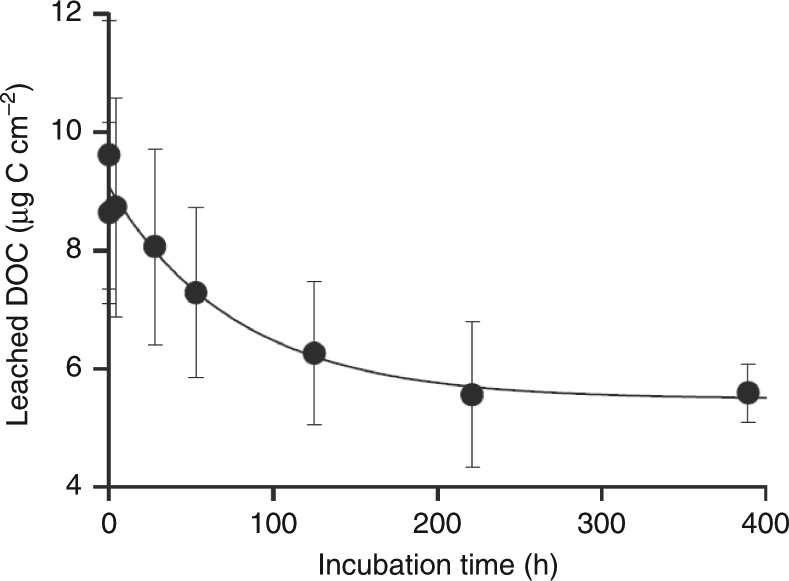
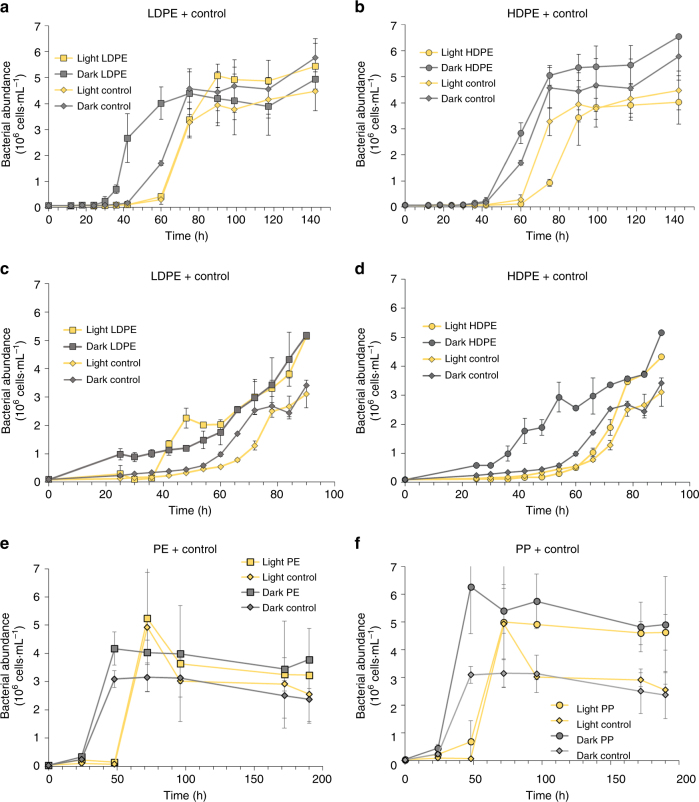
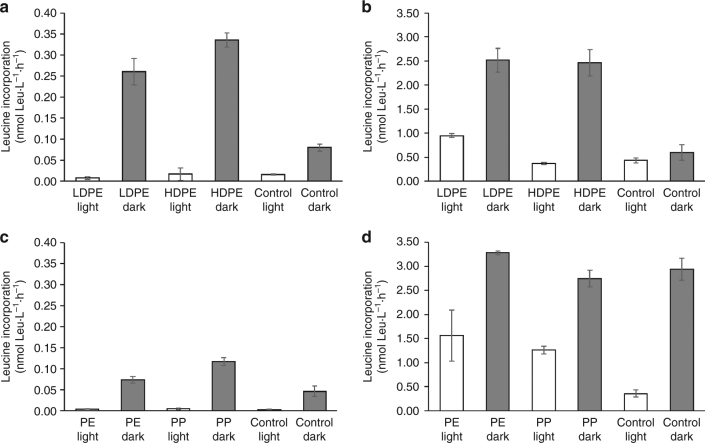
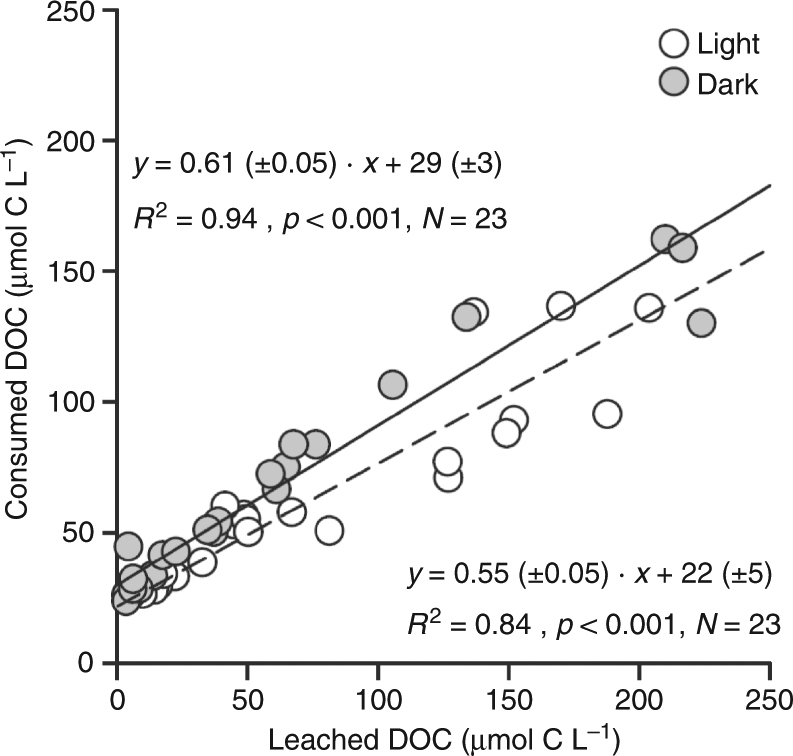
Approximately 5.25 trillion plastic pieces are floating at the sea surface. The impact of plastic pollution on the lowest trophic levels of the food web, however, remains unknown. Here we show that plastics release dissolved organic carbon (DOC) into the ambient seawater stimulating the activity of heterotrophic microbes. Our estimates indicate that globally up to 23,600 metric tons of DOC are leaching from marine plastics annually. About 60% of it is available to microbial utilization in less than 5 days. If exposed to solar radiation, however, this DOC becomes less labile. Thus, plastic pollution of marine surface waters likely alters the composition and activity of the base of the marine food webs. It is predicted that plastic waste entering the ocean will increase by a factor of ten within the next decade, resulting in an increase in plastic-derived DOC that might have unaccounted consequences for marine microbes and for the ocean system.
Overview
The claims and statistics of this paper haven’t been checked yet.
Free: it reads the open-access text and checks the first 5 claims that cite a source we can check. Create a free account to check every claim.
Integrity signals
Registry
Cites
Statistics
Figures
Verification
Claims the paper makes
The claims and statistics of this paper haven’t been checked yet.
Free: it reads the open-access text and checks the first 5 claims that cite a source we can check. Create a free account to check every claim.
Claims other papers make about this one
Each is checked against this paper’s own text: does it say what the citing paper says it does?
The source backs part of the claim, not all of it — or backs it for a different population, condition or comparison.
In the citing paper
“Moreover, UV-induced photodegradation results in the leaching of a plethora of lower molecular weight degradation products [3, 10, 23, 25, 66], which, at least to some degree, stimulate microbial activity [23, 25].”
From Polyethylene degradation and assimilation by the marine yeast Rhodotorula mucilaginosa (2023) · cites this paper as [23]
Experimental — accuracy not yet measuredThe source backs part of the claim, not all of it — or backs it for a different population, condition or comparison.
In the citing paper
“ii) limitations in bioavailable carbon i.e. Bacillus sp cells were able to degrade mainly photooxidation products released from the PE after UV treatment such as nanoplastics, oligomers, monomers and short-chain compounds that have functional groups making them easier to attack by microbial cells/enzymes”
From Mineralization of 13C-labeled polyethylene by marine Bacillus velezensis MT9 (2026) · cites this paper as Romera-Castillo et al., 2018
Experimental — accuracy not yet measuredThe source backs part of the claim, not all of it — or backs it for a different population, condition or comparison.
In the citing paper
“Photooxidation can be complete leading to the terminal oxidation end product CO 2 and in conjunction with fragmentation, it can then also lead to the formation of smaller molecules, ranging from hydrocarbon gases to shorterchain carbonyl compounds (e.g.straight chain or with aromaticity, depending on the parent polymer) 14,29,108 as well as nanoplastics.13,67,109”
From The fate of plastic in the ocean environment – a minireview (2021) · cites this paper as [29]
Experimental — accuracy not yet measuredThe source backs part of the claim, not all of it — or backs it for a different population, condition or comparison.
In the citing paper
“Assuming that the residence time of PMD at the ocean surface could be in the order of years, and/or that PMD might oscillate in the water column and periodically resurfaces, the preliminary results of Ward et al. (2019) and Zhu et al. (2020) show that photooxidation may indeed account for a substantial transformation of PMD into smaller chain scission products and nanoplastics.[29][30][31]”
From The fate of plastic in the ocean environment – a minireview (2021) · cites this paper as [29]
Experimental — accuracy not yet measuredThe source backs part of the claim, not all of it — or backs it for a different population, condition or comparison.
In the citing paper
“Incubation experiments with natural surface water microbial communities from the Mediterranean Sea 29 and an estuary of the subtropical NW Atlantic 31 showed that microbes were able to utilise at least some of the water-soluble fraction of daughter products generated during photooxidation of PE, PP, and PS.”
From The fate of plastic in the ocean environment – a minireview (2021) · cites this paper as [29]
Experimental — accuracy not yet measured
4 more claims about this paper
Create a free account to see every claim other papers make about this one.
Self-check
Percentages, sums and reported differences re-computed from the paper’s own numbers.
The self-check needs the paper’s full text.
Citations
Cites
Plastic waste inputs from land into the ocean
Jambeck, J. R., Geyer, R., Wilcox, C., Siegler, T. R., Perryman, M., Andrady, A., Narayan, R., & Law, K. L. (2015) · Science · doi:10.1126/science.1260352 · Cited by 13,163
Microplastics in the marine environment
Andrady, A. L. (2011) · Marine Pollution Bulletin · doi:10.1016/j.marpolbul.2011.05.030 · Cited by 8,105
Eriksen, M., Lebreton, L. C. M., Carson, H. S., Thiel, M., Moore, C. J., Borerro, J. C., Galgani, F., Ryan, P. G., & Reisser, J. (2014) · PLoS ONE · doi:10.1371/journal.pone.0111913 · Cited by 4,710
Accumulation of microplastic on shorelines woldwide: Sources and sinks
Browne, M. A., Crump, P., Niven, S. J., Teuten, E., Tonkin, A., Galloway, T., & Thompson, R. (2011) · Environmental Science & Technology · doi:10.1021/es201811s · Cited by 4,548
Plastic debris in the open ocean
Cózar, A., Echevarría, F., González-Gordillo, J. I., Irigoien, X., Úbeda, B., Hernández-León, S., Palma, Á. T., Navarro, S., García-de-Lomas, J., Ruiz, A., et al. (2014) · Proceedings of the National Academy of Sciences · doi:10.1073/pnas.1314705111 · Cited by 3,133
Auta, H. S., Emenike, C. U., & Fauziah, S. H. (2017) · Environment International · doi:10.1016/j.envint.2017.02.013 · Cited by 2,649
Pathways for degradation of plastic polymers floating in the marine environment
Gewert, B., Plassmann, M. M., & MacLeod, M. (2015) · Environmental Science: Processes & Impacts · doi:10.1039/c5em00207a · Cited by 2,168 · cited 1×
“The quantity of plastic waste entering the oceans is predicted to increase by up to one order of magnitude by the year 2025 (20) resulting in plastic-derived DOC of up to 236,000MT per year in the global ocean, with potential major consequences for marine microbes and the carbon cycling in the oceanic system.”
Belle, G. V., Fisher, L. D., Heagerty, P. J., & Lumley, T. (1958) · Wiley eBooks · doi:10.1002/0471602396.ch1 · Cited by 1,861
A global inventory of small floating plastic debris
van Sebille, E., Wilcox, C., Lebreton, L., Maximenko, N., Hardesty, B. D., van Franeker, J. A., Eriksen, M., Siegel, D., Galgani, F., & Law, K. L. (2015) · Environmental Research Letters · doi:10.1088/1748-9326/10/12/124006 · Cited by 1,713
Contributing to marine pollution by washing your face: Microplastics in facial cleansers
Fendall, L. S., & Sewell, M. A. (2009) · Marine Pollution Bulletin · doi:10.1016/j.marpolbul.2009.04.025 · Cited by 1,525
Research works printed but not linked: 2
- Hansell, D. A. & Carlson. C. A. Biogeochemistry of Dissolved Organic Matter 2nd edn, Ch. 2 (Academic Press, Oxford, 2015).
- Kirk JTO Optics of UV-B radiation in natural waters Arch. Hydrobiol. Beih. 1994 43 1 16
Cited by
Items 201–300 of 753
Akoueson, F., Paul-Pont, I., Tallec, K., Huvet, A., Doyen, P., Dehaut, A., & Duflos, G. (2022) · The Science of The Total Environment · doi:10.1016/j.scitotenv.2022.159318 · Cited by 65
Yao, S., Ni, N., Li, X., Wang, N., Bian, Y., Jiang, X., Song, Y., Bolan, N. S., Zhang, Q., & Tsang, D. C. W. (2023) · Water Research · doi:10.1016/j.watres.2023.120006 · Cited by 57
Are bioplastics safe? Hazardous effects of polylactic acid (PLA) nanoplastics in Drosophila
Alaraby, M., Abass, D., Farré, M., Hernández, A., & Marcos, R. (2024) · The Science of The Total Environment · doi:10.1016/j.scitotenv.2024.170592 · Cited by 60
Degradation of Micro- and Nano-Plastics by Photocatalytic Methods
Bratovčić, A. (2017) · Journal of Nanoscience and Nanotechnology Applications · doi:10.18875/2577-7920.3.304 · Cited by 78
Anthropogenic dissolved organic carbon and marine microbiomes
Vila‐Costa, M., Cerro‐Gálvez, E., Martinez‐Varela, A., Casas, G., & Dachs, J. (2020) · The ISME Journal · doi:10.1038/s41396-020-0712-5 · Cited by 57
A practical primer for image-based particle measurements in microplastic research
Schnepf, U., von Moers-Meßmer, M. A. L., & Brümmer, F. (2023) · Microplastics and Nanoplastics · doi:10.1186/s43591-023-00064-4 · Cited by 69
Li, G., Tang, Y., Lou, J., Wang, Y., Yin, S., Li, L., Iqbal, B., Lozano, Y. M., Zhao, T., & Du, D. (2024) · The Science of The Total Environment · doi:10.1016/j.scitotenv.2024.172089 · Cited by 55
“…may change soil water dynamics (Kim et al., 2021), pH (Boots et al., 2019; Wang et al., 2020b; Zhao et al., 2021), organic matter contents (Romera-Castillo et al., 2018), nutrient retention, aggregation, respiration, litter decomposition (Lozano et al., 2021a), impacting plant growth…”
Zhang, J., Hou, X., Zhang, K., Xiao, Q., Gardea-Torresdey, J. L., Zhou, X., & Yan, B. (2024) · Water Research · doi:10.1016/j.watres.2024.122802 · Cited by 56
Xiong, X., Siddique, M. S., Graham, N. J. D., & Yu, W. (2021) · Journal of Hazardous Materials · doi:10.1016/j.jhazmat.2021.127797 · Cited by 58
Plastic leachates impair picophytoplankton and dramatically reshape the marine microbiome
Focardi, A., Moore, L. R., Raina, J., Seymour, J. R., Paulsen, I. T., & Tetu, S. G. (2022) · Microbiome · doi:10.1186/s40168-022-01369-x · Cited by 57
“their growth, based on work using leachate from new low-density polyethylene (LDPE) [16], UV-irradiated post-consumer polystyrene and polypropylene [68], and more recently with mixed aged plastics [69].”
BackgroundMethodInfluentialEcological risks of microplastics contamination with green solutions and future perspectives
Khan, A., Jie, Z., Wang, J., Nepal, J., Ullah, N., Zhao, Z., Wang, P.-Y., Ahmad, W., Khan, A., Wang, W., et al. (2023) · The Science of The Total Environment · doi:10.1016/j.scitotenv.2023.165688 · Cited by 57
Omidoyin, K. C., & Jho, E. H. (2024) · The Science of The Total Environment · doi:10.1016/j.scitotenv.2024.176728 · Cited by 60
Priyanka, M., & Saravanakumar, M. P. (2021) · The Science of The Total Environment · doi:10.1016/j.scitotenv.2021.150819 · Cited by 54
Chen, C., Du, R., Tang, J., Wang, B., Li, F., Zhang, Z., & Yu, G. (2024) · Environment International · doi:10.1016/j.envint.2024.108536 · Cited by 57
Margenat, H., Nel, H., Stonedahl, S. H., Krause, S., Sabater, F., & Drummond, J. D. (2021) · Environmental Research Letters · doi:10.1088/1748-9326/ac3179 · Cited by 57
“MPs can also alter stream ecosystem functioning by affecting multiple trophic levels (Nelms et al 2018, Romera-Castillo et al 2018, Windsor et al 2019, Kukkola et al 2021), with increased potential of bioaccumulation with decreasing particle size (Rodrigues et al 2018, Krause et al 2021).”
BackgroundThe fate of microplastics and organic matter leaching behavior during chlorination
Lin, T., & Su, J. (2022) · Chemosphere · doi:10.1016/j.chemosphere.2022.134892 · Cited by 54
Merging Plastics, Microbes, and Enzymes: Highlights from an International Workshop
Jiménez, D. J., Öztürk, B., Wei, R., Bugg, T. D. H., Amaya-Gómez, C. V., Salcedo, F., Castro-Mayorga, J. L., Saldarriaga, J. F., & Tarazona, N. A. (2022) · Applied and Environmental Microbiology · doi:10.1128/aem.00721-22 · Cited by 57
Yan, C., Xiao, W., Nie, M., Mo, X.-T., Ding, M., Chen, J., & Yang, Y. (2023) · The Science of The Total Environment · doi:10.1016/j.scitotenv.2023.168190 · Cited by 55
Role of Microplastics in Global Warming and Climate Change: A Review
Parvez, M. S., Ullah, H., Faruk, O., Simon, E., & Czédli, H. M. (2024) · Water Air & Soil Pollution · doi:10.1007/s11270-024-07003-w · Cited by 69
“Currently, between 1.15 and 2.41 million tons of plastic debris reach the ocean per year (Leb-reton et al., 2017), which will presumably be raised by a factor of ten over the next 10 years (Romera-Castillo et al., 2018).”
InfluentialBiodegradation of polyethylene by the marine fungus Parengyodontium album
Vaksmaa, A., Vielfaure, H., Polerecky, L., Kienhuis, M. V. M., van der Meer, M. T. J., Pflüger, T., Egger, M., & Niemann, H. (2024) · Science of The Total Environment · doi:10.1016/j.scitotenv.2024.172819 · Cited by 52
Residual Monomer Content Affects the Interpretation of Plastic Degradation
Klaeger, F., Tagg, A. S., Otto, S., Bienmüller, M., Sartorius, I., & Labrenz, M. (2019) · Scientific Reports · doi:10.1038/s41598-019-38685-6 · Cited by 51
Microbial Degradation of Marine Plastics: Current State and Future Prospects
Vaksmaa, A., Hernando-Morales, V., Zeghal, E., & Niemann, H. (2021) · Biotechnology for Sustainable Environment · doi:10.1007/978-981-16-1955-7_5 · Cited by 50
Jiménez‐Ramos, R., Tomás, F., Reynés, X., Romera‐Castillo, C., Pérez‐Lloréns, J. L., & Egea, L. G. (2022) · The Science of The Total Environment · doi:10.1016/j.scitotenv.2022.156325 · Cited by 54
“Once in the laboratory, DOC bioavailability assays were run until mixed microbial communities reached stationary phase ( 15 days) in a temperature-controlled room set at 18 °C and darkness conditions (Romera-Castillo et al., 2018).”
MethodSelf-citationDevi, A., Hansa, A., Gupta, H., Syam, K., Upadhyay, M., Kaur, M., Lajayer, B. A., & Sharma, R. (2023) · Environmental Research · doi:10.1016/j.envres.2023.115922 · Cited by 55
Dai, Z., Zhang, N., Ma, X., Wang, F., Peng, J., Yang, S., & Cao, W. (2024) · Environment International · doi:10.1016/j.envint.2024.108546 · Cited by 50
Kurniawan, T. A., Mohyuddin, A., Othman, M. H. D., Goh, H. H., Zhang, D., Anouzla, A., Aziz, F., Casila, J. C. C., Ali, I., & Pasaribu, B. (2024) · Water Environment Research · doi:10.1002/wer.11070 · Cited by 58
Zhang, Z., Zou, S., & Li, P. (2023) · Environmental Pollution · doi:10.1016/j.envpol.2023.122926 · Cited by 55
Comparing the Aging Processes of PLA and PE: The Impact of UV Irradiation and Water
Wang, X., Chen, J., Jia, W., Huang, K., & Ma, Y. (2024) · Processes · doi:10.3390/pr12040635 · Cited by 52
“Meanwhile, through FTIR characterization, we found that the carbonyl strength and index of PLA MPs decreased after aging, which might be related to the UV degradation of the carbonyl structure of the ester bonds.”
BackgroundChae, Y., Hong, S. H., & An, Y. (2019) · Ecotoxicology and Environmental Safety · doi:10.1016/j.ecoenv.2019.109936 · Cited by 49
Ghanadi, M., & Padhye, L. P. (2024) · Journal of Hazardous Materials · doi:10.1016/j.jhazmat.2024.133509 · Cited by 59
Yang, X., Huang, G., Qi, F., An, C., Zhou, S., Bi, H., & Lyu, L. (2024) · Environmental Science & Technology · doi:10.1021/acs.est.3c08186 · Cited by 51
Micro and Nano-Plastics in the Environment: Research Priorities for the Near Future
Vighi, M., Bayo, J., Fernández‐Piñas, F., Gago, J., Gómez, M., Hernández‐Borges, J., Herrera, A., Landaburu‐Aguirre, J., Muniategui‐Lorenzo, S., Muñoz, A., et al. (2021) · Reviews of Environmental Contamination and Toxicology · doi:10.1007/398_2021_69 · Cited by 67
Self-citationAlbergamo, V., Wohlleben, W., & Plata, D. L. (2023) · Environmental Science Processes & Impacts · doi:10.1039/d2em00415a · Cited by 59
“9,10,12,14,15 Figures from recent studies indicated that the mass of marine DOC accounts for approximately 600 peta-grams of carbon, 16 while the contribution of microplastics-derived DOC is estimated at around 57 000 metric tons per year, 17 i.e. , a 9.5 × 10 − 9 % annual contribution to the…”
BackgroundInfluentialDerrien, M., Lee, M., Choi, K., Lee, K., & Hur, J. (2020) · Chemosphere · doi:10.1016/j.chemosphere.2020.126445 · Cited by 49
Chen, J., Wan, N., Li, K., Hu, A., He, H., Wang, D., & Zhang, W. (2023) · Journal of Hazardous Materials · doi:10.1016/j.jhazmat.2022.130718 · Cited by 46
Release of Additives from Agricultural Plastic Films in Water: Experiment and Modeling
Xu, Y., Zeng, L., Tao, Y., Xu, J. M., He, Y., & Lu, Z. (2023) · Environmental Science & Technology · doi:10.1021/acs.est.2c09738 · Cited by 49
Cao, Y., Liu, Y., Guo, K., He, W., Hur, J., & Guo, H. (2025) · Water Research · doi:10.1016/j.watres.2025.123641 · Cited by 49
Microplastics degradation stimulated by in-situ bioelectric field in agricultural soils
Wang, K., Yang, S., Yu, X., Bai, M., Ye, H., Xu, Y., Zhao, L., Wu, D., Li, X., Weng, L., et al. (2023) · Environment International · doi:10.1016/j.envint.2023.108035 · Cited by 44
Wang, S., AL-Hasni, N. S., Liu, Z., & Liu, A. (2024) · Environment & Health · doi:10.1021/envhealth.4c00013 · Cited by 50
Zhang, H., Zhu, W., Zhang, J., Müller, C., Wang, L., & Jiang, R. (2024) · Journal of Hazardous Materials · doi:10.1016/j.jhazmat.2024.135528 · Cited by 47
Wang, J., Tanentzap, A. J., Sun, Y., Shi, J. L., Tao, J., Wang, X., Xu, L., Ding, J., Feng, B., Gao, J., et al. (2025) · Environmental Science & Technology · doi:10.1021/acs.est.5c07544 · Cited by 51
Fernández‐Juárez, V., Lopez, X., Comas, A. F., Echeveste, P., Bennasar-Figueras, A., Ramis, G., Gomila, R. M., & Agawin, N. S. R. (2021) · Frontiers in Microbiology · doi:10.3389/fmicb.2020.581118 · Cited by 46
“, after 72 h of incubation can be due to increased dissolved organic carbon (DOC) pool in the medium that could have leached from the MPs added (Romera-Castillo et al., 2018).”
BackgroundChen, J., Wan, N., Wang, D., & Zhang, W. (2023) · The Science of The Total Environment · doi:10.1016/j.scitotenv.2023.164548 · Cited by 43
Baumas, C. M. J., & Bižić, M. (2024) · Progress In Oceanography · doi:10.1016/j.pocean.2024.103233 · Cited by 61
Lee, J., Jeong, S., Long, C., & Chandran, K. (2021) · Journal of Hazardous Materials · doi:10.1016/j.jhazmat.2021.127363 · Cited by 44
Huang, Q., Yang, C., Cheng, Z., Wang, H., Mojiri, A., Zhu, N., Qian, X., Shen, Y., Wu, S., & Lou, Z. (2023) · Water Research · doi:10.1016/j.watres.2023.120162 · Cited by 41
Wu, X., He, F., Xu, X., Wu, L., Rong, J., & Lin, S. (2024) · Environment & Health · doi:10.1021/envhealth.4c00148 · Cited by 50
Lee, Y.-K., Badalge, N. D. K., He, W., Guo, H., & Hur, J. (2024) · Water Research · doi:10.1016/j.watres.2024.122867 · Cited by 43
Nanoparticle-Biological Interactions in a Marine Benthic Foraminifer
Ciacci, C., Grimmelpont, M., Corsi, I., Bergami, E., Curzi, D., Burini, D., Bouchet, V. M. P., Ambrogini, P., Gobbi, P., Ujiié, Y., et al. (2019) · Scientific Reports · doi:10.1038/s41598-019-56037-2 · Cited by 47
Enchytraeus crypticus Avoid Soil Spiked with Microplastic
Pflugmacher, S., Huttunen, J. H., von Wolff, M. A., Penttinen, O., Kim, Y. J., Kim, S., Mitrovic, S. M., & Esterhuizen‐Londt, M. (2020) · Toxics · doi:10.3390/toxics8010010 · Cited by 43
Society Role in the Reduction of Plastic Pollution
Sandu, C., Takács, E., Suaria, G., Borgogno, F., Laforsch, C., Löder, M. G. J., Gijsbert, T., & Florea, L. (2020) · The handbook of environmental chemistry · doi:10.1007/698_2020_483 · Cited by 51
Li, Y., Wu, M., Li, H., Xue, H., Tao, J., Li, M., Wang, F., Li, Y., Wang, J., & Li, S. (2023) · TrAC Trends in Analytical Chemistry · doi:10.1016/j.trac.2023.117331 · Cited by 45
Tuttle, E. E., Wiman, C., Muñoz, S. E., Law, K. L., & Stubbins, A. (2024) · Environmental Science & Technology · doi:10.1021/acs.est.3c07161 · Cited by 46
Removal of microplastic for a sustainable strategy by microbial biodegradation
Sridhar, S., Murugesan, N., Gopalakrishnan, M., Janjoren, D., & Ganesan, S. (2024) · Sustainable Chemistry for the Environment · doi:10.1016/j.scenv.2024.100088 · Cited by 47
Joint effort among research infrastructures to quantify the impact of plastic debris in the ocean
Conchubhair, D. Ó., Fitzhenry, D., Lusher, A., King, A. L., van Emmerik, T. H. M., Lebreton, L., Ricaurte‐Villota, C., Espinosa, L. F., & O’Rourke, E. (2019) · Environmental Research Letters · doi:10.1088/1748-9326/ab17ed · Cited by 47
“Furthermore, as chemical bonds of plastic polymers weaken, toxic compounds are released into the ocean, which may have a detrimental effect on marine ecosystems (Romera-Castillo et al 2018).”
BackgroundSoil microbiomes mediate degradation of vinyl ester-based polymer composites
Breister, A. M., IMAM, M. A., Zhou, Z., Ahsan, M. A., Noveron, J. C., Anantharaman, K., & Prabhakar, P. (2020) · Communications Materials · doi:10.1038/s43246-020-00102-1 · Cited by 53
Evaluation of microplastic pollution in a lotic ecosystem and its ecological risk
Shukur, S. A., Hassan, F. M., Fakhry, S. S., Ameén, F., & Stephenson, S. L. (2023) · Marine Pollution Bulletin · doi:10.1016/j.marpolbul.2023.115401 · Cited by 47
Chen, H., Zhang, X., Wang, H., Xing, S., Yin, R., Fu, W., Rillig, M. C., Chen, B., & Zhu, Y. (2023) · Journal of Agricultural and Food Chemistry · doi:10.1021/acs.jafc.3c05570 · Cited by 38
Investigation of a zirconium compound for redox switchable ring opening polymerization
Dai, R., & Diaconescu, P. L. (2019) · Dalton Transactions · doi:10.1039/c9dt00212j · Cited by 41
Novotná, K., Pivokonská, L., Čermáková, L., Prokopová, M., Fialova, K., & Pivokonský, M. (2022) · Journal of Hazardous Materials · doi:10.1016/j.jhazmat.2022.130424 · Cited by 38
Application of biodegradable seedling trays in paddy fields: Impacts on the microbial community
Meng, K., Ren, W., Teng, Y., Wang, B., Han, Y., Christie, P., & Luo, Y. (2018) · The Science of The Total Environment · doi:10.1016/j.scitotenv.2018.11.438 · Cited by 41
Plastic leachates lead to long-term toxicity in fungi and promote biodegradation of heterocyclic dye
Li, Z., Xie, Y., Zeng, Y. P., Zhang, Z., Song, Y., Hong, Z., Ma, L., He, M., Ma, H., & Cui, F. (2021) · The Science of The Total Environment · doi:10.1016/j.scitotenv.2021.150538 · Cited by 40
Okeke, E. S., Ezeorba, T. P. C., Chen, Y., Mao, G., Feng, W., & Wu, X. (2022) · Environmental Science and Pollution Research · doi:10.1007/s11356-022-22612-w · Cited by 37
“Evidence from previous studies has also indicated the effect of released DOC from microplastic particles affecting the growth and carbon cycling of microbes in the ocean (Romera-Castillo et al. 2018; Galgani and Loiselle 2019).”
BackgroundResultPlastic leachate exposure drives antibiotic resistance and virulence in marine bacterial communities
Vlaanderen, E. J., Ghaly, T. M., Moore, L. R., Focardi, A., Paulsen, I. T., & Tetu, S. G. (2023) · Environmental Pollution · doi:10.1016/j.envpol.2023.121558 · Cited by 44
Yu, Y., Yao, Y., Adyel, T. M., Iqbal, S. S., Wu, J., Miao, L., & Hou, J. (2023) · Journal of Environmental Management · doi:10.1016/j.jenvman.2023.119561 · Cited by 37
Shi, J., Zhang, B., Tang, Y., & Kong, F. (2024) · Journal of Hazardous Materials · doi:10.1016/j.jhazmat.2024.134342 · Cited by 37
Zhang, Y., Cao, Y., Chen, B., Dong, G., Zhao, Y., & Zhang, B. (2024) · The Science of The Total Environment · doi:10.1016/j.scitotenv.2024.170527 · Cited by 39
Microplastics Generate Less Mineral Protection of Soil Carbon and More CO 2 Emissions
Shi, J. L., Tanentzap, A. J., Sun, Y., Wang, J., Xing, B., Rillig, M. C., Li, C., Jin, L. N., Wang, F., Adyel, T. M., et al. (2024) · Advanced Science · doi:10.1002/advs.202409585 · Cited by 52
Haney, J. F., & Rochman, C. M. (2025) · Nature Ecology & Evolution · doi:10.1038/s41559-025-02678-8 · Cited by 41
“Plastic is not inert; leached additives, oligomers and monomers, in the form of carbon, may provide a food source for rafting communities 48,49 , or select for specific species on the basis of the effects of leachates on settlement and survival, forming unique communities 50 .”
Zeri, C., Adamopoulou, A., Koi, A. M., Koutsikos, N., Lytras, E., & Dimitriou, E. (2021) · Sustainability · doi:10.3390/su13105328 · Cited by 41
Diao, T., Liu, R., Meng, Q., & Sun, Y. (2022) · Applied Soil Ecology · doi:10.1016/j.apsoil.2022.104694 · Cited by 40
Yan, Z., Qian, H., Yao, J., Guo, M., Zhao, X. Y., Gao, N., & Zhang, Z. (2023) · Journal of Hazardous Materials · doi:10.1016/j.jhazmat.2023.132716 · Cited by 35
Zhang, M., Ding, L., Qiu, X., Liang, X., Huang, Y., Shan, X., Chen, Q., & Guo, X. (2024) · Environmental Science & Technology · doi:10.1021/acs.est.4c03322 · Cited by 35
Galgani, L., & Loiselle, S. (2019) · Geosciences · doi:10.3390/geosciences9020066 · Cited by 37
“Given the increasing presence of plastics in all marine environments and their role in microbial proliferation [50,61,62,70], new studies are needed to assess feedbacks across specific and wider biogeochemical cycles.”
BackgroundFeng, Y., Duan, J.-L., Sun, X., Ma, J.-Y., Wang, Q., Li, X., Tian, W.-X., Wang, S., & Yuan, X.-Z. (2020) · Environmental Pollution · doi:10.1016/j.envpol.2020.115755 · Cited by 36
Jamali, A., & Mahdianpari, M. (2021) · Water · doi:10.3390/w13182553 · Cited by 41
Guasch, H., Bernal, S., Bruno, D., Almroth, B. C., Cochero, J., Corcoll, N., Cornejo, D., Gacia, E., Kröll, A., Lavoie, I., et al. (2022) · Freshwater Science · doi:10.1086/721472 · Cited by 40
“Microplastics as a nutrient source Microplastics provide a source of allochthonous organic and inorganic C to aquatic ecosystems (Arias-Andres et al. 2019) and can affect C cycles (Romera-Castillo et al. 2018).”
BackgroundLi, X., Liu, X., Zhang, J., Chen, F., Khalid, M., Ye, J., Romantschuk, M., & Hui, N. (2023) · Bioresource Technology · doi:10.1016/j.biortech.2023.130108 · Cited by 37
Liao, Z., Chu, J., Luo, C., & Chen, H. (2021) · Journal of Environmental Sciences · doi:10.1016/j.jes.2021.02.012 · Cited by 33
Vaksmaa, A., Egger, M., Lüke, C., Martins, P. D., Rosselli, R., Asbun, A. A., & Niemann, H. (2022) · Marine Pollution Bulletin · doi:10.1016/j.marpolbul.2022.113949 · Cited by 36
Marine microbial biofilms on diverse abiotic surfaces
Yu, S., Lu, X., & Lu, H. (2025) · Frontiers in Marine Science · doi:10.3389/fmars.2025.1482946 · Cited by 41
Fiedler, C. J., Schönher, C., Proksch, P., Kerschbaumer, D., Mayr, E., Žunabović-Pichler, M., Domig, K. J., & Perfler, R. (2018) · Frontiers in Microbiology · doi:10.3389/fmicb.2018.02887 · Cited by 38
Pinto, M., Zenner, P. I. P., Langer, T. M., Harrison, J. P., Simon, M., Varela, M. M., & Herndl, G. J. (2020) · Environmental Microbiology · doi:10.1111/1462-2920.15232 · Cited by 34
“However, whether they have the ability to degrade the LDPE hydrocarbon backbone, associated plastic additives (Wright et al., 2020) or passively released compounds (Romera-Castillo et al., 2018) remains unknown.”
BackgroundSelf-citationSharma, M. D., & Krupadam, R. J. (2021) · Environmental Research · doi:10.1016/j.envres.2021.112198 · Cited by 34
Li, R., Xi, B., Tan, W., & Yuan, Y. (2022) · The Science of The Total Environment · doi:10.1016/j.scitotenv.2022.157605 · Cited by 34
Chen, C., Yu, G., Wang, B., Li, F., Liu, H., & Zhang, W. (2022) · Journal of Hazardous Materials · doi:10.1016/j.jhazmat.2022.129816 · Cited by 33
Silicon Limitation Impairs the Tolerance of Marine Diatoms to Pristine Microplastics
Chen, F., Ma, J., Zhong, Z., Liu, H., Miao, A., Zhu, X., & Pan, K. (2023) · Environmental Science & Technology · doi:10.1021/acs.est.2c09305 · Cited by 36
Marine photochemistry of organic matter: Processes and impacts
Kieber, D. J., Powers, L. C., Stubbins, A., & Miller, W. L. (2024) · Elsevier eBooks · doi:10.1016/b978-0-443-13858-4.00009-5 · Cited by 41
Microplastics promote methane emission in estuarine and coastal wetlands
An, Z., Chen, F., Hou, L., Chen, Q., Liu, M., & Zheng, Y. (2024) · Water Research · doi:10.1016/j.watres.2024.121853 · Cited by 35
Wang, X., Guo, S., Zhang, W., Zhang, W., Xu, J. L., Zhao, J.-M., & Wang, Q. (2025) · Journal of Hazardous Materials · doi:10.1016/j.jhazmat.2025.138033 · Cited by 38
Impact of light-aged microplastic on microalgal production of dissolved organic matter
Xiao, Y., Wang, Q., Li, P., Xu, M., Zhou, Y., Li, H., Yan, W., Liu, C., & Vähätalo, A. V. (2023) · The Science of The Total Environment · doi:10.1016/j.scitotenv.2023.164312 · Cited by 32
Fei, J., Bai, X. L., Jiang, C., Yin, X., & Ni, B. (2024) · The Science of The Total Environment · doi:10.1016/j.scitotenv.2024.176342 · Cited by 36
Insights into the interaction of microplastic with silver nanoparticles in natural surface water
Li, P., Liu, J., & Zhang, H. (2021) · The Science of The Total Environment · doi:10.1016/j.scitotenv.2021.150315 · Cited by 31
Senathirajah, K., Kemp, A., Saaristo, M., Ishizuka, S., & Thavamani, P. (2022) · Journal of Hazardous Materials · doi:10.1016/j.jhazmat.2022.128330 · Cited by 36
Mukonza, S. S., & Chiang, J. (2022) · Water Emerging Contaminants & Nanoplastics · doi:10.20517/wecn.2022.12 · Cited by 36
Bos, R. P., Kaul, D., Zettler, E., Hoffman, J. M., Dupont, C. L., Amaral‐Zettler, L., & Mincer, T. J. (2023) · Environmental Microbiology · doi:10.1111/1462-2920.16391 · Cited by 36
Spotlight on the vertical migration of aged microplastics in coastal waters
Yang, X., Huang, G., Chen, Z., Qi, F., An, C., Lyu, L., Bi, H., & Zhou, S. (2024) · Journal of Hazardous Materials · doi:10.1016/j.jhazmat.2024.134040 · Cited by 32
Lourmpas, N., Papanikos, P., Efthimiadou, E. Κ., Filippidis, A., Lekkas, D., & Alexopoulos, N. D. (2024) · The Science of The Total Environment · doi:10.1016/j.scitotenv.2024.176847 · Cited by 35
Li, X., Huang, D., Dong, H., Wen, J., Dong, J., Zhang, C., Li, L., & Zhang, H. (2024) · The Science of The Total Environment · doi:10.1016/j.scitotenv.2024.177361 · Cited by 39
Zhang, X., Wang, J., Yang, Z., Zhang, Z., Wang, M., Zhang, T., Chen, Y., Wu, X., Liu, P., & Jia, H. (2024) · Environmental Science & Technology · doi:10.1021/acs.est.4c10991 · Cited by 35
Metadata
- Authors
- Romera-Castillo, C., Pinto, M., Langer, T. M., Álvarez-Salgado, X. A., & Herndl, G. J.
- Affiliations
- University of Vienna (AT)
- Corresponding author
- Herndl, Gerhard J.
- Venue
- Nature Communications
- Published
- 2018-04-12
- Volume
- 9
- Issue
- 1
- Pages
- 1430-1430
- ISSN
- 2041-1723 (ISSN-L)
- PMC
- PMC5897397
- OpenAlex
- W2797295663
- Semantic Scholar
- 660d5977f4d18ae008d461caf32858ac665fe17b
- Cited by
- 753
- References
- 29
- Citations by year
- 2026: 114 · 2025: 126 · 2024: 125 · 2023: 108 · 2022: 110 · 2021: 69 · 2020: 60 · 2019: 29 · 2018: 10
- FWCI
- 15.74
- Type
- journal article
- Language
- en
- Open access
- gold
- doi.org
- Licence
- cc-by
- creativecommons.org/licenses/by/4.0 (tdm)
- creativecommons.org/licenses/by/4.0 (vor)
- Locations
- Nature Communications (publishedVersion, cc-by)
- Flanders Marine Institute (Flanders Marine Institute) (publishedVersion, other-oa)
- Europe PMC (PubMed Central) (publishedVersion, other-oa)
- PubMed Central (publishedVersion, cc-by)
- PubMed (publishedVersion)
- Flanders Marine Institute (Flanders Marine Institute) (submittedVersion, other-oa)
- Phaidra (Universität Wien) (submittedVersion, cc-by-nc-nd)
- RePEc: Research Papers in Economics (submittedVersion)
- DIGITAL.CSIC (Spanish National Research Council (CSIC)) (submittedVersion, cc-by)
- DIGITAL.CSIC (Spanish National Research Council (CSIC)) (submittedVersion)
- DOAJ (DOAJ: Directory of Open Access Journals) (submittedVersion, cc-by-sa)
- DOAJ (DOAJ: Directory of Open Access Journals) (submittedVersion)
- Funders
- Austrian Science Fund (P28781, Z194)
- Topics
- Physical Sciences › Environmental Science › Pollution › Microplastics and Plastic Pollution
- Physical Sciences › Earth and Planetary Sciences › Oceanography › Marine Plankton and Biogeochemistry
- Physical Sciences › Environmental Science › Ecology › Microbial Community Ecology and Physiology
- Keywords
- plastic pollution, dissolved organic carbon, marine plastics, microbial carbon utilization, DOC leaching, marine plastic debris
- MeSH terms
- Bacteria, Carbon, Environmental Pollution, Light, Oceans and Seas, Plastics, Seawater, Solar Energy, Solubility, Food Chain, Heterotrophic Processes
About these checks
Registry, retraction, Cites and statistics results are computed, not judged, with one exception: a printed reference that no index lists is read once by a model before it counts as a citation error. Claims are extracted by a model and kept only when their quote appears verbatim in the text; each cited source is then checked, with a model’s help, for whether it says what the claim relies on. Those verdicts can be wrong — read the claim’s quote and the cited source before relying on one.
Statistics and arithmetic are recomputed, not judged.
Confidence bands are shown only for fields calibrated on our annotated test set. None is calibrated yet, so no band is shown.
What counts as a claim ›How we measure confidence ›How we check this ›
Are you an author, or do you see a problem with this page? Request a review
Data sources
Bibliographic data: Semantic Scholar, OpenAlex, Crossref.
Contains information from the Semantic Scholar Academic Graph Datasets, made available under the ODC Attribution License (ODC-BY 1.0).
Semantic Scholar’s data is described in: Kinney, R., et al. (2023). The Semantic Scholar Open Data Platform. arXiv:2301.10140.
