

Dissolved organic carbon leaching from plastics stimulates microbial activity in the ocean
Open accessThe DOI matches its Crossref record; 29 of the 29 references it cites were found in a registry or an index.
Abstract
Approximately 5.25 trillion plastic pieces are floating at the sea surface. The impact of plastic pollution on the lowest trophic levels of the food web, however, remains unknown. Here we show that plastics release dissolved organic carbon (DOC) into the ambient seawater stimulating the activity of heterotrophic microbes. Our estimates indicate that globally up to 23,600 metric tons of DOC are leaching from marine plastics annually. About 60% of it is available to microbial utilization in less than 5 days. If exposed to solar radiation, however, this DOC becomes less labile. Thus, plastic pollution of marine surface waters likely alters the composition and activity of the base of the marine food webs. It is predicted that plastic waste entering the ocean will increase by a factor of ten within the next decade, resulting in an increase in plastic-derived DOC that might have unaccounted consequences for marine microbes and for the ocean system.
Overview
The claims and statistics of this paper haven’t been checked yet.
Free: it reads the open-access text and checks the first 5 claims that cite a source we can check. Create a free account to check every claim.
Integrity signals
Registry
Cites
Statistics
Figures
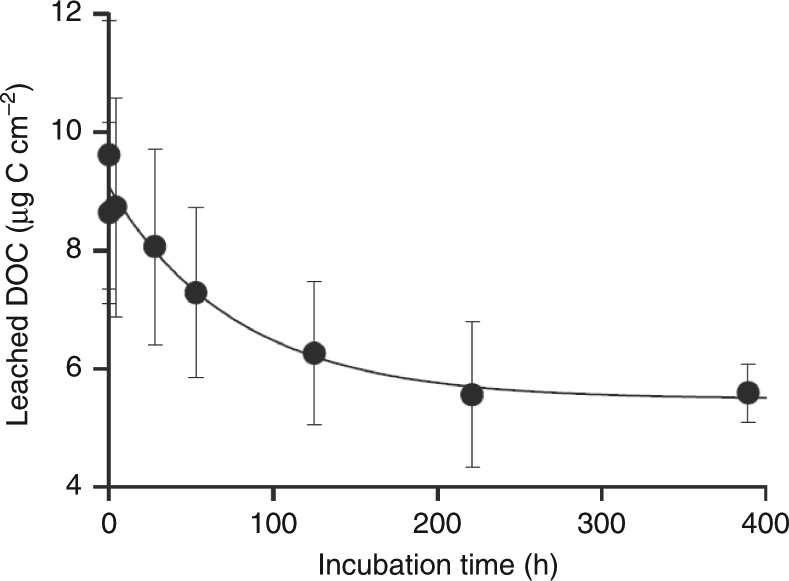
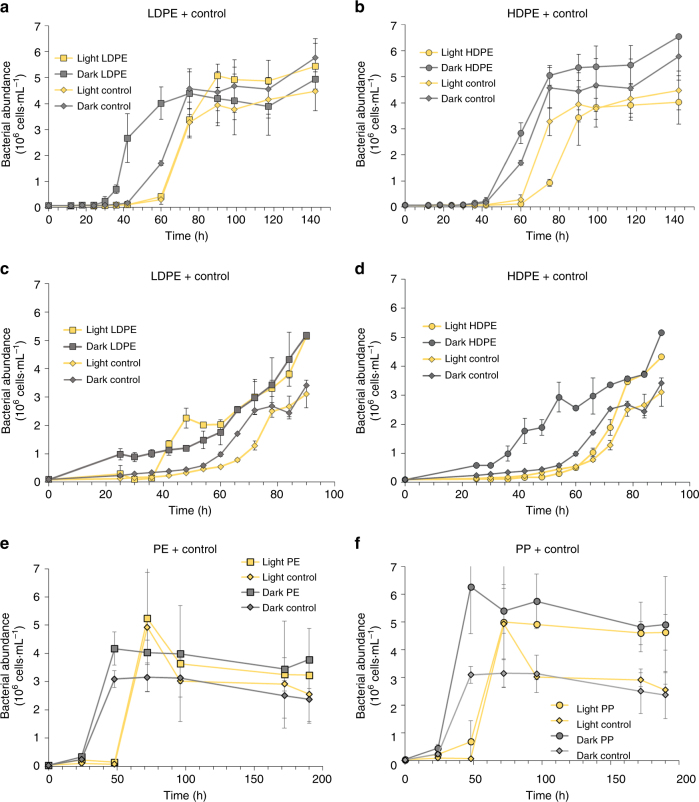
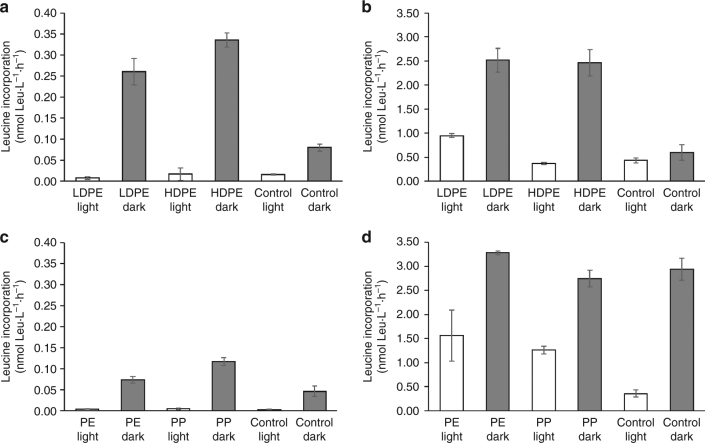
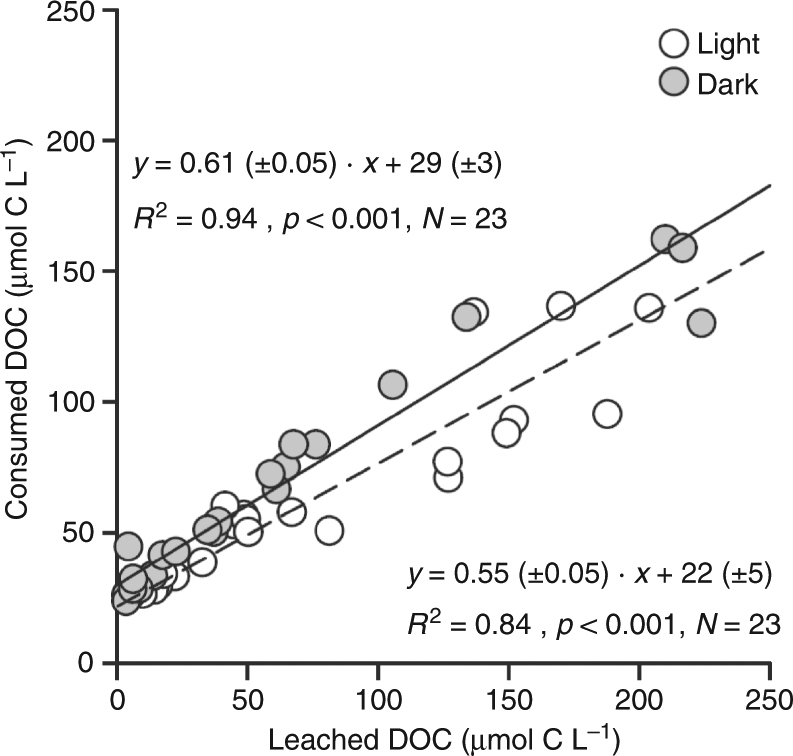
Verification
Claims the paper makes
The claims and statistics of this paper haven’t been checked yet.
Free: it reads the open-access text and checks the first 5 claims that cite a source we can check. Create a free account to check every claim.
Claims other papers make about this one
Each is checked against this paper’s own text: does it say what the citing paper says it does?
The source backs part of the claim, not all of it — or backs it for a different population, condition or comparison.
In the citing paper
“Moreover, UV-induced photodegradation results in the leaching of a plethora of lower molecular weight degradation products [3, 10, 23, 25, 66], which, at least to some degree, stimulate microbial activity [23, 25].”
From Polyethylene degradation and assimilation by the marine yeast Rhodotorula mucilaginosa (2023) · cites this paper as [23]
Experimental — accuracy not yet measuredThe source backs part of the claim, not all of it — or backs it for a different population, condition or comparison.
In the citing paper
“ii) limitations in bioavailable carbon i.e. Bacillus sp cells were able to degrade mainly photooxidation products released from the PE after UV treatment such as nanoplastics, oligomers, monomers and short-chain compounds that have functional groups making them easier to attack by microbial cells/enzymes”
From Mineralization of 13C-labeled polyethylene by marine Bacillus velezensis MT9 (2026) · cites this paper as Romera-Castillo et al., 2018
Experimental — accuracy not yet measuredThe source backs part of the claim, not all of it — or backs it for a different population, condition or comparison.
In the citing paper
“Photooxidation can be complete leading to the terminal oxidation end product CO 2 and in conjunction with fragmentation, it can then also lead to the formation of smaller molecules, ranging from hydrocarbon gases to shorterchain carbonyl compounds (e.g.straight chain or with aromaticity, depending on the parent polymer) 14,29,108 as well as nanoplastics.13,67,109”
From The fate of plastic in the ocean environment – a minireview (2021) · cites this paper as [29]
Experimental — accuracy not yet measuredThe source backs part of the claim, not all of it — or backs it for a different population, condition or comparison.
In the citing paper
“Assuming that the residence time of PMD at the ocean surface could be in the order of years, and/or that PMD might oscillate in the water column and periodically resurfaces, the preliminary results of Ward et al. (2019) and Zhu et al. (2020) show that photooxidation may indeed account for a substantial transformation of PMD into smaller chain scission products and nanoplastics.[29][30][31]”
From The fate of plastic in the ocean environment – a minireview (2021) · cites this paper as [29]
Experimental — accuracy not yet measuredThe source backs part of the claim, not all of it — or backs it for a different population, condition or comparison.
In the citing paper
“Incubation experiments with natural surface water microbial communities from the Mediterranean Sea 29 and an estuary of the subtropical NW Atlantic 31 showed that microbes were able to utilise at least some of the water-soluble fraction of daughter products generated during photooxidation of PE, PP, and PS.”
From The fate of plastic in the ocean environment – a minireview (2021) · cites this paper as [29]
Experimental — accuracy not yet measured
4 more claims about this paper
Create a free account to see every claim other papers make about this one.
Self-check
Percentages, sums and reported differences re-computed from the paper’s own numbers.
The self-check needs the paper’s full text.
Citations
Cites
Plastic waste inputs from land into the ocean
Jambeck, J. R., Geyer, R., Wilcox, C., Siegler, T. R., Perryman, M., Andrady, A., Narayan, R., & Law, K. L. (2015) · Science · doi:10.1126/science.1260352 · Cited by 13,163
Microplastics in the marine environment
Andrady, A. L. (2011) · Marine Pollution Bulletin · doi:10.1016/j.marpolbul.2011.05.030 · Cited by 8,105
Eriksen, M., Lebreton, L. C. M., Carson, H. S., Thiel, M., Moore, C. J., Borerro, J. C., Galgani, F., Ryan, P. G., & Reisser, J. (2014) · PLoS ONE · doi:10.1371/journal.pone.0111913 · Cited by 4,710
Accumulation of microplastic on shorelines woldwide: Sources and sinks
Browne, M. A., Crump, P., Niven, S. J., Teuten, E., Tonkin, A., Galloway, T., & Thompson, R. (2011) · Environmental Science & Technology · doi:10.1021/es201811s · Cited by 4,548
Plastic debris in the open ocean
Cózar, A., Echevarría, F., González-Gordillo, J. I., Irigoien, X., Úbeda, B., Hernández-León, S., Palma, Á. T., Navarro, S., García-de-Lomas, J., Ruiz, A., et al. (2014) · Proceedings of the National Academy of Sciences · doi:10.1073/pnas.1314705111 · Cited by 3,133
Auta, H. S., Emenike, C. U., & Fauziah, S. H. (2017) · Environment International · doi:10.1016/j.envint.2017.02.013 · Cited by 2,649
Pathways for degradation of plastic polymers floating in the marine environment
Gewert, B., Plassmann, M. M., & MacLeod, M. (2015) · Environmental Science: Processes & Impacts · doi:10.1039/c5em00207a · Cited by 2,168 · cited 1×
“The quantity of plastic waste entering the oceans is predicted to increase by up to one order of magnitude by the year 2025 (20) resulting in plastic-derived DOC of up to 236,000MT per year in the global ocean, with potential major consequences for marine microbes and the carbon cycling in the oceanic system.”
Belle, G. V., Fisher, L. D., Heagerty, P. J., & Lumley, T. (1958) · Wiley eBooks · doi:10.1002/0471602396.ch1 · Cited by 1,861
A global inventory of small floating plastic debris
van Sebille, E., Wilcox, C., Lebreton, L., Maximenko, N., Hardesty, B. D., van Franeker, J. A., Eriksen, M., Siegel, D., Galgani, F., & Law, K. L. (2015) · Environmental Research Letters · doi:10.1088/1748-9326/10/12/124006 · Cited by 1,713
Contributing to marine pollution by washing your face: Microplastics in facial cleansers
Fendall, L. S., & Sewell, M. A. (2009) · Marine Pollution Bulletin · doi:10.1016/j.marpolbul.2009.04.025 · Cited by 1,525
Research works printed but not linked: 2
- Hansell, D. A. & Carlson. C. A. Biogeochemistry of Dissolved Organic Matter 2nd edn, Ch. 2 (Academic Press, Oxford, 2015).
- Kirk JTO Optics of UV-B radiation in natural waters Arch. Hydrobiol. Beih. 1994 43 1 16
Cited by
Items 401–500 of 753
Shen, Y., Hu, J., Zhu, C. W., Liu, S., Wang, J., Fang, Q., Song, S., & Chen, B. (2025) · ACS ES&T Water · doi:10.1021/acsestwater.4c01144 · Cited by 16
Yu, B., Wang, Z., Chen, W., Guo, J., Su, Y., Wang, X., Wang, X., & Shan, J. (2025) · The Science of The Total Environment · doi:10.1016/j.scitotenv.2025.181146 · Cited by 16
Meyer, M. F., Ozersky, T., Woo, K., Shchapov, K., Galloway, A. W. E., Schram, J. B., Snow, D. D., Timofeyev, M. A., Karnaukhov, D. Y., Brousil, M. R., et al. (2021) · Limnology and Oceanography Letters · doi:10.1002/lol2.10219 · Cited by 16
Yu, H. Y., Xi, B., Shi, L., & Tan, W. (2023) · Frontiers of Environmental Science & Engineering · doi:10.1007/s11783-023-1753-6 · Cited by 14
“Additionally, the proportion of protein/amino sugar components in MP treatments was also lower than that in CK treatment, which may be because plastic-leached DOM can cause a positive “priming effect” (Romera-Castillo et al., 2018; Sun et al., 2022a), resulting in the mineralization of bioavailable proteins/amino suga…”
BackgroundHuang, L., Li, Q., Li, H., & Yuan, X. (2023) · Marine Pollution Bulletin · doi:10.1016/j.marpolbul.2023.115562 · Cited by 15
Shan, E., Zhang, X., Li, J., Sun, C., Teng, J., Hou, C., Zhao, J., Sun, S., & Wang, Q. (2023) · Chemosphere · doi:10.1016/j.chemosphere.2023.140420 · Cited by 15
Do weathered microplastics impact the planktonic community? A mesocosm approach in the Baltic Sea
Ebbesen, L. G., Strange, M. V., Gunaalan, K., Paulsen, M. L., Herrera, A., Nielsen, T. G., Shashoua, Y., Lindegren, M., & Almeda, R. (2024) · Water Research · doi:10.1016/j.watres.2024.121500 · Cited by 16
Zhu, X., Konik, J., & Kaufman, H. (2025) · Frontiers in Environmental Science · doi:10.3389/fenvs.2025.1563488 · Cited by 18
Wang, P., Liu, T., Liu, J., Duan, Y., Han, S., Zhang, Z., Li, L., & Lin, Y. (2022) · Ecotoxicology and Environmental Safety · doi:10.1016/j.ecoenv.2022.114160 · Cited by 14
Gray, A., Gore, B., Gaesser, M., Sequeira, L. R., Thibodeau, T., Montgomery, A., Purvis, S., Ouimet, K., Dura, T., & Mayer, K. (2025) · Environmental Toxicology and Chemistry · doi:10.1093/etojnl/vgaf116 · Cited by 17
Biofilm–microplastic interactions in food safety: mechanisms, risks, and control strategies
Rahman, M. A., Akter, S., Ashrafudoulla, M., Chowdhury, M. A. H., Yoon, H. J., & Ha, S. (2025) · Critical Reviews in Food Science and Nutrition · doi:10.1080/10408398.2025.2517825 · Cited by 17
“Moreover, biofilm formation on microplastics can accelerate plastic degradation via microbial enzymatic activity, further frag-menting plastics and increasing microplastic prevalence (Romera-Castillo et al. 2018).”
Exploring the complex interactions between microplastics and marine contaminants
Ho, C. M., Feng, W., Li, X., Kalaipandian, S., Ngien, S. K., & Yu, X. (2025) · Marine Pollution Bulletin · doi:10.1016/j.marpolbul.2025.118697 · Cited by 20
Cao, X., Chen, Y., Kuzyakov, Y. V., Chen, J., Cui, Y., Ochoa‐Hueso, R., Wu, W., Fan, L., Qun, G., Zhu, S., et al. (2026) · Environmental Science & Technology · doi:10.1021/acs.est.5c11467 · Cited by 17
Metagenomic analyses of the plastisphere reveals a common functional potential across oceans
Lips, S., Schmitt‐Jansen, M., & Borchert, E. (2026) · Environmental Pollution · doi:10.1016/j.envpol.2026.127830 · Cited by 12
Takahashi, N., Miyanishi, Y., Kato, R., Amimoto, T., Iwamoto, Y., & Takeda, K. (2022) · The Science of The Total Environment · doi:10.1016/j.scitotenv.2022.156053 · Cited by 14
Tao, H., Zhou, L., Qi, Y., Chen, Y., Han, Z., & Lin, T. (2022) · Process Safety and Environmental Protection · doi:10.1016/j.psep.2022.11.021 · Cited by 13
Microplastics in the Mediterranean and elsewhere in coastal seas
Simantiris, N., Vardaki, M. Z., Kourkoumelis, N., Avlonitis, M., & Theocharis, A. (2023) · Elsevier eBooks · doi:10.1016/b978-0-323-90798-9.00012-3 · Cited by 16
Duan, P., Huang, J., Sun, Y., Yang, L., Wei, M., & Zhang, W. (2023) · Chemical Engineering Journal · doi:10.1016/j.cej.2023.145328 · Cited by 13
Prolonged survival time of Daphnia magna exposed to polylactic acid breakdown nanoplastics
Kelpsiene, E., Rydberg, M., Ekvall, M. T., Lundqvist, M., & Cedervall, T. (2023) · PLoS ONE · doi:10.1371/journal.pone.0290748 · Cited by 15
“This leachate coming from the plastic can provide energy for bacterial growth [59,60].”
BackgroundA City-Wide Emissions Inventory of Plastic Pollution
Zhu, X., Hoffman, M. J., & Rochman, C. M. (2024) · Environmental Science & Technology · doi:10.1021/acs.est.3c04348 · Cited by 31
Microplastics and viruses in the aquatic environment: a mini review
Wang, X., Zheng, K., Wang, Y., Hou, X., He, Y., Wang, Z., Zhang, J., Chen, X., & Liu, X. (2024) · Frontiers in Microbiology · doi:10.3389/fmicb.2024.1433724 · Cited by 26
Wu, R., Wang, H., Xia, H., Zheng, H., Zhu, Y., Liu, L., & Du, S. (2024) · Soil Biology and Biochemistry · doi:10.1016/j.soilbio.2024.109674 · Cited by 14
Microplastic pollution in Larimichthys polyactis in the coastal area of Jiangsu, China
Yuan, F., Ding, Y., Wang, Y., Yu, W., Zou, X., Chen, H., Fu, G., Ding, D., Tang, J., Tang, X., et al. (2021) · Marine Pollution Bulletin · doi:10.1016/j.marpolbul.2021.113050 · Cited by 13
An Integrated Observing System for Monitoring Marine Debris and Biodiversity
Maximenko, N., Palacz, A., Biermann, L., Carlton, J. T., Centurioni, L., Crowley, M. E., Hafner, J., Haram, L. E., Helm, R. R., Hormann, V., et al. (2021) · Oceanography · doi:10.5670/oceanog.2021.supplement.02-22 · Cited by 12
Effects of bioplastics and their leachates on marine bacterial communities
Serrano, C., Savva, K., Fernández-Altimira, M., Farré, M., Vila‐Costa, M., & Llorca, M. (2025) · Water Research · doi:10.1016/j.watres.2025.123584 · Cited by 16
Methylmercury formation in water triggered by light-independent plastic weathering
Huang, Y., Liu, C., Hao, Z., Dang, F., Zhang, X., Meng, B., Wang, Y., Zhong, H., & Xing, B. (2025) · Nature Geoscience · doi:10.1038/s41561-025-01766-5 · Cited by 12
“The molecular signatures of P-DOM and natural DOM were analysed using FT-ICR-MS (Bruker SolariX 15T) coupled with electrospray ionization.”
InfluentialImpacts of microplastics on terrestrial soil carbon dynamics
He, G., Lu, M., Yang, Y., Zhang, Q., liu, W., & Rillig, M. C. (2026) · Nature Geoscience · doi:10.1038/s41561-026-01935-0 · Cited by 13
Cooke, S. J., Piczak, M. L., Vermaire, J. C., & Kirkwood, A. E. (2023) · FACETS · doi:10.1139/facets-2022-0210 · Cited by 15
Wu, X.-N., Feng, J., Chen, X., Li, C., & Zhang, S. (2023) · Journal of Hazardous Materials · doi:10.1016/j.jhazmat.2023.132742 · Cited by 12
Lyu, L., Wu, Y., Chen, Y., Li, J., Chen, Y., Wang, L., Mai, Z., & Zhang, S. (2024) · Journal of Hazardous Materials · doi:10.1016/j.jhazmat.2024.135760 · Cited by 13
Wang, K., Xu, S., Wang, J., Gao, B., Huang, Y., Song, J. T., Ma, S., Jia, H., & Zhan, S. (2024) · Journal of Hazardous Materials · doi:10.1016/j.jhazmat.2024.135931 · Cited by 27
Sujon, S. A., Fabiszak, A., Brahney, J., & Moor, K. J. (2024) · Environmental Science & Technology · doi:10.1021/acs.est.4c05660 · Cited by 14
Boldrini, A., Galgani, L., Consumi, M., & Loiselle, S. (2021) · Environments · doi:10.3390/environments8030021 · Cited by 15
“Plastic particles can leach several compounds: besides DOC that increases marine bacterial activity [71,72], plastic may contain additives like halogen atoms (e.”
BackgroundWang, J., Zhang, T., Li, Y., Ye, Y.-Q., Tan, X., Liu, X., Hu, L., Du, Z., & Ye, M. (2025) · Marine Pollution Bulletin · doi:10.1016/j.marpolbul.2025.118891 · Cited by 12
Wu, Y.-X., Wang, H., Chu, W.-C., Gao, Y., Xia, M.-Q., & Liu, F. (2025) · Journal of Hazardous Materials · doi:10.1016/j.jhazmat.2025.140526 · Cited by 12
Zhang, D., Luo, J., Li, X., Wu, D., Xie, Y., Zeng, H., Deng, H., Chen, Q., Ge, C., & Zhang, Y. (2025) · Water Research · doi:10.1016/j.watres.2025.125139 · Cited by 10
Coupling between Increased Amounts of Microplastics and Dissolved Organic Compounds in Water
Yan, W., Wang, Q., Gao, Y., Xu, M., Li, H., Zhou, Y., Liu, C., & Xiao, Y. (2023) · Water · doi:10.3390/w15234126 · Cited by 12
Environmental factors control microbial colonization of plastics in the North Sea
Zeghal, E., Vaksmaa, A., van Bleijswijk, J. D. L., & Niemann, H. (2024) · Marine Pollution Bulletin · doi:10.1016/j.marpolbul.2024.116964 · Cited by 16
Chen, L., Li, Y., Su, B., Huang, B., Qiu, Y., & Zhou, S. (2025) · Journal of Hazardous Materials · doi:10.1016/j.jhazmat.2025.137470 · Cited by 11
Hui, K., Zhang, P., Yuan, Y., Xi, B., & Tan, W. (2025) · Journal of Cleaner Production · doi:10.1016/j.jclepro.2025.146246 · Cited by 12
Liu, T., Tian, Y. H., Chen, J., Mao, Y., Cai, G., Jiao, Y., Li, L., Zuo, W., & Ni, B. (2025) · Chemical Engineering Journal · doi:10.1016/j.cej.2025.166405 · Cited by 13
The potential impacts of plastic on the marine carbon cycle
Pang, Q., Wu, P., Galgani, L., Wang, X., Zhang, Z., Yuan, T., Wang, H., & Zhang, Y. (2025) · Nature Sustainability · doi:10.1038/s41893-025-01632-7 · Cited by 14
“Similarly, Plastics could alter the grazing behaviour of zooplankton, impacting the phytoplankton biomass and carbon uptake, as suggested by previous studies 15,16 .”
InfluentialMeyer, M. F., Ozersky, T., Woo, K., Shchapov, K., Galloway, A. W. E., Schram, J. B., Rosi, E. J., Snow, D. D., Timofeyev, M. A., Karnaukhov, D. Y., et al. (2022) · Limnology and Oceanography · doi:10.1002/lno.12228 · Cited by 11
“…as an indicator of sewage pollution, microplastics themselves are increasingly shown to cause deleterious ecological consequences, such as disrupting food web dynamics by altering grazing patterns (Green 2016) and providing carbon substrate for microbial growth (Romera-Castillo et al. 2018).”
BackgroundEnrichment of antibiotic resistant genes and pathogens in face masks from coastal environments
Cheng, J., Xing, D., Wang, P., Tang, S., Cai, Z., Zhou, J., & Zhu, X. (2023) · Journal of Hazardous Materials · doi:10.1016/j.jhazmat.2023.131038 · Cited by 12
“The leaching of dissolved organic matter can stimulate bacterial activity in the surrounding environments [51].”
Impact of plastic pollution on atmospheric carbon dioxide
Gurgacz, N. S., Kvale, K., Eby, M., & Weaver, A. J. (2023) · FACETS · doi:10.1139/facets-2023-0061 · Cited by 12
Wang, M., Zhang, J., Yang, Y., Zhang, Z., Zhang, T., Zhang, Y., Liu, P., & Jia, H. (2025) · Water Research · doi:10.1016/j.watres.2025.125187 · Cited by 10
Formation of nanoparticles during accelerated UV degradation of fleece polyester textiles
Yang, T., & Nowack, B. (2024) · NanoImpact · doi:10.1016/j.impact.2024.100520 · Cited by 10
Xun, F., Zhou, J., Xiong, J., Hu, T., & Xia, Q. (2024) · Journal of environmental chemical engineering · doi:10.1016/j.jece.2024.113833 · Cited by 10
Zhang, Y., Wang, Y., Zhu, P., Jing, S., Li, J., Wanger, T. C., Liu, W., Liu, K., Chen, X., & Li, L. (2024) · Environmental Pollution · doi:10.1016/j.envpol.2024.125181 · Cited by 10
Effects of microplastics on Daphnia -associated microbiomes in situ and in vitro
Krzynowek, A., de Moortel, B. V., Pichler, N., Vanoverberghe, I., Lapere, J., Jenisch, L. M., Deloof, D., Thielemans, W., Muylaert, K., Dusselier, M., et al. (2024) · The ISME Journal · doi:10.1093/ismejo/wrae234 · Cited by 15
“Additionally, microbes capable of metabolizing plastic compounds may enrich the pond’s carbon sources, supporting a diverse microbial community that could enhance food availability [93].”
Zhang, X., Menzel, R., & Rueß, L. (2025) · Applied Soil Ecology · doi:10.1016/j.apsoil.2025.105883 · Cited by 16
Han, Y., Fu, M., Yang, Y., Zhang, Z., Liu, T., Zhou, S., Qiao, Z., Wang, G., Peng, C., & Zhang, W. (2025) · Journal of Hazardous Materials · doi:10.1016/j.jhazmat.2025.137387 · Cited by 10
Unveiling Chemical-Microbial Cascade Risk Factors from Plastic Pipe Leaching in Drinking Water
Fan, M., Wang, Z., Yao, M., Li, X., van der Meer, W., Tao, Y., Rose, J. B., & Liu, G. (2025) · Environmental Science & Technology · doi:10.1021/acs.est.5c10244 · Cited by 11
Biotechnology Remediation and Environmental Behavior of Microplastics in Soils: A Review
Feng, W., Deng, Y., Cao, Y., Liu, J., Han, Y., Liu, J., Miao, Q., Yang, F., Zhu, Y., & Giesy, J. P. (2023) · Reviews of Environmental Contamination and Toxicology · doi:10.1007/s44169-023-00038-w · Cited by 15
“Natural organic matter in the environment also inevitably interacts with MP particles in various ways, which complicates the environmental transport of MPs (Veerasingam et al. 2016; Romera‑Castillo et al. 2018).”
BackgroundChen, F., Zhang, Z., Li, Y., Jiang, H., Zhou, Y., Liu, H., Pan, K., & Ma, J. (2023) · The Science of The Total Environment · doi:10.1016/j.scitotenv.2023.167222 · Cited by 11
Peng, X., Yang, T., Guo, S., Zhou, J. K., Chen, G., Zhu, Z., & Tan, J. (2024) · Environmental Pollution · doi:10.1016/j.envpol.2024.123793 · Cited by 12
Chen, X.-L., Wu, L.-J., Miao, L.-L., Lei, L., Qiu, L., Zhu, H.-Q., Si, X.-R., Li, H., Zhao, Q., Qi, P., et al. (2024) · Ecotoxicology and Environmental Safety · doi:10.1016/j.ecoenv.2024.116961 · Cited by 10
Liu, M., Chen, T., Cai, J., Zhang, A., Liu, Y., Yan, G., Barrow, C. J., Yang, W. R., Xu, J., & Liu, J. (2019) · Journal of Materials Chemistry C · doi:10.1039/c9tc04947a · Cited by 10
de Almeida, M. P., Gaylarde, C. C., Neto, J. A. B., Delgado, J. D. F., Lima, L. D. S., Neves, C. V., Pompermayer, L. L. D. O., Vieira, K., & da Fonseca, E. M. (2023) · Water Emerging Contaminants & Nanoplastics · doi:10.20517/wecn.2022.20 · Cited by 13
Colonization of Plastic Marine Debris
Amaral‐Zettler, L. (2022) · Wiley eBooks · doi:10.1002/9781119768432.ch10 · Cited by 16
Edet, U. O., Joseph, A. P., Nwaokorie, F. O., Okoroiwu, H. U., Udofia, U. U., Ibor, O. R., Bassey, I. U., David, A. A., Edet, B. O., Bassey, D. E., et al. (2022) · SN Applied Sciences · doi:10.1007/s42452-022-05206-6 · Cited by 12
“The isolates incubated with microplastic agar grew very slowly and this confirms earlier findings that showed that the rate of biodegradation of microplastics is very slow [52] and can contribute to the carbon pool [53] and emission of greenhouse gases [54].”
BackgroundResultMejjad, N., Safhi, A. E. M., & Laissaoui, A. (2025) · Journal of Hazardous Materials Advances · doi:10.1016/j.hazadv.2024.100578 · Cited by 22
Zhang, H., Pu, M., Zheng, M., Xu, B., Magnuson, J. T., Chen, Q., Xu, X., Zheng, X., Zhao, M., & Qiu, W. (2025) · Journal of Hazardous Materials · doi:10.1016/j.jhazmat.2025.137451 · Cited by 9
Järvelä, E., Peräniemi, S., Vepsäläinen, J., Hrovat, B., Raninen, K., Tomppo, L., Koistinen, A. P., & Rysä, J. (2025) · The Science of The Total Environment · doi:10.1016/j.scitotenv.2025.179287 · Cited by 9
He, W., Ma, W., Du, J., Chang, W., & Li, G. (2025) · Plants · doi:10.3390/plants14101549 · Cited by 9
“The absence of peak URE activity in August at the MD level may be related to its specific microbial community structure, causing the peak of URE activity to occur earlier or later [49].”
Ding, L., Zhang, H., Chen, H., Zhang, G., Qiu, X., Zhang, B., Liang, X., Wei, J., & Guo, X. (2025) · Journal of Hazardous Materials · doi:10.1016/j.jhazmat.2025.140477 · Cited by 9
Siegu, W. M., Drożdżyński, P., Kumaravel, V., & Marchut-Mikołajczyk, O. (2026) · New Biotechnology · doi:10.1016/j.nbt.2026.01.016 · Cited by 12
Harnessing bacterial power and omics technologies for sustainable plastic waste biodegradation
Henawy, A. R., Ismail, S. M., Gharib, S., Elarabi, N. I., Abdelhadi, A. A., & Halema, A. A. (2026) · Biodegradation · doi:10.1007/s10532-026-10258-1 · Cited by 10
“Plastic waste in the oceans not only serves as a new substrate for benthic organisms but also releases dissolved organic carbon into seawater, which stimulates heterotrophic microbial activity (Pauli et al. 2017; Romera-Castillo et al. 2018).”
Leaching of Dibutyltin from Virgin Polyvinyl Chloride Pipe Material
Wu, M., Chen, W., Peng, H., Almuhtaram, H., & Andrews, R. C. (2023) · ACS ES&T Water · doi:10.1021/acsestwater.3c00003 · Cited by 12
A New Colorimetric Test for Accurate Determination of Plastic Biodegradation
Mattelin, V., Verfaille, L., Kundu, K., Wildeman, S. M. A. D., & Boon, N. (2023) · Polymers · doi:10.3390/polym15102311 · Cited by 10
Turner, Z. R., Lamb, J. V., Robinson, T. P., Mandal, D., Buffet, J., & O'Hare, D. M. (2021) · Dalton Transactions · doi:10.1039/d1dt00252j · Cited by 13
Floating plastics in oceans: A matter of size
George, M., & Fabre, P. (2021) · Current Opinion in Green and Sustainable Chemistry · doi:10.1016/j.cogsc.2021.100543 · Cited by 14
Maday, S. D. M., Kingsbury, J. M., Weaver, L., Pantos, O., Wallbank, J. A., Doake, F., Masterton, H., Hopkins, M., Dunlop, R., Gaw, S., et al. (2024) · Applied and Environmental Microbiology · doi:10.1128/aem.00715-24 · Cited by 12
“Notably, aging plastics sorb organic pollutants, includ ing antibiotics (24), but also trace elements and pathogens, while leaching chemical additives such as stabilizers, flame retardants, antioxidants, and plasticizers (25) into the environment, impacting WWTP effluent microbiota (13, 26, 27).”
BackgroundJia, L., Tan, X. Y., Ali, I., Duan, Z., Huang, J., & Zhu, R. (2024) · Journal of Hazardous Materials · doi:10.1016/j.jhazmat.2024.135991 · Cited by 7
Cau, A., Moccia, D., Dessì, C., Carugati, L., Carreras-Colom, E., Atzori, F., Cadoni, N., & Pusceddu, A. (2024) · The Science of The Total Environment · doi:10.1016/j.scitotenv.2024.176795 · Cited by 11
Targeted valorization of waste polycarbonate into bisphenol A dimethyl ether
Zhang, M., Bai, Y. Y., Wang, Z., Gao, X., Zhang, W., Li, J., Wu, W., Zhou, H., & Mei, Q. (2024) · Chemical Engineering Journal · doi:10.1016/j.cej.2024.156914 · Cited by 9
Sun, X., Booth, A. M., Sui, Q., Zhu, L., Yu, Y., Xia, B., Meng, S., & Xing, B. (2025) · Journal of Hazardous Materials · doi:10.1016/j.jhazmat.2025.138927 · Cited by 12
Xiu, J., Geng, B., Liu, M., Han, X., Zhang, D., & Bai, X. (2025) · Water Research · doi:10.1016/j.watres.2025.124626 · Cited by 13
Molecular-level insights into derivation dynamics of microplastic-derived dissolved organic matter
Liu, S., Zelang, X., Ma, C., Li, Z., Wang, X., Ju, H., Zhang, J., & Guan, J. (2025) · New Contaminants · doi:10.48130/newcontam-0025-0016 · Cited by 8
Tan, M., Zhang, H., & Chi, J. (2021) · Journal of Soils and Sediments · doi:10.1007/s11368-021-03071-1 · Cited by 8
“It was reported that DOC released from microplastics contained the additives plus the monomers or oligomers from the main polymer chains, and the leached amount was small (Romera-Castillo et al. 2018; Lee et al. 2020).”
BackgroundMicroplastics interact with benthic biostabilization processes
Hope, J. A., Coco, G., Parsons, D. R., & Thrush, S. F. (2021) · Environmental Research Letters · doi:10.1088/1748-9326/ac3bfd · Cited by 9
“By acting as an alternative carbon substrate, the recalcitrant carbon backbone of MPs can benefit some microorganisms and negatively affect others (Romera-Castillo et al 2018, Zhu et al 2020) instigating a shift in metabolic processes.”
BackgroundPolyester microfiber impacts on coastal sediment organic matter consumption
Ladewig, S. M., Bianchi, T. S., Coco, G., Ferretti, E., Gladstone‐Gallagher, R. V., Hillman, J. R., Hope, J. A., Savage, C., Schenone, S., & Thrush, S. F. (2024) · Marine Pollution Bulletin · doi:10.1016/j.marpolbul.2024.116298 · Cited by 9
Zhao, S., & Zhu, L. (2025) · Current Opinion in Chemical Engineering · doi:10.1016/j.coche.2025.101101 · Cited by 13
Zhang, M., Lu, Y., Wang, Z., Gao, X., Luo, X., Shen, X., Wu, W., & Mei, Q. (2025) · Eco-Environment & Health · doi:10.1016/j.eehl.2025.100139 · Cited by 9
“The persistent accumulation of plastic waste, due to its inherent limited degradability and recyclability, remains a major cause of environmental damage and a critical threat to sustainable development [1 – 4].”
Zafar, R., Lee, Y.-K., Oh, H., & Hur, J. (2025) · Environmental Research · doi:10.1016/j.envres.2025.122144 · Cited by 9
Microplastic – A New Habitat for Biofilm Communities
Schmitt‐Jansen, M., Lips, S., Schäfer, H., & Rummel, C. D. (2020) · Springer eBooks · doi:10.1007/978-3-030-10618-8_22-1 · Cited by 9
Ocean acidification has a strong effect on communities living on plastic in mesocosms
Zhang, X., Zhang, P., Deng, Z., Huang, R., Zhang, D., Tian, Y., Wang, N., He, L., Wang, X., Jiang, X., et al. (2023) · Limnology and Oceanography Letters · doi:10.1002/lol2.10329 · Cited by 9
“Nitrogen cycling can be affected by the plastisphere in sediments (Seeley et al. 2020) and different types of plastic may also in fl uence biogeochemical cycles (Romera-Castillo et al. 2018; Sanz-L (cid:1) azaro et al. 2021; Wang et al. 2021; Shen et al. 2022).”
BackgroundChen, X., Chen, Y., Huizhen, L., Liu, Z., Peng, C., Xu, X., Jia, J., Zhang, M., & Liu, C. (2023) · Talanta · doi:10.1016/j.talanta.2023.124671 · Cited by 9
Micro-by-Micro Interactions: How Microorganisms Influence the Fate of Marine MicroplasticsPreprint
Calabuig, J. A. C., Rogers, K. L., Gorokhova, E., & Posth, N. R. (2019) · Preprints.org · doi:10.20944/preprints201910.0125.v1 · Cited by 10
Gu, J., Chen, K., Cai, T., Liang, Y., Na, P., Zhou, H., Peng, J., Huang, W., Dang, Z., & Chen, Y. (2025) · Environmental Pollution · doi:10.1016/j.envpol.2025.126599 · Cited by 8
Tian, L., He, S., Farasat, A., & Jiang, H. (2025) · Environmental Pollution · doi:10.1016/j.envpol.2025.126728 · Cited by 7
Exploring the potential impacts of microplastics on greenhouse gas emissions in wastewater treatment
Sun, H., & Jiang, C. (2025) · Journal of Environmental Management · doi:10.1016/j.jenvman.2025.126856 · Cited by 7
Microplastics threaten seagrass carbon sinks through microbial changes
Egea, L. G., Jiménez‐Ramos, R., Rodríguez-Arias, L., & Infantes, E. (2025) · Marine Pollution Bulletin · doi:10.1016/j.marpolbul.2025.118638 · Cited by 14
Qi, Y., Ruan, M., Li, T., Zhang, Q., Cao, Y., Feng, W., Zhao, Y., Song, F., & Wu, F. (2025) · Environmental Toxicology and Chemistry · doi:10.1093/etojnl/vgaf275 · Cited by 7
Wen, K., Yan, C., Zhang, X., Zhu, R., Chen, H., Yu, Q., Chen, J., & Qiu, X. (2025) · Environmental Science & Technology · doi:10.1021/acs.est.5c01021 · Cited by 7
Publio, M. C. M., Delgado, J. D. F., Pierri, B. D. S., Lima, L. D. S., Gaylarde, C. C., Neto, J. A. B., Neves, C. V., & da Fonseca, E. M. (2023) · Eng—Advances in Engineering · doi:10.3390/eng4040151 · Cited by 10
Chen, Y., Qian, Y., An, D., Liu, F., Vollertsen, J., & Gan, J. J. (2023) · ACS ES&T Water · doi:10.1021/acsestwater.3c00549 · Cited by 9
Response of Tobacco (Nicotiana tabacum L.) Growth to Soil Microplastic Pollution
Wang, X., Gao, W., Cai, K., Pan, W., & Tu, Z. (2024) · Polish Journal of Environmental Studies · doi:10.15244/pjoes/182894 · Cited by 7
“The release of dissolved organic carbon from PE-MP to the environment [43] resulted in a significant increase in S-UE activity at the MPs concentration of 10 mg kg -1 .”
BackgroundRapid effects of plastic pollution on coastal sediment metabolism in nature
Ladewig, S. M., Bartl, I., Rindelaub, J. D., & Thrush, S. F. (2024) · Scientific Reports · doi:10.1038/s41598-024-68766-0 · Cited by 8
“Such effects originate from the ingestion of the plastic itself 14 , the leaching of plastic additives 15 , and/or the colonization of the plastic as a new substrate 16,17 .”
BackgroundPlohl, O., Zemljič, L. F., Erjavec, A., Sep, N., Čolnik, M., Fan, Y. V., Škerget, M., Vujanović, A., Čuček, L., & Valh, J. V. (2024) · Clean Technologies and Environmental Policy · doi:10.1007/s10098-024-02972-2 · Cited by 10
Metadata
- Authors
- Romera-Castillo, C., Pinto, M., Langer, T. M., Álvarez-Salgado, X. A., & Herndl, G. J.
- Affiliations
- University of Vienna (AT)
- Corresponding author
- Herndl, Gerhard J.
- Venue
- Nature Communications
- Published
- 2018-04-12
- Volume
- 9
- Issue
- 1
- Pages
- 1430-1430
- ISSN
- 2041-1723 (ISSN-L)
- PMC
- PMC5897397
- OpenAlex
- W2797295663
- Cited by
- 753
- References
- 29
- Citations by year
- 2026: 114 · 2025: 126 · 2024: 125 · 2023: 108 · 2022: 110 · 2021: 69 · 2020: 60 · 2019: 29 · 2018: 10
- FWCI
- 15.74
- Type
- journal article
- Language
- en
- Open access
- gold
- doi.org
- Licence
- cc-by
- creativecommons.org/licenses/by/4.0 (tdm)
- creativecommons.org/licenses/by/4.0 (vor)
- Locations
- Nature Communications (publishedVersion, cc-by)
- Flanders Marine Institute (Flanders Marine Institute) (publishedVersion, other-oa)
- Europe PMC (PubMed Central) (publishedVersion, other-oa)
- PubMed Central (publishedVersion, cc-by)
- PubMed (publishedVersion)
- Flanders Marine Institute (Flanders Marine Institute) (submittedVersion, other-oa)
- Phaidra (Universität Wien) (submittedVersion, cc-by-nc-nd)
- RePEc: Research Papers in Economics (submittedVersion)
- DIGITAL.CSIC (Spanish National Research Council (CSIC)) (submittedVersion, cc-by)
- DIGITAL.CSIC (Spanish National Research Council (CSIC)) (submittedVersion)
- DOAJ (DOAJ: Directory of Open Access Journals) (submittedVersion, cc-by-sa)
- DOAJ (DOAJ: Directory of Open Access Journals) (submittedVersion)
- Funders
- Austrian Science Fund (P28781, Z194)
- Topics
- Physical Sciences › Environmental Science › Pollution › Microplastics and Plastic Pollution
- Physical Sciences › Earth and Planetary Sciences › Oceanography › Marine Plankton and Biogeochemistry
- Physical Sciences › Environmental Science › Ecology › Microbial Community Ecology and Physiology
- Keywords
- plastic pollution, dissolved organic carbon, marine plastics, microbial carbon utilization, DOC leaching, marine plastic debris
- MeSH terms
- Bacteria, Carbon, Environmental Pollution, Light, Oceans and Seas, Plastics, Seawater, Solar Energy, Solubility, Food Chain, Heterotrophic Processes
About these checks
Registry, retraction, Cites and statistics results are computed, not judged, with one exception: a printed reference that no index lists is read once by a model before it counts as a citation error. Claims are extracted by a model and kept only when their quote appears verbatim in the text; each cited source is then checked, with a model’s help, for whether it says what the claim relies on. Those verdicts can be wrong — read the claim’s quote and the cited source before relying on one.
Statistics and arithmetic are recomputed, not judged.
Confidence bands are shown only for fields calibrated on our annotated test set. None is calibrated yet, so no band is shown.
What counts as a claim ›How we measure confidence ›How we check this ›
Are you an author, or do you see a problem with this page? Request a review
Data sources
Bibliographic data: Semantic Scholar, OpenAlex, Crossref.
Contains information from the Semantic Scholar Academic Graph Datasets, made available under the ODC Attribution License (ODC-BY 1.0).
Semantic Scholar’s data is described in: Kinney, R., et al. (2023). The Semantic Scholar Open Data Platform. arXiv:2301.10140.
