

Dissolved organic carbon leaching from plastics stimulates microbial activity in the ocean
Open accessThe DOI matches its Crossref record; 29 of the 29 references it cites were found in a registry or an index.
Abstract
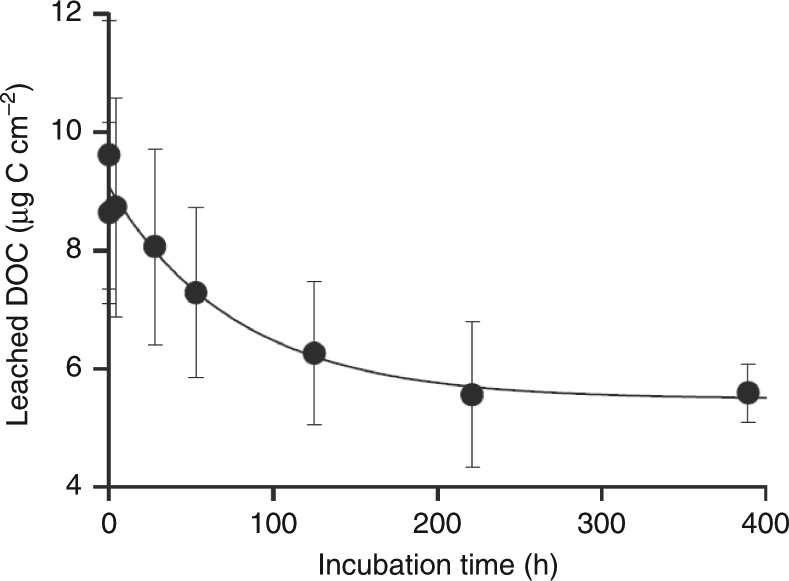
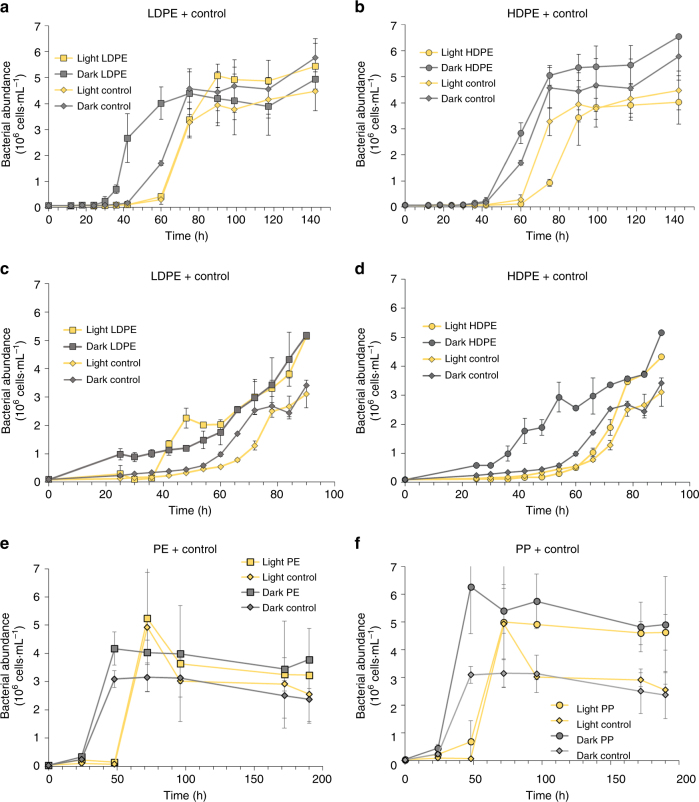
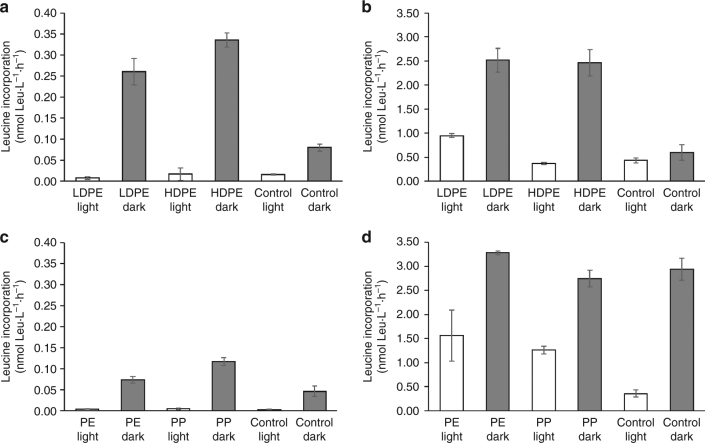
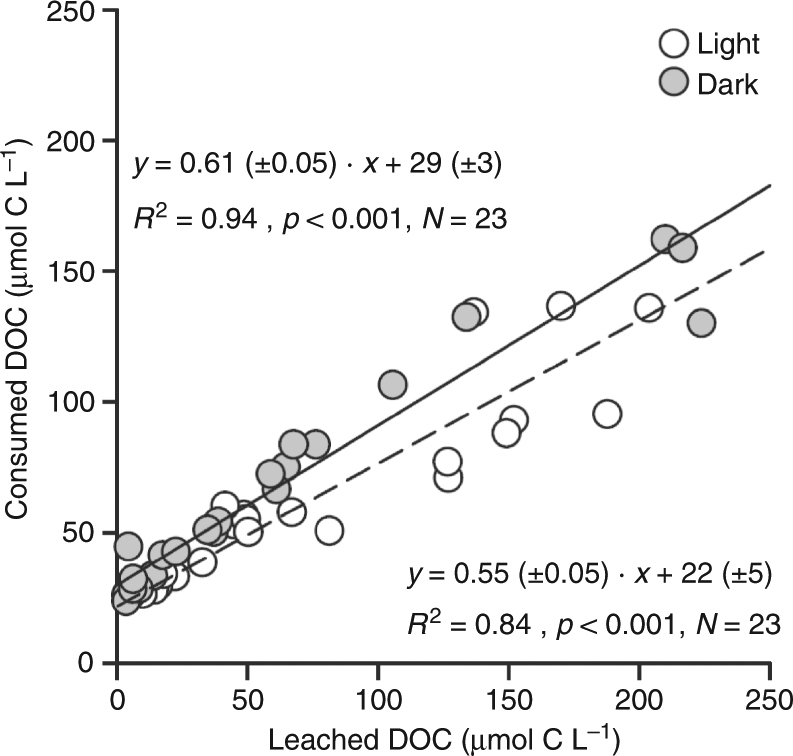
Approximately 5.25 trillion plastic pieces are floating at the sea surface. The impact of plastic pollution on the lowest trophic levels of the food web, however, remains unknown. Here we show that plastics release dissolved organic carbon (DOC) into the ambient seawater stimulating the activity of heterotrophic microbes. Our estimates indicate that globally up to 23,600 metric tons of DOC are leaching from marine plastics annually. About 60% of it is available to microbial utilization in less than 5 days. If exposed to solar radiation, however, this DOC becomes less labile. Thus, plastic pollution of marine surface waters likely alters the composition and activity of the base of the marine food webs. It is predicted that plastic waste entering the ocean will increase by a factor of ten within the next decade, resulting in an increase in plastic-derived DOC that might have unaccounted consequences for marine microbes and for the ocean system.
Overview
The claims and statistics of this paper haven’t been checked yet.
Free: it reads the open-access text and checks the first 5 claims that cite a source we can check. Create a free account to check every claim.
Integrity signals
Registry
Cites
Statistics
Figures
Verification
Claims the paper makes
The claims and statistics of this paper haven’t been checked yet.
Free: it reads the open-access text and checks the first 5 claims that cite a source we can check. Create a free account to check every claim.
Claims other papers make about this one
Each is checked against this paper’s own text: does it say what the citing paper says it does?
The source backs part of the claim, not all of it — or backs it for a different population, condition or comparison.
In the citing paper
“Moreover, UV-induced photodegradation results in the leaching of a plethora of lower molecular weight degradation products [3, 10, 23, 25, 66], which, at least to some degree, stimulate microbial activity [23, 25].”
From Polyethylene degradation and assimilation by the marine yeast Rhodotorula mucilaginosa (2023) · cites this paper as [23]
Experimental — accuracy not yet measuredThe source backs part of the claim, not all of it — or backs it for a different population, condition or comparison.
In the citing paper
“ii) limitations in bioavailable carbon i.e. Bacillus sp cells were able to degrade mainly photooxidation products released from the PE after UV treatment such as nanoplastics, oligomers, monomers and short-chain compounds that have functional groups making them easier to attack by microbial cells/enzymes”
From Mineralization of 13C-labeled polyethylene by marine Bacillus velezensis MT9 (2026) · cites this paper as Romera-Castillo et al., 2018
Experimental — accuracy not yet measuredThe source backs part of the claim, not all of it — or backs it for a different population, condition or comparison.
In the citing paper
“Photooxidation can be complete leading to the terminal oxidation end product CO 2 and in conjunction with fragmentation, it can then also lead to the formation of smaller molecules, ranging from hydrocarbon gases to shorterchain carbonyl compounds (e.g.straight chain or with aromaticity, depending on the parent polymer) 14,29,108 as well as nanoplastics.13,67,109”
From The fate of plastic in the ocean environment – a minireview (2021) · cites this paper as [29]
Experimental — accuracy not yet measuredThe source backs part of the claim, not all of it — or backs it for a different population, condition or comparison.
In the citing paper
“Assuming that the residence time of PMD at the ocean surface could be in the order of years, and/or that PMD might oscillate in the water column and periodically resurfaces, the preliminary results of Ward et al. (2019) and Zhu et al. (2020) show that photooxidation may indeed account for a substantial transformation of PMD into smaller chain scission products and nanoplastics.[29][30][31]”
From The fate of plastic in the ocean environment – a minireview (2021) · cites this paper as [29]
Experimental — accuracy not yet measuredThe source backs part of the claim, not all of it — or backs it for a different population, condition or comparison.
In the citing paper
“Incubation experiments with natural surface water microbial communities from the Mediterranean Sea 29 and an estuary of the subtropical NW Atlantic 31 showed that microbes were able to utilise at least some of the water-soluble fraction of daughter products generated during photooxidation of PE, PP, and PS.”
From The fate of plastic in the ocean environment – a minireview (2021) · cites this paper as [29]
Experimental — accuracy not yet measured
4 more claims about this paper
Create a free account to see every claim other papers make about this one.
Self-check
Percentages, sums and reported differences re-computed from the paper’s own numbers.
The self-check needs the paper’s full text.
Citations
Cites
Plastic waste inputs from land into the ocean
Jambeck, J. R., Geyer, R., Wilcox, C., Siegler, T. R., Perryman, M., Andrady, A., Narayan, R., & Law, K. L. (2015) · Science · doi:10.1126/science.1260352 · Cited by 13,163
Microplastics in the marine environment
Andrady, A. L. (2011) · Marine Pollution Bulletin · doi:10.1016/j.marpolbul.2011.05.030 · Cited by 8,105
Eriksen, M., Lebreton, L. C. M., Carson, H. S., Thiel, M., Moore, C. J., Borerro, J. C., Galgani, F., Ryan, P. G., & Reisser, J. (2014) · PLoS ONE · doi:10.1371/journal.pone.0111913 · Cited by 4,710
Accumulation of microplastic on shorelines woldwide: Sources and sinks
Browne, M. A., Crump, P., Niven, S. J., Teuten, E., Tonkin, A., Galloway, T., & Thompson, R. (2011) · Environmental Science & Technology · doi:10.1021/es201811s · Cited by 4,548
Plastic debris in the open ocean
Cózar, A., Echevarría, F., González-Gordillo, J. I., Irigoien, X., Úbeda, B., Hernández-León, S., Palma, Á. T., Navarro, S., García-de-Lomas, J., Ruiz, A., et al. (2014) · Proceedings of the National Academy of Sciences · doi:10.1073/pnas.1314705111 · Cited by 3,133
Auta, H. S., Emenike, C. U., & Fauziah, S. H. (2017) · Environment International · doi:10.1016/j.envint.2017.02.013 · Cited by 2,649
Pathways for degradation of plastic polymers floating in the marine environment
Gewert, B., Plassmann, M. M., & MacLeod, M. (2015) · Environmental Science: Processes & Impacts · doi:10.1039/c5em00207a · Cited by 2,168 · cited 1×
“The quantity of plastic waste entering the oceans is predicted to increase by up to one order of magnitude by the year 2025 (20) resulting in plastic-derived DOC of up to 236,000MT per year in the global ocean, with potential major consequences for marine microbes and the carbon cycling in the oceanic system.”
Belle, G. V., Fisher, L. D., Heagerty, P. J., & Lumley, T. (1958) · Wiley eBooks · doi:10.1002/0471602396.ch1 · Cited by 1,861
A global inventory of small floating plastic debris
van Sebille, E., Wilcox, C., Lebreton, L., Maximenko, N., Hardesty, B. D., van Franeker, J. A., Eriksen, M., Siegel, D., Galgani, F., & Law, K. L. (2015) · Environmental Research Letters · doi:10.1088/1748-9326/10/12/124006 · Cited by 1,713
Contributing to marine pollution by washing your face: Microplastics in facial cleansers
Fendall, L. S., & Sewell, M. A. (2009) · Marine Pollution Bulletin · doi:10.1016/j.marpolbul.2009.04.025 · Cited by 1,525
Research works printed but not linked: 2
- Hansell, D. A. & Carlson. C. A. Biogeochemistry of Dissolved Organic Matter 2nd edn, Ch. 2 (Academic Press, Oxford, 2015).
- Kirk JTO Optics of UV-B radiation in natural waters Arch. Hydrobiol. Beih. 1994 43 1 16
Cited by
Items 701–753 of 753
Haney, J., Ludena, B. L., & Rochman, C. M. (2026) · Environmental Toxicology and Chemistry · doi:10.1093/etojnl/vgag092
Yang, J., He, J., & Tian, K. (2026) · Environmental Science Processes & Impacts · doi:10.1039/d6em00102e · Cited by 1
Impact of Microplastics in Biosolids on Carbon Cycling and Food Systems
Joo, S. H. (2026) · C – Journal of Carbon Research · doi:10.3390/c12020034
Fibre-Reinforced Cement as a Source of Microplastics and Their Post-Release Behaviour
Turk, K., & Mušič, B. (2026) · International Conference on Technologies & Business Models for Circular Economy (TBMCE) · doi:10.18690/um.fkkt.1.2026.9
Zhang, J., Jia, C., Wang, D., Li, F., Li, X., Yan, X., Zhou, X., & Yan, B. (2026) · Journal of Environmental Sciences · doi:10.1016/j.jes.2026.04.040 · Cited by 1
Plastic leachates drive conjugative transfer of antibiotic resistance genes
Chen, Y., Yu, K., Sun, Y., Yan, Y., Yin, G., Wang, J., Li, X., Tang, S., Pronyk, P., & Xia, Y. (2026) · Environmental Science and Ecotechnology · doi:10.1016/j.ese.2026.100705 · Cited by 1
“Plastic leachate was prepared following a previously reported protocol [25], based on the general procedure described by Romera-Castillo et al., with modifications for the present study.”
InfluentialIncorporating plastic pollution into the global change framework
Gray, A., & Leads, R. R. (2026) · Environmental Research Letters · doi:10.1088/1748-9326/ae6c3b
“While less well known, plastic degradation processes can also introduce dissolved carbon into ecosystems, altering microbial processes that are unaccounted for in global carbon budgets (Romera-Castillo et al 2018, Zhu 2021, Gray et al 2025).”
Xie, Y., Sun, J., Yang, F., Fu, J., Liang, Q., & Fan, J. (2026) · SSRN Electronic Journal · doi:10.2139/ssrn.6867521
Kefela, T., Li, D., Werfhorst, L. C. V. D., Reynolds, R. M., Behrens, R., Floyd, Y., Brown, J. L., Smith, J., O’Malley, M., & Holden, P. A. (2026) · Applied and Environmental Microbiology · doi:10.1128/aem.02490-25
“Certain additives may leach and serve as carbon sources for taxa with appropriate degradation enzymes (89, 90), while other additives at high concentrations can inhibit colonization (91) as elucidated through benchtop studies.”
Li, P., Xiao, Y., Zhang, Z., Zhong, Y., Zhong, X., Zhang, B., Zhang, K., Yang, J., & Niu, H. (2026) · Journal of Cleaner Production · doi:10.1016/j.jclepro.2026.148712
Zhao, S., Bos, R. P., & Nakajima, R. (2026) · ISME Communications · doi:10.1093/ismeco/ycag158 · Cited by 1
“The early-stage enrichment of hydrocarbonoclastic taxa on plastics at early biofilm stages has been linked to their consumption of chain-scission compounds from weathered plastics, like plastic-derived dissolved organic carbon [ 84– 86].”
Li, X., Yang, Q., Ma, H., Ge, R., Zhou, X., & Ren, P. (2026) · Marine Environmental Research · doi:10.1016/j.marenvres.2026.108206 · Cited by 1
Zhang, X., Chu, W., Ma, J.-B., Fu, L., Yang, Z., Li, X., Yu, F., & Ma, J. (2026) · Journal of Environmental Chemical Engineering · doi:10.1016/j.jece.2026.123761
Seasonal variation in plastic-associated biofilm microbial assemblages: a microcosm approach
Sinha, B., & Khandeparker, L. (2026) · Environmental Monitoring and Assessment · doi:10.1007/s10661-026-15618-1
“It also influences the over-all microbial growth, activity, attachment, and plas-tisphere development (Romera-Castillo et al., 2018; Sun et al., 2023).”
Liu, Y., Chen, Z. L., Zhang, Z., Sachs, J. P., Lønborg, C., Yi, Y., Cai, R., Ye, M., Liu, M., Yan, M., et al. (2026) · Chemical Engineering Journal · doi:10.1016/j.cej.2026.178815
Zhou, H., Tang, S., Timalsina, H., Frost, A., Zheng, W., Circenis, S., Scott, J. W., Chen, P., Si, B., & Bhattarai, R. (2026) · Journal of Cleaner Production · doi:10.1016/j.jclepro.2026.148857
Krishnamoorthy, R., Alosta, E., Barathikannan, K., Rodriguez, J., Banat, F., & Cheng, C. K. (2026) · Process Safety and Environmental Protection · doi:10.1016/j.psep.2026.109219 · Cited by 1
Chen, Y., Mu, D., & Rahman, M. U. (2026) · Marine Pollution Bulletin · doi:10.1016/j.marpolbul.2026.120097
Wang, D., Li, N., Shao, J., Lin, X., Zhang, Y., Cao, W., Shao, X., & Wu, M. (2026) · Environmental Pollution · doi:10.1016/j.envpol.2026.128764
Pei, Y., Luo, K., Gao, J., Rao, K., Xu, Y., Zhang, H., & Ma, M. (2026) · Chemical Engineering Journal · doi:10.1016/j.cej.2026.179538
Steinbach, C., Novotná, K., Prokopová, M., Čermáková, L., Pivokonský, M., & Sakalli, S. (2026) · Aquatic Toxicology · doi:10.1016/j.aquatox.2026.107939
Zhou, N., Liu, C., Li, R., Zhu, J., Zhou, X. Y., Mao, Y., & Liu, X. (2026) · SSRN Electronic Journal · doi:10.2139/ssrn.7163004
Budil, J., Martinez‐Lozano, L. A., & Buron-Moles, G. (2026) · Springer eBooks · doi:10.1007/978-3-319-60063-5_21-1
Zafar, R., & Hur, J. (2026) · Journal of environmental chemical engineering · doi:10.1016/j.jece.2026.124270 · Cited by 1
Zhou, S., Wang, Y., Zhang, J., Zhou, Y., Meng, H., Hao, Z., He, H., & Lei, P. (2026) · Journal of environmental chemical engineering · doi:10.1016/j.jece.2026.124294
Jiang, K., Wang, Z., Xu, H., Peng, Z., Zhang, Y., Li, W., Zhou, S., Wan, Q., & Song, N. (2026) · Chemical Engineering Journal · doi:10.1016/j.cej.2026.180286
da Fonseca, E. M., Gaylarde, C. C., Gaylarde, G., & Gaylarde, K. (2026) · Micro · doi:10.3390/micro6040084
Environmental aging alters microplastic effects on soil DNRA in estuarine and coastal wetlands
Ruan, S., Chen, R., Liu, C., Chen, F., Zhang, Y., & Gao, D. (2026) · Marine Environmental Research · doi:10.1016/j.marenvres.2026.108339
Microplastics as Selective Substrates for Marine Microorganisms: Beyond the Toxicological Paradigm
Hou, T.-T., Bi, L.-C., Ben-bin, L., Hai-nan, D., Li, J., Han, Z.-Q., Gao, Y., Liu, Z., Xu, D., & Qi, P.-Z. (2026) · Environmental Science & Technology · doi:10.1021/acs.est.6c00489
Microplastic-Derived Dissolved Organic Matter: Environmental Chemistry and Ecological Consequences
Wang, J., Li, P., Zhu, W., Jialiang, G. U., Fan, Z., Ma, J., Ren, N., & Xing, D. (2026) · Environmental Science & Technology · doi:10.1021/acs.est.5c15499
Chlorination-driven leaching and characterization of dissolved organic matter from PVC microplastics
Kteeba, S. M., Krueger, S. J., & Guo, L. (2026) · The Science of The Total Environment · doi:10.1016/j.scitotenv.2026.182225
Study on the Degradation of Polylactic Acid Microplastics by Mn3O4‑C3N4 Catalytic Ozonation
李, 浩. (2026) · Advances in Environmental Protection · doi:10.12677/aep.2026.168144
Naves, A., Pasandín, A. R., Ferro, S., Pérez, I. P., & Del-Valle-Corte, J. (2026) · SSRN Electronic Journal · doi:10.2139/ssrn.7422440
wang, X., Yang, M., Ren, D., Yang, S., Peng, S., Tian, P., Yu, H., & Wu, S. (2026) · Research Square · doi:10.21203/rs.3.rs-10587349/v1
Govani, J., Ganguly, A., & Govani, R. (2026) · doi:10.1021/bk-2026-1531.ch010
da Silva, V. É. D. A., Wanderley, B. M. S., Longo, G. O., & Longhini, C. M. (2026) · SSRN Electronic Journal · doi:10.2139/ssrn.7493840
Jiang, K., Wang, Z., Wan, Q., Xu, H., Bai, L., Wang, S., Gao, T., & Song, N. (2026) · SSRN Electronic Journal · doi:10.2139/ssrn.7499001
Nyamjav, I., Lee, E., Kim, H. R., Sung, B. H., Suh, D.-E., & Lee, S. (2026) · Journal of Hazardous Materials · doi:10.1016/j.jhazmat.2026.143724
雷善耿, Li, H., Zhang, C., Zeng, W., Han, X., & Gao, S. (2026) · Water Air & Soil Pollution · doi:10.1007/s11270-026-09911-5
“…compounds and additives from the MPs rather than bulk polymer degradation, as LDPE releases DOC through surface dissolution upon contact with the soil matrix (Romera-Castillo et al. 2018), while its bulk miner-alisation in soil is negligible within short-term incubations (Huo et al. 2023).”
Li, T., Xu, J., Li, R., Zhao, M., Zhang, J., Zhang, X., Zou, W., & Wang, T. (2026) · Journal of Hazardous Materials · doi:10.1016/j.jhazmat.2026.143762
Liu, T., 仵洪霞, Zhao, Z., Chen, S., Zhang, J., & Zhang, H. (2026) · Process Safety and Environmental Protection · doi:10.1016/j.psep.2026.109678
Microbial synthesis and degradation of bio-based biodegradable plastics
Bruch, M., Narančić, T., Orimaco, R., Um, J., Lynch, C. D., Liu, S., Nikodinović‐Runić, J., Wei, R., & O’Connor, K. E. (2026) · Nature Reviews Microbiology · doi:10.1038/s41579-026-01370-3
Ma, K., Wu, J., Ye, Q., Sun, L., Li, B., Liu, L., Liu, J., Liu, S., Wu, W., Wu, P., et al. (2026) · Environmental Science & Technology · doi:10.1021/acs.est.6c04309
Dual-phase plastic derivatives: Phase-specific photochemical behaviors and impacts on aquatic carbon
Gu, J., Cai, T., Liang, Y., Na, P., Huang, W., Dang, Z., & Yang, C. (2026) · Water Research · doi:10.1016/j.watres.2026.127109
Polypropylene marine waste degradation study and recyclability prospects
Lourmpas, N., Papanikos, P., Efthimiadou, E. Κ., Lekkas, D. F., Kyriakakis, E. C., Filippidis, A., & Alexopoulos, N. D. (2026) · Journal of Environmental Management · doi:10.1016/j.jenvman.2026.131132 · Cited by 1
McGuire-Diemer, K., Arredondo-Navarro, A., Farias, S., Benavidez, A. D., Cerrato, J. M., & González-Estrella, J. (2026) · ACS ES&T Water · doi:10.1021/acsestwater.6c00842
Hydraulic sorting and retention of microplastics in a cascade reservoir system, Southwest China
Chen, Y., Meng, Y., Liu, G., Liu, Y., Huang, X., Peng, T., & Hou, Y. (2026) · Journal of Hydrology · doi:10.1016/j.jhydrol.2026.136612
Zheng, Y., Sun, M., Long, Z., Luo, Z., Tian, S., Zhu, B., & Sun, G. (2026) · Agriculture Ecosystems & Environment · doi:10.1016/j.agee.2026.110798
Wu, S., Böhme, A., Schäffer, A., Chen, Z., & Jahnke, A. (2026) · Journal of Hazardous Materials · doi:10.1016/j.jhazmat.2026.143960
Zhou, N., Liu, C., Li, R., Zhu, J., Zhou, X., Mao, Y., & Liu, X. (2026) · Marine Pollution Bulletin · doi:10.1016/j.marpolbul.2026.120483
Shen, Y., Feng, Y., Qian, L., Lu, L., Fang, Q., Song, S., & Zhu, C. W. (2026) · ACS ES&T Engineering · doi:10.1021/acsestengg.6c00748
Cheng, F., Yang, H., Cui, J., Qu, J., Zhang, Y., & Song, W. (2026) · Environmental Science & Technology · doi:10.1021/acs.est.6c06201
Li, W., Tang, H., Yang, M., Yin, Y., Yang, B., Li, R., Huang, T., & Xing, B. (2026) · Water Research · doi:10.1016/j.watres.2026.127238
Metadata
- Authors
- Romera-Castillo, C., Pinto, M., Langer, T. M., Álvarez-Salgado, X. A., & Herndl, G. J.
- Affiliations
- University of Vienna (AT)
- Corresponding author
- Herndl, Gerhard J.
- Venue
- Nature Communications
- Published
- 2018-04-12
- Volume
- 9
- Issue
- 1
- Pages
- 1430-1430
- ISSN
- 2041-1723 (ISSN-L)
- PMC
- PMC5897397
- OpenAlex
- W2797295663
- Semantic Scholar
- 660d5977f4d18ae008d461caf32858ac665fe17b
- Cited by
- 753
- References
- 29
- Citations by year
- 2026: 114 · 2025: 126 · 2024: 125 · 2023: 108 · 2022: 110 · 2021: 69 · 2020: 60 · 2019: 29 · 2018: 10
- FWCI
- 15.74
- Type
- journal article
- Language
- en
- Open access
- gold
- doi.org
- Licence
- cc-by
- creativecommons.org/licenses/by/4.0 (tdm)
- creativecommons.org/licenses/by/4.0 (vor)
- Locations
- Nature Communications (publishedVersion, cc-by)
- Flanders Marine Institute (Flanders Marine Institute) (publishedVersion, other-oa)
- Europe PMC (PubMed Central) (publishedVersion, other-oa)
- PubMed Central (publishedVersion, cc-by)
- PubMed (publishedVersion)
- Flanders Marine Institute (Flanders Marine Institute) (submittedVersion, other-oa)
- Phaidra (Universität Wien) (submittedVersion, cc-by-nc-nd)
- RePEc: Research Papers in Economics (submittedVersion)
- DIGITAL.CSIC (Spanish National Research Council (CSIC)) (submittedVersion, cc-by)
- DIGITAL.CSIC (Spanish National Research Council (CSIC)) (submittedVersion)
- DOAJ (DOAJ: Directory of Open Access Journals) (submittedVersion, cc-by-sa)
- DOAJ (DOAJ: Directory of Open Access Journals) (submittedVersion)
- Funders
- Austrian Science Fund (P28781, Z194)
- Topics
- Physical Sciences › Environmental Science › Pollution › Microplastics and Plastic Pollution
- Physical Sciences › Earth and Planetary Sciences › Oceanography › Marine Plankton and Biogeochemistry
- Physical Sciences › Environmental Science › Ecology › Microbial Community Ecology and Physiology
- Keywords
- plastic pollution, dissolved organic carbon, marine plastics, microbial carbon utilization, DOC leaching, marine plastic debris
- MeSH terms
- Bacteria, Carbon, Environmental Pollution, Light, Oceans and Seas, Plastics, Seawater, Solar Energy, Solubility, Food Chain, Heterotrophic Processes
About these checks
Registry, retraction, Cites and statistics results are computed, not judged, with one exception: a printed reference that no index lists is read once by a model before it counts as a citation error. Claims are extracted by a model and kept only when their quote appears verbatim in the text; each cited source is then checked, with a model’s help, for whether it says what the claim relies on. Those verdicts can be wrong — read the claim’s quote and the cited source before relying on one.
Statistics and arithmetic are recomputed, not judged.
Confidence bands are shown only for fields calibrated on our annotated test set. None is calibrated yet, so no band is shown.
What counts as a claim ›How we measure confidence ›How we check this ›
Are you an author, or do you see a problem with this page? Request a review
Data sources
Bibliographic data: Semantic Scholar, OpenAlex, Crossref.
Contains information from the Semantic Scholar Academic Graph Datasets, made available under the ODC Attribution License (ODC-BY 1.0).
Semantic Scholar’s data is described in: Kinney, R., et al. (2023). The Semantic Scholar Open Data Platform. arXiv:2301.10140.
