

Dissolved organic carbon leaching from plastics stimulates microbial activity in the ocean
Open accessThe DOI matches its Crossref record; 29 of the 29 references it cites were found in a registry or an index.
Abstract
Approximately 5.25 trillion plastic pieces are floating at the sea surface. The impact of plastic pollution on the lowest trophic levels of the food web, however, remains unknown. Here we show that plastics release dissolved organic carbon (DOC) into the ambient seawater stimulating the activity of heterotrophic microbes. Our estimates indicate that globally up to 23,600 metric tons of DOC are leaching from marine plastics annually. About 60% of it is available to microbial utilization in less than 5 days. If exposed to solar radiation, however, this DOC becomes less labile. Thus, plastic pollution of marine surface waters likely alters the composition and activity of the base of the marine food webs. It is predicted that plastic waste entering the ocean will increase by a factor of ten within the next decade, resulting in an increase in plastic-derived DOC that might have unaccounted consequences for marine microbes and for the ocean system.
Overview
The claims and statistics of this paper haven’t been checked yet.
Free: it reads the open-access text and checks the first 5 claims that cite a source we can check. Create a free account to check every claim.
Integrity signals
Registry
Cites
Statistics
Figures
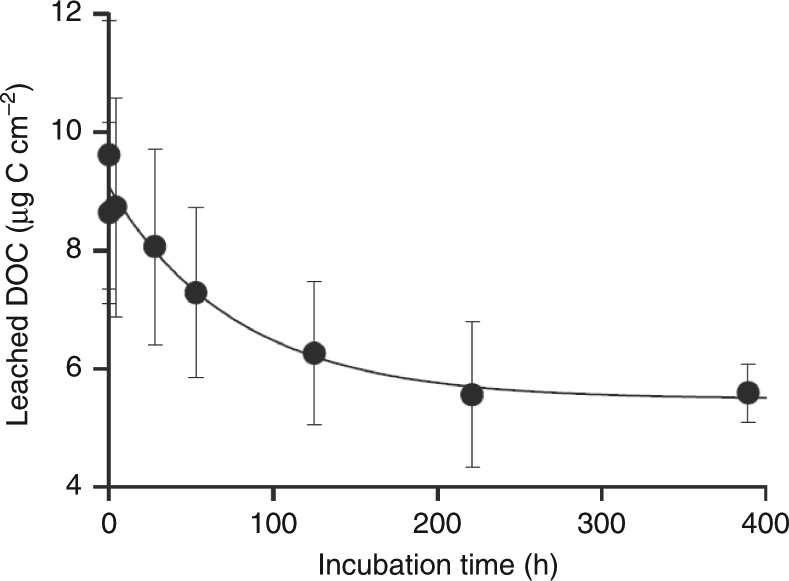
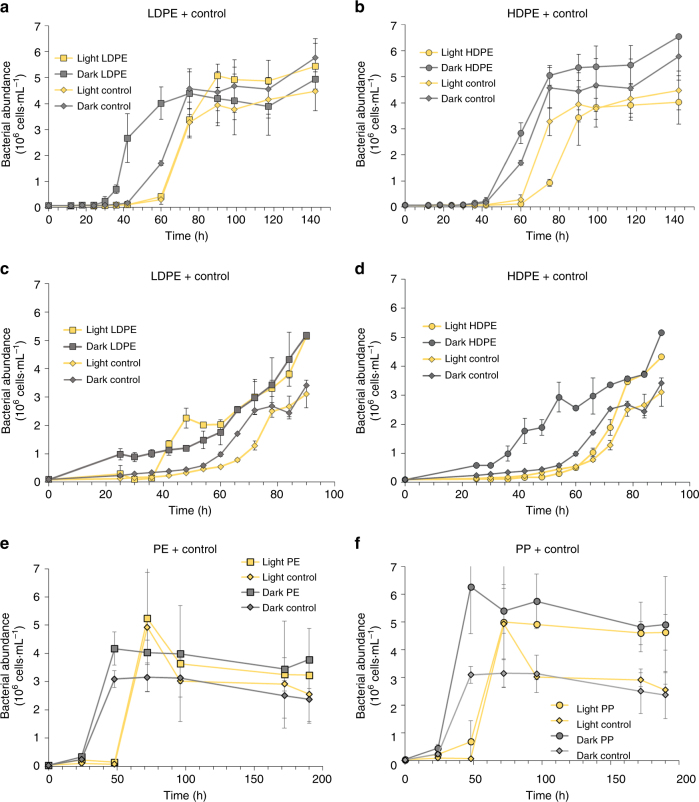
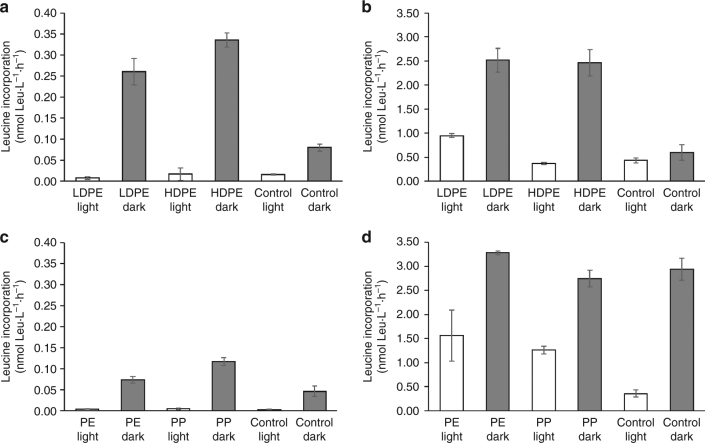
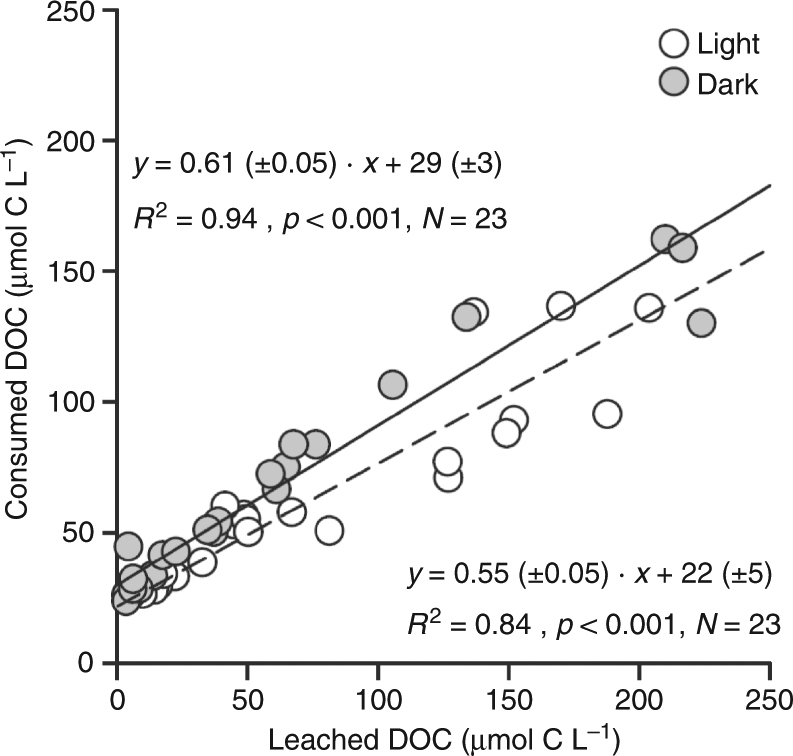
Verification
Claims the paper makes
The claims and statistics of this paper haven’t been checked yet.
Free: it reads the open-access text and checks the first 5 claims that cite a source we can check. Create a free account to check every claim.
Claims other papers make about this one
Each is checked against this paper’s own text: does it say what the citing paper says it does?
The source backs part of the claim, not all of it — or backs it for a different population, condition or comparison.
In the citing paper
“Moreover, UV-induced photodegradation results in the leaching of a plethora of lower molecular weight degradation products [3, 10, 23, 25, 66], which, at least to some degree, stimulate microbial activity [23, 25].”
From Polyethylene degradation and assimilation by the marine yeast Rhodotorula mucilaginosa (2023) · cites this paper as [23]
Experimental — accuracy not yet measuredThe source backs part of the claim, not all of it — or backs it for a different population, condition or comparison.
In the citing paper
“ii) limitations in bioavailable carbon i.e. Bacillus sp cells were able to degrade mainly photooxidation products released from the PE after UV treatment such as nanoplastics, oligomers, monomers and short-chain compounds that have functional groups making them easier to attack by microbial cells/enzymes”
From Mineralization of 13C-labeled polyethylene by marine Bacillus velezensis MT9 (2026) · cites this paper as Romera-Castillo et al., 2018
Experimental — accuracy not yet measuredThe source backs part of the claim, not all of it — or backs it for a different population, condition or comparison.
In the citing paper
“Photooxidation can be complete leading to the terminal oxidation end product CO 2 and in conjunction with fragmentation, it can then also lead to the formation of smaller molecules, ranging from hydrocarbon gases to shorterchain carbonyl compounds (e.g.straight chain or with aromaticity, depending on the parent polymer) 14,29,108 as well as nanoplastics.13,67,109”
From The fate of plastic in the ocean environment – a minireview (2021) · cites this paper as [29]
Experimental — accuracy not yet measuredThe source backs part of the claim, not all of it — or backs it for a different population, condition or comparison.
In the citing paper
“Assuming that the residence time of PMD at the ocean surface could be in the order of years, and/or that PMD might oscillate in the water column and periodically resurfaces, the preliminary results of Ward et al. (2019) and Zhu et al. (2020) show that photooxidation may indeed account for a substantial transformation of PMD into smaller chain scission products and nanoplastics.[29][30][31]”
From The fate of plastic in the ocean environment – a minireview (2021) · cites this paper as [29]
Experimental — accuracy not yet measuredThe source backs part of the claim, not all of it — or backs it for a different population, condition or comparison.
In the citing paper
“Incubation experiments with natural surface water microbial communities from the Mediterranean Sea 29 and an estuary of the subtropical NW Atlantic 31 showed that microbes were able to utilise at least some of the water-soluble fraction of daughter products generated during photooxidation of PE, PP, and PS.”
From The fate of plastic in the ocean environment – a minireview (2021) · cites this paper as [29]
Experimental — accuracy not yet measured
4 more claims about this paper
Create a free account to see every claim other papers make about this one.
Self-check
Percentages, sums and reported differences re-computed from the paper’s own numbers.
The self-check needs the paper’s full text.
Citations
Cites
Plastic waste inputs from land into the ocean
Jambeck, J. R., Geyer, R., Wilcox, C., Siegler, T. R., Perryman, M., Andrady, A., Narayan, R., & Law, K. L. (2015) · Science · doi:10.1126/science.1260352 · Cited by 13,163
Microplastics in the marine environment
Andrady, A. L. (2011) · Marine Pollution Bulletin · doi:10.1016/j.marpolbul.2011.05.030 · Cited by 8,105
Eriksen, M., Lebreton, L. C. M., Carson, H. S., Thiel, M., Moore, C. J., Borerro, J. C., Galgani, F., Ryan, P. G., & Reisser, J. (2014) · PLoS ONE · doi:10.1371/journal.pone.0111913 · Cited by 4,710
Accumulation of microplastic on shorelines woldwide: Sources and sinks
Browne, M. A., Crump, P., Niven, S. J., Teuten, E., Tonkin, A., Galloway, T., & Thompson, R. (2011) · Environmental Science & Technology · doi:10.1021/es201811s · Cited by 4,548
Plastic debris in the open ocean
Cózar, A., Echevarría, F., González-Gordillo, J. I., Irigoien, X., Úbeda, B., Hernández-León, S., Palma, Á. T., Navarro, S., García-de-Lomas, J., Ruiz, A., et al. (2014) · Proceedings of the National Academy of Sciences · doi:10.1073/pnas.1314705111 · Cited by 3,133
Auta, H. S., Emenike, C. U., & Fauziah, S. H. (2017) · Environment International · doi:10.1016/j.envint.2017.02.013 · Cited by 2,649
Pathways for degradation of plastic polymers floating in the marine environment
Gewert, B., Plassmann, M. M., & MacLeod, M. (2015) · Environmental Science: Processes & Impacts · doi:10.1039/c5em00207a · Cited by 2,168 · cited 1×
“The quantity of plastic waste entering the oceans is predicted to increase by up to one order of magnitude by the year 2025 (20) resulting in plastic-derived DOC of up to 236,000MT per year in the global ocean, with potential major consequences for marine microbes and the carbon cycling in the oceanic system.”
Belle, G. V., Fisher, L. D., Heagerty, P. J., & Lumley, T. (1958) · Wiley eBooks · doi:10.1002/0471602396.ch1 · Cited by 1,861
A global inventory of small floating plastic debris
van Sebille, E., Wilcox, C., Lebreton, L., Maximenko, N., Hardesty, B. D., van Franeker, J. A., Eriksen, M., Siegel, D., Galgani, F., & Law, K. L. (2015) · Environmental Research Letters · doi:10.1088/1748-9326/10/12/124006 · Cited by 1,713
Contributing to marine pollution by washing your face: Microplastics in facial cleansers
Fendall, L. S., & Sewell, M. A. (2009) · Marine Pollution Bulletin · doi:10.1016/j.marpolbul.2009.04.025 · Cited by 1,525
Research works printed but not linked: 2
- Hansell, D. A. & Carlson. C. A. Biogeochemistry of Dissolved Organic Matter 2nd edn, Ch. 2 (Academic Press, Oxford, 2015).
- Kirk JTO Optics of UV-B radiation in natural waters Arch. Hydrobiol. Beih. 1994 43 1 16
Cited by
Items 301–400 of 753
Ding, L., Han, B. Q., Jia, R., Xiao, Y., Liang, X., & Guo, X. (2025) · Environmental Science & Technology · doi:10.1021/acs.est.4c11745 · Cited by 31
A general esterolysis strategy for upcycling waste polyesters into high-value esters
Zhang, M., Yu, Y., Han, B., & Mei, Q. (2025) · Nature Communications · doi:10.1038/s41467-025-62916-2 · Cited by 42
Holzer, M., Mitrano, D. M., Carles, L., Wagner, B., & Tlili, A. (2022) · Environmental Science Nano · doi:10.1039/d2en00101b · Cited by 37
The disinfectant residues promote the leaching of water contaminants from plastic pipe particles
He, H., Li, F., Liu, K., Zhan, J., Wang, X., Lai, C., Yang, X., Huang, B., & Pan, X. (2023) · Environmental Pollution · doi:10.1016/j.envpol.2023.121577 · Cited by 31
Choi, N. E., Lee, Y.-K., Oh, H., & Hur, J. (2024) · Chemosphere · doi:10.1016/j.chemosphere.2024.141826 · Cited by 29
Peng, C., Tang, Y., Yang, H., He, Y., Liu, Y., Liu, D., Qian, Y., & Lu, L. (2020) · Marine Pollution Bulletin · doi:10.1016/j.marpolbul.2020.110907 · Cited by 32
Gambardella, C., Miroglio, R., Costa, E., Cachot, J., Morin, B., Clérandeau, C., Rotander, A., Rocco, K., d’Errico, G., Almeda, R., et al. (2024) · Environmental Pollution · doi:10.1016/j.envpol.2024.124233 · Cited by 27
Plastic-microbe interaction in the marine environment: Research methods and opportunities
Xiang, J. K. Z., Bairoliya, S., Cho, Z. T., & Cao, B. (2022) · Environment International · doi:10.1016/j.envint.2022.107716 · Cited by 31
A call to evaluate Plastic’s impacts on marine benthic ecosystem interaction networks
Ladewig, S. M., Bianchi, T. S., Coco, G., Hope, J. A., & Thrush, S. F. (2021) · Environmental Pollution · doi:10.1016/j.envpol.2021.116423 · Cited by 30
Microbial interactions with microplastics: Insights into the plastic carbon cycle in the ocean
Ziervogel, K., Kehoe, S., Jesus, A. Z. D., Saidi‐Mehrabad, A., Robertson, M., Patterson, A., & Stubbins, A. (2024) · Marine Chemistry · doi:10.1016/j.marchem.2024.104395 · Cited by 32
Zhang, Z., Shi, J., Yao, X., Wang, W., Zhang, Z., & Wu, H. (2024) · Journal of Hazardous Materials · doi:10.1016/j.jhazmat.2024.135958 · Cited by 28
Luo, H., Li, Z., Zeng, Y., He, D., Sun, J., Zhang, A., & Pan, X. (2025) · Journal of Environmental Management · doi:10.1016/j.jenvman.2025.126429 · Cited by 34
How will marine plastic pollution affect bacterial primary producers?
Tetu, S. G., Sarker, I., & Moore, L. R. (2020) · Communications Biology · doi:10.1038/s42003-020-0789-4 · Cited by 32
The Journey of Alternative and Sustainable Substitutes for “Single‐Use” Plastics
Wani, W. A., Pathan, S., & Bose, S. (2021) · Advanced Sustainable Systems · doi:10.1002/adsu.202100085 · Cited by 30
Oliveira-Filho, E. R., de Macedo, M. A., Lemos, A. C., Adams, F., Merkel, O. M., Taciro, M. K., Gomez, J. G. C., & da Silva, L. F. (2022) · International Journal of Biological Macromolecules · doi:10.1016/j.ijbiomac.2022.06.024 · Cited by 27
Zhou, Q., Zhang, J., Fang, Q., Zhang, M., Wang, X., Zhang, D., & Pan, X. (2022) · Environmental Pollution · doi:10.1016/j.envpol.2023.121828 · Cited by 28
Cresswell, T., Métian, M., Fisher, N. S., Charmasson, S., Hansman, R. L., Bam, W., Bock, C., & Swarzenski, P. W. (2020) · Frontiers in Marine Science · doi:10.3389/fmars.2020.00406 · Cited by 28
Fagiano, V., Compa, M., Alomar, C., García-Marcos, K., & Deudero, S. (2022) · Environmental Pollution · doi:10.1016/j.envpol.2022.119268 · Cited by 31
Santini, G., Memoli, V., Vitale, E., Natale, G. D., Trifuoggi, M., Maisto, G., & Santorufo, L. (2023) · International Journal of Environmental Research and Public Health · doi:10.3390/ijerph20043106 · Cited by 27
“The observed stimulation of HA and β-glu agrees with several pieces of research [36,37] and could be due to the possible release of dissolved carbon from plastic films in soil [38].”
BackgroundMacro- and microplastic leachates show a slightly toxic effect on seed germination of cotton
He, M., Feng, Z., Xu, Y., Ding, H., Ying, C., Cai, Y., & Zhang, H. (2023) · Chemosphere · doi:10.1016/j.chemosphere.2023.139081 · Cited by 27
Bitalac, J. M. S., Lantican, N. B., Gomez, N. C. F., & Onda, D. F. L. (2023) · Journal of Hazardous Materials · doi:10.1016/j.jhazmat.2023.131124 · Cited by 25
Dual regulatory effects of microplastics and heat waves on river microbial carbon metabolism
Wang, Z., Hu, X., Qu, Q., Hao, W., Peng, D., Kang, W., & Feng, R. (2022) · Journal of Hazardous Materials · doi:10.1016/j.jhazmat.2022.129879 · Cited by 25
Implications of plastic pollution on global marine carbon cycling and climate
Kvale, K. (2022) · Emerging Topics in Life Sciences · doi:10.1042/etls20220013 · Cited by 31
Dodhia, M. S., Rogers, K. L., Fernández‐Juárez, V., Calabuig, J. A. C., Löscher, C. R., Tisserand, A. A., Keulen, N., Riemann, L., Shashoua, Y., & Posth, N. R. (2023) · Frontiers in Marine Science · doi:10.3389/fmars.2023.1134815 · Cited by 29
“Plastic anchored in the water column was therefore exposed to both light-penetrated and continual oxygen-rich conditions which fosters the autooxidation of plastic (Wei and Zimmermann, 2017; Gewert et al., 2018; Romera-Castillo et al., 2018; Ali et al., 2021).”
BackgroundHaque, M. K., Ahmed, M. U., Kormoker, T., Ahmed, T. U., Zaman, M. R. U., Rahman, M. S., Rahman, M. A., Hossain, M. Y., Rana, M. M., & Tsang, Y. F. (2023) · Environmental Geochemistry and Health · doi:10.1007/s10653-023-01646-0 · Cited by 34
Li, Y., Tang, Y., Qiang, W., Xiao, W., Lian, X., Yuan, S., Yuan, Y., Wang, Q., Liu, Z., & Chen, Y. (2024) · Environmental Research · doi:10.1016/j.envres.2024.118574 · Cited by 27
Schutte, M. M., Kteeba, S. M., & Guo, L. (2023) · The Science of The Total Environment · doi:10.1016/j.scitotenv.2023.168616 · Cited by 27
Key factors and mechanisms of microplastics’ effects on soil nitrogen transformation: A review
Wang, S., Wang, W., Rong, S., Liu, G., Li, Y., Wang, X., & Liu, W. (2024) · Soil & Environmental Health · doi:10.1016/j.seh.2024.100101 · Cited by 28
Chen, Z., Carter, L., Banwart, S. A., Pramanik, D. D., & Kay, P. (2024) · The Science of The Total Environment · doi:10.1016/j.scitotenv.2024.176641 · Cited by 24
He, Z., Hou, Y., Li, Y., Bei, Q., Li, X., Zhu, Y., Liesack, W., Rillig, M. C., & Peng, J. (2024) · Microbiome · doi:10.1186/s40168-024-01974-y · Cited by 28
“On the other hand, there is growing evidence that dissolved organic carbon (DOC) leaching from plastics stimulates microbial activity and directly or indirectly affects carbon sequestration capacity in marine and soil ecosystems [13–16].”
Koh, K. Y., Chen, Z., Lin, S., Mohan, K. C., Luo, X., & Chen, J. P. (2022) · Chemosphere · doi:10.1016/j.chemosphere.2022.134300 · Cited by 27
Li, A., Yan, C., Qiu, J., Ji, Y., Fu, Y., & Yan, W. (2023) · The Science of The Total Environment · doi:10.1016/j.scitotenv.2023.167246 · Cited by 24
Yin, L., Luo, X., Li, J., Liu, Z., Duan, L., Deng, Q.-Q., Chen, C., Tang, S., Li, W., & Wang, P. (2024) · Journal of Hazardous Materials · doi:10.1016/j.jhazmat.2024.134728 · Cited by 25
Identification of Microorganisms Related to Microplastics
Onda, D. F. L., & Sharief, K. M. (2020) · Springer eBooks · doi:10.1007/978-3-030-10618-8_40-1 · Cited by 31
Hu, L., He, L., Cai, L., Wang, Y., Wu, G., Zhang, D., Pan, X., & Wang, Y. (2023) · Journal of Hazardous Materials · doi:10.1016/j.jhazmat.2023.133170 · Cited by 28
Microplastic contamination accelerates soil carbon loss through positive priming
Zhou, J., Feng, W., Brown, R. W., Yang, H., Shao, G., Shi, L., Gui, H., Xu, J., Li, F., Jones, D. L., et al. (2024) · The Science of The Total Environment · doi:10.1016/j.scitotenv.2024.176273 · Cited by 28
Shi, J. L., Zhang, Q., Sun, Y., Peng, Y., Wang, J., & Wang, X. (2025) · The Science of The Total Environment · doi:10.1016/j.scitotenv.2025.178825 · Cited by 30
Investigation of microplastic pollution on paddy fields in Xiangtan City, Southern China
Wang, Y., Cui, W., Duan, Z., Qin, L. H., Zhang, H., Cheng, H., & Wang, L. (2022) · Environmental Science and Pollution Research · doi:10.1007/s11356-022-21415-3 · Cited by 24
“2021) and carbon cycle (Romera-Castillo et al. 2018) in farmlands.”
Walsh, A. N., Mazzotta, M. G., Nelson, T. F., Reddy, C. M., & Ward, C. P. (2022) · Environmental Science & Technology · doi:10.1021/acs.est.2c04348 · Cited by 25
Organic amendment in climate change mitigation: Challenges in an era of micro- and nanoplastics
Mensah, O. S., Adomako, M. O., & Hu, Q. (2023) · The Science of The Total Environment · doi:10.1016/j.scitotenv.2023.168035 · Cited by 25
Li, C., Luo, D., Shi, Y., Bai, X., Krause, S., Wang, R., & Li, K. (2024) · Critical Reviews in Environmental Science and Technology · doi:10.1080/10643389.2024.2380537 · Cited by 25
“…organic carbon have the potential to be used as carbon sources for microorganisms, but this is limited by the type of MPs and microorganisms, the degree of weathering of the MPs, and environmental conditions such as light (Erni-Cassola et al., 2020; Romera-Castillo et al., 2018; Yuan et al., 2020).”
Deng, W., Wang, Y., Liu, W., Wang, Z., Liu, J., & Wang, J. (2024) · The Science of The Total Environment · doi:10.1016/j.scitotenv.2024.177167 · Cited by 22
Zhang, Z., Chen, Z. L., Liu, Y., Yi, Y., Cai, R., Ye, M., Liu, M., Yan, M., Leung, K., & He, D. (2025) · Water Research · doi:10.1016/j.watres.2025.124163 · Cited by 25
Changlake, O., Kaewkam, P., Lin, K. A., Sirivithayapakorn, S., & Kobwittaya, K. (2025) · Journal of Hazardous Materials · doi:10.1016/j.jhazmat.2025.139207 · Cited by 26
Liu, Y., Chen, Z. L., Zhang, Z., Yi, Y., Cai, R., Ye, M., Liu, M., Yan, M., Leung, K., Adyel, T. M., et al. (2025) · Environmental Science & Technology · doi:10.1021/acs.est.5c04083 · Cited by 23
Patel, D., Mamtora, D., Kamath, A., & Shukla, A. (2022) · Marine Pollution Bulletin · doi:10.1016/j.marpolbul.2022.113509 · Cited by 31
Consequences of Microplastics on Global Ecosystem Structure and Function
Wang, Y., Bai, J., Liu, Z., Zhang, L., Zhang, G., Chen, G., Xia, J., Cui, B., & Rillig, M. C. (2023) · Reviews of Environmental Contamination and Toxicology · doi:10.1007/s44169-023-00047-9 · Cited by 28
Freshwater plastispheres as a vector for foodborne bacteria and viruses
Witsø, I. L., Basson, A., Vinje, H., Llarena, A., Salas-Bringas, C., Aspholm, M. E., Wasteson, Y., & Myrmel, M. (2023) · Environmental Microbiology · doi:10.1111/1462-2920.16536 · Cited by 23
The role of plastic debris in the biogeochemical cycle of mercury in Lake Erie and San Francisco Bay
Bowman, K. L., Lamborg, C. H., Agather, A. M., & Hammerschmidt, C. R. (2021) · Marine Pollution Bulletin · doi:10.1016/j.marpolbul.2021.112768 · Cited by 25
Microplastic-associated biofilms in wastewater treatment plants: Mechanisms and impacts
Bhardwaj, G., Wankhede, L., Pulicharla, R., & Brar, S. K. (2025) · Journal of Water Process Engineering · doi:10.1016/j.jwpe.2025.107582 · Cited by 25
Xing, W., Shi, Y., Alotaibi, S., Wei, L., Guo, X., Sadik, O. A., Gu, B., Liang, X., & Zhang, L. (2025) · Environmental Science & Technology · doi:10.1021/acs.est.5c07060 · Cited by 21
The aquatic plastisphere: ecology, pathogen dissemination and antimicrobial resistance
Ormsby, M. J., & Quilliam, R. S. (2026) · Nature Reviews Microbiology · doi:10.1038/s41579-026-01301-2 · Cited by 31
“…or detritus, although plastic-derived DOC and volatile organic compounds often persist longer, creating more consistent hot spots of microbial activity and promoting colonization by specific bacterial groups 76,77 , which distinguishes plastisphere microhabitats from surrounding natural particles.”
Are researchers following best storage practices for measuring soil biochemical properties?
Rhymes, J. M., Cordero, I., Chomel, M., Lavallee, J. M., Straathof, A. L., Ashworth, D., Langridge, H., Semchenko, M., de Vries, F. T., Johnson, D., et al. (2021) · SOIL · doi:10.5194/soil-7-95-2021 · Cited by 25
Short‐term plastisphere colonization dynamics across six plastic types
Silva, V., Pérez, V., & Gillanders, B. M. (2023) · Environmental Microbiology · doi:10.1111/1462-2920.16445 · Cited by 29
Chu, Z., Qi, K., Yi, L., Kang, Y., Xie, X., Zhao, Y., & Wang, Z. (2025) · Water Research · doi:10.1016/j.watres.2025.123471 · Cited by 20
Designing for degradation: the importance of considering biotic and abiotic polymer degradation
Tantawi, O., Joo, W., Martin, E. E., Av-Ron, S. H. M., Bannister, K. R., Prather, K. L. J., Olsen, B. D., & Plata, D. L. (2025) · Environmental Science Processes & Impacts · doi:10.1039/d5em00079c · Cited by 29
Zhang, X., Feng, X., Ma, Y., Niu, Z., & Zhang, Y. (2023) · The Science of The Total Environment · doi:10.1016/j.scitotenv.2023.168229 · Cited by 20
Albergamo, V., Wohlleben, W., & Plata, D. L. (2024) · Environmental Science & Technology · doi:10.1021/acs.est.3c08134 · Cited by 32
Plastics: An Additional Threat for Coral Ecosystems
Lartaud, F., Meistertzheim, A., Reichert, J., Ziegler, M., Péru, E., & Ghiglione, J. (2020) · Springer eBooks · doi:10.1007/978-3-030-57054-5_14 · Cited by 25
Cheng, Y., Chen, J., Bao, M., Zhao, L., & Li, Y. (2021) · Chemosphere · doi:10.1016/j.chemosphere.2021.132940 · Cited by 25
Wastewater-associated plastispheres: A hidden habitat for microbial pathogens?
Witsø, I. L., Basson, A., Aspholm, M. E., Wasteson, Y., & Myrmel, M. (2024) · PLoS ONE · doi:10.1371/journal.pone.0312157 · Cited by 24
Chen, L., Huang, H., Han, L., Liang, C. C., Zhang, X., Liu, B., Luo, C., Mo, W., Cai, Y., & Yang, Z. (2025) · Journal of Hazardous Materials · doi:10.1016/j.jhazmat.2025.137356 · Cited by 23
Carbon Cycling in Wetlands Under the Shadow of Microplastics: Challenges and Prospects
Liu, L., Hua, Y., Sun, J., Ahmad, S., He, X., Zhuo, Y., & Tang, J. (2025) · Toxics · doi:10.3390/toxics13030143 · Cited by 21
“The impact induced by MPs-DOM is amplified in marine microbial activity, potentially up to two orders of magnitude higher than that triggered by pristine MPs, thus leading to non-negligible disruptions in the natural carbon cycle [16,17].”
Synthesis of Biobased Soft-Packaging Polyesters from 2,5 Thiophenedicarboxylic Acid
Siegu, W. M. K., Djouonkep, L. D. W., Adom, E. K., Muaz, A., Gauthier, M., & Cheng, Z. (2022) · Journal of Polymers and the Environment · doi:10.1007/s10924-022-02373-w · Cited by 19
“Common initiatives to tackle the escalating plastic waste problem have been performed widely under three key words; “Reduce”, “Reuse”, and “Recycle” of plastic materials [3, 4].”
BackgroundMicroplastics in urban waters and its effects on microbial communities: a critical review
Entezari, S., Al, M. A., Mostashari, A., Ganjidoust, H., Ayati, B., & Yang, J. (2022) · Environmental Science and Pollution Research · doi:10.1007/s11356-022-23810-2 · Cited by 21
“ranges, which is caused by several factors, including photodegradation, loss of volatile leachates, sorption onto the plastic, biodegradation, and/or combination of the abovementioned factors, the particles’ specific surface area will increase, making plastic particles further available as food sources for microorgani…”
BackgroundIntertwined synergistic abiotic and biotic degradation of polypropylene pellets in marine mesocosms
Karkanorachaki, K., Syranidou, E., Maravelaki-Kalaitzaki, P., & Kalogerakis, N. E. (2023) · Journal of Hazardous Materials · doi:10.1016/j.jhazmat.2023.131710 · Cited by 20
Leaching of organic matter from microplastics and its role in disinfection by-product formation
Parveen, N., Joseph, A., & Goel, S. (2023) · The Science of The Total Environment · doi:10.1016/j.scitotenv.2023.167640 · Cited by 19
Sun, Y., Zhang, J., Jiang, Z., Wang, Y., Duan, P., Min, W., & Zhang, W. (2023) · Journal of Hazardous Materials · doi:10.1016/j.jhazmat.2023.132881 · Cited by 19
Feng, Z., Zhu, N., Wu, H., Li, M. H., Chen, J., Yuan, X., Li, J., & Wang, Y. (2024) · Chemosphere · doi:10.1016/j.chemosphere.2024.142361 · Cited by 21
Wang, S., Feng, R., Hu, K., Hu, X., Qu, Q., Li, M., Wen, J., & Ma, C. (2024) · Environment International · doi:10.1016/j.envint.2024.108809 · Cited by 19
Biodegradation of textile waste by marine bacterial communities enhanced by light
Girard, E. B., Kaliwoda, M., Schmahl, W. W., Wörheide, G., & Orsi, W. D. (2020) · Environmental Microbiology Reports · doi:10.1111/1758-2229.12856 · Cited by 19
“, demonstrated that irradiated plastic debris stimulated microbial activity in a mesocosm experiment in comparison to virgin plastics, supporting the results obtained in our study (Romera-Castillo et al., 2018).”
BackgroundResultInfluentialObanya, H. E., Khan, F. R., Navarro, V. C., Rødland, E. S., Walker-Franklin, I., Thomas, J., Cooper, A., Molden, N., Amaeze, N. H., Patil, R. S., et al. (2024) · Environmental Research · doi:10.1016/j.envres.2024.120222 · Cited by 26
Wu, M., Ma, Y., Xie, H., & Ji, R. (2022) · The Science of The Total Environment · doi:10.1016/j.scitotenv.2022.157714 · Cited by 21
Conan, P., Philip, L., Ortega‐Retuerta, E., Odobel, C., Duran, C., Pandin, C., Giraud, C., Meistertzheim, A., Barbe, V., ter Halle, A., et al. (2022) · Environmental Pollution · doi:10.1016/j.envpol.2022.120463 · Cited by 29
Salikova, N. S., Rodrigo-Ilarri, J., Rodrigo-Clavero, M.-E., Urazbayeva, S. E., Askarova, A. Z., & Magzhanov, K. M. (2023) · Water · doi:10.3390/w15162889 · Cited by 24
“Most plastics have a density lower than that of water, so the plastic microparticles must pass into the water phase during separation [68]; To extract weighted plastic, it is necessary to use solutions of higher density [69,70].”
BackgroundMethodLi, H., Shen, M., Wang, Y., Liu, B., & Li, M. (2024) · The Science of The Total Environment · doi:10.1016/j.scitotenv.2024.175614 · Cited by 19
Potential ecological risk of microplastics contamination to environment in protect area lakes
Naying, L., Xintong, M., Bo, Z., Xiaofeng, W., Liu, X., Zao, Y., Honghui, L., & Yixin, H. (2024) · Journal of Hazardous Materials · doi:10.1016/j.jhazmat.2024.136863 · Cited by 22
Chemical profile and toxicity of the leachates from aged plastics under simulated conditions
Qiu, S., Li, X., Huang, G., Lei, D.-Q., Fang, G.-Z., Shi, W., Chen, H., Xie, L., & Ying, G. (2022) · Journal of Cleaner Production · doi:10.1016/j.jclepro.2022.134151 · Cited by 17
Meiofauna Shaping Biogeochemical Processes
Bonaglia, S., & Nascimento, F. J. A. (2023) · Springer eBooks · doi:10.1007/978-3-031-21622-0_2 · Cited by 22
Microplastic (MP) occurrence in pelagic and demersal fishes of Gujarat, northwest coast of India
Motivarash, Y. B., Bhatt, A., & Kardani, H. K. (2024) · Environmental Science and Pollution Research · doi:10.1007/s11356-024-32361-7 · Cited by 21
“The sunlight enhances the leaching of dissolved organic compounds that cause alteration in the biogeochemistry of seawater (Romera-Castillo et al. 2018, 2022a, 2022b).”
Ke, Y., Lin, L., Zhang, G., Hong, H., & Yan, C. (2024) · Journal of Hazardous Materials · doi:10.1016/j.jhazmat.2024.134092 · Cited by 17
Photodegradation Processes and Weathering Products of Microfibers in Aquatic Environments
Kteeba, S. M., & Guo, L. (2024) · Environmental Science & Technology · doi:10.1021/acs.est.4c03667 · Cited by 17
Microplastics alter the functioning of marine microbial ecosystems
Montoya, D., Rastelli, E., Casotti, R., Manna, V., Trano, A. C., Balestra, C., Santinelli, C., Saggiomo, M., Sansone, C., Corinaldesi, C., et al. (2024) · Ecology and Evolution · doi:10.1002/ece3.70041 · Cited by 22
Huang, X., Yongtao, N. I., Ma, Z., Xie, Z., Ding, Z., Xu, H., Wei, H., Jin, Q., & Zhou, R. (2026) · Water Research · doi:10.1016/j.watres.2026.125364 · Cited by 20
Plastics in soil environments: All things considered
Huo, Y., Dijkstra, F. A., Possell, M., & Singh, B. (2022) · Advances in agronomy · doi:10.1016/bs.agron.2022.05.002 · Cited by 22
The Microplastics Cycle: An In-Depth Look at a Complex Topic
Gopalakrishnan, K. K., Sivakumar, R., & Kashian, D. R. (2023) · Applied Sciences · doi:10.3390/app131910999 · Cited by 16
“Additionally, recent research has delved into the potential of plastics to serve as a carbon source for microorganisms, which can further boost biofilm development [102].”
BackgroundNiu, L., Baig, Z. T., Yeung, M., Soomro, A. F., Lu, L., & Xi, J. (2023) · Chemical Engineering Journal · doi:10.1016/j.cej.2023.146757 · Cited by 18
Solar radiation stimulates release of semi-labile dissolved organic matter from microplastics
Wang, J., & Cai, R. (2023) · Frontiers in Marine Science · doi:10.3389/fmars.2023.1284280 · Cited by 18
Shi, Y., Wei, X., Zhang, Z., Wang, S., Liu, H., Cui, D., Hua, W., Fu, Y., Chen, Y., Xue, Z., et al. (2024) · Aquatic Toxicology · doi:10.1016/j.aquatox.2024.106933 · Cited by 17
Singh, P., Varshney, G., & Kaur, R. (2024) · Journal of Environmental Science and Health Part C · doi:10.1080/26896583.2024.2370715 · Cited by 18
Peng, X., Li, X., Zhou, J. K., Tan, J., Chen, G., Zhu, Z., & Yang, T. (2024) · Water Research · doi:10.1016/j.watres.2024.122515 · Cited by 18
Saygın, H., & Baysal, A. (2020) · Journal of Environmental Science and Health Part A · doi:10.1080/10934529.2020.1833591 · Cited by 16
He, L., Zhuang, W.-E., Hur, J., & Yang, L. (2025) · Environmental Research · doi:10.1016/j.envres.2025.123418 · Cited by 20
Zheng, R., Li, Q., Li, P., Li, L., & Liu, J. (2022) · Chemosphere · doi:10.1016/j.chemosphere.2022.137374 · Cited by 18
Han, Z., Nina, M. R. H., Zhang, X., Huang, H., Fan, D., & Bai, Y. (2024) · Journal of Hazardous Materials · doi:10.1016/j.jhazmat.2024.134532 · Cited by 19
Liu, Y., Wang, W., & He, J. (2024) · The Science of The Total Environment · doi:10.1016/j.scitotenv.2024.176658 · Cited by 21
Implications of plastic pollution on global carbon cycle
Yao, L., Zhao, S., Tremblay, L. A., Wang, W., LeBlanc, G. A., & An, L. (2025) · Carbon Research · doi:10.1007/s44246-024-00188-z · Cited by 15
M’Rabet, C., Yahia, O. K., Chomérat, N., Zentz, F., Bilien, G., & Pringault, O. (2021) · Environmental Pollution · doi:10.1016/j.envpol.2021.117362 · Cited by 14
Agostino, A., Rao, N. R. H., Paul, S., Zhang, Z., Leslie, G. L., Le‐Clech, P., & Henderson, R. K. (2021) · Water Research · doi:10.1016/j.watres.2021.117614 · Cited by 18
Wei, Z., Li, N., Zhang, X., Zheng, L., Mo, S., Korshin, G. V., Li, Q., & Yan, M. (2023) · Chemosphere · doi:10.1016/j.chemosphere.2023.140352 · Cited by 15
Metadata
- Authors
- Romera-Castillo, C., Pinto, M., Langer, T. M., Álvarez-Salgado, X. A., & Herndl, G. J.
- Affiliations
- University of Vienna (AT)
- Corresponding author
- Herndl, Gerhard J.
- Venue
- Nature Communications
- Published
- 2018-04-12
- Volume
- 9
- Issue
- 1
- Pages
- 1430-1430
- ISSN
- 2041-1723 (ISSN-L)
- PMC
- PMC5897397
- OpenAlex
- W2797295663
- Semantic Scholar
- 660d5977f4d18ae008d461caf32858ac665fe17b
- Cited by
- 753
- References
- 29
- Citations by year
- 2026: 114 · 2025: 126 · 2024: 125 · 2023: 108 · 2022: 110 · 2021: 69 · 2020: 60 · 2019: 29 · 2018: 10
- FWCI
- 15.74
- Type
- journal article
- Language
- en
- Open access
- gold
- doi.org
- Licence
- cc-by
- creativecommons.org/licenses/by/4.0 (tdm)
- creativecommons.org/licenses/by/4.0 (vor)
- Locations
- Nature Communications (publishedVersion, cc-by)
- Flanders Marine Institute (Flanders Marine Institute) (publishedVersion, other-oa)
- Europe PMC (PubMed Central) (publishedVersion, other-oa)
- PubMed Central (publishedVersion, cc-by)
- PubMed (publishedVersion)
- Flanders Marine Institute (Flanders Marine Institute) (submittedVersion, other-oa)
- Phaidra (Universität Wien) (submittedVersion, cc-by-nc-nd)
- RePEc: Research Papers in Economics (submittedVersion)
- DIGITAL.CSIC (Spanish National Research Council (CSIC)) (submittedVersion, cc-by)
- DIGITAL.CSIC (Spanish National Research Council (CSIC)) (submittedVersion)
- DOAJ (DOAJ: Directory of Open Access Journals) (submittedVersion, cc-by-sa)
- DOAJ (DOAJ: Directory of Open Access Journals) (submittedVersion)
- Funders
- Austrian Science Fund (P28781, Z194)
- Topics
- Physical Sciences › Environmental Science › Pollution › Microplastics and Plastic Pollution
- Physical Sciences › Earth and Planetary Sciences › Oceanography › Marine Plankton and Biogeochemistry
- Physical Sciences › Environmental Science › Ecology › Microbial Community Ecology and Physiology
- Keywords
- plastic pollution, dissolved organic carbon, marine plastics, microbial carbon utilization, DOC leaching, marine plastic debris
- MeSH terms
- Bacteria, Carbon, Environmental Pollution, Light, Oceans and Seas, Plastics, Seawater, Solar Energy, Solubility, Food Chain, Heterotrophic Processes
About these checks
Registry, retraction, Cites and statistics results are computed, not judged, with one exception: a printed reference that no index lists is read once by a model before it counts as a citation error. Claims are extracted by a model and kept only when their quote appears verbatim in the text; each cited source is then checked, with a model’s help, for whether it says what the claim relies on. Those verdicts can be wrong — read the claim’s quote and the cited source before relying on one.
Statistics and arithmetic are recomputed, not judged.
Confidence bands are shown only for fields calibrated on our annotated test set. None is calibrated yet, so no band is shown.
What counts as a claim ›How we measure confidence ›How we check this ›
Are you an author, or do you see a problem with this page? Request a review
Data sources
Bibliographic data: Semantic Scholar, OpenAlex, Crossref.
Contains information from the Semantic Scholar Academic Graph Datasets, made available under the ODC Attribution License (ODC-BY 1.0).
Semantic Scholar’s data is described in: Kinney, R., et al. (2023). The Semantic Scholar Open Data Platform. arXiv:2301.10140.
