

Dissolved organic carbon leaching from plastics stimulates microbial activity in the ocean
Open accessThe DOI matches its Crossref record; 29 of the 29 references it cites were found in a registry or an index.
Abstract
Approximately 5.25 trillion plastic pieces are floating at the sea surface. The impact of plastic pollution on the lowest trophic levels of the food web, however, remains unknown. Here we show that plastics release dissolved organic carbon (DOC) into the ambient seawater stimulating the activity of heterotrophic microbes. Our estimates indicate that globally up to 23,600 metric tons of DOC are leaching from marine plastics annually. About 60% of it is available to microbial utilization in less than 5 days. If exposed to solar radiation, however, this DOC becomes less labile. Thus, plastic pollution of marine surface waters likely alters the composition and activity of the base of the marine food webs. It is predicted that plastic waste entering the ocean will increase by a factor of ten within the next decade, resulting in an increase in plastic-derived DOC that might have unaccounted consequences for marine microbes and for the ocean system.
Overview
The claims and statistics of this paper haven’t been checked yet.
Free: it reads the open-access text and checks the first 5 claims that cite a source we can check. Create a free account to check every claim.
Integrity signals
Registry
Cites
Statistics
Figures
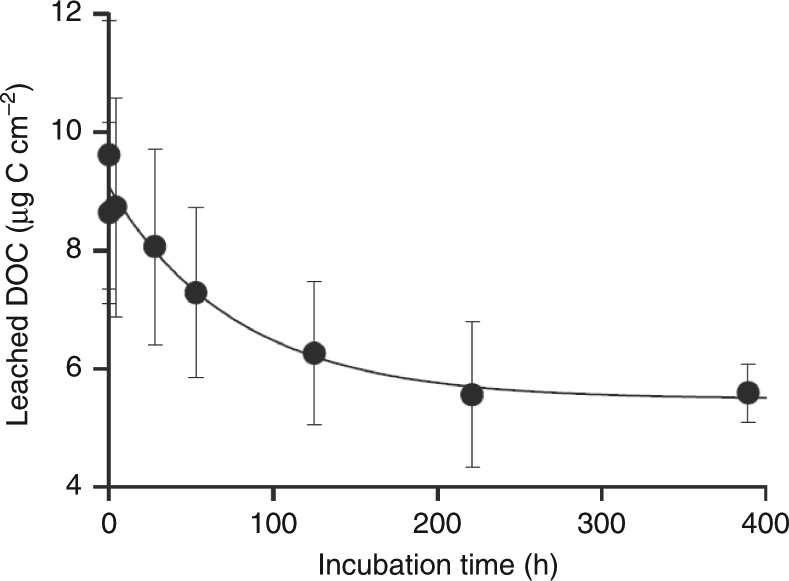
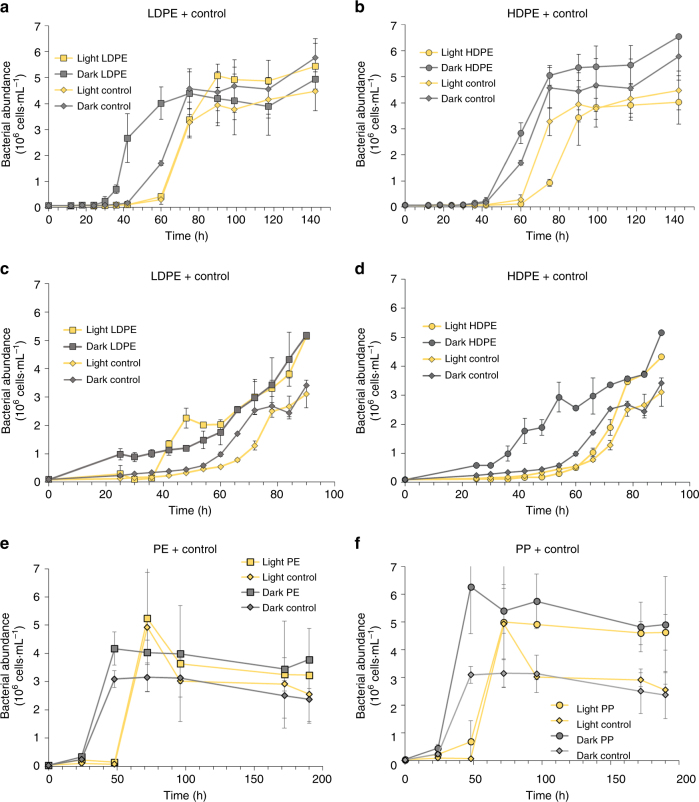
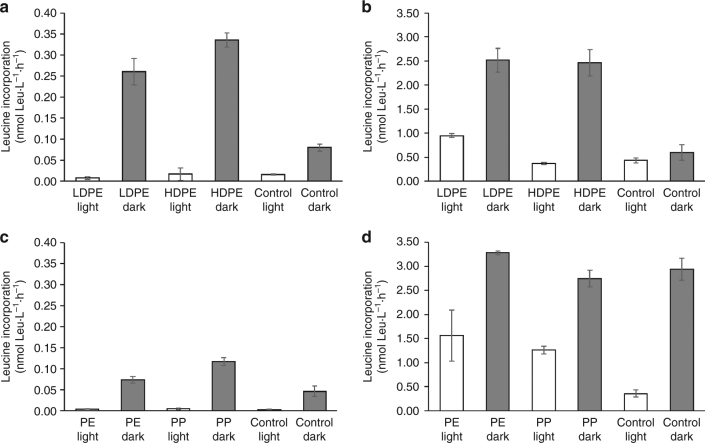
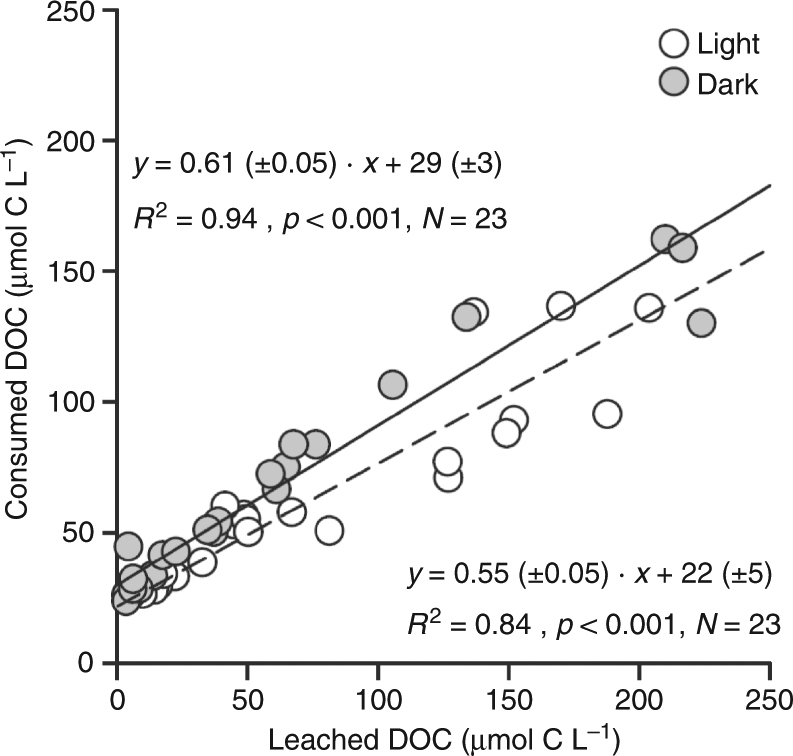
Verification
Claims the paper makes
The claims and statistics of this paper haven’t been checked yet.
Free: it reads the open-access text and checks the first 5 claims that cite a source we can check. Create a free account to check every claim.
Claims other papers make about this one
Each is checked against this paper’s own text: does it say what the citing paper says it does?
The source backs part of the claim, not all of it — or backs it for a different population, condition or comparison.
In the citing paper
“Moreover, UV-induced photodegradation results in the leaching of a plethora of lower molecular weight degradation products [3, 10, 23, 25, 66], which, at least to some degree, stimulate microbial activity [23, 25].”
From Polyethylene degradation and assimilation by the marine yeast Rhodotorula mucilaginosa (2023) · cites this paper as [23]
Experimental — accuracy not yet measuredThe source backs part of the claim, not all of it — or backs it for a different population, condition or comparison.
In the citing paper
“ii) limitations in bioavailable carbon i.e. Bacillus sp cells were able to degrade mainly photooxidation products released from the PE after UV treatment such as nanoplastics, oligomers, monomers and short-chain compounds that have functional groups making them easier to attack by microbial cells/enzymes”
From Mineralization of 13C-labeled polyethylene by marine Bacillus velezensis MT9 (2026) · cites this paper as Romera-Castillo et al., 2018
Experimental — accuracy not yet measuredThe source backs part of the claim, not all of it — or backs it for a different population, condition or comparison.
In the citing paper
“Photooxidation can be complete leading to the terminal oxidation end product CO 2 and in conjunction with fragmentation, it can then also lead to the formation of smaller molecules, ranging from hydrocarbon gases to shorterchain carbonyl compounds (e.g.straight chain or with aromaticity, depending on the parent polymer) 14,29,108 as well as nanoplastics.13,67,109”
From The fate of plastic in the ocean environment – a minireview (2021) · cites this paper as [29]
Experimental — accuracy not yet measuredThe source backs part of the claim, not all of it — or backs it for a different population, condition or comparison.
In the citing paper
“Assuming that the residence time of PMD at the ocean surface could be in the order of years, and/or that PMD might oscillate in the water column and periodically resurfaces, the preliminary results of Ward et al. (2019) and Zhu et al. (2020) show that photooxidation may indeed account for a substantial transformation of PMD into smaller chain scission products and nanoplastics.[29][30][31]”
From The fate of plastic in the ocean environment – a minireview (2021) · cites this paper as [29]
Experimental — accuracy not yet measuredThe source backs part of the claim, not all of it — or backs it for a different population, condition or comparison.
In the citing paper
“Incubation experiments with natural surface water microbial communities from the Mediterranean Sea 29 and an estuary of the subtropical NW Atlantic 31 showed that microbes were able to utilise at least some of the water-soluble fraction of daughter products generated during photooxidation of PE, PP, and PS.”
From The fate of plastic in the ocean environment – a minireview (2021) · cites this paper as [29]
Experimental — accuracy not yet measured
4 more claims about this paper
Create a free account to see every claim other papers make about this one.
Self-check
Percentages, sums and reported differences re-computed from the paper’s own numbers.
The self-check needs the paper’s full text.
Citations
Cites
Plastic waste inputs from land into the ocean
Jambeck, J. R., Geyer, R., Wilcox, C., Siegler, T. R., Perryman, M., Andrady, A., Narayan, R., & Law, K. L. (2015) · Science · doi:10.1126/science.1260352 · Cited by 13,163
Microplastics in the marine environment
Andrady, A. L. (2011) · Marine Pollution Bulletin · doi:10.1016/j.marpolbul.2011.05.030 · Cited by 8,105
Eriksen, M., Lebreton, L. C. M., Carson, H. S., Thiel, M., Moore, C. J., Borerro, J. C., Galgani, F., Ryan, P. G., & Reisser, J. (2014) · PLoS ONE · doi:10.1371/journal.pone.0111913 · Cited by 4,710
Accumulation of microplastic on shorelines woldwide: Sources and sinks
Browne, M. A., Crump, P., Niven, S. J., Teuten, E., Tonkin, A., Galloway, T., & Thompson, R. (2011) · Environmental Science & Technology · doi:10.1021/es201811s · Cited by 4,548
Plastic debris in the open ocean
Cózar, A., Echevarría, F., González-Gordillo, J. I., Irigoien, X., Úbeda, B., Hernández-León, S., Palma, Á. T., Navarro, S., García-de-Lomas, J., Ruiz, A., et al. (2014) · Proceedings of the National Academy of Sciences · doi:10.1073/pnas.1314705111 · Cited by 3,133
Auta, H. S., Emenike, C. U., & Fauziah, S. H. (2017) · Environment International · doi:10.1016/j.envint.2017.02.013 · Cited by 2,649
Pathways for degradation of plastic polymers floating in the marine environment
Gewert, B., Plassmann, M. M., & MacLeod, M. (2015) · Environmental Science: Processes & Impacts · doi:10.1039/c5em00207a · Cited by 2,168 · cited 1×
“The quantity of plastic waste entering the oceans is predicted to increase by up to one order of magnitude by the year 2025 (20) resulting in plastic-derived DOC of up to 236,000MT per year in the global ocean, with potential major consequences for marine microbes and the carbon cycling in the oceanic system.”
Belle, G. V., Fisher, L. D., Heagerty, P. J., & Lumley, T. (1958) · Wiley eBooks · doi:10.1002/0471602396.ch1 · Cited by 1,861
A global inventory of small floating plastic debris
van Sebille, E., Wilcox, C., Lebreton, L., Maximenko, N., Hardesty, B. D., van Franeker, J. A., Eriksen, M., Siegel, D., Galgani, F., & Law, K. L. (2015) · Environmental Research Letters · doi:10.1088/1748-9326/10/12/124006 · Cited by 1,713
Contributing to marine pollution by washing your face: Microplastics in facial cleansers
Fendall, L. S., & Sewell, M. A. (2009) · Marine Pollution Bulletin · doi:10.1016/j.marpolbul.2009.04.025 · Cited by 1,525
Research works printed but not linked: 2
- Hansell, D. A. & Carlson. C. A. Biogeochemistry of Dissolved Organic Matter 2nd edn, Ch. 2 (Academic Press, Oxford, 2015).
- Kirk JTO Optics of UV-B radiation in natural waters Arch. Hydrobiol. Beih. 1994 43 1 16
Cited by
Amaral-Zettler, L. A., Zettler, E. R., & Mincer, T. J. (2020) · Nature Reviews Microbiology · doi:10.1038/s41579-019-0308-0 · Cited by 1,407
A Global Perspective on Microplastics
Hale, R. C., Seeley, M. E., La Guardia, M. J., Mai, L., & Zeng, E. Y. (2020) · Journal of Geophysical Research: Oceans · doi:10.1029/2018jc014719 · Cited by 1,338
“Rotjan et al. (2019) observed on average >100 microplastics (predominantly polyamide, polyester, and synthetic cellulose‐based fibers) per polyp of northern star coral (Astrangia poculatain) collected off of Rhode Island (U.”
BackgroundMicroplastics affect sedimentary microbial communities and nitrogen cycling
Seeley, M. E., Song, B., Passie, R., & Hale, R. C. (2020) · Nature Communications · doi:10.1038/s41467-020-16235-3 · Cited by 1,232
Yu, F., Yang, C., Zhu, Z., Bai, X., & Ma, J. (2019) · Science of The Total Environment · doi:10.1016/j.scitotenv.2019.133643 · Cited by 737
RetractedMicroplastic Shape, Polymer Type, and Concentration Affect Soil Properties and Plant Biomass
Lozano, Y. M., Lehnert, T., Linck, L. T., Lehmann, A., & Rillig, M. C. (2021) · Frontiers in Plant Science · doi:10.3389/fpls.2021.616645 · Cited by 663
Duan, J., Bolan, N., Li, Y., Ding, S., Atugoda, T., Vithanage, M., Sarkar, B., Tsang, D. C. W., & Kirkham, M. B. (2021) · Water Research · doi:10.1016/j.watres.2021.117011 · Cited by 653
Degradation of plastics and plastic-degrading bacteria in cold marine habitats
Urbanek, A. K., Rymowicz, W., & Mirończuk, A. M. (2018) · Applied Microbiology and Biotechnology · doi:10.1007/s00253-018-9195-y · Cited by 619
Phthalate Release from Plastic Fragments and Degradation in Seawater
Paluselli, A., Fauvelle, V., Galgani, F., & Sempéré, R. (2019) · Environmental Science & Technology · doi:10.1021/acs.est.8b05083 · Cited by 519
Marine Plastic Debris: A New Surface for Microbial Colonization
Wright, R. J., Erni-Cassola, G., Zadjelovic, V., Latva, M., & Christie-Oleza, J. A. (2020) · Environmental Science & Technology · doi:10.1021/acs.est.0c02305 · Cited by 513
Marine Microbial Assemblages on Microplastics: Diversity, Adaptation, and Role in Degradation
Oberbeckmann, S., & Labrenz, M. (2020) · Annual Review of Marine Science · doi:10.1146/annurev-marine-010419-010633 · Cited by 471
“F or p er so na l u se o nl y. ability to degrade aromatic or halogenated hydrocarbons, including petroleum and pesticides, several members of the Sphingomonadaceae are already being used for remediation purposes (Kertesz et al. 2017, Rosenberg et al. 2014).”
BackgroundWang, T., Wang, L., Chen, Q., Kalogerakis, N., Ji, R., & Ma, Y. (2020) · Science of The Total Environment · doi:10.1016/j.scitotenv.2020.142427 · Cited by 437
Zhu, L., Zhao, S., Bittar, T. B., Stubbins, A., & Li, D. (2020) · Journal of Hazardous Materials · doi:10.1016/j.jhazmat.2019.121065 · Cited by 394
Lee, Y. K., Murphy, K. R., & Hur, J. (2020) · Environmental Science & Technology · doi:10.1021/acs.est.0c00942 · Cited by 380
Microplastics as an emerging threat to plant and soil health in agroecosystems
Zhou, J., Wen, Y., Marshall, M. R., Zhao, J., Gui, H., Yang, Y., Zeng, Z., Jones, D. L., & Zang, H. (2021) · Science of The Total Environment · doi:10.1016/j.scitotenv.2021.147444 · Cited by 375
Microplastics as carriers of toxic pollutants: Source, transport, and toxicological effects
Rafa, N., Ahmed, B., Zohora, F., Bakya, J., Ahmed, S., Ahmed, S. F., Mofijur, M., Chowdhury, A. A., & Almomani, F. (2024) · Environmental Pollution · doi:10.1016/j.envpol.2023.123190 · Cited by 373
The hidden threat of plastic leachates: A critical review on their impacts on aquatic organisms
Gunaalan, K., Fabbri, E., & Capolupo, M. (2020) · Water Research · doi:10.1016/j.watres.2020.116170 · Cited by 375
Pironti, C., Ricciardi, M., Motta, O., Miele, Y., Proto, A., & Montano, L. (2021) · Toxics · doi:10.3390/toxics9090224 · Cited by 362
Luo, H., Zhao, Y., Li, Y., Xiang, Y., He, D., & Pan, X. (2020) · Science of The Total Environment · doi:10.1016/j.scitotenv.2020.136862 · Cited by 361
Global distribution of microplastics and its impact on marine environment—a review
Ajith, N., Arumugam, S., Parthasarathy, S., Manupoori, S., & Janakiraman, S. (2020) · Environmental Science and Pollution Research · doi:10.1007/s11356-020-09015-5 · Cited by 360
Luo, H., Xiang, Y., He, D., Li, Y., Zhao, Y., Wang, S., & Pan, X. (2019) · Science of The Total Environment · doi:10.1016/j.scitotenv.2019.04.401 · Cited by 343
Liu, K., Wang, X., Wei, N., Song, Z., & Li, D. (2019) · Environment International · doi:10.1016/j.envint.2019.105127 · Cited by 338
Xu, Y., Ou, Q., van der Hoek, J. P., Liu, G., & Lompe, K. M. (2024) · Environmental Science & Technology · doi:10.1021/acs.est.3c07035 · Cited by 325
Pinto, M., Langer, T. M., Hüffer, T., Hofmann, T., & Herndl, G. J. (2019) · PLOS ONE · doi:10.1371/journal.pone.0217165 · Cited by 323
Self-citationThe fate of plastic in the ocean environment – a minireview
Wayman, C., & Niemann, H. (2021) · Environmental Science: Processes & Impacts · doi:10.1039/d0em00446d · Cited by 325
Bacterial Candidates for Colonization and Degradation of Marine Plastic Debris
Roager, L., & Sonnenschein, E. C. (2019) · Environmental Science & Technology · doi:10.1021/acs.est.9b02212 · Cited by 305
Micro-by-micro interactions: How microorganisms influence the fate of marine microplastics
Rogers, K. L., Carreres‐Calabuig, J. A., Gorokhova, E., & Posth, N. R. (2020) · Limnology and Oceanography Letters · doi:10.1002/lol2.10136 · Cited by 293
Wang, X., Zheng, H., Zhao, J., Luo, X., Wang, Z., & Xing, B. (2020) · Environmental Science & Technology · doi:10.1021/acs.est.9b07016 · Cited by 288
Changes in global groundwater organic carbon driven by climate change and urbanization
McDonough, L. K., Santos, I. R., Andersen, M. S., O’Carroll, D. M., Rutlidge, H., Meredith, K., Oudone, P., Bridgeman, J., Gooddy, D. C., Sorensen, J. P. R., et al. (2020) · Nature Communications · doi:10.1038/s41467-020-14946-1 · Cited by 288
Yan, Y., Zhu, F., Zhu, C., Chen, Z., Liu, S., Wang, C., & Gu, C. (2021) · Water Research · doi:10.1016/j.watres.2021.117597 · Cited by 276
Linking effects of microplastics to ecological impacts in marine environments
Khalid, N., Aqeel, M., Noman, A., Hashem, M., Mostafa, Y. S., Alhaithloul, H. A. S., & Alghanem, S. M. (2021) · Chemosphere · doi:10.1016/j.chemosphere.2020.128541 · Cited by 269
Aralappanavar, V. K., Mukhopadhyay, R., Yu, Y., Liu, J., Bhatnagar, A., Praveena, S. M., Li, Y., Paller, M., Adyel, T. M., Rinklebe, J., et al. (2024) · Science of The Total Environment · doi:10.1016/j.scitotenv.2024.171435 · Cited by 258
Roadmap to Biodegradable Plastics—Current State and Research Needs
Ghosh, K., & Jones, B. H. (2021) · ACS Sustainable Chemistry & Engineering · doi:10.1021/acssuschemeng.1c00801 · Cited by 260
Luo, H., Li, Y., Zhao, Y., Xiang, Y., He, D., & Pan, X. (2020) · Environmental Pollution · doi:10.1016/j.envpol.2019.113475 · Cited by 260
Microplastic properties and their interaction with hydrophobic organic contaminants: a review
Prajapati, A., Narayan Vaidya, A., & Kumar, A. R. (2022) · Environmental Science and Pollution Research · doi:10.1007/s11356-022-20723-y · Cited by 251
Sooriyakumar, P., Bolan, N., Kumar, M., Singh, L., Yu, Y., Li, Y., Weralupitiya, C., Vithanage, M., Ramanayaka, S., Sarkar, B., et al. (2022) · Journal of Hazardous Materials Advances · doi:10.1016/j.hazadv.2022.100077 · Cited by 251
Shi, Y., Liu, P., Wu, X., Shi, H., Huang, H., Wang, H., & Gao, S. (2021) · Water Research · doi:10.1016/j.watres.2021.116980 · Cited by 246
Lee, Y. K., Romera-Castillo, C., Hong, S., & Hur, J. (2020) · Water Research · doi:10.1016/j.watres.2020.115678 · Cited by 242
Self-citationRole of fungi in bioremediation of emerging pollutants
Vaksmaa, A., Guerrero-Cruz, S., Ghosh, P., Zeghal, E., Hernando-Morales, V., & Niemann, H. (2023) · Frontiers in Marine Science · doi:10.3389/fmars.2023.1070905 · Cited by 236
Tetu, S. G., Sarker, I., Schrameyer, V., Pickford, R., Elbourne, L. D. H., Moore, L. R., & Paulsen, I. T. (2019) · Communications Biology · doi:10.1038/s42003-019-0410-x · Cited by 239
Song, C., Liu, Z., Wang, C., Li, S., & Kitamura, Y. (2020) · Science of The Total Environment · doi:10.1016/j.scitotenv.2020.138146 · Cited by 229
Element cycling with micro(nano)plastics
Huang, W., & Xia, X. (2024) · Science · doi:10.1126/science.adk9505 · Cited by 215
Plastic pollution fosters more microbial growth in lakes than natural organic matter
Sheridan, E. A., Fonvielle, J. A., Cottingham, S., Zhang, Y., Dittmar, T., Aldridge, D. C., & Tanentzap, A. J. (2022) · Nature Communications · doi:10.1038/s41467-022-31691-9 · Cited by 215
Phylogenetic Distribution of Plastic-Degrading Microorganisms
Gambarini, V., Pantos, O., Kingsbury, J. M., Weaver, L., Handley, K. M., & Lear, G. (2021) · mSystems · doi:10.1128/msystems.01112-20 · Cited by 210
“Plastic waste impacts the composition and activity of microbial communities and taxa (24).”
Accumulation, transformation and transport of microplastics in estuarine fronts
Wang, T., Zhao, S., Zhu, L., McWilliams, J. C., Galgani, L., Amin, R. M., Nakajima, R., Jiang, W., & Chen, M. (2022) · Nature Reviews Earth & Environment · doi:10.1038/s43017-022-00349-x · Cited by 209
Castro-Jiménez, J., González-Fernández, D., Fornier, M., Schmidt, N., & Sempéré, R. (2019) · Marine Pollution Bulletin · doi:10.1016/j.marpolbul.2019.05.067 · Cited by 206
“ingestion and entanglement) caused to the aquatic organisms, these fragments of different polymers could also represent new sources of dissolved organic carbon (DOC) (Romera-Castillo et al., 2018; Paluselli et al., 2019) and organic additives like PAEs and OPEs J.”
BackgroundMicroplastics: A major source of phthalate esters in aquatic environments
Cao, Y., Lin, H., Zhang, K., Xu, S., Yan, M., Leung, K. M. Y., & Lam, P. K. S. (2022) · Journal of Hazardous Materials · doi:10.1016/j.jhazmat.2022.128731 · Cited by 200
Li, Y., Liu, C., Yang, H., He, W., Li, B., Zhu, X., Liu, S., Jia, S., Li, R., & Tang, K. H. D. (2024) · Science of The Total Environment · doi:10.1016/j.scitotenv.2023.167666 · Cited by 197
Microplastics shape microbial communities affecting soil organic matter decomposition in paddy soil
Xiao, M., Ding, J., Luo, Y., Zhang, H., Yu, Y., Yao, H., Zhu, Z., Chadwick, D. R., Jones, D., Chen, J., et al. (2022) · Journal of Hazardous Materials · doi:10.1016/j.jhazmat.2022.128589 · Cited by 191
Kesy, K., Oberbeckmann, S., Kreikemeyer, B., & Labrenz, M. (2019) · Frontiers in Microbiology · doi:10.3389/fmicb.2019.01665 · Cited by 184
“, 2016), but it may also be the case that the bacteria take advantage of the volatile compounds released from the plastics even after 2 weeks, such as monomers and additives (Romera-Castillo et al., 2018; Klaeger et al., 2019), or make use of the organic pollutants that sorb to the surface of the polymers (Mato et al.”
BackgroundShi, J., Wang, J., Lv, J., Wang, Z., Peng, Y., Shang, J., & Wang, X. (2022) · Science of The Total Environment · doi:10.1016/j.scitotenv.2022.156471 · Cited by 183
Ortiz, D., Munoz, M., Nieto-Sandoval, J., Romera-Castillo, C., de Pedro, Z. M., & Casas, J. A. (2022) · Chemosphere · doi:10.1016/j.chemosphere.2022.136809 · Cited by 178
Self-citationRole of biofilms in the degradation of microplastics in aquatic environments
Debroy, A., George, N., & Mukherjee, G. (2022) · Journal of Chemical Technology & Biotechnology · doi:10.1002/jctb.6978 · Cited by 179
Chen, C., Pan, J., Xiao, S., Wang, J., Gong, X., Yin, G., Hou, L., Liu, M., & Zheng, Y. (2022) · Water Research · doi:10.1016/j.watres.2022.118733 · Cited by 177
Wang, J., Peng, C., Li, H., Zhang, P., & Liu, X. (2021) · Science of The Total Environment · doi:10.1016/j.scitotenv.2021.145697 · Cited by 177
Rapid Physicochemical Changes in Microplastic Induced by Biofilm Formation
McGivney, E., Cederholm, L., Barth, A., Hakkarainen, M., Hamacher-Barth, E., Ogonowski, M., & Gorokhova, E. (2020) · Frontiers in Bioengineering and Biotechnology · doi:10.3389/fbioe.2020.00205 · Cited by 174
Recent advances on the effects of microplastics on elements cycling in the environment
Wang, X., Xing, Y., Lv, M., Zhang, T., Ya, H., & Jiang, B. (2022) · Science of The Total Environment · doi:10.1016/j.scitotenv.2022.157884 · Cited by 173
Adsorption of microplastic-derived organic matter onto minerals
Lee, Y. K., & Hur, J. (2020) · Water Research · doi:10.1016/j.watres.2020.116426 · Cited by 171
Rozman, U., & Kalčíková, G. (2022) · Journal of Hazardous Materials · doi:10.1016/j.jhazmat.2021.127529 · Cited by 170
Microplastics in lakes and rivers: An issue of emerging significance to limnology
D’Avignon, G., Gregory-Eaves, I., & Ricciardi, A. (2022) · Environmental Reviews · doi:10.1139/er-2021-0048 · Cited by 169
Enrichment and dissemination of bacterial pathogens by microplastics in the aquatic environment
Junaid, M., Siddiqui, J. A., Sadaf, M., Liu, S., & Wang, J. (2022) · Science of The Total Environment · doi:10.1016/j.scitotenv.2022.154720 · Cited by 169
Interactions between polypropylene microplastics (PP-MPs) and humic acid influenced by aging of MPs
Luo, H., Liu, C., He, D., Sun, J., Zhang, A., Li, J., & Pan, X. (2022) · Water Research · doi:10.1016/j.watres.2022.118921 · Cited by 166
Micro- and nano-plastic pollution: Behavior, microbial ecology, and remediation technologies
Rai, P. K., Lee, J., Brown, R. J. C., & Kim, K.-H. (2021) · Journal of Cleaner Production · doi:10.1016/j.jclepro.2020.125240 · Cited by 164
Elgarahy, A. M., Akhdhar, A., & Elwakeel, K. Z. (2021) · Journal of Environmental Chemical Engineering · doi:10.1016/j.jece.2021.106224 · Cited by 164
Pal, D., Prabhakar, R., Barua, V. B., Zekker, I., Burlakovs, J., Krauklis, A. E., Hogland, W., & Vincēviča–Gaile, Z. (2024) · Environmental Science and Pollution Research · doi:10.1007/s11356-024-35741-1 · Cited by 213
Lee, Y. K., Hong, S., & Hur, J. (2021) · Water Research · doi:10.1016/j.watres.2020.116775 · Cited by 159
Su, Y., Cheng, Z., Hou, Y., Lin, S., Gao, L., Wang, Z., Bao, R., & Peng, L. (2022) · Aquatic Toxicology · doi:10.1016/j.aquatox.2022.106097 · Cited by 159
Photoaging process and mechanism of four commonly commercial microplastics
Wang, H., Zhu, J., He, Y., Wang, J., Zeng, N., & Zhan, X. (2023) · Journal of Hazardous Materials · doi:10.1016/j.jhazmat.2023.131151 · Cited by 167
A mechanistic understanding of polyethylene biodegradation by the marine bacterium Alcanivorax
Zadjelovic, V., Erni-Cassola, G., Obrador-Viel, T., Lester, D., Eley, Y., Gibson, M. I., Dorador, C., Golyshin, P. N., Black, S., Wellington, E. M. H., et al. (2022) · Journal of Hazardous Materials · doi:10.1016/j.jhazmat.2022.129278 · Cited by 155
Early Colonization of Weathered Polyethylene by Distinct Bacteria in Marine Coastal Seawater
Erni-Cassola, G., Wright, R., Gibson, M. I., & Christie‐Oleza, J. A. (2019) · Microbial Ecology · doi:10.1007/s00248-019-01424-5 · Cited by 170
“Earlier laboratory studies described the release of shortchain compounds from weathered plastics which ultimately enhanced microbial growth [29, 36, 61, 70].”
BackgroundResultShi, J. L., Wang, Z., Peng, Y., Fan, Z., Zhang, Z., Wang, X., Zhu, K., Shang, J., & Wang, J. (2023) · Environmental Science & Technology · doi:10.1021/acs.est.3c02133 · Cited by 158
The tropical atlantic observing system
Foltz, G. R., Brandt, P., Richter, I., Rodríguez-Fonseca, B., Hernandez, F., Dengler, M., Rodrigues, R. R., Schmidt, J. O., Yu, L., Lefevre, N., et al. (2019) · Frontiers in Marine Science · doi:10.3389/fmars.2019.00206 · Cited by 170
Miao, L., Li, W., Adyel, T. M., Yao, Y., Deng, Y., Wu, J. F., Zhou, Y., Yu, Y., & Hou, J. (2022) · Water Research · doi:10.1016/j.watres.2022.119406 · Cited by 163
Wright, R., Bosch, R., Langille, M. G. I., Gibson, M. I., & Christie‐Oleza, J. A. (2021) · Microbiome · doi:10.1186/s40168-021-01054-5 · Cited by 169
Characterization of aquatic organic matter: Assessment, perspectives and research priorities
Derrien, M., Brogi, S. R., & Gonçalves‐Araujo, R. (2019) · Water Research · doi:10.1016/j.watres.2019.114908 · Cited by 159
Solving the plastic problem: from cradle to grave, to reincarnation
Rhodes, C. J. (2019) · Science Progress · doi:10.1177/0036850419867204 · Cited by 146
The aging behaviors and release of microplastics: A review
Zha, F., Shang, M., Ouyang, Z., & Guo, X. (2021) · Gondwana Research · doi:10.1016/j.gr.2021.10.025 · Cited by 157
Resource or waste? A perspective of plastics degradation in soil with a focus on end-of-life options
Scalenghe, R. (2018) · Heliyon · doi:10.1016/j.heliyon.2018.e00941 · Cited by 153
“This happens in the oceans (Lebreton et al., 2018; Romera-Castillo et al., 2018) but quite unlikely in soils where it is quite steady.”
BackgroundChen, M., Xu, J., Tang, R., Yuan, S., Min, Y., Xu, Q., & Shi, P. (2022) · Journal of Hazardous Materials · doi:10.1016/j.jhazmat.2022.129784 · Cited by 144
Zhang, W., Dong, Z., Zhu, L., Hou, Y., & Qiu, Y. (2020) · ACS Nano · doi:10.1021/acsnano.0c02878 · Cited by 151
Organic additive release from plastic to seawater is lower under deep-sea conditions
Fauvelle, V., Garel, M., Tamburini, C., Nerini, D., Castro-Jiménez, J., Schmidt, N., Paluselli, A., Fahs, A., Papillon, L., Booth, A. M., et al. (2021) · Nature Communications · doi:10.1038/s41467-021-24738-w · Cited by 134
Conditioning Film and Early Biofilm Succession on Plastic Surfaces
Rummel, C. D., Lechtenfeld, O. J., Kallies, R., Benke, A., Herzsprung, P., Rynek, R., Wagner, S., Potthoff, A., Jahnke, A., & Schmitt‐Jansen, M. (2021) · Environmental Science & Technology · doi:10.1021/acs.est.0c07875 · Cited by 152
Sun, Y., Ji, J., Tao, J., Yang, Y., Wu, D., Han, L., Li, S., & Wang, J. (2022) · TrAC Trends in Analytical Chemistry · doi:10.1016/j.trac.2022.116882 · Cited by 147
Luo, H., Tu, C., He, D., Zhang, A., Sun, J., Li, J., Xu, J., & Pan, X. (2023) · Science of The Total Environment · doi:10.1016/j.scitotenv.2023.165615 · Cited by 135
Wang, P.-Y., Zhao, Z., Xiong, X., Wang, N., Zhou, R., Zhang, Z., Ding, F., Hao, M., Wang, S., Ma, Y., et al. (2023) · Water Research · doi:10.1016/j.watres.2023.120581 · Cited by 137
Collateral effects of microplastic pollution on aquatic microorganisms: An ecological perspective
Arias-Andres, M., Rojas-Jimenez, K., & Grossart, H.-P. (2019) · TrAC Trends in Analytical Chemistry · doi:10.1016/j.trac.2018.11.041 · Cited by 134
Qiu, X., Ma, S., Pan, J., Cui, Q., Zheng, W., Ding, L., Liang, X., Xu, B., Guo, X., & Rillig, M. C. (2024) · The ISME Journal · doi:10.1093/ismejo/wrad017 · Cited by 143
“…that MPs and MPs-DOM have an important impact on the soil properties themselves due to plastic pollutioncausedbythedevelopmentofindustrialagriculture,and that the soil microbiome plays an important role in the transformation and utilization of MPs in the context of soil pollution [22, 43, 65].”
BackgroundThe threats of micro- and nanoplastics to aquatic ecosystems and water health
Liu, X., Wei, W., Chen, Z., Wu, L., Duan, H., Zheng, M., Wang, D., & Ni, B. (2025) · Nature Water · doi:10.1038/s44221-025-00464-1 · Cited by 171
“Over time, research has expanded to examine the chemical impacts of MNPs, particularly their ability to leach harmful additives and dissolved organic carbon (DOC) into surrounding waters 15–17 .”
Microbial Communities on Plastic Polymers in the Mediterranean Sea
Vaksmaa, A., Knittel, K., Abdala Asbun, A., Goudriaan, M., Ellrott, A., Witte, H. J., Vollmer, I., Meirer, F., Lott, C., Weber, M., et al. (2021) · Frontiers in Microbiology · doi:10.3389/fmicb.2021.673553 · Cited by 129
“Zalerion maritimum, a marine fungal strain, was found to utilize PE (Paço et al., 2017), and Aspergillus spp. have been identified as potential high-density PE (HDPE) degraders (Sangeetha Devi et al., 2015).”
BackgroundDey, S., Rout, A. K., Behera, B. K., & Ghosh, K. (2022) · Environmental Microbiome · doi:10.1186/s40793-022-00430-4 · Cited by 151
Munyaneza, J., Jia, Q., Qaraah, F. A., Hossain, M. F., Wu, C., Zhen, H., & Xiu, G. (2022) · Science of The Total Environment · doi:10.1016/j.scitotenv.2022.153339 · Cited by 129
Zhang, W., Liu, X., Liu, L., Lu, H., Wang, L., & Tang, J. (2022) · Journal of Hazardous Materials · doi:10.1016/j.jhazmat.2022.129030 · Cited by 136
Wang, K., Han, T., Chen, X., Rushimisha, I. E., Liu, Y., Yang, S., Miao, X., Li, X., Weng, L., & Li, Y. (2022) · Journal of Hazardous Materials · doi:10.1016/j.jhazmat.2022.129770 · Cited by 134
Krause, S., Molari, M., Gorb, E. V., Gorb, S. N., Kossel, E., & Haeckel, M. (2020) · Scientific Reports · doi:10.1038/s41598-020-66361-7 · Cited by 125
Relationship between Discharge and River Plastic Concentrations in a Rural and an Urban Catchment
Wagner, S., Klöckner, P., Stier, B., Römer, M., Seiwert, B., Reemtsma, T., & Schmidt, C. (2019) · Environmental Science & Technology · doi:10.1021/acs.est.9b03048 · Cited by 121
Distribution, biological effects and biofilms of microplastics in freshwater systems - A review
Wang, Y., Zhou, B., Chen, H., Yuan, R., & Wang, F. (2022) · Chemosphere · doi:10.1016/j.chemosphere.2022.134370 · Cited by 138
Amaneesh, C., Balan, S. A., Silpa, P., Kim, J. W., Greeshma, K., Mohan, A. A., Antony, A. R., Grossart, H., Kim, H.-S., & Ramanan, R. (2022) · Environmental Science & Technology · doi:10.1021/acs.est.2c05817 · Cited by 132
Li, Z., Hu, X., Qin, L., & Yin, D. (2019) · Water Research · doi:10.1016/j.watres.2019.115290 · Cited by 127
Liu, S., Qiu, Y., He, Z., Shi, C., Xing, B., & Wu, F. (2024) · Critical Reviews in Environmental Science and Technology · doi:10.1080/10643389.2024.2303294 · Cited by 123
“Moreover, the released MP-DOM contains numerous unstable compounds (Hahladakis et al., 2018; Sobczak, 1996) and small-sized molecular components (Lee & Hur, 2020), which further provide the necessary energy and substances for microbial growth (Romera-Castillo et al., 2018; Zhu et al., 2020).”
Background(2018) · Nature Communications · doi:10.1038/s41467-018-04565-2 · Cited by 118
Boctor, J. N. T., Hoyle, F. C., Farag, M. A., Ebaid, M. A., Walsh, T., Whiteley, A. S., & Murphy, D. V. (2025) · Environmental Sciences Europe · doi:10.1186/s12302-025-01104-x · Cited by 138
“While MPs may leach small organic fractions or alter microbial processing of SOM, substantial polymer dissolution—especially in soils—is unlikely, as fossil-based MPs are generally persistent and resistant to degradation [169].”
Metadata
- Authors
- Romera-Castillo, C., Pinto, M., Langer, T. M., Álvarez-Salgado, X. A., & Herndl, G. J.
- Affiliations
- University of Vienna (AT)
- Corresponding author
- Herndl, Gerhard J.
- Venue
- Nature Communications
- Published
- 2018-04-12
- Volume
- 9
- Issue
- 1
- Pages
- 1430-1430
- ISSN
- 2041-1723 (ISSN-L)
- PMC
- PMC5897397
- OpenAlex
- W2797295663
- Cited by
- 753
- References
- 29
- Citations by year
- 2026: 114 · 2025: 126 · 2024: 125 · 2023: 108 · 2022: 110 · 2021: 69 · 2020: 60 · 2019: 29 · 2018: 10
- FWCI
- 15.74
- Type
- journal article
- Language
- en
- Open access
- gold
- doi.org
- Licence
- cc-by
- creativecommons.org/licenses/by/4.0 (tdm)
- creativecommons.org/licenses/by/4.0 (vor)
- Locations
- Nature Communications (publishedVersion, cc-by)
- Flanders Marine Institute (Flanders Marine Institute) (publishedVersion, other-oa)
- Europe PMC (PubMed Central) (publishedVersion, other-oa)
- PubMed Central (publishedVersion, cc-by)
- PubMed (publishedVersion)
- Flanders Marine Institute (Flanders Marine Institute) (submittedVersion, other-oa)
- Phaidra (Universität Wien) (submittedVersion, cc-by-nc-nd)
- RePEc: Research Papers in Economics (submittedVersion)
- DIGITAL.CSIC (Spanish National Research Council (CSIC)) (submittedVersion, cc-by)
- DIGITAL.CSIC (Spanish National Research Council (CSIC)) (submittedVersion)
- DOAJ (DOAJ: Directory of Open Access Journals) (submittedVersion, cc-by-sa)
- DOAJ (DOAJ: Directory of Open Access Journals) (submittedVersion)
- Funders
- Austrian Science Fund (P28781, Z194)
- Topics
- Physical Sciences › Environmental Science › Pollution › Microplastics and Plastic Pollution
- Physical Sciences › Earth and Planetary Sciences › Oceanography › Marine Plankton and Biogeochemistry
- Physical Sciences › Environmental Science › Ecology › Microbial Community Ecology and Physiology
- Keywords
- plastic pollution, dissolved organic carbon, marine plastics, microbial carbon utilization, DOC leaching, marine plastic debris
- MeSH terms
- Bacteria, Carbon, Environmental Pollution, Light, Oceans and Seas, Plastics, Seawater, Solar Energy, Solubility, Food Chain, Heterotrophic Processes
About these checks
Registry, retraction, Cites and statistics results are computed, not judged, with one exception: a printed reference that no index lists is read once by a model before it counts as a citation error. Claims are extracted by a model and kept only when their quote appears verbatim in the text; each cited source is then checked, with a model’s help, for whether it says what the claim relies on. Those verdicts can be wrong — read the claim’s quote and the cited source before relying on one.
Statistics and arithmetic are recomputed, not judged.
Confidence bands are shown only for fields calibrated on our annotated test set. None is calibrated yet, so no band is shown.
What counts as a claim ›How we measure confidence ›How we check this ›
Are you an author, or do you see a problem with this page? Request a review
Data sources
Bibliographic data: Semantic Scholar, OpenAlex, Crossref.
Contains information from the Semantic Scholar Academic Graph Datasets, made available under the ODC Attribution License (ODC-BY 1.0).
Semantic Scholar’s data is described in: Kinney, R., et al. (2023). The Semantic Scholar Open Data Platform. arXiv:2301.10140.
