

Dissolved organic carbon leaching from plastics stimulates microbial activity in the ocean
Open accessThe DOI matches its Crossref record; 29 of the 29 references it cites were found in a registry or an index.
Abstract
Approximately 5.25 trillion plastic pieces are floating at the sea surface. The impact of plastic pollution on the lowest trophic levels of the food web, however, remains unknown. Here we show that plastics release dissolved organic carbon (DOC) into the ambient seawater stimulating the activity of heterotrophic microbes. Our estimates indicate that globally up to 23,600 metric tons of DOC are leaching from marine plastics annually. About 60% of it is available to microbial utilization in less than 5 days. If exposed to solar radiation, however, this DOC becomes less labile. Thus, plastic pollution of marine surface waters likely alters the composition and activity of the base of the marine food webs. It is predicted that plastic waste entering the ocean will increase by a factor of ten within the next decade, resulting in an increase in plastic-derived DOC that might have unaccounted consequences for marine microbes and for the ocean system.
Overview
The claims and statistics of this paper haven’t been checked yet.
Free: it reads the open-access text and checks the first 5 claims that cite a source we can check. Create a free account to check every claim.
Integrity signals
Registry
Cites
Statistics
Figures
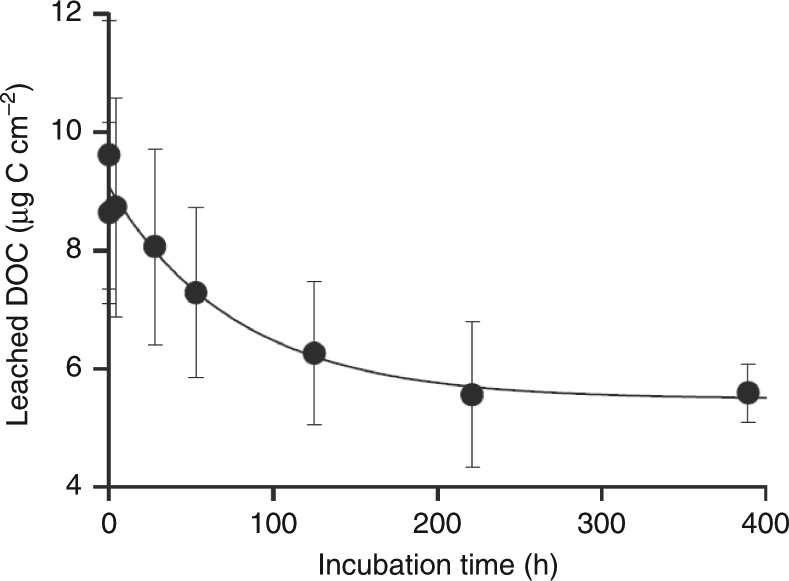
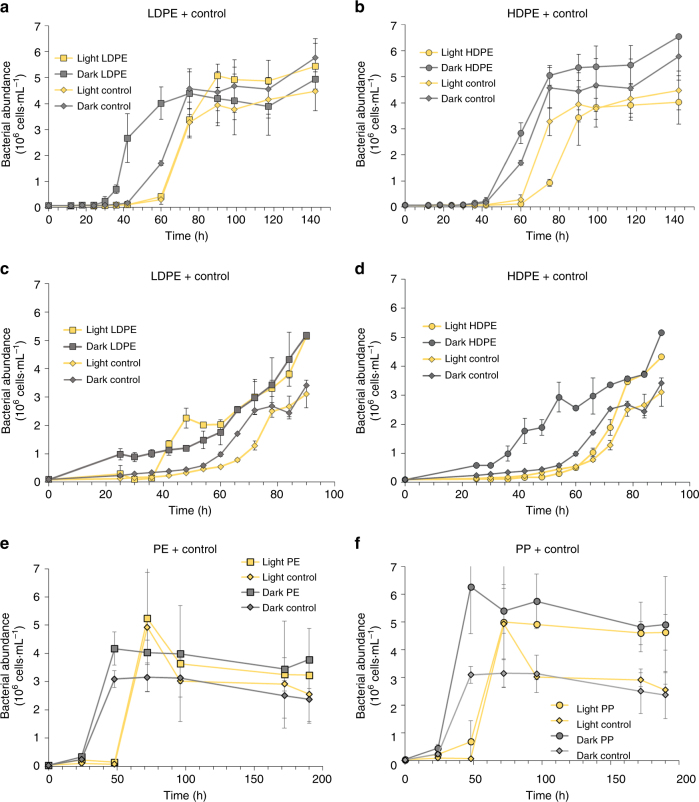
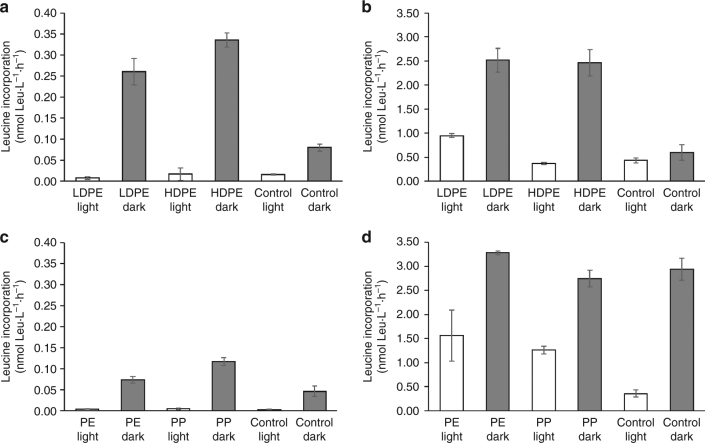
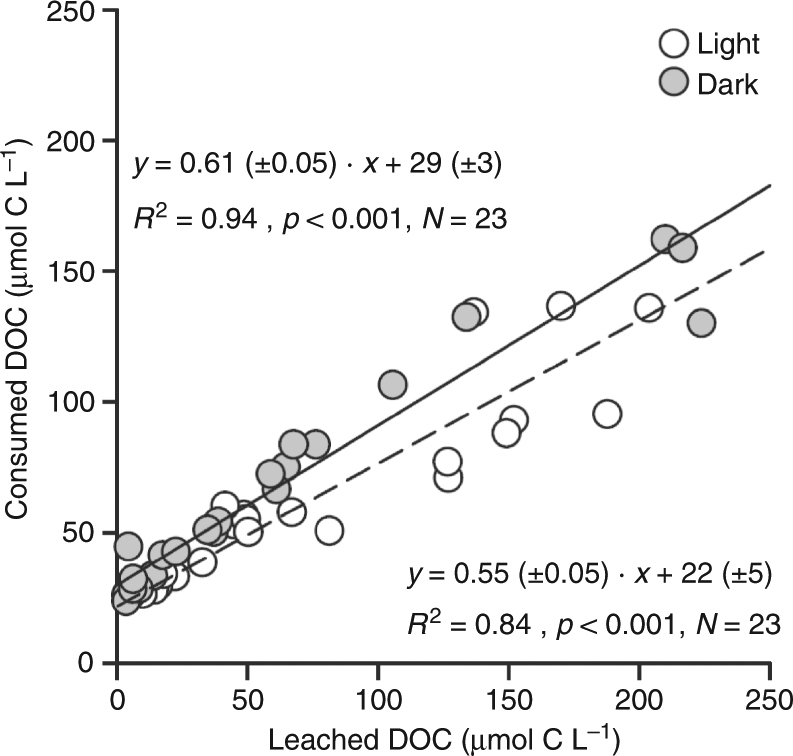
Verification
Claims the paper makes
The claims and statistics of this paper haven’t been checked yet.
Free: it reads the open-access text and checks the first 5 claims that cite a source we can check. Create a free account to check every claim.
Claims other papers make about this one
Each is checked against this paper’s own text: does it say what the citing paper says it does?
The source backs part of the claim, not all of it — or backs it for a different population, condition or comparison.
In the citing paper
“Moreover, UV-induced photodegradation results in the leaching of a plethora of lower molecular weight degradation products [3, 10, 23, 25, 66], which, at least to some degree, stimulate microbial activity [23, 25].”
From Polyethylene degradation and assimilation by the marine yeast Rhodotorula mucilaginosa (2023) · cites this paper as [23]
Experimental — accuracy not yet measuredThe source backs part of the claim, not all of it — or backs it for a different population, condition or comparison.
In the citing paper
“ii) limitations in bioavailable carbon i.e. Bacillus sp cells were able to degrade mainly photooxidation products released from the PE after UV treatment such as nanoplastics, oligomers, monomers and short-chain compounds that have functional groups making them easier to attack by microbial cells/enzymes”
From Mineralization of 13C-labeled polyethylene by marine Bacillus velezensis MT9 (2026) · cites this paper as Romera-Castillo et al., 2018
Experimental — accuracy not yet measuredThe source backs part of the claim, not all of it — or backs it for a different population, condition or comparison.
In the citing paper
“Photooxidation can be complete leading to the terminal oxidation end product CO 2 and in conjunction with fragmentation, it can then also lead to the formation of smaller molecules, ranging from hydrocarbon gases to shorterchain carbonyl compounds (e.g.straight chain or with aromaticity, depending on the parent polymer) 14,29,108 as well as nanoplastics.13,67,109”
From The fate of plastic in the ocean environment – a minireview (2021) · cites this paper as [29]
Experimental — accuracy not yet measuredThe source backs part of the claim, not all of it — or backs it for a different population, condition or comparison.
In the citing paper
“Assuming that the residence time of PMD at the ocean surface could be in the order of years, and/or that PMD might oscillate in the water column and periodically resurfaces, the preliminary results of Ward et al. (2019) and Zhu et al. (2020) show that photooxidation may indeed account for a substantial transformation of PMD into smaller chain scission products and nanoplastics.[29][30][31]”
From The fate of plastic in the ocean environment – a minireview (2021) · cites this paper as [29]
Experimental — accuracy not yet measuredThe source backs part of the claim, not all of it — or backs it for a different population, condition or comparison.
In the citing paper
“Incubation experiments with natural surface water microbial communities from the Mediterranean Sea 29 and an estuary of the subtropical NW Atlantic 31 showed that microbes were able to utilise at least some of the water-soluble fraction of daughter products generated during photooxidation of PE, PP, and PS.”
From The fate of plastic in the ocean environment – a minireview (2021) · cites this paper as [29]
Experimental — accuracy not yet measured
4 more claims about this paper
Create a free account to see every claim other papers make about this one.
Self-check
Percentages, sums and reported differences re-computed from the paper’s own numbers.
The self-check needs the paper’s full text.
Citations
Cites
Plastic waste inputs from land into the ocean
Jambeck, J. R., Geyer, R., Wilcox, C., Siegler, T. R., Perryman, M., Andrady, A., Narayan, R., & Law, K. L. (2015) · Science · doi:10.1126/science.1260352 · Cited by 13,163
Microplastics in the marine environment
Andrady, A. L. (2011) · Marine Pollution Bulletin · doi:10.1016/j.marpolbul.2011.05.030 · Cited by 8,105
Eriksen, M., Lebreton, L. C. M., Carson, H. S., Thiel, M., Moore, C. J., Borerro, J. C., Galgani, F., Ryan, P. G., & Reisser, J. (2014) · PLoS ONE · doi:10.1371/journal.pone.0111913 · Cited by 4,710
Accumulation of microplastic on shorelines woldwide: Sources and sinks
Browne, M. A., Crump, P., Niven, S. J., Teuten, E., Tonkin, A., Galloway, T., & Thompson, R. (2011) · Environmental Science & Technology · doi:10.1021/es201811s · Cited by 4,548
Plastic debris in the open ocean
Cózar, A., Echevarría, F., González-Gordillo, J. I., Irigoien, X., Úbeda, B., Hernández-León, S., Palma, Á. T., Navarro, S., García-de-Lomas, J., Ruiz, A., et al. (2014) · Proceedings of the National Academy of Sciences · doi:10.1073/pnas.1314705111 · Cited by 3,133
Auta, H. S., Emenike, C. U., & Fauziah, S. H. (2017) · Environment International · doi:10.1016/j.envint.2017.02.013 · Cited by 2,649
Pathways for degradation of plastic polymers floating in the marine environment
Gewert, B., Plassmann, M. M., & MacLeod, M. (2015) · Environmental Science: Processes & Impacts · doi:10.1039/c5em00207a · Cited by 2,168 · cited 1×
“The quantity of plastic waste entering the oceans is predicted to increase by up to one order of magnitude by the year 2025 (20) resulting in plastic-derived DOC of up to 236,000MT per year in the global ocean, with potential major consequences for marine microbes and the carbon cycling in the oceanic system.”
Belle, G. V., Fisher, L. D., Heagerty, P. J., & Lumley, T. (1958) · Wiley eBooks · doi:10.1002/0471602396.ch1 · Cited by 1,861
A global inventory of small floating plastic debris
van Sebille, E., Wilcox, C., Lebreton, L., Maximenko, N., Hardesty, B. D., van Franeker, J. A., Eriksen, M., Siegel, D., Galgani, F., & Law, K. L. (2015) · Environmental Research Letters · doi:10.1088/1748-9326/10/12/124006 · Cited by 1,713
Contributing to marine pollution by washing your face: Microplastics in facial cleansers
Fendall, L. S., & Sewell, M. A. (2009) · Marine Pollution Bulletin · doi:10.1016/j.marpolbul.2009.04.025 · Cited by 1,525
Research works printed but not linked: 2
- Hansell, D. A. & Carlson. C. A. Biogeochemistry of Dissolved Organic Matter 2nd edn, Ch. 2 (Academic Press, Oxford, 2015).
- Kirk JTO Optics of UV-B radiation in natural waters Arch. Hydrobiol. Beih. 1994 43 1 16
Cited by
Items 501–600 of 753
Crusot, M., Gardon, T., Richmond, T., Jézéquel, R., Barbier, E., & Gaertner‐Mazouni, N. (2024) · Journal of Hazardous Materials · doi:10.1016/j.jhazmat.2024.135647 · Cited by 8
Romero-Kutzner, V., Tarí, J., Herrera, A., Martínez, I., Bondyale-Juez, D. R., & Gómez, M. (2022) · Marine Pollution Bulletin · doi:10.1016/j.marpolbul.2021.113269 · Cited by 9
Kong, Z. H., Burdon, F. J., Truchy, A., Bundschuh, M., Futter, M. N., Hurley, R. R., & McKie, B. G. (2023) · Aquatic Sciences · doi:10.1007/s00027-023-00964-w · Cited by 10
“53a, National Institutes of Health, Bethesda, USA) (Schneider et al. 2012) to obtain the individual body lengths of chironomids.”
BackgroundMicrobial dark matter driven degradation of carbon fiber polymer compositesPreprint
Breister, A. M., IMAM, M. A., Zhou, Z., Anantharaman, K., & Prabhakar, P. (2020) · bioRxiv (Cold Spring Harbor Laboratory) · doi:10.1101/2020.04.05.024463 · Cited by 7
Lv, S., Li, Y., Yuan, Q., Lu, Y., Ye, Y.-L., Zhong, Y., Liu, R., Zhao, S., Xia, J., Zeng, L., et al. (2024) · Frontiers in Marine Science · doi:10.3389/fmars.2024.1479919 · Cited by 8
Pan, T., Guo, Z. H., Hu, S., Dong, D., Li, J., Yang, X., Dai, Y., Li, L., Wu, F., Wu, Z., et al. (2025) · The Science of The Total Environment · doi:10.1016/j.scitotenv.2025.178671 · Cited by 9
Senathirajah, K., Kandaiah, R., Panneerselvan, L., Young, K. R. L., & Thavamani, P. (2025) · Cambridge Prisms Plastics · doi:10.1017/plc.2025.6 · Cited by 7
Highly transparent, degradable, and robust bioplastic film for smart packaging
Chen, Y., Han, J., Gao, G.-H., Wang, J., Zhao, W., Yang, H., Zhao, Y., Wang, S., & Zhang, T. (2025) · Polymer · doi:10.1016/j.polymer.2025.128506 · Cited by 6
Cai, X., Dahlgren, R. A., Li, Y., Wang, D., Qu, L., Xie, X., Wang, X., & Guo, W. (2025) · Journal of Hazardous Materials · doi:10.1016/j.jhazmat.2025.139079 · Cited by 6
Cabeza-Vásquez, H., Reaño-Segundo, Y., Sánchez-Purihuamán, M., Quispe, A. P. B., Caro-Castro, J., Llanos, S. A. V., Aguilar, C. E. V., & Carreño-Farfán, C. (2025) · Applied and Environmental Soil Science · doi:10.1155/aess/9895980 · Cited by 11
Characteristics and Molecular Signatures of Microplastic-Derived Dissolved Organic Matter
Du, M., Tang, J., Zhao, X., Yang, X., & Geng, C. (2025) · Water Air & Soil Pollution · doi:10.1007/s11270-025-08470-5 · Cited by 8
“Through laboratory experiments with polyethylene and poly-propylene, Romera-Castillo et al. (2018) highlighted an underexplored issue: marine plastic debris may contribute approximately 23,600 metric tons of dissolved organic carbon (DOC) annually, accounting for 10% of surface marine DOM.”
Tong, J., He, S., Huang, X., Li, X., Nie, X., Li, Z., Li, Z., & Xiong, W. (2025) · Journal of Contaminant Hydrology · doi:10.1016/j.jconhyd.2025.104699 · Cited by 9
Uncovering the Structural Space of Marine Dissolved Organic Matter
Schramm, T., Kalinski, J. J., Arini, G. S., Silva, R., & Petras, D. (2025) · Annual Review of Marine Science · doi:10.1146/annurev-marine-040224-031331 · Cited by 9
Plastic leachates promote marine protozoan growth
Du-Carrée, J. L., Romera‐Castillo, C., & Almeda, R. (2025) · The ISME Journal · doi:10.1093/ismejo/wraf195 · Cited by 6
Self-citationFang, S., Liu, S., Huang, J., Huang, Y., Chen, C., Ruan, Q., Guo, P., & Ouyang, G. (2025) · Advanced Science · doi:10.1002/advs.202514529 · Cited by 13
Kumar, T. S., Baghel, R., & Eswari, S. (2025) · Water Air & Soil Pollution · doi:10.1007/s11270-025-08932-w · Cited by 6
“However, limited information regarding plastic-dissolving enzymes’ biochemical properties and structural characteristics is available Egea et al., 2024; Romera-Castillo et al., 2018).”
Zheng, Z., Lyu, H., Li, Z., Jingchun, T. A. N. G., & He, J. (2026) · Journal of Hazardous Materials · doi:10.1016/j.jhazmat.2026.141133 · Cited by 7
Organic Carbon Concentrations in High- and Low-Productivity Areas of the Sulu Sea
Ferrera, C. M., Jacinto, G. S., Chen, C. A., & Lui, H. (2018) · Sustainability · doi:10.3390/su10061867 · Cited by 6
“On the other hand, the recently identified leaching of DOC from plastics in the oceans [69] may have unaccounted effects to the marine organic carbon cycle.”
BackgroundRomera‐Castillo, C., Birnstiel, S., & Sebastián, M. (2024) · Environmental Microbiology Reports · doi:10.1111/1758-2229.13305 · Cited by 6
“Plastic leachates have been found to fuel marine bacterial metabolism, which means they can be degraded (Romera-Castillo et al., 2018; Romera-Castillo, Birnstiel, et al., 2022; Romera-Castillo, Mallenco-Fornies, et al., 2022; Zhu et al., 2020).”
BackgroundSelf-citationCheng, X., Wu, J., Yu, B., Zhang, M., Miao, M., Mackey, H. R., & Li, Y. (2024) · Chemosphere · doi:10.1016/j.chemosphere.2024.142761 · Cited by 6
Krelling, A. P., Possatto, F. E., Maia, G. R. A., Araki, K., Olivieri, G. B. R., & Nogueira, H. P. (2025) · Water Air & Soil Pollution · doi:10.1007/s11270-025-07899-y · Cited by 7
RETRACTED: Cytotoxicity and genotoxicity evaluation of polystyrene microplastics on Vicia faba roots
Lu, Y., Ma, Q., Xu, X., Yu, Z., Guo, T., & Wu, Y. (2021) · Environmental Pollution · doi:10.1016/j.envpol.2021.117821 · Cited by 7
RetractedAdvances of lab-scale analytical methods for solidification/stabilization technologies
Yang, J., & Hedin, N. (2022) · Elsevier eBooks · doi:10.1016/b978-0-12-824004-5.00006-2 · Cited by 10
Exploring Methods for Understanding and Quantifying Plastic-Derived Dissolved Organic Matter
Zhu, L., Gaggelli, N., Boldrini, A., Stubbins, A., & Loiselle, S. (2023) · Oceanography · doi:10.5670/oceanog.2023.s1.14 · Cited by 6
Hossain, M. (2025) · SSRN Electronic Journal · doi:10.2139/ssrn.5095223 · Cited by 7
Yi, M., Liu, J., Shang, E., & Li, Y. (2025) · Frontiers of Environmental Science & Engineering · doi:10.1007/s11783-025-1992-9 · Cited by 5
“DOC is known to be a byproduct during the fragmentation and oxidation of MPs in freshwater and marine sediments (Romera-Castillo et al., 2018).”
Li, G., Cooledge, E. C., Chadwick, D. R., & Jones, D. M. (2026) · Environmental Research · doi:10.1016/j.envres.2026.123737 · Cited by 6
Tang, B., Feng, Q., He, Q., Li, J., & Li, H. (2026) · Journal of Hazardous Materials · doi:10.1016/j.jhazmat.2026.141341 · Cited by 7
Zhang, S., Chang, X., Wu, F., Lu, Y., An, S., Zhou, Y., Feng, M., & Du, Y. (2026) · Water Research · doi:10.1016/j.watres.2026.125713 · Cited by 5
Zafar, R., Lee, Y. K., Bibi, M., & Hur, J. (2026) · Critical Reviews in Environmental Science and Technology · doi:10.1080/10643389.2026.2653192 · Cited by 6
“High ionic strength or salinity in industrial or coastal influents can further enhance surface oxidation, hydrolysis, and enzymatic weakening of polymer backbones, facilitating DOM release (Chen, Wan, Li, et al., 2023; Jacquin et al., 2019; Romera-Castillo et al., 2018; Yin et al., 2025).”
Microbial Ecology in Microplastics: Impact on Aquatic Ecosystems and Bioremediation
Dey, S., Rout, A. K., Ghosh, K., Jana, A. K., & Behera, B. K. (2024) · Springer eBooks · doi:10.1007/978-981-97-3165-7_6 · Cited by 8
Kumar, B. S. K., Chari, N. V. H. K., Reddy, K. K., Cheriyan, E., Sherin, C. K., Rao, D. B., Elangovan, S. S., Reddy, B. B., & Gupta, G. V. M. (2024) · Environmental Pollution · doi:10.1016/j.envpol.2024.124948 · Cited by 7
Miao, L., Jin, Z., Ci, H., Adyel, T. M., Deng, X., You, G., Xu, Y., Wu, J. F., Yao, Y., Kong, M., et al. (2024) · Journal of Hazardous Materials · doi:10.1016/j.jhazmat.2024.136874 · Cited by 7
UV-B degradation affects nanoplastic toxicity and leads to release of small toxic substances
Ekvall, M. T., Svensson, R., Martínez, J. G., Krais, A. M., Bernfur, K., Leiding, T., Lundqvist, M., & Cedervall, T. (2024) · Environmental Science Nano · doi:10.1039/d4en00795f · Cited by 5
Wang, M., Ma, L., Zhang, D., Yang, F., Yang, X., Wang, B., Li, X., Ge, C., Luo, J., & Zhang, Y. (2025) · Bioresource Technology · doi:10.1016/j.biortech.2025.132677 · Cited by 6
Purganan, D. J. E., Ayalde, M. J. L., & Onda, D. F. L. (2025) · Marine Biology · doi:10.1007/s00227-025-04750-0 · Cited by 6
“As a consequence of exposure to seawater and UV, plastics may leach dissolved organic carbon (DOC) as shown by Romera-Castillo et al. (2018 ) through incubation assays, where some bacteria utilized the DOC leachates to grow.”
Li, J., Li, X., Luo, J., Huang, P., Ge, C., Yang, X., & Wang, H. (2024) · The Science of The Total Environment · doi:10.1016/j.scitotenv.2024.173516 · Cited by 6
Cayabo, G. D. B., Lim, Y. C., Albarico, F. P. J. B., Chen, C., Cheng, J.-W., Xu, Z.-F., Chen, C.-W., & Dong, C. (2024) · Regional Studies in Marine Science · doi:10.1016/j.rsma.2024.103614 · Cited by 11
Basak, S., Dixit, A. K., Dey, R. K., & Babu, G. (2025) · Marine Chemistry · doi:10.1016/j.marchem.2025.104553 · Cited by 4
Zhang, X., Zhang, T., Zhang, J., Ren, H., Zhang, H., Zhang, J., Guo, Y., Xia, T., Liu, P., & Jia, H. (2025) · Journal of Hazardous Materials · doi:10.1016/j.jhazmat.2025.140511 · Cited by 4
Zhang, L., Wang, Y., Li, X., Xu, Z., & Chen, K. (2025) · Journal of Hazardous Materials · doi:10.1016/j.jhazmat.2025.140579 · Cited by 5
Gökdağ, K., Pekmez, T., Akca, G., Korkmaz, M., Pacheco, J. P., Kankılıç, G. B., Dede, C., Özkan, K., Beklioğlu, M., Jeppesen, E., et al. (2025) · Hydrobiologia · doi:10.1007/s10750-025-05844-y · Cited by 8
“In addition, the role of MPs in aquatic ecosystems as a new substrate for bacterial growth impacts the metabolism as plastic leaching can provide energy for bacterial growth (Romera-Castillo et al., 2018).”
Liao, H., Ran, T., Zhao, Y., & Zheng, C. (2025) · The Science of The Total Environment · doi:10.1016/j.scitotenv.2025.179449 · Cited by 4
Warming alters microplastic-induced soil carbon priming across diverse terrestrial ecosystems
Lu, C., Zhang, Y., Sun, A., Han, R., & Chen, Q. (2025) · Geoderma · doi:10.1016/j.geoderma.2025.117414 · Cited by 4
Yan, F., Wang, Z., Zhang, C. S., Zhang, L., Wang, Z., Che, C., Xia, Y., & Zhang, J. (2025) · Water Research · doi:10.1016/j.watres.2025.124743 · Cited by 5
Schmidt, P. M., Tantawi, O., Santizo, K. Y., Sipe, J. M., Wiesner, M. R., Harrison, S., Svendsen, C., Plata, D. L., & Wohlleben, W. (2026) · Environmental Science & Technology · doi:10.1021/acs.est.5c17195 · Cited by 6
Zhou, Y., Zeng, Y., Law, J. C.-F., Lei, Y., Yang, X., & Leung, K. S. (2026) · Environmental Science & Technology · doi:10.1021/acs.est.6c01544 · Cited by 4
Microbial attachment studies on “plastic-specific” microorganisms
Pant, S., & Valapa, R. B. (2023) · Elsevier eBooks · doi:10.1016/b978-0-323-89858-4.00009-9 · Cited by 9
Specialization of Alcanivorax species in colonizing diverse plastics
Mattelin, V., Rombouts, A., Landuyt, J. V., Scoma, A., & Boon, N. (2024) · Environmental Microbiology · doi:10.1111/1462-2920.16698 · Cited by 4
Benthic ecosystem function responses to plasticizer content in polyester and PVC
Bartl, I., Chen, Y., Rindelaub, J. D., Ladewig, S. M., & Thrush, S. F. (2025) · Marine Pollution Bulletin · doi:10.1016/j.marpolbul.2025.117713 · Cited by 4
Conversion of Waste Into Different By-Products of Economic Value in India
Wani, K. A., Dar, A. A., Gull, A., & Ariana, L. (2019) · Practice, progress, and proficiency in sustainability · doi:10.4018/978-1-7998-0031-6.ch014 · Cited by 6
Wang, X., Zhao, H., Li, D., Tan, Z. T. Z., & Hou, J. (2023) · Journal of Biobased Materials and Bioenergy · doi:10.1166/jbmb.2023.2294 · Cited by 4
Potentials and Challenges of Existing Plastic Pollutant Biodegradation Using Bacteria in Jakarta Bay
Nurdhy, S. N. (2020) · Proceeding International Conference on Science and Engineering · doi:10.14421/icse.v3.549 · Cited by 5
“It was shown that in seawater, plastic releases dissolved organic carbon, stimulating the activity of heterotrophic microbes (Romera-Castillo et al. 2018).”
BackgroundLee, J. J., Park, J., Kim, B., & Lee, S. (2019) · Journal of Environmental Sciences · doi:10.1016/j.jes.2019.11.023 · Cited by 4
Thompson, C. L., Alberti, M., Barve, S., Battistuzzi, F. U., Drake, J. L., Goncalves, G. C., Govaert, L., Partridge, C., & Yang, Y. J. (2021) · Integrative and Comparative Biology · doi:10.1093/icb/icab068 · Cited by 7
Current Research on Microbe-Plastic Interactions in the Marine EnvironmentPreprint
Latva, M., Zadjelovic, V., & Wright, R. J. (2021) · Preprints.org · doi:10.20944/preprints202107.0273.v1 · Cited by 9
Mineralization of 13C-labeled polyethylene by marine Bacillus velezensis MT9
Bajo, K., Kolvenbach, B., Corvini, P. F.-X., Fava, F., & Raddadi, N. (2026) · International Biodeterioration & Biodegradation · doi:10.1016/j.ibiod.2026.106294 · Cited by 4
Huang, Y., Feng, J., Wang, X., Zhang, Y., & Zhang, S. (2025) · Journal of Hazardous Materials · doi:10.1016/j.jhazmat.2025.137727 · Cited by 2
Maday, S. D. M., Handley, K. M., Northcott, G. L., Kingsbury, J. M., Smith, D. A., Pantos, O., & Lear, G. (2025) · FEMS Microbiology Ecology · doi:10.1093/femsec/fiaf087 · Cited by 3
Ma, X., Wang, X., Cui, Z., Zhang, Y., & Zhou, S. (2025) · Gondwana Research · doi:10.1016/j.gr.2025.10.023 · Cited by 4
Zhang, Q., Ma, J., Zhao, Q., Ma, Y., Ma, L. M., Jiang, X., Xin, Z., Huang, T., & Wang, Y. (2025) · Journal of Environmental Management · doi:10.1016/j.jenvman.2025.128122 · Cited by 3
Patterson, A., Wiman, C., Muñoz, S. E., Tuttle, E. E., Zhu, L., Law, K. L., & Stubbins, A. (2025) · Environmental Science & Technology · doi:10.1021/acs.est.5c07315 · Cited by 6
“Dark DOC accumulation has been observed for postcon-sumer PE and PP microplastics 25 and for preweathered microplastics collected from both beaches 46 and North Pacific Gyre surface waters.”
InfluentialRamakrishnan, P., Jalaludeen, A. M., Thajuddin, N., Rajendran, S., Vinayagam, S., Rajamohan, R., & Sundaram, T. (2025) · TrAC Trends in Analytical Chemistry · doi:10.1016/j.trac.2025.118601 · Cited by 3
Microplastics disrupt the nitrogen-fixing bacterial community with consequences for plant growth
Zhao, T., Lozano, Y. M., Li, G., Lammel, D. R., Quensen, J. F., & Rillig, M. C. (2026) · Applied Soil Ecology · doi:10.1016/j.apsoil.2025.106772 · Cited by 10
Sun, Z., Yao, X., Sang, D., Zhang, C., Zhang, J., Lü, W., & Ren, H. (2026) · Environmental Research · doi:10.1016/j.envres.2026.124300 · Cited by 4
You, H., Qian, Q., Liu, M., Luo, T., Huang, Y., Zhou, Y., Wang, J., Wang, C., & Cai, M. (2026) · Journal of Cleaner Production · doi:10.1016/j.jclepro.2026.148555 · Cited by 4
Microplastic: A New Habitat for Biofilm Communities
Schmitt‐Jansen, M., Lips, S., Schäfer, H., & Rummel, C. D. (2022) · Springer eBooks · doi:10.1007/978-3-030-39041-9_22 · Cited by 4
Carlsen, E. C. L., Hjelset, S., Gomes, T., Igartua, A., Sørensen, L., Booth, A. M., Hylland, K., & Eiler, A. (2024) · Ecotoxicology and Environmental Safety · doi:10.1016/j.ecoenv.2024.116134 · Cited by 3
Mora‐Gómez, J., Jacotot, A., Freslon, N., Zeineb, H. B., Charron, M., Joulian, C., & Milbeau, C. L. (2025) · The Science of The Total Environment · doi:10.1016/j.scitotenv.2025.179341 · Cited by 3
Spatiotemporal hotspots of potential microbial risk in shower systems
Ren, A., Yao, M., Zhang, Y., Chen, L., Li, X., Yan, W., van der Meer, W., Rose, J. B., & Liu, G. (2025) · Water Research · doi:10.1016/j.watres.2025.124028 · Cited by 4
Buoyant polyethylene rope fragments may enhance pathogenic bacteria dispersion in aquaculture water
Liang, X., Li, J., Wei, X., Ma, Y., Fu, P., Li, H., Dong, X., Ye, Y., & Li, J. (2025) · Environmental Chemistry and Ecotoxicology · doi:10.1016/j.enceco.2025.09.007 · Cited by 4
Xiong, M., Zhou, X., Guo, A., & Zhang, J. (2025) · Applied Soil Ecology · doi:10.1016/j.apsoil.2025.106445 · Cited by 3
A review on microbial-biofilm mediated mechanisms in marine microplastics degradation
Chandra, S., Lahiri, D., Nag, M., Bhattacharya, D., Pandit, C., Pandit, S., Sharma, K. R., Rajeev, M., Gill, H. S., & Rustagi, S. (2025) · Antonie van Leeuwenhoek · doi:10.1007/s10482-025-02163-z · Cited by 3
“The study has also demonstrated that the organic compound being released into the oceans by the degradation of hydrocarbons has resulted in the alteration of the various biogeochemical fluxes and the microbial communities existing within the marine environment (Romera-Castillo et al. 2018).”
The Ecotoxicological Effects of Microplastics on Primary Producers in the Marine Environment
Islam, M., Hasan, M., Majudmar, B. C., & Paul, S. I. (2020) · Journal of Fisheries Science · doi:10.30564/jfsr.v2i2.1906 · Cited by 3
“But, in the higher plastic concentrated area leaching DOC and their microbial activity could be significant in the near shore area or subtropical gyres [48] .”
InfluentialSilva, L. C. S., Camani, P. H., de Lima, E. C., & Rosa, D. D. S. (2022) · Waste and Biomass Valorization · doi:10.1007/s12649-021-01642-4 · Cited by 5
“The increase of carbon release in the soil occurred due to the substrates fragmentation (starch, glycerol, and other compounds) by the action of the microorganisms, which resulted in the biodegradation of the substrates and probably caused the formation of dissolved organic carbon (DOC), acting as a nutrient for the g…”
BackgroundMicroplastics in the Land and Soil
Ramkumar, M. (2022) · Springer eBooks · doi:10.1007/978-3-031-10729-0_7 · Cited by 3
Organic additives in marine plastics: occurrence, leaching, impacts, and regulatory aspects
Castro-Jiménez, J., & Tornero, V. (2023) · Elsevier eBooks · doi:10.1016/b978-0-323-90297-7.00002-0 · Cited by 3
Biodegradation and Bioremediation Efficiency of Mangrove-Associated Actinobacteria
Soni, N., Gupta, P., Kumar, S. D., & Velramar, B. (2025) · Springer eBooks · doi:10.1007/978-981-96-2602-1_11 · Cited by 4
Bos, R. P., Kaul, D., Zettler, E., Hoffman, J. M., Dupont, C. L., Amaral‐Zettler, L., & Mincer, T. J. (2022) · bioRxiv (Cold Spring Harbor Laboratory) · doi:10.1101/2022.01.23.477364 · Cited by 3
Graves, S. D., Chen, S., McNamee, R. A., Rodrigues, T. H., Hayden, B., Rochman, C. M., Provencher, J. F., Rennie, M. D., Layton‐Matthews, D., Leybourne, M. I., et al. (2025) · FACETS · doi:10.1139/facets-2024-0108 · Cited by 3
Anoxygenic photoautotrophy driven by humus and microplastics in a photosynthetic bacterium
Li, Y., Qu, K., Yang, J., Wang, S., & Yan, Z. (2025) · ISME Communications · doi:10.1093/ismeco/ycaf067 · Cited by 2
“…of soil and sediment, thereby indirectly affecting microbial activities and carbon cycling [17–19]; (ii) certain microplastics and the dissolved organic matter they release can be metabolized by microorganisms, directly or indirectly influencing carbon cycling and CO 2 emissions [20, 21].”
Ma, J., Niu, X., & Wang, G. (2025) · Process Safety and Environmental Protection · doi:10.1016/j.psep.2025.107202 · Cited by 2
On the interaction of buoyant plastic debris and sea-surface layer organisms
VishnuRadhan, R., Das, S., Raj, S. J., Brereton, A., & Galgani, L. (2025) · Anthropocene Coasts · doi:10.1007/s44218-025-00075-z · Cited by 2
Biodegradation of sachet water polyethylene plastic waste using bacteria isolates
Cecilia, O.-K., Asitok, A. D., Edet, U. O., Ekpenyong, M. G., & Antai, S. P. (2025) · Antonie van Leeuwenhoek · doi:10.1007/s10482-025-02202-9 · Cited by 3
“The rate of biodegradation of MPs is very slow (Da Costa et al. 2018), they contribute to the carbon pool (Romera-Castillo et al. 2018) and the emission of greenhouse gases (Royer et al. 2018).”
Egea, L. G., Jiménez‐Ramos, R., D’Agostino, V. C., Degrati, M., Giacomino, S., Kim, G., Han, H., & Loizaga, R. (2025) · Marine Environmental Research · doi:10.1016/j.marenvres.2025.107778 · Cited by 3
Unravelling the molecular fingerprint of plastic accumulation on blue carbon sediment
Noman, M. A., Trevathan‐Tackett, S. M., Macreadie, P. I., Connolly, R. M., Chen, Z. L., He, D., & Adyel, T. M. (2025) · Environmental Pollution · doi:10.1016/j.envpol.2025.127589 · Cited by 2
Effects of microplastic on soil ecosystems: a perspective from functional genes
Wang, H., Ma, L., Xie, L., Xie, T., Zhang, S., Cai, T., & Wang, L. (2026) · Environmental and Biogeochemical Processes · doi:10.48130/ebp-0026-0003 · Cited by 2
In situ CO2 capture: a general strategy for valorizing waste polycarbonate into high-value chemicals
Zhang, M., Zhang, S., Zhu, S., Zhang, S., Wu, Z., Wu, W., & Mei, Q. (2026) · National Science Review · doi:10.1093/nsr/nwag153 · Cited by 4
Xia, R., Balcázar, J. L., Liao, J., Yin, X., Chen, H., Alvarez, P. J. J., & Yu, P. (2026) · Water Research · doi:10.1016/j.watres.2026.125750 · Cited by 2
Luo, M., Fan, J., Wang, X., Ge, Y., Feng, D., Cao, S., Wang, J., Deng, H., Luo, J., Zhao, Y., et al. (2026) · Environmental Pollution · doi:10.1016/j.envpol.2026.128089 · Cited by 2
Mazzoli, C., Pittura, L., d’Errico, G., Iezzi, F., Fattorini, D., Carlo, M. D., Nardi, A., Mezzelani, M., Benedetti, M., Gorbi, S., et al. (2026) · Journal of Hazardous Materials · doi:10.1016/j.jhazmat.2026.142043 · Cited by 4
Li, X., Feng, S., Gong, X., Guo, Y., Lü, Q., Guo, H., Deng, Q., Wang, Z., Qi, Z., & Zhang, Y. (2026) · Field Crops Research · doi:10.1016/j.fcr.2026.110499 · Cited by 2
Liu, K., Liu, C., Zhang, W., Zong, C., Sun, K., Guo, W., Zhang, Y., Luo, Y., Gui, H., Wang, Z., et al. (2026) · Journal of Hazardous Materials · doi:10.1016/j.jhazmat.2026.142392 · Cited by 2
Yang, R., Duan, J., Song, J., Li, L., Ren, X., Yang, C., Xiang, Y., Zhang, H., & Chen, M. (2026) · Water Research · doi:10.1016/j.watres.2026.126251 · Cited by 2
Luo, Y., Gu, J., Wu, X. N., Wei, X., Tian, X., & Ma, Y. (2026) · Marine Pollution Bulletin · doi:10.1016/j.marpolbul.2026.120065 · Cited by 2
Marine plastics: what’s wrong with them?
Bonanno, G. (2022) · Elsevier eBooks · doi:10.1016/b978-0-12-822471-7.00001-8 · Cited by 5
Microplastics - ecosystem pollutants
Mollova, E., Ivanova, E. D., Turmanova, S., & Dimitrov, A. (2023) · Journal of the Serbian Chemical Society · doi:10.2298/jsc230516073m · Cited by 2
Rifhat, R., & Gao, P. (2024) · International Journal of Innovative Science and Research Technology (IJISRT) · doi:10.38124/ijisrt/ijisrt24mar2137 · Cited by 3
Soil carbon cycling mediated by microplastics: Formation, mineralization, and sequestration
Jia, S. H. I., Wang, X., & Jie, W. A. N. G. (2024) · Scientia Sinica Technologica · doi:10.1360/sst-2024-0057 · Cited by 3
Weak effects of conventional and biodegradable microplastics on marine microbial communities
Lora, U., Schenone, L., Forn, I., Peters, F., Piiparinen, J., Kaartokallio, H., Lehtiniemi, M., & Sala, M. M. (2024) · Frontiers in Marine Science · doi:10.3389/fmars.2024.1502825 · Cited by 4
Metadata
- Authors
- Romera-Castillo, C., Pinto, M., Langer, T. M., Álvarez-Salgado, X. A., & Herndl, G. J.
- Affiliations
- University of Vienna (AT)
- Corresponding author
- Herndl, Gerhard J.
- Venue
- Nature Communications
- Published
- 2018-04-12
- Volume
- 9
- Issue
- 1
- Pages
- 1430-1430
- ISSN
- 2041-1723 (ISSN-L)
- PMC
- PMC5897397
- OpenAlex
- W2797295663
- Semantic Scholar
- 660d5977f4d18ae008d461caf32858ac665fe17b
- Cited by
- 753
- References
- 29
- Citations by year
- 2026: 114 · 2025: 126 · 2024: 125 · 2023: 108 · 2022: 110 · 2021: 69 · 2020: 60 · 2019: 29 · 2018: 10
- FWCI
- 15.74
- Type
- journal article
- Language
- en
- Open access
- gold
- doi.org
- Licence
- cc-by
- creativecommons.org/licenses/by/4.0 (tdm)
- creativecommons.org/licenses/by/4.0 (vor)
- Locations
- Nature Communications (publishedVersion, cc-by)
- Flanders Marine Institute (Flanders Marine Institute) (publishedVersion, other-oa)
- Europe PMC (PubMed Central) (publishedVersion, other-oa)
- PubMed Central (publishedVersion, cc-by)
- PubMed (publishedVersion)
- Flanders Marine Institute (Flanders Marine Institute) (submittedVersion, other-oa)
- Phaidra (Universität Wien) (submittedVersion, cc-by-nc-nd)
- RePEc: Research Papers in Economics (submittedVersion)
- DIGITAL.CSIC (Spanish National Research Council (CSIC)) (submittedVersion, cc-by)
- DIGITAL.CSIC (Spanish National Research Council (CSIC)) (submittedVersion)
- DOAJ (DOAJ: Directory of Open Access Journals) (submittedVersion, cc-by-sa)
- DOAJ (DOAJ: Directory of Open Access Journals) (submittedVersion)
- Funders
- Austrian Science Fund (P28781, Z194)
- Topics
- Physical Sciences › Environmental Science › Pollution › Microplastics and Plastic Pollution
- Physical Sciences › Earth and Planetary Sciences › Oceanography › Marine Plankton and Biogeochemistry
- Physical Sciences › Environmental Science › Ecology › Microbial Community Ecology and Physiology
- Keywords
- plastic pollution, dissolved organic carbon, marine plastics, microbial carbon utilization, DOC leaching, marine plastic debris
- MeSH terms
- Bacteria, Carbon, Environmental Pollution, Light, Oceans and Seas, Plastics, Seawater, Solar Energy, Solubility, Food Chain, Heterotrophic Processes
About these checks
Registry, retraction, Cites and statistics results are computed, not judged, with one exception: a printed reference that no index lists is read once by a model before it counts as a citation error. Claims are extracted by a model and kept only when their quote appears verbatim in the text; each cited source is then checked, with a model’s help, for whether it says what the claim relies on. Those verdicts can be wrong — read the claim’s quote and the cited source before relying on one.
Statistics and arithmetic are recomputed, not judged.
Confidence bands are shown only for fields calibrated on our annotated test set. None is calibrated yet, so no band is shown.
What counts as a claim ›How we measure confidence ›How we check this ›
Are you an author, or do you see a problem with this page? Request a review
Data sources
Bibliographic data: Semantic Scholar, OpenAlex, Crossref.
Contains information from the Semantic Scholar Academic Graph Datasets, made available under the ODC Attribution License (ODC-BY 1.0).
Semantic Scholar’s data is described in: Kinney, R., et al. (2023). The Semantic Scholar Open Data Platform. arXiv:2301.10140.
