

In vivo base editing of post-mitotic sensory cells
Open accessThe DOI matches its Crossref record; 60 of the 60 references it cites were found in a registry or an index.
Abstract
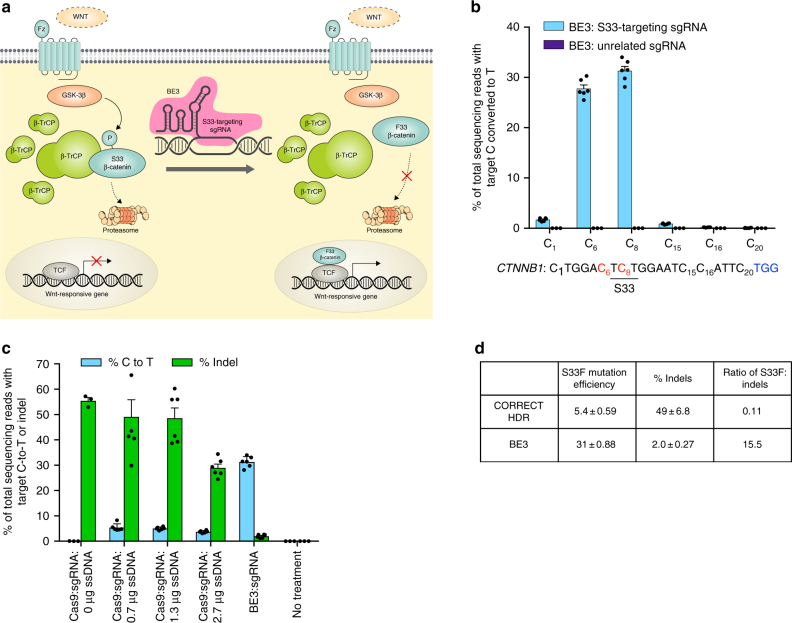
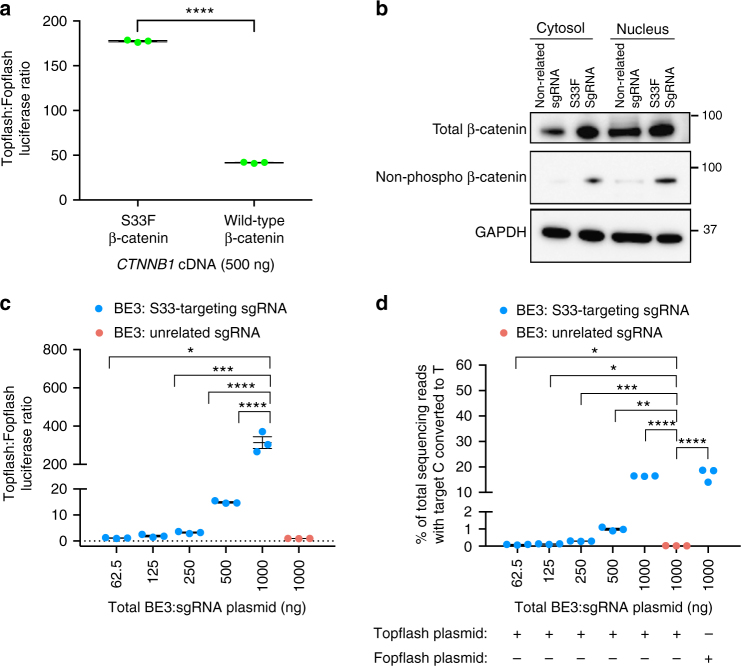
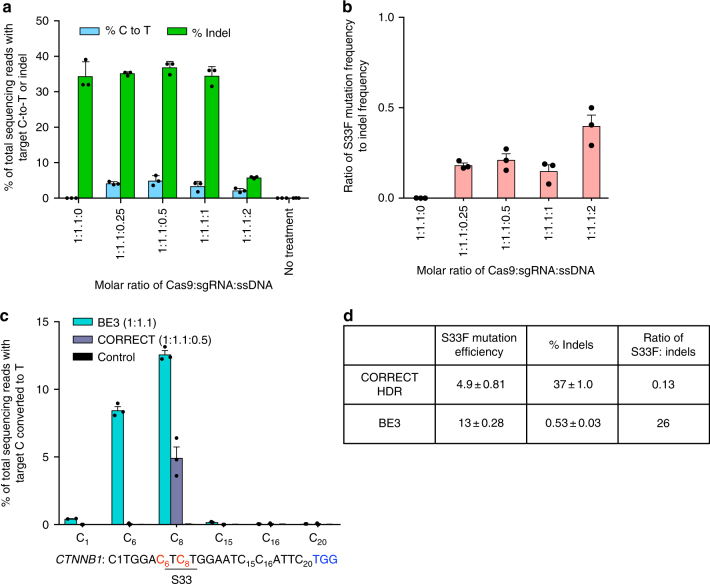
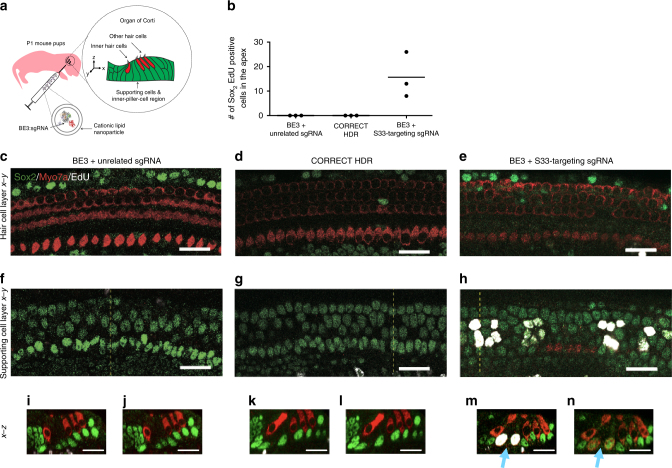
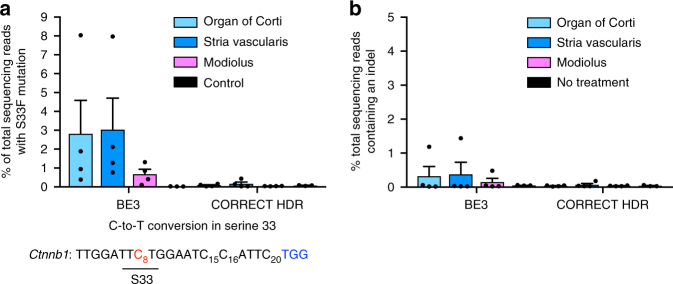
Programmable nucleases can introduce precise changes to genomic DNA through homology-directed repair (HDR). Unfortunately, HDR is largely restricted to mitotic cells, and is typically accompanied by an excess of stochastic insertions and deletions (indels). Here we present an in vivo base editing strategy that addresses these limitations. We use nuclease-free base editing to install a S33F mutation in β-catenin that blocks β-catenin phosphorylation, impedes β-catenin degradation, and upregulates Wnt signaling. In vitro, base editing installs the S33F mutation with a 200-fold higher editing:indel ratio than HDR. In post-mitotic cells in mouse inner ear, injection of base editor protein:RNA:lipid installs this mutation, resulting in Wnt activation that induces mitosis of cochlear supporting cells and cellular reprogramming. In contrast, injection of HDR agents does not induce Wnt upregulation. These results establish a strategy for modifying posttranslational states in signaling pathways, and an approach to precision editing in post-mitotic tissues.
Overview
The claims and statistics of this paper haven’t been checked yet.
Free: it reads the open-access text and checks the first 5 claims that cite a source we can check. Create a free account to check every claim.
Integrity signals
Registry
Cites
Statistics
Figures
Verification
Claims the paper makes
The claims and statistics of this paper haven’t been checked yet.
Free: it reads the open-access text and checks the first 5 claims that cite a source we can check. Create a free account to check every claim.
Claims other papers make about this one
Each is checked against this paper’s own text: does it say what the citing paper says it does?
The cited source says what the claim attributes to it.
In the citing paper
“For example, lipid-mediated nanoparticle (LNP) delivery has been used to transport CRISPR-Cas components in the form of either mRNA/sgRNA or preassembled RNPs into tissues 71-74 .”
From The promise and challenge of therapeutic genome editing (2020) · cites this paper as [73]
Self-check
Percentages, sums and reported differences re-computed from the paper’s own numbers.
The self-check needs the paper’s full text.
Citations
Cites
Genome engineering using the CRISPR-Cas9 system
Ran, F. A., Hsu, P. D., Wright, J., Agarwala, V., Scott, D. A., & Zhang, F. (2013) · Nature Protocols · doi:10.1038/nprot.2013.143 · Cited by 11,133
The new frontier of genome engineering with CRISPR-Cas9
Doudna, J. A., & Charpentier, E. (2014) · Science · doi:10.1126/science.1258096 · Cited by 7,062
Wnt/β-Catenin Signaling: Components, Mechanisms, and Diseases
MacDonald, B. T., Tamai, K., & He, X. (2009) · Developmental Cell · doi:10.1016/j.devcel.2009.06.016 · Cited by 5,583
Programmable editing of a target base in genomic DNA without double-stranded DNA cleavage
Komor, A. C., Kim, Y. B., Packer, M. S., Zuris, J. A., & Liu, D. R. (2016) · Nature · doi:10.1038/nature17946 · Cited by 5,437
Self-citationProgrammable base editing of A•T to G•C in genomic DNA without DNA cleavage
Gaudelli, N. M., Komor, A. C., Rees, H. A., Packer, M. S., Badran, A. H., Bryson, D. I., & Liu, D. R. (2017) · Nature · doi:10.1038/nature24644 · Cited by 4,184
Self-citationHigh-Frequency off-Target Mutagenesis Induced by CRISPR-Cas Nucleases in Human Cells
Fu, Y., Foden, J. A., Khayter, C., Maeder, M. L., Reyon, D., Joung, J. K., & Sander, J. D. (2013) · Nature Biotechnology · doi:10.1038/nbt.2623 · Cited by 3,292
Polakis, P. (2000) · Genes & Development · doi:10.1101/gad.14.15.1837 · Cited by 3,183
CRISPR-Cas systems for editing, regulating and targeting genomes
Sander, J. D., & Joung, J. K. (2014) · Nature Biotechnology · doi:10.1038/nbt.2842 · Cited by 3,153
GUIDE-seq enables genome-wide profiling of off-target cleavage by CRISPR-Cas nucleases
Tsai, S. Q., Zheng, Z., Nguyen, N. T., Liebers, M., Topkar, V. V., Thapar, V., Wyvekens, N., Khayter, C., Iafrate, A. J., Le, L. P., et al. (2015) · Nature Biotechnology · doi:10.1038/nbt.3117 · Cited by 2,268
Control of β-Catenin Phosphorylation/Degradation by a Dual-Kinase Mechanism
Liu, C., Li, Y., Semenov, M., Han, C., Baeg, G.-H., Tan, Y., Zhang, Z., Lin, X., & He, X. (2002) · Cell · doi:10.1016/s0092-8674(02)00685-2 · Cited by 2,069
Research works printed but not linked: 1
- Chadwick AC Wang X Musunuru K In vivo base editing of PCSK9 (proprotein convertase subtilisin/Kexin Type 9) as a therapeutic alternative to genome editing Arterioscler. Thromb. Vasc. Biol. 2017 37 1741 10.1161/ATVBAHA.117.309881 28751571 PMC5570639 · DOI · Paper page
Cited by
Items 101–200 of 240
Recent Therapeutic Progress and Future Perspectives for the Treatment of Hearing Loss
Lye, J., Delaney, D. S., Leith, F. K., Sardesai, V. S., McLenachan, S., Chen, F. K., Atlas, M. D., & Wong, E. Y. M. (2023) · Biomedicines · doi:10.3390/biomedicines11123347 · Cited by 30
Gene editing innovations and their applications in cardiomyopathy research
Kyriakopoulou, E., Monnikhof, T., & van Rooij, E. (2023) · Disease Models & Mechanisms · doi:10.1242/dmm.050088 · Cited by 29
RNA-Guided Adenosine Deaminases: Advances and Challenges for Therapeutic RNA Editing
Chen, G., Katrekar, D., & Mali, P. (2019) · Biochemistry · doi:10.1021/acs.biochem.9b00046 · Cited by 29
Evolution of CRISPR towards accurate and efficient mammal genome engineering
Ryu, S.-M., Hur, J. W., & Kim, K. (2019) · BMB Reports · doi:10.5483/bmbrep.2019.52.8.149 · Cited by 29
Base editing the mammalian genome
Schatoff, E. M., Zafra, M. P., & Dow, L. E. (2019) · Methods · doi:10.1016/j.ymeth.2019.02.022 · Cited by 28
CRISPR-derived genome editing therapies: Progress from bench to bedside
Rees, H. A., Minella, A. C., Burnett, C. A., Komor, A. C., & Gaudelli, N. M. (2021) · Molecular Therapy · doi:10.1016/j.ymthe.2021.09.027 · Cited by 26
Self-citationRecent Advances in CRISPR/Cas9-Based Genome Editing Tools for Cardiac Diseases
Schreurs, J., Sacchetto, C., Colpaert, R. M. W., Vitiello, L., Rampazzo, A., & Calore, M. (2021) · International Journal of Molecular Sciences · doi:10.3390/ijms222010985 · Cited by 26
Genome-wide specificity of dCpf1 cytidine base editors
Kim, D., Lim, K., Kim, J., & Kim, J. (2020) · Nature Communications · doi:10.1038/s41467-020-17889-9 · Cited by 26
Therapeutic application of the CRISPR system: current issues and new prospects
Lee, M., & Kim, S. (2019) · Human Genetics · doi:10.1007/s00439-019-02028-2 · Cited by 25
Gene Modulation with CRISPR-based Tools in Human iPSC-Cardiomyocytes
Han, J., & Entcheva, E. G. (2023) · Stem Cell Reviews and Reports · doi:10.1007/s12015-023-10506-4 · Cited by 25
Targeted genome editing for cotton improvement: prospects and challenges
Kumar, R., Das, J., Raghavendra, K. P., Kumar, M., Balasubramani, G., & Prasad, Y. G. (2024) · The Nucleus · doi:10.1007/s13237-024-00479-1 · Cited by 25
Chromatin remodelling complexes in cerebral cortex development and neurodevelopmental disorders
D’Souza, L., Channakkar, A. S., & Muralidharan, B. (2021) · Neurochemistry International · doi:10.1016/j.neuint.2021.105055 · Cited by 24
Saeed, S., Khan, S. U., Khan, W. U., Abdel-Maksoud, M. A., Mubarak, A., Aufy, M., Kiani, F. A., Wahab, A., Shah, M. W., & Saleem, M. H. (2023) · Current Problems in Cardiology · doi:10.1016/j.cpcardiol.2023.101692 · Cited by 24
Chromatin Alterations in Neurological Disorders and Strategies of (Epi)Genome Rescue
Janowski, M., Milewska, M., Zare, P., & Pękowska, A. (2021) · Pharmaceuticals · doi:10.3390/ph14080765 · Cited by 23
Rational design of base, sugar and backbone modifications improves ADAR-mediated RNA editing
Lu, G., Shivalila, C., Monian, P., Yu, H., Harding, I., Briem, S., Byrne, M., Faraone, A., Friend, S., Huth, O., et al. (2024) · Nucleic Acids Research · doi:10.1093/nar/gkae681 · Cited by 23
Shen, S., Wang, P., Wu, P.-H., Huang, P., Chi, T., Xu, W., & Xi, Y. (2024) · Molecular Therapy · doi:10.1016/j.ymthe.2024.09.008 · Cited by 22
Development of CRISPR technology for precise single-base genome editing: a brief review
Lee, H. K., Oh, Y., Hong, J., Lee, S. H., & Hur, J. K. (2021) · BMB Reports · doi:10.5483/bmbrep.2021.54.2.217 · Cited by 22
CRISPR genome engineering for retinal diseases
Kantor, A., McClements, M. E., Peddle, C. F., Fry, L. E., Salman, A., Cehajic-Kapetanovic, J., Xue, K., & MacLaren, R. E. (2021) · Progress in Molecular Biology and Translational Science · doi:10.1016/bs.pmbts.2021.01.024 · Cited by 19
Villiger, L., Schmidheini, L., Mathis, N., Rothgangl, T., Marquart, K. F., & Schwank, G. (2021) · Molecular Therapy — Nucleic Acids · doi:10.1016/j.omtn.2021.08.025 · Cited by 22
Carvalho, C., Lemos, L., Antas, P., & Seabra, M. C. (2023) · Frontiers in Ophthalmology · doi:10.3389/fopht.2023.1270561 · Cited by 21
Yuan, Y., Liu, S.-Z., Farhab, M., Lv, M.-Y., Zhang, T., & Cao, S.-X. (2024) · Functional & Integrative Genomics · doi:10.1007/s10142-024-01364-5 · Cited by 21
CRISPR/Cas gene editing in the human germline
Bekaert, B., Boel, A., Cosemans, G., Witte, L. D., Menten, B., & Heindryckx, B. (2022) · Seminars in Cell and Developmental Biology · doi:10.1016/j.semcdb.2022.03.012 · Cited by 21
Kalamakis, G., & Platt, R. J. (2023) · Neuron · doi:10.1016/j.neuron.2023.04.021 · Cited by 21
Roccio, M. (2020) · Stem Cells · doi:10.1002/stem.3315 · Cited by 21
Novel genome-editing-based approaches to treat motor neuron diseases: Promises and challenges
Miccio, A., Antoniou, P., Ciura, S., & Kabashi, E. (2021) · Molecular Therapy · doi:10.1016/j.ymthe.2021.04.003 · Cited by 21
A Cas9-mediated adenosine transient reporter enables enrichment of ABE-targeted cells
Brookhouser, N., Nguyen, T., Tekel, S. J., Standage-Beier, K., Wang, X., & Brafman, D. A. (2020) · BMC Biology · doi:10.1186/s12915-020-00929-7 · Cited by 19
Single‐nucleotide editing: From principle, optimization to application
Tang, J., Lee, T., & Sun, T. (2019) · Human Mutation · doi:10.1002/humu.23819 · Cited by 18
Rabinowitz, R., Abadi, S., Almog, S., & Offen, D. (2020) · Nucleic Acids Research · doi:10.1093/nar/gkaa215 · Cited by 18
Use of Customizable Nucleases for Gene Editing and Other Novel Applications
Reddy, P., Vilella, F., Belmonte, J. C. I., & Simón, C. (2020) · Genes · doi:10.3390/genes11090976 · Cited by 18
Development and Characterization of a Modular CRISPR and RNA Aptamer Mediated Base Editing System
Collantes, J. C., Tan, V. M., Xu, H., Ruiz-Urigüen, M., Alasadi, A., Guo, J., Tao, H., Su, C., Tyc, K. M., Selmi, T., et al. (2021) · The CRISPR Journal · doi:10.1089/crispr.2020.0035 · Cited by 18
Wu, F., He, W., Xiao, Y., Wu, Q., Zhang, Q., Zhang, T., Xu, L., & Pang, X. (2025) · Advanced Science · doi:10.1002/advs.202408397 · Cited by 17
Examination of the Cell Cycle Dependence of Cytosine and Adenine Base Editors
Burnett, C. A., Wong, A. T., Vasquez, C. A., McHugh, C. A., Yeo, G. W.-M., & Komor, A. C. (2022) · Frontiers in Genome Editing · doi:10.3389/fgeed.2022.923718 · Cited by 17
Cell and Gene Therapies for Mucopolysaccharidoses: Base Editing and Therapeutic Delivery to the CNS
Christensen, C. L., Ashmead, R. E., & Choy, F. Y. M. (2019) · Diseases · doi:10.3390/diseases7030047 · Cited by 16
Engineering CRISPR-Cas9 RNA–Protein Complexes for Improved Function and Delivery
Rouet, R., de Oñate, L., Li, J., Murthy, N., & Wilson, R. C. (2018) · The CRISPR Journal · doi:10.1089/crispr.2018.0037 · Cited by 16
Gene and Cellular Therapies for Leukodystrophies
Aerts‐Kaya, F., & van Til, N. P. (2023) · Pharmaceutics · doi:10.3390/pharmaceutics15112522 · Cited by 16
Current trends in gene therapy to treat inherited disorders of the brain
Matuszek, Ż., Brown, B. L., Yrigollen, C. M., Keiser, M. S., & Davidson, B. L. (2025) · Molecular Therapy · doi:10.1016/j.ymthe.2025.03.057 · Cited by 14
Mutant Allele-Specific CRISPR Disruption in DYT1 Dystonia Fibroblasts Restores Cell Function
Cruz, L., György, B., Cheah, P.-S., Kleinstiver, B. P., Eimer, W. A., Garcia, S. P., Sharma, N., Ozelius, L. J., Bragg, D. C., Joung, J. K., et al. (2020) · Molecular Therapy — Nucleic Acids · doi:10.1016/j.omtn.2020.05.009 · Cited by 14
Emerging therapies for human hearing loss
Ajay, E. A., Gunewardene, N., & Richardson, R. T. (2022) · Expert Opinion on Biological Therapy · doi:10.1080/14712598.2022.2072208 · Cited by 14
Billon, P., Nambiar, T. S., Hayward, S. B., Zafra, M. P., Schatoff, E. M., Oshima, K., Dunbar, A. J., Breinig, M., Park, Y. C., Ryu, H.-S., et al. (2020) · Cell Reports · doi:10.1016/j.celrep.2020.02.068 · Cited by 14
Applications of CRISPR technologies to the development of gene and cell therapy
Park, C.-S., Habib, O., Lee, Y.-S., & Hur, J. K. (2024) · BMB Reports · doi:10.5483/bmbrep.2023-0221 · Cited by 13
High-Throughput Identification, Modeling, and Analysis of Cancer Driver Genes In Vivo
Tang, Y. J., Shuldiner, E. G., Karmakar, S., & Winslow, M. M. (2023) · Cold Spring Harbor Perspectives in Medicine · doi:10.1101/cshperspect.a041382 · Cited by 14
Rewriting Human History and Empowering Indigenous Communities with Genome Editing Tools
Fox, K., Rallapalli, K. L., & Komor, A. C. (2020) · Genes · doi:10.3390/genes11010088 · Cited by 13
Teter, B., Campagna, J. J., Zhu, C., McAuley, G. E., Spilman, P. R., Kohn, D. B., & John, V. (2024) · bioRxiv (Cold Spring Harbor Laboratory) · doi:10.1101/2024.04.23.590784 · Cited by 13
Site-directed RNA editing (SDRE): Off-target effects and their countermeasures
Mao, S., Liu, Y., Huang, S., Huang, X., & Chi, T. (2019) · Journal of genetics and genomics/Journal of Genetics and Genomics · doi:10.1016/j.jgg.2019.11.005 · Cited by 12
Ranzau, B. L., & Komor, A. C. (2018) · Biochemistry · doi:10.1021/acs.biochem.8b00958 · Cited by 12
Deconstructing cancer with precision genome editing
Johnson, G. A., Gould, S. I., & Rivera, F. J. S. (2024) · Biochemical Society Transactions · doi:10.1042/bst20230984 · Cited by 11
Thakur, N. R., Ingle, K. P., Chavan, S., Jadhav, Y., Baraskar, S. S., Nikalje, G. C., Pandey, S., Papade, J. N., Dhare, S. L., Ceasar, S. A., et al. (2026) · Plant Stress · doi:10.1016/j.stress.2026.101322 · Cited by 10
Pendse, N. D., Lamas, V., Maeder, M. L., Pawlyk, B. S., Gloskowski, S. W., Pierce, E. A., Chen, Z., & Liu, Q. (2020) · bioRxiv (Cold Spring Harbor Laboratory) · doi:10.1101/2020.02.04.934240 · Cited by 10
Strategies and mechanisms of precision genome engineering: From gene editing to genome writing
Huang, K., Tian, J., Zhao, W., Zhang, S., Xiang, L., Yang, M., Ls, L., Huang, Y., Zhang, N., Sun, L., et al. (2026) · iMetaOmics. · doi:10.1002/imo2.70115 · Cited by 10
Deng, S., Zhang, L., Li, J., Jin, Y., & Wang, J. (2022) · Tissue and Cell · doi:10.1016/j.tice.2022.101756 · Cited by 9
GFP-on mouse model for interrogation of in vivo gene editing
Dib, C., Queenan, J. A., Swartzrock, L., Willner, H., Denis, M., Ahmed, N., Zada, F. M., Borges, B., Charlesworth, C. T., Lum, T., et al. (2025) · Nature Communications · doi:10.1038/s41467-025-61449-y · Cited by 8
Self-citationMechanistic machine learning for prediction of prime editing outcomes
Hsu, A., Chen, P. J., Li, A. H., Hemez, C. F., Gao, X. D., Terrey, M., Nelson, C., Selvam, V., Cristian, A., McElroy, A. N., et al. (2026) · Nature Biotechnology · doi:10.1038/s41587-026-03261-7 · Cited by 8
Self-citationNon-viral systems for intracellular delivery of genome editing tools
Shaikhutdinov, I. K., Ilyasov, P. V., Витальевна, Г. О., & Limareva, L. V. (2024) · Vavilov Journal of Genetics and Breeding · doi:10.18699/vjgb-24-28 · Cited by 8
Repairing the Brain: Gene Therapy
Björklund, T. (2018) · Journal of Parkinson s Disease · doi:10.3233/jpd-181485 · Cited by 8
CRISPR/CAS as a Powerful Tool for Human Immunodeficiency Virus Cure: A Review
Komninakis, S. V., Domingues, W., Sanabani, S. S., Folgosi, V. Â., Barbosa, I. N., & Casseb, J. (2024) · AIDS Research and Human Retroviruses · doi:10.1089/aid.2022.0148 · Cited by 7
Engraftment and persistence of HBB base-edited hematopoietic stem cells in nonhuman primates
Radtke, S., Fields, E., Swing, K., Kanestrom, G., Yen, J. S., Pande, D., Enstrom, M., Humbert, O., Weiss, M. J., Liu, D. R., et al. (2025) · Science Translational Medicine · doi:10.1126/scitranslmed.adn2601 · Cited by 7
Self-citationGene and epigenetic editing in the treatment of primary ciliopathies
Molinari, E., & Sayer, J. A. (2021) · Progress in molecular biology and translational science · doi:10.1016/bs.pmbts.2021.01.027 · Cited by 7
Fearful old world? A commentary on the Second International Summit on human genome editing
Greenfield, A. (2019) · Mammalian Genome · doi:10.1007/s00335-018-9791-2 · Cited by 7
Base editing: a brief review and a practical example
Choe, D., & Musunuru, K. (2020) · Journal of Biomedical Research · doi:10.7555/jbr.34.20200003 · Cited by 6
Gene Editing Corrects In Vitro a G > A GLB1 Transition from a GM1 Gangliosidosis Patient
Leclerc, D., Goujon, L., Jaillard, S., Nouyou, B., Cluzeau, L., Damaj, L., Dubourg, C., Etcheverry, A., Levade, T., Froissart, R., et al. (2023) · The CRISPR Journal · doi:10.1089/crispr.2022.0045 · Cited by 6
Prime Editing in Mammals: The Next Generation of Precision Genome Editing
Wang, D., Fan, X., Li, M., Liu, T., Lü, P., Wang, G., Li, Y., Han, J., & Zhao, J. (2022) · The CRISPR Journal · doi:10.1089/crispr.2022.0084 · Cited by 6
The Development and Application of a Base Editor in Biomedicine
Wang, F., Zeng, Y., Wang, Y., & Niu, Y. (2020) · BioMed Research International · doi:10.1155/2020/2907623 · Cited by 5
Advances in base editing with an emphasis on an AAV-based strategy
Kuang, J., Lyu, Q., Wang, J., Cui, Y., & Zhao, J. (2021) · Methods · doi:10.1016/j.ymeth.2021.03.015 · Cited by 5
Recent advances and clinical prospects of non-viral brain-targeted gene delivery systems
Wang, S., Xu, L.-L., Ma, F., Xu, M., Chen, G., Wang, D., Wu, X., Wang, P., Yu, J., & Shi, L. (2025) · Applied Physics Reviews · doi:10.1063/5.0255745 · Cited by 5
Tailoring Cardiac Synthetic Transcriptional Modulation Towards Precision Medicine
Schoger, E., Lelek, S., Panáková, D., & Zelarayan, L. C. (2022) · Frontiers in Cardiovascular Medicine · doi:10.3389/fcvm.2021.783072 · Cited by 4
SNHG3/WISP2 Axis Promotes Hela Cell Migration and InvasionviaActivating Wnt/β-Catenin Signaling
Xu, D., FENG, H., REN, Z., LI, X., Jiang, C., CHEN, Y., Liu, L., Chen, W., Cui, Z., & Cang, S. (2023) · Cancer Genomics & Proteomics · doi:10.21873/cgp.20421 · Cited by 4
Gene editing based hearing impairment research and therapeutics
Kang, W., Sun, Z., Zhao, X., Wang, X., Tao, Y., & Wu, H. (2019) · Neuroscience Letters · doi:10.1016/j.neulet.2019.134326 · Cited by 4
Ramamurthy, R. M., Rodriguez, M., Ainsworth, H. C., Shields, J. E., Meares, D., Bishop, C. E., Farland, A. M., Langefeld, C. D., Atala, A., Doering, C. B., et al. (2022) · Frontiers in Immunology · doi:10.3389/fimmu.2022.954984 · Cited by 5
Non-viral delivery of genome-editing tools for treatment of genetic disorders
Yang, J., Chen, Y., Chen, X., & Ping, Y. (2026) · Acta Pharmaceutica Sinica B · doi:10.1016/j.apsb.2026.02.014 · Cited by 3
Mechanism of Genome Editing Tools and Their Application on Genetic Inheritance Disorders
Oh, D. H. (2024) · Global Medical Genetics · doi:10.1055/s-0044-1790558 · Cited by 3
Co-opting regulation bypass repair as a gene-correction strategy for monogenic diseases
Hu, J., Bourne, R. A., McGrath, B. C., Lin, A., Pei, Z., & Cavener, D. R. (2021) · Molecular Therapy · doi:10.1016/j.ymthe.2021.04.017 · Cited by 3
Emerging CRISPR/Cas9 applications for T-cell gene editing
Preece, R., & Georgiadis, C. (2019) · Emerging Topics in Life Sciences · doi:10.1042/etls20180144 · Cited by 3
Delivering Base Editors In Vivo by Adeno-Associated Virus Vectors
Lim, C. K. W., Miskalis, A., Pérez‐Piñera, P., & Gaj, T. (2023) · Methods in molecular biology · doi:10.1007/978-1-0716-2879-9_11 · Cited by 2
BASE EDITING: A PROMISING TOOL FOR GENETIC MANIPULATION IN MAMMALIAN SOMATIC AND STEM CELL LINES
Cao, D., Abbas, M., Fatima, F., Li, Y., Zhao, G., Abbas, G., & Li, X. (2024) · Pakistan Journal of Science · doi:10.57041/vol76iss04pp553-569 · Cited by 2
A review of application of base editing for the treatment of inner ear disorders
Zhao, X., Sun, Z., Kang, W., Tao, Y., & Wu, H. (2020) · Journal of Bio-X Research · doi:10.1097/jbr.0000000000000040 · Cited by 2
Application of genome editing technology in human gene therapy
Mitani, K. (2020) · Translational and Regulatory Sciences · doi:10.33611/trs.2020-007 · Cited by 2
Evans, M. M., Liu, S., Krautner, J. S., Seguin, C., Leung, R., & Ronald, J. A. (2024) · Molecular Therapy — Nucleic Acids · doi:10.1016/j.omtn.2024.102248 · Cited by 2
Genomic Characterization of Sickle Cell Mouse Models for Therapeutic Genome Editing Applications
Woodard, K. J. (2021) · doi:10.21007/etd.cghs.2021.0540 · Cited by 2
Hearing impairment: new frontiers of regenerative medicine
Franzè, A., Miceli, M., VECCHIO, V. D., Auletta, G., Laria, C., Malesci, R., & Marciano, E. (2021) · Otorhinolaryngology · doi:10.23736/s2724-6302.21.02381-1 · Cited by 1
Cochlear Implants: Future Directions
Kara, E., Çögen, T., & Rubinstein, J. T. (2024) · Comprehensive ENT · doi:10.1007/978-3-031-77370-9_28 · Cited by 1
APOE Gene Editing as a Therapeutic Target Toward Precision Medicine in AD
Teter, B., Campagna, J. J., Spilman, P. R., & John, V. (2025) · Springer eBooks · doi:10.1007/978-3-031-52641-1_73-1 · Cited by 1
Gene Editing Technologies for Hereditary Hearing Loss: Prospects and Challenges
Wang, M., Wang, B., Yang, M., Tan, F., Qi, J., & Chai, R. (2026) · Neuroscience Bulletin · doi:10.1007/s12264-026-01651-0 · Cited by 1
Translating base editors: a decade of progress from the bench to the clinic
Gaudelli, N. M., & Komor, A. C. (2026) · Nature Reviews Drug Discovery · doi:10.1038/s41573-026-01548-7 · Cited by 1
Base Editing: Efficient Installation of Point Mutations with Minimal Byproducts
Newby, G. A. (2019) · Stem Cells and Development · doi:10.1089/scd.2019.0080 · Cited by 1
DNA Editing for Amyotrophic Lateral Sclerosis: Leading Off First Base
Cunningham, T. J., Fisher, E., Fratta, P., & Gilthorpe, J. D. (2020) · The CRISPR Journal · doi:10.1089/crispr.2020.29087.tcu · Cited by 1
Application of CRISPR-Based Technology in Medical Research and Disease Treatment
Zhang, Z., Wang, P., & Liu, J. (2022) · Springer eBooks · doi:10.1007/978-981-16-8504-0_4 · Cited by 1
Genome Editing with CRISPR‐Cas Systems
Lotfy, P., & Hsu, P. D. (2022) · Wiley eBooks · doi:10.1002/9781683673798.ch11 · Cited by 1
Induced Pluripotent Stem Cells in the Era of Precise Genome Editing
Punetha, M., Saini, S., Chaudhary, S., Yadav, P. S., Whitworth, K. M., Green, J. A., Kumar, D., & Kues, W. A. (2023) · Current Stem Cell Research & Therapy · doi:10.2174/1574888x18666230307115326 · Cited by 1
Cox, B. C., Brigande, J. V., & Walters, B. J. (2023) · Springer handbook of auditory research · doi:10.1007/978-3-031-20661-0_8 · Cited by 1
Expanding RNA editing toolkit using an IDR-based strategy
Di, M., Lv, J., Jing, Z., Yang, Y., Yan, K., Wu, J., Ge, J., Rauch, S., Dickinson, B. C., & Chi, T. (2024) · Molecular Therapy — Nucleic Acids · doi:10.1016/j.omtn.2024.102190 · Cited by 1
Gene Editing in pig models of inherited retinal diseases
Auch, H. (2023) · doi:10.5282/edoc.31651 · Cited by 1
Expanding the Capabilities of Genome Editing
Rees, H. A. (2019) · Digital Access to Scholarship at Harvard (DASH) (Harvard University)
Self-citationGene Therapy Approaches for Cochlear Repair
Richardson, R. T., & Gunewardene, N. (2020) · Elsevier eBooks · doi:10.1016/b978-0-12-809324-5.24135-7
Development of CRISPR/Cas-mediated gene editing in the retina
Li, F. (2020) · UTAS Research Repository · doi:10.25959/23249972
Villiger, L., Schmidheini, L., Mathis, N., Rothgangl, T., Marquart, K. F., & Schwank, G. (2020) · bioRxiv (Cold Spring Harbor Laboratory) · doi:10.1101/2020.11.09.371237
Application of CRISPR/Cas system in iPSC-based disease model of hereditary deafness
Giri, S., & Malgrange, B. (2022) · Elsevier eBooks · doi:10.1016/b978-0-323-85767-3.00009-8
Profiling Genome-Wide Specificity of dCpf1 Cytidine Base Editors Using Digenome-Seq
Kim, D. (2023) · Methods in molecular biology · doi:10.1007/978-1-0716-2879-9_4
Brookhouser, N., Nguyen, T., Tekel, S. J., Standage-Beier, K., Wang, X., & Brafman, D. A. (2020) · Figshare · doi:10.6084/m9.figshare.13467915
Leclerc, D. (2023) · theses.fr (ABES) · doi:10.70675/265eb7f7zf02bz4293z9d8dz266599d45d4a
Metadata
- Authors
- Yeh, W.-H., Chiang, H., Rees, H. A., Edge, A. S. B., & Liu, D. R.
- Affiliations
- Broad Institute (US)
- Massachusetts Eye and Ear Infirmary (US)
- Corresponding author
- Edge, Albert S. B.
- Liu, David R.
- Venue
- Nature Communications
- Published
- 2018-06-05
- Volume
- 9
- Issue
- 1
- Pages
- 2184-2184
- ISSN
- 2041-1723 (ISSN-L)
- PMC
- PMC5988727
- OpenAlex
- W2805743335
- Cited by
- 225
- References
- 60
- Citations by year
- 2026: 11 · 2025: 10 · 2024: 20 · 2023: 26 · 2022: 18 · 2021: 39 · 2020: 67 · 2019: 27 · 2018: 7
- FWCI
- 12.54
- Type
- journal article
- Language
- en
- Open access
- gold
- doi.org
- Licence
- cc-by
- creativecommons.org/licenses/by/4.0 (tdm)
- creativecommons.org/licenses/by/4.0 (vor)
- Locations
- Nature Communications (publishedVersion, cc-by)
- Europe PMC (PubMed Central) (publishedVersion, cc-by)
- PubMed Central (publishedVersion, cc-by)
- PubMed (publishedVersion)
- Digital Access to Scholarship at Harvard (DASH) (Harvard University) (submittedVersion, cc-by)
- RePEc: Research Papers in Economics (submittedVersion)
- DOAJ (DOAJ: Directory of Open Access Journals) (submittedVersion, cc-by-sa)
- DOAJ (DOAJ: Directory of Open Access Journals) (submittedVersion)
- Funders
- Howard Hughes Medical Institute
- Harvard University
- Shulsky Foundation
- National Institutes of Health (NIH-R01, HR0011-17-2-0049)
- Defense Advanced Research Projects Agency (HR0011, HR0011-17-2-0049)
- National Human Genome Research Institute (RM1HG009490)
- National Institute on Deafness and Other Communication Disorders (R01DC014089, R01DC007174)
- National Institute of General Medical Sciences (R35GM118062)
- National Institute of Biomedical Imaging and Bioengineering (R01EB022376)
- Topics
- Life Sciences › Biochemistry, Genetics and Molecular Biology › Molecular Biology › CRISPR and Genetic Engineering
- Life Sciences › Biochemistry, Genetics and Molecular Biology › Molecular Biology › RNA regulation and disease
- Life Sciences › Neuroscience › Sensory Systems › Hearing, Cochlea, Tinnitus, Genetics
- Keywords
- postmitotic cells, Wnt signaling, homology-directed repair, inner ear, cochlear supporting cells, cellular reprogramming, post-translational modification, precision genome editing
- MeSH terms
- Animals, Hair Cells, Auditory, Inner, Humans, Mice, Transgenic, Mitosis, Mutation, Mice, Knockout, NIH 3T3 Cells, beta Catenin, Mice, DNA Breaks, Double-Stranded, HEK293 Cells, Recombinational DNA Repair, Wnt Signaling Pathway
About these checks
Registry, retraction, Cites and statistics results are computed, not judged, with one exception: a printed reference that no index lists is read once by a model before it counts as a citation error. Claims are extracted by a model and kept only when their quote appears verbatim in the text; each cited source is then checked, with a model’s help, for whether it says what the claim relies on. Those verdicts can be wrong — read the claim’s quote and the cited source before relying on one.
Statistics and arithmetic are recomputed, not judged.
Confidence bands are shown only for fields calibrated on our annotated test set. None is calibrated yet, so no band is shown.
What counts as a claim ›How we measure confidence ›How we check this ›
Are you an author, or do you see a problem with this page? Request a review
Data sources
Bibliographic data: Semantic Scholar, OpenAlex, Crossref.
Contains information from the Semantic Scholar Academic Graph Datasets, made available under the ODC Attribution License (ODC-BY 1.0).
Semantic Scholar’s data is described in: Kinney, R., et al. (2023). The Semantic Scholar Open Data Platform. arXiv:2301.10140.
