

The DOI matches its Crossref record; 64 of the 64 references it cites were found in a registry or an index.
Osteocytic oxygen sensing controls bone mass through epigenetic regulation of sclerostin
Open accessAbstract
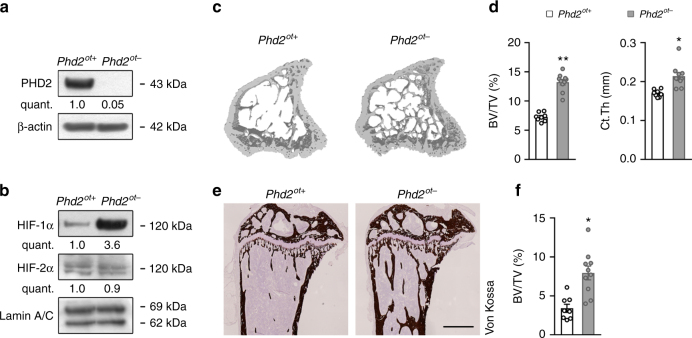
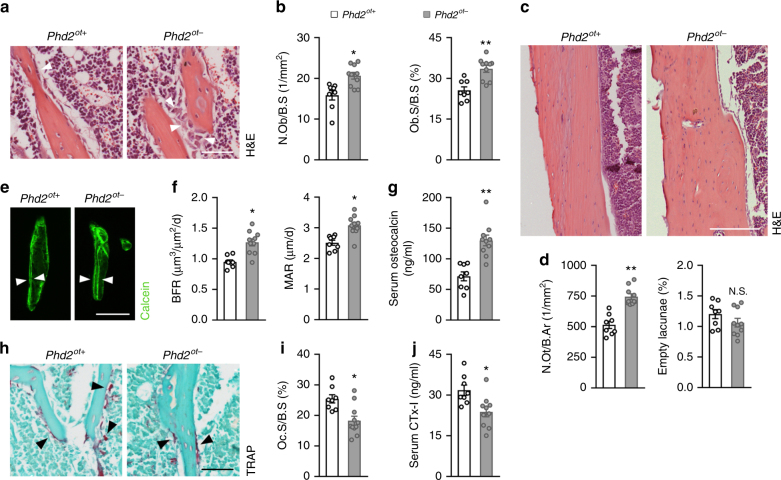
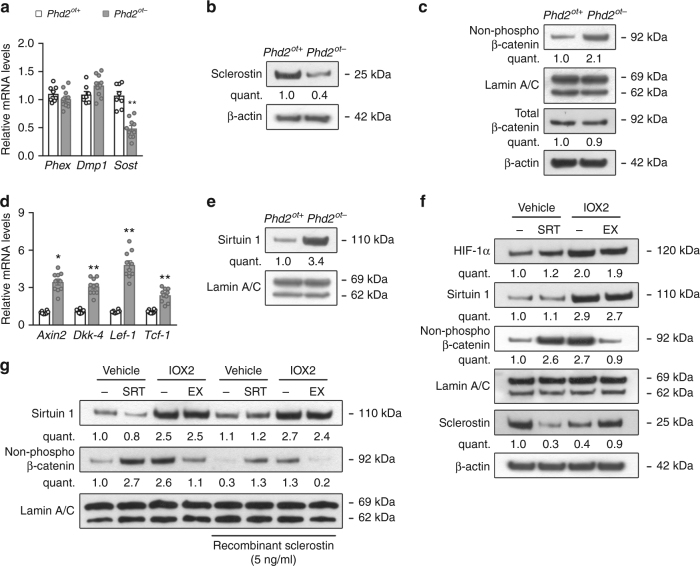
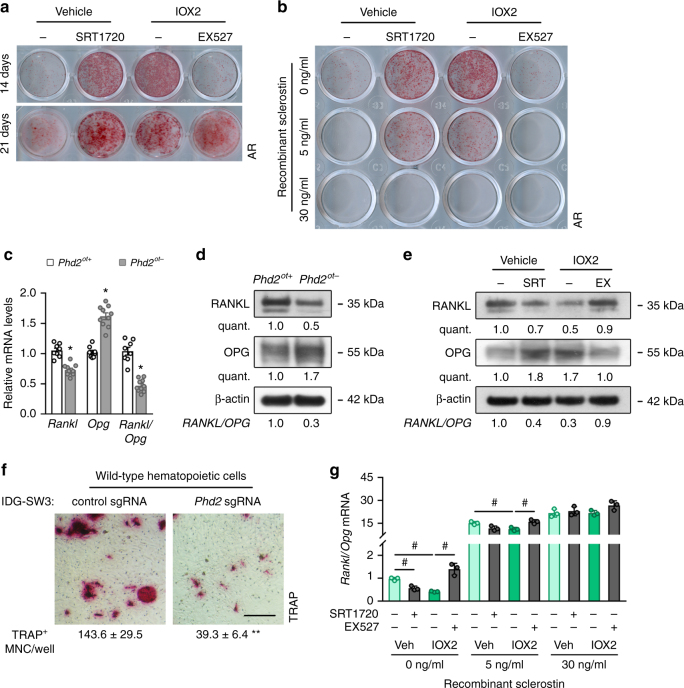
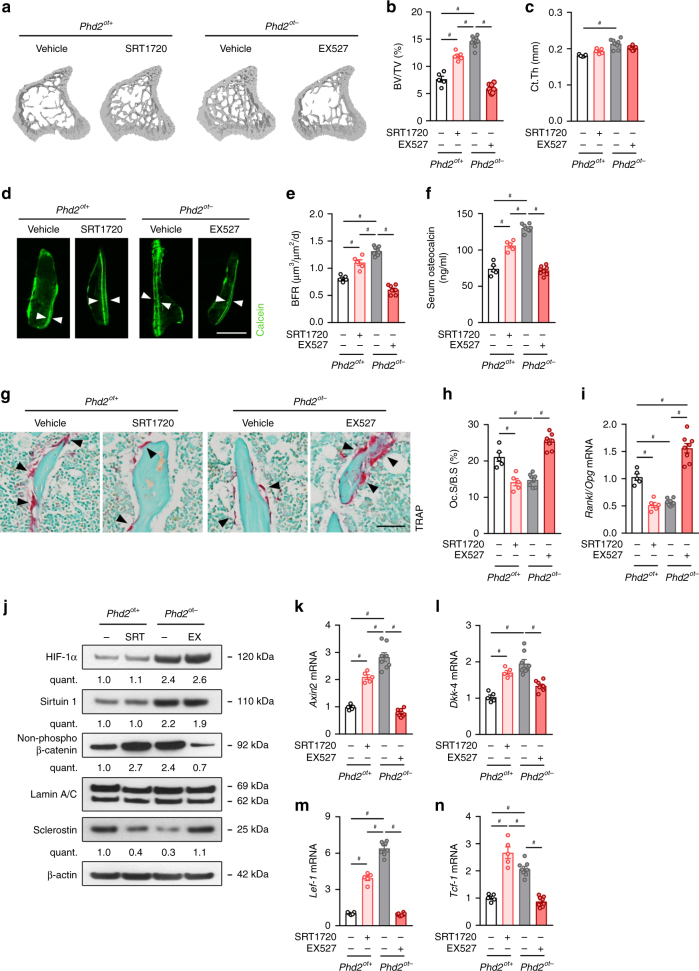
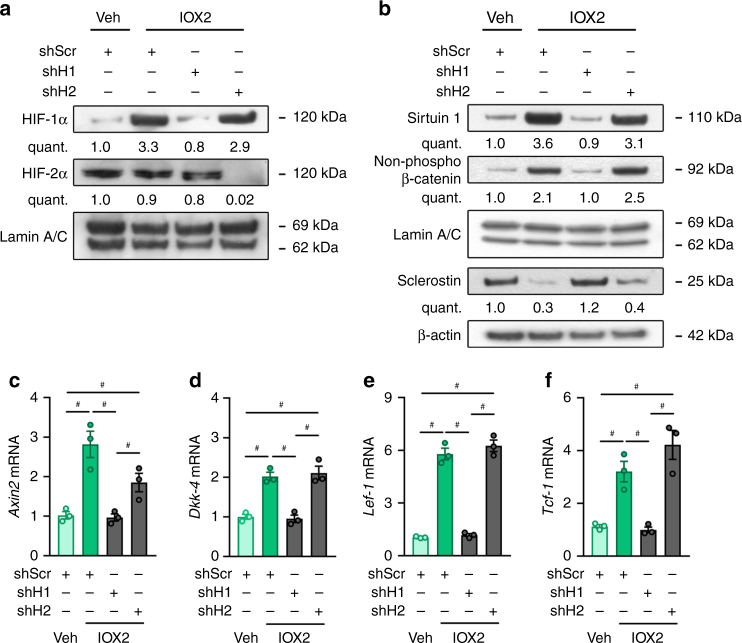
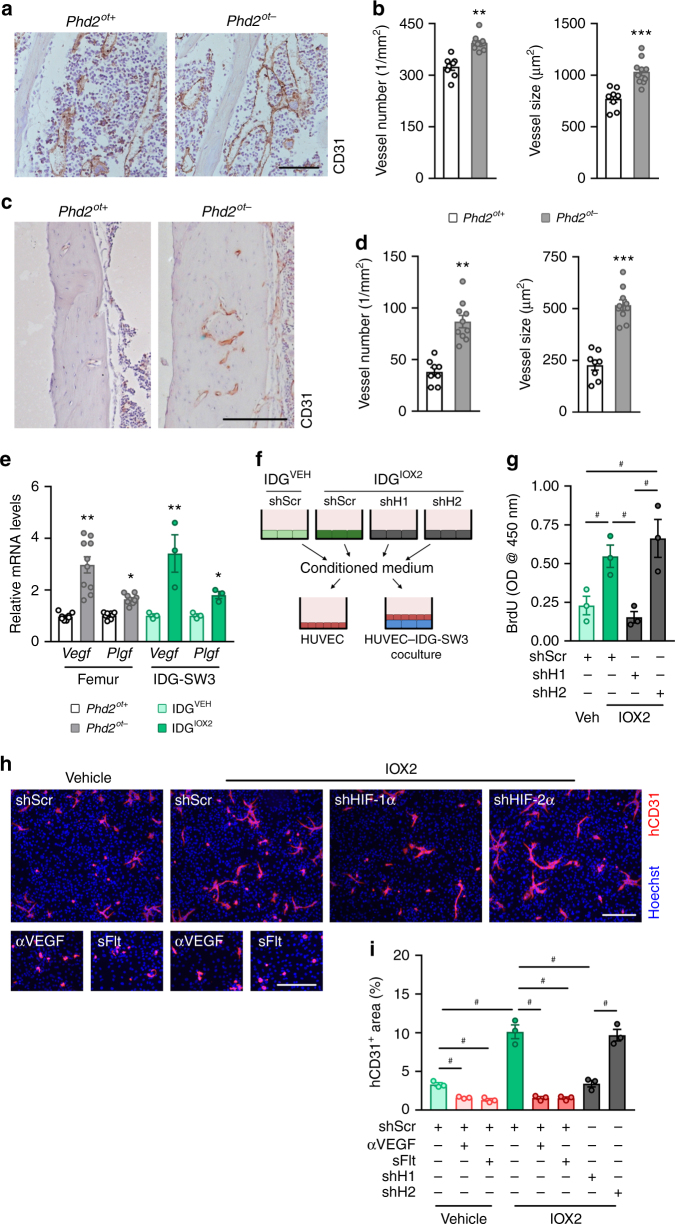
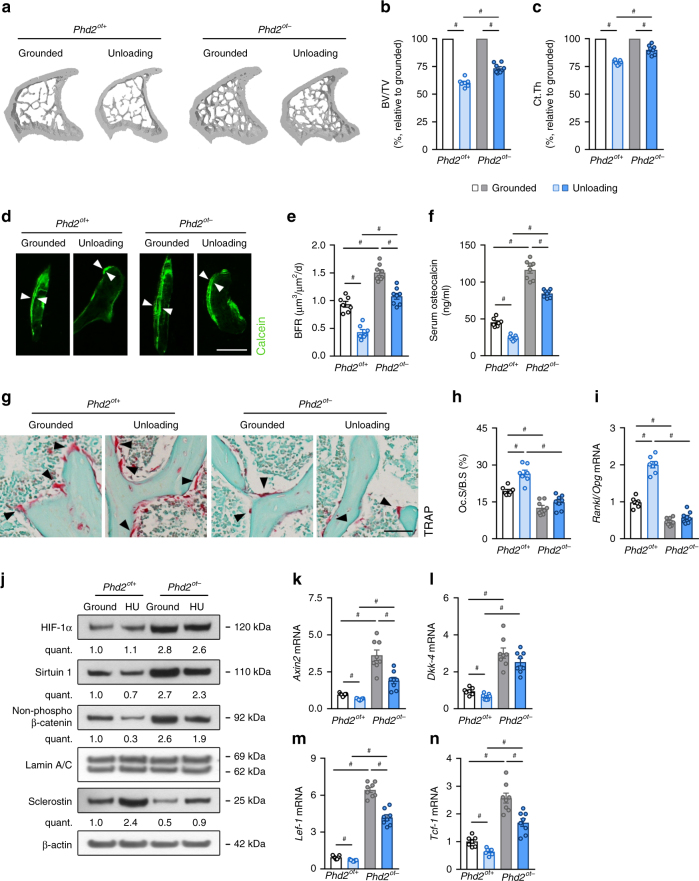
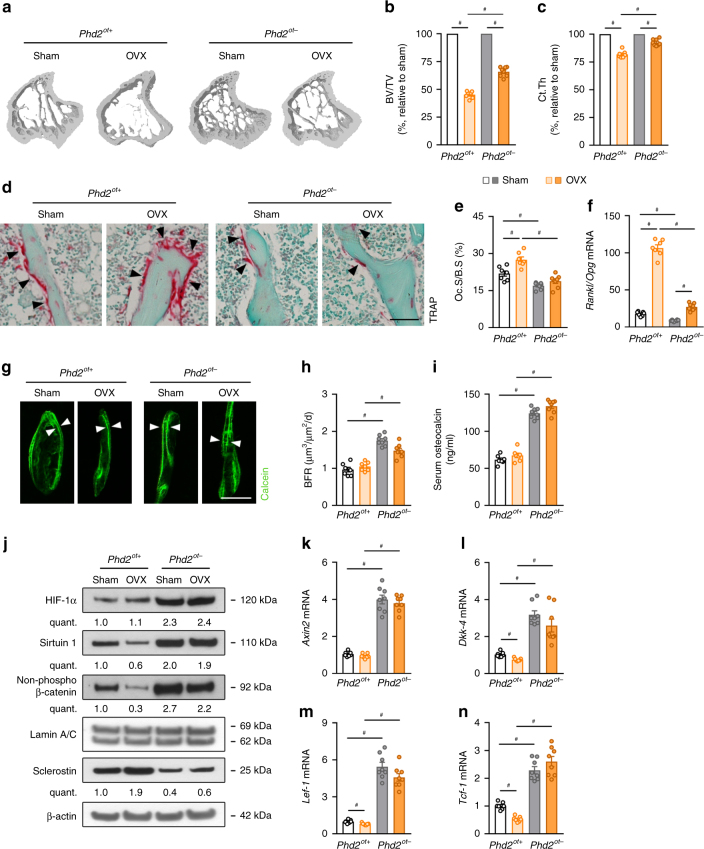
Preservation of bone mass is crucial for healthy ageing and largely depends on adequate responses of matrix-embedded osteocytes. These cells control bone formation and resorption concurrently by secreting the WNT/β-catenin antagonist sclerostin (SOST). Osteocytes reside within a low oxygen microenvironment, but whether and how oxygen sensing regulates their function remains elusive. Here, we show that conditional deletion of the oxygen sensor prolyl hydroxylase (PHD) 2 in osteocytes results in a high bone mass phenotype, which is caused by increased bone formation and decreased resorption. Mechanistically, enhanced HIF-1α signalling increases Sirtuin 1-dependent deacetylation of the Sost promoter, resulting in decreased sclerostin expression and enhanced WNT/β-catenin signalling. Additionally, genetic ablation of PHD2 in osteocytes blunts osteoporotic bone loss induced by oestrogen deficiency or mechanical unloading. Thus, oxygen sensing by PHD2 in osteocytes negatively regulates bone mass through epigenetic regulation of sclerostin and targeting PHD2 elicits an osteo-anabolic response in osteoporotic models.
Overview
The claims and statistics of this paper haven’t been checked yet.
Run the check — free, no account needed. It reads the open-access text and checks the sources it cites.
Integrity signals
Registry
Cites
Statistics
Figures
Verification
Claims the paper makes
The claims and statistics of this paper haven’t been checked yet.
Run the check — free, no account needed. It reads the open-access text and checks the sources it cites.
Claims other papers make about this one
Each is checked against this paper’s own text: does it say what the citing paper says it does?
In the citing paper
“Osteocytes can also decrease SOST expression after sensing decreases in oxygen levels.47”
From Bone remodeling: an operational process ensuring survival and bone mechanical competence (2022) · cites this paper as [47]
Self-check
Percentages, sums and reported differences re-computed from the paper’s own numbers.
The self-check needs the paper’s full text.
Citations
Cites
Guidelines for assessment of bone microstructure in rodents using micro–computed tomography
Bouxsein, M., Boyd, S. K., Christiansen, B., Guldberg, R. E., Jepsen, K. J., & Müller, R. (2010) · Journal of Bone and Mineral Research · doi:10.1002/jbmr.141 · Cited by 4,461
Epstein, A. C. R., Gleadle, J. M., McNeill, L. A., Hewitson, K. S., O'Rourke, J., Mole, D. R., Mukherji, M., Metzen, E., Wilson, M. I., Dhanda, A., et al. (2001) · Cell · doi:10.1016/s0092-8674(01)00507-4 · Cited by 3,333
Self-citationDempster, D. W., Compston, J. E., Drezner, M. K., Glorieux, F. H., Kanis, J. A., Malluche, H., Meunier, P. J., Ott, S. M., Recker, R. R., & Parfitt, A. M. (2013) · Journal of Bone and Mineral Research · doi:10.1002/jbmr.1805 · Cited by 2,543
Regulation of angiogenesis by hypoxia: role of the HIF system
Pugh, C. W., & Ratcliffe, P. J. (2003) · Nature Medicine · doi:10.1038/nm0603-677 · Cited by 2,520
Bonewald, L. F. (2011) · Journal of Bone and Mineral Research · doi:10.1002/jbmr.320 · Cited by 2,287
Coupling of angiogenesis and osteogenesis by a specific vessel subtype in bone
Kusumbe, A. P., Ramasamy, S. K., & Adams, R. H. (2014) · Nature · doi:10.1038/nature13145 · Cited by 2,155
WNT signaling in bone homeostasis and disease: From human mutations to treatments
Baron, R., & Kneissel, M. (2013) · Nature Medicine · doi:10.1038/nm.3074 · Cited by 2,093
Evidence for osteocyte regulation of bone homeostasis through RANKL expression
Nakashima, T., Hayashi, M., Fukunaga, T., Kurata, K., Oh-hora, M., Feng, J. Q., Bonewald, L. F., Kodama, T., Wutz, A., Wagner, E. F., et al. (2011) · Nature Medicine · doi:10.1038/nm.2452 · Cited by 1,778
Mechanical Stimulation of Bone in Vivo Reduces Osteocyte Expression of Sost/Sclerostin
Robling, A. G., Niziolek, P. J., Baldridge, L. A., Condon, K. W., Allen, M. R., Alam, I., Mantila, S. M., Gluhak-Heinrich, J., Bellido, T. M., Harris, S. E., et al. (2008) · Journal of Biological Chemistry · doi:10.1074/jbc.m705092200 · Cited by 1,350
Matrix-embedded cells control osteoclast formation
Xiong, J., Onal, M., Jilka, R. L., Weinstein, R. S., Manolagas, S. C., & O'Brien, C. A. (2011) · Nature Medicine · doi:10.1038/nm.2448 · Cited by 1,304
Cited by
Sorted by citations
Items 101–126 of 126
Oxygen Sensing in Osteocytes: From Physiology to Age-related Osteoporosis
Janeczko, K., & Agoro, R. (2025) · Current Osteoporosis Reports · doi:10.1007/s11914-025-00920-7 · Cited by 3
“This bone mass increase becomes more pronounced in adult mice and was sufficient to prevent age-related bone loss at 50-weeks when compared to the optimal bone mass reached at adulthood in C57BL/6 J mice (16 weeks) [6].”
InfluentialGan, K., Lian, L., Luo, Z., Dong, Y., Xu, D., Li, X., Li, J., Zhang, X., Chen, J., Lu, L., et al. (2025) · Regenerative Biomaterials · doi:10.1093/rb/rbaf070 · Cited by 3
“…by local microvascular rup-tures, and the anoxic microenvironment within the defect area can not only affect the cell viability, but also inhibit the metabolic transformation and osteogenesis of rBMSCs, which in turn results in undesirable retardation in regeneration of bone tissue [74, 75].”
Lee, G., Lee, H., Lim, Y., Ko, S., Chae, H., & Yoon, S. (2025) · Journal of Cachexia Sarcopenia and Muscle · doi:10.1002/jcsm.70105 · Cited by 3
Ma, Q., Staudigel, K. A., Rubenis, K., Fu, Z., Hildebrand, T., Zaldenieks, M., Sigurjónsson, Ó. E., Nogueira, L. P., Ločs, J., Loča, D., et al. (2026) · ACS Applied Materials & Interfaces · doi:10.1021/acsami.5c25453 · Cited by 3
Yajima, A., Tsuchiya, K., Kuro‐o, M., Ureña, P., Tominaga, Y., Okada, M., Ichimori, T., Tomosugi, T., Hiramitsu, T., Murata, T., et al. (2022) · Vitamins and hormones · doi:10.1016/bs.vh.2022.04.010 · Cited by 3
Valle-Tenney, R., Peredo, N., Samblancx, K. D., Nefyodova, E., Cardoen, R., Dehaemers, T., Farlay, D., Chapurlat, R. D., der Schueren, B. V., Mathieu, C., et al. (2026) · Bone Research · doi:10.1038/s41413-025-00503-3 · Cited by 2
Fernandes, C. J. D. C. (2024) · Extracellular Vesicle · doi:10.1016/j.vesic.2024.100042 · Cited by 2
Serum proteome profiling of plateau acclimatization in men using Olink proteomics approach
Pan, J., Dong, Y., Zou, Z., Gu, T., Chen, L., Li, K., Wang, L., & Shi, Q. (2024) · Physiological Reports · doi:10.14814/phy2.70091 · Cited by 2
“This interaction leads to a downregulation of SOST expression, thereby enhancing the Wnt/ β - catenin signaling pathway (Li et al., 2023), (Stegen et al., 2018 understanding bone metabolism under hypoxic conditions, such as those experienced at high altitudes.”
Influencia del oxígeno a alta concentración en cámara hiperbárica sobre el metabolismo óseo
Salmón, Z., Anchuelo, J., Borregán, J., del Real, Á., Sañudo, C., Ibarbia, C. G., Pérez‐Núñez, M. I., Riancho, J., & Valero, C. (2020) · Revista de Osteoporosis y Metabolismo Mineral · doi:10.4321/s1889-836x2020000100005 · Cited by 2
Lipid availability determines fate of skeletal progenitor cells via SOX9
van Gastel, N., Stegen, S., Eelen, G., Schoors, S., Carlier, A., Daniëls, V. W., Baryawno, N., Przybylski, D., Depypere, M., Stiers, P., et al. (2020) · Yearbook of pediatric endocrinology · doi:10.1530/ey.17.5.12 · Cited by 2
Self-citationSciacca, S., Corrado, A., Rotondo, C., & Cantatore, F. P. (2022) · Current Rheumatology Reviews · doi:10.2174/1573397118666220218112703 · Cited by 2
Verlinden, L., Stockmans, I., Moermans, K., & Carmeliet, G. (2026) · JBMR Plus · doi:10.1093/jbmrpl/ziag017 · Cited by 1
Self-citationNaqvi, S., Ali, W., Allison, H., O’Sullivan, L., Holdsworth, G., Pérez, J. A. P., Schiavi, J., & McNamara, L. M. (2026) · Bone Reports · doi:10.1016/j.bonr.2026.101915 · Cited by 1
“…an inhibitor of Wnt signalling in osteocytes and its neutralization may enhance β -cat- enin activity within the osteocyte network (Li et al., 2005; Stegen et al., 2018; Tu et al., 2015; Fulzele et al., 2017; Allison et al., 2020), thereby promoting osteocyte survival and regulating perilacunar…”
Epigenetics of bone formation and diseases: From mechanisms to therapies
Yang, Y., Zhang, C., Li, Y., Yu, L., & Wu, M. (2026) · Genes & Diseases · doi:10.1016/j.gendis.2026.102280 · Cited by 1
Gellée, L., Martins, F., Brochard, A., Jähn, K., & Maurel, D. B. (2026) · JBMR Plus · doi:10.1093/jbmrpl/ziag136 · Cited by 1
“15 , 16 These results suggest that hypoxia and the HIF1 α pathway could play a role in osteoc ytes physiolog y.”
"Sclerostin in Oral Tissues: Distribution, Biological Functions and Potential Therapeutic Role"
Han, X. (2020) · Open Access Journal of Biomedical Science · doi:10.38125/oajbs.000228 · Cited by 1
“Deficiency of von Hippel-Lindau (VHL) or proline hydroxylase-domain proteins (PHDs), regulatory factors of hypoxia-inducible factor, led to a decrease of sclerostin expression as well as promoted bone formation in mice [86,87], confirming the role of sclerostin in hypoxia-induced osteogenesis.”
BackgroundSousa, M. G. D. C., Athirasala, A., Roth, D. M., Hosseini, M., Romanowicz, G. E., Duhen, R., Fraga, M. A. A., Vignolo, S. M., Doe, A. R., Lee, J., et al. (2025) · bioRxiv (Cold Spring Harbor Laboratory) · doi:10.64898/2025.12.08.693047 · Cited by 1
“Importantly, our findings align with key mechanobiologically driven events described in-vivo where matrix stiffness modulates RANKL/OPG signaling to drive osteoclastogenesis 50 .”
Xu, L., & Zeng, Z. (2024) · Highlights in Science Engineering and Technology · doi:10.54097/ddt58253
“HIF-α, modulated by PHD2, reduces SOST expression, consequently boosting the Wnt/β-catenin pathway’s activity [30].”
The Role of Sirtuins in Bone Repair From the Perspective of Glucose Metabolism
Ding, Y., Gao, Y., Sun, J., & Cai, Z. (2025) · International Journal of General Medicine · doi:10.2147/ijgm.s530523
Osteocytes orchestrate browning: emerging signals in bone-fat crosstalk: a systematic review
Anees, H., Jahed, V., Sabouri, Z., Jamous, R., Pennisi, C. P., Heiß, C., & Khassawna, T. E. (2026) · Frontiers in Endocrinology · doi:10.3389/fendo.2026.1766959
“Changes in oxygen tension and oxidative metabolism further modulate Sost through epigenetic regulation in osteocytes, linking hypoxia and redox imbalance to altered sclerostin output (45).”
The hypoxia signaling pathway in the skeleton
Schipani, E., Sabini, E., & Giaccia, A. J. (2026) · Elsevier eBooks · doi:10.1016/b978-0-443-13683-2.00005-0
Synthesis of bioactive surfaces for the control of stem cells differentiation
Prouvé, É. (2021) · theses.fr (ABES) · doi:10.70675/e6e40875z38c9z479ezb35fz53ede1161671
Musculoskeletal disorders: does cuproptosis hold the key?
Wang, C., Liu, D., Ye, Y., Cui, L., Gong, S., Liu, H., & Xie, S. (2026) · Frontiers in Cell and Developmental Biology · doi:10.3389/fcell.2026.1790043
“Osteoblasts and osteoclasts-oxygen-sensitive regulators of bone homeostasis-exhibit remodeling dynamics modulated by hypoxia (Arnett et al., 2003; Stegen et al., 2018).”
Osteocyte-vascular Interactions in Bone Physiology and Pathology
Gellée, L., & Maurel, D. B. (2026) · Current Osteoporosis Reports · doi:10.1007/s11914-026-00978-x
“Conversely, hypoxia can also promote bone formation through activation of the Wnt/β-catenin pathway, as illustrated by osteocyte-specific deletion of Vhl or Phd2 , which reduces Sost expression and leads to a high bone mass phenotype in mice [76, 77].”
李小群, Zhao, J., Bai, G., Wang, X., Wang, Z., Li, J., Xie, Y., Xu, S., Fang, S., & Zhang, Y. (2026) · Genes & Diseases · doi:10.1016/j.gendis.2026.102525
Metadata
- Authors
- Stegen, S., Stockmans, I., Moermans, K., Thienpont, B., Maxwell, P. H., Carmeliet, P., & Carmeliet, G.
- Affiliations
- KU Leuven (BE)
- University of Cambridge (GB)
- VIB-KU Leuven Center for Cancer Biology (BE)
- Corresponding author
- Carmeliet, Geert
- Venue
- Nature Communications
- Published
- 2018-07-02
- Volume
- 9
- Issue
- 1
- Pages
- 2557-2557
- ISSN
- 2041-1723 (ISSN-L)
- PMC
- PMC6028485
- OpenAlex
- W2810241167
- Cited by
- 126
- References
- 64
- Citations by year
- 2026: 11 · 2025: 9 · 2024: 18 · 2023: 16 · 2022: 20 · 2021: 15 · 2020: 23 · 2019: 14
- FWCI
- 4.62
- Type
- journal article
- Language
- en
- Open access
- gold
- doi.org
- Locations
- Nature Communications (publishedVersion, cc-by)
- Europe PMC (PubMed Central) (publishedVersion, other-oa)
- PubMed Central (publishedVersion, cc-by)
- PubMed (publishedVersion)
- Lirias (submittedVersion, other-oa)
- Apollo (University of Cambridge) (submittedVersion, cc-by)
- RePEc: Research Papers in Economics (submittedVersion)
- DOAJ (DOAJ: Directory of Open Access Journals) (submittedVersion)
- DOAJ (DOAJ: Directory of Open Access Journals) (submittedVersion, cc-by-sa)
- Apollo (cc-by)
- Funders
- Wellcome Trust (096956/Z/11/Z)
- National Institute for Health and Care Research (NF-SI-0514-10122)
- Fonds Wetenschappelijk Onderzoek (12H5917N, G0A4216N)
- Vlaamse regering
- Topics
- Life Sciences › Biochemistry, Genetics and Molecular Biology › Molecular Biology › Bone Metabolism and Diseases
- Health Sciences › Medicine › Orthopedics and Sports Medicine › Bone health and osteoporosis research
- Health Sciences › Medicine › Endocrinology, Diabetes and Metabolism › Alkaline Phosphatase Research Studies
- Keywords
- osteocytes, oxygen sensing, prolyl hydroxylase 2, sclerostin, HIF-1α, SIRT1, histone deacetylation, Wnt/β-catenin signaling, bone mass regulation, bone formation, bone resorption, osteoporosis, estrogen deficiency, mechanical unloading, epigenetic regulation
- MeSH terms
- Acetylation, Animals, Carbazoles, Cell Line, Disease Models, Animal, Female, Glycoproteins, Heterocyclic Compounds, 4 or More Rings, Humans, Male, Mice, Inbred C57BL, Mice, Transgenic, Osteocytes, Osteogenesis, Osteoporosis, Oxygen, Promoter Regions, Genetic, Bone Density, Coculture Techniques, Intercellular Signaling Peptides and Proteins, Epigenesis, Genetic, Adaptor Proteins, Signal Transducing, Hypoxia-Inducible Factor 1, alpha Subunit, Sirtuin 1, Wnt Signaling Pathway, Primary Cell Culture, Hypoxia-Inducible Factor-Proline Dioxygenases
About these checks
Registry, retraction, Cites and statistics results are computed, not judged, with one exception: a printed reference that no index lists is read once by a model before it counts as a citation error. Claims are extracted by a model and kept only when their quote appears verbatim in the text; each cited source is then checked, with a model’s help, for whether it says what the claim relies on. Those verdicts can be wrong — read the claim’s quote and the cited source before relying on one.
Statistics and arithmetic are recomputed, not judged.
Confidence bands are shown only for fields calibrated on our annotated test set. None is calibrated yet, so no band is shown.
What counts as a claim ›How we measure confidence ›How we check this ›
Are you an author, or do you see a problem with this page? Request a review
