

The DOI matches its Crossref record; 64 of the 64 references it cites were found in a registry or an index.
Osteocytic oxygen sensing controls bone mass through epigenetic regulation of sclerostin
Open accessAbstract
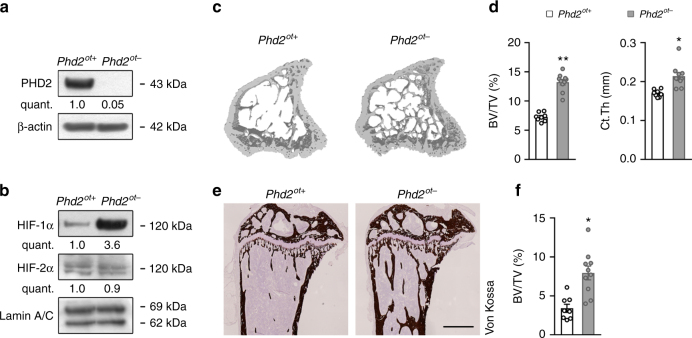
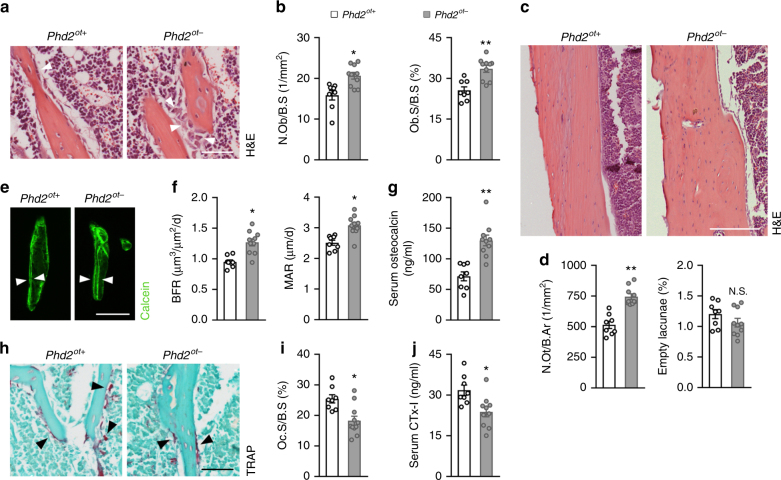
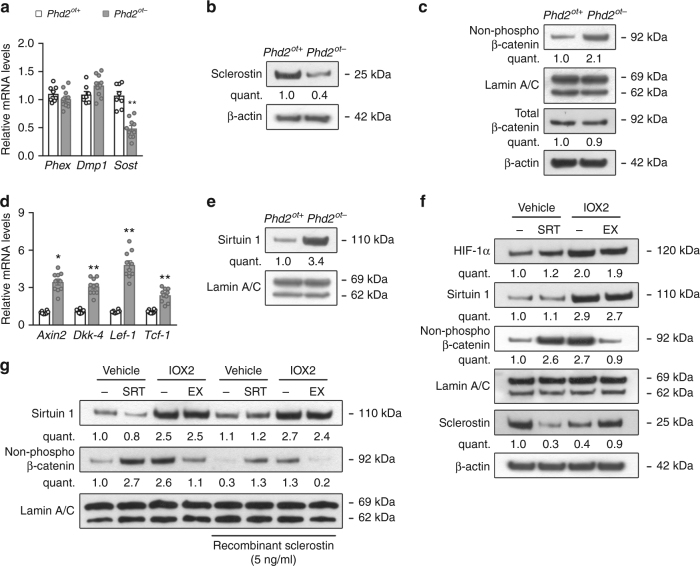
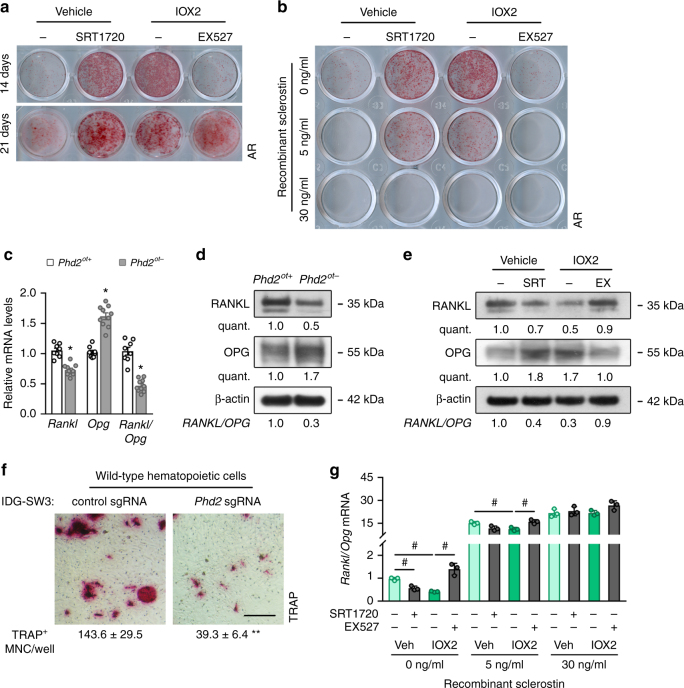
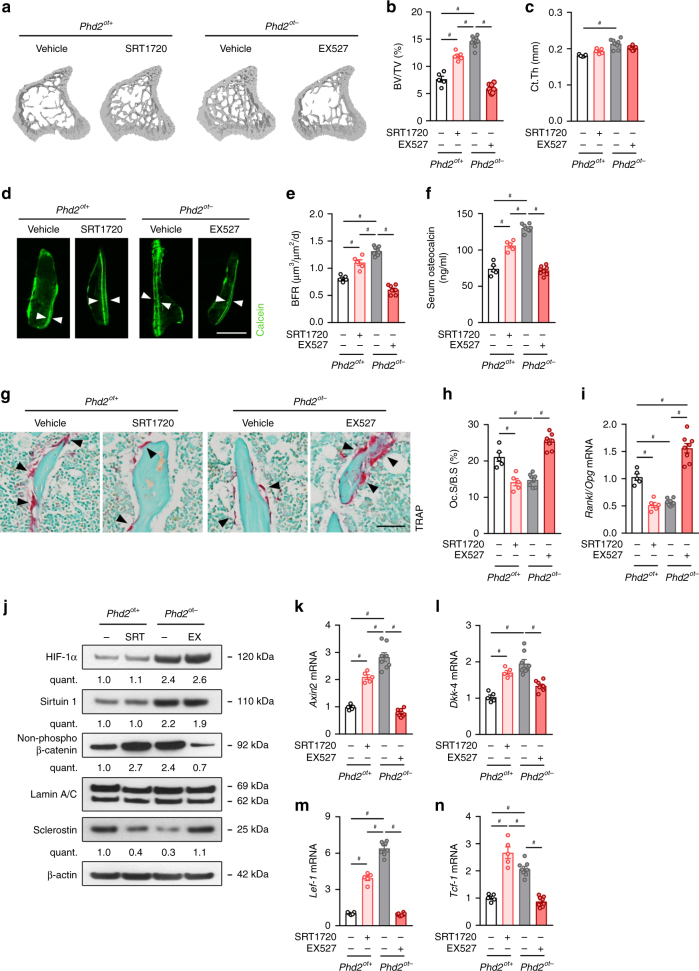
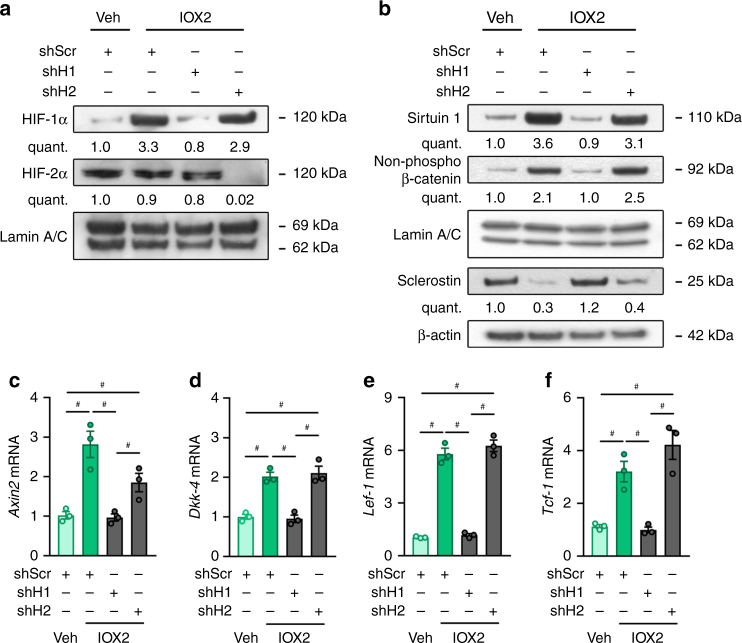
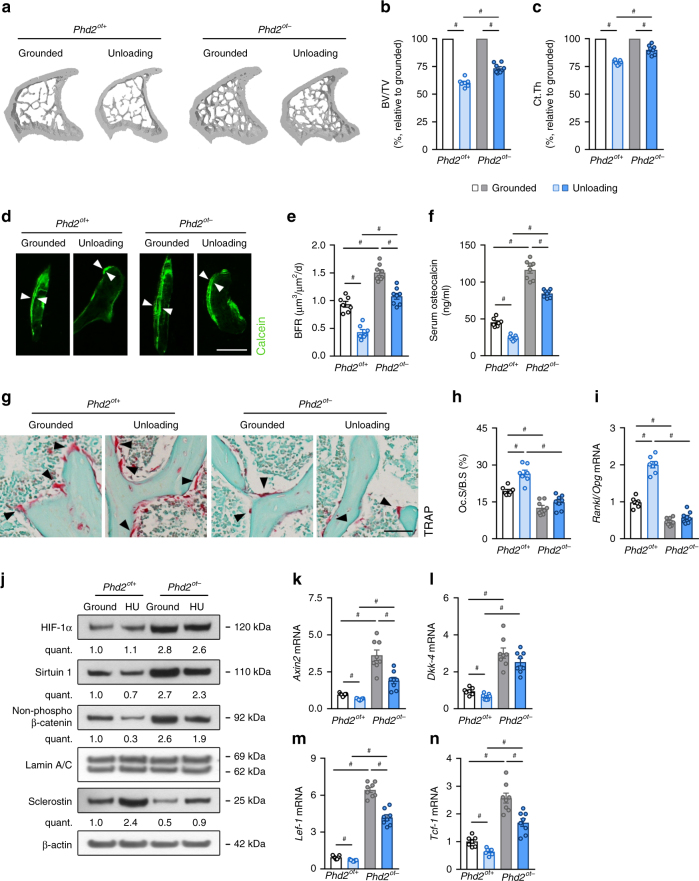
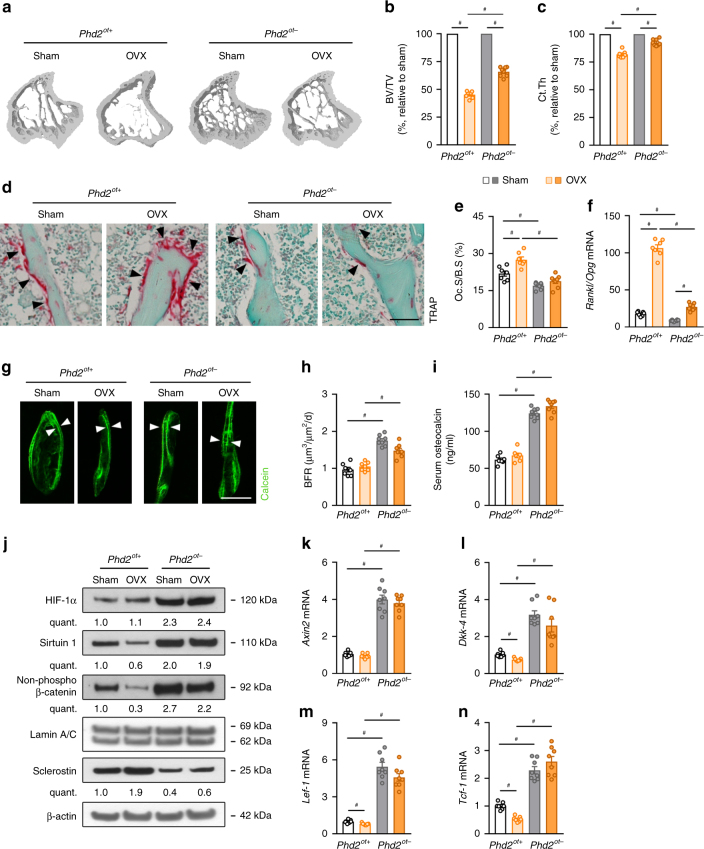
Preservation of bone mass is crucial for healthy ageing and largely depends on adequate responses of matrix-embedded osteocytes. These cells control bone formation and resorption concurrently by secreting the WNT/β-catenin antagonist sclerostin (SOST). Osteocytes reside within a low oxygen microenvironment, but whether and how oxygen sensing regulates their function remains elusive. Here, we show that conditional deletion of the oxygen sensor prolyl hydroxylase (PHD) 2 in osteocytes results in a high bone mass phenotype, which is caused by increased bone formation and decreased resorption. Mechanistically, enhanced HIF-1α signalling increases Sirtuin 1-dependent deacetylation of the Sost promoter, resulting in decreased sclerostin expression and enhanced WNT/β-catenin signalling. Additionally, genetic ablation of PHD2 in osteocytes blunts osteoporotic bone loss induced by oestrogen deficiency or mechanical unloading. Thus, oxygen sensing by PHD2 in osteocytes negatively regulates bone mass through epigenetic regulation of sclerostin and targeting PHD2 elicits an osteo-anabolic response in osteoporotic models.
Overview
The claims and statistics of this paper haven’t been checked yet.
Run the check — free, no account needed. It reads the open-access text and checks the sources it cites.
Integrity signals
Registry
Cites
Statistics
Figures
Verification
Claims the paper makes
The claims and statistics of this paper haven’t been checked yet.
Run the check — free, no account needed. It reads the open-access text and checks the sources it cites.
Claims other papers make about this one
Each is checked against this paper’s own text: does it say what the citing paper says it does?
In the citing paper
“Osteocytes can also decrease SOST expression after sensing decreases in oxygen levels.47”
From Bone remodeling: an operational process ensuring survival and bone mechanical competence (2022) · cites this paper as [47]
Self-check
Percentages, sums and reported differences re-computed from the paper’s own numbers.
The self-check needs the paper’s full text.
Citations
Cites
Guidelines for assessment of bone microstructure in rodents using micro–computed tomography
Bouxsein, M., Boyd, S. K., Christiansen, B., Guldberg, R. E., Jepsen, K. J., & Müller, R. (2010) · Journal of Bone and Mineral Research · doi:10.1002/jbmr.141 · Cited by 4,461
Epstein, A. C. R., Gleadle, J. M., McNeill, L. A., Hewitson, K. S., O'Rourke, J., Mole, D. R., Mukherji, M., Metzen, E., Wilson, M. I., Dhanda, A., et al. (2001) · Cell · doi:10.1016/s0092-8674(01)00507-4 · Cited by 3,333
Self-citationDempster, D. W., Compston, J. E., Drezner, M. K., Glorieux, F. H., Kanis, J. A., Malluche, H., Meunier, P. J., Ott, S. M., Recker, R. R., & Parfitt, A. M. (2013) · Journal of Bone and Mineral Research · doi:10.1002/jbmr.1805 · Cited by 2,543
Regulation of angiogenesis by hypoxia: role of the HIF system
Pugh, C. W., & Ratcliffe, P. J. (2003) · Nature Medicine · doi:10.1038/nm0603-677 · Cited by 2,520
Bonewald, L. F. (2011) · Journal of Bone and Mineral Research · doi:10.1002/jbmr.320 · Cited by 2,287
Coupling of angiogenesis and osteogenesis by a specific vessel subtype in bone
Kusumbe, A. P., Ramasamy, S. K., & Adams, R. H. (2014) · Nature · doi:10.1038/nature13145 · Cited by 2,155
WNT signaling in bone homeostasis and disease: From human mutations to treatments
Baron, R., & Kneissel, M. (2013) · Nature Medicine · doi:10.1038/nm.3074 · Cited by 2,093
Evidence for osteocyte regulation of bone homeostasis through RANKL expression
Nakashima, T., Hayashi, M., Fukunaga, T., Kurata, K., Oh-hora, M., Feng, J. Q., Bonewald, L. F., Kodama, T., Wutz, A., Wagner, E. F., et al. (2011) · Nature Medicine · doi:10.1038/nm.2452 · Cited by 1,778
Mechanical Stimulation of Bone in Vivo Reduces Osteocyte Expression of Sost/Sclerostin
Robling, A. G., Niziolek, P. J., Baldridge, L. A., Condon, K. W., Allen, M. R., Alam, I., Mantila, S. M., Gluhak-Heinrich, J., Bellido, T. M., Harris, S. E., et al. (2008) · Journal of Biological Chemistry · doi:10.1074/jbc.m705092200 · Cited by 1,350
Matrix-embedded cells control osteoclast formation
Xiong, J., Onal, M., Jilka, R. L., Weinstein, R. S., Manolagas, S. C., & O'Brien, C. A. (2011) · Nature Medicine · doi:10.1038/nm.2448 · Cited by 1,304
Cited by
Sorted by citations
Wnt/β-catenin signalling: function, biological mechanisms, and therapeutic opportunities
Liu, J., Xiao, Q., Xiao, J., Niu, C., Li, Y., Zhang, X., Zhou, Z., Shu, G., & Yin, G. (2022) · Signal Transduction and Targeted Therapy · doi:10.1038/s41392-021-00762-6 · Cited by 2,519
“In a hypoxic environment, the activity of PHD2 in osteocytes is reduced and HIF signalling is enhanced, improving the activity of the canonical Wnt signalling pathway through the HIF-SIRT1-SOST-β-catenin signalling axis, thereby promoting bone formation mediated by the activated Wnt/β-catenin signalling pathway and in…”
BackgroundThe sirtuin family in health and disease
Wu, Q., Zhang, T., Chen, H., Yu, X., Lv, J.-L., Liu, Y., Liu, Y., Zheng, G., Zhao, J.-Q., Wei, Y., et al. (2022) · Signal Transduction and Targeted Therapy · doi:10.1038/s41392-022-01257-8 · Cited by 928
Molecular mechanosensors in osteocytes
Qin, L., Liu, W., Cao, H., & Xiao, G. (2020) · Bone Research · doi:10.1038/s41413-020-0099-y · Cited by 484
Bone remodeling: an operational process ensuring survival and bone mechanical competence
Bolamperti, S., Villa, I., & Rubinacci, A. (2022) · Bone Research · doi:10.1038/s41413-022-00219-8 · Cited by 482
“Osteocytes can also decrease SOST expression after sensing decreases in oxygen levels.(47) In vivo anatomical studies have suggested that the presence of apoptotic osteocytes at microdamaged sites correlates with the recruitment of osteoclasts at microcracks.”
BackgroundOsteocyte-Related Cytokines Regulate Osteoclast Formation and Bone Resorption
Kitaura, H., Marahleh, A., Ohori, F., Noguchi, T., Shen, W.-R., Qi, J., Nara, Y., Pramusita, A., Kinjo, R., & Mizoguchi, I. (2020) · International Journal of Molecular Sciences · doi:10.3390/ijms21145169 · Cited by 405
“Osteocytes also control osteogenesis through the fine tuning of their oxygen sensing apparatus prolyl hydroxylase 2 (PHD 2), in which silencing of PHD 2 causes an increase in bone mass and strength and protects against bone loss caused by estrogen deficiency and absence of mechanical loading, through decreased express…”
Background
Metadata
- Authors
- Stegen, S., Stockmans, I., Moermans, K., Thienpont, B., Maxwell, P. H., Carmeliet, P., & Carmeliet, G.
- Affiliations
- KU Leuven (BE)
- University of Cambridge (GB)
- VIB-KU Leuven Center for Cancer Biology (BE)
- Corresponding author
- Carmeliet, Geert
- Venue
- Nature Communications
- Published
- 2018-07-02
- Volume
- 9
- Issue
- 1
- Pages
- 2557-2557
- ISSN
- 2041-1723 (ISSN-L)
- PMC
- PMC6028485
- OpenAlex
- W2810241167
- Cited by
- 126
- References
- 64
- Citations by year
- 2026: 11 · 2025: 9 · 2024: 18 · 2023: 16 · 2022: 20 · 2021: 15 · 2020: 23 · 2019: 14
- FWCI
- 4.62
- Type
- journal article
- Language
- en
- Open access
- gold
- doi.org
- Locations
- Nature Communications (publishedVersion, cc-by)
- Europe PMC (PubMed Central) (publishedVersion, other-oa)
- PubMed Central (publishedVersion, cc-by)
- PubMed (publishedVersion)
- Lirias (submittedVersion, other-oa)
- Apollo (University of Cambridge) (submittedVersion, cc-by)
- RePEc: Research Papers in Economics (submittedVersion)
- DOAJ (DOAJ: Directory of Open Access Journals) (submittedVersion)
- DOAJ (DOAJ: Directory of Open Access Journals) (submittedVersion, cc-by-sa)
- Apollo (cc-by)
- Funders
- Wellcome Trust (096956/Z/11/Z)
- National Institute for Health and Care Research (NF-SI-0514-10122)
- Fonds Wetenschappelijk Onderzoek (12H5917N, G0A4216N)
- Vlaamse regering
- Topics
- Life Sciences › Biochemistry, Genetics and Molecular Biology › Molecular Biology › Bone Metabolism and Diseases
- Health Sciences › Medicine › Orthopedics and Sports Medicine › Bone health and osteoporosis research
- Health Sciences › Medicine › Endocrinology, Diabetes and Metabolism › Alkaline Phosphatase Research Studies
- Keywords
- osteocytes, oxygen sensing, prolyl hydroxylase 2, sclerostin, HIF-1α, SIRT1, histone deacetylation, Wnt/β-catenin signaling, bone mass regulation, bone formation, bone resorption, osteoporosis, estrogen deficiency, mechanical unloading, epigenetic regulation
- MeSH terms
- Acetylation, Animals, Carbazoles, Cell Line, Disease Models, Animal, Female, Glycoproteins, Heterocyclic Compounds, 4 or More Rings, Humans, Male, Mice, Inbred C57BL, Mice, Transgenic, Osteocytes, Osteogenesis, Osteoporosis, Oxygen, Promoter Regions, Genetic, Bone Density, Coculture Techniques, Intercellular Signaling Peptides and Proteins, Epigenesis, Genetic, Adaptor Proteins, Signal Transducing, Hypoxia-Inducible Factor 1, alpha Subunit, Sirtuin 1, Wnt Signaling Pathway, Primary Cell Culture, Hypoxia-Inducible Factor-Proline Dioxygenases
About these checks
Registry, retraction, Cites and statistics results are computed, not judged, with one exception: a printed reference that no index lists is read once by a model before it counts as a citation error. Claims are extracted by a model and kept only when their quote appears verbatim in the text; each cited source is then checked, with a model’s help, for whether it says what the claim relies on. Those verdicts can be wrong — read the claim’s quote and the cited source before relying on one.
Statistics and arithmetic are recomputed, not judged.
Confidence bands are shown only for fields calibrated on our annotated test set. None is calibrated yet, so no band is shown.
What counts as a claim ›How we measure confidence ›How we check this ›
Are you an author, or do you see a problem with this page? Request a review
