

The fungal peptide toxin Candidalysin activates the NLRP3 inflammasome and causes cytolysis in mononuclear phagocytes
Open accessThe DOI matches its Crossref record; 78 of the 78 references it cites were found in a registry or an index.
Abstract
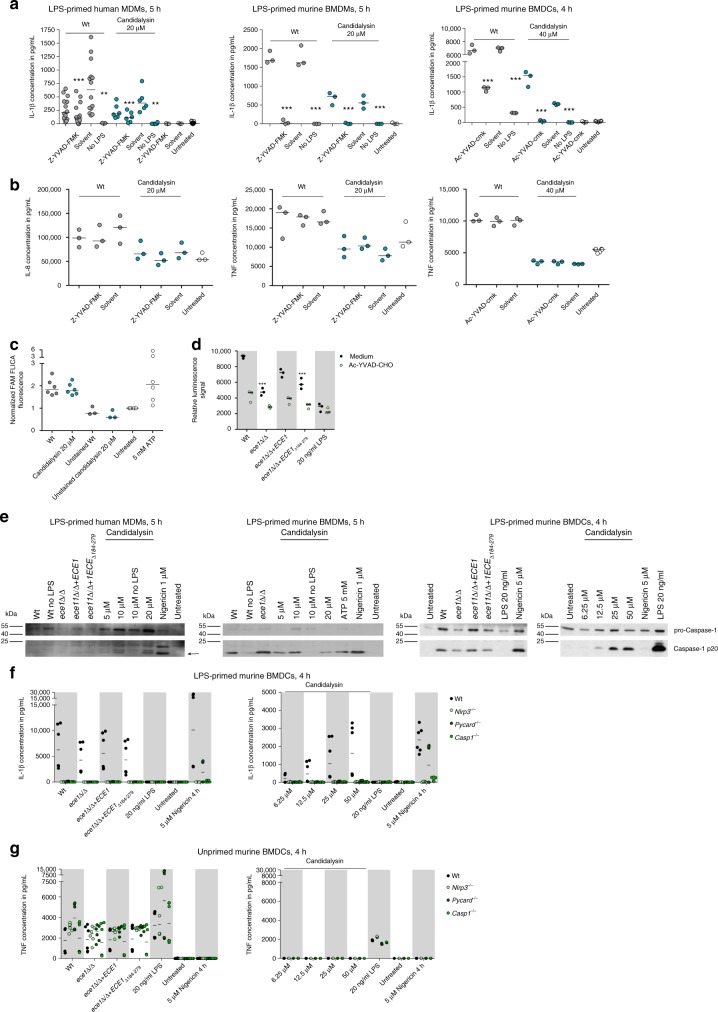
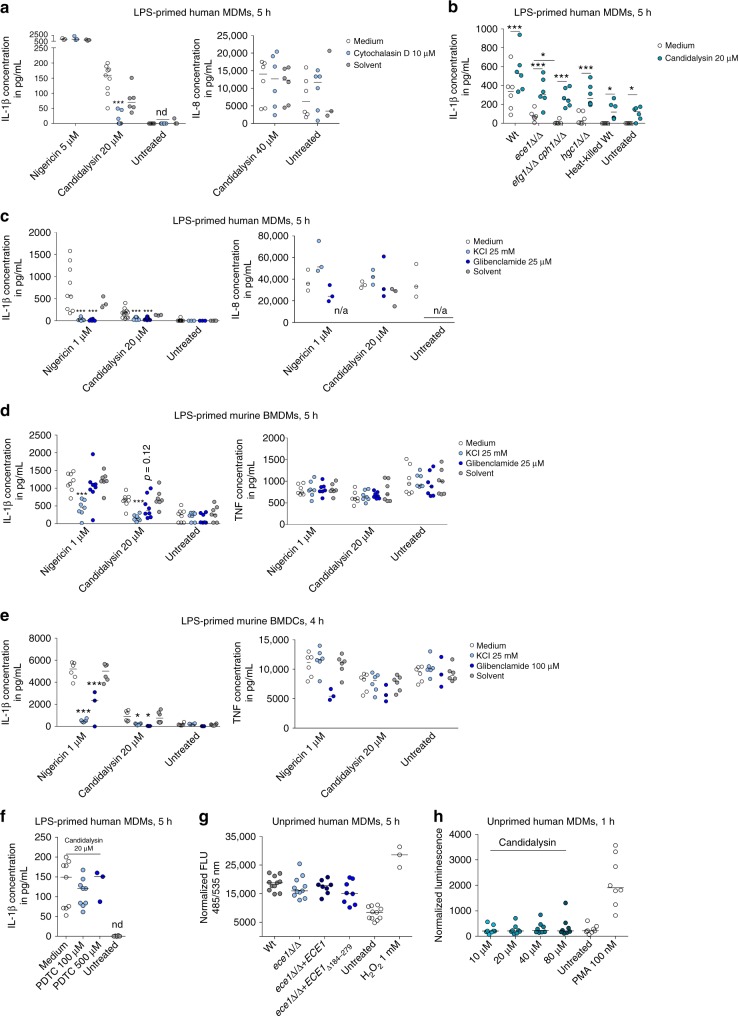
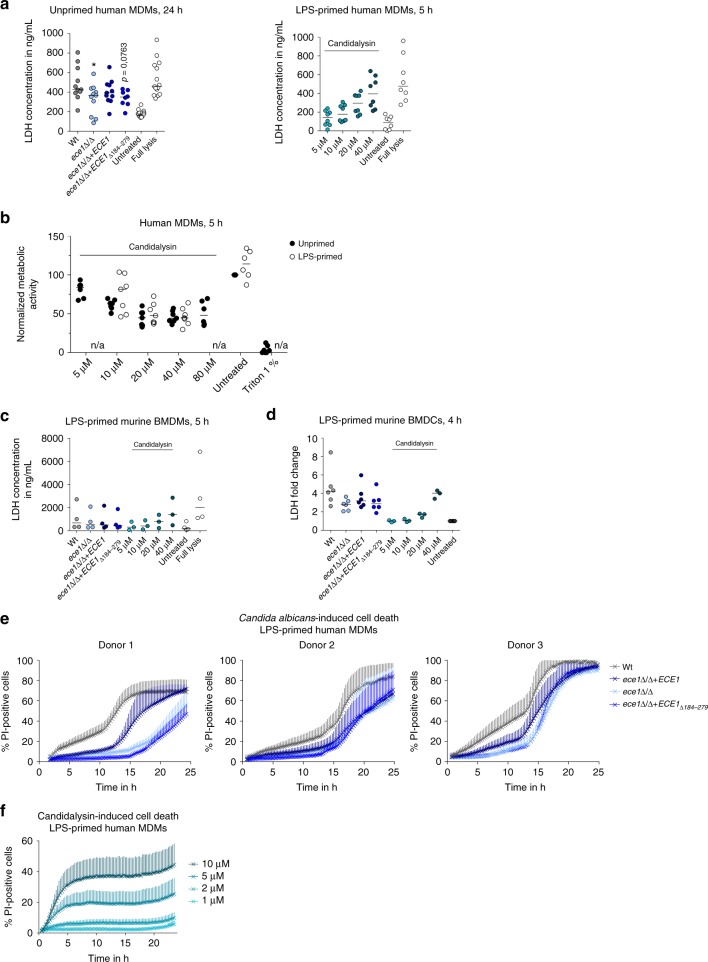
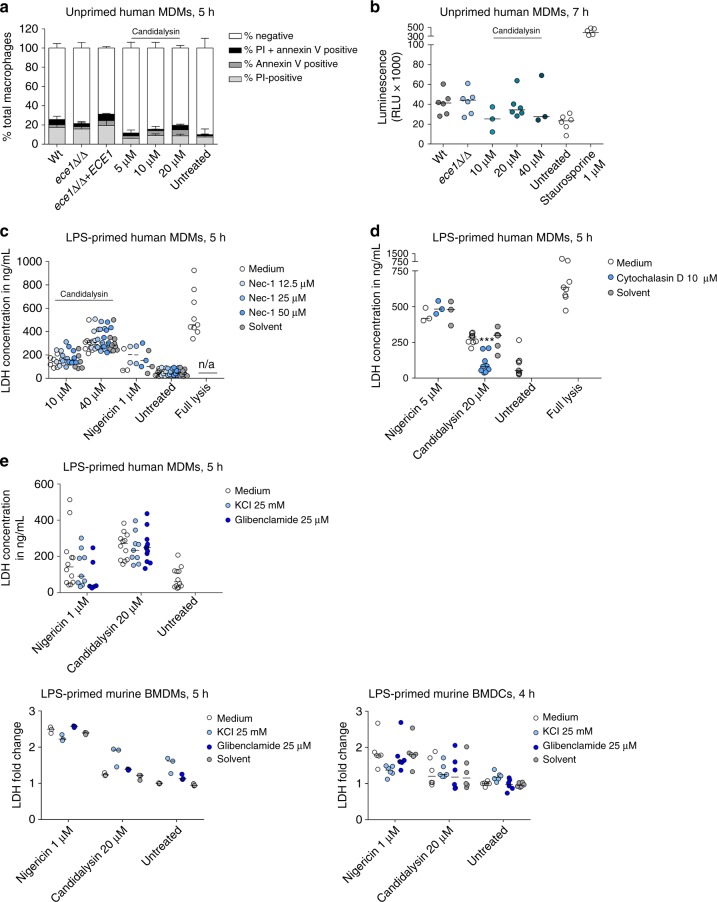
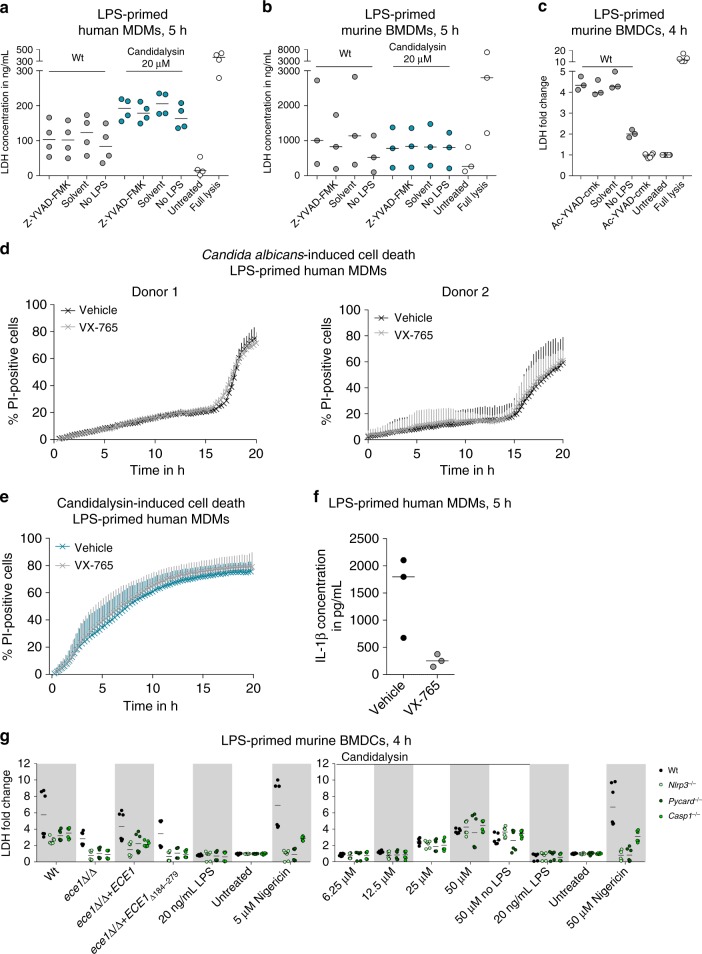
Clearance of invading microbes requires phagocytes of the innate immune system. However, successful pathogens have evolved sophisticated strategies to evade immune killing. The opportunistic human fungal pathogen Candida albicans is efficiently phagocytosed by macrophages, but causes inflammasome activation, host cytolysis, and escapes after hypha formation. Previous studies suggest that macrophage lysis by C. albicans results from early inflammasome-dependent cell death (pyroptosis), late damage due to glucose depletion and membrane piercing by growing hyphae. Here we show that Candidalysin, a cytolytic peptide toxin encoded by the hypha-associated gene ECE1, is both a central trigger for NLRP3 inflammasome-dependent caspase-1 activation via potassium efflux and a key driver of inflammasome-independent cytolysis of macrophages and dendritic cells upon infection with C. albicans. This suggests that Candidalysin-induced cell damage is a third mechanism of C. albicans-mediated mononuclear phagocyte cell death in addition to damage caused by pyroptosis and the growth of glucose-consuming hyphae.
Overview
The claims and statistics of this paper haven’t been checked yet.
Free: it reads the open-access text and checks the first 5 claims that cite a source we can check. Create a free account to check every claim.
Integrity signals
Registry
Cites
Statistics
Figures
Verification
Claims the paper makes
The claims and statistics of this paper haven’t been checked yet.
Free: it reads the open-access text and checks the first 5 claims that cite a source we can check. Create a free account to check every claim.
Claims other papers make about this one
Each is checked against this paper’s own text: does it say what the citing paper says it does?
The cited source says what the claim attributes to it.
In the citing paper
“Furthermore, filamentation enables C. albicans to kill and escape from macrophages through mechanical penetration of cell membranes [29], NLRP3/caspase-1 inflammasome-dependent pyroptosis [51], cytolysis [52] and glucose competition [53].”
From The F 1 F o -ATP synthase α subunit of Candida albicans induces inflammatory responses by controlling amino acid catabolism (2023) · cites this paper as [52]
Self-check
Percentages, sums and reported differences re-computed from the paper’s own numbers.
The self-check needs the paper’s full text.
Citations
Cites
NIH Image to ImageJ: 25 years of image analysis
Schneider, C. A., Rasband, W. S., & Eliceiri, K. W. (2012) · Nature Methods · doi:10.1038/nmeth.2089 · Cited by 64,638
Martinon, F., Burns, K., & Tschopp, J. (2002) · Molecular Cell · doi:10.1016/s1097-2765(02)00599-3 · Cited by 6,066
Gout-associated uric acid crystals activate the NALP3 inflammasome
Martinon, F., Pétrilli, V., Mayor, A., Tardivel, A., & Tschopp, J. (2006) · Nature · doi:10.1038/nature04516 · Cited by 5,326
Biologic basis for interleukin-1 in disease.
Dinarello, C. (1996) · Blood · doi:10.1182/blood.v87.6.2095.bloodjournal8762095 · Cited by 4,344
Hidden Killers: Human Fungal Infections
Brown, G. D., Denning, D. W., Gow, N. A. R., Levitz, S. M., Netea, M. G., & White, T. C. (2012) · Science Translational Medicine · doi:10.1126/scitranslmed.3004404 · Cited by 4,284
Epidemiology of Invasive Candidiasis: a Persistent Public Health Problem
Pfaller, M. A., & Diekema, D. J. (2007) · Clinical Microbiology Reviews · doi:10.1128/cmr.00029-06 · Cited by 4,174
Pyroptosis: host cell death and inflammation
Bergsbaken, T., Fink, S. L., & Cookson, B. T. (2009) · Nature Reviews Microbiology · doi:10.1038/nrmicro2070 · Cited by 3,183
Cryopyrin activates the inflammasome in response to toxins and ATP
Mariathasan, S., Weiss, D. S., Newton, K., McBride, J., O'Rourke, K., Roose-Girma, M., Lee, W. P., Weinrauch, Y., Monack, D. M., & Dixit, V. M. (2006) · Nature · doi:10.1038/nature04515 · Cited by 3,080
Hornung, V., Bauernfeind, F., Halle, A., Samstad, E. O., Kono, H., Rock, K. L., Fitzgerald, K. A., & Latz, E. (2008) · Nature Immunology · doi:10.1038/ni.1631 · Cited by 3,065
Activation and regulation of the inflammasomes
Latz, E., Xiao, T. S., & Stutz, A. (2013) · Nature Reviews Immunology · doi:10.1038/nri3452 · Cited by 2,884
Cited by
Items 101–200 of 313
Gutierrez, M. W., Bernardes, E. V. T., Changirwa, D., McDonald, B., & Arrieta, M. (2022) · Mucosal Immunology · doi:10.1038/s41385-022-00515-w · Cited by 39
“, IL-1β and IL-18) that support Th1 and Th17 differentiation.(112,114,115) Additionally, candidalysin, the cytotoxic peptide secreted by C.”
BackgroundInfluentialManipulation of host phagocytosis by fungal pathogens and therapeutic opportunities
Jia, L., González, K., Orasch, T., Schmidt, F., & Brakhage, A. A. (2024) · Nature Microbiology · doi:10.1038/s41564-024-01780-0 · Cited by 47
“C. albicans has been shown to induce macrophage cell death by permeabilizing host cell membranes through the pore-forming toxin candidalysin and the inflammasome-activated pore-forming gasdermin D 115,117,120,121 .”
Candida Infections: The Role of Saliva in Oral Health—A Narrative Review
Tamai, R., & Kiyoura, Y. (2025) · Microorganisms · doi:10.3390/microorganisms13040717 · Cited by 38
“…of action of candidalysin involves not only direct membrane damage but also activation of the nucleotide-binding oligomerization domain-like receptor family pyrin domain-containing 3 (NLRP3) inflammasome in macrophages, which is crucial for the inflammatory response during infections [126,129].”
Hsu, C., Ghannoum, M. A., Cominelli, F., & Martino, L. D. (2022) · Inflammatory Bowel Diseases · doi:10.1093/ibd/izac156 · Cited by 35
Recognition of Candida albicans and Role of Innate Type 17 Immunity in Oral Candidiasis
Pavlova, A. S., & Sharafutdinov, I. (2020) · Microorganisms · doi:10.3390/microorganisms8091340 · Cited by 39
“albicans peptide toxin candidalysin was found to trigger both NLRP3 inflammasome response and inflammasome-independent cytolysis of macrophages and dendritic cells [73,74].”
BackgroundEldesouky, H. E., Salama, E. A., Hazbun, T. R., Mayhoub, A. S., & Seleem, M. N. (2020) · Scientific Reports · doi:10.1038/s41598-020-62976-y · Cited by 33
Caspase-11-dependent IL-1α release boosts Th17 immunity against Paracoccidioides brasiliensis
Ketelut-Carneiro, N., Souza, C. O. S., Benevides, L., Gardinassi, L. G., Silva, M. C., Tavares, L., Zamboni, D. S., & Silva, J. S. (2019) · PLoS Pathogens · doi:10.1371/journal.ppat.1007990 · Cited by 38
Sugar Phosphorylation Controls Carbon Source Utilization and Virulence of Candida albicans
Wijnants, S., Riedelberger, M., Penninger, P., Kuchler, K., & Dijck, P. V. (2020) · Frontiers in Microbiology · doi:10.3389/fmicb.2020.01274 · Cited by 33
Liang, X., Chen, D., Wang, J., Liao, B., Shen, J., Ye, X., Wang, Z., Zhu, C., Gou, L., Zhou, X., et al. (2023) · International Journal of Oral Science · doi:10.1038/s41368-023-00245-0 · Cited by 32
Fungal-Induced Programmed Cell Death
Williams, T. J., Gonzales-Huerta, L. E., & Armstrong-James, D. P. H. (2021) · Journal of Fungi · doi:10.3390/jof7030231 · Cited by 31
“albicans to alkalinize the phagosome environment through the production of ammonia as well as the production of the toxin candidalysin [37,44,45].”
BackgroundCandida auris —macrophage cellular interactions and transcriptional response
Miramón, P., Pountain, A. W., & Lorenz, M. C. (2023) · Infection and Immunity · doi:10.1128/iai.00274-23 · Cited by 29
Hanaoka, M., & Domae, E. (2020) · International Immunology · doi:10.1093/intimm/dxaa070 · Cited by 33
Lin, J., Miao, J., Schaefer, K. G., Russell, C. M., Pyron, R. J., Zhang, F., Phan, Q. T., Solis, N. V., Liu, H., Tashiro, M., et al. (2024) · Nature Microbiology · doi:10.1038/s41564-024-01794-8 · Cited by 29
“…as a pro-protein from the ECE1 gene, the mature 31-amino-acid candidalysin is released from C. albicans hyphae 1,4,5 , accumulates at high concentrations within the invasion pocket 6–8 and forms pore-like structures on the host cell membranes, causing calcium influx and cell damage 4,7,9,10 .”
Is Candida albicans an opportunistic oncogenic pathogen?
Sultan, A. S., Theofilou, V. I., Alfaifi, A. A., Montelongo‐Jauregui, D., & Jabra‐Rizk, M. A. (2022) · PLoS Pathogens · doi:10.1371/journal.ppat.1010413 · Cited by 28
“Additionally, candidalysin was also associated with downstream activation of type 17 immune responses [36], as well as the promotion of the NLRP3 inflammasome [37].”
BackgroundOpportunistic Candida Infections in Critical COVID-19 Patients
Çavuş, M. A., & Sav, H. (2022) · Polish Journal of Microbiology · doi:10.33073/pjm-2022-036 · Cited by 31
“Phagocyte damage may benefit the fungus by host cell lysis (Kasper et al. 2018).”
BackgroundGlobal fungal-host interactome mapping identifies host targets of candidalysin
Zhang, T., Chen, Y., Tan, J.-C., Zhou, J., Chen, W.-N., Jiang, T., Zha, J., Zeng, X.-K., Li, B., Wei, L., et al. (2024) · Nature Communications · doi:10.1038/s41467-024-46141-x · Cited by 31
“This would also be a useful control for Biacore experiments.”
Deciphering internal and external factors influencing intestinal junctional complexes
Markovich, Z., Abreu, A., Sheng, Y., Han, S. M., & Xiao, R. (2024) · Gut Microbes · doi:10.1080/19490976.2024.2389320 · Cited by 26
Chlorogenic acid and intestinal health: mechanistic insights and therapeutic applications
Xu, J., Zhao, X., Yang, S., Tang, M., Zhao, R., & Hu, S. (2025) · Food & Function · doi:10.1039/d5fo00853k · Cited by 28
Chu, L., Yi, Q., Yan, Y., Peng, J., Li, Z., Jiang, F., He, Q., Ouyang, L., Wu, S., Fu, C., et al. (2022) · Frontiers in Medicine · doi:10.3389/fmed.2022.882763 · Cited by 29
Gut mycobiome in metabolic diseases: Mechanisms and clinical implication
Zhou, X., Zhang, X., & Yu, J. Q. (2023) · Biomedical Journal · doi:10.1016/j.bj.2023.100625 · Cited by 28
Microbial adaptive pathogenicity strategies to the host inflammatory environment
Hitzler, S. U. J., Fernández-Fernández, C., Montaño, D. E., Dietschmann, A., & Gresnigt, M. S. (2024) · FEMS Microbiology Reviews · doi:10.1093/femsre/fuae032 · Cited by 28
Self-citationSome like it hot: Candida activation of inflammasomes
Camilli, G., Griffiths, J. S., Ho, J., Richardson, J. P., & Naglik, J. R. (2020) · PLoS Pathogens · doi:10.1371/journal.ppat.1008975 · Cited by 29
“Furthermore, secretion of the peptide toxin candidalysin can also induce NLRP3/ASC/caspase-1 assembly and IL-1β maturation in human and murine macrophages via a mechanism requiring potassium efflux [17].”
BackgroundSelf-citationRussell, C. M., Rybak, J. A., Miao, J., Peters, B. M., & Barrera, F. N. (2022) · Journal of Biological Chemistry · doi:10.1016/j.jbc.2022.102829 · Cited by 30
“albicans clinical isolates revealed that CL isoforms generally fall into CLalb-SC5314- or CLalb-529L-like sequences (54).”
BackgroundKaden, T., Alonso‐Román, R., Akbarimoghaddam, P., Mosig, A. S., Graf, K., Raasch, M., Hoffmann, B., Figge, M. T., Hube, B., & Gresnigt, M. S. (2024) · Biomaterials · doi:10.1016/j.biomaterials.2024.122525 · Cited by 27
Self-citationAntivirulence and avirulence genes in human pathogenic fungi
Siscar-Lewin, S., Hube, B., & Brunke, S. (2019) · Virulence · doi:10.1080/21505594.2019.1688753 · Cited by 30
“production of the pro-inflammatory cytokine IL-1β and recruitment of other immune cells to the site of infection [117].”
BackgroundSelf-citationCryptococcus neoformans Secretes Small Molecules That Inhibit IL-1β Inflammasome-Dependent Secretion
Bürgel, P. H., Marina, C. L., Saavedra, P. H. V., Albuquerque, P., de Oliveira, S. A. M., Júnior, P. H. D. H. V., de Castro, R. J. A., Heyman, H. M., Coelho, C., Cordero, R. J. B., et al. (2020) · Mediators of Inflammation · doi:10.1155/2020/3412763 · Cited by 26
Candida spp. and phagocytosis: multiple evasion mechanisms
Oliver, J. C., Ferreira, C. B. R. J., Silva, N. C., & Dias, A. L. T. (2019) · Antonie van Leeuwenhoek · doi:10.1007/s10482-019-01271-x · Cited by 29
“This one contributes to the capacity of this fungus to induce maturation and secretion of IL-1b from macrophages and dendritic cells (Kasper et al. 2018; Rogiers et al. 2019).”
BackgroundShen, H., Yu, Y., Chen, S.-M., Sun, J., Fang, W. Y., Guo, S., Hou, W.-T., Qiu, X.-R., Zhang, Y., Chen, Y., et al. (2020) · Frontiers in Microbiology · doi:10.3389/fmicb.2020.01648 · Cited by 24
Categorizing Sequences of Concern by Function To Better Assess Mechanisms of Microbial Pathogenesis
Godbold, G. D., Kappell, A. D., LeSassier, D. S., Treangen, T. J., & Ternus, K. L. (2021) · Infection and Immunity · doi:10.1128/iai.00334-21 · Cited by 29
“This includes disabling a cell, as with Shiga toxin from Shigella / Escherichia coli (24), or membrane destabilization, as with candidalysin from Candida albicans (25, 26).”
BackgroundLeiser, O. P., Hobbs, E. C., Sims, A. M., Korch, G. W., & Taylor, K. (2021) · Pathogens · doi:10.3390/pathogens10111497 · Cited by 26
Great balls of fire: activation and signalling of inflammatory caspases
Bateman, G., Hill, B., Knight, R., & Boucher, D. (2021) · Biochemical Society Transactions · doi:10.1042/bst20200986 · Cited by 25
Bi-Directional Relationship Between Autophagy and Inflammasomes in Neurodegenerative Disorders
Panda, C., & Mahapatra, R. K. (2022) · Cellular and Molecular Neurobiology · doi:10.1007/s10571-021-01184-2 · Cited by 23
“NLRP3 inflammasome can be activated by varieties of signals, like bacterial-fungal pathogens (Gupta et al. 2014; Kasper et al. 2018), nucleic acids (Kanneganti et al.”
BackgroundAnandamide prevents the adhesion of filamentous Candida albicans to cervical epithelial cells
Sionov, R. V., Feldman, M., Smoum, R., Mechoulam, R., & Steinberg, D. (2020) · Scientific Reports · doi:10.1038/s41598-020-70650-6 · Cited by 22
Hyphal Als proteins act as CR3 ligands to promote immune responses against Candida albicans
Zhou, T., Solis, N. V., Marshall, M., Yao, Q., Garleb, R., Yang, M., Pearlman, E., Filler, S. G., & Liu, H. (2024) · Nature Communications · doi:10.1038/s41467-024-48093-8 · Cited by 21
“We have performed additional experiments to support that Als protein act as CR3 ligands to promote immune against C. albicans , including (1) New pull-down assays with particulate β-glucan, purified Als3, and recombinant CR3 showing Als3 binding to the CD11b I domain (using I-domain specific antibody ICRF44) and the s…”
InfluentialGut mycobiome alterations and implications for liver diseases
Zeng, S.-L., & Schnabl, B. (2024) · PLoS Pathogens · doi:10.1371/journal.ppat.1012377 · Cited by 21
Pountain, A. W., Collette, J. R., Farrell, W. M., & Lorenz, M. C. (2021) · mBio · doi:10.1128/mbio.03317-21 · Cited by 21
Elalouf, A., Elalouf, H., & Rosenfeld, A. (2023) · Frontiers in Immunology · doi:10.3389/fimmu.2023.1292625 · Cited by 24
Candidalysin biology and activation of host cells
Lortal, L., Lyon, C. M., Sprague, J. L., Sonnberger, J., Paulin, O. K. A., Wickramasinghe, D. N., Richardson, J. P., Hube, B., & Naglik, J. R. (2025) · mBio · doi:10.1128/mbio.00603-24 · Cited by 24
“In contrast, LDH release from phagocytes remained unchanged, suggesting that candidalysin-medi ated host cell damage can occur independently of host inflammasome signaling (80).”
InfluentialSelf-citationRespiration supports intraphagosomal filamentation and escape of Candida albicans from macrophages
Case, N. T., Westman, J., Hallett, M. T., Plumb, J. D., Farheen, A., Maxson, M. E., MacAlpine, J., Liston, S. D., Hube, B., Robbins, N., et al. (2023) · mBio · doi:10.1128/mbio.02745-23 · Cited by 20
Self-citationPhytotherapy of Vulvovaginal Candidiasis: A Narrative Review
Picheta, N., Piekarz, J., Burdan, O., Satora, M., Tarkowski, R., & Kułak, K. (2024) · International Journal of Molecular Sciences · doi:10.3390/ijms25073796 · Cited by 20
“For this reason, it is a good idea to look for natural methods; the purpose of this paper was precisely to present an alternative form of treatment with herbs, which is little talked about.”
BackgroundCould Candida Overgrowth Be Involved in the Pathophysiology of Autism?
Herman, A., & Herman, A. P. (2022) · Journal of Clinical Medicine · doi:10.3390/jcm11020442 · Cited by 25
Zhang, Z., Zhang, Y., Zhang, M., Yu, C., Yang, P., Xu, M., Ling, J., Wu, Y., Zhu, Z., Chen, Y., et al. (2023) · Critical Reviews in Food Science and Nutrition · doi:10.1080/10408398.2023.2294164 · Cited by 23
“These microbial stimulants can include various sources such as Gram-positive and Gram-negative bacteria, viruses, fungi, or protozoan pathogens (Demirel et al. 2020; Ji et al. 2022; Kasper et al. 2018; Mathur et al. 2019; Paroli et al. 2018; Rogiers et al. 2019).”
Brazilin is a natural product inhibitor of the NLRP3 inflammasome
McMahon, E., El‐Sayed, S., Green, J., Hoyle, C., FitzPatrick, L. M., Jones, E. V., Corrie, E., Kelly, R. L., Challinor, M., Freeman, S., et al. (2024) · iScience · doi:10.1016/j.isci.2024.108968 · Cited by 20
Candida albicans Virulence Traits in Commensalism and Disease
Fróis-Martins, R., Lagler, J., & LeibundGut‐Landmann, S. (2024) · Current Clinical Microbiology Reports · doi:10.1007/s40588-024-00235-8 · Cited by 23
“Candidalysin-induced inflammation is further enhanced by inflammasome activation via candidalysin-mediated membrane rupture and K + efflux in macrophages [81].”
Recognition of Fungal Components by the Host Immune System
García-Carnero, L. C., Martínez-Álvarez, J. A., Salazar-García, L. M., Lozoya‐Pérez, N. E., González-Hernández, S. E., & Tamez-Castrellón, A. K. (2019) · Current Protein and Peptide Science · doi:10.2174/1389203721666191231105546 · Cited by 20
Liu, Z., Yang, H., Huang, R., Li, X., Sun, T., & Zhu, L. (2025) · Clinical Microbiology Reviews · doi:10.1128/cmr.00284-24 · Cited by 23
“Allicin, derived from garlic, hinders the expression of C. albicans virulence genes ECE1 (294) and SIR2 (295), thereby suppressing hyphal morphogenesis (295).”
Immunomodulatory responses of differentially polarized macrophages to fungal infections
Xie, Y., Zhou, X., Zhang, J., Yu, H. B., & Song, Z. (2022) · International Immunopharmacology · doi:10.1016/j.intimp.2022.109089 · Cited by 19
Gut Non-Bacterial Microbiota: Emerging Link to Irritable Bowel Syndrome
Liu, A., Gao, W., Zhu, Y., Hou, X., & Chu, H. (2022) · Toxins · doi:10.3390/toxins14090596 · Cited by 19
“A cytolytic peptide toxin, candidalysin, can trigger the NLRP3 inflammasome [60] and result in the pyroptosis of macrophages and DCs [61,62].”
BackgroundZhao, S., Shang, A., Guo, M., Shen, L., Han, Y., & Huang, X. (2022) · Frontiers in Microbiology · doi:10.3389/fmicb.2022.1029966 · Cited by 20
“However, Candida hemolysin also induces NLRP3 activation, leading to an enhanced host-protective proinflammatory response in mononuclear phagocytes (Kasper et al., 2018).”
BackgroundFunctional analysis of the Candida albicans ECE1 Promoter
Garbe, E., Thielemann, N., Hohner, S., Kumar, A., Vylkova, S., Kurzai, O., & Martin, R. (2023) · Microbiology Spectrum · doi:10.1128/spectrum.00253-23 · Cited by 19
“(5, 6), neutrophil recruitment (7, 8), and release of the proinflammatory cytokines IL-17,”
BackgroundThe effect of herbal medicine in innate immunity to Candida albicans
Bao, M.-Y., Li, M., Bu, Q., Yang, Y., Song, H., Wang, C., Wang, T.-M., & Li, N. (2023) · Frontiers in Immunology · doi:10.3389/fimmu.2023.1096383 · Cited by 20
“Candidalysin plays an important role in VVC through recruiting neutrophils and activating NLRP3 inflammasome (78, 79).”
BackgroundZakerska‐Banaszak, O., Żuraszek-Szymańska, J., Eder, P., Ladziak, K., Słomski, R., & Skrzypczak-Zielińska, M. (2024) · International Journal of Molecular Sciences · doi:10.3390/ijms25179589 · Cited by 19
“Furthermore, it was proved that the interaction of Candida tropicalis with Serratia marcescens and E. coli results in increased biofilm production [33,34].”
BackgroundFungi, immunosenescence and cancer
Xu, B., Luo, Z., Niu, X., Li, Z., Lu, Y., & Li, J. (2025) · Seminars in Cancer Biology · doi:10.1016/j.semcancer.2025.01.002 · Cited by 20
Mucosal Immunity to Gut Fungi in Health and Inflammatory Bowel Disease
Carlson, S. L., Mathew, L., Savage, M., Kok, K. B., Lindsay, J. O., Munro, C. A., & McCarthy, N. E. (2023) · Journal of Fungi · doi:10.3390/jof9111105 · Cited by 19
“In addition to this role in cellular damage, candidalysin expression is also thought to constitute a mechanism of immune evasion, since this toxin can activate the NLRP3 inflammasome to trigger mononuclear phagocyte cell death after fungal engulfment [68].”
BackgroundYang, L., Li, W., Zhong, J., & Liu, X. (2024) · Biomedicine & Pharmacotherapy · doi:10.1016/j.biopha.2024.117352 · Cited by 18
Fang, T., Xiong, J., Huang, X., Fang, X., Shen, X., Jiang, Y., & Lu, H. (2024) · Microbiological Research · doi:10.1016/j.micres.2024.127964 · Cited by 17
“We've got to get out”—Strategies of human pathogenic fungi to escape from phagocytes
Sonnberger, J., Kasper, L., Lange, T., Brunke, S., & Hube, B. (2023) · Molecular Microbiology · doi:10.1111/mmi.15149 · Cited by 17
Self-citationImpact of Gut Microbiome on Gut Permeability in Liver and Gut Diseases
Saha, P., & Hartmann, P. (2025) · Microorganisms · doi:10.3390/microorganisms13061188 · Cited by 16
“Candidalysin promotes the activation of the NLRP3 inflammasome in phagocytes [122] and neutrophil recruitment, and concomitantly increases proinflammatory cytokine (including IL-1 α , IL-1 β , and IL-8) release [123].”
Dehydroisohispanolone as a Promising NLRP3 Inhibitor Agent: Bioevaluation and Molecular Docking
González‐Cofrade, L., Cuadrado, I., Amesty, Á., Estévez‐Braun, A., Heras, B. D. L., & Hortelano, S. (2022) · Pharmaceuticals · doi:10.3390/ph15070825 · Cited by 17
“NLRP3 can be activated by a wide range of stimuli, including ATP, K+ ionophores [28], heme [29], particulate matter [30], pathogen-associated RNA [31] and bacterial and fungal toxins and components[32,33].”
BackgroundResearch advances and public health strategies in China on WHO priority fungal pathogens
Wang, Y., Han, L., Gong, J., Liu, L., Miao, B., & Xu, J. (2025) · Mycology: An International Journal on Fungal Biology · doi:10.1080/21501203.2025.2561612 · Cited by 15
“The hyphae cells have also been found to produce candidalysin which is capable of causing cytolysis of macrophages and dendritic cells (Kasper et al. 2018).”
Alipour, S., Mardi, A., Shajari, N., Kazemi, T., Sadeghi, M. R., Heris, J. A., Masoumi, J., & Baradaran, B. (2024) · Life Sciences · doi:10.1016/j.lfs.2024.122686 · Cited by 16
Variations in candidalysin amino acid sequence influence toxicity and host responses
Wickramasinghe, D. N., Lyon, C. M., Lee, S., Hepworth, O. W., Priest, E. L., Maufrais, C., Ryan, A. P., Permal, E., Sullivan, D. J., McManus, B. A., et al. (2024) · mBio · doi:10.1128/mbio.03351-23 · Cited by 16
Self-citationImam, M. W., & Luqman, S. (2024) · Archives of Microbiology · doi:10.1007/s00203-024-03986-6 · Cited by 18
“Candidalysin directly damages the intercalation and permeabilization of the epithelial membrane and the formation of pores, leading to the deterioration of cytoplasmic contents (Moyes et al. 2016; Kasper et al. 2018; Naglik et al. 2019; König et al. 2020; Hanaoka and Domae 2021).”
Infection metallomics for critical care in the post‐COVID era
Patil, R. H., Luptáková, D., & Havlíček, V. (2021) · Mass Spectrometry Reviews · doi:10.1002/mas.21755 · Cited by 15
Tan, Y., Hu, Y., Yang, Y., & Chu, H. (2025) · MedComm · doi:10.1002/mco2.70532 · Cited by 15
Patnaik, S., Durairajan, S. S. K., Singh, A. K., Krishnamoorthi, S., Iyaswamy, A., Mandavi, S. P., Jeewon, R., & Williams, L. L. (2024) · World Journal of Gastroenterology · doi:10.3748/wjg.v30.i48.5212 · Cited by 16
Deng, X., Li, H., Wu, A., He, J., Mao, X., Dai, Z., Tian, G., Cai, J., Tang, J., & Luo, Y. (2025) · Animals · doi:10.3390/ani15050710 · Cited by 16
“For example, C. albicans can damage intestinal macrophages [133,134], which play an important role in the activation and induction of antifungal immunity in the colonic mucosa [127].”
Mao, X., Li, H., Ge, L., Liu, S., Hou, L., Yue, D., Du, H., Pan, C., Gan, F., Liu, Y., et al. (2021) · Journal of Biochemical and Molecular Toxicology · doi:10.1002/jbt.22933 · Cited by 14
Carnosol inhibits the growth and biofilm of Candida albicans
Yang, L., Sui, Y., Zhong, L., Ma, T., Ma, Z., & Liu, X. (2021) · Journal de Mycologie Médicale · doi:10.1016/j.mycmed.2021.101234 · Cited by 16
Piezo1 senses hyphae and initiates host defense against pathogenic fungi
Shi, Y., Yang, B., Linghu, Y., Liu, Y., Li, H., Xing, Y., Wu, B., Gao, Y., Liao, L., Zheng, Y., et al. (2025) · Cell Reports · doi:10.1016/j.celrep.2025.115839 · Cited by 13
Hu, L., Bai, G., Xu, Q., Zhao, G., Jiang, N., Yao, H., Liu, X., & Du, Z. (2023) · International Immunopharmacology · doi:10.1016/j.intimp.2023.110195 · Cited by 15
The Impact of NLRP3 Activation on Hematopoietic Stem Cell Transplantation
Espinoza, J. L., Kamio, K., Lam, V. Q., & Takami, A. (2021) · International Journal of Molecular Sciences · doi:10.3390/ijms222111845 · Cited by 12
“Direct activation of NLRP3 inflammasome has also been documented by pathogenic fungal products derived from Candida albicans and Aspergillus [32,33], and infections with these pathogens are an important cause of morbidity and mortality among HSCT recipients [1].”
BackgroundWang, L., Yang, H., Yan, H., Ge, R., Wang, Y.-X., Xue, S., Li, L., Lyu, L., & Che, C. (2022) · Current Medical Science · doi:10.1007/s11596-022-2512-9 · Cited by 12
Macrophage pyroptosis induced by Candida albicans
Zhang, F.-Y., Lian, N., & Li, M. (2024) · Pathogens and Disease · doi:10.1093/femspd/ftae003 · Cited by 12
“In Gsdmd and Nlrp3 knoc k out macr opha ges, the ability to induce macr opha ge l ysis in ece1 deficient C. albicans is lo w er than that in wild-type C. albicans (Kasper et al. 2018 , Olivier et al. 2022 ).”
BackgroundJaeger, M., Dietschmann, A., Austermeier, S., Dinçer, S., Porschitz, P., Vornholz, L., Maas, R. J. A., Sprenkeler, E. G. G., Ruland, J., Wirtz, S. J., et al. (2024) · Virulence · doi:10.1080/21505594.2024.2333367 · Cited by 11
“Candidalysin is a major driver of fungal escape from macrophages [38– 40].”
BackgroundInfluentialSelf-citationAn, D., Xu, W., Ge, Y.-X., Ge, Y., Zhang, L., Zhu, Y. Z., Zhang, Z., Fan, J., Gao, R., Jiang, L., et al. (2023) · Neurochemical Research · doi:10.1007/s11064-023-03943-7 · Cited by 10
“, a Caspase-dependent cell death that is inherently inflammatory [12], is triggered by various pathological stimuli, such as microbes [13], extracellular toxins [14] and reactive oxygen species (ROS) [15].”
BackgroundPyroptosis in microbial infectious diseases
Xiao, C., Cao, S., Li, Y., Luo, Y., Liu, J., Chen, Y., Bai, Q., & Chen, L. (2023) · Molecular Biology Reports · doi:10.1007/s11033-023-09078-w · Cited by 10
“…upregulation of ergosterol, and releas - ing of toxic factors (candidalysin), then activate NLRP3 inflammasome and pyroptosis, thereby induce macrophage lysis to facilitate its survival [81, 85 – 87 ]. that extensive pyroptosis does not exert a beneficial antivi - ral role in IAV infection [ 65].”
A Novel Inhibitor INF 39 Promotes Osteogenesis via Blocking the NLRP3/IL‐1β Axis
Chen, W., Tang, P., Fan, S., & Jiang, X. (2022) · BioMed Research International · doi:10.1155/2022/7250578 · Cited by 13
Gifford, H., Bedekovic, T., Helmstetter, N., Gregory, J., Ma, Q., Brand, A., Wilson, D., Rhodes, J. L., Ramsdale, M., Kudoh, T., et al. (2025) · Communications Biology · doi:10.1038/s42003-025-09321-z · Cited by 11
Infection-induced glucose starvation triggers NINJ1-dependent macrophage lysis and Candida escape
Weerasinghe, H., Tulyaprawat, O., Stölting, H., Sonnberger, J., Mobbs, B., Nickson, J., Lange, T., van Denderen, B., Lo, T. L., Schille, T. B., et al. (2026) · Nature Communications · doi:10.1038/s41467-026-74195-6 · Cited by 9
“Candidalysin damages mitochondrial membranes and the plasma membrane of host cells 49,50,64 , providing the likely mechanism by which it activates NINJ1.”
Self-citationChen, H.-T., Li, J.-S., Li, J., Li, L., Xu, Z.-C., Zhang, Y., & Wang, R. (2023) · Journal of Ethnopharmacology · doi:10.1016/j.jep.2023.116361 · Cited by 9
Jampílek, J., & Kráľová, K. (2019) · Elsevier eBooks · doi:10.1016/b978-0-12-817998-7.00015-x · Cited by 9
Lin, J., & Filler, S. G. (2025) · PLoS Pathogens · doi:10.1371/journal.ppat.1013284 · Cited by 8
“Central to the function of candidalysin is its ability to insert into the plasma membrane and form pores that disrupt osmotic balance and trigger the lysis of red blood cells, epithelial cells, and macrophages [1,5,6].”
Solubility affects IL-1β-producing activity of the synthetic candidalysin peptide
Mori, T., Kataoka, H., Tanabe, G., & Into, T. (2022) · PLoS ONE · doi:10.1371/journal.pone.0273663 · Cited by 9
Nickl, R., Hauser, S., Pietzsch, J., & Richter, T. (2023) · Bioengineering · doi:10.3390/bioengineering10010117 · Cited by 8
“candidalysin formation of pores in host cell membrane, induction of potassium efflux to cause NLRP3 inflammasome activation [99,100]”
BackgroundRadosa, S., Sprague, J. L., Lau, S., Tóth, R., Linde, J., Krüger, T., Sprenger, M., Kasper, L., Westermann, M., Kniemeyer, O., et al. (2021) · Cellular Microbiology · doi:10.1111/cmi.13389 · Cited by 9
“…phagosomal compartments of macrophages, C. albicans induces intracellular filamentation and secretes the cytolytic toxin candidalysin to actively escape from these phagocytic host cells (Kasper et al., 2018; Kaur et al., 2007; May & Casadevall, 2018; Moyes et al., 2016; Seider et al., 2011).”
BackgroundSelf-citationMartínez‐López, R., Hernáez, M. L., Redondo, E., Calvo, G., Radau, S., Gil, C., & Monteoliva, L. (2020) · bioRxiv (Cold Spring Harbor Laboratory) · doi:10.1101/2020.10.02.323774 · Cited by 8
Praetorius, J., Hitzler, S. U. J., Gresnigt, M. S., & Figge, M. T. (2025) · FEMS Yeast Research · doi:10.1093/femsyr/foaf011 · Cited by 8
“Furthermore, the inability to form hyphae results in a loss of candidalysin toxin production and delivery, hindering tissue or imm une cell l ysis (Birse et al. 1993 , Kasper et al. 2018 , Ho et al. 2019 , Mogav er o et al. 2021 ).”
Self-citationVedekhina, T., Pavlova, I., Svetlova, J. I., Khomyakova, J., & Varizhuk, A. M. (2025) · International Journal of Molecular Sciences · doi:10.3390/ijms262211015 · Cited by 7
“Such motifs have been identified in bacterial and fungal pathogens [223,224].”
Avian Candidiasis: A Comprehensive Review of Pathogenesis, Diagnosis, and Control
Haroun, M., Tratrat, C., Mathew, R. T., Munir, M., Sattar, M. N., Shawky, M., Kochkar, H., Aldakhilallah, O. N., Ghafoor, A., Turk, K. G. B., et al. (2026) · Veterinary Sciences · doi:10.3390/vetsci13020171 · Cited by 7
“It is believed that it serves in instilling a systemic infection and mortality [106].”
Insights into the evolution of Candidalysin and recent developments
Konwar, A., Mathur, K., Pandey, S., Bhorali, K., Thakur, A., & Puria, R. (2025) · Archives of Microbiology · doi:10.1007/s00203-025-04414-z · Cited by 7
“The first such role was reported by (Kasper et al. 2018) in 2018 where the authors associated candidalysin induced NLRP (NOD-Like Receptor Protein) inflammasome activation with mem - brane permeabilization and a lowered level of cytosolic K + ion levels in macrophages.”
Pellón, A., Nasab, S. D. S., Bidkhori, G., Griffiths, J. S., Vaga, S., Begum, N., Blagojevic, M., Sigh, N. K., Kotowicz, N. K., Uzochukwu, I., et al. (2026) · Science Advances · doi:10.1126/sciadv.aea0405 · Cited by 7
“This toxin has also been linked to the activation of macrophages ( 23 , 24 ), endothelial cells ( 25 ), microglia ( 26 ), and platelets ( 27 ).”
Self-citationHain, S., & Drummond, R. A. (2021) · Elsevier eBooks · doi:10.1016/b978-0-12-818731-9.00102-6 · Cited by 8
Self-citationDual wave of neutrophil recruitment determines the outcome of C. albicans infection
Zhu, W., Zhang, H., Dong, Q., Song, H., & Zhao, L. (2023) · Frontiers in Cellular and Infection Microbiology · doi:10.3389/fcimb.2023.1239593 · Cited by 6
“leading to cytolysis in mononuclear phagocytes (Kasper et al., 2018).”
Conte, M., Eletto, D., Pannetta, M., Esposito, R., Monti, M. C., Morretta, E., Tessarz, P., Morello, S., Tosco, A., & Porta, A. (2024) · Biochimica et Biophysica Acta (BBA) - Gene Regulatory Mechanisms · doi:10.1016/j.bbagrm.2024.195048 · Cited by 6
Lian, D., Zhu, L., Yu, Y., Zhang, X., Lin, Y.-K., Liu, J., Han, R., Guo, Y., Cai, D., Xiao, W., et al. (2022) · Journal of Leukocyte Biology · doi:10.1002/jlb.3ma0821-418r · Cited by 6
CVF1 Promotes Invasive Candida albicans Infection via Inducing Ferroptosis
Luo, G., Ma, Y., Chen, C., Hu, Y., Yan, C., Wang, D., Wang, C., Wang, Y., Yu, X., Sibirny, A. А., et al. (2025) · Journal of Fungi · doi:10.3390/jof11050342 · Cited by 5
“BMDMs were generated as described by Kasper L et al. [24].”
Zheng, N., Wang, D., Xing, G., Gao, Y., Li, S., Liu, J., Kang, J., Sha, S., Cheng, L., Fan, S., et al. (2025) · BMC Microbiology · doi:10.1186/s12866-025-04348-y · Cited by 5
“C. albicans secretes candidalysin, a pore-forming peptide toxin that activates the NLRP3 inflammasome and induces pro-inflammatory cytokines such as IL-1α, IL-1β, IL-8, and IL-36 [13].”
Systems biology of host-Candida interactions: understanding how we shape each other
Hodgins-Davis, A., & O’Meara, T. R. (2020) · Current Opinion in Microbiology · doi:10.1016/j.mib.2020.04.001 · Cited by 5
Potential Impact of Bioactive Compounds as NLRP3 Inflammasome Inhibitors: An Update
Singh, S. K., Sharma, S., & Sharma, H. (2024) · Current Pharmaceutical Biotechnology · doi:10.2174/0113892010276859231125165251 · Cited by 5
Metadata
- Authors
- Kasper, L., König, A., Koenig, P.-A., Gresnigt, M. S., Westman, J., Drummond, R. A., Lionakis, M. S., Groß, O., Ruland, J., Naglik, J. R., & Hube, B.
- Affiliations
- Leibniz-Institut für Naturstoff-Forschung und Infektionsbiologie e. V. - Hans-Knöll-Institut (HKI) (DE)
- TUM Klinikum (DE)
- Hospital for Sick Children (CA)
- National Institutes of Health (US)
- University of Freiburg (DE)
- King's College London (GB)
- Corresponding author
- Hube, Bernhard
- ORCID
- Venue
- Nature Communications
- Published
- 2018-10-15
- Volume
- 9
- Issue
- 1
- Pages
- 4260-4260
- ISSN
- 2041-1723 (ISSN-L)
- PMC
- PMC6189146
- OpenAlex
- W2896513955
- Semantic Scholar
- fd3421cadf3c9f88b07d96207bc90d4abc1dc346
- Cited by
- 297
- References
- 78
- Citations by year
- 2026: 36 · 2025: 45 · 2024: 40 · 2023: 38 · 2022: 35 · 2021: 37 · 2020: 42 · 2019: 22
- FWCI
- 8.98
- Type
- journal article
- Language
- en
- Open access
- gold
- doi.org
- Licence
- cc-by
- creativecommons.org/licenses/by/4.0 (tdm)
- creativecommons.org/licenses/by/4.0 (vor)
- Locations
- Nature Communications (publishedVersion, cc-by)
- Europe PMC (PubMed Central) (publishedVersion, other-oa)
- PubMed Central (publishedVersion, cc-by)
- PubMed (publishedVersion)
- Research Portal (King's College London) (submittedVersion, cc-by)
- RePEc: Research Papers in Economics (submittedVersion)
- DOAJ (DOAJ: Directory of Open Access Journals) (submittedVersion)
- DOAJ (DOAJ: Directory of Open Access Journals) (submittedVersion, cc-by-sa)
- mediaTUM – the media and publications repository of the Technical University Munich (Technical University Munich) (submittedVersion)
- University of Birmingham Research Portal (University of Birmingham) (submittedVersion, cc-by)
- University of Birmingham Research Portal (University of Birmingham) (submittedVersion, other-oa)
- Radboud Repository (Radboud University) (submittedVersion)
- Radboud Repository (Radboud University) (submittedVersion, other-oa)
- Funders
- European Molecular Biology Organization
- Alexander von Humboldt-Stiftung
- Division of Intramural Research, National Institute of Allergy and Infectious Diseases (DE022550)
- King's College London (IS-BRC-1215–20006)
- European Commission (606786, FP7-PEOPLE-2013-Initial Training Network)
- Rosetrees Trust
- Deutsche Forschungsgemeinschaft (SFB 1054, SFB1335, SPP 1580, RU 695/6-1, project C1), FP7-PEOPLE-2013, CRC/TR FungiNet Project C1)
- King's Health Partners (R170501)
- National Institutes of Health (5r37de022550-12, DE022550, R37DE022550)
- Directorate for Biological Sciences
- Medical Research Council (MR/J008303/1, MR/M011372/1, MC_PC_16048)
- Biotechnology and Biological Sciences Research Council (BB/N014677/1)
- Leibniz-Gemeinschaft (InfectoOptics SAS-2015-HKI-LWC, SAS-2015, SAS-2015-HKI-LWC)
- National Institute of Allergy and Infectious Diseases (DE022550)
- National Institute of Dental and Craniofacial Research (R37-DE022550)
- FP7 Ideas: European Research Council (322865, 337689)
- FP7 People: Marie-Curie Actions (FP7-PEOPLE-2013)
- NHLBI Division of Intramural Research
- Topics
- Life Sciences › Biochemistry, Genetics and Molecular Biology › Molecular Biology › Inflammasome and immune disorders
- Health Sciences › Medicine › Infectious Diseases › Antifungal resistance and susceptibility
- Life Sciences › Biochemistry, Genetics and Molecular Biology › Molecular Biology › Fungal and yeast genetics research
- Keywords
- candidalysin, Candida albicans, NLRP3 inflammasome, caspase-1 activation, dendritic cells, mononuclear phagocytes, endothelin-converting enzyme-1, potassium efflux, pyroptosis, hyphal growth, innate immunity
- MeSH terms
- NLR Family, Pyrin Domain-Containing 3 Protein, Actins, Animals, Bone Marrow Cells, Dendritic Cells, Female, Fungal Proteins, Humans, Inflammation, Leukocytes, Mononuclear, Macrophages, Mice, Inbred C57BL, Mycotoxins, Necrosis, Phagocytes, Phagosomes, Potassium, Cell Death, Caspase 1, Interleukin-1beta, Inflammasomes
About these checks
Registry, retraction, Cites and statistics results are computed, not judged, with one exception: a printed reference that no index lists is read once by a model before it counts as a citation error. Claims are extracted by a model and kept only when their quote appears verbatim in the text; each cited source is then checked, with a model’s help, for whether it says what the claim relies on. Those verdicts can be wrong — read the claim’s quote and the cited source before relying on one.
Statistics and arithmetic are recomputed, not judged.
Confidence bands are shown only for fields calibrated on our annotated test set. None is calibrated yet, so no band is shown.
What counts as a claim ›How we measure confidence ›How we check this ›
Are you an author, or do you see a problem with this page? Request a review
Data sources
Bibliographic data: Semantic Scholar, OpenAlex, Crossref.
Contains information from the Semantic Scholar Academic Graph Datasets, made available under the ODC Attribution License (ODC-BY 1.0).
Semantic Scholar’s data is described in: Kinney, R., et al. (2023). The Semantic Scholar Open Data Platform. arXiv:2301.10140.
