

The fungal peptide toxin Candidalysin activates the NLRP3 inflammasome and causes cytolysis in mononuclear phagocytes
Open accessThe DOI matches its Crossref record; 78 of the 78 references it cites were found in a registry or an index.
Abstract
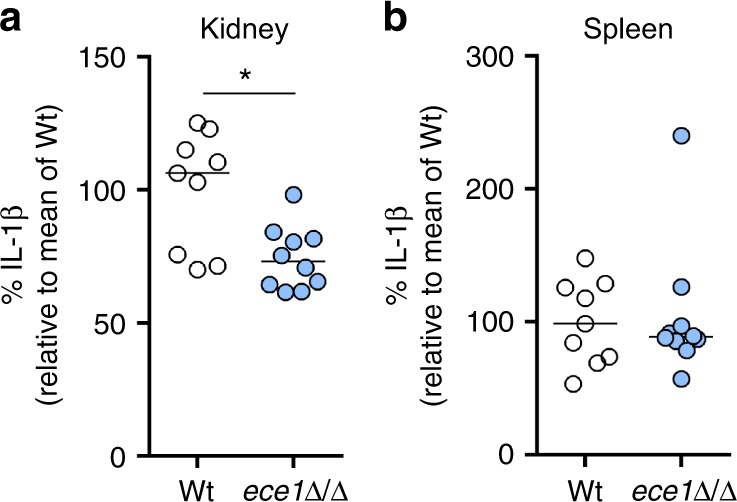
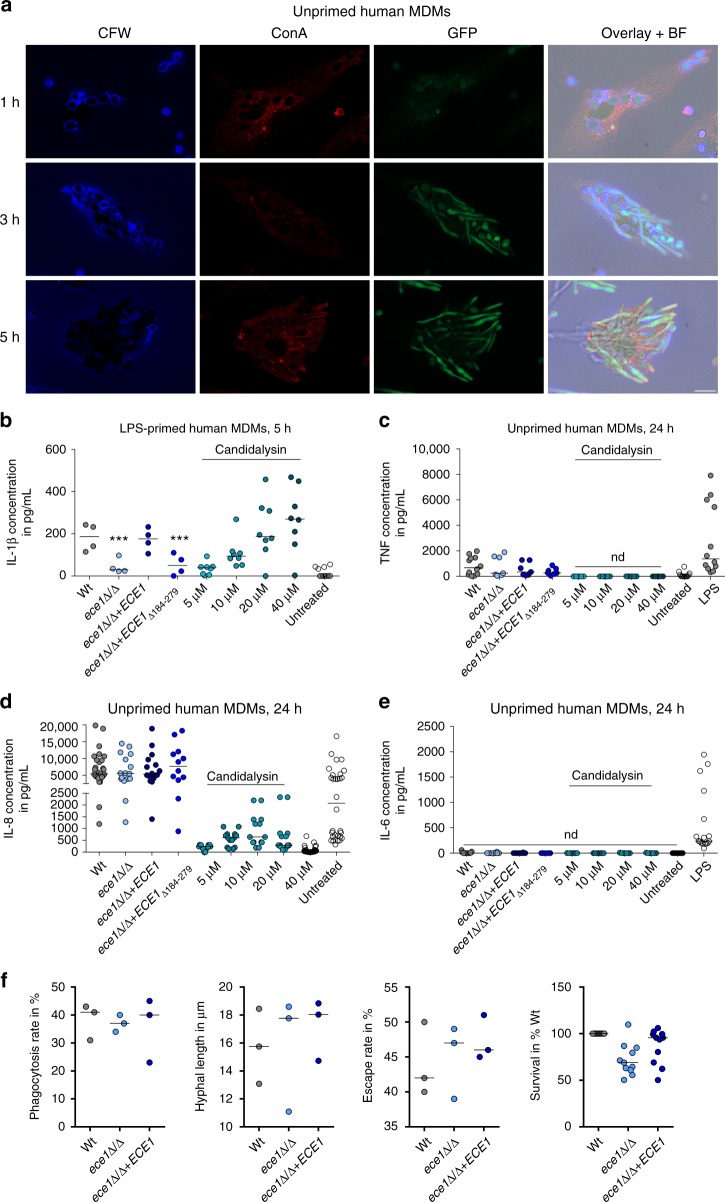
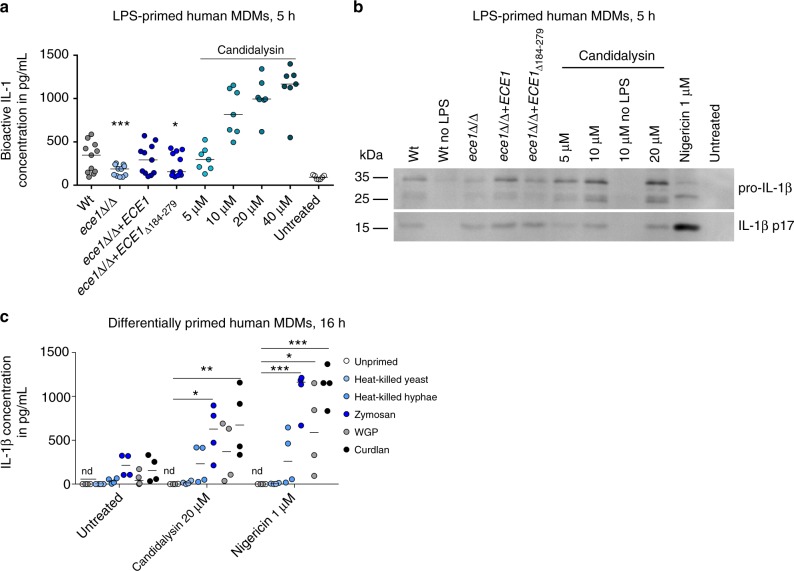
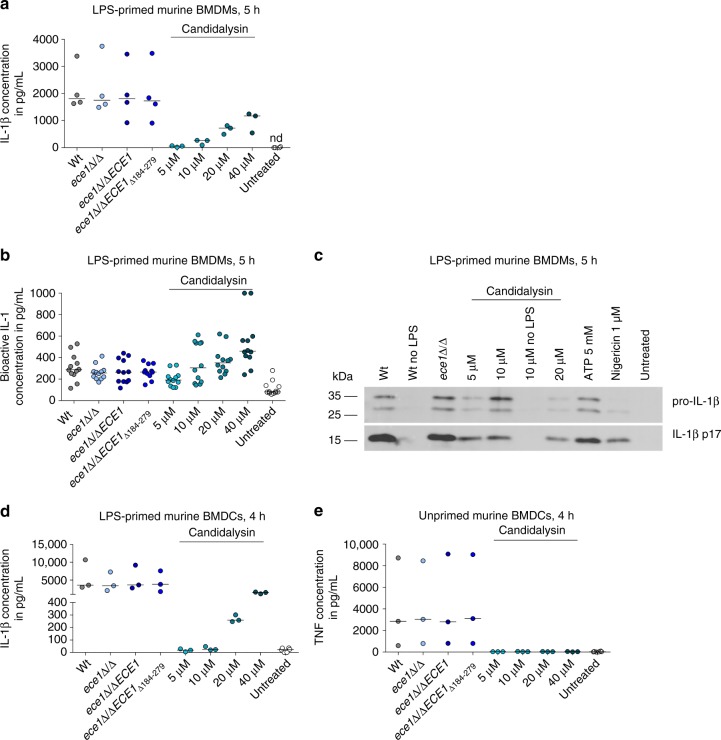
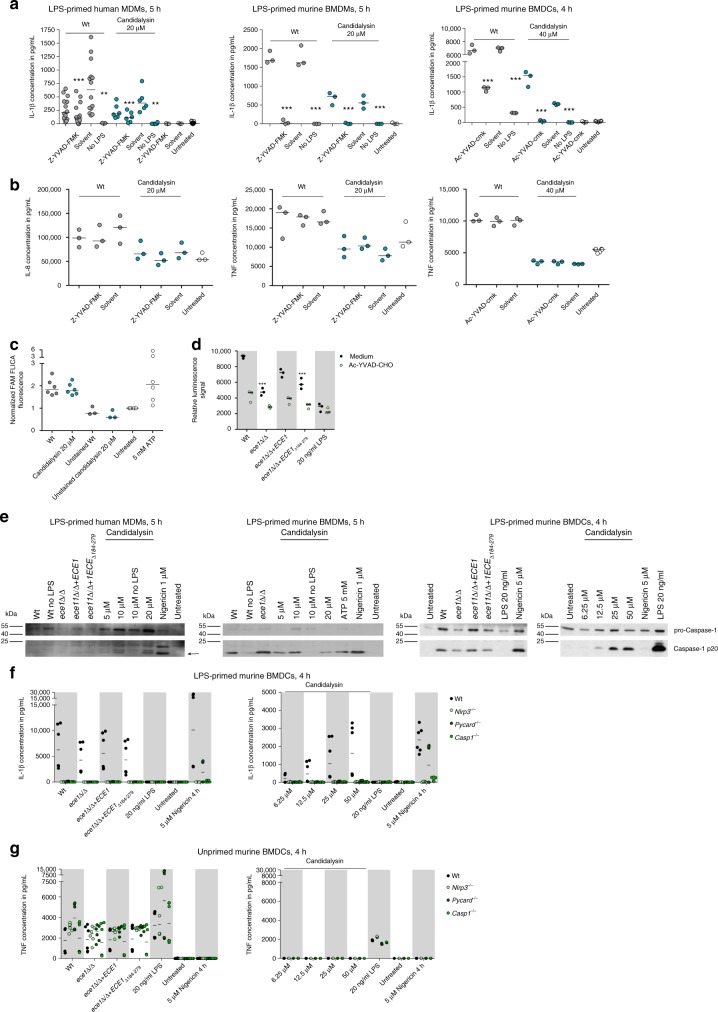
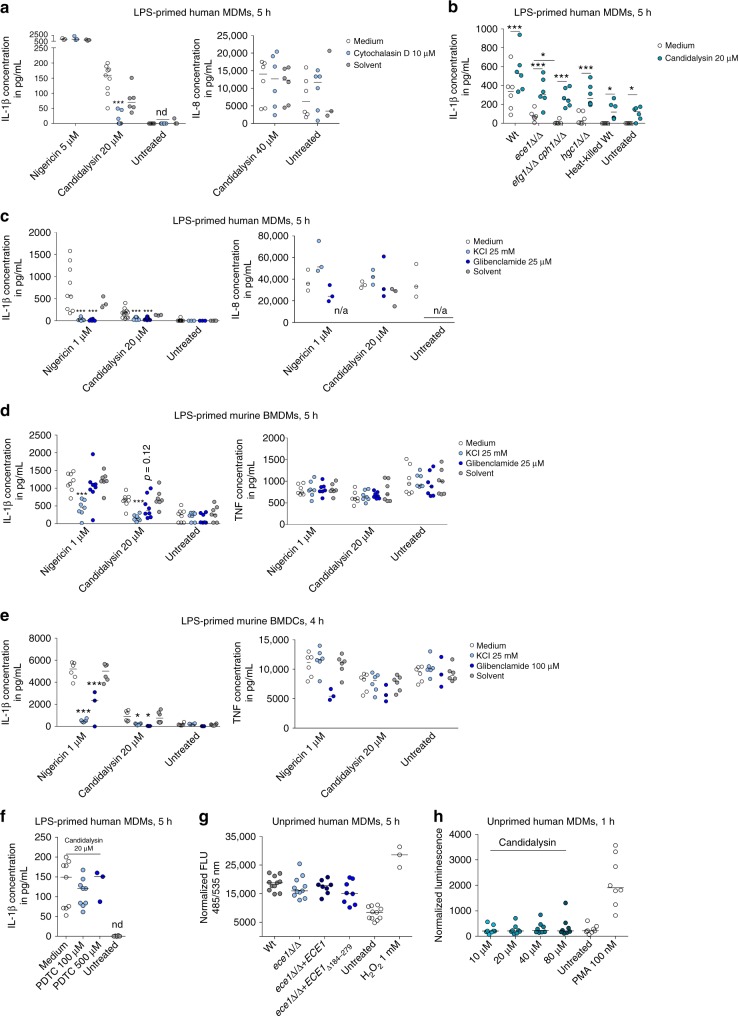
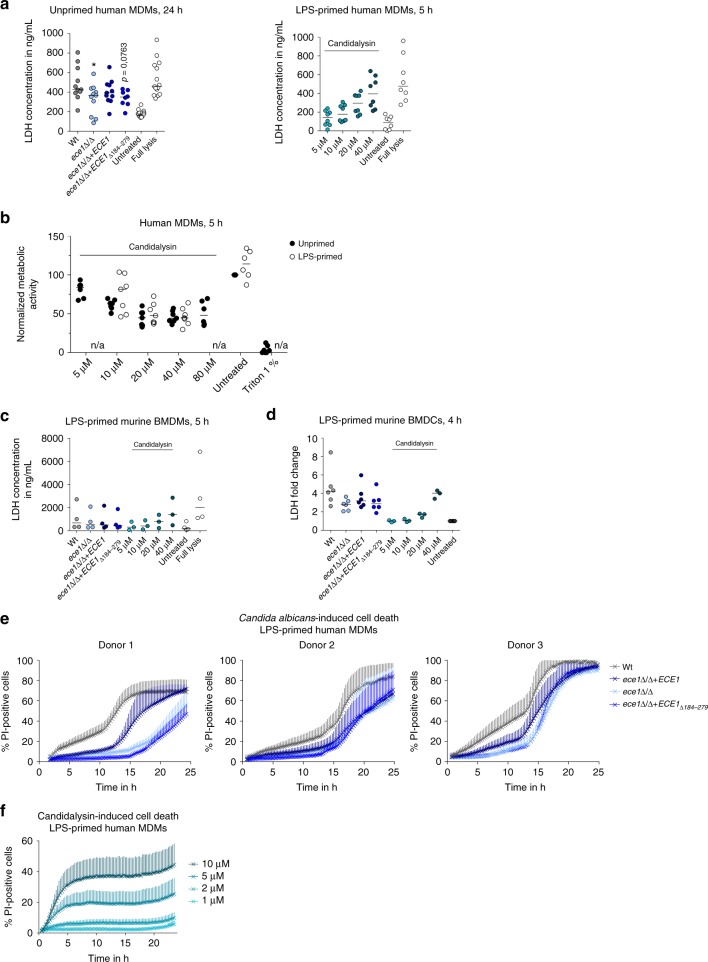
Clearance of invading microbes requires phagocytes of the innate immune system. However, successful pathogens have evolved sophisticated strategies to evade immune killing. The opportunistic human fungal pathogen Candida albicans is efficiently phagocytosed by macrophages, but causes inflammasome activation, host cytolysis, and escapes after hypha formation. Previous studies suggest that macrophage lysis by C. albicans results from early inflammasome-dependent cell death (pyroptosis), late damage due to glucose depletion and membrane piercing by growing hyphae. Here we show that Candidalysin, a cytolytic peptide toxin encoded by the hypha-associated gene ECE1, is both a central trigger for NLRP3 inflammasome-dependent caspase-1 activation via potassium efflux and a key driver of inflammasome-independent cytolysis of macrophages and dendritic cells upon infection with C. albicans. This suggests that Candidalysin-induced cell damage is a third mechanism of C. albicans-mediated mononuclear phagocyte cell death in addition to damage caused by pyroptosis and the growth of glucose-consuming hyphae.
Overview
The claims and statistics of this paper haven’t been checked yet.
Free: it reads the open-access text and checks the first 5 claims that cite a source we can check. Create a free account to check every claim.
Integrity signals
Registry
Cites
Statistics
Figures
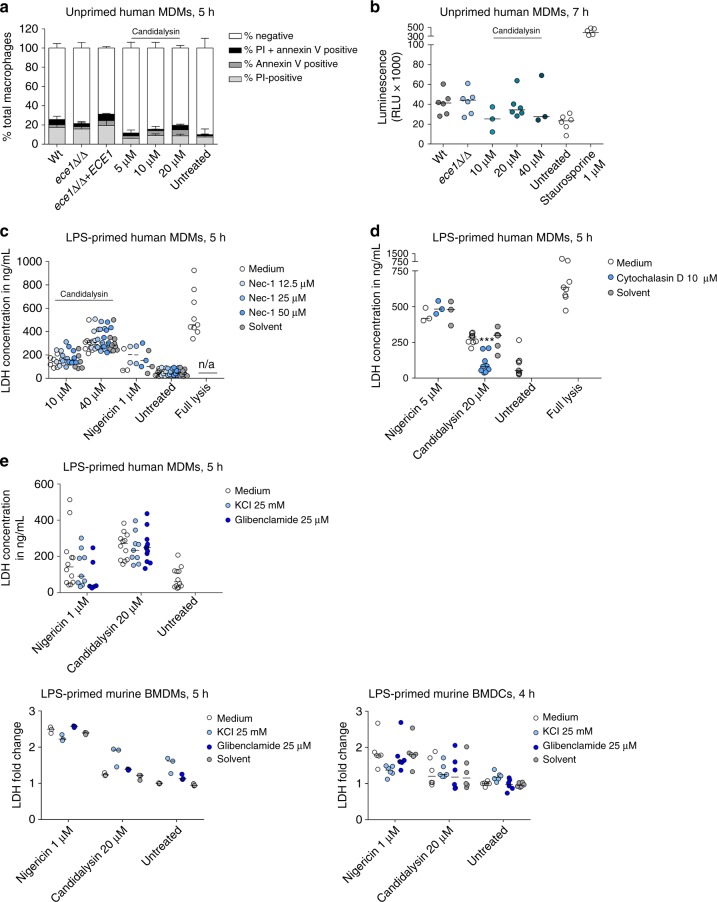
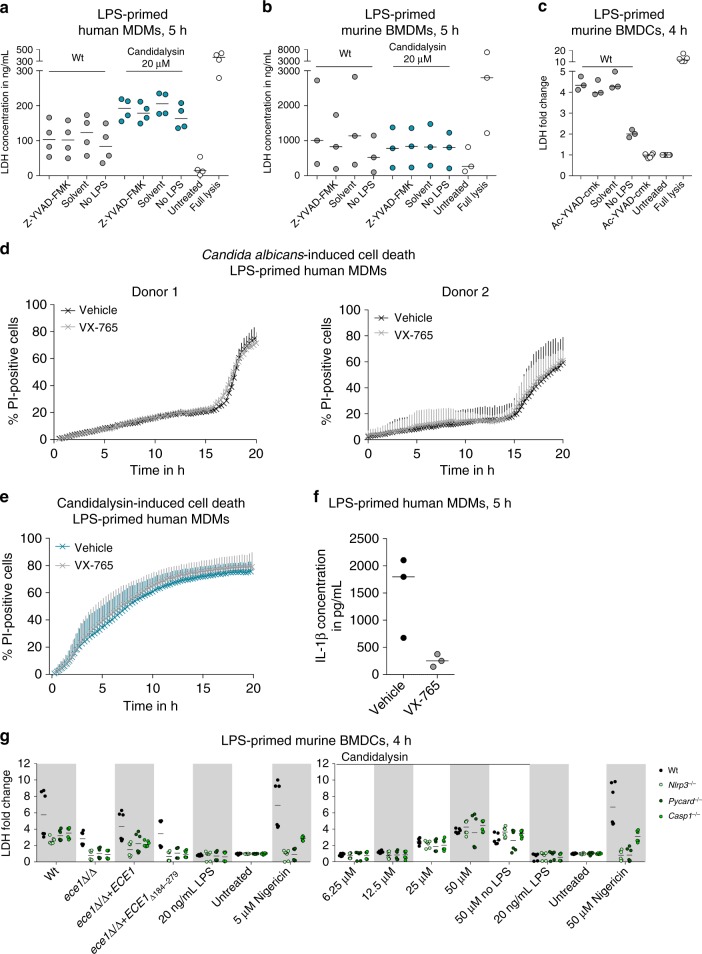
Verification
Claims the paper makes
The claims and statistics of this paper haven’t been checked yet.
Free: it reads the open-access text and checks the first 5 claims that cite a source we can check. Create a free account to check every claim.
Claims other papers make about this one
Each is checked against this paper’s own text: does it say what the citing paper says it does?
The cited source says what the claim attributes to it.
In the citing paper
“Furthermore, filamentation enables C. albicans to kill and escape from macrophages through mechanical penetration of cell membranes [29], NLRP3/caspase-1 inflammasome-dependent pyroptosis [51], cytolysis [52] and glucose competition [53].”
From The F 1 F o -ATP synthase α subunit of Candida albicans induces inflammatory responses by controlling amino acid catabolism (2023) · cites this paper as [52]
Self-check
Percentages, sums and reported differences re-computed from the paper’s own numbers.
The self-check needs the paper’s full text.
Citations
Cites
NIH Image to ImageJ: 25 years of image analysis
Schneider, C. A., Rasband, W. S., & Eliceiri, K. W. (2012) · Nature Methods · doi:10.1038/nmeth.2089 · Cited by 64,638
Martinon, F., Burns, K., & Tschopp, J. (2002) · Molecular Cell · doi:10.1016/s1097-2765(02)00599-3 · Cited by 6,066
Gout-associated uric acid crystals activate the NALP3 inflammasome
Martinon, F., Pétrilli, V., Mayor, A., Tardivel, A., & Tschopp, J. (2006) · Nature · doi:10.1038/nature04516 · Cited by 5,326
Biologic basis for interleukin-1 in disease.
Dinarello, C. (1996) · Blood · doi:10.1182/blood.v87.6.2095.bloodjournal8762095 · Cited by 4,344
Hidden Killers: Human Fungal Infections
Brown, G. D., Denning, D. W., Gow, N. A. R., Levitz, S. M., Netea, M. G., & White, T. C. (2012) · Science Translational Medicine · doi:10.1126/scitranslmed.3004404 · Cited by 4,284
Epidemiology of Invasive Candidiasis: a Persistent Public Health Problem
Pfaller, M. A., & Diekema, D. J. (2007) · Clinical Microbiology Reviews · doi:10.1128/cmr.00029-06 · Cited by 4,174
Pyroptosis: host cell death and inflammation
Bergsbaken, T., Fink, S. L., & Cookson, B. T. (2009) · Nature Reviews Microbiology · doi:10.1038/nrmicro2070 · Cited by 3,183
Cryopyrin activates the inflammasome in response to toxins and ATP
Mariathasan, S., Weiss, D. S., Newton, K., McBride, J., O'Rourke, K., Roose-Girma, M., Lee, W. P., Weinrauch, Y., Monack, D. M., & Dixit, V. M. (2006) · Nature · doi:10.1038/nature04515 · Cited by 3,080
Hornung, V., Bauernfeind, F., Halle, A., Samstad, E. O., Kono, H., Rock, K. L., Fitzgerald, K. A., & Latz, E. (2008) · Nature Immunology · doi:10.1038/ni.1631 · Cited by 3,065
Activation and regulation of the inflammasomes
Latz, E., Xiao, T. S., & Stutz, A. (2013) · Nature Reviews Immunology · doi:10.1038/nri3452 · Cited by 2,884
Cited by
Items 201–300 of 313
Sprenger, M., Brunke, S., Hube, B., & Kasper, L. (2020) · FEMS Yeast Research · doi:10.1093/femsyr/foaa066 · Cited by 6
“The staining of phagocytosed yeast cells was adapted from (Kasper et al. 2018).”
BackgroundSelf-citationCommensal to Pathogen Transition of Candida albicans
Jacobsen, I. D., Niemiec, M. J., Kapitan, M., & Polke, M. (2020) · Elsevier eBooks · doi:10.1016/b978-0-12-809633-8.21281-8 · Cited by 6
Martínez‐López, R., Molero, G., Parra‐Giraldo, C. M., Cabeza, M. S., Castejón, G., García-Durán, C., Clemente, L. F., Hernáez, M. L., Gil, C., & Monteoliva, L. (2024) · International Journal of Molecular Sciences · doi:10.3390/ijms26010244 · Cited by 5
“Candidalysin has been associated with Candida virulence due to its cytolytic role [75]; however, a recent study also linked it to an immunoprotective function in fungal infections of the central nervous system [76].”
Sillen, M., Abyad, D. E., Vreys, N., Baldewijns, S., Palmans, I., Goethem, O. V., Cheng, K. O., Velde, G. V., Montaño, D. E., Berghmans, N., et al. (2026) · Nature Communications · doi:10.1038/s41467-026-74733-2 · Cited by 4
“Given that these responses are critically dependent on the C. albicans toxin candidalysin 40,68 – 70 , it is plausible that S. cerevisiae interferes with toxin delivery, thereby mitigating cell death and associated in fl ammation 27 .”
Self-citationA gut-secreted histidine methyltransferase enforces cross-kingdom catalytic antifungal defense
Bao, H., Yang, C., Zhang, P., Zhang, J., Fang, S., Yang, A., Yang, Z., Wang, S., Chen, S., Yao, X., et al. (2025) · Cell Host & Microbe · doi:10.1016/j.chom.2025.11.015 · Cited by 4
The role and possible mechanism of intestinal fungi in the progression of chronic liver diseases
Hu, Y. H., Yang, Y., Wang, S., & Chu, H. (2026) · npj Biofilms and Microbiomes · doi:10.1038/s41522-026-00961-5 · Cited by 4
Verlinden, S. F. F. (2024) · Frontiers in Aging · doi:10.3389/fragi.2024.1452453 · Cited by 5
Surviving the Storm: How Candida Species Master Adaptation for Pathogenesis
Rana, A., Gupta, N., Asif, S., & Thakur, A. (2024) · Springer eBooks · doi:10.1007/978-981-97-4909-6_5 · Cited by 5
The Role of Intestinal Fungi in the Pathogenesis and Treatment of Ulcerative Colitis
Zhang, Y., Wang, L., & Peng, L. (2025) · Microorganisms · doi:10.3390/microorganisms13040794 · Cited by 4
“Furthermore, its secreted toxin, candidalysin, facilitates phagocyte dissolution via a non-inflammasome-dependent mechanism, thereby enabling immune evasion [63].”
Wu, H., Wang, L., Wang, W., Shao, Z., Jia, X., Xiao, H. Q., & Chen, J. (2023) · mLife · doi:10.1002/mlf2.12066 · Cited by 4
Subramani, M. B., Mahalakshmi, K., Jaya, B., Sankari, S. L., & Kumar, V. N. (2024) · Indian Journal of Dental Research · doi:10.4103/ijdr.ijdr_922_23 · Cited by 4
Mycobiome: an underexplored kingdom in cancer
Sun, Y.-Y., & Liu, N. (2025) · Microbiology and Molecular Biology Reviews · doi:10.1128/mmbr.00261-24 · Cited by 5
“Driving infection and host immunological responses requires the cytolytic peptide toxin known as candidalysin, which is released by Candida spp. (142–144).”
Gut epithelium modulates fungal pathogenesis
Lin, W.-Y., & Iliev, I. D. (2023) · Science · doi:10.1126/science.adj1240 · Cited by 4
Li, S., Liu, Y., Weng, L., Zhao, Y., Zhang, Y., Zhang, Z., Yang, Y., Chen, Q., Liu, X., & Zhang, H. (2023) · Virulence · doi:10.1080/21505594.2023.2190645 · Cited by 3
“escape from macrophages through mechanical penetration of cell membranes [29], NLRP3/caspase-1 inflammasomedependent pyroptosis [51], cytolysis [52] and glucose competition [53].”
BackgroundRole of gut virome and mycobiome in neurological disorders
Chaudhary, A. (2025) · Elsevier eBooks · doi:10.1016/b978-0-443-21680-0.00017-1 · Cited by 3
Zaffran, I., Gaur, P., Ofori, P., Charpak‐Amikam, Y., Pahima, H. T., Shasha, D., Osherov, N., Hube, B., Ben‐Ami, R., Naglik, J. R., et al. (2025) · Nature Communications · doi:10.1038/s41467-025-64276-3 · Cited by 4
“Candidalysin directly permeabi-lizes host cell membranes, driving cell damage 26 , and is a key driver of in fl ammasome-independent cytolysis 42 .”
Self-citationCytosolic receptors and signaling in antifungal immunity
Khau, S., Désoubeaux, G., Si‐Tahar, M., Biquand, É., & Briard, B. (2025) · The EMBO Journal · doi:10.1038/s44318-025-00627-6 · Cited by 3
“For the activation of NLRP3 – caspase-1 in fl ammasome during Candida infection, the transition to hyphal growth with rearrangement of the fungal cell wall sounds critical (Kasper et al, 2018).”
Critical parameters of fungal pathogenicity at the epithelial interphase
Möslinger, A., Allert, S., Vylkova, S., & Hube, B. (2026) · microLife · doi:10.1093/femsml/uqag001 · Cited by 3
“For example, macrophages were shown to phagocytose 40% of C. albicans yeast cells ( via recognition of cell wall components) at 1 h post infection (hpi) (Kasper et al. 2018 ).”
Self-citationBaker, C. P., Laba, S., Warner, J., Shepherd, K., Wilson, H. M., & Arthur, J. S. C. (2026) · Scientific Reports · doi:10.1038/s41598-026-39429-z · Cited by 3
“Should I stay or should I go”—a kinase delays escape of Candida glabrata from macrophages
Lange, T., Clairet, C., Fischer, L., Vij, R., Sonnberger, J., Mantke, J., Jablonowski, N., Seemann, E. A., Qualmann, B., d’Enfert, C., et al. (2026) · mBio · doi:10.1128/mbio.03885-25 · Cited by 3
“Live-cell imaging of the host cell lysis dynamics was performed as described previously (77).”
Self-citationMori, T., Kataoka, H., & Into, T. (2023) · Journal of Oral Biosciences · doi:10.1016/j.job.2023.08.007 · Cited by 4
An IL-17-DUOX2 axis controls gastrointestinal colonization by Candida albicans
Kakade, P., Burgueño, J. F., Sircaik, S., Ponde, N. O., Li, J., Ene, I. V., Kim, J., Liang, S.-H., Yunker, R., Dey, I., et al. (2026) · Nature Communications · doi:10.1038/s41467-026-72174-5 · Cited by 4
Urinary Tract Infections: Fungi (Candida spp.)
Silao, F. G. S., Álvarez, F. J., Taladtad, F. F., Viloria, T. A. M. D., & Ljungdahl, P. O. (2021) · Elsevier eBooks · doi:10.1016/b978-0-12-818731-9.00140-3 · Cited by 3
Candida albicans drives colorectal cancer progression by inducing hypoxia signalingPreprint
Wang, W., Yang, M., Gong, F., Zhang, Z., Ma, Y., Li, H., Zhao, Y., Du, C., Li, N., He, G., et al. (2024) · bioRxiv (Cold Spring Harbor Laboratory) · doi:10.1101/2024.12.25.630341 · Cited by 3
“Candidalysin is a peptide toxin secreted by the hyphal form of C. albicans during invasion, which helps C. albicans compete with bacterial species in the intestinal niche 58 , and it is known to drive epithelial damage, immune activation, and phagocyte attraction 21,44,45,59 .”
Quantitative live-cell imaging of Candida albicans escape from immune phagocytes
Olivier, F. A. B., & Traven, A. (2023) · STAR Protocols · doi:10.1016/j.xpro.2023.102737 · Cited by 2
Indrastiti, R. K., Rahmayanti, F., & Kurnia, D. (2025) · AIP conference proceedings · doi:10.1063/5.0273164 · Cited by 2
Taraskina, A. E., Frolova, E. V., Uchevatkina, A. E., Oganesyan, E. G., Venchakova, V. V., Zhuk, A. S., & Vasilyeva, N. V. (2025) · Cell and Tissue Biology · doi:10.1134/s1990519x25600322 · Cited by 2
“Independently, candidalysin activates the NLRP3 inflammasome in macrophages, mononuclear phagocytes, and dendritic cells (Kasper et al., 2018; Rogiers et al., 2019; Lowes et al., 2020), which induces neutrophil recruitment and IL-1β and IL-8 production.”
Evaluating the Role of Candida albicans as a Potential Oral Carcinogen
Amirinia, F., Motamedi, M., Ardi, P., & Jabrodini, A. (2025) · Interdisciplinary Perspectives on Infectious Diseases · doi:10.1155/ipid/4057977 · Cited by 2
“It activates the NLRP3 infammasome in macrophages, leading to secretion of pro-infammatory cytokines such as IL-6 and IL-17, which promote a chronic infammatory environment known to contribute to cancer progression [44, 45].”
Wang, J., Gow, N. A. R., & Brewer, M. G. (2025) · Mycoses · doi:10.1111/myc.70133 · Cited by 2
“More contemporary findings further expand on this, demonstrating that activation is specifically mediated by the fungal toxin candidalysin, which is released from hyphae [73, 74].”
Boaru, D. L., Castro-Martinez, P. D., García-Montero, C., Fraile‐Μartinez, O., Alhaddadin, M. N. M., Barrena-Blázquez, S., López-González, L., Tasende, C., Hurtado, R. A., Giménez, T. R., et al. (2026) · MedComm · doi:10.1002/mco2.70844 · Cited by 2
Graziottin, A. (2021) · Journal of Gynecology and Womens Health · doi:10.19080/jgwh.2021.22.556087 · Cited by 2
Zhang, H., Gong, J., Xu, K., Dang, Z., Shang, Z., Chen, G.-H., Feng, H., Zhang, Y., Zhang, Y., Yu, T., et al. (2025) · Metabolomics · doi:10.1007/s11306-025-02244-0 · Cited by 2
“…mannose-associated complexes are recognized by host pat - tern recognition receptors, including C-type lectin recep - tors, toll-like receptors, and NOD-like receptors, triggering immune responses that enhance antifungal protection (Gil & Gozalbo, 2009; Kasper et al., 2018; Richard & Sokol, 2019).”
Wong, S. S. W., Dellière, S., Lepas, M., & Aimanianda, V. (2025) · Advances in experimental medicine and biology · doi:10.1007/978-3-031-85340-1_9 · Cited by 2
Candidalysin: From Mechanism of Action to Biomarker Development and Therapeutic Response
Chen, Y., Li, Q., Zhang, T., & Liu, N. (2020) · Innovations in Digital Health Diagnostics and Biomarkers · doi:10.36401/iddb-20-02 · Cited by 2
Lenka, S., Bhuyan, S. K., & Bhuyan, R. (2022) · Beni-Suef University Journal of Basic and Applied Sciences · doi:10.1186/s43088-022-00306-z · Cited by 2
Candida albicans drives colorectal cancer progression by inducing hypoxia signalingPreprint
Wang, W., Yang, M., Gong, F., Zhang, Z., Ma, Y., Li, H., Zhao, Y. F., Du, C., Li, N., He, G.-W., et al. (2025) · eLife · doi:10.7554/elife.108665.1 · Cited by 4
Hmar, E. B. L., Perera, V., Sarma, H., Chandrasiri, S., Kumarasinghe, P., Wikramaratne, N., & Sharma, H. K. (2025) · Molecular Biology Reports · doi:10.1007/s11033-025-10901-9 · Cited by 1
“The constituents of fungi, including candidalysin [50] and β-glucan [51], have been identified as activators of the NLRP3 inflammasome, leading to a significant release of the cytokines IL-1β and IL-18 [51, 52] are also regarded as key factors in NAFLD progression.”
Qian, G., Ding, L., Tan, C., Wang, L., & Long, C. (2025) · Frontiers in Fungal Biology · doi:10.3389/ffunb.2025.1692795 · Cited by 1
Li, Y., Liu, H., Li, R., Li, R., & Liu, J. (2026) · MicrobiologyOpen · doi:10.1002/mbo3.70203 · Cited by 1
“Candidalysin plays an important role in VVC by recruiting neutrophils and activating the NLRP3 inflammasome (Kasper et al. 2018).”
Yang, C., Li, Y., Liu, T., Liang, R., Huang, J., Luo, Y., & Huang, N. (2026) · Naunyn-Schmiedeberg s Archives of Pharmacology · doi:10.1007/s00210-026-05181-4 · Cited by 1
“This aligns with previous reports where ICT suppressed microglial activation in models of brain ischemia and depression (Mathur et al. 2019; Kasper et al. 2018).”
Interkingdom Interactions in the Gut: Ecological Mechanisms, Homeostasis, and Therapeutic Modulation
Wei, R., Sun, X., Huang, H., Zhao, Y., Liu, S., & Liu, C. (2026) · Gut Medicine · doi:10.1002/gtm2.70009 · Cited by 1
Wakade, R. S., Solis, N. V., Ristow, L. C., Wellington, M. A., Filler, S. G., & Krysan, D. J. (2026) · mBio · doi:10.1128/mbio.01492-26 · Cited by 1
“Ece1/CL triggers the second step of NLRP3 inflammasome activation but has no effect on the priming step (18, 19).”
The gut mycobiome and metabolic dysfunction in type 2 diabetes mellitus
Rathod, L., Tiwari, A., & Sarma, D. K. (2026) · Diabetes Research and Clinical Practice · doi:10.1016/j.diabres.2026.113456 · Cited by 1
Yoon, S. J., Eom, J. A., & Suk, K. T. (2026) · Frontiers in Immunology · doi:10.3389/fimmu.2026.1864805 · Cited by 1
“Candidalysin, a peptide toxin secreted by Candida albicans , promotes alcohol-associated liver disease and is linked to epithelial type 17 responses and in fl ammasome activation (51 – 54).”
Fungi: Culprits or Bystanders in Oral Squamous Cell Carcinoma
Ranjan, J., Hallur, V., & Rudramurthy, S. M. (2022) · Springer eBooks · doi:10.1007/978-981-19-0592-6_11 · Cited by 2
Vancomycin disrupts mitochondrial morphology and function and impairs macrophage fungal killing
Bojang, E., Sheriff, L., Morris, E., Rouvray, S., Fu, M. S., Wellings, C., Abdissa, K., Stavrou, V., Clark, C., Southam, A. D., et al. (2026) · mBio · doi:10.1128/mbio.00580-26 · Cited by 1
“Indeed, the fungal toxin candidalysin, produced by C. albicans , is a potent inflammasome activator (39), but its production and release varies widely between C. albicans clinical isolates (40).”
Self-citationImmune Response to Candida albicans Infection
Yáñez, A., Murciano, C., Gil, M. L., & Gozalbo, D. (2017) · Elsevier eBooks · doi:10.1016/b978-0-12-809633-8.12075-8 · Cited by 1
Targeting pathobionts for the treatment of alcohol‐associated liver disease
Lang, S., Demir, M., & Schnabl, B. (2020) · Liver International · doi:10.1111/liv.14723 · Cited by 1
La acuicultura en México, bases conceptuales y principios
Gutiérrez, M. R., & Jiménez, C. M. (1996) · Oceanologia · Cited by 1
Host-Induced Stress Response in Human Pathogenic Fungi
Viana, R., Pais, P., Cavalheiro, M., Galocha, M., & Teixeira, M. C. (2021) · Elsevier eBooks · doi:10.1016/b978-0-12-819990-9.00035-4 · Cited by 1
Convergent evolution of a fungal effector enabling phagosome membrane penetrationPreprint
Jia, L., Bernal, F. A., Söhnlein, J., Sonnberger, J., Heineking, I., Rafiq, M., Cseresnyés, Z., Kage, F., Schmidt, F., Zaher, R., et al. (2025) · bioRxiv (Cold Spring Harbor Laboratory) · doi:10.1101/2025.03.06.641871 · Cited by 2
Self-citationRadosa, S., Sprague, J. L., Tóth, R., Wolf, T., Sprenger, M., Brunke, S., Panagiotou, G., Linde, J., Gácser, A., & Hillmann, F. (2019) · bioRxiv (Cold Spring Harbor Laboratory) · doi:10.1101/690503
An Investigation into Clinically Relevant Determinants of Azole Resistance in Candida albicans
Nishimoto, A. T. (2019) · doi:10.21007/etd.cghs.2019.0486
“It secretes a number of proteases, phospholipases, esterases and lipases in the context of invasive infection that helps in promoting degradation of host connective tissue, cleavage of host immune defence proteins thereby leading to nutrition acquisition, invasion and evasion of pathogen from host innate immune respon…”
BackgroundBercusson, A. (2019) · Spiral (Imperial College London) · doi:10.25560/82028 · Cited by 1
mSphere of Influence: Discovering New Layers of Complexity in the Immune System
Drummond, R. A. (2021) · mSphere · doi:10.1128/msphere.00359-21
Self-citationGermination of a Field: Women in Candida albicans Research
Anderson, F. M., Polvi, E. J., Veri, A. O., & O’Meara, T. R. (2021) · Current Clinical Microbiology Reports · doi:10.1007/s40588-021-00169-5
Hall, R. A. (2020) · Faculty Opinions – Post-Publication Peer Review of the Biomedical Literature · doi:10.3410/f.735513165.793575579
Hube, B., & Gresnigt, M. S. (2021) · Faculty Opinions – Post-Publication Peer Review of the Biomedical Literature · doi:10.3410/f.738437887.793577404
Self-citationPaying attention to minutiae: Strain level differences drive disease etiology
Newhall, K. P., & Stappenbeck, T. S. (2022) · Med · doi:10.1016/j.medj.2022.04.011
An investigation of the single-molecule biophysics of membrane systems with atomic force microscopy
Schaefer, K. G. (2022) · MOspace Institutional Repository (University of Missouri) · doi:10.32469/10355/94324
The interaction of Candida albicans with C-type lectin receptors
Cheng, L., Li, P., La, D. K., Xing, Z., & Liao, C. (2023) · Perioperative Precision Medicine · doi:10.61189/863627autews
“by macrophages and play a toxin-dependent effect [26].”
Rôle de la protéine PCNA cytoplasmique dans la régulation de l'inflammasome NLRP3
Lopes, C. (2023) · theses.fr (ABES) · doi:10.70675/c70bad59zc90ez4574z8c7dze01c42dd514e
Pathogenicity Strategies of Candida Species During Interactions with Epithelial Cells
Pekmezovic, M. G., Hube, B., & Gresnigt, M. S. (2024) · The mycota · doi:10.1007/978-3-031-64853-3_2
Self-citationNett, J. E., & Holt, A. M. (2025) · Springer series on biofilms · doi:10.1007/978-3-031-93315-8_10
Neutrophils against pathogens of invasive mycoses: Conventional and nontraditional fighting tools
Анатольевна, М. Е., & Dolgushin, I. I. (2025) · Medical Immunology (Russia) · doi:10.15789/1563-0625-nap-3135
Chambers, P. W. (2025) · Qeios · doi:10.32388/r0na31
Magray, A. R., & Rosowski, E. E. (2025) · bioRxiv (Cold Spring Harbor Laboratory) · doi:10.1101/2025.07.14.664761
“In vitro studies have demonstrated that inhibiting v-ATPase activity of macrophages with bafilomycin A1 (Baf A1) reduces their spore killing ability 53–55 .”
Chambers, P. W. (2025) · Qeios · doi:10.32388/r0na31.2
The Cytotoxic Effect of Candidalysin on Primary Human Gingival Fibroblasts: An In Vitro Study
Alsahafi, E., & Youssef, A. (2025) · Galician Medical Journal · doi:10.21802/e-gmj2025-a17
Chambers, P. W. (2025) · Qeios · doi:10.32388/r0na31.3
Acire, P. V., Brown, S., & Day, A. S. (2025) · Intestinal Research · doi:10.5217/ir.2025.00043
Zambrano, M. M. (2025) · eLife · doi:10.7554/elife.108665.2.sa3
Candida albicans drives colorectal cancer progression by inducing hypoxia signalingPreprint
Wang, W., Yang, M., Gong, F., Zhang, Z., Ma, Y., Li, H., Zhao, Y. F., Du, C., Li, N., He, G.-W., et al. (2026) · eLife · doi:10.7554/elife.108665 · Cited by 3
Molecular basis of the fungal infection and pathogenesis
Patra, S., & Gajbhiye, V. (2025) · Elsevier eBooks · doi:10.1016/b978-0-443-29273-6.00016-3
Tryptophan end-tagging confers antifungal activity to a tick-derived antimicrobial peptide
Chiramba, C. K. (2024) · UpSpace Institutional Repository (University of Pretoria) · doi:10.25403/upresearchdata.26272000
Thielemann, N. (2025) · Online Publication Service of Würzburg University (Würzburg University) · doi:10.25972/opus-40419
Investigating the nuclease activity of MIF and MIF-2 and their effects on DNA damage
Bulut-Impraim, B. (2024) · doi:10.5282/edoc.33808
Development of in vivo models to study candida infections and innate immune responses
Rogiers, O. (2022) · Lirias
Studies on the yeast-hypha mediated virulence in Candida species
Paudyal, A. (2022) · K-State Research Exchange (Kansas State University) · Cited by 1
(2022) · ThinkTech (Texas Tech University)
Austermeier, S., Cheng, K. O., Dietschmann, A., Vascelli, G., Montaño, D. E., Hitzler, S. U. J., Skurk, K., Fernández-Fernández, C., Saloni, S., Westermann, S., et al. (2026) · Nature Communications · doi:10.1038/s41467-026-78761-w
“BWP17+CIP30 was used as the reference strain for experiments with the candidalysin-de fi cient strain ( ece1 ΔΔ ) 15 .”
InfluentialSelf-citationWilliamson, P., Qiu, J., Grim, S. A., Hu, G., Park, Y., Johnson, M. D., Paaudel, S., Stevens, T., Perfect, J. R., Matzaraki, V., et al. (2026) · Research Square · doi:10.21203/rs.3.rs-8810991/v1
“…into tissue, principally the kidney in mice 11 , results in signi�cant tissue damage and is mediated by a plethora of factors--proteases, lipases and haemolysins 12 as well as toxins including the hyphae-specic inammasome-activating candidalysin 13,14 , important for neutrophil recruitment 15 .”
Self-citationFungal hyphae instigate non-canonical inflammatory cell death in macrophagesPreprint
Dietschmann, A., Musiejovsky, L., Krüger, T., Bohaen, C. K., Dinçer, S., Bruggeman, F., Oktay, C., Valentine, M., Himmel, M., Wirtz, S., et al. (2026) · Research Square · doi:10.21203/rs.3.rs-8296333/v1
Self-citationUnderestimated and Overlooked Factors in PBC Progression: Bacterial and Fungal Infections
Zhu, Y., Li, S., Liu, X., Wang, Y., Du, Y., Zheng, X., & Wu, J. (2026) · International Journal of Molecular Sciences · doi:10.3390/ijms27062766
Haroun, M., Tratrat, C., Munir, M., Aldakhilallah, O. N., Ibrahim, S. M., & Geronikaki, A. A. (2026) · Animals · doi:10.3390/ani16071060
Management and Immunotherapy for Fungal Allergy: Clinical Practice and Unmet Needs
Yang, Y., Fu, Y., Sun, J., Demoly, P. M., & Zhu, R. (2026) · Clinical Reviews in Allergy & Immunology · doi:10.1007/s12016-026-09158-2
Role of macrophages in colon homeostasis
Chikina, A. S. (2020) · theses.fr (ABES) · doi:10.70675/914bf102zc92ez4351zb4dbz1945d4116eea
Charlet, R. (2022) · theses.fr (ABES) · doi:10.70675/11b08f90z8d0dz43efz96ffzf2527c076034
Influence of the microbiota on Candida albicans gastrointestinal colonization in healthy individuals
Delavy, M. (2023) · theses.fr (ABES) · doi:10.70675/da5a2f9dz2e64z4e1fz9280z36a010c349be
Functional and structural studies of drug efflux by Cdr1p, an ABC transporter of Candida fungi
Pata, J. (2023) · theses.fr (ABES) · doi:10.70675/6adbc74dzad88z4878zbfc2z4a16da9e0458
Chen, T., Wu, Y., Chen, Y., Li, Y. P., Zhao, H., Wu, L., Gao, H., Jiang, T., Wang, X., Chen, M., et al. (2026) · Interdisciplinary medicine · doi:10.1002/inmd.70128
Overview of Risk Factors and Diagnosis of Invasive Candidiasis
Sisu, V. D., & Băicuș, A. (2026) · Journal of Fungi · doi:10.3390/jof12060383
“It has also been found that other species, such as C. dubliniensis and C. tropicalis , produce candidalysins that surprisingly exhibit more potent cytolytic activity [77].”
Sonnberger, J., Böhm, E., Tomás-Morales, J. A., Lange, T., Bagola, K., Denner, L., Kasper, L., Brunke, S., van Zandbergen, G., Sprague, J. L., et al. (2026) · Disease Models & Mechanisms · doi:10.1242/dmm.052865
“In phagocytes primed with LPS or β -glucan, it leads to NLRP3 inflammasome activation via K + -efflux from the cytosol (Kasper et al., 2018).”
InfluentialSelf-citationWang, Q., Zheng, W., Zhang, C., Lv, S., Peng, L., Chen, J., & Lu, A. (2026) · Genes & Diseases · doi:10.1016/j.gendis.2026.102315
Sukumaran, K. S., Giribabu, N., & Salleh, N. (2026) · European Cytokine Network · doi:10.32604/ecn.2026.078477 · Cited by 1
“In vitro models demonstrate that synthetic candidalysin peptide alone is sufficient to trigger activation of the NLRP3 inflammasome in primed cells, mimicking the effects of Candida hyphal infection [16,40].”
InfluentialKanagawa, H., Kawahara, A., Mikawa, N., Sugihara, K., Ueda, M., Nitta, A., Egi, M., Oda, R., Nonaka, S., Tozaki‐Saitoh, H., et al. (2026) · International Journal of Molecular Sciences · doi:10.3390/ijms27156614
“Moreover, CL can induce inflammatory responses through activation of microglia and macrophages [13,15–18].”
Dangerous liaisons: Candidalysin and myeloid cells in candidiasis
Gu, Z.-Q., Chen, Y.-Y., & Tsai, Y.-H. (2026) · PLoS Pathogens · doi:10.1371/journal.ppat.1014467
“It triggers the secretion of pro-inflammatory cytokines and chemokines, most notably granulocyte-macrophage colony-stimulating factor (GM-CSF), which is essential for the migration and activation of myeloid cells [5,6].”
Metadata
- Authors
- Kasper, L., König, A., Koenig, P.-A., Gresnigt, M. S., Westman, J., Drummond, R. A., Lionakis, M. S., Groß, O., Ruland, J., Naglik, J. R., & Hube, B.
- Affiliations
- Leibniz-Institut für Naturstoff-Forschung und Infektionsbiologie e. V. - Hans-Knöll-Institut (HKI) (DE)
- TUM Klinikum (DE)
- Hospital for Sick Children (CA)
- National Institutes of Health (US)
- University of Freiburg (DE)
- King's College London (GB)
- Corresponding author
- Hube, Bernhard
- ORCID
- Venue
- Nature Communications
- Published
- 2018-10-15
- Volume
- 9
- Issue
- 1
- Pages
- 4260-4260
- ISSN
- 2041-1723 (ISSN-L)
- PMC
- PMC6189146
- OpenAlex
- W2896513955
- Semantic Scholar
- fd3421cadf3c9f88b07d96207bc90d4abc1dc346
- Cited by
- 297
- References
- 78
- Citations by year
- 2026: 36 · 2025: 45 · 2024: 40 · 2023: 38 · 2022: 35 · 2021: 37 · 2020: 42 · 2019: 22
- FWCI
- 8.98
- Type
- journal article
- Language
- en
- Open access
- gold
- doi.org
- Licence
- cc-by
- creativecommons.org/licenses/by/4.0 (tdm)
- creativecommons.org/licenses/by/4.0 (vor)
- Locations
- Nature Communications (publishedVersion, cc-by)
- Europe PMC (PubMed Central) (publishedVersion, other-oa)
- PubMed Central (publishedVersion, cc-by)
- PubMed (publishedVersion)
- Research Portal (King's College London) (submittedVersion, cc-by)
- RePEc: Research Papers in Economics (submittedVersion)
- DOAJ (DOAJ: Directory of Open Access Journals) (submittedVersion)
- DOAJ (DOAJ: Directory of Open Access Journals) (submittedVersion, cc-by-sa)
- mediaTUM – the media and publications repository of the Technical University Munich (Technical University Munich) (submittedVersion)
- University of Birmingham Research Portal (University of Birmingham) (submittedVersion, cc-by)
- University of Birmingham Research Portal (University of Birmingham) (submittedVersion, other-oa)
- Radboud Repository (Radboud University) (submittedVersion)
- Radboud Repository (Radboud University) (submittedVersion, other-oa)
- Funders
- European Molecular Biology Organization
- Alexander von Humboldt-Stiftung
- Division of Intramural Research, National Institute of Allergy and Infectious Diseases (DE022550)
- King's College London (IS-BRC-1215–20006)
- European Commission (606786, FP7-PEOPLE-2013-Initial Training Network)
- Rosetrees Trust
- Deutsche Forschungsgemeinschaft (SFB 1054, SFB1335, SPP 1580, RU 695/6-1, project C1), FP7-PEOPLE-2013, CRC/TR FungiNet Project C1)
- King's Health Partners (R170501)
- National Institutes of Health (5r37de022550-12, DE022550, R37DE022550)
- Directorate for Biological Sciences
- Medical Research Council (MR/J008303/1, MR/M011372/1, MC_PC_16048)
- Biotechnology and Biological Sciences Research Council (BB/N014677/1)
- Leibniz-Gemeinschaft (InfectoOptics SAS-2015-HKI-LWC, SAS-2015, SAS-2015-HKI-LWC)
- National Institute of Allergy and Infectious Diseases (DE022550)
- National Institute of Dental and Craniofacial Research (R37-DE022550)
- FP7 Ideas: European Research Council (322865, 337689)
- FP7 People: Marie-Curie Actions (FP7-PEOPLE-2013)
- NHLBI Division of Intramural Research
- Topics
- Life Sciences › Biochemistry, Genetics and Molecular Biology › Molecular Biology › Inflammasome and immune disorders
- Health Sciences › Medicine › Infectious Diseases › Antifungal resistance and susceptibility
- Life Sciences › Biochemistry, Genetics and Molecular Biology › Molecular Biology › Fungal and yeast genetics research
- Keywords
- candidalysin, Candida albicans, NLRP3 inflammasome, caspase-1 activation, dendritic cells, mononuclear phagocytes, endothelin-converting enzyme-1, potassium efflux, pyroptosis, hyphal growth, innate immunity
- MeSH terms
- NLR Family, Pyrin Domain-Containing 3 Protein, Actins, Animals, Bone Marrow Cells, Dendritic Cells, Female, Fungal Proteins, Humans, Inflammation, Leukocytes, Mononuclear, Macrophages, Mice, Inbred C57BL, Mycotoxins, Necrosis, Phagocytes, Phagosomes, Potassium, Cell Death, Caspase 1, Interleukin-1beta, Inflammasomes
About these checks
Registry, retraction, Cites and statistics results are computed, not judged, with one exception: a printed reference that no index lists is read once by a model before it counts as a citation error. Claims are extracted by a model and kept only when their quote appears verbatim in the text; each cited source is then checked, with a model’s help, for whether it says what the claim relies on. Those verdicts can be wrong — read the claim’s quote and the cited source before relying on one.
Statistics and arithmetic are recomputed, not judged.
Confidence bands are shown only for fields calibrated on our annotated test set. None is calibrated yet, so no band is shown.
What counts as a claim ›How we measure confidence ›How we check this ›
Are you an author, or do you see a problem with this page? Request a review
Data sources
Bibliographic data: Semantic Scholar, OpenAlex, Crossref.
Contains information from the Semantic Scholar Academic Graph Datasets, made available under the ODC Attribution License (ODC-BY 1.0).
Semantic Scholar’s data is described in: Kinney, R., et al. (2023). The Semantic Scholar Open Data Platform. arXiv:2301.10140.
