

The fungal peptide toxin Candidalysin activates the NLRP3 inflammasome and causes cytolysis in mononuclear phagocytes
Open accessThe DOI matches its Crossref record; 78 of the 78 references it cites were found in a registry or an index.
Abstract
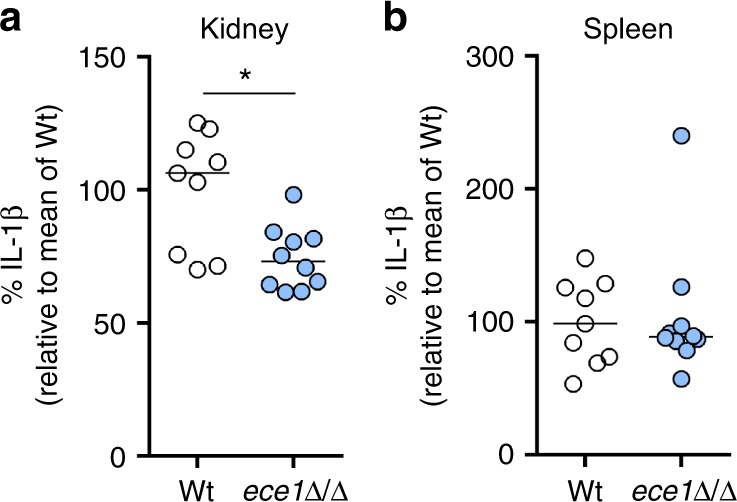
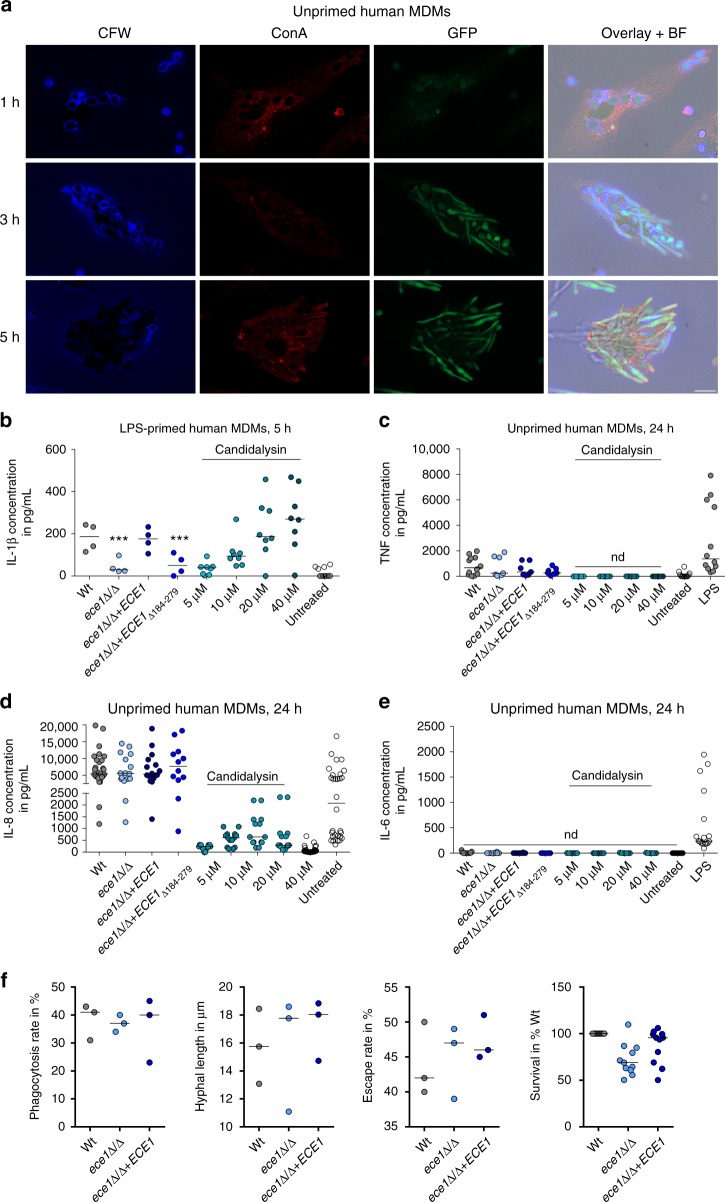
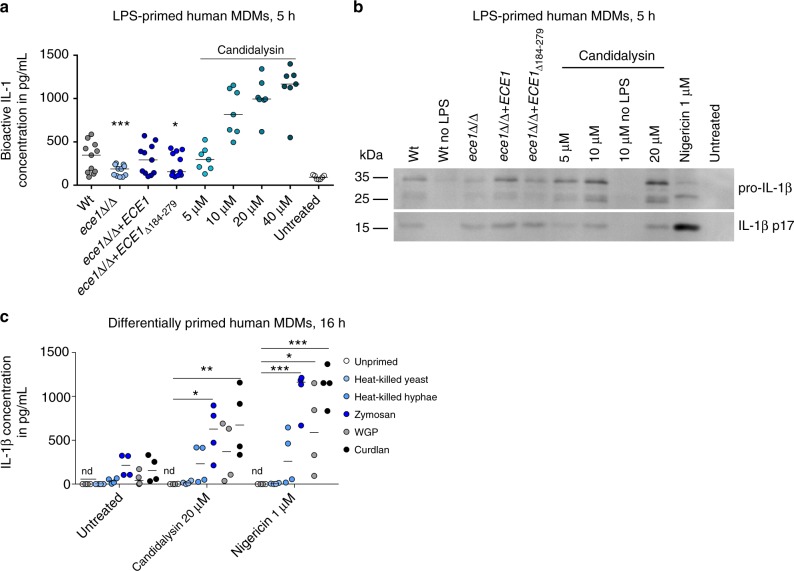
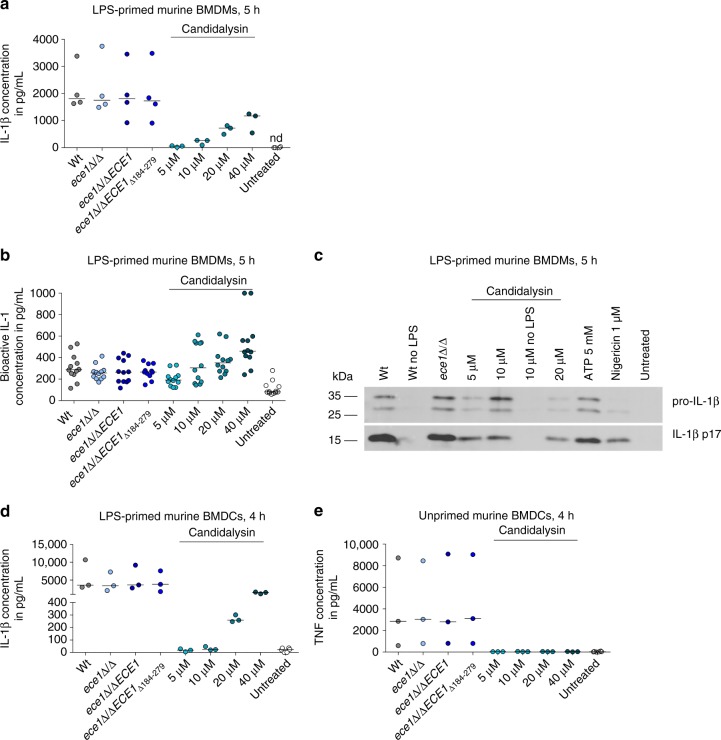
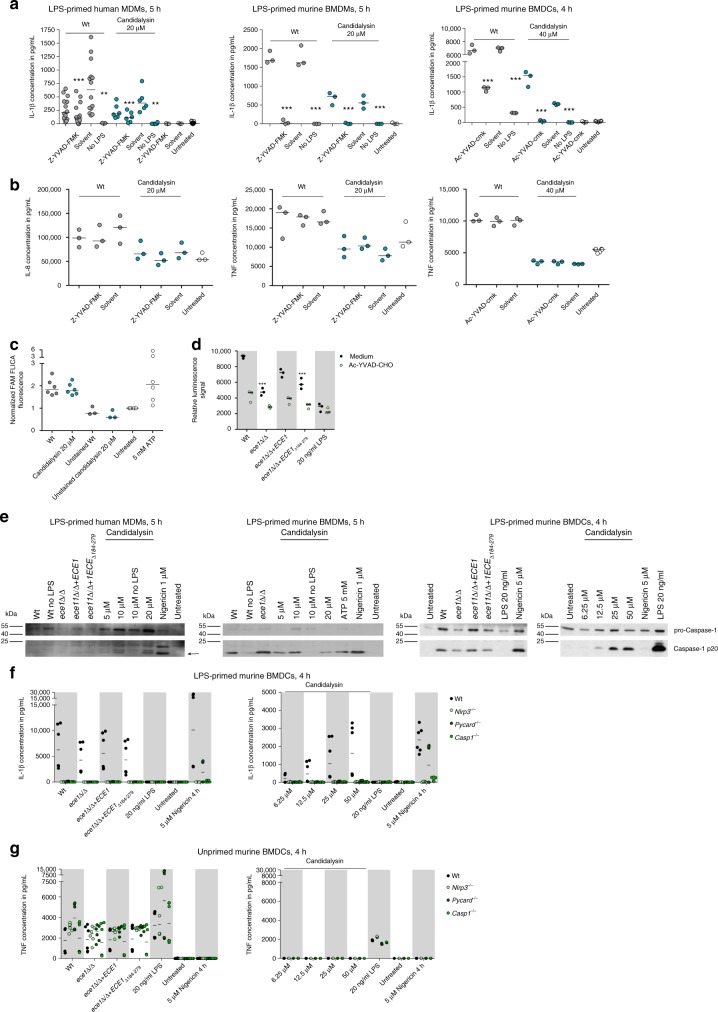
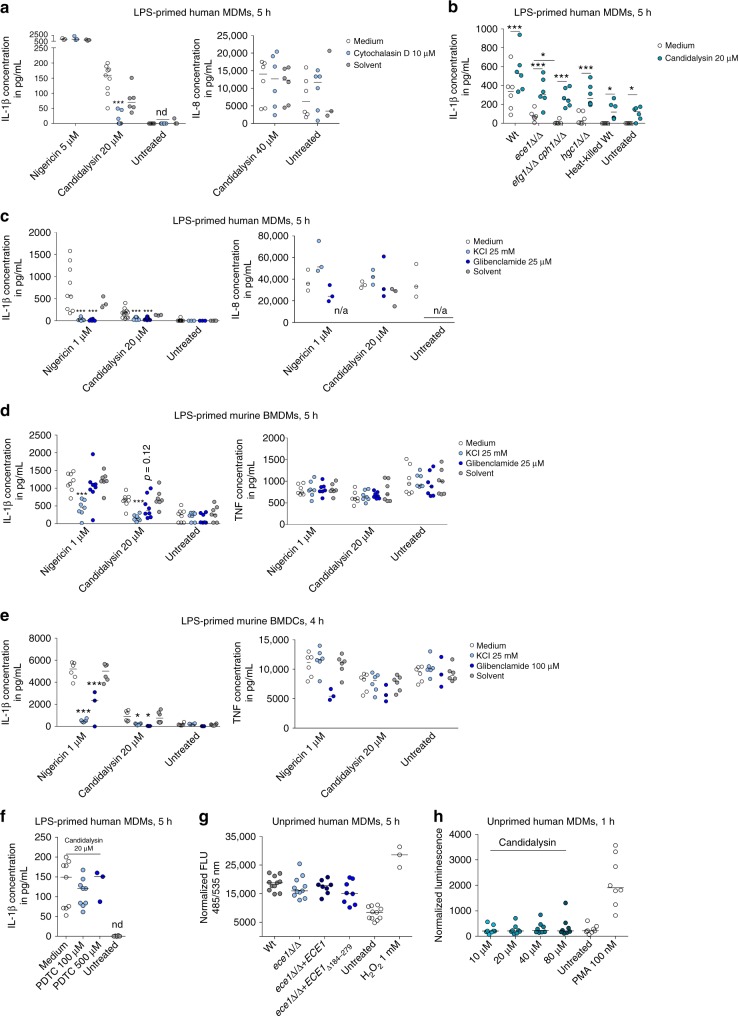
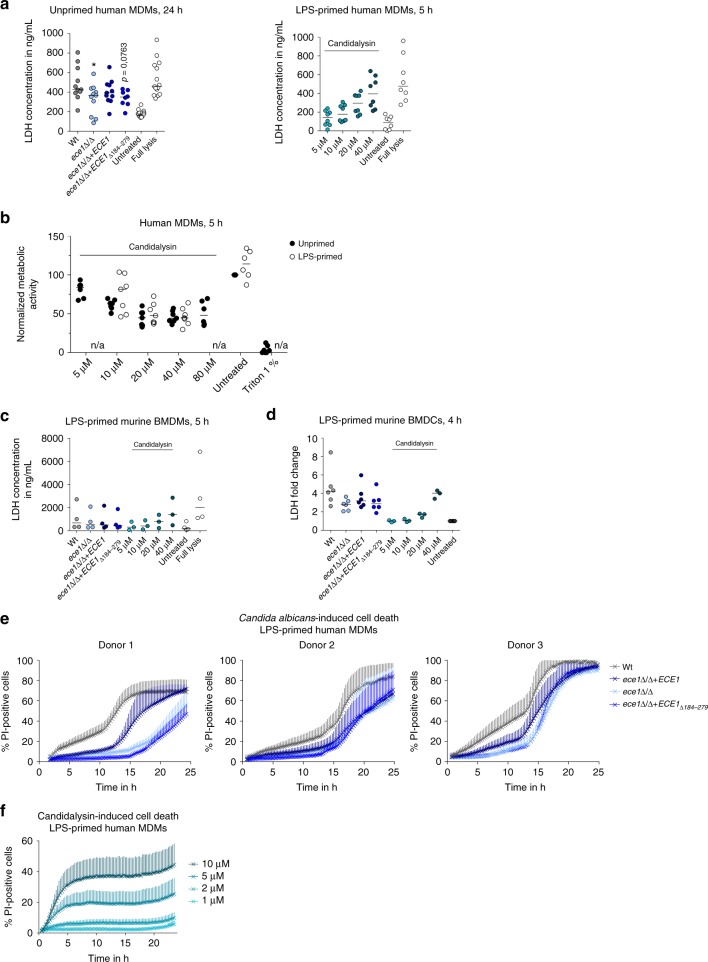
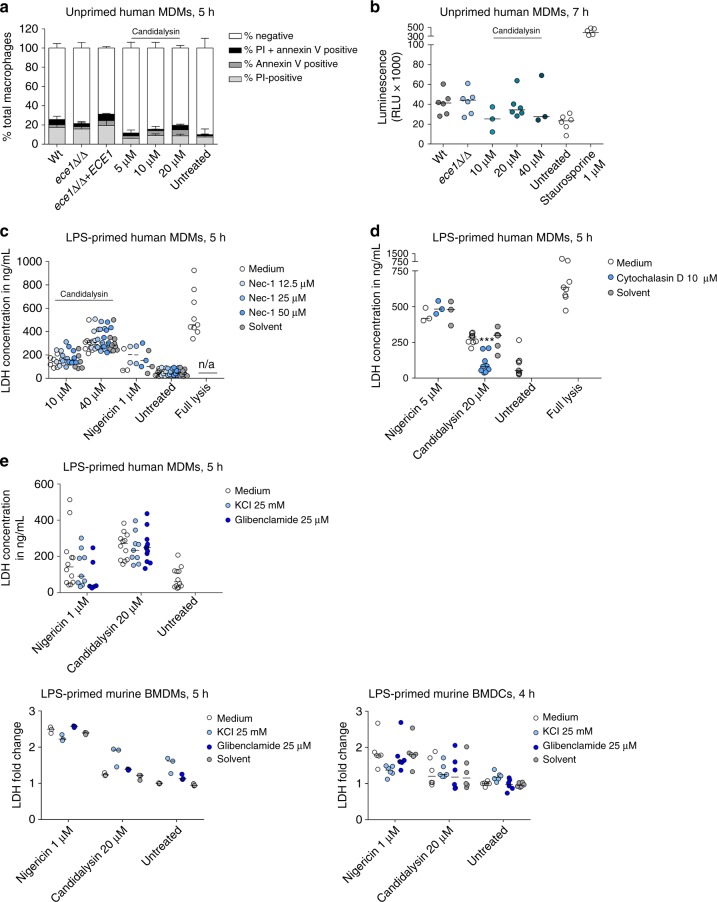
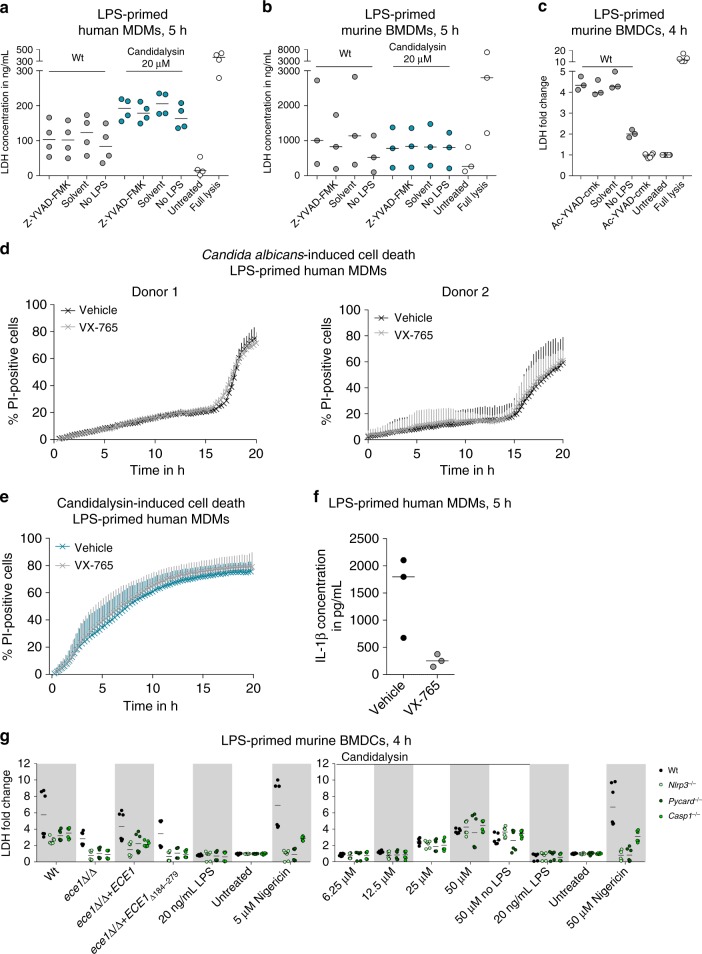
Clearance of invading microbes requires phagocytes of the innate immune system. However, successful pathogens have evolved sophisticated strategies to evade immune killing. The opportunistic human fungal pathogen Candida albicans is efficiently phagocytosed by macrophages, but causes inflammasome activation, host cytolysis, and escapes after hypha formation. Previous studies suggest that macrophage lysis by C. albicans results from early inflammasome-dependent cell death (pyroptosis), late damage due to glucose depletion and membrane piercing by growing hyphae. Here we show that Candidalysin, a cytolytic peptide toxin encoded by the hypha-associated gene ECE1, is both a central trigger for NLRP3 inflammasome-dependent caspase-1 activation via potassium efflux and a key driver of inflammasome-independent cytolysis of macrophages and dendritic cells upon infection with C. albicans. This suggests that Candidalysin-induced cell damage is a third mechanism of C. albicans-mediated mononuclear phagocyte cell death in addition to damage caused by pyroptosis and the growth of glucose-consuming hyphae.
Overview
The claims and statistics of this paper haven’t been checked yet.
Free: it reads the open-access text and checks the first 5 claims that cite a source we can check. Create a free account to check every claim.
Integrity signals
Registry
Cites
Statistics
Figures
Verification
Claims the paper makes
The claims and statistics of this paper haven’t been checked yet.
Free: it reads the open-access text and checks the first 5 claims that cite a source we can check. Create a free account to check every claim.
Claims other papers make about this one
Each is checked against this paper’s own text: does it say what the citing paper says it does?
The cited source says what the claim attributes to it.
In the citing paper
“Furthermore, filamentation enables C. albicans to kill and escape from macrophages through mechanical penetration of cell membranes [29], NLRP3/caspase-1 inflammasome-dependent pyroptosis [51], cytolysis [52] and glucose competition [53].”
From The F 1 F o -ATP synthase α subunit of Candida albicans induces inflammatory responses by controlling amino acid catabolism (2023) · cites this paper as [52]
Self-check
Percentages, sums and reported differences re-computed from the paper’s own numbers.
The self-check needs the paper’s full text.
Citations
Cites
NIH Image to ImageJ: 25 years of image analysis
Schneider, C. A., Rasband, W. S., & Eliceiri, K. W. (2012) · Nature Methods · doi:10.1038/nmeth.2089 · Cited by 64,638
Martinon, F., Burns, K., & Tschopp, J. (2002) · Molecular Cell · doi:10.1016/s1097-2765(02)00599-3 · Cited by 6,066
Gout-associated uric acid crystals activate the NALP3 inflammasome
Martinon, F., Pétrilli, V., Mayor, A., Tardivel, A., & Tschopp, J. (2006) · Nature · doi:10.1038/nature04516 · Cited by 5,326
Biologic basis for interleukin-1 in disease.
Dinarello, C. (1996) · Blood · doi:10.1182/blood.v87.6.2095.bloodjournal8762095 · Cited by 4,344
Hidden Killers: Human Fungal Infections
Brown, G. D., Denning, D. W., Gow, N. A. R., Levitz, S. M., Netea, M. G., & White, T. C. (2012) · Science Translational Medicine · doi:10.1126/scitranslmed.3004404 · Cited by 4,284
Epidemiology of Invasive Candidiasis: a Persistent Public Health Problem
Pfaller, M. A., & Diekema, D. J. (2007) · Clinical Microbiology Reviews · doi:10.1128/cmr.00029-06 · Cited by 4,174
Pyroptosis: host cell death and inflammation
Bergsbaken, T., Fink, S. L., & Cookson, B. T. (2009) · Nature Reviews Microbiology · doi:10.1038/nrmicro2070 · Cited by 3,183
Cryopyrin activates the inflammasome in response to toxins and ATP
Mariathasan, S., Weiss, D. S., Newton, K., McBride, J., O'Rourke, K., Roose-Girma, M., Lee, W. P., Weinrauch, Y., Monack, D. M., & Dixit, V. M. (2006) · Nature · doi:10.1038/nature04515 · Cited by 3,080
Hornung, V., Bauernfeind, F., Halle, A., Samstad, E. O., Kono, H., Rock, K. L., Fitzgerald, K. A., & Latz, E. (2008) · Nature Immunology · doi:10.1038/ni.1631 · Cited by 3,065
Activation and regulation of the inflammasomes
Latz, E., Xiao, T. S., & Stutz, A. (2013) · Nature Reviews Immunology · doi:10.1038/nri3452 · Cited by 2,884
Cited by
The NLRP3 Inflammasome: an overview of mechanisms of activation and regulation
Kelley, N., Jeltema, D., Duan, Y., & He, Y. (2019) · International Journal of Molecular Sciences · doi:10.3390/ijms20133328 · Cited by 3,539
Inflammasome activation and regulation: toward a better understanding of complex mechanisms
Zheng, D., Liwinski, T., & Elinav, E. (2020) · Cell Discovery · doi:10.1038/s41421-020-0167-x · Cited by 1,026
Candida albicans—The Virulence Factors and Clinical Manifestations of Infection
Talapko, J., Juzbašić, M., Matijević, T., Pustijanac, E., Bekić, S., Kotris, I., & Škrlec, I. (2021) · Journal of Fungi · doi:10.3390/jof7020079 · Cited by 794
“Candidalysin is capable of directly damaging the epithelial membrane, by intercalation, permeabilization, and creating pores, causing the cytoplasmic contents to weaken [29,30].”
BackgroundThe gut–liver axis and gut microbiota in health and liver disease
Hsu, C. L., & Schnabl, B. (2023) · Nature Reviews Microbiology · doi:10.1038/s41579-023-00904-3 · Cited by 737
Pathogenesis and virulence of Candida albicans
Lopes, J. P., & Lionakis, M. S. (2022) · Virulence · doi:10.1080/21505594.2021.2019950 · Cited by 477
“NLRP3 inflammasome activation with subsequent caspase-1-dependent IL-1β secretion and renal neutrophil recruitment [300,301].”
BackgroundSelf-citationZhang, F., Aschenbrenner, D., Yoo, J. Y., & Zuo, T. (2022) · The Lancet Microbe · doi:10.1016/s2666-5247(22)00203-8 · Cited by 388
d'Enfert, C., Kaune, A.-K., Alaban, L.-R., Chakraborty, S., Cole, N., Delavy, M., Kosmala, D., Marsaux, B., Fróis-Martins, R., Morelli, M., et al. (2021) · FEMS Microbiology Reviews · doi:10.1093/femsre/fuaa060 · Cited by 347
Self-citationVulvovaginal Candidiasis: A Current Understanding and Burning Questions
Willems, H. M. E., Ahmed, S. S., Liu, J., Xu, Z., & Peters, B. M. (2020) · Journal of Fungi · doi:10.3390/jof6010027 · Cited by 357
“More recent work has established that candidalysin is a potent activator of the NLRP3 inflammasome, as treatment of NLRP3-/- or Casp1-/- macrophages with synthetic candidalysin fails to induce IL-1β secretion [80].”
BackgroundImmune regulation by fungal strain diversity in inflammatory bowel disease
Li, X. V., Leonardi, I., Putzel, G. G., Semon, A., Fiers, W. D., Kusakabe, T., Lin, W.-Y., Gao, I. H., Doron, I., Gutierrez-Guerrero, A., et al. (2022) · Nature · doi:10.1038/s41586-022-04502-w · Cited by 302
Self-citationMicrobiota in inflammatory bowel disease: mechanisms of disease and therapeutic opportunities
Iliev, I. D., Ananthakrishnan, A. N., & Guo, C.-J. (2025) · Nature Reviews Microbiology · doi:10.1038/s41579-025-01163-0 · Cited by 249
“Candidalysin induces intestinal inflammation by damaging epithelial membranes and activating the MAPK pathway 54 , leading to the recruitment of T helper 17 (T H 17) cells, neutrophils and pro-inflammatory cytokines 46,55,56 .”
CARD9+ microglia promote antifungal immunity via IL-1β- and CXCL1-mediated neutrophil recruitment
Drummond, R. A., Swamydas, M., Oikonomou, V., Zhai, B., Dambuza, I. M., Schaefer, B. C., Bohrer, A. C., Mayer-Barber, K. D., Lira, S. A., Iwakura, Y., et al. (2019) · Nature Immunology · doi:10.1038/s41590-019-0377-2 · Cited by 238
Self-citationCandidalysin: discovery and function in Candida albicans infections
Naglik, J. R., Gaffen, S. L., & Hube, B. (2019) · Current Opinion in Microbiology · doi:10.1016/j.mib.2019.06.002 · Cited by 229
Self-citationCandidalysin activates innate epithelial immune responses via epidermal growth factor receptor
Ho, J., Yang, X., Nikou, S.-A., Kichik, N., Donkin, A., Ponde, N. O., Richardson, J. P., Gratacap, R. L., Archambault, L. S., Zwirner, C. P., et al. (2019) · Nature Communications · doi:10.1038/s41467-019-09915-2 · Cited by 186
Self-citationCandida albicans and Candida glabrata : global priority pathogens
Katsipoulaki, M., Stappers, M. H. T., Malavia-Jones, D., Brunke, S., Hube, B., & Gow, N. A. R. (2024) · Microbiology and Molecular Biology Reviews · doi:10.1128/mmbr.00021-23 · Cited by 180
“For example, candidalysin-induced damage activates danger-response and damage protection pathways in host cells (40, 327) (see above) and leads to activation of the epidermal growth factor receptor in epithelial cells and the NLRP3 inflammasome in macrophages (296, 329).”
BackgroundSelf-citationIntestinal mycobiota in health and diseases: from a disrupted equilibrium to clinical opportunities
Wu, X., Xia, Y., He, F., Zhu, C., & Ren, W. (2021) · Microbiome · doi:10.1186/s40168-021-01024-x · Cited by 162
NADPH oxidase family proteins: signaling dynamics to disease management
Begum, R., Thota, S., Abdulkadir, A. S., Kaur, G., Bagam, P., & Batra, S. (2022) · Cellular and Molecular Immunology · doi:10.1038/s41423-022-00858-1 · Cited by 174
Strategies for Targeting the NLRP3 Inflammasome in the Clinical and Preclinical Space
Schwaid, A. G., & Spencer, K. B. (2020) · Journal of Medicinal Chemistry · doi:10.1021/acs.jmedchem.0c01307 · Cited by 161
Effects of Intestinal Fungi and Viruses on Immune Responses and Inflammatory Bowel Diseases
Iliev, I. D., & Cadwell, K. (2020) · Gastroenterology · doi:10.1053/j.gastro.2020.06.100 · Cited by 139
The hyphal-specific toxin candidalysin promotes fungal gut commensalism
Liang, S.-H., Sircaik, S., Dainis, J. P., Kakade, P., Penumutchu, S., McDonough, L. D., Chen, Y.-H., Frazer, C., Schille, T. B., Allert, S., et al. (2024) · Nature · doi:10.1038/s41586-024-07142-4 · Cited by 132
“Prominent HSGs include established virulence factor genes such as ECE1 , which encodes the peptide toxin candidalysin 4,26,27,43,44 .”
Self-citationSwidergall, M., Khalaji, M., Solis, N. V., Moyes, D. L., Drummond, R. A., Hube, B., Lionakis, M. S., Murdoch, C., Filler, S. G., & Naglik, J. R. (2019) · The Journal of Infectious Diseases · doi:10.1093/infdis/jiz322 · Cited by 111
“Given that expression of candidalysin is hypha-associated and induces damage, signaling and proinflammatory responses in epithelial cells [18, 27–30], and the NLRP3 inflammasome in macrophages [13], we investigated whether candidalysin drives endothelial cell activation, immune cell recruitment, and mortality during s…”
BackgroundInfluentialSelf-citationMicrobiome: Role in Inflammatory Skin Diseases
Zhang, X.-E., Zheng, P., Ye, S., Ma, X., Liu, E., Pang, Y.-B., He, Q., Zhang, Y., Li, W.-Q., Zeng, J., et al. (2024) · Journal of Inflammation Research · doi:10.2147/jir.s441100 · Cited by 173
Inflammasome-mediated GSDMD activation facilitates escape of Candida albicans from macrophages
Ding, X., Kambara, H., Guo, R., Kanneganti, A., Acosta-Zaldívar, M., Li, J., Liu, F., Bei, T., Qi, W., Xie, X., et al. (2021) · Nature Communications · doi:10.1038/s41467-021-27034-9 · Cited by 115
Candidalysin Crucially Contributes to Nlrp3 Inflammasome Activation by Candida albicans Hyphae
Rogiers, O., Frising, U. C., Kucharíková, S., Jabra-Rizk, M. A., van Loo, G., Van Dijck, P., & Wullaert, A. (2019) · mBio · doi:10.1128/mbio.02221-18 · Cited by 113
“study (20), it is conceivable that the various C.”
BackgroundInfluentialC5a-licensed phagocytes drive sterilizing immunity during systemic fungal infection
Desai, J. V., Kumar, D., Freiwald, T., Chauss, D., Johnson, M. D., Abers, M. S., Steinbrink, J. M., Perfect, J. R., Alexander, B. D., Matzaraki, V., et al. (2023) · Cell · doi:10.1016/j.cell.2023.04.031 · Cited by 109
Self-citationDermatophyte infection: from fungal pathogenicity to host immune responses
Deng, R., Wang, X., & Li, R. (2023) · Frontiers in Immunology · doi:10.3389/fimmu.2023.1285887 · Cited by 123
Dubey, S. R., Turnbull, C., Pandey, A., Zhao, A., Kurera, M., Al-Zidan, R. N., Shen, C. X., Gautam, M., Mahajan, S., Jadhav, P. S., et al. (2025) · Cellular and Molecular Immunology · doi:10.1038/s41423-025-01354-y · Cited by 116
Han, Q.-Q., & Le, W. (2023) · Neuroscience Bulletin · doi:10.1007/s12264-023-01023-y · Cited by 111
“Evidence has shown that inhibition of NLRP3 disrupts the host response to influenza A infection [127], Streptococcus pneumoniae infection [128], and fungal infection [129].”
BackgroundDivergent Approaches to Virulence in C. albicans and C. glabrata: Two Sides of the Same Coin
Galocha, M., Pais, P., Cavalheiro, M., Pereira, D., Viana, R., & Teixeira, M. C. (2019) · International Journal of Molecular Sciences · doi:10.3390/ijms20092345 · Cited by 105
“albicans induces phagocyte cell death in addition to damage caused by pyroptosis and the growth of glucose-consuming hyphae [223].”
BackgroundLu, H., Hong, T., Jiang, Y., Whiteway, M., & Zhang, S. (2023) · Advanced Drug Delivery Reviews · doi:10.1016/j.addr.2023.114960 · Cited by 89
Pellón, A., Nasab, S. D. S., & Moyes, D. L. (2020) · Frontiers in Cellular and Infection Microbiology · doi:10.3389/fcimb.2020.00081 · Cited by 113
Wu, Y., Zeng, Z., Guo, Y., Song, L., Weatherhead, J. E., Huang, X., Zeng, Y., Bimler, L. H., Chang, C.-Y., Knight, J. M., et al. (2021) · Immunity · doi:10.1016/j.immuni.2021.08.009 · Cited by 103
Self-citationHost–Pathogen Interactions during Female Genital Tract Infections
Pekmezovic, M., Mogavero, S., Naglik, J. R., & Hube, B. (2019) · Trends in Microbiology · doi:10.1016/j.tim.2019.07.006 · Cited by 90
Self-citationFungal toxins and host immune responses
Brown, R., Priest, E., Naglik, J. R., & Richardson, J. P. (2021) · Frontiers in Microbiology · doi:10.3389/fmicb.2021.643639 · Cited by 94
Self-citationGSDMD-mediated pyroptosis: molecular mechanisms, diseases and therapeutic targets
Li, Y., & Guo, B. (2025) · Molecular Biomedicine · doi:10.1186/s43556-025-00249-8 · Cited by 94
Muñoz, J. F., Delorey, T., Ford, C. B., Li, B. Y., Thompson, D. A., Rao, R. P., & Cuomo, C. A. (2019) · Nature Communications · doi:10.1038/s41467-019-09599-8 · Cited by 89
Lysosome Fusion Maintains Phagosome Integrity during Fungal Infection
Westman, J., Walpole, G. F. W., Kasper, L., Xue, B. Y., Elshafee, O., Hube, B., & Grinstein, S. (2020) · Cell Host & Microbe · doi:10.1016/j.chom.2020.09.004 · Cited by 85
Self-citationGaziano, R., Sabbatini, S., & Monari, C. (2023) · Microorganisms · doi:10.3390/microorganisms11051211 · Cited by 94
Candida albicans Virulence Factors and Pathogenicity for Endodontic Infections
Yoo, Y., Kim, A.-R., Perinpanayagam, H., Han, S. H., & Kum, K. (2020) · Microorganisms · doi:10.3390/microorganisms8091300 · Cited by 99
“albicans hyphae formation triggered the NLRP3 inflammasome in macrophages [35], especially hyphae-derived candidalysin-induced NLRP3 inflammasome-mediated pyroptosis and the IL-1β secretion for macrophages and mononuclear phagocytes [36,37].”
BackgroundRecent insights into the regulatory networks of NLRP3 inflammasome activation
Weber, A. N. R., Bittner, Z., Shankar, S., Liu, X., Chang, T.-H., Jin, T., & Tapia‐Abellán, A. (2020) · Journal of Cell Science · doi:10.1242/jcs.248344 · Cited by 86
“However, recent work contests the hypothesis of a Syk-dependent K efflux, and suggests that the activation signal is provided by the hyphal peptide toxin candidalysin, which disrupts host membrane integrity and may thereby mediate K efflux directly (Kasper et al., 2018; Rogiers et al., 2019).”
BackgroundOlivier, F. A. B., Hilsenstein, V., Weerasinghe, H., Weir, A., Hughes, S., Crawford, S., Vince, J. E., Hickey, M. J., & Traven, A. (2022) · Cell Reports · doi:10.1016/j.celrep.2022.111374 · Cited by 76
Candidalysins Are a New Family of Cytolytic Fungal Peptide Toxins
Richardson, J. P., Brown, R., Kichik, N., Lee, S., Priest, E. L., Mogavero, S., Maufrais, C., Wickramasinghe, D. N., Tsavou, A., Kotowicz, N. K., et al. (2022) · mBio · doi:10.1128/mbio.03510-21 · Cited by 88
“rine oral tissue (14), neutrophil recruitment to the kidney (15) and brain (16) during murine systemic infection, and the secretion of IL-1b from macrophages via NLRP3 inflammasome activation (17, 18).”
BackgroundSelf-citationCandida albicans and candidalysin in inflammatory disorders and cancer
Ho, J., Camilli, G., Griffiths, J. S., Richardson, J. P., Kichik, N., & Naglik, J. R. (2021) · Immunology · doi:10.1111/imm.13255 · Cited by 77
Self-citationSkin Immunity to Dermatophytes: From Experimental Infection Models to Human Disease
Burstein, V. L., Beccacece, I., Guasconi, L., Mena, C. J., Cervi, L., & Chiapello, L. S. (2020) · Frontiers in Immunology · doi:10.3389/fimmu.2020.605644 · Cited by 87
“The second signal is given by K efflux, extracellular ATP (adenosine triphosphate), reactive oxygen species (ROS), fungal toxins, or particulate matter, etc (31).”
BackgroundInfluentialRole of inflammasomes/pyroptosis and PANoptosis during fungal infection
Briard, B., Malireddi, R. K. S., & Kanneganti, T. (2021) · PLoS Pathogens · doi:10.1371/journal.ppat.1009358 · Cited by 81
Babamale, A. O., & Chen, S.-T. (2021) · International Journal of Molecular Sciences · doi:10.3390/ijms222111398 · Cited by 91
Huang, H., Wang, Q., Yang, Y., Zhong, W., He, F., & Li, J. (2024) · Gut Microbes · doi:10.1080/19490976.2024.2440111 · Cited by 80
“14,137 Despite advances in antifungal immunity research and the increasing availability of antifungal drugs, the rapid increase in the incidence of fungal infections necessitates new immunomodulatory strategies.”
Endogenous ethanol production in health and disease
Meijnikman, A. S., Nieuwdorp, M., & Schnabl, B. (2024) · Nature Reviews Gastroenterology & Hepatology · doi:10.1038/s41575-024-00937-w · Cited by 83
“Furthermore, it triggers a TH17 cell response and activates the NOD-, LRR-and pyrin domain-containing 3 (NLRP3) inflammasome in macrophages and dendritic cells, potentially amplifying tissue damage in vitro 142,143 .”
Liu, J., Willems, H. M. E., Sansevere, E. A., Allert, S., Barker, K. S., Lowes, D. J., Dixson, A. C., Xu, Z., Miao, J., DeJarnette, C. A., et al. (2021) · PLoS Pathogens · doi:10.1371/journal.ppat.1009884 · Cited by 79
“Moreover, candidalysin is both sufficient and necessary to activate the NLRP3 inflammasome [14,15,16].”
BackgroundSelf-citationGut microbiota profiles and characterization of cultivable fungal isolates in IBS patients
Sciavilla, P., Strati, F., Paola, M. D., Modesto, M., Vitali, F., Cavalieri, D., Prati, G. M., Vito, M. D., Aragona, G., Filippo, C. D., et al. (2021) · Applied Microbiology and Biotechnology · doi:10.1007/s00253-021-11264-4 · Cited by 76
“albicans, has been demonstrated to damage epithelial barrier and to induce mucosal inflammation (Kasper et al. 2018).”
BackgroundThe role of Candida albicans candidalysin ECE1 gene in oral carcinogenesis
Satiman, E. A. F. E. N., Ahmad, H., Ramzi, A. B., Wahab, R. A., Kaderi, M. A., Himratul-Aznita, W. H., Dashper, S. G., McCullough, M. J., & Arzmi, M. H. (2020) · Journal of Oral Pathology and Medicine · doi:10.1111/jop.13014 · Cited by 80
The Interactions Between Candida albicans and Mucosal Immunity
Zhou, Y., Cheng, L., Lei, Y. L., Ren, B., & Zhou, X. (2021) · Frontiers in Microbiology · doi:10.3389/fmicb.2021.652725 · Cited by 77
Saftien, A., Puschhof, J., & Elinav, E. (2023) · Gut · doi:10.1136/gutjnl-2022-327952 · Cited by 70
Microglial NLRP3 inflammasome-mediated neuroinflammation and therapeutic strategies in depression
Han, Q.-Q., Li, W., Chen, P., Wang, L., Bao, X., Huang, R., Liu, G., & Chen, X. (2023) · Neural Regeneration Research · doi:10.4103/1673-5374.390964 · Cited by 75
“For instance, studies have demonstrated that inhibiting the NLRP3 inflammasome interferes with the body’s response to fungal (Kasper et al., 2018), Streptococcus pneumoniae (Witzenrath et al., 2011), and influenza A infection (Tate et al., 2016).”
BackgroundSepsis in patients who are immunocompromised: diagnostic challenges and future therapies
Deinhardt-Emmer, S., Chousterman, B. G., Schefold, J. C., Flohé, S. B., Skirecki, T., Kox, M., Winkler, M. S., Cossarizza, A., Wiersinga, W. J., van der Poll, T., et al. (2025) · The Lancet Respiratory Medicine · doi:10.1016/s2213-2600(25)00124-9 · Cited by 64
Virulence and Biofilms As Promising Targets in Developing Antipathogenic Drugs Against Candidiasis
Khan, M. S., Alshehrei, F. M., Alghamdi, S., Bamaga, M. A., Althubiani, A. S., & Alam, M. Z. (2020) · Future Science OA · doi:10.2144/fsoa-2019-0027 · Cited by 72
Role for IL-1 Family Cytokines in Fungal Infections
Griffiths, J. S., Camilli, G., Kotowicz, N. K., Ho, J., Richardson, J. P., & Naglik, J. R. (2021) · Frontiers in Microbiology · doi:10.3389/fmicb.2021.633047 · Cited by 63
Self-citationGao, L., Qin, J., Shi, J., Jiang, T., Wang, F., Xie, C., Gao, Q., Zhi, N., Dong, Q., & Guan, Y. (2022) · CNS Neuroscience & Therapeutics · doi:10.1111/cns.13837 · Cited by 57
Face/Off: The Interchangeable Side of Candida Albicans
Cottier, F., & Hall, R. A. (2020) · Frontiers in Cellular and Infection Microbiology · doi:10.3389/fcimb.2019.00471 · Cited by 61
König, A., Hube, B., & Kasper, L. (2020) · Toxins · doi:10.3390/toxins12080469 · Cited by 49
“Candidalysin has recently been identified as one major trigger of hypha-dependent NLRP3 inflammasome activation in primary human macrophages and murine dendritic cells [78,94].”
BackgroundInfluentialSelf-citationAustermeier, S., Kasper, L., Westman, J., & Gresnigt, M. S. (2020) · Current Opinion in Microbiology · doi:10.1016/j.mib.2020.05.007 · Cited by 55
Self-citationFunctional Characterization of Secreted Aspartyl Proteases in Candida parapsilosis
Singh, D. K., Németh, T., Papp, A., Tóth, R., Lukácsi, S., Hrušková‐Heidingsfeldová, O., Dostál, J., Vágvölgyi, C., Bajtay, Z., Józsi, M., et al. (2019) · mSphere · doi:10.1128/msphere.00484-19 · Cited by 60
Inflammasome Contribution to the Activation of Th1, Th2, and Th17 Immune Responses
Martynova, E. V., Rizvanov, A. A., Urbanowicz, R. A., & Khaiboullina, S. F. (2022) · Frontiers in Microbiology · doi:10.3389/fmicb.2022.851835 · Cited by 59
Relevance of Macrophage Extracellular Traps in C. albicans Killing
Loureiro, A., Pais, C., & Sampaio, P. (2019) · Frontiers in Immunology · doi:10.3389/fimmu.2019.02767 · Cited by 58
Candidalysin triggers epithelial cellular stresses that induce necrotic death
Blagojevic, M., Camilli, G., Maxson, M. E., Hube, B., Moyes, D. L., Richardson, J. P., & Naglik, J. R. (2021) · Cellular Microbiology · doi:10.1111/cmi.13371 · Cited by 60
“of candidalysin (Kasper et al., 2018), suggesting that neither necroptosis nor pyroptosis contribute to candidalysin-driven macrophage cell death.”
BackgroundInfluentialSelf-citationRussell, C. M., Schaefer, K. G., Dixson, A. C., Gray, A. L. H., Pyron, R. J., Alves, D. S., Moore, N., Conley, E. A., Schuck, R. J., White, T., et al. (2022) · eLife · doi:10.7554/elife.75490 · Cited by 56
“Furthermore, CL plays a second pathogenic role, as it also attacks the membrane of mononuclear phagocytes which would otherwise fight the fungal infection (Kasper et al., 2018).”
BackgroundOchratoxin A induces nephrotoxicity in vitro and in vivo via pyroptosis
Li, H., Mao, X., Liu, K., Sun, J., Li, B., Malyar, R. M., Liu, D., Pan, C., Gan, F., Liu, Y., et al. (2021) · Archives of Toxicology · doi:10.1007/s00204-021-02993-6 · Cited by 55
Recent advances in understanding Candida albicans hyphal growth
Arkowitz, R. A., & Bassilana, M. (2019) · F1000Research · doi:10.12688/f1000research.18546.1 · Cited by 51
Fungal infections and the fungal microbiome in hepatobiliary disorders
Hartmann, P., & Schnabl, B. (2022) · Journal of Hepatology · doi:10.1016/j.jhep.2022.12.006 · Cited by 56
Patulin induces pyroptosis through the autophagic-inflammasomal pathway in liver
Chu, Q., Wang, S., Jiang, L., Jiao, Y., Sun, X., Li, J., Yang, L., Hou, Y., Wang, N., Yao, X., et al. (2020) · Food and Chemical Toxicology · doi:10.1016/j.fct.2020.111867 · Cited by 49
Genetic Susceptibility to Fungal Infections and Links to Human Ancestry
Naik, B., Ahmed, S. M. Q., Laha, S., & Das, S. P. (2021) · Frontiers in Genetics · doi:10.3389/fgene.2021.709315 · Cited by 54
Stress in the microbiome-immune crosstalk
Beurel, E. (2024) · Gut Microbes · doi:10.1080/19490976.2024.2327409 · Cited by 51
Weerasinghe, H., Simm, C., Djajawi, T. M., Tedja, I., Lo, T. L., Simpson, D. S., Shasha, D., Mizrahi, N., Olivier, F. A. B., Speir, M., et al. (2023) · Cell Reports · doi:10.1016/j.celrep.2023.112522 · Cited by 47
Vaginal Candida albicans infections: host–pathogen–microbiome interactions
Valentine, M., Wilson, D., Gresnigt, M. S., & Hube, B. (2025) · FEMS Microbiology Reviews · doi:10.1093/femsre/fuaf013 · Cited by 56
Self-citationIn vitroinfection models to study fungal–host interactions
Last, A., Maurer, M., Mosig, A. S., Gresnigt, M. S., & Hube, B. (2021) · FEMS Microbiology Reviews · doi:10.1093/femsre/fuab005 · Cited by 49
Self-citationSheehan, G., Tully, L., & Kavanagh, K. A. (2020) · Microbiology · doi:10.1099/mic.0.000892 · Cited by 46
“C. albicans virulence includes polymorphism and phenotypic switching, production of toxins (e.g. candidalysin), invasins (e.g. Als3p), biofilm formation and metabolic adaption [21, 22].”
Metabolic competition between host and pathogen dictates inflammasome responses to fungal infection
Tucey, T. M., Verma, J., Olivier, F. A. B., Lo, T. L., Robertson, A. A. B., Naderer, T., & Traven, A. (2020) · PLOS Pathogens · doi:10.1371/journal.ppat.1008695 · Cited by 45
Albumin Neutralizes Hydrophobic Toxins and Modulates Candida albicans Pathogenicity
Austermeier, S., Pekmezovic, M. G., Porschitz, P., Lee, S., Kichik, N., Moyes, D. L., Ho, J., Kotowicz, N. K., Naglik, J. R., Hube, B., et al. (2021) · mBio · doi:10.1128/mbio.00531-21 · Cited by 55
“Live-cell imaging of the cell death dynamics using PI staining was performed as described previously (78).”
MethodSelf-citationIntegrity under stress: Host membrane remodelling and damage by fungal pathogens
Westman, J., Hube, B., & Fairn, G. D. (2019) · Cellular Microbiology · doi:10.1111/cmi.13016 · Cited by 42
Self-citationFungal diseases: Oral dysbiosis in susceptible hosts
Villar, C. C., & Dongari‐Bagtzoglou, A. I. (2021) · Periodontology 2000 · doi:10.1111/prd.12378 · Cited by 45
Opportunistic yeast pathogen Candida spp.: Secreted and membrane-bound virulence factors
Lim, S. J., Ali, M. S. M., Sabri, S., Noor, N. D. M., Salleh, A. B., & Oslan, S. N. (2021) · Medical Mycology · doi:10.1093/mmy/myab053 · Cited by 50
Fungal resilience and host–pathogen interactions: Future perspectives and opportunities
Brown, A. J. P. (2022) · Parasite Immunology · doi:10.1111/pim.12946 · Cited by 46
Inflammatory cytokine signalling in vulvovaginal candidiasis: a hot mess driving immunopathology
Cheng, K. O., Montaño, D. E., Zelante, T., Dietschmann, A., & Gresnigt, M. S. (2024) · Oxford Open Immunology · doi:10.1093/oxfimm/iqae010 · Cited by 43
Self-citationFrom Birth and Throughout Life: Fungal Microbiota in Nutrition and Metabolic Health
Fiers, W. D., Leonardi, I., & Iliev, I. D. (2020) · Annual Review of Nutrition · doi:10.1146/annurev-nutr-013120-043659 · Cited by 52
“These trigger a danger response signaling pathway that activates epithelial immunity(2, 84, 120, 121) as well as IL-1β secretion by macrophages (60, 100) (113).”
BackgroundEffect of diet on the gut mycobiome and potential implications in inflammatory bowel disease
Buttar, J., Kon, E., Lee, A. H., Kaur, G., & Lunken, G. (2024) · Gut Microbes · doi:10.1080/19490976.2024.2399360 · Cited by 43
Host-microbe interaction paradigms in acute and recurrent vulvovaginal candidiasis
MacAlpine, J., & Lionakis, M. S. (2024) · Cell Host & Microbe · doi:10.1016/j.chom.2024.08.018 · Cited by 49
Self-citationTherapeutic interventions target the NLRP3 inflammasome in ulcerative colitis: Comprehensive study
Ali, F. E. M., Ibrahim, I. M., Ghogar, O. M., Abd‐alhameed, E. K., Althagafy, H. S., & Hassanein, E. H. M. (2023) · World Journal of Gastroenterology · doi:10.3748/wjg.v29.i6.1026 · Cited by 42
Ruben, S., Garbe, E., Mogavero, S., Albrecht-Eckardt, D., Hellwig, D., Häder, A., Krüger, T., Gerth, K., Jacobsen, I. D., Elshafee, O., et al. (2020) · mBio · doi:10.1128/mbio.00206-20 · Cited by 45
“This novel role of Ahr1 might explain why the deletion mutant not only is attenuated in an oral epithelium infection model but also fails to induce pyroptosis in infected phagocytes (7, 33, 34), for which candidalysin plays an important role (8, 35).”
BackgroundSelf-citationHong, G., Li, Y., Yang, M. J., Li, G., Qian, W., Xiong, H., Bai, T., Song, J., Zhang, L., & Hou, X. (2020) · Neurogastroenterology & Motility · doi:10.1111/nmo.13891 · Cited by 41
Candidalysin Is the Hemolytic Factor of Candida albicans
Mogavero, S., Hoefs, S., Lauer, A. N., Müller, R., Brunke, S., Allert, S., Gerwien, F., Groth, S., Dolk, E., Wilson, D., et al. (2022) · Toxins · doi:10.3390/toxins14120874 · Cited by 40
Self-citationDutta, D., Liu, J., & Xiong, H. (2022) · PubMed Central · Cited by 53
Amino Acid Sensing and Assimilation by the Fungal Pathogen Candida albicans in the Human Host
Silao, F. G. S., & Ljungdahl, P. O. (2021) · Pathogens · doi:10.3390/pathogens11010005 · Cited by 40
Gut fungal mycobiome: A significant factor of tumor occurrence and development
Li, F., Gao, Y., Cheng, W., Su, L., & Yang, R. (2023) · Cancer Letters · doi:10.1016/j.canlet.2023.216302 · Cited by 37
Xiao, Z., Li, Y., Xiong, L., Liao, J., Gao, Y., Luo, Y., Wang, Y., Chen, T., Yu, D., Wang, T., et al. (2023) · Advanced Science · doi:10.1002/advs.202302918 · Cited by 39
Lowes, D. J., Hevener, K. E., & Peters, B. M. (2019) · Antimicrobial Agents and Chemotherapy · doi:10.1128/aac.01777-19 · Cited by 38
“It has been established that Candidalysin (product of the ECE1 gene) is sufficient and/or necessary to drive inflammation in murine BMDM cells and the mouse model of VVC, but it has yet to be shown that this same virulence determinant is responsible for NLRP3-dependent IL-1 secretion in THP1 cells (9, 13, 14).”
BackgroundMethodInfluentialFungal factors involved in host immune evasion, modulation and exploitation during infection
König, A., Müller, R., Mogavero, S., & Hube, B. (2020) · Cellular Microbiology · doi:10.1111/cmi.13272 · Cited by 40
“…fungus-like oomycete Phytophthora infestans, the effector protein, Avr3a, has been shown to suppress programmed cell death (PCD) of the plant host cell (Bos et al., 2010), while SNE1 inhibits necrotic cell death and interferes with other cell death inductor pathways (Kelley et al., 2010).”
BackgroundSelf-citation“Under Pressure” – How fungi evade, exploit, and modulate cells of the innate immune system
Lange, T., Kasper, L., Gresnigt, M. S., Brunke, S., & Hube, B. (2023) · Seminars in Immunology · doi:10.1016/j.smim.2023.101738 · Cited by 36
Self-citationSprenger, M., Hartung, T. S., Allert, S., Wisgott, S., Niemiec, M. J., Graf, K., Jacobsen, I. D., Kasper, L., & Hube, B. (2020) · Cellular Microbiology · doi:10.1111/cmi.13197 · Cited by 35
“Phagocytosed C. albicans yeast cells rapidly start to form hyphae, damage macrophage membranes, and escape after host cell death and via hyphal outgrowth (Kasper et al., 2018; McKenzie et al., 2010; Vylkova & Lorenz, 2014; Westman, Moran, Mogavero, Hube, & Grinstein, 2018).”
BackgroundSelf-citationT cell immunity to commensal fungi
Scheffold, A., Bächer, P., & LeibundGut‐Landmann, S. (2020) · Current Opinion in Microbiology · doi:10.1016/j.mib.2020.09.008 · Cited by 38
Unger, L., Skoluda, S., Backman, E., Amulic, B., Ponce-Garcia, F. M., Etiaba, C. N., Yellagunda, S., Krüger, R., von Bernuth, H., Bylund, J., et al. (2023) · EMBO Reports · doi:10.15252/embr.202357571 · Cited by 37
“A critical factor for the invasive and inflammatory potential of C. albicans hyphae is the recently discovered peptide toxin candidalysin (Moyes et al , 2016; Kasper et al , 2018).”
InfluentialSelf-citationThe first line of defense: effector pathways of anti-fungal innate immunity
Ward, R., & Vyas, J. M. (2020) · Current Opinion in Microbiology · doi:10.1016/j.mib.2020.10.003 · Cited by 37
Metadata
- Authors
- Kasper, L., König, A., Koenig, P.-A., Gresnigt, M. S., Westman, J., Drummond, R. A., Lionakis, M. S., Groß, O., Ruland, J., Naglik, J. R., & Hube, B.
- Affiliations
- Leibniz-Institut für Naturstoff-Forschung und Infektionsbiologie e. V. - Hans-Knöll-Institut (HKI) (DE)
- TUM Klinikum (DE)
- Hospital for Sick Children (CA)
- National Institutes of Health (US)
- University of Freiburg (DE)
- King's College London (GB)
- Corresponding author
- Hube, Bernhard
- ORCID
- Venue
- Nature Communications
- Published
- 2018-10-15
- Volume
- 9
- Issue
- 1
- Pages
- 4260-4260
- ISSN
- 2041-1723 (ISSN-L)
- PMC
- PMC6189146
- OpenAlex
- W2896513955
- Cited by
- 297
- References
- 78
- Citations by year
- 2026: 36 · 2025: 45 · 2024: 40 · 2023: 38 · 2022: 35 · 2021: 37 · 2020: 42 · 2019: 22
- FWCI
- 8.98
- Type
- journal article
- Language
- en
- Open access
- gold
- doi.org
- Licence
- cc-by
- creativecommons.org/licenses/by/4.0 (tdm)
- creativecommons.org/licenses/by/4.0 (vor)
- Locations
- Nature Communications (publishedVersion, cc-by)
- Europe PMC (PubMed Central) (publishedVersion, other-oa)
- PubMed Central (publishedVersion, cc-by)
- PubMed (publishedVersion)
- Research Portal (King's College London) (submittedVersion, cc-by)
- RePEc: Research Papers in Economics (submittedVersion)
- DOAJ (DOAJ: Directory of Open Access Journals) (submittedVersion)
- DOAJ (DOAJ: Directory of Open Access Journals) (submittedVersion, cc-by-sa)
- mediaTUM – the media and publications repository of the Technical University Munich (Technical University Munich) (submittedVersion)
- University of Birmingham Research Portal (University of Birmingham) (submittedVersion, cc-by)
- University of Birmingham Research Portal (University of Birmingham) (submittedVersion, other-oa)
- Radboud Repository (Radboud University) (submittedVersion)
- Radboud Repository (Radboud University) (submittedVersion, other-oa)
- Funders
- European Molecular Biology Organization
- Alexander von Humboldt-Stiftung
- Division of Intramural Research, National Institute of Allergy and Infectious Diseases (DE022550)
- King's College London (IS-BRC-1215–20006)
- European Commission (606786, FP7-PEOPLE-2013-Initial Training Network)
- Rosetrees Trust
- Deutsche Forschungsgemeinschaft (SFB 1054, SFB1335, SPP 1580, RU 695/6-1, project C1), FP7-PEOPLE-2013, CRC/TR FungiNet Project C1)
- King's Health Partners (R170501)
- National Institutes of Health (5r37de022550-12, DE022550, R37DE022550)
- Directorate for Biological Sciences
- Medical Research Council (MR/J008303/1, MR/M011372/1, MC_PC_16048)
- Biotechnology and Biological Sciences Research Council (BB/N014677/1)
- Leibniz-Gemeinschaft (InfectoOptics SAS-2015-HKI-LWC, SAS-2015, SAS-2015-HKI-LWC)
- National Institute of Allergy and Infectious Diseases (DE022550)
- National Institute of Dental and Craniofacial Research (R37-DE022550)
- FP7 Ideas: European Research Council (322865, 337689)
- FP7 People: Marie-Curie Actions (FP7-PEOPLE-2013)
- NHLBI Division of Intramural Research
- Topics
- Life Sciences › Biochemistry, Genetics and Molecular Biology › Molecular Biology › Inflammasome and immune disorders
- Health Sciences › Medicine › Infectious Diseases › Antifungal resistance and susceptibility
- Life Sciences › Biochemistry, Genetics and Molecular Biology › Molecular Biology › Fungal and yeast genetics research
- Keywords
- candidalysin, Candida albicans, NLRP3 inflammasome, caspase-1 activation, dendritic cells, mononuclear phagocytes, endothelin-converting enzyme-1, potassium efflux, pyroptosis, hyphal growth, innate immunity
- MeSH terms
- NLR Family, Pyrin Domain-Containing 3 Protein, Actins, Animals, Bone Marrow Cells, Dendritic Cells, Female, Fungal Proteins, Humans, Inflammation, Leukocytes, Mononuclear, Macrophages, Mice, Inbred C57BL, Mycotoxins, Necrosis, Phagocytes, Phagosomes, Potassium, Cell Death, Caspase 1, Interleukin-1beta, Inflammasomes
About these checks
Registry, retraction, Cites and statistics results are computed, not judged, with one exception: a printed reference that no index lists is read once by a model before it counts as a citation error. Claims are extracted by a model and kept only when their quote appears verbatim in the text; each cited source is then checked, with a model’s help, for whether it says what the claim relies on. Those verdicts can be wrong — read the claim’s quote and the cited source before relying on one.
Statistics and arithmetic are recomputed, not judged.
Confidence bands are shown only for fields calibrated on our annotated test set. None is calibrated yet, so no band is shown.
What counts as a claim ›How we measure confidence ›How we check this ›
Are you an author, or do you see a problem with this page? Request a review
Data sources
Bibliographic data: Semantic Scholar, OpenAlex, Crossref.
Contains information from the Semantic Scholar Academic Graph Datasets, made available under the ODC Attribution License (ODC-BY 1.0).
Semantic Scholar’s data is described in: Kinney, R., et al. (2023). The Semantic Scholar Open Data Platform. arXiv:2301.10140.
