

The fungal peptide toxin Candidalysin activates the NLRP3 inflammasome and causes cytolysis in mononuclear phagocytes
Open accessThe DOI matches its Crossref record; 78 of the 78 references it cites were found in a registry or an index.
Abstract
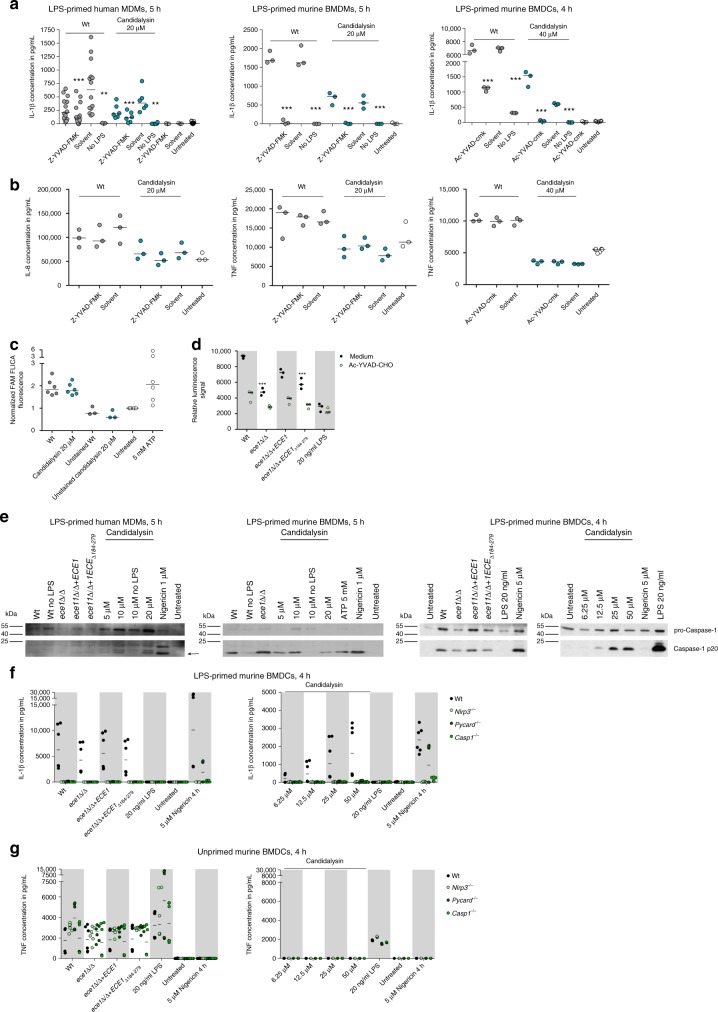
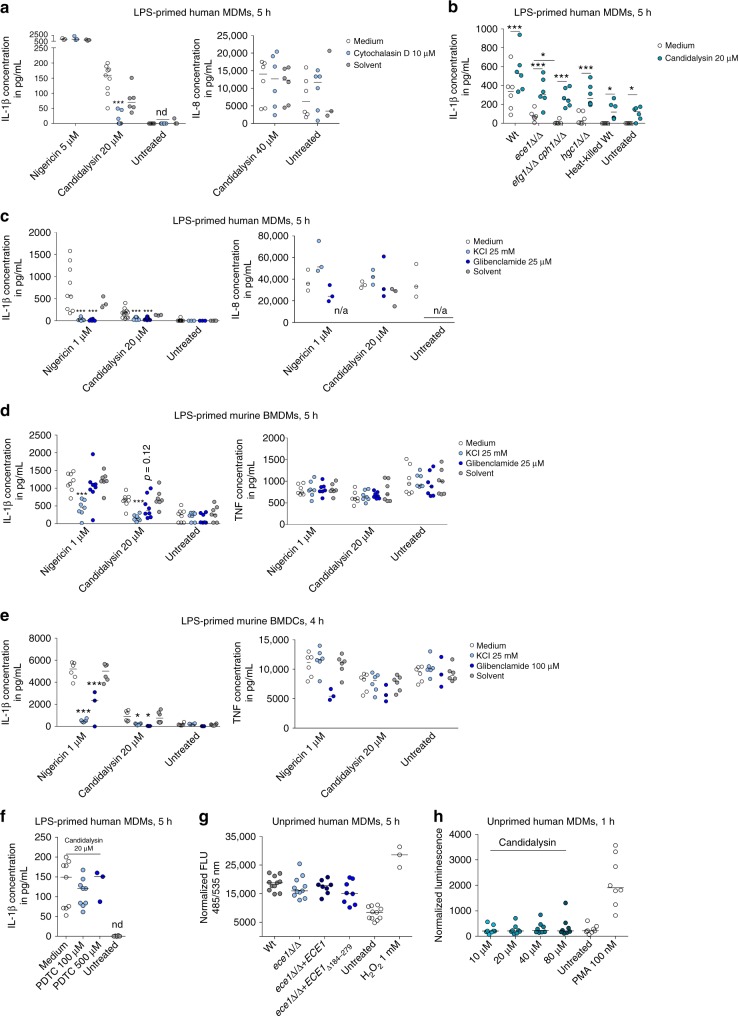
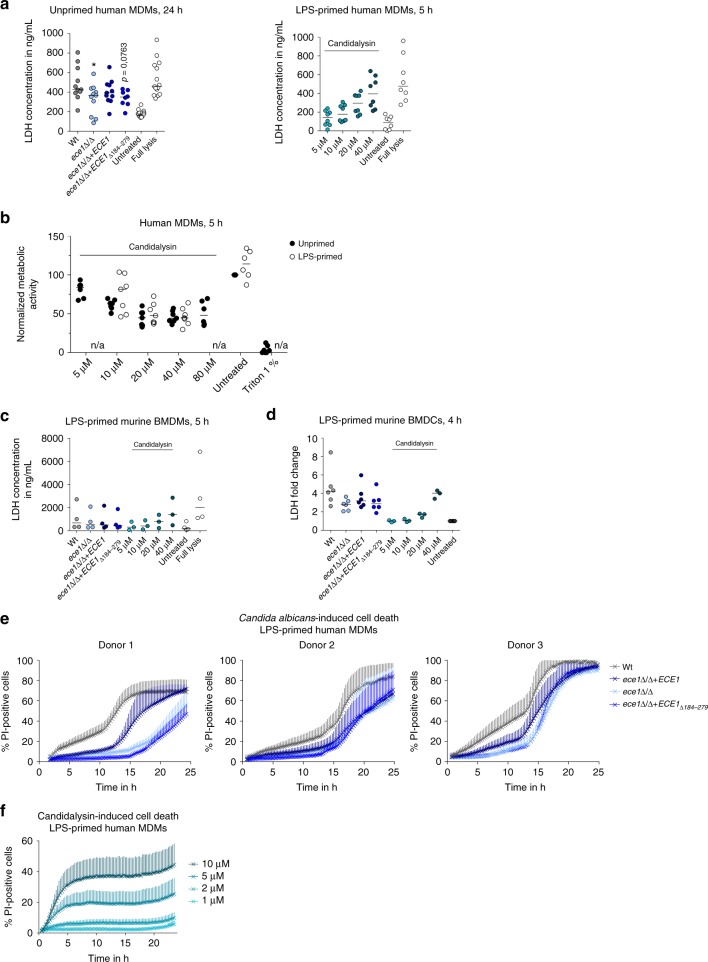
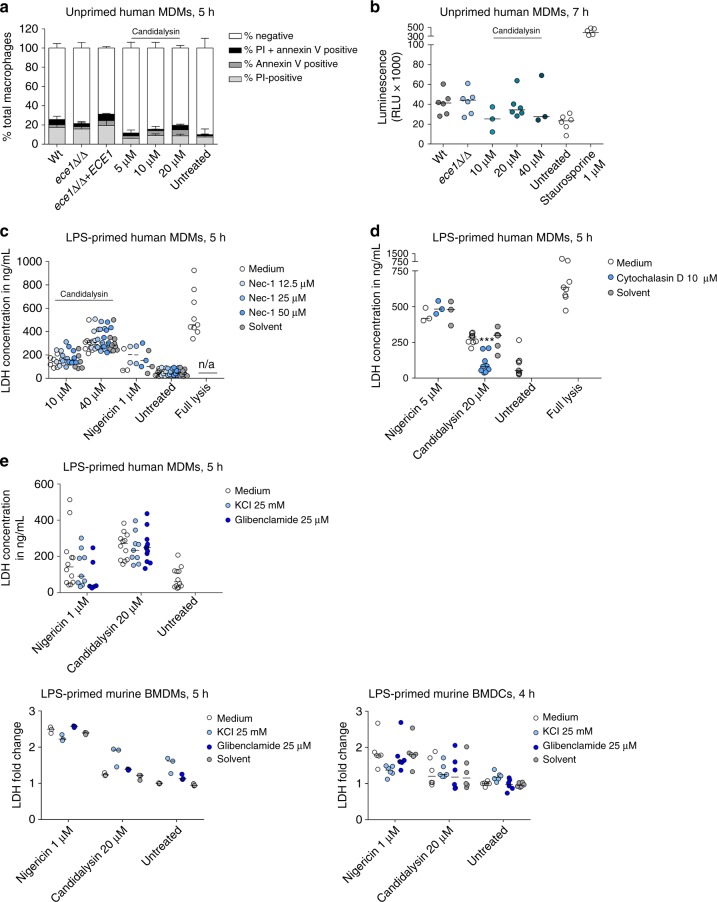
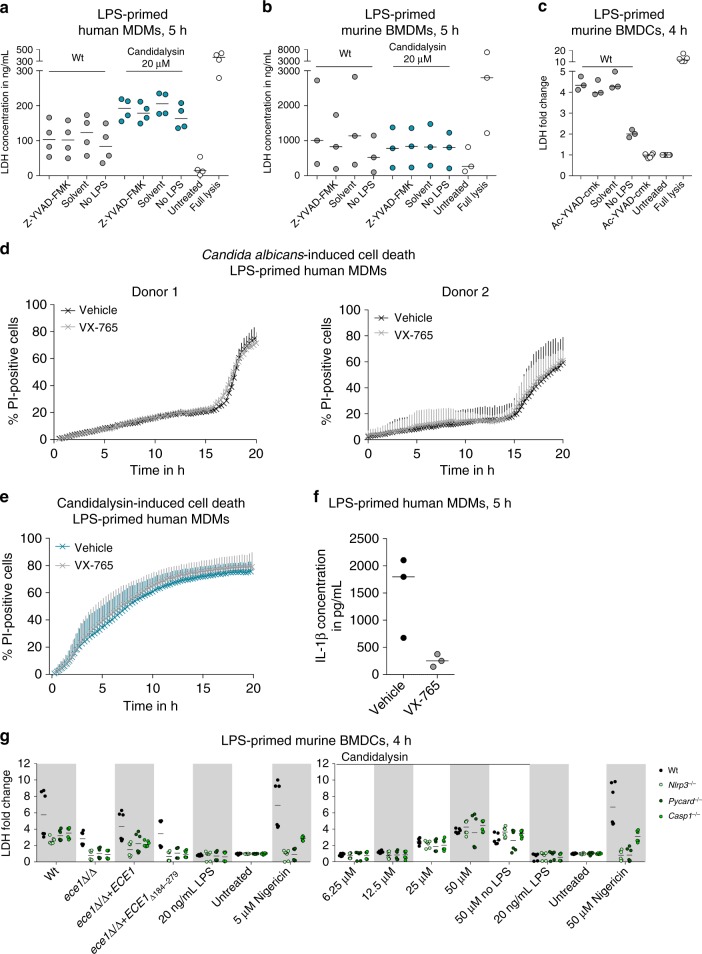
Clearance of invading microbes requires phagocytes of the innate immune system. However, successful pathogens have evolved sophisticated strategies to evade immune killing. The opportunistic human fungal pathogen Candida albicans is efficiently phagocytosed by macrophages, but causes inflammasome activation, host cytolysis, and escapes after hypha formation. Previous studies suggest that macrophage lysis by C. albicans results from early inflammasome-dependent cell death (pyroptosis), late damage due to glucose depletion and membrane piercing by growing hyphae. Here we show that Candidalysin, a cytolytic peptide toxin encoded by the hypha-associated gene ECE1, is both a central trigger for NLRP3 inflammasome-dependent caspase-1 activation via potassium efflux and a key driver of inflammasome-independent cytolysis of macrophages and dendritic cells upon infection with C. albicans. This suggests that Candidalysin-induced cell damage is a third mechanism of C. albicans-mediated mononuclear phagocyte cell death in addition to damage caused by pyroptosis and the growth of glucose-consuming hyphae.
Overview
The claims and statistics of this paper haven’t been checked yet.
Free: it reads the open-access text and checks the first 5 claims that cite a source we can check. Create a free account to check every claim.
Integrity signals
Registry
Cites
Statistics
Figures
Verification
Claims the paper makes
The claims and statistics of this paper haven’t been checked yet.
Free: it reads the open-access text and checks the first 5 claims that cite a source we can check. Create a free account to check every claim.
Claims other papers make about this one
Each is checked against this paper’s own text: does it say what the citing paper says it does?
The cited source says what the claim attributes to it.
In the citing paper
“Furthermore, filamentation enables C. albicans to kill and escape from macrophages through mechanical penetration of cell membranes [29], NLRP3/caspase-1 inflammasome-dependent pyroptosis [51], cytolysis [52] and glucose competition [53].”
From The F 1 F o -ATP synthase α subunit of Candida albicans induces inflammatory responses by controlling amino acid catabolism (2023) · cites this paper as [52]
Self-check
Percentages, sums and reported differences re-computed from the paper’s own numbers.
The self-check needs the paper’s full text.
Citations
Cites
NIH Image to ImageJ: 25 years of image analysis
Schneider, C. A., Rasband, W. S., & Eliceiri, K. W. (2012) · Nature Methods · doi:10.1038/nmeth.2089 · Cited by 64,638
Martinon, F., Burns, K., & Tschopp, J. (2002) · Molecular Cell · doi:10.1016/s1097-2765(02)00599-3 · Cited by 6,066
Gout-associated uric acid crystals activate the NALP3 inflammasome
Martinon, F., Pétrilli, V., Mayor, A., Tardivel, A., & Tschopp, J. (2006) · Nature · doi:10.1038/nature04516 · Cited by 5,326
Biologic basis for interleukin-1 in disease.
Dinarello, C. (1996) · Blood · doi:10.1182/blood.v87.6.2095.bloodjournal8762095 · Cited by 4,344
Hidden Killers: Human Fungal Infections
Brown, G. D., Denning, D. W., Gow, N. A. R., Levitz, S. M., Netea, M. G., & White, T. C. (2012) · Science Translational Medicine · doi:10.1126/scitranslmed.3004404 · Cited by 4,284
Epidemiology of Invasive Candidiasis: a Persistent Public Health Problem
Pfaller, M. A., & Diekema, D. J. (2007) · Clinical Microbiology Reviews · doi:10.1128/cmr.00029-06 · Cited by 4,174
Pyroptosis: host cell death and inflammation
Bergsbaken, T., Fink, S. L., & Cookson, B. T. (2009) · Nature Reviews Microbiology · doi:10.1038/nrmicro2070 · Cited by 3,183
Cryopyrin activates the inflammasome in response to toxins and ATP
Mariathasan, S., Weiss, D. S., Newton, K., McBride, J., O'Rourke, K., Roose-Girma, M., Lee, W. P., Weinrauch, Y., Monack, D. M., & Dixit, V. M. (2006) · Nature · doi:10.1038/nature04515 · Cited by 3,080
Hornung, V., Bauernfeind, F., Halle, A., Samstad, E. O., Kono, H., Rock, K. L., Fitzgerald, K. A., & Latz, E. (2008) · Nature Immunology · doi:10.1038/ni.1631 · Cited by 3,065
Activation and regulation of the inflammasomes
Latz, E., Xiao, T. S., & Stutz, A. (2013) · Nature Reviews Immunology · doi:10.1038/nri3452 · Cited by 2,884
Muñoz-Planillo, R., Kuffa, P., Martínez-Colón, G., Smith, B. L., Rajendiran, T. M., & Núñez, G. (2013) · Immunity · doi:10.1016/j.immuni.2013.05.016 · Cited by 2,147
Nonfilamentous C. albicans Mutants Are Avirulent
Lo, H.-J., Köhler, J. R., DiDomenico, B., Loebenberg, D., Cacciapuoti, A., & Fink, G. R. (1997) · Cell · doi:10.1016/s0092-8674(00)80358-x · Cited by 1,809
Disease Tolerance as a Defense Strategy
Medzhitov, R., Schneider, D. S., & Soares, M. P. (2012) · Science · doi:10.1126/science.1214935 · Cited by 1,718
Altered Cytokine Export and Apoptosis in Mice Deficient in Interleukin-1β Converting Enzyme
Kuida, K., Lippke, J. A., Ku, G., Harding, M. W., Livingston, D. J., Su, M. S.-S., & Flavell, R. A. (1995) · Science · doi:10.1126/science.7535475 · Cited by 1,616
Brown, G. D., & Gordon, S. (2001) · Nature · doi:10.1038/35092620 · Cited by 1,579
Caspase-1-induced pyroptosis is an innate immune effector mechanism against intracellular bacteria
Miao, E. A., Leaf, I. A., Treuting, P. M., Mao, D. P., Dors, M., Sarkar, A., Warren, S. E., Wewers, M. D., & Aderem, A. (2010) · Nature Immunology · doi:10.1038/ni.1960 · Cited by 1,336
Gillum, A. M., Tsay, E. Y. H., & Kirsch, D. R. (1984) · Molecular and General Genetics MGG · doi:10.1007/bf00328721 · Cited by 1,251
Caspase‐1‐induced pyroptotic cell death
Miao, E. A., Rajan, J. V., & Aderem, A. (2011) · Immunological Reviews · doi:10.1111/j.1600-065x.2011.01044.x · Cited by 1,137
Sensing and reacting to microbes through the inflammasomes
Franchi, L., Muñoz-Planillo, R., & Núñez, G. (2012) · Nature Immunology · doi:10.1038/ni.2231 · Cited by 1,012
Candidalysin is a fungal peptide toxin critical for mucosal infection
Moyes, D. L., Wilson, D., Richardson, J. P., Mogavero, S., Tang, S. X., Wernecke, J., Höfs, S., Gratacap, R. L., Robbins, J., Runglall, M., et al. (2016) · Nature · doi:10.1038/nature17625 · Cited by 942
Self-citationFunction of Nod‐like receptors in microbial recognition and host defense
Franchi, L., Warner, N., Viani, K., & Nuñez, G. (2009) · Immunological Reviews · doi:10.1111/j.1600-065x.2008.00734.x · Cited by 903
Candida albicans morphogenesis and host defence: discriminating invasion from colonization
Gow, N. A. R., van de Veerdonk, F. L., Brown, A. J. P., & Netea, M. G. (2012) · Nature Reviews Microbiology · doi:10.1038/nrmicro2711 · Cited by 888
Syk kinase signalling couples to the Nlrp3 inflammasome for anti-fungal host defence
Gross, O., Poeck, H., Bscheider, M., Dostert, C., Hannesschläger, N., Endres, S., Hartmann, G., Tardivel, A., Schweighoffer, E., Tybulewicz, V., et al. (2009) · Nature · doi:10.1038/nature07965 · Cited by 819
Self-citationThe inflammasome: an integrated view
Gross, O., Thomas, C. J., Guarda, G., & Tschopp, J. (2011) · Immunological Reviews · doi:10.1111/j.1600-065x.2011.01046.x · Cited by 778
Rapid Hypothesis Testing with Candida albicans through Gene Disruption with Short Homology Regions
Wilson, R. B., Davis, D., & Mitchell, A. P. (1999) · Journal of Bacteriology · doi:10.1128/jb.181.6.1868-1874.1999 · Cited by 762
Interactions of fungal pathogens with phagocytes
Erwig, L. P., & Gow, N. A. R. (2016) · Nature Reviews Microbiology · doi:10.1038/nrmicro.2015.21 · Cited by 626
Hise, A. G., Tomalka, J., Ganesan, S., Patel, K., Hall, B. A., Brown, G. D., & Fitzgerald, K. A. (2009) · Cell Host & Microbe · doi:10.1016/j.chom.2009.05.002 · Cited by 568
Caspase‐11 activates a canonical NLRP3 inflammasome by promoting K + efflux
Rühl, S., & Broz, P. (2015) · European Journal of Immunology · doi:10.1002/eji.201545772 · Cited by 539
Mechanisms of inflammasome activation: recent advances and novel insights
Vanaja, S. K., Rathinam, V. A. K., & Fitzgerald, K. A. (2015) · Trends in Cell Biology · doi:10.1016/j.tcb.2014.12.009 · Cited by 499
Dendritic Cells Discriminate between Yeasts and Hyphae of the Fungus Candida albicans
d'Ostiani, C. F., Del Sero, G., Bacci, A., Montagnoli, C., Spreca, A., Mencacci, A., Ricciardi-Castagnoli, P., & Romani, L. (2000) · The Journal of Experimental Medicine · doi:10.1084/jem.191.10.1661 · Cited by 493
Active MLKL triggers the NLRP3 inflammasome in a cell-intrinsic manner
Conos, S. A., Chen, K. W., De Nardo, D., Hara, H., Whitehead, L., Núñez, G., Masters, S. L., Murphy, J. M., Schroder, K., Vaux, D. L., et al. (2017) · Proceedings of the National Academy of Sciences · doi:10.1073/pnas.1613305114 · Cited by 485
A novel probe for phosphatidylinositol 4-phosphate reveals multiple pools beyond the Golgi
Hammond, G. R. V., Machner, M. P., & Balla, T. (2014) · Journal of Cell Biology · doi:10.1083/jcb.201312072 · Cited by 453
Fink, S. L., Bergsbaken, T., & Cookson, B. T. (2008) · Proceedings of the National Academy of Sciences · doi:10.1073/pnas.0707370105 · Cited by 403
Interleukin 1 and interleukin 18 as mediators of inflammation and the aging process
Dinarello, C. A. (2006) · The American Journal of Clinical Nutrition · doi:10.1093/ajcn/83.2.447s · Cited by 384
Candida albicans dimorphism as a therapeutic target
Jacobsen, I. D., Wilson, D., Wächtler, B., Brunke, S., Naglik, J. R., & Hube, B. (2012) · Expert Review of Anti-infective Therapy · doi:10.1586/eri.11.152 · Cited by 363
Self-citationZheng, X., Wang, Y., & Wang, Y. (2004) · The EMBO Journal · doi:10.1038/sj.emboj.7600195 · Cited by 326
Organ-Specific Innate Immune Responses in a Mouse Model of Invasive Candidiasis
Lionakis, M. S., Lim, J. K., Lee, C.-C. R., & Murphy, P. M. (2011) · Journal of Innate Immunity · doi:10.1159/000321157 · Cited by 302
Self-citationCutting Edge: Candida albicans Hyphae Formation Triggers Activation of the Nlrp3 Inflammasome
Joly, S., Ma, N., Sadler, J. J., Soll, D. R., Cassel, S. L., & Sutterwala, F. S. (2009) · The Journal of Immunology · doi:10.4049/jimmunol.0901323 · Cited by 296
The Pathogen Candida albicans Hijacks Pyroptosis for Escape from Macrophages
Uwamahoro, N., Verma-Gaur, J., Shen, H.-H., Qu, Y., Lewis, R., Lu, J., Bambery, K., Masters, S. L., Vince, J. E., Naderer, T., et al. (2014) · mBio · doi:10.1128/mbio.00003-14 · Cited by 264
Toxin-Induced Necroptosis Is a Major Mechanism of Staphylococcus aureus Lung Damage
Kitur, K., Parker, D., Nieto, P., Ahn, D. S., Cohen, T. S., Chung, S., Wachtel, S., Bueno, S., & Prince, A. (2015) · PLOS Pathogens · doi:10.1371/journal.ppat.1004820 · Cited by 263
Role of the Inflammasome, IL-1β, and IL-18 in Bacterial Infections
Sahoo, M., Ceballos-Olvera, I., del Barrio, L., & Re, F. (2011) · The Scientific World JOURNAL · doi:10.1100/2011/212680 · Cited by 256
McKenzie, C. G. J., Koser, U., Lewis, L. E., Bain, J. M., Mora-Montes, H. M., Barker, R. N., Gow, N. A. R., & Erwig, L. P. (2010) · Infection and Immunity · doi:10.1128/iai.00001-10 · Cited by 250
Global analysis of fungal morphology exposes mechanisms of host cell escape
O’Meara, T. R., Veri, A. O., Ketela, T., Jiang, B., Roemer, T., & Cowen, L. E. (2015) · Nature Communications · doi:10.1038/ncomms7741 · Cited by 243
Diverse Activators of the NLRP3 Inflammasome Promote IL-1β Secretion by Triggering Necrosis
Cullen, S. P., Kearney, C. J., Clancy, D. M., & Martin, S. J. (2015) · Cell Reports · doi:10.1016/j.celrep.2015.05.003 · Cited by 235
Candida albicans Triggers NLRP3-Mediated Pyroptosis in Macrophages
Wellington, M., Koselny, K., Sutterwala, F. S., & Krysan, D. J. (2014) · Eukaryotic Cell · doi:10.1128/ec.00336-13 · Cited by 227
Tucey, T. M., Verma, J., Harrison, P. F., Snelgrove, S. L., Lo, T. L., Scherer, A. K., Barugahare, A. A., Powell, D. R., Wheeler, R. T., Hickey, M. J., et al. (2018) · Cell Metabolism · doi:10.1016/j.cmet.2018.03.019 · Cited by 226
Pore-Forming Toxins Induce Macrophage Necroptosis during Acute Bacterial Pneumonia
González-Juarbe, N., Gilley, R. P., Hinojosa, C. A., Bradley, K. M., Kamei, A., Gao, G., Dube, P. H., Bergman, M. A., & Orihuela, C. J. (2015) · PLOS Pathogens · doi:10.1371/journal.ppat.1005337 · Cited by 225
Verma, A. H., Richardson, J. P., Zhou, C., Coleman, B. M., Moyes, D. L., Ho, J., Huppler, A. R., Ramani, K., McGeachy, M. J., Mufazalov, I. A., et al. (2017) · Science Immunology · doi:10.1126/sciimmunol.aam8834 · Cited by 218 · cited 1×
“During oral infections, attraction of neutrophils is protective in immunocompetent mice (Verma et al. 2017), while attraction of neutrophils in vaginal infections is associated with immunopathology (Richardson et al. 2018).”
BackgroundSelf-citationCandida albicans-Induced Epithelial Damage Mediates Translocation through Intestinal Barriers
Allert, S., Förster, T. M., Svensson, C.-M., Richardson, J. P., Pawlik, T., Hebecker, B., Rudolphi, S., Juraschitz, M., Schaller, M., Blagojevic, M., et al. (2018) · mBio · doi:10.1128/mbio.00915-18 · Cited by 208
Self-citationRichardson, J. P., Willems, H. M. E., Moyes, D. L., Shoaie, S., Barker, K. S., Tan, S. L., Palmer, G. E., Hube, B., Naglik, J. R., & Peters, B. M. (2018) · Infection and Immunity · doi:10.1128/iai.00645-17 · Cited by 195
Self-citationProspects for understanding avirulence gene function
White, F. F., Yang, B., & Johnson, L. B. (2000) · Current Opinion in Plant Biology · doi:10.1016/s1369-5266(00)00082-0 · Cited by 187
Vylkova, S., & Lorenz, M. C. (2014) · PLoS Pathogens · doi:10.1371/journal.ppat.1003995 · Cited by 174
A simple sensitive bioassay for interleukin-1 which is unresponsive to 103 U/ml of interleukin-2
Gearing, A. J. H., Bird, C. R., Bristow, A., Poole, S., & Thorpe, R. (1987) · Journal of Immunological Methods · doi:10.1016/0022-1759(87)90025-1 · Cited by 168
The inflammasome drives protective Th1 and Th17 cellular responses in disseminated candidiasis
van de Veerdonk, F. L., Joosten, L. A. B., Shaw, P. J., Smeekens, S. P., Malireddi, R. K. S., van der Meer, J. W. M., Kullberg, B., Netea, M. G., & Kanneganti, T. (2011) · European Journal of Immunology · doi:10.1002/eji.201041226 · Cited by 151
Microbiology: Ditch the term pathogen
Casadevall, A., & Pirofski, L. (2014) · Nature · doi:10.1038/516165a · Cited by 149
Fungal recognition is mediated by the association of dectin-1 and galectin-3 in macrophages
Esteban, A., Popp, M. W., Vyas, V. K., Strijbis, K., Ploegh, H. L., & Fink, G. R. (2011) · Proceedings of the National Academy of Sciences · doi:10.1073/pnas.1111415108 · Cited by 149
A Core Filamentation Response Network in Candida albicans Is Restricted to Eight Genes
Martin, R., Albrecht-Eckardt, D., Brunke, S., Hube, B., Hünniger, K., & Kurzai, O. (2013) · PLoS ONE · doi:10.1371/journal.pone.0058613 · Cited by 129
Self-citationNLRP3 Inflammasome and Host Protection against Bacterial Infection
Kim, J.-J., & Jo, E.-K. (2013) · Journal of Korean Medical Science · doi:10.3346/jkms.2013.28.10.1415 · Cited by 122
The Missing Link between Candida albicans Hyphal Morphogenesis and Host Cell Damage
Wilson, D., Naglik, J. R., & Hube, B. (2016) · PLOS Pathogens · doi:10.1371/journal.ppat.1005867 · Cited by 116
Self-citationSecreted aspartic proteases of Candida albicans activate the NLRP 3 inflammasome
Pietrella, D., Pandey, N., Gabrielli, E., Pericolini, E., Perito, S., Kasper, L., Bistoni, F., Cassone, A., Hube, B., & Vecchiarelli, A. (2013) · European Journal of Immunology · doi:10.1002/eji.201242691 · Cited by 110
Self-citationNew insights into innate immune control of systemic candidiasis
Lionakis, M. S. (2014) · Medical Mycology · doi:10.1093/mmy/myu029 · Cited by 109
Self-citationProcessing of Candida albicans Ece1p Is Critical for Candidalysin Maturation and Fungal Virulence
Richardson, J. P., Mogavero, S., Moyes, D. L., Blagojevic, M., Krüger, T., Verma, A. H., Coleman, B. M., De La Cruz Diaz, J., Schulz, D., Ponde, N. O., et al. (2018) · mBio · doi:10.1128/mbio.02178-17 · Cited by 104
Self-citationMicroevolution of Candida albicans in Macrophages Restores Filamentation in a Nonfilamentous Mutant
Wartenberg, A., Linde, J., Martin, R., Schreiner, M., Horn, F., Jacobsen, I. D., Jenull, S., Wolf, T., Kuchler, K., Guthke, R., et al. (2014) · PLoS Genetics · doi:10.1371/journal.pgen.1004824 · Cited by 86
Self-citationNomura, J., So, A., Tamura, M., & Busso, N. (2015) · The Journal of Immunology · doi:10.4049/jimmunol.1402512 · Cited by 79
Autheman, D., Wyder, M., Popoff, M. R., D'Herde, K. G. M. A., Christen, S., & Posthaus, H. (2013) · PLoS ONE · doi:10.1371/journal.pone.0064644 · Cited by 77
Phagosomal Neutralization by the Fungal Pathogen Candida albicans Induces Macrophage Pyroptosis
Vylkova, S., & Lorenz, M. C. (2017) · Infection and Immunity · doi:10.1128/iai.00832-16 · Cited by 75
The role of lipids in host–pathogen interactions
Walpole, G. F. W., Grinstein, S., & Westman, J. (2018) · IUBMB Life · doi:10.1002/iub.1737 · Cited by 70
Self-citationO’Meara, T. R., Duah, K., Guo, C. X., Maxson, M. E., Gaudet, R. G., Koselny, K., Wellington, M., Powers, M. E., MacAlpine, J., O’Meara, M. J., et al. (2018) · mBio · doi:10.1128/mbio.01581-18 · Cited by 70
Catching Fire: Candida albicans, Macrophages, and Pyroptosis
Krysan, D. J., Sutterwala, F. S., & Wellington, M. (2014) · PLoS Pathogens · doi:10.1371/journal.ppat.1004139 · Cited by 68
Candida albicans Morphogenesis Is Not Required for Macrophage Interleukin 1β Production
Wellington, M., Koselny, K., & Krysan, D. J. (2013) · mBio · doi:10.1128/mbio.00433-12 · Cited by 67
Tucey, T. M., Verma-Gaur, J., Nguyen, J., Hewitt, V. L., Lo, T. L., Shingu-Vazquez, M., Robertson, A. A. B., Hill, J. R., Pettolino, F. A., Beddoe, T., et al. (2016) · mSphere · doi:10.1128/msphere.00074-16 · Cited by 66
Turning Up the Heat: Inflammasome Activation by Fungal Pathogens
Tavares, A. H., Bürgel, P. H., & Bocca, A. L. (2015) · PLoS Pathogens · doi:10.1371/journal.ppat.1004948 · Cited by 65
Orlowski, G. M., Sharma, S., Colbert, J. D., Bogyo, M., Robertson, S. A., Kataoka, H., Chan, F. K., & Rock, K. L. (2017) · Journal of Leukocyte Biology · doi:10.1189/jlb.3hi0316-152r · Cited by 65
Fungal pathogen recognition by the NLRP3 inflammasome
Joly, S., & Sutterwala, F. S. (2010) · Virulence · doi:10.4161/viru.1.4.11482 · Cited by 63
O’Meara, T. R., Veri, A. O., Polvi, E. J., Li, X., Valaei, S. F., Diezmann, S., & Cowen, L. E. (2016) · PLOS Genetics · doi:10.1371/journal.pgen.1006142 · Cited by 42
Ibata‐Ombetta, S., Idziorek, T., Trinel, P. A., Poulain, D., & Jouault, T. (2003) · Annals of the New York Academy of Sciences · doi:10.1196/annals.1299.107 · Cited by 19
Hellmann, A., Lother, J., Wurster, S., Lutz, M. B., Schmitt, A. L., Morton, C. O., Eyrich, M. K., Czakai, K., Einsele, H., & Loeffler, J. (2017) · Frontiers in Immunology · doi:10.3389/fimmu.2017.01716 · Cited by 11
Plasma membrane damage sensing and repairing. Role of heterotrimeric G-proteins and the cytoskeleton
Calvello, R., Mitolo, V., Acquafredda, A., Cianciulli, A., & Panaro, M. A. (2011) · Toxicology in Vitro · doi:10.1016/j.tiv.2011.04.009 · Cited by 4
Cited by
The NLRP3 Inflammasome: an overview of mechanisms of activation and regulation
Kelley, N., Jeltema, D., Duan, Y., & He, Y. (2019) · International Journal of Molecular Sciences · doi:10.3390/ijms20133328 · Cited by 3,539
Inflammasome activation and regulation: toward a better understanding of complex mechanisms
Zheng, D., Liwinski, T., & Elinav, E. (2020) · Cell Discovery · doi:10.1038/s41421-020-0167-x · Cited by 1,026
Candida albicans—The Virulence Factors and Clinical Manifestations of Infection
Talapko, J., Juzbašić, M., Matijević, T., Pustijanac, E., Bekić, S., Kotris, I., & Škrlec, I. (2021) · Journal of Fungi · doi:10.3390/jof7020079 · Cited by 794
“Candidalysin is capable of directly damaging the epithelial membrane, by intercalation, permeabilization, and creating pores, causing the cytoplasmic contents to weaken [29,30].”
BackgroundThe gut–liver axis and gut microbiota in health and liver disease
Hsu, C. L., & Schnabl, B. (2023) · Nature Reviews Microbiology · doi:10.1038/s41579-023-00904-3 · Cited by 737
Pathogenesis and virulence of Candida albicans
Lopes, J. P., & Lionakis, M. S. (2022) · Virulence · doi:10.1080/21505594.2021.2019950 · Cited by 477
“NLRP3 inflammasome activation with subsequent caspase-1-dependent IL-1β secretion and renal neutrophil recruitment [300,301].”
BackgroundSelf-citation
Metadata
- Authors
- Kasper, L., König, A., Koenig, P.-A., Gresnigt, M. S., Westman, J., Drummond, R. A., Lionakis, M. S., Groß, O., Ruland, J., Naglik, J. R., & Hube, B.
- Affiliations
- Leibniz-Institut für Naturstoff-Forschung und Infektionsbiologie e. V. - Hans-Knöll-Institut (HKI) (DE)
- TUM Klinikum (DE)
- Hospital for Sick Children (CA)
- National Institutes of Health (US)
- University of Freiburg (DE)
- King's College London (GB)
- Corresponding author
- Hube, Bernhard
- ORCID
- Venue
- Nature Communications
- Published
- 2018-10-15
- Volume
- 9
- Issue
- 1
- Pages
- 4260-4260
- ISSN
- 2041-1723 (ISSN-L)
- PMC
- PMC6189146
- OpenAlex
- W2896513955
- Cited by
- 297
- References
- 78
- Citations by year
- 2026: 36 · 2025: 45 · 2024: 40 · 2023: 38 · 2022: 35 · 2021: 37 · 2020: 42 · 2019: 22
- FWCI
- 8.98
- Type
- journal article
- Language
- en
- Open access
- gold
- doi.org
- Licence
- cc-by
- creativecommons.org/licenses/by/4.0 (tdm)
- creativecommons.org/licenses/by/4.0 (vor)
- Locations
- Nature Communications (publishedVersion, cc-by)
- Europe PMC (PubMed Central) (publishedVersion, other-oa)
- PubMed Central (publishedVersion, cc-by)
- PubMed (publishedVersion)
- Research Portal (King's College London) (submittedVersion, cc-by)
- RePEc: Research Papers in Economics (submittedVersion)
- DOAJ (DOAJ: Directory of Open Access Journals) (submittedVersion)
- DOAJ (DOAJ: Directory of Open Access Journals) (submittedVersion, cc-by-sa)
- mediaTUM – the media and publications repository of the Technical University Munich (Technical University Munich) (submittedVersion)
- University of Birmingham Research Portal (University of Birmingham) (submittedVersion, cc-by)
- University of Birmingham Research Portal (University of Birmingham) (submittedVersion, other-oa)
- Radboud Repository (Radboud University) (submittedVersion)
- Radboud Repository (Radboud University) (submittedVersion, other-oa)
- Funders
- European Molecular Biology Organization
- Alexander von Humboldt-Stiftung
- Division of Intramural Research, National Institute of Allergy and Infectious Diseases (DE022550)
- King's College London (IS-BRC-1215–20006)
- European Commission (606786, FP7-PEOPLE-2013-Initial Training Network)
- Rosetrees Trust
- Deutsche Forschungsgemeinschaft (SFB 1054, SFB1335, SPP 1580, RU 695/6-1, project C1), FP7-PEOPLE-2013, CRC/TR FungiNet Project C1)
- King's Health Partners (R170501)
- National Institutes of Health (5r37de022550-12, DE022550, R37DE022550)
- Directorate for Biological Sciences
- Medical Research Council (MR/J008303/1, MR/M011372/1, MC_PC_16048)
- Biotechnology and Biological Sciences Research Council (BB/N014677/1)
- Leibniz-Gemeinschaft (InfectoOptics SAS-2015-HKI-LWC, SAS-2015, SAS-2015-HKI-LWC)
- National Institute of Allergy and Infectious Diseases (DE022550)
- National Institute of Dental and Craniofacial Research (R37-DE022550)
- FP7 Ideas: European Research Council (322865, 337689)
- FP7 People: Marie-Curie Actions (FP7-PEOPLE-2013)
- NHLBI Division of Intramural Research
- Topics
- Life Sciences › Biochemistry, Genetics and Molecular Biology › Molecular Biology › Inflammasome and immune disorders
- Health Sciences › Medicine › Infectious Diseases › Antifungal resistance and susceptibility
- Life Sciences › Biochemistry, Genetics and Molecular Biology › Molecular Biology › Fungal and yeast genetics research
- Keywords
- candidalysin, Candida albicans, NLRP3 inflammasome, caspase-1 activation, dendritic cells, mononuclear phagocytes, endothelin-converting enzyme-1, potassium efflux, pyroptosis, hyphal growth, innate immunity
- MeSH terms
- NLR Family, Pyrin Domain-Containing 3 Protein, Actins, Animals, Bone Marrow Cells, Dendritic Cells, Female, Fungal Proteins, Humans, Inflammation, Leukocytes, Mononuclear, Macrophages, Mice, Inbred C57BL, Mycotoxins, Necrosis, Phagocytes, Phagosomes, Potassium, Cell Death, Caspase 1, Interleukin-1beta, Inflammasomes
About these checks
Registry, retraction, Cites and statistics results are computed, not judged, with one exception: a printed reference that no index lists is read once by a model before it counts as a citation error. Claims are extracted by a model and kept only when their quote appears verbatim in the text; each cited source is then checked, with a model’s help, for whether it says what the claim relies on. Those verdicts can be wrong — read the claim’s quote and the cited source before relying on one.
Statistics and arithmetic are recomputed, not judged.
Confidence bands are shown only for fields calibrated on our annotated test set. None is calibrated yet, so no band is shown.
What counts as a claim ›How we measure confidence ›How we check this ›
Are you an author, or do you see a problem with this page? Request a review
Data sources
Bibliographic data: Semantic Scholar, OpenAlex, Crossref.
Contains information from the Semantic Scholar Academic Graph Datasets, made available under the ODC Attribution License (ODC-BY 1.0).
Semantic Scholar’s data is described in: Kinney, R., et al. (2023). The Semantic Scholar Open Data Platform. arXiv:2301.10140.
