

Structural basis for species-selective targeting of Hsp90 in a pathogenic fungus
Open accessThe DOI matches its Crossref record; 75 of the 75 references it cites were found in a registry or an index.
Abstract
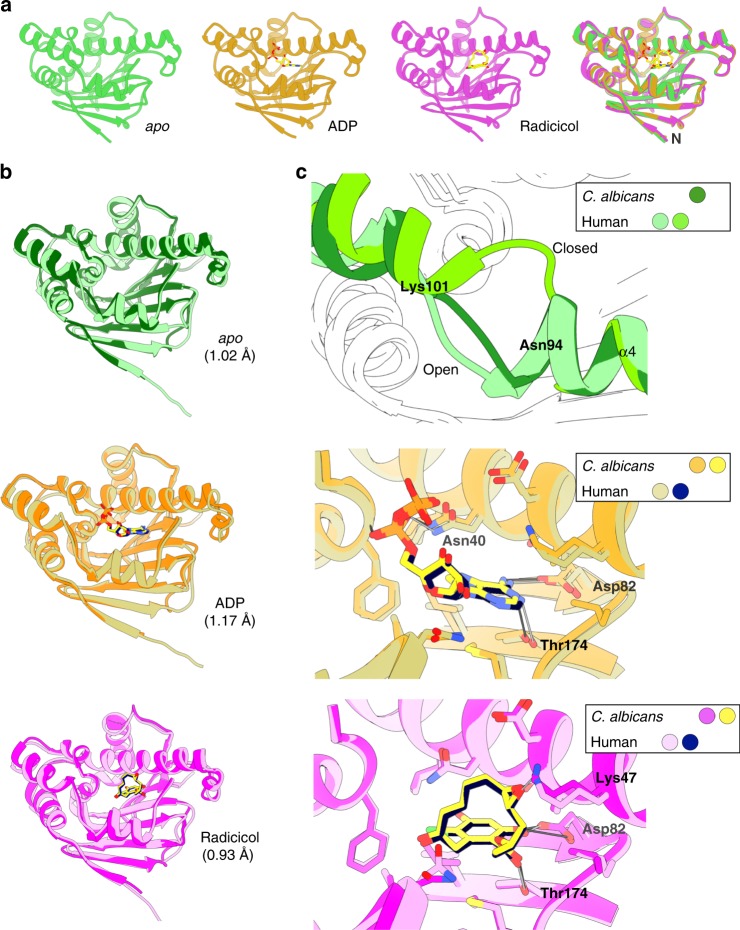
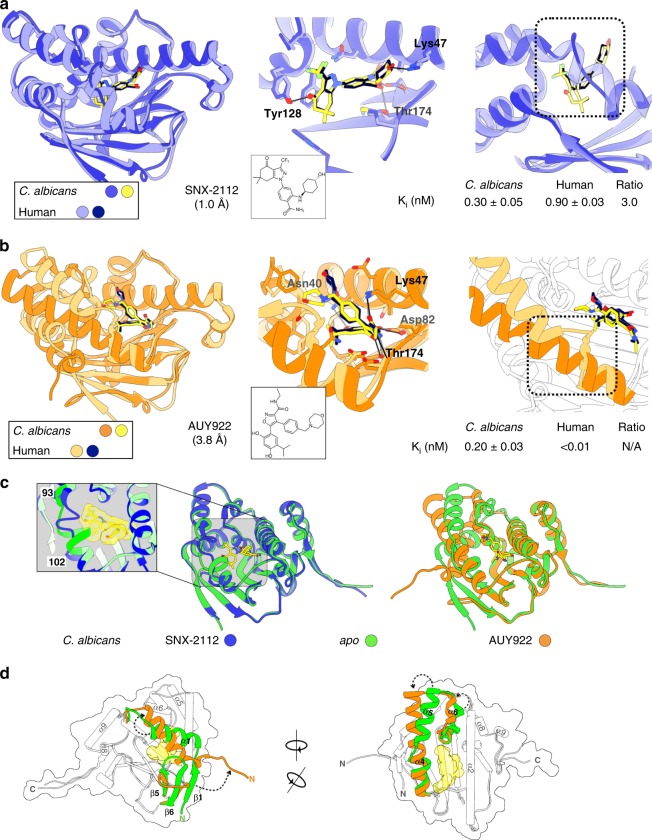
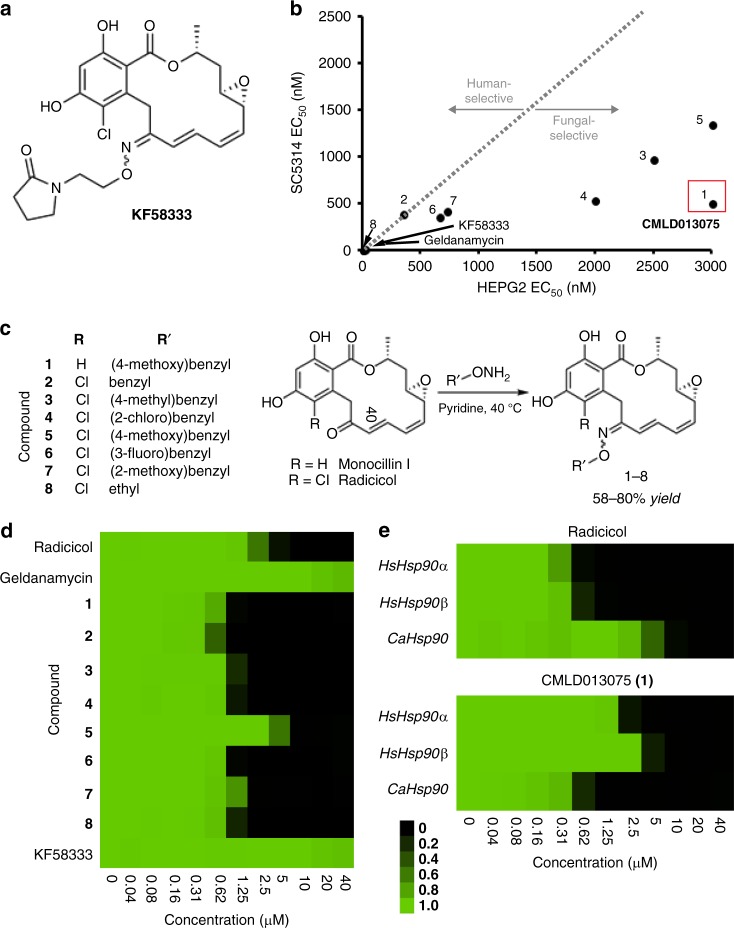
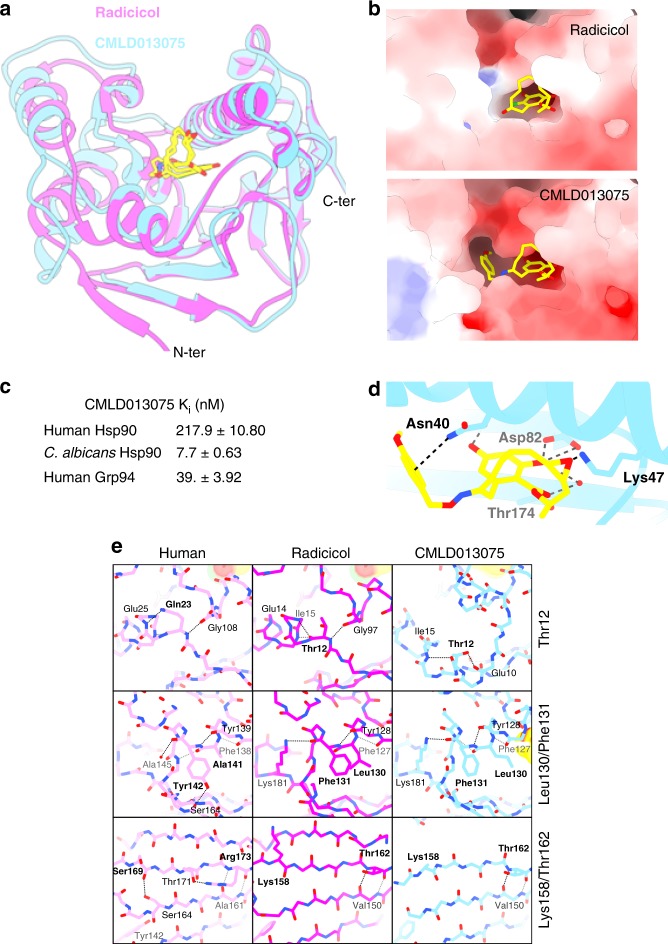
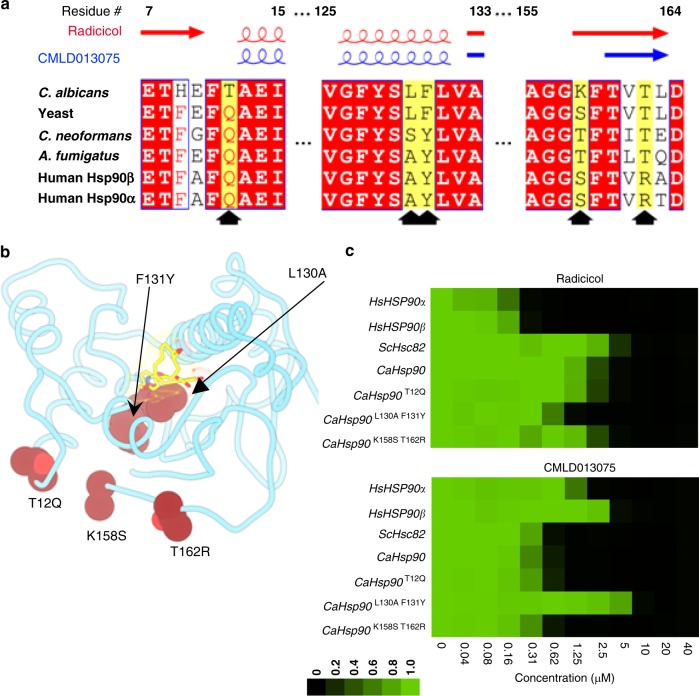
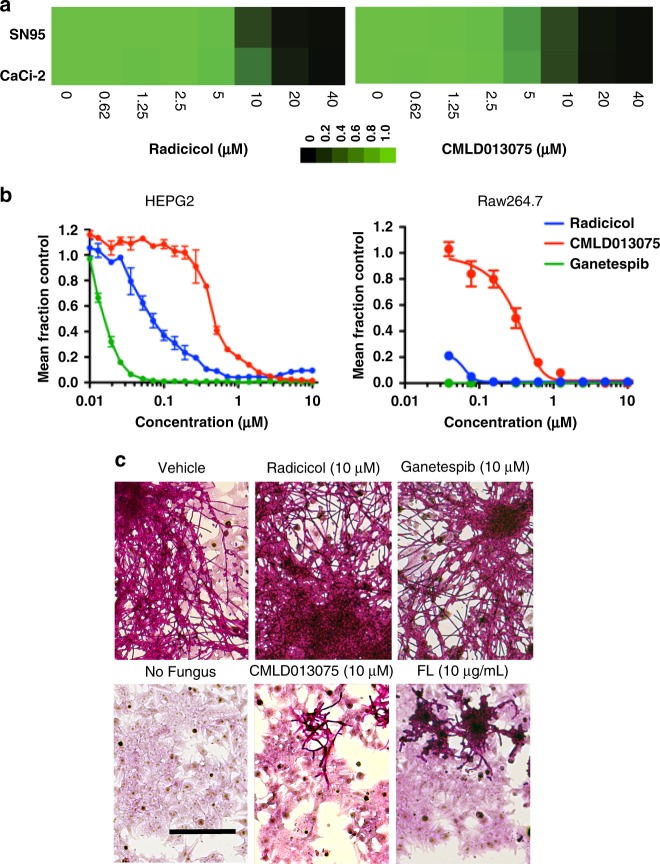
New strategies are needed to counter the escalating threat posed by drug-resistant fungi. The molecular chaperone Hsp90 affords a promising target because it supports survival, virulence and drug-resistance across diverse pathogens. Inhibitors of human Hsp90 under development as anticancer therapeutics, however, exert host toxicities that preclude their use as antifungals. Seeking a route to species-selectivity, we investigate the nucleotide-binding domain (NBD) of Hsp90 from the most common human fungal pathogen, Candida albicans. Here we report structures for this NBD alone, in complex with ADP or in complex with known Hsp90 inhibitors. Encouraged by the conformational flexibility revealed by these structures, we synthesize an inhibitor with >25-fold binding-selectivity for fungal Hsp90 NBD. Comparing co-crystals occupied by this probe vs. anticancer Hsp90 inhibitors revealed major, previously unreported conformational rearrangements. These insights and our probe's species-selectivity in culture support the feasibility of targeting Hsp90 as a promising antifungal strategy.
Overview
The claims and statistics of this paper haven’t been checked yet.
Free: it reads the open-access text and checks the first 5 claims that cite a source we can check. Create a free account to check every claim.
Integrity signals
Registry
Cites
Statistics
Figures
Verification
Claims the paper makes
The claims and statistics of this paper haven’t been checked yet.
Free: it reads the open-access text and checks the first 5 claims that cite a source we can check. Create a free account to check every claim.
Claims other papers make about this one
Each is checked against this paper’s own text: does it say what the citing paper says it does?
The cited source says what the claim attributes to it.
In the citing paper
“Unfortunately, there are few FLC synergistic lethal adjuvants for clinical use. One reason is that these adjuvants can have serious toxic effects [43,44,57].”
From Pitavastatin Calcium Confers Fungicidal Properties to Fluconazole by Inhibiting Ubiquinone Biosynthesis and Generating Reactive Oxygen Species (2024) · cites this paper as [57]
The check wasn’t confident either way, so it gives no verdict — never disputed.
In the citing paper
“The upregulation of Cyc3 suggests the release of cytochrome c and the activation of metacaspase within the mitochondria [57].”
From Pitavastatin Calcium Confers Fungicidal Properties to Fluconazole by Inhibiting Ubiquinone Biosynthesis and Generating Reactive Oxygen Species (2024) · cites this paper as [57]
Experimental — accuracy not yet measured
Self-check
Percentages, sums and reported differences re-computed from the paper’s own numbers.
The self-check needs the paper’s full text.
Citations
Cites
UCSF Chimera—A visualization system for exploratory research and analysis
Pettersen, E. F., Goddard, T. D., Huang, C. C., Couch, G. S., Greenblatt, D. M., Meng, E. C., & Ferrin, T. E. (2004) · Journal of Computational Chemistry · doi:10.1002/jcc.20084 · Cited by 45,828
[20] Processing of X-ray diffraction data collected in oscillation mode
Otwinowski, Z., & Minor, W. (1997) · Methods in Enzymology · doi:10.1016/s0076-6879(97)76066-x · Cited by 33,475
Coot : model-building tools for molecular graphics
Emsley, P., & Cowtan, K. (2004) · Acta Crystallographica Section D Biological Crystallography · doi:10.1107/s0907444904019158 · Cited by 30,571
PHENIX : a comprehensive Python-based system for macromolecular structure solution
Adams, P. D., Afonine, P. V., Bunkóczi, G., Chen, V. B., Davis, I. W., Echols, N., Headd, J. J., Hung, L.-W., Kapral, G. J., Grosse-Kunstleve, R. W., et al. (2010) · Acta Crystallographica Section D Biological Crystallography · doi:10.1107/s0907444909052925 · Cited by 23,716
Phaser crystallographic software
McCoy, A. J., Grosse-Kunstleve, R. W., Adams, P. D., Winn, M. D., Storoni, L. C., & Read, R. J. (2007) · Journal of Applied Crystallography · doi:10.1107/s0021889807021206 · Cited by 20,612
Overview of the CCP 4 suite and current developments
Winn, M. D., Ballard, C. C., Cowtan, K. D., Dodson, E. J., Emsley, P., Evans, P. R., Keegan, R. M., Krissinel, E. B., Leslie, A. G. W., McCoy, A., et al. (2011) · Acta Crystallographica Section D Biological Crystallography · doi:10.1107/s0907444910045749 · Cited by 12,353
PHENIX: a comprehensive Python-based system for macromolecular structure solution
Adams, P. D., Afonine, P. V., Bunkóczi, G., Chen, V. B., Davis, I. W., Echols, N., Headd, J. J., Hung, L.-W., Kapral, G. J., Grosse-Kunstleve, R. W., et al. (2012) · International Tables for Crystallography · doi:10.1107/97809553602060000865 · Cited by 7,334
Epidemiology of Invasive Candidiasis: a Persistent Public Health Problem
Pfaller, M. A., & Diekema, D. J. (2007) · Clinical Microbiology Reviews · doi:10.1128/cmr.00029-06 · Cited by 4,174
MolProbity: all-atom contacts and structure validation for proteins and nucleic acids
Davis, I. W., Leaver-Fay, A., Chen, V. B., Block, J. N., Kapral, G. J., Wang, X., Murray, L. W., Arendall, W. B., Snoeyink, J., Richardson, J. S., et al. (2007) · Nucleic Acids Research · doi:10.1093/nar/gkm216 · Cited by 3,896
A solution for the best rotation to relate two sets of vectors
Kabsch, W. (1976) · Acta Crystallographica Section A · doi:10.1107/s0567739476001873 · Cited by 3,187
Cited by
Antifungal Drug Resistance: Molecular Mechanisms in Candida albicans and Beyond
Lee, Y., Puumala, E., Robbins, N., & Cowen, L. E. (2021) · Chemical Reviews · doi:10.1021/acs.chemrev.0c00199 · Cited by 801
Self-citationThreats Posed by the Fungal Kingdom to Humans, Wildlife, and Agriculture
Fisher, M. C., Gurr, S. J., Cuomo, C. A., Blehert, D. S., Jin, H., Stukenbrock, E. H., Stajich, J. E., Kahmann, R., Boone, C., Denning, D. W., et al. (2020) · mBio · doi:10.1128/mbio.00449-20 · Cited by 536
Treatment strategies for cryptococcal infection: challenges, advances and future outlook
Iyer, K. R., Revie, N. M., Fu, C., Robbins, N., & Cowen, L. E. (2021) · Nature Reviews Microbiology · doi:10.1038/s41579-021-00511-0 · Cited by 363
Self-citationMolecular mechanisms governing antifungal drug resistance
Lee, Y., Robbins, N., & Cowen, L. E. (2023) · npj Antimicrobials and Resistance · doi:10.1038/s44259-023-00007-2 · Cited by 304
“While the conservation of such targets in humans poses challenges, structure-guided analyses can aid the design of fungal-speci fi c inhibitors to minimize harmful effects on the host 114,115 .”
Self-citationDrug-Resistant Fungi: An Emerging Challenge Threatening Our Limited Antifungal Armamentarium
Arastehfar, A., Gabaldón, T., Garcia-Rubio, R., Jenks, J. D., Hoenigl, M., Salzer, H. J. F., Ilkit, M., Lass-Flörl, C., & Perlin, D. S. (2020) · Antibiotics · doi:10.3390/antibiotics9120877 · Cited by 292
Emerging Antifungal Targets and Strategies
Ivanov, M., Ćirić, A., & Stojković, D. (2022) · International Journal of Molecular Sciences · doi:10.3390/ijms23052756 · Cited by 160
The Quiet and Underappreciated Rise of Drug-Resistant Invasive Fungal Pathogens
Arastehfar, A., Lass-Flörl, C., Garcia-Rubio, R., Daneshnia, F., Ilkit, M., Boekhout, T., Gabaldon, T., & Perlin, D. S. (2020) · Journal of Fungi · doi:10.3390/jof6030138 · Cited by 145
The Future of Antifungal Drug Therapy: Novel Compounds and Targets
Mota Fernandes, C., Dasilva, D., Haranahalli, K., McCarthy, J. B., Mallamo, J., Ojima, I., & Del Poeta, M. (2021) · Antimicrobial Agents and Chemotherapy · doi:10.1128/aac.01719-20 · Cited by 124
“Novel inhibitors with reduced toxicity toward mammalian cells, enabling the development of Hsp90 inhibitors which retain antifungal activity and display increased selectivity, were previously described (90).”
BackgroundAdvancements and challenges in antifungal therapeutic development
Puumala, E., Fallah, S., Robbins, N., & Cowen, L. E. (2024) · Clinical Microbiology Reviews · doi:10.1128/cmr.00142-23 · Cited by 142
Pandey, M., Singh, M., Wasnik, K., Gupta, S., Patra, S., Gupta, P. S., Pareek, D., Chaitanya, N. S. N., Maity, S., Reddy, A. B. M., et al. (2021) · ACS Omega · doi:10.1021/acsomega.1c04139 · Cited by 109
Lu, H., Hong, T., Jiang, Y., Whiteway, M., & Zhang, S. (2023) · Advanced Drug Delivery Reviews · doi:10.1016/j.addr.2023.114960 · Cited by 89
The role of Candida albicans stress response pathways in antifungal tolerance and resistance
Iyer, K. R., Robbins, N., & Cowen, L. E. (2022) · iScience · doi:10.1016/j.isci.2022.103953 · Cited by 88
Self-citationParthasarathy, A., Borrego, E. J., Savka, M. A., Dobson, R. C. J., & Hudson, A. O. (2021) · Journal of Biological Chemistry · doi:10.1016/j.jbc.2021.100438 · Cited by 97
Drug Resistance and Novel Therapeutic Approaches in Invasive Candidiasis
Murphy, S. E., & Bicanic, T. (2021) · Frontiers in Cellular and Infection Microbiology · doi:10.3389/fcimb.2021.759408 · Cited by 83
Sun, S., Hoy, M. J., & Heitman, J. (2020) · Current Biology · doi:10.1016/j.cub.2020.07.032 · Cited by 98
New antifungal strategies: Drug combination and co-delivery
Zhu, P., Li, Y., Guo, T., Liu, S., Tancer, R. J., Hu, C., Zhao, C., Xue, C., & Liao, G. (2023) · Advanced Drug Delivery Reviews · doi:10.1016/j.addr.2023.114874 · Cited by 63
Design and Synthesis of Fungal-Selective Resorcylate Aminopyrazole Hsp90 Inhibitors
Huang, D. S., LeBlanc, E. V., Shekhar-Guturja, T., Robbins, N., Krysan, D. J., Pizarro, J., Whitesell, L., Cowen, L. E., & Brown, L. E. (2020) · Journal of Medicinal Chemistry · doi:10.1021/acs.jmedchem.9b00826 · Cited by 61
Bickel, D., & Gohlke, H. (2019) · Bioorganic & Medicinal Chemistry · doi:10.1016/j.bmc.2019.115080 · Cited by 67
Overcoming Fungal Echinocandin Resistance through Inhibition of the Non-essential Stress Kinase Yck2
Caplan, T., Lorente-Macías, Á., Stogios, P. J., Evdokimova, E., Hyde, S., Wellington, M. A., Liston, S., Iyer, K. R., Puumala, E., Shekhar-Guturja, T., et al. (2020) · Cell Chemical Biology · doi:10.1016/j.chembiol.2019.12.008 · Cited by 57
“While Hsp90 is an attractive antifungal drug target, the current inhibitors under development as anticancer drugs exert host toxicities that preclude their use as antifungals, a problem we are addressing through the structure-guided development of fungal-specific inhibitors (Whitesell et al., 2019).”
BackgroundSelf-citationLi, C., Tu, J., Han, G., Liu, N., & Sheng, C. (2021) · European Journal of Medicinal Chemistry · doi:10.1016/j.ejmech.2021.113961 · Cited by 65
Waghule, T., Sankar, S., Rapalli, V. K., Gorantla, S., Dubey, S. K., Chellappan, D. K., Dua, K., & Singhvi, G. (2020) · Dermatologic Therapy · doi:10.1111/dth.13905 · Cited by 67
Pan- and isoform-specific inhibition of Hsp90: Design strategy and recent advances
Yu, J., Zhang, C., & Song, C. (2022) · European Journal of Medicinal Chemistry · doi:10.1016/j.ejmech.2022.114516 · Cited by 51
O’Meara, T. R., O’Meara, M. J., Polvi, E. J., Pourhaghighi, M. R., Liston, S. D., Lin, Z.-Y., Veri, A. O., Emili, A., Gingras, A.-C., & Cowen, L. E. (2019) · PLoS Biology · doi:10.1371/journal.pbio.3000358 · Cited by 49
Self-citationCRISPR-Based Genetic Manipulation of Candida Species: Historical Perspectives and Current Approaches
Uthayakumar, D., Sharma, J., Wensing, L. F., & Shapiro, R. S. (2021) · Frontiers in Genome Editing · doi:10.3389/fgeed.2020.606281 · Cited by 57
Roles of Hsp90 in Candida albicans morphogenesis and virulence
Robbins, N., & Cowen, L. E. (2023) · Current Opinion in Microbiology · doi:10.1016/j.mib.2023.102351 · Cited by 58
Calcium-calcineurin signaling pathway in Candida albicans: A potential drug target
Li, W., Shrivastava, M., Lu, H., & Jiang, Y. (2021) · Microbiological Research · doi:10.1016/j.micres.2021.126786 · Cited by 47
Iyer, K. R., Whitesell, L. J., Porco, J. A. J., Henkel, T. O., Brown, L. E., Robbins, N., & Cowen, L. E. (2020) · mBio · doi:10.1128/mbio.03329-19 · Cited by 48
Marcyk, P. T., LeBlanc, E. V., Kuntz, D. A., Xue, A., Ortiz, F., Trilles, R., Bengtson, S., Kenney, T. M. G., Huang, D. S., Robbins, N., et al. (2021) · Journal of Medicinal Chemistry · doi:10.1021/acs.jmedchem.0c01777 · Cited by 40
Self-citationBeat the heat: correlates, compounds, and mechanisms involved in fungal thermotolerance
Mattoon, E. R., Casadevall, A., & Cordero, R. J. B. (2021) · Fungal Biology Reviews · doi:10.1016/j.fbr.2021.03.002 · Cited by 45
Li, Z., Huang, Y., Tu, J., Yang, W., Liu, N., Wang, W., & Sheng, C. (2023) · Journal of Medicinal Chemistry · doi:10.1021/acs.jmedchem.3c00165 · Cited by 36
Yin, W., Wu, T., Liu, L., Jiang, H., Zhang, Y., Cui, H., Sun, Y., Qin, Q., Sun, Y., Gao, Z., et al. (2022) · Journal of Medicinal Chemistry · doi:10.1021/acs.jmedchem.1c01991 · Cited by 36
Stachowski, T. R., & Fischer, M. M. (2022) · Journal of Medicinal Chemistry · doi:10.1021/acs.jmedchem.2c00708 · Cited by 38
Hossain, S., Lash, E., Veri, A. O., & Cowen, L. E. (2021) · Cell Reports · doi:10.1016/j.celrep.2021.108781 · Cited by 31
Mahmoudi, S., Rezaie, S., Ghazvini, R. D., Hashemi, S. J., Badali, H., Foroumadi, A., Diba, K., Chowdhary, A., Meis, J. F. G. M., & Khodavaisy, S. (2019) · Mycopathologia · doi:10.1007/s11046-019-00370-7 · Cited by 33
Chaperone Networks in Fungal Pathogens of Humans
Horianopoulos, L. C., & Kronstad, J. W. (2021) · Journal of Fungi · doi:10.3390/jof7030209 · Cited by 34
Hossain, S., Veri, A. O., & Cowen, L. E. (2020) · mBio · doi:10.1128/mbio.00290-20 · Cited by 31
Self-citationStructure-guided approaches to targeting stress responses in human fungal pathogens
LeBlanc, E. V., Polvi, E. J., Veri, A. O., Privé, G. G., & Cowen, L. E. (2020) · Journal of Biological Chemistry · doi:10.1074/jbc.rev120.013731 · Cited by 37
Stofberg, M. L., Caillet, C., de Villiers, M., & Zininga, T. (2021) · Cells · doi:10.3390/cells10112849 · Cited by 34
Novel Promising Antifungal Target Proteins for Conquering Invasive Fungal Infections
Zhen, C., Lu, H., & Jiang, Y. (2022) · Frontiers in Microbiology · doi:10.3389/fmicb.2022.911322 · Cited by 36
Effects of Hsp90 Inhibitor Ganetespib on Inhibition of Azole-Resistant Candida albicans
Yuan, R., Tu, J., Sheng, C., Chen, X., & Liu, N. (2021) · Frontiers in Microbiology · doi:10.3389/fmicb.2021.680382 · Cited by 35
Drugging evolution of antibiotic resistance at a regulatory network hub
Zhai, Y., Pribis, J. P., Dooling, S. W., García-Villada, L., Minnick, P. J., Xia, J., Liu, J., Mei, Q., Fitzgerald, D. M., Herman, C., et al. (2023) · Science Advances · doi:10.1126/sciadv.adg0188 · Cited by 27
The progress and future of the treatment of Candida albicans infections based on nanotechnology
Gao, Y., Cao, Q., Xiao, Y., Wu, Y., Ding, L., Huang, H., Li, Y., Yang, J., & Meng, L. (2024) · Journal of Nanobiotechnology · doi:10.1186/s12951-024-02841-6 · Cited by 34
Target- and prodrug-based design for fungal diseases and cancer-associated fungal infections
Liu, N., Tu, J., Huang, Y., Yang, W., Wang, Q., Li, Z., & Sheng, C. (2023) · Advanced Drug Delivery Reviews · doi:10.1016/j.addr.2023.114819 · Cited by 26
A first-in-class inhibitor of Hsp110 molecular chaperones of pathogenic fungi
Hu, L., Sun, C., Kidd, J. M., Han, J., Fang, X., Li, H., Liu, Q., May, A. E., Li, Q., Zhou, L., et al. (2023) · Nature Communications · doi:10.1038/s41467-023-38220-2 · Cited by 26
Old and new strategies in therapy and diagnosis against fungal infections
Vanzolini, T., & Magnani, M. (2024) · Applied Microbiology and Biotechnology · doi:10.1007/s00253-023-12884-8 · Cited by 32
Small molecule inhibitors targeting heat shock protein 90: An updated review
Li, Y., Dong, J., & Qin, J. (2024) · European Journal of Medicinal Chemistry · doi:10.1016/j.ejmech.2024.116562 · Cited by 25
Curcumin affects function of Hsp90 and drug efflux pump of Candida albicans
Lee, Y. S., Chen, X., Widiyanto, T. W., Orihara, K., Shibata, H., & Kajiwara, S. (2022) · Frontiers in Cellular and Infection Microbiology · doi:10.3389/fcimb.2022.944611 · Cited by 29
Antifungal metabolites, their novel sources, and targets to combat drug resistance
Choudhary, M., Kumar, V., Naik, B., Verma, A., Saris, P. E. J., Kumar, V., & Gupta, S. (2022) · Frontiers in Microbiology · doi:10.3389/fmicb.2022.1061603 · Cited by 25
Recent developments of HSP90 inhibitors: an updated patent review (2020-present)
Liu, J., Shu, H., Xia, Q., You, Q., & Wang, L. (2024) · Expert Opinion on Therapeutic Patents · doi:10.1080/13543776.2024.2327295 · Cited by 25
Mechanisms of Azole Potentiation: Insights from Drug Repurposing Approaches
Xiong, J., Lu, H., & Jiang, Y. (2025) · ACS Infectious Diseases · doi:10.1021/acsinfecdis.4c00657 · Cited by 20
Lee, Y., Hossain, S., MacAlpine, J., Robbins, N., & Cowen, L. E. (2023) · iScience · doi:10.1016/j.isci.2023.106145 · Cited by 20
Azole potentiation in Candida species
Stenkiewicz-Witeska, J., & Ene, I. V. (2023) · PLoS Pathogens · doi:10.1371/journal.ppat.1011583 · Cited by 22
Gobeil, S., Bobay, B. G., Juvvadi, P. R., Cole, D. C., Heitman, J., Steinbach, W. J., Venters, R. A., & Spicer, L. D. (2021) · mBio · doi:10.1128/mbio.03000-21 · Cited by 23
Novel avenues for identification of new antifungal drugs and current challenges
Jampílek, J. (2022) · Expert Opinion on Drug Discovery · doi:10.1080/17460441.2022.2097659 · Cited by 21
Ganesh Kumar, A., Pugazhenthi, E., Sankarganesh, P., Chinnasamy, M., Rajasekaran, M., Elumalai, L., Khusro, A., & Kavya, G. (2023) · Biomass Conversion and Biorefinery · doi:10.1007/s13399-023-03806-9 · Cited by 24
Elumalai, L., Sankarganesh, P., Anbazhagan, G. K., Mohanam, N., Munusamy, S., Sri Ragavi, G. K., Munusamy, A. P., Chinnasamy, M., & Balagurunathan, R. (2023) · Environmental Research · doi:10.1016/j.envres.2023.116698 · Cited by 19
Selective targeting of Plasmodium falciparum Hsp90 disrupts the 26S proteasome
Mansfield, C. R., Quan, B., Chirgwin, M. E., Eduful, B. J., Hughes, P. F., Neveu, G., Sylvester, K., Ryan, D. H., Kafsack, B. F. C., Haystead, T., et al. (2024) · Cell chemical biology · doi:10.1016/j.chembiol.2024.02.008 · Cited by 21
Lee, Y., Liston, S. D., Lee, D., Robbins, N., & Cowen, L. E. (2022) · iScience · doi:10.1016/j.isci.2022.104432 · Cited by 18
Self-citationYang, F., Wang, Y., Yan, D., Liu, Z., Wei, B., Chen, J., & He, W. (2023) · Molecules · doi:10.3390/molecules28124792 · Cited by 20
Hossain, S., Veri, A. O., Liu, Z., Iyer, K. R., O’Meara, T. R., Robbins, N., & Cowen, L. E. (2021) · Genetics · doi:10.1093/genetics/iyab095 · Cited by 24
Robbins, N., & Cowen, L. E. (2025) · Current Biology · doi:10.1016/j.cub.2025.01.063 · Cited by 22
Alaalm, L., Crunden, J. L., Butcher, M. C., Obst, U., Whealy, R. N., Williamson, C. E., O’Brien, H., Schaffitzel, C., Ramage, G., SPENCER, J. M., et al. (2021) · Frontiers in Cellular and Infection Microbiology · doi:10.3389/fcimb.2021.637836 · Cited by 18
Pandey, M., Wasnik, K., Gupta, S., Singh, M., Patra, S., Gupta, P. S., Pareek, D., Maity, S., Tilak, R., & Paik, P. (2022) · RSC Advances · doi:10.1039/d1ra07594b · Cited by 15
Zhang, M., Yang, W., Liu, N., Tu, J., Lin, J., Dong, G., Zhao, D., & Sheng, C. (2025) · Journal of Medicinal Chemistry · doi:10.1021/acs.jmedchem.4c02305 · Cited by 20
Li, W., Feng, Y., Feng, Z., Wang, L., Whiteway, M., Lu, H., & Jiang, Y. (2024) · Antioxidants · doi:10.3390/antiox13060667 · Cited by 14
“The upregulation of Cyc3 suggests the release of cytochrome c and the activation of metacaspase within the mitochondria [57].”
BackgroundDrug design strategies for the treatment azole-resistant candidiasis
Moghimi, S., Shafiei, M., & Foroumadi, A. (2022) · Expert Opinion on Drug Discovery · doi:10.1080/17460441.2022.2098949 · Cited by 16
Interdisciplinary approaches for the discovery of novel antifungals
Yiu, B., Robbins, N., & Cowen, L. E. (2024) · Trends in Molecular Medicine · doi:10.1016/j.molmed.2024.04.018 · Cited by 14
Zhang, B., Ma, Y., Liu, Q., Wu, S., Chen, L., Jiang, C., Chen, H., Jia, H., Zheng, Z., & Zhang, R. (2025) · Journal of Nanobiotechnology · doi:10.1186/s12951-025-03379-x · Cited by 16
Robbins, N., & Cowen, L. E. (2022) · Current Opinion in Microbiology · doi:10.1016/j.mib.2022.102198 · Cited by 21
Elumalai, L., Anbazhagan, G. K., Sankarganesh, P., Siddharthan, N., Murthy, S., Anbalmani, S., Mohanam, N., Munusamy, A. P., & Balagurunathan, R. (2024) · Journal of Sol-Gel Science and Technology · doi:10.1007/s10971-024-06441-6 · Cited by 12
Genomic Approaches to Antifungal Drug Target Identification and Validation
Robbins, N., & Cowen, L. E. (2022) · Annual Review of Microbiology · doi:10.1146/annurev-micro-041020-094524 · Cited by 18
Naskar, S., Prajapati, A., & Kaur, R. (2025) · FEMS Yeast Research · doi:10.1093/femsyr/foaf025 · Cited by 17
“Of note, structur al anal ysis of the nucleotide-binding domain of C. albicans Hsp90, follo w ed by compound synthesis, identified a new fungal-selective Hsp90 inhibitor, which also exhibited less toxicity to w ar ds mammalian cells (Whitesell et al. 2019 ).”
Revie, N. M., Robbins, N., Whitesell, L. J., Frost, J. R., Appavoo, S. D., Yudin, A. K., & Cowen, L. E. (2020) · mSphere · doi:10.1128/msphere.00256-20 · Cited by 12
Tang, J., Huang, X., Cao, M., Wang, Z., Yu, Z., Yan, Y., Huang, J., Wang, L., & Huang, S. (2022) · Frontiers in Chemistry · doi:10.3389/fchem.2021.812564 · Cited by 11
Ligand-mediated conformation diversity of Hsp90 revealed by GaMD simulations and Markov model
Bao, H., Wang, J., Zhao, L., & Chen, J. (2025) · Molecular Diversity · doi:10.1007/s11030-025-11378-1 · Cited by 12
El‐Razek, M. H. A., Saleh, I. A., Abdel-Halim, S. A., Bata, S. M., Essa, A. F., Hussien, T. A., El‐Beih, A. A., Mohamed, T. A., & Hegazy, M. F. (2023) · Chemistry & Biodiversity · doi:10.1002/cbdv.202201249 · Cited by 10
Yang, S., Lyu, X., Zhang, J., Shui, Y., Yang, R., & Xu, X. (2022) · Frontiers in Cellular and Infection Microbiology · doi:10.3389/fcimb.2022.816386 · Cited by 8
“…eukaryotes is also involved in the morphological transformation and drug resistance of C. albicans (Cowen and Lindquist, 2005; Taddei et al., 2014; Tiwari et al., 2015; Whitesell et al., 2019), and thus represents a promising target for the development of small molecules against Candidal infection.”
BackgroundThe GARP complex is required for filamentation in Candida albicans
Hossain, S., Robbins, N., & Cowen, L. E. (2022) · Genetics · doi:10.1093/genetics/iyac152 · Cited by 9
Rouges, C., Asad, M., Laurent, A. D., Marchand, P., & Pape, P. L. (2023) · Microorganisms · doi:10.3390/microorganisms11122837 · Cited by 8
Aguoru, N. A., Kirk, R. S., & Walker, A. J. (2022) · Parasites & Vectors · doi:10.1186/s13071-022-05500-7 · Cited by 7
Ma, J., van de Sande, W. W. J., & Biersack, B. (2025) · International Journal of Molecular Sciences · doi:10.3390/ijms26167909 · Cited by 9
Huang, L. Q., Wang, W., Zhu, Z., Li, Q., Li, M., Zhou, H., Qin, X., Wen, W., Wang, Q., & Yu, F. (2024) · IUCrJ · doi:10.1107/s2052252524012247 · Cited by 6
Duarte, A. B. S., Pérez‐Castillo, Y., Andrade, P. N., de Castro, R. D., & de Sousa, D. P. (2022) · Journal of Chemistry · doi:10.1155/2022/2336175 · Cited by 7
Lim, S. J., Noor, N. D. M., Sabri, S., Ali, M. S. M., Salleh, A. B., & Oslan, S. N. (2023) · Medical Mycology · doi:10.1093/mmy/myad126 · Cited by 6
Que, N. L. S., Seidler, P. M., Aw, W. J., Chiosis, G., & Gewirth, D. T. (2024) · Proteins Structure Function and Bioinformatics · doi:10.1002/prot.26756 · Cited by 6
Puumala, E., Sychantha, D., Lach, E., Reeves, S., Nabeela, S., Fogal, M., Nigam, A., Johnson, J. W., Aspuru‐Guzik, A., Shapiro, R. S., et al. (2024) · Cell chemical biology · doi:10.1016/j.chembiol.2024.01.010 · Cited by 7
Fluorescence Polarization‐Based Measurement of Protein‐Ligand Interaction in Fungal Cell Lysates
LeBlanc, E. V., Shekhar‐Guturja, T., Whitesell, L. J., & Cowen, L. E. (2021) · Current Protocols · doi:10.1002/cpz1.17 · Cited by 7
Visualizing Borrelia burgdorferi Infection Using a Small-Molecule Imaging Probe
Sell, M., Alcorta, D. A., Padilla, A. E., Nollner, D. W., Hasenkampf, N. R., Lambert, H. S., Embers, M. E., & Spector, N. L. (2021) · Journal of Clinical Microbiology · doi:10.1128/jcm.02313-20 · Cited by 5
Kaur, A., Sharma, K., Sharma, N., & Aggarwal, G. (2024) · Infectious Disorders - Drug Targets · doi:10.2174/0118715265282411240119061441 · Cited by 3
HSP90 inhibitors beyond oncology: optimization and mechanism insights in non-oncological diseases
Yin, X., Shu, H., Wang, D., You, Q., Zhang, Q., & Wang, L. (2025) · Drug Discovery Today · doi:10.1016/j.drudis.2025.104514 · Cited by 3
Cui, Z., Ma, J., Zhang, Y., Song, Z., & Xu, X. (2026) · Journal of Microbiological Methods · doi:10.1016/j.mimet.2026.107415 · Cited by 4
da Silva, C. M., de Lima-Neto, R. G., de Carvalho, A. M. R., Macêdo, D. P. C., Melo, A. S. D. A., & Neves, R. P. (2024) · Letters in Applied Microbiology · doi:10.1093/lambio/ovae044 · Cited by 2
Structural Insights into Selectively Targeting Candida albicans Hsp90
Kowalewski, M. E., Zagler, S. G., & Redinbo, M. R. (2025) · Biochemistry · doi:10.1021/acs.biochem.5c00015 · Cited by 2
Heat Shock Proteins, a Key Modulator of Neuroinflammation in Alzheimer’s Disease
Panchal, K., Bhatt, V., Raval, M., & Tiwari, A. K. (2020) · Heat shock proteins · doi:10.1007/7515_2020_12 · Cited by 3
Onyango, H., Gitau, G. W., Muoma, J. V. O., & OKOTH, P. K. (2024) · Preprints.org · doi:10.20944/preprints202401.1836.v1 · Cited by 2
Hoy, M. J., & Heitman, J. (2023) · Methods in molecular biology · doi:10.1007/978-1-0716-3155-3_9 · Cited by 1
Onyango, H., Gitau, G. W., Muoma, J. V. O., & OKOTH, P. K. (2024) · Computational and Structural Biotechnology Reports · doi:10.1016/j.csbr.2024.100018 · Cited by 2
Hsp90 as Drug Target Against Bacterial and Fungal Infections
Islam, M. W., Bloukh, S. H., Edis, Z., & Gacem, S. A. (2020) · Current Chemical Biology · doi:10.2174/2212796814666200309113100 · Cited by 2
Essential anticandidal targets
Kumar, A., & Jha, A. (2023) · Elsevier eBooks · doi:10.1016/b978-0-443-18744-5.00009-5 · Cited by 1
FRET Assays for the Identification of C. albicans HSP90-Sba1 and Human HSP90α-p23 Binding Inhibitors
Kohlmann, P., Krylov, S. N., Marchand, P., & Jose, J. (2024) · Pharmaceuticals · doi:10.3390/ph17040516 · Cited by 1
Metadata
- Authors
- Whitesell, L., Robbins, N., Huang, D. S., McLellan, C. A., Shekhar-Guturja, T., LeBlanc, E. V., Nation, C. S., Hui, R., Hutchinson, A., Collins, C., Chatterjee, S., Trilles, R., Xie, J. L., Krysan, D. J., Lindquist, S., Porco, J. A., Tatu, U., Brown, L. E., Pizarro, J., & Cowen, L. E.
- Affiliations
- University of Toronto (CA)
- Boston University (US)
- Whitehead Institute for Biomedical Research (US)
- Tulane University (US)
- Indian Institute of Science Bangalore (IN)
- University of Iowa (US)
- Howard Hughes Medical Institute (US)
- Corresponding author
- Cowen, Leah E.
- ORCID
- Venue
- Nature Communications
- Published
- 2019-01-24
- Volume
- 10
- Issue
- 1
- Pages
- 402-402
- ISSN
- 2041-1723 (ISSN-L)
- PMC
- PMC6345968
- OpenAlex
- W2913687673
- Cited by
- 124
- References
- 75
- Citations by year
- 2026: 7 · 2025: 16 · 2024: 18 · 2023: 21 · 2022: 25 · 2021: 18 · 2020: 15 · 2019: 4
- FWCI
- 5.21
- Type
- journal article
- Language
- en
- Open access
- gold
- doi.org
- Licence
- cc-by
- creativecommons.org/licenses/by/4.0 (tdm)
- creativecommons.org/licenses/by/4.0 (vor)
- Locations
- Nature Communications (publishedVersion, cc-by)
- Europe PMC (PubMed Central) (publishedVersion, cc-by)
- PubMed Central (publishedVersion, cc-by)
- PubMed (publishedVersion)
- NOT FOUND REPOSITORY (Indian Institute of Science Bangalore) (acceptedVersion)
- OSTI OAI (U.S. Department of Energy Office of Scientific and Technical Information) (submittedVersion)
- RePEc: Research Papers in Economics (submittedVersion)
- DOAJ (DOAJ: Directory of Open Access Journals) (submittedVersion)
- DOAJ (DOAJ: Directory of Open Access Journals) (submittedVersion, cc-by-sa)
- OpenBU (Boston University) (submittedVersion)
- Funders
- Howard Hughes Medical Institute
- Grand Challenges Canada
- National Institutes of Health
- Novartis Pharma
- Canadian Institutes of Health Research (FDN154288, MOP-86452)
- National Institute of Allergy and Infectious Diseases (R01AI120958)
- Topics
- Life Sciences › Biochemistry, Genetics and Molecular Biology › Molecular Biology › Heat shock proteins research
- Health Sciences › Medicine › Infectious Diseases › Antifungal resistance and susceptibility
- Life Sciences › Biochemistry, Genetics and Molecular Biology › Molecular Biology › Fungal and yeast genetics research
- Keywords
- HSP90, nucleotide-binding domain, Candida albicans, antifungal drug targets, drug-resistant fungi, molecular chaperones, ADP binding, Hsp90 inhibitors, conformational flexibility, host toxicity, co-crystal structure
- MeSH terms
- Protein Domains, Animals, Antifungal Agents, Candida albicans, Cell Line, Fungal Proteins, Heterocyclic Compounds, 4 or More Rings, Humans, Isoxazoles, Models, Molecular, Protein Binding, Protein Conformation, Recombinant Proteins, Resorcinols, Triazoles, Virulence, Signal Transduction, Molecular Chaperones, HSP90 Heat-Shock Proteins, Drug Resistance, Fungal, Mice
About these checks
Registry, retraction, Cites and statistics results are computed, not judged, with one exception: a printed reference that no index lists is read once by a model before it counts as a citation error. Claims are extracted by a model and kept only when their quote appears verbatim in the text; each cited source is then checked, with a model’s help, for whether it says what the claim relies on. Those verdicts can be wrong — read the claim’s quote and the cited source before relying on one.
Statistics and arithmetic are recomputed, not judged.
Confidence bands are shown only for fields calibrated on our annotated test set. None is calibrated yet, so no band is shown.
What counts as a claim ›How we measure confidence ›How we check this ›
Are you an author, or do you see a problem with this page? Request a review
Data sources
Bibliographic data: Semantic Scholar, OpenAlex, Crossref.
Contains information from the Semantic Scholar Academic Graph Datasets, made available under the ODC Attribution License (ODC-BY 1.0).
Semantic Scholar’s data is described in: Kinney, R., et al. (2023). The Semantic Scholar Open Data Platform. arXiv:2301.10140.
