

Development of human cGAS-specific small-molecule inhibitors for repression of dsDNA-triggered interferon expression
Open accessThe DOI matches its Crossref record; 49 of the 49 references it cites were found in a registry or an index.
Abstract
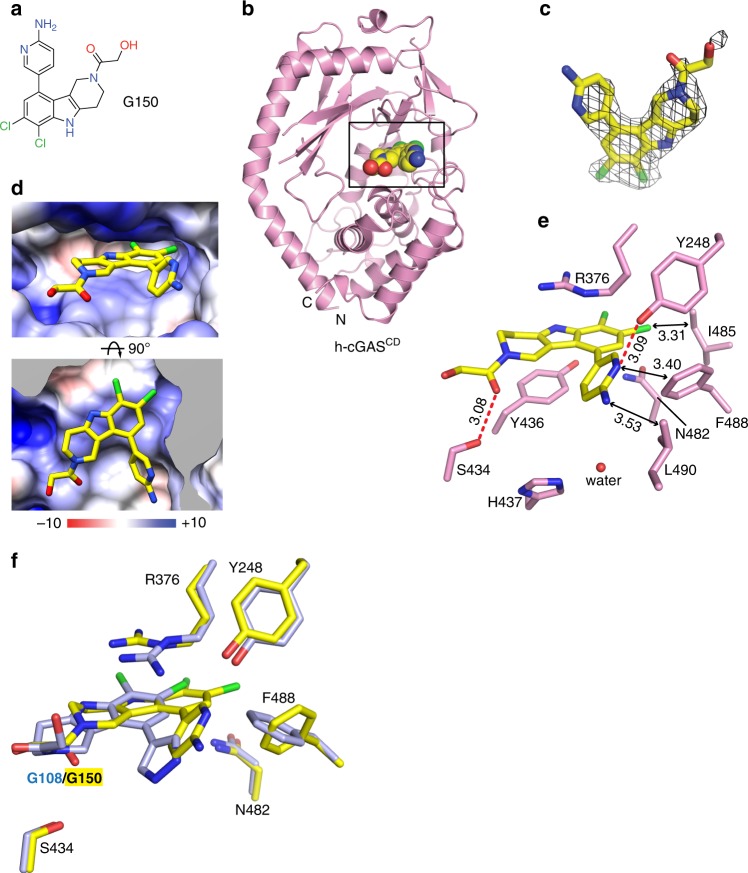
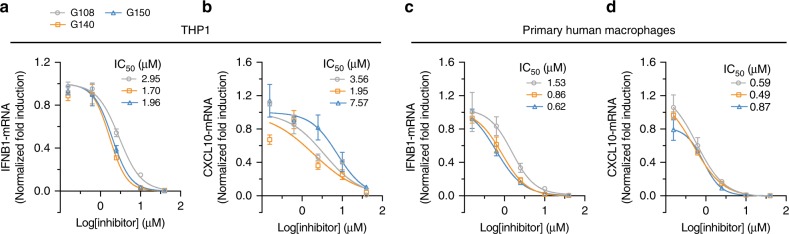
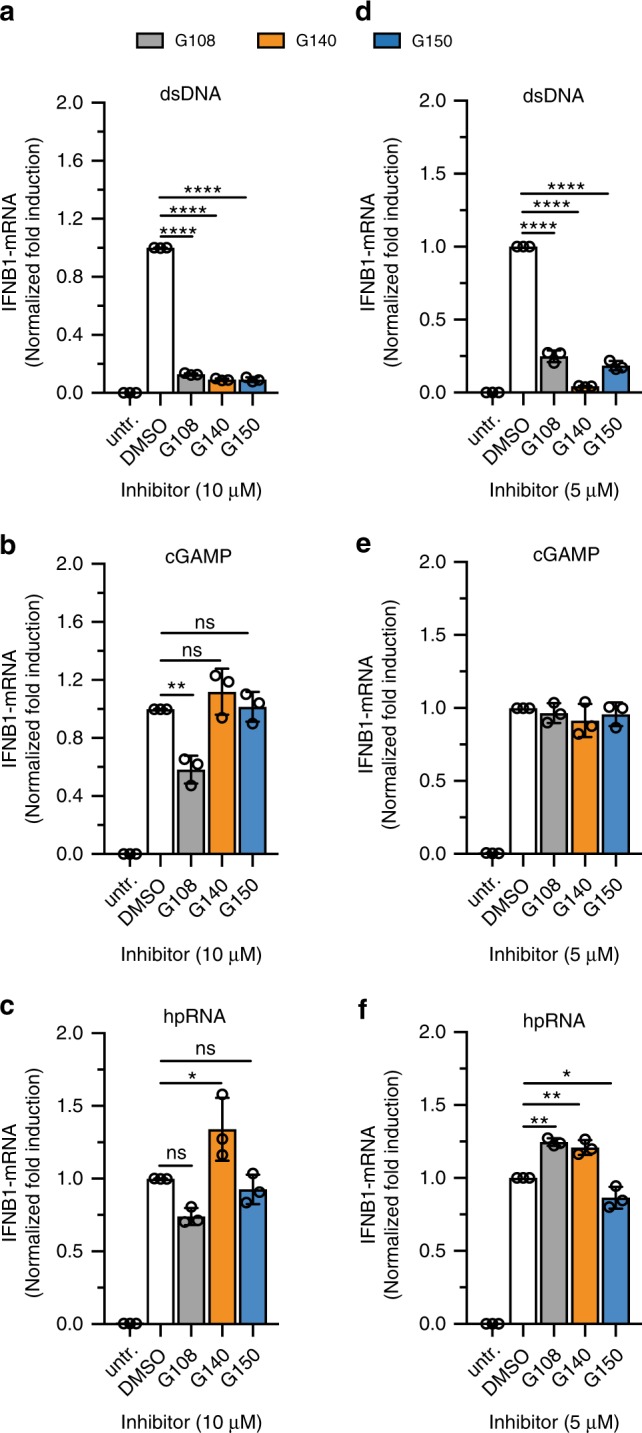
Cyclic GMP-AMP synthase (cGAS) is the primary sensor for aberrant intracellular dsDNA producing the cyclic dinucleotide cGAMP, a second messenger initiating cytokine production in subsets of myeloid lineage cell types. Therefore, inhibition of the enzyme cGAS may act anti-inflammatory. Here we report the discovery of human-cGAS-specific small-molecule inhibitors by high-throughput screening and the targeted medicinal chemistry optimization for two molecular scaffolds. Lead compounds from one scaffold co-crystallize with human cGAS and occupy the ATP- and GTP-binding active site. The specificity and potency of these drug candidates is further documented in human myeloid cells including primary macrophages. These novel cGAS inhibitors with cell-based activity will serve as probes into cGAS-dependent innate immune pathways and warrant future pharmacological studies for treatment of cGAS-dependent inflammatory diseases.
Overview
The claims and statistics of this paper haven’t been checked yet.
Free: it reads the open-access text and checks the first 5 claims that cite a source we can check. Create a free account to check every claim.
Integrity signals
Registry
Cites
Statistics
Figures
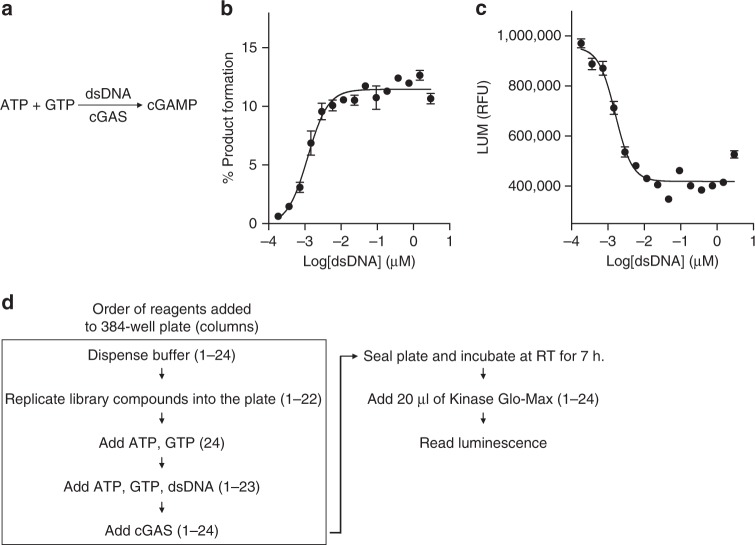
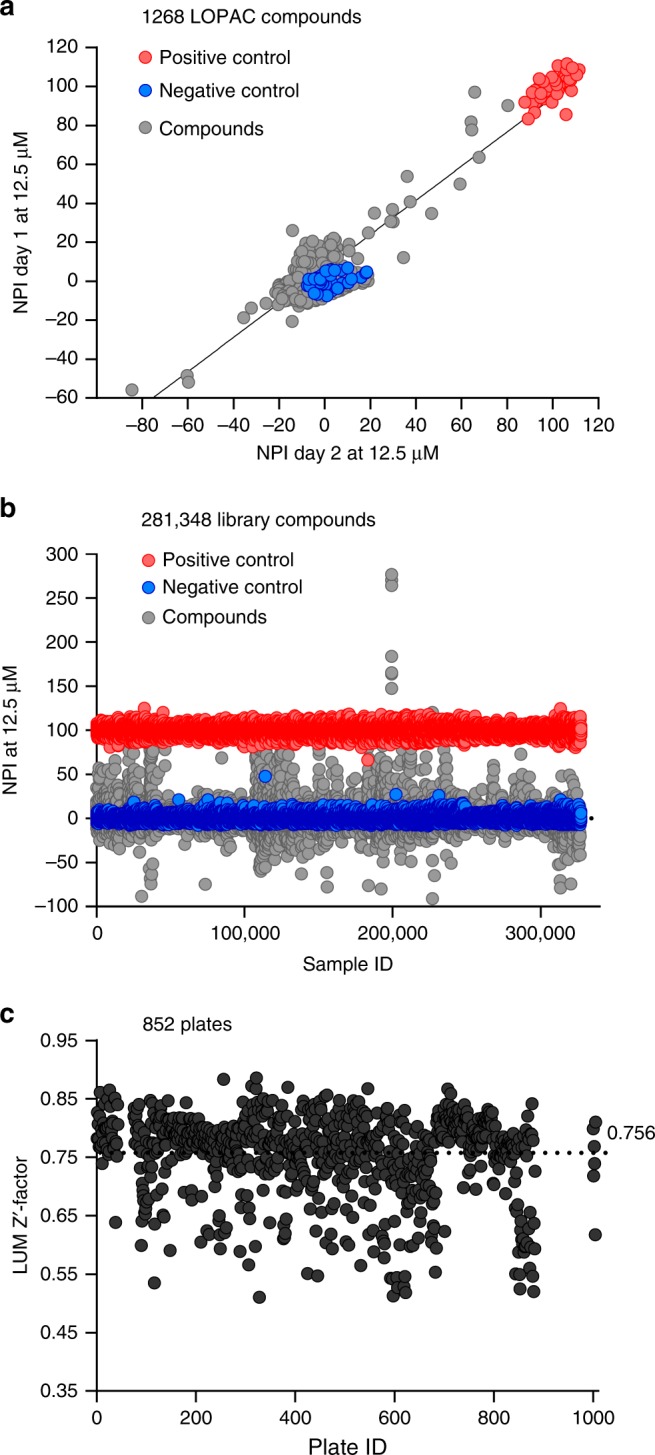
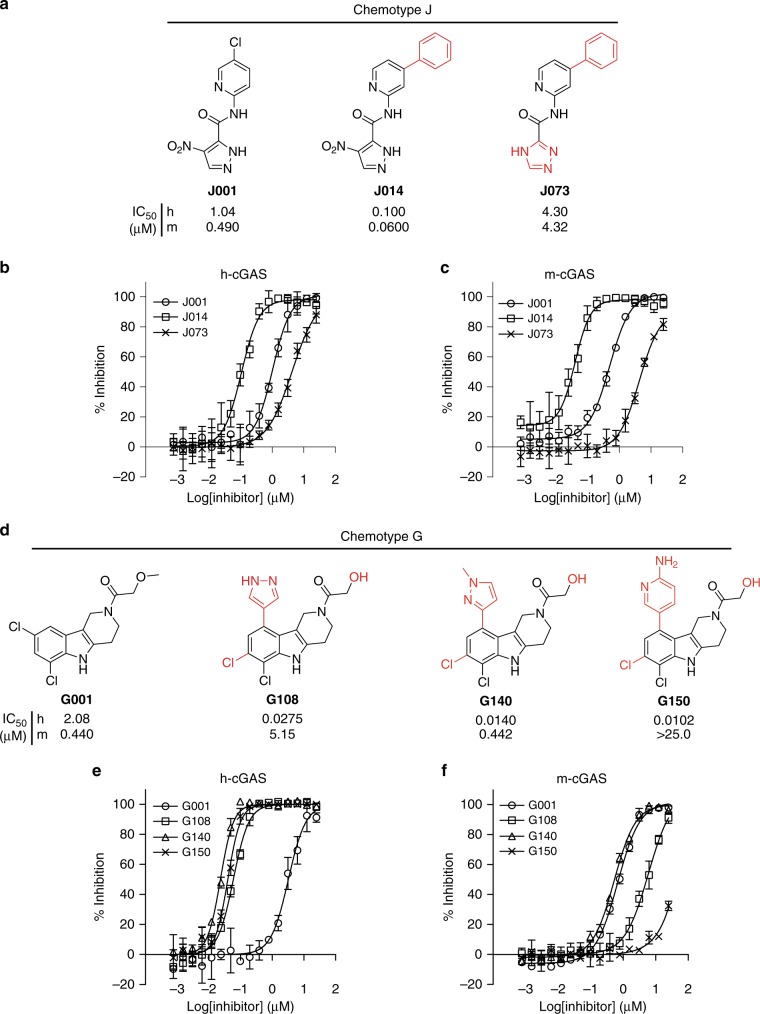
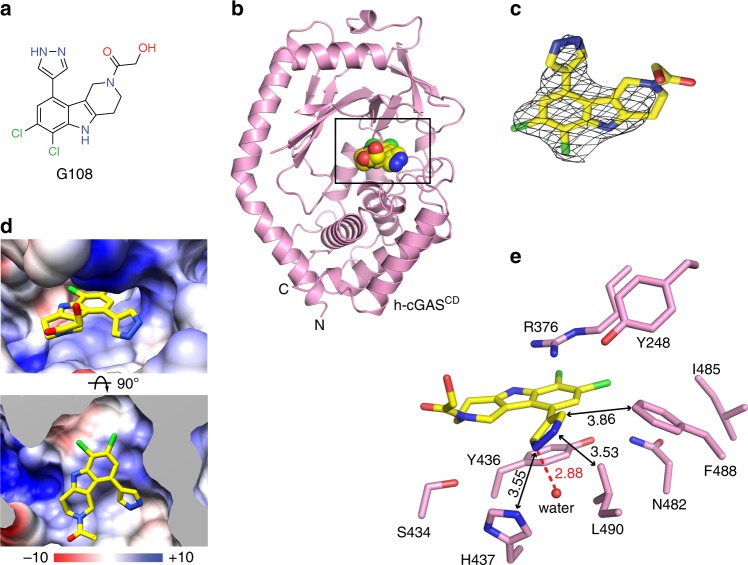
Verification
Claims the paper makes
The claims and statistics of this paper haven’t been checked yet.
Free: it reads the open-access text and checks the first 5 claims that cite a source we can check. Create a free account to check every claim.
Claims other papers make about this one
Each is checked against this paper’s own text: does it say what the citing paper says it does?
The source backs part of the claim, not all of it — or backs it for a different population, condition or comparison.
In the citing paper
“Our previous work established the efficacy of a brain permeable cGAS inhibitor (TDI6570, also known as G097, hereafter referred to as cGASi) formulated in chow in protecting against tau-induced deficits in P301S mice41,44.”
From APOE3 - R136S mutation confers resilience against tau pathology via cGAS-STING-IFN inhibition (2024) · cites this paper as [44]
Experimental — accuracy not yet measuredThe cited source says what the claim attributes to it.
In the citing paper
“cGAS inhibitors are being developed145.”
From The role of retrotransposable elements in ageing and age-associated diseases (2021) · cites this paper as [145]
The cited source says what the claim attributes to it.
In the citing paper
“several inhibitors of cGAS (Lama et al. 2019) and STING (Haag et al. 2018) have been developed.”
From Senescence and the SASP: many therapeutic avenues (2020) · cites this paper as Lama et al. 2019
The check wasn’t confident either way, so it gives no verdict — never disputed.
In the citing paper
“Our previous work established the efficacy of a brain permeable cGAS inhibitor (TDI6570, also known as G097, hereafter referred to as cGASi) formulated in chow in protecting against tau-induced deficits in P301S mice41,44.”
From The R136S mutation in the APOE3 gene confers resilience against tau pathology via inhibition of the cGAS-STING-IFN pathway (2025) · cites this paper as [44]
Experimental — accuracy not yet measuredThe check wasn’t confident either way, so it gives no verdict — never disputed.
In the citing paper
“AD patients exhibit myelin loss, and higher myelin expression is associated with tau pathology protection in AD43,44.”
From The R136S mutation in the APOE3 gene confers resilience against tau pathology via inhibition of the cGAS-STING-IFN pathway (2025) · cites this paper as [44]
Experimental — accuracy not yet measured
2 more claims about this paper
Create a free account to see every claim other papers make about this one.
Self-check
Percentages, sums and reported differences re-computed from the paper’s own numbers.
The self-check needs the paper’s full text.
Citations
Cites
UCSF Chimera—A visualization system for exploratory research and analysis
Pettersen, E. F., Goddard, T. D., Huang, C. C., Couch, G. S., Greenblatt, D. M., Meng, E. C., & Ferrin, T. E. (2004) · Journal of Computational Chemistry · doi:10.1002/jcc.20084 · Cited by 45,828
Features and development of Coot
Emsley, P., Lohkamp, B., Scott, W. G., & Cowtan, K. (2010) · Acta Crystallographica Section D Biological Crystallography · doi:10.1107/s0907444910007493 · Cited by 29,915
PHENIX : a comprehensive Python-based system for macromolecular structure solution
Adams, P. D., Afonine, P. V., Bunkóczi, G., Chen, V. B., Davis, I. W., Echols, N., Headd, J. J., Hung, L.-W., Kapral, G. J., Grosse-Kunstleve, R. W., et al. (2010) · Acta Crystallographica Section D Biological Crystallography · doi:10.1107/s0907444909052925 · Cited by 23,716
Phaser crystallographic software
McCoy, A. J., Grosse-Kunstleve, R. W., Adams, P. D., Winn, M. D., Storoni, L. C., & Read, R. J. (2007) · Journal of Applied Crystallography · doi:10.1107/s0021889807021206 · Cited by 20,612
PHENIX: a comprehensive Python-based system for macromolecular structure solution
Adams, P. D., Afonine, P. V., Bunkóczi, G., Chen, V. B., Davis, I. W., Echols, N., Headd, J. J., Hung, L.-W., Kapral, G. J., Grosse-Kunstleve, R. W., et al. (2012) · International Tables for Crystallography · doi:10.1107/97809553602060000865 · Cited by 7,334
Zhang, J.-H., Chung, T. D. Y., & Oldenburg, K. R. (1999) · SLAS Discovery · doi:10.1177/108705719900400206 · Cited by 6,847
Towards automated crystallographic structure refinement with phenix.refine
Afonine, P. V., Grosse-Kunstleve, R. W., Echols, N., Headd, J. J., Moriarty, N. W., Mustyakimov, M., Terwilliger, T. C., Urzhumtsev, A., Zwart, P. H., & Adams, P. D. (2012) · Acta Crystallographica Section D Biological Crystallography · doi:10.1107/s0907444912001308 · Cited by 5,511
Cyclic GMP-AMP Synthase Is a Cytosolic DNA Sensor That Activates the Type I Interferon Pathway
Sun, L., Wu, J., Du, F., Chen, X., & Chen, Z. J. (2013) · Science · doi:10.1126/science.1232458 · Cited by 4,996
Baell, J. B., & Holloway, G. A. (2010) · Journal of Medicinal Chemistry · doi:10.1021/jm901137j · Cited by 3,944
Pathogen Recognition and Inflammatory Signaling in Innate Immune Defenses
Mogensen, T. H. (2009) · Clinical Microbiology Reviews · doi:10.1128/cmr.00046-08 · Cited by 3,111
Cited by
Items 101–200 of 307
The role of cGAS-STING signaling in ischemic stroke: From immune response to therapeutic targeting
Chauhan, C., & Kaundal, R. K. (2023) · Drug Discovery Today · doi:10.1016/j.drudis.2023.103792 · Cited by 33
The role of mitochondrial damage-associated molecular patterns in acute pancreatitis
Zhou, Y., Huang, X., Jin, Y., Qiu, M., Ambe, P. C., Basharat, Z., & Hong, W. (2024) · Biomedicine & Pharmacotherapy · doi:10.1016/j.biopha.2024.116690 · Cited by 36
A Variety of Nucleic Acid Species Are Sensed by cGAS, Implications for Its Diverse Functions
Wang, D., Zhao, H., Shen, Y., & Chen, Q. (2022) · Frontiers in Immunology · doi:10.3389/fimmu.2022.826880 · Cited by 37
“2-amino pyridine ring (G150) blocks the binding of dsDNA and cGAS by occupying the ATP and GTP binding active sites on cGAS (150).”
BackgroundRegulation of cGAS Activity and Downstream Signaling
Joshi, B., Joshi, J. C., & Mehta, D. (2022) · Cells · doi:10.3390/cells11182812 · Cited by 36
The structural basis for 2′-5′/3′-5′-cGAMP synthesis by cGAS
Wu, S., Gabelli, S. B., & Sohn, J. (2024) · Nature Communications · doi:10.1038/s41467-024-48365-3 · Cited by 38
Song, J., Yang, R., Chang, J., Liu, Y., Lu, C.-H., Chen, L., Guo, H., Zhang, Y., Fan, Z., Zhou, J., et al. (2022) · Acta Pharmacologica Sinica · doi:10.1038/s41401-022-01002-5 · Cited by 30
“In addition, G150, CU32 and CU76 were described as new classes of small molecule hcGAS inhibitors with high binding capacity in vitro, as well as favorable cellular activity [27, 28].”
BackgroundTargeting DNA damage in ageing: towards supercharging DNA repair
Bujarrabal-Dueso, A., Garinis, G. A., Robbins, P. D., Vijg, J., & Schumacher, B. (2025) · Nature Reviews Drug Discovery · doi:10.1038/s41573-025-01212-6 · Cited by 38
Interrupting cyclic dinucleotide-cGAS–STING axis with small molecules
Sintim, H. O., Mikek, C. G., Wang, M., & Sooreshjani, M. A. (2019) · MedChemComm · doi:10.1039/c8md00555a · Cited by 30
Regulation of cGAS-STING pathway - Implications for systemic lupus erythematosus
Hagiwara, A. M., Moore, R. E., Wallace, D. J., ISHIMORI, M. L., & Jefferies, C. A. (2021) · Rheumatology and Immunology Research · doi:10.2478/rir-2021-0023 · Cited by 31
Zhou, Q., Luo, J., Chai, X., Yang, J., Zhong, S., Zhang, Z., Chang, X., & Wang, H. (2025) · International Immunopharmacology · doi:10.1016/j.intimp.2025.114679 · Cited by 33
Chemical regulation of the cGAS-STING pathway
Zhang, Q., Chen, C., Xia, B., & Xu, P. (2022) · Current Opinion in Chemical Biology · doi:10.1016/j.cbpa.2022.102170 · Cited by 27
Wang, Z., Hu, X., Cui, P., Kong, C., Chen, X., Wang, W., & Lu, S. (2023) · Cell Death Discovery · doi:10.1038/s41420-023-01607-7 · Cited by 27
cGAS-STING at the crossroads in cancer therapy
Wang, R., Hussain, A., Guo, Q., & Ma, M. (2023) · Critical Reviews in Oncology/Hematology · doi:10.1016/j.critrevonc.2023.104194 · Cited by 28
The Innate Immune cGAS-STING-Pathway in Cardiovascular Diseases – A Mini Review
Rech, L., & Rainer, P. P. (2021) · Frontiers in Cardiovascular Medicine · doi:10.3389/fcvm.2021.715903 · Cited by 28
Targeting Mitochondria to Control Ageing and Senescence
Protasoni, M., & Serrano, M. (2023) · Pharmaceutics · doi:10.3390/pharmaceutics15020352 · Cited by 31
“521, which competitively binds to cGAS catalytic pocket with cGAS substrates ATP/GTP [40], Cu-32 and Cu-76, that prevent cGAS dimerisation and subsequence activation [41], and additional small molecules identified through screenings: G140/G150 [42] and PF-06928215 [43].”
BackgroundSmall molecule modulators of immune pattern recognition receptors
Tsukidate, T., Hespen, C. W., & Hang, H. C. (2023) · RSC Chemical Biology · doi:10.1039/d3cb00096f · Cited by 28
APOE3 - R136S mutation confers resilience against tau pathology via cGAS-STING-IFN inhibition
Naguib, S., Lopez-Lee, C., Torres, E. R., Lee, S.-I., Zhu, J., Zhu, D., Ye, P., Norman, K., Zhao, M., Wong, M. Y., et al. (2024) · doi:10.1101/2024.04.25.591140 · Cited by 25
cGAS, an innate dsDNA sensor with multifaceted functions
Liu, Y., & Xu, P. (2025) · Cell Insight · doi:10.1016/j.cellin.2025.100249 · Cited by 29
“An alternative strategy for developing cGAS inhibitors is to block its catalytic activity, such as RU.521(Lama et al., 2019; Vincent et al., 2017; Xu et al., 2020), which binds the enzyme active site and competes with ATP or GTP. Wang et al. developed a novel class of cGAS cyclic peptide inhibitors, such as XQ2B, whic…”
De novo design of protein condensation inhibitors by targeting an allosteric site of cGAS
Zhao, W., Chen, G., He, J., Shen, X., Xiong, M., Xiong, L., Qi, Z., Xie, H., Li, W., Li, J., et al. (2025) · Nature Communications · doi:10.1038/s41467-025-60297-0 · Cited by 29
The cGAS-STING pathway: Post-translational modifications and functional implications in diseases
Liu, J., Rui, K., Peng, N., Luo, H., Zhu, B., Zuo, X., Lu, L., Chen, J., & Tian, J. (2022) · Cytokine & Growth Factor Reviews · doi:10.1016/j.cytogfr.2022.09.003 · Cited by 26
A path towards personalized medicine for autoinflammatory and related diseases
Miner, J. J., & Fitzgerald, K. A. (2023) · Nature Reviews Rheumatology · doi:10.1038/s41584-022-00904-2 · Cited by 26
APOE3-R136S Mutation Confers Resilience Against Tau Pathology via cGAS-STING-IFN Inhibition
Naguib, S., Torres, E. R., Lopez-Lee, C., Fan, L., Bhagwat, M., Norman, K., Lee, S.-I., Zhu, J., Ye, P., Wong, M. Y., et al. (2024) · doi:10.2139/ssrn.4799775 · Cited by 25
Li, J., Han, X., Sun, M., Li, W., Yang, G., Chen, H., Guo, B., Li, J., Li, X., & Wang, H. (2023) · Journal for ImmunoTherapy of Cancer · doi:10.1136/jitc-2023-007625 · Cited by 29
The First‐In‐Class Deubiquitinase‐Targeting Chimera Stabilizes and Activates cGAS
Deng, Z., Chen, L., Qian, C., Liu, J., Wu, Q. D., Song, X., Xiong, Y., Wang, Z., Hu, X., Inuzuka, H., et al. (2024) · Angewandte Chemie International Edition · doi:10.1002/anie.202415168 · Cited by 33
cGAS-STING: mechanisms and therapeutic opportunities
Zhang, M., Wu, C., Lu, D., Wang, X., & Shang, G. (2025) · Science China Life Sciences · doi:10.1007/s11427-024-2808-3 · Cited by 33
“G150 series inhibitors, specifically targeting hcGAS, localized within the ATP and GTP binding pocket, exhibiting efficient inhibitor activity in THP1 cells (Lama et al., 2019).”
Therapeutic Interventions Targeting Innate Immune Receptors: A Balancing Act
Cao, X., Cordova, A. F., & Li, L. (2021) · Chemical Reviews · doi:10.1021/acs.chemrev.1c00716 · Cited by 26
Understanding the role of cGAS-STING signaling in ischemic stroke: a new avenue for drug discovery
Chauhan, C., & Kaundal, R. K. (2023) · Expert Opinion on Drug Discovery · doi:10.1080/17460441.2023.2244409 · Cited by 28
“G150 dsDNA induced inflammation In-vitro Inhibit h-cGAS activity [19] EGCG AGS In-vivo Inhibit G3BP1, decrease cGAS activity [135] Hydroxychloroquine HT-DNA induced inflammation In silico and In-vitro Interact with DNA binding site to inhibit cGAS activation [133] X6 Autoimmune myocarditis and AGS In-vitro and In-vivo…”
BackgroundCurrent concepts of photosensitivity in cutaneous lupus erythematosus
Klein, B., & Kunz, M. (2022) · Frontiers in Medicine · doi:10.3389/fmed.2022.939594 · Cited by 27
“The discovery of human-cGAS-specific small-molecule inhibitors such as G108, G140 and G150 has been recently reported based on high-throughput drug screenings (120).”
BackgroundInhibition of cGAS ameliorates acute lung injury triggered by zinc oxide nanoparticles
Jiang, Z., Jiang, Y. L., Fan, J., Zhang, J., Xu, G., Fan, Y., Zhang, L., Qin, X., Jiang, X., Mao, L., et al. (2022) · Toxicology Letters · doi:10.1016/j.toxlet.2022.11.002 · Cited by 23
Li, W., Huang, Z., Luo, Y., Cui, Y., Xu, M., Luo, W., Wu, G., & Liang, G. (2023) · International Immunopharmacology · doi:10.1016/j.intimp.2023.110139 · Cited by 27
Chen, M., Lei, S., Zhou, Z., Wang, M., Feng, C., Gao, X., Ding, C., Song, Z., Tang, W., & Zhang, A. (2024) · Journal of Medicinal Chemistry · doi:10.1021/acs.jmedchem.3c02229 · Cited by 23
Targeting cGAS/STING signaling-mediated myeloid immune cell dysfunction in TIME
Kumar, V., Bauer, C., & Stewart, J. H. (2023) · Journal of Biomedical Science · doi:10.1186/s12929-023-00942-2 · Cited by 25
“Also, high-standard human-specific cGAS small molecule inhibitors with macrophage activity have been developed with potential use in cGAS/STING signalingmediated inflammatory diseases [161].”
BackgroundXiao, L., Ai, Y.-L., Mi, X.-Y., Han, L., Zhi, X., Wu, L.-Z., Chen, Q.-T., Gou, T., Chen, C., Zhou, B., et al. (2025) · Journal of Clinical Investigation · doi:10.1172/jci188872 · Cited by 24
“Transmission electron microscopy revealed condensed membranous structures resembling aggregates within the ER upon DHN stimulation (Figure 4C), which could be abolished by cGAS inhibitor G140 (Supplemental Figure 4G) or knockdown of STING (Supplemental Figure 4H).”
InfluentialBishop, R. C., & Derré, I. (2022) · Infection and Immunity · doi:10.1128/iai.00190-22 · Cited by 26
“Thus, we tested whether inhibitors of NLRP3 (MCC950) (33) and additional C. trachomatis-induced inflammasome-activating innate immune molecules, cGAS (cyclic GMP-AMP synthase) (G150) (34) and STING (H-151) Month YYYY Volume XX Issue XX 10.1128/iai.00190-22 6 (35), could reduce host nuclei condensation following CTL039…”
BackgroundInfluentialYang, H., Xia, Y., Ma, Y., Gao, M., Hou, S., Xu, S., & Wang, Y. (2024) · Neural Regeneration Research · doi:10.4103/nrr.nrr-d-24-00015 · Cited by 26
Discovery of a Novel CRBN-Recruiting cGAS PROTAC Degrader for the Treatment of Ulcerative Colitis
He, P., Wen, C., Zhang, X., & Yin, H. H. (2025) · Journal of Medicinal Chemistry · doi:10.1021/acs.jmedchem.4c02774 · Cited by 22
Discovery of novel cGAS inhibitors based on natural flavonoids
Li, J., Xiong, M., Liu, J., Zhang, F., Li, M., Zhao, W., & Xu, Y. (2023) · Bioorganic Chemistry · doi:10.1016/j.bioorg.2023.106802 · Cited by 21
MAVS: The next STING in cancers and other diseases
Wang, X., Wang, Q., Zheng, C., & Wang, L. (2024) · Critical Reviews in Oncology/Hematology · doi:10.1016/j.critrevonc.2024.104610 · Cited by 22
Mou, J., Chen, Y., Zhu, X., Xu, B.-Y., Wang, M., Xie, J., Lin, T., Gu, Q., Wu, Q., Che, Z., et al. (2025) · Molecular Medicine · doi:10.1186/s10020-025-01273-8 · Cited by 29
“The effects of cGAS inhibitors typically include (1) inhibition of the enzymatic activity of cGAS (Lama et al. 2019).”
Chen, T., Hsu, J., Wu, K.-C., Hsiao, C.-F., Lin, J.-A., Cheng, Y.-H., Liu, Y.-H., Lee, D.-Y., Chang, H., Cho, D., et al. (2020) · Scientific Reports · doi:10.1038/s41598-020-74201-x · Cited by 23
Shen, H., Lu, H., Mao, L., & Song, L. (2024) · Translational Pediatrics · doi:10.21037/tp-24-148 · Cited by 22
“Although RU.521 was found to be a good inhibitor of the cGAS/STING pathway in our study and some other rodent studies, it is a poor human cGAS inhibitor (55) .”
Targeting cellular senescence to combat cancer and ageing
Wang, C., Hao, X., & Zhang, R. (2022) · Molecular Oncology · doi:10.1002/1878-0261.13266 · Cited by 21
Unraveling the cGAS/STING signaling mechanism: impact on glycerolipid metabolism and diseases
Su, J., Cheng, F., & Yuan, W. (2024) · Frontiers in Medicine · doi:10.3389/fmed.2024.1512916 · Cited by 22
“Another compound, G150, inhibits cGAS by blocking its DNA-binding site, effectively reducing cGAMP production (128).”
Gregg, R. W., Shabnam, F., & Shoemaker, J. E. (2020) · Bioinformatics · doi:10.1093/bioinformatics/btaa969 · Cited by 19
Wang, F., Li, X., Swanson, M. D., Guetschow, E. D., Winston, M. S., Smith, J. P., Hoyt, E., Liu, Z., Richardson, D. D., Bu, X., et al. (2022) · Biotechnology and Bioengineering · doi:10.1002/bit.28112 · Cited by 17
Tian, X., Liu, C., & Wang, Z. (2021) · International Endodontic Journal · doi:10.1111/iej.13636 · Cited by 19
Arabinose- and xylose-modified analogs of 2′,3′-cGAMP act as STING agonists
Xie, W., Lama, L., Yang, X., Kuryavyi, V., Bhattacharya, S., Nudelman, I., Yang, G., Ouerfelli, O., Glickman, J. F., Jones, R. A., et al. (2023) · Cell chemical biology · doi:10.1016/j.chembiol.2023.07.002 · Cited by 18
Self-citationKate, W. D., Fanta, M., & Weinfeld, M. (2024) · Nucleic Acids Research · doi:10.1093/nar/gkae654 · Cited by 21
“We confirmed the involvement of cGAS by pharmacological inhibition using a recently described selective human cGAS inhibitor (cGASi) called G140 ( 59 ).”
Soh, L.-J., Lee, S.-Y., Roebuck, M. M., & Wong, P. (2024) · Life Sciences · doi:10.1016/j.lfs.2024.123112 · Cited by 18
Identification and development of cGAS inhibitors and their uses to treat Alzheimer's disease
Alarcón‐Espósito, J., Nagiri, R. K., Gan, L., & Sinha, S. C. (2025) · Neurotherapeutics · doi:10.1016/j.neurot.2025.e00536 · Cited by 18
LINE-1 RNA triggers matrix formation in bone cells via a PKR-mediated inflammatory response
Mangiavacchi, A., Morelli, G., Reppe, S., Saera-Vila, A., Liu, P., Eggerschwiler, B., Zhang, H., Bensaddek, D., Casanova, E. A., Medina‐Gómez, C., et al. (2024) · The EMBO Journal · doi:10.1038/s44318-024-00143-z · Cited by 18
“S6) (Jones et al, 2008; Lama et al, 2019).”
Cai, G., Zhang, X., Jiao, J., Du, W., & Yan, M. (2025) · Current Issues in Molecular Biology · doi:10.3390/cimb47090750 · Cited by 20
“The third category includes RU.521, G150, G108, and PF-06928215, which interfere with cGAMP production by competitively binding with ATP or GTP substrates and the cGAMP product of cGAS [145,146].”
Alipour-Khezri, E., Moqadami, A., Vahed, S. Z., & Barzegari, A. (2025) · Biomedicine & Pharmacotherapy · doi:10.1016/j.biopha.2025.118790 · Cited by 23
The role of cGAS-STING signaling in rheumatoid arthritis: from pathogenesis to therapeutic targets
Zhu, Q., & Zhou, H. (2024) · Frontiers in Immunology · doi:10.3389/fimmu.2024.1466023 · Cited by 26
Li, X., Yu, F., & Li, L. (2024) · Angewandte Chemie International Edition · doi:10.1002/anie.202417916 · Cited by 16
Basal IFN-λ2/3 expression mediates tight junction formation in human epithelial cells
Keser, Y., Metz‐Zumaran, C., Uckeley, Z. M., Reuss, D., Doldan, P., Ramsden, J. M., Stanifer, M. L., & Boulant, S. (2025) · The EMBO Journal · doi:10.1038/s44318-025-00539-5 · Cited by 14
“Infection of T84 cells with Vaccinia virus signi fi cantly induced IFN-λ 2/3 expression, which was effectively inhibited by the cGAS inhibitors G150 and RU521 validating the ef fi cacy of these compounds (Appendix Fig.”
InfluentialNovel Perspectives in Hepatic Ischemia-Reperfusion Injury: The cGAS-STING Pathway
Chen, R.-C., Yang, T., Jiang, Z., Long, Y., Qian, B., & Fu, W. (2025) · Journal of Inflammation Research · doi:10.2147/jir.s549406 · Cited by 19
“…PF-06928215 Binding to the cGAS active spot to block ATP and GTP access [165] G108/G150 Taking over cGAS’s active spot to hinder ATP/GTP binding [166] Aspirin Acetylating cGAS at lysine residues (K384/K394/K414) [167] CU-32/CU-76 Disrupting cGAS dimerization [168] S2/S3 Taking over cGAS’s…”
cGAS–STING signaling pathway as a therapeutic target in human diseases
Xiao, Y., Ma, Y., Zhao, J., Zhang, X., Gan, C., Gao, J., & Huang, Z. (2025) · Chinese Medical Journal · doi:10.1097/cm9.0000000000003904 · Cited by 16
“…Suramin, X6 Shields cGAS DNA-binding sites [332,333] Inhibitor RU.521, PF-06928215, Compound C20, G140 Occupies the cGAS catalytic site [334,354,355] Inhibitor CU-32, CU-76 Inhibits cGAS enzymatic activity [356] Antagonist VENT-03 Inhibits the enzymatic activity of cGAS [347] cGAS: Cyclic…”
Sanz, M. Á., Polo, M., Rodríguez‐Pulido, M., Ranjitha, H. B., & Sáiz, M. (2024) · Cellular and Molecular Life Sciences · doi:10.1007/s00018-024-05190-7 · Cited by 14
“G140 has been reported as a potent inhibitor of human and murine cGAS by direct binding to the cGAS active site and inhibiting its enzymatic activity competitively [42, 43].”
BackgroundThe Asthma Risk Gene, GSDMB, Promotes Mitochondrial DNA-induced ISGs Expression
Liu, T., Hecker, J., Liu, S., Rui, X., Boyer, N., Wang, J. P., Yu, Y., Zhang, Y., Mou, H., Gómez-Escobar, L. G., et al. (2024) · Journal of Respiratory Biology and Translational Medicine · doi:10.35534/jrbtm.2024.10005 · Cited by 19
“Similarly, G140 and H151, two potent and selective inhibitors of cyclic GMP-AMP synthase (cGAS) and STING, respectively [74,75], significantly mitigated GSDMB-enhanced ISGs expression and IFN response upon poly (dA:dT) stimulation (Figure 5B–”
A novel TREX1 inhibitor, VB-85680, upregulates cellular interferon responses
Flowers, S. J., Petronella, B. A., McQueney, M. S., Fanelli, B., Eisenberg, W., Uveges, A. J., Roden, A. L., Salowe, S. P., Bommireddy, V., Letourneau, J. J., et al. (2024) · PLoS ONE · doi:10.1371/journal.pone.0305962 · Cited by 15
Luo, H., Tian, T., Hu, C., & Hao, F. (2025) · Frontiers in Pharmacology · doi:10.3389/fphar.2025.1597443 · Cited by 16
Innate Immunity Reimagined: Metabolic Reprogramming as a Gateway to Novel Therapeutics
Deng, C.-H., Wang, C., Zhou, X., Chen, X., & Wang, Y. (2025) · International Journal of Biological Sciences · doi:10.7150/ijbs.114010 · Cited by 16
“These compounds target the cGAS active site, selectively reducing dsDNA-induced IFN response in human THP-1 cells and primary macrophages [121].”
The cGAS-STING pathway in cancer: friend or foe
Li, Q., Song, Q., Ma, L., Kang, K., Zhu, X., Li, Y., Lin, X., Lu, X., Zeng, Z., Li, G., et al. (2026) · Cell Death and Disease · doi:10.1038/s41419-026-08607-2 · Cited by 20
“In therapy, some studies have shown that slow activation of the cGAS-STING pathway in certain tumors actually promotes tumor deterioration, indicating the potential application of cGAS inhibitors in advanced tumors [182].”
He, X., Sun, Y., Lu, J., Naz, F., Ma, S., & Liu, J. (2023) · Frontiers in Immunology · doi:10.3389/fimmu.2023.1117760 · Cited by 16
Regulation of cellular senescence by innate immunity
Hou, J., Zheng, Y., & Gao, C. (2023) · Biophysics Reports · doi:10.52601/bpr.2023.230032 · Cited by 18
“Mechanically, aspirin can directly bind and acetylate cGAS to keep cGAS inactive (Dai et al. 2019), while quinacrine disrupts the conformation of dsDNA to influence the cGAS activity indirectly (Lama et al. 2019).”
BackgroundThe crucial roles and research advances of cGAS‑STING pathway in liver diseases
Zhang, X., He, B., Lu, J., Bao, Q., Wang, J., & Yang, Y. (2024) · Annals of Medicine · doi:10.1080/07853890.2024.2394588 · Cited by 15
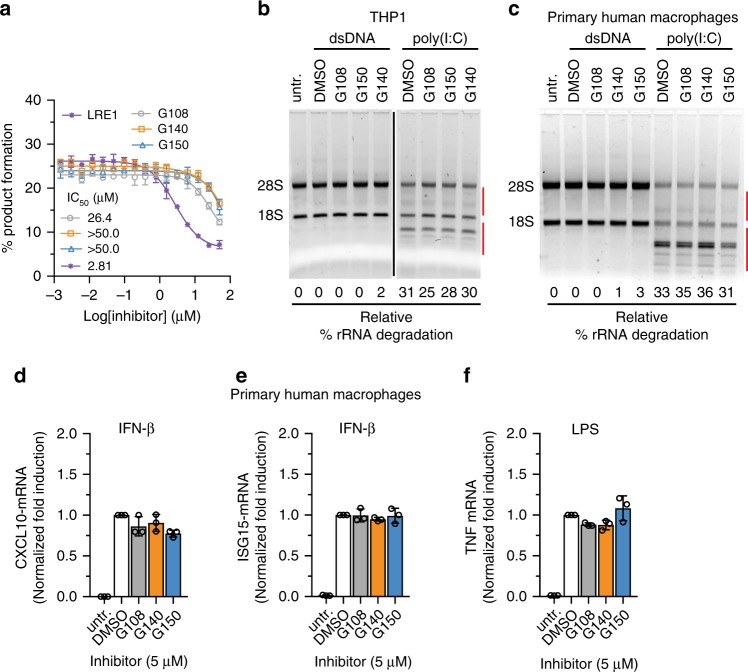
“It demonstrates no off-target effects on G150 in various experiments assessing inhibition in the innate immune system [102].”
BackgroundSkeldon, A. M., Wang, L., Sgarioto, N., Beveridge, R. E., Chan, S. Y. T., Dorich, S., Dumais, V., Fradet, N., Gaudreault, S., LeGros, P., et al. (2025) · Communications Chemistry · doi:10.1038/s42004-025-01481-7 · Cited by 15
“TobettercharacterizepreviouslydescribedGchemotypecGASinhibitors 19 , we determined the biochemical mechanism of action of a representative compound G150 (Fig.”
InfluentialSelf-citationWang, X., Liu, Y., Han, X., Zou, G., Zhu, W., Shen, H. C., & Liu, H. (2021) · Bioorganic & Medicinal Chemistry Letters · doi:10.1016/j.bmcl.2021.128101 · Cited by 13
Zhang, M., Lu, C., Su, L., Long, F., Yang, X., Guo, X., Song, G., An, T., Chen, W., & Chen, J. (2022) · Veterinary Research · doi:10.1186/s13567-022-01077-2 · Cited by 13
“It is triggered by the sensing of Pathogen-Associated Molecular Patterns (PAMPs) by Pattern Recognition Receptors (PRRs) [15, 16].”
BackgroundRole of DNA damage in the pathogenesis of atherosclerosis
Ishida, M., Sakai, C., & Ishida, T. (2022) · Journal of Cardiology · doi:10.1016/j.jjcc.2022.08.010 · Cited by 15
Elzinga, S. E., Koubek, E. J., Hayes, J. M., Carter, A., Mendelson, F. E., Webber‐Davis, I. F., Lentz, S. I., & Feldman, E. L. (2023) · Frontiers in Cellular Neuroscience · doi:10.3389/fncel.2023.1167688 · Cited by 13
“The cGAS/STING pathway is highly expressed in microglia and participates in immune surveillance by sensing intracellular double-stranded DNA (dsDNA) (Chen et al., 2016; Lama et al., 2019), including endogenous dsDNA, such as mitochondrial DNAs, which can localize to the cytosol due to cellular stress (White et al.”
BackgroundHaj, M., Levon, A., Frey, Y., Hourvitz, N., Campisi, J., Tzfati, Y., Elkon, R., Ziv, Y., & Shiloh, Y. (2023) · Aging Cell · doi:10.1111/acel.13869 · Cited by 14
“Given the involvement of the cGAS- STING pathway in inflammation, senescence and disease, inhibitors of cGAS (Lama et al., 2019) or STING (Haag et al., 2018) could potentially be used to treat age- related chronic inflammation in A- T patients.”
BackgroundDiscovery and identification of a novel small molecule BCL-2 inhibitor that binds to the BH4 domain
Zhou, J., Yang, R., Chang, J., Song, J., Fan, Z., Zhang, Y., Lu, C.-H., Jiang, H., Zheng, M.-Y., & Zhang, S. (2022) · Acta Pharmacologica Sinica · doi:10.1038/s41401-022-00936-0 · Cited by 15
“A DNA intercalation study was conducted to measure small molecule/DNA binding [26, 27].”
Lebrec, V., Afshar, N., Davies, L. R., Kujirai, T., Κανέλλου, Α., Tidu, F., & Zierhut, C. (2024) · bioRxiv (Cold Spring Harbor Laboratory) · doi:10.1101/2024.05.13.593978 · Cited by 13
Role of cGAS-STING pathway in fibrotic disease
Feng, L., Zhang, F., Cao, J., & Xiong, W. (2025) · Pharmacological Research · doi:10.1016/j.phrs.2025.107971 · Cited by 15
Ghincea, A., Woo, S., Yu, S., Pivarnik, T., Fiorini, V., Herzog, E. L., & Ryu, C. (2023) · Current Treatment Options in Rheumatology · doi:10.1007/s40674-023-00211-1 · Cited by 12
“Species-specific effects may be an issue to overcome, as another small molecule, RU.521, was successful in binding to the catalytic site of cGAS and reduced binding affinity to ATP/ GTP in cells derived from mice [121], but not humans [122].”
Hu, J., & Tian, M. (2024) · Frontiers in Neurology · doi:10.3389/fneur.2024.1471287 · Cited by 14
Yu, S., Hu, B., Sun, Y. S., Peng, X. Y., Lee, C., Woo, S., McGovern, J., Zielonka, J., Saber, T., Ghincea, A., et al. (2025) · European Respiratory Journal · doi:10.1183/13993003.01564-2024 · Cited by 12
“The pharmacokinetics and pharmacodynamics of G140 have been evaluated across various biochemical and cellular assays and assessed for off-target effects [25, 26].”
InfluentialGrowth-promoting function of the cGAS-STING pathway in triple-negative breast cancer cells
Liu, L., Shen, Y.-C., Wang, Y., Wu, W., Chang, L., Chen, Y.-H., Lee, C.-C., & Wang, S. (2022) · Frontiers in Oncology · doi:10.3389/fonc.2022.851795 · Cited by 14
“521, a potent investigational inhibitor of cGAS to be used for treating inflammatory symptoms of autoimmune diseases (13, 14).”
Background(2022) · Biointerface Research in Applied Chemistry · doi:10.33263/briac134.342 · Cited by 11
The cGAS-STING Pathway in Pulmonary Diseases: Mechanisms and Therapeutic Potential
Zhang, Z., Jiang, J., Wu, G., Wei, X., Weng, Y., & Huang, L. (2025) · International Journal of Molecular Sciences · doi:10.3390/ijms262110423 · Cited by 13
“…trial, demonstrating good targeted efficacy, and there are plans to initiate Phase II clinical trials [122]. occupies the catalytic site of h-cGAS [117] STING homeostasis is regulated by protein–protein interactions and molecular modifications, including phosphorylation, oxidation,…”
Deng, Y., Hahn, Q., Yu, L., Zhu, Z., Boyer, J. A., Wang, J., Kong, D., Carey, L. M., Hepperla, A. J., Simon, J. M., et al. (2024) · Science Advances · doi:10.1126/sciadv.ado7024 · Cited by 10
Wu, Z., Miao, X., Jiang, Y., Kong, D., Liu, H., Xie, W., Shi, B., & Gong, W. (2023) · Journal of Thoracic and Cardiovascular Surgery · doi:10.1016/j.jtcvs.2023.03.005 · Cited by 11
Self-citationHow Does cGAS Avoid Sensing Self-DNA under Normal Physiological Conditions?
Zheng, W., Chen, N., Meurens, F., Zheng, W., & Zhu, J. (2023) · International Journal of Molecular Sciences · doi:10.3390/ijms241914738 · Cited by 14
“521, oligodeoxynucleotide containing a TTAGGG modified fragment (ODNs), RU series of compounds, suramin and PF series of compounds have been developed as the inhibitor of cGAS, which could be used as new drugs for the treatment of innate immune diseases and cancers [77,78].”
BackgroundKaranja, C. W., Yeboah, K. S., Ong, W. W. S., & Sintim, H. O. (2021) · RSC Chemical Biology · doi:10.1039/d0cb00187b · Cited by 10
Tian, M., Li, F., & Pei, H. (2024) · Biomedicines · doi:10.3390/biomedicines12081728 · Cited by 11
“…preventing it from producing cGAMP, thereby inhibiting the downstream STING pathway and reducing production of interferons and pro-inflammatory cytokines cGAS inhibitors are mainly classi fi ed into three types: direct inhibitors, competitive inhibitors, and antisense oligonucleotides [44–46].”
BackgroundRetractedChakraborty, R., Maya, S., Testa, V., Montero-Muñoz, J., Nonaka, T., Hasegawa, M., Consiglio, A., & Zurzolo, C. (2026) · Nature Communications · doi:10.1038/s41467-026-73136-7 · Cited by 12
The Crucial Roles and Research Advances of cGAS-STING Pathway in Cutaneous Disorders
Huang, C., Li, W., Ren, X., Tang, M., Zhang, K., Zhuo, F., Dou, X., & Yu, B. (2023) · Inflammation · doi:10.1007/s10753-023-01812-7 · Cited by 9
“identified a subset of human cGAS-specific small-molecule inhibitors with high specificity and potency [73], which could be potentially used in cGAS-related disorders.”
BackgroundWang, X., & Li, W. (2021) · International Journal of Molecular Sciences · doi:10.3390/ijms22031164 · Cited by 9
“It should note that the IC50 or Kd values for these three groups of ligands were obtained from different experimental methods, more specifically, high-throughput screening assay for ligand group I [12], fluorescence polarization assay for ligand group II excluding ER9 [11], enzyme activity assay for ER9 [13], and a no…”
BackgroundMethodResultInfluentialChen, J., Feng, M., Zhang, T., Zhong, M., Wang, Y., Zhang, Q., & Sun, Y. (2025) · International Journal of Biological Macromolecules · doi:10.1016/j.ijbiomac.2025.139778 · Cited by 8
Rabinowitz, J., Vila, I. K., Luchsinger, C., Bertelli, C., Schüssler, M., Taffoni, C., Cui, B., Dai, A. Z., Rashid, M. M., Cisneros, W. J., et al. (2025) · Journal of Biological Chemistry · doi:10.1016/j.jbc.2025.110430 · Cited by 8
“GTP-binding pocket, preventing cGAMP synthesis and inhibiting downstream pathway activation (37).”
Liu, H., Hu, C., Liu, H., Gong, Z., Jiang, S., Xie, J., Li, Y., Liu, C., Wang, Y., Zou, C., et al. (2026) · Journal of Neuroinflammation · doi:10.1186/s12974-026-03815-1 · Cited by 10
“This compound has been demonstrated in vitro to effectively inhibit dsDNA-induced cGAMP production across multiple cell types, exhibiting high affinity for murine cGAS while showing system-dependent efficacy differences for human cGAS [209, 210].”
cGAS–STING: From immunology and oncology view
Liu, X., Ding, C., Lü, J., & Zhang, N. (2025) · Chinese Medical Journal · doi:10.1097/cm9.0000000000003889 · Cited by 9
“[108,109] These inhibitors can reverse the tumor-promoting effects of chronic cGAS–STING activation.”
Li, J., Zhang, L., Yang, C., Yao, C., Xu, Y.-Z., Liu, H.-F., & An, N. (2026) · Autoimmunity · doi:10.1080/08916934.2025.2612417 · Cited by 7
Ramos, A. E., Bizri, N. A., Novak, E. A., Mollen, K. P., & Khan, S. (2024) · Frontiers in Pharmacology · doi:10.3389/fphar.2024.1409683 · Cited by 7
Sun, Y., Yuan, Z., Li, W., Lin, X., Chen, Y., Yang, Y.-F., Miao, H., Wang, S., Cui, Z., Bao, Z., et al. (2025) · Toxicology and Applied Pharmacology · doi:10.1016/j.taap.2025.117502 · Cited by 7
The inflammatory clock: how cGAS-STING ticks in the aging ovary
Ma, Y., Chen, Y., Yuan, X., Li, T., Luo, H., & Gu, Y. (2026) · Frontiers in Cell and Developmental Biology · doi:10.3389/fcell.2026.1771546 · Cited by 9
“G150 has demonstrated reversible inhibition of both human and murine cGAS, providing a platform for cross-species studies (Lama et al., 2019).”
Harnessing cGAS – STING axis for therapeutic benefits in systemic lupus erythematosus
Chang, L. (2024) · International Journal of Rheumatic Diseases · doi:10.1111/1756-185x.15256 · Cited by 9
Bruštíková, K., Ryabchenko, B., Liebl, D., Horníková, L., Forstová, J., & Huérfano, S. (2024) · Journal of Medical Virology · doi:10.1002/jmv.70038 · Cited by 6
Metadata
- Authors
- Lama, L., Adura, C., Xie, W., Tomita, D., Kamei, T., Kuryavyi, V., Gogakos, T., Steinberg, J. I., Miller, M., Ramos-Espiritu, L., Asano, Y., Hashizume, S., Aida, J., Imaeda, T., Okamoto, R., Jennings, A. J., Michino, M., Kuroita, T., Stamford, A., Gao, P., Meinke, P., Glickman, J. F., Patel, D. J., & Tuschl, T.
- Affiliations
- Rockefeller University (US)
- Memorial Sloan Kettering Cancer Center (US)
- Tri-Institutional Therapeutics Discovery Institute (US)
- Corresponding author
- Glickman, J. Fraser
- Patel, Dinshaw J.
- Tuschl, Thomas
- ORCID
- Venue
- Nature Communications
- Published
- 2019-05-21
- Volume
- 10
- Issue
- 1
- Pages
- 2261-2261
- ISSN
- 2041-1723 (ISSN-L)
- PMC
- PMC6529454
- OpenAlex
- W2945498322
- Cited by
- 303
- References
- 49
- Citations by year
- 2026: 54 · 2025: 59 · 2024: 57 · 2023: 45 · 2022: 32 · 2021: 24 · 2020: 22 · 2019: 9
- FWCI
- 8.63
- Type
- journal article
- Language
- en
- Open access
- gold
- doi.org
- Licence
- cc-by
- creativecommons.org/licenses/by/4.0 (tdm)
- creativecommons.org/licenses/by/4.0 (vor)
- Locations
- Nature Communications (publishedVersion, cc-by)
- PubMed Central (publishedVersion, cc-by)
- PubMed (publishedVersion)
- OSTI OAI (U.S. Department of Energy Office of Scientific and Technical Information) (submittedVersion)
- RePEc: Research Papers in Economics (submittedVersion)
- DOAJ (DOAJ: Directory of Open Access Journals) (submittedVersion, cc-by-sa)
- DOAJ (DOAJ: Directory of Open Access Journals) (submittedVersion)
- Funders
- Commonwealth Foundation
- Leona M. and Harry B. Helmsley Charitable Trust
- Memorial Sloan-Kettering Cancer Center
- Weill Cornell Medical College
- National Cancer Institute (P30CA008748)
- Argonne National Laboratory
- Brookhaven National Laboratory
- Topics
- Life Sciences › Immunology and Microbiology › Immunology › interferon and immune responses
- Life Sciences › Biochemistry, Genetics and Molecular Biology › Molecular Biology › Phosphodiesterase function and regulation
- Life Sciences › Biochemistry, Genetics and Molecular Biology › Molecular Biology › Biochemical and Molecular Research
- Keywords
- cGAS, small molecule inhibitors, cGAMP, interferon gene expression, innate immunity, macrophages, myeloid cells, anti-inflammatory agents, GTP binding site, crystal structure, inflammatory diseases
- MeSH terms
- Cyclic Guanosine Monophosphate-Adenosine Monophosphate Synthase, Autoimmune Diseases, Cells, Cultured, DNA, Enzyme Inhibitors, Humans, Immunity, Innate, Interferons, Macrophages, Models, Molecular, Nucleotides, Cyclic, Nucleotidyltransferases, Recombinant Proteins, Crystallography, X-Ray, Drug Discovery, High-Throughput Screening Assays, Primary Cell Culture
About these checks
Registry, retraction, Cites and statistics results are computed, not judged, with one exception: a printed reference that no index lists is read once by a model before it counts as a citation error. Claims are extracted by a model and kept only when their quote appears verbatim in the text; each cited source is then checked, with a model’s help, for whether it says what the claim relies on. Those verdicts can be wrong — read the claim’s quote and the cited source before relying on one.
Statistics and arithmetic are recomputed, not judged.
Confidence bands are shown only for fields calibrated on our annotated test set. None is calibrated yet, so no band is shown.
What counts as a claim ›How we measure confidence ›How we check this ›
Are you an author, or do you see a problem with this page? Request a review
Data sources
Bibliographic data: Semantic Scholar, OpenAlex, Crossref.
Contains information from the Semantic Scholar Academic Graph Datasets, made available under the ODC Attribution License (ODC-BY 1.0).
Semantic Scholar’s data is described in: Kinney, R., et al. (2023). The Semantic Scholar Open Data Platform. arXiv:2301.10140.
