

Development of human cGAS-specific small-molecule inhibitors for repression of dsDNA-triggered interferon expression
Open accessThe DOI matches its Crossref record; 49 of the 49 references it cites were found in a registry or an index.
Abstract
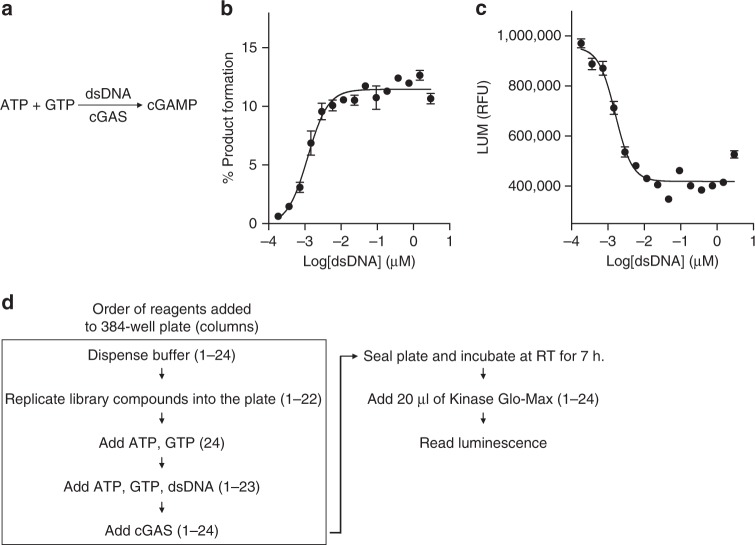
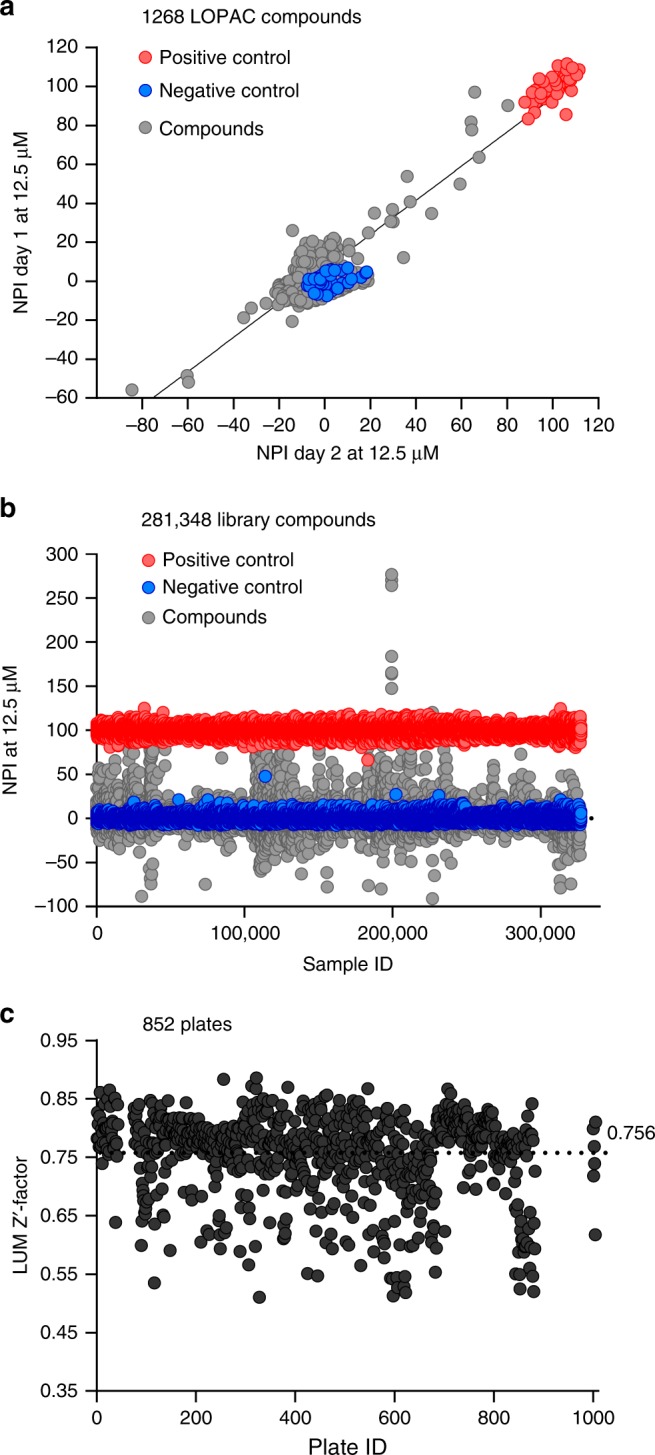
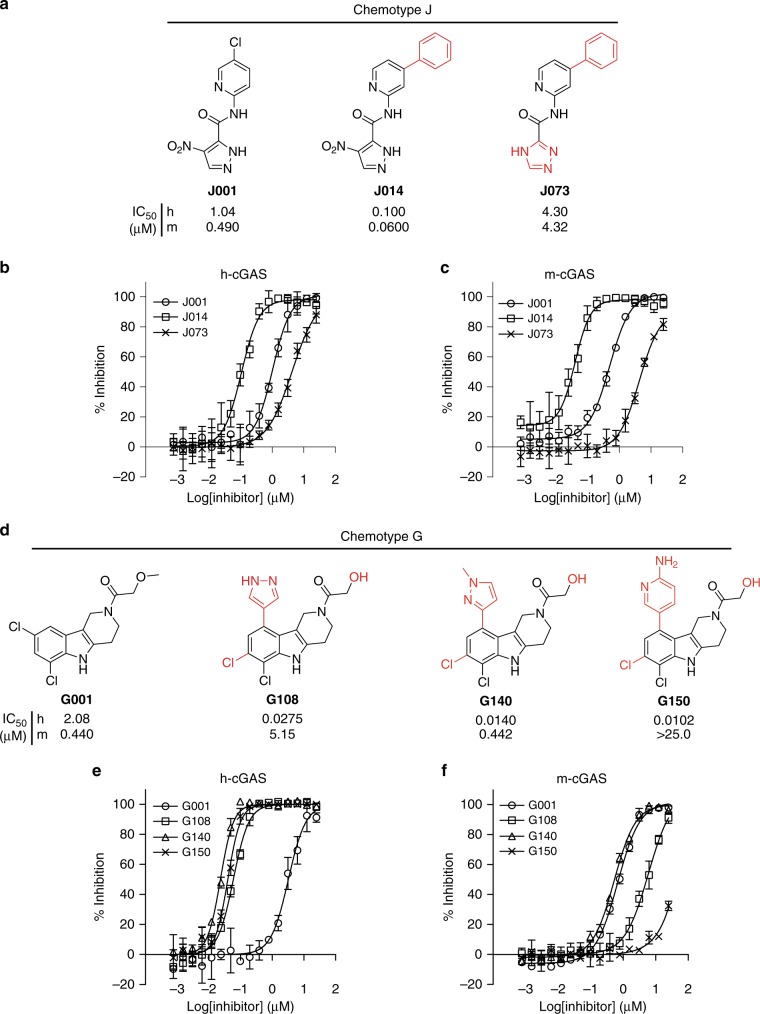
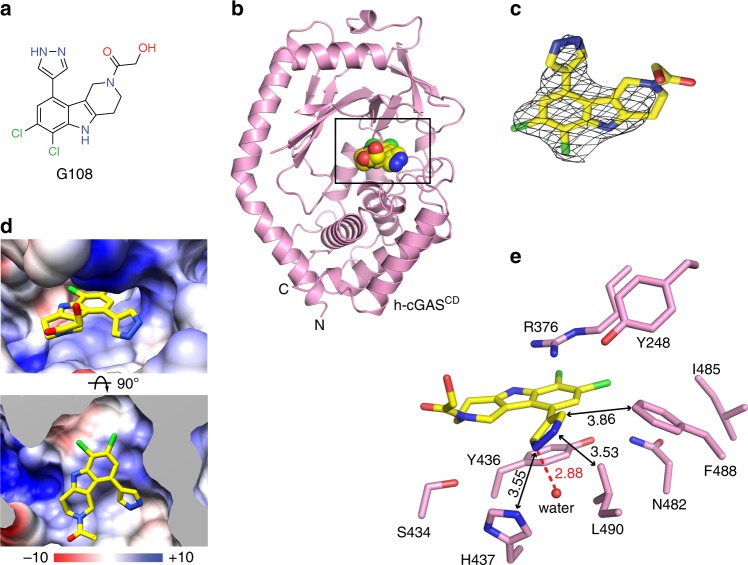
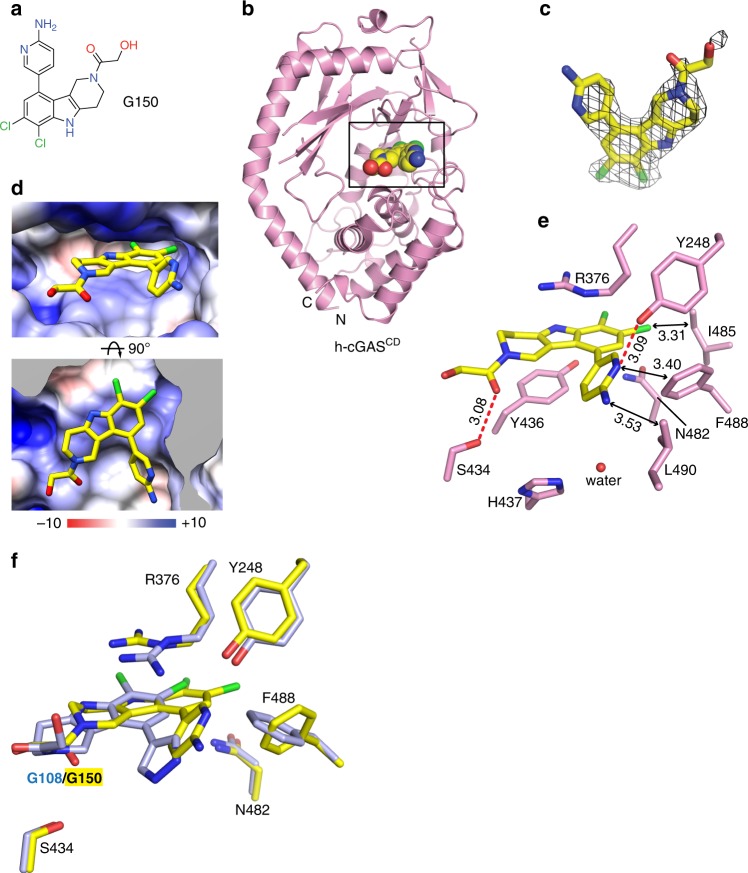
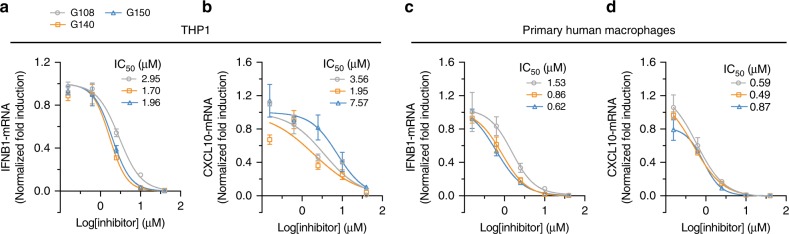
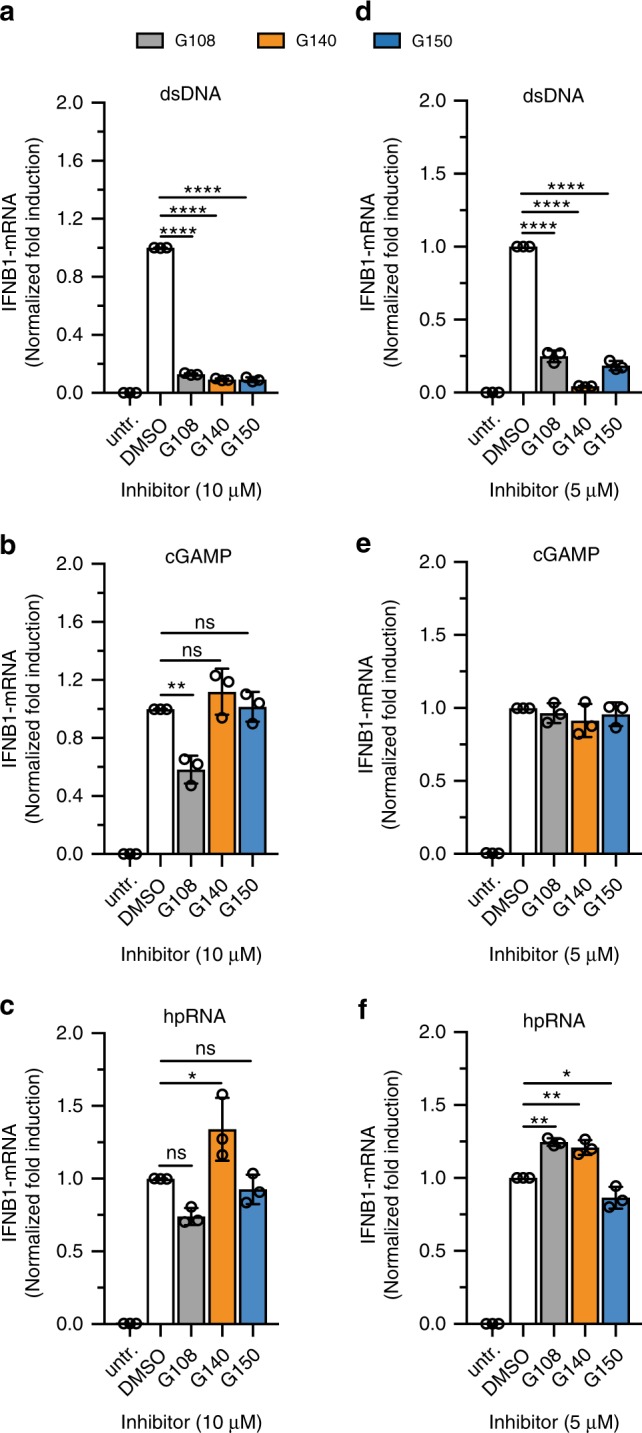
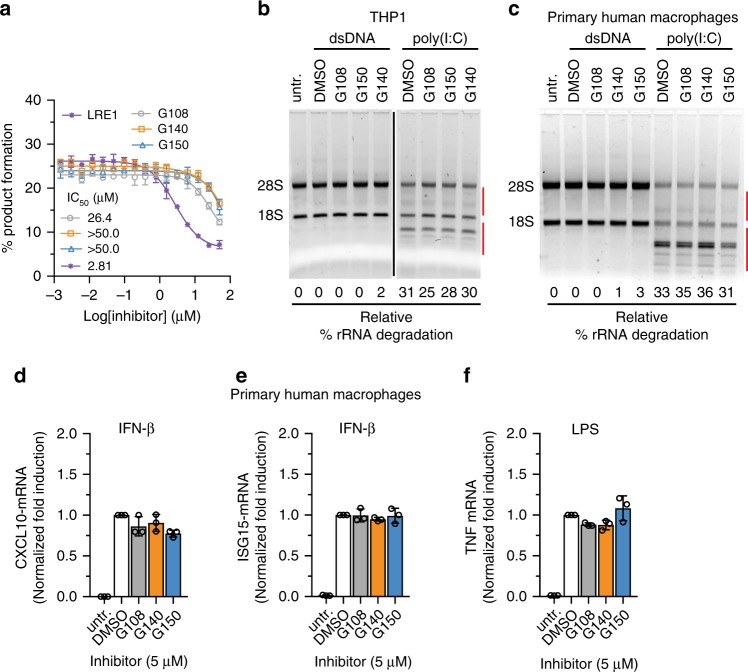
Cyclic GMP-AMP synthase (cGAS) is the primary sensor for aberrant intracellular dsDNA producing the cyclic dinucleotide cGAMP, a second messenger initiating cytokine production in subsets of myeloid lineage cell types. Therefore, inhibition of the enzyme cGAS may act anti-inflammatory. Here we report the discovery of human-cGAS-specific small-molecule inhibitors by high-throughput screening and the targeted medicinal chemistry optimization for two molecular scaffolds. Lead compounds from one scaffold co-crystallize with human cGAS and occupy the ATP- and GTP-binding active site. The specificity and potency of these drug candidates is further documented in human myeloid cells including primary macrophages. These novel cGAS inhibitors with cell-based activity will serve as probes into cGAS-dependent innate immune pathways and warrant future pharmacological studies for treatment of cGAS-dependent inflammatory diseases.
Overview
The claims and statistics of this paper haven’t been checked yet.
Free: it reads the open-access text and checks the first 5 claims that cite a source we can check. Create a free account to check every claim.
Integrity signals
Registry
Cites
Statistics
Figures
Verification
Claims the paper makes
The claims and statistics of this paper haven’t been checked yet.
Free: it reads the open-access text and checks the first 5 claims that cite a source we can check. Create a free account to check every claim.
Claims other papers make about this one
Each is checked against this paper’s own text: does it say what the citing paper says it does?
The source backs part of the claim, not all of it — or backs it for a different population, condition or comparison.
In the citing paper
“Our previous work established the efficacy of a brain permeable cGAS inhibitor (TDI6570, also known as G097, hereafter referred to as cGASi) formulated in chow in protecting against tau-induced deficits in P301S mice41,44.”
From APOE3 - R136S mutation confers resilience against tau pathology via cGAS-STING-IFN inhibition (2024) · cites this paper as [44]
Experimental — accuracy not yet measuredThe cited source says what the claim attributes to it.
In the citing paper
“cGAS inhibitors are being developed145.”
From The role of retrotransposable elements in ageing and age-associated diseases (2021) · cites this paper as [145]
The cited source says what the claim attributes to it.
In the citing paper
“several inhibitors of cGAS (Lama et al. 2019) and STING (Haag et al. 2018) have been developed.”
From Senescence and the SASP: many therapeutic avenues (2020) · cites this paper as Lama et al. 2019
The check wasn’t confident either way, so it gives no verdict — never disputed.
In the citing paper
“Our previous work established the efficacy of a brain permeable cGAS inhibitor (TDI6570, also known as G097, hereafter referred to as cGASi) formulated in chow in protecting against tau-induced deficits in P301S mice41,44.”
From The R136S mutation in the APOE3 gene confers resilience against tau pathology via inhibition of the cGAS-STING-IFN pathway (2025) · cites this paper as [44]
Experimental — accuracy not yet measuredThe check wasn’t confident either way, so it gives no verdict — never disputed.
In the citing paper
“AD patients exhibit myelin loss, and higher myelin expression is associated with tau pathology protection in AD43,44.”
From The R136S mutation in the APOE3 gene confers resilience against tau pathology via inhibition of the cGAS-STING-IFN pathway (2025) · cites this paper as [44]
Experimental — accuracy not yet measured
2 more claims about this paper
Create a free account to see every claim other papers make about this one.
Self-check
Percentages, sums and reported differences re-computed from the paper’s own numbers.
The self-check needs the paper’s full text.
Citations
Cites
UCSF Chimera—A visualization system for exploratory research and analysis
Pettersen, E. F., Goddard, T. D., Huang, C. C., Couch, G. S., Greenblatt, D. M., Meng, E. C., & Ferrin, T. E. (2004) · Journal of Computational Chemistry · doi:10.1002/jcc.20084 · Cited by 45,828
Features and development of Coot
Emsley, P., Lohkamp, B., Scott, W. G., & Cowtan, K. (2010) · Acta Crystallographica Section D Biological Crystallography · doi:10.1107/s0907444910007493 · Cited by 29,915
PHENIX : a comprehensive Python-based system for macromolecular structure solution
Adams, P. D., Afonine, P. V., Bunkóczi, G., Chen, V. B., Davis, I. W., Echols, N., Headd, J. J., Hung, L.-W., Kapral, G. J., Grosse-Kunstleve, R. W., et al. (2010) · Acta Crystallographica Section D Biological Crystallography · doi:10.1107/s0907444909052925 · Cited by 23,716
Phaser crystallographic software
McCoy, A. J., Grosse-Kunstleve, R. W., Adams, P. D., Winn, M. D., Storoni, L. C., & Read, R. J. (2007) · Journal of Applied Crystallography · doi:10.1107/s0021889807021206 · Cited by 20,612
PHENIX: a comprehensive Python-based system for macromolecular structure solution
Adams, P. D., Afonine, P. V., Bunkóczi, G., Chen, V. B., Davis, I. W., Echols, N., Headd, J. J., Hung, L.-W., Kapral, G. J., Grosse-Kunstleve, R. W., et al. (2012) · International Tables for Crystallography · doi:10.1107/97809553602060000865 · Cited by 7,334
Zhang, J.-H., Chung, T. D. Y., & Oldenburg, K. R. (1999) · SLAS Discovery · doi:10.1177/108705719900400206 · Cited by 6,847
Towards automated crystallographic structure refinement with phenix.refine
Afonine, P. V., Grosse-Kunstleve, R. W., Echols, N., Headd, J. J., Moriarty, N. W., Mustyakimov, M., Terwilliger, T. C., Urzhumtsev, A., Zwart, P. H., & Adams, P. D. (2012) · Acta Crystallographica Section D Biological Crystallography · doi:10.1107/s0907444912001308 · Cited by 5,511
Cyclic GMP-AMP Synthase Is a Cytosolic DNA Sensor That Activates the Type I Interferon Pathway
Sun, L., Wu, J., Du, F., Chen, X., & Chen, Z. J. (2013) · Science · doi:10.1126/science.1232458 · Cited by 4,996
Baell, J. B., & Holloway, G. A. (2010) · Journal of Medicinal Chemistry · doi:10.1021/jm901137j · Cited by 3,944
Pathogen Recognition and Inflammatory Signaling in Innate Immune Defenses
Mogensen, T. H. (2009) · Clinical Microbiology Reviews · doi:10.1128/cmr.00046-08 · Cited by 3,111
Cited by
Items 201–300 of 307
Cheung, P. H., Yuen, T., Tang, T., Leung, H., Lee, T. T., Chan, P., Cheng, Y., Fung, S., Ye, Z., Chan, C., et al. (2024) · Journal of Medical Virology · doi:10.1002/jmv.70062 · Cited by 6
Identified Isosteric Replacements of Ligands’ Glycosyl Domain by Data Mining
Zhang, T., Jiang, S., Li, T., Liu, Y., & Zhang, Y. (2023) · ACS Omega · doi:10.1021/acsomega.3c02243 · Cited by 6
Guo, J., Li, M., Zhang, Y., Xi, L., & Cui, F. (2021) · Physical Chemistry Chemical Physics · doi:10.1039/d0cp05871h · Cited by 6
The cGAS-STING pathway in aging and neurological diseases: From mechanisms to treatment
Li, Y., Chen, Y., Liu, Y., Wang, C., Fu, X., & Ren, M. (2025) · Cellular Signalling · doi:10.1016/j.cellsig.2025.111978 · Cited by 7
Vasiyani, H. (2026) · APOPTOSIS · doi:10.1007/s10495-026-02283-5 · Cited by 6
Pharmacological potential of cyclic nucleotide signaling in immunity
Ednacot, E. M. Q., Nabhani, A., Dinh, D. M., & Morehouse, B. R. (2024) · Pharmacology & Therapeutics · doi:10.1016/j.pharmthera.2024.108653 · Cited by 5
Cyr, P., Fader, L. D., Burch, J. D., Pike, K. A., Sietsema, D. V., Boily, M.-O., Ciblat, S., Sgarioto, N., Skeldon, A. M., Gaudreault, S., et al. (2024) · ACS Medicinal Chemistry Letters · doi:10.1021/acsmedchemlett.4c00471 · Cited by 5
Louloudes-Lázaro, A., Nogales‐Altozano, P., Rojas, J. M., Veloz, J., Carlón, A. B., van Rijn, P. A., Martín, V., Fernández-Sesma, A., & Sevilla, N. (2025) · Cellular and Molecular Life Sciences · doi:10.1007/s00018-025-05580-5 · Cited by 5
“This inhibitor binds to cGAS active site and interrupts its enzymatic activity [33].”
Brooks, T., Wayne, J., & Massey, A. J. (2021) · Molecular Biomedicine · doi:10.1186/s43556-021-00044-1 · Cited by 6
Braidotti, S., Ferraro, R. M., Franca, R., Genova, E. C., Giambuzzi, F., Mancini, A., Marinozzi, V., Pugnetti, L., Zudeh, G., Tesser, A., et al. (2025) · Frontiers in Pharmacology · doi:10.3389/fphar.2025.1549183 · Cited by 5
From concept to application: Exploring the evolution and potential of DUBTAC technology
Wang, D., Min, W., Jiang, B., Sun, H., Sun, C., & Yang, P. (2025) · Acta Pharmaceutica Sinica B · doi:10.1016/j.apsb.2025.11.022 · Cited by 7
“Researchers determined the co-crystal structure of cGAS in complex with G108 (an analog of G140) using X-ray crystallography and cryo-electron microscopy 170 .”
Guo, Y., Wang, Y., Wang, Y., Liu, Y., Liu, J., Shen, Y., Cao, A.-P., Wang, R., Xie, B.-Y., Pan, X., et al. (2025) · Biomolecules · doi:10.3390/biom15030329 · Cited by 5
“As a natural small molecule, PA requires a relatively higher effective concentration compared to other chemically synthesized small-molecule inhibitors [35,36,38].”
Skelly, E., Bayard, C. J., Jarusek, J., Clark, B. S., Rebolledo, L. P., Radwan, Y., Nguyen, P., Andrade-Muñoz, M., Deaton, T. A., Lushnikov, A. J., et al. (2025) · ACS Applied Materials & Interfaces · doi:10.1021/acsami.5c00428 · Cited by 4
Singh, K., Dafsari, H. S., Gillham, O., Chi, H., Mandzhukova, I., Kourouzidou, I., Sheshadri, P., Chung, C.-Y., Pingitore, V., Vansenne, F., et al. (2026) · Nature Communications · doi:10.1038/s41467-026-73538-7 · Cited by 4
“However, treatment with G140, a cGAS-speci fi c inhibitor 62 showed only a marginal effect on STING, pIRF3 and pSTAT1 levels in patient cells (Supplementary Fig.”
Chen, X., Tang, X., Chen, S., Ye, Y., & Mao, F. (2026) · Frontiers in Immunology · doi:10.3389/fimmu.2025.1709908 · Cited by 6
Spotlight on cGAS-STING: role in disease pathogenesis and therapeutic potential
Yan, D., Hu, J., Liu, Z. H., & Ouyang, W. (2026) · Molecular Biomedicine · doi:10.1186/s43556-026-00478-5 · Cited by 4
“…and effectively inhibit IFN production [209] Oligodeoxynucleo-tides (ODN) A151 Compete with cGAS’s natural substrates for binding to the catalytic site, thus inhibiting its enzymatic activity [215] including poor membrane permeability, metabolic instability, and rapid systemic clearance [238].”
Suksamai, C., Kaewduangduen, W., Phuengmaung, P., Sae‐khow, K., Charoensappakit, A., Udomkarnjananun, S., Lotinun, S., Kueanjinda, P., & Leelahavanichkul, A. (2025) · International Journal of Molecular Sciences · doi:10.3390/ijms26115069 · Cited by 5
“Then, our data supported a possible beneficial effect of cGAS inhibitors [51] and/or the manipulation of macrophage polarization [5,52,53] as an adjuvant anti-inflammatory drug for Gram-negative bacterial sepsis.”
PRRs-Dependent and Independent Mechanisms of STING Signaling in Inflammatory and Autoimmune Diseases
Xu, L., Li, J. Y., Zhu, X., Zhou, L., Sun, Z., Zhang, Z., Xu, W., & Song, Y. (2025) · Biomedicines · doi:10.3390/biomedicines13102533 · Cited by 6
“Lama et al. have screened G140 and G150, they demonstrate greater potency compared to RU.521 [223].”
cGAS: bridging immunity and metabolic regulation
Wang, J., & Meng, W. (2025) · Journal of Molecular Cell Biology · doi:10.1093/jmcb/mjaf018 · Cited by 6
“Small-molecule inhibitors such as RU.521 and G140 have shown efficacy in blocking cGAS enzymatic activity in vitro and in preclinical models (Vincent et al., 2017 ; Lama et al., 2019 ).”
Chen, Q., Zhang, M., & Xia, S. (2025) · International Immunopharmacology · doi:10.1016/j.intimp.2025.115968 · Cited by 3
Wang, Y., Lu, X., Tan, J. M., He, J., Yin, H., Chen, P., Wu, H., Luo, Y., & Li, M. (2025) · Life Conflux · doi:10.71321/dr57c347 · Cited by 4
“The use of cGAS-specific small molecule inhibitors effectively suppresses interferon expression triggered by dsDNA, mitigating inflammation [17] .”
Zhang, Z., Deng, H., Zhang, X., Li, J., Zhao, J., Liu, J., Deng, C., Yang, Y., & Liang, Z. (2026) · APOPTOSIS · doi:10.1007/s10495-026-02268-4 · Cited by 3
“Most cGAS inhibitors function by binding to the enzyme’s active site, competing with ATP or GTP substrates or the product cGAMP, as exemplified by PF-06928125 [105], RU.521 [106], and G150 [107].”
Xue, H., Zhao, B., Yan, Q., Yano, M., Matsuoka, A., Qi, Y., Liao, L., Zielinski, R. J., Tang, H., Kossenkov, A. V., et al. (2026) · Nature Aging · doi:10.1038/s43587-026-01147-6 · Cited by 5
Cladophorol-A is an inhibitor of cyclic GMP-AMP synthase
Kissai, M., Chin, E. N., Martínez‐Peña, F., Sulpizio, A., Stout, E. P., Usui, I., Barmare, F., Sanchez, B. B., Esquenazi, E., Stanfield, R. L., et al. (2024) · Bioorganic & Medicinal Chemistry Letters · doi:10.1016/j.bmcl.2024.130007 · Cited by 3
Martínez-Orellana, P., Manzati, M., Pozzi, D., Xiao, Y., Clemente, A. D., Mearelli, M., Kalebić, C., Perrera, V., Ferrarini, D., Carletti, T., et al. (2025) · Journal of NeuroVirology · doi:10.1007/s13365-025-01283-6 · Cited by 5
“Since RU.521 and G140 are not specific for inhibiting rat enzyme activity, we tested both in the rat cortical cultures and we observed a stronger inhibition with RU.521 (data not shown); therefore, we continued the studies with this drug (Vincent et al. 2017 ; Lama et al. 2019 ).”
Liu, D., Zhang, H., Huang, Y., & Gao, Y. Q. (2023) · The Journal of Physical Chemistry B · doi:10.1021/acs.jpcb.3c02377 · Cited by 4
NEGATIVE MODULATORS OF THE CGAS-STING PATHWAY
Pike, K. A., Beveridge, R. E., Cyr, P., Skeldon, A. M., Wang, L., & Burch, J. D. (2022) · Medicinal chemistry reviews · doi:10.1021/mc-2022-vol57.ch07 · Cited by 3
Role of cGAS-STING signaling pathway in cardiometabolic diseases.
Ding, H., Zhou, Y., Yin, Z., & Tai, S. (2023) · PubMed Central · doi:10.11817/j.issn.1672-7347.2023.230028 · Cited by 5
Chloride Homeostasis Regulates cGAS-STING SignalingPreprint
Morse, J., Wang, D., Mei, S., Whitham, D., Hladun, C., Darie, C. C., Sintim, H. O., Wang, M., & Leung, K. (2024) · bioRxiv (Cold Spring Harbor Laboratory) · doi:10.1101/2024.04.08.588475 · Cited by 5
cGAS-mediated IFN-I signaling contributes to disease progression in drug-refractory epilepsyPreprint
Huang, Y., Fan, L., Wong, M. Y., Lei, Z., Krishnamachary, B., Zhu, D., Cadiz, M. P., Nagiri, R. K., Ye, P., Norman, K., et al. (2026) · bioRxiv (Cold Spring Harbor Laboratory) · doi:10.64898/2026.01.30.702860 · Cited by 3
Alarcón‐Espósito, J., Nagiri, R. K., Wang, S., Larson, C. S., Carvallo-Torres, L., Singh, V. K., Glickman, J. F., Gan, L., & Sinha, S. C. (2025) · ACS Chemical Biology · doi:10.1021/acschembio.5c00649 · Cited by 2
Self-citationcGAS-STING signaling is blunted in senescent macrophages and monocytes in obesity
Schmitz, C. R. R., Grün, L. K., Makiyama, B. K., Piazza, L. S., Padoin, A. V., Mottin, C. C., Bauer, M. E., Guma, F. T. C. R., & Barbé‐Tuana, F. M. (2025) · Mechanisms of Ageing and Development · doi:10.1016/j.mad.2025.112140 · Cited by 5
Wang, X., Feng, Z., Sun, S., Zhang, J., Wang, K., Wang, Y., Zhao, Y., Zhao, B., Liu, B., Sun, M., et al. (2025) · Ageing Research Reviews · doi:10.1016/j.arr.2025.102983 · Cited by 4
Li, M., Ma, X., Tang, Y., Huang, S., & Wang, H. (2025) · ONCOLOGIE · doi:10.1515/oncologie-2025-0373 · Cited by 2
Zhang, X., Cheng, L., Ma, X., Ma, K., Xie, J., Gui, W., Chen, J., Liu, K., & Ma, R. (2025) · Journal of Translational Medicine · doi:10.1186/s12967-025-07536-6 · Cited by 4
Mitochondrial DNA‐Mediated Immune Activation After Resuscitation From Cardiac Arrest
Rolland, T. J., Hudson, E. R., Graser, L. A., Zahra, S., Cucinotta, D. M., Sonkawade, S. D., Sharma, U. C., & Weil, B. R. (2025) · Journal of the American Heart Association · doi:10.1161/jaha.125.046414 · Cited by 3
Hu, J., Mao, T., Huang, K., Yang, S., Yu, W., Huang, J., Jin, S., Sun, C., Jiapaer, Z., & Wang, X. (2026) · Cell Cycle · doi:10.1080/15384101.2025.2611968 · Cited by 3
Lama, L., Morozov, P. S., Garzia, A., & Tuschl, T. (2026) · Communications Biology · doi:10.1038/s42003-025-09343-7 · Cited by 4
“On a cautionary note, while CXCL10 is an established marker of the M1pro-in fl ammatorystateofmacrophages 81 ,itisalsowidelyemployedasa surrogate marker of the activation of innate immune sensing pathways and IFN protein signaling 82 – 84 .”
Self-citationMitochondrial DNA leakage in aging: Mechanisms, pathological effects, and therapeutic horizons
Chen, Z., Wu, Q., Tian, Y., Gu, L. C. R. O. D. I., Liu, X., & Liu, J. (2026) · Genes & Diseases · doi:10.1016/j.gendis.2026.102134 · Cited by 2
Targeting Cyclic GMP–AMP Synthase: Novel Therapeutic Inhibitors for Autoimmune Diseases
Hao, C., Zhou, C., Li, D., Liu, S., You, Q., & Xu, X. (2026) · ChemMedChem · doi:10.1002/cmdc.202501066 · Cited by 2
“…sensing and cGAMP production is conserved between structural scaffold for developing immunomodulatory therapeu-mice and humans, h-cGAS and m-cGAS share only 60% amino tics for cGAS-related human diseases. acid identity, suggesting that drug screens specifically targeting h-cGAS are valuable [18].”
InfluentialLebrec, V., Κανέλλου, Α., Davies, L. R., Afshar, N., Kujirai, T., Pickering, R. J., Solntceva, V., Tidu, F., & Zierhut, C. (2026) · Nature Cell Biology · doi:10.1038/s41556-026-02037-0 · Cited by 6
The structural basis for 2′-5′/3′-5′-cGAMP synthesis by cGAS
Wu, S., Gabelli, S. B., & Sohn, J. (2024) · Biophysical Journal · doi:10.1016/j.bpj.2023.11.2080 · Cited by 2
Song, X., Ling, X., Liu, H., Zhao, Q., Li, X., Lai, W., & Wang, H. (2024) · Chemical Research in Chinese Universities · doi:10.1007/s40242-024-4120-7 · Cited by 1
The First‐In‐Class Deubiquitinase‐Targeting Chimera Stabilizes and Activates cGAS
Deng, Z., Chen, L., Qian, C., Liu, J., Wu, Q. D., Song, X., Xiong, Y., Wang, Z., Hu, X., Inuzuka, H., et al. (2024) · Angewandte Chemie · doi:10.1002/ange.202415168 · Cited by 3
Reducing hERG Inhibition in the Design of Potent and Bioavailable Indazole cGAS Inhibitors
Cyr, P., Chefson, A., Sietsema, D. V., Konteatis, Z. D., Ciblat, S., Sgarioto, N., Gros, P. L., Pike, K. A., Boily, M.-O., Diallo, M., et al. (2025) · ACS Medicinal Chemistry Letters · doi:10.1021/acsmedchemlett.5c00641 · Cited by 1
Personalized Medicine: Advancing Precision Medicine used in Autoinflammatory and Related Disorders
Pastagia, H., Prajapati, A. P., Patel, B. S., Narkhede, S. B., Luhar, S., & Tandel, S. D. (2026) · Asian Journal of Pharmaceutical Analysis · doi:10.52711/2231-5675.2026.00006 · Cited by 1
Wu, Z., Jia, R., Zhang, Q., Huang, L.-Y., Yan, J.-T., Zhang, Y. H., & Fan, Y. (2026) · Biomarker Research · doi:10.1186/s40364-026-00906-2 · Cited by 3
Targeting the cGAS-STING-TBK1 pathway in cancer therapy
Jiang, L., Zhong, Y., Zhang, Z., Yang, Q., Sun, S., Sun, H., & Liu, Z. (2026) · Future Medicinal Chemistry · doi:10.1080/17568919.2026.2628553 · Cited by 3
Prasugrel inhibits TLR7-driven autoimmunity in systemic lupus erythematosus by acetylating cGAS
Guo, Z.-L., Sun, L.-M., Jiang, S., Zhao, M., Li, Y., Qian, J., Fu, Y., Wu, C., Yuan, Y., Xue, W., et al. (2026) · Nature Communications · doi:10.1038/s41467-026-70794-5 · Cited by 2
Betrixaban activates cGAS and ERVs to promote dual nucleic-sensing antiviral immunity
Chen, X., Zhao, Y., Xie, Y., Liu, T., Wang, H., Wang, X., Guo, X., & You, F. (2026) · EMBO Molecular Medicine · doi:10.1038/s44321-025-00356-7 · Cited by 3
“First, no direct small-molecule agonist of cGAS has been reported to date, even though small-molecule cGAS inhibitors have only recently emerged (Lama et al, 2019).”
Abuhassan, Q., Saeed, T. N., Al-Hussainy, A. F., Roopashree, R., Mishra, S., Nanda, A., Mukherjee, G., Rizaev, J., Taher, S. G., Alwan, M., et al. (2026) · Journal of Molecular Neuroscience · doi:10.1007/s12031-026-02532-x · Cited by 1
“Another high-affinity cGAS binder is PF-06928215, although its use has been limited to structural and biochemical research due to its low cellular activity (Lama et al. 2019; Li et al. 2021).”
Huang, F., Sun, K., Diao, L., Lu, K., Fan, Y., & Xie, G. (2026) · Frontiers in Immunology · doi:10.3389/fimmu.2026.1928003 · Cited by 2
Daniali, M., Channer, B., Curley, E. O., Amirfallah, A., Kist, T., Montilla, J., Kosashvili, S., Sheldon, L., Stauch, K. L., Jackson, J. G., et al. (2026) · Cell Reports · doi:10.1016/j.celrep.2026.118118 · Cited by 1
Wang, M., Li, J., Wang, X., Chai, X., Luo, J., Zhang, Y., Chang, X., Sun, Y., & Wang, H. (2026) · Cytokine & Growth Factor Reviews · doi:10.1016/j.cytogfr.2026.101537 · Cited by 2
Docking simulations of small molecule drugs based on the innate immune cGAS-STING signaling pathway
Lin, Y. (2024) · International Conference on Biological Engineering and Medical Science (ICBioMed) · doi:10.1117/12.3013001 · Cited by 1
“After structural chemistry optimization to obtain candidate small molecules and solid experimental evaluation, G150 was selected as an effective inhibitor involved in the binding to ATP, GTP, with cGAS [6].”
MethodWang, Z., Ma, D., & Xi, Z. (2022) · Wiley eBooks · doi:10.1002/9781119692799.ch2 · Cited by 1
Development of bioluminescent sensors for interrogating cyclic di-nucleotide signaling
Dippel, A. B. (2019) · eScholarship (California Digital Library)
RNA/DNA sensing in SLE—Toll-like receptors and beyond
Jefferies, C. A., & Sharabi, A. (2020) · Elsevier eBooks · doi:10.1016/b978-0-12-814551-7.00020-9
Multi-Scale Modeling of the Innate Immune System: A Dynamic Investigation into Pathogenic Detection
Gregg, R. W. (2020) · D-Scholarship@Pitt (University of Pittsburgh)
Immune Dysfunction and Drug Targets in Autoinflammatory Syndromes
Skarlis, C., & Mavragani, C. P. (2021) · Elsevier eBooks · doi:10.1016/b978-0-12-820472-6.00071-2
素顔の商店街・巣鴨地蔵通り (特集 生活保障の視点から買い物難民問題を考える)
田中, 彰. (2011) · 福祉のひろば
Numao, S., Etienne, G., Malojcic, G., Schmidt, E. K., & Dumelin, C. E. (2021) · Elsevier eBooks · doi:10.1016/b978-0-12-820472-6.00078-5
Structure of TBK1 and Small Molecule Inhibitors
张, 敏. (2022) · Journal of Organic Chemistry Research · doi:10.12677/jocr.2022.101002
Progress in functional characterization of cGAS
Wang, Z., Zhao, M., & HaiPeng, L. I. U. (2022) · Scientia Sinica Vitae · doi:10.1360/ssv-2021-0404 · Cited by 1
The structural basis for 2’-5’/3’-5’-cGAMP synthesis by cGASPreprint
Wu, S., Gabelli, S. B., & Sohn, J. (2023) · Research Square · doi:10.21203/rs.3.rs-2986580/v1
Single gene defects and autoinflammation
Moore, R. E., Hagiwara, A. M., & Jefferies, C. A. (2024) · Elsevier eBooks · doi:10.1016/b978-0-323-93232-5.00015-0
Li, X., Yu, F., & Li, L. (2024) · Angewandte Chemie · doi:10.1002/ange.202417916 · Cited by 2
Transcriptomic landscapes of STING-mediated DNA-sensing reveal cellular response heterogeneity
Kong, L.-Z., Jang, I.-H., Wang, C., Lee, S. Y., Kim, S., Oh, S., Lee, S., Jo, S., Kim, J., Kim, K. K., et al. (2024) · International Journal of Biological Macromolecules · doi:10.1016/j.ijbiomac.2024.138752 · Cited by 1
NF-κB signaling directs a program of transient amplifications at innate immune response genesPreprint
Ludwig, M. P., Wilson, J. R., Galbraith, M. D., Bhandari, N., Dunn, L. N., Black, J. C., & Sullivan, K. D. (2025) · bioRxiv (Cold Spring Harbor Laboratory) · doi:10.1101/2025.03.11.641929 · Cited by 1
Zhang, H., Cheng, L., Zhou, X., Chen, R., Ju, F., & Dong, Q. (2025) · Journal of Biomolecular Structure and Dynamics · doi:10.1080/07391102.2025.2508347
“Additional studies have also indicated that G108, G150 and 2 0 ,3 0 -cGAMP target the same h-cGAS binding pocket, employing comparable binding mechanisms that involve the intercalation of an aromatic component of the ligand between Arg376 and Tyr436 (Lama et al., 2019).”
Transposable elements in aging: From biomarkers to effectors
Fuentes-Iglesias, A., García-Vílchez, R., & Guallar, D. (2025) · Advances in genetics · doi:10.1016/bs.adgen.2025.11.001 · Cited by 1
Wei, K., Chen, T., Fang, H., Shen, X., Tang, Z., & Zhao, J. (2024) · Figshare · doi:10.6084/m9.figshare.26036371
Wei, K., Chen, T., Fang, H., Shen, X., Tang, Z., & Zhao, J. (2024) · Figshare · doi:10.6084/m9.figshare.26036552
Wei, K., Chen, T., Fang, H., Shen, X., Tang, Z., & Zhao, J. (2024) · Figshare · doi:10.6084/m9.figshare.26733663
Suspène, R., O'Hora, B., d’Aertrycke, C. D. M., Couturier, L., Defresne, T., Khalfi, P., Li, X., & Vartanian, J. (2026) · NAR Molecular Medicine · doi:10.1093/narmme/ugag012
“To investigate the contribution of cGAS, THP-1 cells were exposed to 100, 200, and 400 μ M CoCl 2 in the presence of 10 or 15 μ M G140, a cGAS pathway inhibitor [ 55 ].”
cGAS inhibition delays TDP-43-driven ALS PathogenesisPreprint
Liu, Y., Feng, W., Aikedan, A., Lee, S.-I., Bhagwat, M., Nagiri, R. K., Wong, M. Y., Amin, S., Qu, W., Zhu, J., et al. (2026) · bioRxiv (Cold Spring Harbor Laboratory) · doi:10.64898/2026.02.24.707791
“Because the human-selective inhibitor SS-1386 does not inhibit murine cGAS, we employed the validated mouse cGAS inhibitor TDI-6570 15,34 .”
Wanschoor, P. (2024) · theses.fr (ABES) · doi:10.70675/614376b0zfaeaz4c04zb17cz1a95b6904fe2
Jabbari, S., Safaralizadeh, R., Beilankouhi, E. A. V., Valilo, M., Hosseinpourfeizi, M. A., Baradaran, B., Khodavirdipour, A., & Hemmat, N. (2026) · Critical Reviews in Immunology · doi:10.1615/critrevimmunol.2026062673
Daniali, M., Channer, B., Curley, E. O., Amirfallah, A., Kist, T., Montilla, J., Kosashvili, S., Sheldon, L., Stauch, K. L., Jackson, J. G., et al. (2026) · bioRxiv (Cold Spring Harbor Laboratory) · doi:10.64898/2026.04.23.719926
Zhou, Z., Chen, M., Lei, S., Wang, M., Ding, C., Song, Z., Tang, W., & Zhang, A. (2026) · Journal of Medicinal Chemistry · doi:10.1021/acs.jmedchem.6c00583
Cellular senescence in Crohn’s disease: a double-edged sword in intestinal fibrosis
Liu, J., & Yu, L. (2026) · Frontiers in Immunology · doi:10.3389/fimmu.2026.1825690
Jefferies, C. A., Bose, M., & Kumar, A. N. (2026) · Elsevier eBooks · doi:10.1016/b978-0-443-33957-8.00017-2
Emerging Role of the cGAS–STING Signaling Pathway in Multiple Inflammatory Skin Diseases
Zhao, S., Bai, H., Wang, Y. Y., & Yan, Y. (2026) · Dermatologic Therapy · doi:10.1155/dth/3322507
Chen, J., Wang, S. M., 颜培宇, Arad, M., Wang, H., Chi, S., Zhao, L., Yuan, P., Wang, Q., Foster, L. J., et al. (2026) · Biochemical Pharmacology · doi:10.1016/j.bcp.2026.118231
cGAS/STING Signaling in Ulcerative Colitis: Mechanism and Therapeutic Opportunities
Dai, X., Zhang, J., & Tang, X. (2026) · International Journal of Molecular Sciences · doi:10.3390/ijms27146513 · Cited by 1
“G108, G140, and G150 selectively inhibit human cGAS, suppressing 75–95% of cGAS-dependent responses in primary human macrophages with limited effects on cGAMP–STING or RIG-I signaling [96].”
cGAS-mediated type I IFN signaling contributes to disease progression in drug-refractory epilepsy
Huang, Y., Fan, L., Wong, M. Y., Lei, Z., Krishnamachary, B., Zhu, D., Cadiz, M. P., Nagiri, R. K., Ye, P., Norman, K., et al. (2026) · Nature Neuroscience · doi:10.1038/s41593-026-02384-z · Cited by 5
Wu, Y., Zhang, X., Gao, C., Zhang, Z., Liao, X., & Kang, Y. M. (2026) · Cellular and Molecular Neurobiology · doi:10.1007/s10571-026-01786-8
Hailu, G. S., Fabbrizi, E., Mancini, A., Fiorentino, F., Mai, A., & Rotili, D. (2026) · Drug Discovery Today · doi:10.1016/j.drudis.2026.104769
Cui, D., Zhang, H., Nan, Y., Xu, D., Cai, C., Hui, Y., Peng, X., Wang, Y., Ma, W., & Tang, Y. (2026) · Pharmacological Research · doi:10.1016/j.phrs.2026.108393
cGAS–STING signaling in aging and age-related diseases: therapeutic promise and precaution
Xu, Y., Wu, W., Guo, Y., Wang, W., Zhu, J., & Xiao, W. (2026) · Archives of Pharmacal Research · doi:10.1007/s12272-026-01633-w
Mechanisms of cGAS-STING-mediated chronic inflammation and targeted interventions in brain aging
ZHANG, H., Yu, D., Xu, P., & Wu, Q. (2026) · Journal of Zhejiang University (Medical Sciences) · doi:10.3724/zdxbyxb-2026-0033
Chen, N., Xie, X., He, S., & Liang, L. (2026) · Immune Network · doi:10.4110/in.2026.26.e35
Zhang, C., & Yang, Z. (2026) · Brain Research Bulletin · doi:10.1016/j.brainresbull.2026.112118 · Cited by 1
Suramin and Its Analogues Are Multi-functional Inhibitors of cGAS
安小蔓, Wang, J., Duan, B., Xiao, Y., Huang, Y., Zhao, H., Zhang, M., Tao, K., Wang, Q., Du, F., et al. (2026) · Journal of Molecular Biology · doi:10.1016/j.jmb.2026.170044
Monajjemi, M., Mollaamin, F., Haskılıç, Ş. Z., Madak, S. N., Yaman, A., Kabakoz, F. N., Çetinkaya, F. C., Özcan, B., Esenyel, B., Say, K., et al. (2026) · Biointerface Research in Applied Chemistry · doi:10.33263/briac165.128
An evidence-to-claim framework for cGAS–STING and AIM2 in atherosclerosis
Lu, L., Lin, H., Zhang, P., Li, Y., & Zhang, J. (2026) · Frontiers in Cell and Developmental Biology · doi:10.3389/fcell.2026.1999070
Chemical Modulation of the cGAS‐STING‐ENPP1 Axis: Medicinal Chemistry and Clinical Perspective
Shinde, A. U., & Bharate, S. B. (2026) · Medicinal Research Reviews · doi:10.1002/med.70118
BindingDB Entry 50022888: Cladophorol-A is an inhibitor of cyclic GMP-AMP synthase.
BindingDB (2026) · UC San Diego · doi:10.7270/q2nc662z
Metadata
- Authors
- Lama, L., Adura, C., Xie, W., Tomita, D., Kamei, T., Kuryavyi, V., Gogakos, T., Steinberg, J. I., Miller, M., Ramos-Espiritu, L., Asano, Y., Hashizume, S., Aida, J., Imaeda, T., Okamoto, R., Jennings, A. J., Michino, M., Kuroita, T., Stamford, A., Gao, P., Meinke, P., Glickman, J. F., Patel, D. J., & Tuschl, T.
- Affiliations
- Rockefeller University (US)
- Memorial Sloan Kettering Cancer Center (US)
- Tri-Institutional Therapeutics Discovery Institute (US)
- Corresponding author
- Glickman, J. Fraser
- Patel, Dinshaw J.
- Tuschl, Thomas
- ORCID
- Venue
- Nature Communications
- Published
- 2019-05-21
- Volume
- 10
- Issue
- 1
- Pages
- 2261-2261
- ISSN
- 2041-1723 (ISSN-L)
- PMC
- PMC6529454
- OpenAlex
- W2945498322
- Cited by
- 303
- References
- 49
- Citations by year
- 2026: 54 · 2025: 59 · 2024: 57 · 2023: 45 · 2022: 32 · 2021: 24 · 2020: 22 · 2019: 9
- FWCI
- 8.63
- Type
- journal article
- Language
- en
- Open access
- gold
- doi.org
- Licence
- cc-by
- creativecommons.org/licenses/by/4.0 (tdm)
- creativecommons.org/licenses/by/4.0 (vor)
- Locations
- Nature Communications (publishedVersion, cc-by)
- PubMed Central (publishedVersion, cc-by)
- PubMed (publishedVersion)
- OSTI OAI (U.S. Department of Energy Office of Scientific and Technical Information) (submittedVersion)
- RePEc: Research Papers in Economics (submittedVersion)
- DOAJ (DOAJ: Directory of Open Access Journals) (submittedVersion, cc-by-sa)
- DOAJ (DOAJ: Directory of Open Access Journals) (submittedVersion)
- Funders
- Commonwealth Foundation
- Leona M. and Harry B. Helmsley Charitable Trust
- Memorial Sloan-Kettering Cancer Center
- Weill Cornell Medical College
- National Cancer Institute (P30CA008748)
- Argonne National Laboratory
- Brookhaven National Laboratory
- Topics
- Life Sciences › Immunology and Microbiology › Immunology › interferon and immune responses
- Life Sciences › Biochemistry, Genetics and Molecular Biology › Molecular Biology › Phosphodiesterase function and regulation
- Life Sciences › Biochemistry, Genetics and Molecular Biology › Molecular Biology › Biochemical and Molecular Research
- Keywords
- cGAS, small molecule inhibitors, cGAMP, interferon gene expression, innate immunity, macrophages, myeloid cells, anti-inflammatory agents, GTP binding site, crystal structure, inflammatory diseases
- MeSH terms
- Cyclic Guanosine Monophosphate-Adenosine Monophosphate Synthase, Autoimmune Diseases, Cells, Cultured, DNA, Enzyme Inhibitors, Humans, Immunity, Innate, Interferons, Macrophages, Models, Molecular, Nucleotides, Cyclic, Nucleotidyltransferases, Recombinant Proteins, Crystallography, X-Ray, Drug Discovery, High-Throughput Screening Assays, Primary Cell Culture
About these checks
Registry, retraction, Cites and statistics results are computed, not judged, with one exception: a printed reference that no index lists is read once by a model before it counts as a citation error. Claims are extracted by a model and kept only when their quote appears verbatim in the text; each cited source is then checked, with a model’s help, for whether it says what the claim relies on. Those verdicts can be wrong — read the claim’s quote and the cited source before relying on one.
Statistics and arithmetic are recomputed, not judged.
Confidence bands are shown only for fields calibrated on our annotated test set. None is calibrated yet, so no band is shown.
What counts as a claim ›How we measure confidence ›How we check this ›
Are you an author, or do you see a problem with this page? Request a review
Data sources
Bibliographic data: Semantic Scholar, OpenAlex, Crossref.
Contains information from the Semantic Scholar Academic Graph Datasets, made available under the ODC Attribution License (ODC-BY 1.0).
Semantic Scholar’s data is described in: Kinney, R., et al. (2023). The Semantic Scholar Open Data Platform. arXiv:2301.10140.
