

Development of human cGAS-specific small-molecule inhibitors for repression of dsDNA-triggered interferon expression
Open accessThe DOI matches its Crossref record; 49 of the 49 references it cites were found in a registry or an index.
Abstract
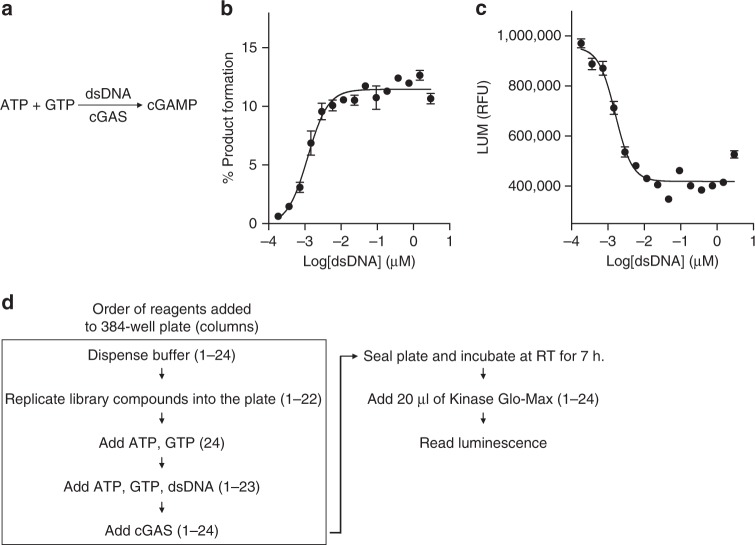
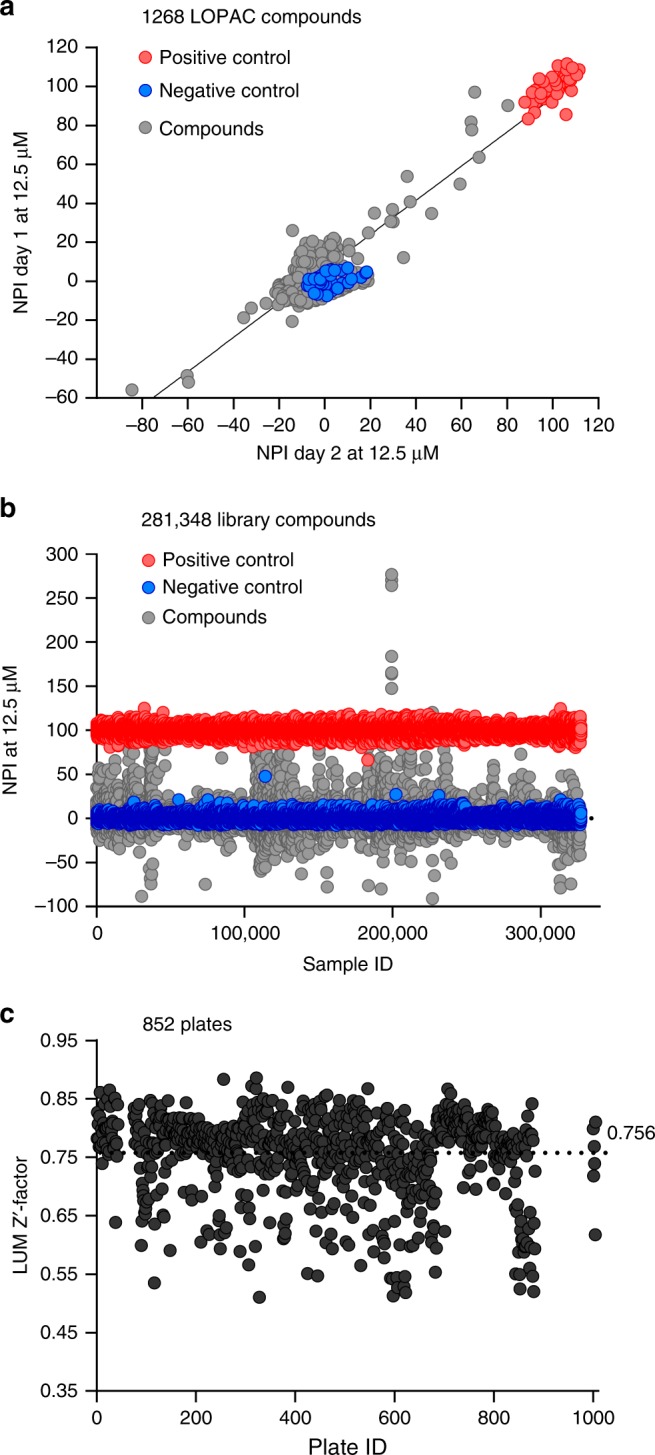
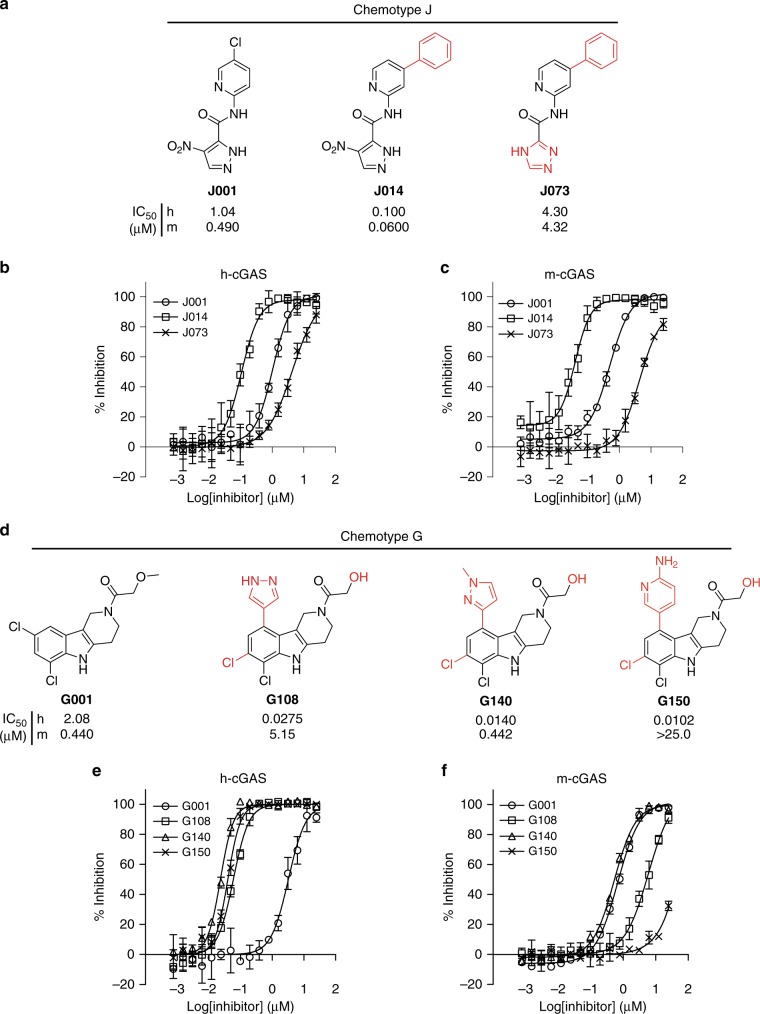
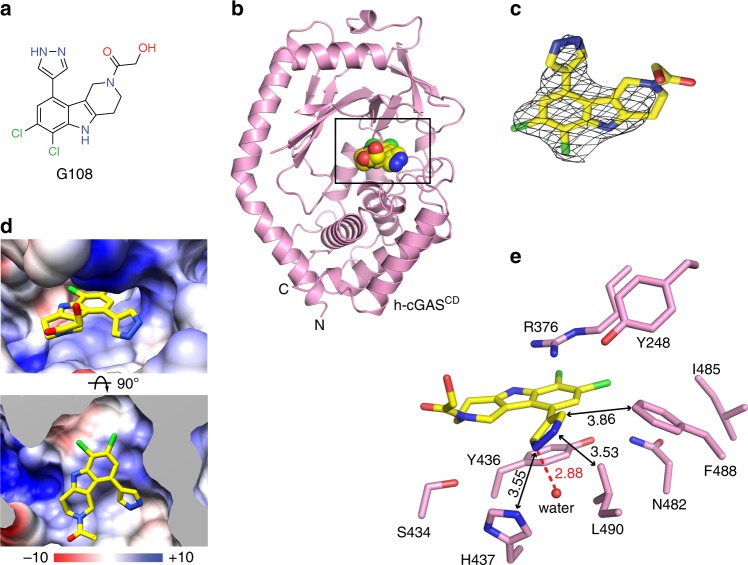
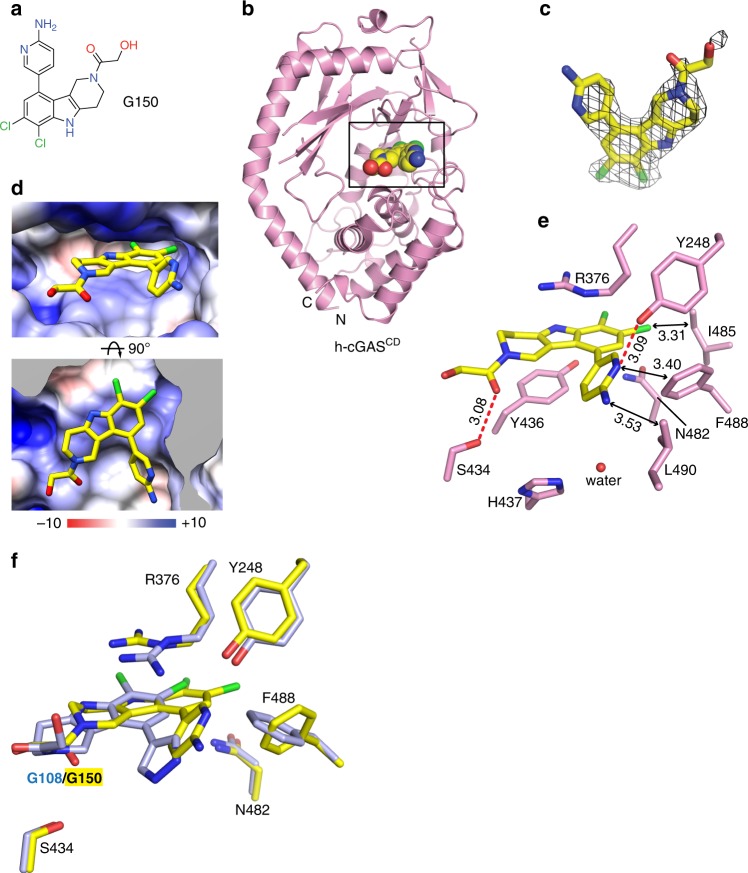
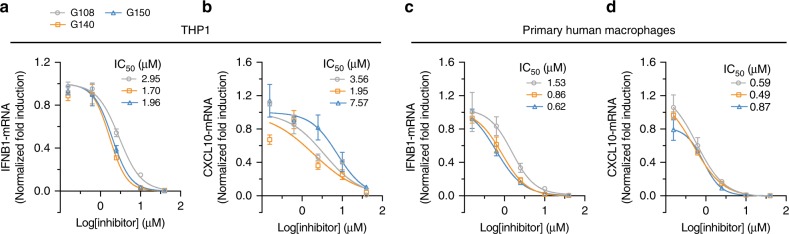
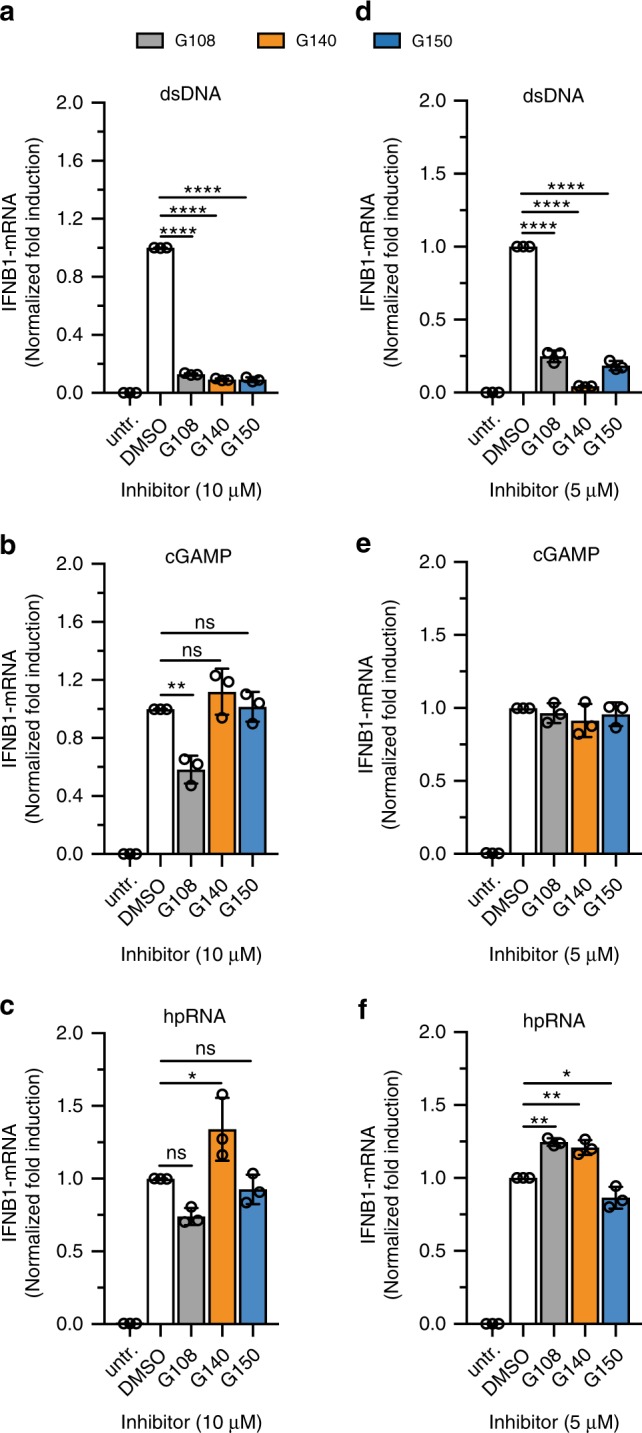
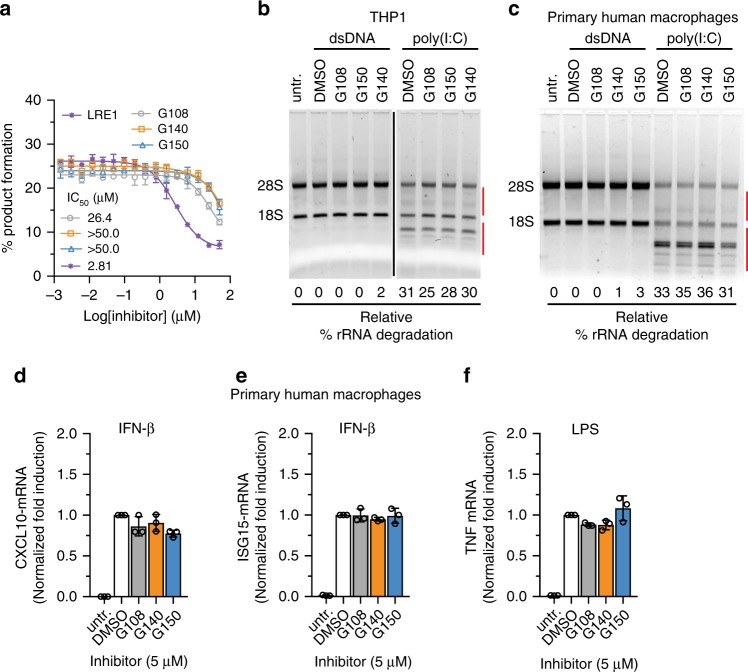
Cyclic GMP-AMP synthase (cGAS) is the primary sensor for aberrant intracellular dsDNA producing the cyclic dinucleotide cGAMP, a second messenger initiating cytokine production in subsets of myeloid lineage cell types. Therefore, inhibition of the enzyme cGAS may act anti-inflammatory. Here we report the discovery of human-cGAS-specific small-molecule inhibitors by high-throughput screening and the targeted medicinal chemistry optimization for two molecular scaffolds. Lead compounds from one scaffold co-crystallize with human cGAS and occupy the ATP- and GTP-binding active site. The specificity and potency of these drug candidates is further documented in human myeloid cells including primary macrophages. These novel cGAS inhibitors with cell-based activity will serve as probes into cGAS-dependent innate immune pathways and warrant future pharmacological studies for treatment of cGAS-dependent inflammatory diseases.
Overview
The claims and statistics of this paper haven’t been checked yet.
Free: it reads the open-access text and checks the first 5 claims that cite a source we can check. Create a free account to check every claim.
Integrity signals
Registry
Cites
Statistics
Figures
Verification
Claims the paper makes
The claims and statistics of this paper haven’t been checked yet.
Free: it reads the open-access text and checks the first 5 claims that cite a source we can check. Create a free account to check every claim.
Claims other papers make about this one
Each is checked against this paper’s own text: does it say what the citing paper says it does?
The source backs part of the claim, not all of it — or backs it for a different population, condition or comparison.
In the citing paper
“Our previous work established the efficacy of a brain permeable cGAS inhibitor (TDI6570, also known as G097, hereafter referred to as cGASi) formulated in chow in protecting against tau-induced deficits in P301S mice41,44.”
From APOE3 - R136S mutation confers resilience against tau pathology via cGAS-STING-IFN inhibition (2024) · cites this paper as [44]
Experimental — accuracy not yet measuredThe cited source says what the claim attributes to it.
In the citing paper
“cGAS inhibitors are being developed145.”
From The role of retrotransposable elements in ageing and age-associated diseases (2021) · cites this paper as [145]
The cited source says what the claim attributes to it.
In the citing paper
“several inhibitors of cGAS (Lama et al. 2019) and STING (Haag et al. 2018) have been developed.”
From Senescence and the SASP: many therapeutic avenues (2020) · cites this paper as Lama et al. 2019
The check wasn’t confident either way, so it gives no verdict — never disputed.
In the citing paper
“Our previous work established the efficacy of a brain permeable cGAS inhibitor (TDI6570, also known as G097, hereafter referred to as cGASi) formulated in chow in protecting against tau-induced deficits in P301S mice41,44.”
From The R136S mutation in the APOE3 gene confers resilience against tau pathology via inhibition of the cGAS-STING-IFN pathway (2025) · cites this paper as [44]
Experimental — accuracy not yet measuredThe check wasn’t confident either way, so it gives no verdict — never disputed.
In the citing paper
“AD patients exhibit myelin loss, and higher myelin expression is associated with tau pathology protection in AD43,44.”
From The R136S mutation in the APOE3 gene confers resilience against tau pathology via inhibition of the cGAS-STING-IFN pathway (2025) · cites this paper as [44]
Experimental — accuracy not yet measured
2 more claims about this paper
Create a free account to see every claim other papers make about this one.
Self-check
Percentages, sums and reported differences re-computed from the paper’s own numbers.
The self-check needs the paper’s full text.
Citations
Cites
UCSF Chimera—A visualization system for exploratory research and analysis
Pettersen, E. F., Goddard, T. D., Huang, C. C., Couch, G. S., Greenblatt, D. M., Meng, E. C., & Ferrin, T. E. (2004) · Journal of Computational Chemistry · doi:10.1002/jcc.20084 · Cited by 45,828
Features and development of Coot
Emsley, P., Lohkamp, B., Scott, W. G., & Cowtan, K. (2010) · Acta Crystallographica Section D Biological Crystallography · doi:10.1107/s0907444910007493 · Cited by 29,915
PHENIX : a comprehensive Python-based system for macromolecular structure solution
Adams, P. D., Afonine, P. V., Bunkóczi, G., Chen, V. B., Davis, I. W., Echols, N., Headd, J. J., Hung, L.-W., Kapral, G. J., Grosse-Kunstleve, R. W., et al. (2010) · Acta Crystallographica Section D Biological Crystallography · doi:10.1107/s0907444909052925 · Cited by 23,716
Phaser crystallographic software
McCoy, A. J., Grosse-Kunstleve, R. W., Adams, P. D., Winn, M. D., Storoni, L. C., & Read, R. J. (2007) · Journal of Applied Crystallography · doi:10.1107/s0021889807021206 · Cited by 20,612
PHENIX: a comprehensive Python-based system for macromolecular structure solution
Adams, P. D., Afonine, P. V., Bunkóczi, G., Chen, V. B., Davis, I. W., Echols, N., Headd, J. J., Hung, L.-W., Kapral, G. J., Grosse-Kunstleve, R. W., et al. (2012) · International Tables for Crystallography · doi:10.1107/97809553602060000865 · Cited by 7,334
Zhang, J.-H., Chung, T. D. Y., & Oldenburg, K. R. (1999) · SLAS Discovery · doi:10.1177/108705719900400206 · Cited by 6,847
Towards automated crystallographic structure refinement with phenix.refine
Afonine, P. V., Grosse-Kunstleve, R. W., Echols, N., Headd, J. J., Moriarty, N. W., Mustyakimov, M., Terwilliger, T. C., Urzhumtsev, A., Zwart, P. H., & Adams, P. D. (2012) · Acta Crystallographica Section D Biological Crystallography · doi:10.1107/s0907444912001308 · Cited by 5,511
Cyclic GMP-AMP Synthase Is a Cytosolic DNA Sensor That Activates the Type I Interferon Pathway
Sun, L., Wu, J., Du, F., Chen, X., & Chen, Z. J. (2013) · Science · doi:10.1126/science.1232458 · Cited by 4,996
Baell, J. B., & Holloway, G. A. (2010) · Journal of Medicinal Chemistry · doi:10.1021/jm901137j · Cited by 3,944
Pathogen Recognition and Inflammatory Signaling in Innate Immune Defenses
Mogensen, T. H. (2009) · Clinical Microbiology Reviews · doi:10.1128/cmr.00046-08 · Cited by 3,111
Cited by
The cGAS–STING pathway as a therapeutic target in inflammatory diseases
Decout, A., Katz, J. D., Venkatraman, S., & Ablasser, A. (2021) · Nature Reviews Immunology · doi:10.1038/s41577-021-00524-z · Cited by 2,309
The Cytosolic DNA-Sensing cGAS–STING Pathway in Cancer
Kwon, J., & Bakhoum, S. F. (2020) · Cancer Discovery · doi:10.1158/2159-8290.cd-19-0761 · Cited by 1,293
Senescence and the SASP: many therapeutic avenues
Birch, J., & Gil, J. (2020) · Genes & Development · doi:10.1101/gad.343129.120 · Cited by 1,177
“For example, RIG-I, a sensor for cytoplasmic RNA, mediates senescence-associated inflammation (Liu et al. 2011).”
BackgroundMitochondrial DNA in inflammation and immunity
Riley, J. S., & Tait, S. W. (2020) · EMBO reports · doi:10.15252/embr.201949799 · Cited by 865
“Small molecules targeting both cGAS [115,116] and STING [117] have been developed, with STING antagonists emerging as the most promising.”
DAMPs and DAMP-sensing receptors in inflammation and diseases
Ma, M., Jiang, W., & Zhou, R. (2024) · Immunity · doi:10.1016/j.immuni.2024.03.002 · Cited by 515
The role of retrotransposable elements in ageing and age-associated diseases
Gorbunova, V., Seluanov, A., Mita, P., McKerrow, W., Fenyö, D., Boeke, J. D., Linker, S. B., Gage, F. H., Kreiling, J. A., Petrashen, A. P., et al. (2021) · Nature · doi:10.1038/s41586-021-03542-y · Cited by 446
DNA damage and repair in age-related inflammation
Zhao, Y., Simon, M., Seluanov, A., & Gorbunova, V. (2023) · Nature Reviews Immunology · doi:10.1038/s41577-022-00751-y · Cited by 372
Chemical and Biomolecular Strategies for STING Pathway Activation in Cancer Immunotherapy
Garland, K. M., Sheehy, T. L., & Wilson, J. T. (2022) · Chemical Reviews · doi:10.1021/acs.chemrev.1c00750 · Cited by 357
Mitophagy curtails cytosolic mtDNA-dependent activation of cGAS/STING inflammation during aging
Jiménez-Loygorri, J. I., Villarejo-Zori, B., Viedma-Poyatos, Á., Zapata-Muñoz, J., Benítez-Fernández, R., Frutos-Lisón, M. D., Tomás-Barberán, F. A., Espín, J. C., Area-Gómez, E., Gomez-Duran, A., et al. (2024) · Nature Communications · doi:10.1038/s41467-024-45044-1 · Cited by 352
“1B, 5D, E, etc.).”
Oduro, P. K., Zheng, X., Wei, J., Yang, Y., Wang, Y., Zhang, H., Liu, E., Gao, X., Du, M., & Wang, Q. (2022) · Acta Pharmaceutica Sinica B · doi:10.1016/j.apsb.2021.05.011 · Cited by 339
Regulation of cGAS- and RLR-mediated immunity to nucleic acids
Ablasser, A., & Hur, S. (2020) · Nature Immunology · doi:10.1038/s41590-019-0556-1 · Cited by 337
Small molecules targeting the innate immune cGAS‒STING‒TBK1 signaling pathway
Ding, C., Song, Z., Shen, A., Chen, T., & Zhang, A. (2020) · Acta Pharmaceutica Sinica B · doi:10.1016/j.apsb.2020.03.001 · Cited by 306
Non-cell-autonomous cancer progression from chromosomal instability
Li, J., Hubisz, M. J., Earlie, E. M., Duran, M. A., Hong, C., Varela, A. A., Lettera, E., Deyell, M., Tavora, B., Havel, J. J., et al. (2023) · Nature · doi:10.1038/s41586-023-06464-z · Cited by 307
Role of the cGAS–STING pathway in systemic and organ-specific diseases
Skopelja-Gardner, S., An, J., & Elkon, K. B. (2022) · Nature Reviews Nephrology · doi:10.1038/s41581-022-00589-6 · Cited by 307
Tau Activation of Microglial cGAS–IFN Reduces MEF2C‐mediated Cognitive Resilience
Udeochu, J. C., Amin, S., Huang, Y., Fan, L., Torres, E. R. S., Carling, G. K., Liu, B., McGurran, H., Coronas-Samano, G., Kauwe, G., et al. (2023) · Nature Neuroscience · doi:10.1038/s41593-023-01315-6 · Cited by 289
Cytosolic DNA sensing by cGAS: regulation, function, and human diseases
Yu, L., & Liu, P. (2021) · Signal Transduction and Targeted Therapy · doi:10.1038/s41392-021-00554-y · Cited by 269
“Through screening a compound library using a luciferase-based platform, G140/G150 was found as potent cGAS inhibitors.(170) In another fluorescence polarization assay utilizing recombinant active human cGAS proteins in vitro, PF-06928215 was characterized to be able to inhibit cGAS activity.”
MethodResearch Advances in How the cGAS-STING Pathway Controls the Cellular Inflammatory Response
Wan, D., Jiang, W., & Hao, J. (2020) · Frontiers in Immunology · doi:10.3389/fimmu.2020.00615 · Cited by 270
Mitochondrial DNA-triggered innate immune response: mechanisms and diseases
Hu, M.-M., & Shu, H.-B. (2023) · Cellular & Molecular Immunology · doi:10.1038/s41423-023-01086-x · Cited by 224
Willemsen, J., Neuhoff, M.-T., Hoyler, T., Noir, E., Tessier, C., Sarret, S., Thorsen, T. N., Littlewood-Evans, A., Zhang, J., Hasan, M., et al. (2021) · Cell Reports · doi:10.1016/j.celrep.2021.109977 · Cited by 225
Xie, W., Lama, L., Adura, C., Tomita, D., Glickman, J. F., Tuschl, T., & Patel, D. J. (2019) · Proceedings of the National Academy of Sciences · doi:10.1073/pnas.1905013116 · Cited by 208
Self-citationMitochondrial function in development and disease
Rossmann, M. P., Dubois, S. M., Agarwal, S., & Zon, L. I. (2021) · Disease Models & Mechanisms · doi:10.1242/dmm.048912 · Cited by 184
“…the cGAS-STING pathway in eliciting a strong type I interferon response, efforts are ongoing to develop potent inhibitors against both human cGAS (Lama et al., 2019) and STING1 (Haag et al., 2018). cGAS-STING inhibitors could also help treat conditions that arise due to the proposed release of…”
BackgroundPharmacological modulation of nucleic acid sensors - therapeutic potential and persisting obstacles
Vanpouille-Box, C., Hoffmann, J. A., & Galluzzi, L. (2019) · Nature Reviews Drug Discovery · doi:10.1038/s41573-019-0043-2 · Cited by 183
Mechanism and therapeutic potential of targeting cGAS-STING signaling in neurological disorders
Huang, Y., Liu, B., Sinha, S. C., Amin, S., & Gan, L. (2023) · Molecular Neurodegeneration · doi:10.1186/s13024-023-00672-x · Cited by 164
“Meanwhile, a potent human cGAS inhibitor, G-001, and its derivatives G-140 (TDI-8077), G-150 (TDI-8087), and TDI-8246, have demonstrated more efficient inhibition of human cGAS compared to the mouse counterpart [109].”
BackgroundMethodInfluentialThe World Goes Bats: Living Longer and Tolerating Viruses
Gorbunova, V., Seluanov, A., & Kennedy, B. K. (2020) · Cell Metabolism · doi:10.1016/j.cmet.2020.06.013 · Cited by 162
Tumor cells suppress radiation-induced immunity by hijacking caspase 9 signaling
Han, C., Liu, Z., Zhang, Y., Shen, A., Dong, C., Zhang, A., Moore, C., Ren, Z., Lu, C., Cao, X., et al. (2020) · Nature Immunology · doi:10.1038/s41590-020-0641-5 · Cited by 163
The cGAS‐STING pathway: The role of self‐DNA sensing in inflammatory lung disease
Ma, R., Serrano, T. P. O., Davis, J., Prigge, A. D., & Ridge, K. M. (2020) · The FASEB Journal · doi:10.1096/fj.202001607r · Cited by 152
Mitochondrial signalling and homeostasis: from cell biology to neurological disease
Collier, J. J., Oláhová, M., McWilliams, T. G., & Taylor, R. W. (2023) · Trends in Neurosciences · doi:10.1016/j.tins.2022.12.001 · Cited by 141
Pan, J., 宁波大学农产品质量安全危害因子与风险防控国家重点实验室, 浙. 宁. 3., Fei, C.-J., Hu, Y., Wu, X., Nie, L., Chen, J., 宁波大学梅山校区海洋学院生物化学与分子生物学实验室, 浙. 宁. 3., & 浙江省海洋生物工程重点实验室, 浙. 宁. 3. (2023) · 动物学研究 · doi:10.24272/j.issn.2095-8137.2022.464 · Cited by 150
“, blocking cGAS-DNA binding, inhibiting cGAS catalytic sites (Hall et al., 2017; Lama et al., 2019; Tan et al., 2021; Vincent et al., 2017; Xu et al., 2020b), and affecting post-translational modifications of cGAS (Dai et al.”
Inhibition of RNA-binding proteins with small molecules
Wu, P. (2020) · Nature Reviews Chemistry · doi:10.1038/s41570-020-0201-4 · Cited by 146
IRGM1 links mitochondrial quality control to autoimmunity
Rai, P., Janardhan, K. S., Meacham, J. M., Madenspacher, J. H., Lin, W.-C., Karmaus, P. W. F., Martinez, J., Li, Q., Yan, M., Zeng, J., et al. (2021) · Nature Immunology · doi:10.1038/s41590-020-00859-0 · Cited by 134
Structural basis for nucleosome-mediated inhibition of cGAS activity
Cao, D., Han, X., Fan, X., Xu, R.-M., & Zhang, X. (2020) · Cell Research · doi:10.1038/s41422-020-00422-4 · Cited by 133
Significance of the cGAS-STING Pathway in Health and Disease
Zhou, J., Zhuang, Z., Li, J., & Feng, Z. (2023) · International Journal of Molecular Sciences · doi:10.3390/ijms241713316 · Cited by 148
Mitochondria as intracellular signaling platforms in health and disease
Tan, J. X., & Finkel, T. (2020) · Journal of Cell Biology · doi:10.1083/jcb.202002179 · Cited by 115
“, 2014), inhibitors specifically targeting the MAVS pathway or the cGAS–STING pathway (Haag et al., 2018; Hall et al., 2017; Lama et al., 2019; Vincent et al., 2017) could be considered for inflammation-driven diseases (Fig.”
BackgroundCobo, I., Tanaka, T. N., Chandra Mangalhara, K., Lana, A., Yeang, C., Han, C., Schlachetzki, J., Challcombe, J., Fixsen, B. R., Sakai, M., et al. (2022) · Immunity · doi:10.1016/j.immuni.2022.06.022 · Cited by 113
Damage-associated molecular patterns (DAMPs) in diseases: implications for therapy
Lin, H., Xiong, W. G., Fu, L., Yi, J., & Yang, J. (2025) · Molecular Biomedicine · doi:10.1186/s43556-025-00305-3 · Cited by 153
Quan, S., Fu, X., Cai, H., Ren, Z., Xu, Y., & Jia, L. (2025) · Molecular Neurodegeneration · doi:10.1186/s13024-025-00815-2 · Cited by 117
“…IFN-β expression in cellular cGAS assays [244] G140, G150 Inhibits the catalytic activity Inhibits dsDNA-triggered interferon expression [245] Compound S3 Inhibits the catalytic activity - [246] Compound 25 Occupies the catalytic site of cGAS Dramatically suppresses the dsDNA-induced…”
Chromatin basis of the senescence-associated secretory phenotype
Hao, X., Wang, C., & Zhang, R. (2022) · Trends in Cell Biology · doi:10.1016/j.tcb.2021.12.003 · Cited by 94
Discovery of Small-Molecule Cyclic GMP-AMP Synthase Inhibitors
Padilla‐Salinas, R., Sun, L., Anderson, R. L., Yang, X., Zhang, S., Chen, Z. J., & Yin, H. H. (2019) · The Journal of Organic Chemistry · doi:10.1021/acs.joc.9b02666 · Cited by 94
Nucleic Acid Sensors as Therapeutic Targets for Human Disease
McWhirter, S. M., & Jefferies, C. A. (2020) · Immunity · doi:10.1016/j.immuni.2020.04.004 · Cited by 91
Carling, G. K., Fan, L., Foxe, N. R., Norman, K., Wong, M. Y., Zhu, D., Corona, C., Razzoli, A., Yu, F., Yarahmady, A., et al. (2024) · Neuron · doi:10.1016/j.neuron.2024.09.006 · Cited by 89
cGAS-STING pathway as a potential trigger of immunosenescence and inflammaging
Schmitz, C. R. R., Maurmann, R. M., Guma, F. T. C. R., Bauer, M. E., & Barbé‐Tuana, F. M. (2023) · Frontiers in Immunology · doi:10.3389/fimmu.2023.1132653 · Cited by 105
“Despite IFN production may be modulated by cGAS-STING and TLR, the former accounts for the majority of IFN secretion upon stimulation (126, 131), while its knockout significantly compromises IFN signaling (132).”
BackgroundZhou, S., Cheng, F., Zhang, Y., Su, T., & Zhu, G. (2023) · Accounts of Chemical Research · doi:10.1021/acs.accounts.3c00394 · Cited by 92
DDX41 is required for cGAS-STING activation against DNA virus infection
Singh, R. S., Vidhyasagar, V., Yang, S., Arna, A. B., Yadav, M., Aggarwal, A., Aguilera, A. N., Shinriki, S., Bhanumathy, K. K., Pandey, K., et al. (2022) · Cell Reports · doi:10.1016/j.celrep.2022.110856 · Cited by 92
Understanding nucleic acid sensing and its therapeutic applications
Kong, L.-Z., Kim, S., Wang, C., Lee, S. Y., Oh, S., Lee, S., Jo, S., & Kim, T. (2023) · Experimental & Molecular Medicine · doi:10.1038/s12276-023-01118-6 · Cited by 101
Spirocyclic compounds as innovative tools in drug discovery for medicinal chemists
Varela, M. T., Dias, G. G., Oliveira, L. F. G., de Oliveira, R. G., Aguiar, F. D., Nogueira, J. P., Cruz, L. R., & Dias, L. C. (2025) · European Journal of Medicinal Chemistry · doi:10.1016/j.ejmech.2025.117368 · Cited by 84
A TBK1-independent primordial function of STING in lysosomal biogenesis
Lv, B., Dion, W. A., Yang, H., Xun, J., Kim, D., Zhu, B., & Tan, J. X. (2024) · Molecular Cell · doi:10.1016/j.molcel.2024.08.026 · Cited by 90
cGAS–STING, an important signaling pathway in diseases and their therapy
Li, Q., Wu, P., Du, Q., Hanif, U., Hu, H., & Li, K. (2024) · MedComm · doi:10.1002/mco2.511 · Cited by 106
Zhang, G., Wei, H., Zhao, A., Xu, Y., Zhang, X., Gan, J., Guo, M., Wang, J., Zhang, F., Jiang, Y., et al. (2025) · Journal of Neuroinflammation · doi:10.1186/s12974-025-03363-0 · Cited by 88
“Notably, the small-molecule inhibitor TDI-6570, identified through high-throughput screening, demonstrates potent inhibition of cGAS signaling [364].”
Zhao, W., Xiong, M., Yuan, X., Li, M., Sun, H., & Xu, Y. (2020) · Journal of Chemical Information and Modeling · doi:10.1021/acs.jcim.0c00171 · Cited by 76
cGAMP-activated cGAS–STING signaling: its bacterial origins and evolutionary adaptation by metazoans
Patel, D. J., Yu, Y., & Xie, W. (2023) · Nature Structural & Molecular Biology · doi:10.1038/s41594-023-00933-9 · Cited by 80
Self-citationGong, J., Gao, X., Ge, S., Li, H., Wang, R., & Zhao, L. (2023) · International Journal of Biological Sciences · doi:10.7150/ijbs.84890 · Cited by 77
Agonists and Inhibitors of the cGAS-STING Pathway
Yu, X., Cai, L., Yao, J., Li, C., & Wang, X. (2024) · Molecules · doi:10.3390/molecules29133121 · Cited by 82
TREX1 as a Novel Immunotherapeutic Target
Hemphill, W. O., Simpson, S. R., Liu, M., Salsbury, F. R., Hollis, T., Grayson, J. M., & Perrino, F. W. (2021) · Frontiers in Immunology · doi:10.3389/fimmu.2021.660184 · Cited by 76
“Structure includes only the TREX1 catalytic domain (1-242).”
BackgroundInfluentialSmall molecule inhibition of human cGAS reduces total cGAMP output and cytokine expression in cells
Wiser, C. L., Kim, B., Vincent, J., & Ascano, M. (2020) · Scientific Reports · doi:10.1038/s41598-020-64348-y · Cited by 72
cGAS/STING signalling pathway in senescence and oncogenesis
Yu, L., & Liu, P. (2024) · Seminars in Cancer Biology · doi:10.1016/j.semcancer.2024.08.007 · Cited by 73
Tan, J., Wu, B., Chen, T., Chen, F., Zhao, J., Xiong, C., Feng, C., Xiao, R., Ding, C., Tang, W., et al. (2021) · Journal of Medicinal Chemistry · doi:10.1021/acs.jmedchem.1c00398 · Cited by 62
Li, H., Cai, R., Zhou, Y., Jiang, Y., & Tan, S. (2025) · Journal of Neuroinflammation · doi:10.1186/s12974-025-03563-8 · Cited by 79
Self DNA perpetuates IPF lung fibroblast senescence in a cGAS-dependent manner
Schuliga, M. J., Read, J. M., Blokland, K. E. C., Waters, D. W., Burgess, J. K., Prêle, C. M., Mutsaers, S. E., Jaffar, J., Westall, G. P., Reid, A. T., et al. (2020) · Clinical Science · doi:10.1042/cs20191160 · Cited by 62
Li, S., Kong, L., Meng, Y., Chen, C., Lemacon, D. S., Yang, Z., Tan, K., Cheruiyot, A., Lu, Z., & You, Z. (2023) · Molecular Cell · doi:10.1016/j.molcel.2022.12.034 · Cited by 64
Wang, X., Wang, Y., Cao, A., Luo, Q., Chen, D., Zhao, W., Xu, J., Li, Q., Bu, X., & Quan, J. (2023) · Nature Communications · doi:10.1038/s41467-023-41892-5 · Cited by 60
Wei, K., Chen, T., Fang, H., Shen, X., Tang, Z., & Zhao, J. (2024) · Cell Communication and Signaling · doi:10.1186/s12964-024-01677-9 · Cited by 66
“We used 5 µM G150 intervention on cells according to the literature to achieve inhibition of the cGAS-STING signaling pathway [26].”
MethodSchuliga, M. J., Kanwal, A., Read, J. M., Blokland, K. E. C., Burgess, J. K., Prêle, C. M., Mutsaers, S. E., Grainge, C., Thomson, C., James, A., et al. (2021) · American Journal of Physiology-Lung Cellular and Molecular Physiology · doi:10.1152/ajplung.00574.2020 · Cited by 58
Yue, B., Gao, W., Lovell, J. F., Jin, H., & Huang, J. (2025) · Essays in Biochemistry · doi:10.1042/ebc20253006 · Cited by 63
“Similarly, STING inhibitors like SN-011 and BB-Cl-amidine block STING activation, preventing the inflammatory cascade [79,80].”
Klein, B., Reynolds, M. B., Xu, B., Gharaee‐Kermani, M., Gao, Y., Berthier, C. C., Henning, S., Tsoi, L. C., Loftus, S., McNeely, K. E., et al. (2025) · Science Immunology · doi:10.1126/sciimmunol.ado1710 · Cited by 65
Regulation and inhibition of the DNA sensor cGAS
Hertzog, J., & Rehwinkel, J. (2020) · EMBO Reports · doi:10.15252/embr.202051345 · Cited by 55
“Further efforts to develop compounds active against human cGAS yielded G150 (and related G-chemotype compounds) (Lama et al , 2019), PF-06928215 (Hall et al , 2017a), Cu-32/Cu-76 (Padilla-Salinas et al , 2020), SI-56 (Huffman et al , 2020) and S2/S3 (Zhao et al , 2020b).”
InfluentialThe role of cGAS-STING signaling in pulmonary fibrosis and its therapeutic potential
Zhang, J., Zhang, L., Chen, Y., Fang, X., Li, B., & Mo, C. (2023) · Frontiers in Immunology · doi:10.3389/fimmu.2023.1273248 · Cited by 73
cGAS‐STING pathway: post‐translational modifications and functions in sterile inflammatory diseases
Hong, Z., Ma, T., Liu, X., & Wang, C. (2021) · FEBS Journal · doi:10.1111/febs.16137 · Cited by 54
The Dual Role of the Innate Immune System in the Effectiveness of mRNA Therapeutics
Muslimov, A. R., Tereshchenko, V., Shevyrev, D., Rogova, A. S., Lepik, K. V., Reshetnikov, V. V., & Ivanov, R. A. (2023) · International Journal of Molecular Sciences · doi:10.3390/ijms241914820 · Cited by 59
Novel insight into cGAS-STING pathway in ischemic stroke: from pre- to post-disease
Ma, X., Xin, D., She, R., Liu, D., Ge, J., & Mei, Z. (2023) · Frontiers in Immunology · doi:10.3389/fimmu.2023.1275408 · Cited by 59
Simon, R. P., Winter, M., Kleiner, C., Ries, R., Schnapp, G., Heimann, A. C., Li, J., Žuvela-Jelaska, L., Bretschneider, T., Luippold, A. H., et al. (2019) · SLAS DISCOVERY · doi:10.1177/2472555219880185 · Cited by 50
“The selected concentrations combined with the miniaturized format ensured substantially reduced consumption of assay components compared with previously reported cGAS screening assays.(22,23) Subsequently, a small set of reference inhibitors was tested in dose–response experiments to confirm the suitability of the ass…”
MethodResultTargeting of the cGAS-STING system by DNA viruses
Phelan, T., Little, M. A., & Brady, G. (2020) · Biochemical Pharmacology · doi:10.1016/j.bcp.2020.113831 · Cited by 51
Therapeutic Development by Targeting the cGAS-STING Pathway in Autoimmune Disease and Cancer
Li, Q., Tian, S., Liang, J., Fan, J., Lai, J., & Chen, Q. (2021) · Frontiers in Pharmacology · doi:10.3389/fphar.2021.779425 · Cited by 51
“Due to the low signal of human cGAS (h-cGAS) in RF mass spectrometry, accurate kinetic characterization cannot be carried out (Lama et al., 2019).”
BackgroundCentromere defects, chromosome instability, and cGAS-STING activation in systemic sclerosis
Paul, S., Kaplan, M. H., Khanna, D., McCourt, P. M., Saha, A. K., Tsou, P., Anand, M., Radecki, A. A., Mourad, M., Sawalha, A. H., et al. (2022) · Nature Communications · doi:10.1038/s41467-022-34775-8 · Cited by 52
Medicinal chemistry perspective on cGAS-STING signaling pathway with small molecule inhibitors
Tian, X., Xu, F., Zhu, Q., Feng, Z., Dai, W., Zhou, Y.-L., You, Q., & Xu, X. (2022) · European Journal of Medicinal Chemistry · doi:10.1016/j.ejmech.2022.114791 · Cited by 44
The cGAS-STING pathway in cardiovascular diseases: from basic research to clinical perspectives
An, C., Li, Z., Chen, Y., Huang, S., Yang, F., Hu, Y., Xu, T., Zhang, C., & Ge, S. (2024) · Cell & Bioscience · doi:10.1186/s13578-024-01242-4 · Cited by 50
“Briefly, cGAS is not sensed when small-molecule inhibitors that are unable to bind to ATP and GTP substrates or their product (i.e., cGAMP) compete for the cGAS active site and lose catalytic activity or when DNA competes with other small molecules for binding [107, 108].”
BackgroundNovel and emerging treatments for Aicardi-Goutières syndrome
Tonduti, D., Fazzi, E. M., Badolato, R., & Orcesi, S. (2019) · Expert Review of Clinical Immunology · doi:10.1080/1744666x.2019.1707663 · Cited by 47
“and they include the small molecule inhibitors [61,62], suppressive oligodeoxynucleotides [63] and acetylsalicylic acid [64].”
BackgroundDysregulation of the cGAS-STING Pathway in Monogenic Autoinflammation and Lupus
Wobma, H., Shin, D. S., Chou, J. S., & Dedeoğlu, F. (2022) · Frontiers in Immunology · doi:10.3389/fimmu.2022.905109 · Cited by 46
“org 9 questions and rationally apply emerging cGAS-STING targeted therapeutics (73, 74, 84).”
BackgroundHernáez, B., Alonso, G., Georgana, I., El-Jesr, M., Martín, R., Shair, K. H. Y., Fischer, C., Sauer, S., de Motes, C. M., & Alcamí, A. (2020) · Science Advances · doi:10.1126/sciadv.abb4565 · Cited by 42
Inhibitory targeting cGAS-STING-TBK1 axis: Emerging strategies for autoimmune diseases therapy
Zhang, M., Zou, Y., Zhou, X., & Zhou, J. (2022) · Frontiers in Immunology · doi:10.3389/fimmu.2022.954129 · Cited by 50
Beyond DNA sensing: expanding the role of cGAS/STING in immunity and diseases
Seok, J. K., Kim, M., Kang, H. C., Cho, Y., Lee, H. S., & Lee, J. Y. (2023) · Archives of Pharmacal Research · doi:10.1007/s12272-023-01452-3 · Cited by 45
Xue, H., Zhao, B., Towers, M., Liao, L., Luzete-Monteiro, E., Xu, X., Freeman, C., Peng, H., Tang, H., Havas, A. P., et al. (2024) · Nature Aging · doi:10.1038/s43587-023-00564-1 · Cited by 44
“TRi-1 produced a degree of SASP gene inhibition that is comparable to that of G140, an inhibitor of cGAS 21 (Supplementary Fig.”
Wang, M., Zhao, Y., Liu, J., Fan, R., Tang, Y., Guo, Z., & Li, T. (2024) · Acta Pharmacologica Sinica · doi:10.1038/s41401-023-01185-5 · Cited by 45
Small molecules targeting cGAS-STING pathway for autoimmune disease
Zhao, J., Xiao, R., Zeng, R., He, E., & Zhang, A. (2022) · European Journal of Medicinal Chemistry · doi:10.1016/j.ejmech.2022.114480 · Cited by 42
Perillaldehyde Inhibition of cGAS Reduces dsDNA-Induced Interferon Response
Chu, L., Li, C., Li, Y., Yu, Q., Yu, H., Li, C., Meng, W., Zhu, J., Wang, Q., Wang, C., et al. (2021) · Frontiers in Immunology · doi:10.3389/fimmu.2021.655637 · Cited by 41
“In the later effort to discover human-cGAS-specific small-molecule inhibitors, G140 and G150 were identified to be potent and specific inhibitors of h-cGAS with cell-based activity (32).”
BackgroundThe Role of cGAS-STING in Age-Related Diseases from Mechanisms to Therapies
Zheng, W., Feng, D., Xiong, X., Liao, X., Wang, S., Xu, H., Le, W., Wei, Q., & Yang, L. (2023) · Aging and Disease · doi:10.14336/ad.2023.0117 · Cited by 50
“pathway used for the treatment of diseases are listed in Table 2 [87, 103, 139-159].”
MethodRegulation of cGAS activity by RNA‐modulated phase separation
Chen, S., Miao, R., Lv, Y., Zhu, D., & Xiang, Y. (2022) · EMBO Reports · doi:10.15252/embr.202051800 · Cited by 38
“The RNA-mediated enhancement of IFNB mRNA production was completely blocked by G150, a specific inhibitor of cGAS (Lama et al , 2019), indicating that this phenotype is dependent on the cGAS-mediated signaling pathway (Fig EV5A –”
Intervention of cGAS‒STING signaling in sterile inflammatory diseases
Hong, Z., Mei, J., Guo, H., Zhu, J., & Wang, C. (2022) · Journal of Molecular Cell Biology · doi:10.1093/jmcb/mjac005 · Cited by 39
“Compound G150 was further identified as a specific h-cGAS inhibitor through a high-throughput screen using the h-cGAS-based chemiluminescence assay (Lama et al., 2019).”
MethodXiong, Y., Chen, J., Liang, W., Li, K., Huang, Y., Song, J., Zhang, B., Qiu, X., Qiu, D., Zhang, Q., et al. (2024) · Journal of Translational Medicine · doi:10.1186/s12967-024-05588-8 · Cited by 40
“G150, a potent small-molecule inhibitor of cGAS, exhibits inhibitory effects in both humans and mice [28].”
BackgroundDeubiquitinase-Targeting Chimeras (DUBTACs) as a Potential Paradigm-Shifting Drug Discovery Approach
Ma, Z., Zhou, M., Chen, H., Shen, Q., & Zhou, J. (2025) · Journal of Medicinal Chemistry · doi:10.1021/acs.jmedchem.4c02975 · Cited by 45
Sequence-dependent inhibition of cGAS and TLR9 DNA sensing by 2′- O -methyl gapmer oligonucleotides
Valentin, R., Wong, C., Alharbi, A. S., Pradeloux, S., Morros, M. P., Lennox, K. A., Ellyard, J. I., Garcin, A., Ullah, T. R., Kusuma, G. D., et al. (2021) · Nucleic Acids Research · doi:10.1093/nar/gkab451 · Cited by 40
He, S., Li, X., Mittra, N., Bhattacharjee, A., Wang, H., Song, S., Zhao, S., Liu, F., & Han, X. (2025) · Advanced Science · doi:10.1002/advs.202410910 · Cited by 34
The cytosolic DNA‐sensing cGAS – STING pathway in neurodegenerative diseases
Guo, X., Yang, L., Wang, J., Wu, Y., Li, Y., Du, L.-X., Li, L., Fang, Z., & Zhang, X. (2024) · CNS Neuroscience & Therapeutics · doi:10.1111/cns.14671 · Cited by 39
“108 At the same time, Naringenin, which is often used as an antioxidant and free radical scavenger, was also able to bind to the active site of cGAS, reducing the mRNA levels of IL-1 β , IL-6, NF-κ B, and IL-8 in LX2 cells, and also dose-dependently reducing the expression of IRF3 protein.”
BackgroundUSP28-Based Deubiquitinase-Targeting Chimeras for Cancer Treatment
Wang, Z., Qian, C., Xiong, Y., Zhang, D., Inuzuka, H., Zhong, Y., Xie, L., Chen, X., Jin, J. J., & Wei, W. (2025) · Journal of the American Chemical Society · doi:10.1021/jacs.5c01889 · Cited by 38
Ma, X., Niu, M., Ni, H., & Ding, W. (2026) · Hepatology · doi:10.1097/hep.0000000000000910 · Cited by 47
Waseem, M., Imtiaz, A., Alexander, A., Graham, L. V. D., & Contreras-Galindo, R. (2025) · Ageing Research Reviews · doi:10.1016/j.arr.2025.102812 · Cited by 38
Naguib, S., Lopez-Lee, C., Torres, E. R., Lee, S.-I., Zhu, J., Zhu, D., Ye, P., Norman, K., Zhao, M., Wong, M. Y., et al. (2025) · Immunity · doi:10.1016/j.immuni.2025.05.023 · Cited by 32
Zhang, C.-H., Yan, Y.-J., & Luo, Q. (2024) · Life Sciences · doi:10.1016/j.lfs.2024.122439 · Cited by 42
Future applications of host direct therapies for infectious disease treatment
Thom, R. E., & D’Elia, R. V. (2024) · Frontiers in Immunology · doi:10.3389/fimmu.2024.1436557 · Cited by 44
Mitochondria pleiotropism in stem cell senescence: Mechanisms and therapeutic approaches
Mas‐Bargues, C. (2023) · Free Radical Biology and Medicine · doi:10.1016/j.freeradbiomed.2023.09.019 · Cited by 39
TREX1 cytosolic DNA degradation correlates with autoimmune disease and cancer immunity
Fang, L., Ying, S., Xu, X., & Wu, D. (2023) · Clinical & Experimental Immunology · doi:10.1093/cei/uxad017 · Cited by 34
Metadata
- Authors
- Lama, L., Adura, C., Xie, W., Tomita, D., Kamei, T., Kuryavyi, V., Gogakos, T., Steinberg, J. I., Miller, M., Ramos-Espiritu, L., Asano, Y., Hashizume, S., Aida, J., Imaeda, T., Okamoto, R., Jennings, A. J., Michino, M., Kuroita, T., Stamford, A., Gao, P., Meinke, P., Glickman, J. F., Patel, D. J., & Tuschl, T.
- Affiliations
- Rockefeller University (US)
- Memorial Sloan Kettering Cancer Center (US)
- Tri-Institutional Therapeutics Discovery Institute (US)
- Corresponding author
- Glickman, J. Fraser
- Patel, Dinshaw J.
- Tuschl, Thomas
- ORCID
- Venue
- Nature Communications
- Published
- 2019-05-21
- Volume
- 10
- Issue
- 1
- Pages
- 2261-2261
- ISSN
- 2041-1723 (ISSN-L)
- PMC
- PMC6529454
- OpenAlex
- W2945498322
- Cited by
- 303
- References
- 49
- Citations by year
- 2026: 54 · 2025: 59 · 2024: 57 · 2023: 45 · 2022: 32 · 2021: 24 · 2020: 22 · 2019: 9
- FWCI
- 8.63
- Type
- journal article
- Language
- en
- Open access
- gold
- doi.org
- Licence
- cc-by
- creativecommons.org/licenses/by/4.0 (tdm)
- creativecommons.org/licenses/by/4.0 (vor)
- Locations
- Nature Communications (publishedVersion, cc-by)
- PubMed Central (publishedVersion, cc-by)
- PubMed (publishedVersion)
- OSTI OAI (U.S. Department of Energy Office of Scientific and Technical Information) (submittedVersion)
- RePEc: Research Papers in Economics (submittedVersion)
- DOAJ (DOAJ: Directory of Open Access Journals) (submittedVersion, cc-by-sa)
- DOAJ (DOAJ: Directory of Open Access Journals) (submittedVersion)
- Funders
- Commonwealth Foundation
- Leona M. and Harry B. Helmsley Charitable Trust
- Memorial Sloan-Kettering Cancer Center
- Weill Cornell Medical College
- National Cancer Institute (P30CA008748)
- Argonne National Laboratory
- Brookhaven National Laboratory
- Topics
- Life Sciences › Immunology and Microbiology › Immunology › interferon and immune responses
- Life Sciences › Biochemistry, Genetics and Molecular Biology › Molecular Biology › Phosphodiesterase function and regulation
- Life Sciences › Biochemistry, Genetics and Molecular Biology › Molecular Biology › Biochemical and Molecular Research
- Keywords
- cGAS, small molecule inhibitors, cGAMP, interferon gene expression, innate immunity, macrophages, myeloid cells, anti-inflammatory agents, GTP binding site, crystal structure, inflammatory diseases
- MeSH terms
- Cyclic Guanosine Monophosphate-Adenosine Monophosphate Synthase, Autoimmune Diseases, Cells, Cultured, DNA, Enzyme Inhibitors, Humans, Immunity, Innate, Interferons, Macrophages, Models, Molecular, Nucleotides, Cyclic, Nucleotidyltransferases, Recombinant Proteins, Crystallography, X-Ray, Drug Discovery, High-Throughput Screening Assays, Primary Cell Culture
About these checks
Registry, retraction, Cites and statistics results are computed, not judged, with one exception: a printed reference that no index lists is read once by a model before it counts as a citation error. Claims are extracted by a model and kept only when their quote appears verbatim in the text; each cited source is then checked, with a model’s help, for whether it says what the claim relies on. Those verdicts can be wrong — read the claim’s quote and the cited source before relying on one.
Statistics and arithmetic are recomputed, not judged.
Confidence bands are shown only for fields calibrated on our annotated test set. None is calibrated yet, so no band is shown.
What counts as a claim ›How we measure confidence ›How we check this ›
Are you an author, or do you see a problem with this page? Request a review
Data sources
Bibliographic data: Semantic Scholar, OpenAlex, Crossref.
Contains information from the Semantic Scholar Academic Graph Datasets, made available under the ODC Attribution License (ODC-BY 1.0).
Semantic Scholar’s data is described in: Kinney, R., et al. (2023). The Semantic Scholar Open Data Platform. arXiv:2301.10140.
